Geelong is best known within Australia for its industrial heritage, its deep love of the AFL, and proximity to the Surf Coast, while international visitors flock to it as the gateway to the Great Ocean Road. But the area around the city also has a rich history as one of Australia’s most promising cool-climate wine regions, with a coterie of small-scale wineries and labels turning out compelling chardonnays that range from the elegant and saline to the concentrated and powerful. With a new generation of makers stepping in to give the region’s internationally revered icons a run for their money, there’s never been a better time to discover Geelong’s chardonnays – in fact, it’s just the kind of situation that warrants a Deep Dive …
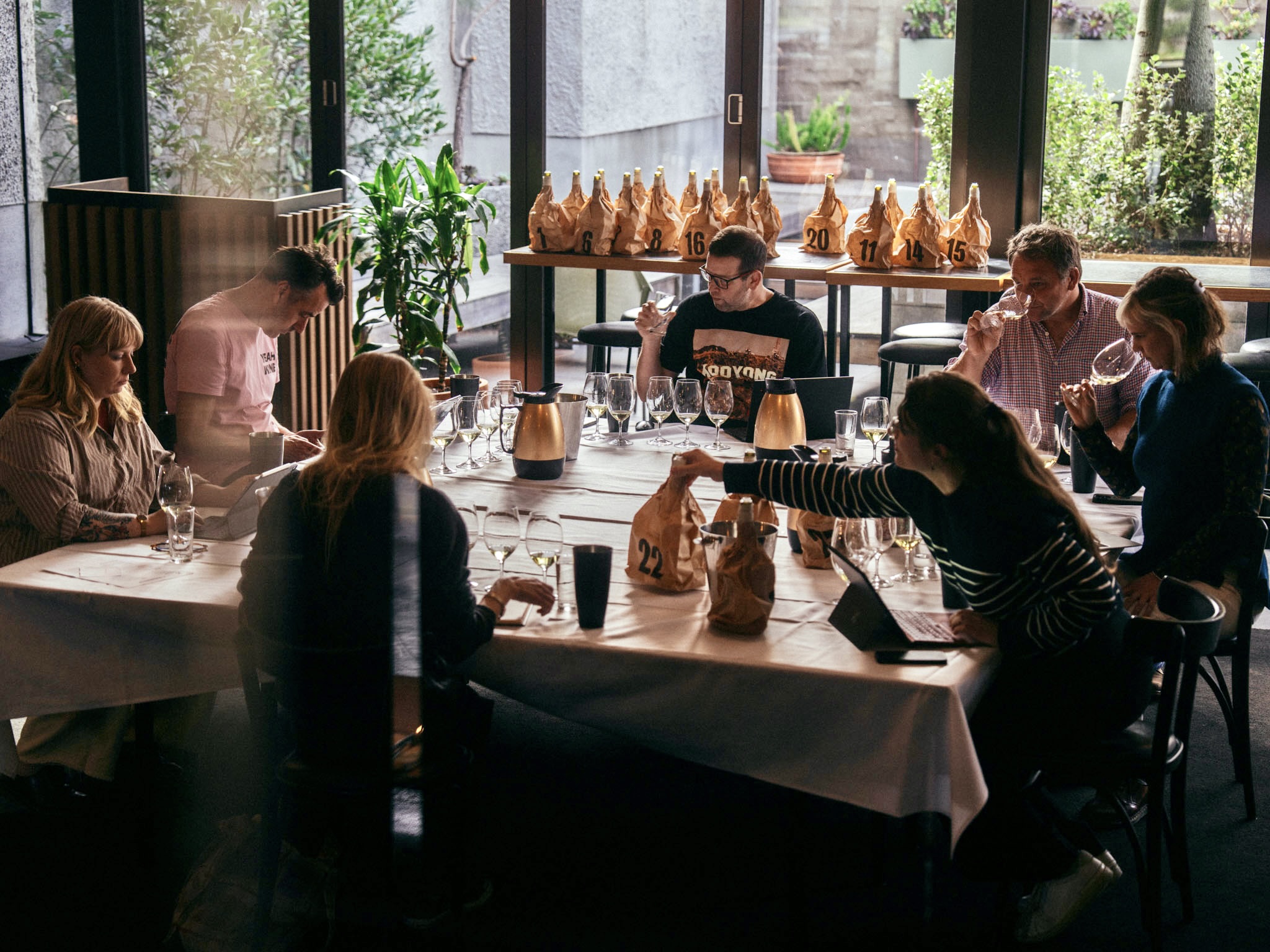
We gathered every example of Chardonnay from Geelong that we could find, and set our expert panel the task of finding the wines that compelled the most. All wines were tasted blind, and each panellist named their top six wines.
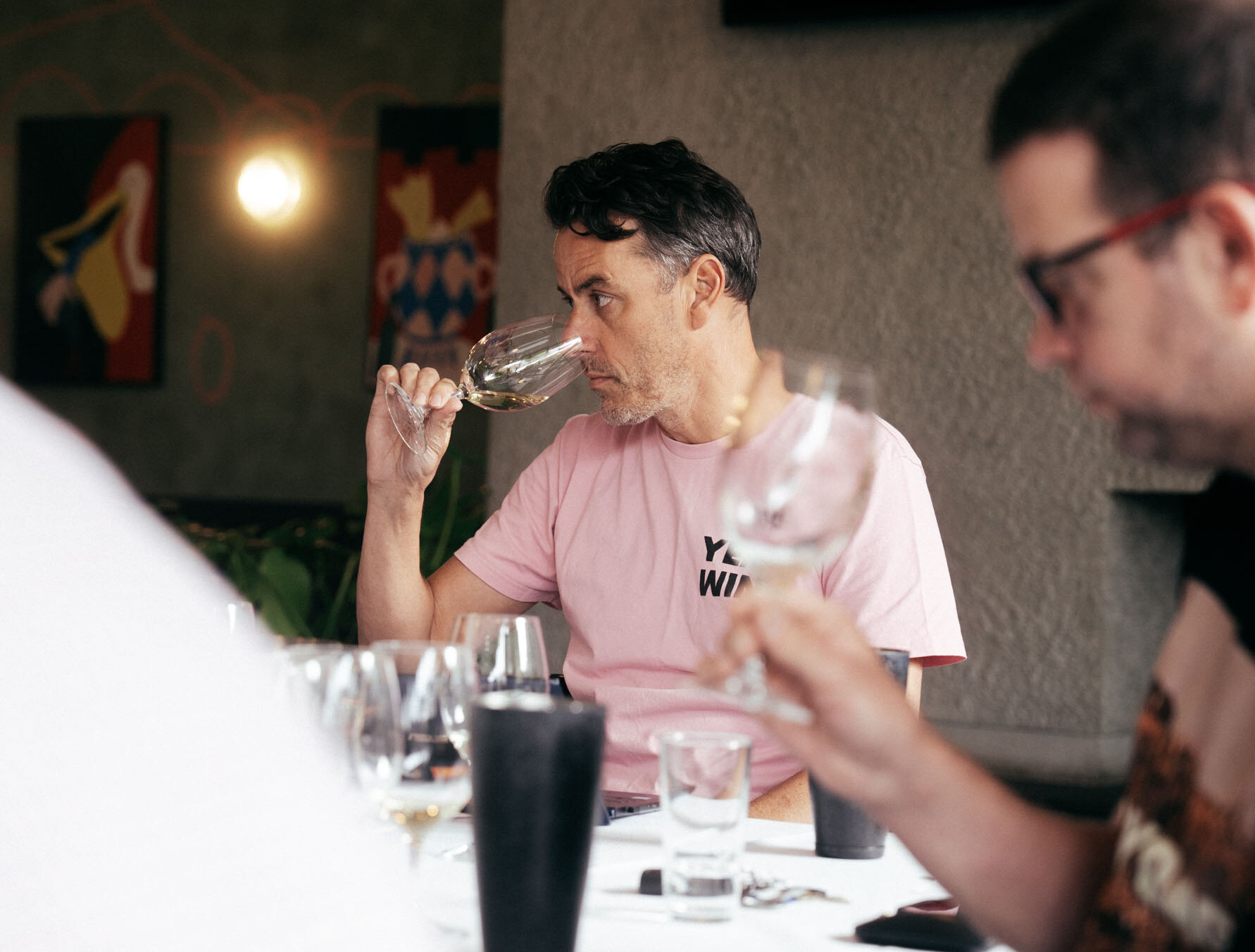
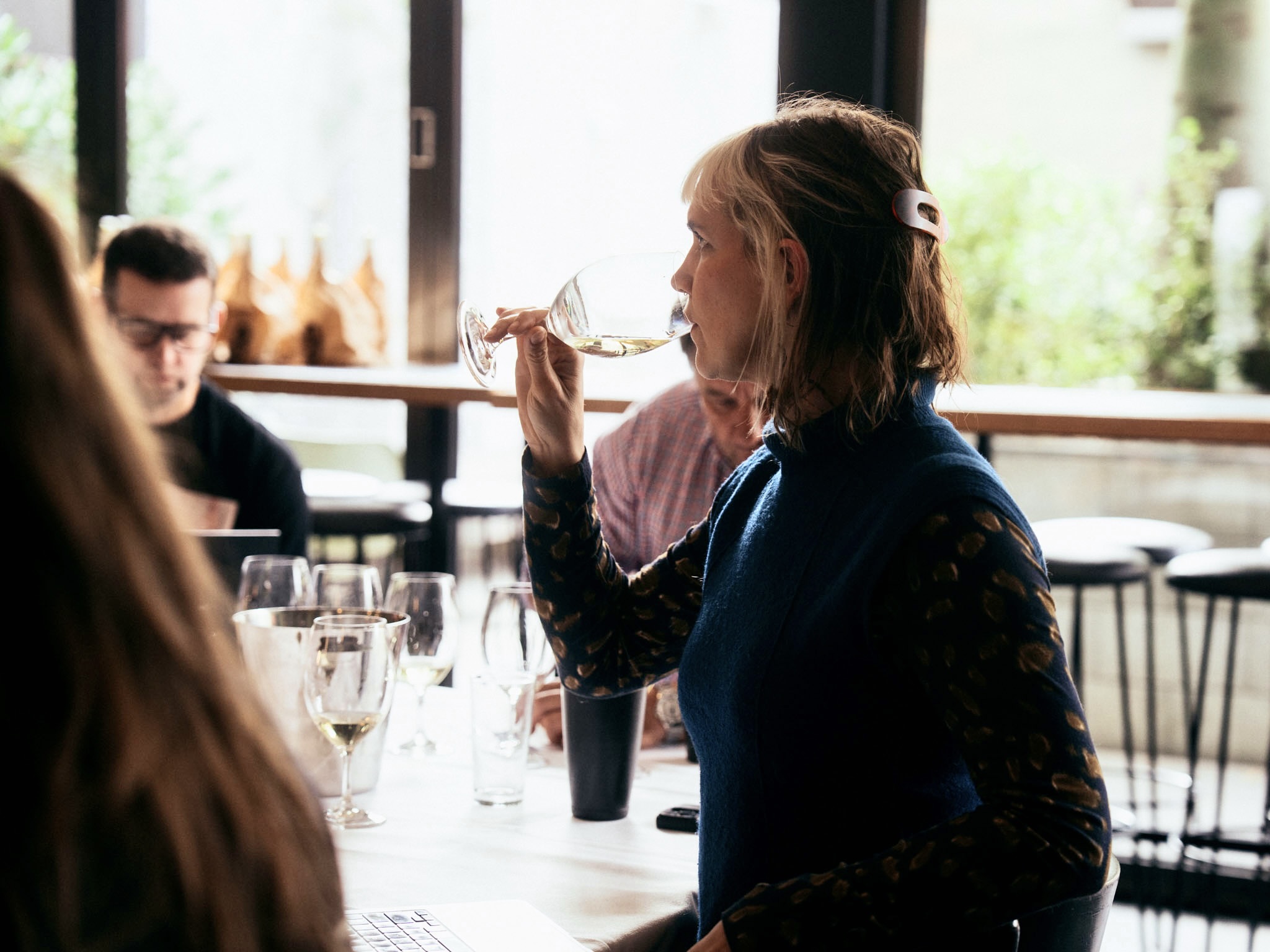
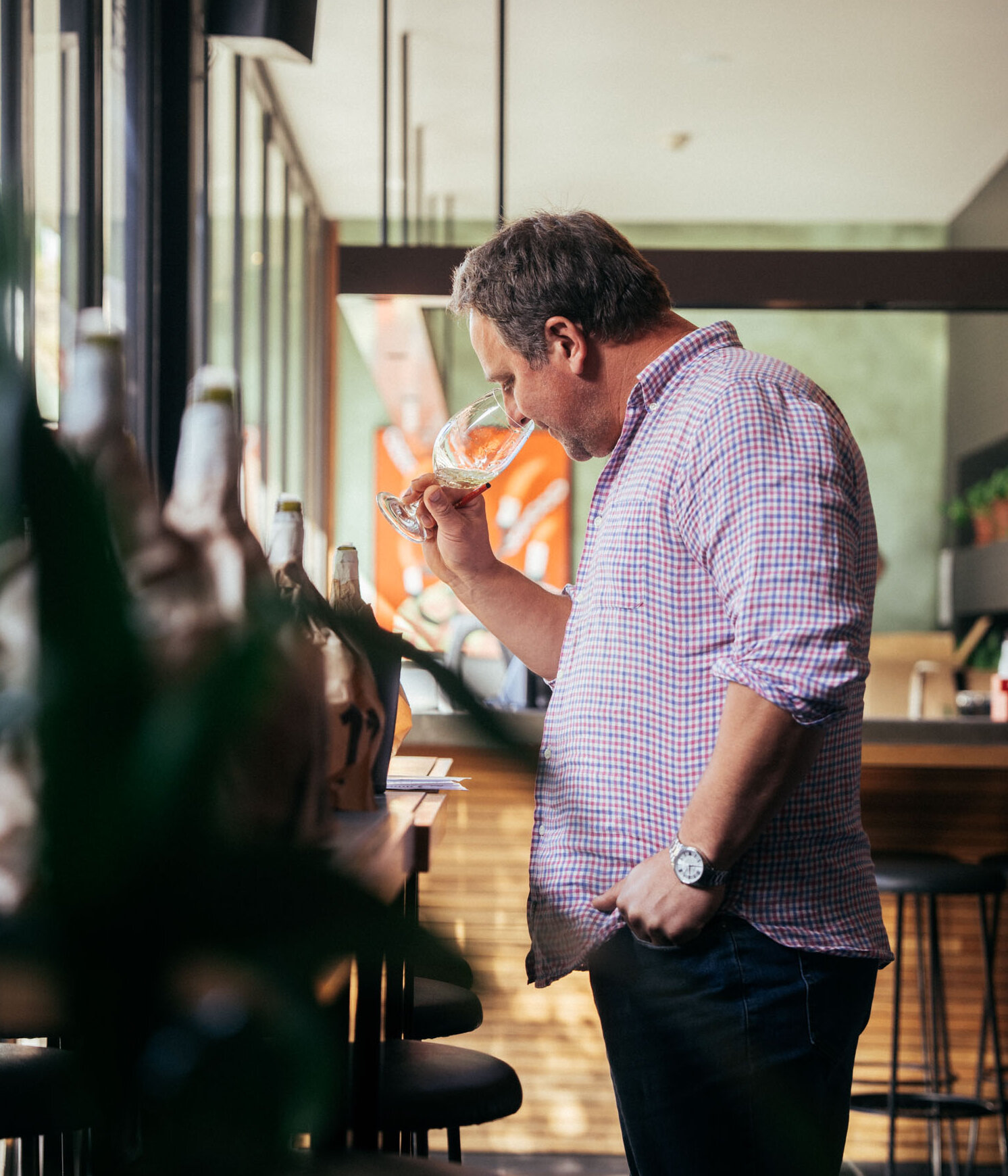
Our panel: Mem Hemmings, owner and winemaker, Meredith; Vassily Pestretsov, winemaker, Lethbridge; Bonnie Spain, senior sommelier and wine buyer, Navi; Steven Paul, general manager and director, Oakdene; Hayley Williamson owner and wine buyer, Nina’s; Tim Perrin, chief winemaker, Kooyong and Port Philip Estate; Madeleine Horrigan DipWSET, wine educator and MW student.
From the Deep Dive
Discover more in The Outtakes below.
Discover more in The Outtakes below.
Discover more in The Outtakes below.
The Top Wines
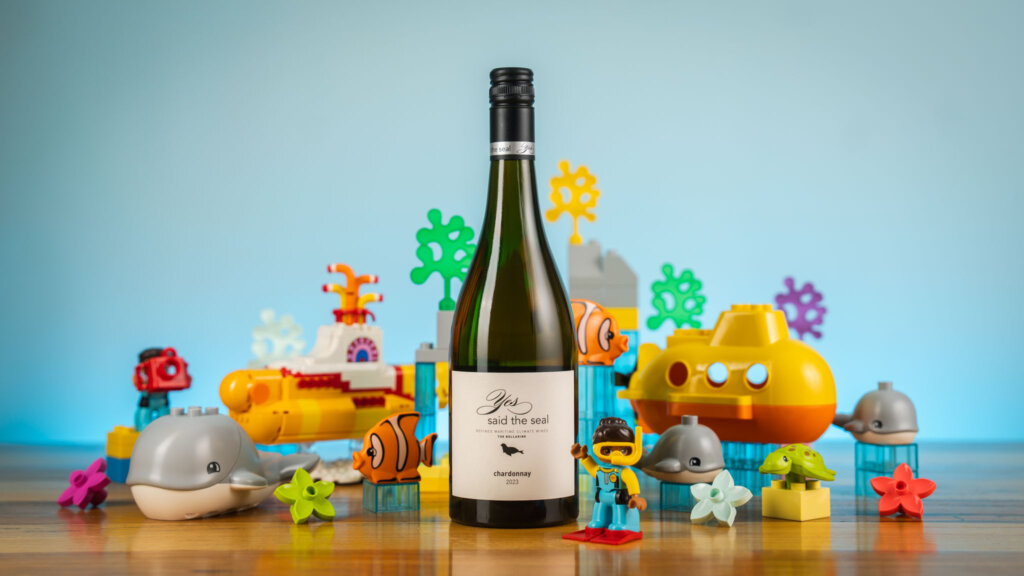
2023 Yes Said the Seal ‘The Bellarine’ Chardonnay $45 RRP
This wine appeared in the top six wines of the day for Pestretsov, Horrigan, Spain, and Williamson. Pestretsov described it as “a wonderful greenish hay-straw colour. Fusion of complex aromas – crushed bitter almond, almond blossom, sea mist, a hint of candied white melon, sunflower oil, and a hint of citrus. A bit of a bony texture, but a well layered palate – rather salty. The oak use is in harmony with the variety. Exiting acidity and long finish. Can be enjoyed now, or cellared for beneficial ageing.” Horrigan said, “this one doesn’t play by chardonnay’s usual rulebook. The nose is more aromatic than you’d expect, with fragrant mandarin citrus, a waft of white blossom and a fleshy, compote-like ripeness that feels almost exotic. The palate hums with energy: kumquat, yellow peach, and golden apple up front, with earthy undercurrents of almond and fruit pit that add intrigue. There’s a pleasant phenolic grip that gives the texture real presence without heaviness. Floral and fresh, with a juiciness that makes it pure joy to drink.” Spain found it “an intensely citrus-driven wine, opening with notes of salted lemonade, lemon verbena and yellow grapefruit. With time and oxygen, however, the wine blossoms beautifully, revealing white peach, nectarine and green strawberry alongside more intricate notes of lemon leaf, coriander seed and passionfruit flower. The palate gains both power and momentum. A thoughtful, evolving wine that rewards patience in the glass.”
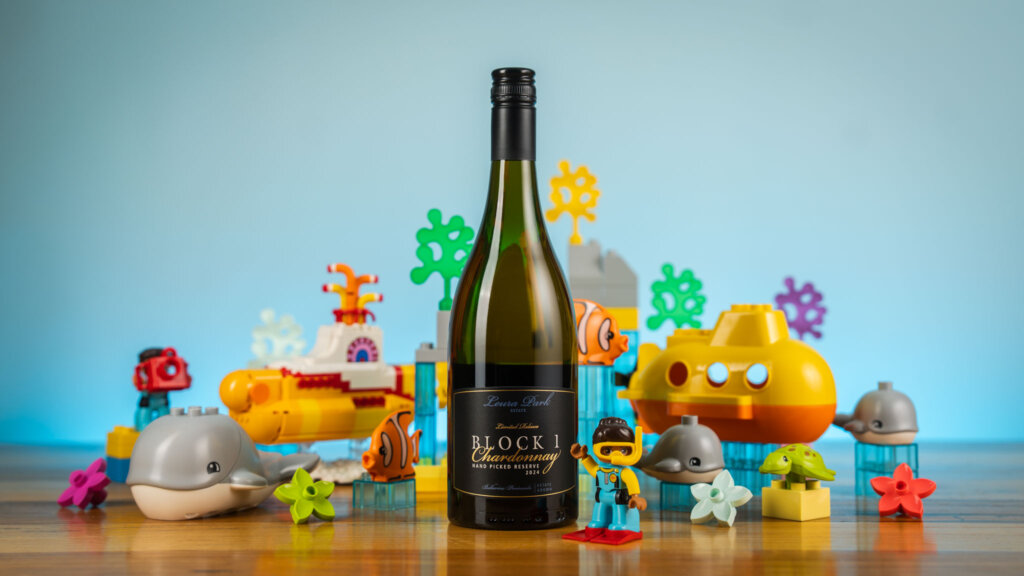
2024 Leura Park Estate ‘Block One’ Reserve Chardonnay $60 RRP
Paul, Horrigan, Perrin, and Williamson selected this wine among their top six from the blind tasting. Paul described it as a “very pale youthful colour, suggesting a healthy full canopy shading the fruit. Well- judged reduction brings lifted struck-match character to the fore, to balance the abundant white florals and citrus fruit. Mid-palate texture is a feature here, bringing seafood dishes and simple salads to mind as pairing options. The wine finishes taut and firm, with ample fresh acidity and palate length. While it’s very appealing now, time in bottle will flesh out the palate and bring further enjoyment.” Horrigan said, “there’s an electric quality to this wine that’s hard to shake. The nose opens with green apple and a squeeze of lime that tips briefly into cordial territory – think Bickford’s Lime, a little confected, but in a charming way – before pulling back into something more serious: almond meal, sourdough, a whisper of toast. On the palate it delivers on every promise, showing real tension between ripe white peach and crunchier green apple. The acidity is lively and persistent, giving the wine an almost tingly, tangy finish that keeps you returning for another sip. Beautifully wound.” Perrin found “a bold and expressive chardonnay, opening with ripe white peach, grilled nectarine and lemon curd. The wine feels generous and enveloping, although there’s enough restraint to keep it composed and finely balanced. The palate is broad, creamy and deeply flavoured. Fresh acidity cuts through the richness, giving lift and energy.”
Hemmings, Williamson, and Perrin included this wine in their top six wines from the tasting. Hemmings described it as “pale watery lemon in the glass with just a flicker of green gold at the rim. The nose opens surprisingly fruit-forward for Geelong chardonnay. I get this very specific wild strawberry tops, cloudy apple juice and crushed starfruit, before shifting into something more savoury and intriguing. There’s a subtle spice threading through the wine that feels reminiscent of dried bay leaf, green cardamom pod and warm banana bread crust. The palate carries plenty of flavour intensity without feeling manipulated. Green strawberry, underripe white nectarine and lychee sit alongside chalk dust phenolics and a soft saline edge. Oak handling is restrained and sensible, allowing the fruit and site expression to remain central. I found this to be a quietly compelling chardonnay.” Williamson said, “the nose opens with white peach, caramelised white chocolate and honeysuckle. On the palate, bright lemon juice drives the wine, layered with buttery brioche, golden apple skin and ripe apple flesh. The wine feels smooth and richly textured while remaining clean and composed. I would have this at a picnic with a slice of quiche and a green salad.” Perrin described it as “lifted and energetic – this chardonnay opens with aromas of citrus, white stone fruit and subtle florals. The palate has a natural ease and flow, with citrus and stone fruit flavours carried by lively acidity and fine phenolic texture. There’s freshness, shape and quiet detail throughout, finishing clean, persistent and effortlessly balanced.”
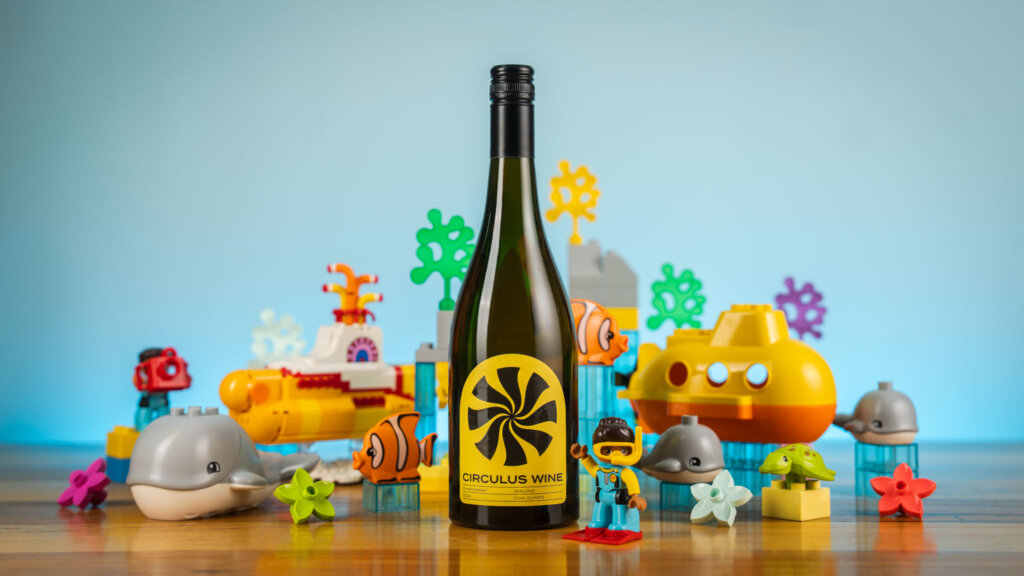
2024 Circulus Wine Chardonnay $49 RRP
Paul, Pestretsov, and Spain chose this wine for their top six wines on the day. Paul described it as “pale straw in appearance. The bouquet is very open, with a generous level of white nectarine and lemon pith. The palate appears to be more vineyard-driven than created through winemaking input – again, stone fruit notes are at the fore. The pithy texture suggests clever use of solids giving the wine a taut and textured finish that’s very moreish.” Pestretsov said, “light as a nymph – almost weightless. Fresh straw colour. A nose of unripe white nectarine, white creamy cheese, and springtime florals. The oak presence here is very well-balanced – could not be done better. Buzzing acidity. This wine is like a breakfast in the open spring air – all bees and dandelions. The perfect chardonnay for a sunny day.” Spain found “an exotic and quietly layered wine showing notes of tinned pineapple, fresh papaya and baked pineapple upside-down cake, lifted by hints of ginger spice, white pepper and sea spray. Still a little coy when it comes to the aromatics on the nose, but beautifully balanced, with a lingering spiciness and an indulgent, dessert-like warmth on the finish.”
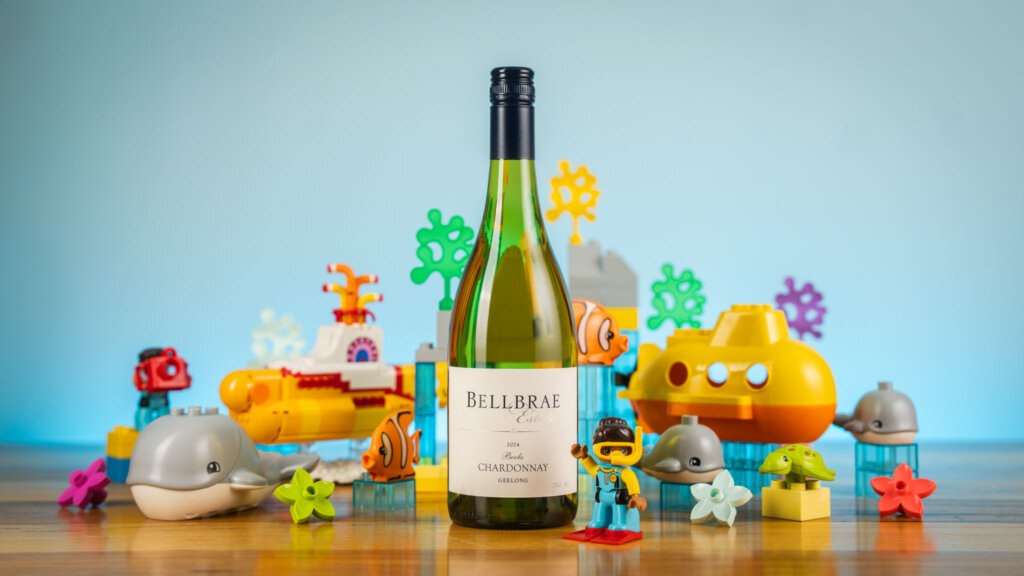
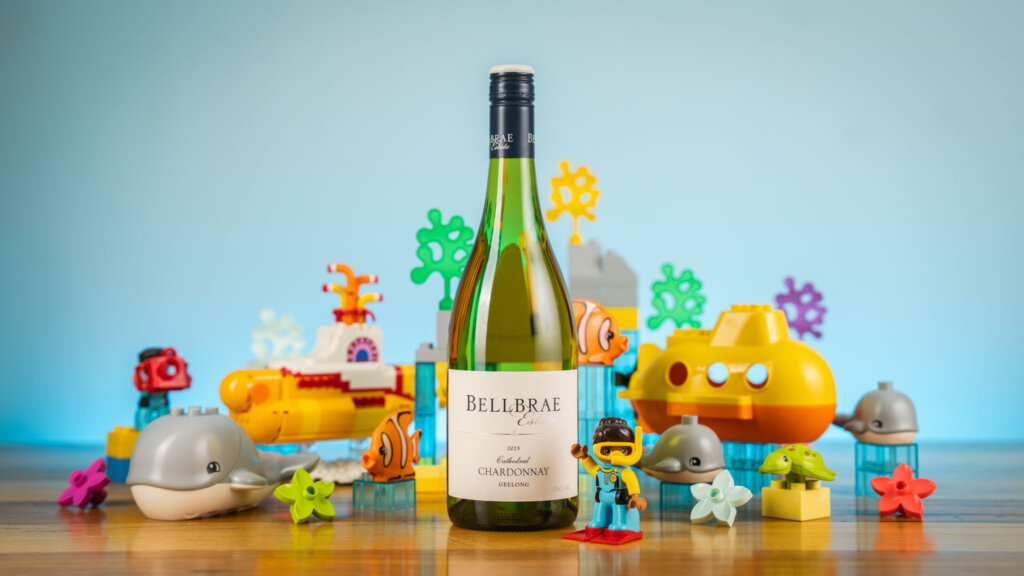
2024 Bellbrae Estate ‘Boobs’ Chardonnay $45 RRP
Spain, Paul, and Perrin selected this wine – named after a famous surf break at nearby Bells Beach – among their top six picks from the blind tasting. Spain described it as “a tightly wound, savoury expression layered with lemon pith, watermelon rind, curry leaf and kumquat. Bright, lemonade-like fruit character drives the palate, lifted by notes of mandarin, fresh white peach and lime curd, while hints of macadamia, cracked cardamom and Brazil nut add texture and quiet complexity. Oyster shell and saline minerality thread throughout, giving the wine a distinctly savoury edge and impressive sense of purity. It’s spicy, though finely judged, with a taut, driven finish marked by salt and subtle phenolic grip. A serious food wine crying out for richness and fat – something like butter-laden shellfish, roast chicken, or anything else designed to complement its salinity.” Paul saw a “straw-coloured hue with a bright tinge. Subtle barrel-ferment notes and baking spice notes on the nose draw attention, leading to slightly green tropical fruits. The medium-bodied palate is well-framed with green apple fruit notes, keeping a tight shape and taut finish.” Perrin found it “rich and immediately expressive – this chardonnay opens with grapefruit citrus, orchard fruit and delicate blossom layered over toasted oak and warm spice. The palate is full and mouth-filling. Bright acidity keeps the wine vibrant and composed. The finish is long, smooth and deeply satisfying.”
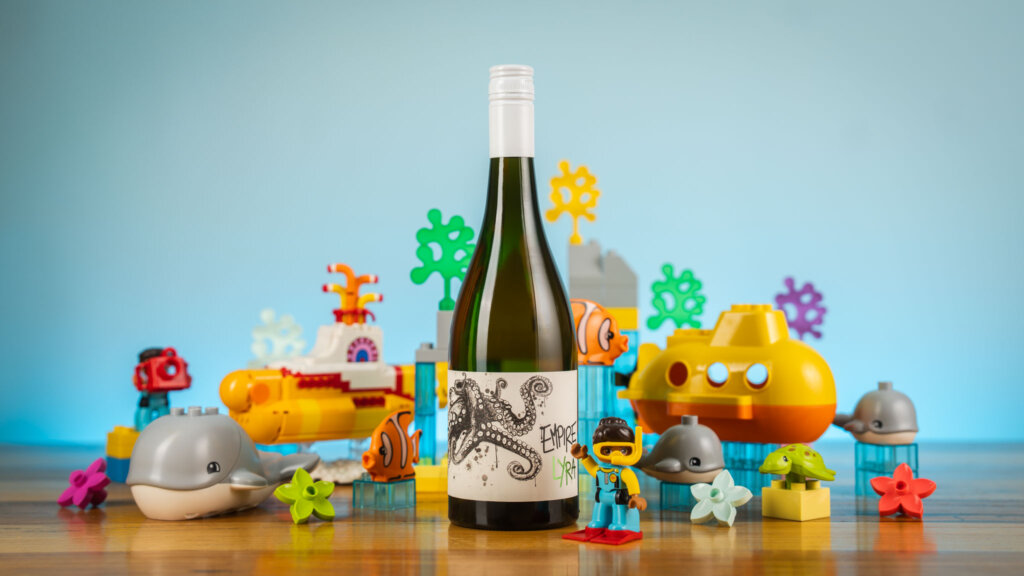
2023 Empire of Dirt ‘Lyra’ Chardonnay $38 RRP
Pestretsov and Horrigan included this wine in their top six wines from the tasting. Pestretsov described it as a “a rather liberated and imposing kind of chardonnay. Gold in the colour – maybe a touch oxidised, but in a pleasant way that adds depth to the wine. Aromas of candied and dried stone fruits and cheese, ripe citrus, sunflower blossom, alongside a lovely character reminiscent of botrytised dessert wines while remaining fully dry. Nice saltiness and excellent acidity on the palate – complex and appealing. A fantastic wine to accompany a long winter evening.” Horrigan said, “here’s what good Chardonnay looks like with a little age on it. The nose is toasty, nutty, faintly waxy – the kind of savoury complexity that makes you stop mid-sentence to go back for another smell. There’s a multidimensional nature to the fruit as baked peach mingles with something gently aromatic and herbal, like fresh marjoram. The palate refuses to just coast on tertiaries though: there’s still genuine freshness here, with green apple and yellow peach keeping things lively while the nutty, limey, slightly polished character fills in the gaps. Long, fragrant finish. Not for everyone, but for those who enjoy a wine on a journey, completely compelling.”
Paul, Horrigan, and Hemmings chose this wine for their top six wines of the day. Paul said, “this wine’s deeper colour instantly suggests some bottle age – however, the nose is bright with lifted citrus and spicy oak. The palate offers good drive and freshness, with Granny Smith apple–like acidity a genuine feature. The pithy texture is again playing a balancing act here, adding to the wine’s impressive length.” Horrigan claimed, “if this wine were a mood, it would be late Sunday morning – easy and rewarding, with nowhere urgent to be. The nose is limey and lightly flinty, with toast and dairy-laced notes that conjure citrus curd with a very good sourdough loaf, plus an aromatic freshness that keeps it lively. Then the palate surprises: despite all that brightness on the nose, there’s real weight here, the fruit soft and pristine, a touch of roundness and generosity signalling beautifully balanced ripeness.” Hemmings said, “this wine leans firmly into a more austere cool-climate register. Smoky barrel character, green banana skin, snapped snow peas and underripe orchard fruit dominate initially. The palate is more generous than the nose suggests. Chalky texture and mouth-watering acidity frame flavours of green pear skin, hard quince and raw almond. This is not a flamboyant chardonnay, nor is it trying to be. It sits confidently in a leaner, more restrained stylistic space where texture and structure matter more than overt fruit generosity.”
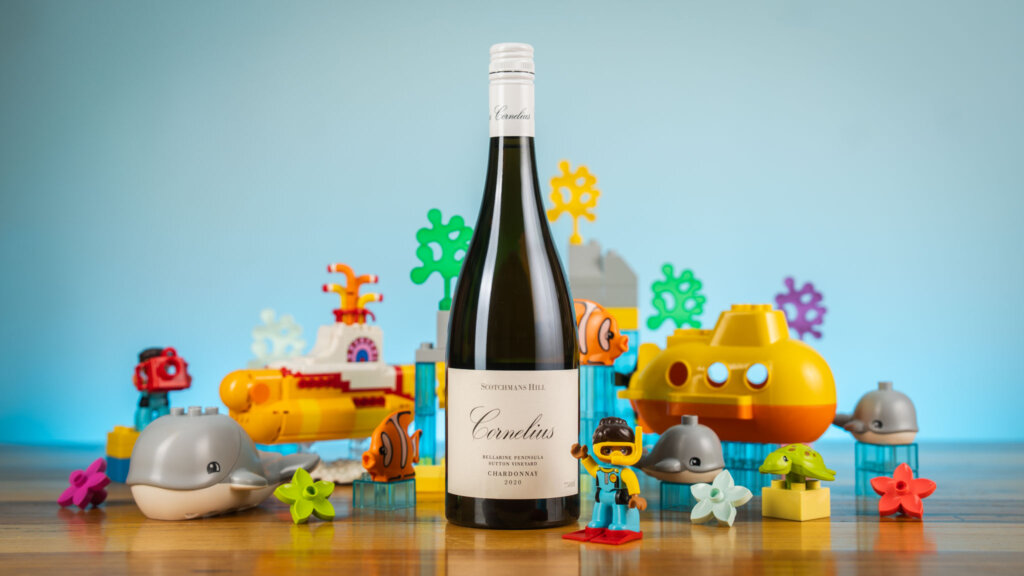
2025 Scotchmans Hill ‘Cornelius – Sutton Vineyard’ Chardonnay $80 RRP
Hemmings and Pestretsov selected this wine among their top six wines from the blind tasting. Hemmings said, “the nose is immediately comforting and savoury. Toasted marshmallow, grilled brioche and oatmeal creaminess sit alongside a distinctly mineral core. There’s age beginning to show here in the best possible way, adding warmth and complexity without flattening the fruit. The palate delivers preserved green fruits, hard yellow apple flesh and a very slight, gentle oxidative savouriness layered through a creamy, yeasty texture. Acid remains impressively intact, carrying the wine with freshness. The integration feels complete and harmonious. There’s something deeply satisfying about the balance here – I feel pleased to be drinking this. The minerality remains clear beneath the toast and cream, giving the wine lift and direction. Feels like a wine for late-autumn food. Serve with burnt butter, roasted celeriac, crusty bread and very good company around a crowded table.” Pestretsov said, “finally, something funky and uncivilised – almost bipolar in its intensity. Yellow straw colour. Shows a mixture of controversial and intriguing aromas: unripe and bruised quinces, lime and pungent cheese, layered with appealing floral notes as well. The oak use is elegant, not overpowering the fruit. Wonderful tension on the palate – acidity is here and present! Nice texture despite its brightness. Very enjoyable vino.”
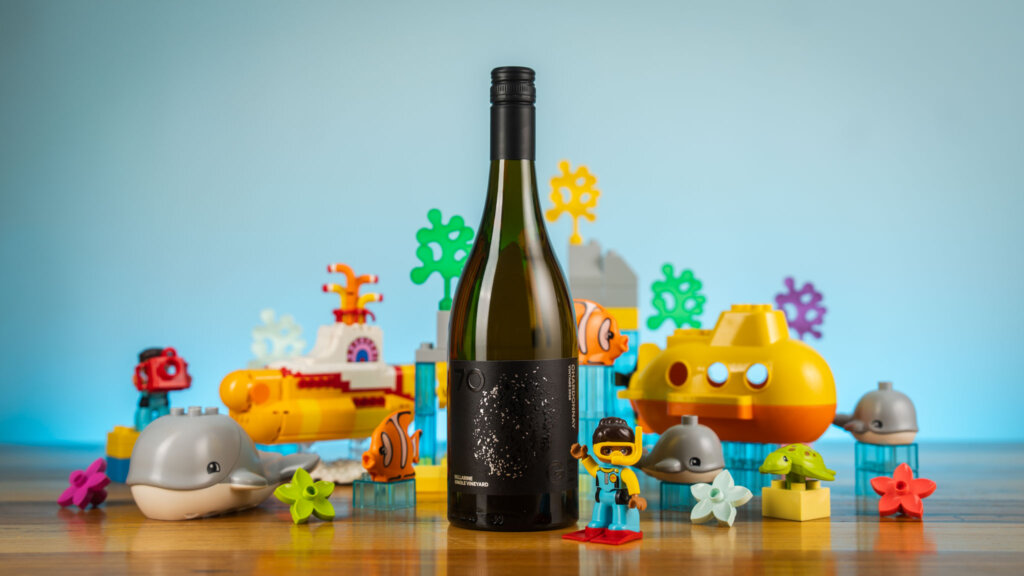
2025 Seventy Greenhills Estate Chardonnay $50 RRP
Perrin included this wine in his top six picks from the tasting, saying “the wine bursts from the glass with aromas of white peach, ripe nectarine and pink grapefruit, layered with toasted oak, buttered pastry and a gentle flinty edge. There’s an immediate sense of generosity and depth, though freshness and energy keep everything beautifully in check. The palate is rich and textural, unfolding in layers of stone fruit and citrus peel wrapped around creamy barrel ferment characters and savoury complexity. A fine line of acidity and subtle phenolic grip bring tension and movement, carrying the wine through a long, expansive finish of spice, citrus zest and toasted oak.”
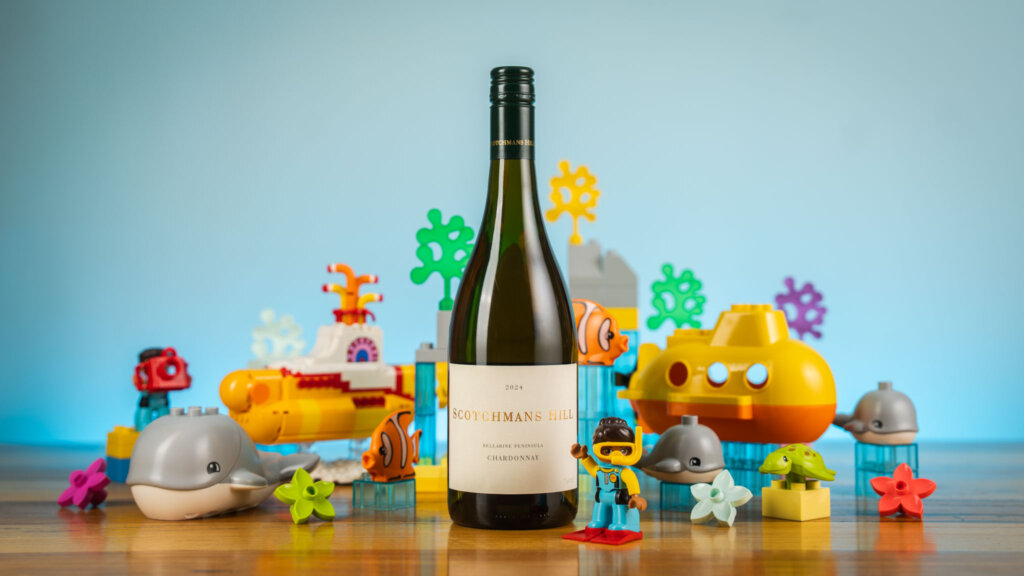
2024 Scotchmans Hill ‘Bellarine Peninsula’ Chardonnay $46 RRP
Hemmings chose this wine for her top six wines on the day, calling it “midway between green and golden yellow in colour. Crushed river pebbles, cold steel, wet concrete after rain, and the sharp scent of snapped gooseberry bush dominate initially, before subtler fruit emerges beneath. There’s an electric quality to the aromatics that feels almost addictive in its purity. Think alpine air, glacial meltwater and frozen orchard fruit. The palate is precise and quietly architectural. Hard green plum, preserved lemon rind and trampled gooseberries are wrapped around an intensely mineral spine. Oak is present but beautifully integrated, appearing as lacework texture rather than flavour dominance. Lemon pith bitterness and again that signature saline phenolic that give shape and seriousness without sacrificing drinkability. This feels distinctly cool-climate and confidently restrained. Complex, nuanced and deeply textural. I find this wine transports me so strongly to standing outside during snowfall somewhere mountainous and impossibly quiet.”
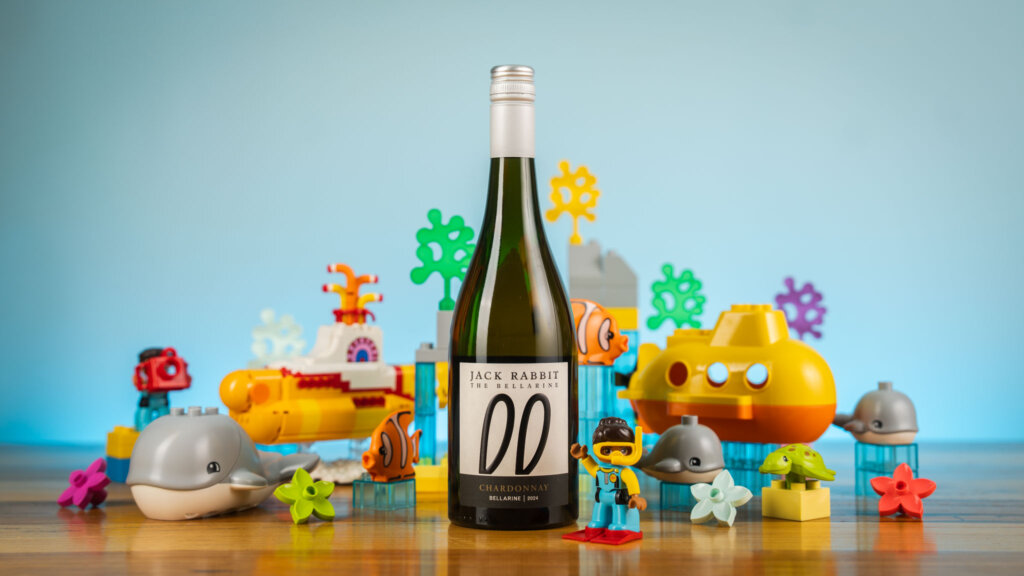
2024 Jack Rabbit ‘The Bellarine’ Chardonnay $50 RRP
Horrigan and Perrin selected this wine among their top six wines from the tasting. Horrigan said, “this wine conjures the smell of a cool coastal morning: salt air, sea-smoothed stone, a headland still damp with dew. The nose is briny and bright, with the crisp scent of coastal scrub alongside crunchy green orchard fruits, a firm yellow nectarine emerging from beneath. On the palate that lean, mineral character holds its ground: green apple, white pear, and ripe lemon cutting through a gently rounded texture and sour cream savouriness. There’s something lightly candied at the edges – think green sour strap lollies – that keeps it interesting, leading to a sea breeze finish that hums with energy. Fresh, genuine, and quietly captivating.” Perrin described it as “rich and powerful – this chardonnay opens with an immediate rush of ripe stone fruit and bright citrus lift. The palate is generous and unfolding, with layers of yellow peach and ripe orchard fruit building depth and presence. Despite its weight and intensity, there’s a real sense of harmony and flow. It finishes long and expressive, leaving a lingering impression of stone fruit richness balanced by a fresh, energetic line of acidity.”
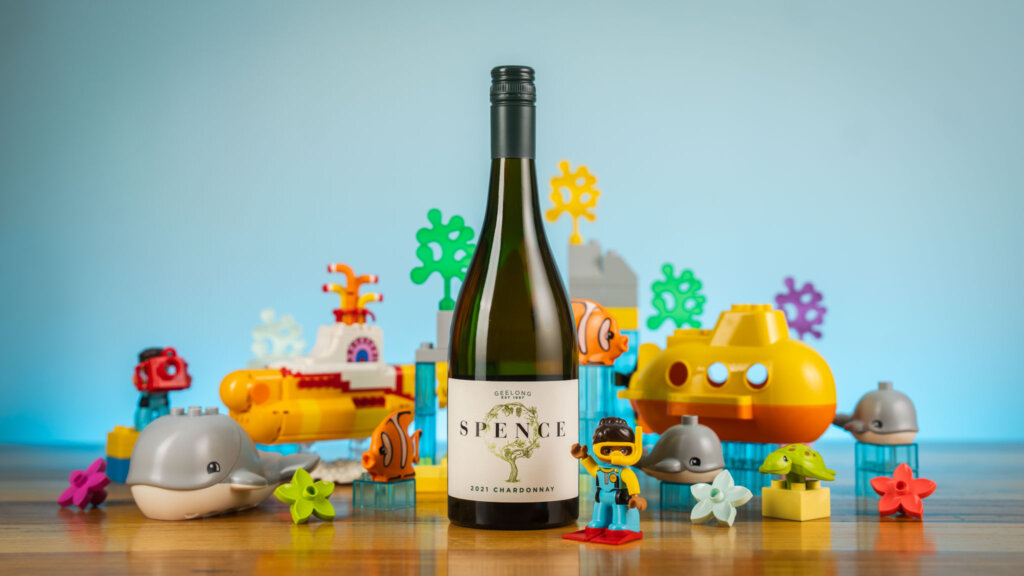
2021 Spence Chardonnay $35 RRP
Perrin and Pestretsov included this wine in their top six picks from the blind tasting. Perrin described it as “bright and inviting from the outset, with aromas of citrus blossom, orchard fruit and subtle cream, layered with delicate spice. The palate is supple and flowing, with citrus and orchard fruit gliding across a lively acid line. A gentle creaminess builds through the mid-palate, giving shape and texture without heaviness. The malolactic influence evident here brings warmth and roundness, though the wine never loses its sense of freshness and vitality. Fresh, expressive and quietly confident, it finishes with impressive clarity and length.” Pestretsov noted its “greenish straw colour. Bright and uplifted on the nose – a chardonnay purist’s paradise. Fresh white stone fruits, green citrus, and white chrysanthemum blossom notes. Nice, well-integrated bitterness on the palate. Balanced in structure, with bright acidity that provides linearity. A delicate oak underlay accompanies a long and pleasant finish. Best consumed right now to capture its purity and freshness.”
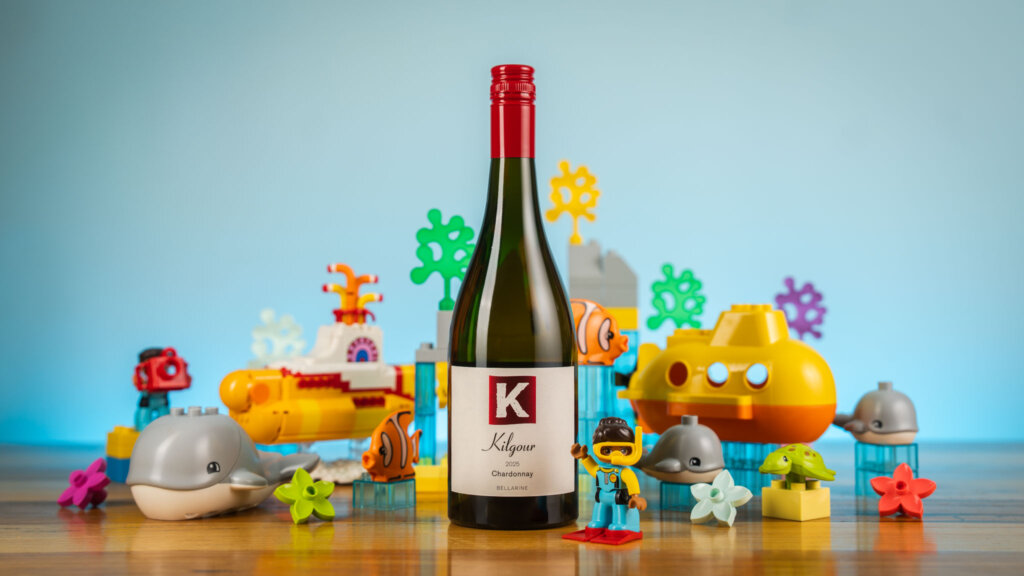
2025 Kilgour ‘Bellarine’ Chardonnay $50 RRP
Williamson chose this wine for her top six wines on the day, saying “the nose shows pleasant fruit aromas of golden apple, ripe honey gold mango and peach kernel. The palate is smooth and supple, offering sweet orchard fruit alongside a gentle saline character and candied ginger spice. There’s a touch of savoury umami, though the wine remains beautifully balanced and restrained in style. Elegant and quietly expressive – I can imagine smashing this on the beach with a bag of hot chips.”
Spain selected this wine among her top six wines from the tasting, calling it “a strikingly youthful and energetic wine, initially framed by a firm phenolic tension that gives shape and freshness. Bright green apple and fresh lime juice drive the palate, before the wine unfurls noticeably with air to reveal fragrant notes of lemongrass, jasmine blossom and a delicate hint of ginger spice. The palate is lighter in weight, yet carries an impressive intensity of citrus-driven fruit and aromatic detail. There’s a lovely tension between its lean, taut structure and its lifted floral perfume, finishing crisp, refreshing and quietly compelling. A wine that grows in charm the longer it sits in the glass.”
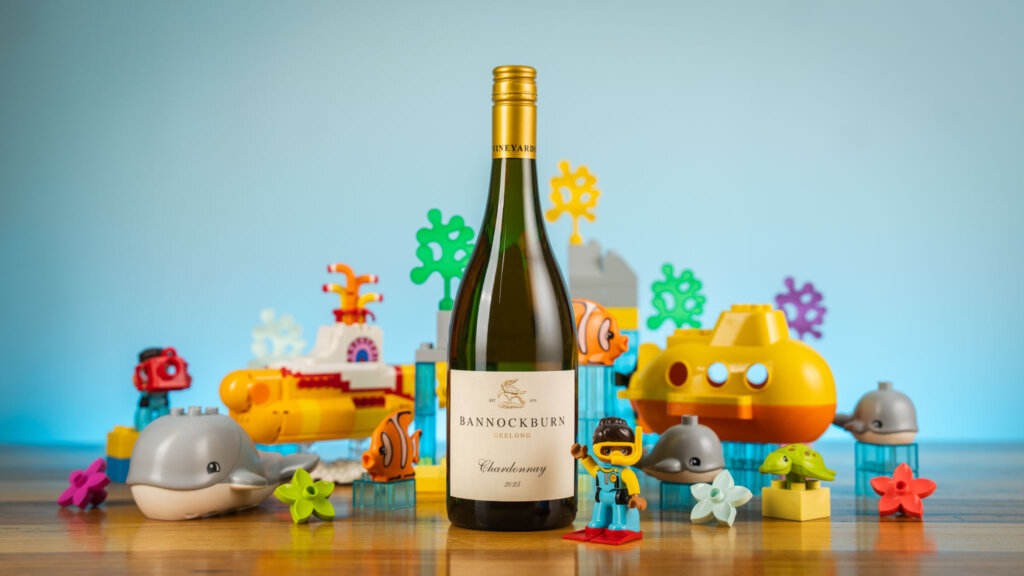
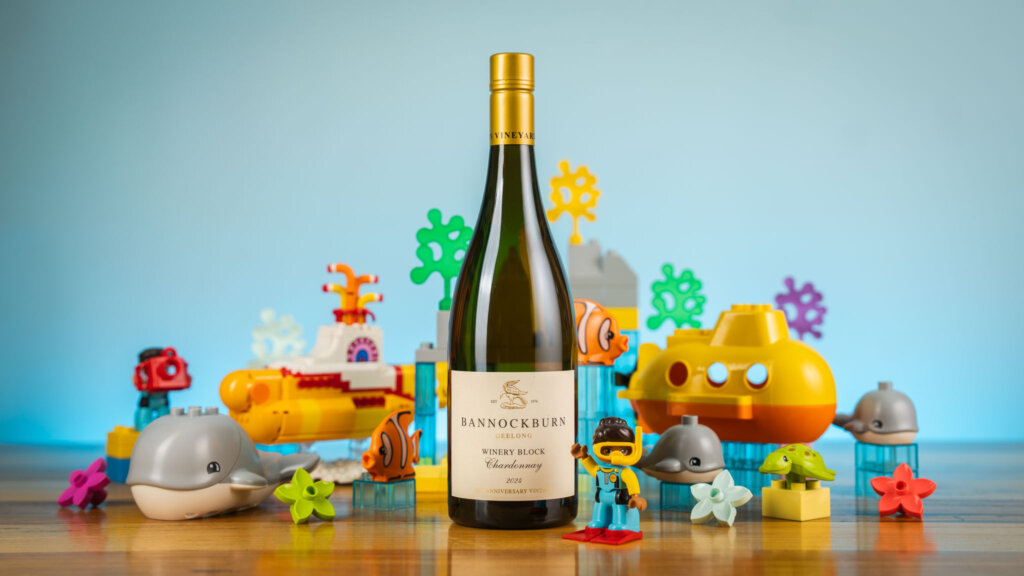
2025 Bannockburn Chardonnay $75 RRP
Hemmings and Williamson included this wine in their top six wines of the day. Hemmings described it as “bright and crystalline in appearance, white gold with pale green flashes. This wine balances citrus tension and texture particularly well. Preserved lemon, pomelo pith and underripe yellow plum sit against saline minerality and soft smoky reduction. The nose opens floral and lifted, with white blossom, finger lime and green pineapple core sitting alongside subtle reduction and finely judged oak spice. Texture builds gradually through the mid-palate, bringing layers of spice, oatmeal and chalky phenolics. The balance here is what makes the wine compelling. Fruit, acid, oak and reduction all feel proportionate and intentional. Nothing dominates. There’s complexity without heaviness and generosity without excess. A deliciously complete chardonnay with enough ease to drink casually on a long afternoon in the sun with salty snacks and people you genuinely like.” Williamson saw “a creamy, biscuity nose with a subtle saline edge. The palate leans into flavours of green mango, white pepper and ginger spice, supported by lively lemony acidity and an appealingly textured mouthfeel. Fresh, savoury and quietly complex – this would go nicely with a fresh curried egg sandwich on soft white bread.”
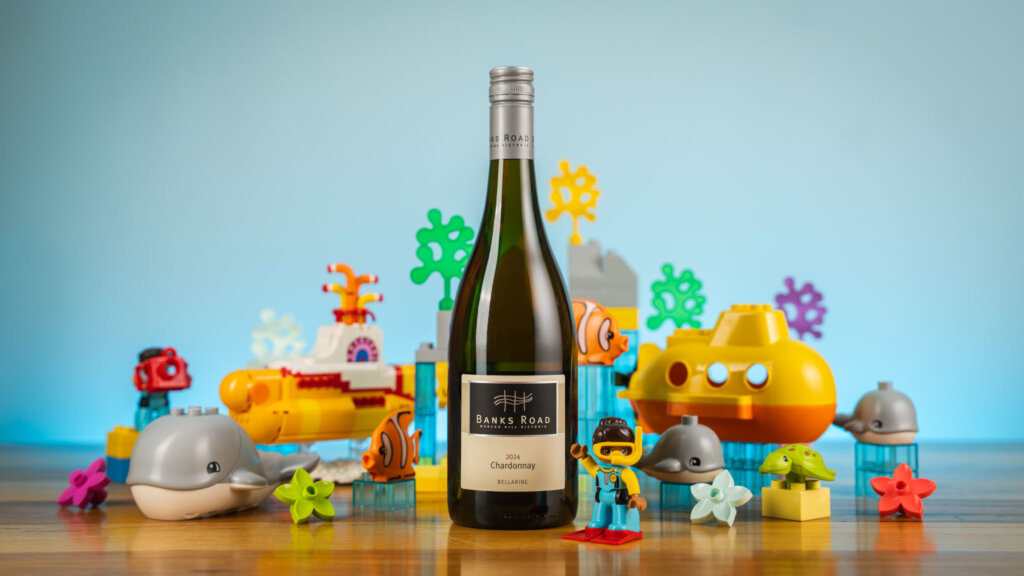
2024 Banks Road ‘Bellarine’ Chardonnay $48 RRP
Williamson selected this wine among her top six wines from the blind tasting, describing “super-pronounced aromas of white peach and jasmine. The palate brings flavours of apple skin and shortbread, complemented by a subtle saline savouriness and a dusting of white pepper spice. The texture is especially appealing, giving the wine a rounded, generous feel. This would pair beautifully with a hot chicken and mushroom pie.”
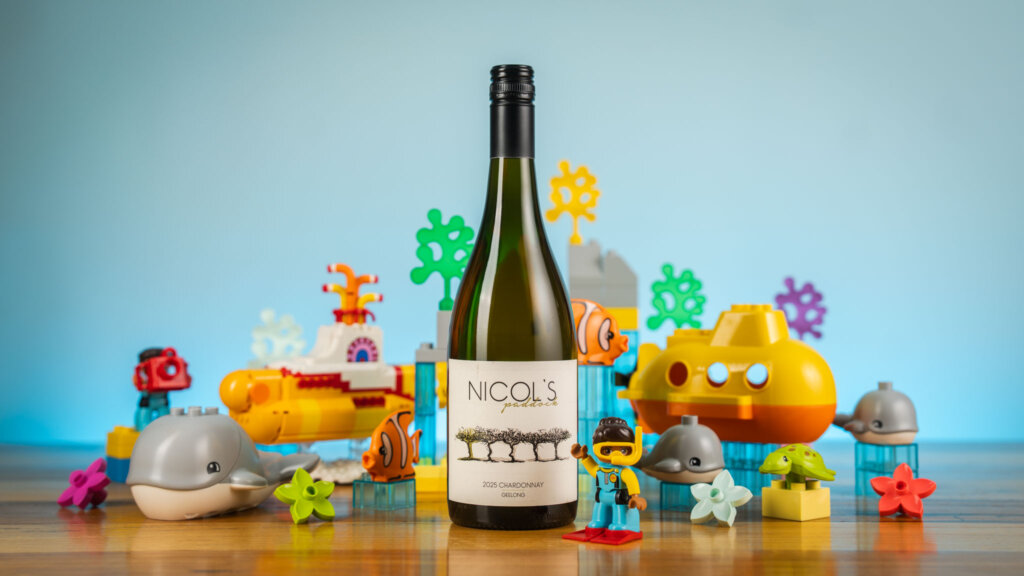
2025 Nicol’s Paddock Chardonnay $40 RRP
Horrigan included this wine in her top six picks from the tasting, noting “austere elegance on arrival. The nose is initially steely and mineral, with an oyster-shell salinity that takes a moment to warm up to. Time in the glass softens things slightly, allowing the wine to reveal a quietly wild streak: fresh almonds, underripe guava and Mirabelle plum. The palate is lean and angular – all high-wire acidity and lime juice – but there’s a concentrated persistence here that belies its more modest aromatic intensity. A beguiling combination of tart fruits and stony minerality that genuinely grab you and demands your attention. An acquired taste worth acquiring.”
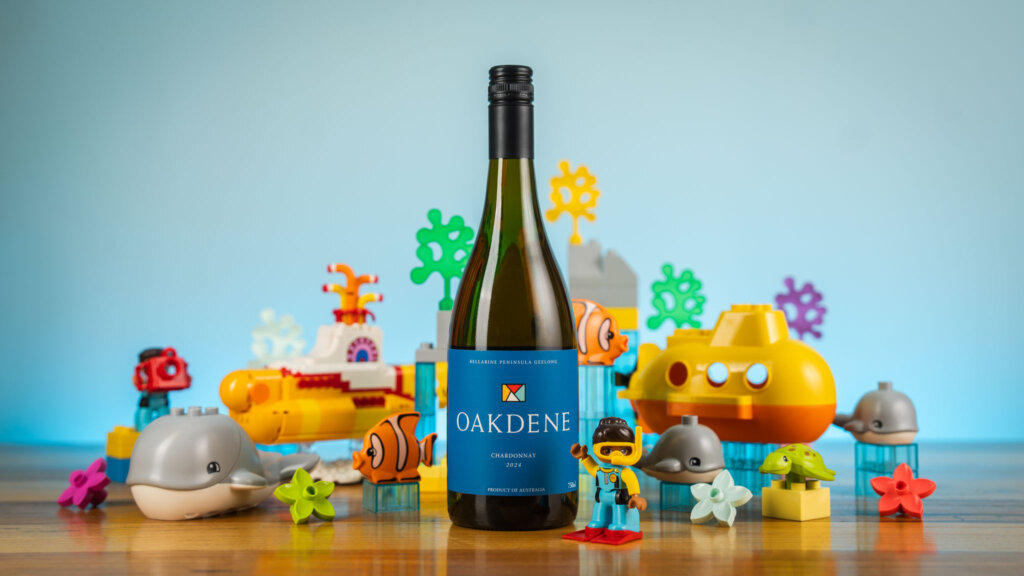
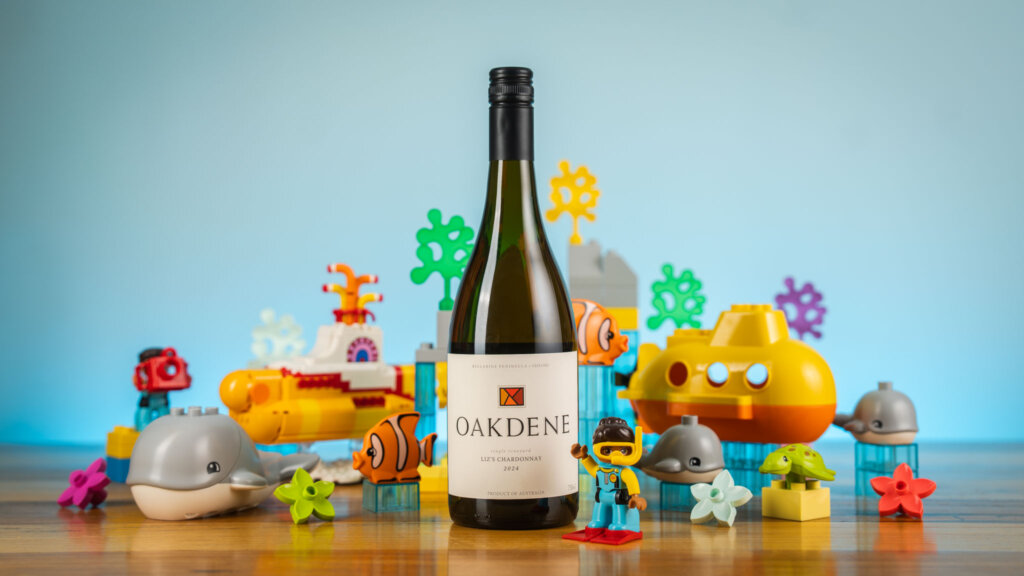
2024 Oakdene ‘Liz’s Chardonnay’ $45 RRP
Spain chose this wine for her top six wines on the day, describing “a richly aromatic and immediately inviting wine, layered with notes of sweet mandarin, orange flesh and fresh blood orange, underpinned by hints of brioche, leatherwood honey and soft marzipan warmth. Ruby grapefruit and Seville orange bring a lively citrus bitterness, while touches of white tea and gentian root add an appealing herbal complexity and subtle amaro-like edge. The palate carries a gentle pithiness through the finish, though it’s beautifully balanced by a supple sweetness that gives the wine a feeling of real generosity and charm. This is textural, expressive and quietly exotic, with a lovely interplay between citrus tension, savoury bitterness, and honeyed richness.”
Hemmings selected this wine among her top six wines from the tasting, saying “this seems to me like the kind of chardonnay that disappears alarmingly quickly. Yellow peach, baked lemon and ripe golden apple carry through the palate alongside soft spice and gentle creaminess from oak maturation. The nose leans into toasted marshmallow, nougat and warm pastry notes, but there’s enough ripe fruit sitting underneath to keep everything feeling fresh and alive rather than oak-led. There’s plenty of flavour concentration here, but the wine still retains shape and tension. Acidity is supple rather than sharp, giving the wine an easy generosity without losing structure. The finish lingers with toasted almond, preserved citrus and a subtle saline note that keeps pulling you back for another sip. Quite simply this is a very complete wine. Confident, balanced and broadly appealing without feeling generic.”
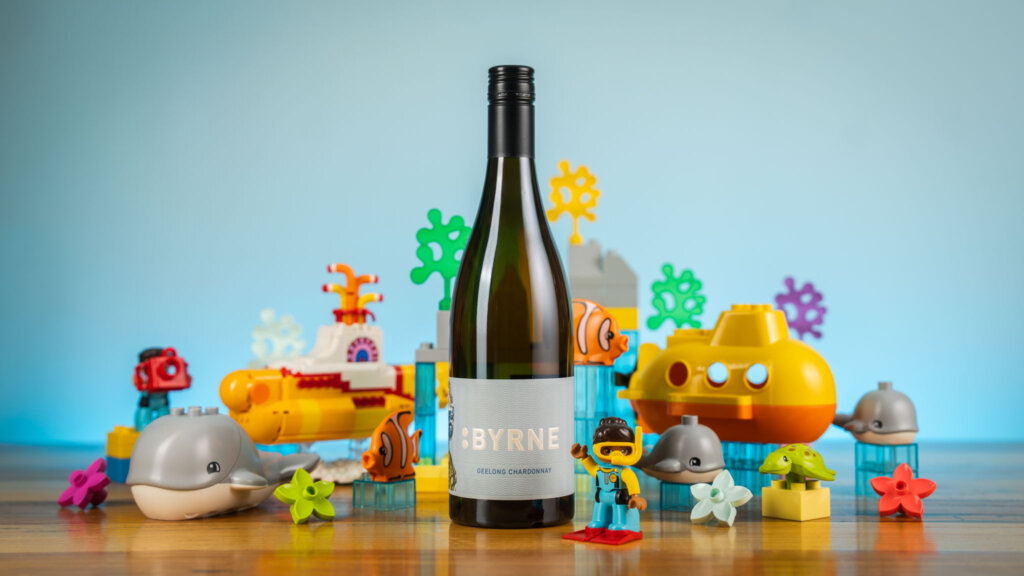
2024 Byrne Chardonnay $44 RRP
Spain included this wine in her top six wines of the day, describing it as “fresh and vibrant, showing notes of lemon juice, sweet finger lime, prickly pear and honeydew melon on the nose, with subtle hints of vanilla pod. The palate is clean and precise, gaining freshness as it opens, with a simple but confident drive underlined by just the right amount of texture and richness. Not overly complex, but beautifully balanced and quietly refined – this is definitely a picnic or first-date wine, something that follows along with the conversation rather than demanding attention. I reckon some baked goods wouldn’t go astray here, either.”
Paul included this in his top six wines from the tasting, describing it as “straw-coloured, with some development in the bottle adding interest. A fuller style, with oak spiciness, floral notes of honeysuckle, and hints of toasted bread – suggesting the wine has been barrel-fermented – at the fore. The palate is driven by white nectarine, and shows ample length and excellent balance. This wine is in a good place right now, and would be a great match to white meats and poultry.”
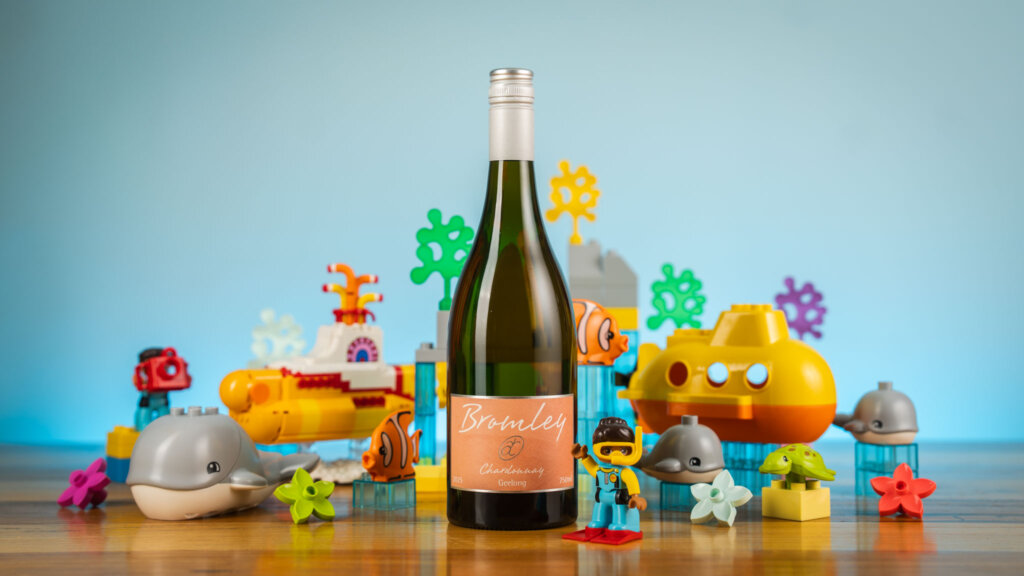
2025 Bromley Chardonnay $50 RRP
Paul chose this wine for his top six wines from the blind tasting, calling it “very pale in colour. A lighter-bodied, more mineral style, relying on lifted jasmine florals and lime citrus rind notes more than richer fruit character. The structure remains firm and angular throughout, in a positive way – very good length and freshness. Best matched to simply prepared fresh seafood dishes.”
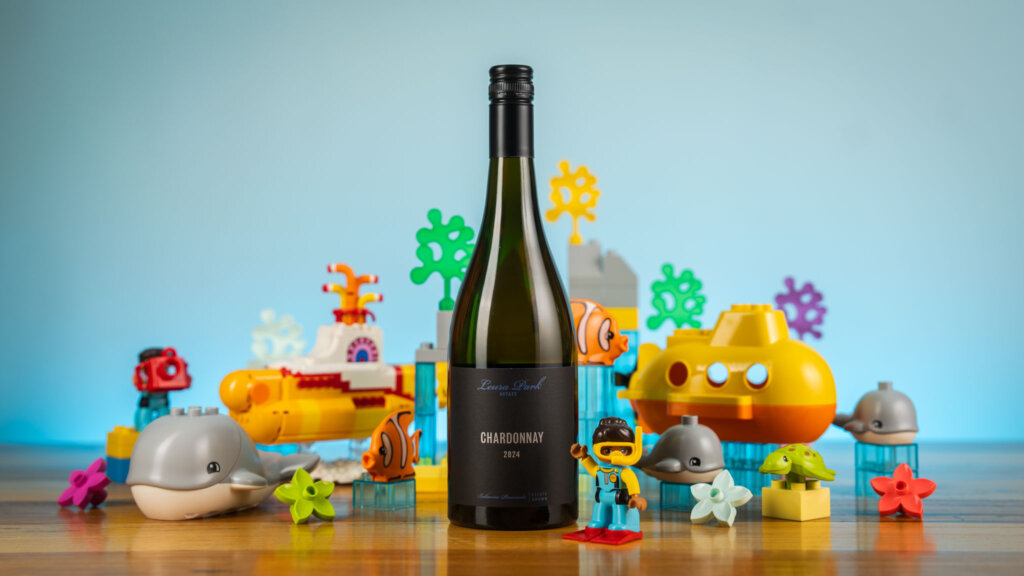
2024 Leura Park Estate ‘Bellarine Peninsula’ Chardonnay $40 RRP
Pestretsov chose this wine for his top six wines from the blind tasting, noting “a fresh greenish straw colour. The aromas could be described as ‘shooting a musket in a blossoming peach orchard’ – there’s an absolutely wonderful flinty character here, alongside unripe white peaches, white blossom, citrus pith, and crumbly white cheese to it. A certain amount of austerity in the mouthfeel provides a pleasant tension in the structure. An elegant ‘sur lie’ layer of flavour depth suggests this may have rested on its lees. Reverberating acidity and a long finish – simply splendid.”
The backstory
Geelong is best known within Australia for its industrial heritage, its deep love of the AFL, and proximity to the Surf Coast, while international visitors flock to it as the gateway to the Great Ocean Road. But the area around the city also has a rich history as one of Australia’s most promising cool-climate wine regions, with a coterie of small-scale wineries and labels turning out compelling chardonnays that range from the elegant and saline to the concentrated and powerful. With a new generation of makers stepping in to give the region’s internationally revered icons a run for their money, there’s never been a better time to discover Geelong’s chardonnays.
The Geelong wine region forms part of the ‘dress circle’ of cool-climate regions that surround Melbourne, alongside Sunbury, the Macedon Ranges, the Yarra Valley, and the Mornington Peninsula. Of all of those regions, it probably has the best claim to geographical and geological diversity within its borders – which in turn makes it hard to generalise about what the ‘typical’ Geelong vineyard is or should look like. The region itself is relatively large – 2821 square kilometres in area, running approximately sixty-seven kilometres north to south and sixty-four kilometres east to west. This C-shaped swathe of land is centred around the city of Geelong itself,bounded to the east by Port Phillip Bay, which forms the inside curve of the ‘C’, and to the south by the Bass Strait, which forms its base, and which receives bracingly cold currents from the Southern Ocean.
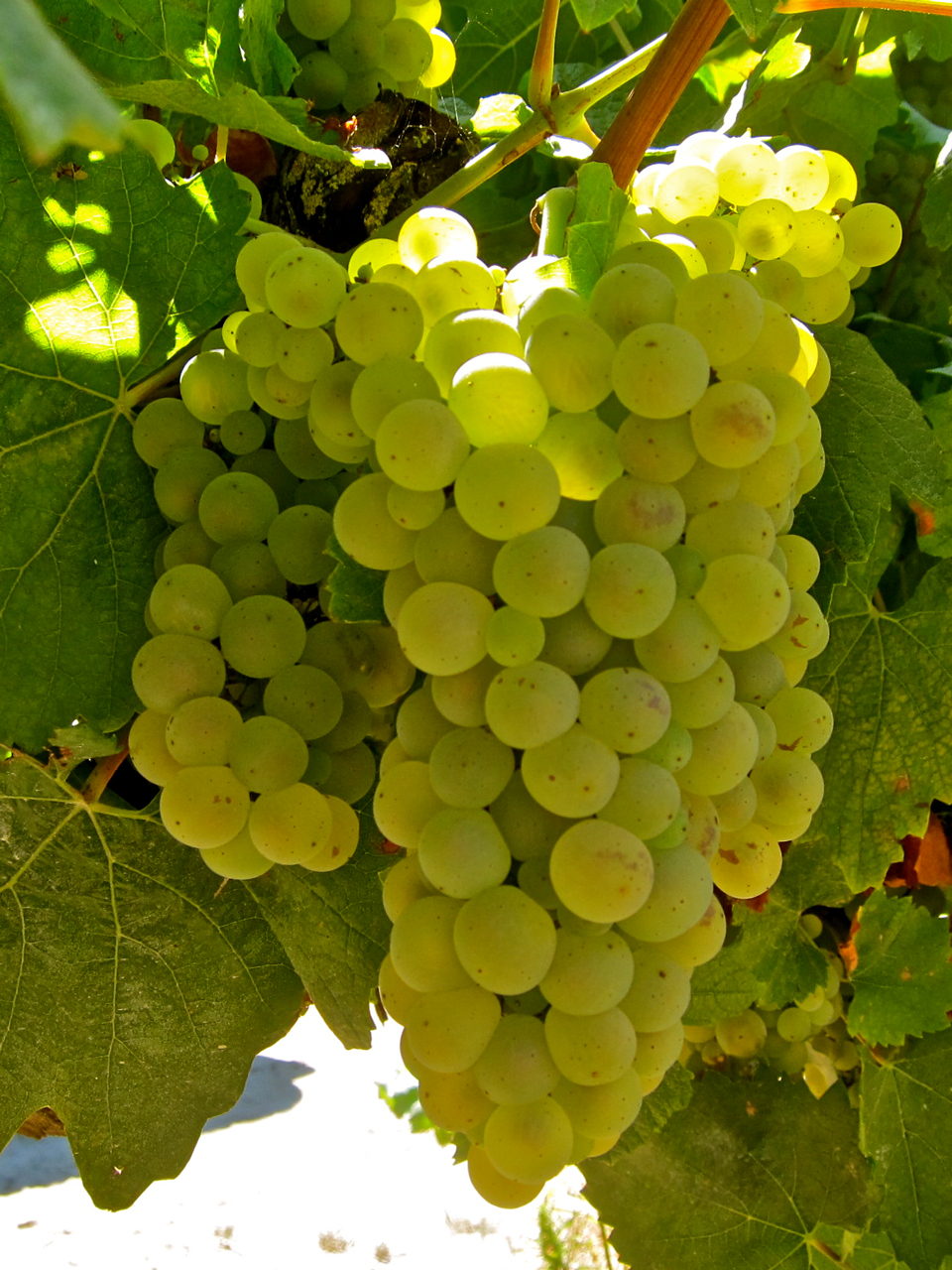
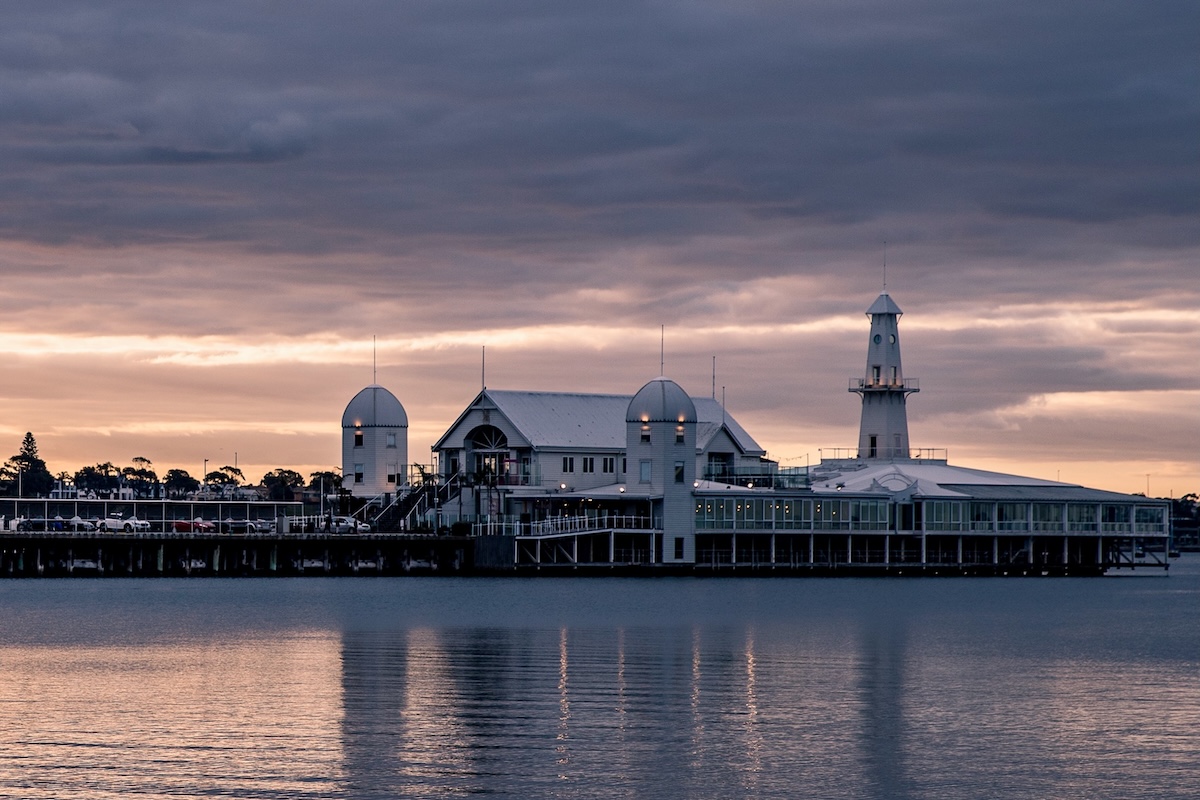
Above: Ripe chardonnay on the vine. Opposite: Geelong’s historic waterfront.
Wine growing here remains relatively small-scale, with 466 hectares of vineyard at the last official census (in 2020) compared to the Yarra Valley’s 2535 hectares. And while the Yarra Valley is technically a larger region within the Melbourne ‘dress circle’, much of its gazetted area is comprised of state forest and national park land, with most of its vineyards concentrated in a wide strip that runs through its western half. Geelong, by contrast, has a more scattershot distribution of vineyards across the region (although they tend to cluster in three unofficial subregions). Given Geelong’s relatively small number of vineyards strewn across a relatively large and geologically diverse area, it’s not hard to see why Jane Lopes and Jonathan Ross write in their book How to Drink Australian that “at the time of GI formation, in the 1990s … Geelong was destined, like others (Henty and Gippsland come to mind) to merely be an area tied together by geographic proximity, rather than any real similarity.” Understanding this diversity is, therefore, key to understanding Geelong wine in general.
Work This Time
Like most other Australian cool-climate wine regions – including the Yarra Valley, Adelaide Hills, and Tasmania– Geelong’s viticultural history is one of a nineteenth-century boom, followed by a dramatic bust, then a twentieth-century revival. Most of the region lies within the traditional lands of the Wadawurrung (also spelled Wathaurong) people of the Kulin Nation, whose population was decimated by the arrival of European settlers in the 1830s. Those settlers didn’t take long to see the viticultural potential of the region. Charles Joseph La Trobe, the British superintendent of the District of Port Phillip – as Victoria was then known – actively encouraged Swiss vine dressers to emigrate to the District and establish vineyards. (The fact that La Trobe specifically sought Swiss vine dressers, rather than French or German, may have been due to the fact that his wife, Sophie Montmollin, was the daughter of a high-ranking Swiss politician.) Thus the early history of viticulture within Geelong has a specifically Swiss flavour, with the region’s first commercial harvest coming from the Neuchâtel Vineyard (named after a Swiss region) in 1845. By 1861, the Geelong region’s 226 hectares under vine comprised more than half of Victoria’s total vineyard area – significantly more than the Yarra Valley’s mere 32 hectares at the time, and completely overshadowing the Mornington Peninsula’s practically nonexistent (and locally derided) plantings.
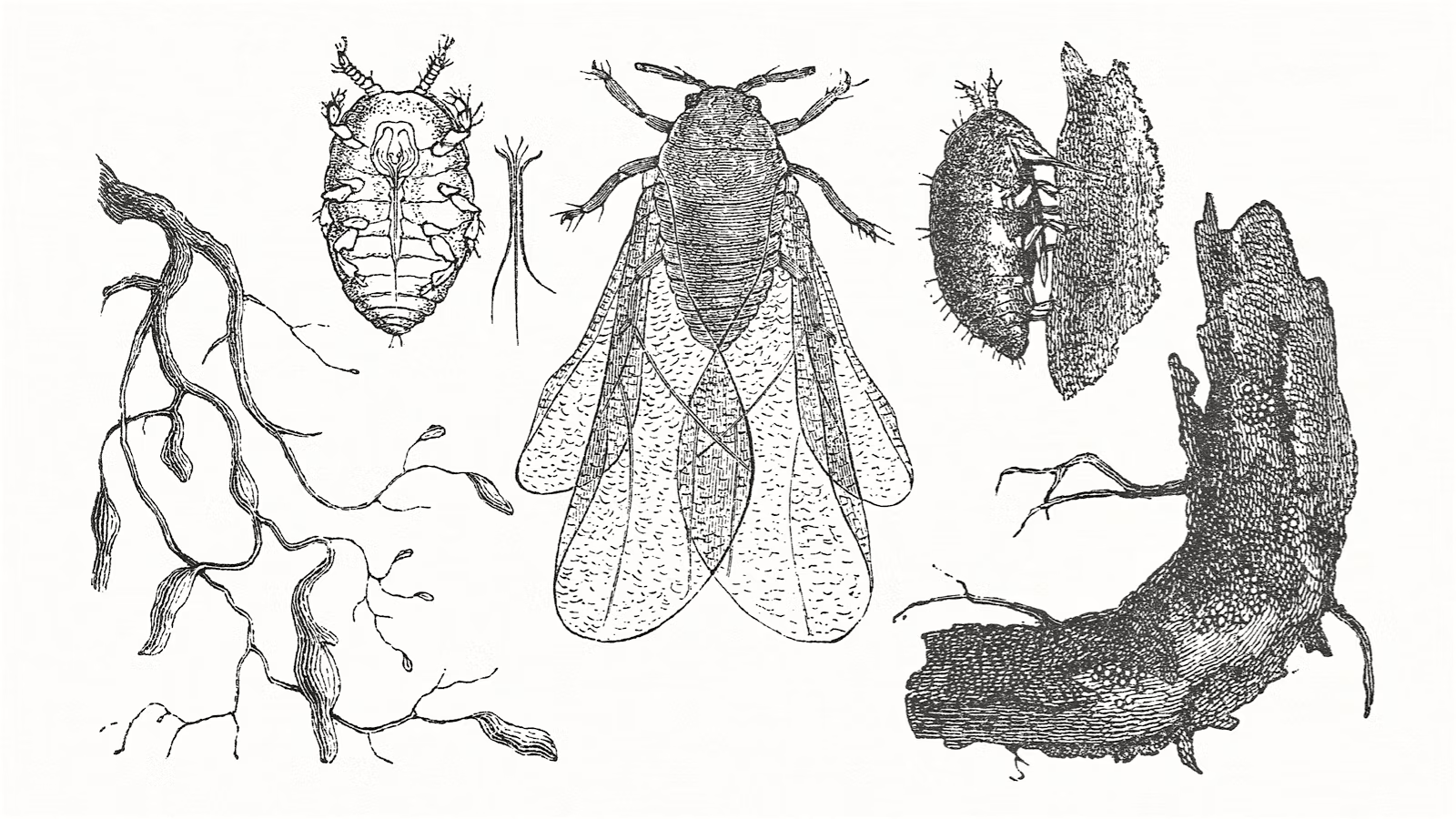
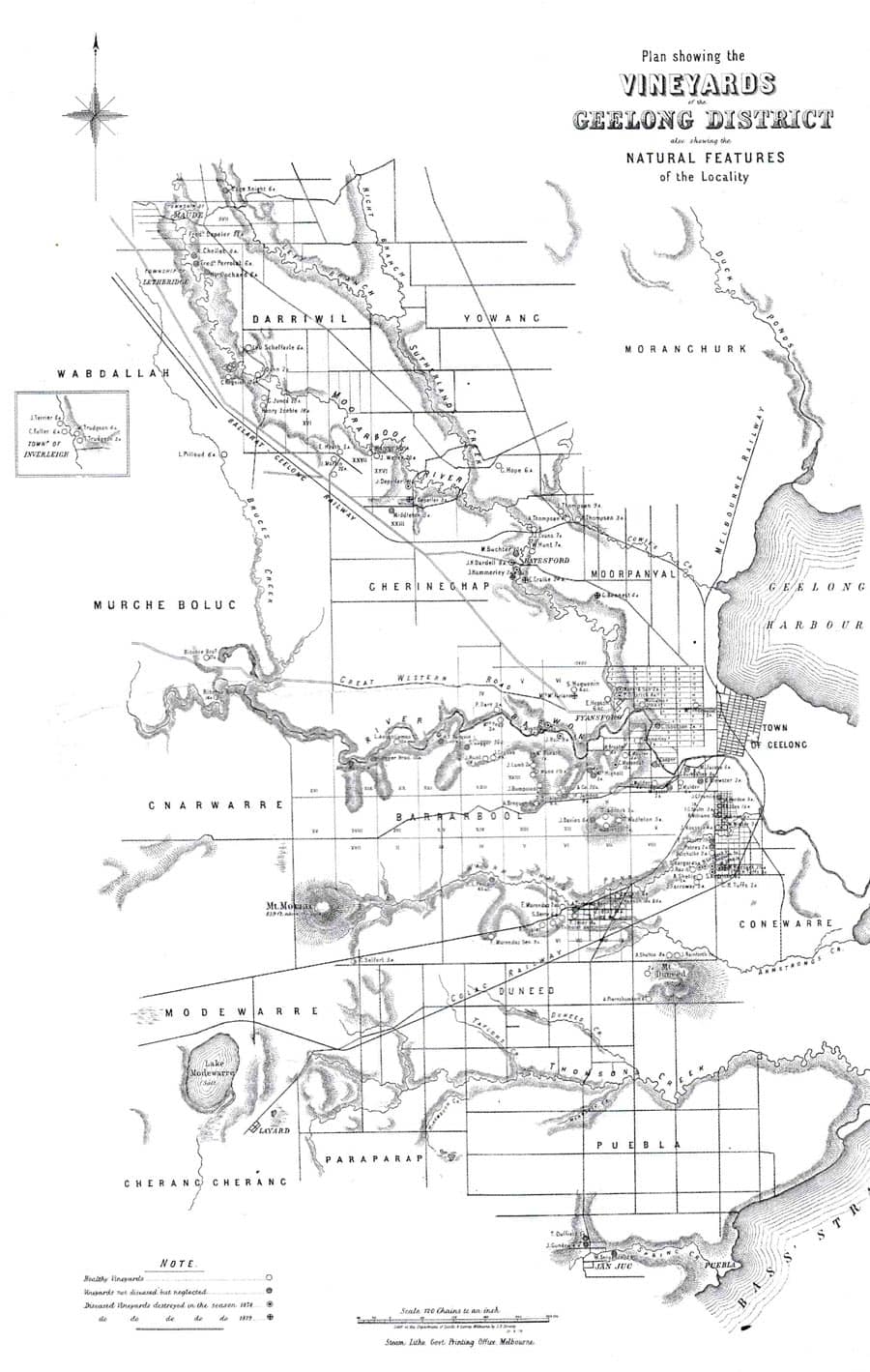
Opposite: A nineteenth-century map of Geelong’s vineyards. Above: An engraving of the grape louse phylloxera – the pest responsible for Geelong’s rapid demise from booming wine centre to a region practically devoid of wines in the space of less than ten years.
Despite its position as the premier wine region of the fledgling colony, Geelong’s downfall happened remarkably swiftly. By the end of the 1860s, Rutherglen had surpassed Geelong in terms of vine area, if not necessarily in terms of prestige. Geelong’s fortunes took another turn for the worse in 1875, when it became the site of Australia’s first infestation of phylloxera – an American louse-like insect that devastates wine grapevines by drinking the sap from their roots, which in turn leaves them vulnerable to fungal infections that eventually kill them. At this time, Australian winemakers and lawmakers were both already aware of the threat phylloxera posed owing to the devastation it had wrought across France in the decade prior, so the response was swift and merciless. In 1878, only one year after the presence of phylloxera in Geelong had been officially confirmed, the Victorian Legislative Assembly passed the Vine Disease Eradication Act, which mandated the destruction of phylloxera-affected vineyards. By 1883, the entirety of the region’s grapevines had been pulled out – with the exception of a single vine of the Swiss variety chasselas, which remains clinging to the historic stables at the former Neuchâtel Vineyard. The Victorian government gave approval for the region to be replanted in 1892, but an economic crisis that caused the collapse of the Australian banking system in 1893 ensured that very few vineyards were replanted – and those few were destroyed by a return visit of phylloxera in 1899. By this time, the Australian wine industry in general was pivoting towards fortified wines – a style that Geelong, like other cool-climate regions, could not produce effectively.
Nearly seventy years would go by before wine grapes returned to Geelong. In 1966, Daryl and Nini Sefton – a veterinarian and artist, respectively – established the region’s first post-phylloxera vineyard, named Idyll, outside of the town of Moorabool (now an outlying suburb of the city of Geelong), at the entrance to the Moorabool Valley, which extends northwest from Geelong up to the township of Meredith. Idyll was initially planted to shiraz, cabernet sauvignon, and gewürztraminer – a mix of varieties that not only reflected the very different viticultural priorities of the time, but also the general lack of availability of pinot noir and chardonnay cuttings to plant in the first place. (It was planted two years before Murray Tyrrell’s legendary chardonnay ‘cuttings heist’, and at a time when pinot noir was almost impossible to source.) While the vineyard itself still exists, it does so in a dramatically different form – it’s now the Moorabool site for “beverage solutions provider” IDL, boasting the capacity to process 15,000 tonnes of grapes per vintage (a far cry from the 1353 tonnes actually grown in the Geelong region itself in 2025) and store more than 21 million litres of wine.
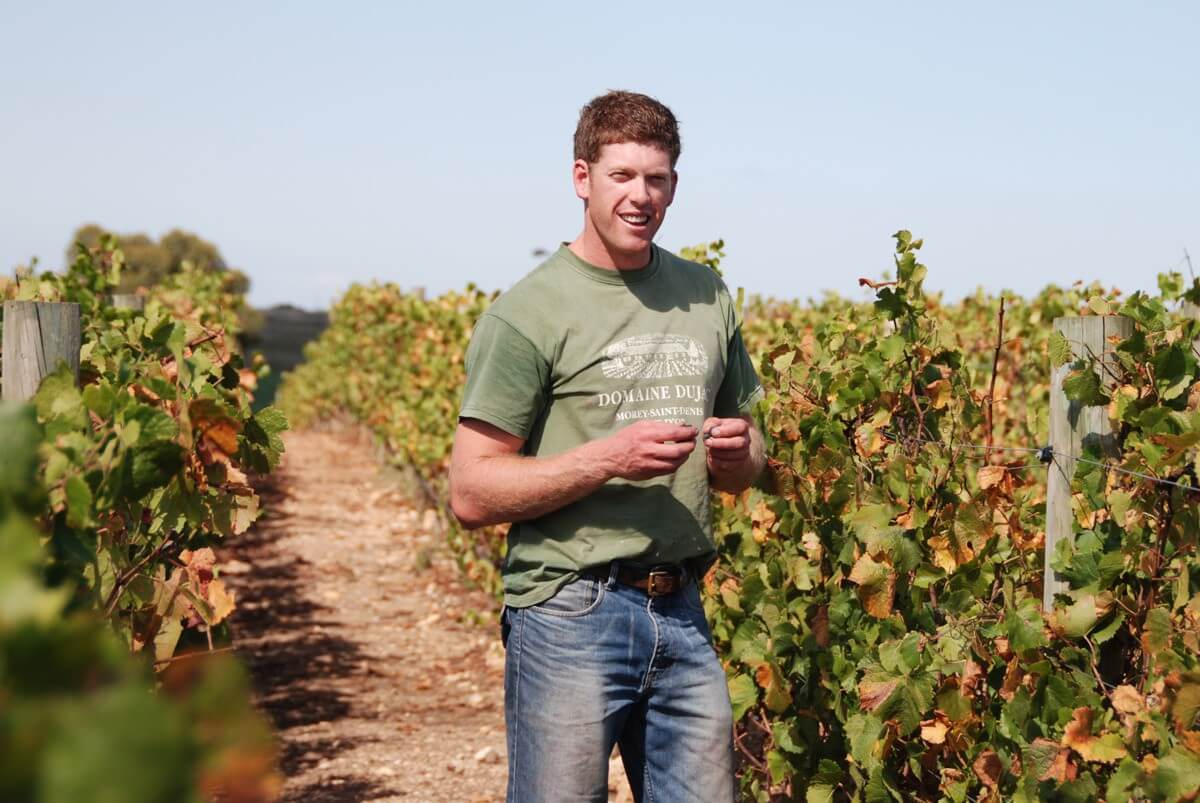
Opposite: Winemaker Gary Farr, whose work with Bannockburn and his own By Farr label has frequently been compared to the wines of Burgundy. Above: Nick Farr, now the chief winemaker at By Farr.
While the Seftons may have been the pioneers, it would take Stuart Hooper’s Bannockburn Vineyards, established in the nearby town of Bannockburn in 1974, to really kickstart the region’s wine renaissance. Hooper, a veteran of World War II, had first encountered the wines of Burgundy while flying Lancaster bombers in Europe. Although the first vines in the ground were shiraz (in a small holding within the township itself, on Range Road) a second vineyard site called Olive Tree Hill, just outside of the town itself, was planted in 1976 to chardonnay, pinot noir, and riesling – a relatively radical move at a time when Australia’s winemakers were mostly looking to Bordeaux and cabernet sauvignon or ‘Grange’ and shiraz for inspiration. Two years later, winemaker Gary Farr joined the Bannockburn team, and began crafting the wines that would eventually make Bannockburn’s reputation as one of Australia’s leading fine wine producers. Farr’s commitment to making great chardonnay and pinot noir saw him spend off-seasons in Burgundy with winemaker Jacques Seysses of Domaine Dujac in Morey-Saint-Denis starting in 1984 – and he was quick to bring Burgundian techniques back to Australia, planting the country’s first high-density pinot vineyard, the Serré block (from the French for ‘close’ or ‘tight’), in that same year. Farr established his own vineyards directly next door to Bannockburn in 1994, and left Bannockburn in 2004 to concentrate solely on his By Farr label. Both Bannockburn and By Farr now stand as icons of the region, with Farr’s work in particular gaining an international reputation for excellence – even landing extended coverage in the 2018 American wine documentary film Somm 3, in which Master Sommelier Dustin Wilson serves the By Farr wine ‘Tout Près’ blind to a room of top-flight sommeliers, describing it as “fresh, elegant, finessed, aromatic – leaning on Burgundy.”
Whispers bending backwards in the dirt
For Doug Clarke, the current vineyard manager at Bannockburn, the reason the Moorabool Valley became the epicentre of interest in Geelong wines is fundamentally about geology. “It’s all got to do with the soil,” he says. “The soil is key, really, to this valley making some pretty amazing wines at the moment. Not only is it quite old soil, but it’s got plenty of limestone, and there’s different varieties of soil – anything from sandy to clay loam to mixed loams.” That diversity of soil types comes from volcanic activity that has lifted up an ancient seabed, which in turn has been eroded and had its sands dispersed by the path of the Moorabool River as it shifted its course over time. “You don’t expect to see some sandy soils – but it’s there. And yet a couple of hundred metres away, you’ll have some really heavy rocky clay,” Clarke adds. “Each soil type has its own little attributes which will benefit vines – and it reflects in the flavour, the growth, and the overall efficiency of the vine, too. It’s pretty awesome – and I think that’s one of the many exciting things about this region.”
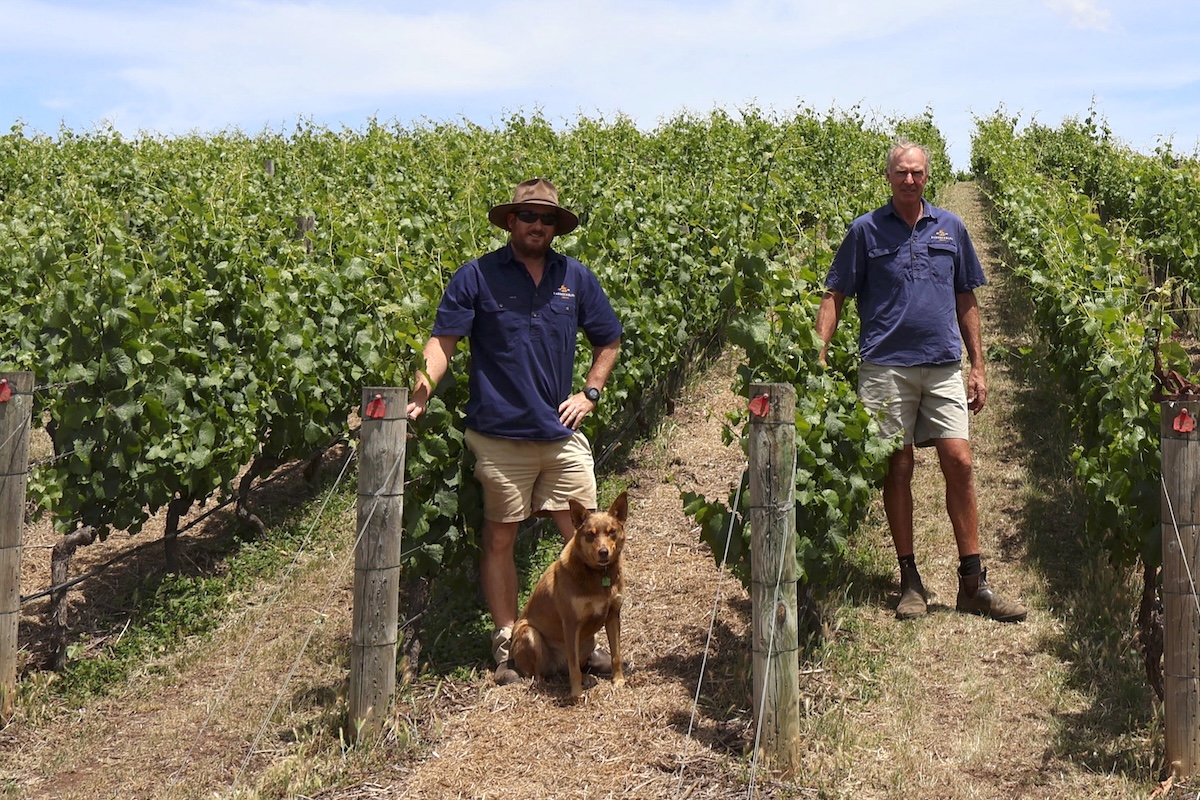
Opposite: Doug Clarke (on left), Bannockburn’s current vineyard manager, with his long-serving predecessor, Lucas Grigsby (on right). Opposite: Bannockburn’s Winery Vineyard.
Comparisons to Burgundy are de rigeur for this region’s wines, thanks to the legacy of Gary Farr’s connections with Domaine Dujac and the influence of visiting Burgundian winemakers during vintage – a tradition that continues to this day at By Farr. But for Clarke, the comparison goes beyond this connection, and speaks to the parcel-by-parcel approach that Bannockburn and other top-flight estates in the Moorabool Valley take to the growing and marking of their wines. “It’s pretty incredible to see the diversity in the soil,” he says of Bannockburn’s relatively small vineyard holdings, “and everyone else in the region has that little bit of everything, too. And it’s reflected in the wines. There’s years where some will work better than others – sandy soils will probably perform better in a wetter environment, while your clay soils will retain that water. But then when you get the dry years, the vines are able to tap into the reserves of water in the clay bed, so they are able to perform slightly differently.”
This parcel-by-parcel approach to winegrowing therefore means that each parcel is tended to in a different manner each year, depending not only on soil type but also other factors such as clone, rootstock, aspect, elevation, and row orientation: “So every year – no matter if it’s wet or dry – you’re going to see different approaches in those in those vineyards,” Clarke says. Likewise, as Bannockburn has expanded its vineyard holdings across the years and planted in new blocks, the approach has always been an experimental, responsive one – changing row orientation to help fruit ripen more evenly, or planting in a mixture of chardonnay clones to see which ones perform best and mitigate the risks of winegrowing in a cool (and sometimes extreme) climate: “It’s always good to have that mix, because if you get stuck on one clone and that happens be something that’s more prone to not flowering very well in cold weather, you could end up with a real lack of chardonnay fruit, which would be a little bit disappointing,” he adds.
“It’s pretty incredible to see the diversity in the soil at Bannockburn – and everyone else in the region has that little bit of everything, too.”
Taking this parcel-by-parcel approach also means that there’s close contact between the winery team and the vineyard team at Bannockburn, both of which are focused on delivering the best possible wine by growing the best possible fruit. “Our end of the game is to try and deliver that best fruit to Matt [Holmes, Bannockburn’s winemaker],” Clarke says. “So we try to keep the vines happy, we try to keep them healthy, keep them under-stressed.” He adds, “We’ve got to work hand-in-hand. It’s very much team-based, and we always ask for Matt’s input. I’m always questioning, was he happy with that? I’m always checking what the levels were. Then we can reflect and go, ‘Okay, well, look, maybe we’ll try something different next year in the vineyard and see if we can alter that’.” And while it might be tempting to pin the characteristic concentration of Moorabool Valley chardonnay to a specific aspect of its growing conditions – be that its climate, which can experience seriously hot days in summer with chilly nights to retain acidity, or its complex matrix of soil types – Clarke is quick to point out that the resulting wines can only be understood holistically. “It’s a balance of everything we have,” he says. “It’ll be our soils, the winemaking, the viticultural processes, and the weather – I think it all comes into effect. It’s a bit of an all-round effort – every component has a part to play in what makes this area a special little wine region, as far as I’m concerned.”
Open Water
Roughly thirty-eight kilometres south-east of Bannockburn, on the Bellarine Peninsula, the vineyards at Oakdene are in a completely different viticultural world. “The Bellarine is 100% influenced by the ocean, you know?” says Steven Paul, Oakdene’s general manager and director. “Our two vineyards are three kilometers and four kilometres from water – one from [Port Phillip] Bay, and one from the Bass Strait.” As opposed to the warm-to-hot days and chilly nights that can be seen in the Moorabool Valley, here the climate is more even, moderated by the influence of these bodies of water: “The maritime influence is, effectively, that the land temperature tends to mimic the ocean’s temperature,” Paul explains. “So we get a moderated summer – it’s cooler in summer. And we get a moderated winter – it’s warmer in winter, so we don’t get frost, which you would get inland.”
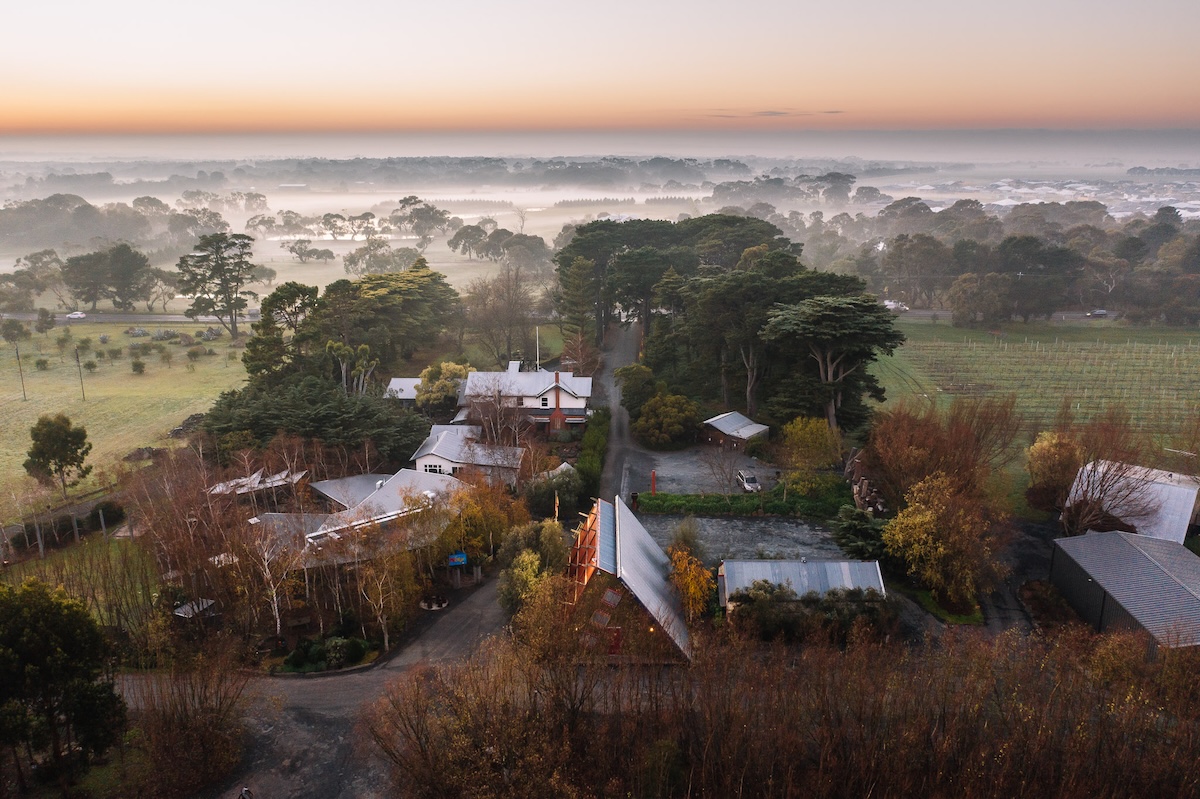
Opposite: Steven Paul, general manager of Oakdene and current committee chair of the Geelong Wine Show. Above: an aerial view of one of Oakdene’s two Bellarine Peninsula vineyards.
While this is a great benefit in terms of protecting crop levels from the devastating impacts of ill-timed frosts, which can dramatically slash how much fruit is produced in any given year, it also comes with its own challenges. “You also get a lack of what we call ‘diurnal change’ in summer,” Paul says. “So when it does get hot, it stays hot. And that’s probably the biggest challenge with early ripening grapes like pinot noir and chardonnay.” It’s not just the less-severe differences between night and day that distinguish wines from the Bellarine from wines from the Moorabool Valley: “Bellarine chardonnay looks a little bit sun-kissed,” he adds. “Because of low rainfall and shallow soils, we get pretty small canopies – and pretty small canopies means we get less shading of fruit by the leaves. So you get that slightly coloured look sometimes in those really sunny, warm years – and that comes through in the glass. You’ll always see a little bit more richness, a little more generosity – some of the stone fruit characters in the warm years can push towards yellow stone fruits instead of white.”
This tendency towards riper chardonnay fruit character means that winemakers working with Bellarine Peninsula fruit have to adapt in the winery to tame its natural exuberance – especially in a market where exceptionally generous styles of chardonnay are decidedly out of fashion. “With the pendulum swinging, as it has been for many years, from those richer styles and coming back to the finer styles of chardonnay – especially in the premium area where we play – you then have to start trying to work out how to limit that yellow stone fruit and that richness,” Paul says. “And that’s generally done in the winery, where we inhibit malolactic conversion – so no malo, if possible.” The process of malolactic conversion – where certain species of bacteria convert the wine’s natural malic acid, reminiscent of green apples, to the softer lactic acid, reminiscent of the tang of Greek yoghurt – not only changes the texture of the acidity and certain flavours in the wine, but also reduces its total acidity, so avoiding the process ensures that Bellarine Peninsula chardonnays are as bright as possible. “I mean, a couple of barrels might go through – but everything else is sulphured up enough to make sure it doesn’t happen,” he adds. “So you’re retaining natural acidity – you’re not adding acid back to the blend when you put it together. That keeps it tight.” Likewise, leaving some solids from the pressing process in the fermenting juice can add a pithy character that builds tension without adding extra acidity: “We’re looking for some sort of pithy, almost citrus rind–like texture,” he says. “We achieve that with wine fermented with a decent amount of solids blended back in – so keeping your solids, keeping that textural component. And that tends to firm up the wines, too.”
“Bellarine chardonnay looks a little bit sun-kissed. Because of low rainfall and shallow soils, we get pretty small canopies – and pretty small canopies means we get less shading of fruit by the leaves. You’ll always see a little bit more richness, a little more generosity.”
Paul’s position as the current committee chair of the Geelong Wine Show means that he’s tasted the region’s wines extensively – and can therefore track trends within the Bellarine Peninsula’s makers over the years as they use winemaking techniques to mediate between changing consumer tastes and the naturally generous fruit produced by the unofficial subregion. “So you’re now seeing wines come out of the Bellarine and yeah, okay – they do look a bit sun-kissed and a bit rich,” he says. “I find that really appealing. They tend to be very easy to drink as young wines. But maintaining natural acidity with no malo, and just adding back some solids to give it that textural component – that’s the plan with what we do at Oakdene, and I’m seeing it across the board with majority of the wines being made on the Bellarine.” He adds that winemakers from the Bellarine are also tending to reduce the length of time the wines sit in oak – a decision partly driven by commercial necessity that has the benefit of freshening up the wines. “Everyone tends to be pulling wine out of barrel earlier than they used to,” he says. “Even as recently as five years ago, we were holding chardonnay and pinot noir over vintage, so those wines could see twelve to fourteen months in French oak. Now we get the wines out of oak and into bottle a month before harvest, so you’re looking at ten or so months in barrel now. They’re just getting to the bottle much fresher.”
If Not Now, Then When?
One of the criticisms that has been levelled at Geelong as a wine region, by figures both within and outside of it, is that its proximity to the tourism drawcards of the Great Ocean Road and the legendary surf beaches around Torquay mean that the wines – especially those made in the more tourist-friendly Bellarine Peninsula and Surf Coast unofficial subregions – can lack ambition. “There is a sizeable segment of the wineries in Geelong whose focus is not solely to grow premium grapes and create fine wine, and whose ambitions for regional identity centre more on creating winery tourism than on the wines and growing practices,” write Jane Lopes and Jonathan Ross in How to Drink Australian. “Geelong is Victoria’s best-kept wine secret, but perhaps too well kept: a bit more energy, investment and cohesion of community could do the region good.” The fact that Geelong’s locals are more than happy to soak up what doesn’t get sold to visitors – the city’s wine lists are dominated by local product and local producers are supported in a way that producers in many other Australian regions would envy – adds an extra layer of difficulty for those from outside the region who want to get their head around it. Outside of the region’s biggest names – Bannockburn, By Farr, and Lethbridge – the wines are not frequently seen even in a city as close as Melbourne, let alone further afield.
“The map has shrunk, because we’re now playing to our own strengths. We’re selling more wine in a much smaller area.”
Steven Paul argues that what outsiders might perceive as insularity is, in fact, one of the region’s strengths. “We’re very quick to, look at what we don’t have, you know?” he says. “I’m always about, ‘Well, hold on a minute, how lucky are we?’ Look at what we’ve actually got here, and look at what we’ve got to work with … we need to look at what is the smartest way to reach market, and the smartest way financially to make it to market, too. So if we’re in a position where we can distribute our own wines, and sell as much as we can directly, we’re really fortunate.” He argues that what’s happening in Geelong is not dissimilar to a general trend towards more local consumption across Australia and Victoria in particular. “We all had much wider distribution even ten years ago,” he says. “Distributors in Sydney, and much wider distribution in Victoria … the map has shrunk, because we’re now playing to our own strengths. We’re selling more wine in a much smaller area.” He adds, “Maybe that’s putting all your eggs in one basket – but what do you want to drink when you go to McLaren Vale? Do you want a Barossa shiraz, or a McLaren Vale grenache?” He also notes that this criticism of Geelong as a region runs counter to the general idolisation of ‘Old World’ wine cultures amongst Australian wine lovers: “If you go to the source, you drink what’s local – you don’t drink Rhône in Burgundy!”
“It’s a powerful little region – and it’s definitely punching above its weight. There’s some mighty wines coming out of here.”
Keeping consumption mostly local also helps to reduce the environmental impact of wine production – a pressing concern in a region whose relatively lower levels of rainfall (compared to similarly cool regions throughout Victoria) make it particularly susceptible to the adverse effects of climate change. Reflecting on his eighteen years working at Bannockburn, Clarke says, “I have seen is some pretty extreme cases of weather. Just after I started 2008, we came into the early ’09 drought. I think we picked just under forty tons in my first year. And me, with my naïve knowledge, was looking at all this fruit, like, ‘Oh, this is amazing! How good’s this?’And then I sort of got the look and the shake of the head – like, no, no it wasn’t good.” This was followed by a relatively normal vintage, then a vintage affected by flooding, then another relatively normal vintage. “Lucas [Grigsby, the former long-term vineyard manager of Bannockburn] has always said to me, ‘In your first four years, you’ve seen the absolute extremes’. And I’ve always kept that in the back of my mind.” He points out that recent vintages have been equally unpredictable, highlighting the fact that the 2026 vintage came in relatively late despite some serious heat spikes over the summer: “I think that’s partly the difficulty of what’s going on with climate change,” he says. “It’s very much trying to work with something when you’re completely blind. You just have to, based on the merits, look at what the the Bureau of Meteorology says and try and work out a decision. For instance, this season it looks like we’re heading into an El Niño. So we’ll take precautions and go, ‘Okay, what can we do to try and conserve water?’ It doesn’t necessarily mean it’s going to be extremely dry year, but we’re going to take that on board. It’s always in the back of your head – ‘Okay, what are the curveballs that are going to get thrown at us? And how can we counter those to try and best look after the vines and the quality of fruit?’”
Despite these challenges, Clarke remains bullish about the prospects for the Moorabool Valley and Geelong wine in general. “It’s a powerful little region – and it’s definitely punching above its weight,” he says. “There’s some mighty wines coming out of here.”
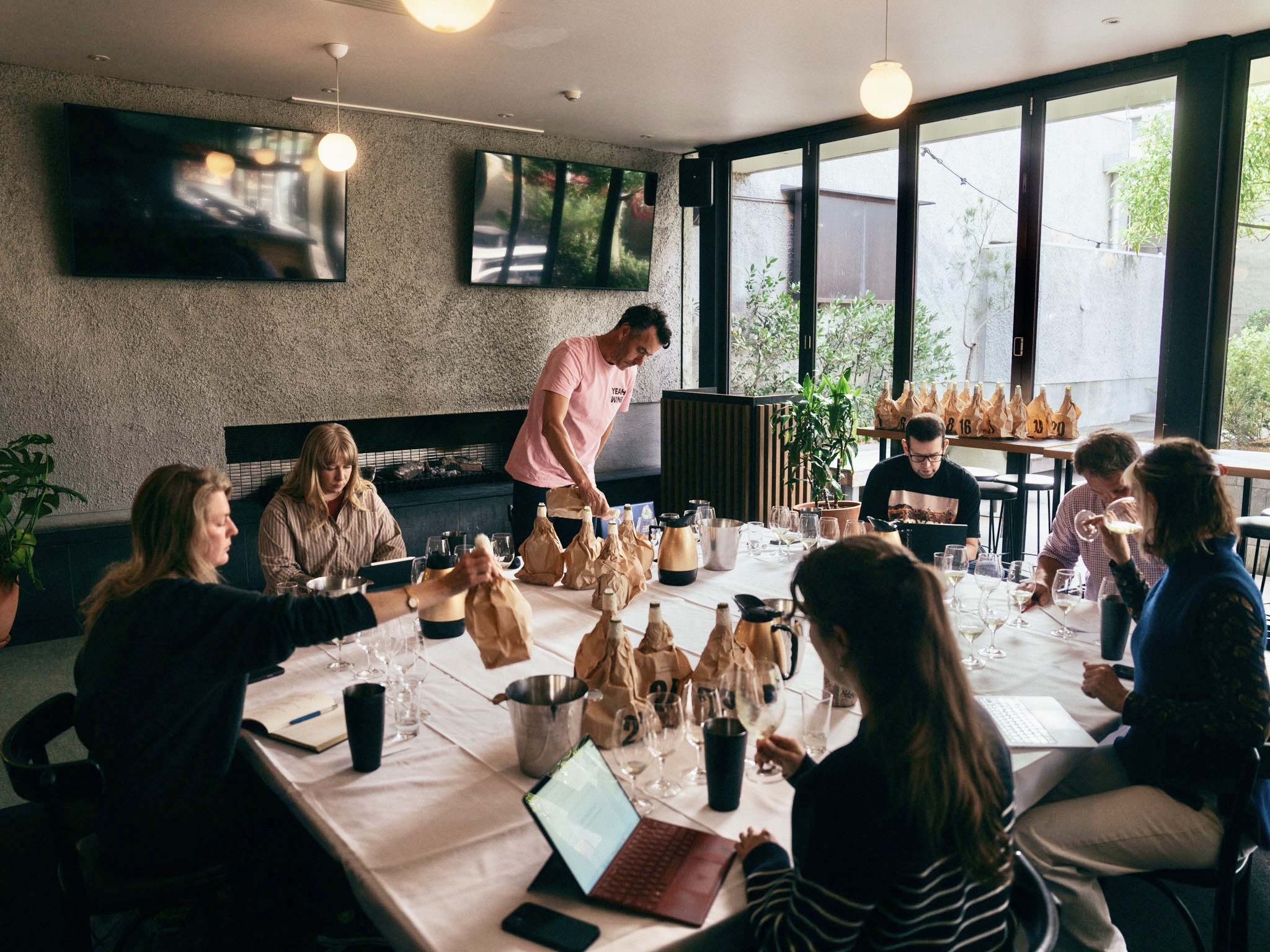
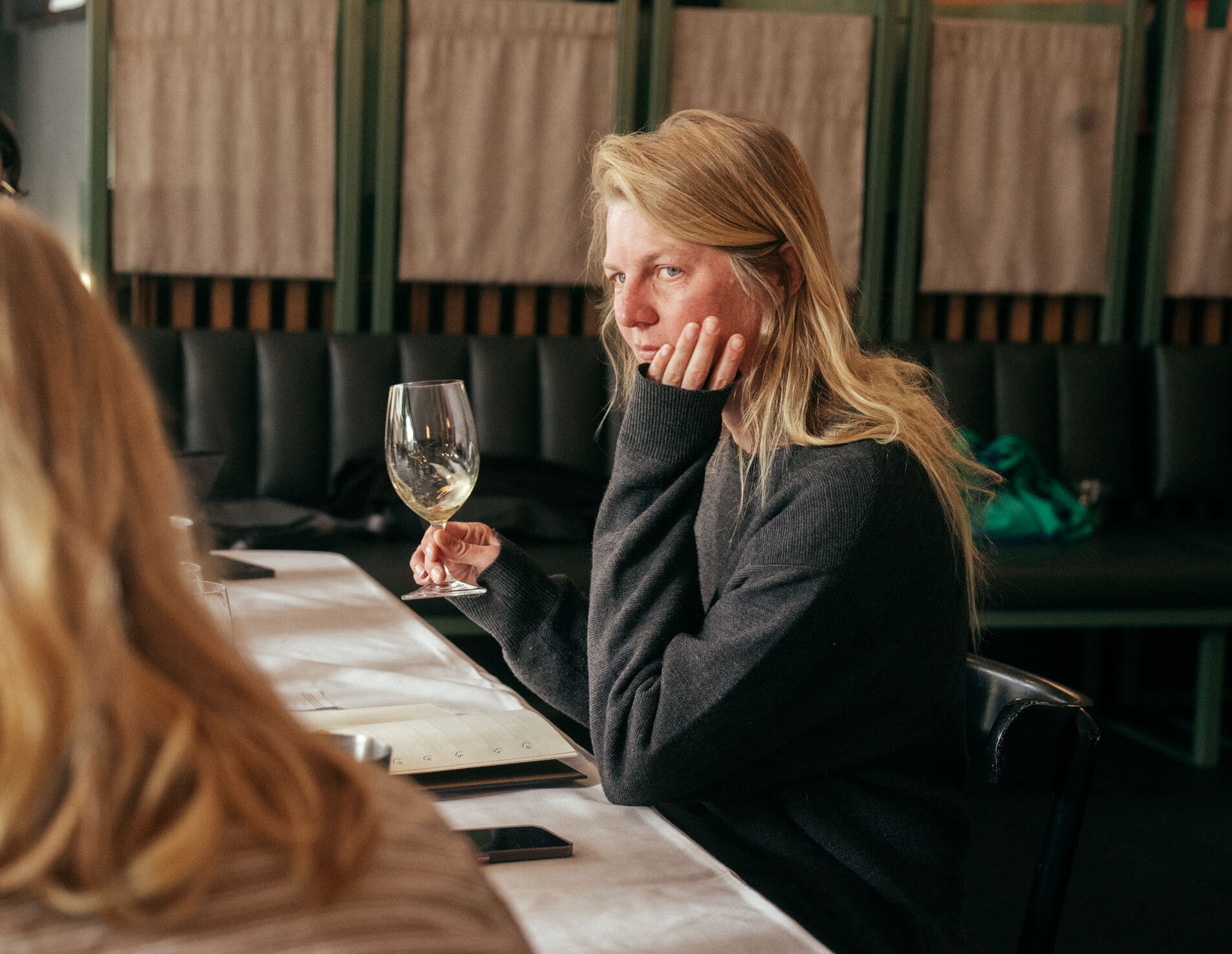
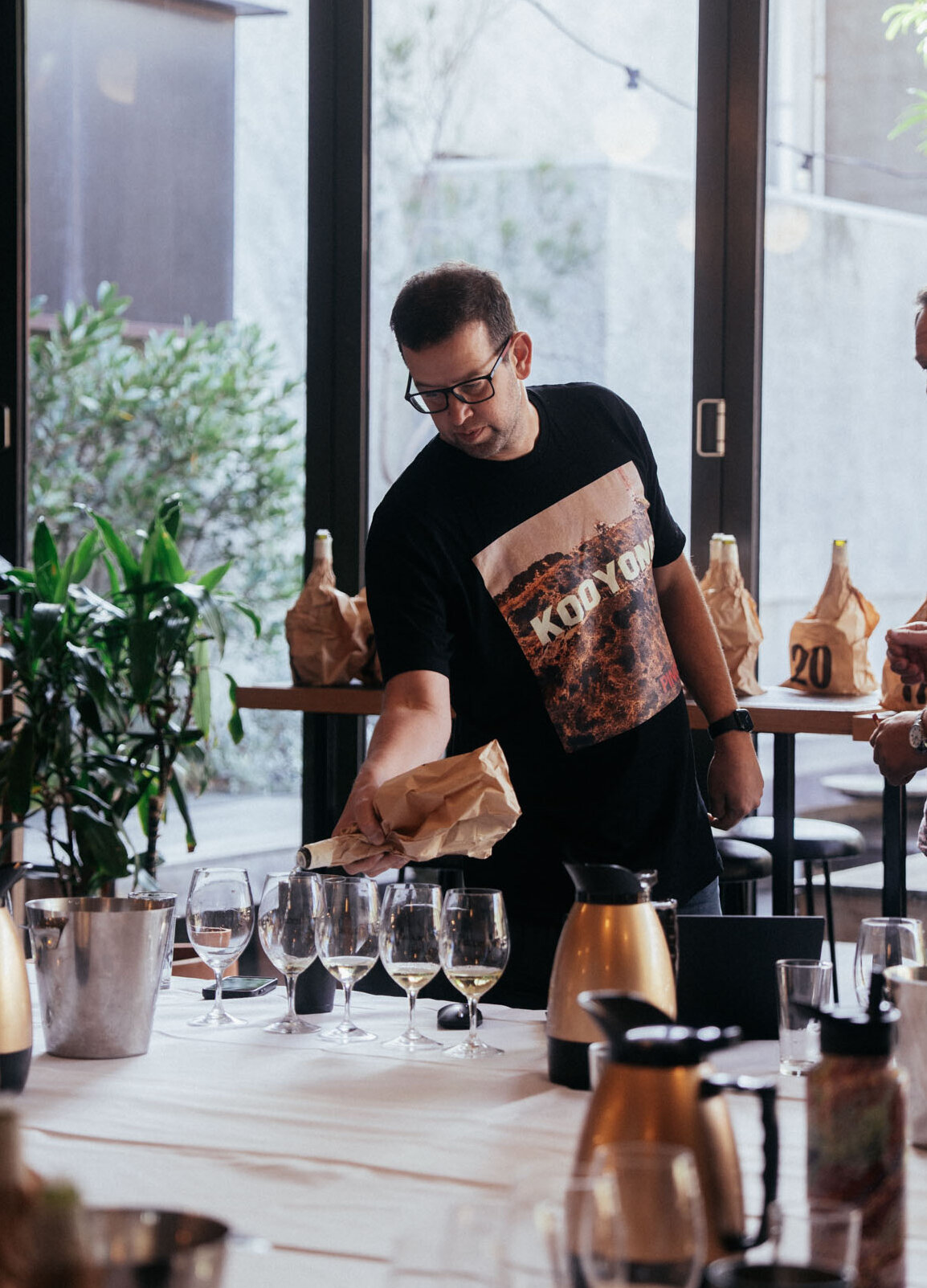
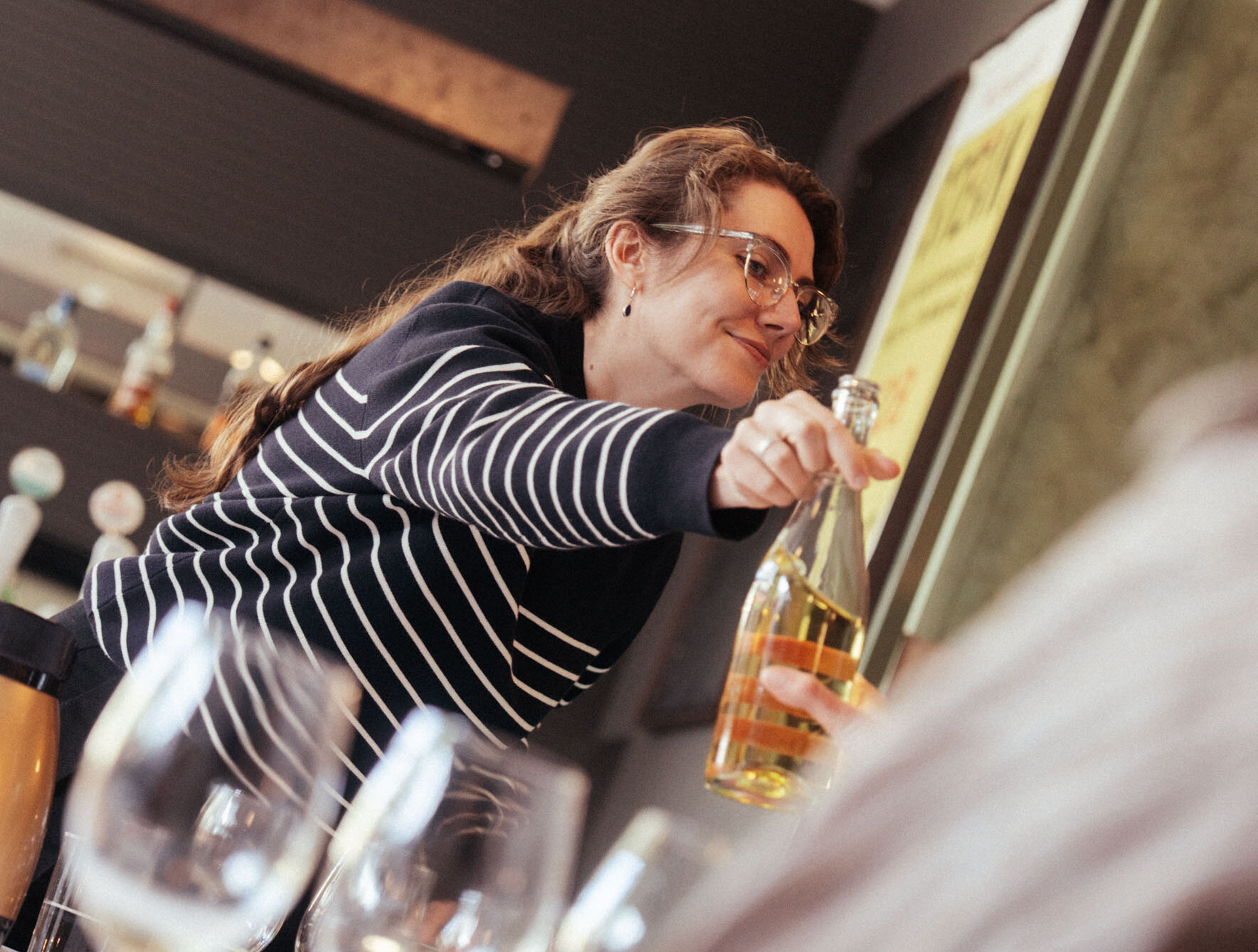
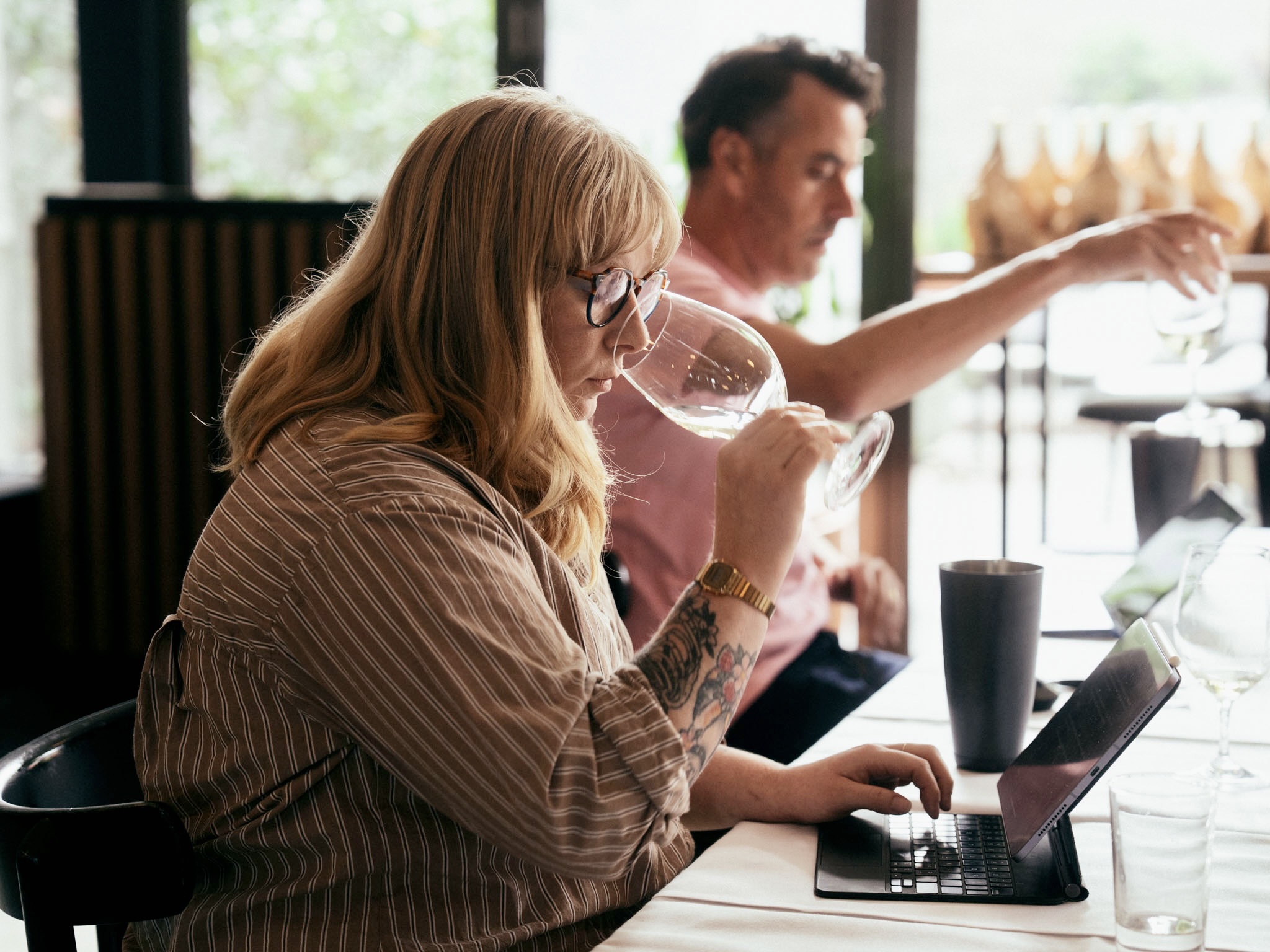
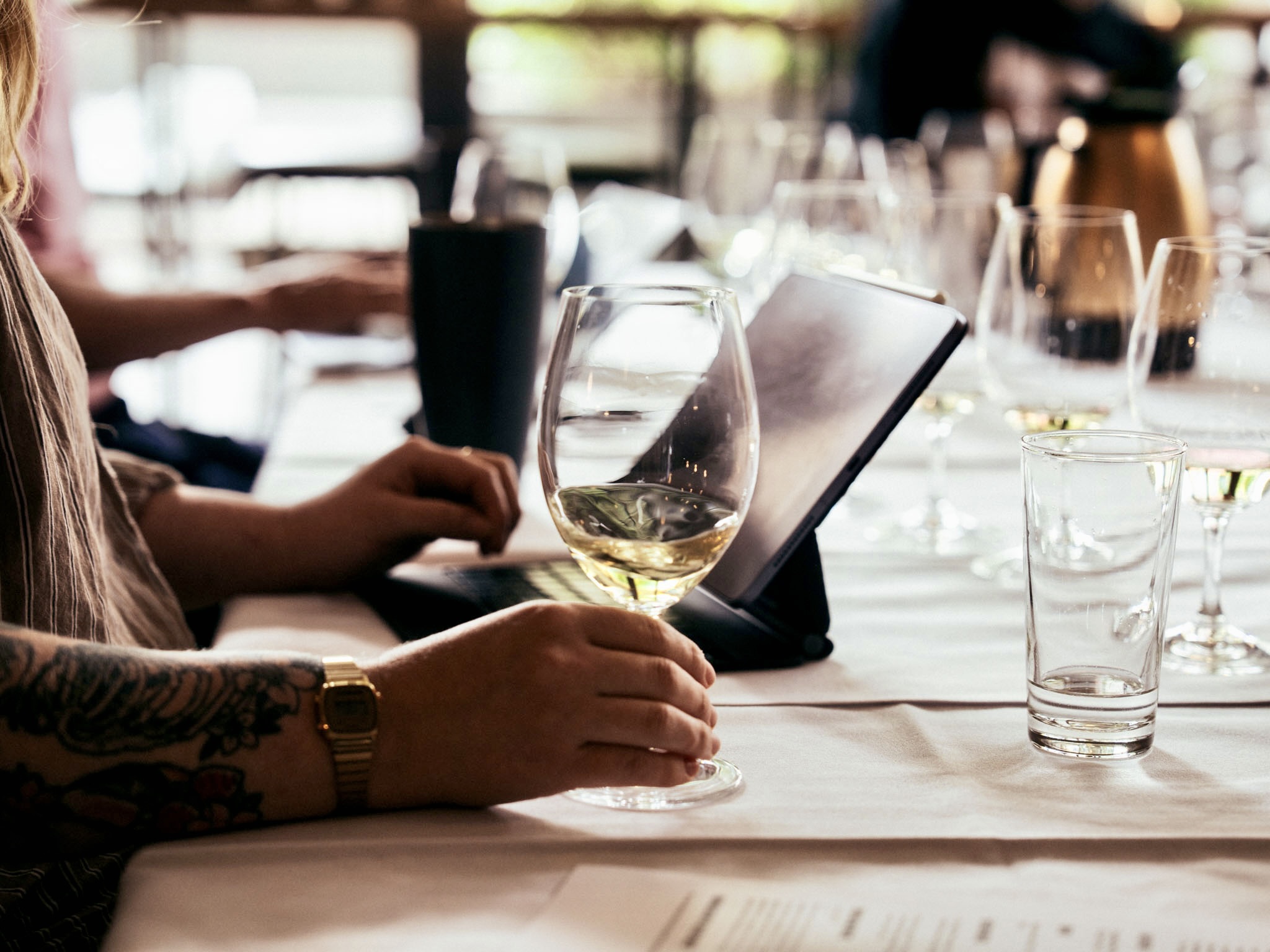
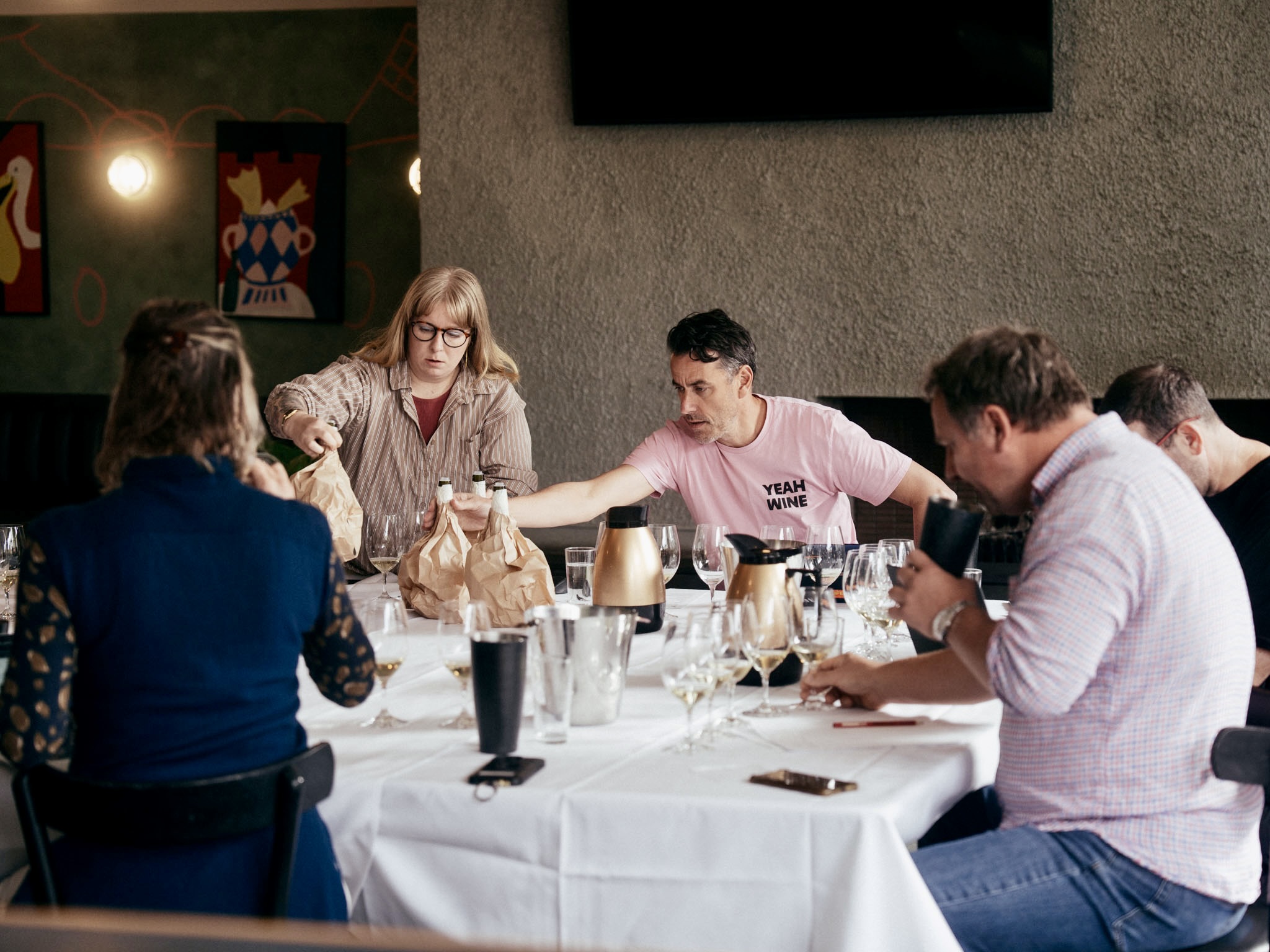
Above: Our panel of experts assembled at the Bleakhouse Hotel, Albert Park (Melbourne).
Outtakes from the tasting
We gathered every example of Chardonnay from Geelong that we could find, and set our expert panel the task of finding the wines that compelled the most. All wines were tasted blind, and each panellist named their top six wines.
Our panel: Mem Hemmings, owner and winemaker, Meredith; Vassily Pestretsov, winemaker, Lethbridge; Bonnie Spain, senior sommelier and wine buyer, Navi; Steven Paul, general manager and director, Oakdene; Hayley Williamson owner and wine buyer, Nina’s; Tim Perrin, chief winemaker, Kooyong and Port Philip Estate; Madeleine Horrigan DipWSET, wine educator and MW student.
Williamson commenced the discussion by noting that the wines in the line-up had a strong thread of similarities running through them all. “Across the board, the wines were quite similar,” she said, “but there was a nice variation in florals and fruits and styles. Some had a little bit more – or a lot more – savoury punch and some of them were just nice and nutty. It was nice representation – I wouldn’t necessarily have picked it as Geelong if I’d done it completely blind, but there was a strong through-line there.” Perrin disagreed with Williamson, arguing for the diversity inherent in the region’s chardonnays: “To me, there was a massive diversity of style – but also of site,” he said. “There were definitely some richer, more dry, more inland examples – then there were these cooler, more mineral, almost briny wines.”
Above: Hayley Williamson. Opposite: Tim Perrin.
Spain argued that the diversity of the wine in the lineup starts in the region’s soils. “I grew up around Geelong, and I remember, as a kid in Lara, the soil there dries out so much – it’s red and it cracks,” she said. “Where my parents are now, on the Bellarine Peninsiula, it’s sandy and soft – really fine. Those soil types are just completely different, because the closer you get to the You Yangs, the more basalt you have – throughout Bannockburn and Meredith, and things like that. You don’t have that same influence coming to the Surf Coast and Bellarine.” She added that these two unofficial subregions are likewise quite different owing to their exposure to different types of maritime influences: “There’s less protection for the Surf Coast – they’re out closer to the Southern Ocean, so you have those cooler breezes coming through. The Bellarine is still somewhat protected by Port Phillip Bay.” She asked, “So are we comparing apples to apples here, when the region’s so big – or are we comparing a Bravo apple to a Granny Smith apple?”
“There was a massive diversity of style – but also of site. There were definitely some richer, more dry, more inland examples – then there were these cooler, more mineral, almost briny wines.”
Perrin said, “The pleasing for me was that there was very good examples of both styles. I definitely selected two or three of each style – because, at the end of the day, good winemakers understand their site and make the best wine possible from their site. It’s playing the hand that you’ve been dealt with your vineyard the best you can play it.” He added, “It was quite encouraging to me to see both those mineral, sea-spray wines but also some fantastic, rich, peachy, buttery malolactic styles – which, if anything, are harder wines to produce than a pretty, minerally one. I think that’s hugely encouraging for a region that has such a diversity of styles.”
Horrigan agreed, added “I felt like a lot of the wines were ambitious in what they were setting out to do – channelling different winemaking approaches from the smoky-toasty notes through to something a bit more luscious and full-bodied. So it felt like a range – and there was definitely vision in the wines.” To this, Williamson responded, “I’d be interested to see the vintages in the line-up, because I found, for a few of them, that the alcohol was a bit out of whack – a bit too high.”
“There’s people out there that are buying the same chardonnay every time they go to the bottle shop – which is fantastic if it’s your chardonnay, right? And I think they just have confidence in the consistency of the producer, more so than being focussed on which vintage they pick up when they grab it.”
This kicked off a discussion about vintage variation in the region. “Vintages can be markedly different,” Paul said. “Even ’23 to ’24 to ’25 – they’re markedly different vintages, and obviously what goes to bottle is exactly representative of those years. Does that mean end-consumers really have to pay attention to vintage? I’m not sure. If you like those richer, riper styles, you can see more of that in particular years.” He added, “House style is still important. There’s people out there that are buying the same chardonnay every time they go to the bottle shop – which is fantastic if it’s your chardonnay, right? And I think they just have confidence in the consistency of the producer, more so than being focussed on which vintage they pick up when they grab it. So think it’s important to try and be consistent at the moment and get the best of each vintage.” Williamson concurred, adding, “Especially for chardonnay. People who like chardonnay, if they go and buy your chardonnay once, and it’s a big buttery thing – and that’s the style they like – then they come back later and it looks more like Chablis, they’re probably not going to buy it again.”
Above: Steven Paul. Opposite: Mem Hemmings.
Hemmings asked, “In the face of climate change and the variable weather patterns that we’re experiencing, how much do you feel we’re future-proofing if we lean into house styles? Does that mean we’re working against what Mother Nature is handing us?” In response, Perrin argued that house style isn’t incompatible with an unpredictable climate: “You never work against Mother Nature,” he said. “You’ll never win. You play the hand you’re dealt – if it’s a warm year, you probably pick a bit earlier; if it’s drier, you gotta make the right decisions. But at the end of the day, the two things that are consistent are your site and your style. Those are the same – so you’ve got to keep on with that.”
“Now, with all these fluctuations, we try to monitor everything very, very closely. That gives you the possibility to pick earlier – you don’t just turn up to the vineyard and say, ‘Oh, no, it’s over-ripe’.”
Pestresov argued that part of the solution lies in more considered and flexible viticulture. “I think a good approach is probably just more detailed monitoring of everything, which is what we’re trying to do at Lethbridge,” he said. “Before, we’d been relying on our knowledge of previous years. But now, with all these fluctuations, we try to monitor everything very, very closely. That gives you the possibility to pick earlier – you don’t just turn up to the vineyard and say, ‘Oh, no, it’s over-ripe’. Every day, pretty much, you have to know what’s going on.” He added that staggered picking times, informed by the intimate knowledge given by intensive monitoring, could help producers achieve consistent wines naturally in a changing climate: “You can have a portion picked earlier, a portion left a little bit longer for the riper character – then it all kind of works together.” Despite this, he reiterated that some vintages would remain very difficult. “This summer we had forty-six degrees, with absolutely shocking wind,” he said. “You come to the vineyard in the morning, then come to the same vineyard that evening and its a different place – it’s just scorched … every aspect of the plant suffers, not only what you’re chasing, which is its fruit, but the whole canopy, the whole thing.”
Opposite: Vassily Pestretsov. Above: The tasting in full swing at the Bleakhouse Hotel, Albert Park (Melbourne). All wines were sampled ‘blind’.
The conversation turned from the challenge of climate change to another challenge for the region – the question of how well understood it is in other parts of Australia. Spain argued that the region’s robust support for its own wines meant that there was no need for wineries to focus on further-flung markets: “It’s hard to put a wine list together in Geelong without having 50% of the list be from Geelong – you’ll get chased out of town otherwise,” she said. “Not for bad reasons – it’s just that we love what we do and we love who we’re representing.” By contrast, she argued, wines from the region’s lesser-known producers were a hard sell outside of Geelong itself: “People start to get a bit wigged out – they’re like, ‘Well, it’s not By Farr, so I’m not going to fuck with it’.”
“It’s hard to put a wine list together in Geelong without having 50% of the list be from Geelong – you’ll get chased out of town otherwise. Not for bad reasons – it’s just that we love what we do and we love who we’re representing.”
To this, Paul responded, “I think we forget that all the pioneers in every region – doesn’t matter whether it’s Margaret River, or Geelong, or the Yarra, Mornington, or Beechworth, or whatever – needed to find a market outside their own town, and urgently, too. Then, of course, distributors come into play, so wine prices effectively double. And then those regions take off. But in Geelong right now, we’re in a situation where we have the largest population outside of capital cities in this country … we don’t need to come to Melbourne, we don’t need to go to Sydney to sell our wines.” He added, “When you’re from a region where you don’t have that population, you have to go to the big cities. So that’s why we’re criticised for people probably not seeing enough Geelong wines in the big cities – but also that’s how we can offer much value in our wines, because we sell them direct.”
Above and opposite: Scenes from our Geelong Chardonnay Deep Dive at the Bleakhouse Hotel, Albert Park (Melbourne).
The Panel
Mem Hemmings is the owner and winemaker of the label Meredith. Originally from England, she moved to Australia in 2014, and joined the team at Three Blue Ducks in Bronte shortly afterwards. There she discovered a passion for authentic and sustainable beverages – and a two-day stint in a winery during harvest cemented her desire to work as a winemaker. She pursued a bachelor’s degree in viticulture from Charles Sturt University while working at Mary’s and Bloodwood in Sydney’s inner west, before commencing a mentorship with Mike Bennie through Women in Hospitality’s Mentor Program. This lead to her role on the opening team at P&V Wine & Liquor Merchants, where she went on to lead the education arm of the business, holding masterclasses and developing original content alongside growers, producers, and importers. She has worked as a winemaker at Limus, M. & J. Becker, and Frankly, This Wine Was Made by Bob, and has worked a vintage in Kakheti, Georgia, with Gogo Wines. She launched her label, Meredith, with the 2022 vintage, and currently works as the group beverage and training manager for Three Blue Ducks.
Vassily Pestretsov was born in Crimea – a place where winemaking has been practiced for over 2500 years. Before coming to Australia, he worked as a winemaker in Crimea (including a stint at the legendary Massandra estate) and internationally. He joined the team at Lethbridge Wines in Geelong in 2019.
Bonnie Spain is a Melbourne-based sommelier with a particular expertise in Victorian and Iberian wine. After over ten years working as a waiter in hatted restaurants and various cellar doors in the Geelong region, she decided to hone her knowledge of wine and soon found herself at The Spanish Acquisition, working with Spanish and Iberian producers for over three years. Yearning to return to the restaurant floor, she spent time as a sommelier at Tonka before becoming a senior sommelier at the Iberian-focused Marmelo. She has recently commenced a new senior sommelier and wine buyer role with the two-hatted Restaurant Navi in Yarraville.
Steven Paul is the general manager and director of Oakdene Wines, based on the Bellarine Peninsula, in the Geelong region. He is a graduate of the Australian Wine Research Institute (AWRI) Advanced Wine Assessment course, possesses a Wine & Spirit Education Trust (WSET) Level 3 Award in Wines, was a Len Evans Tutorial Scholar in 2018, and was selected for the Wine Australia Future Leaders program in 2023. He has contributed to the Australian wine show system as a judge for many years, including at the Melbourne Royal, Sydney Royal, Hunter Valley, McLaren Vale, Margaret River, Rutherglen, Yarra Valley, Mornington Peninsula and Heathcote wine shows. He is a former president of the Geelong Wine Growers Association, and the current committee chair of the Geelong Wine Show.
Hayley Williamson is the co-owner of and wine buyer for Nina’s Bar & Restaurant, Brunswick. She has been in the hospitality industry for over two decades, starting as a bartender and then – after tasting a Remi Jobard Meursault in 2015 that opened her eyes to the world of fine wine – working her way up to becoming a sommelier at some of Sydney and Melbourne’s best restaurants, including Cirrus Dining in Sydney and Bar Romanée and Nomad in Melbourne. In 2023 she decided to take the leap away from working for someone else and now co-owns Nina’s Bar & Dining in Brunswick. In just under two years, it has become a thriving part of the local community – celebrated for its welcoming atmosphere, thoughtful food and wine, and genuine hospitality. Here she runs everything front of house – including curating all the beverages!
Tim Perrin is chief winemaker at both Kooyong and Port Phillip Estate. He graduated from Charles Sturt University in 2006 with a degree in wine sciences, was Dux of the AWRI Advanced Wine Assessment Coarse in 2015, and was a Len Evans Tutorial Scholar in 2019. He has worked in California (at Golden State Vintners), as well as in Coonawarra, Yenda, and notably with the great Jim Chatto at McWilliam’s Wines from 2012 to 2015. He moved to the Yarra after his time at McWilliam’s to take on the senior winemaker role at Oakridge, before joining the team at Kooyong and Port Phillip Estate in 2023, where he gets to demonstrate his understanding of chardonnay and pinot noir across some of the Mornington Peninsula’s most recognised vineyard sites.
Madeleine Horrigan DipWSET is a wine educator and communications specialist with over a decade of experience across Australia, Germany, and the UK. Her journey in wine began at her family’s Pimpernel Vineyards in the Yarra Valley, producers of boutique wines, where her passion for the industry took root. Horrigan earned her Wine & Spirit Education Trust (WSET) Level 4 Diploma in Wines in 2019 and is currently a Master of Wine candidate. Currently, she works as a WSET-certified Wine Educator with Melbourne Wine School, and she also offers freelance wine communication services, including digital marketing, content creation, and hosting tasting events, combining her expertise and global perspective to inspire and inform wine enthusiasts and professionals alike. Her clients include wineries, retailers, and wine publications.
GET FIRST ACCESS TO THE NEXT WINE ICONS – DELIVERED
Pinot noir currently rules the roost when it comes to red wine varieties in the Yarra Valley – but the region earned its reputation with cabernet sauvignon and cabernet-based blends modelled after the wines of Bordeaux. With a small but dedicated band of producers keeping the flame of cabernets alive and well in the Yarra – and warmer vintages making these varieties more climate-apt than ever before – is it time for Australian wine drinkers to rediscover the virtues of one of our most under-appreciated regional styles? We felt that a Deep Dive was in order to find out.
Today’s chardonnay makers are as intent on flavour as they are elegance, with no single recipe for success, but rather a site-specific approach that is seeing the chardonnay landscape becoming an increasingly exciting one. The 2022 Young Gun of Wine Awards features Mulline, Ada Wine Co., Marco Lubiana, Site Wine, South by South, and Nature of the Beast, whose wines tell this story
Orange wines are not reds. They’re not whites. They’re a whole new world. They’ve been popping up on wine bar lists in Australia over the last few years like sonar pings signaling something is out there. Something we hadn’t yet landed on. But have orange wines reached the tipping point? ‘That magic moment when an…
Subscribe to our newsletter
Young Gun of Wine is your shortcut to cutting edge wines, the places to go, and the people behind it all.
Subscribe to be amongst the first to know of our latest discoveries in wine.
We'll bring you the inside running from the growers, the makers, the wholesalers, the retailers and the sommeliers, too.