The Adelaide Hills is an outlier when compared to other South Australian wine regions. It’s a relatively young region surrounded by others that can boast some of the oldest vines on earth; a genuinely cool region in a state better known for warm regions that deliver ‘sunshine in a glass’; an incubator for natural wine iconoclasts in a state that proudly defends its vinous traditions; and the go-to source for elegant, high-toned pinot noirs in a state famous for brawny shirazes and hefty grenaches. With its mosaic of elevations, aspects, and soil types, it’s also a region that defies quick-and-easy categorisations. How pinot noir came to be the region’s red wine calling card is a story of vinous rebirth, investment from the establishment, and a group of determined young winemakers ready to rattle some cages – which is why we felt a Deep Dive into its pinot noirs was called for.
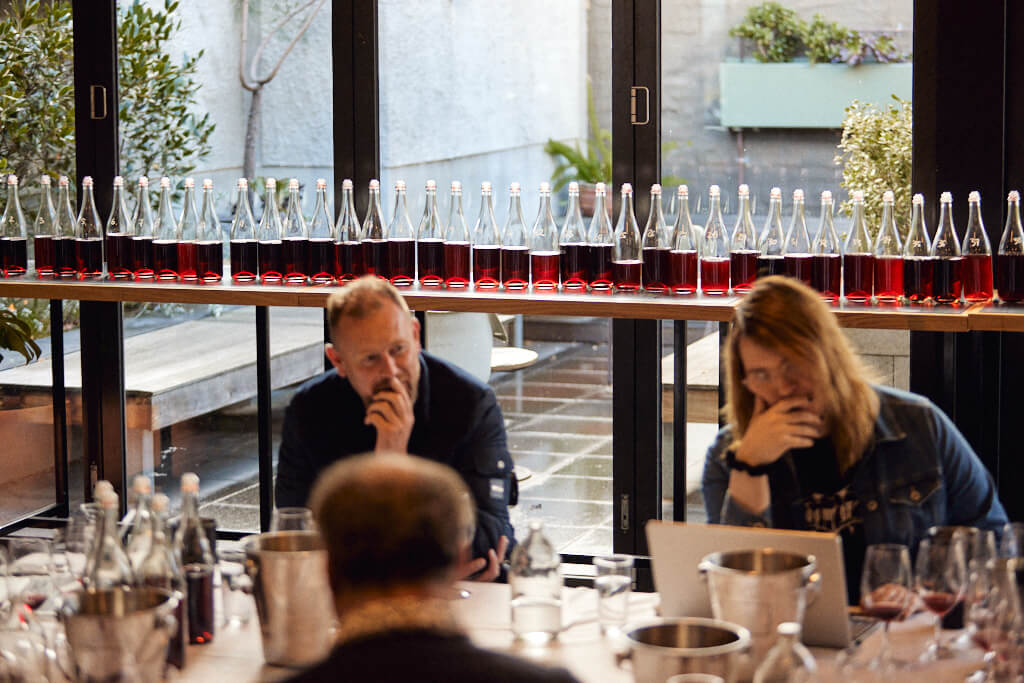
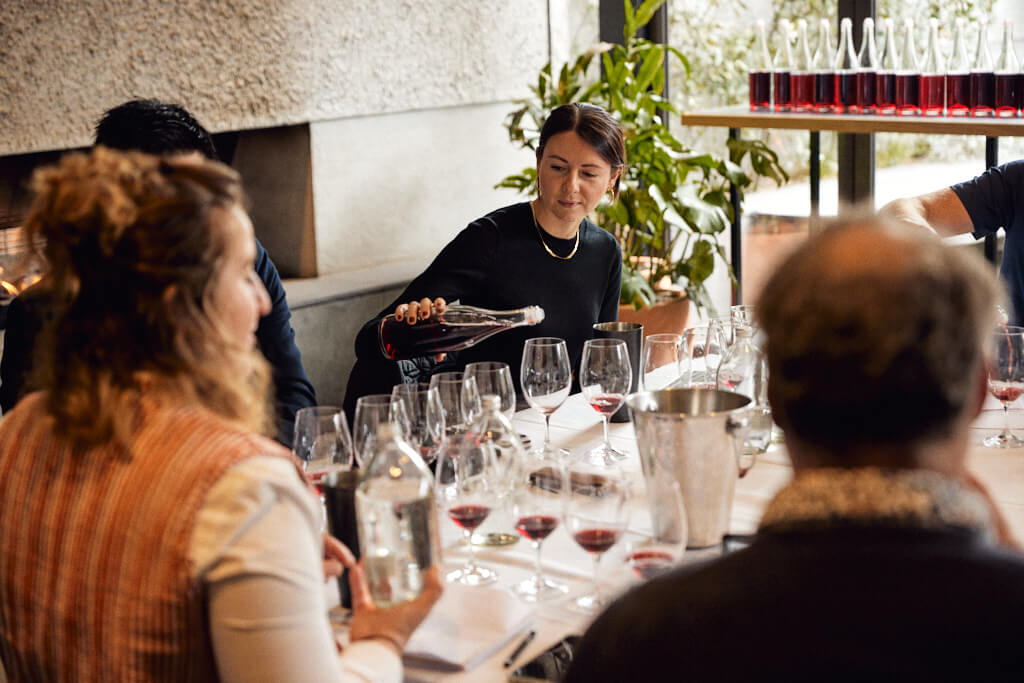
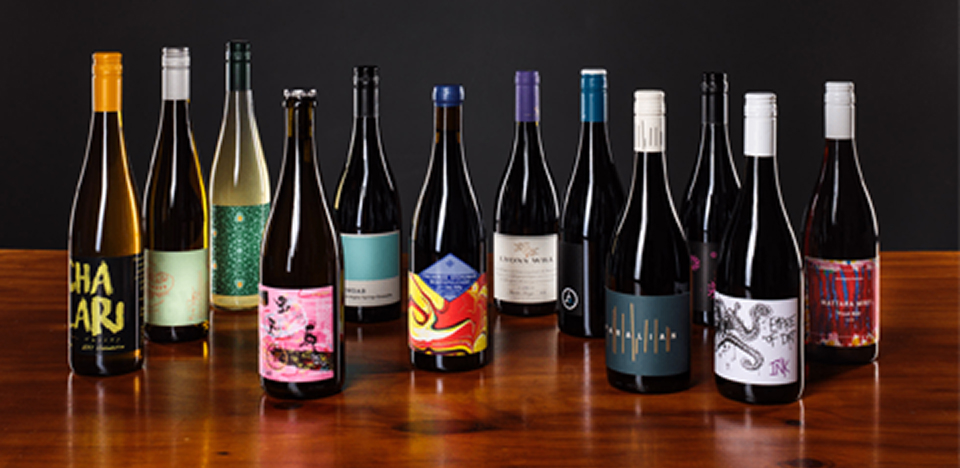
We gathered every pinot noir from the Adelaide Hills that we could find and set our expert panel the task of finding the wines that compelled the most. All wines were tasted blind, and each panellist named their top six wines. Below are the wines that made the panellists’ top-six selections from the tasting.
Our panel: Greg Clack, winemaker, XO Wine Co. and Chain of Ponds; Marion Cazorla, Victoria market manager, Shaw & Smith; Mike Aylward, winemaker, Ocean Eight; Hélène Lafitte, sales representative, Imbibo; Jackson Watson, sales representative, Stock on Hand; Olive Keswick Gallagher, sommelier, Coda; Masahiko Iga, head sommelier, Victoria Racing Club; Terina Davies, wine retailer, Union and Seddon Wine Stores.
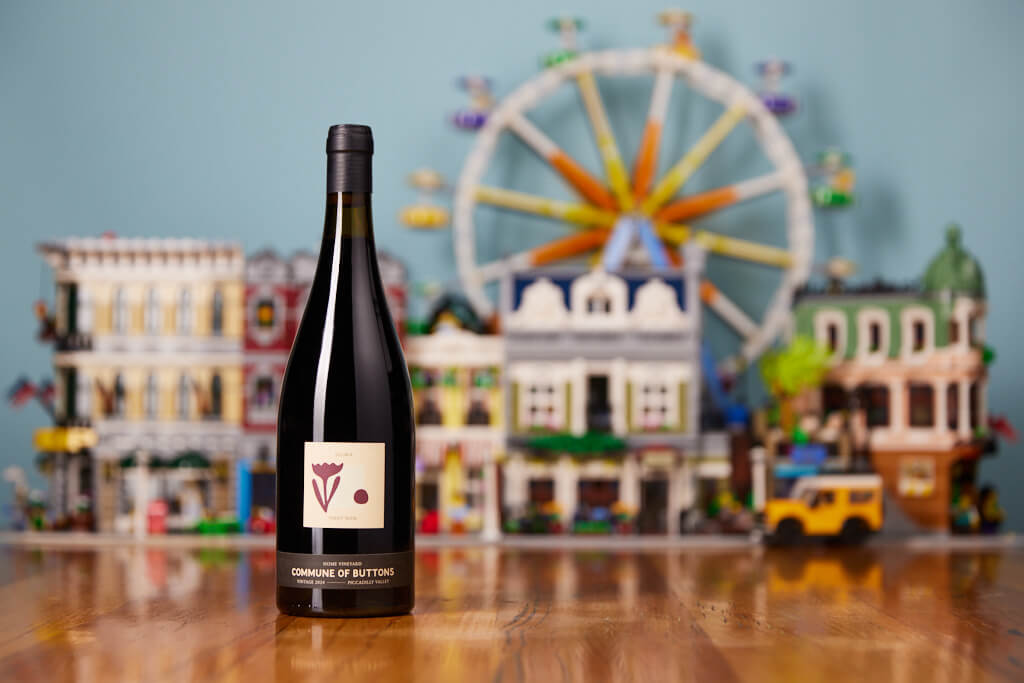
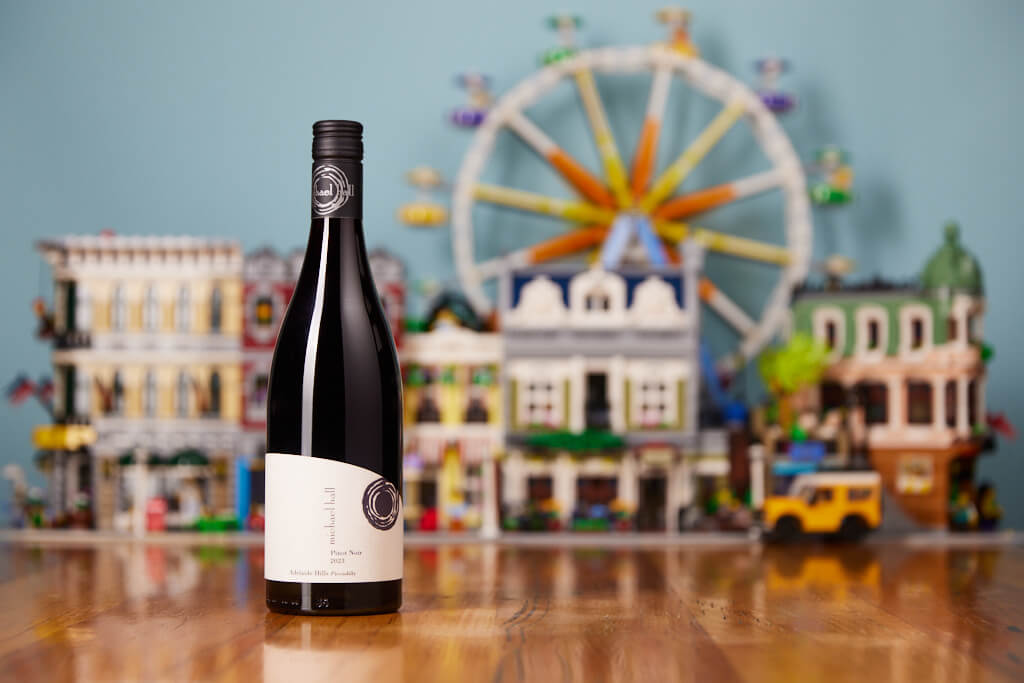
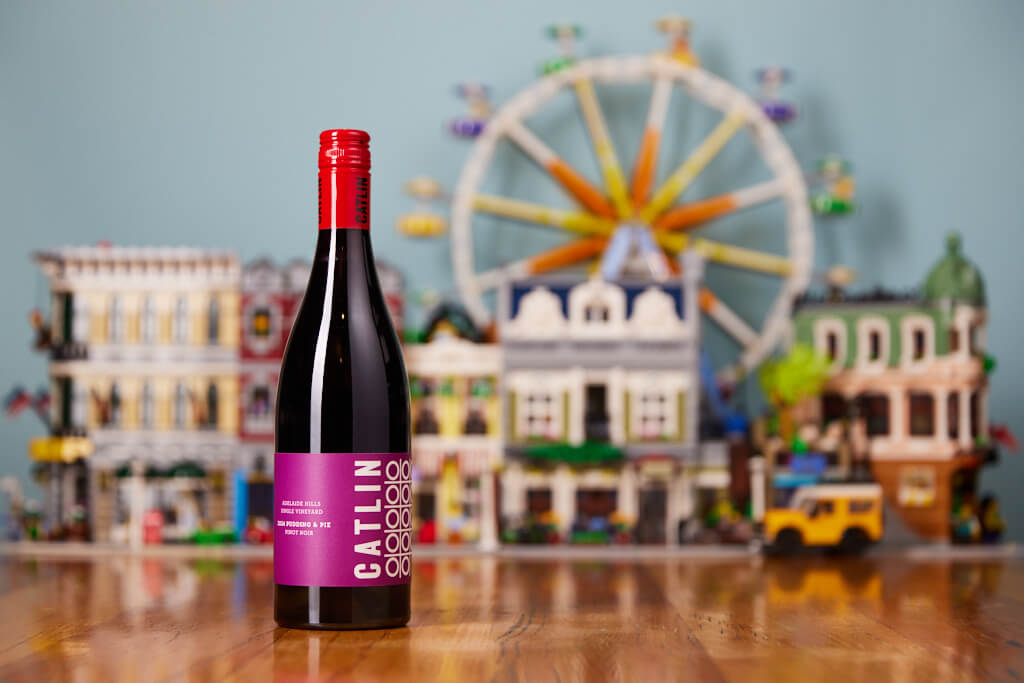
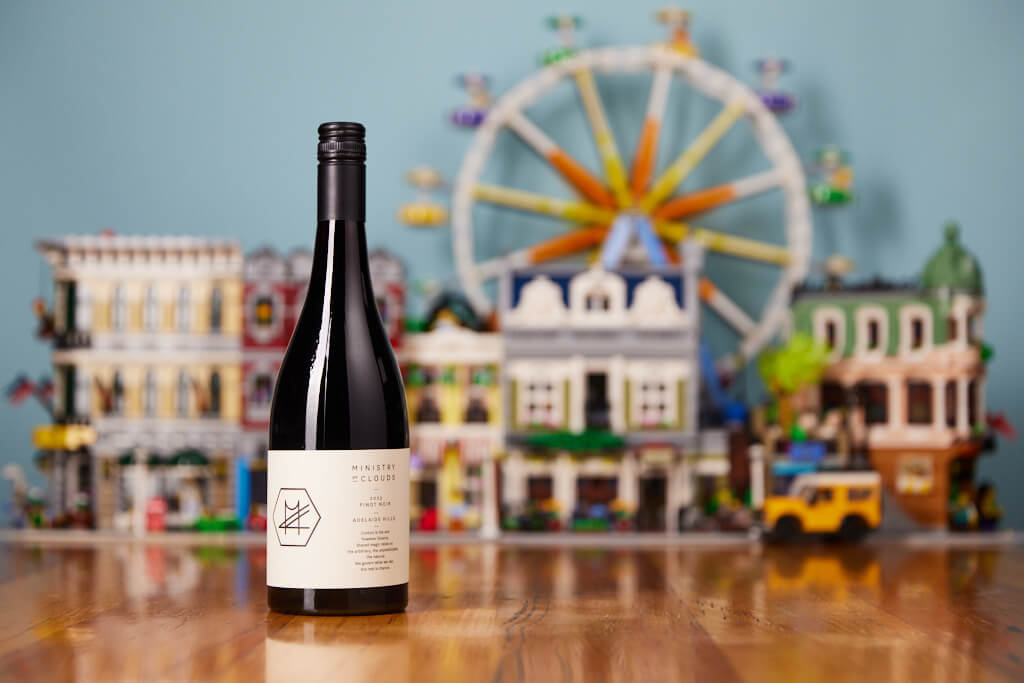
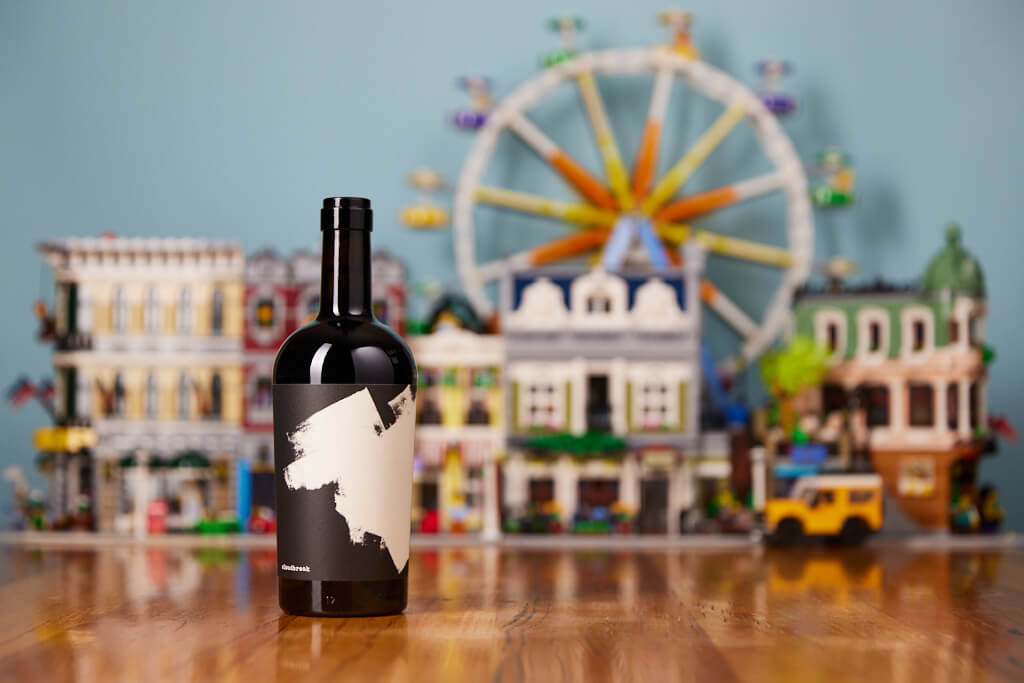
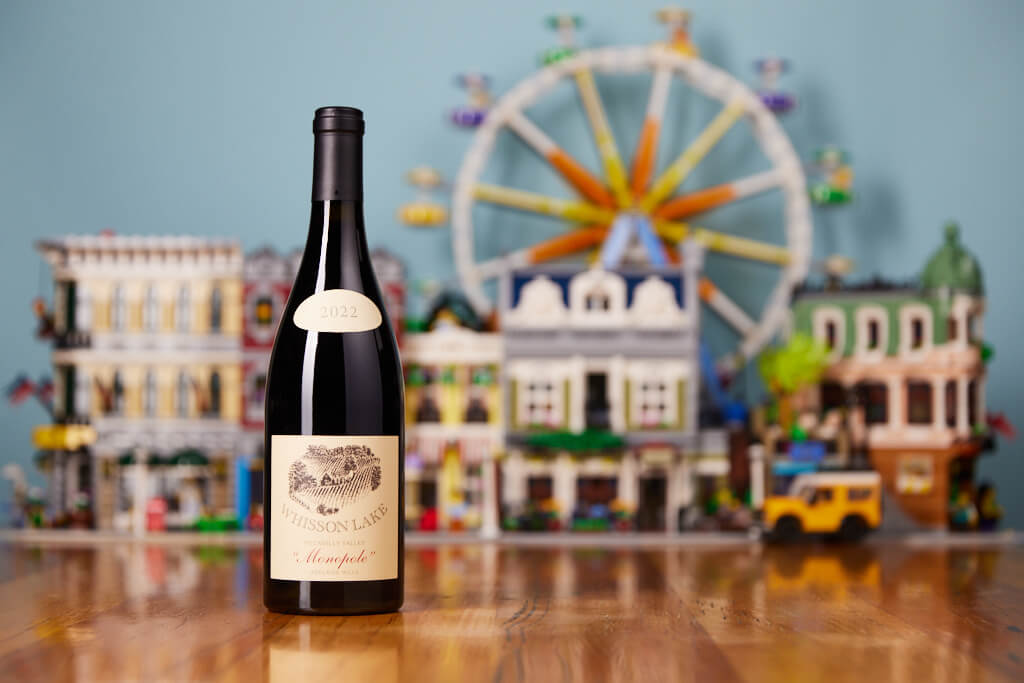
Selected by Aylward, Cazorla, Davies, Gallagher and Iga as one of their top six wines from the extensive blind tasting, this was one of the most consistently praised wines of the day. “This was my standout wine of the tasting,” said Aylward. “There was white pepper spice and cranberry fruit that lifted like good perfume … the wine was singing from very pure, well-grown fruit.” That sentiment echoed across the panel, with Iga describing it as “emotionally resonant … pinot noir at its most graceful,” and Gallagher calling it “the most perfect example” of how to balance eucalyptus character with precision. Davies noted its “bright red wild strawberry and cranberries supported by ripe red plum and fresh woody herbs,” while Cazorla was swept up by its “raspberry coulis” purity and “energetic acidity.” Violets, frozen raspberries, forest berries, unripe strawberries, lavender, and macerated cherries are all part of the picture – wrapped in a silky, floral, and textural frame that balances generosity with finesse. A wine of perfume, place and pleasure.
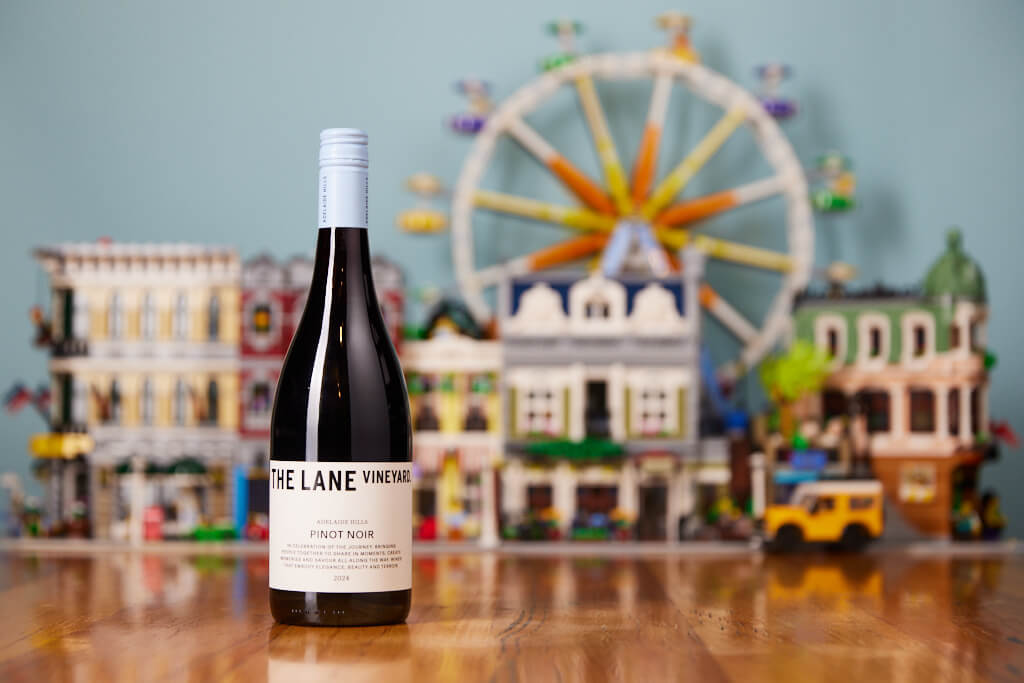
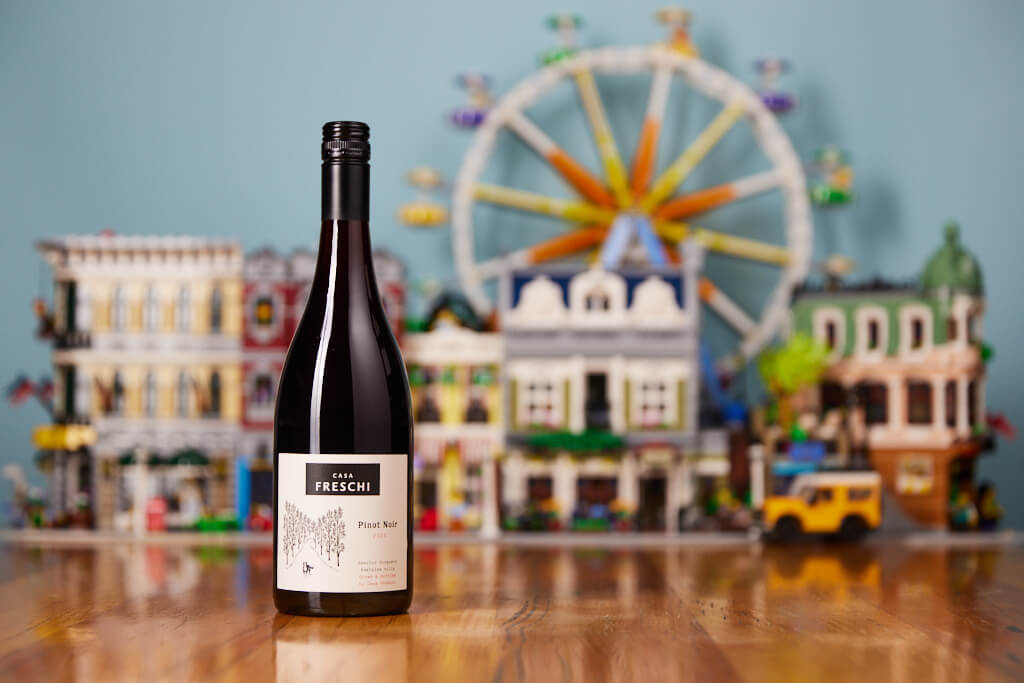
Selected by Davies, Laffitte and Watson as one of their top six wines of the blind tasting, this was praised for its energy, purity and savoury intrigue. “The standout feature of this wine is the purity of the fruit,” said Laffitte. “It’s like tasting fruit straight from the vineyard, with minimal handling or extravagant intervention … a bright, energetic wine with crunchy fruit, yet it also carries structure and depth – all the things I love.” Davies was also captivated, noting how it evolved in the glass: “At first this wine looked closed, but then a deep savouriness lifted – crushed blue flowers, black tomato, cherry, and warming spice – sumac, cumin, cardamom. Such an interesting wine I’d love to revisit with air.” Watson highlighted its “dark cherry, dark chocolate … fine and spicy” notes, with “building tannins” and “great structure.” A charismatic wine that reveals more with time and attention.
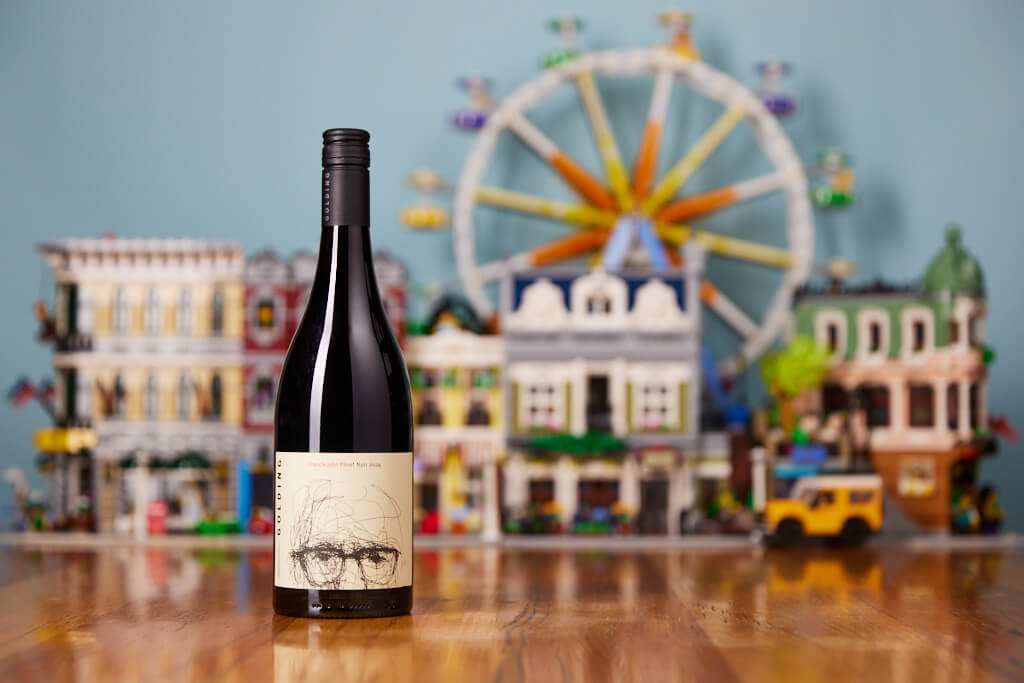
Chosen in the top six wines of the tasting by Cazorla, Iga and Laffitte, this was celebrated for its poise, aromatic intensity, and textural finesse. “Lovely and intense aromas of cloves, cherry liquor and lavender,” said Cazorla. “The structure is smooth and coating … a concentrated palate of ripe cherry, nutmeg and brown mushroom with perfectly integrated wood and resonating depth.” Laffitte called it “beautifully dark and concentrated … dark cherries, leafy raspberry, sweet spice and a lift of Sichuan pepper. It’s already drinking extraordinarily well, but has great potential to age.” Iga described it as “vibrant and expressive … pomegranate and ripe plum lead the fruit profile, with herbal notes, spice, minerality and a supple texture. A joyful wine – a textbook success of whole-bunch fermentation done right.” One of the most complete and harmonious wines of the day.
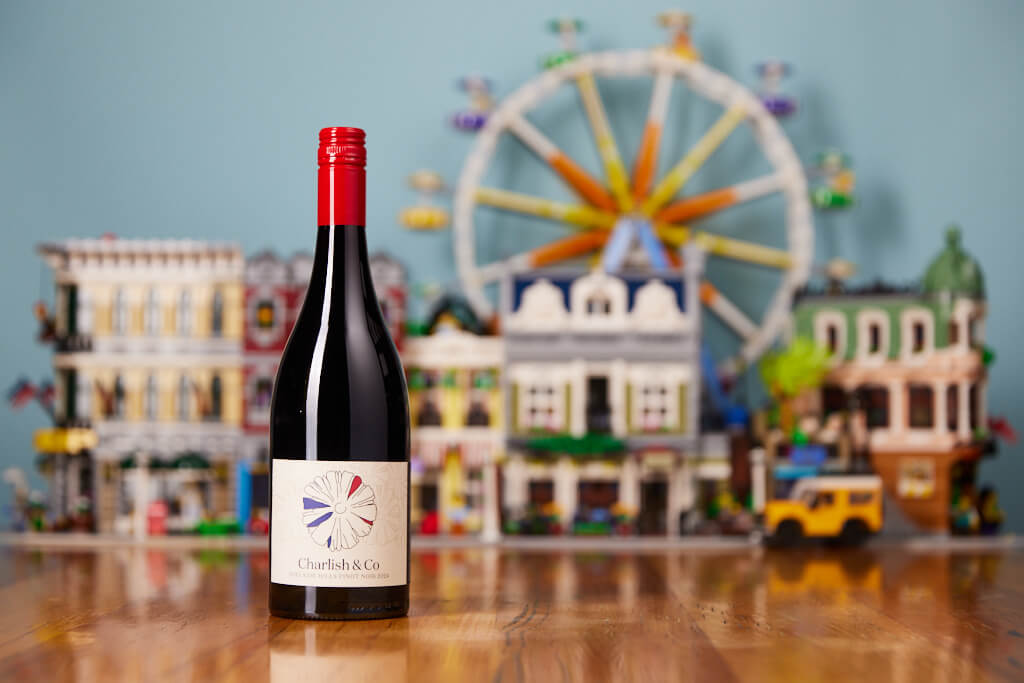
Selected in the top six by Cazorla, Davies and Watson, this wine drew praise for its detailed complexity and energetic precision. “A firework of aromas,” said Cazorla, “with freshly picked just-ripe strawberries, tomato leaf, gingerbread, Negroni, and delicate pot pourri. Every detail seems to balance each other like an orchestra … explosive, yet delicate – your favourite rap song smartly played by your favourite orchestra.” Davies found the wine “had found an often elusive intersection of fruit, earth and woody spice … wild berries, anise, dried forest leaf and ground cinnamon on the nose, charred black cherries, all spice and clove on the palate. The firm tannin and acidity under the tongue hinted at a wine still developing.” Watson echoed the excitement, noting “wild red cherry, strawberry, thyme … lingering tannin, structured and detailed – such a pleasure to drink.”
This was selected by Clack, Cazorla and Aylward in their top six wines of the day, recognised for its vivid character and spicy detail. “Beautifully fragrant,” said Clack, “with lifted notes of strawberry water, rose petal, and bramble … the palate is vivid and supple, layered with red berries and a gentle savoury edge … silky tannins and delicate texture lead to a lingering, elegant finish — the classic peacock’s tail unfurling in fine form.” Cazorla admired the wine’s “touch of smoked paprika and Bloody Mary … spicy palate with bursting notes of pickled ginger, ripe red plum, tomato and rhubarb compote.” Aylward called it “the spiciest wine in the tasting that I really liked … sour cranberries, white pepper, Redskin lolly fruit character … could be a really good pork belly pinot with Chinese five spice.”
Laffitte, Cazorla and Gallagher all included this in their top six wines from the extensive blind tasting, describing it as balanced, complex and quintessentially Australian. “A red-fruited, complex, and energetic wine,” said Laffitte. “Red cherries and wild strawberries gradually give way to subtle spice and savoury tannins that lend silky texture … incredibly fun to sip, with great drinkability.” Cazorla called it “powerful yet perfectly balanced … smoke, sandalwood, cherry and plum … velvety tannins, nice notes of sage … a complex and intriguing wine that makes me want to dig more into and pair with a bœuf bourguignon on a long Sunday lunch.” Gallagher remarked, “Everything Aussie pinot all at once: dark cherries, unripe strawberry, a touch of oak sweetness, dusty cooking chocolate, gamey sausage – kangaroo or wallaby – eucalyptus and clove … Nothing out of balance … a little bit of everything great about Aussie pinot in a single glass.”
Chosen by Iga and Aylward among their top six wines of the blind tasting, this wine captivated with its balance, elegance, and quiet complexity. “A delicately vibrant expression,” said Iga, “showcasing fresh red cherry and crushed plum, along with nuances of minerality, fine herbs, and a whisper of quality tea leaf. The silky tannins and umami-laden mid-palate create a graceful texture … Everything is in harmony – there’s elegance, complexity, and a quiet confidence.” Aylward called it “the most complex wine I tasted,” admiring its “subtle violet perfume” and “regional red fruits of cranberries and cherries” that were “balanced and layered.” He praised the wine’s acidity as “the driving force,” adding, “This wine would be amazing with a tuna steak, slightly seared … needs subtle foods like this to match.”
This characterful and distinctive pinot was named in the top six wines of the day by Clack, Iga and Watson. “An intriguing and characterful Adelaide Hills pinot noir,” said Clack, “opening with a crunchy, minty lift over a core of dark fruit, red currant, and tart cranberry … great fruit drive, layered complexity, and impressive length.” Iga found it “utterly delicious – and above all, elegant,” describing “a perfect harmony of generous, high-quality fruit and captivating aromatics,” with “soft, sweet-edged” red cherry and strawberry. Watson praised its “delicate and intricate” profile with “lifted spice and fruit,” concluding: “Really interesting wine.”
Both Gallagher and Davies included this wine in their top six selections from the blind lineup, noting its perfume, freshness, and layered complexity. Gallagher found “fresh wildberries, cherry and cranberry on the nose, with a hint of fresh flowers,” calling it “a wonderful, creamy, mouth-coating, textural wine showing violets, nutmeg, rose syrup, tart blood oranges and a hint of red liquorice.” Davies noted it was “expressive without being overt,” with “tart red berries, pomegranate, dried thyme and white mushroom,” and “aromas of palo santo and fresh earth” lending depth. “All balanced beautifully,” she said, “with precise acidity, soft tannins and rounded weight.”
Selected in the top six wines by Clack and Cazorla, this wine was praised for its vibrancy and expressive aromatic detail. “A vibrant Adelaide Hills pinot noir,” said Clack, “bursting with red fruit and ripe cherry, edged by a gentle flicker of reduction that adds savoury intrigue … powdery, well-defined tannins provide structure … complex and characterful, with a rustic charm.” Cazorla was taken by its “seductive, expressive, intense aromas of pot pourri,” calling it “lively and complex … great purity,” and suggesting it “could reflect a slow ripening site or vintage.” She added, “Would highly be appreciated by itself, on a sunny but chilly autumn night in a park.”
Selected by Watson as one of his top six wines of the blind lineup, this pinot noir made a compelling impression with its savoury detail and intricate palate. “Gamey, red currant, beef tartare, red rose,” he said. “This wine is interesting across the palate – long and lingering, fine herbal notes of oregano and Vietnamese mint, intricate, touch of delicious reductiveness holding the whole thing together.” He reflected: “There’s a feeling of place in this wine. The earth is calling me to sit in the vineyard and learn her secrets.” His pairing suggestion: “Crispy pork and an Indonesian bumbu.”
Chosen by Laffitte, Aylward and Watson as one of their top six wines from the blind tasting, this wine was admired for its purity and aromatic precision. “This wine also leaned toward purity,” said Laffitte, “showcasing crunchy dark fruits with an underlying layer of attractive reduction … energetic, bright, and well-structured – delivering clarity and focus without excess.” Aylward highlighted “concentrated cranberries and cherries” and said, “The acidity was a touch softer which made it approachable … I would drink this wine now as the fruit characters were enjoyable and would not want these to diminish with ageing.” Watson added, “Dark cherry, fine spice. Lifted, fine quality – the right type of wild. Mushroom and sake elements alongside dried chocolate powder … Shows purity of fruit, with a complex nose of lilac and summer blossom.”
Gallagher placed this wine in her top six picks from the blind tasting, drawn in by its bold fruit expression and layered complexity. “This wine jumped out of the glass at me – it was loud, proud, but elegant all at once,” she said. “A strong deep maraschino cherry with a hint of stewed blackberries … red, black, blue, stewed dried and fresh fruits all at once. You could smell that the wine had a powerful structure … fennel seed, dried sage, floral notes of violets, red liquorice, white button mushrooms, some cloves, allspice … even a hit of white truffle. This was the most regal-looking pinot of the lineup.”
Laffitte and Iga both selected this wine among their top six from the blind tasting, describing a wine of elegance, nuance and quiet power. “It instantly stood out,” said Laffitte, “a beautiful ravelling of red fruits, leading with strawberries and raspberries … sweet spices, burnt bacon fat and mystical hints of forest floor … a very elegant wine, yet full of depth and power.” Iga called it “a wine of quiet complexity and graceful maturity,” with “dried cherry and cassis” and “earthy tones, subtle leather, and gentle mushroom.” He added, “The acidity is finely integrated … a wine for slower moments.”
This wine made the top six selections for both Iga and Gallagher, who were drawn to its charm, complexity and playful energy. “Fragrant with lifted cherry and cranberry,” said Iga, “this wine reveals layers of creaminess and spice beneath its vibrant fruit … It’s a well-rounded, confident pinot with both charm and precision – a wine with gravitas that remains utterly pleasurable to drink.” Gallagher added, “Bright, with dark fruits hinted on the nose – almost a blueberry jam and cherry syrup … a summer picnic–style wine that yells cherry-cola and fun at you … Dried sage and florals – almost pot pourri – make up the end of the wine and balance the candied confectionary notes that hit your palate at the front. Throw in the fridge for fifteen minutes … and drink with friends.”
Clack selected this wine in his top six, drawn to its fragrance, spice and polish. “A fragrant and spice-laced pinot noir that opens with vivid notes of red currant, black cherry, and ripe blood plum,” he said. “There’s a subtle, savoury undercurrent — a whisper of cured meat … The palate is supple yet structured … Elegant, textural, and thoughtfully composed.”
Selected by Gallagher in her top six wines of the tasting, this pinot stood out for its playful intrigue and spice-laced charm. “I was surprised and intrigued by the nose on this wine, with unripe banana skins and almost a raspberry Slurpee smell – think soft icing sugar and mystery ‘red’-flavoured cordial,” she said. “I was further surprised by the amount of spices found on the palate, with green peppercorns, fennel seed, dried sage, tomato leaf, allspice and a touch of cinnamon … A confectionery bag that’s been lost in a spice cupboard. A joy to drink.”
2024 Peter Lehmann ‘Hill & Valley’ Pinot Noir $25 RRP
Chosen by Aylward in his top six, this was one of the wines that spoke most clearly of regional expression. “A light strawberry and sour pinot with lots of the Redskin lolly character,” he said. “Hints of whole-bunch flavours that helped with the light fruit characters and gave a herbal fennel spice to the wine. This would work really well with salmon sashimi … or with a bento box at a Japanese restaurant.”
Davies nominated this as one of her top six picks from the tasting, noting its Old-World charm and gentle complexity. “Wild strawberry, maraschino cherry, cherry wood, filtered coffee, bramble on the nose,” she said. “There was a slight touch of horsey Brettanomyces character that I found very soothing … Just enough grip from the tannins hinted that this wine needed charcuterie to be enjoyed in its fullest.”
This wine was selected by both Clack and Aylward in their top six of the day. Clack praised its fragrance and structure: “Lifted perfume and vivid notes of red currant and cherry … exotic, aromatic twist … elegant, expressive, and finely-textured.” Aylward noted, “Sour red cranberry fruit characters on both aroma and flavour … balanced with spicy-sour red fruits and perhaps some herbaceous whole bunch? This would be the perfect duck pinot match with Chinese five spice and crispy skin.”
Laffitte included this wine in her top six for its elegance and depth. “A more ethereal expression in the lineup – lifted, elegant, and full of quiet confidence,” she said. “The nose opens with … dark Morello cherries and wild raspberries … hints of smoked meat, fire-roasted herbs, and earthy spice … firm but finely knit tannins … a long, persistent finish.”
Selected by Clack in his top six, this wine charmed with its refinement and quiet beauty. “A poised and perfumed Adelaide Hills pinot noir,” he said. “Red fruit spice and a hint of blue-fruited allure … plush, silky palate … it fans out in a graceful peacock’s tail finish — elegant, layered, and quietly captivating.”
Watson picked this wine in his top six of the blind tasting, noting its fine detail and balance. “Detailed wine – cherry pip, sage, sake rice, cinnamon, parsley stalks,” he said. “Intricate fine tannin, detailed, delicious. This is the complexity that I miss in a lot of Adelaide Hills pinot noirs. Give me some aburi beef, pickled vegetables – and a whole bottle.”
Davies selected this joyful and vibrant wine in her top six. “The cloudiest of the wines in my top six … this wine felt fun and was super enjoyable!” she said. “Scents of summer berries … crushed rose petals, and orange oil … raspberry and ginger tickle on the palate … I would chill this and enjoy at any picnic.”
The backstory
The Adelaide Hills is an outlier when compared to other South Australian wine regions. It’s a relatively young region surrounded by others that can boast some of the oldest vines on earth; a genuinely cool region in a state better known for warm regions that deliver ‘sunshine in a glass’; an incubator for natural wine iconoclasts in a state that proudly defends its vinous traditions; and the go-to source for elegant, high-toned pinot noirs in a state famous for brawny shirazes and hefty grenaches. With its mosaic of elevations, aspects, and soil types, it’s also a region that defies quick-and-easy categorisations. How pinot noir came to be the region’s red wine calling card is a story of vinous rebirth, investment from the establishment, and a group of determined young winemakers ready to rattle some cages.
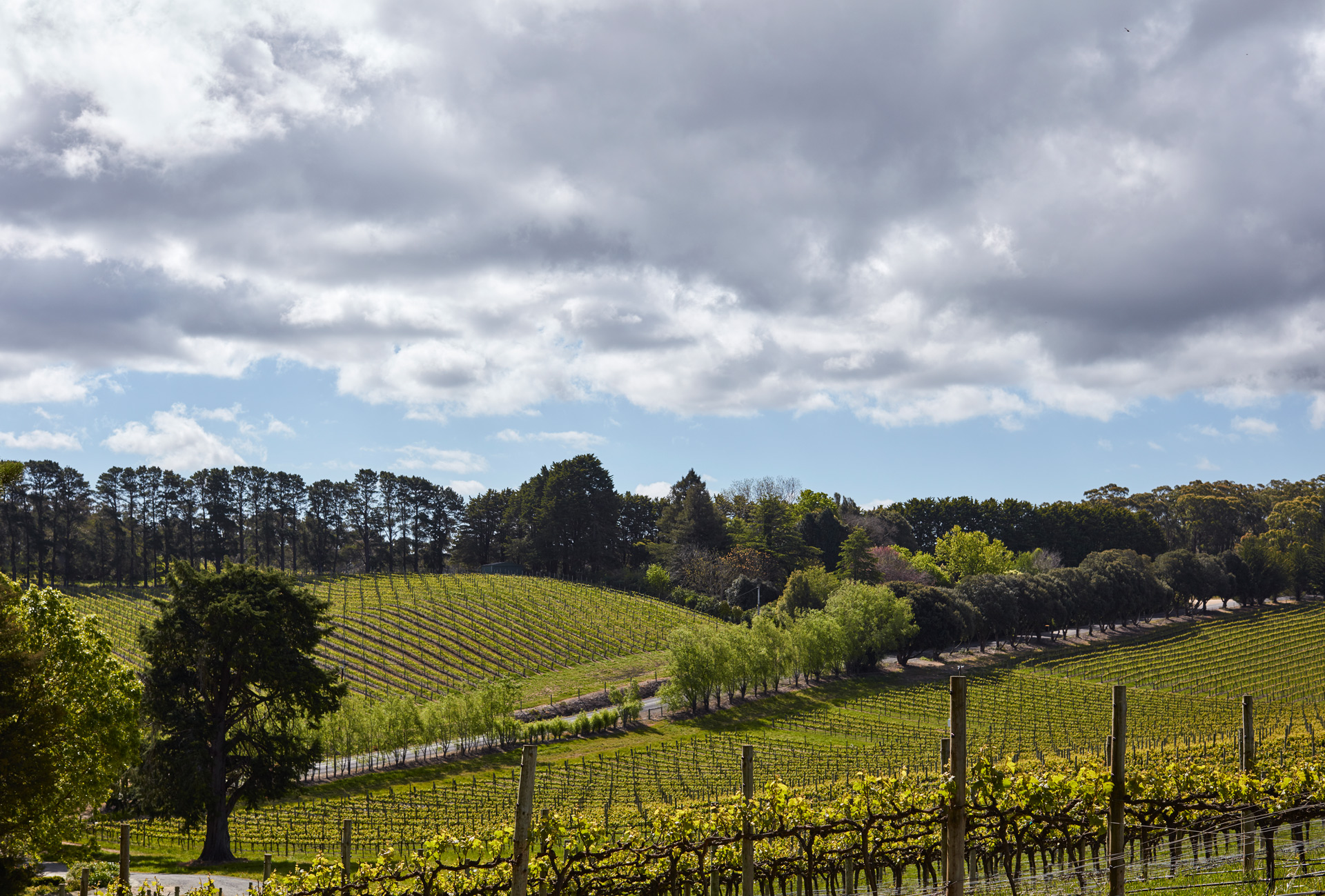
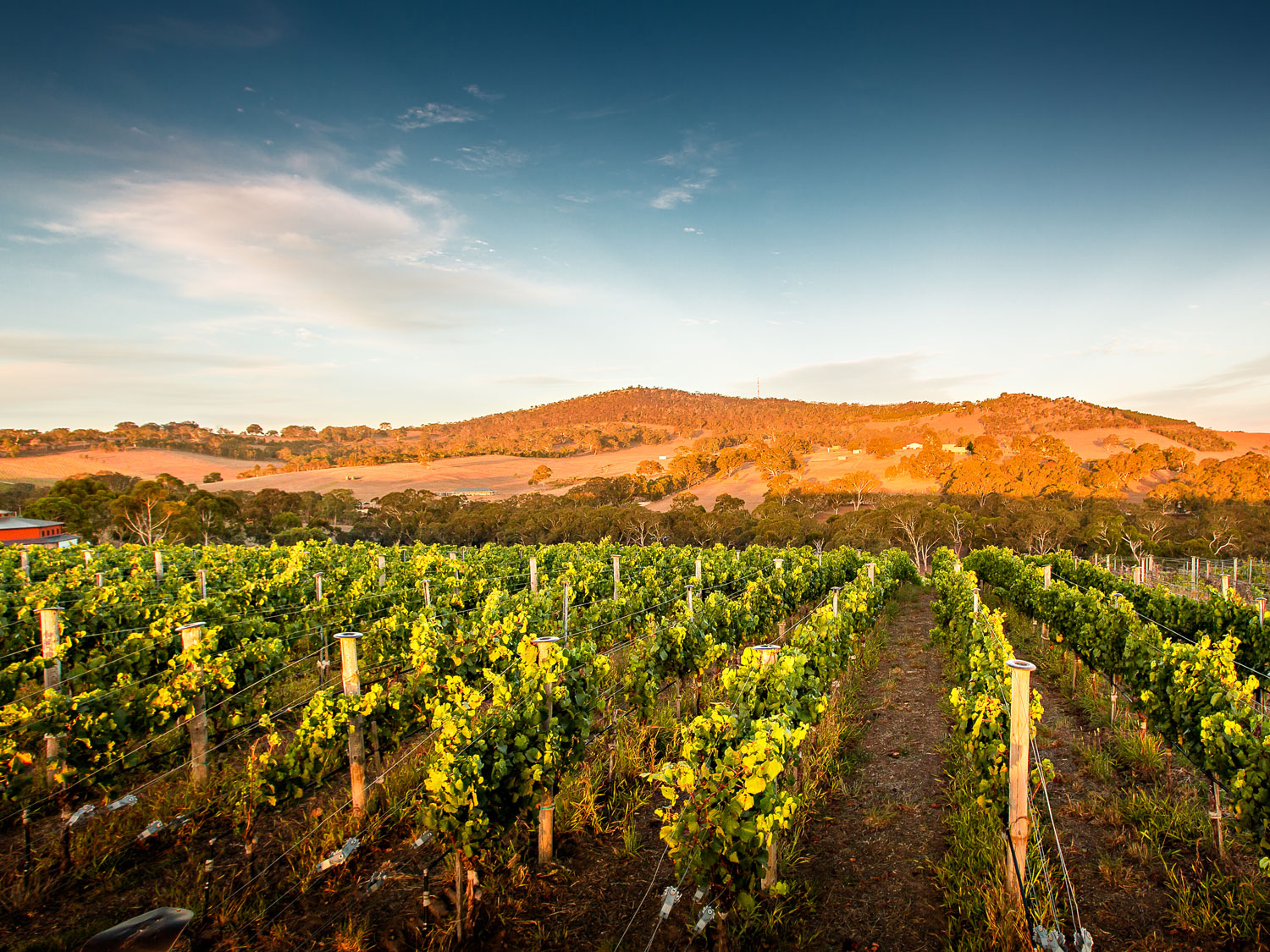
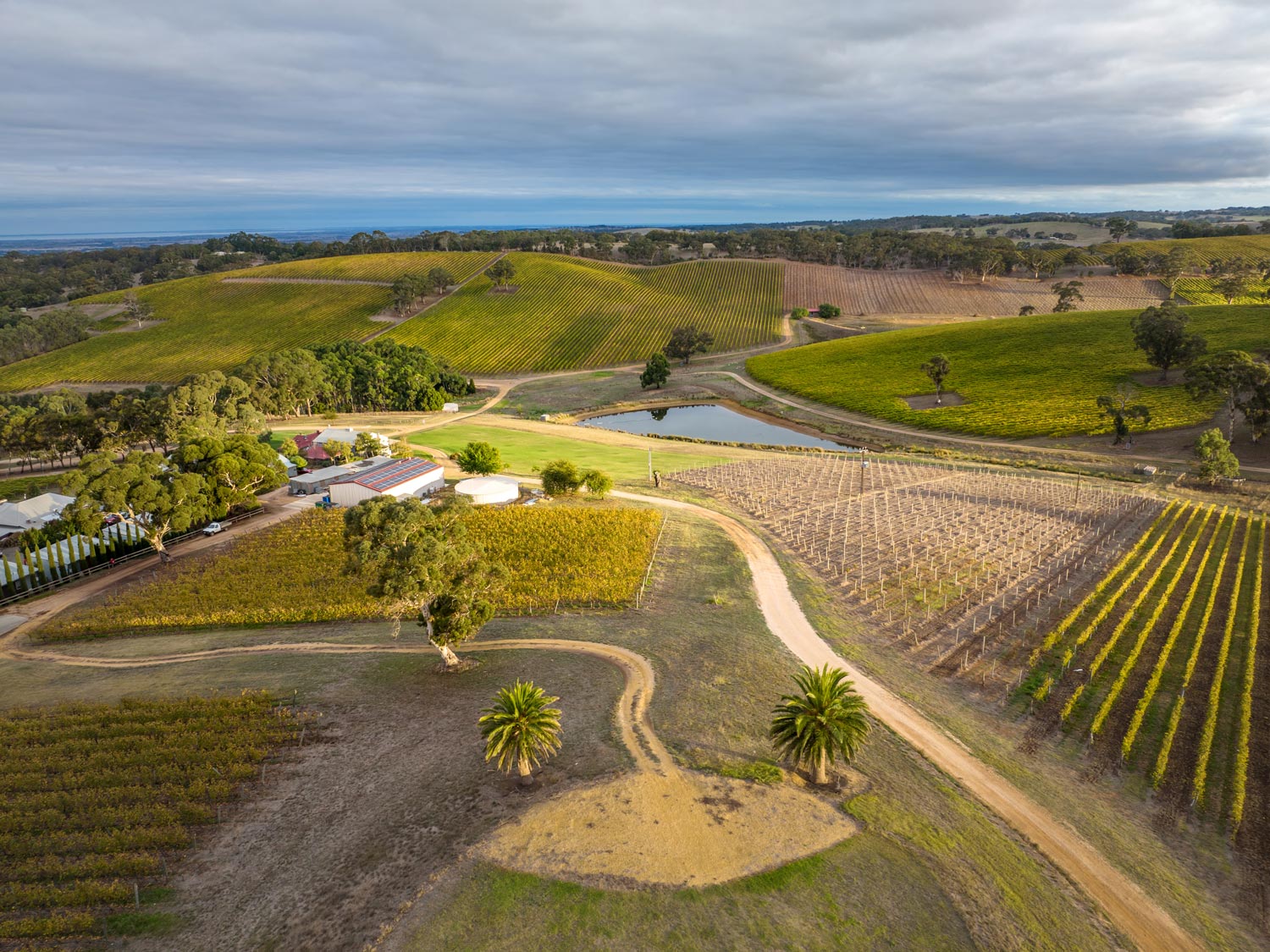
The Adelaide Hills wine region is a stretch of hillsides and valleys roughly 70 kilometres long and 30 kilometres wide, running north-east to south-west, parallel to and directly to the east of Adelaide. (Visitors to South Australia are frequently surprised by just how close the Hills are to Adelaide – if traffic is kind, it can take as little as 20 minutes to drive from Adelaide’s CBD to cellar doors in the Piccadilly Valley sub-region.) It directly borders both the Barossa and Eden Valleys to the north, and its southern portion scoops westward around the flank of McLaren Vale, with Langhorne Creek a short distance to the east of its southernmost reaches. Within this nearly 1500 km² of land – roughly the same size as the Barossa Valley, Eden Valley, and McLaren Vale combined – lies a remarkable diversity of aspects, elevations, and soil types, with the highest vineyards topping out at just over 600 metres above sea level and the lowest at 320.
With such a diversity of sites available for viticulture, the Hills grows an equally diverse array of different grape varieties, although the vast majority of the plantings here are of three varieties – chardonnay (27% of the 2024 harvest by weight), sauvignon blanc (25%) and pinot noir (23%). Pinot noir easily outstrips the region’s number-two red wine grape, shiraz, which accounted for a mere 6% of the 2024 harvest by weight. So while chardonnay and sauvignon blanc duke it out to be seen as the white grape variety of the Hills in the eyes of the general public, as far as red wine grapes are concerned, this is pinot country. How the variety came to dominate red winemaking in the Hills is a fascinating story of a wine region’s modern rebirth, followed by a flurry of investment from Australia’s wine establishment, and finally the changes wrought by a group of spirited young winemakers ready to upset the status quo.
Late bloomers
While the Adelaide Hills has a history of winegrowing in the colonial era, that history – like those of many other Australian cool-climate regions such as Tasmania and the Yarra Valley – is a relatively brief one. Vines were planted in the Hills as early as 1839, when John Barton Hack transplanted his nascent vineyard from its original Adelaide home to a site near Echunga Springs. By 1843, Hack’s vines had produced enough fruit for him to send a case of finished wine to London for Queen Victoria – the first Australian wine to be gifted to an English monarch. While the Hills grew as a viticultural region through the late nineteenth century, eventually attracting over 200 grapegrowers, a combination of changing national tastes and economic depression meant that all of the Hills’ vines had been grubbed up by 1930. (By contrast, the Hills’ northern neighbour, the Barossa, hosts some vines that are over 180 years old.)
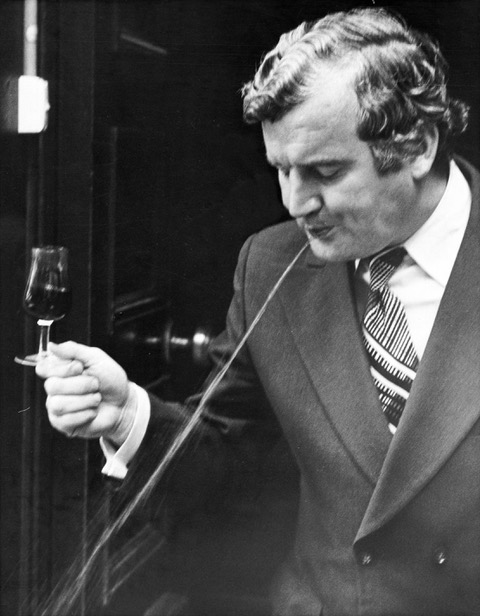
Above: Brian Croser planting the Tiers vineyard in 1979. Opposite: Len Evans, former chairman of Petaluma, who spat out Brian Croser’s 1989 Petaluma pinot noir and called it ‘Agricultural’.
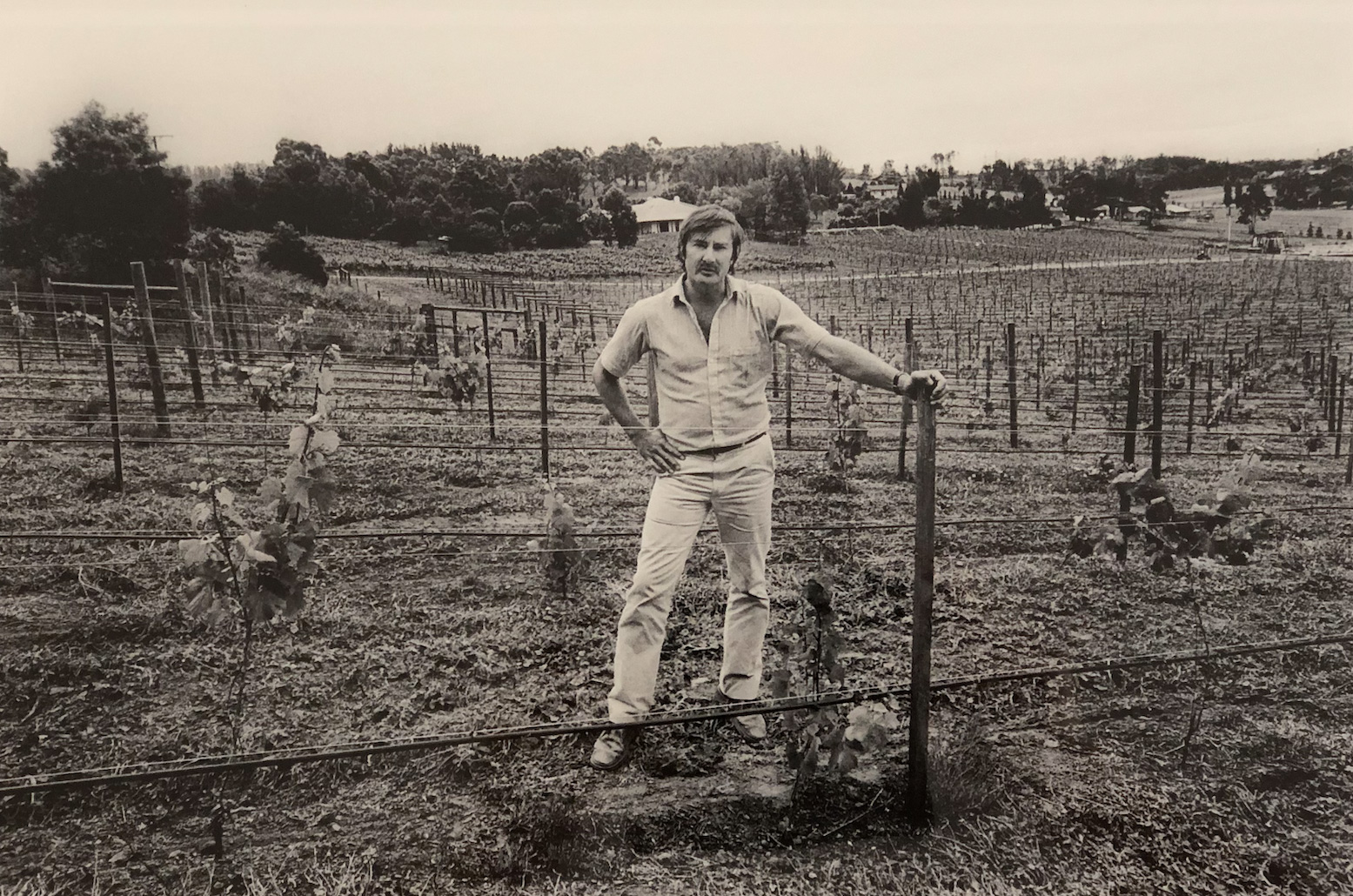
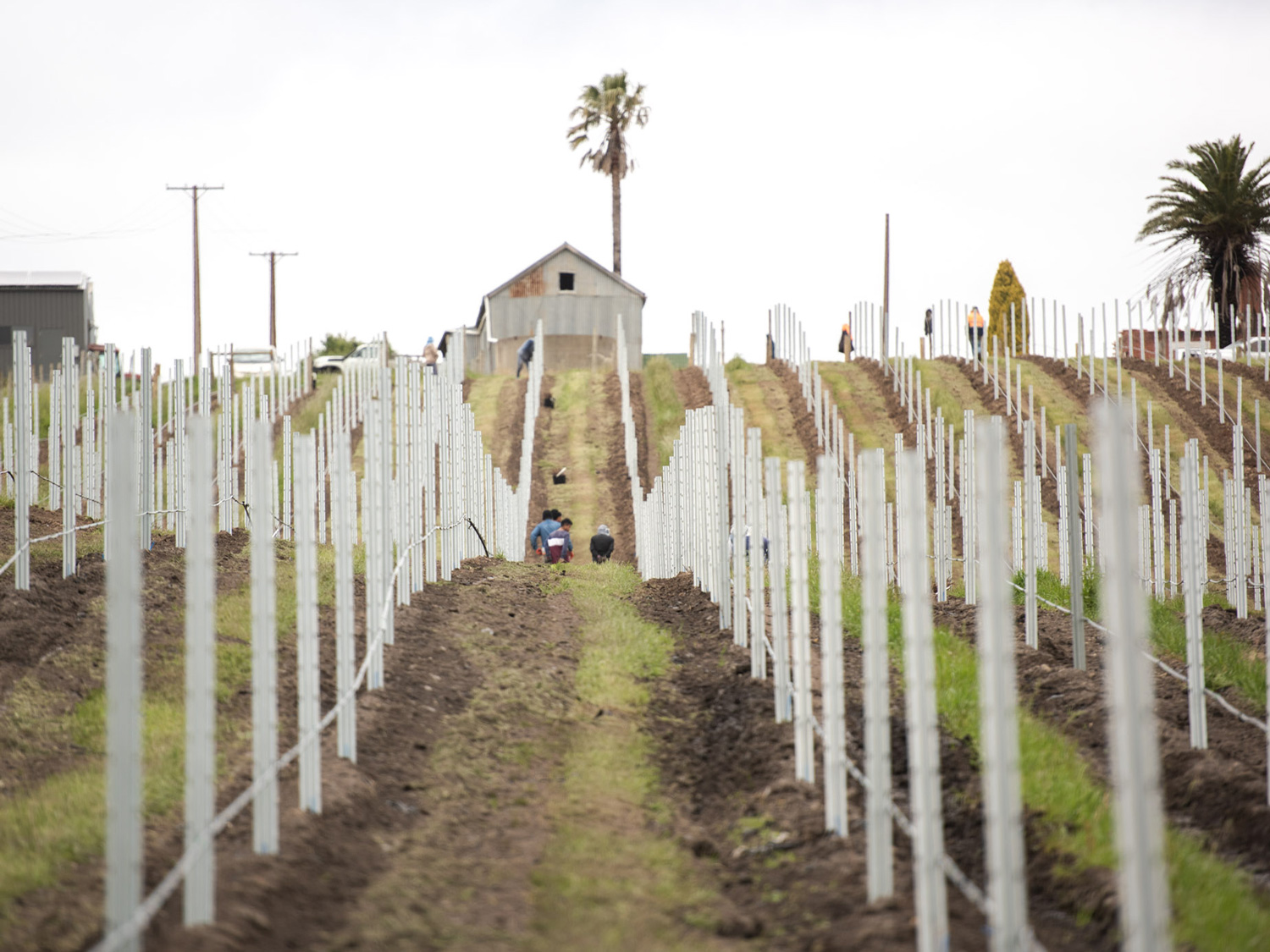
It would take an ambitious jet-setting winemaker named Brian Croser to restart viticulture in the Hills. Having fallen in love with Californian chardonnays from producers such as Mayacamas and Robert Mondavi during his time as an oenology graduate student at California’s U.C. Davis, and rolling off a successful stint as a winemaker at Hardy’s in the Barossa, Croser set his sights on a cool region in which to plant chardonnay. In 1979 he planted the first modern Adelaide Hills vineyard, Tiers, in the Piccadilly Valley, mostly to chardonnay – but with a patch of pinot noir, too.
“Pinot was unavailable,” Croser says of the early days of Tiers. “The big companies had it all tied up. The only pinot that was available was stuff that was smuggled across the border from New South Wales and Victoria, through Mildura mainly.” Croser acquired some of this pinot for Tiers, but found it “totally virused – and nobody knows the genetic background of it, although it was probably MV6. There’s wonderful aerial photos of the Tiers vineyard from that era, early ’80s, in the autumn – and the pinot patch was bright red [indicative of virus affliction] while everything else was yellow-gold.”
“I showed it to Len Evans. He put it in his mouth, spat it as far as he could, and said, ‘… Agricultural.’ That’s the last time I made pinot table wine out of the Piccadilly valley.”
Croser recalls that, after years of trials, he made what he thought was a “good pinot” for his Petaluma label from the 1989 vintage. “I showed it to Len Evans, chairman of the company. He put it in his mouth, spat it as far as he could, and said, ‘… Agricultural.’ That’s the last time I made pinot table wine out of the Piccadilly Valley.” Evans’s brief comment may have cruelled pinot noir’s chances in the Tiers vineyard – it was shortly grafted over to more chardonnay – but at nearby Ashton, a new chapter had already started to unfold.
Ambition, meet altitude
If Croser’s ambition was to make top-tier chardonnay, Steven George’s ambition in planting his Ashton Hills vineyard in 1982 was, simply, to make Australia’s best pinot noir. A site chosen for its chilly altitude – 570 meters above sea level – and sunlight-filtering southerly aspect, it has, over the course of its history, hosted over 26 separate clones of pinot noir, with a ruthless program of clonal trials undertaken by George eventually whittling this total down to just five. Ashton Hills’ pinot noir may have been something of a slow-burn success, with its celebrated 2012 vintage finally pushing the project firmly into the collective consciousness of Australia’s fine wine lovers – but South Australia’s wine industry had picked up on the potential of the Hills for viticulture in general and pinot noir specifically long before.
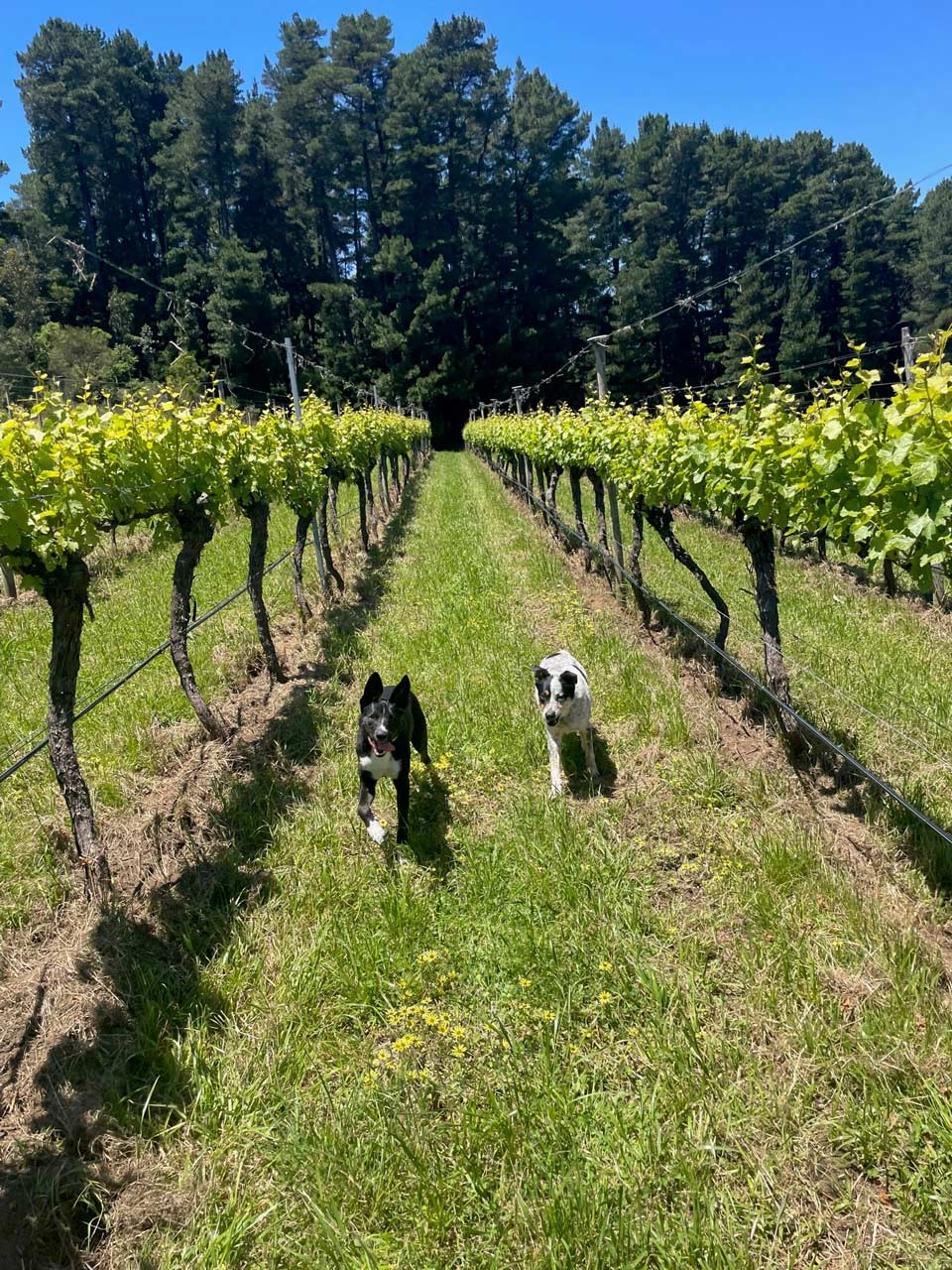
Above: pinot noir grapes in the Ashton Hills vineyard. Opposite: Dogs run through the rows at Ashton Hills.
By the mid to late 1980s, a quiet gold rush was taking place, with members of leading South Australian wine families the Henschkes (Eden Valley) and Knappsteins (Clare Valley) arriving to set up vineyards and wine brands. Around this time, Mark Whisson, who worked as a vineyard manager for Croser, planted in his own pinot-focused vineyard and founded the label Whisson Lake, and Geoff Weaver, a former winemaker at Hardy’s, was lured down to grow and make pinot noir (amongst others) in Lenswood. At the same time, Croser’s Petaluma label was becoming one of Australia’s most successful wine brands, acquiring multiple wineries and brands as far away from its Hills home base as the Mornington Peninsula, and creating an iconic sparkling wine sub-label, Croser, based on Hills chardonnay and pinot noir.
Of the winemakers who arrived during this period, the most successful has been Shaw & Smith, a collaboration between cousins Michael Hill-Smith, MW (of the same Barossa Hill-Smith family that owns Yalumba) and Martin Shaw. Shaw had seen the potential for the Hills while working for Croser at Petaluma, and Hill-Smith was looking to branch out from the family business; the label they founded in 1989 went on to become an ambassador for cool-climate viticulture in general and the Hills in particular, producing popular pinot noirs, chardonnays, and an iconic sauvignon blanc made in the mould of those from New Zealand’s Marlborough region.
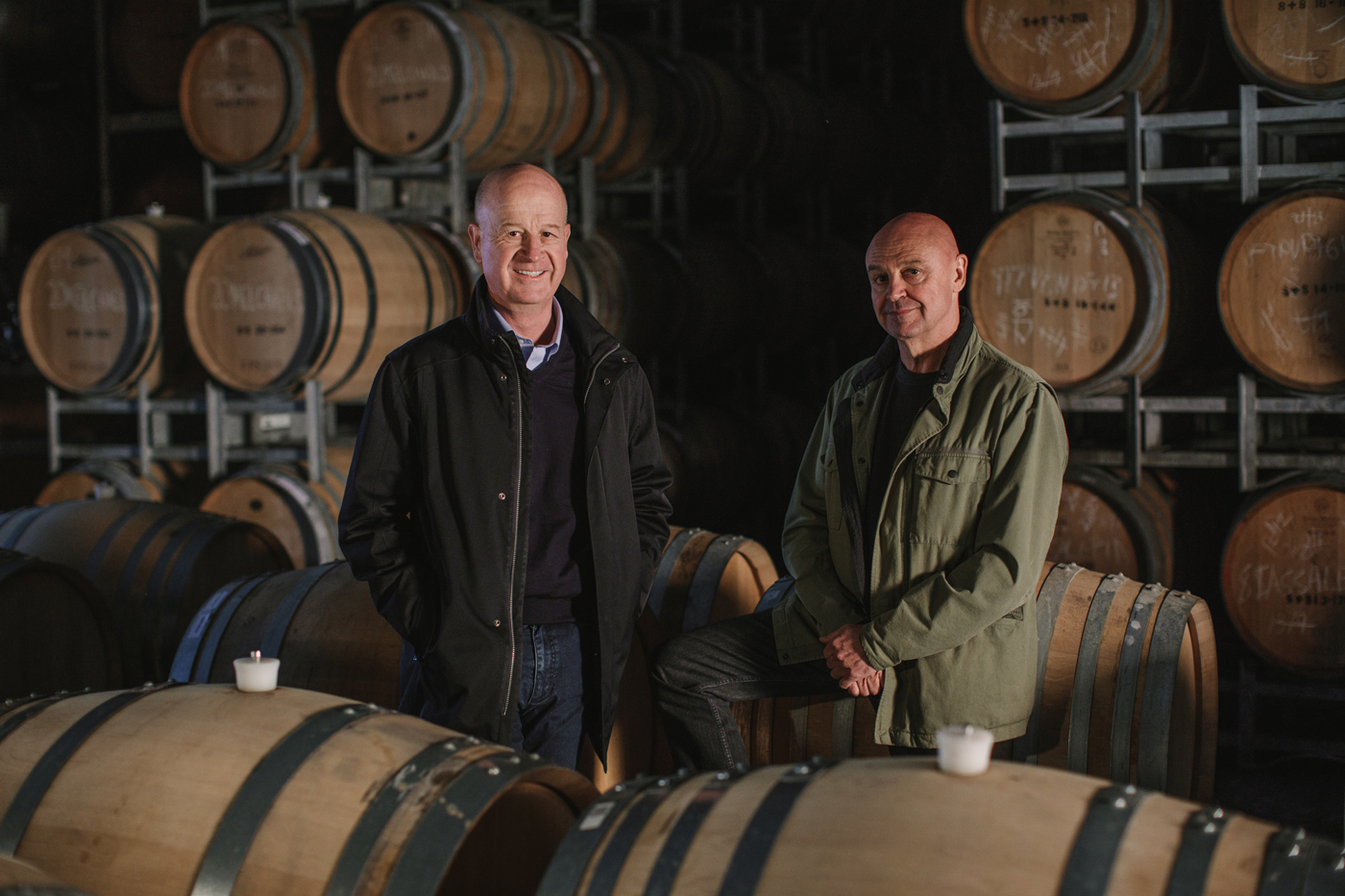
Above: Shaw & Smith’s Lenswood Vineyard. Opposite: Martin Shaw and Michael Hill-Smith, MW.
As the 90s ended and the 2000s commenced, the Hills had well and truly arrived as a region. It became an official GI in 1998, one year before Shaw & Smith built their on-site winery at their Balhannah vineyard. Croser’s successful (and publicly-traded) Petaluma brand was purchased over by the Australian beverage giant Lion Nathan in 2001 via a hostile takeover that, fortunately, allowed Croser to keep his beloved Tiers vineyard. Around this same time, the Klein family – who had a biodynamic farm in the Hills to supply botanicals for their successful skincare business, Jurlique – branched into viticulture, with Erinn Klein planting the Ngeringa Summit vineyard on biodynamic principles. (Ngeringa won Young Gun of Wine’s 2023 Vineyard of the Year Award.) This was seen as a bold move at the time, but Klein’s shift away from the principles of traditional viticulture was also a harbinger for the Hills’ next chapter.
The Hills are alive …
Winemaker Anton van Klopper purchased a six hectare property in the Basket Range area of the Hills in 2002, which became the home base for his label, Lucy Margaux (since renamed to Lucy M). Van Klopper was and remains a controversial figure in Australian winemaking, with staunchly anti-additives stance – to the extent that no chemicals are used for cleaning in the winery. Van Klopper soon became the lynchpin for an emerging natural wine scene in the Hills, drawing in comrades such as James Erskine (Jauma), the late Taras Ochota and his wife, Amber (Ochota Barrels), Gareth and Rainbo Belton (Gentle Folk), Jasper and Sophie Button (Commune of Buttons), and Tim Webber and Monique Milton (Manon). The fresh, bright, and wild wines of these pioneers were equally successful and controversial – attracting equal amounts of attention from young wine drinkers disillusioned by the excesses of the ‘more-is-more’ international style of winemaking popular in the early 2000s, and disdain from a wine establishment that saw their work as faulty and unbalanced.
Above: Ngeringa’s Summit vineyard – a pioneer of biodynamic viticulture in the Adelaide Hills.
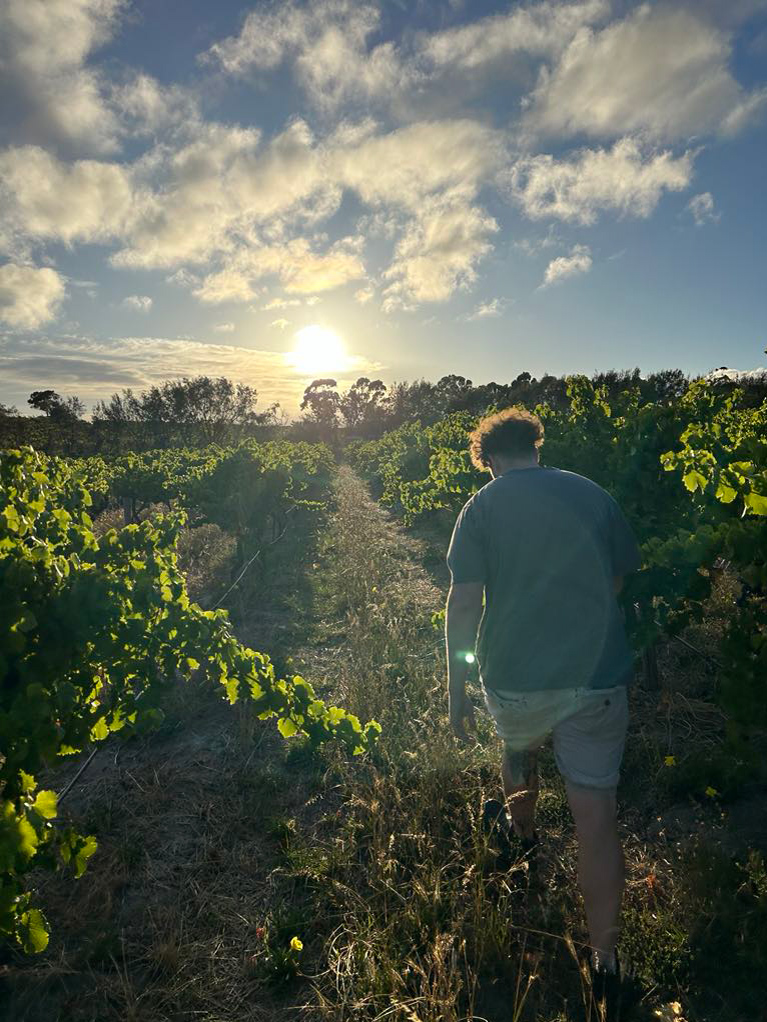
Jasper Button fell into the natural wine scene as a consequence of trying to sell grapes that his parents had grown at their vineyard, first planted in 1992. Button recalls that, around 2012, “It was hard to sell grapes. We weren’t getting value for money … Things weren’t adding up.” While the family had previously sold their fruit to “large, generic kind of wine factories”, Button took it on himself to contact small, artisanal winemakers who he thought might offer the family’s fruit a better home. “That’s how we came across the likes of Anton from Lucy Margaux, then Taras from Ochota Barrels,” he says. With some spare chardonnay fruit, a quick-and-dirty lesson in chardonnay making from Stephen George at Ashton Hills, and encouragement from van Klopper and Ochota, Button and his sister had somewhat inadvertently launched their label, Commune of Buttons. (Button was awarded the Young Gun of Wine ‘Best New Act’ in 2016.)
“The natural wine movement in Basket Range is more of a philosophical approach than a regional approach. The natural wine producers aren’t making wines from Adelaide Hills fruit.”
Button notes that his position as both a grower and a producer of natural wines makes Commune of Buttons something of an anomaly in the Hills’ natural wine scene. His natural-wine compatriots “aren’t people that are growing and producing their own wine,” he says, although he points to some exceptions such as Lucy M and Basket Range Wines. “The natural wine movement in Basket Range is more of a philosophical approach than a regional approach … The natural wine producers aren’t making wines from [Adelaide Hills fruit], they’re making wine from the Barossa vineyards or the McLaren Vale vineyards.” For Button, the Hills’ proximity to other regions – “Williamstown’s 40 minutes north, Blewitt Springs is 40 minutes south” – explains its popularity as a home base for young and emerging winemakers who purchase fruit.
Above: Michael Downer of Murdoch Hill. Opposite: Jasper Button.
As this first wave of natural winemakers has grown and developed, so, too have their wines. “Our winemaking has changed a little bit since we began,” Button says. “We’re less experimental, less willing to take risks.” He adds, “It takes a lot of work to grow grapes and get them to a point where you’re making high-quality wine … In the winery, I just want to show what we’ve done in the year in the vines.” Now that the heat from the emergence of the Hills’ natural wine scene has died down, and the focus has shifted largely from rule-breaking to the nuances of sustainable viticulture, these wines are starting to shed light on what makes the Hills, including its pinot noir, special.
Peaks and troughs
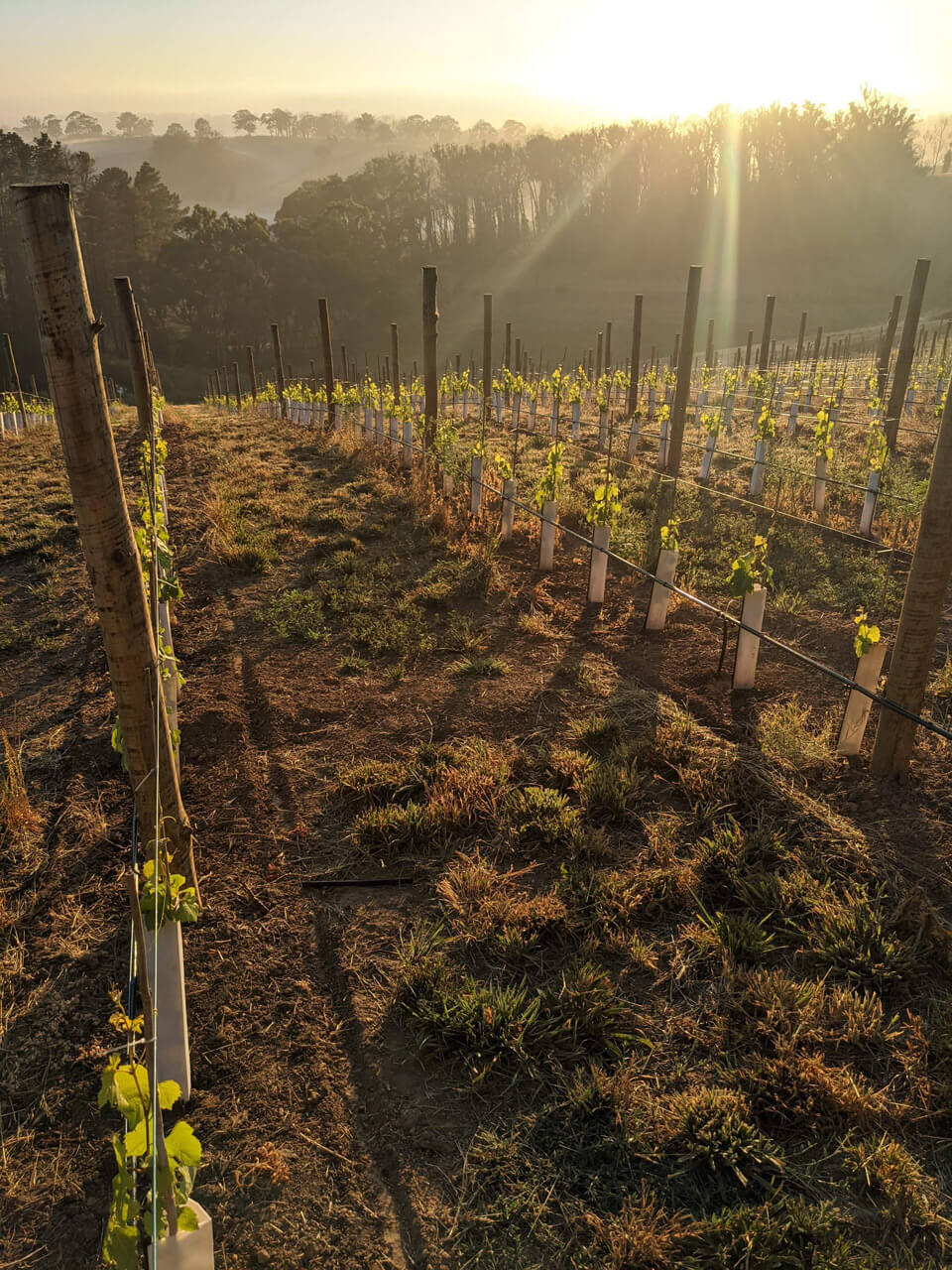
For Croser, the Hills is currently going through a state of viticultural refinement. “What happens when a region is discovered and documented, and becomes a brand which people can ask a premium for, then everybody plants everywhere every variety, and that’s exactly what’s happened in the Adelaide Hills,” he says. “Everything gets planted and everything gets made.” Eventually, he argues, winemakers “learn that if they really want to make high-quality wine, they’re going to have to find the best sites … that’s the process we’re going through – it’s a big sorting process.” He points to Ashton Hills as one such ‘distinguished’ site, with its elevation and geographical protection from ultra-cool winds coming down from the peak of Mount Lofty allowing pinot noir to work “twenty-four hours a day – which it really needs to do to create the right level of flavour, colour, and tannin.” Unable to secure his own distinguished site for pinot noir in the Hills, Croser now grows it in the Fleurieu Peninsula at his Foggy Hill vineyard.
Above: Vinteloper’s Adelaide Hills vineyard. Opposite: Ansel Ashby of Pare Wines.
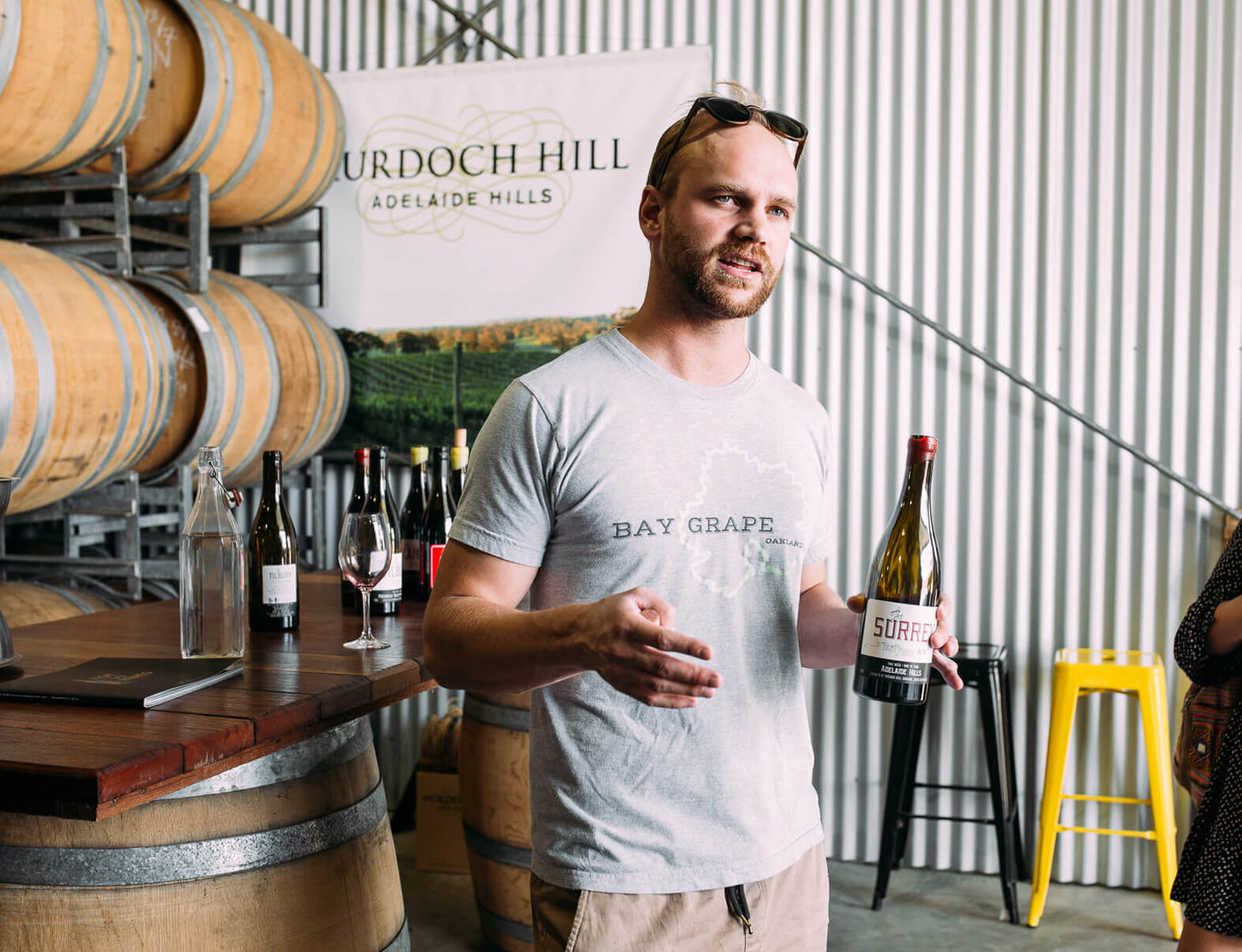
For Michael Downer of Murdoch Hill – 2017’s Young Gun of Wine Award winner – there is still a lot of potential to be found for Hills pinot by matching the right site with the right genetic material. “In the valley floors or the Onkaparinga Valley, we’re starting to see producers putting in new clones, and we’re starting to see the rewards of those efforts in those vineyards coming through now,” he says. He also argues that as winemakers have become more familiar with the Hills, they can better make wines that reflect the region’s terroir. “We’ve probably suffered in the past with pinots being made in a little bit of a ‘South Australian Dry Red’-ish expression, being surrounded by Barossa and McLaren Vale,” he says. “Embracing the vibrancy and the prettiness of Adelaide Hills pinot is of utmost importance … getting the picking date right is critical.”
“Embracing the vibrancy and the prettiness of Adelaide Hills pinot is of utmost importance.”
Downer is bullish about the opportunities for Adelaide Hills pinot in the broader Australian wine market. “The fragrance, the perfume – I often describe Adelaide Hills pinot as having a more linear profile from our ancient soils,” he says. “It’s got such high drinkability.” While Adelaide Hills pinot has historically been criticised by some for its lightness, for Downer this lightness is an asset. “People are looking for more aromatic and livelier styles of pinot – a great opportunity.” He also points to Hills’ pinot more approachable price point compared to other Australian regions as one of the reasons to be excited about the category.
With a new generation of winegrowers, vignerons and winemakers setting up shop in the Hills – including figures such as Turon White in Lenswood, Vinteloper outside of Lobethal, James Ellis of Ada Wine Co., Louis Schofield of Worlds Apart, and Ansel Ashby of Pare Wine – as well as the rejuvenation of established estates such as Longview, the Hills remains an incubator of vinous talent. Adelaide Hills pinot noir has had something of a bumpy ride to get where it is, but right now the future of pinot from this complex region looks to be a very interesting one.
Opposite: Longview vineyard in the southern reaches of the Adelaide Hills. Above: The Turon vineyard in Lenswood.
Outtakes from the tasting
We gathered every pinot noir from the Adelaide Hills that we could find and set our expert panel the task of finding the wines that compelled the most. All wines were tasted blind, and each panellist named their top six wines. Below are the wines that made the panellists’ top-six selections from the tasting.
Our panel: Greg Clack, winemaker, XO Wine Co. and Chain of Ponds; Marion Cazorla, Victoria market manager, Shaw & Smith; Mike Aylward, winemaker, Ocean Eight; Hélène Lafitte, sales representative, Imbibo; Jackson Watson, sales representative, Stock on Hand; Olive Keswick Gallagher, sommelier, Coda; Masahiko Iga, head sommelier, Victoria Racing Club; Terina Davies, wine retailer, Union and Seddon Wine Stores.
Clack started off the discussion by noting that the wines of the day all shared a very strong regional profile. “It was a good example of Adelaide Hills, showing that red fruit profile that happens quite often in the Hills,” he said. “Lovely spice, fragrance, aromatics – definitely what you normally see in Adelaide Hills.” He was particularly impressed by the deft use of oak barrels on display in the wines: “There’s more judicious use of oak now than there previously has been,” he observed. “Previously it’s been quite heavy-handed because if you’re making a $50 pinot you feel the need to throw 50% new oak at it.”
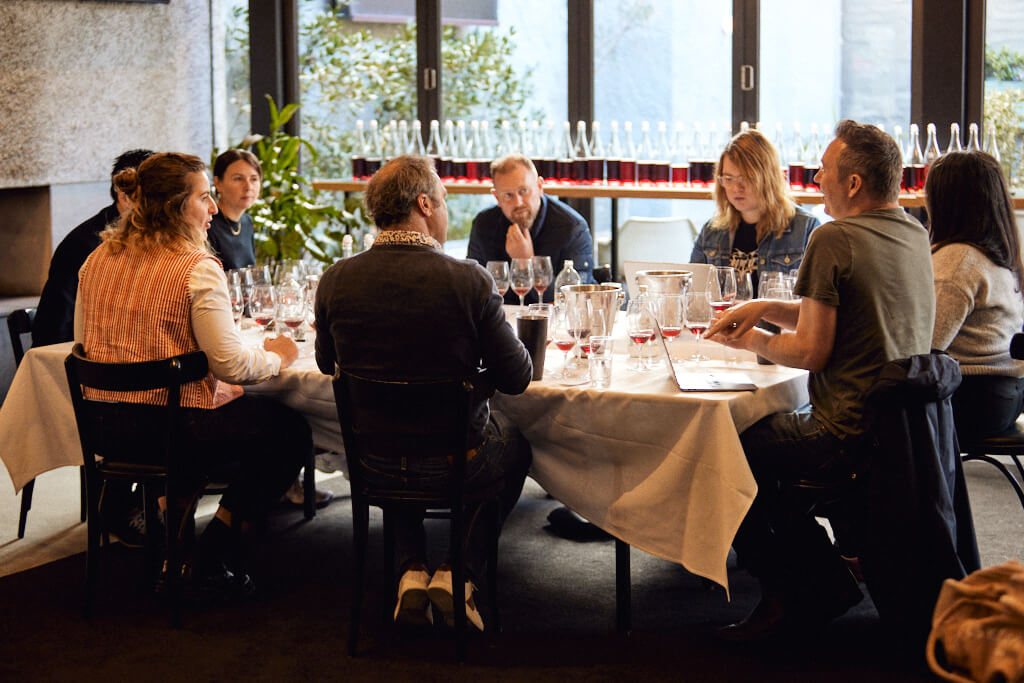
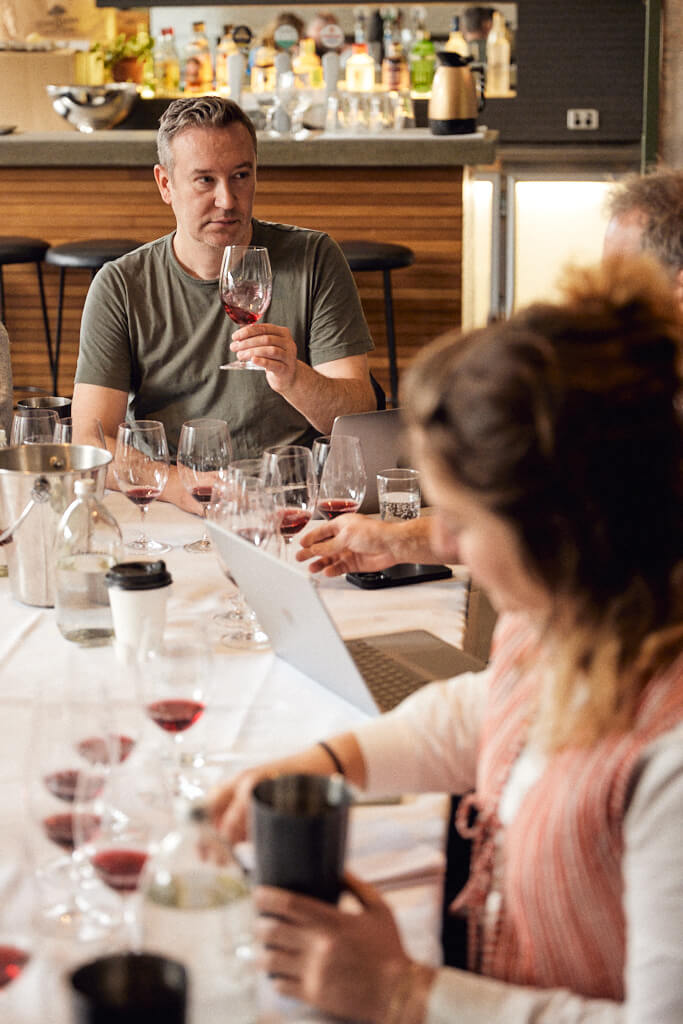
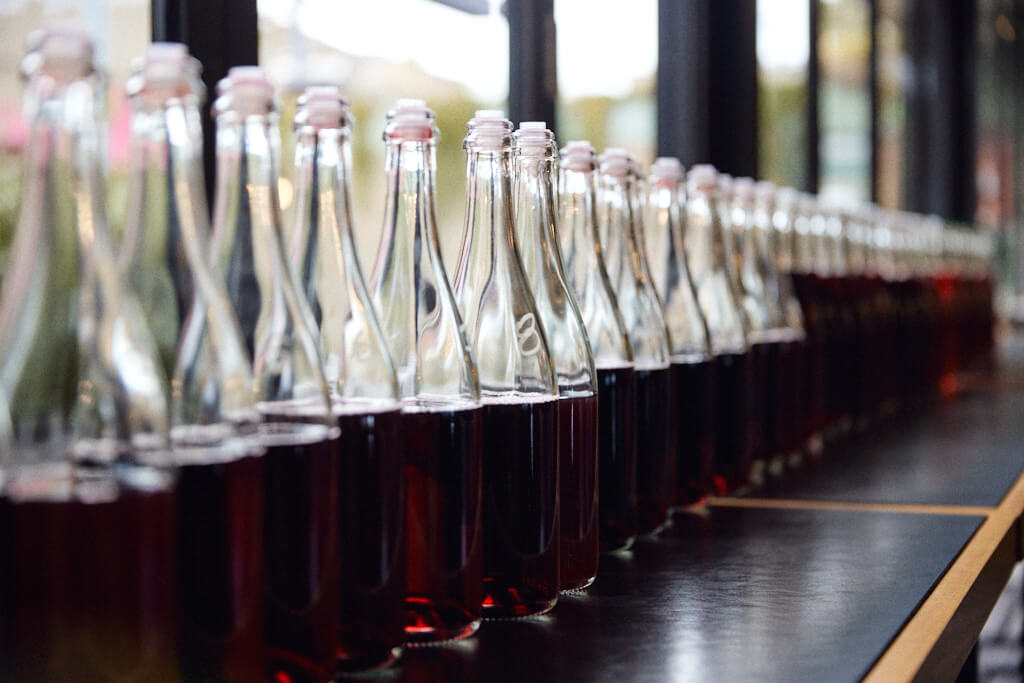
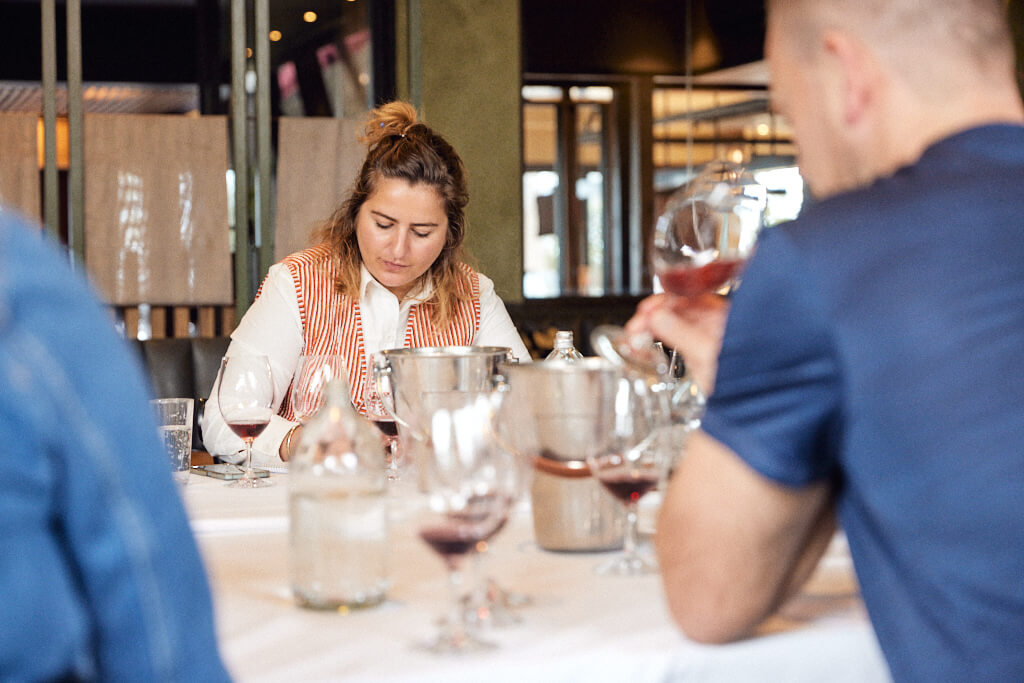
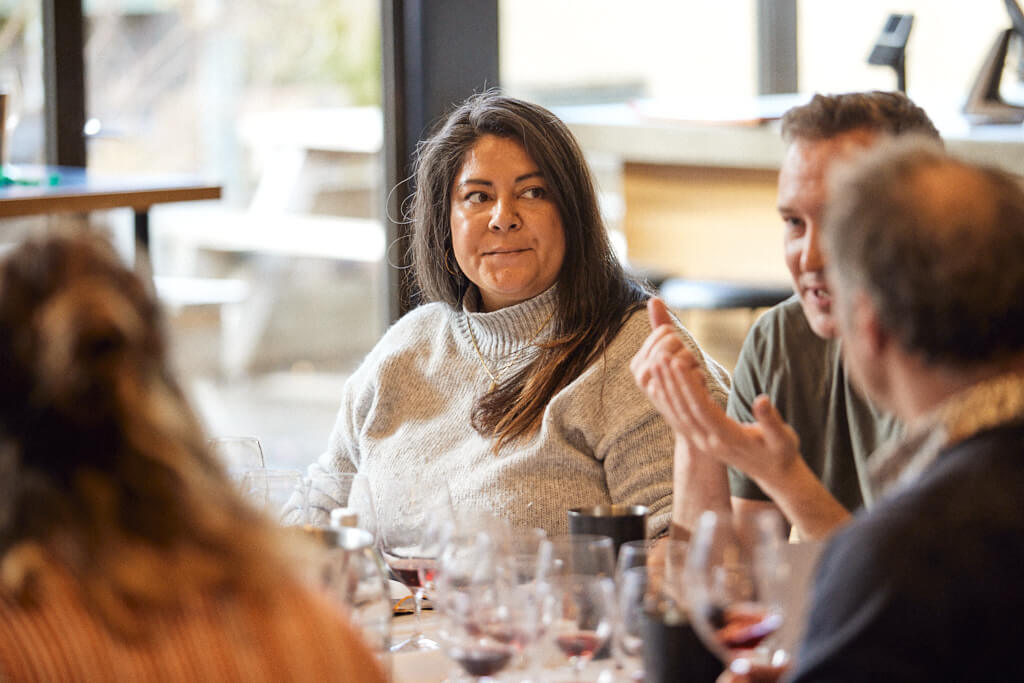
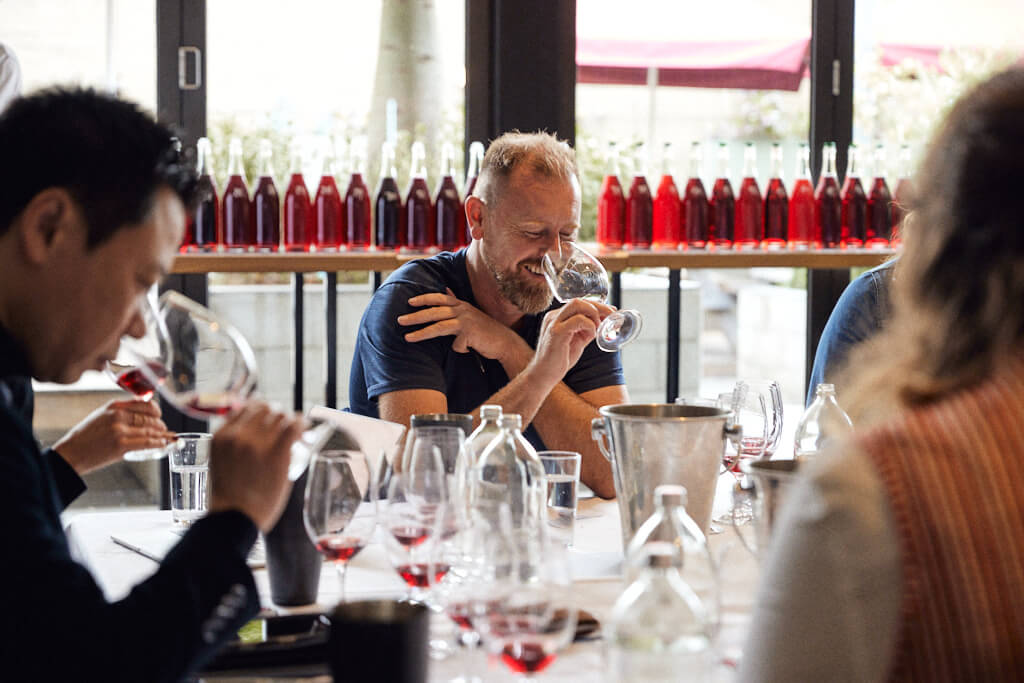
Above: Panellists gathered at the Bleakhouse Hotel, St Kilda (Melbourne). All wines tasted ‘blind’.
He added that this deft touch on display has to do with Hills winemakers learning how to better work with pinot. “People have stopped trying to turn pinot into shiraz,” he said. “That was always the source of over-extraction, heavy use of pump-overs, heavy use of oak, and just the wrong oak, full stop.” For Clack, the current generation of Hills pinot is about “People just learning about the variety on their site, and clones – what clones are working, what clones work for whole-bunch, and what clones don’t work for whole bunch.”
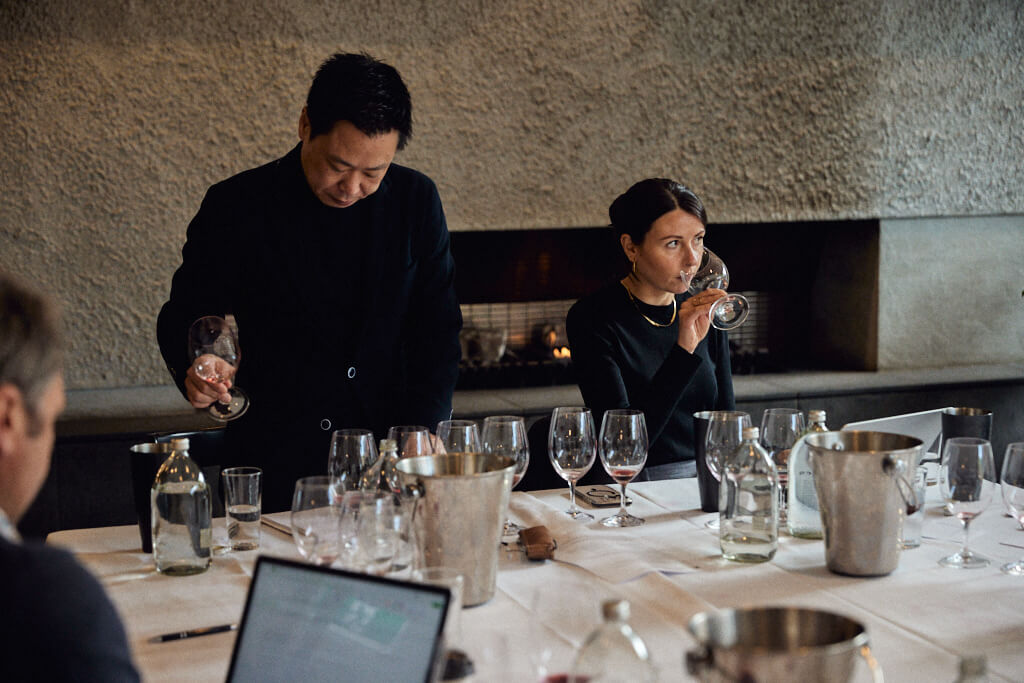
Above: Masahiko Iga and Marion Cazorla. Opposite: Jackson Watson.
Watson was likewise impressed by the finesse of the wines on display. “I love the delicacy and the intricacy of fruit to tannin and oak,” he said. “The producers who have made the best wines in this lineup have had that incredible balance of extraction of fruit and extraction of tannin from oak. I loved drinking those wines where those tannin structures have come together and joined the the spectrum of fruit flavours that just lays over the top of it.”
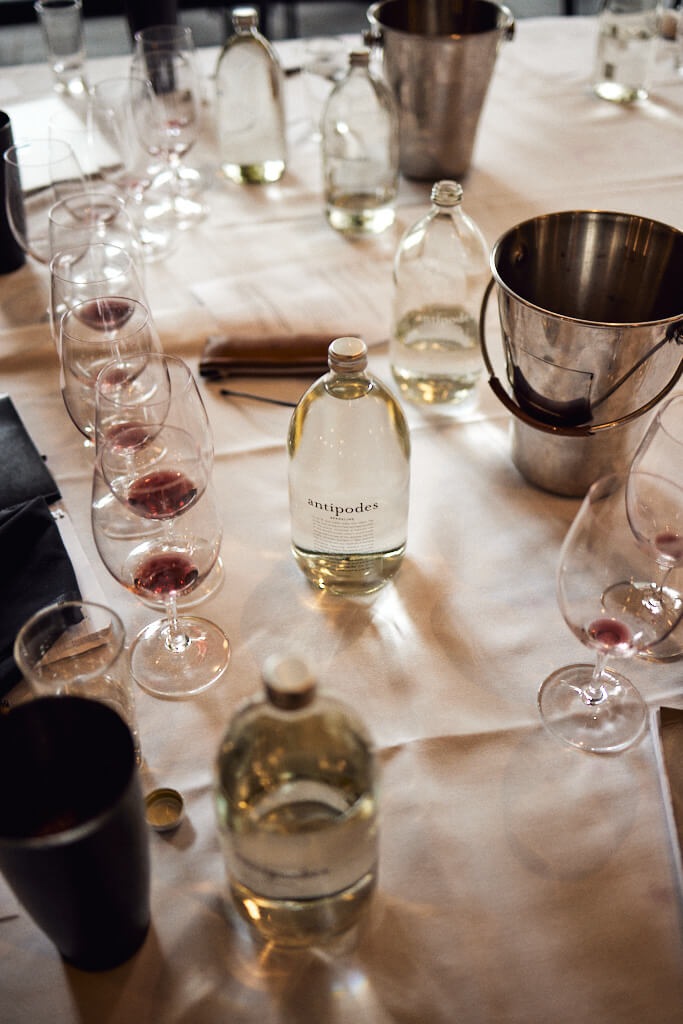
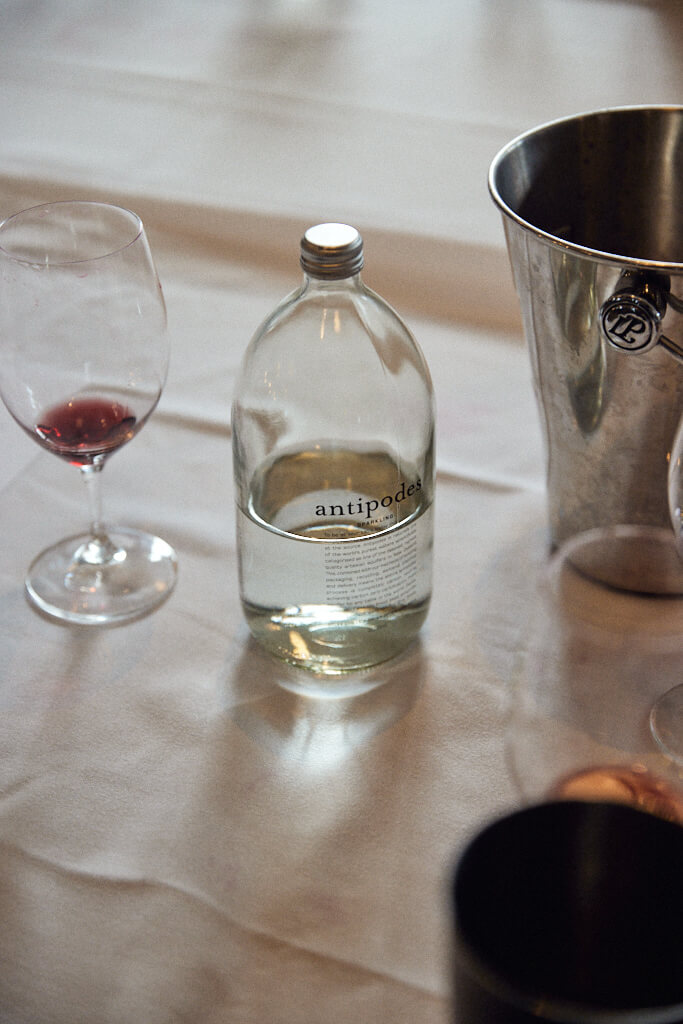
Above and opposite: All wines tasted ‘blind’, with palates cleansed thanks to Antipodes.
For Aylward, the wines that most impressed were the wines where winemaking artifice didn’t get in the way of what he sees as the key regional pinot characters: “Cranberries and Redskin lollies and a sort of sourness – that is, to me, the regional character of these pinots,” he said. “The wines that had a lot of winemaking and oak and reductive characters, they were pushed to the back – but the ones that just showed the pure red fruits were definitely showing the region.”
“People have stopped trying to turn pinot into shiraz.”
Gallagher, by contrast, thought that the diversity of the Hills’ terroir – the complex mosaic of aspects, elevations, and soil types that defines the region – made it difficult to generalise about the wines on display. For her, Hills pinot is “softer then a Mornington pinot, louder than a Tasmanian, and has got more elements then the unripe red fruits and floral notes found in a lot of the Yarra Valley.” She added, “If anything, it’s a region where the unique elevation and variety of soils and vineyard areas – and the variety of talented winemakers – can make incredibly balanced wines that don’t feel trapped by the style of where they’re grown. It can be light, perfumed, delicate and floral – and it can be strong, rich, powerful, and sing of truffles if it needs to.”
Above: Hélène Laffitte. Opposite: Mike Aylward and Olive Keswick Gallagher.
Cazorla’s take acknowledged both overarching regionality and diversity by zooming in on the Hills’ sub-regions. “Some wines were a bit more concentrated and focussed and detailed – so I thought, ‘Oh, maybe that’s Piccadilly!’,” she said. “Others, I was thinking, ‘Is this Lenswood?’ because they were pretty and perfumed.”
“Some of these winemakers did really experimental stuff, and they’ve grown over their journey – and the reality is that a lot of them now understand how to work with pinot.”
Davies likewise highlighted the diversity of the lineup’s winemaking styles, finding much to enjoy in the differences. “There was one wine in particular that was clearly made with a hands-off approach and a bit ‘natty’. I included that in my top-six, because I thought it was interesting and it made the list complete.” Davies was also pleased by the quality of wines at what she assumed was the lower end of the scale of price points: “You can chill it and have it at a barbeque, and I like that.” She added: “There was one in particular that look like it could have been [Sicilian red variety] nerello mascalese! I was really shocked at the diversity.”
Above: Marion Cazorla. Opposite: all wines tasted ‘blind’.
Laffitte highlighted the importance of the Hills for Australia’s natural wine scene. “We often forget that Adelaide Hills was the first movement of natural wine in Australia,” she said. “Some of these winemakers did really experimental stuff, and they’ve grown over their journey – and the reality is that a lot of them now understand how to work with pinot. Is it to add sulphur or not add sulphur? It doesn’t really matter – it’s more about when you drink some of these wines, you get the purity of fruit. You will never find that purity in a conventional winemaking sense.”
Above: Terina Davies. Opposite: Greg Clack.
For Iga, the tasting could be summed up by the word ‘balance’. “You get refined aromas that only a cool climate can deliver, bright acidity, and, notably, fruit that is ripe in a high-quality way, with real depth to the wines.” He added: “What I really love about Adelaide Hills pinot is its refined character and brightness – it has a special personality that sets it apart from other regions, and that alone is a good reason to choose it.”
Above and opposite: All wines tasted ‘blind’, with palates cleansed thanks to Antipodes.
The panel
With extensive experience working in Adelaide Hills and McLaren Vale wineries, Greg Clack has been Chief Winemaker at Chain of Ponds since 2007. In 2017, he founded XO Wine Co. with his partner Kate Horstmann, focusing on small-batch parcels of fruit from both well known and emerging varieties. With a deep passion for viticulture and winemaking, Greg is also a seasoned wine show judge with stints in McLaren Vale, Royal Adelaide, Sydney Royal, Langhorne Creek, Barossa and Clare Wine Shows. Greg also has had extensive involvement on the McLaren Vale and Adelaide Hills Wine Show committees including chairing the Adelaide Hills committee for four years. He serves on the Executive Committee of the Adelaide Hills Wine Region, heads up the Adelaide Hills regional masterclass committee and was also a 2024 Len Evans Tutorial Scholar.
Marion Cazorla started her journey in the wine world in 2012 in her home town, working at the Marc Brédif cellar door in Vouvray while studying wine marketing and sales. She then graduated as Master of Science in Wine at the Ecole Superieure d’Agriculture d’Angers (France), through which she studied viticulture and winemaking in Portugal, Spain, Greece, Hungary, and Chile. She then made a vintage in Burgundy in 2015 and in the Rhône Valley in 2016. She began her fine wine supplier career when arriving in Melbourne in 2017, representing consecutively, Michel Chapoutier (Rhône), Ten Minutes by Tractor (Mornington Peninsula) and Piper-Heidsieck (Champagne) before joining forces with the Adelaide Hills producer Shaw & Smith this year.
Mike Aylward is the winemaker for his family’s Mornington Peninsula estate, Ocean Eight. He was the recipient of the 2011 Young Gun of Wine Award.
Hélène Lafitte grew up in Marseille and moved to Australia in her teens to study agriculture, eventually specialising in wine. With hands-on experience in French wine regions including Languedoc, Chablis, and Jura, she developed a deep passion for biodynamic farming and telling its story through wine. After a decade in Melbourne’s wine scene – working in sales and purchasing for importers and restaurant groups – she now represents leading Australian wine distributor Imbibo. She spends her time celebrating the origins, land, and labour behind every bottle of wine.
Jackson Watson fell in love with the wine industry while pruning vines and assisting with bottling in Harcourt during the winter of 1996. It was not necessarily the wine itself, as he was too young to drink, but rather the manicured rows of vines, the exotic aromas emanating from the winery, and the charming people he encountered. His working career began in cafés and bistros, leading him the Michelin-starred Chez Bruce restaurant in London, where he was truly exposed to the world of wine. Later, he continued a sommelier path through some of Melbourne’s iconic restaurants and wine bars, including Ezard, Taxi Dining Room, Vue de Monde, and Harry & Frankie. Today, he leverages this lifelong knowledge and passion to sell exceptional Australian wines to the Melbourne hospitality market with distributor Stock on Hand.
Olive Keswick Gallagher is currently the sommelier at Coda, having previously worked at Sunda and City Wine Shop. She has a decade working around wine, beer, and spirits in some degree, and is currently finishing up her WSET diploma.
Masahiko Iga moved to Australia in 1997 as a Japanese chef. Since then, he has managed restaurants, catering services, and event businesses while studying wine, gaining vintage experience not only across Australia but also in Barolo and the Douro Valley. Has been involved in various wine events including the James Halliday Awards luncheon and Gambero Rosso’s Top Italian Wines Roadshow, and served as the official sommelier for the original Japanese Iron Chef. He also has extensive writing experience, including a monthly column for Japan’s prestigious food and wine magazine Cuisine Kingdom. He currently works as a consultant, planning and running events and restaurants, and serves as the Head Sommelier for the Victoria Racing Club’s Flemington Racecourse and Melbourne Cup Carnival.
Terina Davies grew up in Gippsland surrounded by vineyards, sparking an early fascination with expressive wine. After completing a Bachelor of Business at RMIT, she spent formative years with the European Group before travelling and working vintages at Gaja and Taittinger, and in the dining room at Paris’s L’Arpège. Back home, Terina has held roles across top venues including Vue de Monde and wineries on the Mornington Peninsula. Now based in Melbourne, she combines her love of wine with inclusive hospitality, working at Seddon and Union Wine Stores, teaching people with disabilities, and studying for her DipWSET.
GET FIRST ACCESS TO THE NEXT WINE ICONS – DELIVERED
Natural wine – or naturalness in wine – is a thorny issue. And it’s one that seems to have created a divide that sees seemingly conventional wines pitched against the creative flourishes of the avant-garde. But are we missing the point? The truth is not always easy to unpick, especially when there is often a degree of opacity to methods of both farming and making…
Today, grenache can be brooding or it can be lithe and vibrant, it can be silky, or it can be arrestingly grippy – it is versatile, characterful and reflects where it is grown with stunning clarity. Greg Clack and Kate Horstman (XO Wine Co.), James and Kimberly Cooter (Cooter & Cooter/Hedonist), Andrew Kenny (Kenny Wine), Louis Schofield (Worlds Apart Wines), Riley Harrison (Harrison Wines), Jean-Paul Trijsburg (Wines by Jean-Paul), Jack Weedon (Rollick), Tom Daniel (Chouette), Koen Janssens (Bink), Skye Salter and Charlie Seppelt (Paralian) are all pushing grenache’s ample possibilities.
Wine is subject to fashion like anything else, with grapes and methods falling in and out of favour, sometimes quickly, sometimes over decades. Precious ancient vines can even be removed to plant more profitable grapes – or other crops – erasing irreplaceable history. But some of those marginalised grapes are given new breath by today’s makers. The 2021 Young Gun Top 50 features Wines by Jean-Paul, Sigurd and Black & Ginger who are all championing varieties that have almost been pushed to oblivion, either in their regions or globally. Tasting notes appear at the end of the article.
Subscribe to our newsletter
Young Gun of Wine is your shortcut to cutting edge wines, the places to go, and the people behind it all.
Subscribe to be amongst the first to know of our latest discoveries in wine.
We'll bring you the inside running from the growers, the makers, the wholesalers, the retailers and the sommeliers, too.