The southern Italian grape variety aglianico is something of a dark horse – its origins unknown, its wines brooding and structured thanks high acidity and strong tannins, its flavours sometimes challenging. But the variety’s ability to retain acidity and gracefully ripen in warm climates and hot vintages could make it a serious asset for Australian winemakers in a changing climate – and a passionate cadre of Australian producers is now using it to craft wines with serious intellectual appeal and profound deliciousness. Is it time for Australian drinkers to fall for the complex charms of this tempestuous variety? We took a Deep Dive to find out …
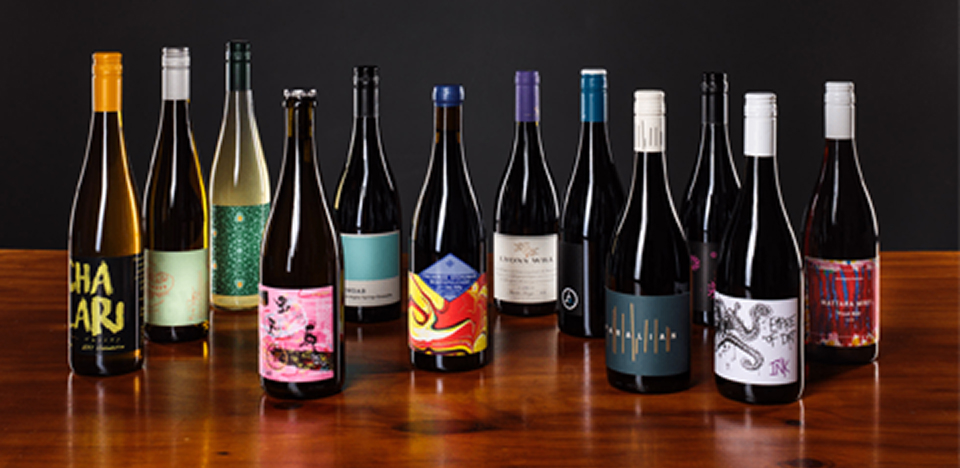
We gathered every example of Australian aglianico that we could find and set our expert panel the task of finding the wines that compelled the most. All wines were tasted blind, and each panellist named their top six wines. Below are the wines that made the panellists’ top-six selections from the tasting.
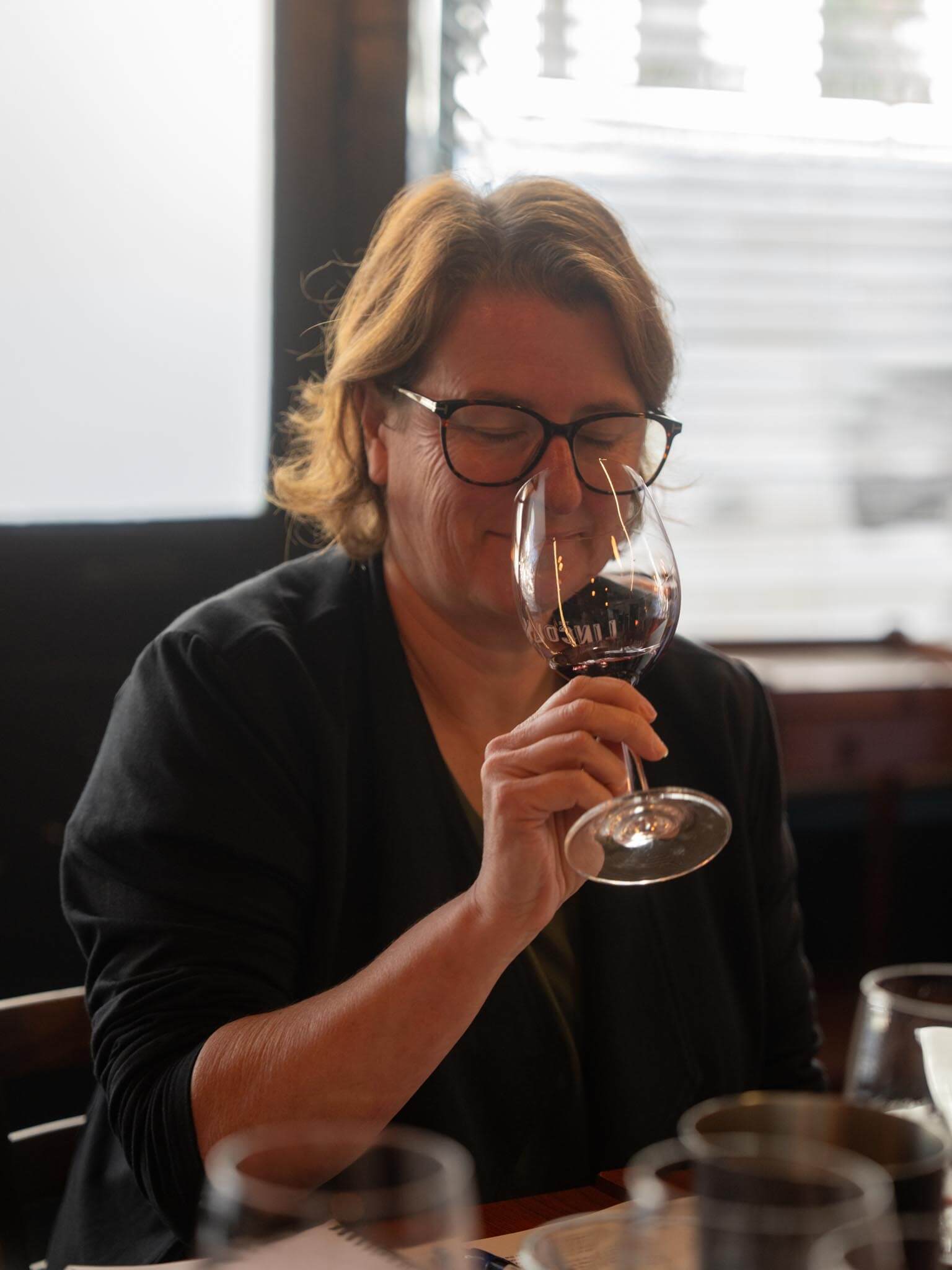
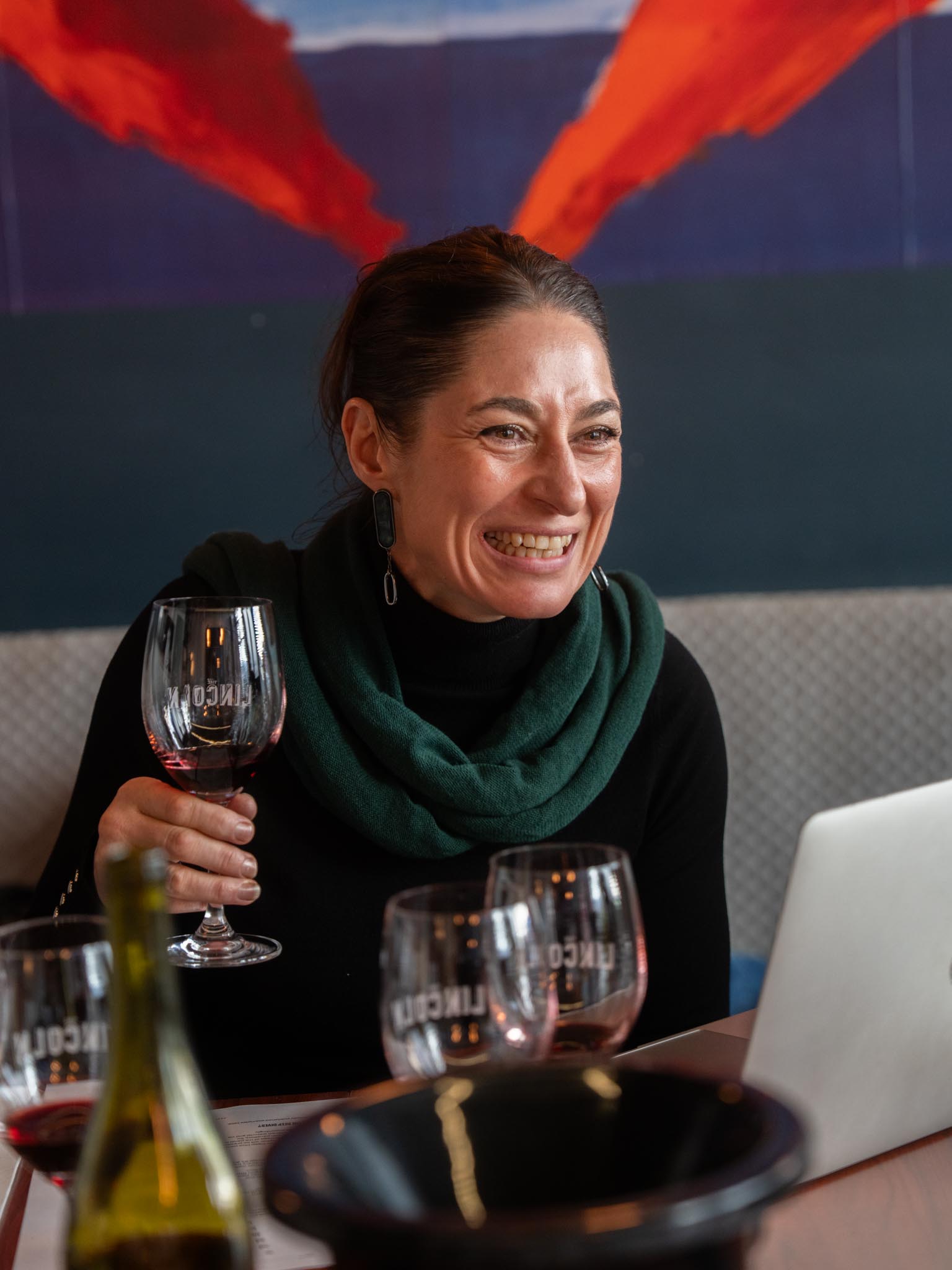
Our panel: Nikki Palun, owner and winemaker, Susuro; James Scarcebrook, owner and winemaker, Vino Intrepido; Cindy Heley, vigneron, Monak Wine Co.; Seamus Donaghey, winemaker, 919 Wine; Sam Baxter, sommelier, Victor Churchill; Caroline Abbott DipWSET, freelance wine consultant, Caravine Consulting.
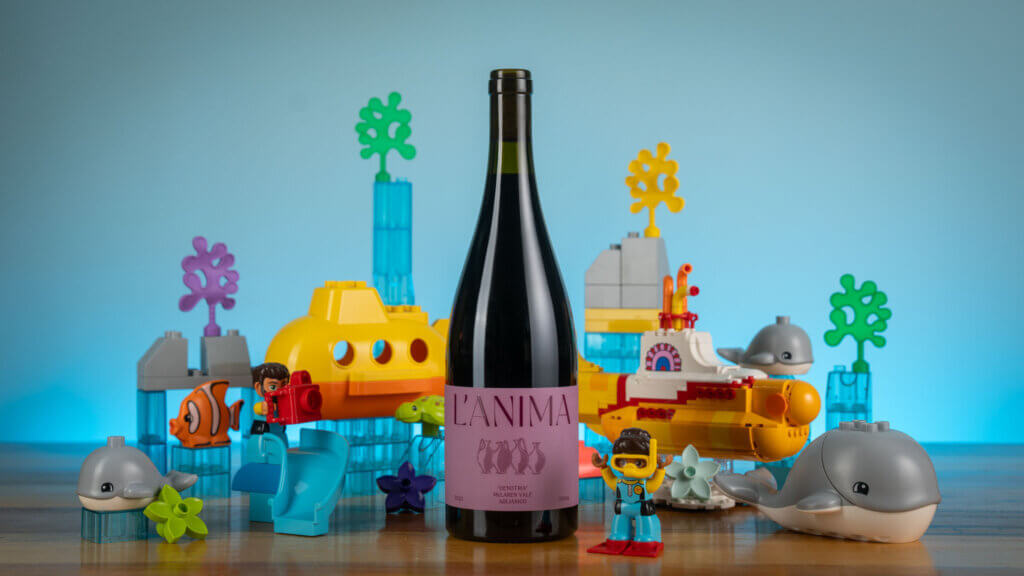
Heley, Scarcebrook, Baxter, Donaghey, Abbott, and Palun selected this among their standout six wines of the day. The power here impressed most, though what captured Heley’s attention was the execution: “There’s plenty of power and structure – the perfect tannin ripeness and judicious extraction is the most impressive part. This shows riper fruit characters balanced with power.” Scarcebrook found something almost silken in the texture: “Dense, dark and mellow, like black velvet. Opens with haunting spices and Chinese five-spice, very syrah-like with pepper and mellow tannins. Very well-made.” Where Scarcebrook sensed restraint, Baxter saw explosion. “Explosively fruit-driven – black plum, blackcurrant, black pepper, dried chilli, wet Virginia tobacco,” he enthused. “Soft palate with supple, unctuous blackberries, fine-boned cedary tannins building intensity, finishing with campfire warmth. Perfect for slow roasts or wagyu steak.” Donaghey zeroed in on something unexpected: “As rich a red as they get – juicy and mouth-watering. Lightly vegetal nose swallowed by meaty palate, with unusual sunscreen-like aromatics and saline minerality. Beachside character crying out for food.” Abbott brought historical perspective to her assessment – “Layered and deep, purple-tinged ruby. The ancient Greeks and Italians must have found aglianico dazzling when spices were harder to come by” – before noting the tannins would soften beautifully with time. Palun captured it most simply: “A quiet achiever. Carbonic bounce, with chalky mouth-coating tannins that just get better in the glass.”
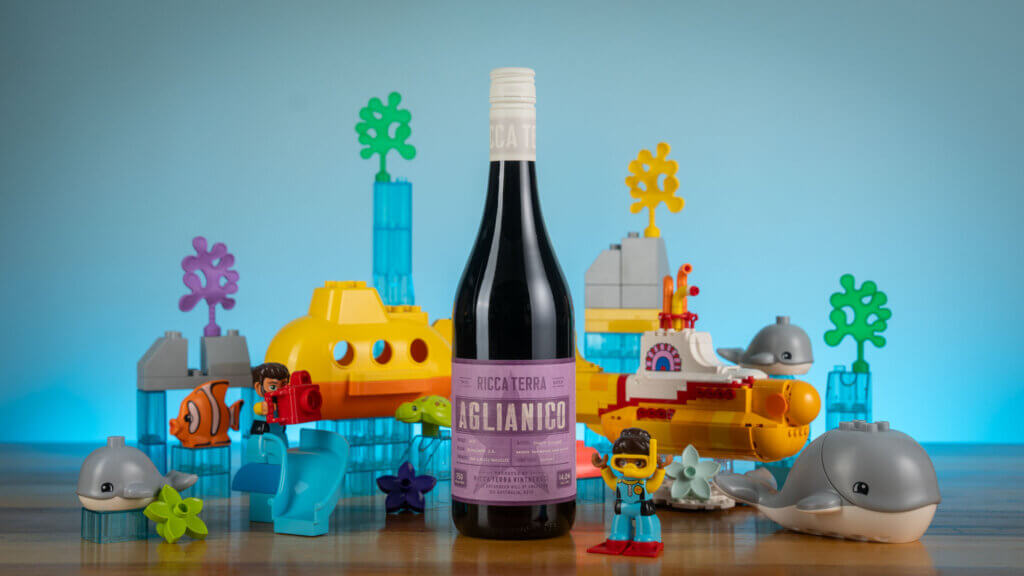
Palun, Heley, Donaghey, and Abbott included this among their top six picks from the blind tasting. Palun started with the descriptive framework: “A grippy, deeply flavoured riper version – vanilla oak, clove, nutmeg, black cherry, blackcurrant, mulberry, liquorice root, violets. Classic Aglianico del Vulture in style with pleasant bitterness, restraint, and freshening acidity. Great to age.” Where Palun saw restraint, Heley found vibrant contrast. “Tar and bramble on the nose,” she noted, “yet the palate is rich with strawberry and cherry, glyceric suppleness building through the mid-palate. Power and concentration with savoury edge and mineral-driven finish.” Donaghey took a playful approach to the umami character: “This aglianico has made ‘umami’ its own thing – oysters, XO sauce, Vegemite, soy sauce on the nose with soft red plum following. Juicy, jammy fruit sweetness on palate with beautiful tannin structure, lengthy and luscious.” Abbott viewed it through an accessibility lens: “Pop of sweet dark-purple plum and blueberry, followed by tannins marching at full steam – sandpaper-like, firm and boxy. This feels like a great introductory foray into aglianico for someone ready to take a step into the unknown.”
Palun, Abbott, and Scarcebrook selected this as part of their top six selections in the blind tasting. Palun called it simply “such a lovely expression – textural but light. Juicy raspberry, sour cherry, cranberry, oaky vanilla, cinnamon, redcurrant, violet, oregano and marjoram, liquorice root. Tannins provide just the right grip. The standout wine of the tasting for me – layered, complex, revealing more with each sip.” Abbott’s meditative response went deeper: “Dried flowers and red roses on nose” she began. “Sandpaper-like tannins hitting the roof of the mouth immediately, yet providing firm backbone for sweet heat of higher alcohol. Intensely savoury – dried leather, game jerky, blackberry compote. There’s a seamless dance between tannins, warmth and acidity into a long finish. This wine begs for grilled meats – barbecue brisket or charred mushrooms. Brooding now, it will soften beautifully with age.” Scarcebrook, meanwhile, focused on the structural clarity: “Bright aromatics – tight dark red fruits, violets and dried roses. Nicely focused and fresh with well-managed tannins and crunchy acidity. It gets wild once it opens, showing some stalkiness. Those tight tannins give the palate density and depth – this definitely wants to cuddle roast beef.”
Baxter, Palun, Donaghey, Abbott, and Scarcebrook named this among their top six wines from the day. Baxter seized on the Italian connection: “This tips its hat to wild Campania vineyards – blood and bone dance with dried mulberries, fresh redcurrants, pithy plum and vibrant red flowers. The palate is like a fresh dark plum – juicily laden with boysenberry and blackcurrant, pithy tannins building into charcoal cedar. Finishes leathery and floral at once.” Palun’s take was more pragmatic: “Lighter style with juiciness, softer acidity. All redcurrant, chewy tannins and tangy acidity – refreshing, well-made quaffing wine.” Where the others spotted drinkability, Donaghey found an invitation: “Bright red betrays approachability,” he enthused. “Juicy morello cherry, red plum, watermelon with smokey tobacco. The palate explodes like biting into finger lime pearl. Plush, inviting mouthfeel with excellent acidity. Softer tannin – great entry point for aglianico discovery.” Abbott moved into tasting narrative mode: “The tannins here are polished, restrained, almost shy – fresher and lighter than previous examples. Red liquorice, ripe wild strawberries, fresh sage come through, leading into a pleasant finish that immediately invites another sip.” Finally, Scarcebrook brought everything into sharp focus: “Tight and bright, super lifted and floral, a touch confected – blackcurrant and raspberry with hint of nutmeg. Intense freshness, light and brisk. Softness on palate with salted caramel smoothness – black cherries and cranberries. Extremely drinkable.”
Donaghey, Heley, Baxter, and Abbott named this among their standout six picks of the day. Donaghey’s imagination ran wild: “Soft, delicate nose – red plum and musk stick with sarsaparilla character. Beneath lies earthiness: mushroom, sardine umami, oyster-shell minerality – like foraging for truffles with your favourite truffle pig. The palate is jubey and juicy with soft tannins and tight acid drive. Oyster-shell minerality returns, lending saline spritz.” Where Donaghey found theatrical magic, Heley appreciated quiet structure. “This wine shows you more as it extends down the palate,” she noted. “Blueberry with raspberry poke through, roses becoming apparent. Finessed, subtle, continuous and balanced.” Baxter seized on overlooked grace. “A graceful wildcard – youthful aglianico, usually underappreciated. Opens with wild flowers, meadow grass, burnt granite and mulberry. Crunchy palate with pithy tannic structure – like eating a crunchy blood plum. Such a great spring and summer wine.” Abbott brought meditative texture-focus: “Lighter and more perfumed with noticeable glycerol richness. Tannins remain front and centre – sandpaper-like, but less severe. More red fruit: dark-red cherries, red liquorice, dried portobello. Approachable while retaining tannic structure and savoury depth.”
Scarcebrook and Baxter selected this among their top six selections from the blind tasting. Scarcebrook found immediate complexity: “Quite complex, with lots going on – fruits, spices, meaty notes, sweet pickle. Fascinating! Balanced but bright, exceedingly dry and textured, showing maturity and depth of flavour. Extraordinarily long tannins. This screams for food – have it with a T-bone steak and all the trimmings.” Baxter responded to the wine’s depth of flavour: “An incredible look at aglianico in its twilight grace,” he enthused. “The bouquet is dynamic and expressive – ripe blackberries and blackcurrants undershadowed by dried mulberry leaf, dried tobacco, blood and bone, autumnal forest floor and gravel dust. The palate is dark, gritty, powerful, earthen – like film noir embodied. Gravelly structure defines the mouthfeel and drives flavours of dried blackcurrants, dessicated wild flowers, and echinacea flowers. Tannins claw and chew, building until they nearly eclipse the wine itself. Yet it finishes supple with wild raspberry balancing rusticity. A precious balance of age and freshness – pleads to go alongside a good ribeye!”
2021 Beach Rd Aglianico, Langhorne Creek $39 RRP
Abbott and Palun included this among their top six picks in the day’s tasting. Abbott’s sensory immersion was immediate: “This shows its meatiness and savouriness instantly – the nose is an entire charcuterie plate. The palate bursts with salted cured pork, dried venison jerky, woodsmoke. Acidity shoots toward the sides and roof of the mouth, tannins settling across tongue and centre – prominent but never overbearing. I imagine this beside a bonfire in summer on a forest camping trip with friends – jerky, smoked Gouda, mature cheddar, charred bread, black olives, and sticky blackberries for dessert. Saline savouriness dominates, but underneath a sweet thread of wild blackberry melds with alcohol warmth.” Where Abbott found sensory narrative, Palun assessed with precision: “Darker-fruited – black plum, black cherry, bay leaf, dark chocolate, ferrous graphite tone, black olive in spades,” she observed. “Traditional Aglianico del Vulture style – grippy tannins, sourness, bitterness from dark chocolate. Everything here to put down and revisit every few years: strong fruit, not overripe, backbone of acidity, firm tannins. It has grunt – Italian sports car grunt.”
2022 From Sunday ‘Kinetic’ Aglianico, Adelaide Hills $29 RRP
Palun and Donaghey named this among their standout six selections of the blind tasting. Palun started with the structural distinction: “A lighter version with softer tannins, but lots of attractive racy acidity – it tastes like red wine but feels almost like white, like fresh barbera. Tart red fruits on the nose – sour cherry, pomegranate, cranberry, redcurrant – lifted by herbaceous thyme. Polished – quite different to the others. There’s a slight grip on the palate – this would make a lovely chilled red or palate-cleansing wine, as the chalkiness and acidity here would cut through fatty meats like a sabre.” Donaghey found immediate sensory clarity: “Rich red in hue with such a savoury nose – charred red fruits, burnt leeks, allium stems jump out of the glass. It smells like you’ve just chucked freshly sliced plums on the barbecue plate you cooked your lamb chops on. The palate is so juicy, with saline character making the mouth water, soft but lengthy tannins balancing acidic juiciness. Chuck it in the fridge – it’s screaming for a spring barbecue.”
Baxter and Heley selected this among their standout six picks in the blind tasting. Baxter captured the wine’s duality: “This dances so elegantly on the nose – wild blackberries and ripe red cherries backed by fresh-cut tobacco, coconut husk and dusty white sand. The palate contrasts the bouquet’s generosity, showcasing aglianico’s darker side – angular, grainy tannins frame rosemary, burnt hazelnut, black pepper, dark-roasted cooking spices. Warms the tongue and finishes ashen, as cedar-like tannins evolve into charcoal. A great winter warmer with roasts, steaks or lamb – or an autumn crusher served by itself.” Heley appreciated how time had settled the wine. “Aromas of leather, dried plum and tobacco draw you in,” she observed. “Obvious time in bottle, yet surprising youthfulness. Salinity and acidity bring the palate to focus – ripeness critical to blackberry characteristics. Tannins giving structure are polished by time but still intact. Savouriness hasn’t reduced complexity – instead it’s nicely integrated into the tar- and tobacco-like finish.”
Scarcebrook included this among his top six wines of the blind tasting. A dense nose drew him in: “Black olives, blackberries, and some elusive characters – soy-marinated beef notes, but also an intriguing hint of Terry’s Chocolate Orange. Despite this compact and cryptic nose, it’s actually quite crunchy and juicy on the palate – lovely and dry with deceptively powerful tannins that kick in late and mouth-puckering tanginess. A blood orange note emerges on the satisfyingly long finish.” What impressed him most was the wine’s maturity and authenticity: “The fruit character is not overt and there is a core of savoury texture, perhaps suggesting bit more vine age. It shows admirable willingness to highlight the authenticity of the variety and not push the wine into a space it doesn’t need to be.”
Heley selected this as one of her standout six selections in the day’s tasting. The nose captivated her immediately: “A fragrant and inviting mix of fresh blood plums, ripe mulberries and redcurrant jam, lifted by an intriguing ripe, funky edge that indicates a winemaker that likes to push past boundaries. Beautiful interplay of the variety’s floral character and warm baking spices from new oak.” On the palate, she found unexpected generosity: “Fuller and more generous in body than most others, yet still carries bright acidity keeping everything lively. Firm tannins, a little coarser than some, but these resolve nicely with air and have good persistence. A subtle charry bitterness lingers, adding savoury complexity and a clean, appetising close. Great approachability, delivering a balance of power between its elements – pair with barbecue brisket tacos with pickled redcurrants.”
Scarcebrook approached this wine’s taut restraint with appreciation: “Shy on the fruit – a nose of dusty dried herbs, wood shavings and cedar,” he observed. “Drier, leaner and much spicier than most on the palate with focused fine tannins and polished texture from judicious oak use. There’s a crunchiness that speaks to tight sinewy tannins harnessed by fermentation on skins, but it’s not jammy or overworked. Lightish but still quite bold – definitely more on the elegant and savoury end of the spectrum for Australian aglianico. Its leanness would speak well to leaner types of game meat, such as venison.”
Donaghey and Baxter named this among their standout six picks in the blind tasting. Donaghey seized on the nose’s playful complexity: “Old-timey lolly shop – sarsaparilla, cola and juicy red liquorice dance across the glass, only to have their reins pulled by much more serious and deep character of tar and ink. The palate follows the lead with plush juicy mouthfeel and lots of plum and red berry flavours carried by the most driven acid line I’ve seen in recent memory. Great tannin structure, soft but with awesome length.” Baxter found himself unexpectedly captivated: “This wine threw me for a loop – the dark horse of the day’s lineup. Almost overbalances and wobbles – yet so intriguing, exciting and addicting. The bouquet conjures a weary cowboy – leather, blood and bone, toasted oak, savoury liquorice, black pepper and gritty soil. Fruit isn’t front and centre – and it doesn’t want to be. The palate punches hard with powerful, angular structure backed by savoury earthy acidity and a cigar-like tobacco note circling the palate with smoky tannic grip. It’s not classically balanced – but I couldn’t get enough of this wine.”
2021 God’s Hill Aglianico (Museum Release), Barossa Valley $85 RRP
Heley selected this more mature expression as one of her top six selections from the day. “A captivating nose of ripe and preserved cherry aromas in all their forms – stalks, stones, leaves and all,” she began. “The savoury edge here indicates a slightly earlier harvest, showing a more subtle, restrained side of aglianico. A soft hand with winemaking has reduced extraction, allowing acidity to lift forward the fruit flavours.” She enthused about the palate’s balanced complexity: “Bright and supple, with very fine tannins providing elegant structure. Generous blueberry compote fruit character at the core, grounded by earthy funk and saline minerality building through a medium-plus finish. Beautifully balanced with vibrant acidity carrying the savoury cherry and mineral notes to a long, harmonious close. A delightful deviation from the over-heaviness that sometimes defines aglianico in this country – match it with a simple wild mushroom risotto.”
The backstory
The southern Italian grape variety aglianico is something of a dark horse – its origins unknown, its wines brooding and structured thanks high acidity and strong tannins, its flavours sometimes challenging. But the variety’s ability to retain acidity and gracefully ripen in warm climates and hot vintages could make it a serious asset for Australian winemakers in a changing climate – and a passionate cadre of Australian producers is now using it to craft wines with serious intellectual appeal and profound deliciousness. Is it time for Australian drinkers to fall for the complex charms of this tempestuous variety?
Aglianico – roughly pronounced as ah-lyah-nee-ko, with the ‘g’ remaining silent – is an ancient grape variety native to the south of Italy, and its origins remain somewhat ambiguous. Many sources claim that the name is a clue as to its origins – it’s supposedly derived from the Italian ellenico, for ‘Greek’, which suggests that the grape arrived in Italy by Greek colonisers as they settled across the Tyrrhenian coast in the seventh and sixth centuries BCE. Recent linguistic and DNA evidence has largely put paid to this hypothesis, as the variety is unrelated to any known Greek variety, so its ultimate origins remain something of a mystery. It buds relatively early and ripens quite late, making it very well suited to growing in the warm-to-hot climate of Italy’s south, where its ability to retain acidity is also prized. Wines produced from it, such as Taurasi or Aglianico del Vulture, tend to be deeply coloured and richly flavoured, with strong tannic structures that allow for extended bottle ageing and often garner them the moniker ‘Barolo of the south’.
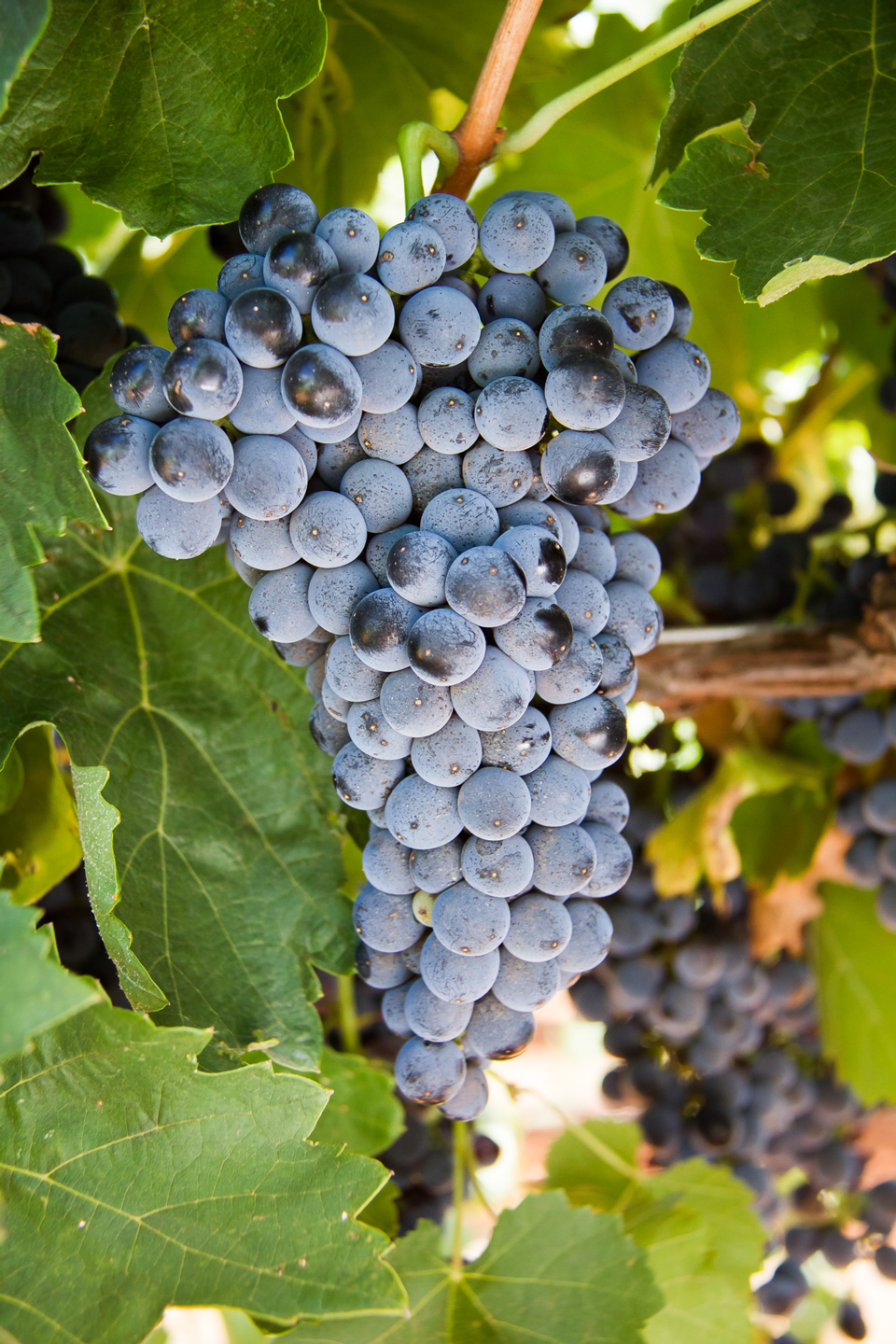
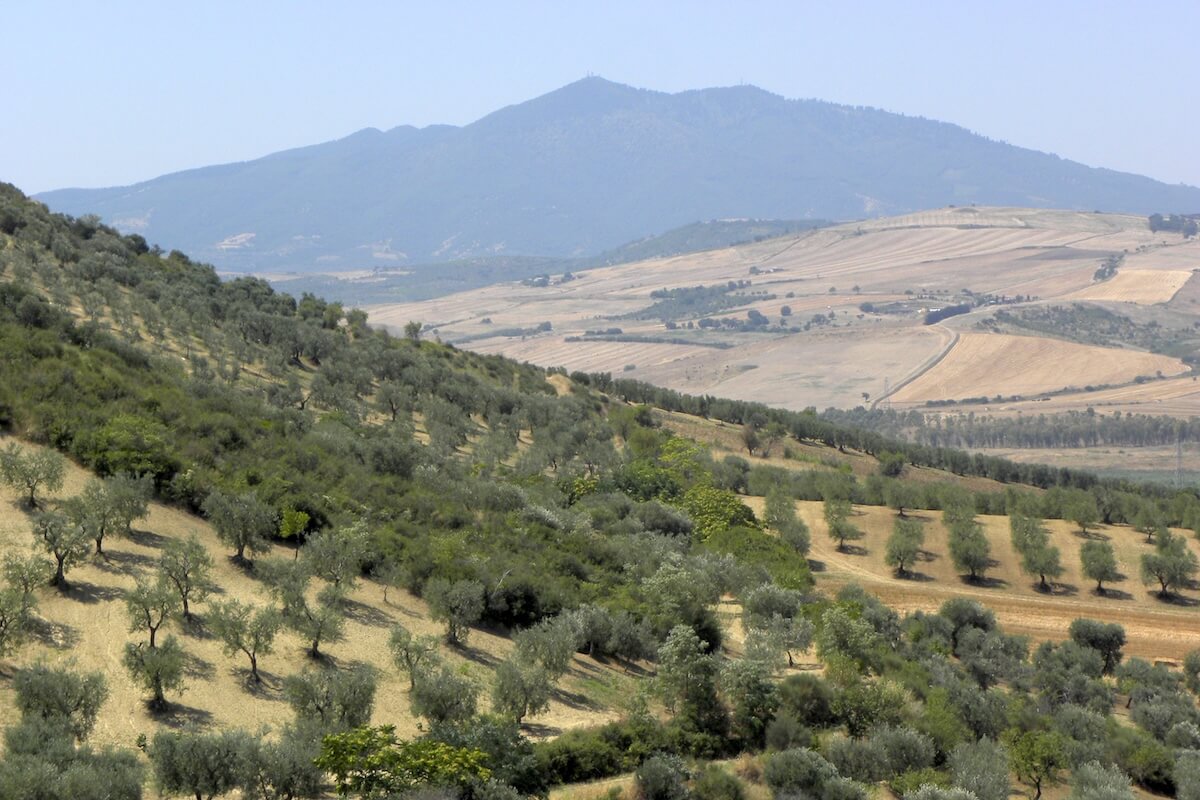
Opposite: Aglianico grapes on the vine. Above: Monte Vulture in Basilicata, Italy – the source of some of Italy’s most prized aglianico wines. (Photo by Unpodizucchero, CC BY-SA 4.0.)
That comparison to Barolo makes it perhaps unsurprising that Italian wine expert Ian D’Agata, in his book Italy’s Native Grape Terroirs, writes that “aglianico is one of Italy’s three greatest red grapes, along with nebbiolo and sangiovese”. Despite that high praise, it remains a relatively obscure variety, both within and outside of its homeland. With 8,034 hectares in the ground in 2022 – mostly in the southern regions of Basilicata and Campania – it only barely cracks Italy’s top-twenty list of varieties by area planted, and is dwarfed by the the vineyard area dedicated to sangiovese (65,083 hectares). And while there’s more aglianico in the ground than there is of the famously finicky nebbiolo, the value of Italy’s nebbiolo-based wines – particularly Barolo and Barbaresco – is significantly higher than the wines of the leading aglianico-based appellations, and it’s much easier to find an imported Italian nebbiolo in Australia than it is an Italian aglianico. Aglianico is therefore something of an underdog variety – but it may be playing the long game, particularly in the Australian context.
Aglianico’s arrival in Australia
Like many other Italian grape varieties, aglianico’s Australian story began with Brown Brothers. In 1998, Mark Walpole – then Brown Brothers’ Chief Viticulturist – struck up a collaboration with Alberto Antonini of Gruppo Matura in Tuscany, and together with Dr. Rod Bonfiglioli, who was working at the Waite Research Institute in Adelaide at the time, set about importing a suite of new Italian varieties and clones. “We [Brown Brothers] introduced new varieties including aglianico, nero d’avola, schioppetino, nosiola, sagrantino, pavana and others – with the guidance and help of Alberto Antonini of Matura in Tuscany, Italy,” Walpole says. Once the imported material had cleared quarantine, Walpole asked Bruce Chalmers to maintain a repository of the vines at the family’s property – Chalmers being Brown Brothers’ propagator for new vineyard developments across Victoria at the time. “The agreement was if Brown Brothers didn’t want the material in any given year, they were free to propagate it and sell it to industry,” Walpole explains. Brown Brothers planted its own aglianico at the Heathcote ‘Patricia’ vineyard around 2002, in a new-variety block alongside nosiola, pavana, nero d’avola, vermentino and even carmenère – a vineyard since uprooted, with the property sold.
It was subsequent to this that the Chalmers family, via their own partnership with Italian grapevine nursery Vivai Cooperativi Rauscedo (VCR) and Antonini at Gruppo Matura, brought in a further wave of Italian varieties and new clones of varieties that had already landed — a partnership that changed the landscape of Australian wine, making available varieties now relatively well-known amongst Australian drinkers such as nero d’avola, fiano, and vermentino. Aglianico was among the varieties in that importation too, and remained something of an unknown quantity even for the Chalmers family themselves. “In the very early days of us beginning to be importers of new varieties to Australia, there wasn’t a lot of examples to try or look at or discover or taste,” says Tennille Chalmers. “Those wines weren’t even really getting imported into Australia back then, so you couldn’t just pop out and buy an aglianico somewhere.” As such, the family had to rely on the advice of VCR that aglianico would suit Australia’s growing conditions: “We really leaned on those professionals back then – and still do now – who are on the ground and working with these varieties all the time, to see what they were suggesting for Australia,” Chalmers says. “These are people who know our Australian conditions and climate and whatnot, and all of the wonderful different pockets where varieties and vineyards can be planted across Australia. And it had obviously already been so such a confident and present variety in the south of Italy.”
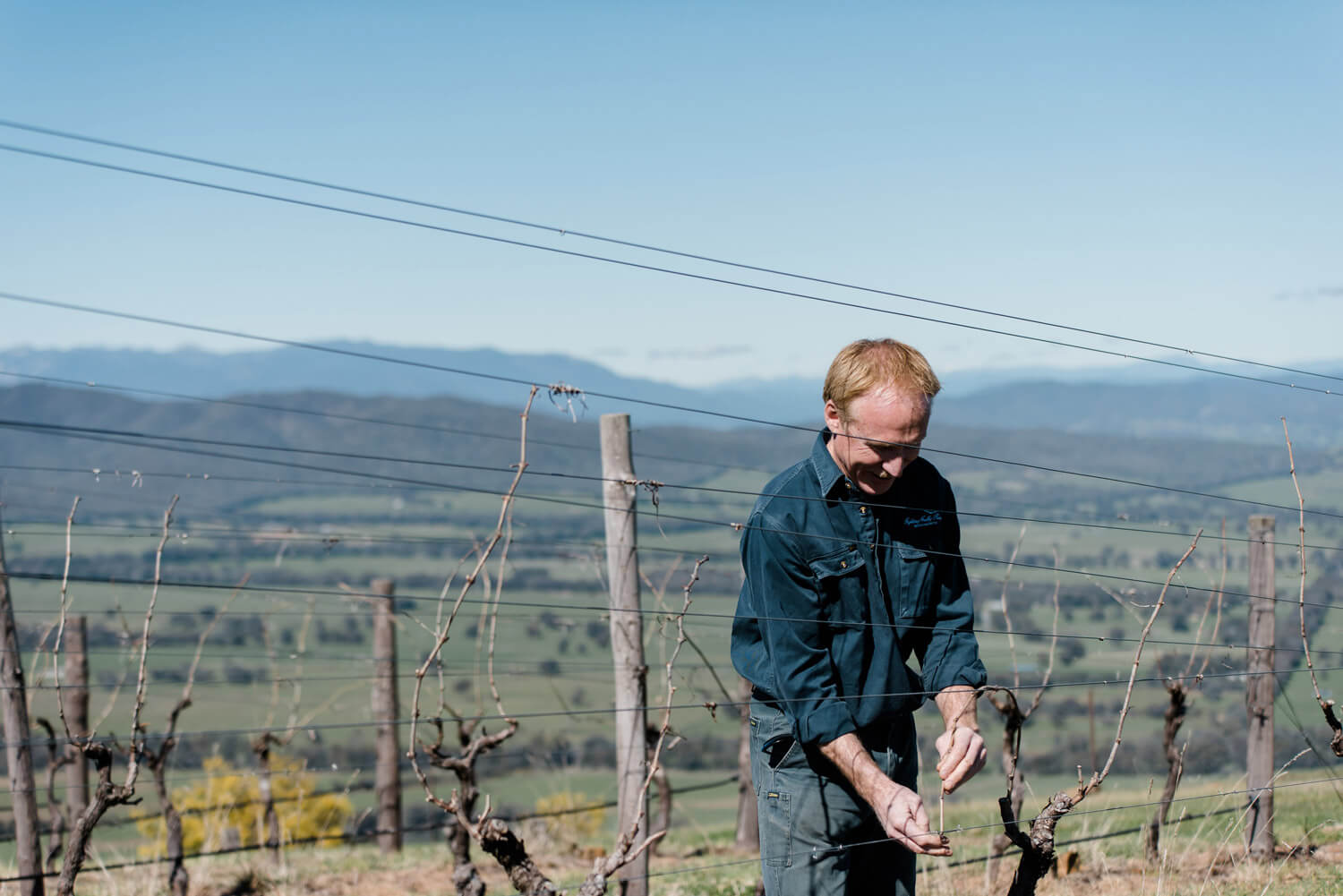
Above: Mark Walpole. Opposite: Tennille Chalmers.
While the advice that aglianico would suit Australia’s climatic conditions seems to have been borne out in the years since it first arrived, it has had a significantly slower uptake than many of its peers. Chalmers argues that it’s a tough variety to work with in a number of ways – starting with the name. “I think that the name is quite uncomfortable or hard to pronounce if you don’t know how to pronounce it, or you’ve never heard of it,” she says. “And it’s a slower variety. The winemaking on it deserves more time and attention compared to something like nero d’avola. Nero d’avola has a lot of beautiful, upfront, youthful, bright, fresh, jumpy, jubey, cherry, purple kind of fruit – which is just so immediately attractive. The tannins are pretty fine. So you’re not looking at something that’s super-grippy or needs food with it, or anything like that.” By contrast, she argues that aglianico’s more structured tannins and deeper, more savoury spectrum of flavours make it less immediately approachable than nero d’avola – although that doesn’t mean it doesn’t reward curious drinkers. “I think of it as the ‘slowdown wine’,” Chalmers says. “It’s the ‘get out the decanter wine’ – not because it has to be taken so seriously, but it’s just this beautiful evolution of letting that structure really shine in a nice big glass that’s been poured out of a big decanter. And if the decanter’s out, it really prompts conversation as well. I think aglianico is a curio of deliciousness and layers and presence – it deserves to have a little bit of attention thrown at it. So to me, in itself, it’s just not an everyday quaffer wine.”
“If you find those really special sites to plant aglianico, you can coax all of those savoury profiles alongside that really pretty, lovely, lifted fruit and incredible natural acidity.”
Because it has remained a relatively small variety with a slow uptake, there’s not a great deal of information about how aglianico expresses itself across Australia’s different wine regions. “Do we think that it’s going to work in a bunch of different sites across Australia? Sure,” Chalmers says. “We’ve got it planted in our Murray Darling vineyard – it’s a bit more kind of earthy and cherry up here. There’s obviously our beautiful site on top of the the Mount Camel Ridge in Heathcote – a 550-million-year-old fault line where we’re working with these incredible soils with dolerite and shale and basalt and jasper. And then someone like Mark Walpole’s got it up in the Alpine Valleys.” She adds that while it seems to suit a relatively wide range of Australian growing conditions, there are some key considerations when planting: “You’re looking for sites that definitely have a warmer aspect or regional average temperature, because it is super late-ripening,” she says. “Ideally, the best wines are going to come from regions that have more structure and complexity in their terroir. And I think a bit of elevation is good for the depth of profile that can come out of it as a variety in the glass.” She adds, “If you find those really special sites to plant aglianico, you can coax all of those savoury profiles alongside that really pretty, lovely, lifted fruit and incredible natural acidity. Then you get tobacco and leather and the wonderful traits that can come out of aglianico – especially for people who are interested in giving it the time that it really does deserve.”
Bringing up Basilicata’s best in the Barossa
Craig Isbel, winemaker at Barossa-based label Izway, became interested in aglianico alongside his former business partner Brian Conway (who amicably departed the business in 2018), as part of a general interest in alternative varieties and different approaches to winemaking. “We met in Beaujolais in 2002,” he says of Conway and the genesis of Izway. “Loving gamay and drinking gamay set us up a little bit differently than the traditional pathways into the Barossa. We had no real roots there, but we both loved Barossa shiraz. And at the time we were also experimenting with making wines with wild yeast and really low additions, trying to make sulphur-free wines. So we were really curious about those sort of styles.” The idea that aglianico might offer some of the structure of nebbiolo from a warm climate – its reputation as the ‘Barolo of the south’ – also appealed: “We were just starting to get curious about nebbiolo and Barolo,” Isbel says. “Aglianico seemed like a better fit for where we where we were in terms of the warmth of our climate.” Likewise, the ancient nature of the variety – whether or not it actually comes from Greece – added to the appeal. “I’ve always been really interested in philosophy and read a lot about different histories,” Isbel says. “The soldiers and the heroes would pour a libation for the gods – and it actually probably was aglianico, or I’d like to think it was aglianico that they were drinking.”
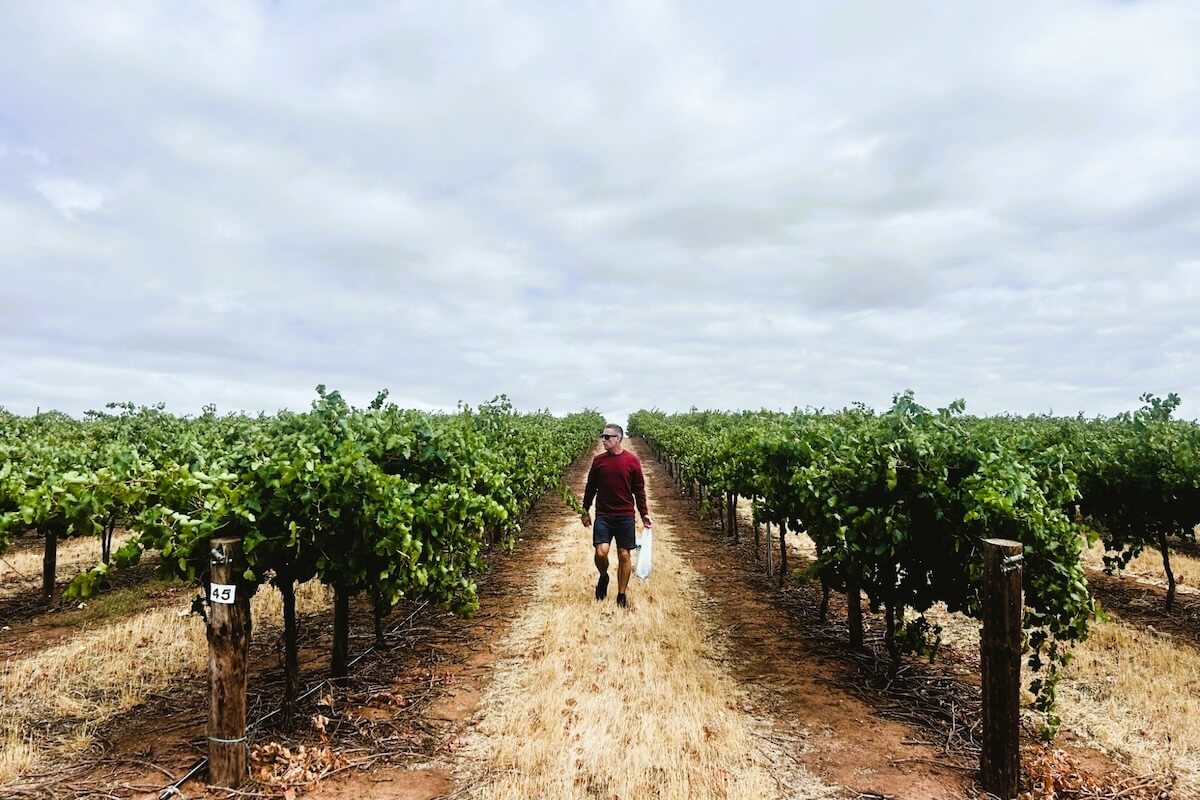
Opposite: Craig Isbel of Izway in his Barossa winery. Above: Isbel walking the rows of grower Andy Kalleske’s aglianico block.
With those factors in mind, Isbel and Conway asked local grower Andy Kalleske (who runs his own label, Atze’s Corner) to plant aglianico in his vineyard in 2009. “This was a beautiful virgin site on a hillside, about as far northwest as the Barossa goes,” Isbel says of the site Kalleske planted for them. “Beautiful ironstone, lovely red clay, east-facing aspect – it was just a perfect site.” Isbel has found that the variety’s reputation for tolerating heat is entirely well-founded, thanks to its later ripening time. “Where we are, what we’re really trying to do is get through a really hot summer, and it still hasn’t gone through veraison most times,” he says, referring to the stage of grape ripening when the grapes transform from hard green pellets to fleshy berries and start to show their final colour. “It still hasn’t gone through veraison really by the end of February – by the end of summer. So it doesn’t get knocked around in those hot conditions until the colour changes – and by then you’re in late March, or mid-March. You’re well into autumn by then.” The location of the vineyard helps their aglianico retain freshness: “It’s quite cold nights, warm days,” Isbel says. “Those cold nights, particularly in March, lead us to be able to maintain a really high natural acidity. So a lot of the time we’re waiting for acid to fall out, to come off a bit, which is a really rare thing for us to be waiting for in the Barossa.”
“When we saw the natural acidity in the grape, and the tannin profile, everything led to this idea that you could make it without preservative and make it without too many additions – the same way as they would have a couple of thousand years ago – and it could still be in fantastic condition.”
This combination of heat tolerance and high natural acidity is something of a boon in the Barossa – one that assists in keeping the wine fresh and age-worthy in the absence of preservatives engendered by the minimal-intervention winemaking approach at Izway. “When we saw the natural acidity in the grape, and the tannin profile, everything led to this idea that you could make it without preservative and make it without too many additions – the same way as they would have a couple of thousand years ago – and it could still be in fantastic condition,” Isbel says. “I think that’s probably why it survived as one of those ancient varieties – it was thought of as the first ‘first growth’, it was actually a tradeable commodity – because of the structure of the grape and the wine that it made. You were able to transport it in a clay pot on a waggon on a bumpy road between towns and still have a saleable product by the time it got to the next destination. Which would not have always been the case with a lot of other wines, right? You’d imagine there were a few buckets of paint-stripper kicking around at the time.” Those same qualities mean that Isbel happily uses the finished wine to goose up his Barossa shiraz. “In a couple of our bigger shiraz blends – like ‘Bruce’ and ‘Rob & Les’ – we like to put a tiny little bit, a barrel or two, of aglianico in there,” he says. “Barossa shiraz – if it’s missing anything, it’s natural acidity and a drier sort of stronger tannin, rather than that fruit sweetness. So it just gives us a bit of spine in some of the shiraz, and I really find it beneficial – particularly if we’ve had a hot year for shiraz – to just have one or two per cent aglianico in those bigger blends.”
Calabrian character in a cooler-climate cast
Despite the variety’s reputation for loving the heat, Australia’s first commercially productive aglianico plantings were in a region that’s not renowned for its warmth – Bendigo, in central Victoria – and at a vineyard, Sutton Grange, that’s at the cooler end of the spectrum for that region. “It’s on the internet, so it must be true!” Sutton Grange’s sales and cellar door manager, Toby Waite, says, laughing. “First is not most important – but yeah, we’ve definitely had plantings in for a long time.” The Sutton Grange site is relatively marginal for the variety, which means that vintages vary significantly more here than in warmer climes. “It’s a robust variety, thick-skinned,” says Waite. “So it does suit us on those particularly hot years – and that, in my experience so far, is when we’ve had our best or most interesting vintages.” He adds that the variety’s late-ripening nature makes it a more risky proposition in cooler climates: “If we don’t get it to that ripeness, that’s usually because it’s cooling off towards the end of the ripening period – because the aglianico comes off two to three weeks after everything else. It just hangs in there and just like stubbornly refuses to get to ripeness until it’s ready. If we cool off quickly at that time, then it just doesn’t get past that stage and it ends up a bit thin – that tannin becomes really pronounced, and then you just end up with this really unbalanced wine.”
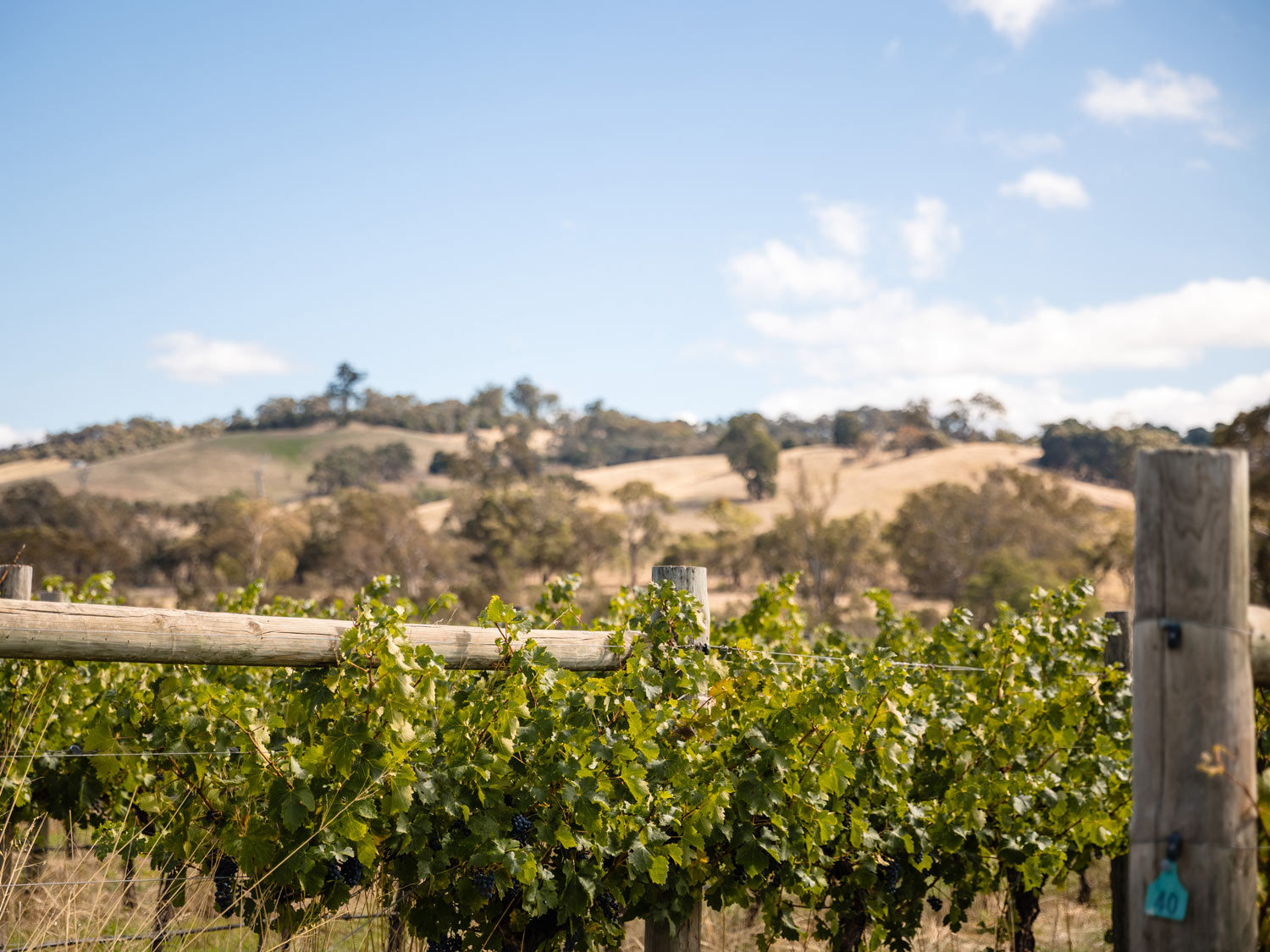
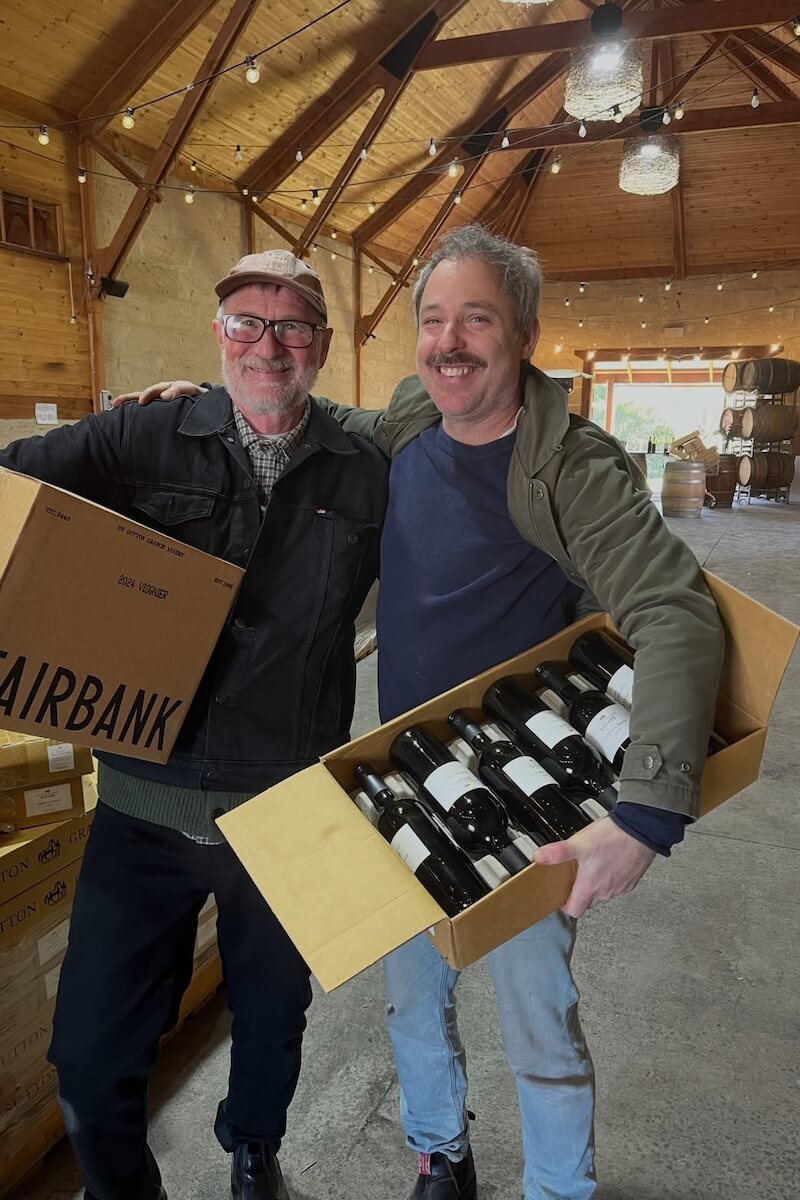
Opposite: Toby Waite of Sutton Grange (at right) with winemaker Chris Smales. Above: The vineyard at Sutton Grange – in a cooler pocket of Bendigo, and at the margins for growing aglianico.
For this reason, Sutton Grange doesn’t release an aglianico every year. “It’s a bit of a Sutton Grange philosophy that, on the years that the wine doesn’t quite make the estate-level cut, we just don’t make it. We don’t try and force a vintage out of something that the season doesn’t give us – and aglianico is a really good example of that. There’s not so much tweaking you can do if the grapes aren’t where they need to be for the quality we need. We can’t just do some blending, or pull some tricks out – it just shouldn’t be made that year.” Part of the calculation at Sutton Grange not only comes down to the ripeness of the fruit, but also its suitability to making wines that are more approachable for the contemporary Australian palate – which, in Waite’s estimation, traditional Italian examples don’t always suit. “Traditional varietal Italian aglianico is not supremely suited to the Australian palate – to fun and easy drinking,” he says. “They’re puzzling. They’re almost like this little secret to unwrap – so we have to try and balance that character with being a bit more conventionally delicious to the market. Ours is a lot brighter and fresher, and a bit more fruit-driven up front – but then with those nice little velvety, sinewy tannins coming through afterwards.”
“Traditional varietal Italian aglianico is not supremely suited to the Australian palate. They’re puzzling. They’re almost like this little secret to unwrap – so we have to try and balance that character with being a bit more conventionally delicious to the market.”
While Sutton Grange’s aglianico is decidedly not for everyone who walks through the cellar door, Waite argues that the interest inherent in the variety makes it a valuable addition to the vineyard’s varietal mix. “It’s really fun to work with – because there’s not much new left under the sun,” he says. “So to introduce people to something they’ve never had before, or never even heard of before, it really elevates the cellar door experience.” He adds, “It’s always been quite niche – and even doing some benchmarking, trying to sample the rest of Australia, there’s a really limited amount of producers. But we have some incredible reactions to tasting the wine in the cellar door.” In this regard, the relatively limited quantity made by Sutton Grange works hand-in-glove with the demand for the product: “I’ve got a certain amount of work with every couple of years, so it’s not something that I have to get out and get in everyone’s glass every week,” Waite says. “It’s something that I can really keep for people that have either experienced before, or looking something a bit new and exciting.”
Defining Australian aglianico
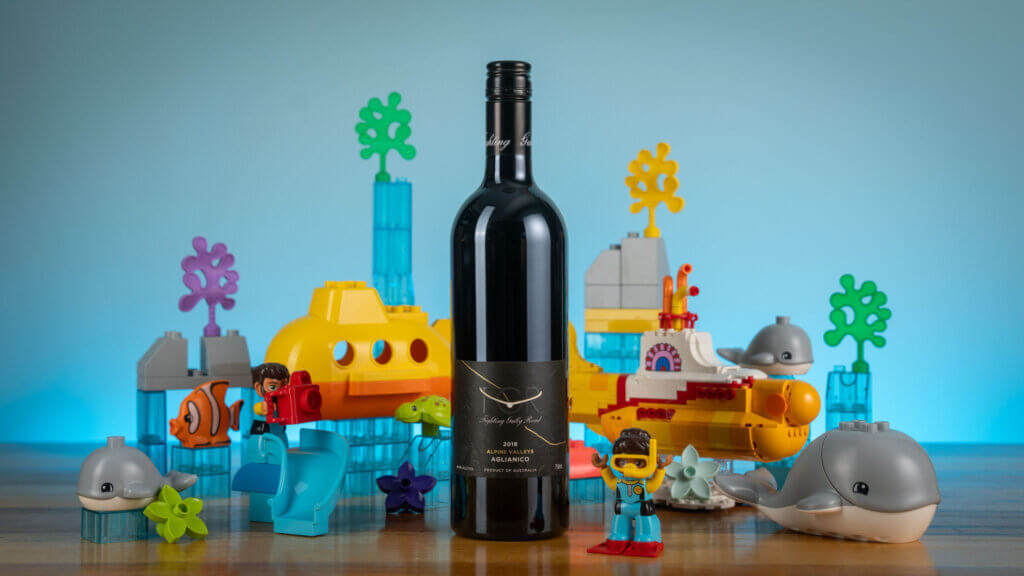
“My aglianico – under the Fighting Gully Road label – was planted in the Alpine Valleys in 2009, half Taurasi clone and half Vulture clone,” says Mark Walpole. “It was planted as un-irrigated staked vines, with the first harvest in 2012. Many of the old plantings on Monte Vulture are indeed staked, with shoots trained vertically up the stakes.” Prior to making his first vintage, Walpole visited grower Bruno di Concilis of Viticoltori di Concilis, south of Naples, who set him straight on pick time, winemaking technique, barrel size and élevage” “This resulted in an approach where we mature the wine in 600-litre thick stave barrels for two and a half years prior to bottling,” he says. “Our site is cool – perhaps too cool – but the idea was to plant a variety which, with climate change, would become more suited to where it was grown, not less suited – which has become the case in many regions.” As such, Fighting Gully Road’s aglianico ripens extremely late, normally at the end of April and often into May.
For Tennille Chalmers, there simply isn’t enough aglianico in the ground in Australia to properly know how it will come to express itself in different regions. “I’m no expert on our sixty-four wine regions in the country,” she says. “When a customer is approaching us to plant any of our varieties that we’ve imported, our first thing is talk to a local independent viticulturist in their region that knows the region and the soil. But gosh, it would be wonderful to really try and plant some more aglianico in other regions to see how it does perform – because we think that its complexity and profile is something really desirable, and still to be discovered by so many. So we are very much pro people planting more aglianico.” She adds, “It definitely should be a solid part – it doesn’t have to be a big part, but it should be a solid part – of the incredible wines that we can produce from Australia and be really proud of.”
“It would be wonderful to really try and plant some more aglianico in other regions to see how it does perform – because we think that its complexity and profile is something really desirable, and still to be discovered by so many.”
Craig Isbel argues that winemakers need to strike a balance between making wines of exceptional longevity and making wines that are approachable to drink right now. “It behaves a bit like an Barolo in that sometimes they’ll open that terracotta colour and then they’ll really brighten up with air – there’s a definite ability for it to age,” he says. “But you have to look at how people use wine these days – it’s more advantageous if we can get people to drink it young, because that’s how people drink wine, isn’t it? So while while we can focus on its ageability – and it is a stunning wine to be able to keep in the cellar and and pull out in ten years’ time – it’s understandable that not everyone’s going to use it like that. So it really is about getting it in people’s mouths and encouraging people to experiment with drinking them.” Even if the varietal wines are not always an easy sell, though, Isbel will keep his aglianico plantings for the flexibility they give him to make Barossa shiraz in a changing climate. “There’s so much invested in Barossa Valley shiraz,” he says, “and I could sell a thousand bottles of Barossa shiraz over one bottle of aglianico. But if we’re going to make Barossa shiraz work into the future, then these little elements come into play, don’t they? In a really tricky and difficult year where Barossa shiraz gets knocked around – in a year like 2008, for example – you’ve got this backup plan … instead of adding bags and bags of acid to something, you’ve got some aglianico that’s a natural way of changing the structure of your wine, to give it those elements that are going to be missing in those real warm years.”
“I could sell a thousand bottles of Barossa shiraz over one bottle of aglianico. But if we’re going to make Barossa shiraz work into the future, then these little blending elements come into play, don’t they?”
For his part, Waite wants to see the variety become better-known and understood – even if quantities remain small. “I’d like to see it move away from being like an oddity or something that’s a bit of a novelty,” he says. “It’s not an everyday thing, but it’s something to be really celebrated.” He adds, “With the quantities we’ve got, it won’t be someone’s every-week thing – but I’d like to imagine that everyone’s got a bottle in their cellar, and they’re like, ‘I can’t wait to have that with Christmas lunch, or have that with a special occasion’ – or just when they’re in the mood. That’s where I’d like to see the variety get to.”
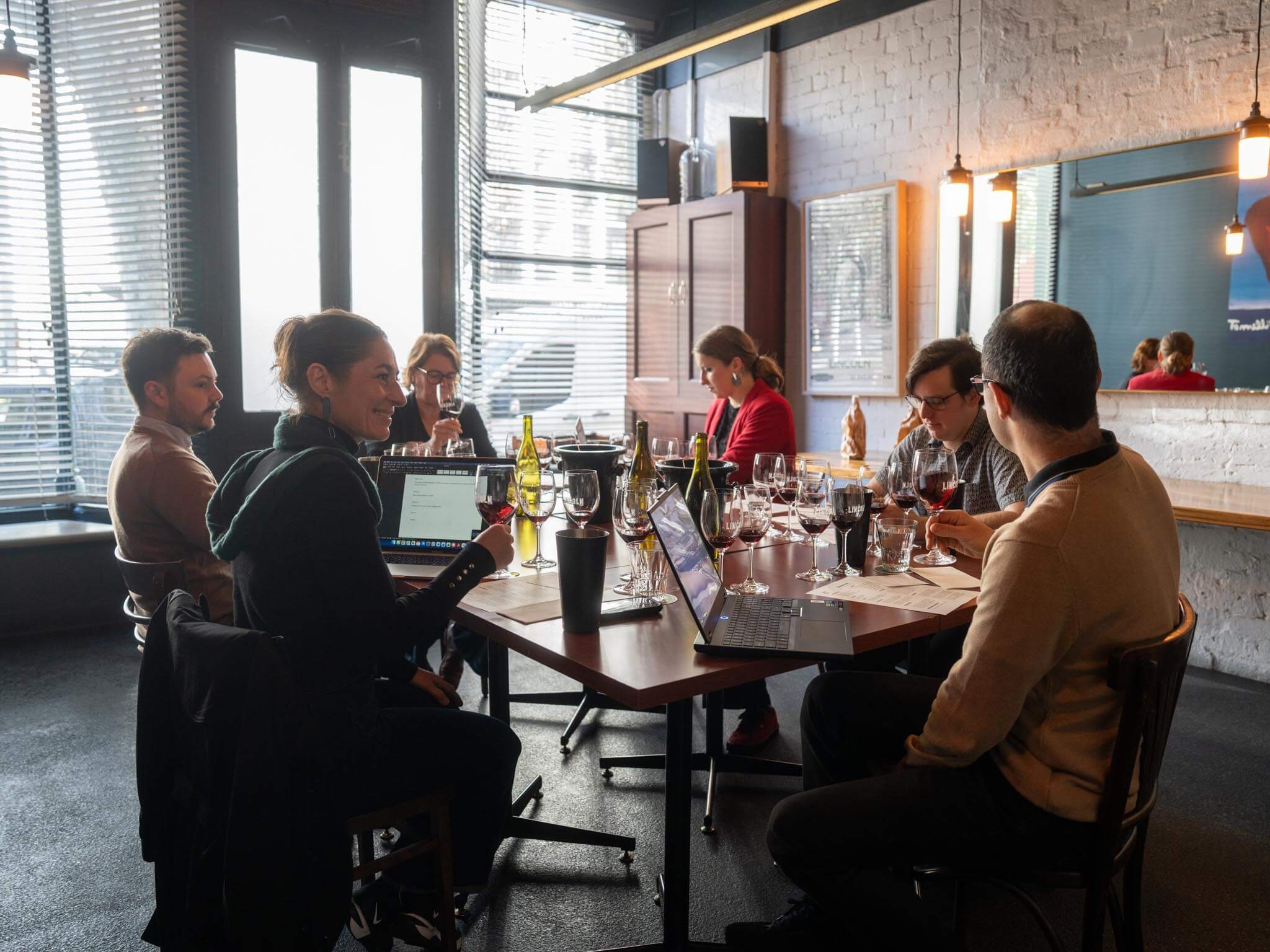
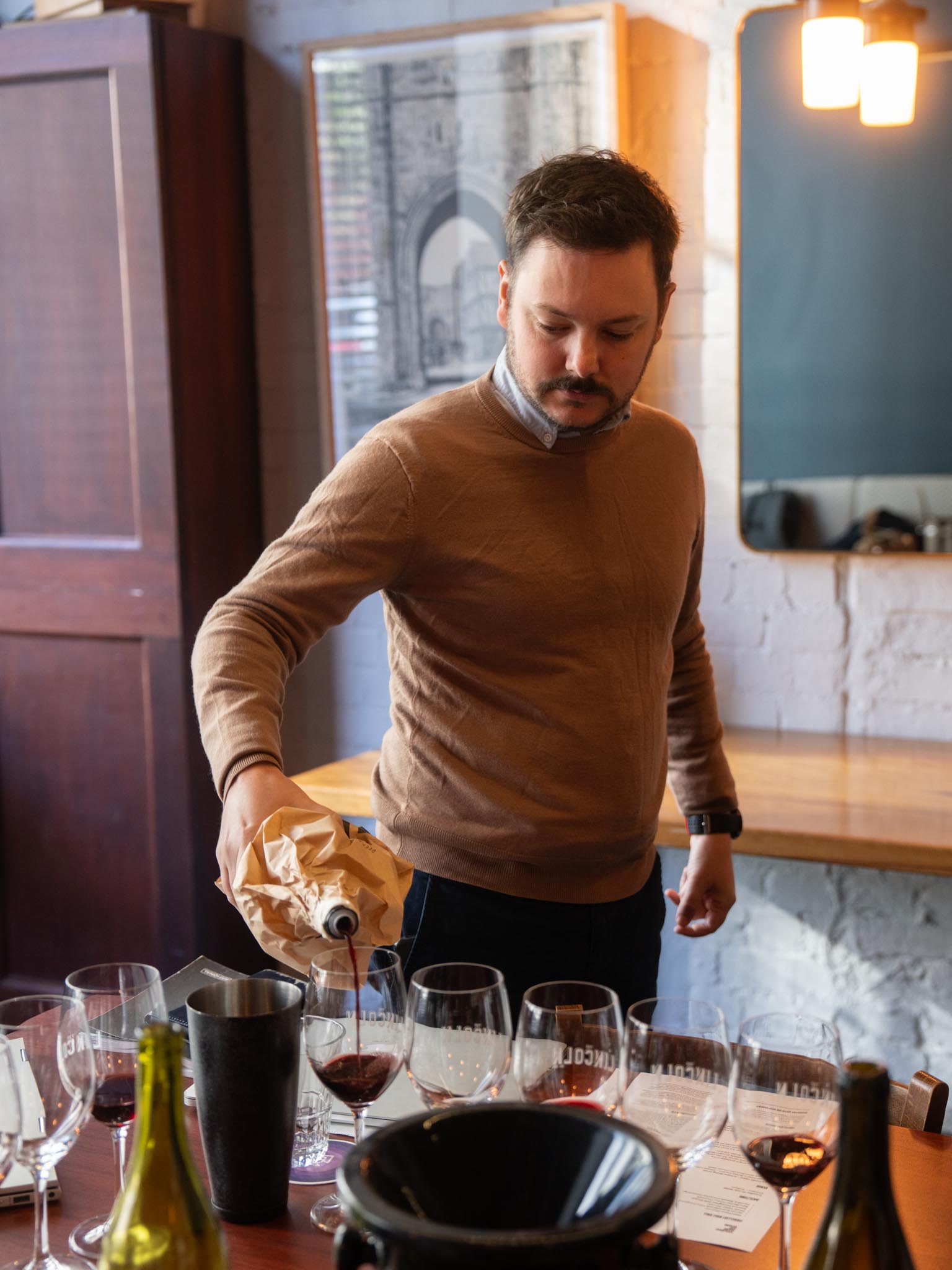
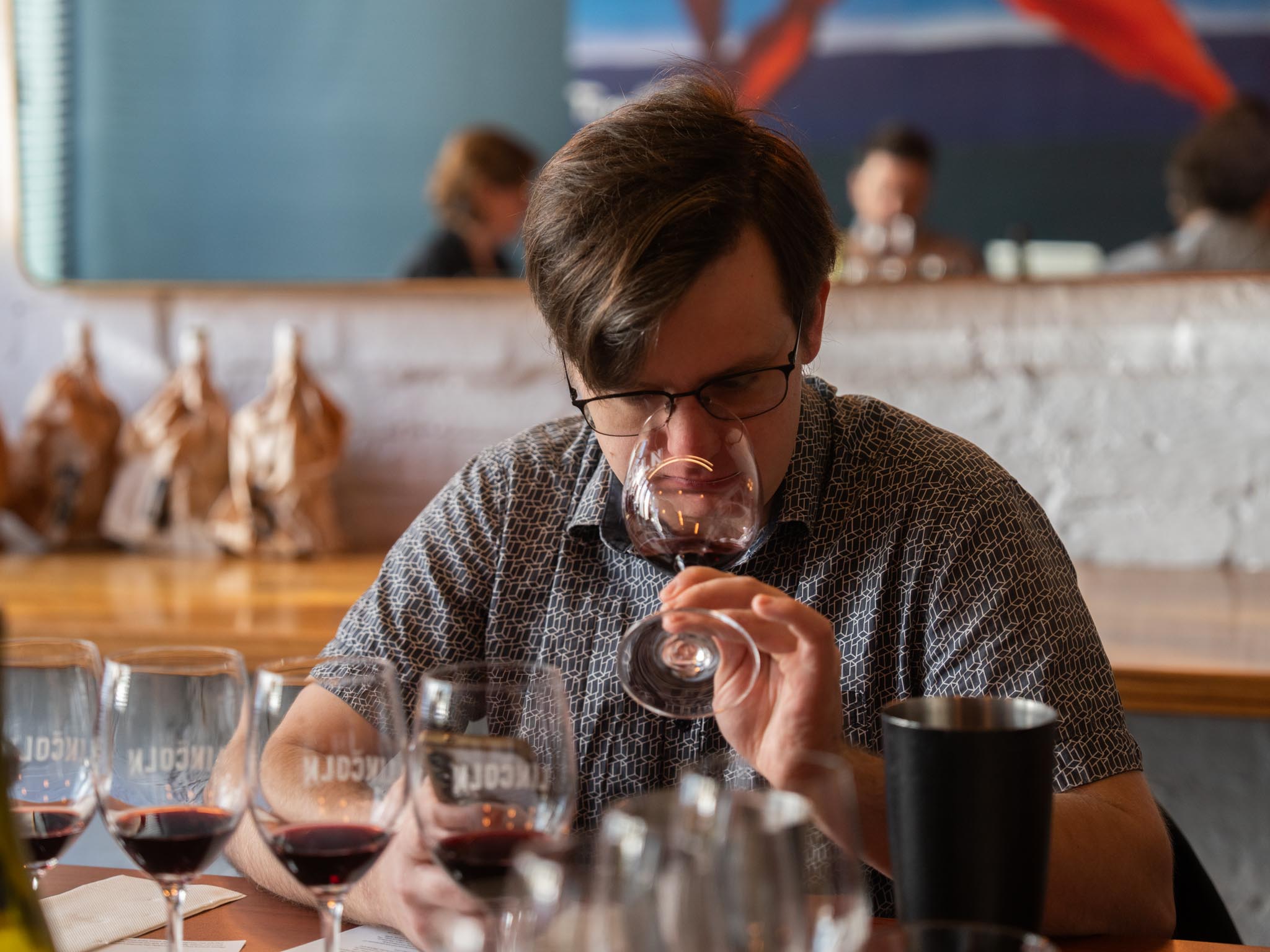
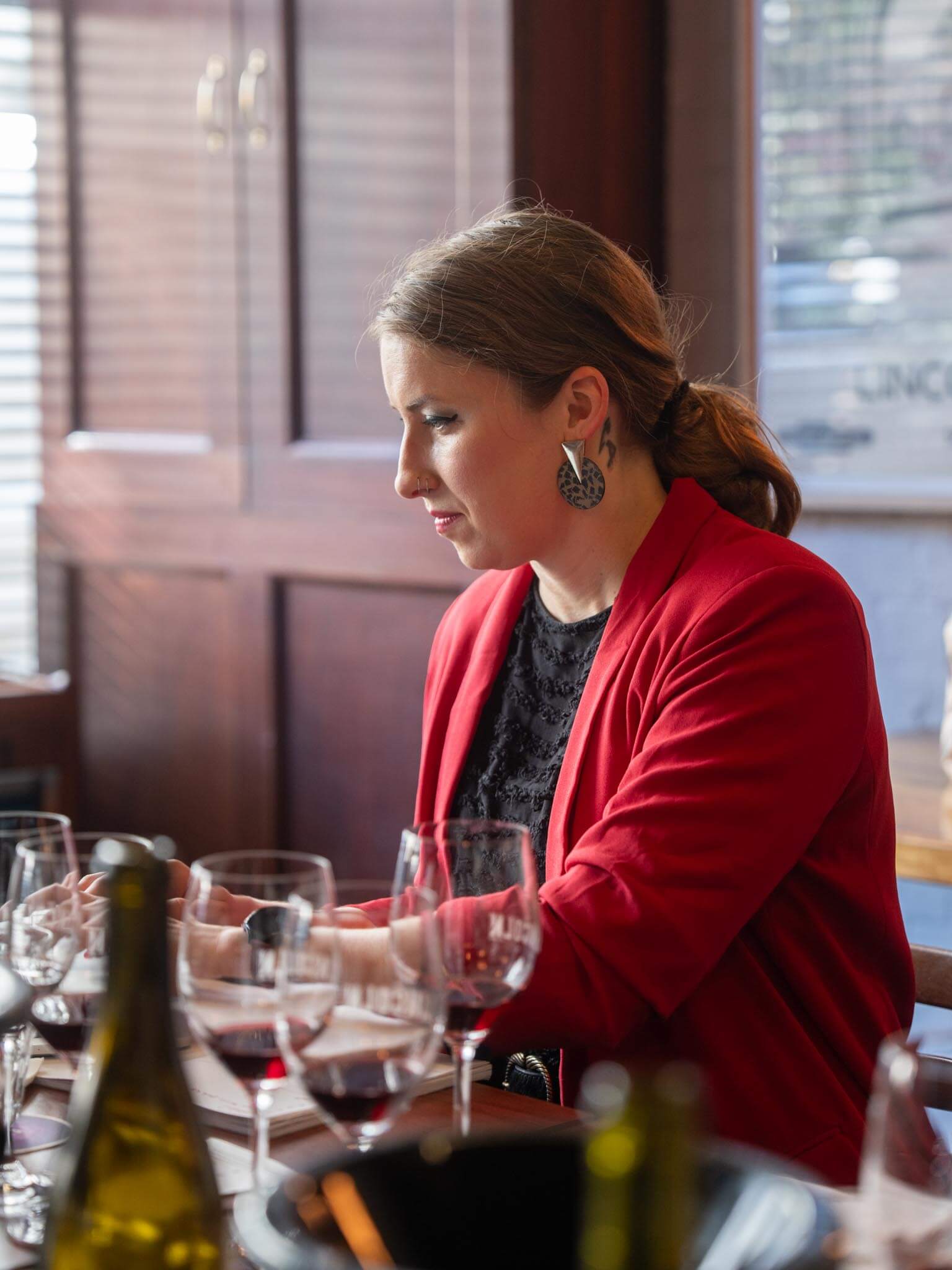
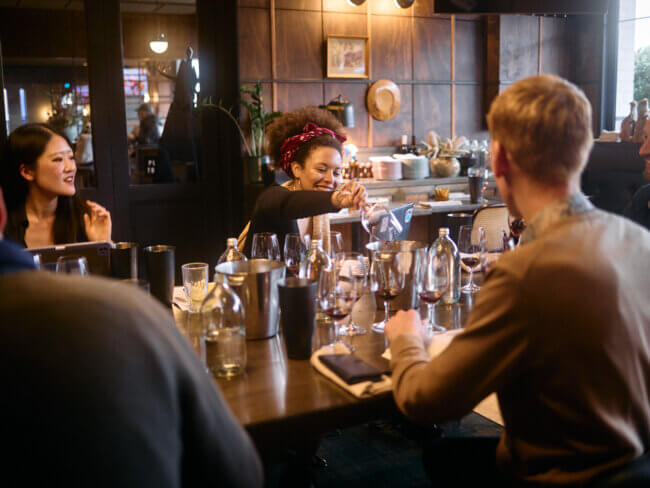
Above: Our expert panel gathered at The Lincoln, Carlton (Melbourne)
Outtakes from the tasting
We gathered every example of Australian aglianico that we could find and set our expert panel the task of finding the wines that compelled the most. All wines were tasted blind, and each panellist named their top six wines.
Our panel: Nikki Palun, owner and winemaker, Susuro; James Scarcebrook, owner and winemaker, Vino Intrepido; Cindy Heley, vigneron, Monak Wine Co.; Seamus Donaghey, winemaker, 919 Wine; Sam Baxter, sommelier, Victor Churchill; Caroline Abbott DipWSET, freelance wine consultant, Caravine Consulting.
Scarcebrook kicked off the discussion by observing that the quality of the wines in the line-up was high – especially given the small scale of Australia’s aglianico plantings. “Overall, I was really impressed,” he said. “The extent of the plantings and the number of wines in the tasting today, I think, reflect the fact that it is still quite new. There’s certainly a case that it probably was harder to get good clean genetic material to import for this variety, and good clonal selection, so that would have contributed to the fact that it’s still relatively new. So it’s impressive that the quality across the different styles in the tasting today was very consistent – both for the more approachable styles and the more ‘serious’ aglianicos. Not unlike other classic examples of certain Italian red varieties, this is a variety that can be quite challenging to be uninitiated. So it’s nice to see so many wines be approachable – whether that’s because they’ve been grown and made in a certain way, or because they’ve been kept in bottle for a few years before release. I think that generally tells us that the producers are doing a very good job.”
Above: James Scarcebrook. Opposite: Cindy Heley.
Heley concurred with Scarcebrook regarding the winemaking on display. “I thought there would be some things in there that would be unapproachable at this point, especially the younger wines,” she said. “But I think the winemakers are obviously showing really good understanding of tannin ripeness, and in particular extraction. In a wine with tannins like that, you’ve got to nail the pH and the acid perfectly, otherwise it’s not going to be the wine you want it to be. And I think the winemakers have done a really good job in that particular area.” She added that getting fruit to tannin ripeness while maintaining acidity would likely be the biggest challenge for growers and makers: “I’ve not worked with this variety before, but I’d assume harvest day would be super, duper important,” she said. “You bring those tannins in a little bit too early and you’re in for a lot of pain – it would not be pretty. So I think the most important parts of that, in order, would be harvest time, then how you handle the fruit in terms of extraction, and then – if you’re someone who adjusts their acids in the winery – acidity management would be the third most important. Because there’ll be climates where you’re not naturally going to get the acidity that you want.”
“Not unlike other classic examples of certain Italian red varieties, aglianico is a variety that can be quite challenging to be uninitiated. So it’s nice to see so many wines be approachable – whether that’s because they’ve been grown and made in a certain way, or because they’ve been kept in bottle for a few years before release.”
Palun – who is currently at the blending stage of making her first aglianico-based wine – agreed with Heley on the subject of acidity. “I had some Riverland fruit – and to get the ripeness that I needed, I had to acid-adjust,” she said. She added that this might be a consequence of the relative youth of most aglianico plantings in Australia. “And the vines are young as well,” she said. “One of the challenges we’re looking at right now for alternative varieties in Australia is vine age – so as the plantings get a little bit older, I think we’ll start seeing some more extraordinary versions. But I was super-excited about the quality of the wines today, given the vine age.” For her, one of the surprises of the tasting was the diversity of styles on show, and how they skewed towards seriousness and structure over approachability. “I recently did the nero d’avola Deep Dive tasting – and I found that, with nero, a lot of people are just going for this real carbonic-y, chic, fun, playful thing, whereas I was hoping to see a bit more seriousness. But this lineup is different. There’s some early drinking styles, absolutely. But I think it was really exciting to see some people working with the tannins, and having that beautiful elegant balance in a wine that needed to be cellared. Not everything has to be released straight away – although financially we often have to do it – but if you have the pleasure of or the privilege of being able to cellar something before release, then I think you get some amazing expressions in time. So it’s a balance of the fruit, the acid, and cellar time.”
Above: Seamus Donaghey. Opposite: Nikki Palun.
Donaghey argued that the approachability of the less-structured examples didn’t necessarily mean that they were lacking in winemaker skill or interest for drinkers. “There’s no reason those crushable styles can’t have a complexity as well,” he said. “The intrepid wine appreciator will probably look for that in the glass as well. And they’re going to be rewarded by a lot of what they’re finding, what they’re drinking, in Australian aglianico.” He added, “Sure, there was some seriousness in the lineup. Some stuff looked like baby nebbiolo – you really want to put it down for a while, see what it looks like in ten years, see what it looks like in five years. Those wines are still drinkable right now, but they would really benefit from some putting down. But there was also some stuff that I would chuck in the fridge tonight and just crush – I’d have it with a barbecue, or even have it with breakfast.”
“One of the challenges we’re looking at right now for alternative varieties in Australia is vine age – so as the plantings get a little bit older, I think we’ll start seeing some more extraordinary versions. But I was super-excited about the quality of the wines today, given the vine age.”
The subject of approachability brought up the question of Italian examples of the variety, and whether or not Australian makers were breaking the mould. Baxter argued that the paucity of Italian aglianico wines available in Australia made this a tough question to answer – and might partially explain why the variety seems somewhat slower off the mark here than other Italian alternative red varieties. “No-one really knows about it in Italy,” he said. “So outside of Italy – unless you’re a big fan, and you’re really going after Taurasi, or Vulture, or Basilcata – you’re not really going to find this variety. It’s so rare to come across it by accident here. So, in Australia, it feels like us not having that understanding has really inhibited what we can do with it – because it’s not like montepulciano, or nebbiolo, or sangiovese, where many people know what Italian examples of these wines should look like.” He added that, despite this slightly slower uptake, he had great hopes for the variety in Australia in the future: “I have a feeling that – hopefully, touch wood – give it fifty years’ time and it’s going to be known as the long-lived variety. It’s gonna be one of those grapes where – if someone can get a good varietal expression of it, and really work it in the vineyard, and get a bit of a cult going around it or a bit of popularity around it – it will absolutely dominate. Because it not only will take to our soils really well, and deal with our climate really well, it’s also pretty succinct in its cropping.”
Above: Sam Baxter. Opposite: Caroline Abbott.
Abbott saw a thread of savouriness in the wines that she thought made them exceptionally food friendly. “Even though I’m vegetarian, throughout the tasting I was envisioning a lot of charcuterie meats,” she said. “I was thinking dried venison jerky. At the nebbiolo Deep Dive I was often reminded of bresaola, or umami flavours of soy sauce, but at this tasting it’s been more about the wild game, wild boar, things like that. I’m thinking of marinated, chargrilled portobello mushrooms. But definitely chargrilled – you need that char. Or bread toasted over the fire with sun-dried tomato pesto.” She added, “You could even have this with a wild blackberry cobbler for dessert. Normally, I don’t like red wines with sweets in general, but for some reason, I was thinking that might work – or a burnt caramel.”
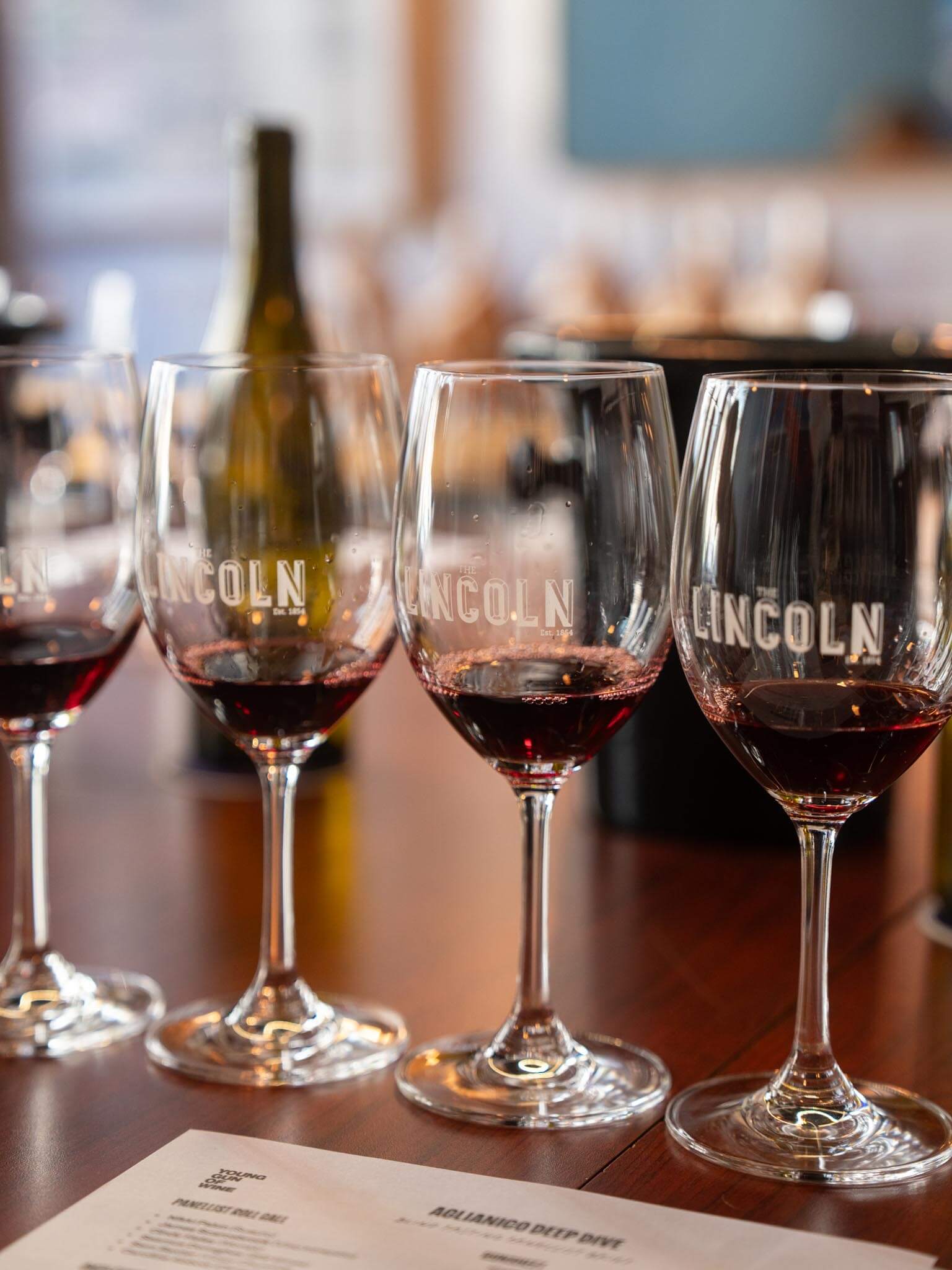
Above and opposite: The tasting in action at The Lincoln, Carlton (Melbourne). All wines tasted ‘blind’.
The Panel
Nikki Palun grew up making garage wine with her parents in Melbourne after her father converted their backyard into a mini vineyard. She went on to work at De Bortoli Wines in export, building their Asia-Pacific, Middle East and African distribution networks, while studying winemaking and viticulture at Charles Sturt University and gaining her Wine & Spirit Education Trust (WSET) Level 3 Award in Wines. In 2014, Nikki founded Susuro Wines, making wine under two labels – Octtava, focused on classic varieties, and Susuro, specialising in Italian varieties, sourcing fruit from organic and premium vineyards. She oversees every aspect of the business herself, from winemaking and production to label design, sales, marketing and distribution. She also speaks Mandarin, and has served on wine industry boards and committees including Wine Victoria and Australian Grape & Wine.
James Scarcebrook graduated from The University of Adelaide with a Masters in Wine Business before a sixteen-month global wine adventure saw him visit ten wine-producing countries, including working two vintages in Germany. Since then, he has worked in fine-wine retail, as a representative for two leading importers, (both with a focus on Italian wines), and now makes wine full-time under his Vino Intrepido label. That label is centred on Italian varieties and a quest for finding Victorian sites where they excel, teased out in a way that reflects Italian tradition as seen through a new lens.
Cindy Heley’s path to wine began in science – a Bachelor of Science with Honours in bio-inorganic chemistry, followed by a Bachelor of Applied Science in wine science. She began her career thirty years ago with Foster’s Wine Group, going on to work across several large wine companies, where she built a deep grounding in the technical and commercial sides of the industry. She paused her career to raise her four children before returning to wine by founding Monak Wine Co., driven by a passion for the untapped potential of the Murray Darling region. Here she champions the region’s ability to produce distinctive, high-quality wine, and brings innovative new varieties to market – including Monak’s flagship Blanca Fría. She continues to explore innovative varieties suited to the Murray Darling region and to build Monak’s presence both domestically and internationally.
Seamus Donaghey is a young winemaker at 919 Wines in the Riverland. A passion and desire to work with alternative Iberian varieties and styles – particularly vintage fortified and apera – along with a host of other table whites and reds keeps him busy year round with blending programs. He completed his Bachelor of Science in Winemaking in 2026 and currently moonlights at the Riverland Wine Centre, spruiking the region’s finest to intrigued patrons. He also has a passion for wine show judging and is involved as a committee member on the Riverland Wine Show.
It’s no wonder that Sam Baxter fell into the sommelier lifestyle – between his childhood spent in WA’s Swan Valley and his priestly grandfathers secretly passing him sips of Port, it was a done deal. He found his love for wine working at a wine merchant in the UK, and once back in Perth decided to pursue a career in wine. Since moving to Melbourne, he has become a familiar face to the CBD’s diners, popping bottles at Hazel, Coda, Rockpool and Maha. You can find him slinging bottles and premium steaks at Victor Churchill Melbourne in Armadale.
Caroline Abbott DipWSET grew up in Spain with American parents and has spent much of her life in and around wine, hospitality, and international travel. She has worked across Australia, Spain, and the US in export, sales, and commercial roles, building markets for premium wine portfolios and the relationships that sustain them. Melbourne has long been part of that story, too – from early days at Bellota Wine Bar and The Spanish Acquisition to her recent return to the city with an Australian husband, a global perspective, and a deep affection for the culture, connection, and sense of place that wine creates. She currently works as a freelance consultant for her own agency, Caravine Consulting.
GET FIRST ACCESS TO THE NEXT WINE ICONS – DELIVERED
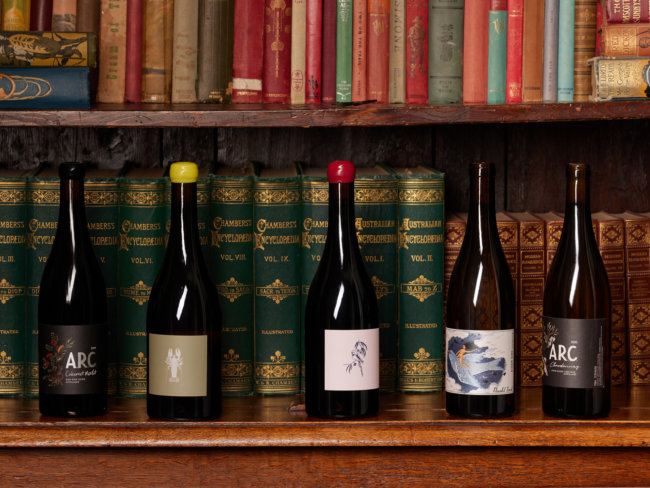
Gippsland is currently seeing its stocks of young makers and vignerons swell, inspired both by the proof of its qualities from top makers and for the sheer scope of its untapped potential. The 2021 Young Gun of Wine Top 50 features A.R.C. Wines, Entropy and Moonlight Forest, who are all helping to shape Gippsland’s future. Tasting notes appear at the end of the article.
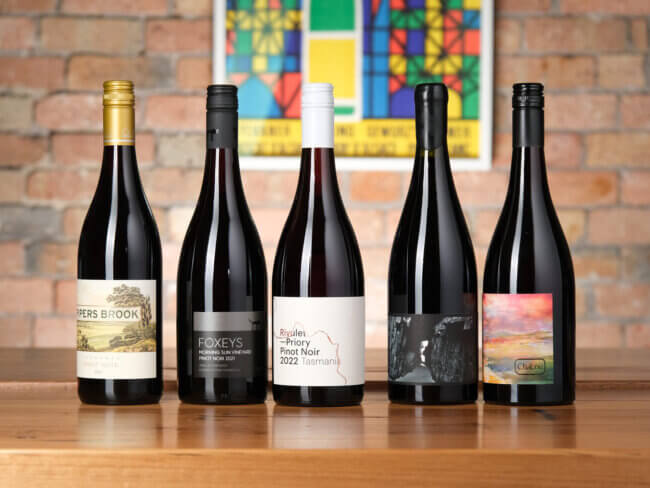
In relatively short time, pinot noir has become a major player in Australian wine. It has helped spearhead a cool climate revolution that has seen places such as Tasmania, the Mornington Peninsula, Macedon, Adelaide Hills and Orange develop into some of our premier wine regions. The 2023 YGOW Awards features Rivulet, Cave Wines, Foxeys Hangout, Pipers Brook and ChaLou, who are all flying the flag for pinot noir.
Merlot’s reputation in Australia is mixed, to say the least. On the one hand, the variety is the source of one of the world’s most highly regarded (and therefore most expensive) wines, Petrus. On the other, the shelves of Australia’s chain bottle shops groan under the weight of cheap and cheerful bulk-produced merlots, self-professed wine aficionados love to hate it, and the infamous line about “not drinking any f**king merlot” from the 2004 film Sideways still hovers over any discussion about it. Now that Australian winegrowers can plant a diverse range of genetic material for their merlot, and as a new generation of winemakers discovers the virtues of the variety, merlot now has its chance to shine – which means a Deep Dive into the subject is in order.
Subscribe to our newsletter
Young Gun of Wine is your shortcut to cutting edge wines, the places to go, and the people behind it all.
Subscribe to be amongst the first to know of our latest discoveries in wine.
We'll bring you the inside running from the growers, the makers, the wholesalers, the retailers and the sommeliers, too.