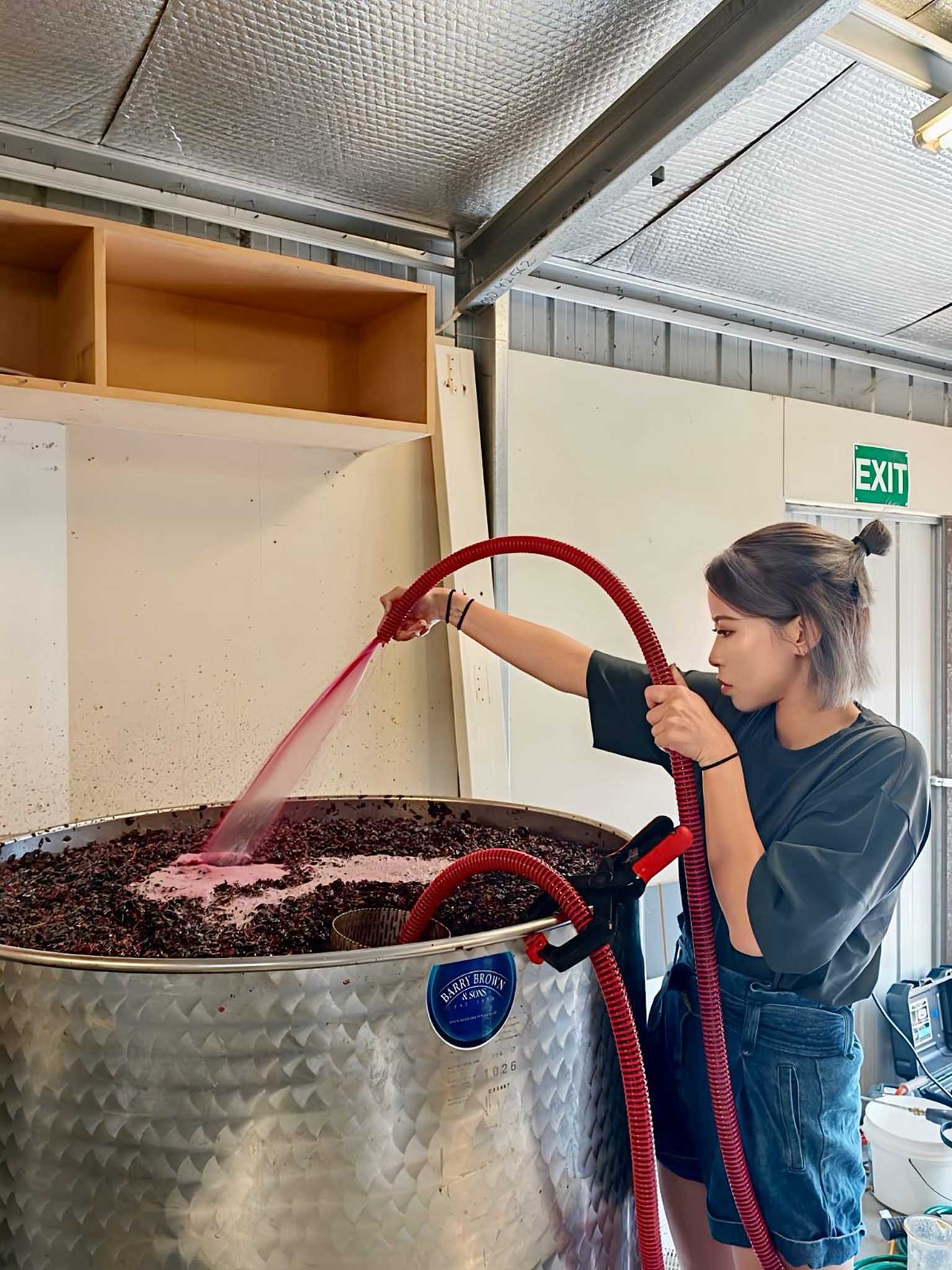
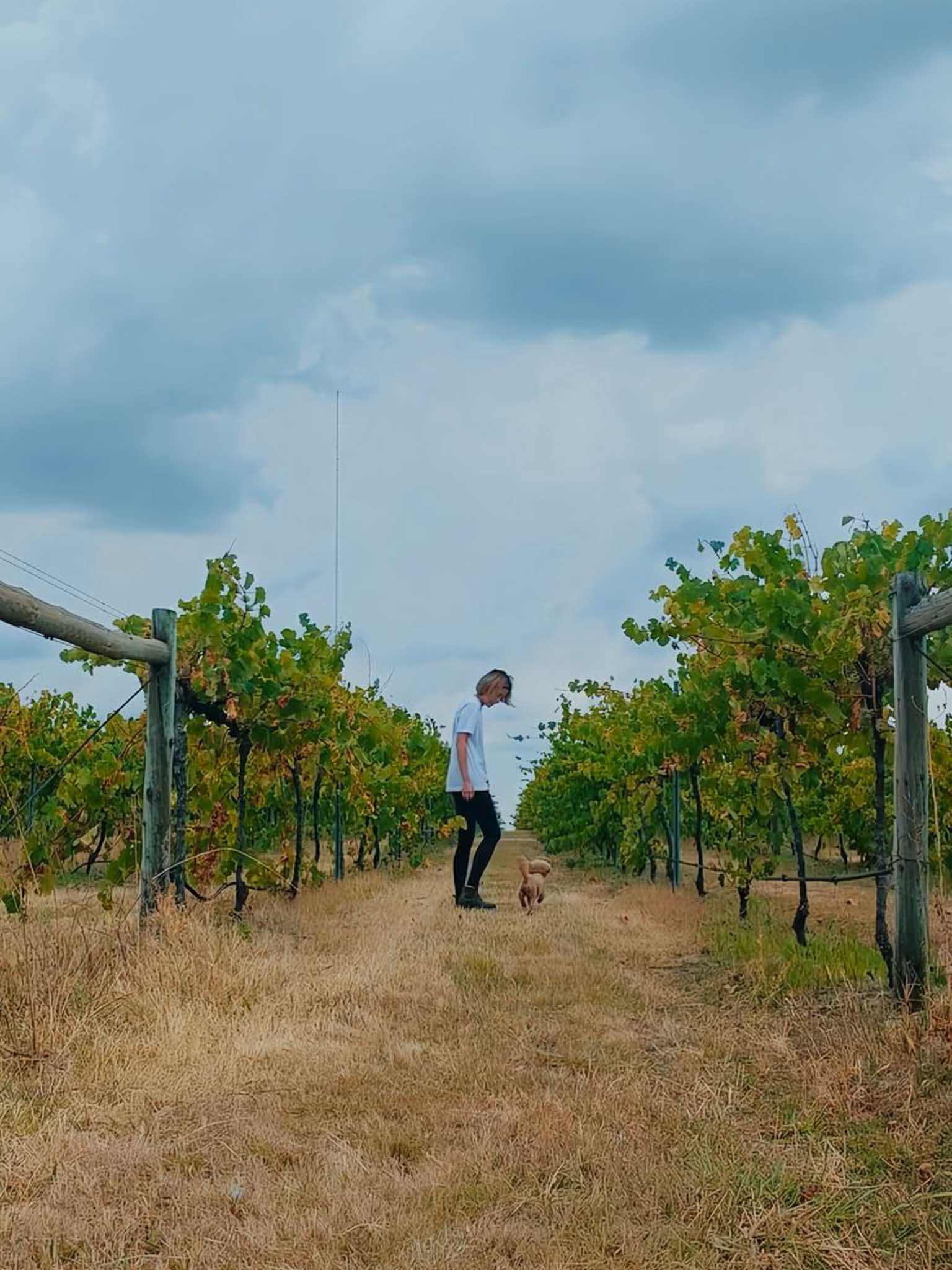
Ray Chen is a New Zealand-trained winemaker whose Victorian label Rongo Wines draws fruit from single vineyards across the state – currently the Strathbogie Ranges and the Yarra Valley – and is built around a single governing idea: wine as part of a food experience, specifically the food Chen grew up eating. The current range spans a skin-contact riesling, a straight riesling, a syrah, a rosé and an aglianico, all unfined and unfiltered, all made with a researcher’s instinct for exploring what different winemaking approaches can reveal from the same source of fruit. The name Rongo refers to the Māori god of cultivated food – an anchor in Chen’s New Zealand heritage and a deliberate statement about where wine belongs: at the table, alongside something worth eating.
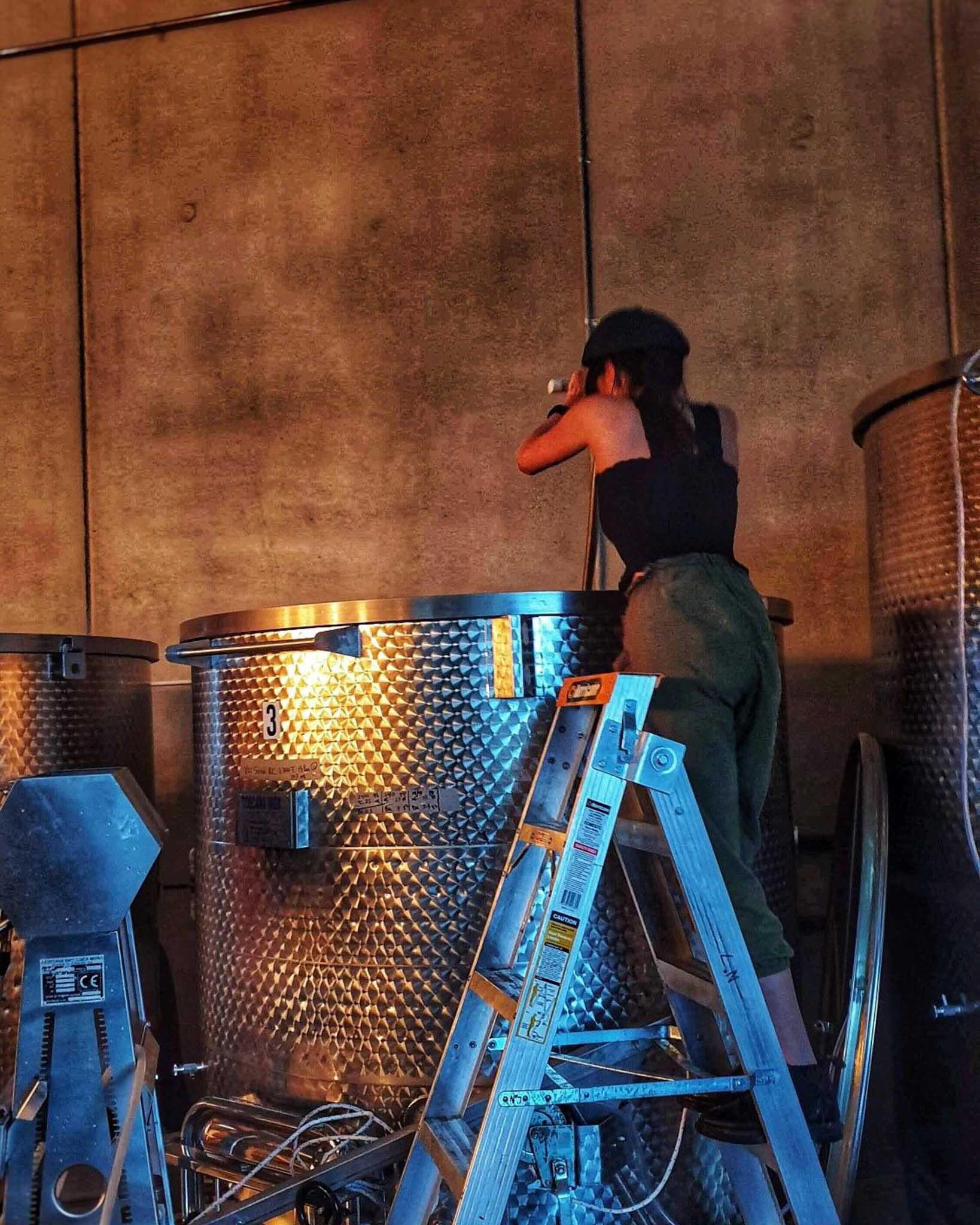
Chen’s winemaking background is unusually broad for a small-batch producer. She completed an undergraduate degree in viticulture and oenology at Lincoln University in New Zealand before a Masters in Wine Science at Cornell University, added a WSET Diploma, and built vintages across New Zealand, the US, France and Australia, encompassing winemaking, R&D and buying roles. Her creative north star is Paolo Bea – the Umbrian natural wine producer whose multiday skin macerations on white varieties, extended barrel ageing and uncompromising commitment to site expression have attracted a devoted following globally. That influence shows in how Chen thinks about variety and technique: not as fixed categories but as starting points for exploration.
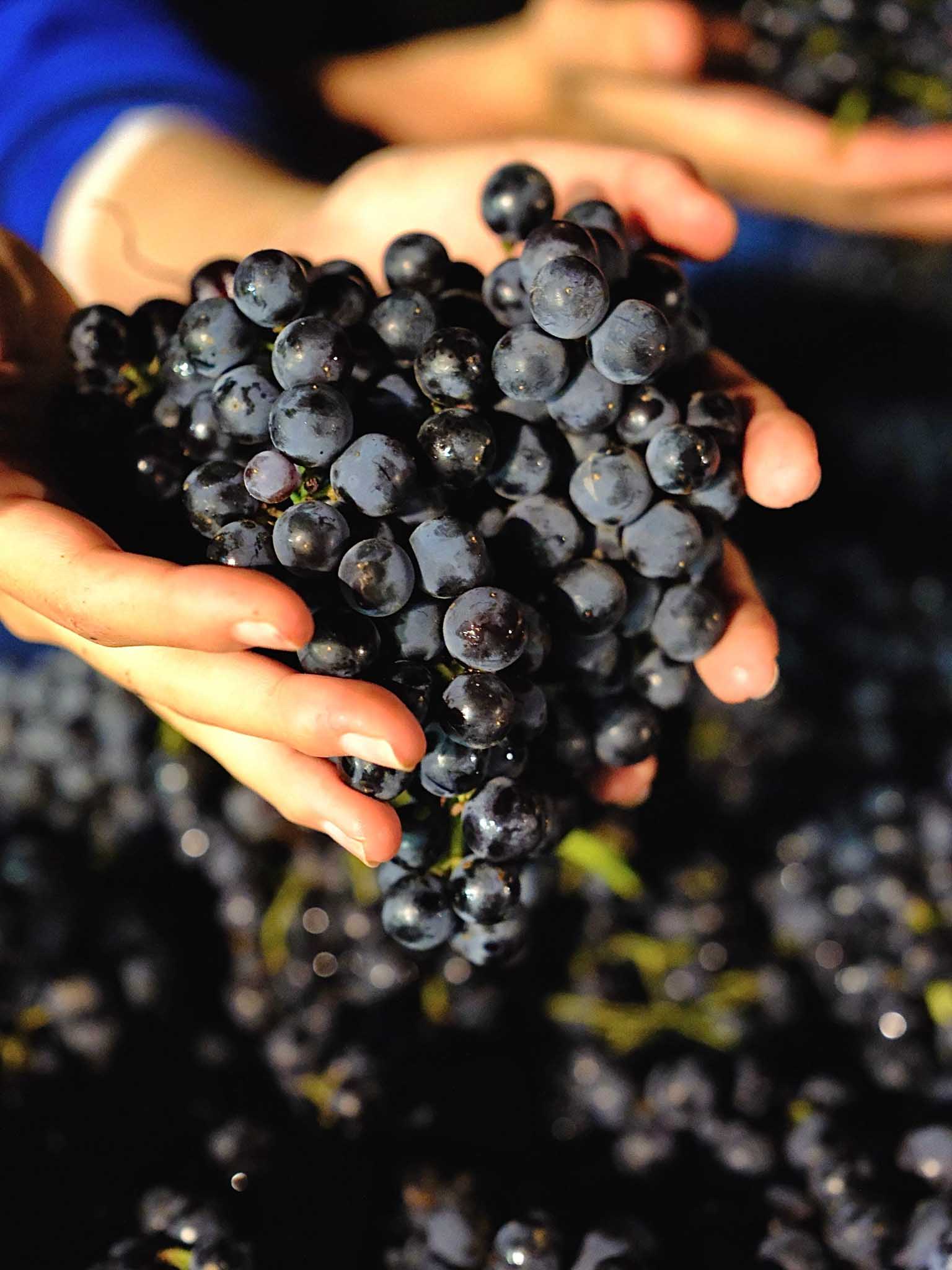
The label’s food-pairing ambition is not merely marketing – it runs through the winemaking decisions in a practical way. “Wines that complement and amplify the food experience, shaped by the flavours of the food I grew up with” is how Chen defines the style. She thinks about wine in the context of a full meal, and specifically in the context of Asian cuisines where the flavour registers – umami, fermented, aromatic, high-acid – ask different things of a glass than a western European food tradition might. Riesling, with its natural acidity and aromatic lift, is a natural fit. Skin contact – leaving the juice in contact with the grape skins during fermentation to extract colour, tannin and aromatic compounds – adds texture and grip that gives the wine something to do alongside more complex flavour profiles. “Acidity is a key focus,” she says, “and the natural high retention in the Strathbogie Ranges is critical in providing backbone.” The challenge is disease pressure: once skins stay in contact with juice for extended periods, any unsound fruit becomes a problem. “Disease pressure is always a tricky point and sometimes requires fairly intensive manual sorting to ensure clean fruit going into ferment.”
The most distinctive element of Chen’s approach is her practice of making multiple wines from the same vineyard – adjusting fermentation temperature, maceration length, vessel choice and secondary fermentation to reveal different facets of the same fruit. The two rieslings from the Elgo Vineyard in Strathbogie are a direct expression of this: one skin-contact, one not, from the same vines in the same season. The syrah and rosé come from the same Yarra Valley site. “By adjusting elements of the winemaking process I try to reveal different facets already present in the fruit,” she says. The goal is never to force a direction. “The goal is always to draw out what is already present in the fruit rather than forcing the wine in a certain direction through heavy interventions.” The R&D instinct that Chen has brought from her professional life sits comfortably alongside that philosophy – systematic curiosity, applied to the same raw material year after year.
The pH and sulphur question is one she takes seriously despite a broader minimal-intervention framework. “Though my approach leans towards minimal intervention, having the right balance of pH and SO₂ is absolutely critical for longevity and keeping the wines alive.” It is a useful illustration of where Chen sits – not in the zero-zero camp, but not in the heavily manipulated one either. Curious, technically grounded, and ultimately led by what the wine needs. “The biggest lesson has been to stay curious and keep refining through experience and practice, while also having the patience to let the wines develop and come into their own.”
The ambition from here is more space to experiment – more varieties, more small trials, a premium tier eventually – while keeping everything small-batch and hands-on. Mediterranean and Alsatian varieties are the ones she is most drawn to long-term, which sits naturally alongside the food-pairing philosophy. For now, the day job remains, and Rongo continues alongside it: a label built at the intersection of a researcher’s mind, a deep love of eating well, and a conviction that wine makes most sense when it is part of something larger.