The most exciting thing happening in Australian red wine right now is also the oldest trick in the fermentation book. Whole-bunch fermentation and carbonic maceration – techniques that predate every piece of modern winery equipment – are producing a new generation of reds that are crunchy, perfumed, energetic and impossible to put down. It’s been a long time coming. The seeds were sown in the reaction against the Parker era’s obsession with power and oak, and in the slow rehabilitation of techniques that Beaujolais Nouveau had turned into a global punchline. A generation on, what began as quiet experimentation in wineries around Australia has found its moment – riding a wave of consumers actively seeking lighter, fresher and more fruit-forward styles of red wine. But how do these techniques actually show up in the finished wine? And are they the destination, or merely part of the journey? We took a Deep Dive to find out …
We gathered every example of Australian red wine made with some degree of carbonic influence – irrespective of region or grape variety/ies used – that we could find, and set our expert panel the task of finding the wines that compelled the most. All wines were tasted blind, and each panellist named their top six wines.
Our panel: Sez Robinson, sommelier, Cumulus Inc.; Luke Carlin, sommelier, Navi; Hayley Farquar, sommelier, City Wine Shop and The European; Jordan Veltheer, wine communicator, Vino Champ; Blaire Gillespie, wine merchant, Natural Science Wine & Liquor; Tony Layton, business manager (Regional Collection and St. Huberts cellar door), Treasury Wine Estates.
This wine appeared in the top six wines of the day for Veltheer, Carlin, and Gillespie. Veltheer said, “you’re hit straight away with a slight reductive quality, giving way to a really pretty nose of red fruits and delicate florals. Cranberry and cherry dominate the palate, and what really sets this one apart is the acidity bursting with pomegranate and raspberry. It’s tangy, mouthwatering and refreshing in a way that makes you want another sip immediately. Super lively with some high quality fruit behind it.” Carlin noted, “this wine leaped out at me as a star of the show. The nose offers mystery, a faint summer meadow and drying cranberries. I sought simplicity from the first sip yet I was greeted by a wine like an old friend – expressive, warm, balanced with rose oil, berry pastilles and red liquorice from expertly entwined carbonic maceration … I found the wine to have shown immense texture too. This is the kind of wine that doesn’t need food – hell, this wine doesn’t even need company, it just needs to be in my glass!” Gillespie found it “aromatic and a little unruly at first, leading with strong notes of anise and freshly-cut capsicum. Beneath that, overripe raspberry lends a soft, almost jammy core, but the spice remains front and centre. The tannins are soft, like milk chocolate. I would want to see rich asian foods, like a five-spice duck or char siu–style dish to stand up to it.”
2023 Rongo Wines ‘Rhea’ Syrah, Yarra Valley $34 RRP
Gillespie and Farquar both selected this wine among their top sixes from the blind tasting. Gillespie said, “this wine feels like a jug of sangria shared at a long, noisy table. Blood orange and warming spice step out first, followed by a dollop of raspberry jam. Juicy and fragrant, it drifts between brightness and sweetness, leaving a faint echo of spice behind. This wine needs, no, deserves a long lunch in the sun.” Farquar noted “a darker, red-fruited profile – maraschino liqueur, blackcurrant, and sultana are initially present on the nose. On the palate the fruits are fresher and balanced by a ripe tomato leaf and blackcurrant leaf green note. The fruit itself is still warm and ripe, with no bitter green components present on the palate. A big, bold red with high fruit concentration, building, grippy tannins that linger, and a matching acid structure. An example of a deeper-flavoured red that can be enjoyed without a food pairing but, like most wines, would enjoy one – perhaps liver à la lyonnaise? Or an onion and beef ragù?”
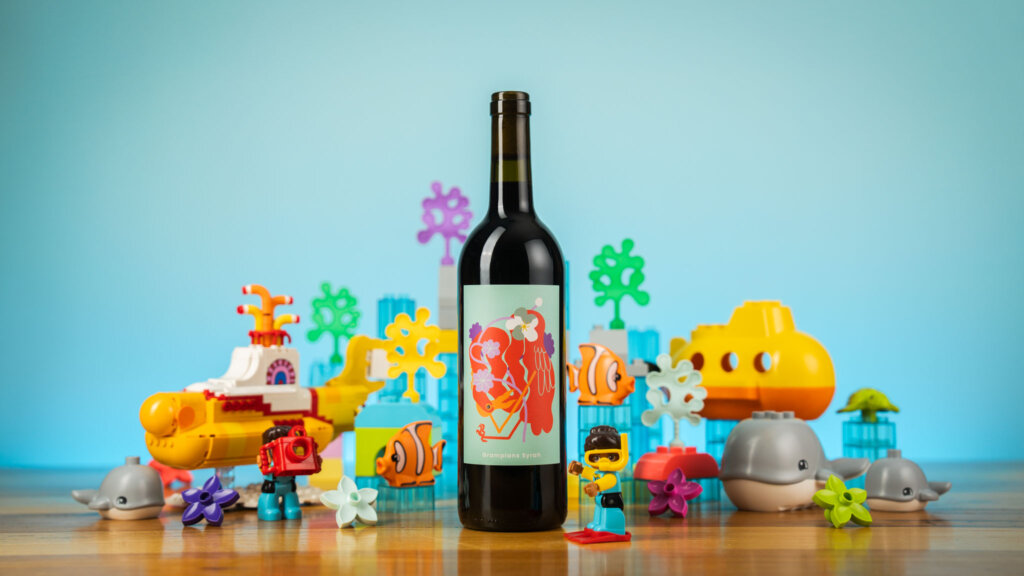
2023 Little Brunswick Wine Co. Syrah, Grampians $32 RRP
Veltheer, Gillespie, and Farquar included this wine in their top six wines of the tasting. Veltheer described it as “bright, vibrant and exactly what you want from this style. Tangy raspberry and cranberry jump out of the glass immediately, with a freshness and crunch that makes it incredibly easy to drink. The acid is really well balanced, giving it that juicy, moreish quality that keeps you coming back for another sip. A really fun, lively wine that could easily go in the fridge and be the star of a picnic.” Gillespie said, “cloudy in the glass but quietly polished, this carbonic wine opens with red liquorice and cherry juice. The palate is softer than expected, low on acid and bounce but held together by fine, gentle tannins for character. Cherry lingers steadily through the finish, smooth and unhurried. I would like this after a long day with a mushroom and cheese toastie to slow down and smell the cherries.” Farquar found that “this is a lighter example of wine in this category – a summer style that would almost certainly benefit from a chill. Bright and fruit-forward, with high acidity cutting through,it’s very much an aperitif style of red. There is enough tannic grip to make this wine food friendly – its would be exceptionally drinkable on a warm day with some charcuterie. Light and fun drinking – a classic example of carbonic maceration done well.”
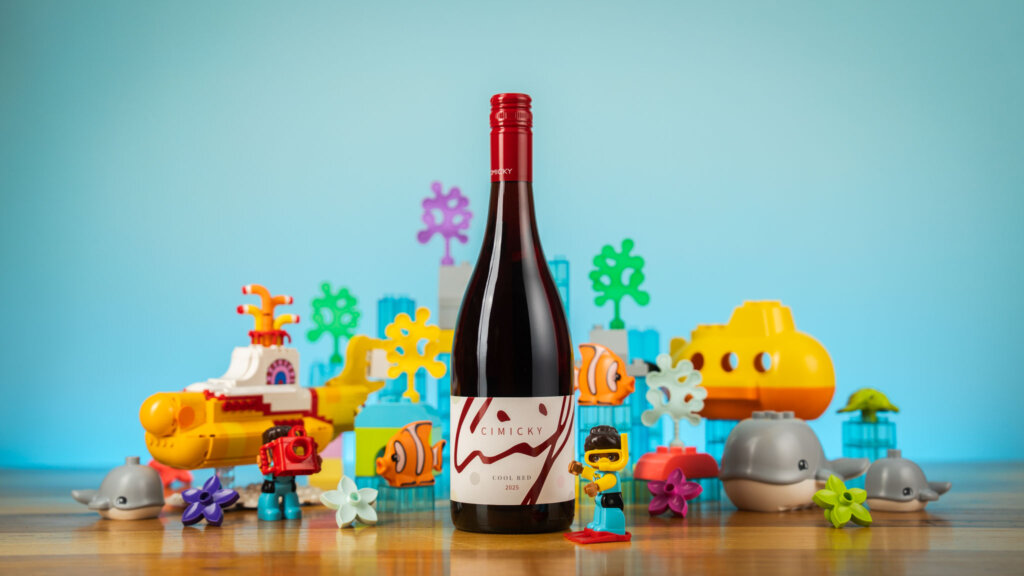
2025 Cimicky ‘Cool Red’ Grenache, Barossa Valley $25 RRP
Robinson and Carlin both selected this wine among their top six on the day. Robinson said, “like a kid in a candy store, this wine is a delight from first whiff to last sip. Candied strawberries and confected raspberries take centre stage, but what stands out is the mouth-watering acidity. It adds a dimension of delicacy to the wine, a kind of playfulness that is a treat to drink. So incredibly bright, with this cranberry grip and pomegranate seed juiciness – you can’t help but finish your glass. And then maybe another one.” Carlin noted, “this wine is bursting with fresh and candied summer fruits – raspberry, bramble, blackcurrant. The Nouveau style is obvious here, and it’s incredibly sexy. Carbonic maceration leads to a textural palate of Luxardo cherries and cherry cola, giving it an elegant charm. This wine is smashable, the kind that requires two friends to drink – one to pour, the other to buy the second bottle.”
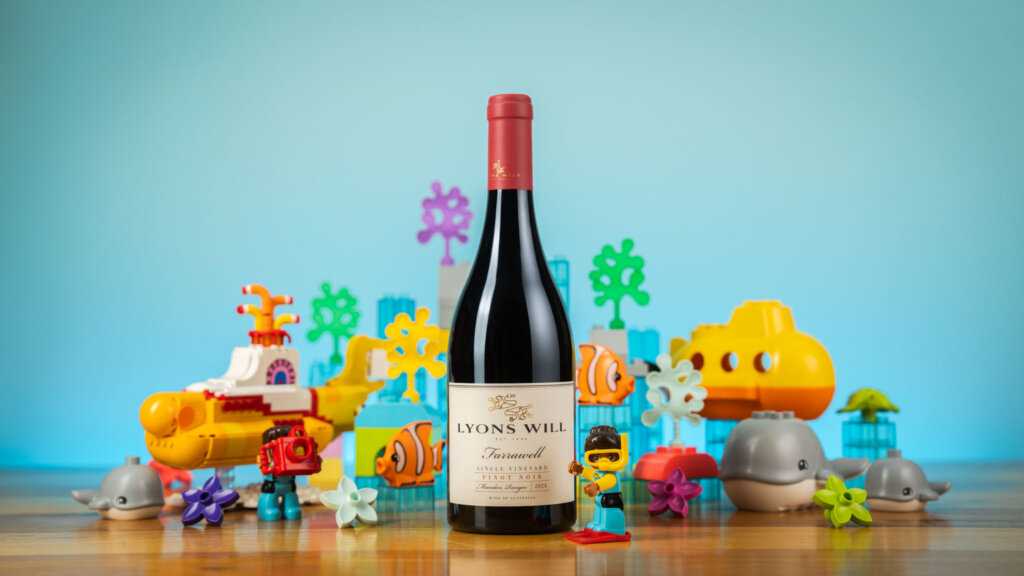
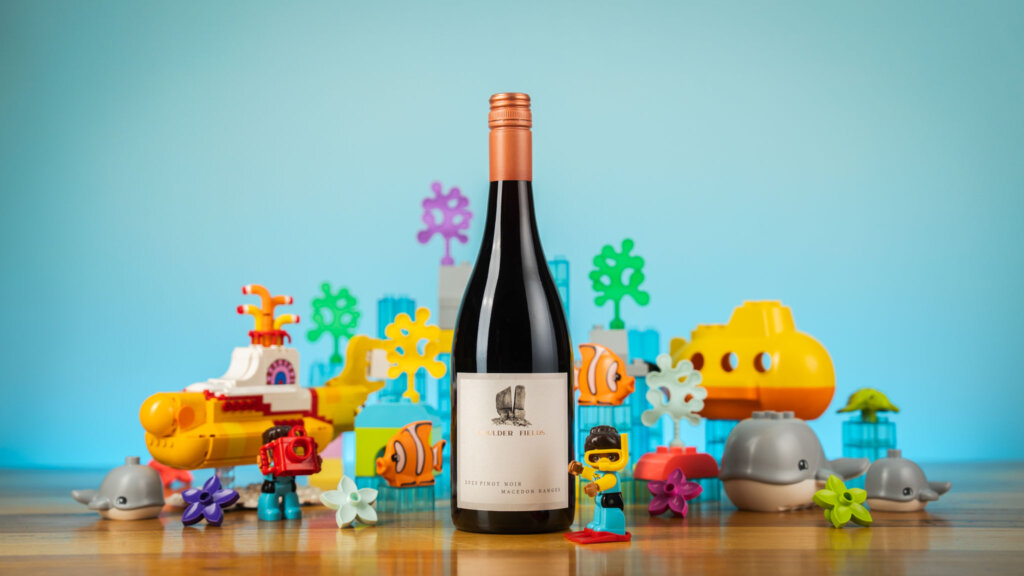
2024 Lyons Will ‘Farrawell’ Pinot Noir, Macedon Ranges $70 RRP
Veltheer and Carlin both chose this wine for their top six picks from the blind tasting. Veltheer described it as “all about bright red fruits – that jamminess hits you straight away with stewed plums and Cottees strawberry jam leading the charge. But what saves it from being one dimensional is the acidity – there’s a really refreshing crunch that cuts through the richness and stops it feeling heavy or cloying. Cranberry and raspberry notes add a lighter, fresher dimension that keeps things lively. It’s a fun, easy drinking wine that delivers exactly what I want from something carbonic.” Carlin said, “this wine is fun. There, I said it – wines can be fun and technically great, and what an example this is! The nose carries with it a familiar nostalgia of Parma Violets and a busy florist during Valentine’s Day. Crunchy summer fruits of rhubarb, white pepper, and banana just on the verge of ripeness gave way to incredible texture, mineral graphite notes, and impressive length. This wine is well-refined and – dare I say it? – sexy.”
Farquar included this wine in her top six wines from the tasting, noting that “although the colour is light and delicate in the glass, this wine packs a lot of concentrated flavour. The red fruit notes of raspberry, strawberry, and ripe red cherries are lifted and pretty here – evidence of carbonic maceration. Sultana and fig notes appear on the palate, alongside green notes of tree bark and pine and mouth-drying tannins – suggesting there has been some whole-bunch inclusion. This is clearly a young wine, but it shows some earthy characteristics you’d typically see in more developed wines alongside its brighter, fruit-forward characteristics – creating a level of complexity I find very compelling. A wine that shows clear winemaker intention, and an attractive complexity of flavours.”
Layton chose this wine for his top six picks from the tasting, describing “darker fruit on the nose – plums, black and blue fruits, orange rind. Some classic stemmy whole-bunch spice notes of amaro, baking spices, menthol, and some greenness but in a good way. This complex and savoury nose, leads to a fine and grainy tannin profile on the palate. The tannin structure here is prominent – is this a really different style of cabernet sauvignon? Cabernet franc, maybe? Whatever it is, it’s my wine of the day for sure because it’s so different – I came back to this wine several times during the tasting as it was just so alluring. I can’t help but imagine how incredible this would be with a roast lamb braised with onions!”
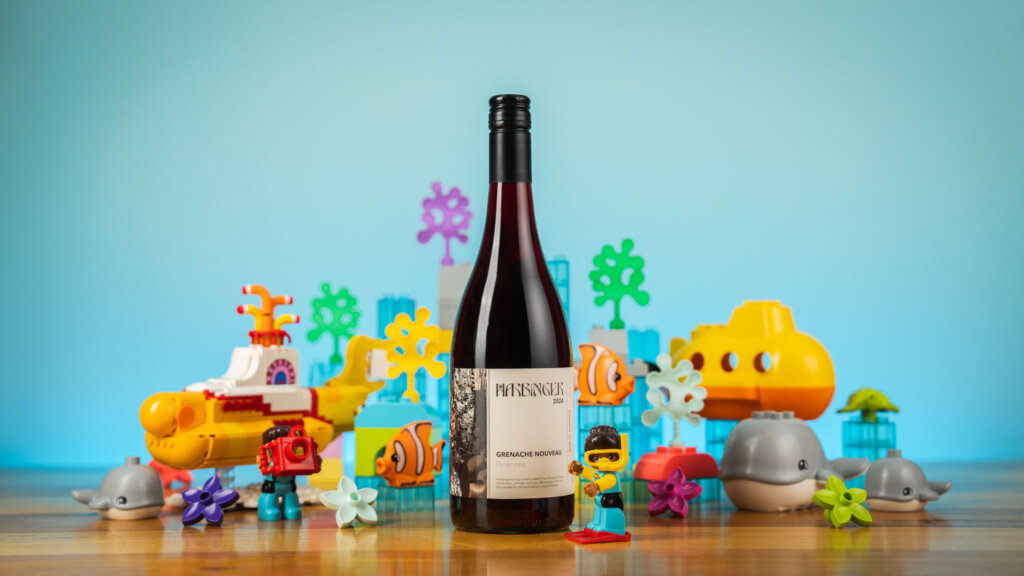
2024 Harbinger Grenache Nouveau, Pyrenees $35 RRP
Layton and Veltheer both selected this wine among their top six wines of the day. Layton described “classic lovely pinot notes on nose, perfume and spice elevated by the obvious use of whole-bunch – flint, smoke, red fruits, graphite and that unmistakable stemmy funk. Bright and primary fruits of raspberry and cherry, with some notes of cranberry and lifted florals of rose petals, and some lovely weight on the palate. The tannin structure is fine and silky – the length is great. Once the sensory overload subsides, a herbaceous savoury edge lingers and wine unfolds to become a slurpable pinot-like drink with some depth and a long finish. I’d pair with roasted duck and cherry sauce – very classic but ultimately rewarding.” Veltheer described “maraschino cherries, pencil shavings, bright fresh strawberry and raspberry, with cranberry overtones and a refreshing acidity. All the hallmarks of carbonic maceration that I love, in a very drinkable wine – fresh, bright, and everything nice. This is a really quaffable wine that doesn’t need to be taken too seriously – and should absolutely be enjoyed with friends, maybe slightly chilled if you’re feeling crazy.”
2021 Little Brunswick Wine Co. ‘Shade We Won’t Ever Sit In’ Vine-Dried Shiraz, Great Western (Grampians) $42 RRP
Layton, Robinson, and Gillespie included this wine in their top six wines from the blind tasting. Layton said, “the nose immediately makes me think of aged cabernets – cassis, darker fruit, plum, spice, nutmeg, cinnamon, some graphite. A savoury and dry finish on the palate – amaro bitterness, spice, and good length. This wine made a real impression in the line-up – darker, heavier, and obviously slightly aged, but with the classic fruity carbonic maceration notes in spades. Despite its bright juiciness, it’s able to carry the woody notes well. Dry-aged wagyu with some Szechuan spice rub would be fantastic alongside this!” Robinson noted that “inky, whole bunchherbaceousness gives an alpine feel to the wine. With crushed violets, liquorice, and pomegranate acidity, it’s crunchy with a bit of spice. Like walking into a meadow after it’s rained, there are notes of warm earth, lavender, baked blackberries, a hefty dose of cardamom, and a touch of green capsicum.” Gillespie found it “deep and inky in the glass, but bursting with a kind of confectionery joy – all candies and Aeroplane Jelly. Juicy and gently spiced, it leans into sweetness without losing its shape. I’d play with the sweet/spice dynamic with sticky pork ribs or American barbecue.”
Robinson selected this wine among her top six wines on the day, describing it as “a truly autumnal wine – the palate opens with dried sultanas and cranberries, before showing its blackberry jam richness. It’s decadent with a beautiful line of black cherry pithiness, and yet, the fruit doesn’t feel over powering on the palate. Balanced by baking spices and a graceful line of carnation floral notes, the drop feels silky and ever-evolving – the perfect wine to wind down with as the weather cools down.”
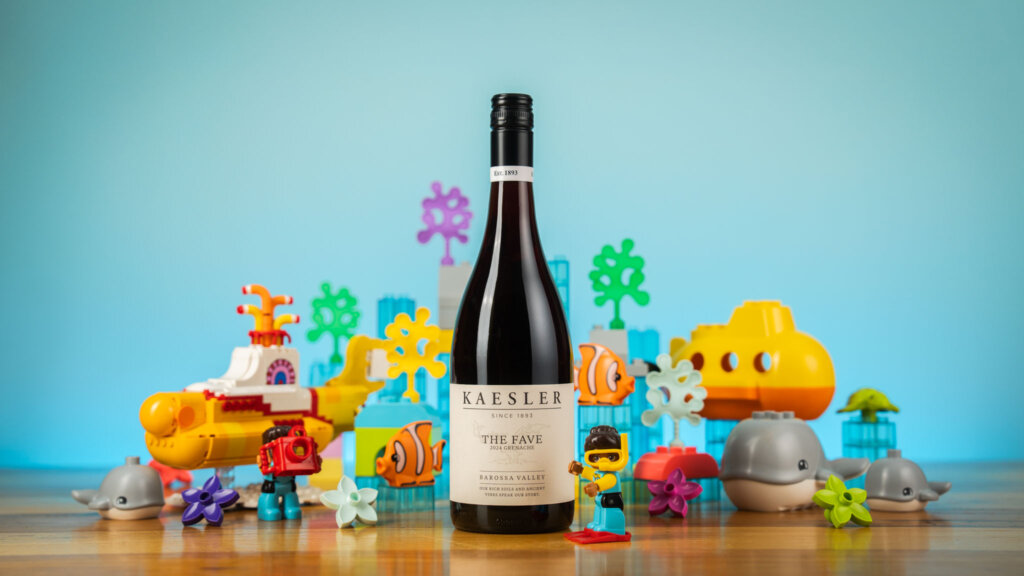
2024 Kaesler ‘The Fave’ Grenache, Barossa Valley $60 RRP
Carlin chose this wine for his top six selections from the tasting, saying, “sitting at home typing this after the tasting, I can still feel the Turkish delight in my mouth from this wine. The nose is enticing, with a Negroni–like exotic note, alongside raspberry, Morello cherry, and cranberry sauce. Turkish delight isn’t the only delight the palate – it’s a textural delight, too, with hibiscus tea and rose oil tones that accent this well-balanced and delicately defined wine. The whole-bunch ferment gives a ‘stemminess’ to the wine that can be tasted in the clove and cinnamon spiciness of the palate, with just a touch of bitterness on the finish. This wine gives a nostalgia for eating tuna tartare with friends at the local wine bar in the summer heat. Carbonic maceration adds a beautiful complexity to the wine, keeping it far away from being a mere ‘fruit bomb’.”
Veltheer included this wine in his top six wines from the blind tasting, describing “really beautiful perfumed florals of geranium and pink rose on the nose, alongside cherry fruit – a bouquet that sucks you in. On the palate, it’s all juicy strawberry up-front, with some sage leaf creeping in alongside violets and black plum, followed by a lovely lick of graphite that adds a bit of intrigue. The whole bunch influence is pretty clear here – giving it a savoury, stemmy quality that adds structure and complexity with hints of green capsicum. Some oak spice is present, but not overwhelming, with drying tannins on the finish. A very well-made wine – a wonderful balancing act of whole bunches, oak, and high-quality fruit all tied together with some world class winemaking. If this is the future of Australian wine, then that future is looking really good.”
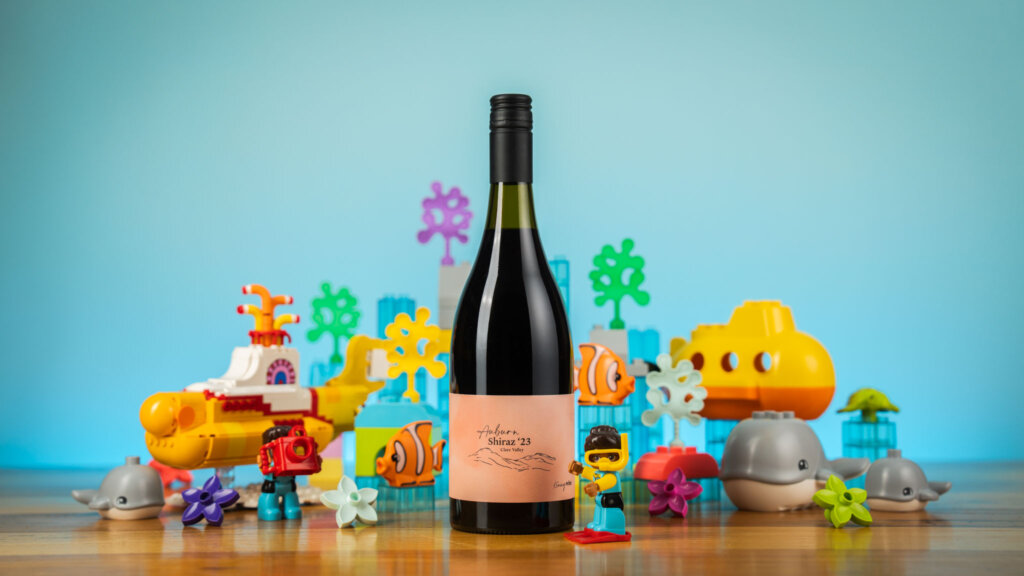
2023 Kenny Wine ‘Auburn’ Shiraz, Clare Valley $35 RRP
Gillespie selected this wine among their top six picks, saying “nasturtium leaf and green bean notes appear first, before fresh raspberry tones slip in quietly. Then the wine almost draws itself in and pulls back, composed and self-assured – the greenery receding to leave a fine thread of spice at the finish. I really liked the green vegetal notes in this, so I’d squeeze some lemon over some grilled lamb with rosemary and herbs – the gentle spice of a dish like that would pick up on the wine’s savoury edge without overwhelming its poise.”
Layton and Carlin both chose this wine for their top six wines from the tasting. Layton described “strawberry jam and confected lollies on the nose – raspberry, strawberry, and primary fruit. The palate opens with some nice weight, and the mouthfeel is full and silken. Some stemmy texture gives this an edge – and although slightly underripe, those stems add a level of wood and pyrazine spice which adds complexity, a nice balance, and just enough character. The palate is altogether thick and silken – a bit like chewing liquid velvet. The crunchy red fruits – cranberry soft and fleshy in the mouth – are an assault on the senses. Afternoon autumn drinking at its best!” Carlin noted that this is “a wine that’s not here to play – with searing acidity swooshing in off the bat, this wine packs a punch. Equal parts beautifully delicate violets and glacé cherries, accented by Dr. Pepper wildness – this is carbonic maceration done well, reminding us that tutti frutti isn’t always the end-game, but sometimes a stop along the way.”
Farquar chose this wine for her top six wines on the day, saying “one of the many joys of carbonic maceration is its ability to bring forward lighter, more delicate, fruit flavours in otherwise darker wines. A dark ruby colour in the glass, the wine appears to be brooding, and the nose shows many of the hallmarks of a serious wine – cinnamon, tobacco smoke, and green tree bark. On the palate, there’s dark chocolate, orange pith, strawberry jam, and soft, silky tannins, as well as lighter characters of strawberry and raspberry. These lighter, brighter fruit characters in this otherwise deep wine indicate partial carbonic maceration, bringing out the fruit characters which may otherwise have disappeared in traditional fermentation. Good flavour concentration and balance between structure and fruit here. A very enjoyable and easily drinkable wine.”
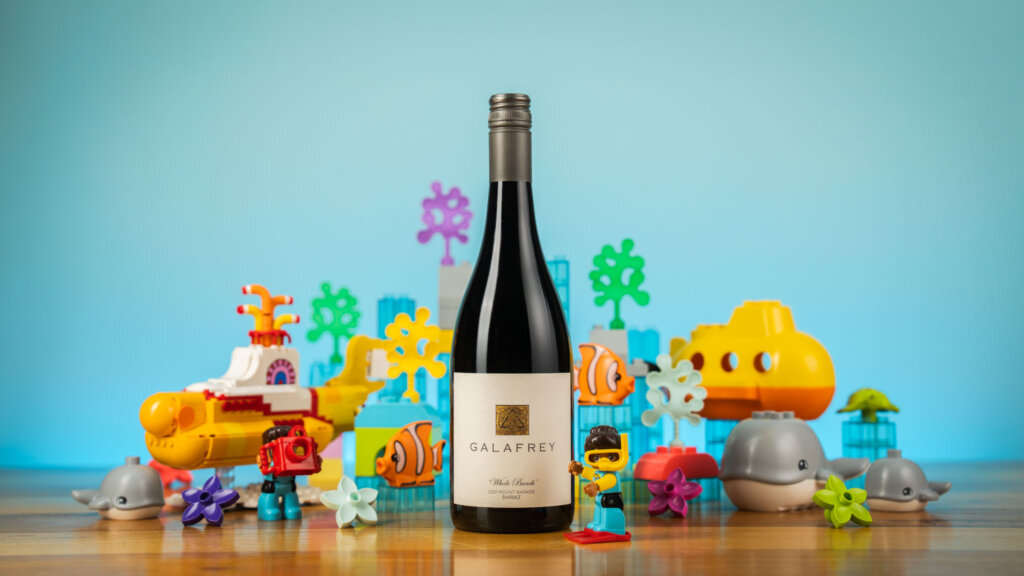
2021 Galafrey Whole-Bunch Shiraz, Mount Barker (Great Southern) $30 RRP
Layton and Farquar both included this wine in their top six wines from the tasting. Layton described “savoury sweet fruit on nose, simple – lots of pyrazine, stalky savoury notes. Long finish in balance, though, with a great amaro finish. On second pass, this shows itself as dry, dry, dry – grippy tannins pronounced and savoury. Lovely and a different style. Could do with something really juicy from a food perspective – maybe a Lebanese banquet with charred meats and pomegranate salad.” Farquar said, “initially this wine presents as dessert-like, reminiscent of a Black Forest cake. With some time in the glass, it opens up to show a more savoury expression of the fruit. On the nose, notes of strawberry jam, cherry syrup, blackcurrant, and hints of a white pepper smokiness. The palate shows more savoury tones of blackcurrant leaf, blackberries, and an English breakfast tea–like tannic grip. The vibrant acidity here is more than able to cut through those riper fruit characters. I’d ideally pair it with a more fruit-forward dish that shares some of those same savoury notes, like duck with cherries. Likely this wine sees some carbonic maceration, as shown by the bright fruit characters present in an otherwise dark wine – possibly some whole bunch if you squint, but however it has been made, it’s ultimately a well-balanced and harmonious wine.”
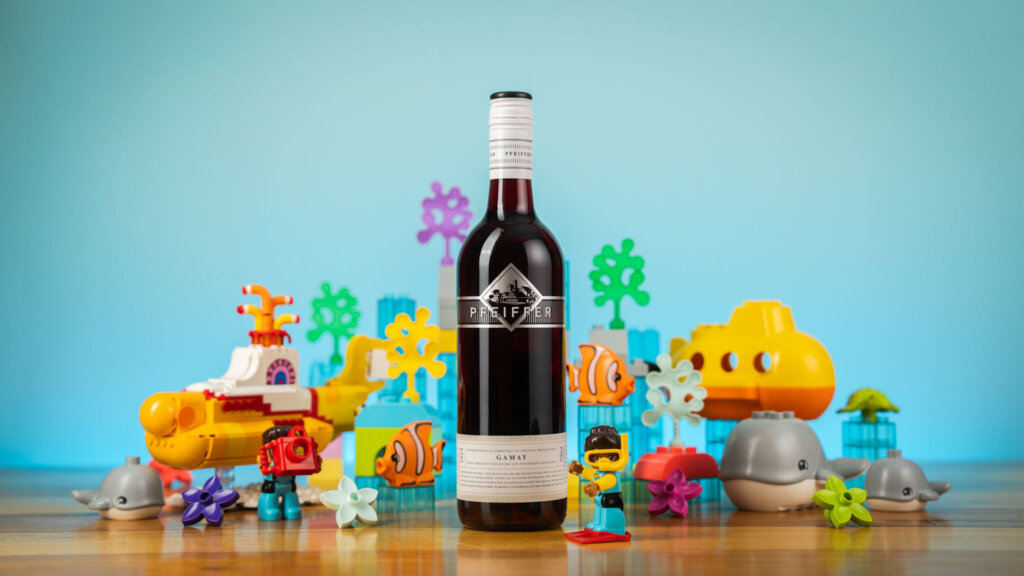
2024 Pfeiffer Gamay, Rutherglen $25 RRP
Robinson selected this wine among her top six picks from the blind tasting, saying “with its saline mouthfeel, raspberry juice freshness and red cherry pithiness, this wine is borderline addictive. It’s light-footed, with notes of fresh red apples, just-ripe strawberries and rhubarb crunch, and a lovely line of pressed violets and a blood-orange grip in the background. The winemaker has done a great job of using carbonic maceration to add liveliness and character, without taking away from the structure of the wine. Best served with some pork belly ramen or lamb – this tasty drop is perfect for every occasion.”
Robinson chose this wine for her top six wines on the day, saying, “like the smell of blueberry pie sitting on the windowsill, this wine smells like home. Warm and inviting, the scent of dark Christmas cherries, kirschwasser and blackberry bramble invite you to take a sip. The palate is moreish, with baking spices and a touch of herbaceousness rounding out the fruit flavours, and a touch of bitter dark chocolate adding some phenolic grip. The wine evolves with every sip, but each one is as delightful as the last. Keep for a rainy evening in front of the fire.”
2025 Mutual Promise ‘Koombahla Vineyard’ Gamay, King Valley $33 RRP
Veltheer included this wine in his top six wines from the tasting, noting “a bit of pencil shavings on the nose that actually works in its favour, giving way to bright, vivid red cherries as it opens up in the glass. Pomegranate and stewed strawberry come through, the kind of fruit expression that tells me the grapes were excellent before they ever got near a tank. What really sets this one apart is the length the finish just keeps going, balanced out by the softest kiss of acid, showcasing such a high quality of fruit and winemaking. Definitely something I’d show off at a dinner party.”
Gillespie selected this wine among their top six wines of the day, describing it as “pretty and pale with a faint brick tinge, like something pulled from an old dressing table. It smells a little wayward with white pepper, musk stick, red apple skin. Soft, almost shy acidity, but there’s still dirt under the nails: a whisper of undergrowth and fine tannin keeping it honest. A delicate mix of sweetness and earth. I’d probably chill this wine down a little before serving – with a light chill, it would absolutely suit a charcuterie board with some spicy salumi.”
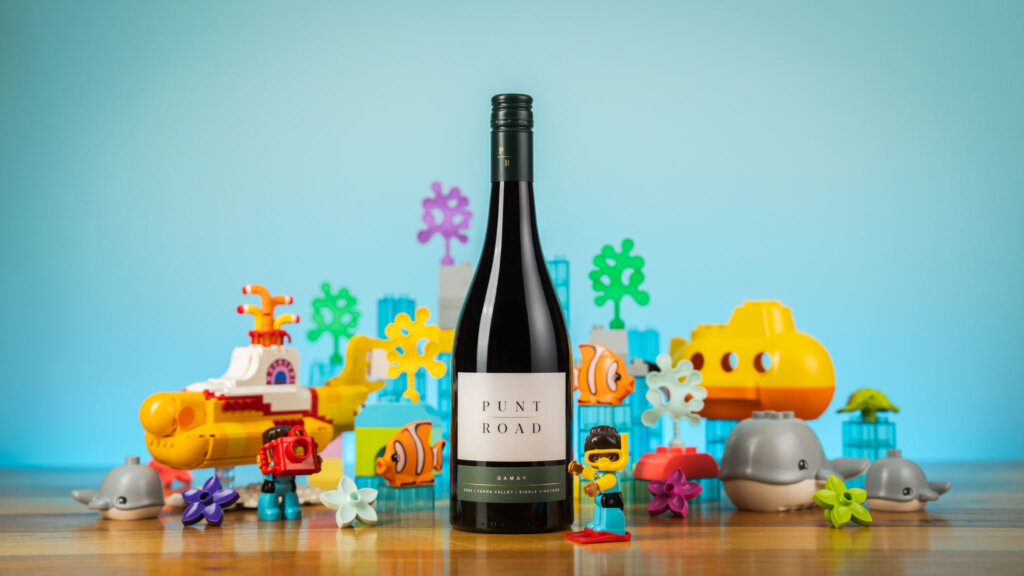
2024 Punt Road Single Vineyard Gamay, Yarra Valley $38 RRP
Carlin chose this wine for his top six selections from the blind tasting, calling it “a Marge Simpson of a wine. Your nose initially catches homely whiffs of sarsaparilla and rustic honeyed cloves, tied in with freshly cut strawberries. And don’t get me wrong, that’s what’s there – but the palate opens up with heart and warmth. This wine is elegant, for sure, but more than anything else it’s joyous and homely – plush on the palate, with serious depth and texture. The whole bunch and carbonic maceration notes – all jelly beans and sweet cinnamon – tie it off with an incredibly long finish, reminding you again and again just how pleasant it actually is.”
Farquar included this wine in her top six picks, describing its “light ruby appearance, with bright and lively fruit on the palate. On the nose delicate aromas of dried herbs and forest floor showing distinct notes of whole bunch inclusion. The palate is silky and defined, with building tannins creating the structure, alongside spice notes of dark chocolate and pepper. The fruit characters show darker red berries of wild raspberry, cranberry, and a green, ‘stemmy’ note that indicates whole-bunch inclusion. An interesting, lively red – one that can sit alone, or would work well with heartier dishes such as pork steaks or a charcuterie board laden with cured and smoked meats.”
Robinson chose this wine for her top six wines from the tasting, saying, “with a touch of new-age funk, this enchanting red is incredibly intriguing. Some raspberry leaf tea, a touch of pressed chamomile and a dash of salted plums, this drop is too easy to drink. The florals come through strongly, with notes of pressed violets and rose, and they are only the beginning of the complexity found in this wine. Think blood orange fleshiness, ripe watermelon and red kiwi fruit with a lovely line of pomegranate tart. This wine is the perfect in-between for natural wine lovers and their nonbeliever friends.”
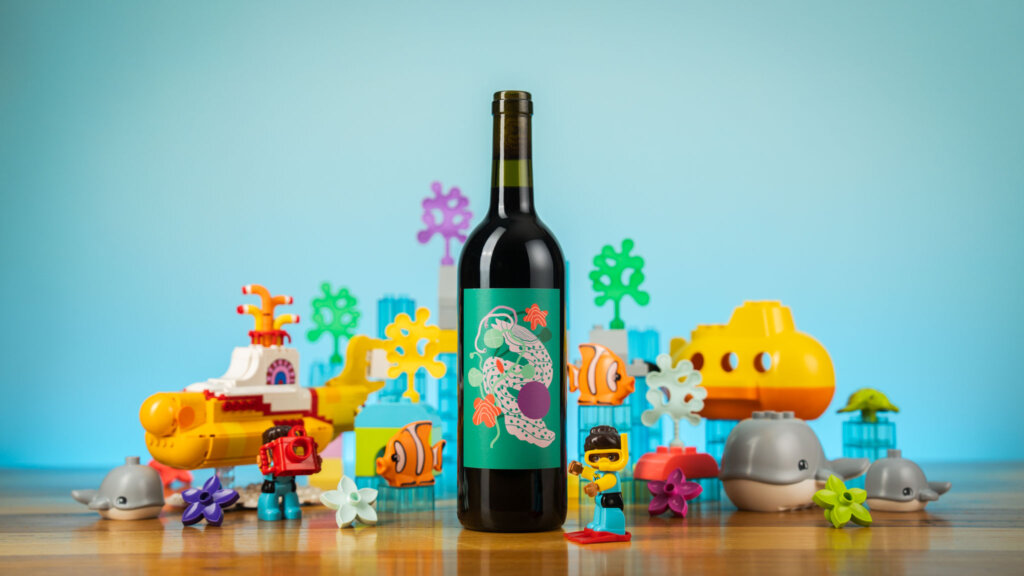
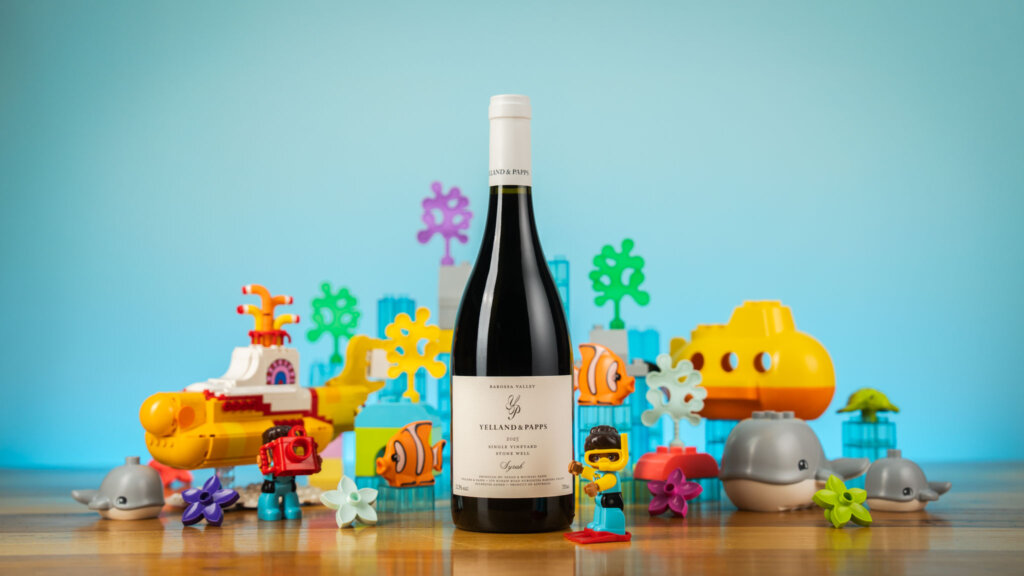
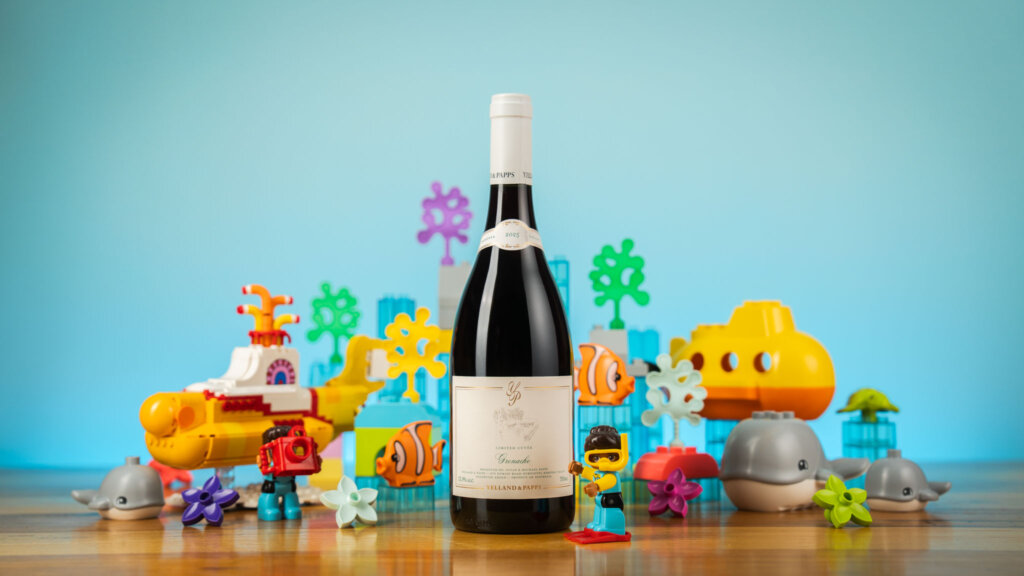
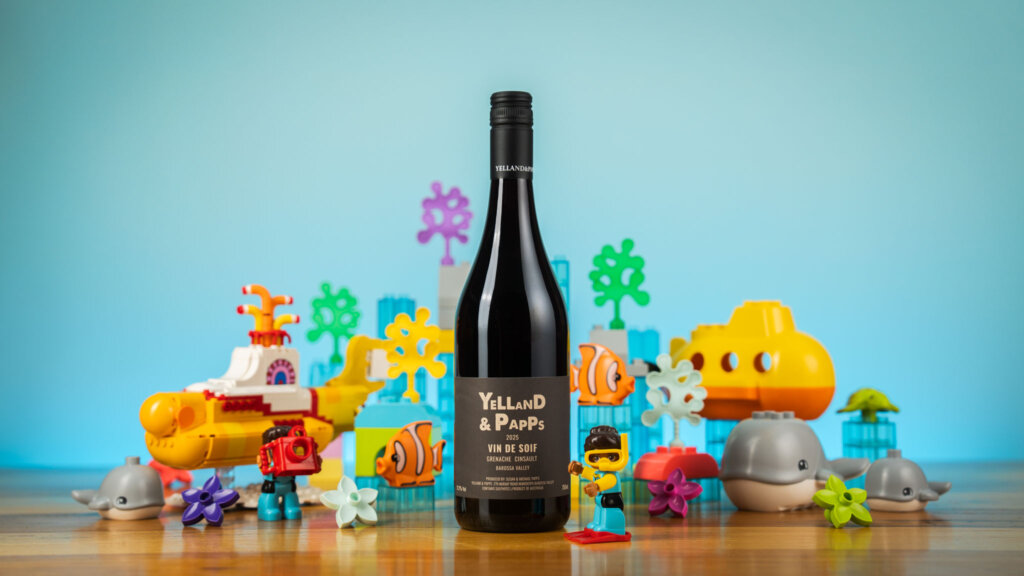
2025 Yelland & Papps ‘Vin de Soif’ Grenache/Cinsault, Barossa Valley $36 RRP
Layton selected this wine among his top six wines on the day, noting “a nose of strawberry jam and kirschwasser, backed with hints of ripe cherry and pomegranate fruit – lifted and lovely. On the palate, a velvety spice line of thyme and soft white pepper emerges, alongside some good tannin and nice fruit weight. Maybe a little bit simpler than others in the line-up – but a great use of carbonic winemaking to create something that is straight-up approachable and smashable. Lovely drinking – perfect for 4pm any day of the week …”
The Backstory
The most exciting thing happening in Australian red wine right now is also the oldest trick in the fermentation book. Whole-bunch fermentation and carbonic maceration – techniques that predate every piece of modern winery equipment – are producing a new generation of reds that are crunchy, perfumed, energetic and impossible to put down. It’s been a long time coming. The seeds were sown in the reaction against the Parker era’s obsession with power and oak, and in the slow rehabilitation of techniques that Beaujolais Nouveau had turned into a global punchline. A generation on, what began as quiet experimentation in wineries around Australia has found its moment – riding a wave of consumers actively seeking lighter, fresher and more fruit-forward styles of red wine. But how do these techniques actually show up in the finished wine? And are they the destination, or merely part of the journey? We took a Deep Dive to find out…
Australian red wine has been shifting through a series of cellar decisions: what to crush, what to leave whole, and how much to let happen naturally in the absence of oxygen.
The result is a generation of reds that feels different: lighter on its feet and more perfumed. Wines with an energy and crunch far removed from the dense, oak-forward styles that once dominated Australian red winemaking. They’re being talked about with a loose vocabulary – whole-bunch, carbonic, cab-mac – terms that overlap, diverge, and often get used as if they mean the same thing. They don’t. But they point in the same direction – and toward something far older than the trend that surrounds them.
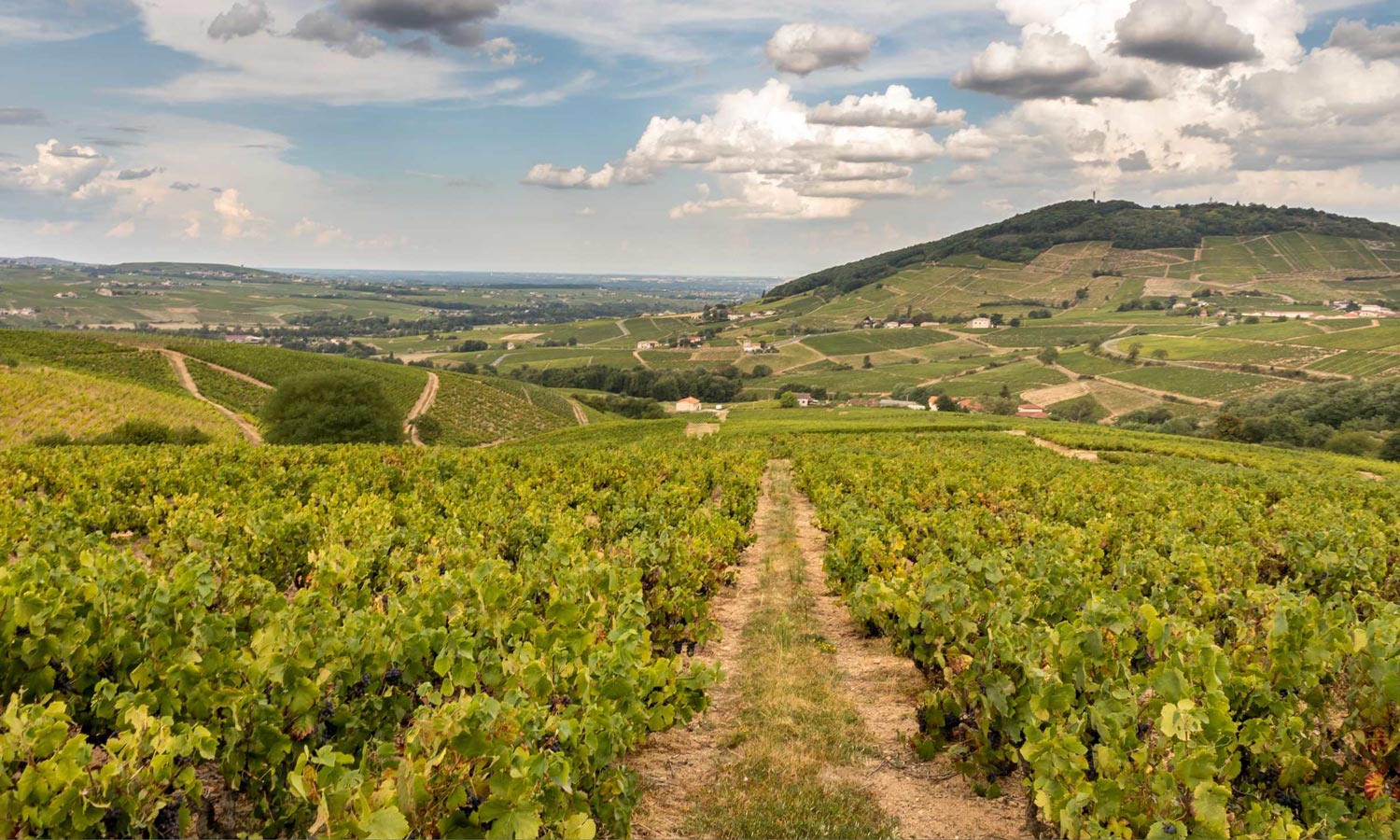
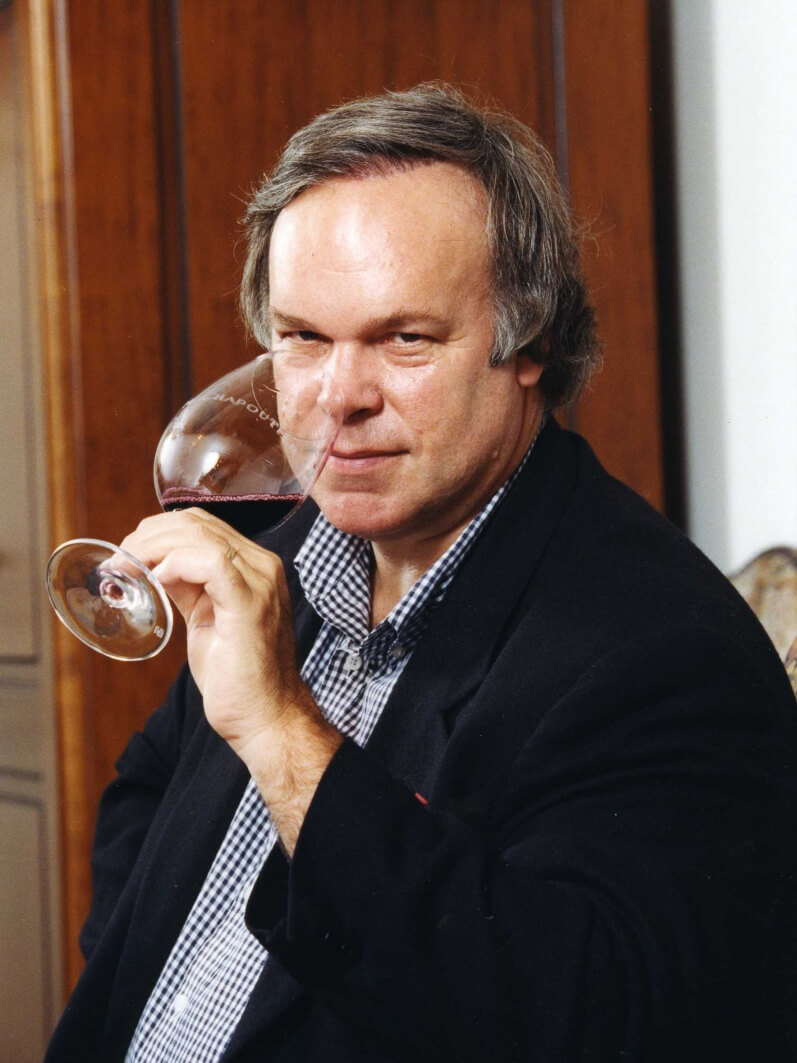
Above: The wine region of Beaujolais, France – responsible for both popularising and demeaning the technique of carbonic maceration. Opposite: American wine critic Robert M. Parker, Jr., whose palate helped shape a generation’s preference for dense, powerful Australian red wines.
It’s a story born from three colliding forces: the long shadow of Beaujolais Nouveau, which took an ancient technique and turned it into a global marketing circus; the Parkerisation of the 1990s, which made power, concentration and oak the international language of quality (and Australian red wine its most fluent speaker); and a quiet, stubborn rediscovery of the way wine was made for thousands of years before either of those things happened. These wines are, in part, a quiet ‘up yours’ to a century of industrial winemaking that buried the oldest way of making red wine under a landslide of destemming machines and cultured yeasts.
These are wines shaped, at least in part, by carbonic maceration: the process by which fermentation begins not with yeast acting on crushed juice, but within intact, whole berries – an enzyme-driven, intracellular transformation within unbroken berries that builds fragrance, brightness and distinctly joyous fruit characters. ‘Whole-bunch’ has become the colloquial shorthand often attached to these wines, and it’s usually a reliable signal – though not always. More on that later.
Inside the berry
Many of these wines are shaped by carbonic maceration – often shortened to ‘cab-mac’ – a process that sounds technical but is fairly straightforward once you understand the basics.
In conventional red wine production, grapes are removed from their stems and crushed, releasing juice that is fermented by yeasts while remaining in contact with the skins – extracting colour, tannin and flavour. Carbonic maceration begins differently. Whole, uncrushed berries are placed into a vessel and sealed in an anaerobic, carbon dioxide-rich environment.
Inside each intact berry, fermentation begins not with yeast, but within the grape itself – an intracellular process where enzymes break down sugars and produce alcohol, along with a suite of aromatic compounds. It’s a gentle, self-contained transformation that builds brightness, fragrance and a distinctive fruity profile which, in heightened cases, can produce bubble-gum-like characters.
Above: Yarra Valley winemaker Timo Mayer.
In its most complete form – often referred to as full carbonic maceration – the tank is sealed and saturated with carbon dioxide, and the berries remain intact for an extended period. Fermentation occurs almost entirely within those berries before the fruit is pressed and conventional fermentation finishes the job. This is the classic reference point for the technique.
In practice, however, what we call carbonic maceration is rarely this absolute. Some berries remain whole and ferment internally, while others are crushed under their own weight, releasing juice and beginning a more conventional fermentation. Crucially, that yeast-driven fermentation produces carbon dioxide as a byproduct – and it is this carbon dioxide, building up within the vessel, that helps sustain the anaerobic environment the intact berries need to continue their own intracellular fermentation. The two processes are not just simultaneous – they are mutually reinforcing. The result is a blend of intracellular and yeast-driven fermentation, each contributing to the final wine.
That blend of intracellular and yeast-driven fermentation – happening simultaneously in the same vessel – is what defines most Australian wines made in this idiom. And it’s a very deliberate combination that winemakers consider and orchestrate according to the climate their grapes are grown in and the varieties they’re working with.
“If you pick at 13° Baumé, in a purely conventional ferment, you end up with 13.5% alcohol. In a whole-bunch one, you end up with 12.5% – because some sugar gets converted very poorly to ethanol.”
Carbonic maceration can also have a meaningful impact on alcohol levels, with some sugar being metabolised within intact berries into compounds other than ethanol – it’s not as efficient as yeast at turning sugar into alcohol – meaning these wines can finish with noticeably lower ABV than those made from the same fruit under a fully crushed, traditional ferment.
Winemaker Timo Mayer applies these techniques to all of the nine red varieties that he makes. “If you pick at 13° Baumé, in a purely [conventional] ferment, you end up with 13.5% alcohol. In a whole-bunch one, you end up with 12.5% – because some sugar gets converted very poorly to ethanol by the enzymes,” he says.
As part of the trend towards lighter expressions of red wines, wines made in this genre throughout Australia are typically picked earlier, meaning lower potential alcohol from the outset. The freshness is as much a stylistic decision as it is a technical outcome.
However, for Mayer – working in the cooler Yarra Valley – the instinct runs in the opposite direction: “We always pick the whole bunch-stuff a bit riper, because we know we’re going to end up with less alcohol,” he says. “My whole bunch wines I pick at 13.5° Baumé, and end up at 13%. My favourite alcohol levels are high twelves, low thirteens.”
Whole-bunch ≠ cab-mac
If carbonic maceration happens inside berries, whole bunch fermentation is about what happens around them.
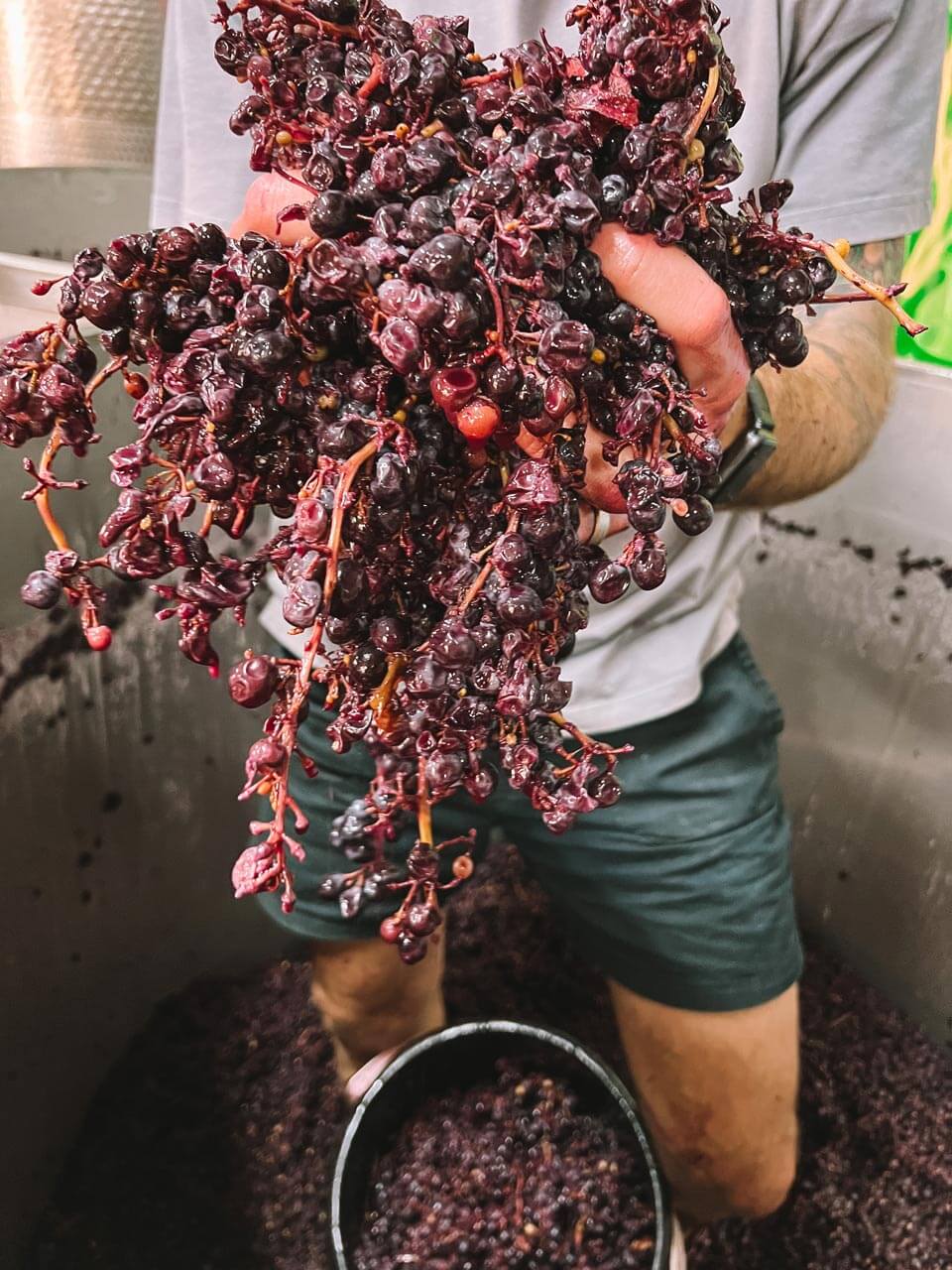
Whole bunch means fermenting entire clusters – berries, stems and all. It doesn’t require carbonic conditions, but it often creates them, at least in part. In a tank of whole bunches, intact berries naturally form pockets where intracellular fermentation can occur, while juice from crushed fruit ferments conventionally alongside them – the carbon dioxide produced by that yeast fermentation helping to displace oxygen and maintain the anaerobic conditions within the vessel.
So while whole bunch and carbonic maceration frequently overlap, they are not the same thing – and one is not required for the other.
There is, in fact, a further distinction worth naming. Some Australian winemakers work with 100% whole bunches but deliberately crush them – meaning no intact berries remain, and no intracellular fermentation occurs. In these cases the winemaker is seeking only what the stems themselves contribute: structure, aromatic complexity, ferment dynamics. It’s a legitimate approach, but these wines contain no carbonic element. That distinction matters here, because this curation is fundamentally about carbonic influence. ‘Whole-bunch’ has become a colloquial shorthand that often signals the presence of cab-mac – and that association is usually accurate, since intact berries are the most common pathway to intracellular fermentation in the winery. But the label alone isn’t the qualifier.
Above and opposite: Winemaker Gilles Lapalus, who grew up in the Mâcon – where carbonic Beaujolais meets whole-bunch Burgundy.
Gilles Lapalus grew up in the Mâcon – the southern tip of Burgundy, immediately north of Beaujolais – before moving to central Victoria. He knows both traditions from the inside: “The carbonic maceration is really often attached to Beaujolais with the whole bunch – and there’s some producers in Burgundy making whole bunch pinot with no carbonic maceration.” It’s worth a small qualification here: unless whole bunches are deliberately crushed before fermentation begins, some degree of carbonic activity within intact berries is almost inevitable. In many Burgundian-style whole bunch ferments, however, that activity occurs at such low levels that the wines are never considered as carbonic.
Whole bunch brings its own distinct influence. The inclusion of stems introduces tannin of a different character – typically finer-grained and more structural than skin tannin, contributing a spine rather than a grip. Aromatically, stems can add spice, herbs and florals, and sometimes a sappy or savoury edge; how much depends on ripeness, variety, and the proportion used. They also act as a physical scaffold in the ferment, creating channels for gas and liquid movement that affect how heat builds, how oxygen circulates, and how extraction unfolds. In a dense tank of whole bunches, that structure matters.
“The carbonic maceration is really often attached to Beaujolais with the whole bunch – and there’s some producers in Burgundy making whole bunch pinot with no carbonic maceration.”
Timo Mayer is precise about how variety dictates how much of that skin tannin he actually wants: “With pinot noir, nebbiolo, sangiovese – they have beautiful tannins. We probably crush 80–90% of the berries in the last ten days, to harvest those tannins,” he says, in reference to the activity seen in a ferment vat and the desire to extract more of the tannins from those skins through contact with fermenting juice. “With syrah, we probably crush 50% of the berries, and then we’ve got enough tannin – because you’ve already got the stalk tannins, which are quite savoury and drying. So how much skin tannin do you want to add to that? With cabernet, we probably keep 70–80% as whole berries, because they’re big chunky tannins.”
The logic extends to how much carbonic activity he preserves: “The more carbonic you leave the ferment, the less stalky the wine. Because you get less ratio of juice submerged in with the stalks – less juice.”
For Mayer, that means leaving cabernet intentionally under-extracted: “I don’t extract all my cabernet tannins – I leave a lot of it cab-mac-ish. That way the tannins end up in the press, and then the cows can eat it later once it’s pressed. I just harvest enough tannin to have a wine I can drink young. I’ve already got enough tannin from the stalks – I don’t need all the skin tannins.”
“I don’t extract all my cabernet tannins – I leave a lot of it cab-mac-ish. That way the tannins end up in the press, and then the cows can eat it later once it’s pressed. I just harvest enough tannin to have a wine I can drink young.”
What’s counterintuitive is how these effects scale. Wines made with moderate whole-bunch inclusion – somewhere in the 30 to 50 per cent range – can often show the most overt stem character: lifted, fragrant, noticeably ‘bunchy’. The reason is mechanical: at lower inclusion rates, there is a higher volume of fermenting juice relative to the stems, and that juice actively extracts those stem-derived characters. Push the proportion to 80% or 100%, and the ratio inverts – less free juice, more stems, and proportionally less extraction of those same compounds. The influence integrates rather than amplifies. It’s not linear – and it means, paradoxically, that the most overtly whole-bunch-tasting wines aren’t necessarily the ones made with the most whole bunch.
It’s a tricky balancing act. The risks of getting the balance wrong are real.
“The problem is,” says Mayer, “If you do 100% whole bunch in small ferments, they don’t really warm up – they don’t generate heat if you don’t crush many berries, because there’s not enough sugar to generate heat for the yeast. But if you co-ferment – like a tonne or tonne and a half of destemmed fruit and half a tonne of whole bunch in the bottom – that ferment will go to thirty-eight degrees if you don’t chill it. And that heat extracts a lot of greenness from the stalks. So those wines are normally almost more green than if you do 100% whole bunch. That’s why we don’t do that.”
The proportion of whole bunch he uses shifts with the vintage: “In a hot year like 2019 we went 50/50; last year 30% whole bunch; in a cool year, 10/90. We just add enough whole bunch component to get a bit of length and savoury and freshness to it, and not that sweet fruit. So we just had enough whole bunch to make it a nice blended wine.”
Old methods, new thinking
For all the attention they’re getting now, neither of these techniques is new.
Before the widespread use of destemming, fermenting whole bunches was simply how all wine – white or red – was made. Grapes were picked, placed into vats, and allowed to ferment as they were. Carbonic fermentation would have occurred naturally within intact berries, without being explicitly engineered.
Through the twentieth century, technology reshaped winemaking at scale. Mechanical destemming, crushing equipment, temperature-controlled fermentation, cultured yeasts, and oak regimes became the global standard – producing wines of consistency and commercial reliability. Today, the vast majority of the world’s red wine is made this way. Those still working with whole bunch fermentation represent a minuscule fraction of total production. These older approaches didn’t so much recede as get buried under an industrial landslide.
Above: Advertisements for Beaujolais Nouveau – a decidedly industrial take on one of the world’s oldest winemaking techniques.
Mayer sees it in those terms: “Everything was whole bunch a hundred years ago, you know? For thousands of years we made whole bunch wines,” as Mayer points out. “It’s only in the last hundred years people started destemming – and not all regions. Pinot noir, syrah and cabernet franc – it’s still normal around the world to do 100% whole bunch. Whereas with other varieties, people went away from it. I don’t know why – I haven’t figured that out.”
The most cited modern reference point is Beaujolais, where carbonic maceration became central to the region’s identity – built around gamay, and defined by fragrance, immediacy and drinkability. At their best, those wines are capable of surprising depth. But the technique was never inherently a gamay technique; it was a gamay application of something far older and more universal.
The most visible expression of that Beaujolais identity was Beaujolais Nouveau – a light, low-tannin wine released just weeks after harvest, every third Thursday of November. Its origins were modest: a 19th-century local tradition of toasting the new vintage with young wine from that year’s crop, formalised in 1951 when postwar regulations were relaxed to permit earlier sales. But in the 1970s and 80s it became something else entirely. Producer Georges Dubœuf’s ‘Le Beaujolais Nouveau est arrivé!’ campaign turned the annual release into a global event – a party phenomenon in the United Sates, Japan and beyond, with cases airlifted to waiting crowds. For a brief time, it was one of the most talked-about wines in the world.
The hangover was cultural as much as literal. The flood of mass-produced Nouveau – candy-fruited, thin, built for volume rather than quality – left a stain on carbonic maceration that persists in some quarters today. For a generation of wine professionals, ‘cab-mac’ became shorthand for something trivial: a trick for churning out easy-drinking plonk.
“For thousands of years we made whole bunch wines. It’s only in the last hundred years people started destemming.”
It’s an association Mayer understands, even if he rejects the premise. “100% cab-mac – it can turn into lolly water. It’s ester-y,” says Mayer, referring to the banana-lolly and bubblegum-like aromas of the chemical compounds known as esters that are created through the process. “If you do purely carbonic maceration without any normal maceration afterwards, you end up with a light colour and very ester-y, lolly water-y wine. That’s a style – it’s a light red style. Whereas if you want to be a bit more serious – and we do still like to have whole berries because the energy and the vibe is lifted – but if you want colour and skin colour, you’ve got to crush the berries at the end, otherwise you don’t get any colour. Finish the carbonic grapes with a natural ferment and those ester-y characters fly off.”
Across all nine of his red varieties, Mayer uses the same basic framework: “We do ten days carbonic, ten days [conventionally] macerated. There’s really intense primary fruit flavours that you don’t get if you don’t get that carbonic thing happening – the whole berry juice.”
The vessel, Mayer explains, needs to be completely sealed – a lid trapping carbon dioxide over the fruit and excluding oxygen, maintaining the anaerobic environment the carbonic ferment requires. “To get the carbonic, it’s got to be a lid on – it’s got to be sealed, the absence of oxygen. Then you take the lid off and now it’s a normal red ferment. We crush a few berries, but not too many at a time because we don’t want to release too much sugar – otherwise the ferment gets too hot and you extract too much greenness.”
The swing back
The renewed interest in whole bunch and carbonic techniques sits within a broader recalibration of red wine.
In Australia, the dominant styles of the 1990s and early 2000s leaned toward ripeness, density and oak – and for good reason. The era of the influential American critic Robert Parker had made power and concentration the international currency of quality. High scores followed high alcohol, and Australian red wine – with its sun-drenched fruit and willing tannins – was exceptionally good at playing that game. Those wines found a vast and ready audience.
Eventually, every trend has a counter movement.
What happens if we pick earlier? If we extract less? If we allow more space for perfume, for detail, for site expression? Whole bunch fermentation and carbonic maceration became two of the tools for answering these questions.
Above and opposite: Winemakers Susan and Michael Papps of the Barossa’s Yelland & Papps.
At the same time, global influences were filtering in. Burgundy’s nuanced use of whole bunch. Cru Beaujolais’s rising prestige. The natural wine movement’s embrace of whole berries and low-intervention methods. Together, they reframed these techniques – not as rustic throwbacks, but as pathways to finesse and clarity.
In the Barossa – the poster child of those big, bold ’90s and 2000s reds – the Yelland & Papps label is among a growing cohort seeking lighter, fresher interpretations. Winemaker Michael Papps sees the shift clearly: “I dare say a lot of people may do a little bit of whole bunch in most wines now. Especially with the trend of Barossa wines keeping the alcohols a little bit lower, and trying to make wines that are a little bit more approachable slightly younger – with that comes using a little bit of whole bunch. Now that could be 10%, could be 20%, it might be very little.”
More spice and less ‘jammy’ characters in shiraz is the goal for Yelland & Papps – and it was a single vintage that crystalised their approach: “Cooler vintages obviously give a little bit more spice – that’s where cooler areas like Adelaide Hills and Yarra Valley, if you’ve got shiraz from those areas, it ends up being a bit more spicy and savoury and less of the jammy, full-bodied sort of style,” Papps says. “For us, we use the stems and whole bunches to emulate some of those characters. The 2011 vintage – which everyone knows was a very wet and cold vintage – some of the characters that came out there, we absolutely loved. From 2012 onwards, that’s when we started introducing whole bunches into our ferments, to try to emulate some of those characters from the ’11 vintage.”
The logic also runs in reverse: “If it’s a cooler year, we don’t use as much whole bunch – because we’re already getting some of those spicier characters that we’d otherwise be trying to get from a whole-bunch ferment,” Papps says.
“If it’s a cooler year, we don’t use as much whole bunch – because we’re already getting some of those spicier characters that we’d otherwise be trying to get from a whole-bunch ferment.”
But the application of these techniques – and indeed, whether they are used at all – is going to be vintage dependant, as Gilles Lapalus illustrates in the context of the regions he is working with: “I always like to use whole-bunch, but this year for example – it’s probably not a good year for whole-bunch or even cab-mac. We had a big drought in summer, and I’ve seen a lot of bunches with mature berries of the same size – some are fully matured, some are fully green. It’s very bad to use whole bunch with this kind of fruit because you get the green character coming through. A year like this – 2026 – I think it’s a year not to do whole bunch.”
In theory, you can still destem and achieve carbonic fermentation if the berries remain intact through the process – but the equipment has to be up to it. “You need a very good destemmer to do that,” says Lapalus. “And it depends on the variety as well – nebbiolo is impossible to do, for example, but syrah will be more easy, even better, with thick skins. So you need the right variety and a very good destemmer. There are some new picking machines with the destemmer on board and they produce pure caviar – perfectly intact whole berries. It’s incredible.”
A toolkit, not a style
Today, these methods are being applied across a wide spectrum of Australian wines – and crucially, without a single defining style.
Some are light, crunchy and vibrant. Others are midweight, perfumed and structured. Some lean into primary fruit; others into savoury, spiced complexity. The common thread is not flavour alone, but the approach behind it.
Every decision is a dial, not a switch. How much whole bunch to include. How actively to encourage carbonic activity – or simply allow it to happen. How early to pick. Whether to use a sealed vessel or an open one. Each choice shifts the outcome, and Australian winemakers are pulling those dials in different directions, often vintage by vintage.
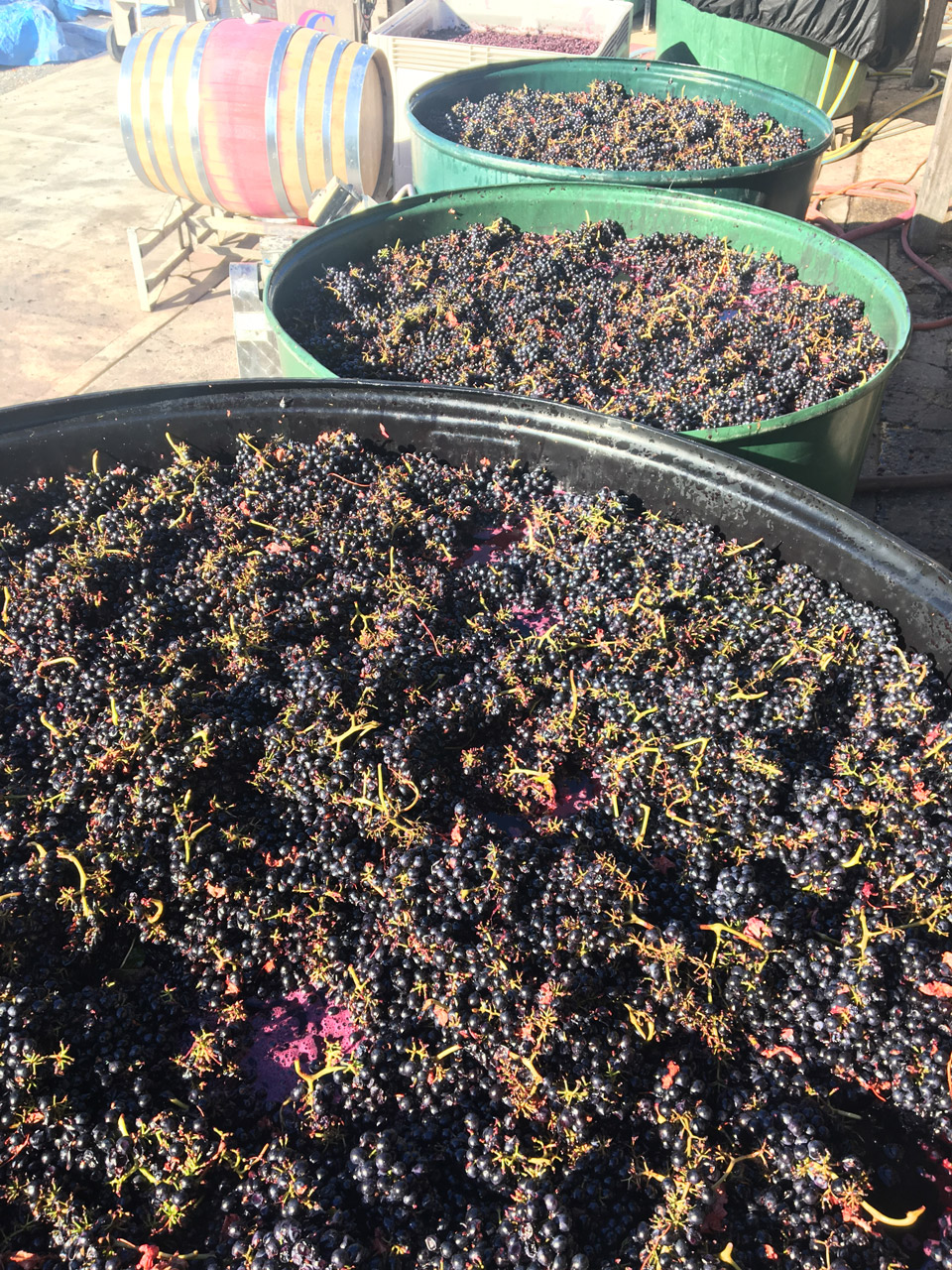
Above and opposite: Whole-bunch ferments in progress at two Australian wineries – grenache at Harrison in McLaren Vale (above), and syrah at White Gate Wine Co. in the Barossa (opposite).
In some wines, carbonic elements are gently layered into a broader ferment. In others, they are pushed further, shaping the wine more overtly. Whole bunch may be used sparingly for lift, or extensively for structure and form.
There is also a practical reason why partial inclusion remains the dominant approach: risk. Full carbonic fermentation – sealed, anaerobic, extended – demands precise management or it courts volatile acidity – VA in winemaker shorthand. A ferment that tips into volatile territory produces vinegar, not wine, and the experience of losing a batch to VA has ended more than a few winemakers’ experiments with the technique before they’ve properly begun. Partial inclusion is considerably more forgiving. The presence of free-running juice and active yeast fermentation alongside the carbonic element provides a more stable environment – the winemaker gets much of the reward with substantially less of the exposure. That calculation, as much as any stylistic preference, is why most Australian producers working with these techniques sit somewhere in the middle of the spectrum rather than at its extremes.
“A lot of people make a lot of vinegar, and then they never do it again. Even the ‘big boys’ – once they get, like, 3,000 litres of vinegar, they go back to the old practice.”
Mayer is characteristically blunt about it: “The problem with 100% whole bunch is the VA – the volatility. A lot of people get volatile ferments; they never do it again,” he says. “Whereas if you cover the whole bunches with fermenting juice, you don’t get that. It’s very safe – if you put the whole bunch on the bottom and then you put the destemmed component on top, nothing can go wrong. That’s why most people do that, and still do it. It’s the 100% whole bunch thing – a lot of people make a lot of vinegar, and then they never do it again. Even the ‘big boys’,” he says, referencing his region’s largest makers, “once they get, like, 3,000 litres of vinegar, they go back to the old practice.”
Why it resonates now
These wines didn’t become popular by accident.
They align with a broader shift in how people are drinking – towards wines that are more immediate, more energetic, more at ease at the table. Wines that offer freshness and drinkability, often with lower alcohol, but without sacrificing character.
For Mayer, the appeal is rooted in something older than trend: “We just want to show people how wine used to be made a hundred years ago – everything 100% whole bunch. It’s spectacularly traditional winemaking. I don’t want to wait ten years for a cabernet to drink. I leave a lot of it cab-mac-ish, so I can drink it young and fresh.”
They can also feel less intervened upon – closer to fruit than to manufacture. Whether that perception always holds up technically is debatable, but it speaks to something real about how drinkers are relating to wine right now. Transparency, in both senses, is having a moment. “What I like about it is the sort of primal way of making wine – no fuss, no sophistication,” says Lapalus. “Except cab-mac is more technical, but you can almost do it in a non-technical way – you can have a wine fermenting and producing carbon dioxide for the cab-mac, for example. I like that simplicity.”
“What I like about it is the sort of primal way of making wine – no fuss, no sophistication. Cab-mac is more technical, but you can almost do it in a non-technical way – you can have a wine fermenting and producing carbon dioxide for the cab-mac.”
There’s a tension here, though. As these techniques become more widely adopted, the language around them risks becoming badge-wearing. ‘Carbonic’ and ‘whole-bunch’ have accumulated associations – cool, low-intervention, textural – that can start to function as marketing as much as method. Sometimes the technique risks becoming the selling point rather than the wine itself.
The best examples resolve that tension. The technique disappears into the wine, leaving behind balance, detail, and a clear sense of intent.
These techniques are no longer fringe. Particularly in the last two decades in Australia, they’ve moved from experimentation to integration, from all manner of grape varieties beyond gamay, from all manner of regions. And as experience deepens, both in vineyard and winery, the results are becoming more precise, more considered. Mayer, as ever, puts the global picture in perspective: “99.999% of the world’s red wine production is destemmed,” he says. “Every commercial wine is destemmed. There’s only those small areas in the world – Chinon, Beaujolais, Burgundy – which still do whole-bunch, which is fuck-all compared to what we make in the world. So it’s not that everybody’s jumped on destemming because they’re nicer. Destemmed wines are nice – nice, they’re fault free, very easy to make. You’ve got to be an idiot to get volatility in a destemmed wine. With whole bunch, you’re fighting volatility – that’s your enemy. That’s why not many people do it. But the reward is quite … it’s a totally different wine. You get energy, vibrancy, plus you get that stalky, herbaceous, almost medicinal flavour from the stalks. And with age, that greenness actually goes away – it turns more floral after five, eight, ten years. But that is a byproduct of that energy, that vibrancy. You’ve got to cope with the green from the stalks.”
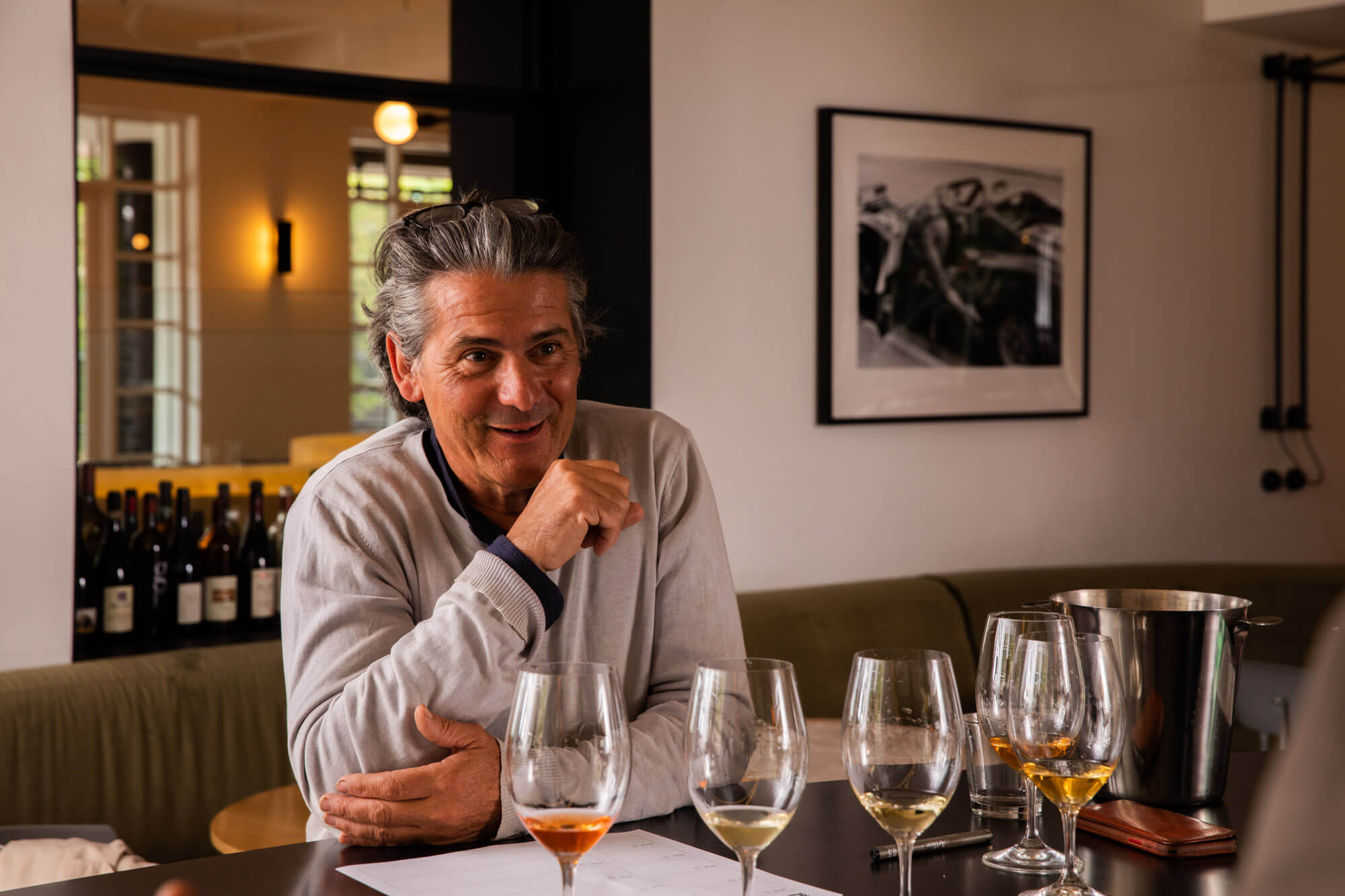
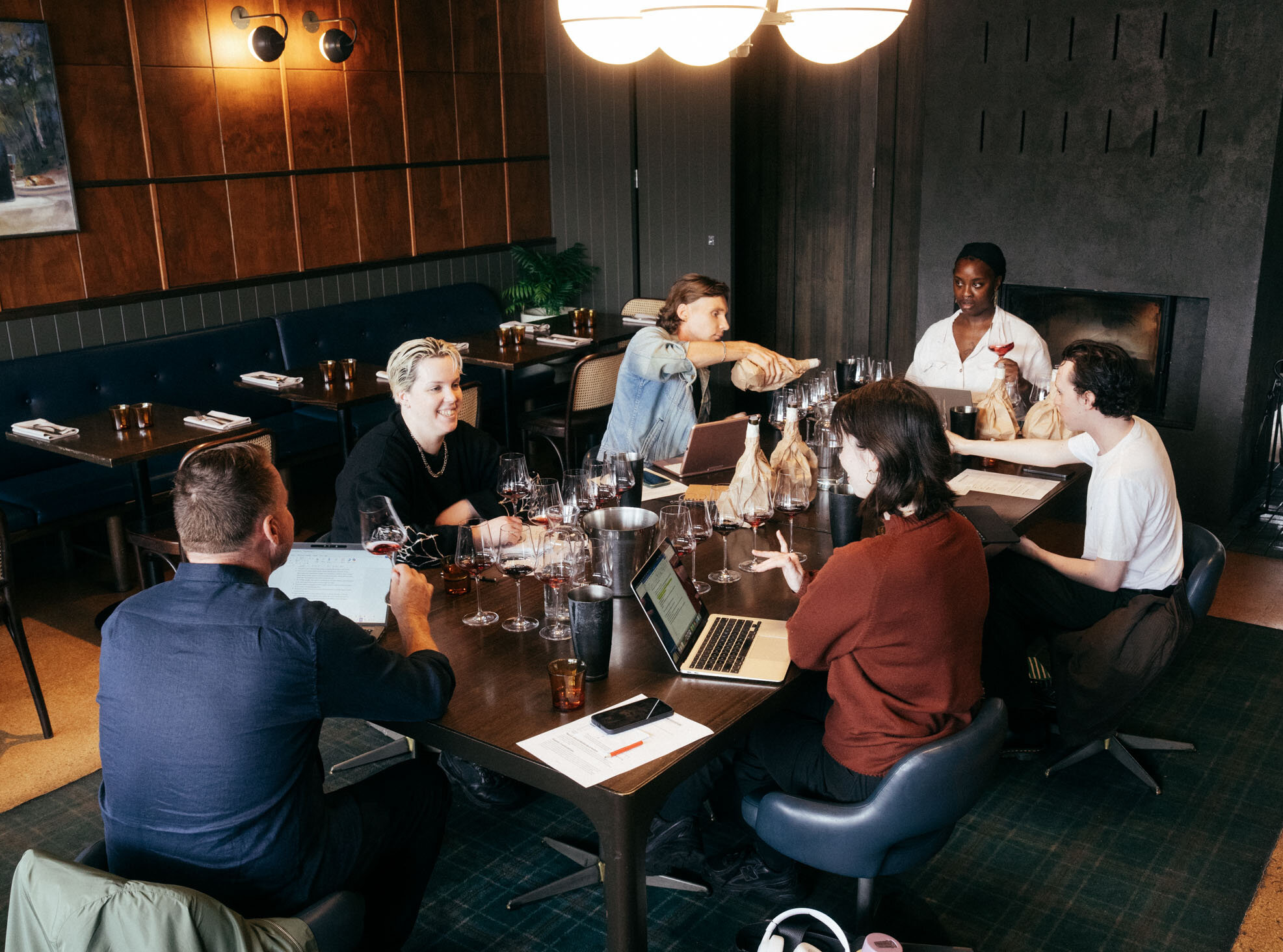
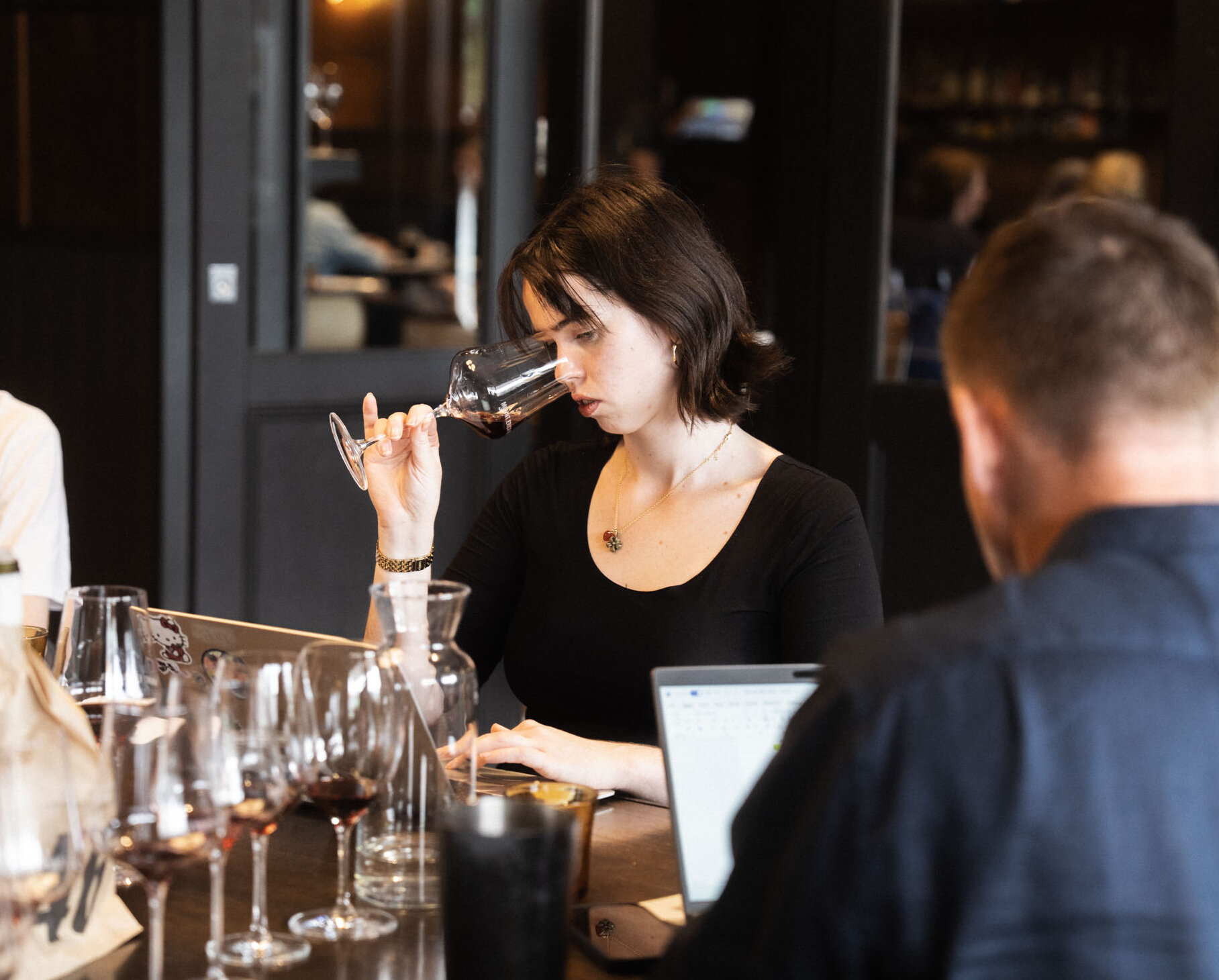
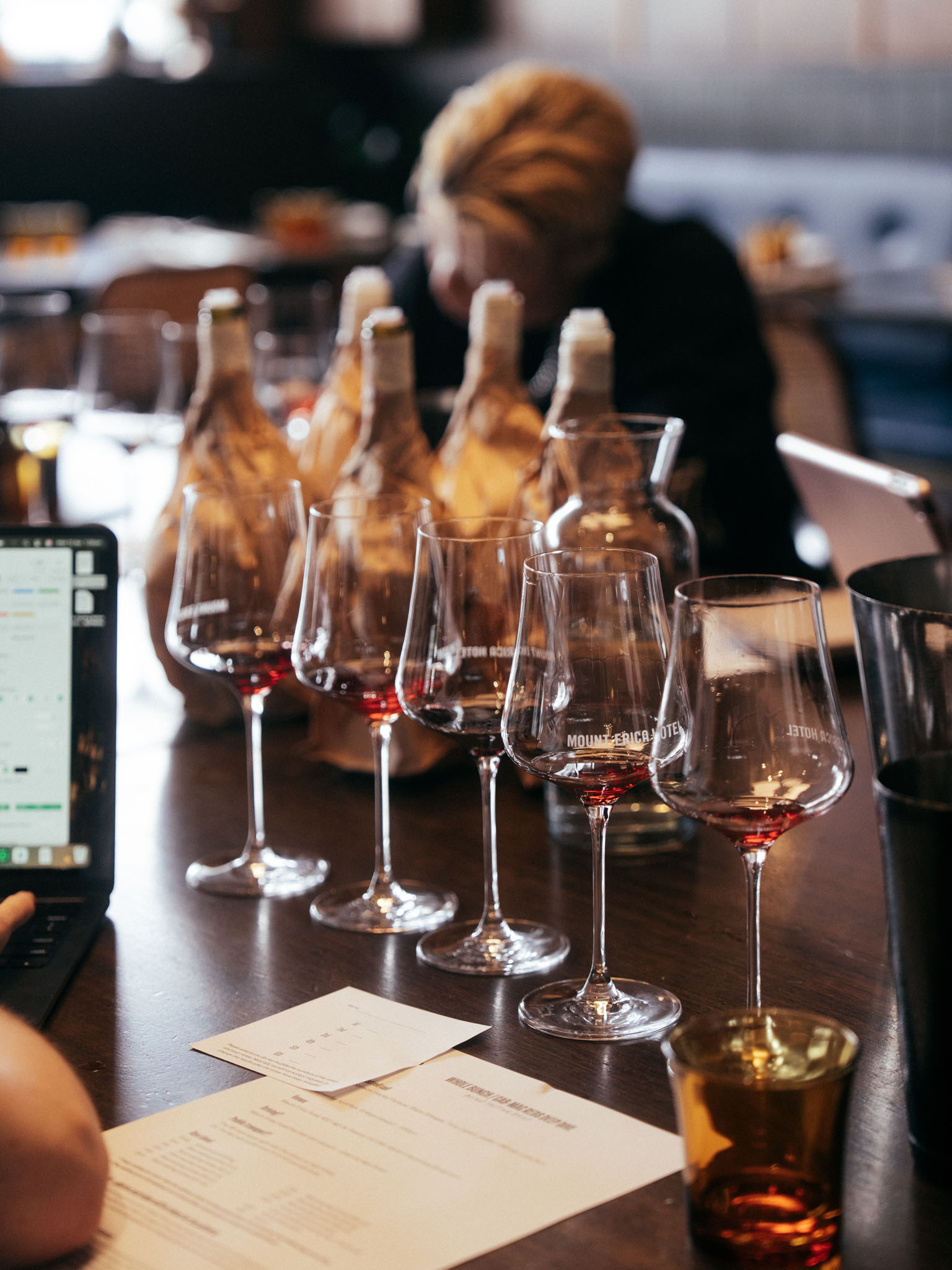
Above: Our Deep Dive panellists convened at the Mount Erica Hotel, Prahran (Melbourne).
Outtakes from the tasting
We gathered every example of Australian red wine made with carbonic maceration or whole-bunch fermentation – irrespective of grape varieties used – that we could find and set our expert panel the task of finding the wines that compelled the most. All wines were tasted blind, and each panellist named their top six wines.
Our panel: Sez Robinson, sommelier, Cumulus Inc.; Luke Carlin, sommelier, Navi; Hayley Farquar, sommelier, City Wine Shop and The European; Jordan Veltheer, wine communicator, Vino Champ; Blaire Gillespie, wine merchant, Natural Science Wine & Liquor; Tony Layton, business manager (Regional Collection and St. Huberts cellar door), Treasury Wine Estates.
Layton commenced the discussion by looking for through-lines in the wines, despite the range of varieties and regions represented. “It was very diverse – diverse varieties, diverse ways of looking at the wines,” he said. “I think, though, there was that definite ‘stemmy’ kind of thing that runs through many of them. The carbonic maceration that gives you that more silky kind of tannin profile, and big crunchy fruit, was really prevalent with a lot of them, but there were also some wines that had some pretty chewy tannins there as well – which I thought was really interesting and different.” Reflecting on the possible varietal composition of the lineup, he said, “It felt like there were a couple of cabernets, and a couple of shirazes in there – and other varieties that you might not expect to see. The pinots really jumped out. I was like, ‘Oh, that’s a really good use of whole-bunch in a pinot’ – they had balance.”
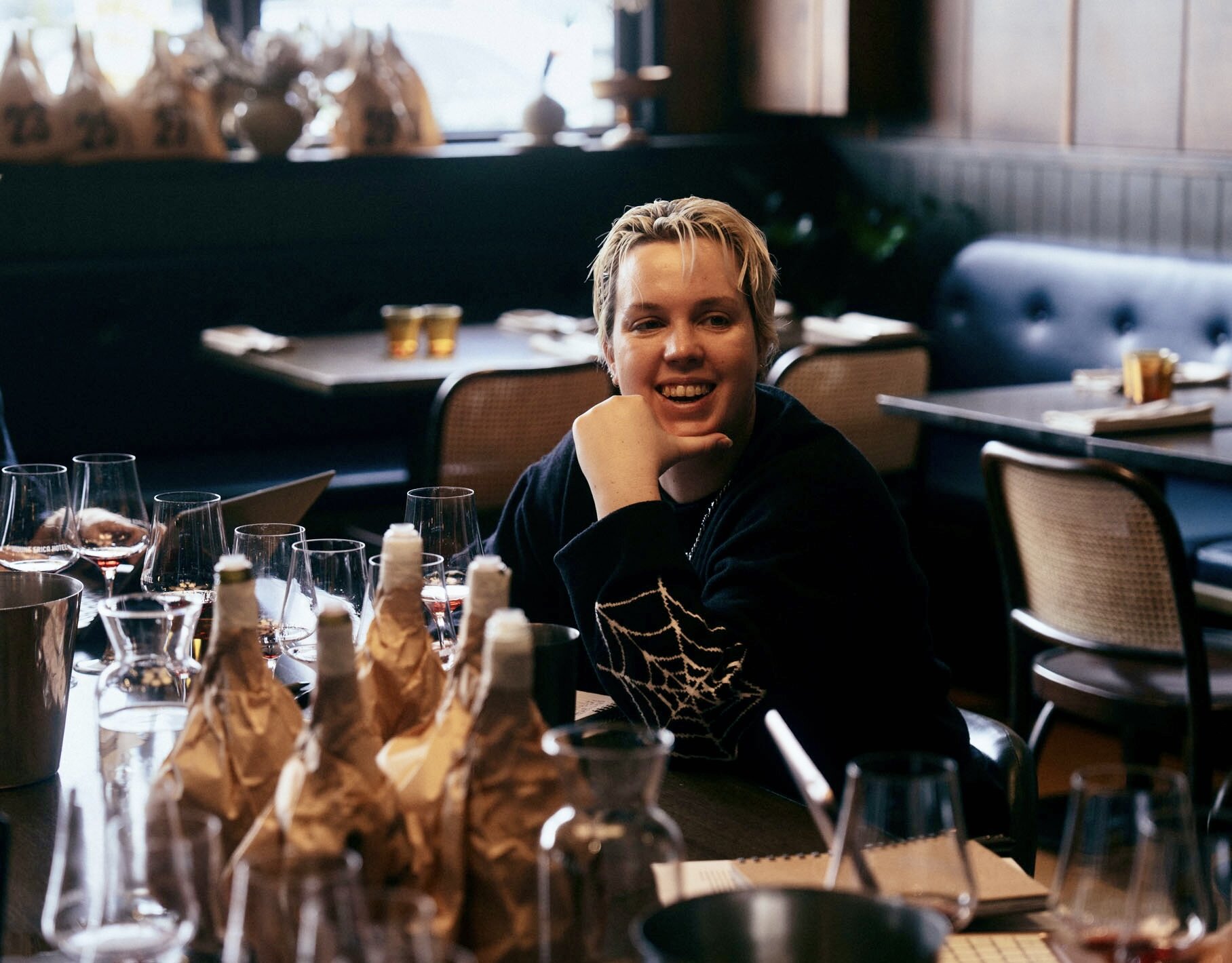
Above: Tony Layton. Opposite: Blaire Gillespie.
For Gillespie, the tasting highlighted a continuum of ways in which Australian winemakers used carbonic maceration and whole-bunch fermentation. “I think there was great expressions of both ends of the spectrum,” they said. “There were some that I would absolutely put in front of people and be like, ‘This is cab-mac – this is the style that it’s supposed to be.’ And there were some where I was like, ‘It’s quite subtle. It’s just a little flick at the end, or a little little nudge of flavour towards that spectrum’.” They added: “I don’t know what this says about some of the wines that I chose for my top-six, but there were definitely some in the line-up where I was like, ‘Hell yeah, big cab-mac vibes!’ and others where I was like, ‘Oh no, you’ve gone too far – this is too much. This is Looney Tunes wine’.”
“There were definitely some wines in the line-up where I was like, ‘Hell yeah, big cab-mac vibes!’ and others where I was like, ‘Oh no, you’ve gone too far – this is too much. This is Looney Tunes wine’.”
“I’m always going to drink some Looney Tunes wine, I promise you that!” Veltheer joked. He argued that the tasting demonstrated that Australian makers were thinking very seriously about how to utilise carbonic influences within the bigger picture of the wine: “Some of these were classically, so in-your-face overtly, cab-mac wines, right?” he said. “And the argument always is that cab-mac wines lack structure and depth – that they’re just fun, fruity wines. But we had a lot of wines today that were cab-mac-y, but still had quite a bit of structure. Now, some of those weren’t really striking the right balance, and some absolutely were – but just the idea that people are trying to integrate cab-mac with structure, that’s what’s exciting for me.” He added that this seemed to be a uniquely Australian approach: “It’s about innovation behind the wine, because so many people in the Old World will say, ‘Forget about cab-mac – it doesn’t make serious wine.’ But you can see people here in Australia are trying to make serious wine with cab-mac. I don’t think everyone’s succeeding – but I think some of them are getting pretty bloody close.”
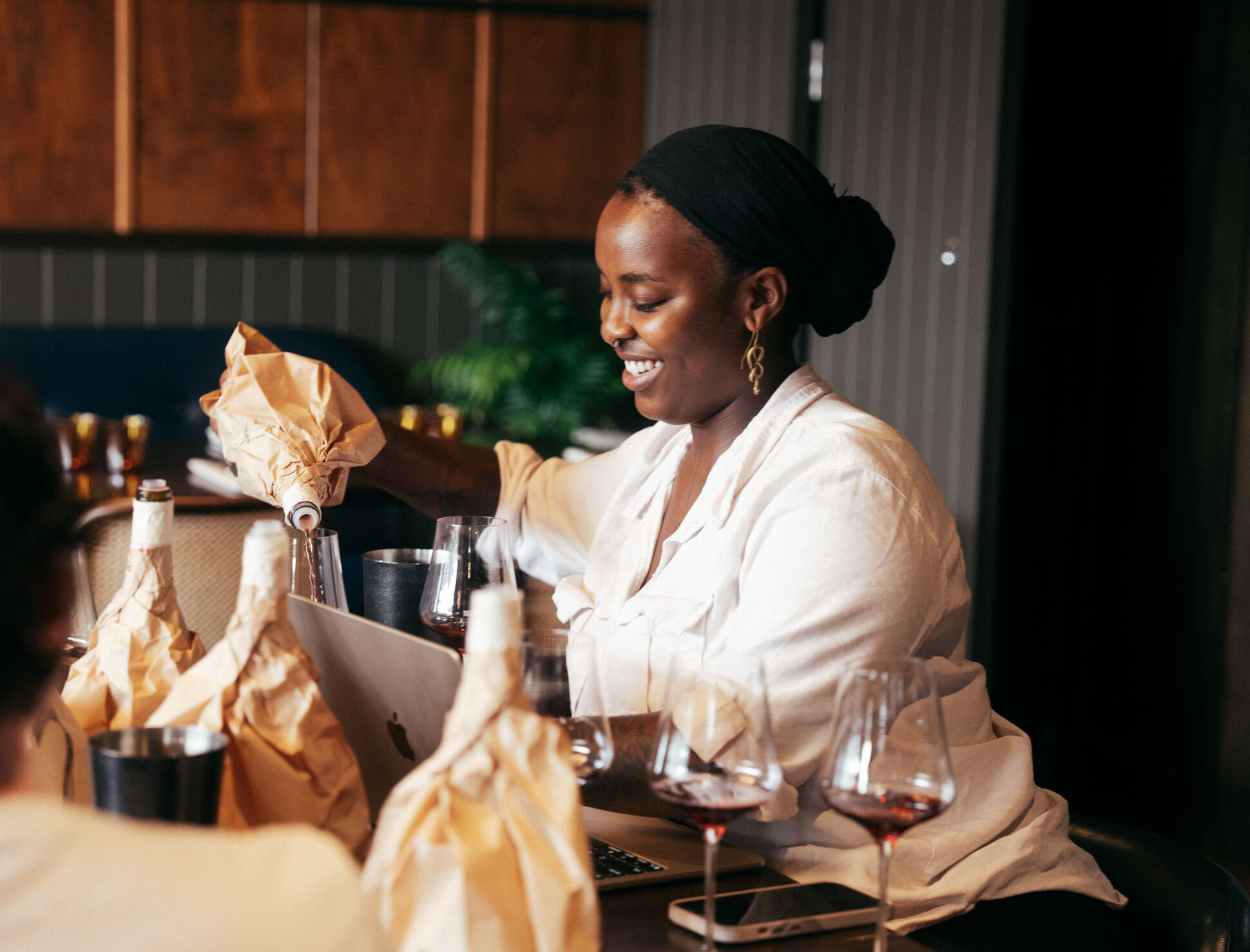
Above: Jordan Veltheer. Opposite: Sez Robinson.
Robinson agreed with Veltheer on the the subject of structure, and argued that this made the wines far more food-friendly than many would assume. “I think it’s nice to have that structure,” she said. “Everyone thinks that the technique makes very ‘Nouveau’ styles – and you’re not necessarily thinking of food with cab-mac wines, right? Even the way people have treated Beaujolais Nouveau – it’s like, ‘I’m going to go and run a half-marathon and get drunk all the way through’.” (Robinson was referring here to the annual Marathon International du Beaujolais – which takes place in the region directly after the year’s Beaujolais Nouveau is officially released – in which runners are encouraged by the organisers to stop along the route and sample the local wines.) “But when I was looking at these, there were most definitely times when I was like, ‘You know what? This, and some pork belly ramen.’ Or, ‘This, and ooh, some lamb shanks.’ You could take these wines and those pairings very seriously.”
“It was really fun to see people experimenting – trying to make serious wine with carbonic maceration, but also trying to make fun wines with whole-bunch.”
Robinson added that there was an approachability to the wines that showed whole-bunch characteristics in the line-up – one that acted as something of a mirror to the more-serious nature of the overtly carbonic wines. “I feel like we’ve all had experiences with whole-bunch reds where you’re like, ‘Girl, this wine is just unripe – it’s not good, and you’ve just said that it’s whole-bunch as a way to circumnavigate the fact that maybe you’ve picked a little bit too early’,” she said. “But in this line-up, there were definitely times where I saw that the herbaceous note actually added a little bit of salt and pepper into the wine – it’s not trying to hide a mistake that was made prior to this influence being in the wine. So it was really fun to see people experimenting – trying to make serious wine with carbonic maceration, but also trying to make fun wines with whole-bunch. No-one was trying to do one a ‘traditional’ cab-mac or whole-bunch – it’s just like, ‘What works for us, in our winery? How can we experiment and have fun, but still make wine that goes with food?’”
Above: Luke Carlin. Opposite: Hayley Farquar.
For Farquar, the line-up demonstrated the usefulness of these techniques to make more easy-going wines from grape varieties that are traditionally turned into structured or heavy reds. “I thought that there were some interesting examples of darker varieties, where the cab-mac was really showing some of those lighter fruit characters – which made the wine a lot more approachable,” she said. “Something that’s tricky for younger drinkers at the moment is that they don’t want a lot of that older-style big Barossa shirazes or Bordeaux blends – it’s just not what they want to drink. So it was an interesting perspective on some of those shirazes that we saw in here, or the Bordeaux varieties that had a bit of that cab-mac and a bit of that whole-bunch – they were a bit lighter on their feet and showed a bit more elegance.”
“It was an interesting perspective on some of those shirazes that we saw in here, or the Bordeaux varieties – they were a bit lighter on their feet and showed a bit more elegance.”
Gillespie agreed, and added that carbonic maceration and whole-bunch fermentation might also be opportunities for producers to differentiate their wines from regional norms. “Using these kind of styles is what’s going to make your wine stand out in your region as well,” they said. “You can adopt that cab-mac or a little bit of whole-bunch just to make yourself a bit different from all the other Barossa Valley boys.”
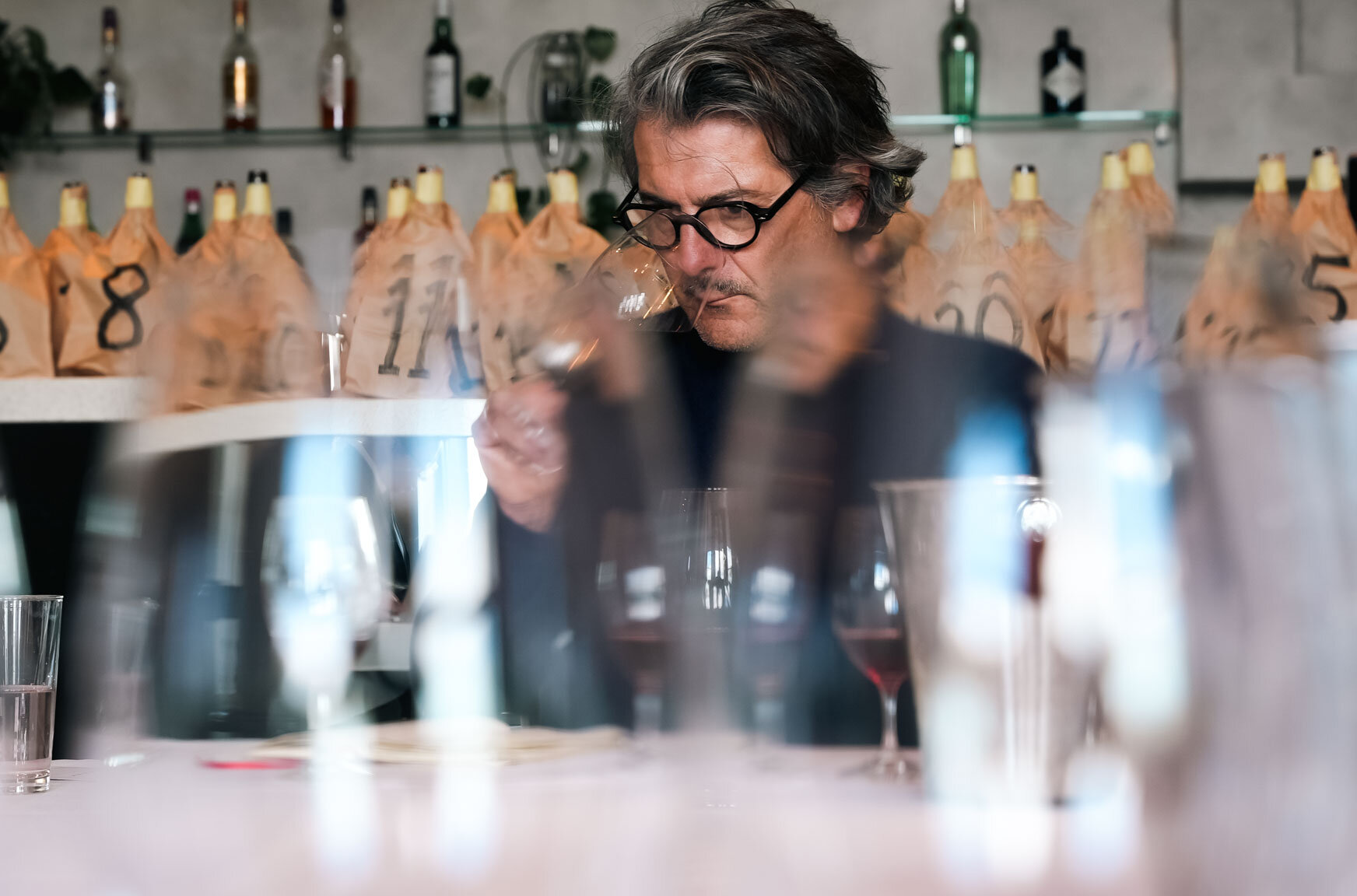
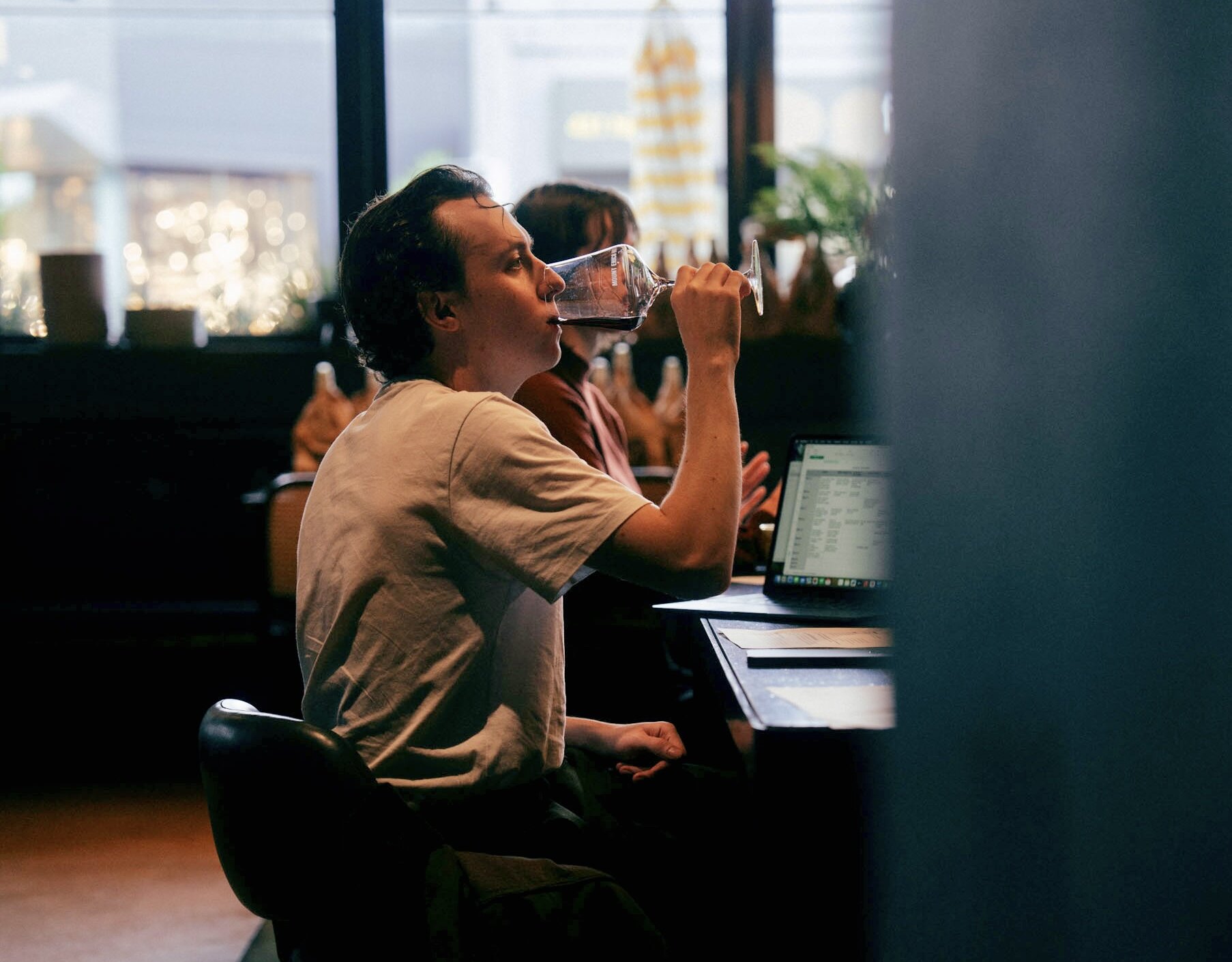
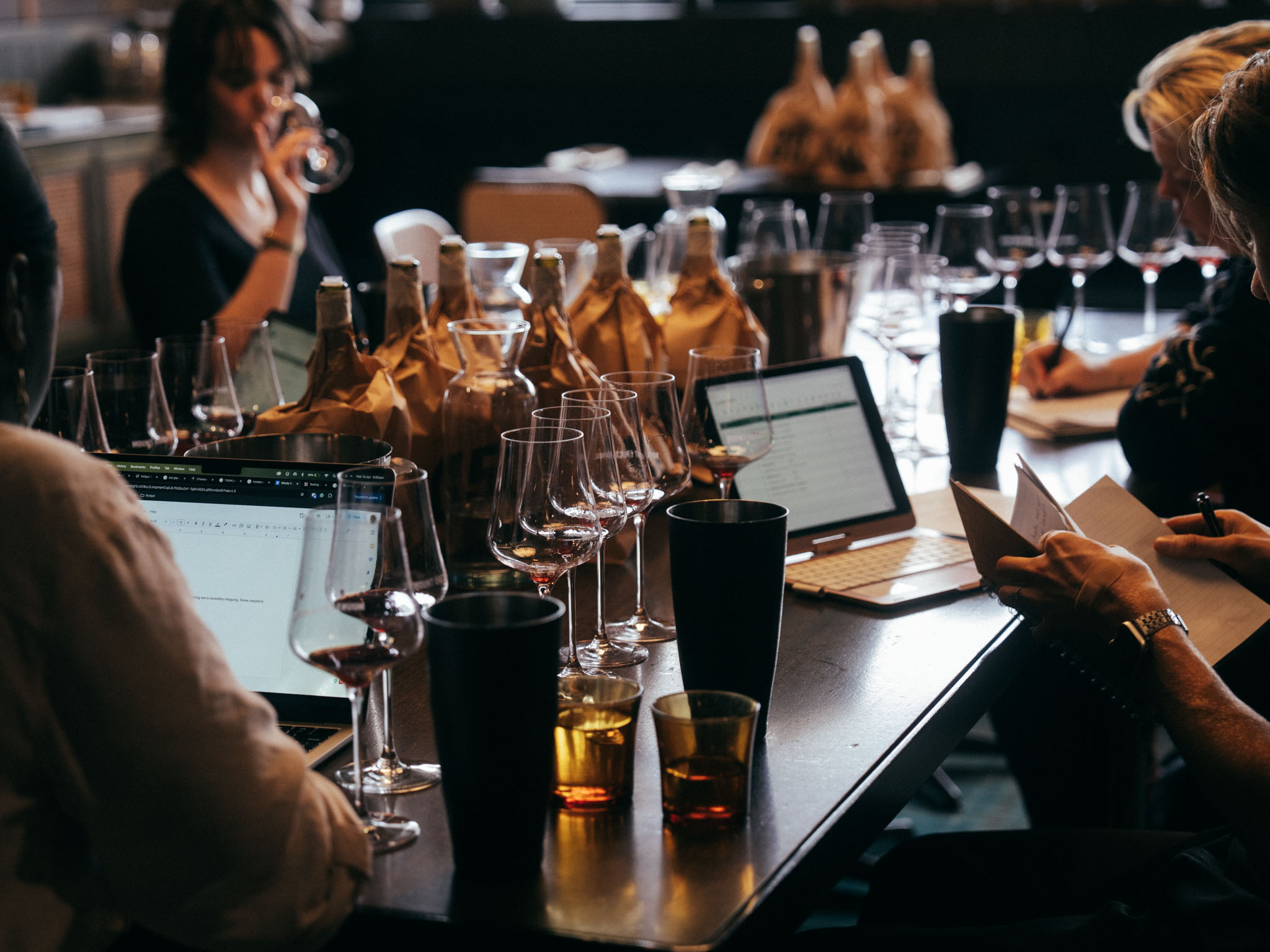
Above and opposite: Our panel in action at the Mount Erica Hotel, Prahran (Melbourne). All wines sampled ‘blind’.
Carlin argued that this same approachability meant that the techniques might also be useful to introduce drinkers to varieties that they hadn’t heard of. “I feel like it can be a technique to encourage people to try something different as well – just because how it presents itself on the nose or how it looks in the glass can be completely different to how it hits your palate,” he said. “You’re like, ‘Whoa, this smells very floral and fruity and light,’ and then you try it and you think, ‘It’s pretty savoury, actually – it’s very structured, very gastronomic’. If you’re familiar with other wines made from these techniques, you can approach a new wine a little bit more easily. And then when you get more savouriness on the palate, you can be like, ‘Oh, that’s actually okay – I can deal with that. Yeah, I can have a steak with that’.”
“Yes, some of the wines were a little bit green, but they were actually quite cool and quite different. As long as it’s in balance – it can be really green, but then if it’s backed up with some other flavours to create a sort of stepladder of flavour, it can work quite well.”
The subject of savouriness in these wines brought up the topic of faults and flaws – especially ‘green’ notes given by methoxypyrazines in the stems. “I definitely saw a lot of green today, where the bunches were just not quite lignified enough to get that real dank, forest floor kind of mushroom character for structure,” Gillespie said. “It’s all just green – green and white peppers – and a little too early.” Veltheer replied, “That being said, I think it can work in some wines – it can contrast.” Layton added, “Some of the cabernet-based wines were whole-bunchy – and yes, they were a little bit green, and showed pyrazines, but they were actually quite cool and quite different. As long as it’s in balance – it can be really green, but then if it’s backed up with some other flavours to create a sort of stepladder of flavour, it can work quite well. It feels like those green characteristics can be good building blocks – a bit more of that Amaro kind of note can actually be very lovely.” Gillespie countered, “I do like seeing a little bit – a little bit is fun – but too much is gross. It’s not really palatable, and then the structure kind of falls apart as well. There’s nothing else to back it up – no tightness, no berry juiciness, because they’ve picked at the wrong time.”
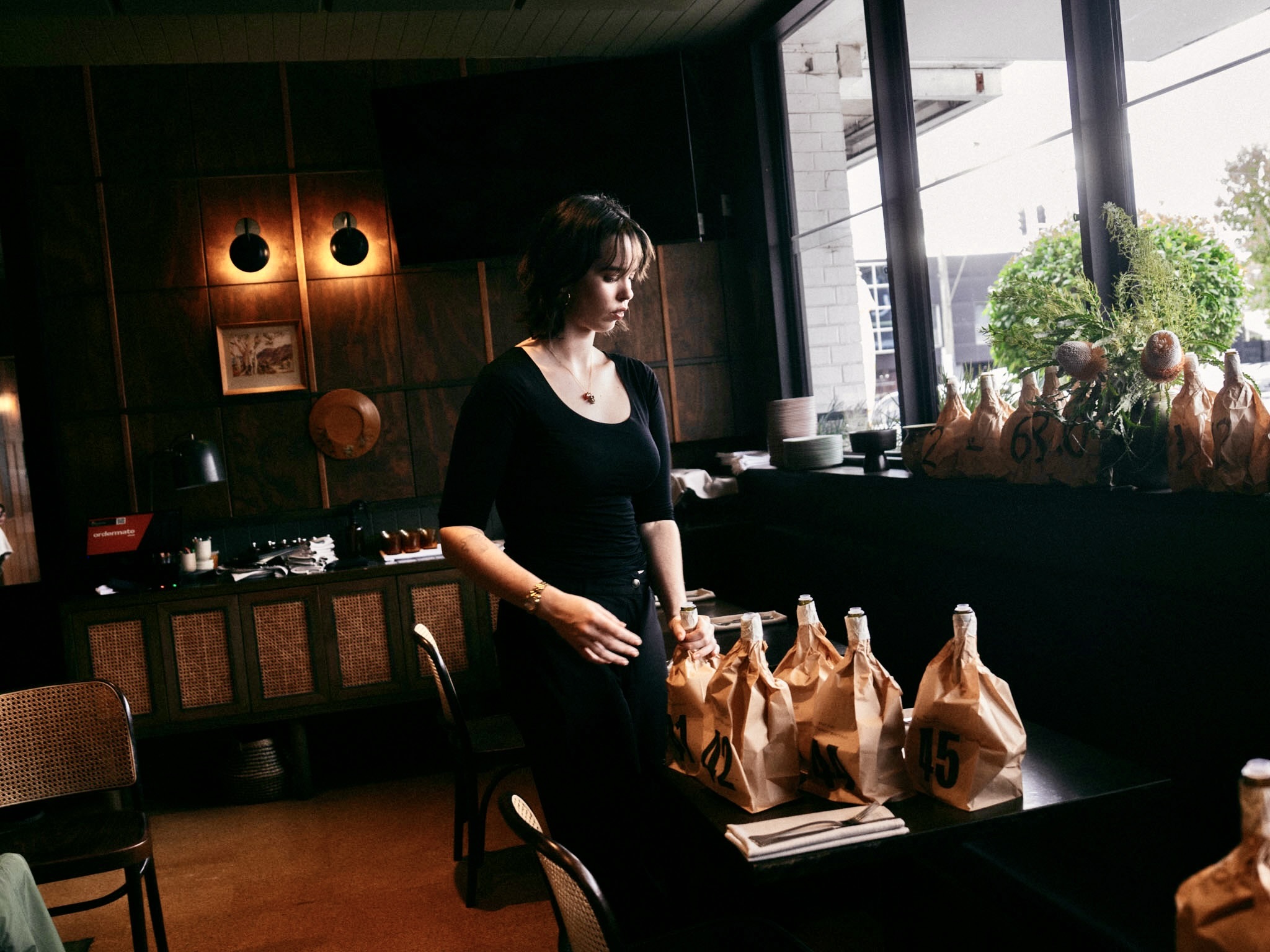
Above and opposite: Scenes from our tasting at the Mount Erica Hotel, Prahran (Melbourne).
Carlin said that while he was more forgiving of faults and flaws in overtly carbonic wines, he had less patience for them in more whole-bunch influenced wines, which usually come with a higher price tag. “They’re trying to do something completely different,” he said. “With the cab-mac wines, I’m thinking, ‘If I was out, would I be having this with my friends, in that kind of price range – would this be what I would want?’ But with the stemmier wines, I’d fully pay a bit more for them – but I would expect different things from them. I was trying not to compare the two, because you can look over some of the faults of the Nouveau styles – but with the stemmier styles, where they’re trying to be a bit more serious, that’s not something you can really forgive as much, because they’re supposed to be drunk with food, generally.”
“Yes, some of the wines were a little bit green, but they were actually quite cool and quite different. As long as it’s in balance – it can be really green, but then if it’s backed up with some other flavours to create a sort of stepladder of flavour, it can work quite well.”
Veltheer agreed with Carlin on the idea that overtly carbonic wines are best approached with a little more generosity from tasters in terms of potential faults or flaws: “I feel like carbonic wines are a category where we can be a bit more loose,” he said. “We’re not taking them that seriously. We’re not dissecting them like we would dissect a really nice pinot and say, ‘Ooh, there’s a bit of volatile acidity’, or ‘Ooh, there’s a bit of greenness in it’. With these kind of wines, you’ve just got to let it go and say, ‘Yeah, that adds a bit of something to the wine, doesn’t it? Yeah, stick it in the fridge’.” He added that the most important thing was not whether or not individual wines were successful, but that the wines were all playing an important role in the dynamism of the Australian wine industry: “We’re playing with a style that has been written off so many times by the Old World – and here we are trying to enhance and improve upon it, which is really cool,” he said. “It’s cool and fun!”
The Panel
Sez Robinsongrew up in beautiful Aotearoa New Zealand before moving to Melbourne in 2023. With a passion for hospitality and a deep love for wine, she’s worked through pubs and restaurants around Melboume until finally settling at Cumulus Inc. on Flinders Lane. Here she works as a sommelier, guiding guests through food and wine of provenance.
After working in bars and restaurants in Scotland for seven years, Luke Carlin came to Australia where he started working at Yarraville’s Bar Romanée and two-hatted restaurant Navi as a senior bartender. While at Navi and Romanée he worked up through to the Wine & Spirit Education Trust (WSET) Level 3 Award in Wines, and he has since commenced study for the Level 4 Diploma in Wines. He has since left the bar and now works as junior Sommelier under Bonnie Spain at Navi, whose wine list was recently awarded three glasses at the Australian Wine List of the Year Awards.
Hayley Farquar currently works as a bar supervisor and wine merchant at City Wine Shop and The European. She possesses an Introductory Sommelier Certificate from the Court of Master Sommeliers, and is currently working towards her Level 3 Award in Wines from the Wine and Spirits Education Trust.
Jordan Veltheer has spent his entire working life around wine, from restaurants and retail to cellar doors, private appointment sales, and a vintage in the Yarra, covering every comer of the industry since he was nineteen. A Wine & Spirit Education Trust (WSET) Level 3 Award in Wines graduate, he runs Vino Champ, an Instagram wine education page dedicated to Australian wine, and Club Vino, a monthly social club helping everyday Australians learn how to navigate and buy better wine. His passion is Australian wine, full stop, and he is on a mission to tell its story.
Blaire Gillespie is a Queensland hospitality veteran of seventeen years, wearing many hats including venue management, off- and on-premise wine retail, chef, and owner/operator of a small suburban bistro. After closing their venue during COVID, they went to private contract cheffing, winding up in regional Queensland wineries and becoming curious about wine production. They went on to attend Charles Sturt University, enrolling in a Bachelor of Wine Business and getting their Wine & Spirit Education Trust (WSET) Level 2 Award in Wines (with distinction) and a forklift licence before moving to Melbourne, open for whatever the next chapter in the wine industry might be. They currently work as the manager at Natural Science Wine & Liquor in Blackburn, and spend most of their shifts converting pinot gris drinkers to grüner while waxing lyrical about the importance of supporting Australian wine.
Tony Layton is originally from the United Kingdom, where he was a publican at the age of twenty-one. After moving to Australia, he found a love of wine by doing harvest in Margaret River, then moved to Sydney and then Melbourne following this love of wine in the hospitality trade. Here he spent almost ten years working with The European Group across City Wine Shop, and was on the opening team at Siglo. He moved to the Yarra in 2011 after completing the Certified Sommelier Certificate from the Court of Master Sommeliers to work for Giant Steps. He worked for many brands and producers in the region before moving to Treasury Wine Estates in 2021. He now calls St. Huberts home, where he oversees the business whilst working as an ambassador across the portfolio and sells to high end restaurant groups. He possesses a Level 3 Award in Wines from the Wine and Spirits Education Trust and teaches the Level 2 Award internally at Treasury Wine Estates. He has recently done the Advanced Wine Assessment Course at the Australian Wine Research Institute, and has judged at the Melbourne Royal Wine Awards, the James Halliday Chardonnay & Cabernet Challenge, and some smaller regional shows.
GET FIRST ACCESS TO THE NEXT WINE ICONS – DELIVERED
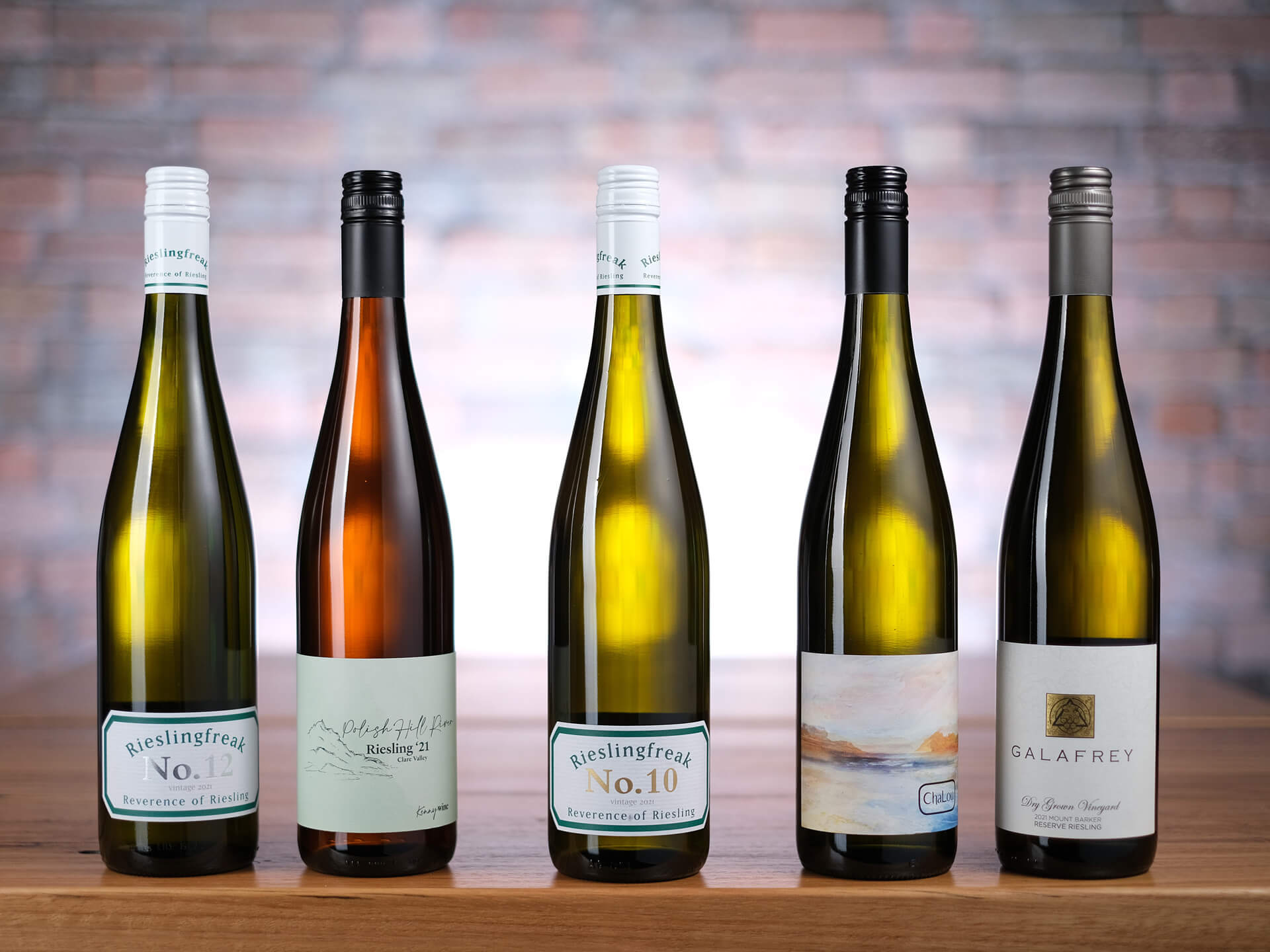
The long prophesised ‘riesling renaissance’ has been stalled for some time, never quite gaining the momentum that many had – perhaps hopefully – forecast. Well, in the hands of makers both experienced and somewhat newer to the scene, riesling is once again sharing more of the spotlight. The 2022 Young Gun of Wine Awards features Rieslingfreak, Kenny Wine, ChaLou and Galafrey, whose wines tell this story.
Today’s broad stylistic diversity of shiraz (or, syrah) in Australia is increasing at a rapid rate. The 2021 YGOW Awards Top 50 features Charlotte Dalton Wines, Minimum, White Gate Wine Co., The Stoke, Silent Noise, Weathercraft, Made by Monks, Dirt Candy and Wangolina, who are all championing new expressions of shiraz. Tasting notes appear at the end of the article.
Gippsland is currently seeing its stocks of young makers and vignerons swell, inspired both by the proof of its qualities from top makers and for the sheer scope of its untapped potential. The 2021 Young Gun of Wine Top 50 features A.R.C. Wines, Entropy and Moonlight Forest, who are all helping to shape Gippsland’s future. Tasting notes appear at the end of the article.
Subscribe to our newsletter
Young Gun of Wine is your shortcut to cutting edge wines, the places to go, and the people behind it all.
Subscribe to be amongst the first to know of our latest discoveries in wine.
We'll bring you the inside running from the growers, the makers, the wholesalers, the retailers and the sommeliers, too.