Tahbilk – Madills ‘1927 Vines’ Marsanne, Nagambie Lakes Laura Thompson & Andrew Distefano

Read more
  • Tahbilk – Madills ‘1927 Vines’ Marsanne, Nagambie Lakes

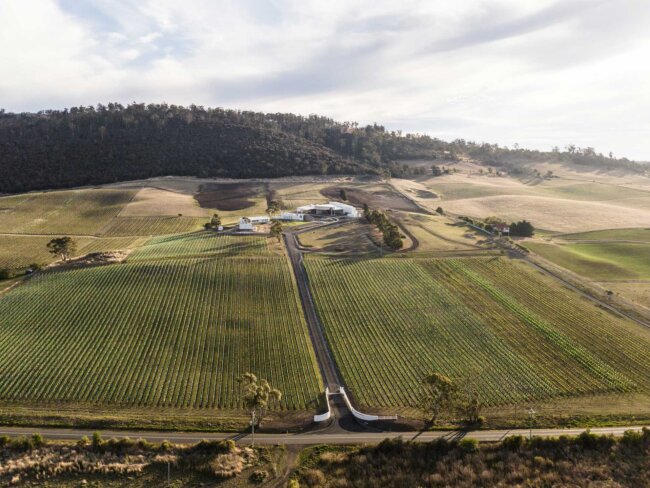
    In the heart of Nagambie Lakes, the 1927 Marsanne block at Tahbilk stands as a rare monument to vine endurance and adaptation. Nearly a century old, and still on own roots, these vines have witnessed generations of viticultural change while continuing to yield fruit that defines one of Australia’s most iconic white wines. This is a vineyard where living legacy meets progressive environmental stewardship – a seamless blending of deep heritage and sharp-eyed sustainability. Few vineyards globally can claim vines this old still in commercial production, and fewer still do so with such a clear-eyed vision for the future.
  • Skillogalee Estate, Clare Valley

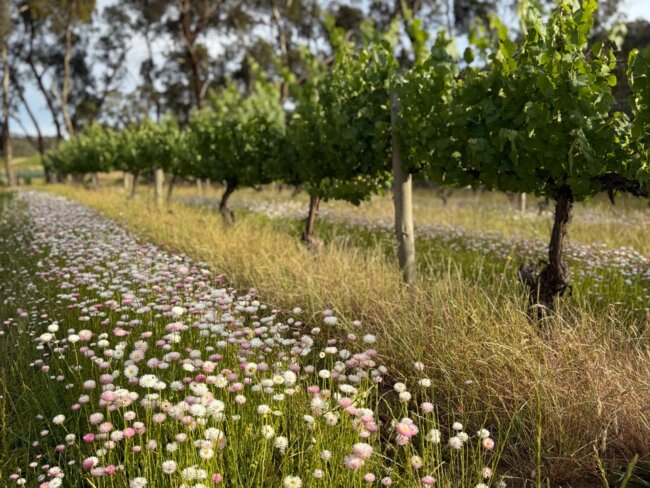
    Skillogalee Estate, planted in the 1970s in Clare Valley’s Skilly Valley subregion, spans 50 hectares of vines averaging 47 years, with some hitting 50. Riesling, shiraz, and cabernet sauvignon lead, joined by gewurztraminer, malbec, and grenache – all dry-grown on ancient dolomite soils. Kerri Thompson and Brendan Pudney drive a hands-on, sustainable approach, hand-pruning and hand-picking across contoured, east-facing slopes, ditching herbicides since 2021 for native grasses and composted marc. The terroir ripens fruit later than Clare’s norm, shaping wines with elegance, fine tannins, and piercing acidity. Thompson’s winemaking keeps it pure, yielding delicate, structured reds and vibrant whites. Skillogalee blends heritage vines with a biodiversity push – it’s Clare classicism meets ecological edge, balancing soil health and fruit intensity for a future-proofed patch of dirt.

  • Shaw & Smith – Balhannah Vineyard, Adelaide Hills

    Shaw & Smith’s Balhannah Vineyard, planted from 2002 to 2021 in the Adelaide Hills, stretches across 35 hectares, with vines averaging 12 years of age (the oldest at 22). Shiraz, sauvignon blanc, gamay, and riesling thrive here at 340–380 metres above sea level, organically managed by Murray Leake since 2021. Vines span north-south rows, dry-grown for shiraz, grazed by sheep in winter, and mulched with minimal tillage to nurture sandy loam over ironstone-rich clay. Leake’s team crafts complex, finely textured shiraz and crisp sauvignon blanc, reflecting the warmth of Balhannah’s pocket within the Onkaparinga Valley. The terroir, laced with quartz and ironstone, drives structured tannins and while detailed vineyard work – compost teas, strategic leaf-plucking, and clonal renewal – delivers vibrant fruit, marrying site precision with ecological balance on a scale few can match. It’s a site that speaks clearly of place, but just as loudly of intent – of a philosophy that puts soil health, vine balance and vineyard expression at the centre of the winemaking conversation.

  • Ricca Terra – Rudi Vineyard, Riverland

    Nestled in the Riverland’s ‘Golden Triangle,’ Ricca Terra’s Rudi Vineyard spans 16 hectares, planted by Ashley Ratcliff between 2004 and 2020 on tight terra rossa soils over limestone. Unlike the region’s typical sandy expanses, this site’s hungry earth pairs with the region’s warm, arid climate to bring definition to a diverse lineup of grenache blanc, fiano, vermentino, nero d’avola, albarino, tempranillo, trebbiano, greco, lagrein, montepulciano, sauvignon blanc, arinto, chardonnay, prosecco, and merlot – mostly planted on drought-tolerant Ruggeri rootstock. Ratcliff’s approach defies Riverland norms, employing hand-pruning and selective harvesting to prioritize fruit quality over yield. Annual cattle manure applications and cover crops enhance soil health, while olives mark a shift toward mixed horticulture. Grapes from here supply Ricca Terra’s extensive range and go to notable makers, including Kangarilla Road, Witches Falls, Little Victories, and Other Wine Co. This vineyard stands out in Australia’s wine scene for pioneering climate-adapted varieties and rootstocks, transforming a bulk-wine region into a hub of innovation. Blending tradition with forward-thinking viticulture, the Rudi Vineyard proves that the Riverland can punch above its weight.

  • Pressing Matters Vineyard, Tasmania

    Tucked into Tasmania’s Coal River Valley, the Pressing Matters Vineyard spans 20.6 hectares of volcanic limestone and black clay, with its vines – planted from 1980 to 2024 – now under Mark Hoey’s steady hand. Pinot noir (44 years deep), riesling, chardonnay, cabernet sauvignon and newbies such as shiraz and gamay grow on a mix of own-roots and rootstocks, yielding five separate riesling bottlings, three pinot noirs, a chardonnay, a cabernet sauvignon, and a sparkling pinot – all estate-grown. It’s a quiet innovator, protecting its legacy as a Tasmanian pioneer against the threat of a warming future.

  • Pizzini Wines – Whitfield Vineyard, King Valley

    Nestled in Victoria’s King Valley, Pizzini Wines’ Whitfield Vineyard unfurls across 81 hectares of river flats and amphitheater hills, a 1978 planting now entering its august middle age under Joel Pizzini (Head of Production) and David Morgan (Vineyard Manager). What started as riesling on own roots – slowly wiped out by phylloxera – has morphed into mosaic of Italian varieties on rootstock: sangiovese, nebbiolo, arneis, barbera, and more. In a region of 60-plus wineries, the savory reds and crisp whites carved out by the Whitfield Vineyard’s soil diversity and mountain-buffered climate stand out. The vineyard’s tale is one of a tobacco dynasty turned wine legacy – innovation grafted onto old roots for a new story.

  • Mount Horrocks Watervale Vineyard, Clare Valley

    Perched at 480 meters in the Clare Valley subregion it shares a name with, Mount Horrocks’ Watervale Vineyard spans 5.8 hectares of red loam and limestone. Its vines – planted between 2001 and 2020 – average 18 years of age, and are tense to by Clare Valley icon Stephanie Toole. Riesling, semillon, shiraz, cabernet sauvignon and nero d’Avola yield a tight lineup of estate-grown wines. In a region of 80-plus wineries famed for the flinty snap of their bone-dry rieslings, this high-altitude oasis – ACO-certified organic and biodynamic – chases finesse over force, a green island in a sea of conventionally managed vineyards.

  • Marri Wood Park Vineyard, Margaret River

    Nestled in Yallingup at the northern tip of Margaret River, Marri Wood Park Vineyard consists of 6.5 hectares of 30-year-old vines – a rugged standout in a region famous for its manicured wines. Certified biodynamic since 2008 (Demeter), vineyard management here is less about cosmic rituals and more about vigneron Julian Wright letting nature run the show – forgoing irrigation, fertilizers, and cover crops to mimic the wild bush that dominates the rest of his 40-hectare farm. Chenin, cabernet sauvignon, sauvignon blanc, and semillon grow here, fed only by rain, leaf litter, and animal droppings rather than any inputs from the conventional growers’ playbook. In a region of over 200 wineries where fewer than 10 hold certified biodynamic status, Marri Wood Park stands as a rare throwback to an unplugged style of farming.

Marri Wood Park Vineyard, Margaret River

The Next Wine Icons – Delivered

Each month, get 3 bottles of fresh discoveries.
We taste thousands to bring you the best.

Bookmark this job

Please sign in or create account as candidate to bookmark this job

Save this search

Please sign in or create account to save this search

create resume

Create Resume

Please sign in or create account as candidate to create a resume