Australia’s Best Pinot Noir & Shiraz Blends

Read more
  • Australia’s Best Pinot Noir & Shiraz Blends

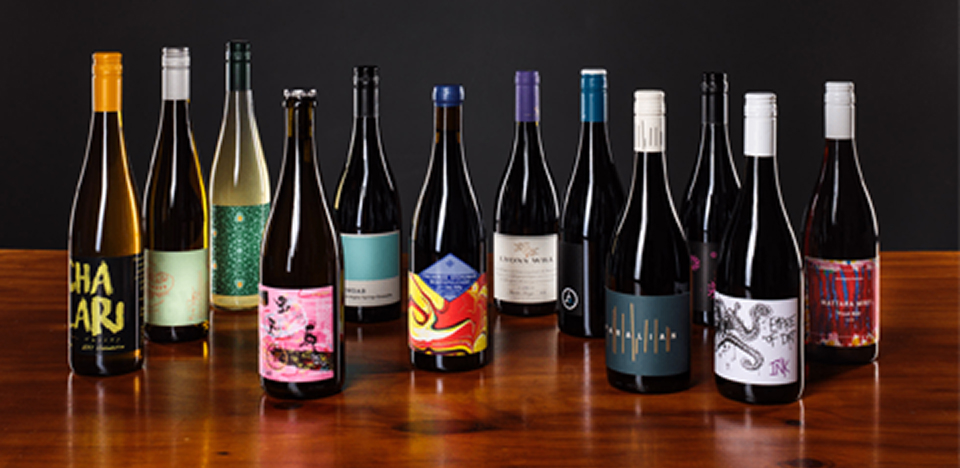
    While pinot noir and shiraz are not exactly polar opposites, the thought of blending the two varieties together may nonetheless seem shocking. It would certainly shock many in France, the ancestral home of both varieties, where there is little history of such a combination. However, in the 1940s and ’50s, one of Australia’s legendary winemakers, Maurice O’Shea, made arguably some of our greatest and most enduring wines by pairing these two varieties. As Australia’s wine lovers rediscover this vital history, makers from the staunchly traditional to the restlessly creative are exploring the possibilities inherent in this pairing – just the kind of situation that calls for a Deep Dive …

  • Australia’s Best Gamay

    Gamay – the sole red variety of Beaujolais – has had a slowish start in this country, but enthusiasm is rapidly growing. The potential for it to make engagingly distinctive wine is key, but the grape is also a lot less fickle than its more famous parent, pinot noir. Gamay’s flavours tend to be a bit fuller than pinot, with riper, more luscious forest berries and flashes of violets quite common. It’s a variety that holds acidity quite well (if picked at the right time), so it can be fresh, and it often has quite a bit of tannin, which is very apparent in the more serious and age-worthy bottlings. Like pinot noir, it can also be quite transparent in its reflection of terroir, with minerality often on show. With the Australian gamay landscape rapidly changing, we thought it an apt time to take another Deep Dive into Australian expressions of this joyous variety …

  • Eden Valley’s Best Riesling

    The Eden Valley is the birthplace of Australia’s own unique style of riesling – bone-dry and clean as a whistle. It’s also arguably the sole Australian cool-climate region to survive through the first half of the twentieth century, when brash fortified wines ruled the roost. Despite this historical significance, the Eden Valley’s riesling output – and often its reputation in the market – is eclipsed by its northern neighbour, the Clare Valley, home of a wildly popular regional style of riesling directly indebted to the Eden Valley’s pioneers. Where the Clare’s rieslings are often marked by the power and presence of their citrus flavours, Eden Valley rieslings offer subtlety and complexity, with high-toned floral aromas and a distinctive mineral edge. Is it time for Eden Valley’s rieslings to step out from the shadows? We took a Deep Dive to find out.

  • Australia’s Best Chenin Blanc

    Chenin blanc is the hero white variety of France’s Loire Valley, where it makes wines that range from vibrant and carefree sparkling numbers through bone-dry mineral powerhouse whites to lusciously sweet and practically immortal dessert wines. But the grape also excels outside of the France’s cool climate, being South Africa’s most important white variety – while also thriving in the heat of Western Australia’s Swan Valley, where a renaissance is in full swing. And it’s not just out west, either, with makers from South Australia also staking a claim on the variety, and exciting cooler-climate renditions starting to appear from Victoria and Tasmania. With the landscape having developed so much since our last look at chenin blanc, and autumn upon us, we thought it was an apt time to Deep Dive once again into this beguiling variety …

  • Tasmania’s Best Riesling

    Tasmania is ideal territory for cool-climate viticulture: a combination of relatively modest temperatures and abundant sunshine allow for ripe fruit flavours with thrilling natural acidity. It’s no surprise that sparkling wine was pursued there, but it’s also been seen as hallowed ground for aromatic whites, chief amongst them being riesling. And it was riesling that got the modern Tasmanian wine industry rolling with a modest crop in the early 1960s on a promontory in the Derwent River in suburban Hobart. Fast forward to today, and while riesling hasn’t exploded in volume like pinot noir and chardonnay, there are exciting expressions coming from passionate makers across the island state. So much so that we thought it was time to Deep Dive into this category once more …

  • Australia’s Best Marsanne, Roussanne, and Viognier

    This trinity of white varieties calls France’s Rhône Valley home, where they are traditionally made both as varietal wines and blends in various permutations. They’ve also flourished in Australia’s climates – and we’ve played an important role in keeping two of them – marsanne and viognier – both alive and on the global wine world’s radar. Australia now makes a delicious array of wines, whether blended or varietal, from these three grapes – most of them showing deep textural interest, and many of them seriously age-worthy despite their usually modest price tags. With so much to love about these three varieties, blended together or not, we thought it was time to take a Deep Dive.

  • Great Southern’s Best Riesling

    Great Southern is an aptly named region full of superlatives – not only Australia’s largest wine region by area, but also one of the world’s most remote, with 2,545 hectares of vineyards scattered across 1,713,100 hectares of land. And while it’s a latecomer as far as Australia’s wine regions go, it’s a pioneer of subregionality – not only was it the first Australian wine region to register an official subregion, but with five now on the books it remains at the top of the league table. With such a focus on the specifics of place, it’s perhaps no accident that riesling – a grape variety renowned for its ability to transmit a sense of terroir – is the leading white grape variety here. With a host of small makers producing brilliant rieslings despite the tyranny of distance, the region feels full of possibility – just the kind of situation that warrants a Deep Dive …

  • Australia’s Best Pét-Nat

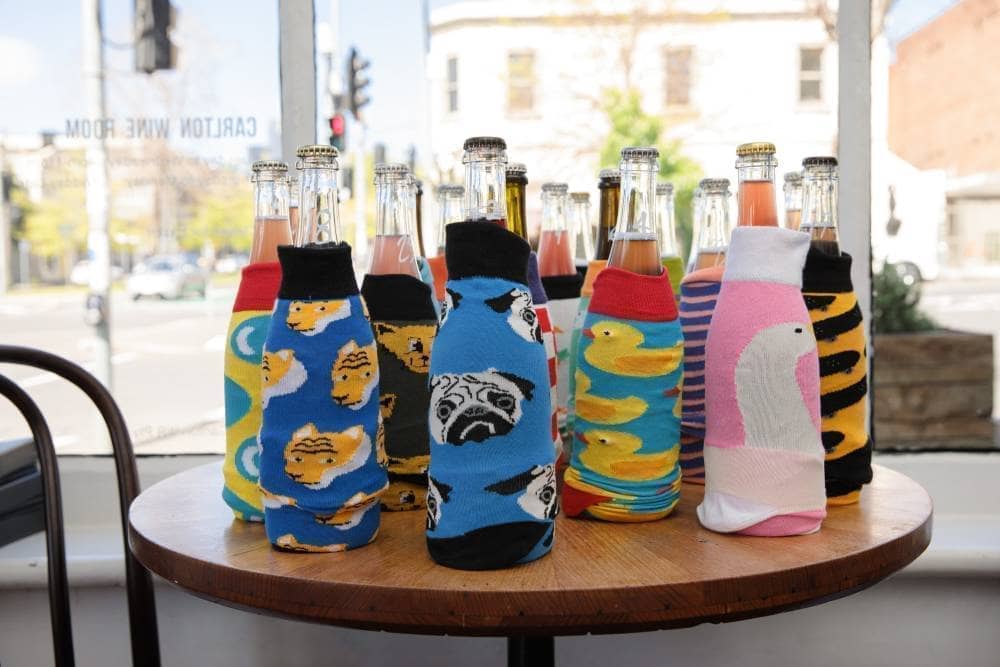
    When pét-nats emerged onto the Australian wine scene in the mid-2010s, they captivated the imagination of a generation of young wine drinkers – while also generating scorn from those wedded to the status quo. Although based on an ancient method of making sparkling wine, those wines felt very avant-garde: luridly coloured, and the cloudier the better, with charmingly irreverent labels. It was an archetype-smashing movement that reframed the possibilities for what wine could be – but many of those wines were also haphazard affairs, sometimes showing winemaking faults, and often volcanically eruptive. Fast-forward a decade, and the landscape is now completely different – the wines are no longer vinous hand-grenades, either literally or metaphorically. That change hasn’t come at the expense of diversity, though – there’s a pét-nat for every occasion, from park wine to fine dining. With a new generation of makers entering the pét-nat space  – and former stalwarts of the style leaving it – we thought it was time to take another Deep Dive.

Australia’s Best Pét-Nat

The Next Wine Icons – Delivered

Each month, get 3 bottles of fresh discoveries.
We taste thousands to bring you the best.

Bookmark this job

Please sign in or create account as candidate to bookmark this job

Save this search

Please sign in or create account to save this search

create resume

Create Resume

Please sign in or create account as candidate to create a resume