Grenache blanc is a recent arrival to Australia, but it has already generated serious interest from growers, winemakers, and, increasingly, wine consumers. A colour mutation of the better-known grenache variety, it thrives in much the same conditions that grenache does – making it a climate-apt variety that can generate fresh white wines in warmer parts of Australia. The wines themselves are compelling – the variety offers an interesting combination of fruity, spicy, floral and herbaceous notes, and it’s very malleable in the winery, responding to winemaker technique in a similar way to chardonnay – and often excellent value, too. With so much to love about this exciting new arrival, we thought it was time to take a Deep Dive …
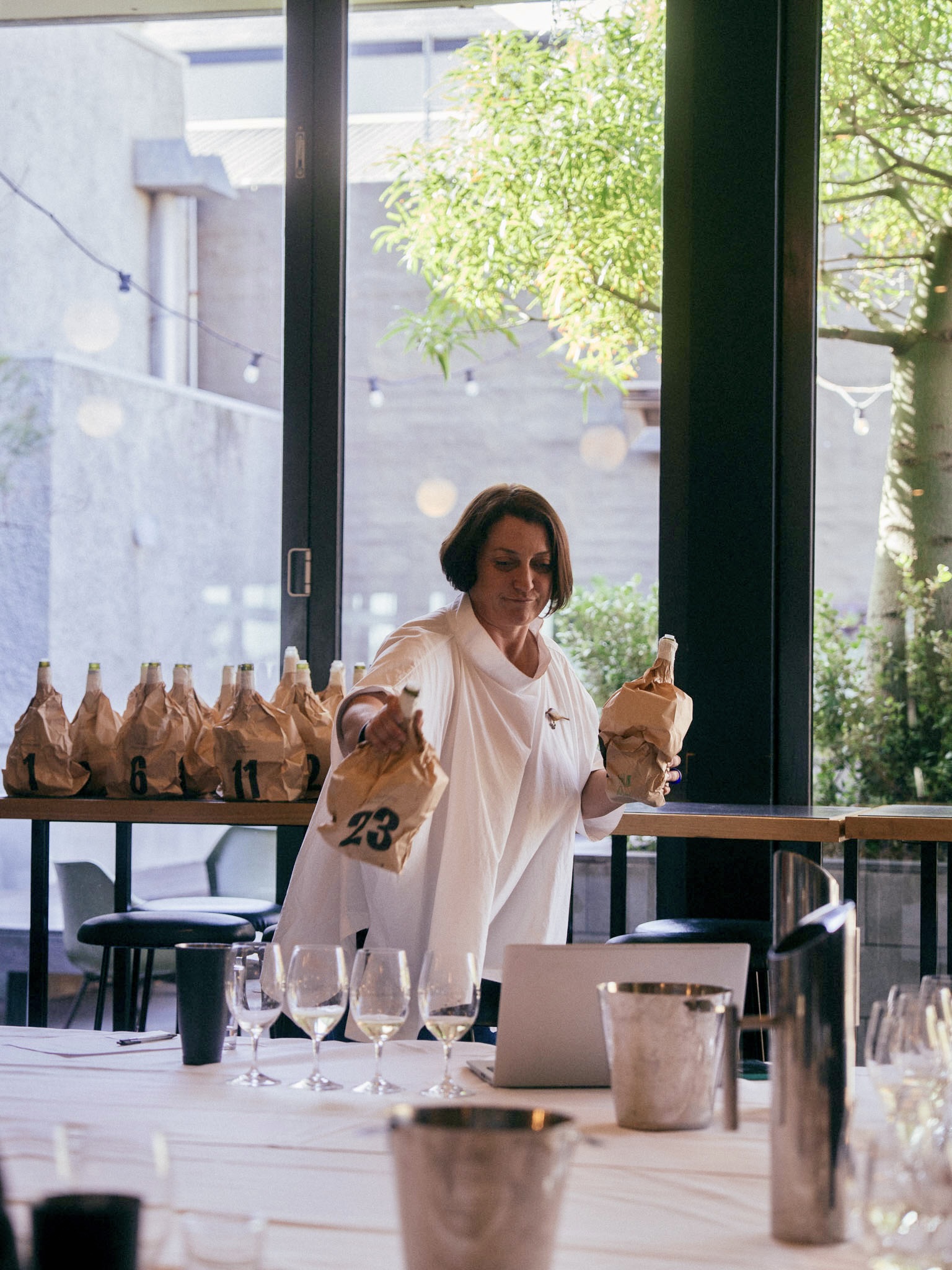
We gathered every example of Australian grenache blanc that we could find, and set our expert panel the task of finding the wines that compelled the most. All wines were tasted blind, and each panellist named their top six wines.
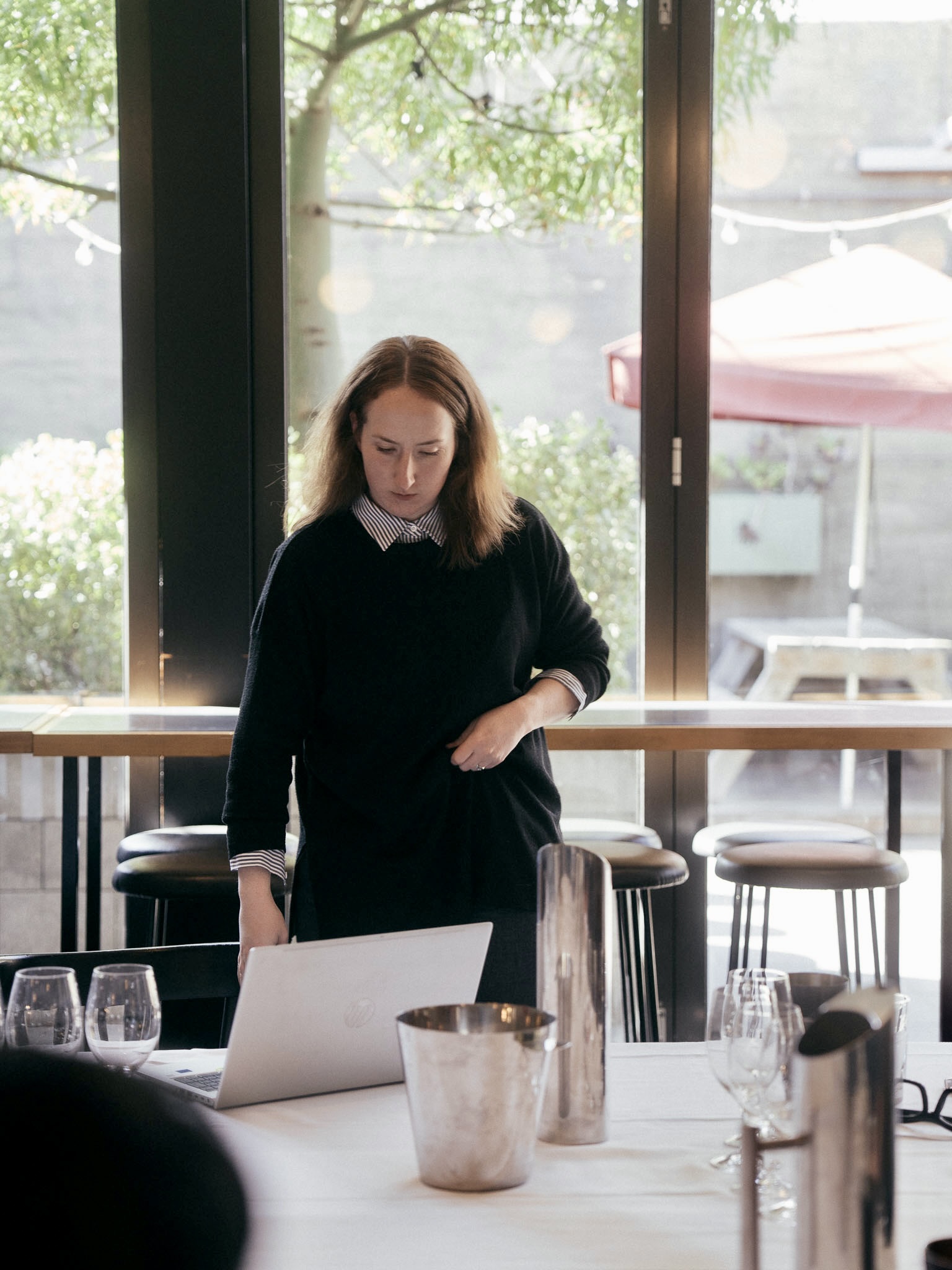
Our panel: Missy Jones, vigneron, Humis Vineyard; Ciarán Hudson, owner and winemaker, Beyond the Glass; Christina Kaigg-Hoxley, wine development manager, 67 Pall Mall Melbourne; Lawrence Scanlon, winemaker, Dirty Black Denim and Street Walking Panther; Sez Robinson, sommelier, Cumulus Inc.; Andrew Wyse, founder, Cardwell Cellars.
This wine appeared in the top six wines of the day for Jones, Kaigg-Hoxley, Robinson, Wyse, and Hudson. Jones described “a well-integrated nose full of pretty floral aromas – lemon blossom and zest, jasmine, lemongrass, white nectarine, cashew nut, and a delicate hint of struck flint. Bright and fresh on the palate, full of melon and lime notes, with a lovely balanced texture – lighter in weight, but with big flavour intensity. A note of grilled almonds and a tiny touch of parmesan rind funkiness emerge to add length and complexity to the finish. A really delightful lighter style of grenache blanc – one that has so many lovely elements to it.” Kaigg-Hoxley noted “some roasted nuts, apple blossom, red apple, toasted sesame, and roasted yellow peach. Quite textural – good concentration and intensity. This really comes into itself as it warms up in the glass. It develops a wonderful nutty moreishness to it – hazelnut nougat, buttered toast and red apple skin, and length that goes for days. Delicious – I can see how a chardonnay lover could be charmed by this one!” Robinson found “if you’re looking for a creamy, mouth-filling drop, look no further. I love that the lush nose hides how pointed the palate is. The acidity is striking, with a wet river stone minerality. The duality of this wine is a testament to how well this winemaker knows the Australian palate – a push and pull of richness versus restraint.”
2024 Eperosa Grenache Blanc, Barossa Valley $48 RRP
Robinson, Wyse, Scanlon, and Jones selected this wine among their top six from the blind tasting. Robinson said, “what an absolute standout. The spirit of el Marco de Jerez (the region formerly known as Sherry country) has touched this wine, giving it notes of caramelised apples, toasted almonds and warm brioche. And although the wine has an oxidative touch to it, the structure and acidity are still very much present. Think of baked tarts and warm brown sugar cookies – this wine retains tension while still giving ginger spice and everything nice. Perfect for our Jura lovers – why look for savagnin and topped-up Arbois chardonnay from overseas when we have winemakers perfecting grenache blanc like this at home?” Wyse noted “the nose leans toward the floral end of the variety, with orgeat sweetness of almond, orange, and blossoms. The palate opens fresh, saline and generous, then broadens through yellow stonefruit and crushed pears. Try with a Tomme or Ossau-Iraty to let the wine shine and unwind in the glass.” Scanlon found “seemed muted at first but with some time in the glass it was showing fruit in the citrus spectrum, but in a sweeter/richer form. So – lemon sorbet, sweet lime, mandarin and kumquat. It finished with this really cool creamy lees flavour that as it went on reminded me a lot of Brebirousse washed-rind cheese. Like many of these wines, it finished with some bitterness, but mixed with that cheesy lees thing, that bitterness was surprisingly delicious. I’m sure I’ve just made it sound heinous, but it rocked – fuck you.”
2025 Ricca Terra Grenache Blanc, Riverland $27 RRP
Hudson, Scanlon, Kaigg-Hoxley, and Wyse included this wine in their top six wines of the tasting. Hudson described “the nose is a beachside florist, full of white flowers – jasmine and honeysuckle – and salinity. On the palate, it offers a generous texture while still being moreish, silky and light. Tastes of fennel and underripe pineapple – savoury, with a small tropical bite.” Scanlon noted “pretty loud wine here. Everything dialled up. Immediately I’m hit with musk stick, sage, cumin and bay leaf, with fruit notes fleshy yellow peach, apricot, lime and Bickford’s lime cordial. It’s pretty full-throttle on the palate – there’s a rich, glycerol/fructose thing happening. Within that though, it’s quite complex. It finishes long with a flinty/matchstick note that comes together with orange zest acidity. It’s a bit alcohol-hot and bitter from the phenolics, but I’m left thinking that some buttery fish or fatty pork would balance that out. Would work really well at my restaurant, Magnolia.” Kaigg-Hoxley found “medium intensity, prickly, more tropical. Peach characters are more ripe too, some yellow apple, lots of yellow stone fruit, very good length, fleshy. Lovely refreshing acidity with a nice, fine chalky line of phenolics on the finish. A wonderful entry point to this variety.”
2025 Orbis Grenache Blanc, McLaren Vale $30 RRP
Scanlon, Kaigg-Hoxley, and Robinson chose this wine for their top six wines on the day. Scanlon described “you know when you bite into a perfect Granny Smith apple, your mouth instantly starts watering from the acid hit, then the sugar balances it and then the crunchy texture comes and it’s just awesome? Imagine an extra saline kick at the end, and that’s this wine. It’s nourishing, refreshing and hydrating. In fact, it reminds me of very good grüner veltliner – all green apple and acid. It’s excellent.” Kaigg-Hoxley noted “medium intensity, fresh stone fruit characters – this has a lot going for it. Yellow apple, fresh peach, yellow nectarine, orange blossom, super pretty on the nose and clean on the palate. Restraint on the palate in terms of texture – a little hint of almond nougat, a lovely touch of tangelo and blood orange, good length and intensity. Lovely and so pretty – this is a real gateway into these styles. I’m craving stracciatella, some freshly cut peaches, and a drizzle of olive oil just thinking about it!” Robinson said, “… and like a breath of fresh air, this wine steps through, light-footed and elegant. I immediately get sea spray and chalkiness. The palate is lean, and the fruit takes a step back to let the structure of the wine shine. Why pay a premium for Chablis when we have wines like this here at home?”
Jones and Hudson selected this wine among their top six picks from the blind tasting. Jones described “a touch of struck-match reduction on the nose tells you that this wine means business. Underneath, there’s ripe, almost topical fruits – almost-overripe nectarines, apricot conserve, fresh pineapple, creamy ripe Williams pear, lemon zest, and pink peppercorn. Really lovely balance between ripeness and freshness on the palate – silky, medium-to-heavy texture and viscous mouthfeel poised against vibrant acidity. Strong notes of grilled almonds and salted cashew nuts on the mid-palate suggest some serious lees work. Long, complex, juicy and robust – this is a warm-climate grenache blanc that isn’t afraid to show the work that has been put into it. Pair it with Manchego cheese, or maybe a creamy seafood dish.” Hudson noted “green mango and sea breeze on the nose. A supple but elegant palate, with a mild flintiness, offering crushed green apple skin and green tropical fruit – think green mango and Nashi pear. The gentle acid line plays a strong supporting role here.”
2023 Wild Duck Creek ‘Shoveler’ Grenache Blanc, Heathcote $40 RRP
Robinson, Kaigg-Hoxley, and Scanlon included this wine in their top six wines from the tasting. Robinson described “a perfect combination of warmth of fruit and linear structure – this wine is unlike any other. Unctuous fruit coats the mouth, with notes of green mango, yellow nectarine and fresh green apples. A caramel, almost confected note joins them together, and yet, on the palate this wine is incredibly bright. This winemaker has given typical grenache blanc flavours an Australian twist, and it was worth all of the hard work. Grab it off the shelves in dozens before I do!” Kaigg-Hoxley noted “overripe pineapple, dried mango, white flowers, gardenia, vanilla, some powdery elements, palate is quite moreish and a little chalky. Good concentration, medium bodied, textural with some fine, nutty elements on the finish. A rich and opulent expression that is weighty, but not blousy or overblown.” Scanlon said, “I wanted to throw this one in because I didn’t see much heavy oak handling, and I thought this one handled its oak well. It’s definitely a powerful wine, but unlike a lot of other wines in the lineup, it didn’t show any alcohol heat or glycerol richness. One for warm-climate chardonnay drinkers, but I think this would really find itself at home on a table next to a prawn and saffron bisque vinaigrette.”
Jones and Scanlon chose this wine for their top six wines of the day. Jones described “pale and delicate in the glass. Leads with floral musk stick aromas, followed by tinned peaches and apricots, barely-ripe pineapple rind, and mandarin oil. Follows through with a lovely palate of Nashi pear and Honeydew melon – very light and fresh, high-toned and vibrant, with a pop of zesty acidity that makes it stand out against the rest of the line-up. The balance here is impeccable – a lovely spritz of saline minerality cuts through the orchard-fruit dominated finish alongside that cleansing acidity. It’s very easy to drink – definitely the kind of wine that leaves you wanting more.” Scanlon noted “really interesting wine, this. All the components, palate and aromatically, are somewhat ‘toned down’ – yet it surprised me with its complexity. Full-ish weighted, with soft phenolic grip but the saline/citrus acidity cut through to leave it feeling incredibly balanced and soft. Just a really graceful wine that made me feel calm and nice.”
2025 Langmeil ‘Yabby Tale’ Grenache Blanc, Barossa Valley $25 RRP
Jones, Kaigg-Hoxley, and Robinson selected this wine among their top six wines from the blind tasting. Jones described it as “pale in colour. An interesting interplay of rich tropical fruit character and delicate florals on the nose – fresh pineapple, banana bell, just-ripe mango, honeysuckle, and star jasmine. That interplay carries on to the unctuous palate – there’s some evident glycerol that gives it roundness, but it’s still nice and fresh, almost racy as it moves past the mid-palate. A touch of minerality and the tiniest hint of pleasantly pithy bitterness emerge on the satisfyingly long finish. A delicate and pretty wine despite the richness of its fruit profile.” Kaigg-Hoxley noted “medium intensity, ripe honeydew melon, green apple, lovely yellow peach. On the nose really lovely and pleasant. A little glycerol, tinned white peach, not too confected but definitely leans almost tropical. Acidity helps to refresh a viscous palate, nice saline finish that reminds me of summers by the sea. Good, structure for this comes from lees and that moreish finish and palate profile.” Robinson said, “with a nose that reminds you of white silk and almond oil, it’s hard not to love this wine. The acidity doesn’t sit high, but still has a white peach bite and river stone minerality. As it warms up, notes of yellow peach and nectarine come through strongly. A bit too easy to drink, I’d stock up for the long winter nights ahead.”
Robinson and Wyse selected this wine among their top six wines from the tasting. Robinson described “a wine that showcases how much grenache blanc has to give, and how perfectly suited Australia is to showcase that. Florals come through strongly to begin with, fresh honeysuckle and a dash of jasmine waft in, but the citrus is what I find so compelling. Orange oil, lemon pith and lime rind all come together to create a luscious belly within this wine. They add body and lift, creating a well rounded and incredibly interesting drop. A touch of green apple and herbs round it out. I can’t decide between keeping this one to myself or telling everyone about it!” Wyse noted “the nose is rich and lightly nutty, with a beautiful hazelnut edge giving warmth and breadth. On the palate, the attack is fresh and saline, opening into generous pineapple juice and mandarin orange, accented by ribbons of shredded basil and spirals of orange zest. The finish is very long and pretty, hints of sencha green tea and a fine veil of mineral gravel. Mussels with garlic or chorizo verde would be excellent company.”
Kaigg-Hoxley included this wine in her top six picks from the blind tasting, describing “medium intensity on the nose, more floral and quite pretty – yellow apple, apple blossom, some white peach and nectarine, more stone fruit blossom. The palate is really ripe, but balanced by refreshing acidity. The fruit here – tinned apples, white nectarine flesh, fresh notes of tangerine zest – is lovely in its ripeness but not overly confected. Gently bitter phenolic notes of apricot kernel and toasted almond emerge. This is lovely – it tastes of both summer and autumn at the same time, and it offers almost a hint of the roasted pork that I want to enjoy with it. It’s structured, but with a wonderful generosity of fruit, which helps to keep those phenolics justified and integrated. The beauty of this wine is the way that it toes the line between structured and fleshy, ripeness and a pleasant bitterness – very well done.”
Wyse chose this wine for his top six wines on the day, noting “a gorgeous, expressive nose led by almond paste and blossom, with lifted citrus flowers and a pure stonefruit perfume rising behind. It is immediately open and inviting, yet finely composed. The palate arrives precise and graceful, carrying chamomile, basil and mandarin through a line of lithe, beautifully judged acidity. Crushed quartz gives mineral shape, while cold-pressed whole lemon and green olive bring bitterness, oil and savour. Excellent length, tapering slowly with clarity and poise. This would be superb with grilled snapper and herb oil, raw kingfish with citrus and fennel, roast chicken with olives, zucchini flowers, or young sheep’s milk cheeses.”
2025 Ricca Terra ‘Una Vita’ Grenache Blanc, Riverland $100 RRP
Hudson chose this wine for his top six wines of the day, describing “the nose boasts of cantaloupe, with a little green note of fennel-top and dill. A generous palate, with restraint shown on the oak application – silky and textured. Savoury fondue, spiced with a little toasted vanilla and roasted almond, a kiss of melon again, Nashi pear and lime rind. You could pair this with a wide range of foods, but I’m imagining it with a rich cheese toastie – any extras you might want to add on might work.”
Hudson selected this wine among his top six wines from the blind tasting, describing “the nose is rich with honeyed, sun-dried melon character, and a cool floral note of jasmine in bloom carried by the breeze. The mouth is wildly refreshing for the textural interest also on offer – toasted pine nuts shade into a little tart bite. Squeaky clean, with a crisp finish showing green mango and lime skin, maybe even a little well-placed pith. This would be perfect with a cheese board of Comté, Beaufort or Fontina – if you’re missing the quince paste, this wine’s characteristics could almost get you across the line!”
Scanlon chose this wine for his top six picks from the tasting, noting “remaining in the fresher/more vibrant cool climate spectrum of wine here. Green apple, tart lime cordial, a bit of banana esters those little hard candy banana things. Also a quinine/tonic water effervescence and sea spray salinity. I was expecting the palate to be quite linear and acid driven but was surprised by the generosity. Medium bodied at most, showing nectarine and apricots leaning more to the underripe version of those. Fresh crunchy pear, lemon pith and an underripe quince note lingered with a sumac spice, umami/msg and light briny acid finish. That briney/salty/spicy finish left me salivating, craving another glass. Hell yeah.”
2024 The Lost Plot Grenache Blanc, Heathcote $32 RRP
Jones selected this wine among her top six wines on the day, describing it as “pale in the glass, and a little subdued in its aromas at first – you have to give this a good swirl before it speaks to you. When it does, it has plenty to say – pretty fresh and floral-tinged aromas of candied lemon zest, honeysuckle, and tart pineapple emerge. It’s delicate and fresh on the palate, with a lovely zesty acidity that nicely balances its brightly honeyed fruit profile. The finish is long, framed by an appealing green sugar-snap pea note. Sharing this wine with friends would be a delightful way to waste a lazy afternoon.”
Wyse included this wine in his top six wines from the blind tasting, describing “unctuous stonefruit sits alongside lime zest and cucumber skin on the nose. The palate opens broad, carrying salty rock melon and dainty Persian cucumbers, before licks of rosemary and saltbush move through the middle with a touch of white pepper following behind. There is ample texture here, though freshness keeps the wine in line. Goat cheese tart or grilled octopus would suit it well.”
Hudson chose this wine for his top six wines of the day, noting “a heavily savoury nose – raw zucchini, jasmine, and ocean breeze. Gooseberries on the palate – flinty and mildly herbaceous. The texture here is a lengthy and interesting journey – very vegetal and green, but still mouthfilling, waxy, and moreish. There’s a super-gentle greenness to the finish finish – a poke of dill and fennel tops – softly eased in by the waxiness. Pair it with a spicy and beanshoot-heavy Pad Thai.”
The backstory
Grenache blanc is a recent arrival to Australia, but it has already generated serious interest from growers, winemakers, and, increasingly, wine consumers. A colour mutation of the better-known grenache variety, it thrives in much the same conditions that grenache does – making it a climate-apt variety that can generate fresh white wines in warmer parts of Australia. The wines themselves are compelling – the variety offers an interesting combination of fruity, spicy, floral and herbaceous notes, and it’s very malleable in the winery, responding to winemaker technique in a similar way to chardonnay – and often excellent value, too.
As pinot gris/grigio is to pinot noir, grenache blanc is a colour mutation of grenache noir (which usually goes without the ‘noir’). The mutation that made these grenache grapes white didn’t come from a nefarious process of genetic manipulation, but instead emerged naturally in the vineyard. As cuttings from grenache vines were propagated over centuries, small errors occurred in the DNA of some of these cuttings that led to the resulting new plants not producing the colour chemicals known as anthocyanins in their berries. (For this reason, grapevine scientists treat grenache blanc not as its own variety, but as a ‘clone’ of regular grenache.) A similar mutation centuries ago likewise yielded the pink-skinned mutation known as grenache gris.
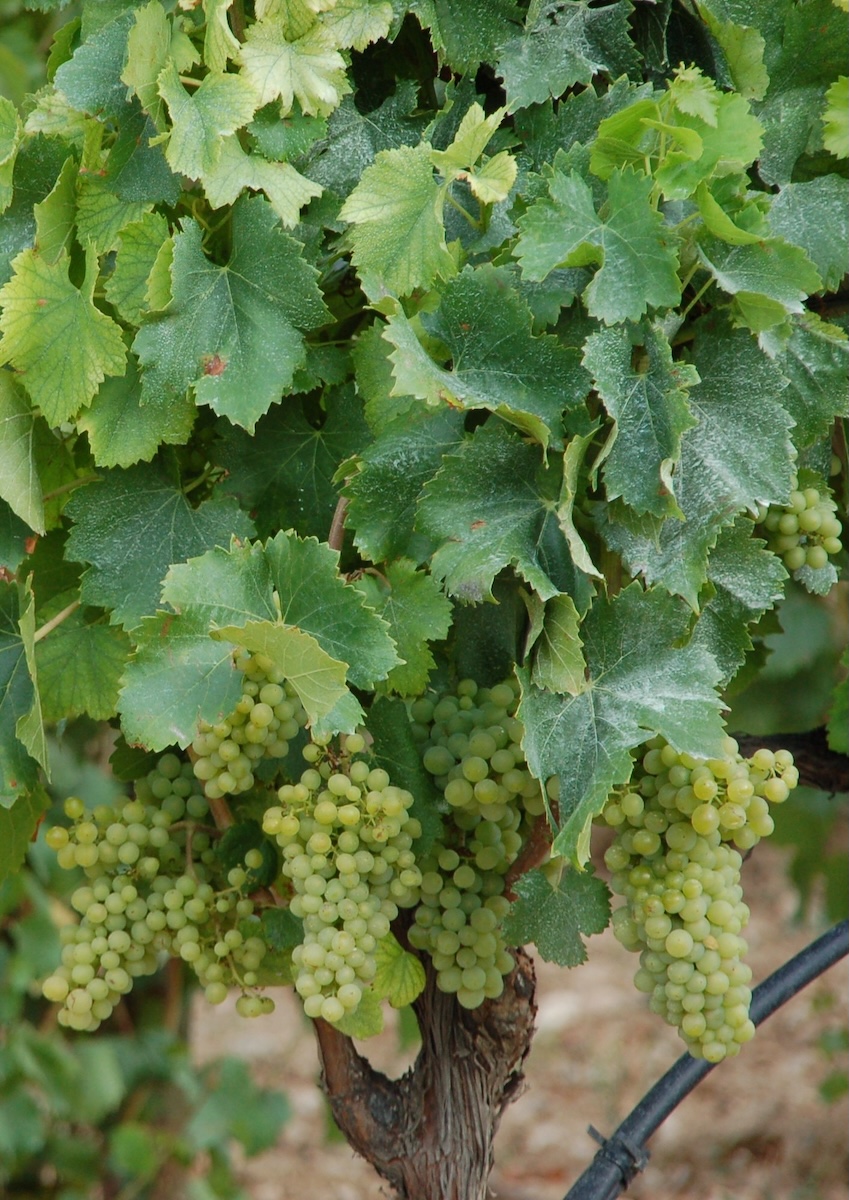
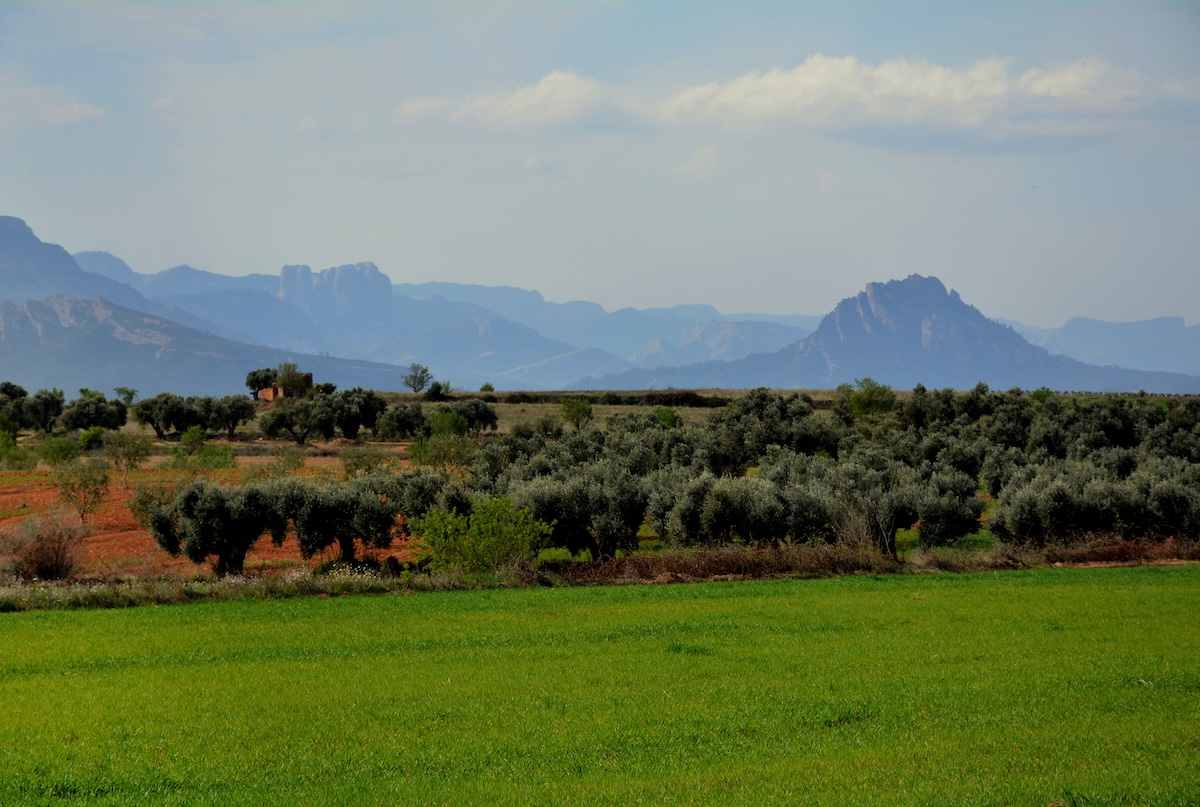
Opposite: Grenache blanc on the vine. Above: The landscape of the Terra Alta region in Catalunya, Spain – the likely ancestral home of the white grenache colour mutation. (Photo by Angela Llop, CC BY-SA 2.0.)
The exact age and origin of grenache is a subject that has been much debated – with no clear answers owing to the paucity of textual evidence – but contemporary scholarship indicates that Spain is its likely birthplace, owing to the number of different clones (including colour mutations) that can be found there. In the case of grenache blanc, it’s probable that the mutation first appeared in or near the Terra Alta region of Catalunya, Spain – a short drive south-west of Barcelona – in the mid- to late 1300s. From here it spread to the south of what is now France, finding a second home in the Mediterranean basin – stretching from the Roussillon region across to the the southern half of the Rhône Valley. France accounts for the lion’s share of the world’s plantings of the variety, sporting 5,896 hectares (in 2018) compared to Spain’s 2,061 hectares (in 2022). There is very little of it planted elsewhere in the world, including Australia – but that’s very likely to change.
Grenache blanc in the old world
While Australian wine consumers can purchase varietally labelled bottles of grenache blanc with relative ease, the variety’s traditional uses in France have been as a component in multi-variety white blends, such as that of white Châteauneuf-du-Pape. “I almost feel like it’s a safe early pick for them,” says winemaker Ciarán Hudson of Beyond the Glass, who has extensive vintage experience in the Southern Rhône appellation of Ventoux at Clos de Trias. “Not early early – but it’s before a lot of other stuff, and it’s picked riper in Australia. I think a lot of the phenolic ripeness comes later, and that’s what we rely on in Australia for the fruit-driven wines that that are single-variety. Whereas in France, all the characters are more restrained – and that’s partly because of when they’ve decided to pick, but also climate.” He adds, “Usually grenache blanc is just turbo-charged with minerality there – especially if you’re anywhere near the ocean.”
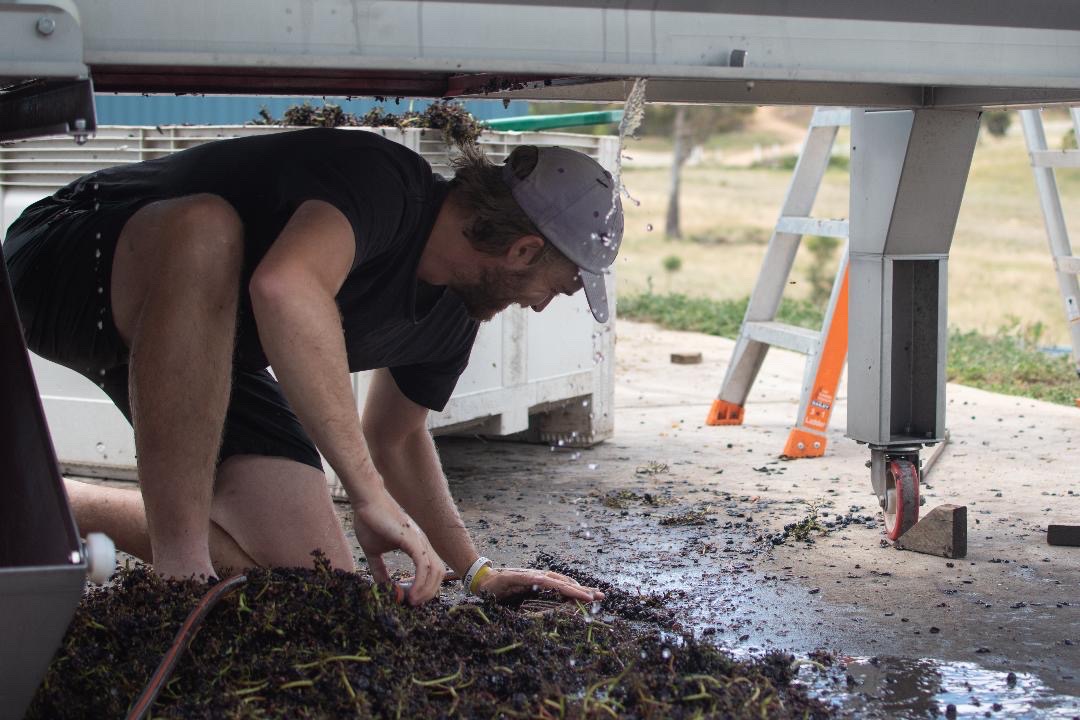
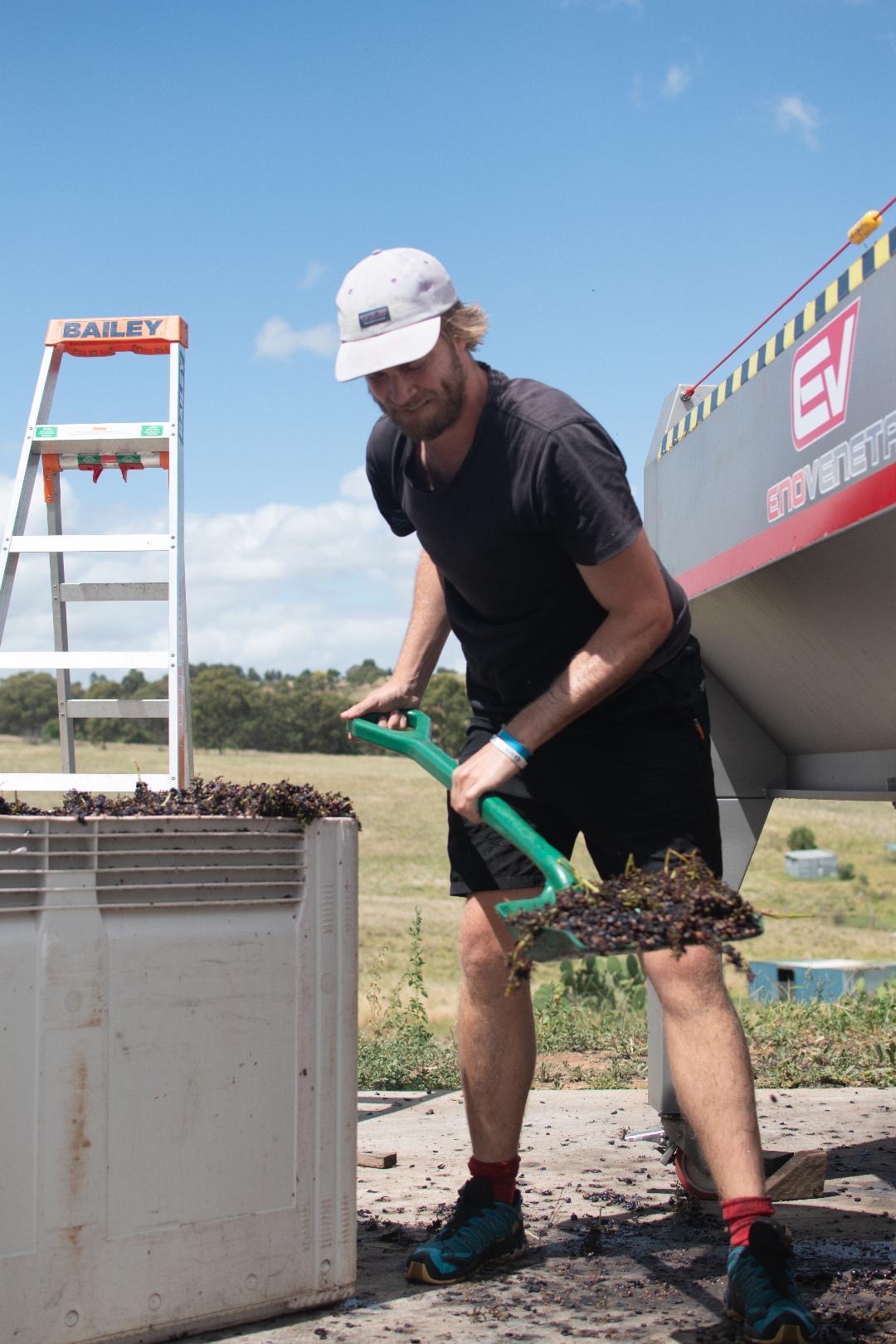
Above and opposite: Winemaker Ciarán Hudson of Beyond the Glass, who also does vintage work at Clos de Trias in Ventoux, Southern Rhône.
These earlier-picked grenache blanc wines are bright and fresh, but somewhat bland – “quite often it’s kind of boring,” Hudson says – and are therefore used as a blending component alongside wines made from other varieties such as marsanne, roussanne, bourbolenc and clairette, or used as a base wine for the radically transformative process of making ‘rancio sec’ wines in the Roussillon and Spain’s Terra Alta. (A small cadre of natural-oriented producers in the Roussillon are starting to make varietally labelled table wine examples of grenache blanc.) “It’s picked like that because they know it’s going to pad out something – be a part of something bigger,” Hudson says. “No one’s ever described to me like that before – but that’s what it has been treated as when I’ve seen people making it in France, and when we pick it ourselves at Clos de Trias as well.” Hudson argues that this traditional use comes down to the reliability of the variety – like grenache noir, grenache blanc is exceptionally hardy and crops generously – rather than because of any of its intrinsic characteristics. “That fruit itself is taken early, almost as a safety mechanism,” he says. “I’ve seen this regularly, actually – it’s like, ‘Nothing else has been picked this week. Let’s pick something. Let’s pick the grenache blanc block. It’s almost ready. It will be fine’.”
“In France, all the characters are more restrained – and that’s partly because of when they’ve decided to pick, but also climate. Usually grenache blanc is just turbo-charged with minerality there – especially if you’re anywhere near the ocean.”
That reliability makes it a useful foil to the more finicky marsanne and roussanne, which can rapidly lose acidity as they approach flavour ripeness: “You’re making a safe pick on acid as well, because often it’s blended with marsanne and roussanne, which are both not the best friends with acidity,” Hudson says. “As soon as they start getting phenolic ripeness, they pick the grenache blanc because they know that it’s not going to add nothing – however, they still taste the acid that they feel safe with.” For Hudson, this means that in order to understand why grenache blanc is used as a blending agent, you have to look at the context of the whole vineyard, not just this one variety. “You’ll be watching the vineyard grow and you’ll know early. ‘I’m going to struggle for acid this year,’ or ‘I’m going to struggle for phenolic ripeness’,” he says. “‘The season’s already cooling down and we haven’t picked yet. I’m in trouble.’ You can know this and plan for it – that’s when you might start making the call. Like, ‘All right, this roussanne’s looking funny. If I want any chance of making my high-end white this year, the roussanne has to have ripeness to it. Pick the grenache blanc now’.”
Bringing grenache blanc to Australia
Despite originating in Spain, grenache blanc has a definitively French twist on these shores – the genetic material that’s currently in Australia comes from a partnership between French grapevine organisation ENTAV-INRA and the Yalumba nursery. The lengthy process of quarantine and registration meant that anticipation for the variety was running hot in Australian viticultural circles when the initial cuttings were released. “There was a pursuit for the vines for many years,” says Cliff Wickman, the current vineyard manager of Yangarra Estate, which hosts the country’s first commercial plantings of grenache blanc. “It did take a long time for them for the business to get hold of them.” Those first cuttings were planted in 2016 at Yangarra. “It was a natural fit for the business – grenache [noir] already being a success, and because we were wanting to champion ourself as a premium producer of Southern Rhône varieties,” Wickman says. “Seeing that grenache performed so well here, naturally we wanted to expand our portfolio out in the white varieties.” Owing to the limited amount of planting material available, Yangarra’s first usage of the grapes, in 2018, was as a blended white, alongside piquepoul, roussanne, clairet and bourbolenc, but the estate has since started making a varietal grenache blanc.
Above and opposite: Cliff Wickman, vineyard manager at Yangarra Estate.
While grenache noir enjoys a reputation as an unfussy variety that is easy to grow – if not always easy to grow great fruit from – the team at Yangarra soon discovered that the blanc version had its own quirks and peculiarities. “We’re pretty hard on it,” Wickman says. “We don’t give it water. We have to fruit thin a bit because it wants to crop heavily. We have to do a lot of work with leaf removal as well, late in the season, just to help it ripen – opening the fruit up to that sunlight.” Wickman finds that the fruit thinning is necessary to grow fruit that can ripen properly and has enough flavour to be turned into a varietal wine: “We’re definitely fruit-thinning it more than we would the grenache noir – although the grenache noir, being much older vines, are fruiting a lot lower,” he says. “But looking at how our younger vine grenache [noir] is growing, I would say the grenache blanc is even more fruitful again.” He adds, “It can be labour-intensive to get fruit to ripen, but that’s what we need to do to get the quality parameters we’re pursuing.”
“It can be really aromatic, can be really easy and approachable. It’s great to drink early in the evening as a starting drink. As an introduction to wine for someone, it’s a really easy one to drink, not being high in acidity.”
Once the quantity of fruit has been managed, the key, according to Wickman, is to nail the picking date – late enough for developed flavour (or ‘phenolic ripeness’ in viticultural terms), but not too late that it loses its acidity and freshness. “It has a tendency to drop acid,” he says. “It’s not as bad as Tempranillo in dropping acid, but it does drop its acid. So you would pick slightly earlier than what was probably preferred – but you know, you need the acid retention.” Getting that balance between flavour and acidity right means that sometimes the acidity is a bit lower than what would be expected for another white variety, which means that clever work in the winery is required to build extra tension in the finished wine. “I know that here at Yangarra the winery team is putting it in concrete eggs, a lot of time in ceramic, and a lot of skin-contact as well – just to try and freshen the wine up a wee bit,” he says. He adds, “And hey, maybe you just have to serve it a little bit warmer than you might a riesling.” That lower acidity can also make the wine an approachable crowd-pleaser – a gateway drug into the world of white wine for diehard red drinkers or those who are dipping their toes into wine. “It can be really aromatic, can be really easy and approachable,” Wickman says. “It’s great to drink early in the evening as a starting drink. As an introduction to wine for someone, it’s a really easy one to drink, not being high in acidity.”
Making a premium Australian grenache blanc
Ashley Ratcliff of Ricca Terra produced Australia’s first varietal grenache blanc wine in 2018 – the same year that Yangarra’s first fruit was coming in off their vineyard. “My background was with Yalumba nursery,” he says. “I was very fortunate when I left. The Oxford Landing winery has the source area for all the different varieties that Yalumba propagates. Nick Dry called me one day – he was managing the nursery – and he said, “I’ve got all these single-row varieties. Are you interested in any of them?’ He listed through them – this, that, whatever – and then he came to grenache blanc, and I said, ‘Yeah, I’d like to have a crack at grenache blanc’. So in the first two years, we actually bought the fruit from the Yalumba nursery at Oxford Landing while we planted our and established our first vineyard of grenache blanc.”
Above and opposite: Ashley Ratcliff of Ricca Terra.
Since that time, Ricca Terra has expanded its plantings of grenache blanc across its Riverland base. “The I thought it might be a good variety is, first, we were heavily dominant in Italian varieties,” Ratcliff says. “And two, I was looking for a variety that would handle the heat well, and I assumed grenache blanc would do a very good job of that – which it does. Finally, I wanted a wine that had a different profile than things like fiano and vermentino.” He’s enthusiastic about its prospects in the relatively hot and dry Riverland region: “Like the red version of grenache, it’s very drought-tolerant, very hardy, thick-skinned,” he says. “It suits. I wasn’t surprised in too many ways – but I guess what I was surprised about was the quality of wine, and that’s why we’ve used it in our ‘Una Vita’ super-premium white wine. It’s a variety that really does do well in the warm weather, and in addition to that, it can handle new oak very well – it just makes a wine that is very elegant.” Unlike the entry-level Ricca Terra Grenache Blanc – which is made from fruit from younger vines, fermented in stainless steel, and is briefly raised in neutral French oak – the ‘Una Vita’ is fermented in new oak, with lees stirring, and spends twelve months finishing in new French oak. It is, in short, a serious statement of a wine – not just about the potential of grenache blanc, but also the potential of the Riverland region.
“Like the red version of grenache, it’s very drought-tolerant, very hardy, thick-skinned. It suits. I wasn’t surprised in too many ways – but I guess what I was surprised about was the quality of wine.”
“You know, people love chardonnay,” Ratcliff says. “I love those big buttery chardonnays – those chardonnays with delicate notes, but also a bit of a complexity. We thought, in the Riverland, we’re not going to come out with chardonnay. But, you know, how could we? If we wanted to make a disruptive wine, how could we do it?” Having jettisoned the idea of making a super-premium Riverland wine from chardonnay or riesling for climatic reasons, Ratcliff looked to other alternative varieties. “A lot of our alternative varieties are fiano, vermentino – I don’t think they would lend themselves to that style of wine,” he says. “With grenache blanc – we didn’t know, be honest. I mean, the first time we did it, it was like, ‘Well, let’s see how we go’. It got great reviews and a great uptake – and it really confused a lot of drinkers. They’re like, ‘Well, I don’t know where it’s from – is it Australian, or is it French? Then you tell them it’s from the Riverland, and they’re like, ‘Really?’” He adds, “The wine itself is very much – I’ll keep using this word – disruptive. It’s about saying, ‘This is what the region can do if you get the right varieties in place, if you manage it properly, and if you take it to the winery and make it in a premium style, you’re going to get this style of wine. This is what the potential of the region is’.”
A climate-apt future
Much of the excitement currently generated by grenache blanc within Australian wine circles stems from its suitability to warmer regions where grenache noir also thrives. “It’s a very, very, very good variety for any region that’s a bit warm,” Ratcliff says. “So it would work particularly well in places like the Riverland, McLaren Vale, and the Barossa.” As far as its prospects for other, slightly cooler regions, he’s relatively upbeat: “I think it’s one of those things – it’s such a new variety here that you don’t know. We’ve got forty-two grape varieties at Ricca Terra– and we know that some work, but only a very few don’t work. It’s about the styles that you make. So I think that grenache blanc could work well in places like the [Adelaide] Hills and other, cooler climates, making a bit of a delicate style of wine.” He cautions that it’s a variety that, like grenache noir, is susceptible to bunch rot from botrytis and other fungal pathogens: “But like grenache itself, it’s a little bit prone to rot,” he says. “We had quite a difficult year this year through the Riverland in regards to rot, and the only variety that we had some significant problems with at Ricca Terra was grenache blanc in one vineyard. Now, a lot of that came back to management as well … it was a young vineyard, had a reasonable crop, and of course a bit of [berry] split – we couldn’t control it. Where we had better management – a bit more shoot-thinning and bunch-thinning, and treated the vineyards a little bit more premium – we didn’t have that problem.”
“It’s a very, very, very good variety for any region that’s a bit warm. So it would work particularly well in places like the Riverland, McLaren Vale, and the Barossa.”
Wickman, like Ratcliff, sees the variety as eminently suitable to warmer parts of Australia. “It definitely needs the heat – that Mediterranean style climate, where it has its origin – to get it to ripen,” he says. “If you had a cooler climate, you’d be struggling, and you’d be sitting in that green spectrum. So we’re fortunate to have at Yangarra that right climate for ripening, being a bit warmer – and it can handle the hotter days, for sure.” Looking at its suitability for cooler climates, he says, “It’s worth a try. I would hesitate to plant it in an area with higher rainfall. My reason being, you’re probably gonna have challenges with disease pressure – that’s likely. You’ll have challenges if you have particularly wet spring – you’ll end up with a very heavy crop load.” He adds: “I don’t want to pooh-pooh anyone who wants to give it a crack in a cool climate – but, yeah, maybe don’t plant a hundred acres of it.” As far as the market goes, Wickman sees a positive future: “It certainly has a place in the Australian market, and it’s a fun white that will compete with many others,” he says. “But yeah, it’s not a chardonnay. It’s something else – unique on its own. It’s not a riesling. It’s a different style of white that I would hope the wine lovers jump on, and it grows.”
“It’s not a chardonnay. It’s something else – unique on its own. It's not a riesling. It’s a different style of white that I would hope the wine lovers jump on, and it grows.”
For Hudson’s part, for his own Beyond the Glass label he has thus far stuck to the French tradition of picking relatively early and deploying the variety in blends – usually with a bit of skin contact for added texture – but that may change soon. “This year I picked my grenache blanc and pressed it as a white,” he says. “It’s currently in tank, and it might become its own wine – but I’m not sure yet. Last year I used it as a topping wine. It was actually a shame in the end, because I started tasting it after using it a few times for topping – when a couple of hundred litres was missing by then – and I was like, this is actually fucking good. I shouldn’t be topping up other wines with this.” He adds, “Basically what I’m doing is picking it, keeping it safe and simple – because I could put that grenache blanc with any other grenache family member or any other Rhône family member and it would make sense. So it’s a safe bet for me to have some of. So I’ll keep it separate as long as I can – to the point where if it’s just humming, and it’s the right time – if I need to release another white – then yeah, it might just become its own wine.”
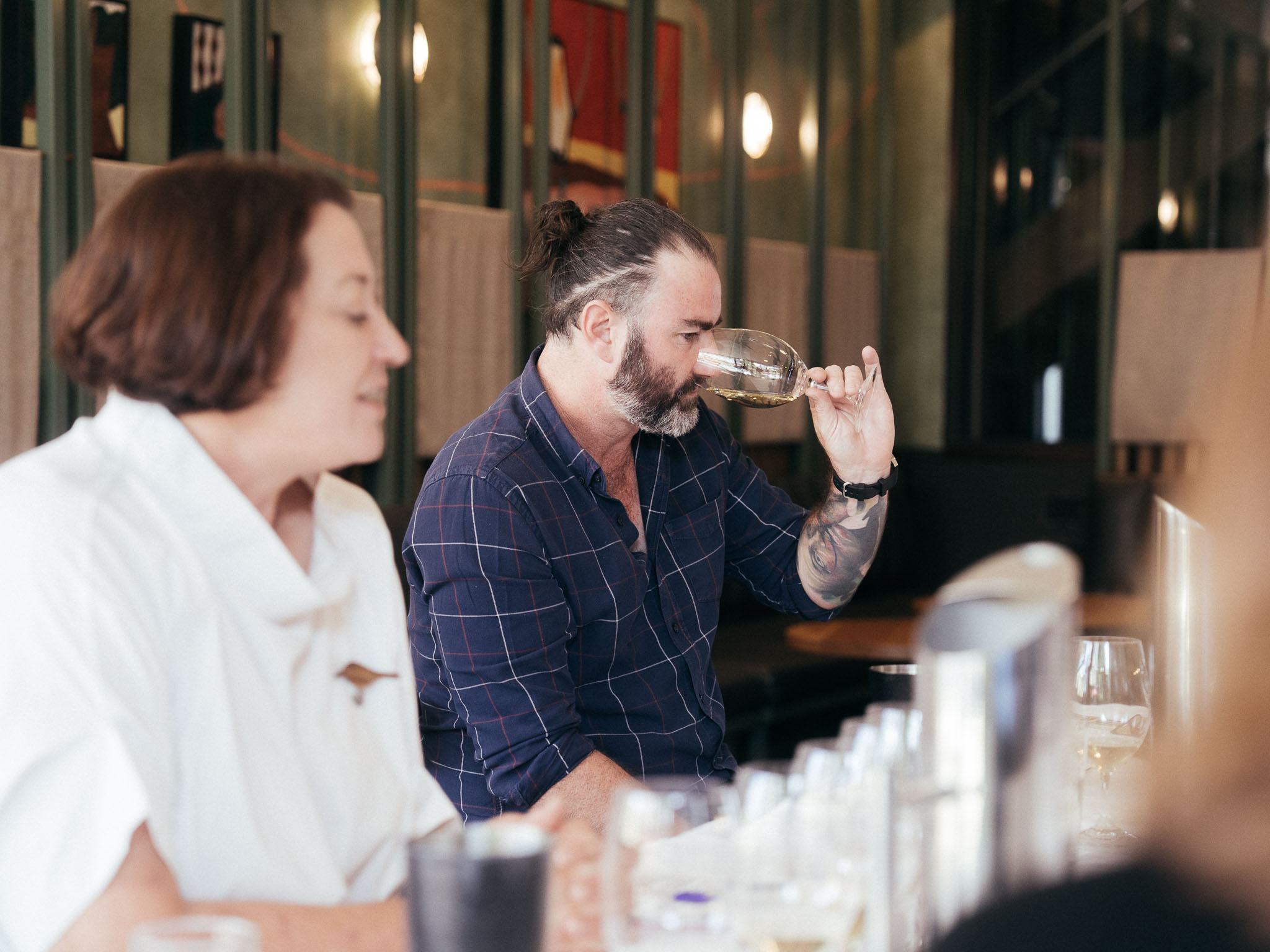
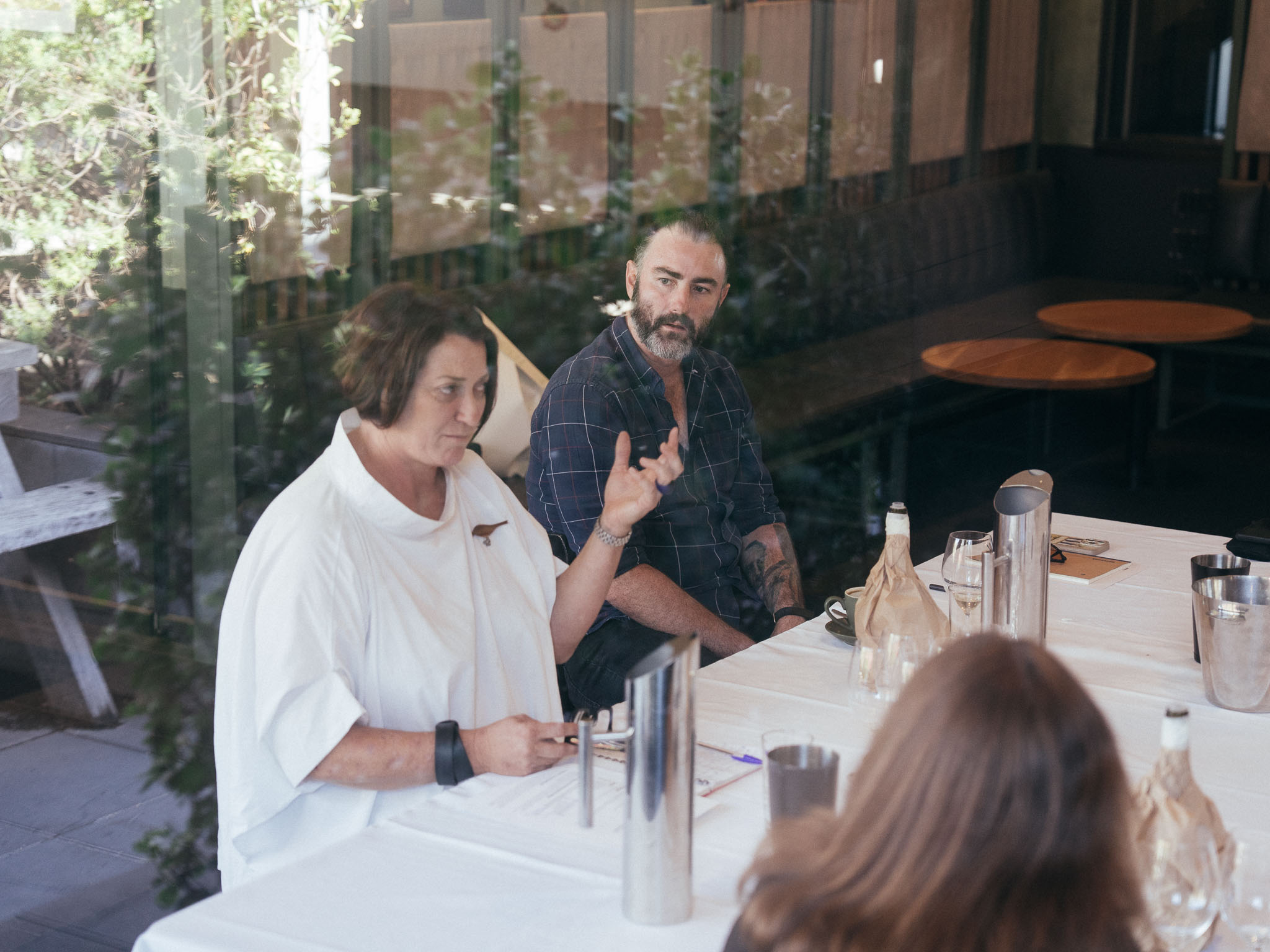
Above: Our expert panel convened at the Bleakhouse Hotel, Albert Park (Melbourne).
Outtakes from the tasting
We gathered every example of Australian grenache blanc that we could find, and set our expert panel the task of finding the wines that compelled the most. All wines were tasted blind, and each panellist named their top six wines.
Our panel: Missy Jones, vigneron, Humis Vineyard; Ciarán Hudson, owner and winemaker, Beyond the Glass; Christina Kaigg-Hoxley, wine development manager, 67 Pall Mall Melbourne; Lawrence Scanlon, winemaker, Dirty Black Denim and Street Walking Panther; Sez Robinson, sommelier, Cumulus Inc.; Andrew Wyse, founder, Cardwell Cellars.
Scanlon commenced the discussion by observing the strength of the (relatively small) category in general. “I enjoyed all of them, I think,” he said. “They’re all great. There were things that I didn’t particularly love – some were maybe a little bit out of balance, or a bit weird – but they were still yum. I think it was a really high-quality line-up … a classy line of wines.”
Above: Lawrence Scanlon. Opposite: Christina Kaigg-Hoxley.
Kaigg-Hoxley concurred: “There’s a lot to love in this lineup. There’s a lot of joy to be had here,” she said. “We’re looking at a category that’s not big – there’s not a lot of them available – and most people are encountering them for the first time in one of these examples. So I don’t think you need to be too technical about a lot of these wines. They’re not lacking in presence – there’s not a lot of subtlety to grenache blanc, in many ways. If it’s in a warm climate, you tend to see it; if it’s seen oak, you tend to see that; if there’s been some lees ageing, you notice that on the palate. It’s got a lot of strong things to say – but I think the majority of this lineup, almost all of them in fact, had really strong positive things to say.” She added, “The wines that stood out as potentially distinguishing themselves from the others were really well managed in terms of balance between fruit brightness and glycerol – between the nature of the fruit, but also between that freshness and texture. I don’t want to talk too much about that phenolic, bitter character – but you know, these wines do tend to lean savoury and do tend to lean bitter. But it’s not about getting rid of the bitterness – it’s about how that then plays into the rest of the palate and whether or not it’s integrated, and whether or not it’s offset by other really positive things.”
“There’s a lot to love in this lineup. There’s a lot of joy to be had here.”
Hudson noted that this green phenolic character that sometimes emerged in grenache blanc worked well for most of the wines in the lineup: “Some were still quite green – but it wasn’t to the point where I thought, across the board, ‘Why did you do this with this grape?’,” he said. “I’ve done a lot of grenache blanc tastings, or grenache blanc–dominant tastings, in the Rhône Valley – and they’re the masters of this variety, supposedly – and even in those tastings, I think to myself, ‘You all should have made orange wine with this, or done something else with it, or blended it differently.’ Obviously my opinion’s not the be-all and end-all, but I often find French examples of the variety to be super-boring, to be honest. But actually some of the green characters that came out today were really moreish and inviting – everything is from the classic green mango and green apple, into gooseberry. Really refreshing.” Reflecting on the ability for Australia to make compelling varietal wines from a variety that is often used as a blending component in its home countries of Spain and France, he said, “I think that’s something we should be happy with, and proud of – because it doesn’t often happen in the Rhône Valley.”
Above: Ciarán Hudson. Opposite: Missy Jones.
Jones argued that this bitter characteristic was somewhat vintage dependent – and also depended on the winemaker. “This year in particular, the grenache blanc was very hard to press,” she said. “Unless you had a hell of a lot of enzymes in there, it was very hard to press – and that might explain it. If you’re overpressing it, it’s going to get that bitterness.” She added: “Because I grow it, I could be wasteful – so I didn’t want to over-press it. But if someone’s playing whatever they’re playing per tonne, they’re going to press the bejesus out of it – like, ‘I’ve gotta get my money’s worth!’.”
“There were some wines that were maybe not in balance, technically, but would do really well on the table. I think that’s actually how the grape variety is used traditionally – to balance blends, because it’s a blending grape.”
Reflecting on the phenolic bitterness that was a through-line in the tasting, Wyse observed, “It’s very well suited for the table for food pairing. And I think that’s probably really important in how you present it to people for the first time – because what I was looking for in these wines, or what naturally occurred, was that the wines that were in balance were the easiest to ingest and digest in my notes. So they tended to do better.” He added, “But there were some wines that were maybe not in balance, technically, but would do really well on the table. I think that’s actually how the grape variety is used traditionally – to balance blends, because it’s a blending grape … keeping that in mind, there were some wines that were strikingly generous, that offered something different for the table – the saltiness that’s intrinsic to grenache blanc. Those are also well-balanced – and when oxidation is used, that also adds another dimension of complexity. So they’re not always the most complex wines, but they are really useful.”
Above: Sez Robinson. Opposite: Andrew Wyse
Talk of use at the table made Robinson observe that the wines on display could suit a huge range of foods: “There’s a sense of adaptability within these wines that I think is very Chablis-esque, in terms of it fitting a lot of different gaps,” she said. “What I love about grenache blanc – especially the examples that I’ve chosen for my top six today – is that yes, food is a big thing, but it’s not the same food each time. I’m not sitting here thinking, ‘Okay, this is gonna be chicken wine’, ‘This is gonna be a pork wine,’ ‘This is gonna be beef …’– it just changes depending on how the winemaker has expressed their own sense of terroir in this particular wine.”
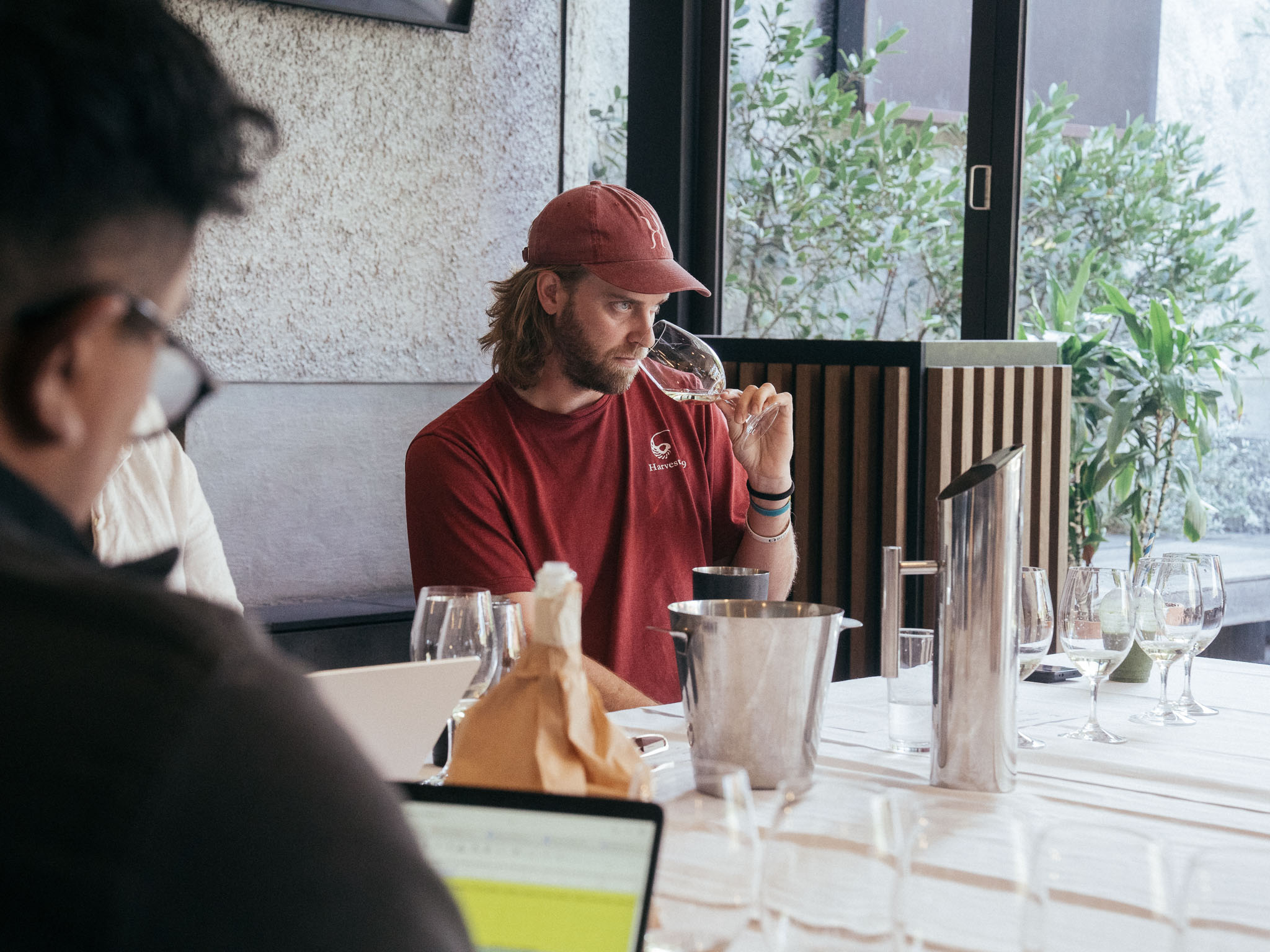
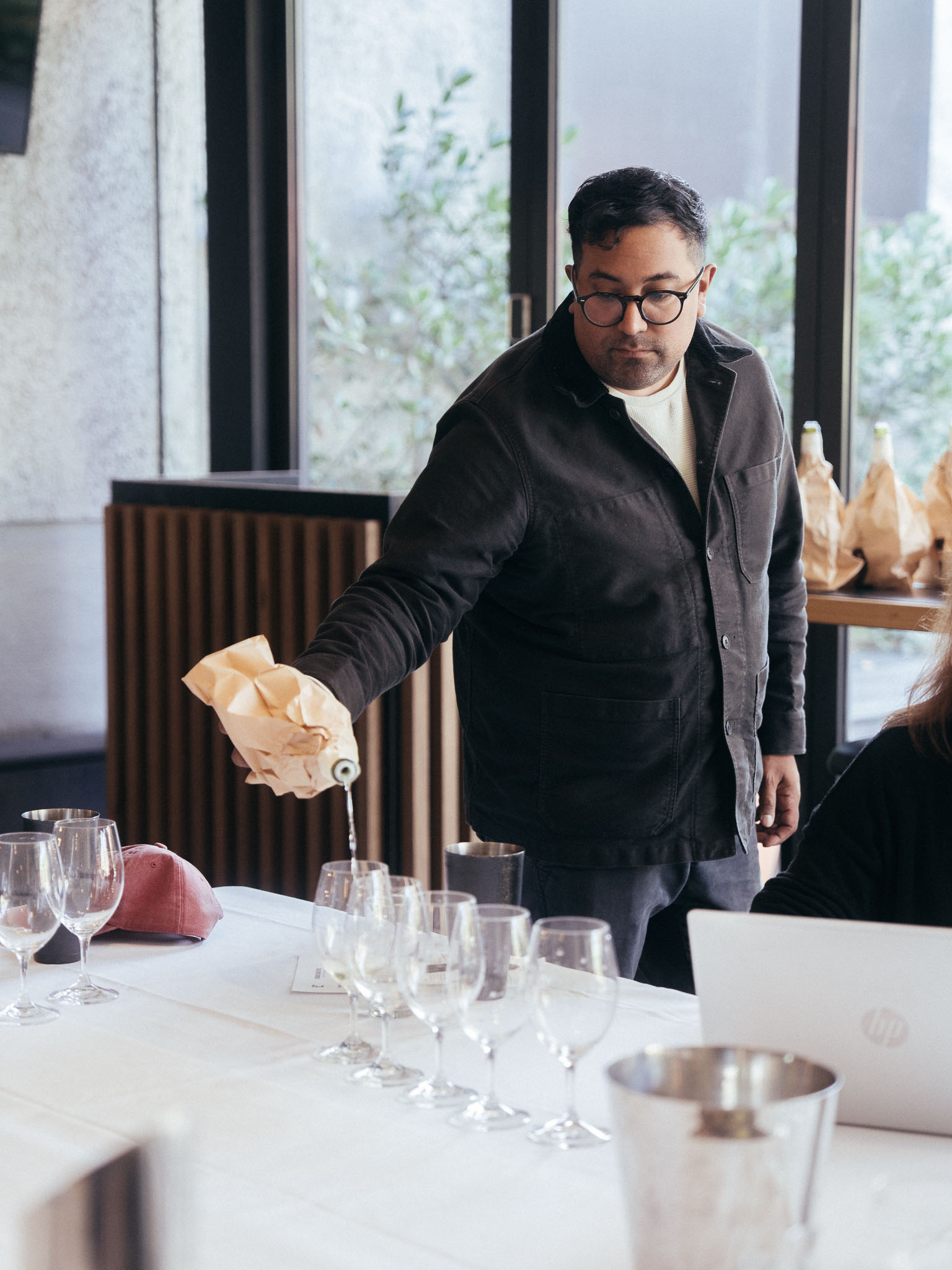
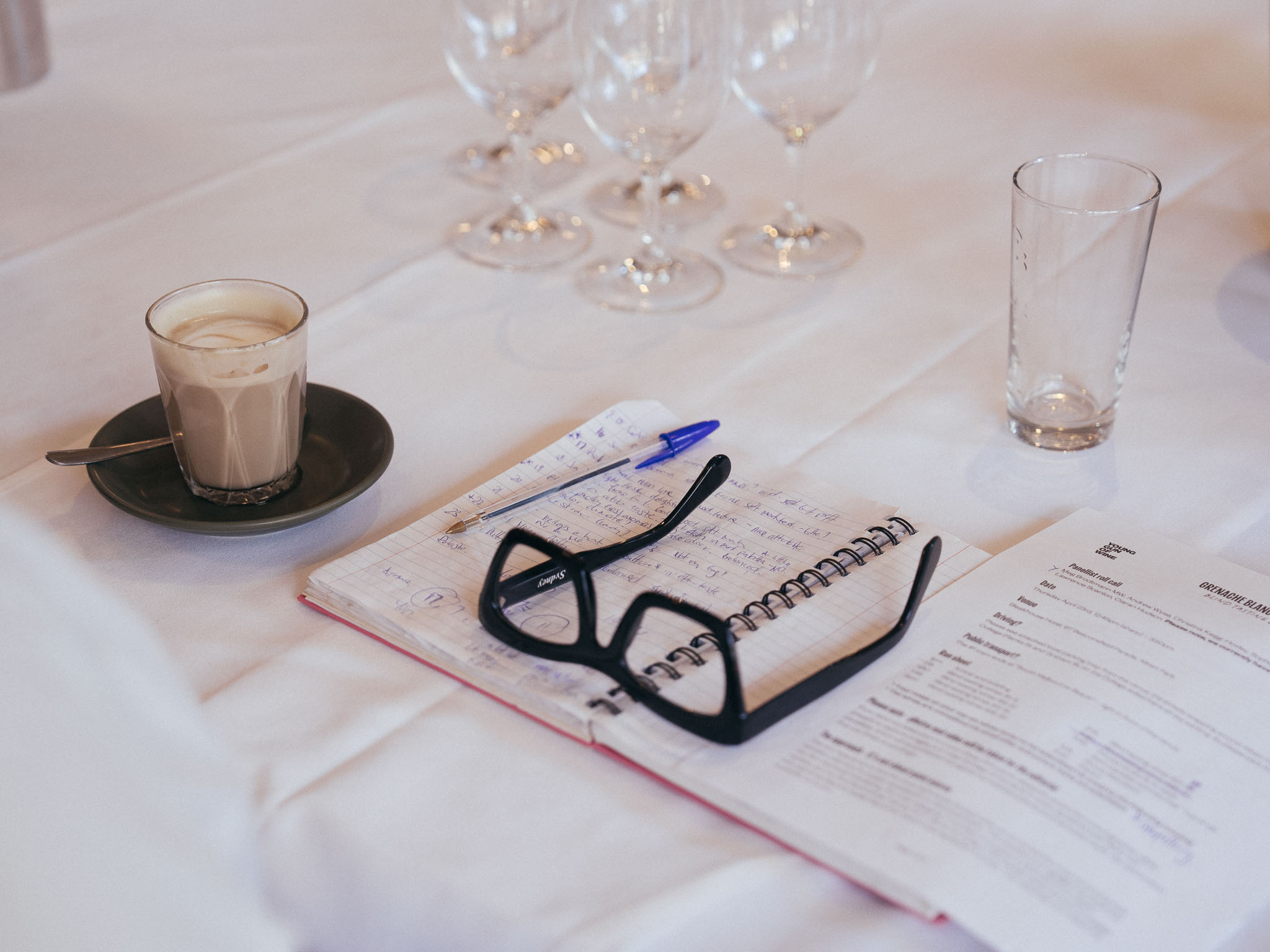
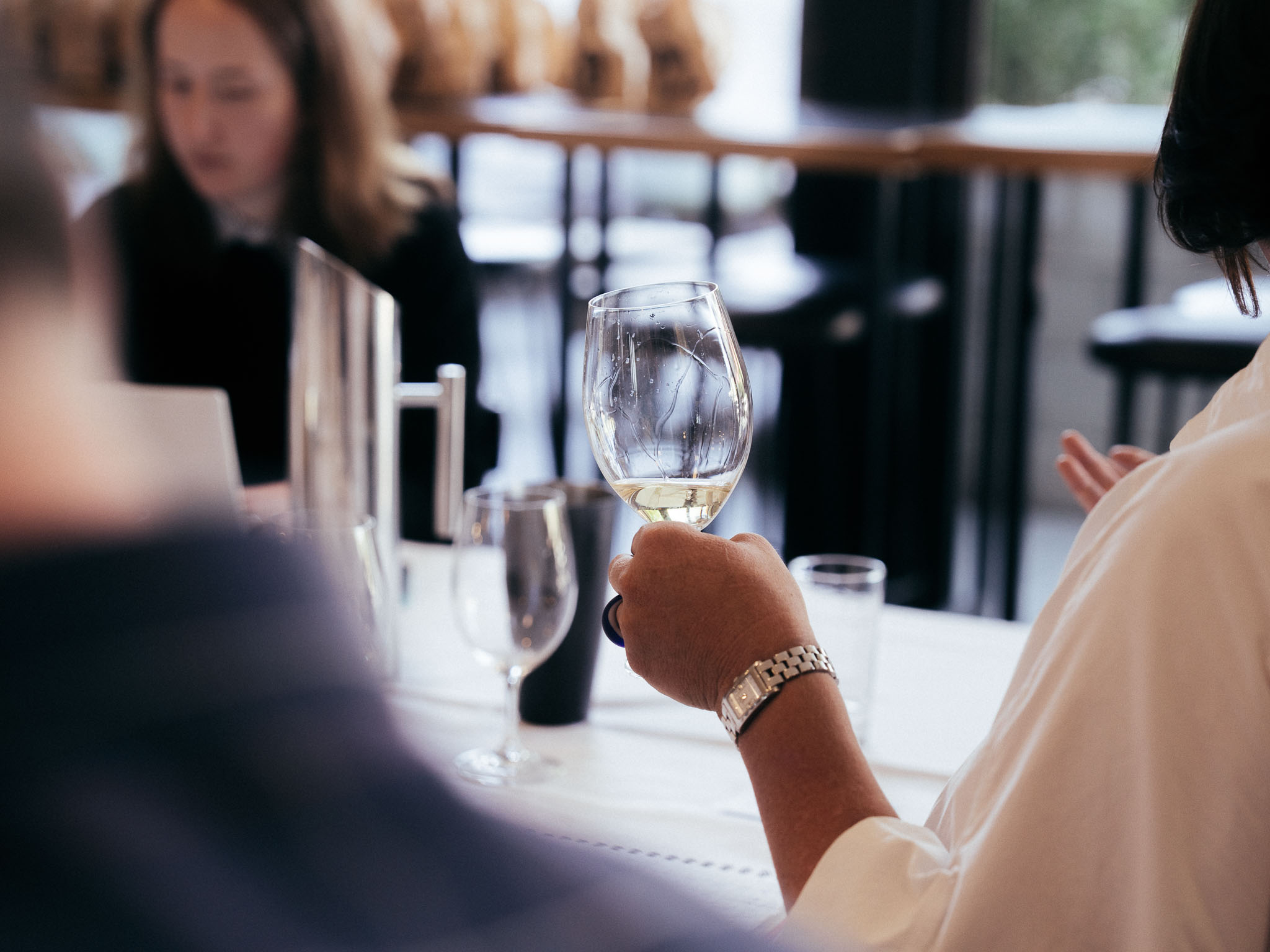
Above and opposite: The panel in action at the Bleakhouse Hotel, Albert Park (Melbourne). All wines tasted ‘blind’.
Scanlon wrapped up the discussion by observing that this variety would be one of many that would become more important in Australia’s viticultural future. “With the changing climate, we need to look at things that aren’t chardonnay and pinot, you know?” he said. “So the conversation does need to evolve more to include these varieties – because we’re going to have to grow more of them.”
Above and opposite: The panel in action at the Bleakhouse Hotel, Albert Park (Melbourne). All wines tasted ‘blind’.
The Panel
After working in a myriad of industries including corporate finance, law, insurance, government, construction, and retail, Missy Jones and her partner Hugh decided it was time work for themselves. In 2010 she and Hugh returned to Victoria and purchased the block that is now Humis Vineyard, an enterprise which she completely runs with Hugh. In 2015 she completed a diploma in winemaking, and she now makes all Humis wines on-site at their sustainably certified vineyard and winery.
The wine bug bit Ciarán Hudson in the Southern Rhône appellation of Ventoux in 2016 – his first harvest. It was a 1953 bottle of Châteauneuf-du-Pape that got him: a wine of unimaginable complexity, and his most profound drinking experience to date. Since then, he has returned to Ventoux for five vintages, with another planned for this year. Coming from a mechanical engineering background, muddled with a history of IT consulting, the fourteen vintages across both hemispheres Ciarán has worked since 2016 has set him on a steep and intense learning trajectory. Some of the wines he makes for his Beyond the Glass label are sort of classic, showing old school restraint with some potentially big, tannic varieties, while the other side of his winemaking is experimental and fun. He’s always hunting for new ideas and challenges in the cellar.
Christina Kaigg-Hoxley is the wine development manager at 67 Pall Mall in Melbourne. She has over fifteen years’ experience in the hospitality and wine industries, both on the floor and in freelance wine communication and education. She has previously worked as the assistant head sommelier at Michelin-starred restaurant The Clove Club (London), as sommelier at Gimlet at Cavendish House (Melbourne), as well as the assistant wine buyer at Atlas Vinifera (Melbourne) and as a brand ambassador for Burch Family Wines (Great Southern and Margaret River), and has worked vintages in the Yarra Valley and Margaret River. She is a recipient of the Sommeliers Australia Education Scholarship, is a certified educator with the Wine Scholar Guild (WSG), and is currently studying her Wine & Spirit Education Trust (WSET) Level 4 Diploma in Wine.
Lawrence Scanlon came to winemaking from the hospitality side, with lengthy stints running venues such as the Alps for Lyndon Kubis (Toorak Cellars, The Moon, The Hills, Milton etc.), along with a tenure at Italian wine and food temple Enoteca Sileno, amongst other front-of-house gigs. Along the way he has worked at Clyde Park, Oakridge, Sally’s Paddock, Galli Estate, Wilimee and Chalmers, swapping between cellar and vineyard work. Dirty Black Denim, a lo-fi winemaking project in league with his brother, Tim, was born in 2014, and he also releases his own wines under the side-project label Street Walking Cheetah. He is currently a co-owner of Brunswick venue Bar Magnolia.
Sez Robinson grew up in beautiful Aotearoa New Zealand before moving to Melbourne in 2023. With a passion for hospitality and a deep love for wine, she’s worked through pubs and restaurants around Melboume until finally settling at Cumulus Inc. on Flinders Lane. Here she works as a sommelier, guiding guests through food and wine of provenance.
Andrew Wyse is a Melbourne-based wine importer and retailer. He is the co-founder of Cardwell Cellars, the executive director of Vinfair, and sits on the national executive committee of Sommeliers Australia. His background spans sommelier work, wine education, wine travel, and wine imports, with a particular focus on the wines of Central and Eastern Europe.
GET FIRST ACCESS TO THE NEXT WINE ICONS – DELIVERED
The southern Italian grape fiano has had a relatively meteoric rise in Australia. We gathered every Australian varietal fiano we could find and set our expert panel the task of finding the wines that compelled the most. All wines were tasted blind.
It’s not so long ago that the mere idea of grape tannin and skin-derived colour – let alone a hazy appearance – in white wine would have winemaking lecturers and show judges frothing at the mouth in horror. Noticeable grip in white wine was seen as a fault, a failure of process. Today, the script has had a new chapter added, with a big payoff in terms of texture and flavour complexity. From wines with the faintest of complexing grip to those that are made like red wines with ample chew and deep colour, and everything in between, are now an accepted part of the wine landscape. Anita Goode (Wangolina), Sven Joschke (Sven Joschke Wines), Matt Purbrick and Leigh Ritchie (Minimum), Raquel Jones (Weathercraft), Marcus Radny (Gonzo Vino), Chad Connolly (White Gate Wine Co.), James Scarcebrook (Vino Intrepido), Peta Kotz (Sabi Wabi), Sam Renzaglia (di Renzo), Richard Burch and Nic Bowen (Mon Tout) are all pursuing textural styles.
Malbec has taken a long and winding path from its birthplace in the Cahors region of France to becoming a globally popular varietal wine in its Argentinian form. Yet Australia actually beat Argentina to the punch on malbec by thirty or so years, and the variety has played a small but important role in Australian viticulture ever since. With a passionate collection of winemakers and winegrowers seeking to understand what this variety can do in the Australian context, we thought it was time to take a Deep Dive.
Subscribe to our newsletter
Young Gun of Wine is your shortcut to cutting edge wines, the places to go, and the people behind it all.
Subscribe to be amongst the first to know of our latest discoveries in wine.
We'll bring you the inside running from the growers, the makers, the wholesalers, the retailers and the sommeliers, too.