Saperavi hails from Georgia, the very cradle of winemaking and winegrowing, and its history there is long and storied. In the Australian context, however, it’s a relative newcomer – and one that’s making waves as a hardy and adaptable variety able to withstand a broad swathe of our climatic conditions. With its deep, inky colour – courtesy of its unusual red flesh – and full body, it also ticks a lot of boxes for drinkers who have cut their teeth on Australia’s traditional bold, rich reds, while its spicy and dramatic flavour profile gives it an exotic edge. Can this relative newcomer cut through the noise of competing ‘alternative’ varieties and establish itself in the Australian context? We took a Deep Dive to find out …
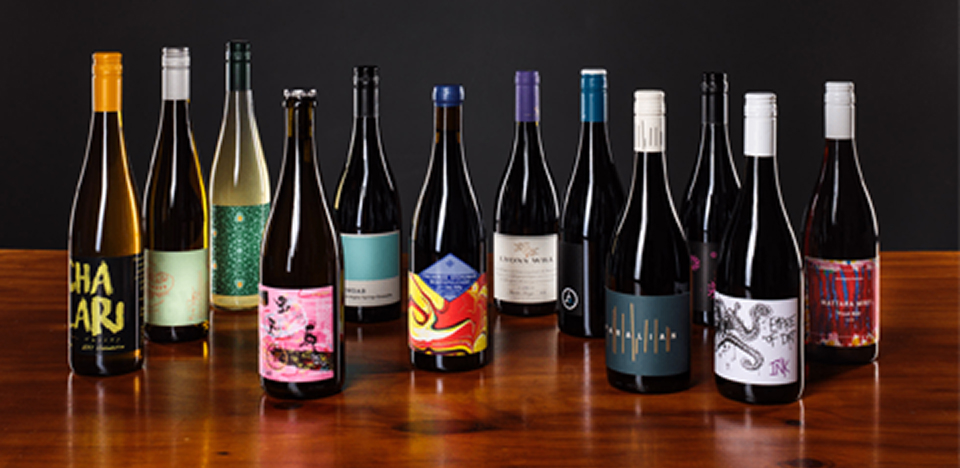
We gathered every example of Australian saperavi that we could find and set our expert panel the task of finding the wines that compelled the most. All wines were tasted blind, and each panellist named their top six wines. Below are the wines that made the panellists’ top-six selections from the tasting.
Our panel: Cindy Heley, owner and winemaker, Monak Wine Co.; Nic Bourke, winemaker, Hugh Hamilton Wines; Sarah Hilliker, sommelier, Vespa Pasta & Wine; Seamus Donaghey, winemaker, 919 Wine; Blaire Gillespie, wine merchant, Natural Science Wine & Liquor; Soma Déak, co-owner and wine buyer, Glovers; Caroline Abbott DipWSET, freelance wine consultant, Caravine Consulting.
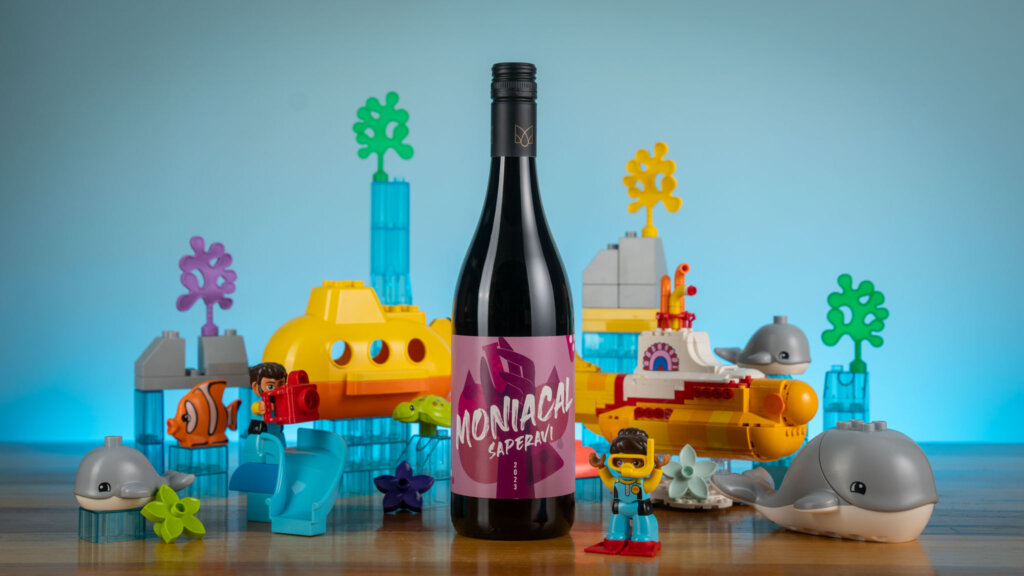
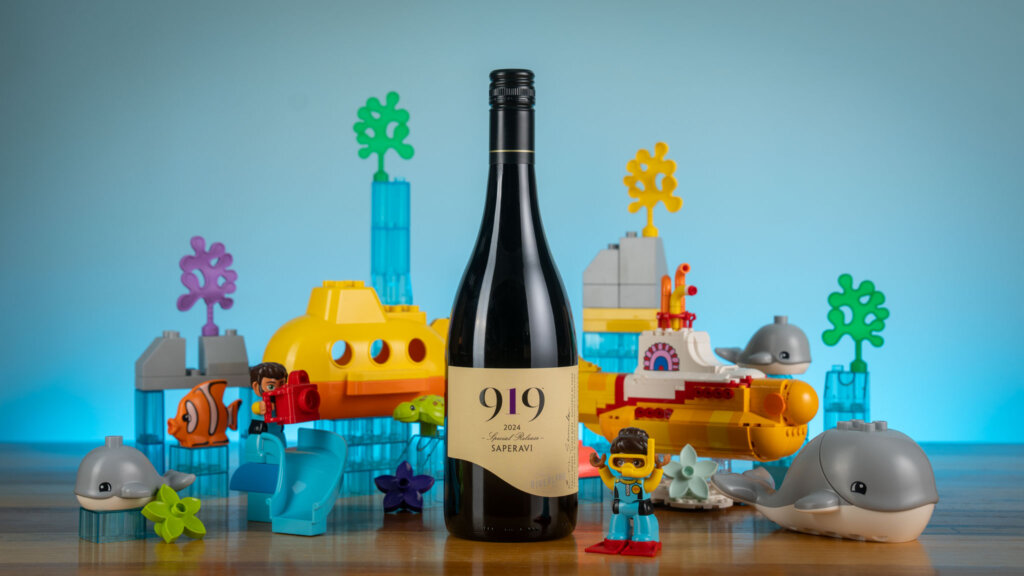
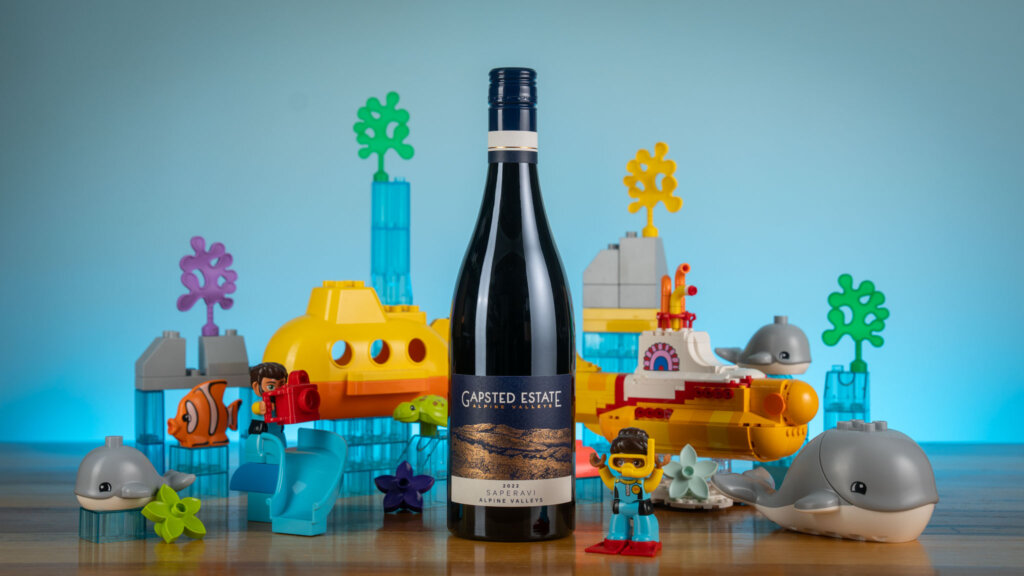
From The Deep Dive
Discover more in The Outtakes below.
Discover more in The Outtakes below.
Discover more in The Outtakes below.
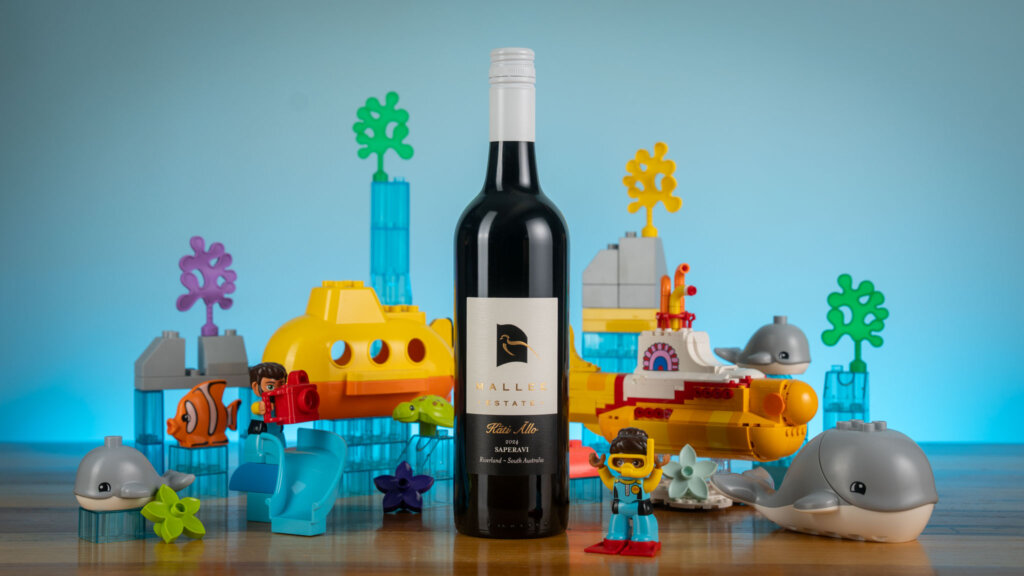
The Top Wines
This isn’t an ordered countdown. There’s no ranking — just the top six wines each panellist found most compelling from the blind tasting, in all their different ways. Everyone’s palate is different, and that’s the point.
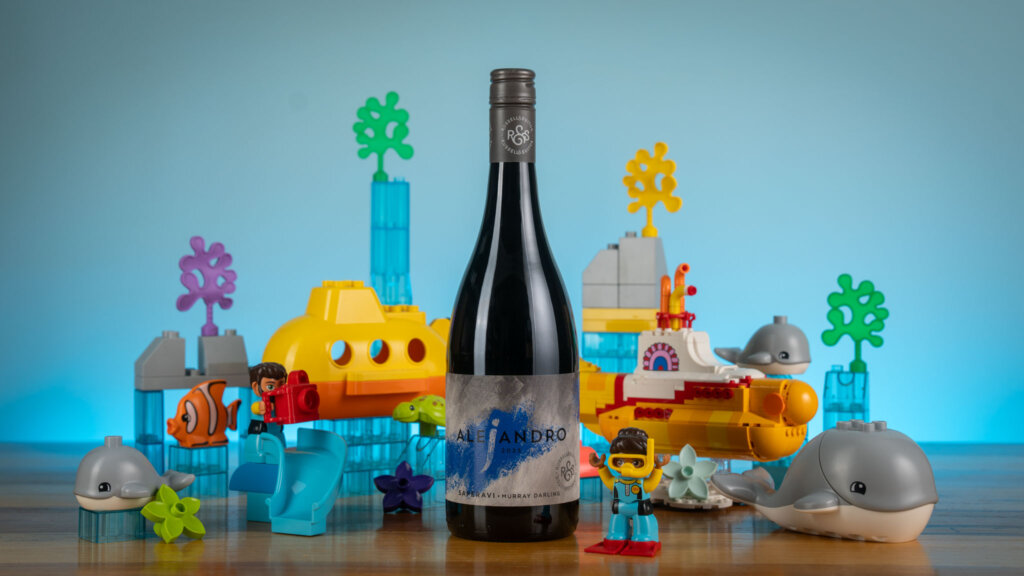
2025 Russell & Suitor ‘Alejandro’ Saperavi, Murray Darling $35 RRP
Heley, Abbott, Gillespie, Donaghey, and Hilliker selected this among their standout six wines of the day. Heley found immediate appeal: “Bright and fresh with intoxicating sarsaparilla aroma. The palate counter-punches with charry oak centring the tannins, anise spice creeping in on the finish.” Abbott’s assessment was deeply sensory: “Gorgeous deep ruby with blueberry compote and vanilla bean, like a berry patch buzzing with bumblebees. Syrupy vanilla against dark, charcoal-like tannins with graphite and pencil shavings. Like fountain-pen ink – dark, glossy, staining. Finish keeps pulling you back.” Gillespie discovered mystery and grace: “Like finding a bouquet on your doorstep with no note. Dried flowers and vanilla leap from the glass, mulberry takes centre, cranberry acidity and wet-stone minerality keep everything beautifully in balance.” Where others found complexity, Donaghey found umami: “Rich magenta with extraction bringing umami of Vegemite, curry leaf and beetroot, followed by awesome bloody meatiness like walking into a butcher’s shop. Plush and juicy with red fruit balanced by great acid drive and tannin length.” Hilliker appreciated the tannin power: “Purple and blue fruits on the nose, grippy tannins – the most unique structure of the day. Very interesting and delicious!”
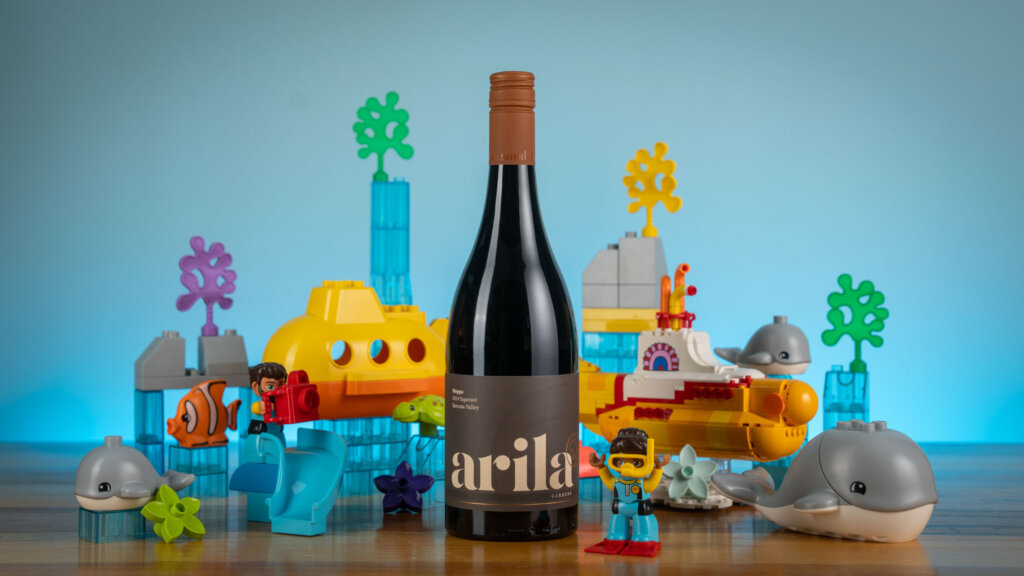
2024 Arila Gardens ‘Moppa’ Saperavi, Barossa Valley $45 RRP
Donaghey, Heley, and Bourke named this among their top six picks from the day. Donaghey found jubilant spice: “Rich red hue, jubey and spicy on the nose with curry leaf and roasted beetroot, distinct cola and sarsaparilla with dark liquorice. Dusty tannins suggest years of ageability with great length and drying finish. Juicy fruitfulness and ample tannins work in unison to create something that has you really thinking. Drink it now or chuck it in a closet for ten years and enjoy the rewards of patience.” Heley found harmony and balance: “This wine delivers abundance of flavour and weight that harmonises with hefty tannins – nothing seems out of place. The mid-palate shows richness and generosity that balances the tannin structure perfectly.” Bourke seized on culinary imagery: “The first waft makes me think of fresh-baked rhubarb pie cooling on an imaginary windowsill. Beneath baking spice and butter is a very focused saperavi – intense and rolling with satisfying crunch and length. Tastes of cola, sandalwood and cinnamon, tannery leather, faint wisps of spearmint, muddled fresh herbs – all rounded out by emery-fine tannins and elegant palate weight.”
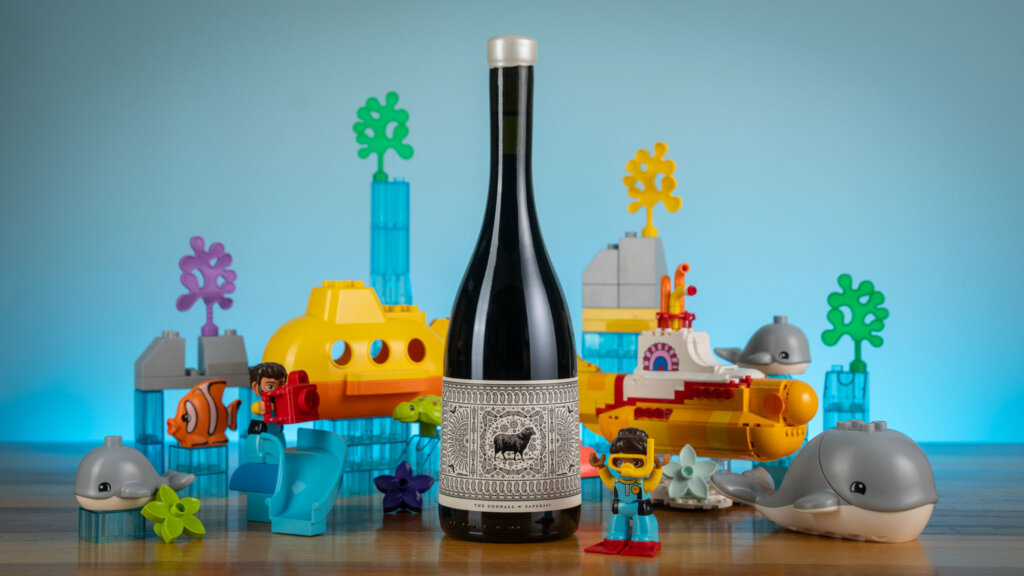
2023 Hugh Hamilton ‘The Oddball’ Saperavi, McLaren Vale $88 RRP
Hilliker, Déak, and Donaghey selected this among their standout six selections of the day. Hilliker celebrated the wine’s tannic structure: “As a lover of bold tannins, this is my pick! Similar power to Italian varieties I love. Initially aggressive – which I enjoy – but time and oxygen soften them, revealing complex flavours: star anise at the front, plush raspberry, blackberry and blackcurrant, elegant lavender and black tea on finish. Grows more intriguing the longer it’s open – super food-friendly and age-worthy.” Déak found consciously polished craft: “A dense nose, tightly packed with mulberry, black plum and black cherries with nutmeg and vanillin. Graphite minerality on the palate with something earthy like tar or motor oil. Bright acidity – almost piercing – and medium body with fine, powdery tannins. Long and tangy finish with hint of green bitterness reminiscent of charred padrón peppers. Consciously well-made and polished, but a charming glimpse of wildness peeks through.” Donaghey proclaimed it a ‘spiceravi’: “Rich magenta leading with curry leaf, mustard greens and white pepper, followed by driving beetroot. Huge palate – juicy red fruits like blood plum and dark red apple wage war against ample dusty tannins. A wine for cabernet diehards!”
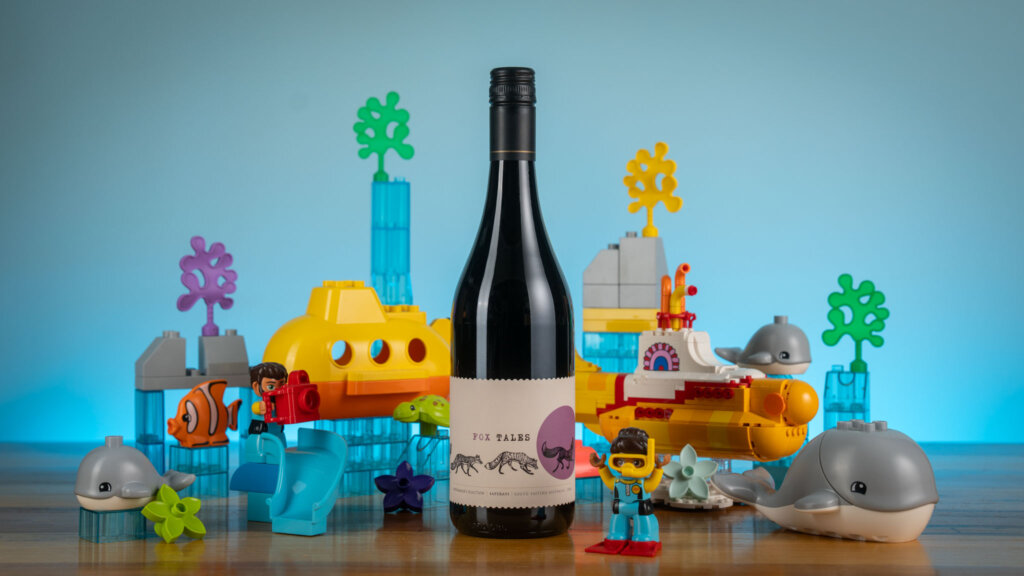
2024 Fox Tales Saperavi, South Eastern Australia $17 RRP
Gillespie, Déak, Hilliker, and Heley selected this among their top six picks of the day. Gillespie found romantic charm: “This wine is the cottagecore one – it collects pressed flowers in books, takes the scenic route home. Rose petal and juicy pomegranate give directions, dried tea leaf tannins add intrigue. Gentle and thoughtful, with little in the way of darkness and drama, impossibly charming in its unhurried way.” Déak discovered savoury character: “Sanguine on the nose with touch of red meat amongst blue and black fruits of plums and blackberries. Ripe and full-bodied, balsamic lift keeps the wine moving, while grippy tannins beg for food.” Hilliker embraced the fun factor: “Juicy and fun – bright and fresh with great concentration and length. Lifted, sherbet-like nose of sour red lollies, raspberry, vanilla, pink peppercorns, peonies and geraniums. Super-fine, silky tannins prevent one-dimensionality. Nice to see Aussie saperavi bringing fun without sacrificing quality – chill for your next picnic or house party.” Heley found balance and finesse. “Great balance of fruit ripeness and savoury characters. Finessed and subtle tannin structure, velvet-like feel taking you through to the finish.”
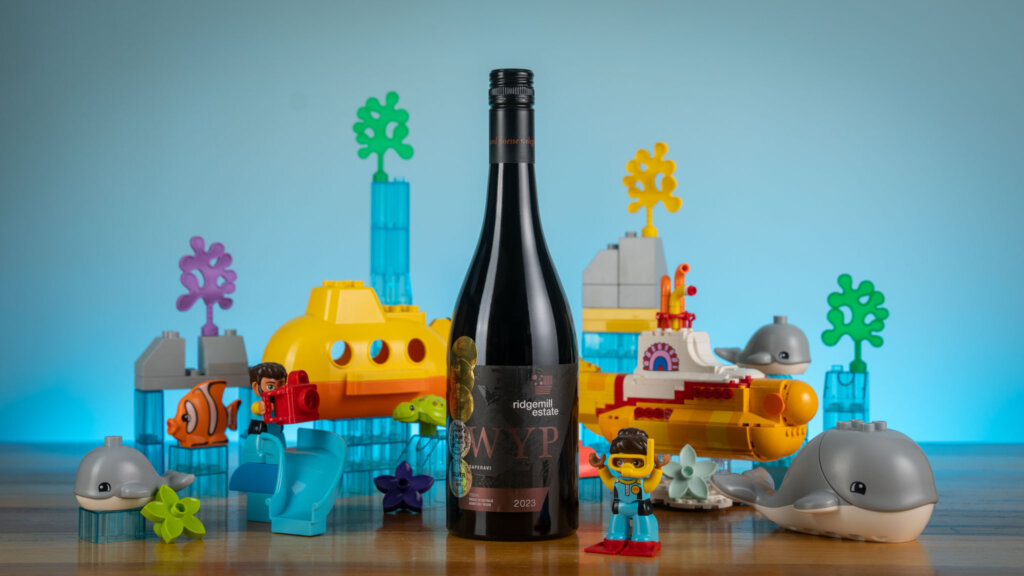
2023 Ridgemill Estate ‘WYP’ Saperavi, Granite Belt $50 RRP
Abbott and Bourke selected this among their standout six wines of the day. Abbott appreciated the distinct shift in expression: “This shows noticeably different fruit spectrum and tannin texture to the rest of the lineup, with lighter, airier quality. The nose moves firmly into red fruit – fresh-pressed pomegranate juice immediately, followed by red plum skin and dark-red cherries at full ripeness. The tannins are fine but plentiful, spreading evenly across the mouth rather than feeling brooding or heavily extracted. The acidity is much more front and centre, fighting with the tannins for the main character role before settling into interesting interplay between the two. There’s a distinct shift in both shape and expression compared with the other wines, boding well for the breadth of possibilities in Australia for saperavi.” Bourke found bombastic complexity: “Opens with nose of bombastic blackcurrant fruit – almost hyperfixation on fruit lift. Phenomenal purity of flavour on the palate – fennel wafts and lingers like smoke around blood and iodine, alongside fire-seared steak, gum leaves, floral beetroot, and chunky compote richness. An entire market of spices – cinnamon, cardamom, nutmeg. Finishes with appealing boudoir-like lilt – fine talc, roses, and perfumed sweat.”
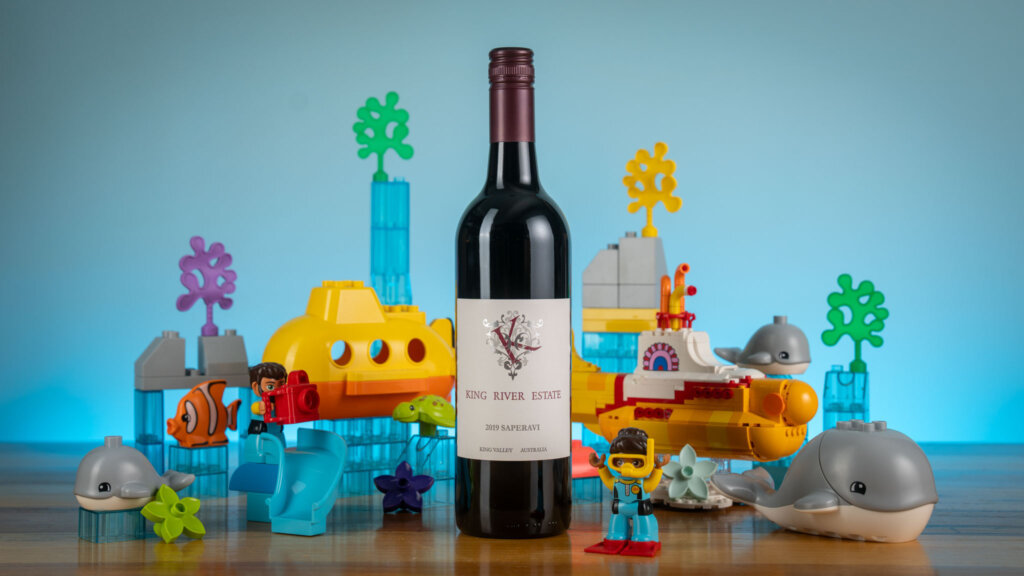
2019 King River Estate Saperavi, King Valley $45 RRP
Hilliker and Heley selected this among their standout six picks of the day. Hilliker found rustic power beneath restraint: “This saperavi is a little shy on the nose, only showing slight gamey quality – don’t let that fool you. When I took my first sip I was blown away by its rustic, unpretentious power. It doesn’t go into the darker fruit profile like most others in the lineup – it’s resolutely red in both its fruit profile and earthy tones of terracotta and dusty red earth, with an almost sanguine, ferrous edge. Fantastically bitter core reminiscent of Campari and Italian amaro, edged with tart rhubarb, cranberry, and sweet strawberries, followed by sour-yet-pretty floral hit of hibiscus. All carried by slightly larger-grained tannins and nice lick of acidity. Serious stuff!” Heley saw structural clarity: “Clean and concise – a ‘bookended’ style that begins so subtly and expands into perfectly ripe tannin profile. Firm and structured on the palate, with a flow of blackberry and mulberry fruit notes setting the tone.”
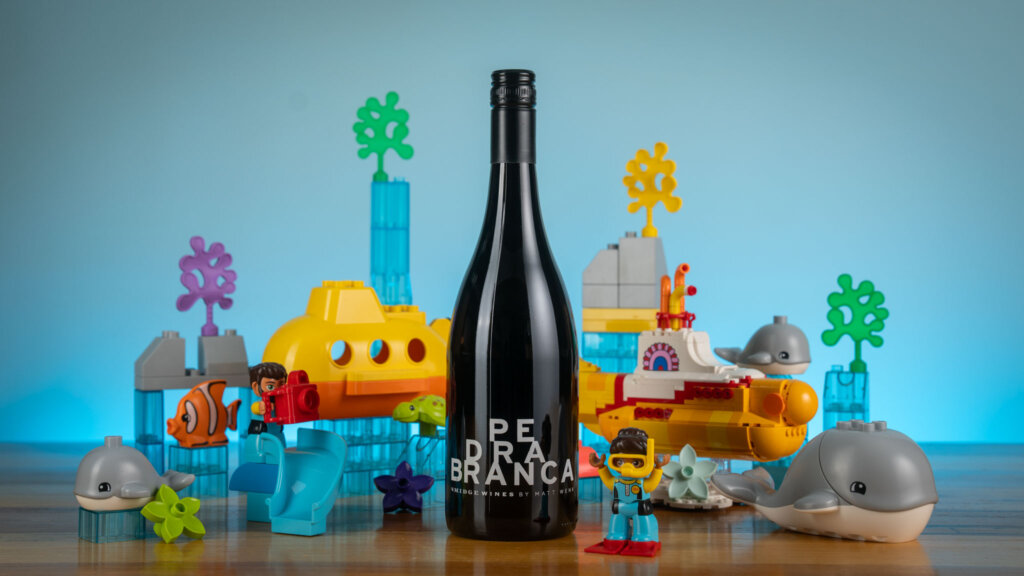
2021 Smidge Wines by Matt Wenk ‘Pedra Blanca’ Saperavi, McLaren Vale $65 RRP
Hilliker and Abbott selected this among their top six selections from the day. Hilliker found immediate vibrancy: “This practically jumps out of the glass, opening with raspberry compote and strawberry jam on the nose. The palate leads with lovely edge of earth, undergrowth, and fresh tobacco leaf, followed by smoked and cured meat, brightened by super tart red fruit, all wrapped in fresh vanilla. Cinnamon and cardamom add subtle spice, nice amount of stewed and preserved red berries counteracting the tartness. Super-fine tannins take more of a back seat here – this is balanced as hell.” Abbott appreciated the vivid red-fruited spectrum: “Bright and tart from the outset, with ripe red cherry, redcurrant jam, and fresh pomegranate pulling the wine firmly into a more vivid red-fruited spectrum than the darker examples in the lineup. The acidity is energetic and mouthwatering, sharpening the fruit and giving the wine a leaner, more lifted shape, while tannins feel finer and less brooding. There’s still a dark saperavi core underneath – touch of blackberry skin and graphite – but overall impression is fresher, juicier, with tangy finish that keeps pulling you back for another sip.”
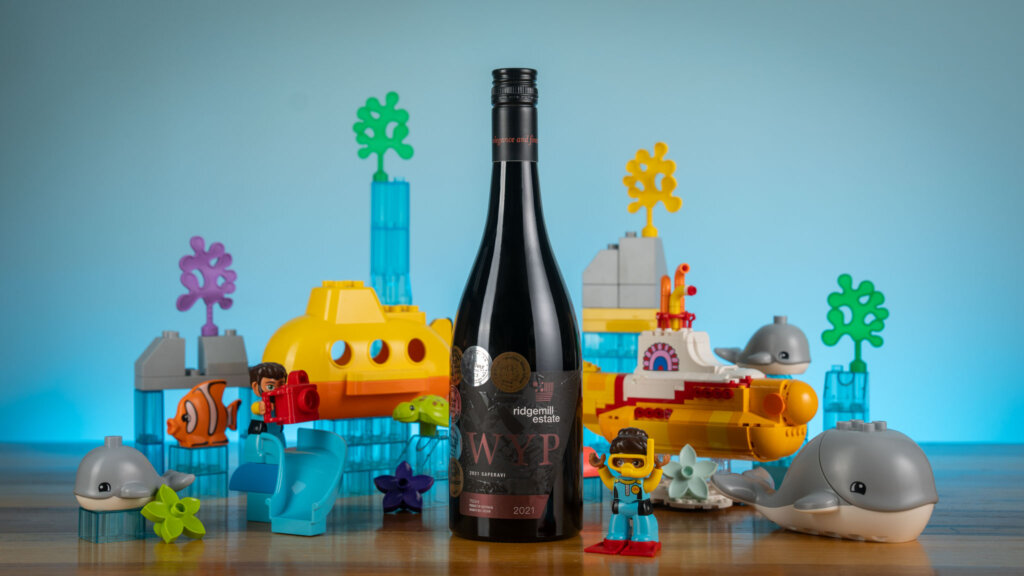
2021 Ridgemill Estate ‘WYP’ Saperavi, Granite Belt $65 RRP
Abbott, Bourke, and Gillespie selected this among their standout six selections of the day. Abbott found contradictory brilliance: “Deep, inky purple – like fountain-pen ink – with ruby at the rim. Brighter and more lifted overall. Fruit moves toward blackberries, black cherries and crushed red berries, juicy red-plum freshness cutting through darker notes. Vanilla-bean sweetness – less syrupy. Dark, charcoal-and-graphite tannins in fine, powdery form – but brighter acidity gives energy. Opaque yet luminous on the palate. Finish stains with blackberry and graphite, but leaves surprisingly fresh red-fruited lift.” Bourke discovered subtle depth: “A bit of a sleeper, almost missed as it was bordered by bigger wines. A lighter, finer expression that’s no less compelling for its gentler touch. Measured, teasing and deep – spice-driven and savoury. A little slow to start, but promise for a thrilling wine in time. The full saperavi fruit basket, through a lighter lens.” Gillespie proclaimed it approachable: “The friendliest goth at the party. Blackberry fruit and soft milk-chocolate tannins make this an easy introduction to saperavi – no brooding monologues about the Old Country. Fun, juicy and delightfully uncomplicated, with enough dark charm to keep things interesting and enough personality to earn a second glass.”
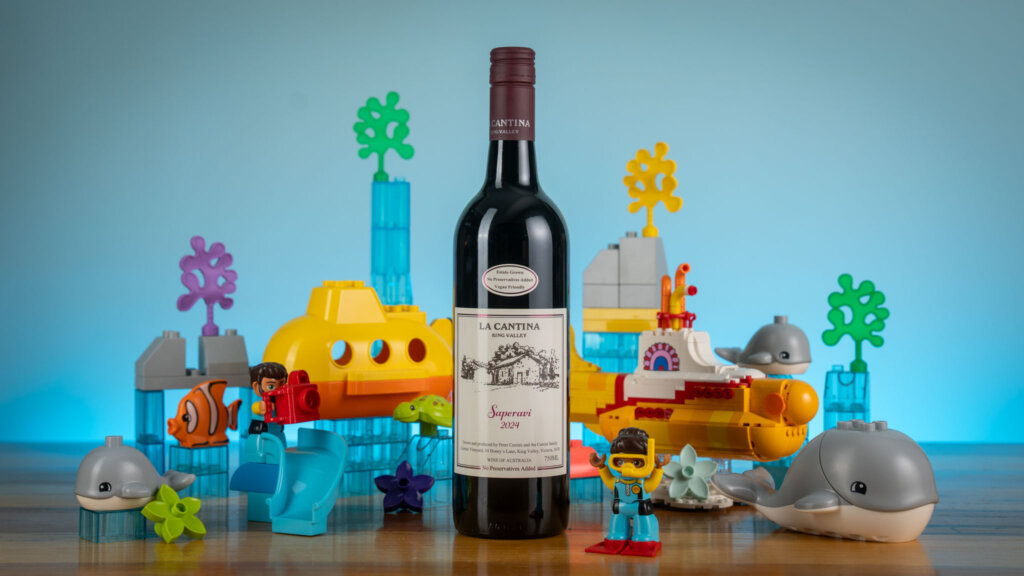
2024 La Cantina Saperavi, King Valley $30 RRP
Gillespie and Bourke selected this among their top six picks from the day. Gillespie found magnetic allure: “If Stevie Nicks’s crushed purple velvet scarves could be bottled up and poured into a glass, this would be it. Big blackcurrant fruit spills from the glass while glossy red plums shine against liquorice and a crack of black pepper spice. Dark and utterly magnetic, the kind of wine that catches your eye and keeps it with that deep dark inky hue.” Bourke discovered rewarding complexity: “This wine starts with a wall of savoury Vegemite on rye, blood and iron – but this is misdirection. This wine isn’t in a hurry to be roused, but give it time and oxygen and it yields remarkable depth of flavour. Raspberry compote, maple syrup, and amaro characters develop and continue to reverberate on the palate, accented by cherry wood and split redgum. Driven and dusty-savoury – this is dirty good. Take your patience with it beyond the glass and into the cellar – this wine promises to continue to deliver for many years.”
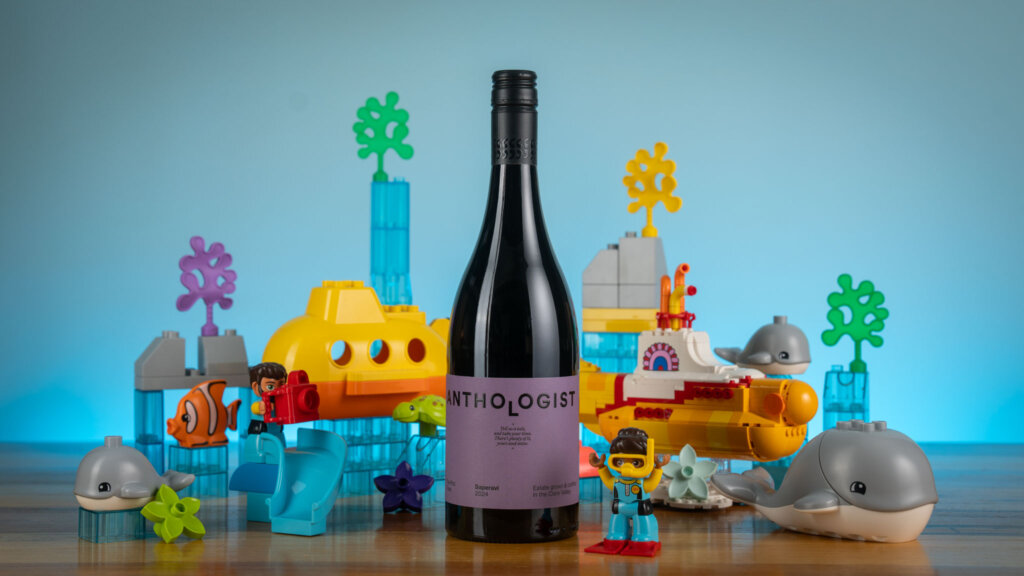
2024 Anthologist ‘The Plot Twist’ Saperavi, Clare Valley $35 RRP
Donaghey and Bourke selected this among their top six wines in the blind tasting. Donaghey found classic saperavi character: “This wine has a rich magenta hue. The curry leaf character of saperavi peeks its head in, followed by beautiful note of beetroot, forest floor, and earth that hangs around, accented by touch of mustard greens. Upon drinking you are rewarded with juicy and full palate with ample flavours of red plum and red berries, excellently balanced by well-integrated tannins.” Bourke discovered textural intrigue: “This feels like a fruit-filled Chesterfield couch – raspberries wrapped in leather. Powerful iris and violet florals, split eucalypt wood, with cherry stones lending a savoury shift. Cinnamon quill and cardamom add spice to the palate, accented by iodine, split stone, red brick dust and blood. The wine is emery-textured and cellar-ready – it’s very early days here, but I can’t wait to see how this develops.”
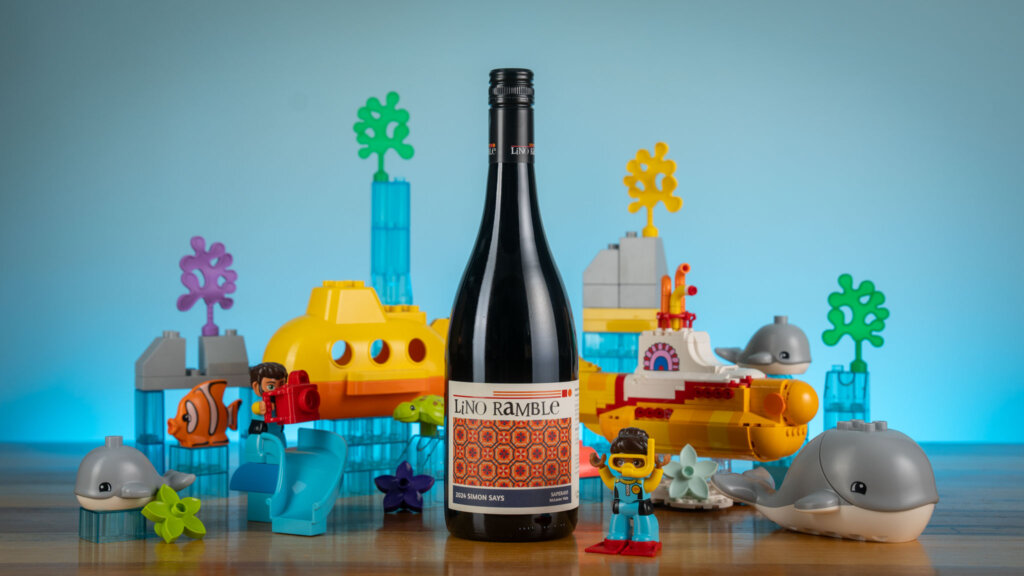
Bourke selected this among his standout six picks of the day. His assessment captured both the wine’s distinctiveness and its potential: “Wines like this are exciting for what they are, but also for what they say about amazing potential for this variety in Australia. Rather than looking like a faded copy of a Georgian wine, this wine shows Australian saperavi can be varietally true yet distinct – very classy. The nose is a field of violet florals under a thunderhead of fruit – meat and beets, fine line of iodine and raspberry, caraway and fennel root. Pink lady apple tones inflect the nose, some bruised by the dance. There’s freshness here – the fruit on the palate is bright and fine, all fresh strawberries, underlaid with polished leather and subtle gaminess. Compelling – this wine commands attention and demands food pairing, perhaps roast grouse with blackcurrant and beetroot sauce, or Lion’s Mane mushroom with blackcurrant glaze. Cook for two, though – this wine will roll itself out only over a slow meal, and you’ll want more than one glass.”
Heley, Donaghey, and Déak selected this among their standout six selections in the blind tasting. Heley found pure flavour focus: “This wine is all about the flavour – a riot of blackberry bramble, cream, and vanilla. Flavour intensity continues to build on the palate. It’s delicious and highly slurpable – very likely to appeal to newbies, as it has all the yummy aspects without the sometimes-intense structural elements.” Donaghey embraced the approachability: “Bright red hue. Not every wine needs to be serious, and that’s where wines like this step in. Lovely and approachable nose of curry leaf and curry powder, followed by beetroot and slight inky bloodiness. But the palate is juicy, jubey, joyful, jubilant and jovial – a slight fruit sweetness brings tannin and acidity into equilibrium. The most approachable saperavi I’ve seen. Give your nan a glass – she’ll love it, and so will you.” Déak appreciated the easygoing charm: “Very fruit-forward – blackberry, black plums, blueberry. Really nice and approachable, with soft mild tannins and slight sweetness. It might not be as concentrated as the rest, but it possesses an easygoing, upfront charm.”
Hilliker and Déak selected this among their top six picks in the blind tasting. Hilliker discovered autumnal delicacy: “Opens with potpourri and crushed rose petals, followed by palate of maple leaf, toasted wood, coffee husk, tart red plum, and red cherry skins. A very autumnal flavour profile, the wine feels really delicate with fine tannins that grow in power as they sit in the mouth. There’s a lingering darkness to the finish – purple and black tone that feels like it sits somewhere between fruit flavour and minerality. Imagine a really ripe black cherry that’s been smooshed and smeared over some slate – I can’t think of another way to describe it! That unusual and compelling flavour on the finish will keep you thinking about this wine for a long time after you’ve put down your glass.” Déak found stewed-fruit eloquence: “‘Stewed’ isn’t usually a compliment in a tasting note, but the fruit aromas and flavours here feel stewed in the best possible way – think mulled wine, baked apples, brandy-soaked plums, raisins and prunes. Chalky tannins add liveliness to the palate, leading to a grippy finish. Delicious.”
Gillespie and Abbott selected this among their standout six wines in the blind tasting. Gillespie found quiet confidence: “No florals, no fuss, no interest in being the prettiest wine in the room. Instead, it leans into flavours of juicy plum, ripe fig, and worn leather, with savoury streak running right through the middle. This is the wine equivalent of a well-loved leather armchair that’s moulded perfectly to its owner – it’s comfortable, quietly confident and all the better for showing a little age and character.” Abbott discovered cellar-worthy richness: “Deep in colour, though not quite as inky as some of the other wines. Blackberry syrup intertwines with tar, while the nose is slightly dusty, reminiscent of an old wine cellar lined with back vintages waiting to be remembered. Freeze-dried blueberries and cassis cordial flirt with the nose before showing themselves fully on the rich, round palate. The tannins form a charcoal-like backbone – abundant, powdery and mouth-coating. A touch of sweetness seems to come from very ripe fruit, perhaps picked quite late, adding even more weight and richness. All I can think of is drinking this with Peruvian chargrilled chicken and crusty, flame-blackened flatbread.”
Déak included this among his standout six picks of the blind tasting. The wine’s lighter expression intrigued him: “Lighter in style than most Australian saperavis, with a fruit-forward nose and palate redolent of blueberries and even strawberries. Very fresh on the palate, with vibrant acidity and fine, chalky tannins that frame the flavours as it moves to a smooth finish. Although this is definitely saperavi, there’s something almost pinot-like in its freshness and the way its fruit sweetness balances out the fine tannins.”
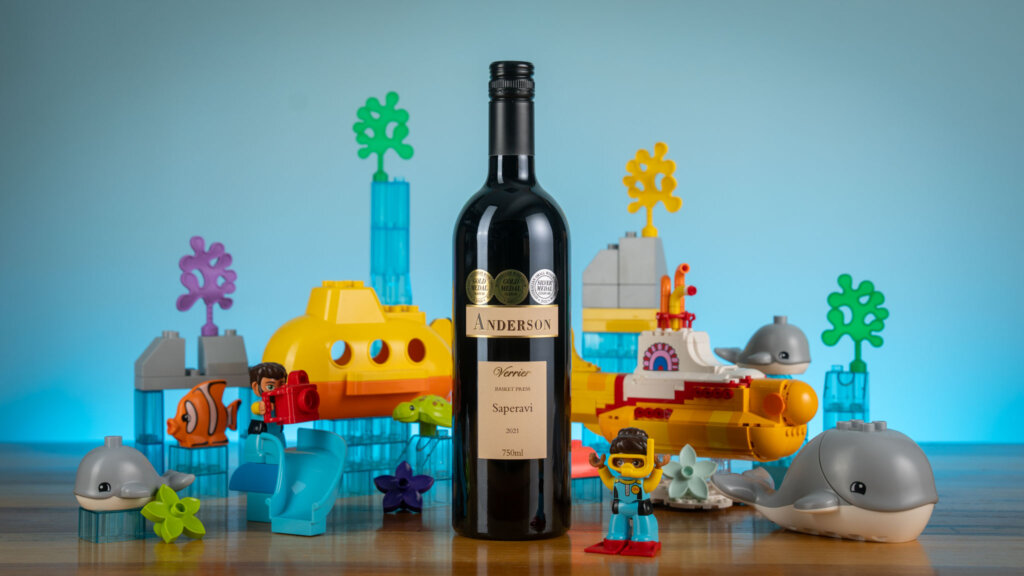
2021 Anderson ‘Verrier’ Saperavi, Rutherglen $40 RRP
Donaghey selected this among his top six selections from the day. The wine’s richness and jubilance captured him immediately: “Super rich red hue in the glass. On the nose, it’s all super juicy plum, red liquorice, ethanol heat, and a jubey confectionary character. The palate follows suit, with really yummy jubey character, red plum and cherry, red liquorice again. Now we’re getting some heat from the alcohol content – not that that’s a bad thing. Balanced acidity and tannin make this a really nice example of what saperavi can do in an Australian context.”
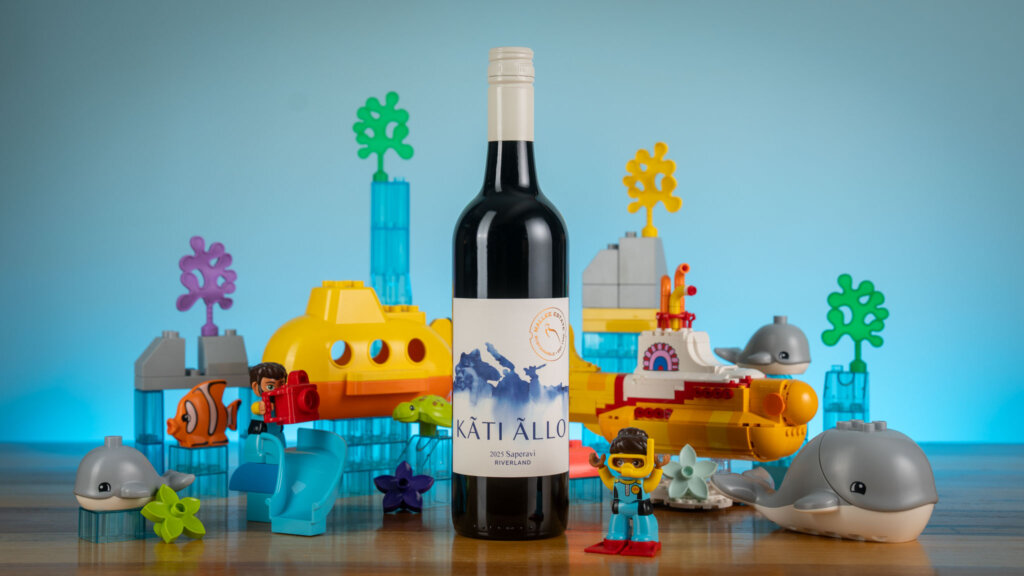
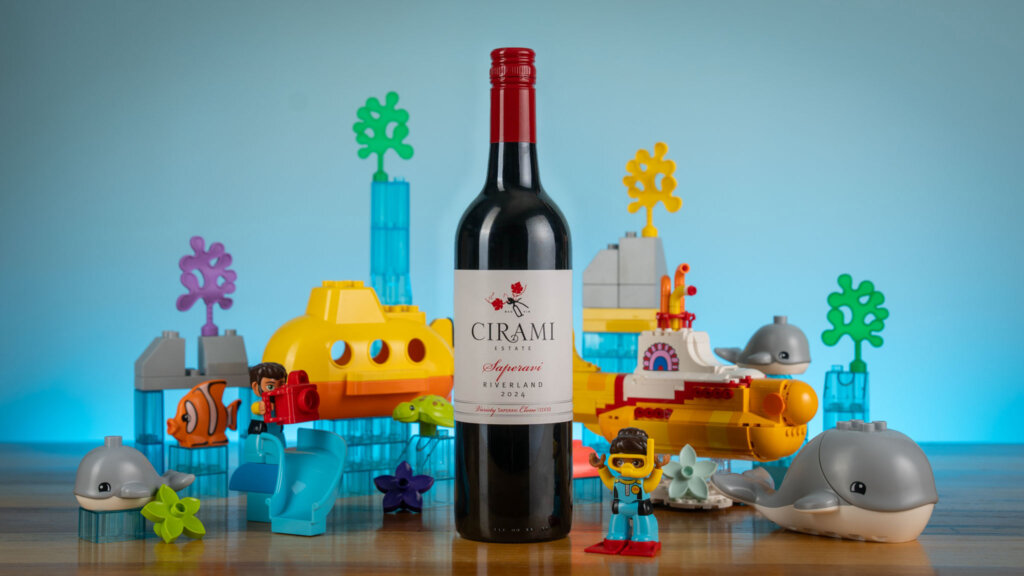
2024 Cirami Estate Saperavi, Riverland $48 RRP
Heley and Déak selected this among their standout six selections from the day. Heley found perfumed focus: “Perfumed and lifted, with a nose and palate that leans into cherry clafoutis flavours. A focused acid profile drives the wine down the palate, where charry tannins – led by notes of fresh raspberry – complete the finish.” Déak discovered creamy-tangy textural intrigue: “Malbec-like deep fruit notes jump out of the glass – black cherry, mulberry, black plum. Yoghurt-like textures on the palate, with a tangy, creamy kefir tone that adds vibrancy to the rich fruits. Think Greek yoghurt with a dollop of jam on top – yum!”
Gillespie selected this among their top six wines from the blind tasting. Their assessment captured the wine’s balance of opulence and intrigue: “This wine feels like Black Forest cake after dark – think less patisserie window, more candlelit dinner party. It leads with black cherry and a dusting of confectionary sweetness on both the nose and the palate. Cacao-nib tannins bring just enough tannic grip to balance the wine’s ripe, generous fruit. It’s plush and velvety, like theatre curtains – the sort of wine that wins over a table before anyone realises what it really is. A balance of comfort and mystery.”
The backstory
Saperavi hails from Georgia, the very cradle of winemaking and winegrowing, and its history there is long and storied. In the Australian context, however, it’s a relative newcomer – and one that’s making waves as a hardy and adaptable variety able to withstand a broad swathe of our climatic conditions. With its deep, inky colour – courtesy of its unusual red flesh – and full body, it also ticks a lot of boxes for drinkers who have cut their teeth on Australia’s traditional bold, rich reds, while its spicy and dramatic flavour profile gives it an exotic edge. Can this recent arrival cut through the noise of competing ‘alternative’ varieties and establish itself in the Australian context?
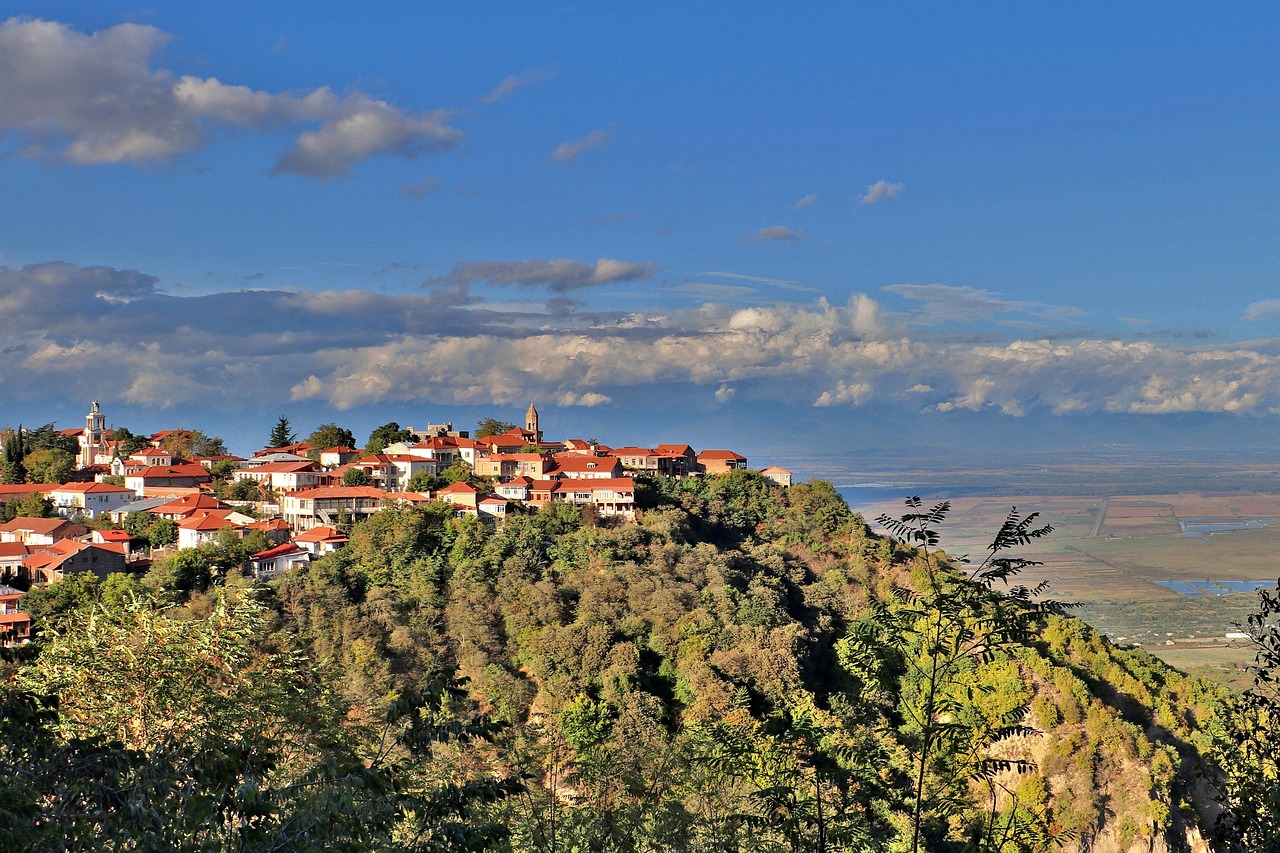
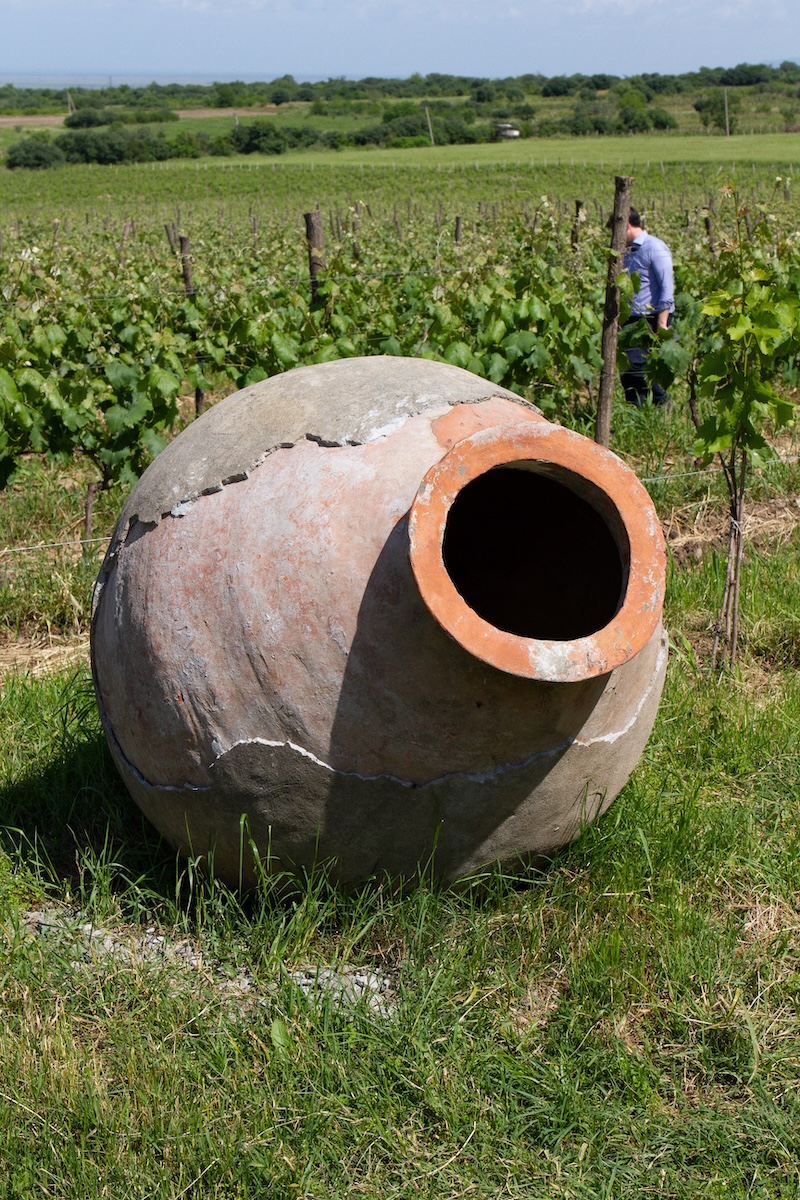
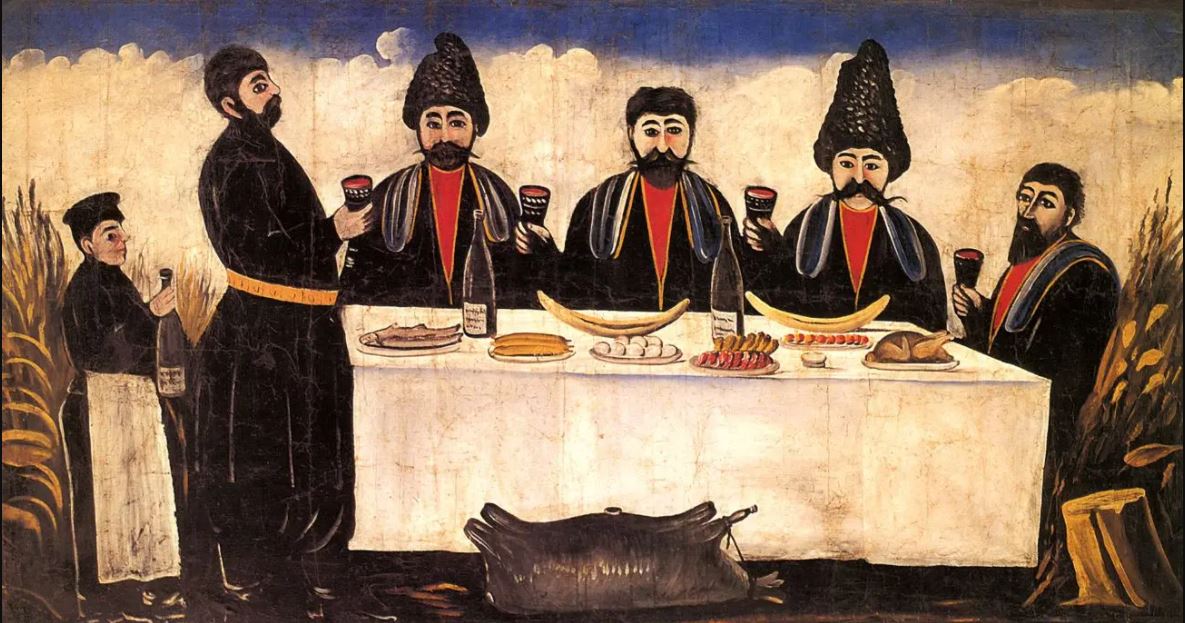
Georgia, a country at the located at the crossroads of far Eastern Europe and Central Asia in the Caucasus region, currently has the strongest claim to being the ‘cradle of winemaking’ as we know it. Fragments of pottery with wine residue inside, excavated from Georgian Neolithic-era archaeological sites named Shulaveri Gora and Gadachrili Gora, have been carbon-dated to roughly 6000 BCE – that is, over 8000 years ago. Despite the fact that the political and cultural map of the region has changed radically since that time, with ruling tribes and empires coming and going, wine – more often than not made in traditional earthenware vessels called qvevri that are buried in the country’s cellars – has remained a constant part of human life in the region, even as parts of the country were occupied by teetotaling Turkish and Persian rulers. It’s not surprising, therefore, that wine is deeply entwined with Georgian culture and religion, viewed as something both profound and sacred.
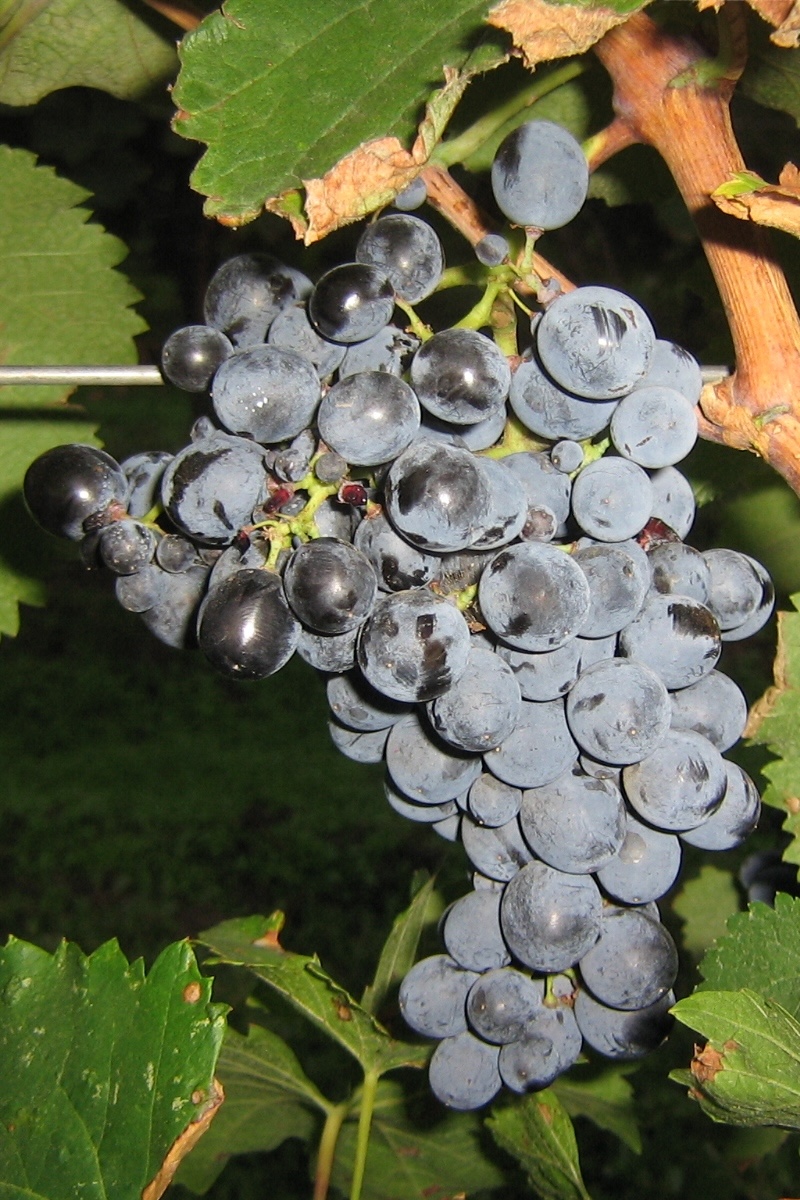
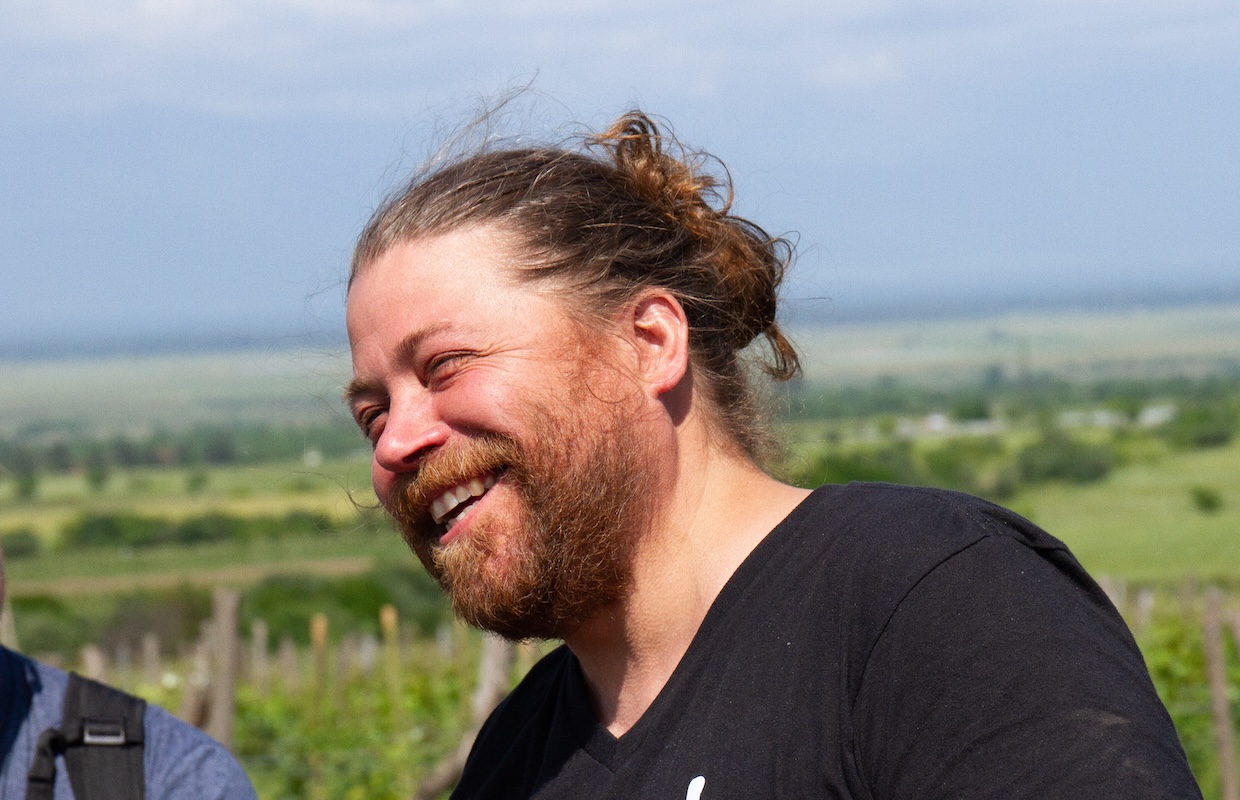
Opposite: Saperavi grapes on the vine. (Photo by Lebowskyclone, CC BY-SA 3.0.) Above: The village of Sighnaghi in the Kakheti region of Georgia.
Saperavi is Georgia’s most widely planted red wine variety, and, appropriately, it’s an ancient variety – but quite how ancient is currently unknown. Written records indicate that it was likely planted across Georgia during the 1200s, while genetic analysis by Georgian winemaker Lado Uzunashvili indicates that it could be over 3,500 years old. Recent genetic sequencing by researchers indicates that it has a low level of genetic differentiation from the wild grapevines that are native to the region – an indication that it is likely to be one of the earliest grape varieties selected by humans and propagated for the purposes of winemaking. Whatever its age, one of its key features is that it produces incredibly deeply coloured wines, thanks to the fact that it is one of the few grape varieties whose flesh is red-coloured – in fact, the name ‘Saperavi’ itself means ‘to dye’ or ‘something to colour with’ in the Georgian language. (Nearly all red wines are made from grapes with clear pulp; the colour comes from contact with the grape skins as the juice ferments.) Saperavi wines themselves tend to be as intense as their colouration, offering bold, spicy flavours, a full body, relatively high acidity, and firm tannic structure.
From the cradle to the wine-rave
Saperavi’s current dominance over Georgia’s wine culture is not only about tradition, however. As is appropriate for the cradle of viticulture, the country boasts over 500 different indigenous grape varieties – but most of these exist only in academic research and conservation vineyards. Of those 500-plus varieties, only around forty-five are cultivated at anything approaching commercial scale, and even fewer are turned into wine that is currently exported. The diminishment of this diversity can be traced back to the Soviet system that ruled over Georgia between 1922 and 1991, when it was part of the USSR. By the start of the Soviet era, Georgia’s vineyards had already been decimated by the arrival of exotic new vine pests and diseases – first oidium (aka powdery mildew, which causes grapes to split before ripening and rot on the vine), then phylloxera (a sap-sucking American vine louse that rapidly kills Vitis vinifera plants if they are not grafted to resistant American rootstock species). When the nation’s vineyards were replanted under Stalin, then, it was in the guise of collective farms on the fertile valley floors to feed industrial-scale “wine factories” that in turn went on to slake the near-insatiable thirst of the USSR’s populace for semi-sweet reds and Sovetskoye Shampanskoye (so-called ‘Soviet Champagne’). Only a handful of approved varieties were planted – ones that, as Lisa Granik MW writes in her book The Wines of Georgia, “had been the most prevalent in the nineteenth century because they were generously yielding, reliable, and unfussy.” Unlike most of Georgia’s other indigenous red-wine varieties, saperavi ticked all of those boxes, which saw it become the country’s dominant red variety – and practically the only one planted alongside the three dominant white varieties (rkatsiteli, mtsvane kakhuri, and tsolikouri) during this time. At least officially, that is – the remaining indigenous varieties survived only in discreet household plots, destined to be turned into traditional homemade styles of wine. As such, the vast majority of Georgian wine throughout the twentieth century was not made in the romantic mould of the small-scale vintner working their qvevri by hand – instead it was made at huge scale, in gleaming modern factories lined with stainless steel tanks.
Above: John Wurdeman of Pheasant’s Tears – one of the prime movers of the Georgian wine renaissance. Opposite: Tim Stock of Goodstock Wine – a leading importer of Georgian wine into Australia.
Wine importer Tim Stock, who specialises in bringing Georgian wines to Australia via his import business Goodstock Wine, first fell in love with the romanticised image of small-scale traditional winemaking – but is the first to acknowledge the more messy reality of what post-Soviet winemaking looks like in Georgia. He describes his first encounter with Georgian wine – a wine from producer Pheasant’s Tears, poured by sommelier Raúl Moreno at the visionary (and now shuttered) natural-wine focused venue Virginia Plain in Melbourne – as “a lightbulb moment”. “I think I was pretty oblivious up until that point,” he says. “I was like, ‘Oh, I’ll look into Georgia and where it sits in the world’.” He found it impossible to be unmoved by the story of Pheasant’s Tears’ – a winery founded by American artist John Wurdeman in collaboration with Georgian winemaker Gela Patalishvili in order to restore the winemaking and viticultural traditions that almost disappeared under Soviet rule and subsequent civil war – which he describes as “a modern-day fairytale, or modern-day fable”, and soon found himself importing their wines into an Australian market that had, in 2013, just been turned on to the joys of natural wine. “John [Wurdeman] was extremely generous with his resources and introduced me to all the OGs of the of the renaissance that was happening at the time,” Stock says. “He helped coordinate initial shipments for our first few years, and so it was really really good rapport through Pheasant’s Tears.” The timing of that renaissance – spurred on by an emerging international natural-wine scene that was making vinous authenticity a desirable commodity via untraditional events such as ‘wine raves’ – couldn’t have been better for Georgia’s wine industry, which was reeling from a 2006 embargo by Vladimir Putin that cut off access to the once-lucrative Russian market.
“Saperavi spans everything from pét-nat base all the way through to sweet, highly alcoholic red wine for the former Soviet market, and everything in between. But everyone’s really intent in keeping the prettier aspects of the variety in their expressions – the freshness, the acidity, and those more aromatic, perfumed characters of the variety.”
“We’re talking about a very small percentage of the industry, but a growing one,” says Stock of the kind of Georgian winemakers that he imports via Goodstock. “These are really very small family-owned operators – smaller than what we would call a boutique operating in Australia.” By contrast, Stock argues that “the majority of Georgian winemaking” is “Westernised and industrialised”: “The foundations for that were obviously built during the Soviet industrialisation, but subsequently they imported a lot of skills, including from countries like Australia, to help modernise their commercial wine industry,” he says. “So they’re absolutely those wines that you go and buy which just look like any old international wine.” As such, the wines produced in Georgia from saperavi, he argues, run the full gamut of styles: “It spans everything from pét-nat base all the way through to sweet, highly alcoholic red wine for the former Soviet market, and everything in between,” he says. “I think you’ll find that most of the commercial industry are making styles that are fairly standard – more highly extracted, bigger, richer wines. And that can be done really beautifully, if you can maintain the aromatic profile – you come out with something which is actually not dissimilar to good young cabernet, for example, in that it’s got a tension between high levels of acidity and tannin, but there’s a prettiness to the aromatic profile there.”
Opposite: An excavated qvevri in the vineyard at Pheasant’s Tears. Above: The painting ‘Celebration’ (1904) by Georgian artist Niko Pirosmani – wine has been an integral part of Georgian culture for over 8000 years.
By contrast, Stock sees a particular lightness of style in the saperavis from the rapidly developing ‘renaissance’ producers he imports. “A lot of these guys, even though they’re starting out with very ancient technology and very simple equipment, they’re actually the most progressive winemakers in the whole country,” he says. “My producers have certainly sought to lighten their expressions. We’ve still got a few who make those traditional expressions, but instead of 14% or 14.5% alcohol, they might be 12.5% alcohol now – we’re still getting the lovely aromatic characters and really just a bit more finesse through the structure, but still that tension. Then there’s people using carbonic or semi-carbonic maceration to, you know, completely change and soften the structure. There are people doingdifferent types of maceration, so either a very short maceration with 100% skins – it might be a day or two and it still comes out looking like a full-bodied red wine – or people keeping separate portions off skins and blending. So we’re getting a huge range of expressions. But everyone’s really intent in keeping the prettier aspects of the variety in their expressions – the freshness, the acidity, and those more aromatic, perfumed characters of the variety.”
Adapting to Australia
While much of the interest in Georgia’s wine culture can be sheeted home to the natural wine movement, Australia’s leading proponent of the variety, Hugh Hamilton, discovered its charms much earlier – not long after the 1991 dissolution of the USSR. “The Soviet Union had broken up and there were some Eastern Europeans from the former Soviet colonies who had come out to Australia,” Hamilton recalls. His sister-in-law, Alison, was teaching English as a second language to migrants at the time and called him: “She said, ‘I’ve got a bloke in my class who claims he’s a winemaker and he’s from Georgia. Can you get him a job?’,” he recalls. “I said to Alison, ‘Jesus, Alison, I can’t get myself a job – let alone a communist winemaker! But listen, I’ll have a chat with the bloke’.” Having met with the winemaker in question, Lado Uzunashvili, Hamilton says he was quickly disabused of the notion that Uzunashvili was a ‘communist’ – and was struck by his depth of expertise: “This bloke knew more about winemaking than I did – and more about winemaking than most winemakers I knew.” Having found a job for Uzunashvili, Hamilton found himself drawn into conversations where Uzunashvili extolled the virtues of saperavi. “He got talking about this variety they had in their country called saperavi, which I’d never heard of,” Hamilton says. “I didn’t even know the country produced grapes back then, quite frankly.” Uzunashvili’s passion for the variety intrigued Hamilton: “He got me enthused about it,” he recalls. “So then I started to look into it and I discovered there was some saperavi growing here.”
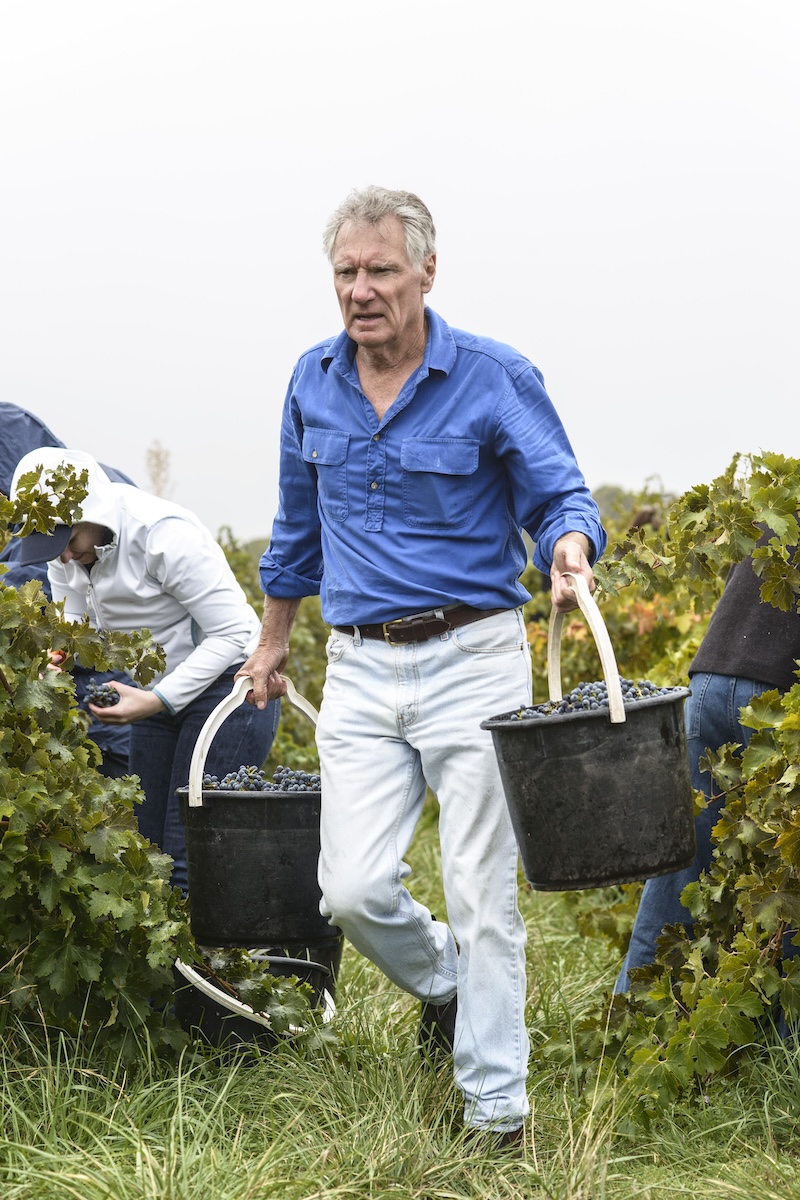
Above: Georgian winemaker Lado Uzunashvili, who introduced Hugh Hamilton to saperavi. Opposite: Hugh Hamilton harvesting grapes in the Hugh Hamilton Wines estate vineyard, McLaren Vale.
That saperavi was grown by Peter Read at his Symphonia vineyard in the King Valley. “I sought him out, and it turned out he didn’t actually know anything about the variety either,” Hamilton says of Read. “He thought it was Russian – because anything out of the Soviet Union was considered Russian! But he got he got me interested in this thing, so then I started to seek out where I could get hold of some cuttings.” Read’s saperavi vines were sourced from an experimental block in the Whorouly vineyard, planted by Mark Walpole during his tenure as Brown Brothers’ chief viticulturist, and at a time when the company heavily invested in the possibilities for alternative varieties such as aglianico and dolcetto. (Walpole himself believes the source for those Whorouly vines was from the CSIRO, who possibly sourced them from the vine collection at UC Davis at the behest of Riverland viticulturist Richard Cirami.) Hamilton eventually found some cuttings in South Australia – “because all this stuff is tested by the wine research boys here” – and planted a few rows in his McLaren Vale vineyard. “I didn’t do a lot more homework than that,” Hamilton says. “If I had done my homework, I would never have planted it. Because I have subsequently been to Georgia, and I read all up all about it. The conditions there are a continental climate – you’ve got the Caucasus Mountains sitting behind the vineyard country, with snow on the peaks for twelve months of the year, but it gets hot. And we’re in a very Mediterranean climate here in McLaren Vale. I would have just said, ‘Oh, there’s no point in planting that variety here’.” Fortunately for Hamilton, the variety seems remarkably adaptable to climatic variation, and has performed well in McLaren Vale, even in very hot years. (For his part, Uzunashvili has recently theorised that the variety emerged in the more maritime climate of the western coast of Georgia, along the Black Sea, and later adapted to the continental climate of the country’s east – so its arrival in McLaren Vale may in fact be somewhat of a homecoming.)
“If I had done my homework, I would never have planted saperavi. Because I have subsequently been to Georgia – the conditions there are a continental climate, and we’re in a very Mediterranean climate here in McLaren Vale. I would have just said, ‘Oh, there’s no point in planting that variety here’.”
Having planted those initial rows, Hamilton had to tackle the problem of making wine from this variety at a time when imported examples were scarce. “Tannin is certainly part of the variety, and I was very aware of that when I was doing the winemaking back then,” he says. “I was very aware that you need to be fairly careful with how much extraction that you get out of out of this variety.” As such, his approach from the start was to always handle the variety relatively gently, letting its elevated levels of tannin and colour do the heavy lifting: “We just didn’t press too hard on it, because we could get plenty of colour without running the press at high amounts of pressure,” he says. “I was always really aware of that. The colour really got me, though – I was staggered at the colour. And it’s not every year, but in some years, the colour would come out so black that it was blue – it had that sheen of blue in the colour. It’s just so intense, and that intrigued me greatly – that’s one of the things I liked about it. But I also liked the spiciness, the sort of sage tanginess that comes from it. I like the liveliness that came out of this grape variety – I thought it was something very, very special.”
Tackling the question of tradition
Since making his first wine from saperavi, Hamilton has become Australia’s chief proponent of the variety. His label, Hugh Hamilton wines, produces a highly sought-after varietal expression called ‘The Oddball’ alongside a super-premium barrel selection called ‘Oddball the Great’, and he is currently the president of the Australian Saperavi Association. While he is clearly enamoured with the variety, he’s also realistic about its prospects within the Australian wine market: “It doesn’t have name recognition – and people are very conservative about wine, sadly,” he says. “If they don’t know what it is – if they’ve never heard of the variety – they won’t buy it very easily. If it goes into a bottle shop, it can sit there and not be picked up, whereas if it’s a shiraz, or a cabernet, or a pinot or, a grenache, they’re going to pick it up and walk out with it. It’s quite an uphill battle – you’d be fairly bold to stake your livelihood on a variety like this. But in saying that, I would also say that our customers who try it would walk over cut glass to get another bottle of it. So once you try it, once you understand – you’re hooked.”
“You’d be fairly bold to stake your livelihood on a variety like this. But I would also say that our customers who try it would walk over cut glass to get another bottle of it.”
Despite this relatively blunt assessment about its market prospects, he remains bullish about the variety’s viticultural benefits across a wide range of climatic conditions. “We’ve tried them from all over Australia, and even though they do vary quite a bit, there’s some basic family resemblances,” he says. “The variety does run true to its favour – from there, it’s all nuances.” He cautions that while the vines themselves are able to withstand severe heat and drought conditions, they do so at the cost of yield, which can be very low in exceptionally hot years. “It normally produces lots of grapes, plenty, and it yields very well,” he says. “But in very hot years, I’ve had two notable wipeouts of the crop.” He recalls that in the devastatingly hot 2009 vintage, when all of the other varieties were shedding leaves in a heatwave, the saperavi rows were impressively verdant – but the yields were abysmal: “I thought, ‘This is terrific – these things have handled that heat very well’,” he says. “I walked in there, and when I parted all the leaves, I found there was basically no crop there – it had all shrivelled up … we picked it, and the wine turned out to be really excellent. But out of what should have been a six-to-seven ton pick in a normal year, we got 900 kilograms.” He also finds it exceptionally well suited to blending with shiraz, as his label does for its ‘Black Ops’ wine: “There’s a lot of similarities to shiraz in some ways in terms of the spiciness of it – the little bit of pepper and the little bit of tobacco character there,” he says. “Just that little bit of saperavi into a shiraz gives it a real bump, and gives it a real lift.”
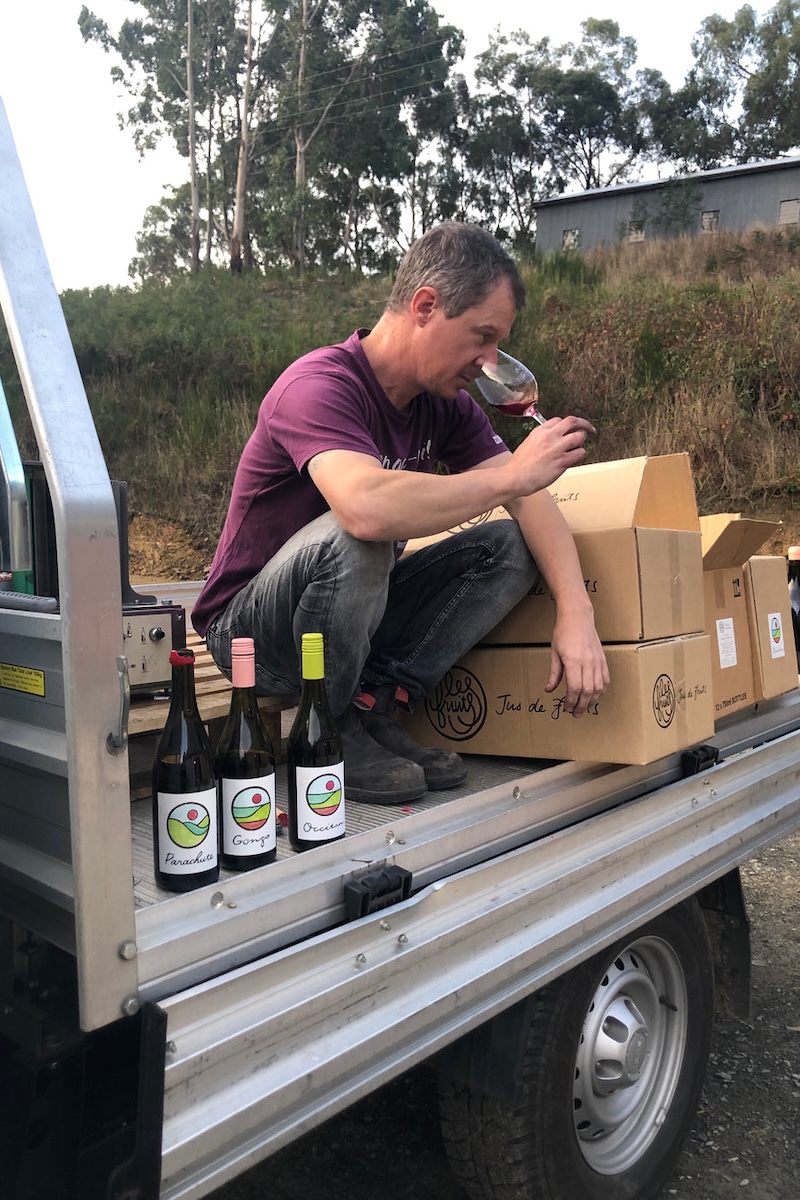
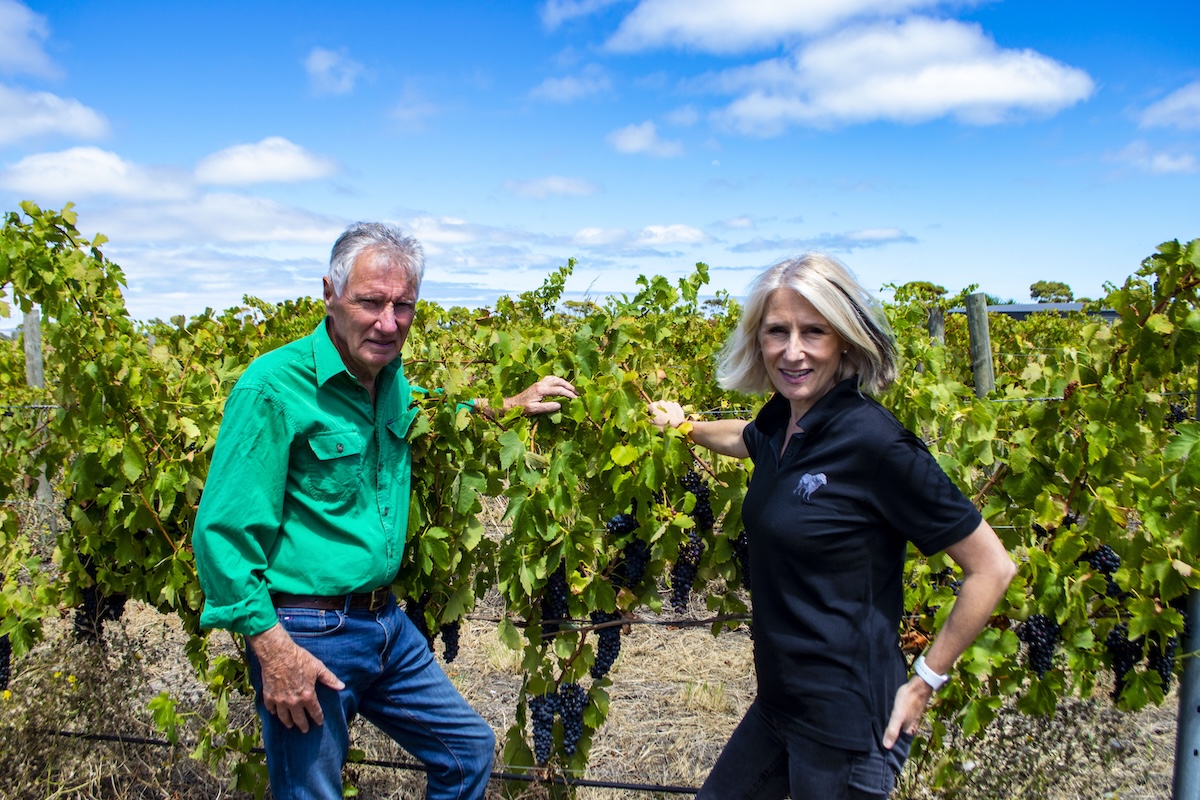
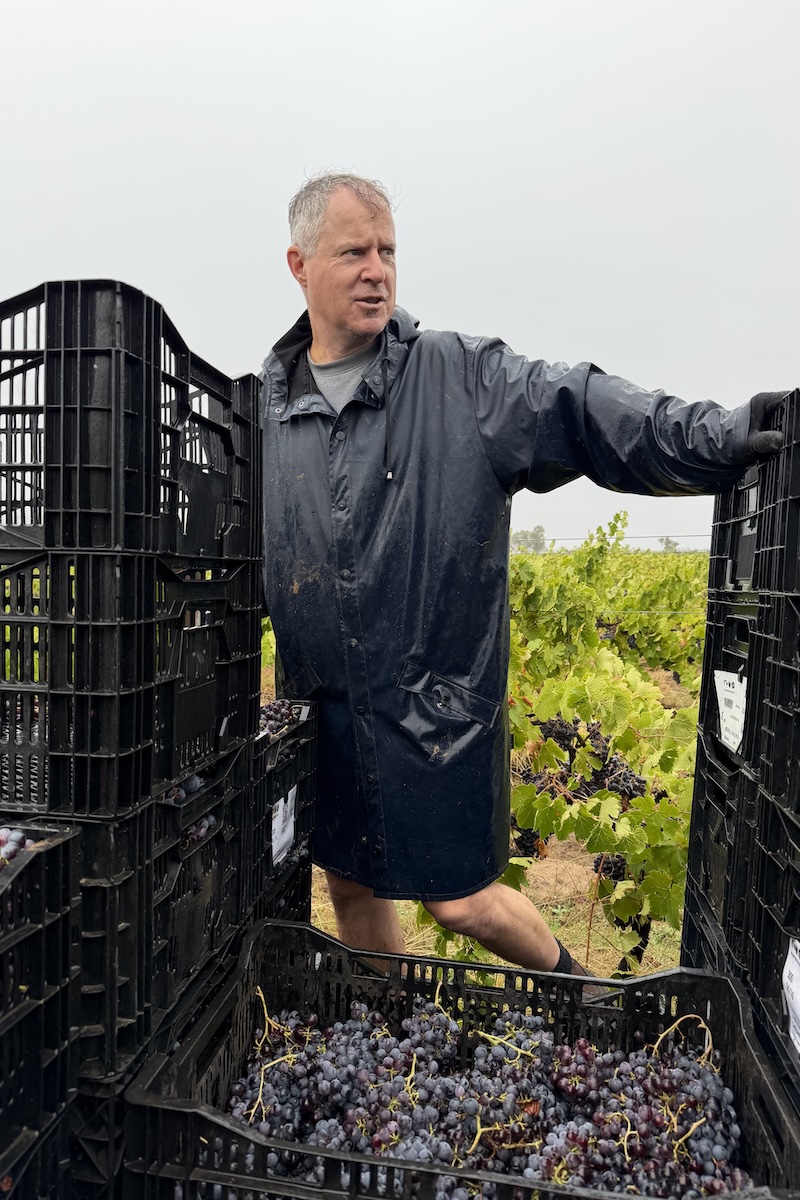
Above: Hugh and Mary Hamilton amongst the Saperavi vines in Hugh Hamilton Wines’ McLaren Vale vineyard. Opposite: Tim Stock harvesting grapes for his own wine label, Les Fruits.
For his part, Stock agrees with Hamilton on the current position of the variety and its wines in the Australian market. “It seems to be more of a curio at the moment,” he says. “It’s quite widely planted but in small, small parcels.” Like Hamilton, he urges winemakers to handle the variety delicately and let its inherent character do the hard work. “We’ve had a tendency to make it in a fairly extracted style – like a shiraz, maybe, or like a cabernet, et cetera,” Stock says. “But because it’s so high in colour, tannin, acid – and sugar potentially as well – it’s something that you really need to take care of. Making it when it’s picked on some some basic numbers and with a classic ‘Oh, we’ll just chuck it on skins for two weeks and see what happens’ mentality – I think you’ve got to be pretty careful with that.” And although it would suit Stock’s own purposes to see more examples of Australian saperavi wines made in qvevri – in addition to wines, Goodstock Wine also imports these ceramic vessels from Georgia’s specialist potters – he knows from his own experience making an as-yet-unreleased saperavi for his own label, Les Fruits, that it’s not plausible for every winemaker. “I got offered a very small parcel, so I made two barrels of saperavi myself – I couldn’t say no to it,” he says. “I do have qvevri, because I import small amounts of them, but I don’t have the luxury of a piece of land suitable to actually stick them in the ground anywhere. They’re not the sort of thing that you want to bury and they have to dig up when your lease is up.”
“Making Saperavi when it’s picked on some some basic numbers and with a classic ‘Oh, we'll just chuck it on skins for two weeks and see what happens’ mentality – I think you've got to be pretty careful with that.”
While some philosophical purists might be shocked to hear that Australia’s leading importer of Georgian wine uses oak barrels rather than qvevri to make wine from a traditional Georgian variety, Stock emphasises that Georgia’s current winemaking scene is dynamic, nuanced, and more than capable of incorporating influences without losing its identity. “These guys are going in natural wine salons in Europe, and they’re trying wines from other producers, and they’re going, “Great – I love that. How can I make that?’,” he says. “They go home and they’ve got what they’ve got to work with, be it saperavi or other varieties.” This idea, in turn, opens up possibilities for Australian expressions of saperavi that likewise don’t stick to the Georgian template – which might be the most profound way to honour that ancient winemaking tradition. “John Wurdeman was an artist well before he was a winemaker,” Stock adds, “and his [Masters] thesis was actually about how tradition breeds creativity. Then he went on to become part of this movement which is just the absolute pinnacle of that idea – how tradition doesn’t hold you back, but it actually propels you forwards.”
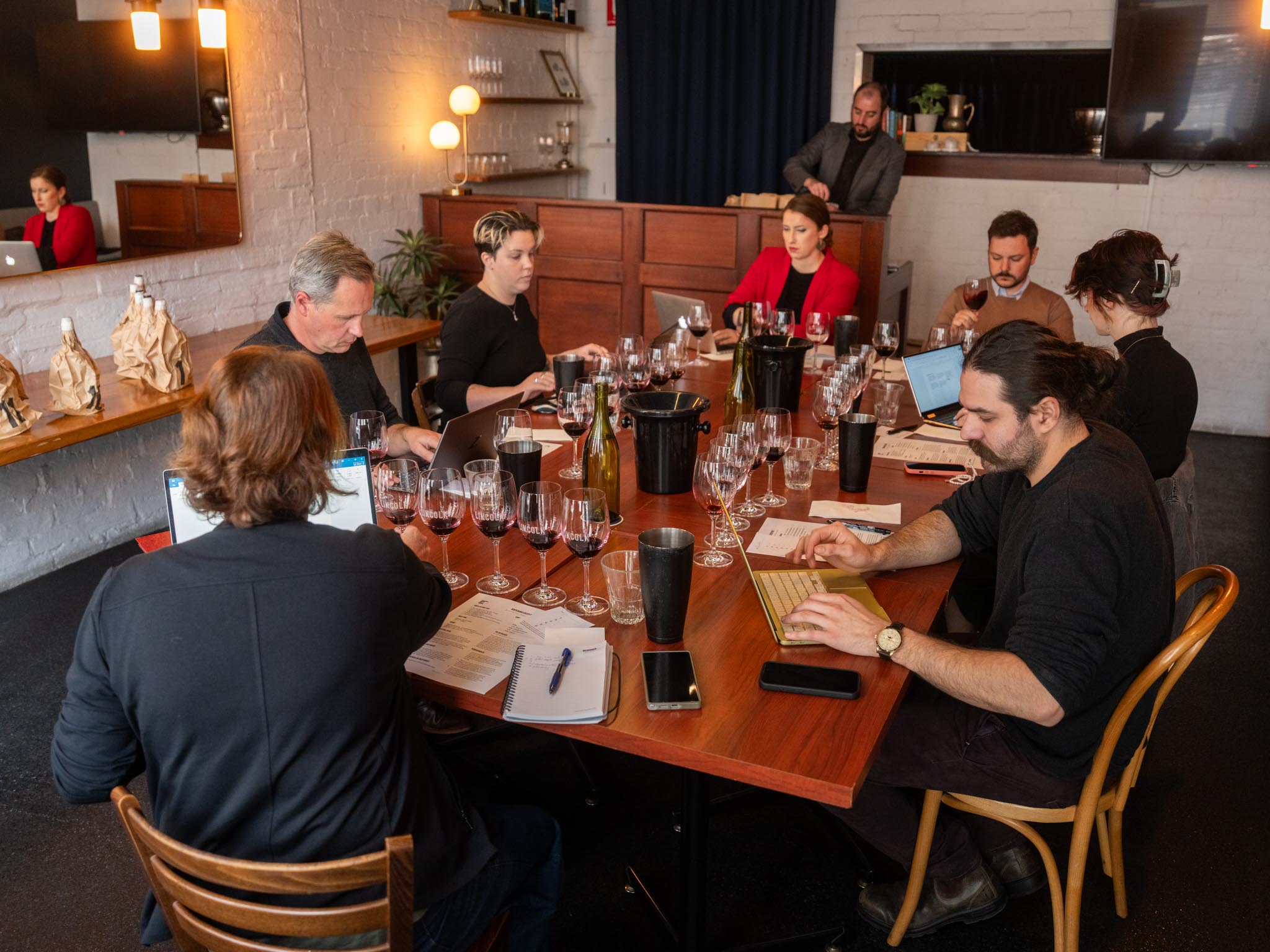
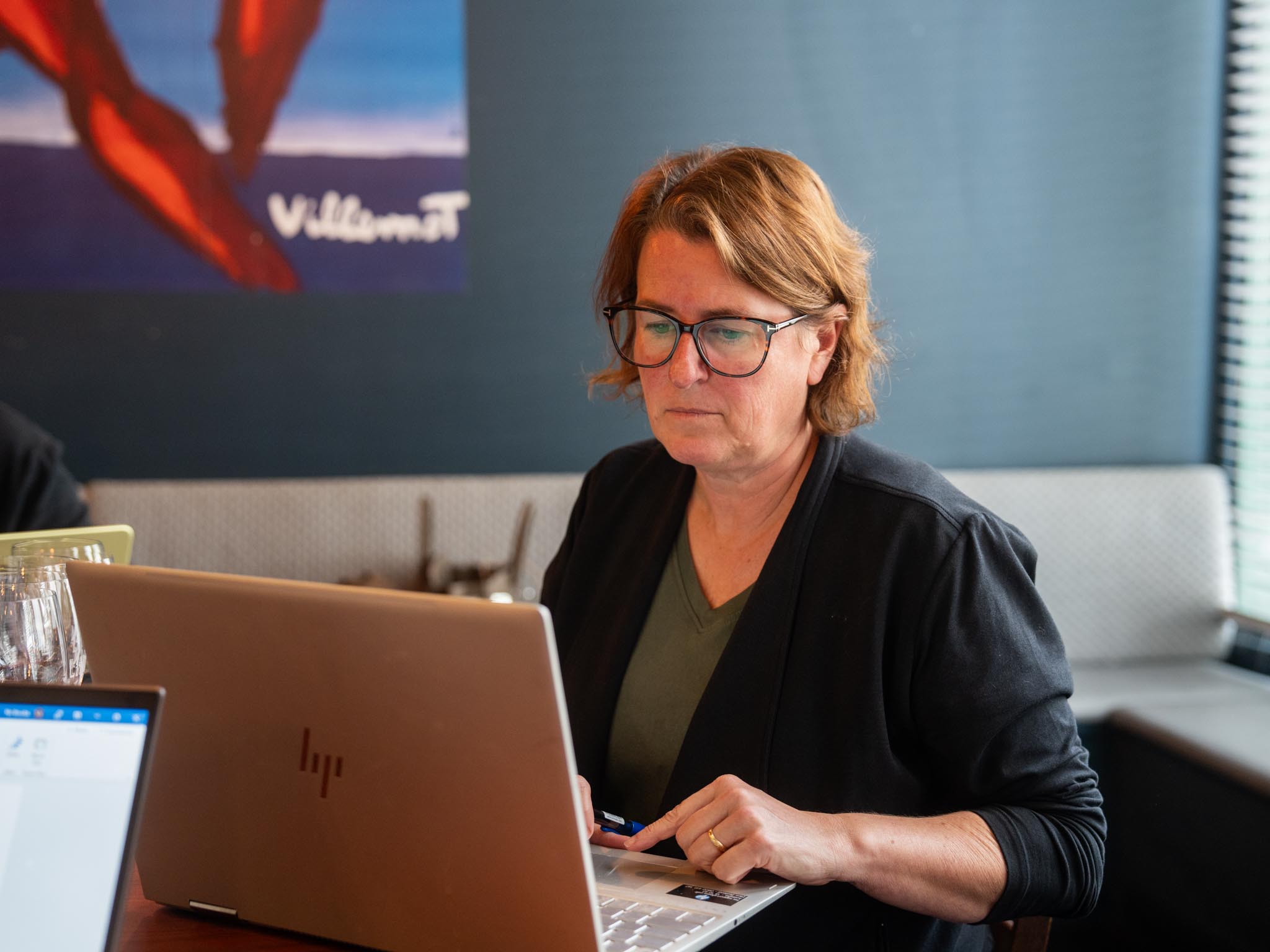
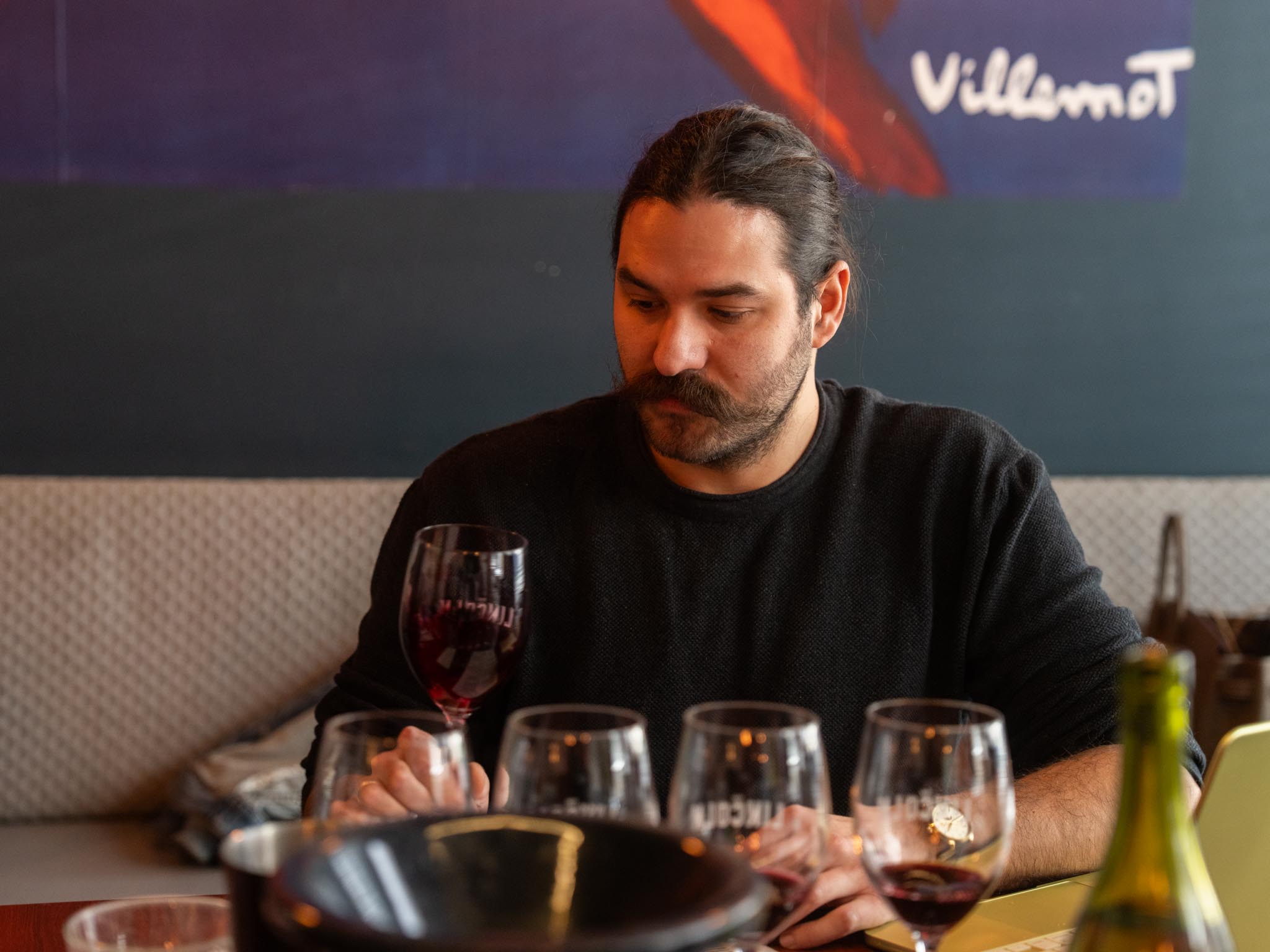
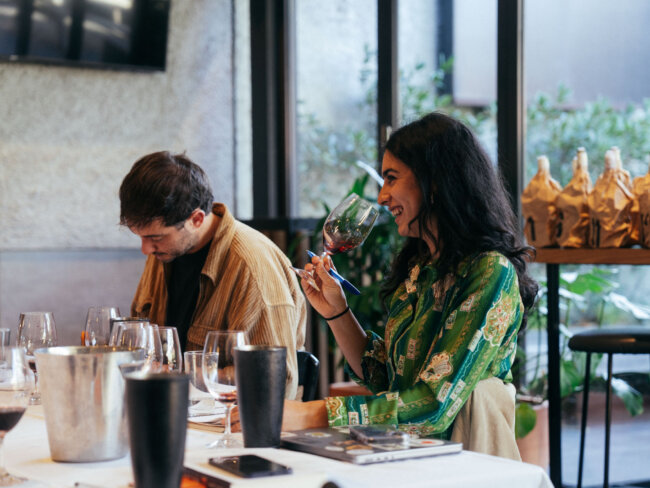
Above: Our expert panel gathered at The Lincoln, Carlton (Melbourne)
Outtakes from the tasting
We gathered every example of Australian saperavi that we could find and set our expert panel the task of finding the wines that compelled the most. All wines were tasted blind, and each panellist named their top six wines.
Our panel: Cindy Heley, owner and winemaker, Monak Wine Co.; Nic Bourke, winemaker, Hugh Hamilton Wines; Sarah Hilliker, sommelier, Vespa Pasta & Wine; Seamus Donaghey, winemaker, 919 Wine; Blaire Gillespie, wine merchant, Natural Science Wine & Liquor; Soma Déak, co-owner and wine buyer, Glovers; Caroline Abbott DipWSET, freelance wine consultant, Caravine Consulting.
Bourke commenced the discussion by observing that the category is a nascent one, but also one that shows a lot of potential. “There’s a lot of promise on the table here, and, in some cases, some really strong delivery,” he said. “If anything, the thing that’s holding it back is adjusting winemaking technique to understand the variety. It’s very easy to overdo, particularly in warmer regions – just because you can get it ripe doesn’t mean you should get it super-ripe. And I think some of the better examples on the table today had a lighter touch. Rather than taking the brief as ‘This wine is going to be the biggest wine in the world, with lots of tannin, lots of colour, lots of alcohol’, they’ve actually realised that they key point with saperavi is its ability to carry spice. And I think the execution on some of these in delivering that really interesting range of spice flavours is commendable.”
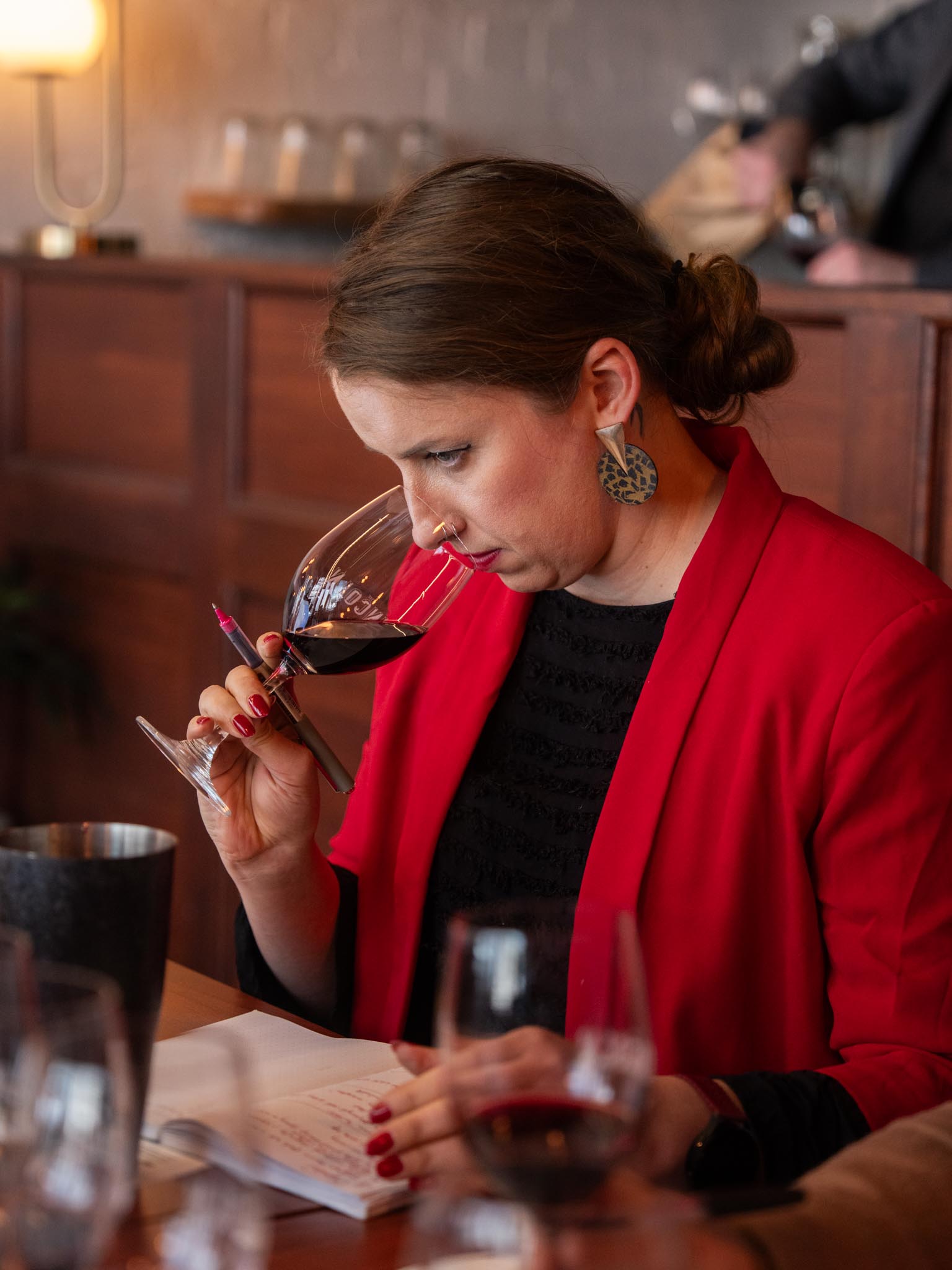
Above: Nic Bourke. Opposite: Caroline Abbott.
This oberservation lead to a discussion about complexity in the wines and its relationship to structure and weight. “I want to add that the complexity stayed with all of those lighter styles of the variety as well,” Déak said. “I almost got more complexity from the lighter styles than the heavier – unless I swirled them in my mouth for a very long time.”
Gillespie concurred: “There were a few examples where I put my nose in the glass and I was like, ‘Oh, this is all Wizz Fizz and sherbet and sour red lollies’,” they said. “Then I would get it on the palate and I’d be like, ‘Wow, there’s so much depth of deep, dark, brooding spices – that’s not what I expected’.”
Déak circled back to the sheer drinkability of the wines in the line-up: “These wines don’t have to hide behind ageing,” he said. “They’re ready to drink now. You could definitely age these, but it’s not like ‘Ooh, you’ll have to wait with this wine, because it’s really tight right now’.”
“Some of the better examples on the table today had a lighter touch. Rather than taking the brief as ‘This wine is going to be the biggest wine in the world, with another lots of tannin, lots of colour, lots of alcohol’, they’ve actually realised that they key point with saperavi is its ability to carry spice.”
This comment lead into a discussion about the cellaring potential of the wines. “Saperavi has this immense abilities to age,” Bourke said. “It almost demands age, because it retains its fruit forever. It’ll get those secondary and tertiary characters, but still retain fruit quality, which is ideal for cellaring.”
Heley drew a distinction between wines that are designed to age in the cellar and wines whose structure keeps them fresh for long periods of time. “It’s not necessarily that the wine is going to age – it’s that it will remain fresh for a long time, which I think is probably more to the point with saperavi,” she said. “Looking at the fruit that’s coming to my winery over the years, the pHs have remained incredibly low, even out a really warm climate like the Murray Darling. And I think that’s the contributor to maintaining freshness over a long period of time. So when we talk about ageability, is it that we want the wine to age? Or do we want it to have a longevity in the bottle? There’s a difference.”
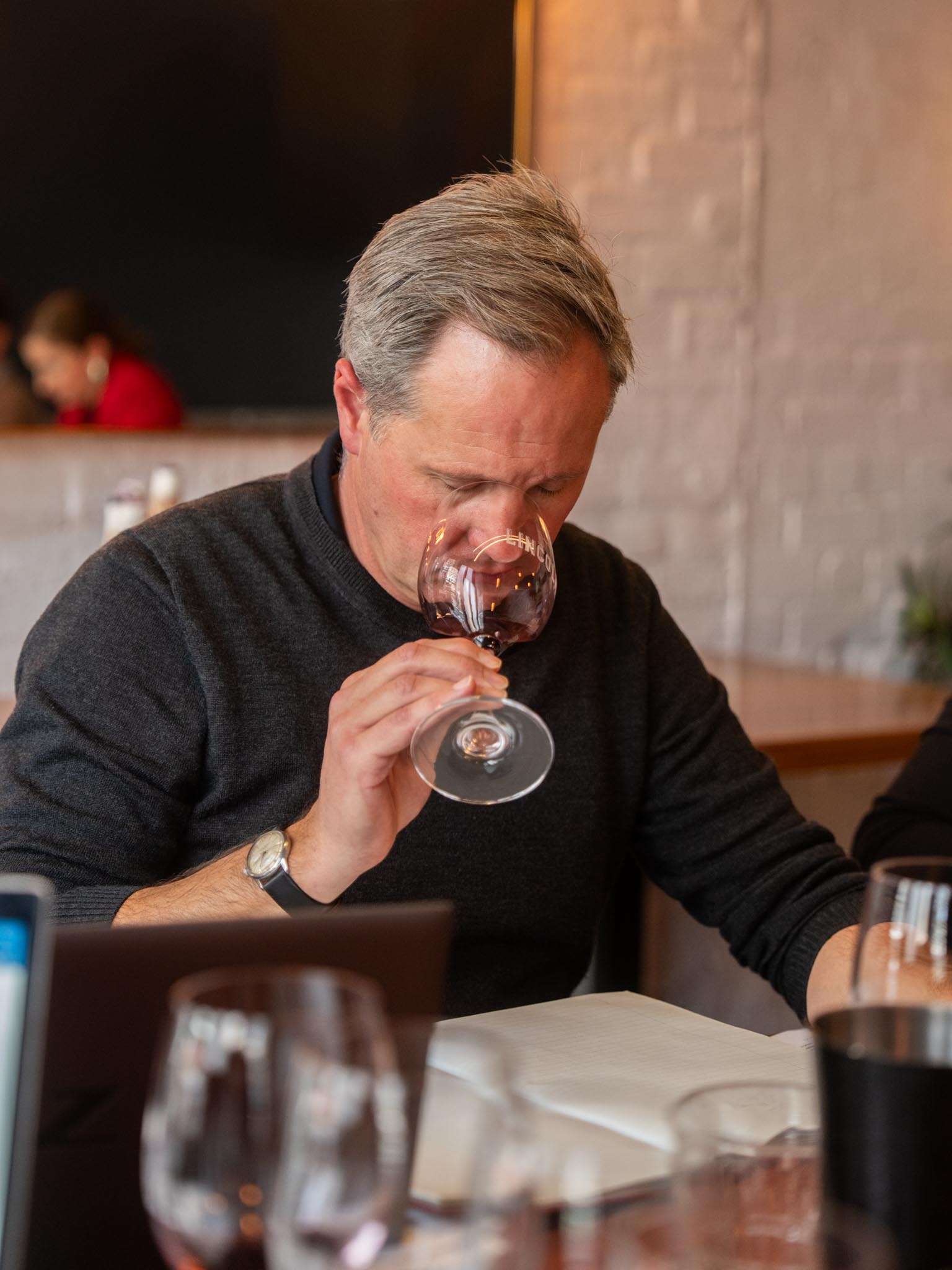
Above: Seamus Donaghey. Opposite: Cindy Heley.
These comments lead into a discussion about the connection between the tannins in the variety and the deep, concentrated colour of the wines. Donaghey’s experience with making rosé out of saperavi drilled home the importance of anthocyanins and tannins to this variety’s character: “We had machine-harvested fruit, and it would have spent forty-five minutes in a harvesting bin before it went straight into the press,” he said. “During pressing, we were just keeping an eye on it every ten seconds, just on the colour coming out – tasting it, making sure it’s not too tannic, making sure the colour is what we wanted. We realised that we really, really needed to hit the mark – because if you go too far over in terms of colour,there’s only so much sulphur you can add to bleach it back a bit. So it did probably end up a little bit lighter than we wanted – but better safe than sorry, because the client we were making it for had a very specific colour in mind.”
“I think selling the Australian interpretation of saperavi is a lot easier than selling some of the old-school, quite robust interpretations from Georgia.”
Talk of dialling in the specific colour of rosé saperavi turned to a general discussion about how best to market Australian saperavi wines. Gillespie argued that the variety’s long and storied Georgian history offered opportunities for consumer engagement. “I think selling the Australian interpretation of saperavi is a lot easier than selling some of the old-school, quite robust interpretations from Georgia,” they said. “It’s such a fun variety to discuss the history of, though. I think a lot of people struggle with the science of grapes, but they can get on board with history lessons. Champagne is a great example – most people will get into sparkling wine via the history of Champagne, with the wars and the invention of it and so on. Saperavi’s got its own really cool story to tell. So I think that all these little nuggets of history is how we get people into this wine.”
Above: Blaire Gillespie. Opposite: Sarah Hilliker.
Hilliker agreed that the history of the variety made it a compelling sell. “The story behind saperavi lies in the Georgian people growing it and sending it off in bulk – but then keeping a little bit for themselves, and brewing it under their houses,” she said. “I think that’s the romanticism of a grape like saperavi – doing well in communism, but also surviving communism.” She added, “With this story, you get the combination of that old-fashioned sensibility of wanting those big, dark, bold reds, and also the modern trend of something more natural or authentic. So you kind of get to please both of those markets in the same wine – which I think is a really wonderful gift to be given as someone in the selling space.”
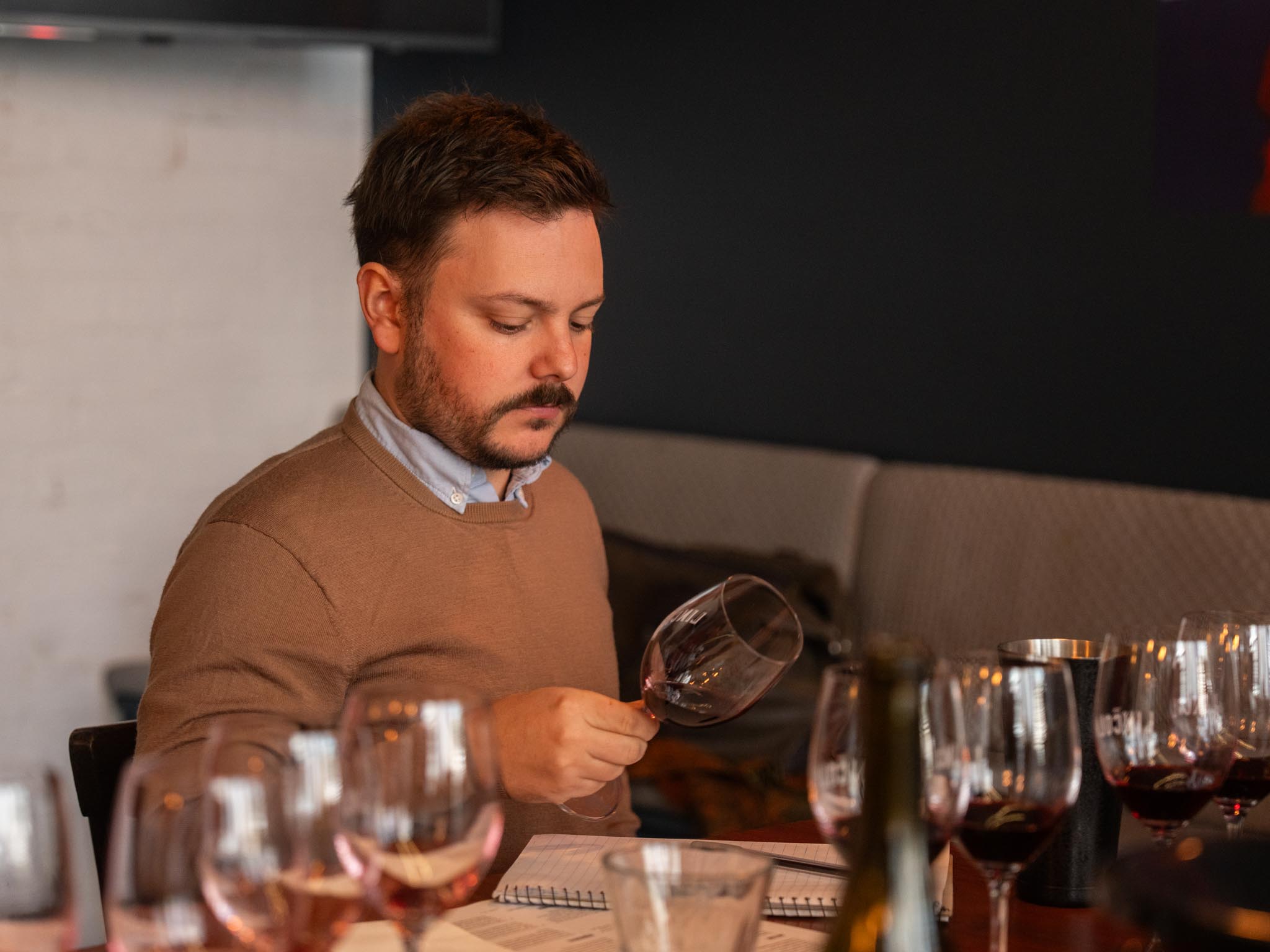
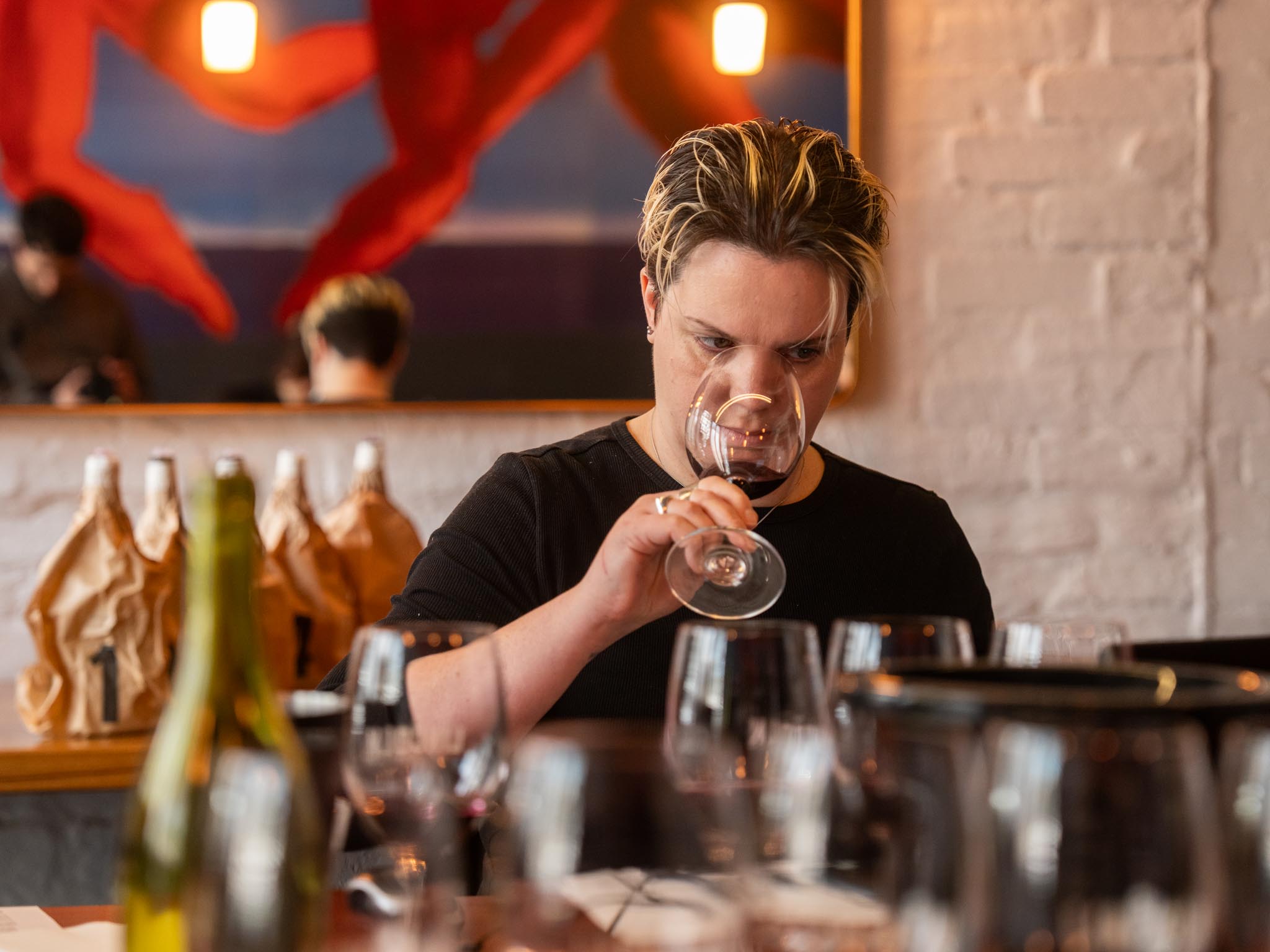
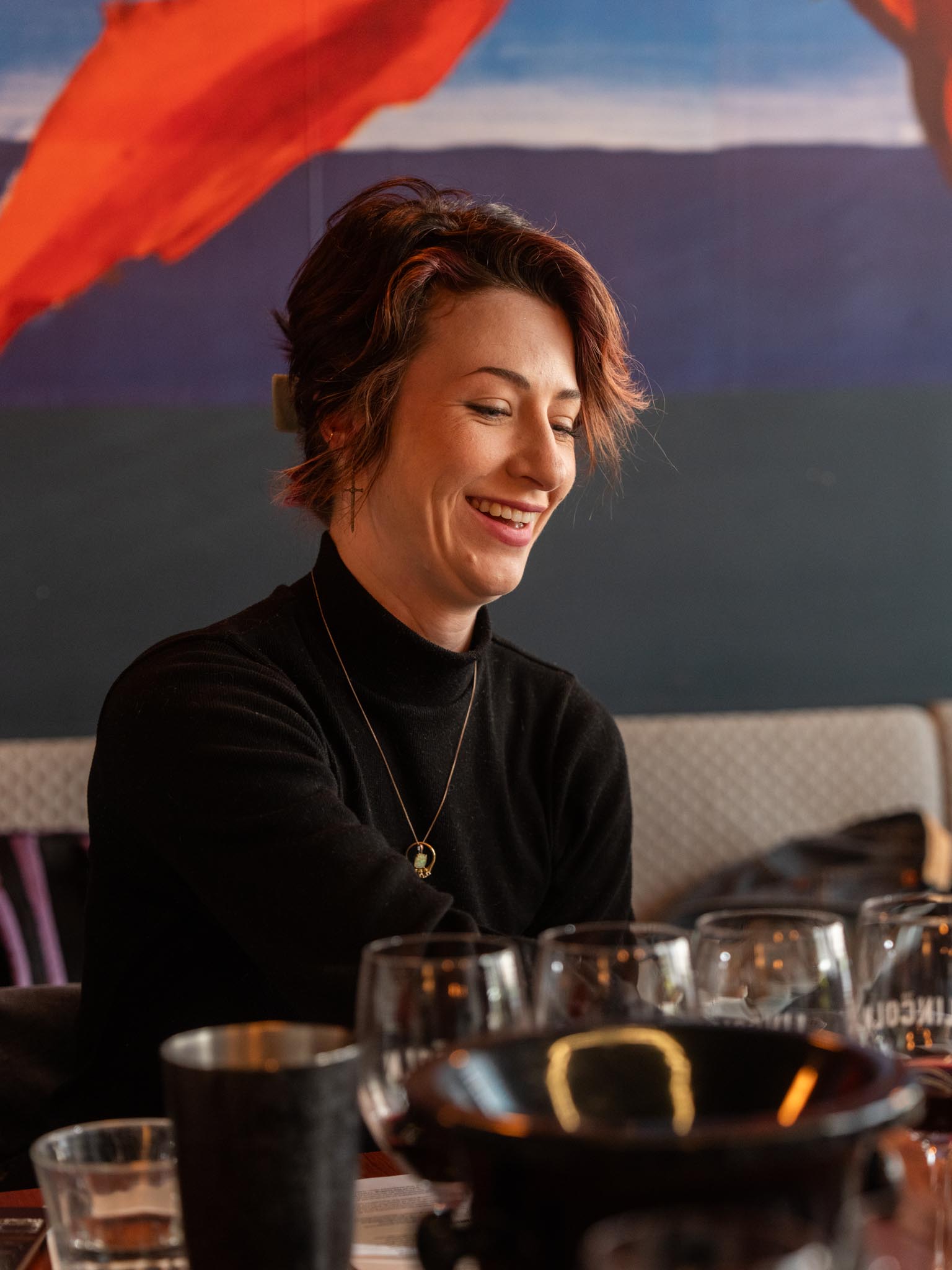
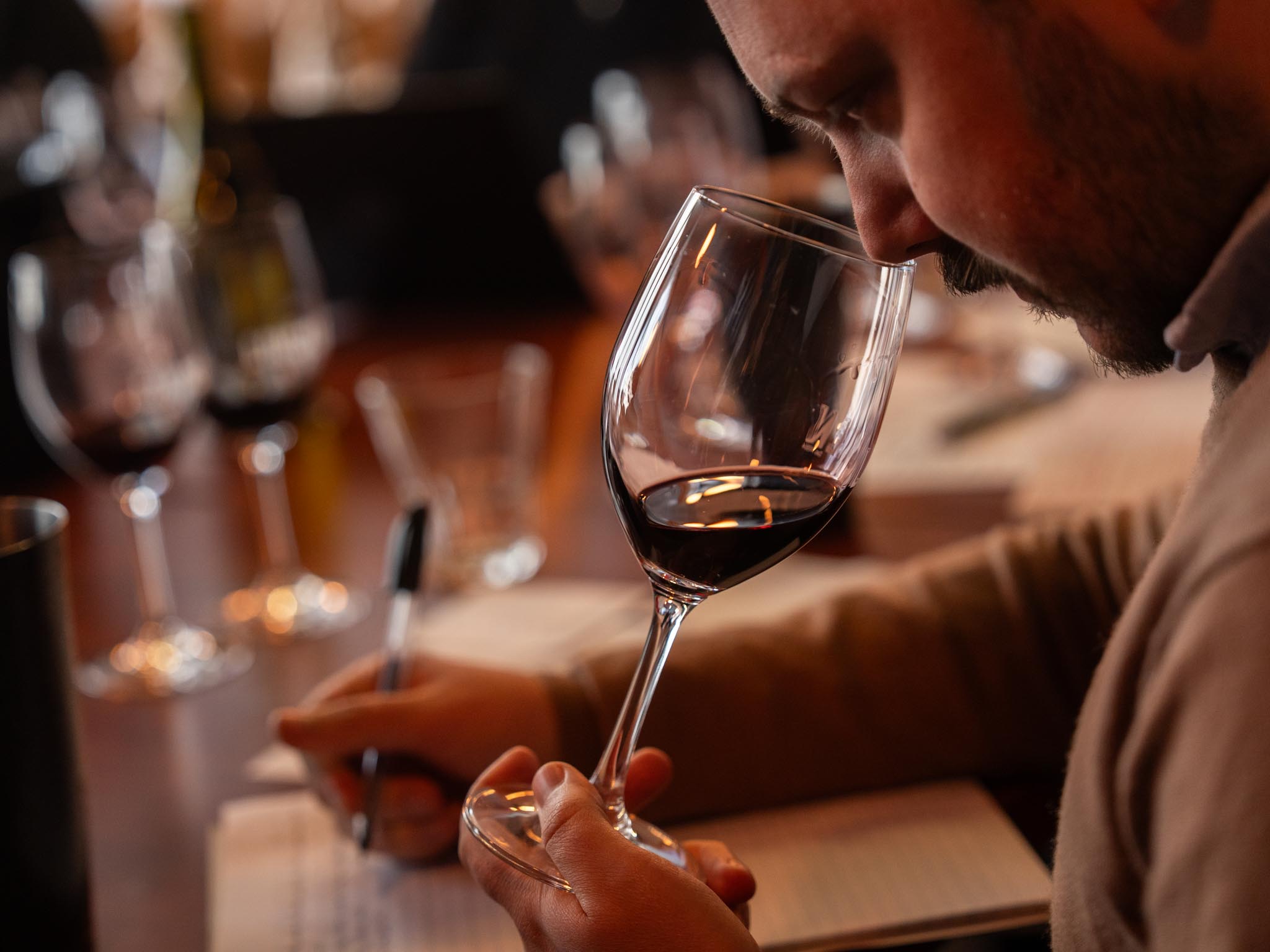
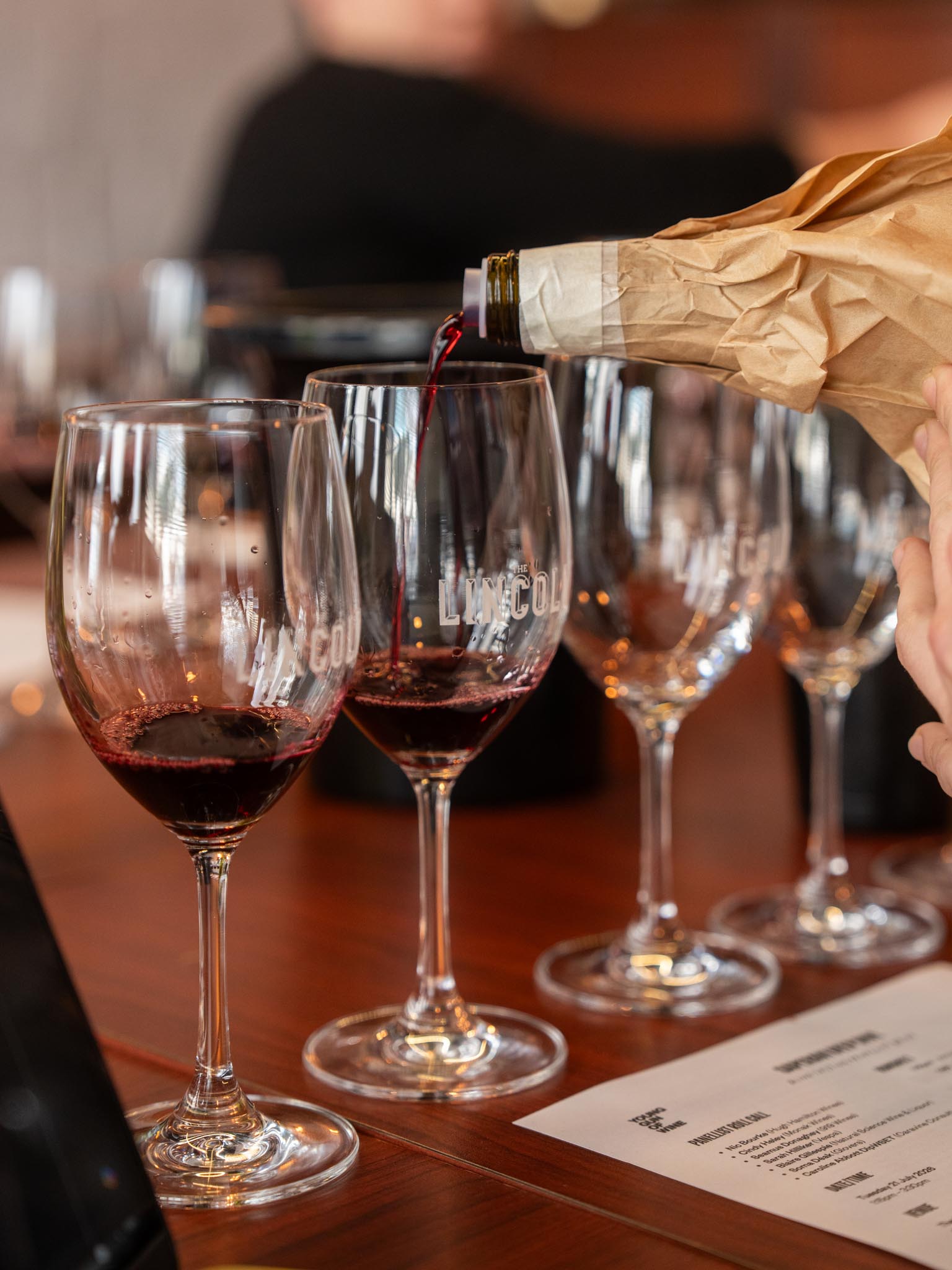
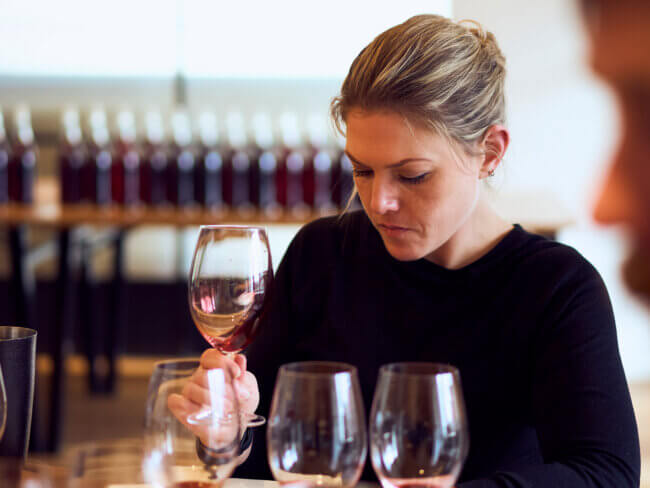
Opposite: Soma Déak. Above: The tasting in action at The Lincoln, Carlton (Melbourne). All wines tasted ‘blind’.
Donaghey wrapped the discussion by arguing for a diversity of different approaches to saperavi, rather than only leaning into its ability to make big, bold reds that please the traditional Australian red-wine palate. “We do need to make a diversity of styles, and make those more approachable wines,” he said. “There’s still a market for those huge styles – people are still looking for those – but we can’t put all our eggs in that one basket. We’ve got to make a few different styles.”
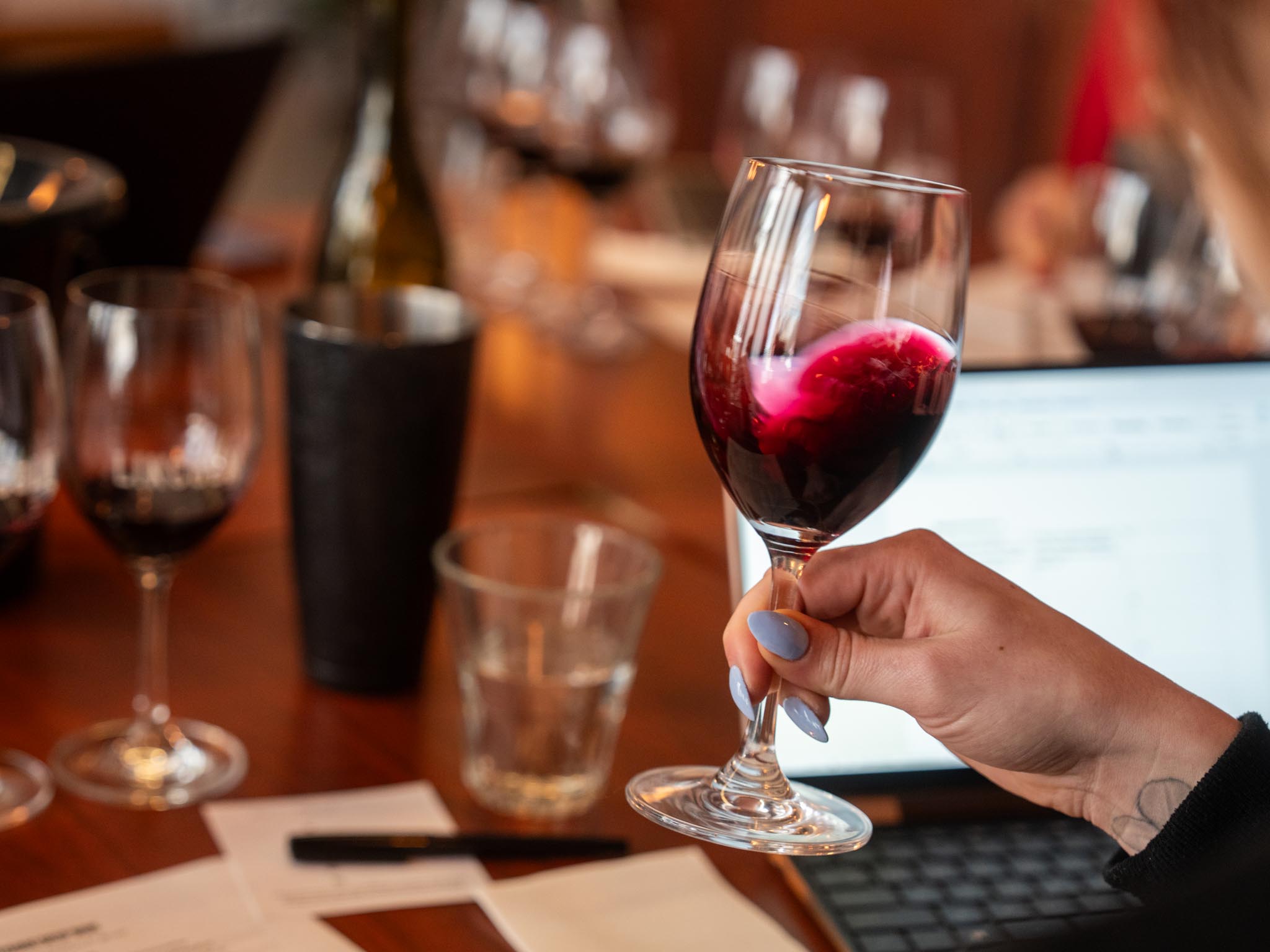
Above and opposite: The tasting in action at The Lincoln, Carlton (Melbourne). All wines tasted ‘blind’.
The Panel
Cindy Heley’s path to wine began in science – a Bachelor of Science with Honours in bio-inorganic chemistry, followed by a Bachelor of Applied Science in wine science. She began her career thirty years ago with Foster’s Wine Group, going on to work across several large wine companies, where she built a deep grounding in the technical and commercial sides of the industry. She paused her career to raise her four children before returning to wine by founding Monak Wine Co., driven by a passion for the untapped potential of the Murray Darling region. Here she champions the region’s ability to produce distinctive, high-quality wine, and brings innovative new varieties to market – including Monak’s flagship Blanca Fría. She continues to explore innovative varieties suited to the Murray Darling region and to build Monak’s presence both domestically and internationally.
Nic Bourke was born in a rural town in New South Wales, and raised on a small farm that ran sheep and grew vines. He ventured to Adelaide to study winemaking at the University of Adelaide and never went home. After honing his craft under the tutelage of several world-class winemakers in McLaren Vale, he first stepped out with Some Young Punks, a label focused on cutting-edge, small-batch wines he founded in collaboration with Adelina’s Colin McBryde and Jen Gardner. Since 2016, he has directed winemaking operations at Hugh Hamilton Wines.
Sarah Hilliker has worked in hospitality since 2011 – but didn’t find wine until 2019, while at Treviso Bar & Dining, where she worked as the bar manager and also eventually became the wine buyer. During her four years at Treviso, she completed both the Wine & Spirit Education Trust (WSET) Level 2 Award in Wines and Level 3 Award in Wines. She landed her first sommelier position at Kisumé in 2023, and completed the Introductory Sommelier Certificate and Certified Sommelier Certificate with the Court of Master Sommeliers (CMS) during her time there. She took the position of Venue Manager at Bijou bottle store at the start of 2025, where she also headed up the wine program and ran training sessions for the four venues in the Gin Palace hospitality group. She has recently moved to a new Yarra Glen venue, Vespa Pasta & Vino, where she works as the venue manager and hopes to curate an Italian- and Yarra Valley–focused wine list.
Seamus Donaghey is a young winemaker at 919 Wines in the Riverland. A passion and desire to work with alternative Iberian varieties and styles – particularly vintage fortified and apera – along with a host of other table whites and reds keeps him busy year round with blending programs. He completed his Bachelor of Science in Winemaking in 2026 and currently moonlights at the Riverland Wine Centre, spruiking the region’s finest to intrigued patrons. He also has a passion for wine show judging and is involved as a committee member on the Riverland Wine Show.
Blaire Gillespie is a Queensland hospitality veteran of seventeen years, wearing many hats including venue management, off- and on-premise wine retail, chef, and owner/operator of a small suburban bistro. After closing their venue during COVID, they went to private contract cheffing, winding up in regional Queensland wineries and becoming curious about wine production. They went on to attend Charles Sturt University, enrolling in a Bachelor of Wine Business and getting their Wine & Spirit Education Trust (WSET) Level 2 Award in Wines (with distinction) and a forklift licence before moving to Melbourne, open for whatever the next chapter in the wine industry might be. They currently work as the manager at Natural Science Wine & Liquor in Blackburn, and spend most of their shifts converting pinot gris drinkers to grüner veltliner while waxing lyrical about the importance of supporting Australian wine.
Soma (pronounced ‘Shoma’) Deák is originally Hungarian and has been lucky enough to have lived in a few places he now can call home: fourteen years in Hungary, five in England, and here in Australia since he was nineteen. He’s obsessed with food and drinks – he started cooking at fourteen, and can’t stop learning about it. Wine came along soon after – he’s worked everywhere from silver service and fine dining to cafés, bars, breweries, and wine bars, and wine always grabbed him the most. He’s yet to do any education with the Wine & Spirits Education Trust (WSET), but he reckons he could pass the Level 1 Award if he really tried. He is the co-owner, wine buyer, and front of house manager of Glovers, a wine bar in Yarraville.
Caroline Abbott DipWSET grew up in Spain with American parents and has spent much of her life in and around wine, hospitality, and international travel. She has worked across Australia, Spain, and the US in export, sales, and commercial roles, building markets for premium wine portfolios and the relationships that sustain them. Melbourne has long been part of that story, too – from early days at Bellota Wine Bar and The Spanish Acquisition to her recent return to the city with an Australian husband, a global perspective, and a deep affection for the culture, connection, and sense of place that wine creates. She currently works as a freelance consultant for her own agency, Caravine Consulting.
GET FIRST ACCESS TO THE NEXT WINE ICONS – DELIVERED
Cabernet franc is the other cabernet. Until recently, it was largely marginalised in blends, its presence banished to the back label – if it was mentioned at all. But it drives some of the great wines of the world, either in part or in total – and it can be rendered as a wine of immediate vibrancy and intoxicating fragrance, or settle into the satisfied purr of a wine of statuesque pedigree destined for a long life and sustained glory. Winemakers and consumers alike have started cottoning on to the merits of 100% cabernet franc wines, and an engaging variety of expressions – typically accessible, both in style and cost – is now appearing on restaurant wine lists. And while France and Italy currently have the lion’s share of the world’s plantings, Australia’s own examples can be as compelling as any other – just the kind of situation that calls for a Deep Dive …
For those held in its thrall, nebbiolo holds a grip like no other grape. Nebbiolo is a paradox, a combination of elements that shouldn’t make sense. But they do. Set against profound tannins, it can be fragrantly pretty and floral, as well as ruggedly mineral and dry toned – and often simultaneously so. Five years after our inaugural Deep Dive into Nebbiolo, it’s an apt time to again cast our eyes across the landscape.
The Young Gun Top 50 for 2020 features Swinging Bridge Wines, Gilbert Family Wines, Wallington Wines and Dreaded Friend, who all work from the Central Ranges, though it’s a hard region to generalise about, with pockets both quite warm and dramatically cold. It captures Mudgee, Cowra and the burgeoning cool climate region of Orange within its borders.
Subscribe to our newsletter
Young Gun of Wine is your shortcut to cutting edge wines, the places to go, and the people behind it all.
Subscribe to be amongst the first to know of our latest discoveries in wine.
We'll bring you the inside running from the growers, the makers, the wholesalers, the retailers and the sommeliers, too.