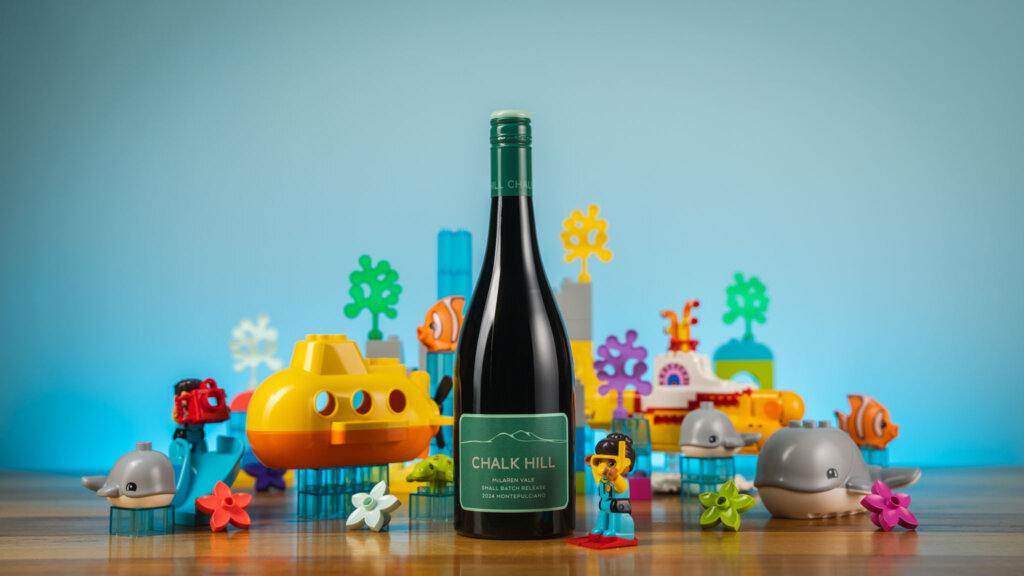
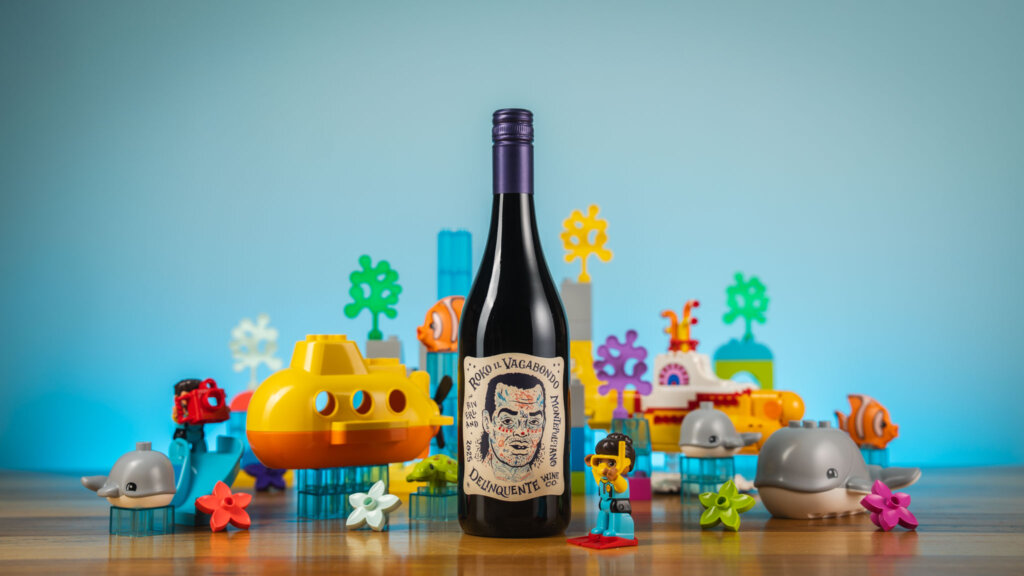
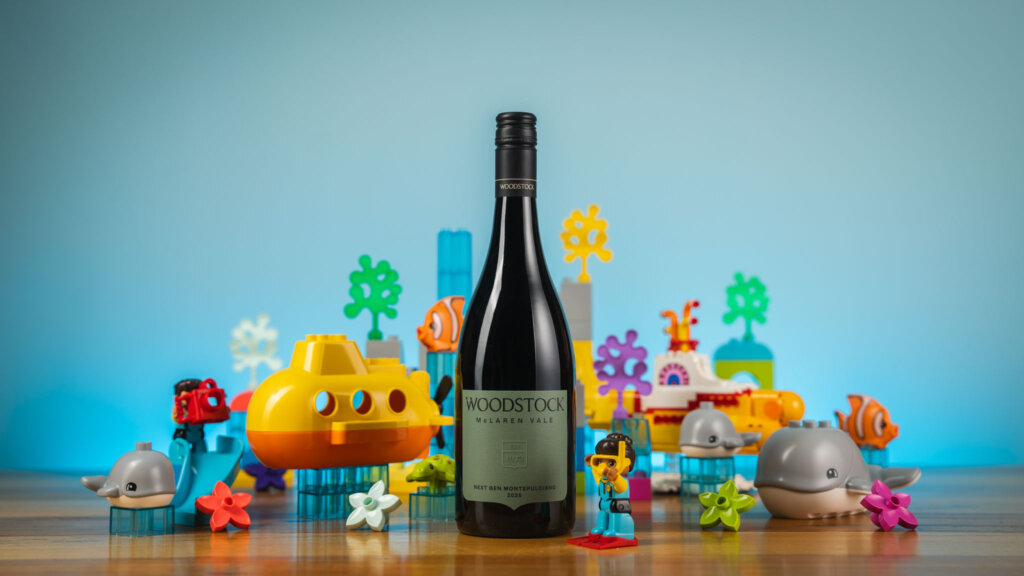
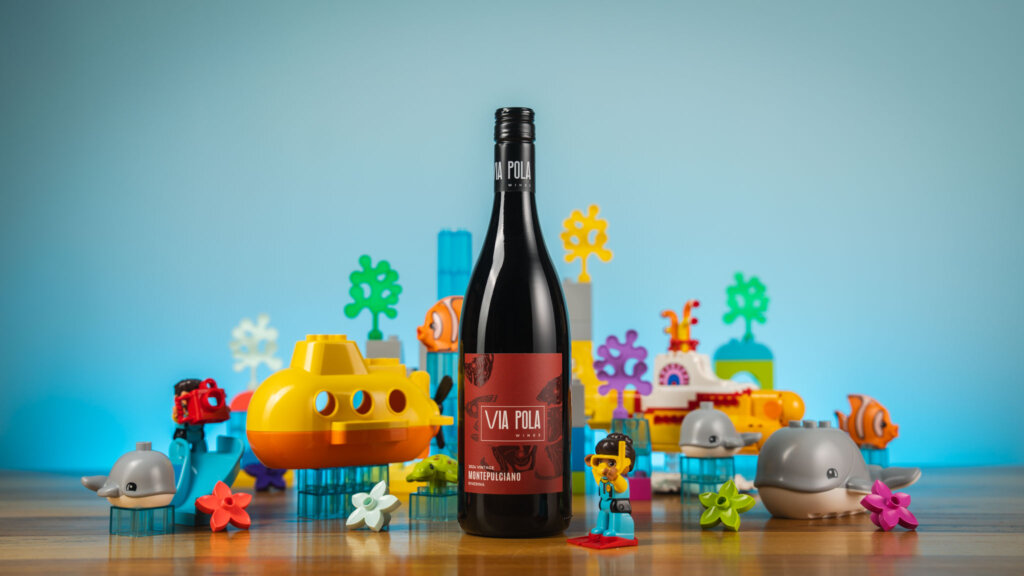
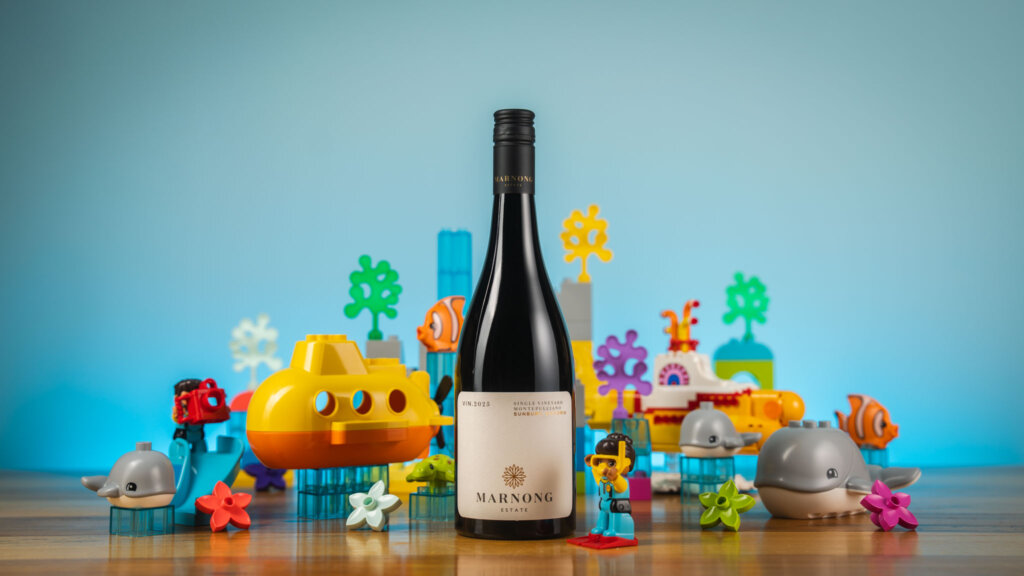
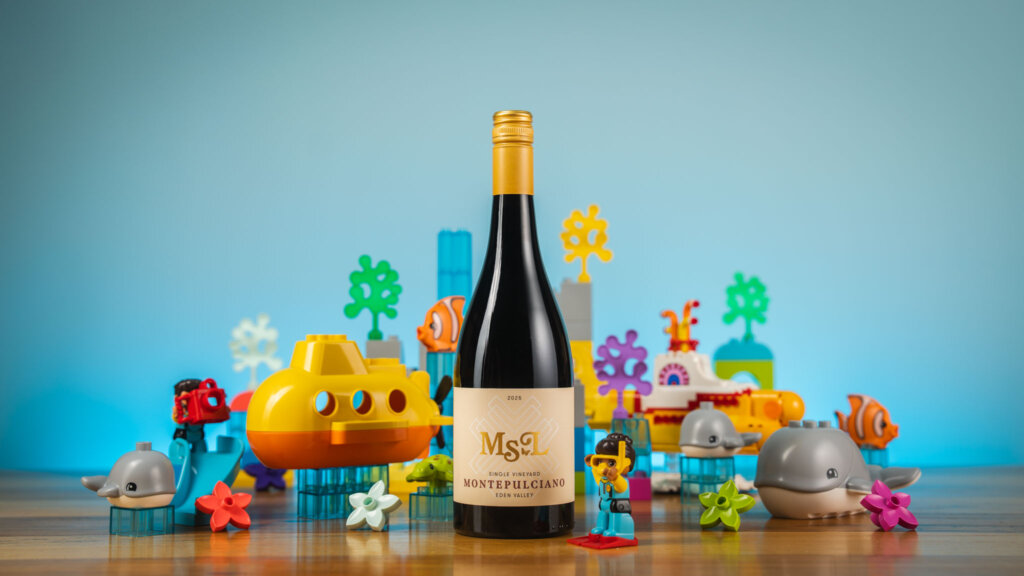
Montepulciano is a real workhorse of a variety, capable of producing large quantities of deeply-coloured grapes with strong tannins and vibrant acidity even in warm and sunny conditions. That workhorse character has seen it widely planted across Italy, where it has become the country’s second most widely planted red grape variety, often used to add colour and structure to blended wines. That role as a blending agent has seen the variety dismissed within Italy itself, although single-varietal examples from Abruzzo have started to change that narrative. Australia’s own history with the variety is a relatively brief one, but it is already making an impression here, with consumers falling for the charms of ‘monte’ and winegrowers looking to it as a climate-apt variety capable of withstanding the demands of a warming world. With so much to love about this generous, hearty variety, we thought it was time to take a Deep Dive…
We gathered every example of Australian montepulciano that we could find, and set our expert panel the task of finding the wines that compelled the most. All wines were tasted blind, and each panellist named their top six wines. Below are the wines that made the panellists’ top-six selections from the tasting.
Our panel: Nikki Palun, owner and winemaker, Susuro; Sam Atherton, winemaker, Marnong Estate; Zoë Ladyman, national business development manager, Primavera Selections; James Scarcebrook, owner and winemaker, Vino Intrepido; Isabella Greco, sommelier; Lorenzo Cecchini, assistant winemaker, Dal Zotto; Sarah Robinson, sommelier, Cutler & Co.; Ciarán Hudson, owner and winemaker, Beyond the Glass.
This wine appeared in the top six wines of the day for Cecchini, Greco, Hudson, and Atherton. Cecchini described “a characterful montepulciano, inky and earthy on the nose, that reflects the structure of this Italian variety. Deep purple colour, elegant and soft palate with creamy notes and enveloping tannins which bring the wine together. The fresh acidity drives all the flavours through the palate. Smooth finish, with a nice savoury aftertaste typical of this variety.” Greco noted “this was my clear number one, and the wine that excited me the most from the very first sip! Deep purple in the glass, it burst onto my palate with a little heat, a sense of chilli that pulled me by the hair – or tongue – and immediately grabbed my attention. Rosemary, a hint of thyme and fennel, with generous blackberry, black cherry and juicy mulberry. As I kept going back to taste it, new earthy characters unraveled, something like freshly turned soil, mushrooms and dry leaves. It’s dry, bright and fresh. So lively and delicious! I would have this with game meats, especially if accompanied with cherry-based sauces. I think of venison, duck or even kangaroo.” Hudson found “a dark, lingering savoury pungency on the nose – rich dark fruits, fermenting cocoa nibs and tar. On the palate, cherry, cocoa powder and baking spices emerge. There’s levels of flavour profile to this – dark sour cherries accompanied by boysenberry and tobacco. The classic monte tar profile comes through late, and finishes well with acidic drive.” Atherton noted “the darkest colour in the line-up – a deep purple, verging on black, with a magenta hue. A nose of black olives, dark plum, bay leaf, mint, and savoury oak. Firm but plush tannins on the palate, with a slightly sweet savoury edge on finish. Compelling.”
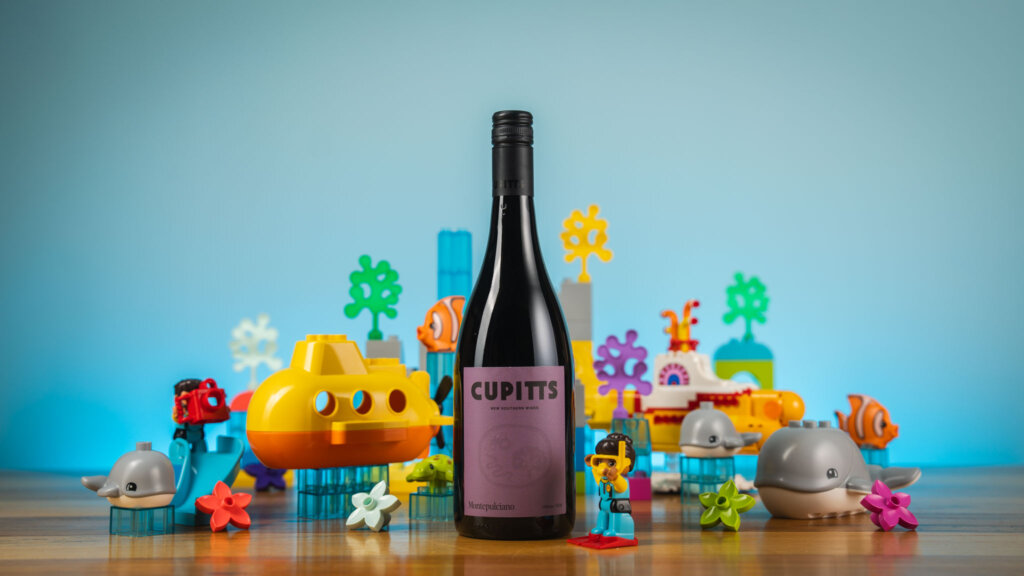
2024 Cupitts Montepulciano, Hilltops $38 RRP
Hudson, Scarcebrook, and Ladyman selected this wine among their top six from the blind tasting. Hudson described “baked black cherry cake nose – cherry citrus juice with mild tar tannin and dark chocolate. Even, balanced, lengthy on the palate, cacao nibs, blackberry. Moves into a broad and refreshing finish with oak tannin – warm baking spices and generosity.” Scarcebrook noted “spicy cloves and nutmeg, cinnamon and stewed plums, some lovely mature stalk characters, black peppercorns. Bold without density or weight, savoury but not over the top, juicy but not jube-y, lovely savoury notes. A cooler climate or a cooler vintage, some mature oak notes. Certainly has some tension and the spicy notes come through late on the palate, tannins really linger and have confidence. Serve with roast lamb.” Ladyman found “such an appealing Australiana nose, with earthy woody herbs and the lift of eucalypt, fennel, clove and curry leaf. On the palate, rich blackberry and blueberry fruit and lovely fine chalky tannins that provide nice grip. There’s such a freshness to the fruit on the palate – the acidity here has a mineral, almost stony character. I like it. This begs for lamb, but let’s not over complicate it – I reckon a souva would do the trick, as long as there’s oregano in spades.”
Atherton, Robinson, and Scarcebrook included this wine in their top six wines from the tasting. Atherton described “aromas of sweet red and dark stone fruits, cherries and plums, backed sweet charry oak tones. Hints of caramel and peanut brittle, as well as boiled red lollies – raspberry drops and wine gums – without being confected. Chunky tannins on the palate, and a bit oaky. Yum!” Robinson noted “like a kid walking in a candy store, the first thought when smelling this wine was raspberry candy. Hard strawberry lollies with a sprinkle of nutmeg, silky with a cranberry crunch. The tannins are still very much present, and show chalky with a soft grip. I especially love leaning into a lighter style of a usually richer variety, and this winemaker shows how montepulciano in Australia has many faces. Best served slightly chilled with slow roasted pork.” Scarcebrook found “just a hint of reduction indicates freshness, but wild mushroom notes suggest some seriousness. Dense and juicy, a little warm but dark and tannic. Pushing it a bit with ripeness and roundness but well put together. Plums and dried figs, salted caramel, just a hint of soy and garlic. Fresh vibrant and flavourful, nice interplay of fruit and savoury notes, some oregano and dried fennel, dried cherries and cranberries.”
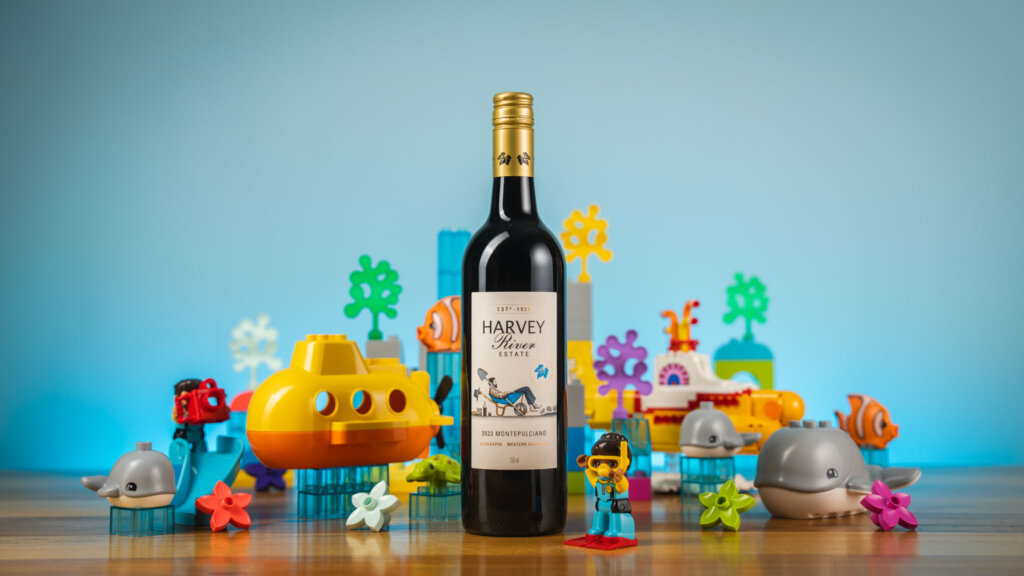
2023 Harvey River Estate Montepulciano, Geographe $45 RRP
Cecchini and Greco chose this wine for their top six wines on the day. Cecchini described “this wine expresses the power of montepulciano with a deep ruby red colour. It is revealing a warm and enveloping flavour on the nose, with notes of boysenberry and blueberry. A full-bodied red, with beautiful velvety tannins that blend into the wine and give beautiful structure. Rustic and savoury on the back palate – a long finish with nice notes of coffee.” Greco noted “this montepulciano offered lavish aromas of ripe, dark fruit on the nose, like ripe plum and black cherry, together with notes of wild raspberry and red cherry. On second tasting it started displaying a savoury underlaying of forest floor, and dried herbs like bay leaf, marjoram and the pungency of dried rosemary. It was flavourful and rich but balanced by robust tannins, lifting the ripe dark fruit and giving it character and structure. A surprisingly serious wine that left me wondering, thinking I would have liked to taste it again in a few years’ time. A roast lamb with charred mediterranean vegetables would be, as they say, ‘chef’s kiss’.”
Robinson and Atherton selected this wine among their top six from the blind tasting. Robinson described “putting the fun back into wine, I love how approachable this wine is. A red fruit salad on the nose, there are notes of dark Christmas cherries, blood orange and just ripe strawberries. Some sun dried tomato and warm red earth adds a beautiful savoury note, making the wine feel like it’s been relaxing in the Abruzzo sun. But before you think the fruit is overripe, a herbaceous almost spearmint line pushes through. Energetic and evolving, enjoy this glass in front of the fire or with a bowl of comforting casserole.” Atherton noted “floral notes of lavender and vanilla bean on the nose, alongside darker purple fruits of mulberry and cassis and nice herbal notes. Those purple fruits take a chocolatey tone on the palate – yum!”
2024 Via Pola Wines Montepulciano, Riverina $32 RRP
Palun, Scarcebrook, and Robinson included this wine in their top six wines from the tasting. Palun described “make sure you keep a good few bottles of this wine handy for when friends arrive unexpectedly and suddenly everyone is staying for dinner. Blueberry and blackberry fruits on the nose, with dried oregano and rosemary adding a light herbal character, rounded off by grated dark chocolate. Mulberry, dark plum and sour cherry on the palate, with fine tannins and a lovely savoury finish. Made for lively kitchens and endless rounds of homemade pizza.” Scarcebrook noted “very dense and focused on the nose, a more serious example for sure, stalky stemmy tannin derived aromatics, nutmeg and clove, dried cranberries and pomegranate, black cherries. Warm and bold, earthy and structured, well-handled tannins, though bold it isn’t heavy or overripe, but it certainly is a wine made by an experienced hand. A perfect match for Beef Wellington.” Robinson found “dried plums, strawberry coulis, raspberry silkiness. The palate is surprisingly fresh with red cranberry crunch, red apple acidity and dusty tannins. The acidity is a breath of fresh air, a fine bead that lifts at the very end, supporting the ripe fruit the grape is so famous for. Supple and full of so much flavour, this wine is perfect for any winter dinner party.”
Greco and Cecchini chose this wine for their top six wines of the day. Greco described “I found this montepulciano quite charming. Deep, cool purple in the glass while the nose presented a really generous aroma of blackberry compote and plum jam with hints of violet, mixed dried herbs and just a little, really faint touch of sweet spice, reminding me of something like star anise. Fresh and juicy and – in all honesty – wonderfully uncomplicated. The weight of the dark fruit was joyfully balanced by the brightness and energy of the acidity. A relaxed wine, pleasing and right, and cosy with a delicious pasta – with any sauce, red or white!” Cecchini noted “lovely light purple colour for this young monte, which expresses a lot of primary blueberry fruit on the nose and confectionary characters. Smooth and light on the palate, front palate tannins blending in nicely into the wine creating this beautiful and approachable montepulciano which you could even drink chilled. Nice and smooth aftertaste. Salumi and cheeseboard is the go for pairing.”
2025 Ms. L Single Vineyard Montepulciano, Eden Valley $68 RRP
Scarcebrook and Ladyman selected this wine among their top six from the blind tasting. Scarcebrook described “dark round fruits yet juicy bright and fresh, on the light end, nice and balanced, decent length, lovely and fresh and smashable. Focused fine and subtle blueberries and dried currants, the suggestion of violets and a hint of cumin spice and some charred wood. Crunchy and bright on the palate, great acids and firm but not aggressive tannins, pushing into red fruits like cranberries and pomegranates, mouth-filling but still very drinkable. Keep it simple with a bowl of bolognese pasta.” Ladyman noted “there’s a fluid and modern vibe to this wine that appeals to me, and made me take notice. The fruit is bright, with blueberries and satsuma plums backed with cola and liquorice spice. It’s sweetly-fruited, too – it makes me think of wine gums. The palate is fresh, bright and has a salty pop of minerality – such nice tannins and grip, leading to a fresh and fine finish.”
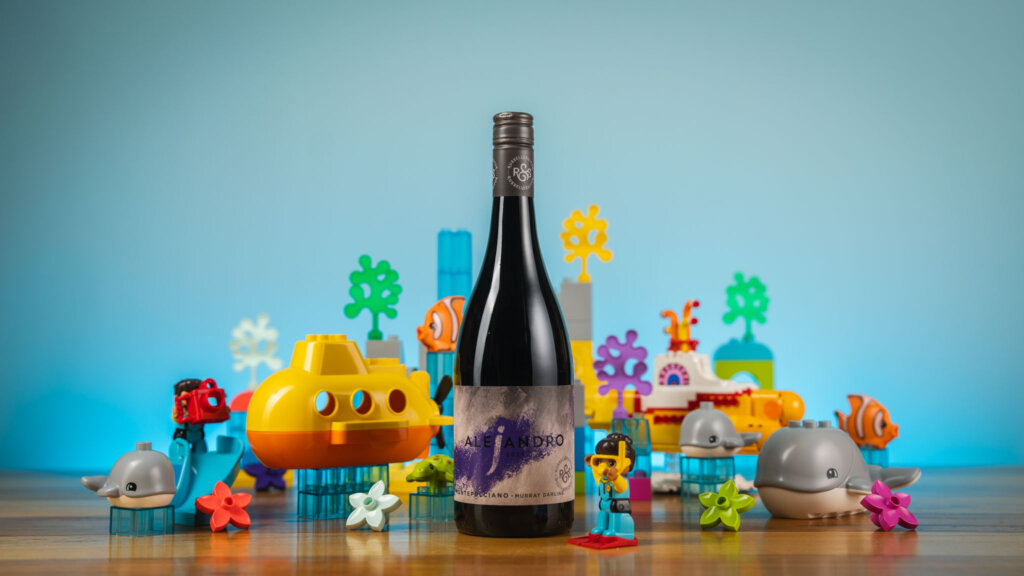
2025 Russell & Suitor ‘Alejandro’ Montepulciano, Murray Darling $35 RRP
Atherton and Ladyman included this wine in their top six wines from the tasting. Atherton described “fresh jube-y red fruits – cranberry and cassis – with a hint of sea spray on the nose. Crunchy blue-toned fruits on the palate – blueberries and damson plums – lead to a silky, fresh and slightly sweet chocolate finish.” Ladyman noted “I like the freshness of the nose here – really ‘grape-y’, with blueberries and satsuma plums. There’s a subtle spice component too and a pretty floral note with a green edge – think fresh-cut flowers, or flower-shop floor. The palate is densely fruited and densely packed with white pepper, cardamom and Indian spices. Lovely tannins, and moreish – it’s fresh, fluid and fun. This is an unfussy wine – best paired with deep chats with your besties, perhaps a bowl of chips, the fire going, and a rug over your knees.”
Robinson and Ladyman chose this wine for their top six wines from the blind tasting. Robinson described “the perfume from this wine wafts from the glass with insistence. Blooming violets, crushed blueberries with slate-like minerality. A wine that doesn’t shout, but invites you to take a moment to breathe in deeply. A gorgeous freshness both on the nose and the palate, I especially love Tarocco blood orange and slight smokiness that seeps through. With puckering acidity and velvety tannins, this is the first bottle I would pick up when invited for a barbecue.” Ladyman noted “this is a handsome and stately wine – judiciously oaked, darkly and richly fruited with blackberries and plums alongside notes of black pepper, aniseed, fennel seed, and baking spices. Finely balanced on the palate, with structured tannins driving its length, and a bright but earthy mineral-inflected acid line on the finish that balances the rich fruit profile marvellously. This has to go with a sirloin steak over the fire – and maybe some bone marrow, red wine jus, and twice-cooked duck fat potatoes.”
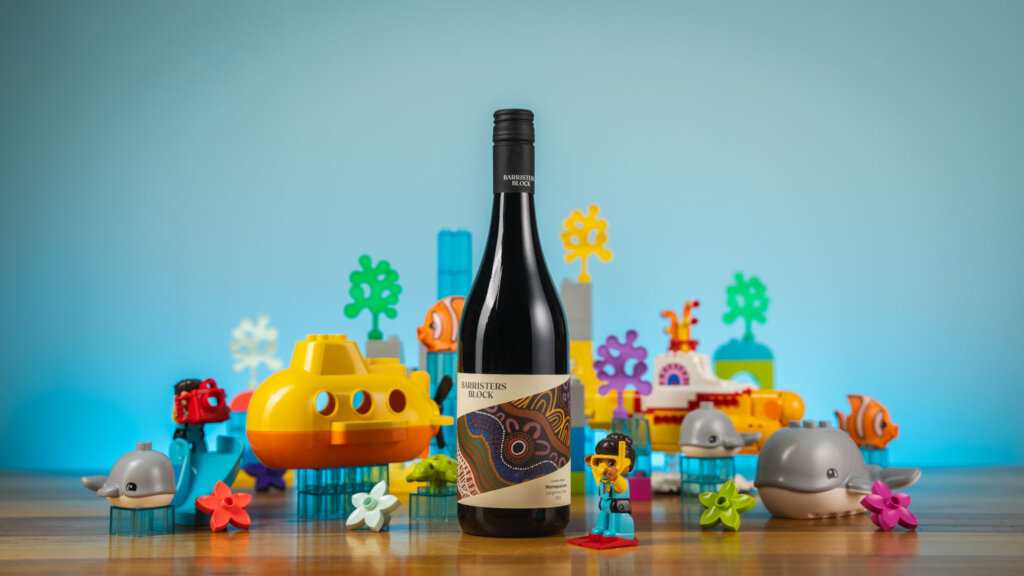
2022 Barristers Block ‘Country Series’ Montepulciano, Langhorne Creek $46 RRP
Palun and Ladyman selected this wine among their top six from the blind tasting. Palun described “this montepulciano is all about lazy slow winter evenings by the fire. Aromas of dark cherry and plum with mocha and clove adding warmth, and dried herbs and some savouriness adding depth. Fleshy and rich on the palate, with boysenberry and dark chocolate flavours, soft, mouth-coating tannins, and terrific length. Pull up a chair, pour another glass and either solve all the problems of the world or forget about them completely!” Ladyman noted “a complex nose of black pepper, cola, sage, cinnamon and other baking spices. The fruit is pure, all blackberry and plums, and the wine feels perfectly ripe. On the palate, it has a pleasing grip of chalky tannins – which drives the length and creates lovely balance. This wine calls for a brazier, chops on the barbecue, and your favourite people.”
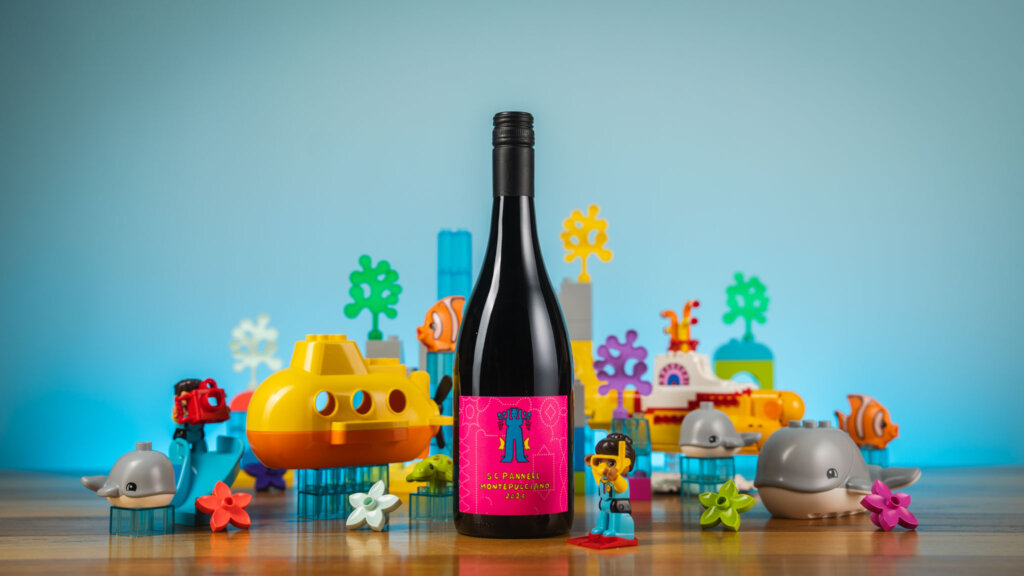
2024 S. C. Pannell Montepulciano, Langhorne Creek/McLaren Vale $38 RRP
Palun included this wine in her top six wines from the tasting, describing it as “soft, juicy and immediately loveable. Aromas of blackberry, mulberry, and dark plum, with cocoa, allspice and bay leaf adding lift and cheekiness. Rounded and generous on the palate – all blueberry and black cherry with soft tannins and bright acidity that finishes long and lingering. Made to go with juicy burgers, afternoon sunshine, good music, and knowing that you don’t need to be anywhere until well after the sun goes down.”
2023 Ravensworth Montepulciano, Hilltops $36 RRP
Hudson chose this wine for his top six wines of the day, describing “cherry juice, vanilla and dry baking spices rubbed onto juicy, overripe black cherries on the nose. The palate reveals a moreish acidity – this would work chilled, but is also very dangerously tasty gear at room temperature. An elevated flavour profile of pretty rose petals, into some purple dried lilac tones, too, with dry and fine tannin on the finish.”
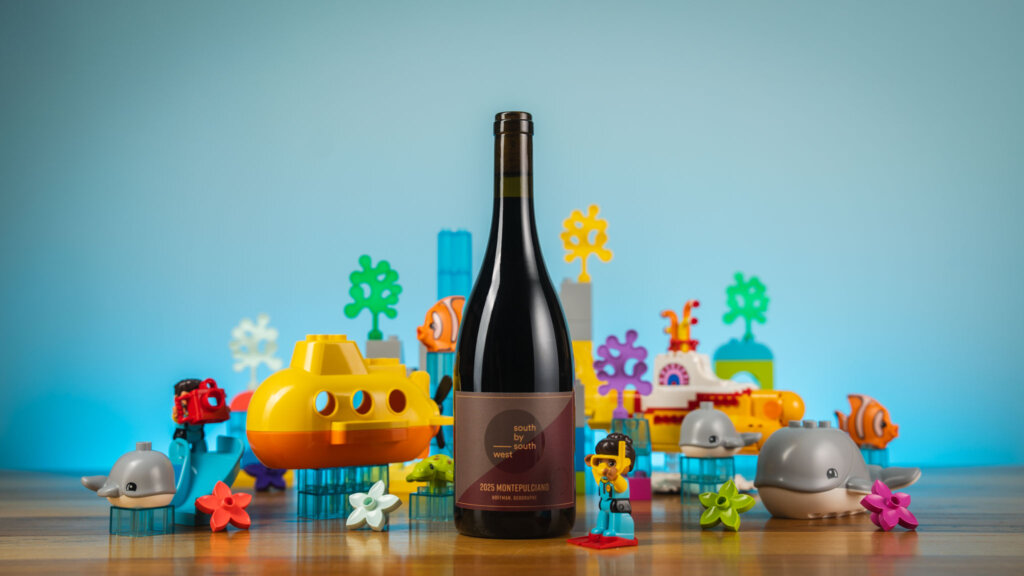
2025 South by South West ‘Hoffman’ Montepulciano, Geographe $60 RRP
Cecchini selected this wine among his top six wines from the blind tasting, declaring “red cherries and blueberries opening this wine, creamy and velvety tannins driving through the mouth the flavours, nice integration of oak, juicy palate makes it really lovely and alive wine. The finish is a little short with nice frontal tannins – still asking for another sip. This has really good ageing potential – pair it with a T-bone steak.”
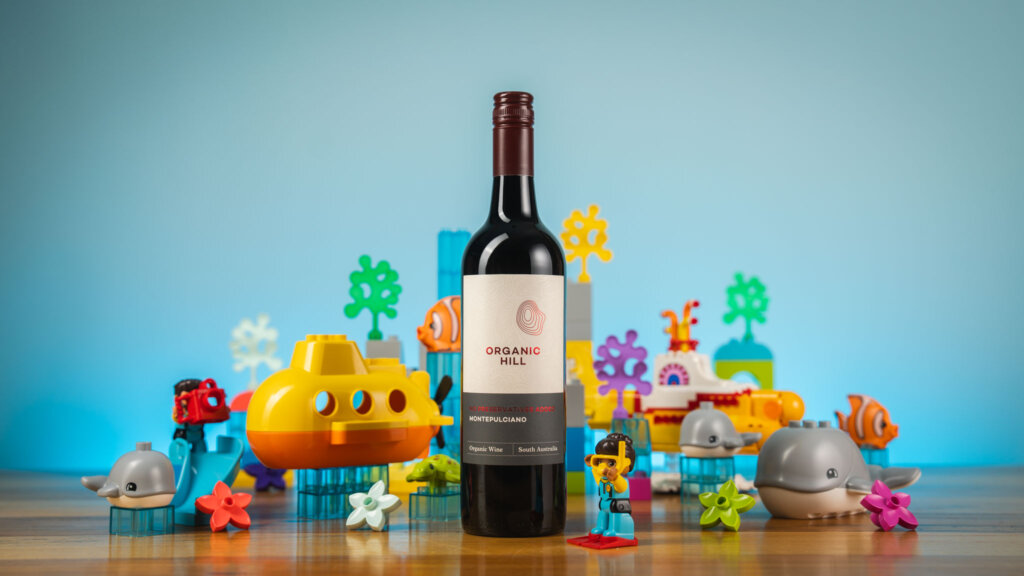
2024 Organic Hill Montepulciano, South Australia $34 RRP
Scarcebrook chose this wine for his top six wines of the day, describing “an interesting mix of sweet raspberry and cranberry fruit and meaty, earthy, even gherkin-like notes on the nose. These incredibly focused aromatics almost move into a tomato juice and celery space – think V8 juice, or a Bloody Mary. There’s density and freshness on the palate, with a really interesting biltong-like umami tone alongside those sweet red fruits. Tight, bright, crunchy and mouth-puckering tannin and acid combination – incredibly drinkable but simultaneously compelling and engaging. This is exactly what I want in a montepulciano! Great on its own, but it also makes me want to eat – it could go with pulled pork tacos, Moroccan-style lamb, or even a Brazilian feijoada.”
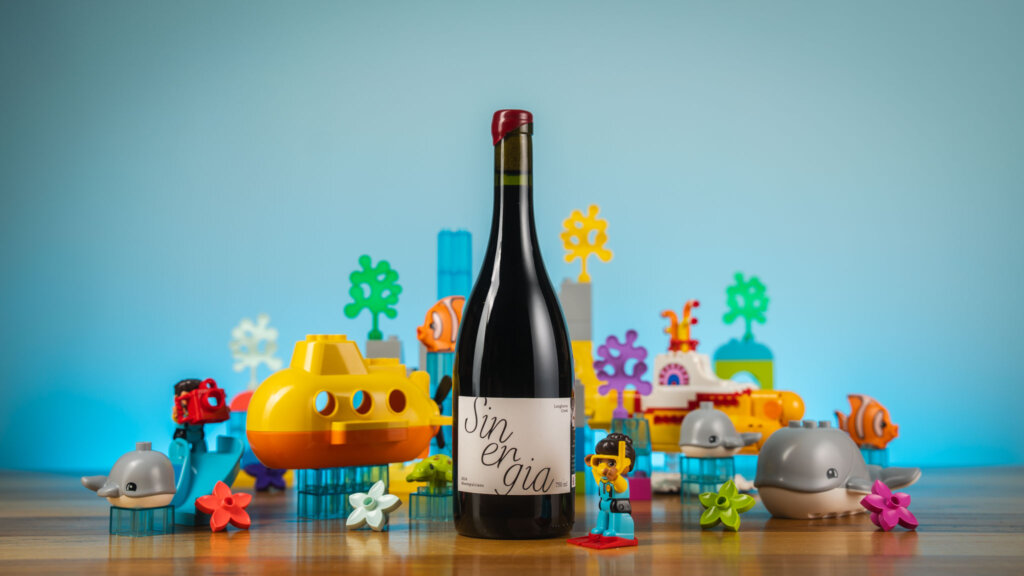
2024 Five Acre Wines ‘Sinergia’ Montepulciano, Langhorne Creek $35 RRP
Palun included this wine in her top six wines from the tasting, declaring “this montepulciano made me sit up straight in my seat! Its graphite minerality – almost like wet slate – totally surprised and delighted me. On the nose, there’s lashings of dark cherry, chocolate mud cake and blackberry, with hints of exotic spice. On the palate, it’s structured by fine-grained, mouthcoating tannins that remain fully focussed and precise. This is a wine where each glass will bring you one step closer to unlocking all the mysteries of the universe.”
Hudson selected this wine among his top six wines from the blind tasting, describing “a nose of fresh tobacco and boysenberry swirl. On the palate, wild sour cherries, mild fruit and coca nibs tannin. Super restrained and tight fine tannins, juicy and moreish – savoury and dry, gentle but generous with the mouthwatering blackberry and earth. A finish that makes me think of watermelon juice spiked with tar. This would actually pair well with leafy greens, which is often hard – I’m imagining a simple handful of greens, olive oil, balsamic and maybe dried currants and toasted almonds.”
Greco and Cecchini included this wine in their top six wines of the day. Greco declared “fun! This was the plot twist of the tasting. If I had been told that this was a Pinot Noir, in all sincerity, I might have nodded along. Bright aromas of wild strawberry, tart red cherry and cranberry, together with notes of fresh rose petals and a light, earthy touch of leather. High acidity with soft tannins, lively and silky, with those juicy red fruits allowing space for darker notes of pomegranate, darker cherry and plum. It still has the classic generosity of montepulciano, but is a bit lighter and more elegant. Such a versatile wine – veal, either roasted or scaloppine, poultry, or even risotto with truffles. I would dare fish even: some grilled trout or Murray Cod would work without any doubt.” Cecchini noted “strawberry ice cream on the nose, savoury creamy and soft on the palate, sitting elegantly on the mouth with a nice aftertaste of coffee and chocolate that leaves the palate smooth and clean. A juicy and bright wine to drink now rather than later.”
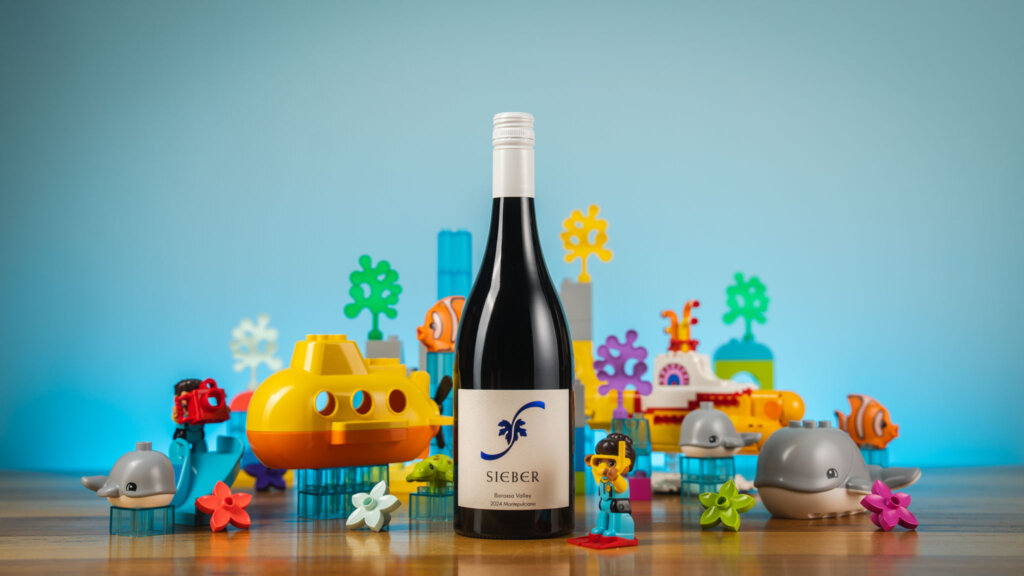
2024 Sieber Montepulciano, Barossa Valley $30 RRP
Hudson selected this wine among his top six wines from the blind tasting, describing a “sweet-scented nose of dark cherries – rich fulfilling aromas. A sweet palate driving juicy acid into tight fine earthiness and chalky soft tannins. The end is bitey with mild tannins and more of that dark cherry note. Would go well with any salty tomato-based pizza or pasta.”
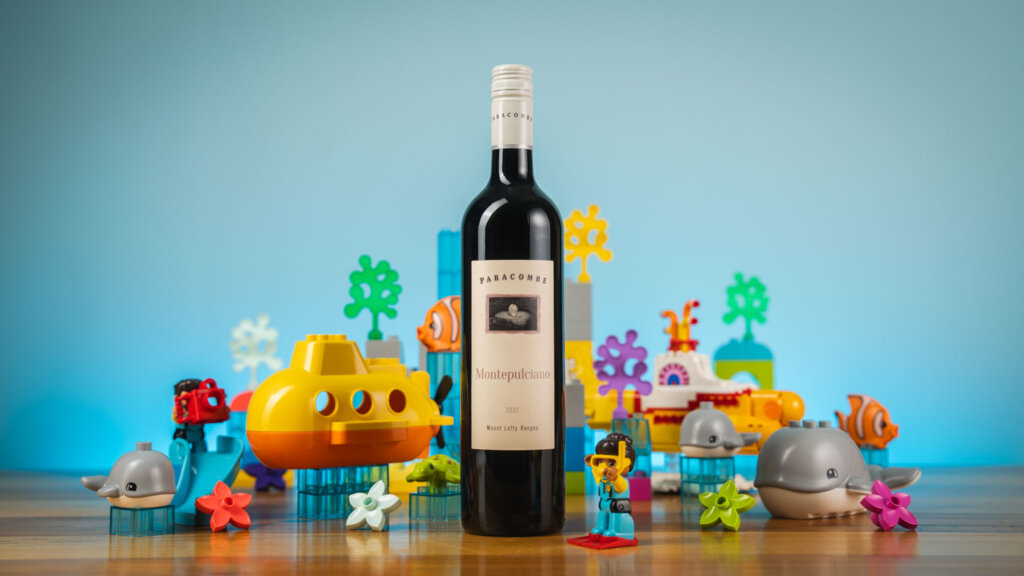
2022 Paracombe Montepulciano, Mount Lofty Ranges $32 RRP
Palun and Scarcebrook chose this wine for their top six wines of the day. Palun described it as “rich, powerful and completely in control. Dark cherry and blackberry on the nose, with dried violet, licorice and black pepper adding lift. A fully poised palate, with boysenberry, graphite and dark chocolate flavours alongside fine-grained tannins and a long elegant finish. This is the wine you drink when you want to walk out the door and take on the world.” Scarcebrook noted “lifted bright florals of jasmine and dark fruits of blood plum and rhubarb, allspice and thyme. Composed and contained, everything you need from a solid red table wine – generous but not overly tannic, heavy or alcoholic. Plenty of flavour and ideal fruit ripeness, well contained alcohol and very little oak presence. Perfect for cheeseburgers.”
Atherton included this wine in his top six wines from the tasting, describing “dark concentrated cassis and plum on the nose, alongside something savoury or salty, reminiscent of sea spray. I like the dark fruits, florals and spice on the palate – it’s fresh and juicy, with a hint of dark skinsy phenolic character on the finish. The juiciness and concentration of this wine would pair really nicely with a grilled venison and feta salad and good company. It’s a great example of montepulciano’s ‘what you see is what you get’ nature – it’s not brooding or hidden, rather it’s vibrant, fresh, and juicy, yet still dark-fruited and complex.”
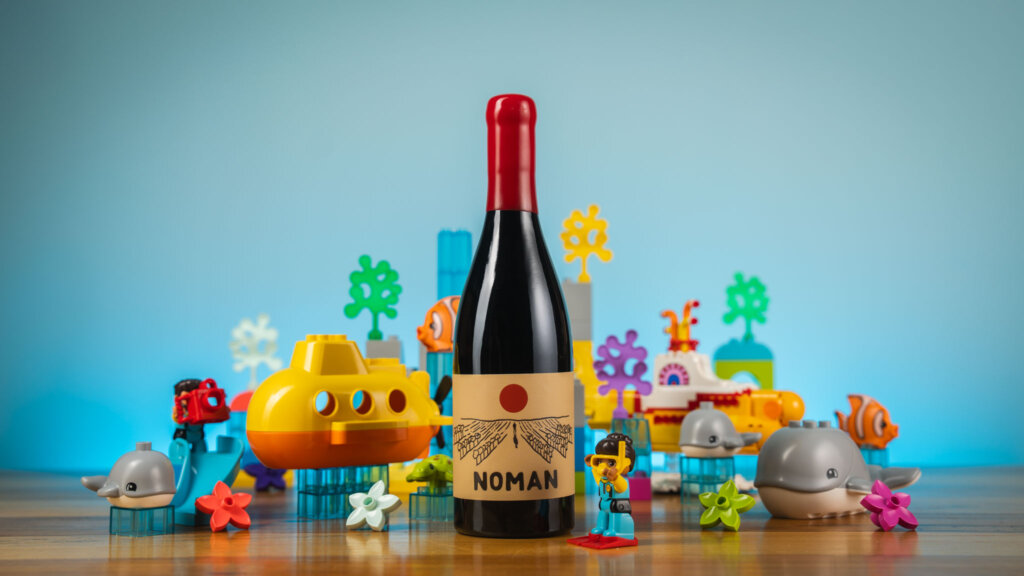
2024 Noman Montepulciano, McLaren Vale $44 RRP
Ladyman selected this wine among her top six wines from the blind tasting, saying “what a really pretty woodsy nose with Australian bush and eucalypt – is there whole bunch here? White pepper spice, amaro, cola and garrigue lift its blue-fruited nose, full of plum notes. Lovely bright acidity and fine tannins on the palate – a real delight. An earthy truffle note appears on the finish, too – I reckon this could be wonderful with mushroom pizza. Perhaps I’ll finish the evening off with a Negroni.”
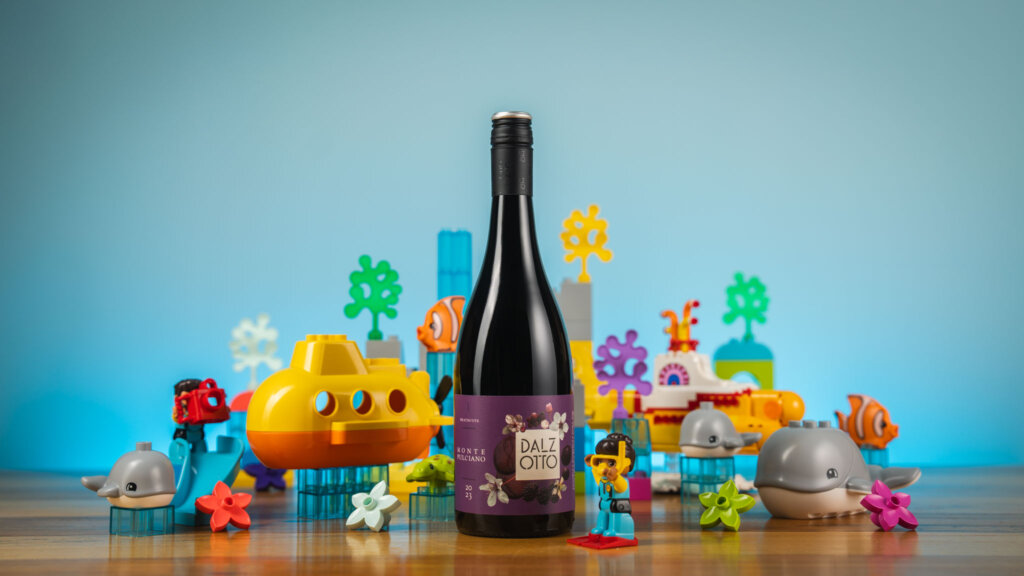
2023 Dal Zotto Montepulciano, Heathcote $42 RRP
Robinson chose this wine for her top six wines from the tasting, describing it as “like stepping into an Italian grocer – this wine is punch from all fronts. Fresh tomato, oregano, a waft of thyme in the background. Savoury and earthy, I love how lively the wine is. But underneath all the savoury goodness, is gorgeous fruit. Deep fleshy plums, sour cherry that cuts through richness with zingy acidity. The tannins are firm, but all the more reason to order in a hot honey and pepperoni pizza – truly a match made in heaven.”
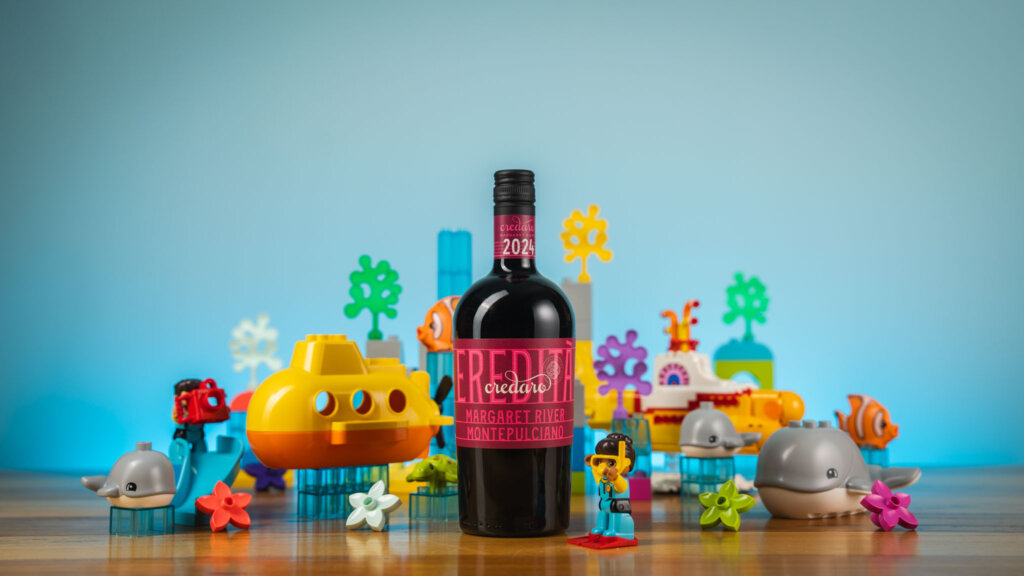
2024 Credaro ‘Eredità’ Montepulciano, Margaret River $48 RRP
Robinson selected this wine among her top six wines from the blind tasting, describing it as “a refreshing take on a usually warm variety, this wine swings the barn doors open with a floral breeze. Blooming gillyflower, pressed violets and zippy blackberries flow through, with a salted plum fleshiness to support. The winemaker has done a great job of retaining acidity and still having fruit ripeness, posing the question – is it time for some museum programs to release older vintages of montepulciano to the market? With soft, supple tannins, this wine is begging for charcuterie and a group of friends.”
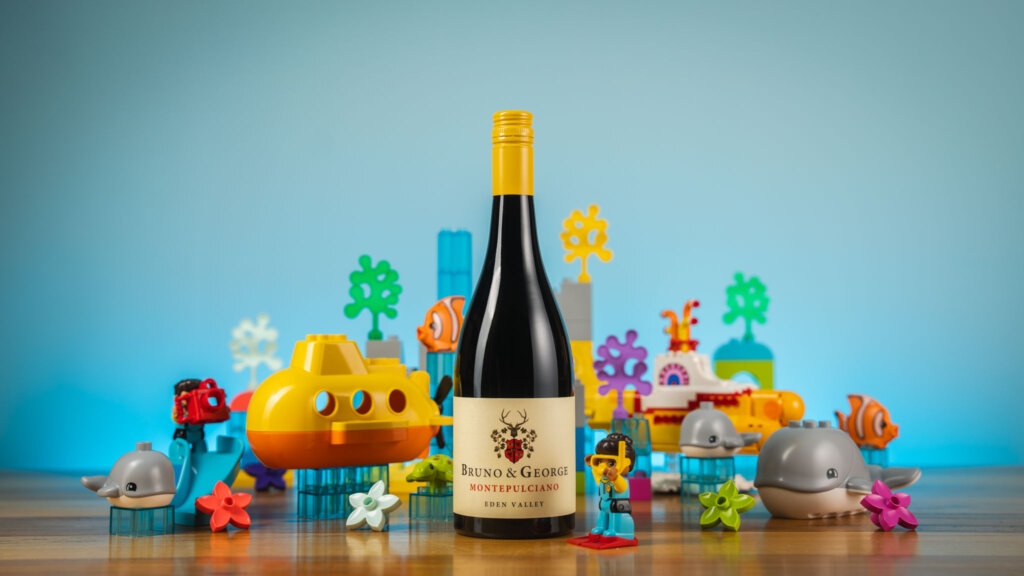
2023 Bruno & George Montepulciano, Eden Valley $65 RRP
Greco and Cecchini included this wine in their top six wines from the tasting. Greco described “this is what I consider a great Australian Montepulciano. It got my attention with its aromas of blackberries, black cherries and ripe plums, layered with wild sage, dried thyme and violet. Quite earthy, with characters of warm, wet soil and dusty terracotta, hints of cocoa, hints of coffee beans and a sweet note, like a waft of spiced cake fresh from the oven. A subtle yet present edge of meat rub seasoning, sweet paprika and black pepper added an unexpected but delicious grounding turn. Generous on the palate with those same notes found on the nose. Vibrant acidity and polished tannins give structure without getting in the way. What stood out for me was how comforting it was, like sitting near a warm oven that has savoury and sweet things cooking at the same time. It’s bold and welcoming. Grilled eggplant, capsicum, anything with olives, soups, or Parmigiano Reggiano.” Cecchini noted “this wine is showing nice boysenberry and blueberry flavours with a caramel note, meaty and savoury notes, dry tannins driving the flavours nice acidity bringing everything together. Nice and rustic finish with a warm after taste of coffee bean, good ageing potential – good pairing with lamb skewers.”
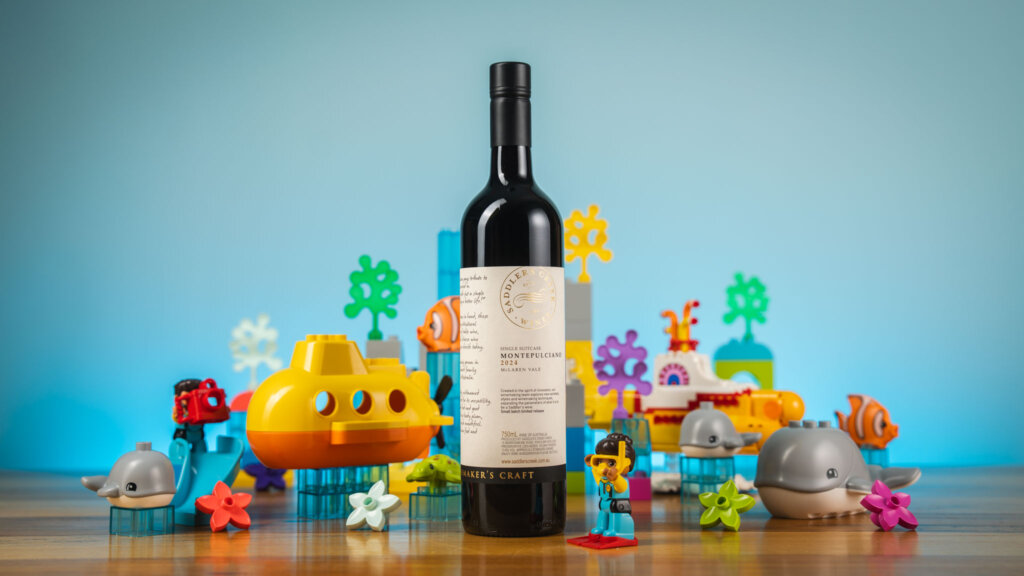
2024 Saddler’s Creek ‘Single Suitcase’ Montepulciano, McLaren Vale $45 RRP
Greco chose this wine for her top six wines from the blind tasting, describing “fig, fig stems and that viscous milky sap that you find when you break a leaf or snap a branch … and spicy ’nduja sausage fresh from the deli. This is how it opens. Love it! I would wear it as a perfume! Subsequently, it drifts into fresh roses, fresh basil, tomato leaf and that incredible smell you recognise when you are in a veggie patch. That savoury layer blended with a palate of bright red cherry and raspberry. This wine is vibrant, high in acidity and non-intrusive tannins. It’s dry and salty, incredibly cheerful and full of character, and it kept going on with a long and lingering finish that ended on a gentle, almond-like bitterness. Pair with wild boar, braised goat, or lasagna.”
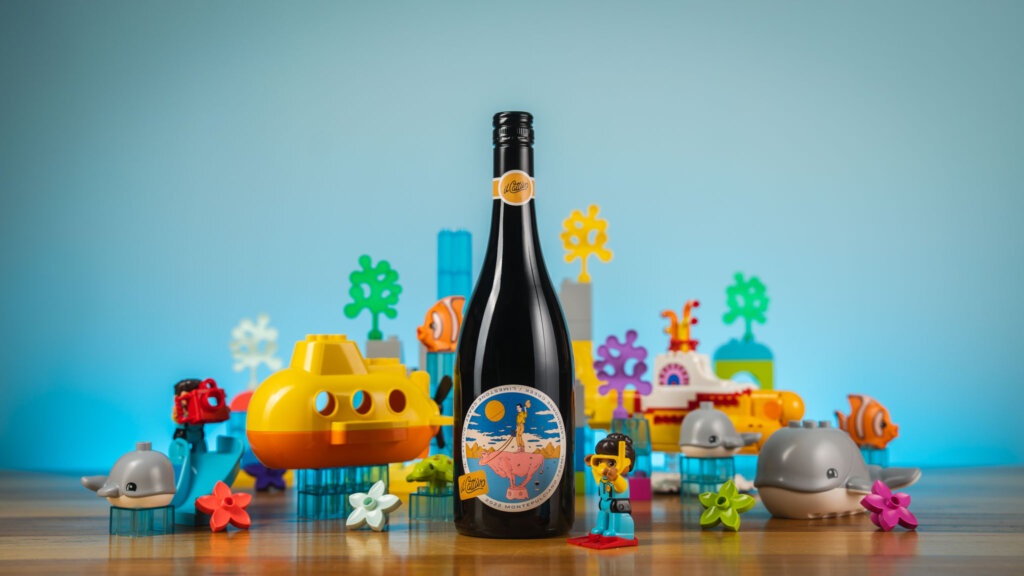
2022 Il Cattivo Montepulciano, Langhorne Creek/Limestone Coast $32 RRP
Hudson selected this wine among his top six wines from the blind tasting, describing “juicy black boysenberry and supple spice – elegant fine tannins, balanced. This is gentle but fulfilling – racy juicy black fruit acid, the acidity adds a playful vibrance to the wine that matches the unobstructive fruit profile of blackberries and cherries macerated in lemony, uplifting acidity. This is a very restrained and pretty example of a grape that can end up heavy and hot.”
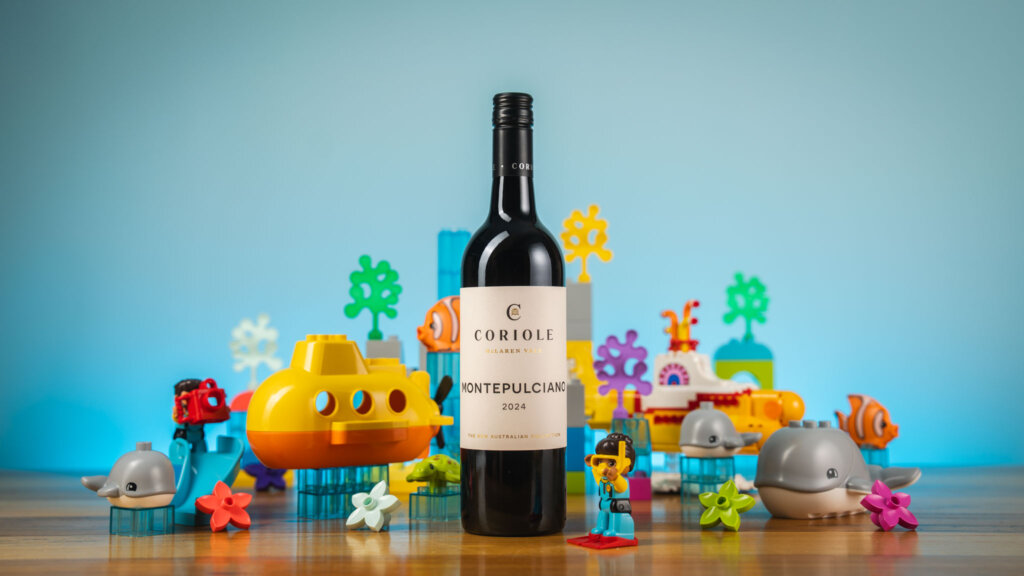
2024 Coriole Montepulciano, McLaren Vale $32 RRP
Atherton chose this wine for his top six wines of the day, describing “bright red plum fruit and slightly smoky cured meats on the nose, as well as a very ‘grape-y’ note. This wine enters the palate softy, with light juicy red fruit notes of cherries and raspberries, backed by slightly gritty raw tannins. That bright red plum note returns on the finish. The perfect wine for BYO night at your local Italian trattoria – and proof that there’s good diversity in Australian montepulciano winemaking, with an inherent respect for fruit profile and freshness.”
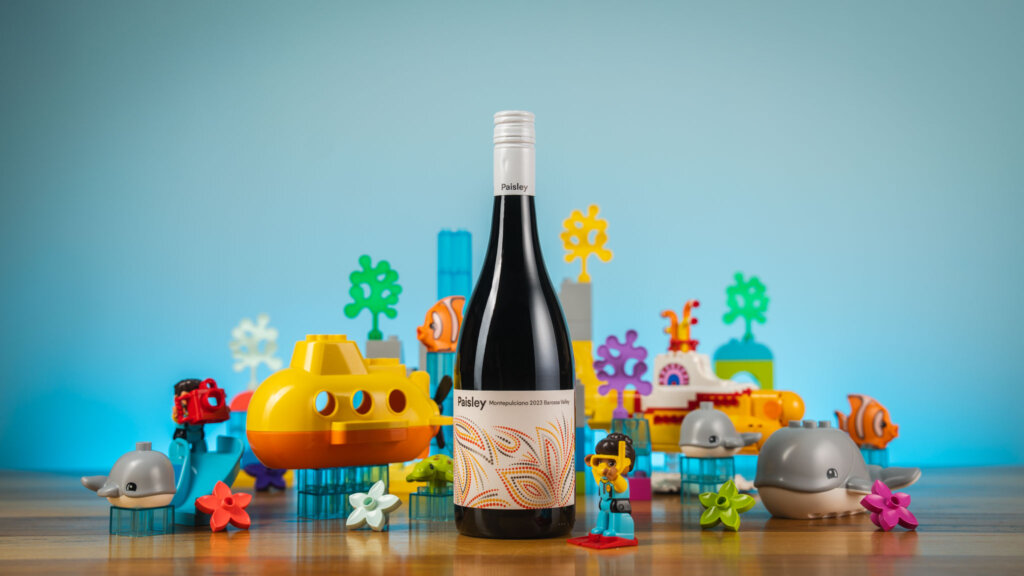
2023 Paisley ‘Tartan’ Montepulciano, Barossa Valley $35 RRP
Palun included this wine in her top six wines from the tasting, describing “seductive, restrained and completely sure of itself. Aromas of dark cherry and cedar, nutmeg and dried thyme adding warmth and complexity, with tobacco and sandalwood giving it delightful depth. It’s silky on the palate, all sour cherry and dark plum, with soft chalky tannins adding elegance and Friday-night style. The finish is long and gentle. This is the kind of wine that the rest of the evening can’t help but rearrange itself around.”
The backstory
Montepulciano is a real workhorse of a variety, capable of producing large quantities of deeply-coloured grapes with strong tannins and vibrant acidity even in warm and sunny conditions. That workhorse character has seen it widely planted across Italy, where it has become the country’s second most widely planted red grape variety, often used to add colour and structure to blended wines. That role as a blending agent has seen the variety dismissed within Italy itself, although single-varietal examples from Abruzzo have started to change that narrative. Australia’s own history with the variety is a relatively brief one, but it is already making an impression here, with consumers falling for the charms of ‘monte’ and winegrowers looking to it as a climate-apt variety capable of withstanding the demands of a warming world.
Montepulciano’s full name is not only somewhat difficult to pronounce – for the record, it’s roughly mon-tae-pul-chee-ah-no – but also somewhat misleading. The variety is named after a town near Siena in the Italian wine region of Tuscany, but the wines labelled as ‘Vino Rosso di Montepulciano’ and ‘Vino Nobile di Montepulciano’ are, in fact, made from sangiovese. (This kind of confusion is not uncommon in Italian wine, where conflicting synonyms proliferate in what can sometimes feel like a scheme to keep sommeliers and wine writers employed.) Even more counterintuitivelty, montepulciano the variety does not come from Montepulciano the town – instead, its likely origin is in Abruzzo, in the centre of Italy (due east of Rome).
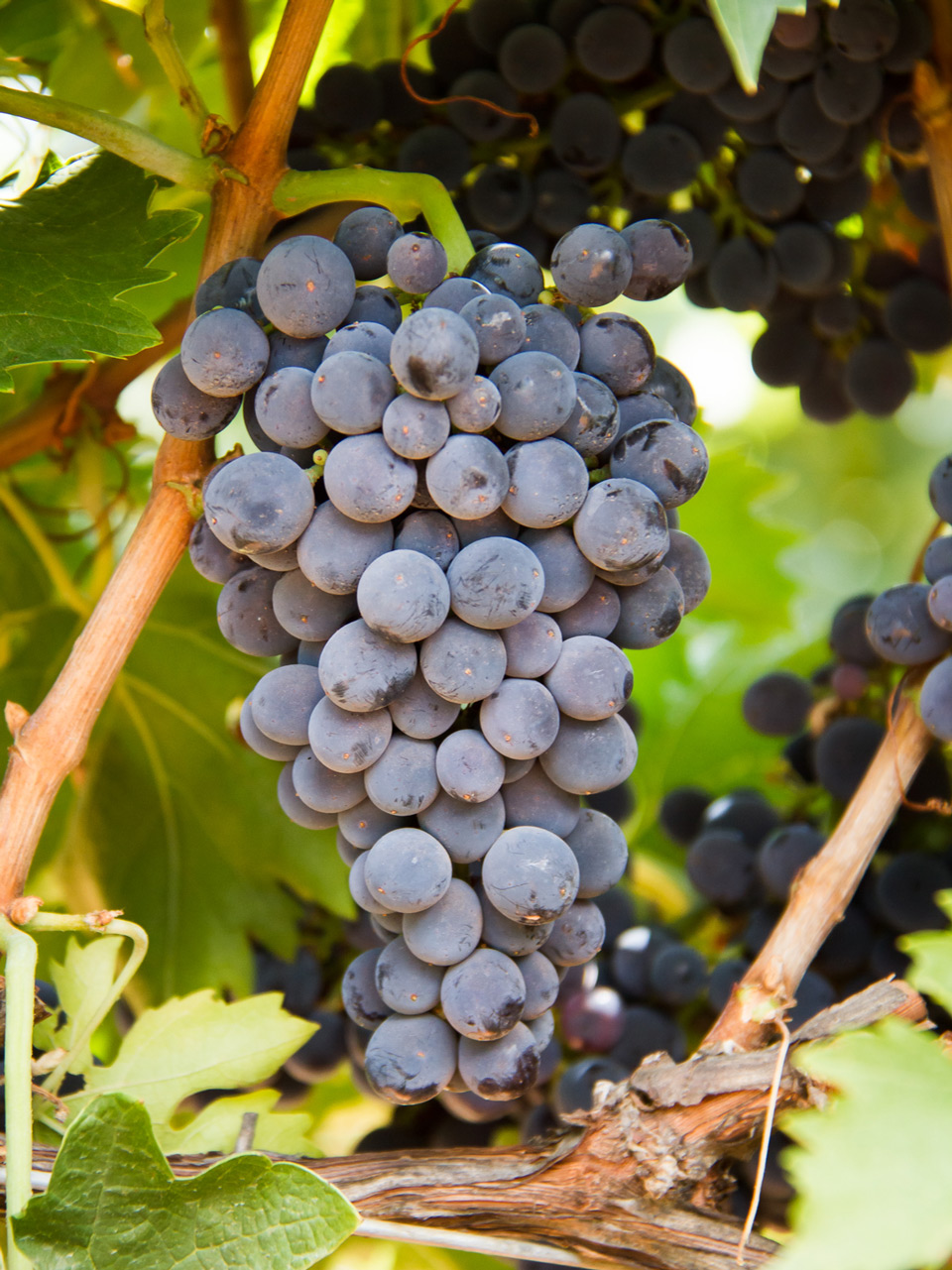
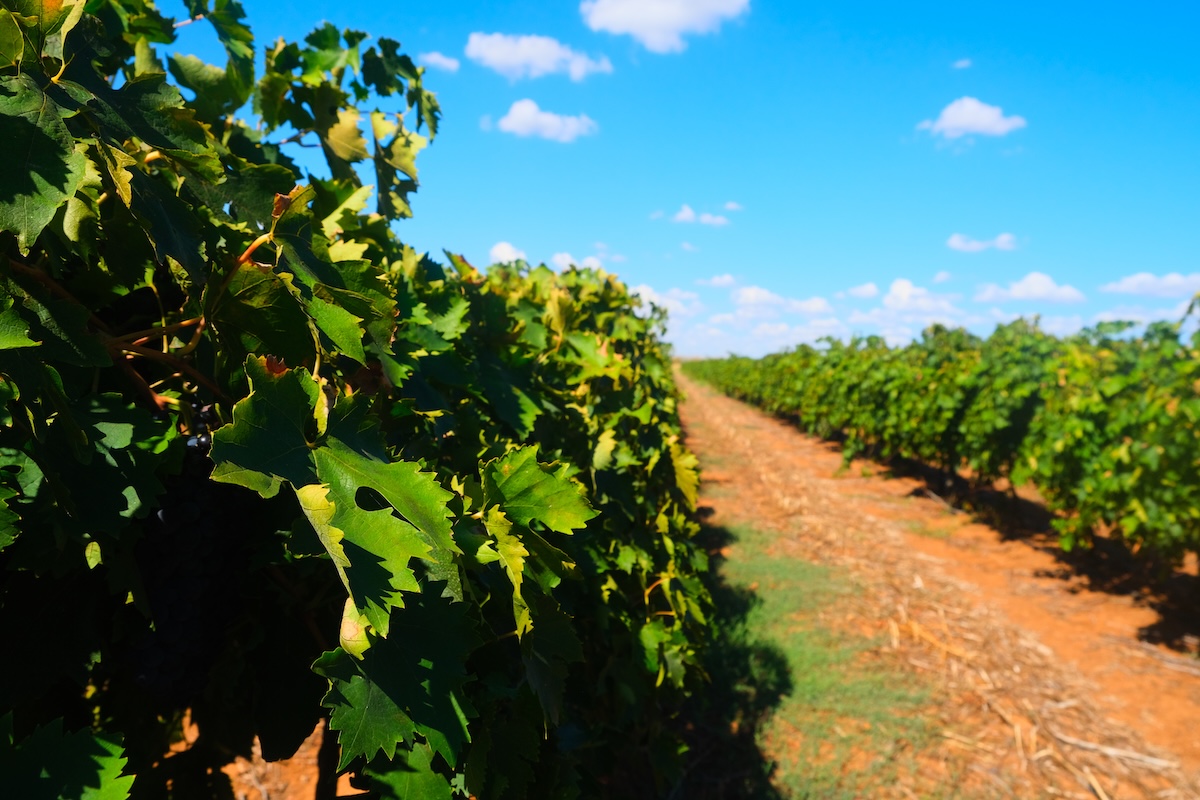
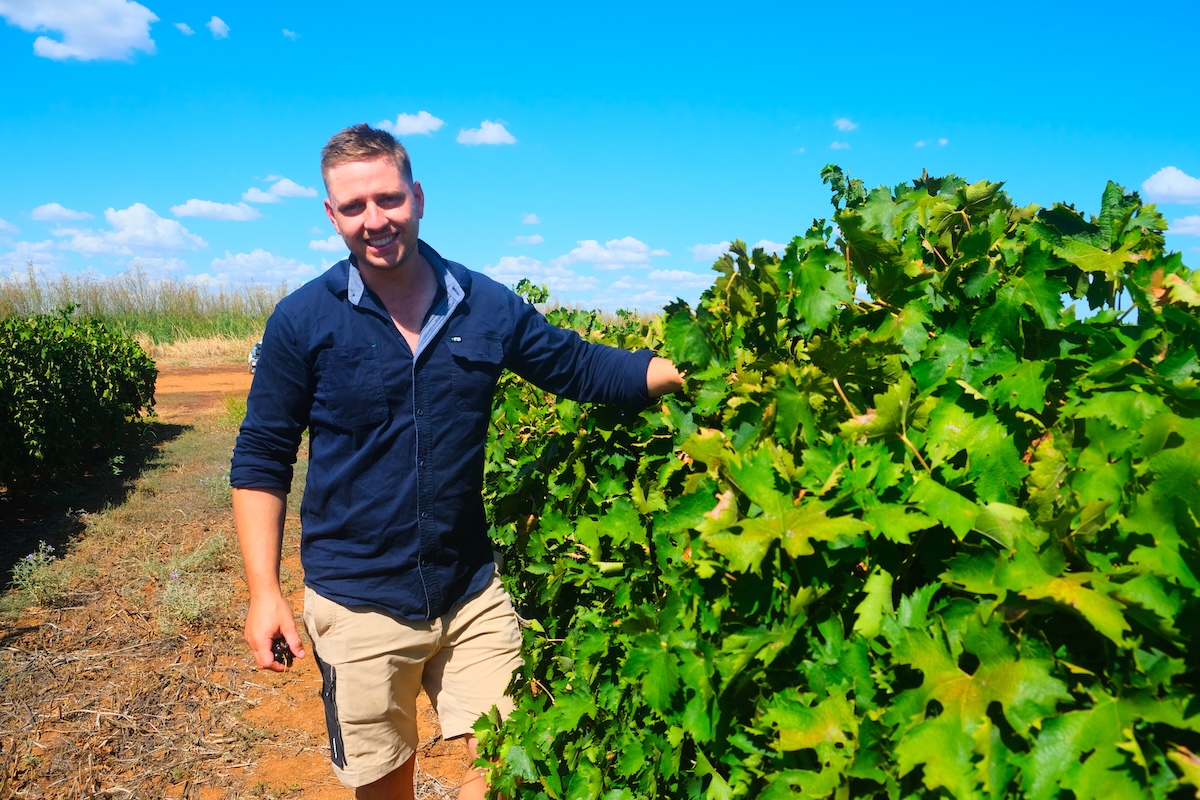
Opposite: Montepulciano grapes on the vine. Above: Con-Greg Grigoriou of Delinquente harvests generous bunches of montepulciano in the warm and dry Riverland region of South Australia.
Montepulciano is a naturally high-yielding variety, which means that it has historically been associated with entry-level vino da tavola (table wines). And while it has lower acidity than some other Italian red varieties (including sangiovese and nebbiolo), its late ripening means that sufficient freshness is retained even in warm conditions, making it a strong prospect in Australia’s warmer growing regions. Red wines made from montepulciano are best known for their fuller bodies, deep colour, and strong tannic structure – whether or not they have seen time in oak. It is, however, also the basis of one of Italy’s most distinctive traditional rosato styles, Cerasuolo d’Abruzzo – so it’s a variety that’s more malleable in the winery than many assume.
Monte: the workhorse turned into an Italian stallion
Montepulciano’s tendency to generate bounteous crops has seen it widely planted across Italy, where it is now the second-most widely planted red wine variety, and the sixth-most widely planted wine variety overall. Much of that is in its ancestral homeland, Abruzzo, which accounts for 56% of the 30,763 hectares that was under vine at the time of most recent national census (in 2022). The warmer southern region of Puglia, which forms the heel of the Italian ‘boot’, comes in second with 19% of the country’s total, and the rest of the total is mostly scattered throughout Molise (a small and relatively unheralded region wedged in between Abruzzo and Puglia on the Adriatic coast) and Le Marche (to the north of Abruzzo, likewise hugging the Adriatic coast). Outside of Abruzzo, it’s usually used as a blending agent – usually adding colour depth, fleshy fruit character, and tannic structure to lighter wines (as in Le Marche’s I Terreni di Sanseverino DOC, where it is blended with the local strain of grenache) or softening the prominent edges of more flamboyant red wine grapes (as in Molise’s Biferno DOC, where it functions as a supporting agent for the wildly floral aglianico). It’s rare to find Italian examples of single-varietal montepulciano outside of Abruzzo, where it takes centre stage in the region’s most famous wines – Montepulciano d’Abruzzo and Cerasuolo d’Abruzzo. Here, wedged between the Apennine mountain range and the Adriatic Sea, the montepulciano vines benefit from a combination of maritime and mountain influences, with the sea moderating temperature extremes and the mountains ensuring the diurnal variation (i.e. warm days and cool nights) that is so important for maintaining freshness and aromatics in wine.
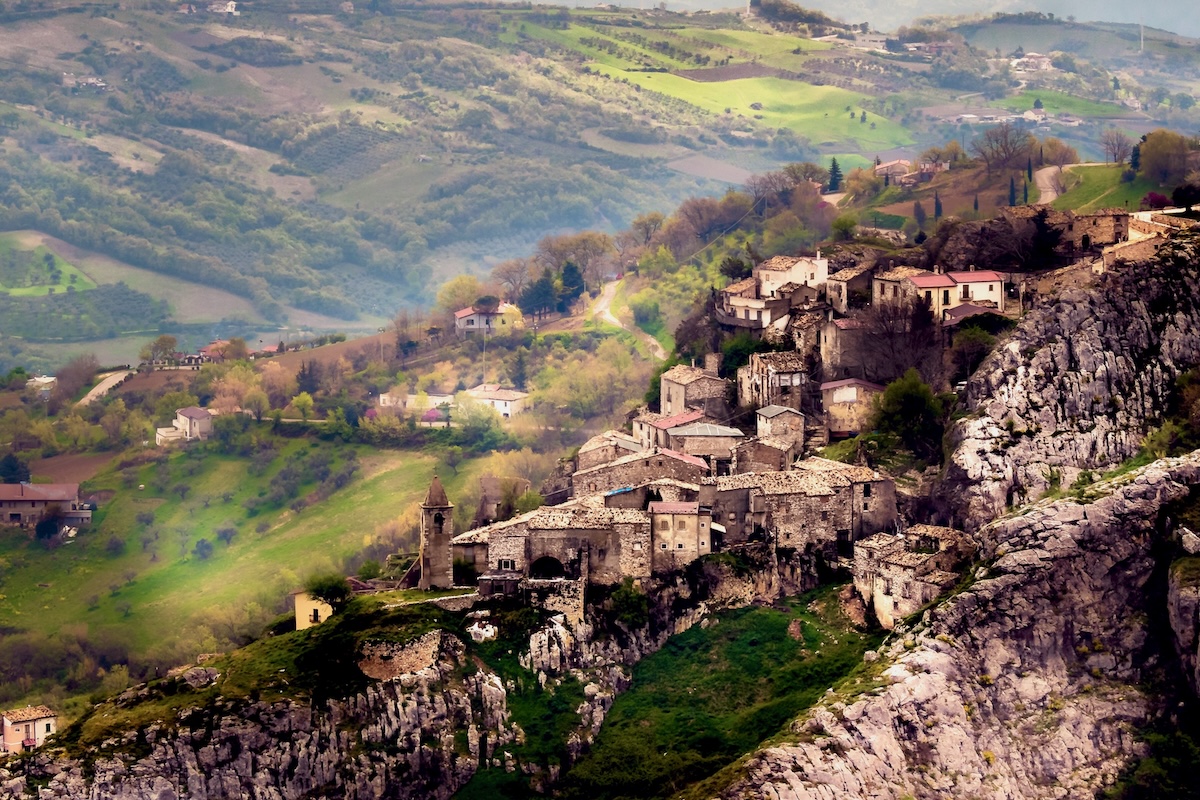
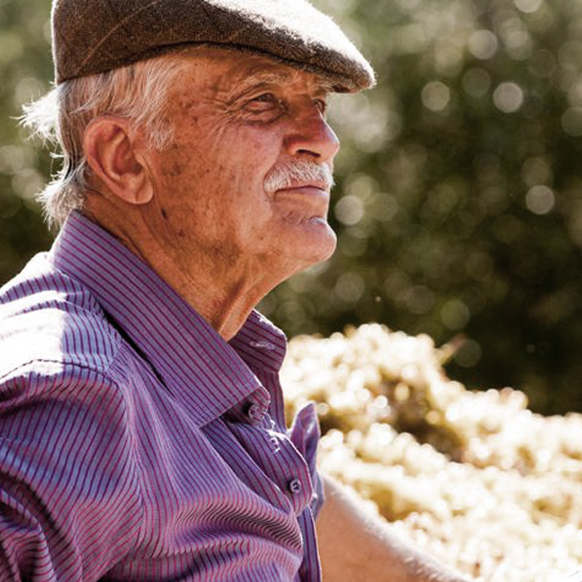
Above: Emidio Pepe, the Abruzzese vigneron whose work has redefined the possibilities for quality montepulciano. Opposite: The rugged landscape of Abruzzo, central Italy – home of montepulciano.
While Montepulciano d’Abruzzo is now held in high esteem by Italian wine aficionados, it wasn’t always considered worthy of discussion alongside the more famous Barolo, Brunello di Montalcino, and Chianti. As with many other regions in the country, Abruzzo fervently embraced the industrialisation of wine from the 1960s through to the 1980s, using new technology to help turn out vast quantities of relatively soulless – albeit rather quaffable – vino da tavola. Montepulciano (the variety) might have been doomed to a reputation as a mere workhorse grape were it not for the patient efforts of Emidio Pepe, the vigneron whose wines arguably have done the most to demonstrate the variety’s potential for quality. Michael Duffy, wine director at New York City’s Italian fine-dining restaurant Rezdôra, goes so far as to argue that “Through Pepe’s efforts, montepulciano was given its first opportunity to shine as a ‘noble’ variety.”
“Through Pepe’s efforts, montepulciano was given its first opportunity to shine as a ‘noble’ variety.”
Pepe’s story has its charming moments – there’s a particularly impressive anecdote about how he booked a solo trip to New York City in the early 1970s alongside a mere four bottles of his Montepulciano d’Abruzzo, confident that the quality of his wines would speak for itself. (He was right to be confident – within twenty-four hours of walking into the first Italian restaurant he could find, he had secured his first American importer.) But in reality, Pepe’s story is one of hard work – decades of small-scale winemaking, biodynamic viticulture long before it was popular, ceaseless travel across Europe to hand-sell the wines and slowly build a reputation for excellence, and the investment of capital and time required to cellar vast quantities of the wines at the winery in order to prove their age-worthiness. It’s also a story of resisting the siren song of mechanisation and industrial winemaking in the hope that authenticity will eventually triumph. Pepe’s wines now fetch the kind of prices usually reserved for top-tier Barolo or Brunello – and they have inspired a new wave of quality-minded, often natural-leaning Abruzzese producers working with the variety.
Monte lands in Australia
Montepulciano’s viticultural history in Australia is a relatively brief one, with the first vines having cleared quarantine in 2000. As is the case with many other Italian varieties, those vines arrived courtesy of the Chalmers family, as part of their landmark work in introducing climate-apt Italian varieties into the country. Since then, it has been taken up enthusiastically by Australian winegrowers, including Peter Valeri of Via Pola Wines in New South Wales’s Riverina. “Montepulciano has always been a special variety to me – my grandfather was born and grew up in Abruzzo,” he says. “It’s pretty cool to have that sort of connection to that region. I’ve travelled over there and been fortunate enough to sort of go around and try a lot of cool wines over there.” And while he argues that montepulciano is perfectly suited to the growing conditions in the Riverina, he also adds that for many of his fellow growers in the region, the appeal of the variety is more than merely about climate suitability. “A big part of the population here in the Riverina and Griffith migrated from Italy to this region,” he says. “There’s also a huge cultural connection.”
Opposite: Winemaker Peter Valeri of Via Pola. Above: Via Pola’s montepulciano vineyard in the Riverina wine region of New South Wales.
Regardless of the variety’s cultural resonance, though, it performs exceptionally well in the warm and dry Riverina region. “The region just grows it so well – we’re really suited to those central and southern Italian varieties,” Valeri says. “It ripens well in a warm climate. It actually needs a lot of heat. We find it’s quite late-ripening – quite hard to ripen without a warm year and some good, balanced growth. So it performs well here, and it’s something that we know we can do well.” Loving the heat isn’t its only viticultural advantage – Valeri also points to its ability to resist drought: “Even when you get dry conditions – in my vineyard, the canopy just holds up much better than a lot of the other varieties that I’ve got nearby,” he says. He also argues that the thick skin of the berries is one of its viticultural virtues: “The skin is really thick, which gives it great disease resistance,” he says. “So we very rarely have to apply a huge amount of fungicides or anything like that when we do have rainfall at not-great times in the season, because it’s so hardy – it’s such a strong variety.” (Resistance to fungal disease pressure is of particular importance to growers in the Riverina, where high levels of humidity late in the season encourages the growth of the fungal pathogen Botrytis cinerea – which can create delicious dessert wines when it infects white wine grapes under certain conditions, but which is uniformly devastating for red wine grapes.)
“You can make a big, oaky style or you can make a leaner, fruit-driven style. It’s got versatility, and I think that’s the real appeal for me.”
That thick skin – the source of the variety’s famous surplus of colour and tannins – often leads makers to treat it much like shiraz or cabernet in the winery, turning it into a relatively dense, extracted style of wine. But Valeri argues that the variety is more malleable than many people both within and without the wine industry assume. “It colours well – it can be made into quite a big style of wine,” he says. “But it can also be made into a more delicate style. It’s got lovely red fruit – a beautiful fruit profile. And drinkability. You can make a big, oaky style or you can make a leaner, fruit-driven style. It’s got versatility, and I think that’s the real appeal for me.” For his own Via Pola Montepulciano, he avoids the use of new oak to emphasise fruit purity in the finished wine, and makes roughly half of the wine using whole bunches and carbonic maceration. In his words, this “accentuates that sort of jube-y red fruit profile, and gives the wine a little bit of spice. It’s a softer extraction technique, and that just adds a little bit of flair to the wine.” Once again, those thick skins help with the process: “If you open up the carbonic maceration towards the end of it, those berries are still quite intact,” he says. “I think that plays a role as well – it doesn’t get super-stalky and whole-bunchy. It just gets that nice kind of spicy, earthy profile – and some beautiful jube-y red fruits, without being over the top.” The end result is, as he puts it, “quite different to what you’d expect it to be – but it’s got great drinkability, and I think at the moment, we should be making wines that people really want to drink.”
Monte gets a makeover
Montepulciano’s tendency towards high yields and its position within the Australian market as an emerging ‘alternative’ variety means that nearly all Australian examples are relatively modestly priced. (For the price of a single bottle of Emidio Pepe’s famous wine, you can usually buy a case of Australian montepulciano.) Some Australian producers are, however, releasing more premium examples of the variety – including Barossa-based label Bruno & George, which makes a montepulciano wine named ‘Drainings’ that retails at $150 per bottle. Somewhat ironically, it’s a variety that the label’s founders, Bruce Blackwell and Josh Norman, had no intention of working with when they started up. “Before we set up Bruno & George, Josh and I both took the better half of a decade working all over the place – on every continent, working with different wineries and playing around with different varieties – but one variety that neither of us had worked with was montepulciano,” says Blackwell. “When we came back to the Barossa and got set up in 2013, we started with our traditional varieties. Then we were working with some shiraz up in Eden Valley, and we came across these eight rows within the shiraz block that were montepulciano. We went, ‘Well, let’s have a little play around’.”
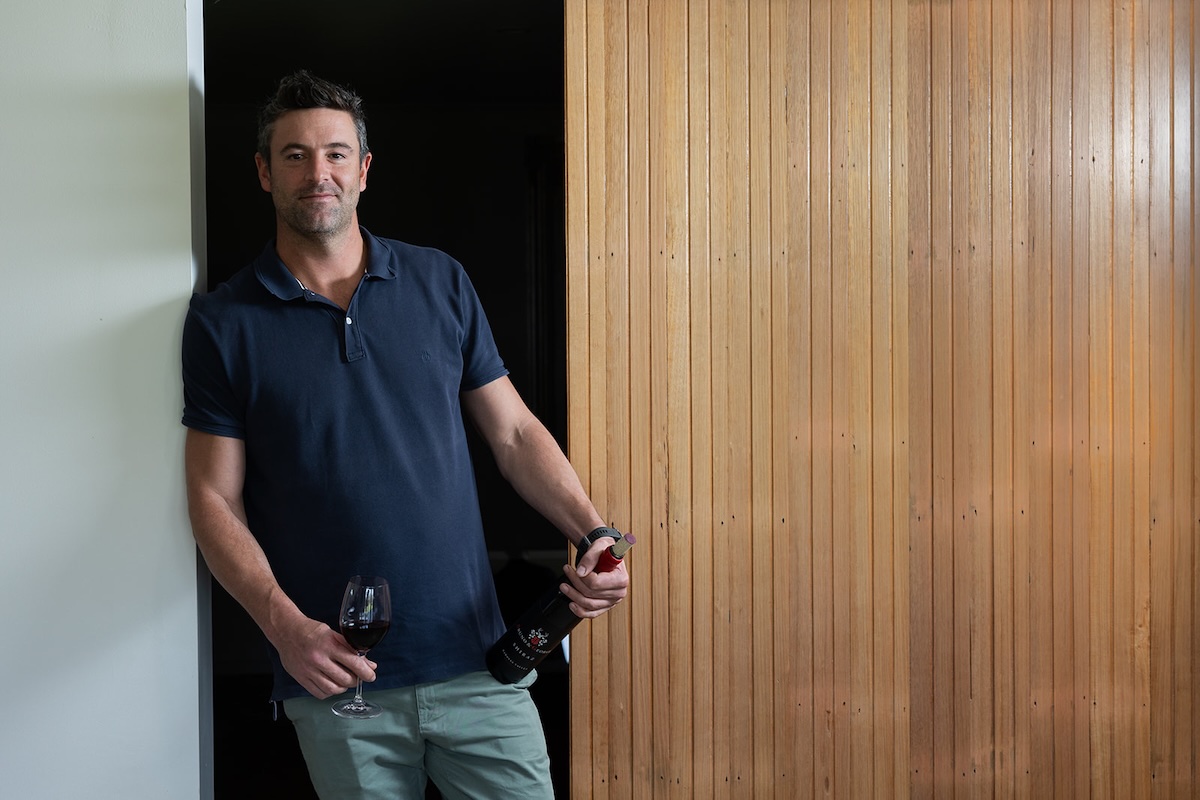
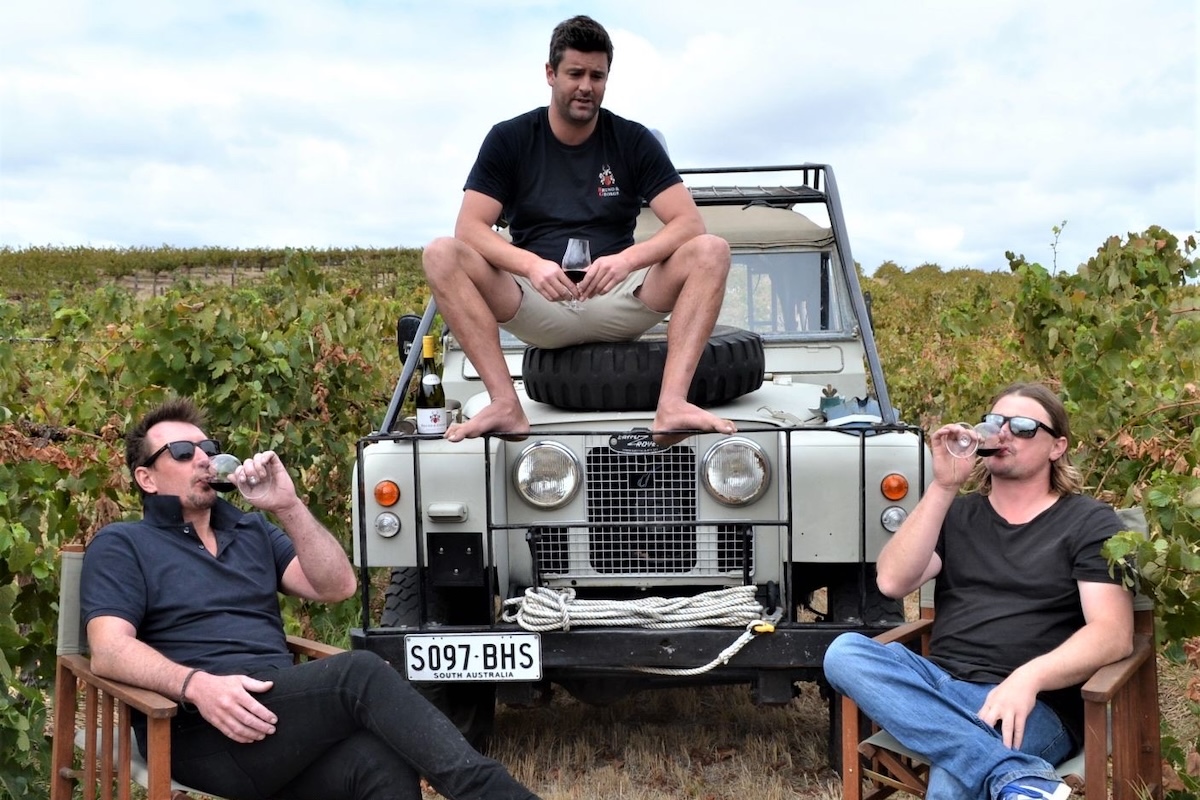
Opposite: Bruce Blackwell of Bruno & George. Above: The Bruno & George team in the vineyard.
The pair planned to turn the montepulciano fruit into something relatively simple and straightforward – an Australian version of a vino da tavola – but soon found that the fruit had other plans. “As soon as we picked it and got it through the ferment, we just noticed straight away what we were smelling,” Blackwell says. “It was a very unique and just beautiful aroma coming out of the ferment, which followed in the barrel. It wasn’t meant to be a quaffing wine – we realised that straight away. However, that first vintage it was a quaffing wine – and we looked at it and went, ‘All right, let’s do this properly’.” They went back to the grower of those eight rows, Mick Herndon, and secured the fruit going forward. “We’re looking at the highest altitude of Eden Valley – it’s about 543 metres above sea level. It’s an interesting block, because it’s a whole shiraz block on top of the hill, and there’s just these eight rows of montepulciano. We actually have no historical data on it – age, when it was planted, et cetera … it’s a bit of a unique plot, because you’re only looking at about a foot of soil before it hits rock.” That shallow soil, coupled with the high elevation of the vineyard, acts as a natural handbrake on montepulciano’s more productive tendencies and concentrates flavour in the fruit. “It generally has no problem growing, but where the vineyard is situated, up at 500 metres, it’s actually more the opposite,” Blackwell adds. “We’ve had to skip three out of eight vintages now, just owing to lack of volume. It’s all dry-grown, so it’s really on the vintage – if we get the rainfall, we get the fruit, it’s as simple as that.”
“It was a very unique and just beautiful aroma coming out of the ferment, which followed in the barrel. It wasn’t meant to be a quaffing wine – we realised that straight away. However, that first vintage it was a quaffing wine – and we looked at it and went, ‘All right, let’s do this properly’.”
Learning how to work with this special parcel of fruit posed its own challenges, especially for a pair of winemakers whose background is, in Blackwell’s own words, “quite traditionalist”. “To be honest with you, the first two vintages we didn’t get quite right, as we hadn’t worked with it before,” he says. “We had probably a little bit too much sugar [at harvest] in the first year – it was almost 14.5 [Baumé], then 14 in the second year. A little bit too much oak as well – after making those wines we quickly noticed that we were losing a lot of that fragrance, and that fruit profile, after having too much oak time.” After missing what was supposed to be their third vintage of montepulciano in 2018 owing to the fruit not ripening properly, they approached the 2019 vintage with a ‘less is more’ attitude. “We picked it a little bit earlier – it came in at just over 12.5 Baumé,” Blackwell says. “We used some seasoned French oak barrels, and we found straight away that everything was retained through the wine’s journey in the barrel. We pulled it out after around nine months, so a lot shorter time in barrel, too. We bottled it and it was just magical – we knew we had something.”
Having nailed the fundamentals of working with this parcel, the pair turned their attention to producing a premium wine from it for their ‘Drainings’ range. The name refers to a process where the fruit left over from the primary fermentation is allowed to essentially press itself via gravity, rather than being squeezed in a traditional wine press. “It’s actually a process that we’ve been doing with shiraz, and I’m playing around with cabernet, but essentially once we’ve finished ferment, we run all the wine into barrels,” Blackwell says. “And before we actually then put all these grapes into the press, we leave them to sit there on skins. We leave the valve open, run brand new barrels underneath, and literally just put a funnel on top and let it drain in.” It’s a slow process – one that, in Blackwell’s words, “isn’t really feasible in a larger commercial winery where you’re holding up the fermenter for forty-eight hours in the middle of vintage” – but one that creates concentration without heaviness in the finished wine. “There’s a little bit less tannin because you’re not getting the actual pressing – so you do lose a little tannin structure there – but you get this really refined and concentrated elegance from this draining process,” he adds. “We had a little bit more yield in ’21, so we thought, ‘Let’s give it a crack with the montepulciano’.” Even with this added concentration, the use of new oak – from a premium barrel supplied by Burgundy producer Louis Latour’s in-house cooperage – proved a little too much for the montepulciano fruit. “I think that the ’21 ‘Drainings’ was a little bit unbalanced with the oak,” Blackwell says. “It’s just taken a long time for those flavours to bind together. We’ve just been starting to crack that wine open – we only did about forty dozen, so it was a very small volume – but we’ve been looking at it now over the last six months, and it’s looking stunning. So it is coming around.” Meanwhile, more recent vintages of ‘Drainings’, with less oak impact, are slowly developing in bottle and awaiting their release.
Monte’s bright future
Montepulciano occupies a somewhat strange position in the Australian wine market – while many consumers have yet to discover its charms, many wine professionals perceive it to be a variety best suited to its traditional use as a blending component rather than as a varietal wine. But for Peter Valeri, that history of use as a blending component isn’t a bad thing at all: “A lot of the time, when a winemaker’s looking to find another variety to blend into a wine, it’s often to make that blend better,” he says. “So the fact that monte does get used as a blender is because it might have that tannin that you’re looking for to broaden out a particular style of wine, or it might have that extra colour, or it might have that fruit profile that really pretties up a wine, or just gives it a little bit more character. So, for me, I don’t see the fact that it’s used that way as a negative at all. For me, it just says that it has some real character and some real appeal, and that it can improve certain wines in certain blends. And as a standalone variety, you get to see all of those really distinct characters. I think that makes the variety so exciting.”
“Even in the Riverina, it’s definitely one of the last, if not the last variety harvested in the region. And sometimes it’s as late as April or May – which, for us, is quite late. It just goes to show how well it can hang in there in a warm dry region.”
Valeri is likewise bullish about the variety’s potential to create wines of freshness and market appeal in a warming world, although he cautions that, in his opinion, it requires a fair bit of warmth to ripen properly. “It’s really late-ripening, and it actually needs a decent amount of heat and it needs viticultural balance to ripen – so I’d be cautious about about planting it in a region that might be a little bit cooler, and where it might struggle to really ripen and get to that full potential. Even here, it’s definitely one of the last, if not the last variety harvested in the region. And sometimes it’s as late as April or May – which, for us, is quite late. It just goes to show how well it can hang in there in a warm dry region.”
“When we first made this, in 2016, it was the kind of wine you wouldn’t see even in the ‘alternatives’ section of a wine list. And now we're actually seeing its own section popping up on lists in capital cities around Australia.”
It’s a sentiment that Blackwell echoes: “It’s an unbelievable variety, particularly when it’s planted in the right place,” he says. “For us in the Barossa, shiraz is king – and it still is king, without a doubt, it fits perfectly – but there are pockets in the Barossa that can produce different varieties in the right way. So I’ve got high hopes for monte in general. I can only really comment on the last eight years – that’s when I started paying closer attention to it – but I’m noticing montes pop up from so many different producers around the Barossa Valley compared to where we were six, seven, eight years ago. So there are people spending more time in the vineyard with it, and allocating it as a separate wine rather than blending it away.” He adds, “When we first made this, in 2016, it was the kind of wine you wouldn’t see even in the ‘alternatives’ section of a wine list. And now we’re actually seeing its own section popping up on lists in capital cities around Australia. So there is a movement – it has been slow, which is probably a good thing, right? It’s slowly getting out there, and people are starting to recognise it.”
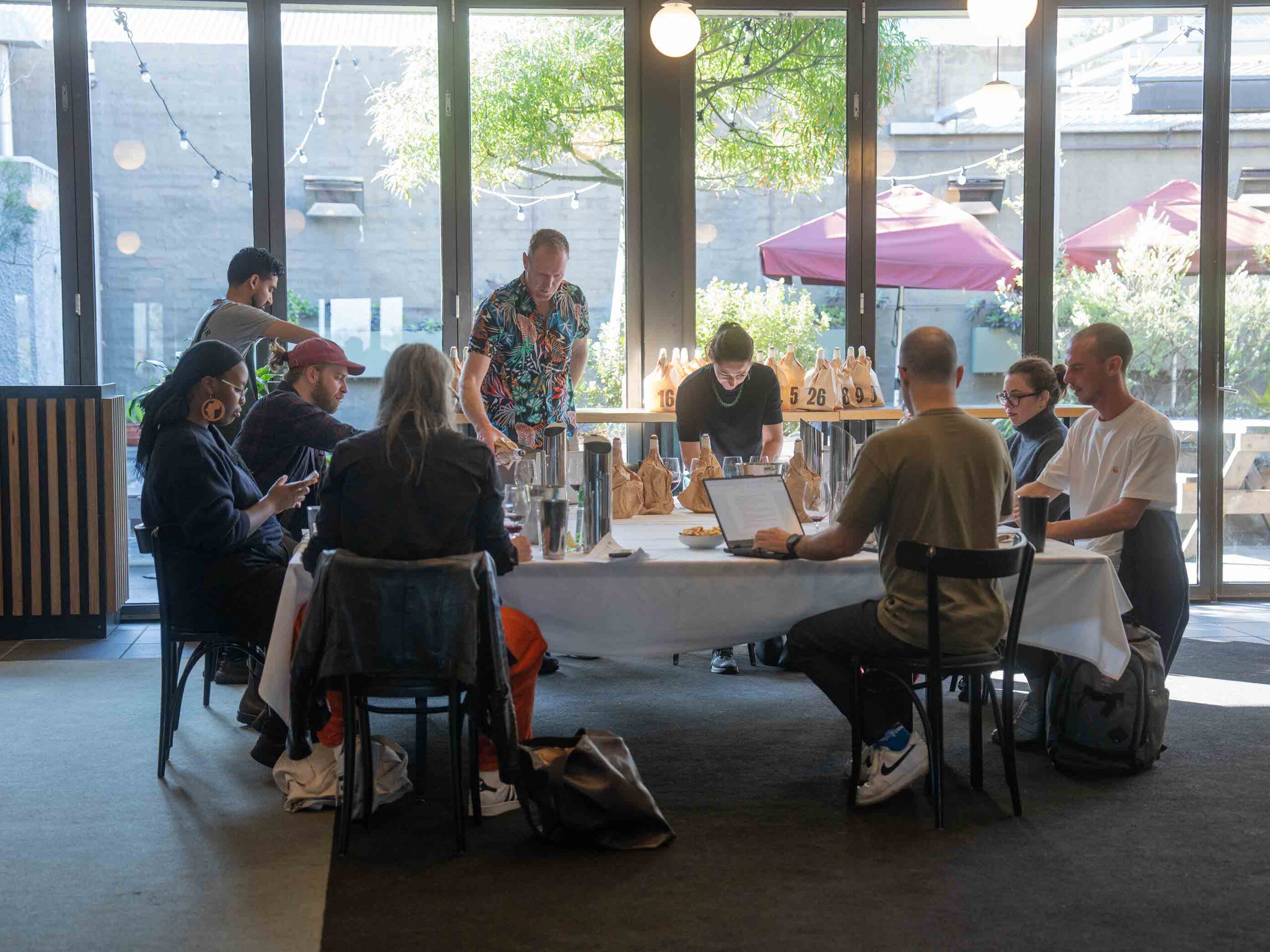
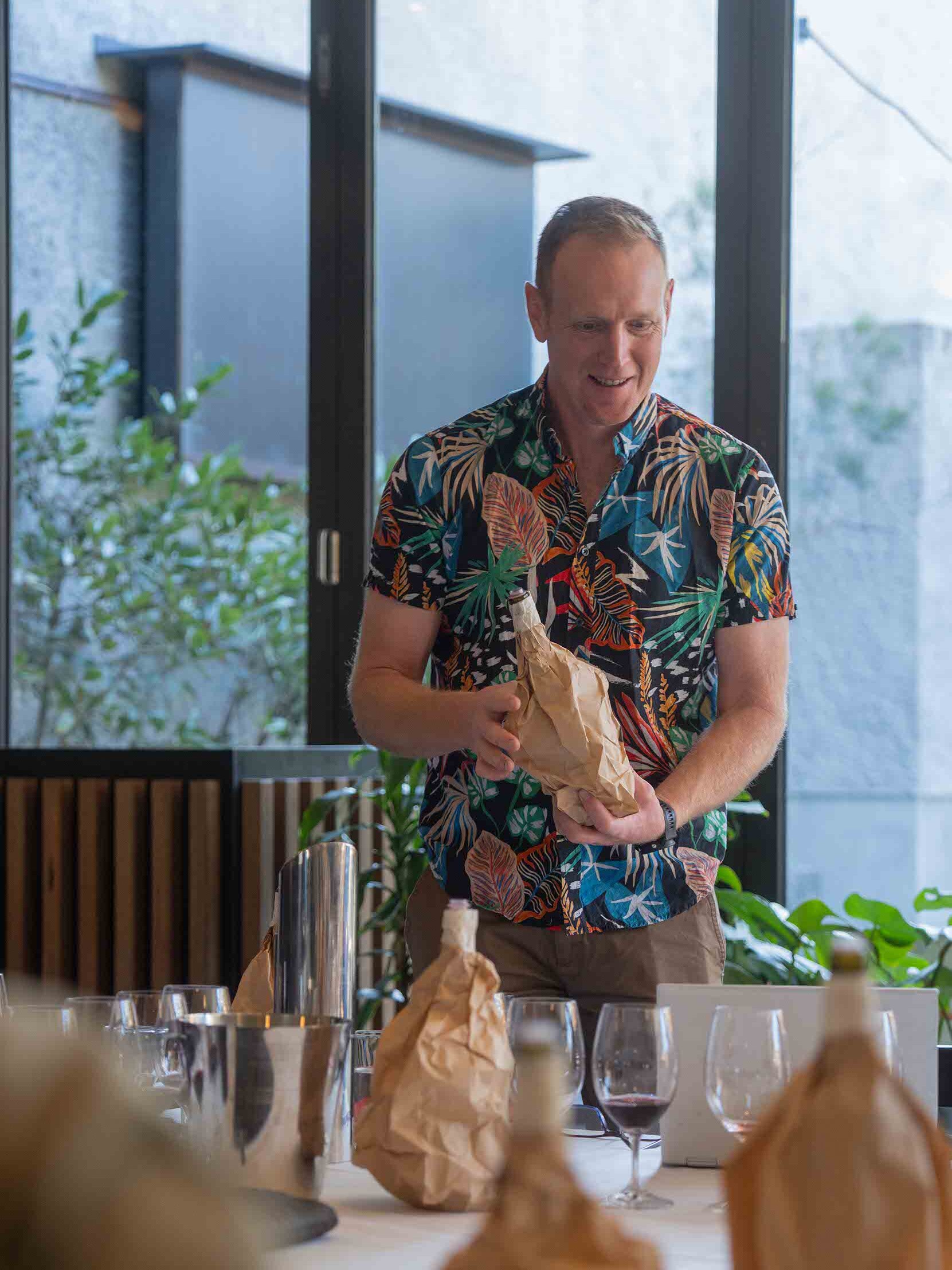
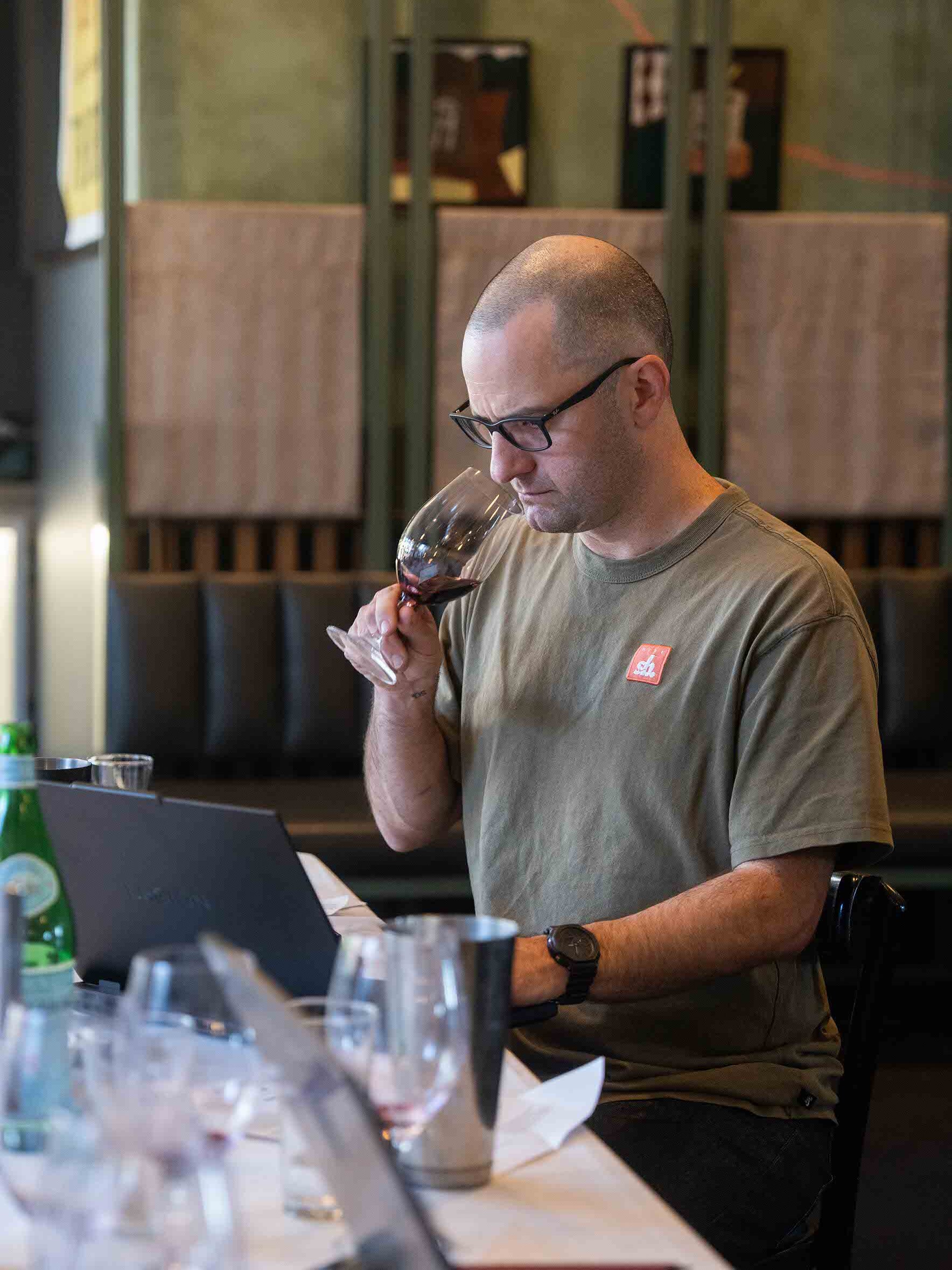
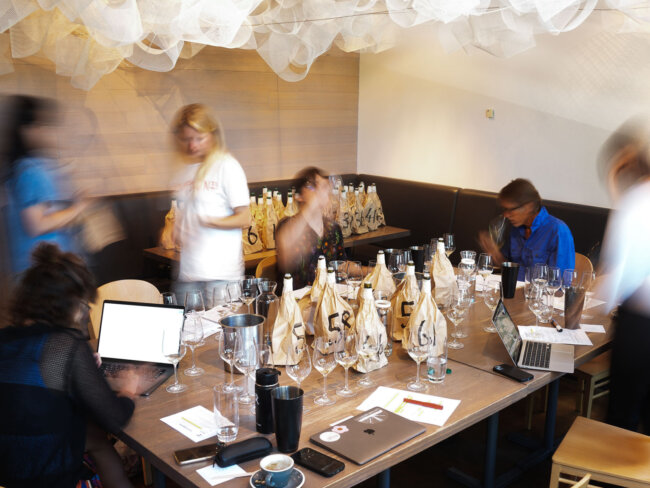
Above: Our expert panel assembled at the Bleakhouse Hotel, Albert Park (Melbourne).
Outtakes from the tasting
We gathered every example of Australian montepulciano that we could find, and set our expert panel the task of finding the wines that compelled the most. All wines were tasted blind, and each panellist named their top six wines.
Our panel: Nikki Palun, owner and winemaker, Susuro; Sam Atherton, winemaker, Marnong Estate; Zoë Ladyman, national business development manager, Primavera Selections; James Scarcebrook, owner and winemaker, Vino Intrepido; Isabella Greco, sommelier; Lorenzo Cecchini, assistant winemaker, Dal Zotto; Sarah Robinson, sommelier, Cutler & Co.; Ciarán Hudson, owner and winemaker, Beyond the Glass.
Robinson commenced the discussion by noting that the number of wines in the line-up was pleasantly surprising. “On the restaurant floor, in general, any monte that we see is always coming from Italy, from Abruzzo,” she said. “There’s some from Le Marche – not much – but it’s like, if we’re going to get monte, it’s usually going to be Montepulciano d’Abruzzo. Nothing else really exists in restaurants. But it’s not as though we don’t champion other Italian varieties from around Australia – the amount of Australian fiano, vermentino, sangiovese, nero d’avola you see, there’s so much of it out there – but it feels like monty is never in that conversation. So I think it’s really nice to see so many.”
Opposite: Sarah Robinson (at right). Above: Zoë Ladyman (at right).
Ladyman was also surprised by the line-up – in her case, in terms of its freshness and vitality. “Going in, I probably thought, given that it’s a warm-climate variety, that perhaps there might be some examples that had been left on the vine too long – a bit baked, a bit stewy perhaps, maybe even a bit raisiny,” she said. “That was probably very unfair. However, the lineup that I saw today was actually filled with quite finely detailed and very fresh examples.” She added, “There were a couple in amongst the lineup that actually had quite a fluid, almost natural-wine vibe about them, and I was like, ‘Yeah, I can see this is probably relatively low-touch winemaking – however, there’s a grapey freshness about this, and I’m into it.’ But also, on the other hand, there were some very handsome, powerful, judiciously oaked wines that would demand a bit more time – and a sirloin on the fire – that I was also impressed to see. There were some there that I think you could easily take to a cabernet drinker or a rusted-on shiraz drinker from the Barossa, and they’d be in deep pleasure over it.”
“Going in, I probably thought that perhaps there might be some examples that had been left on the vine too long. However, the lineup that I saw today was actually filled with quite finely detailed and very fresh examples.”
Palun highlighted the deft tannin management on show from the winemakers. “People are really managing the tannin structure – because montes can actually be quite tannic, they can be quite strong. There was a mix of easy-drinking, plush, juicy sort of styles – and those people are going, ‘I’m happy to have a little bit of firm chalky tannins, and I’m happy to leave it for a while in the cellar, or to instruct people to have it with proteins.’ And I really liked that – because if you drink a lot of Italian montepulcianos, you’ll know they’re stronger, they’re bigger, they’ve got stronger tannins. I really enjoyed the fact that there was that nice mix of early-drinking, easy, plush styles – even some light styles. I reckon there’s some stuff that can be chilled, and then there were bigger styles as well.” Reflecting on this stylistic diversity, she added, “I don’t think that, in Australia, we’ve particularly worked out the style of what our montepulciano is – and I’m really thrilled about that. I don’t want people to have monte as one style just yet. There’s different regions, there’s different vineyards. We’re still working it out – so let’s keep experimenting.”
Above: Lorenzo Cecchini. Opposite: Nikki Palun.
Cecchini argued that the wines all looked very different – in a positive way – to the Italian norm. “I think it’s totally different from what we’re doing in Italy, which is a good thing – being in such different climates, and different soils, and vineyard management and winemaking,” he said. “As we’ve been saying, it’s a really versatile variety – there were a few young examples that I really liked. Some had a bit of carbonic maceration, which I didn’t mind. So it can be really similar to a Montepulciano d’Abruzzo, but it’s not only that – it can be like a Cerasuolo, it can be so many things. So I think people need to know more about this variety and how it performs in different climates.” Reflecting on the general differences between the countries’ respective approaches to the variety, he observed, “In Italian montepulcianos there’s less acidity – it’s a bit more flat, a bit jammy. In Australia you have better acidities than us, so the flavours are a bit more lifted, for me. And definitely a lot more intensity in the front of the palate than in the Italian examples I have tasted.”
“In Italian montepulcianos there’s less acidity – it’s a bit more flat, a bit jammy. In Australia you have better acidities than us, so the flavours are a bit more lifted.”
Greco likewise thought that the wines on display didn’t look like imitations of traditional Italian montepulcianos. “It’s a different wine,” she said. “And that’s great – because you’re not trying to make an emulation of what the variety is on the opposite side of the world. Instead it’s an expression through taste of that soil, that winemaking – that’s great. It’s the same with sangiovese, nebbiolo, and nero d’avola – there may be some markers that are the same, but it’s a different wine.” She added, “What an occasion to reiterate that it’s such a versatile wine – so good, so juicy. Definitely with some of them I thought maybe I would wait a bit longer – I would have loved to see them a little more developed.”
Above: Isabella Greco. Opposite: Ciarán Hudson.
Hudson agreed with Cecchini on the subject of carbonic maceration. “It takes well to carbonic,” he said. “A lot of people will call montepulciano, the grape itself, a fruit bomb, and it kind of is – and carbonic turbocharges that. But what I really like about doing carbonic on it is that it doesn’t only have fruit characteristics. I wouldn’t do carbonic on a grape variety that only has fruit characteristics. Monte has this nice backing of cacao nibs, tar, burnt things – sometimes you even get a little bit of cigarette. They’re all secondary flavours that allow you to be aggressive with carbonic, because there’s more than just fruit character.” He added, “Generally, I don’t like tasting too much oak, and I don’t like tasting winemaking. So if I smell a wine and instantly get those carbonic notes, I’m usually a bit disenchanted. However, I think this variety does well to not scream it.” Likewise, he observed that those cacao and spice notes in the variety meant that wines with notable lactic acid flavour – a trait he otherwise didn’t find appealing in reds – had a pleasant milk-chocolate character.
“Some of the lighter ones were some of the most interesting to me – they're just really juicy, fresh, approachable and easy to drink. And they still had the varietal aspects – they weren’t looking like pinot.”
Atherton concurred with Hudson on the chocolate character, saying, “It seems to hold that milky character well,” he said. “When that lactic, milky thing is present, it just sort of sits in the background as a bit of a bump in the wine.” He added that while some of the wines in the line-up had been made in a lighter style, those still looked identifiably like montepulciano: “Some of the lighter ones were some of the most interesting to me – they’re just really juicy, fresh, approachable and easy to drink,” he said. “And they still had the varietal aspects – they weren’t looking like pinot or something else, they just looked really juicy and delicious.”
Above: James Scarcebrook. Opposite: Sam Atherton.
Scarcebrook saw that ability to transmit varietal flavour in lighter-bodied wine styles as one of Montepulciano’s key virtues. “Montepulciano is kind of the opportunity to get people onto something new if they like merlot,” he said. “Because there isn’t really anything else that has this sort of dark fruit generosity, and is bold and flavourful, without then having the tannin and the weight and potentially the alcohol. It’s capable of having those dark fruits and that more classic Aussie-red sort of flavour profile without having to push it. In the past, bigger was better – that was the philosophy for not just Australia, but also globally. I think that there is an opportunity here to educate consumers – to say, ‘Potentially what you actually like about those wines is those darker fruit flavours.’ And then they can enjoy something that doesn’t have to be so big – or, dare I say, less food-friendly.”
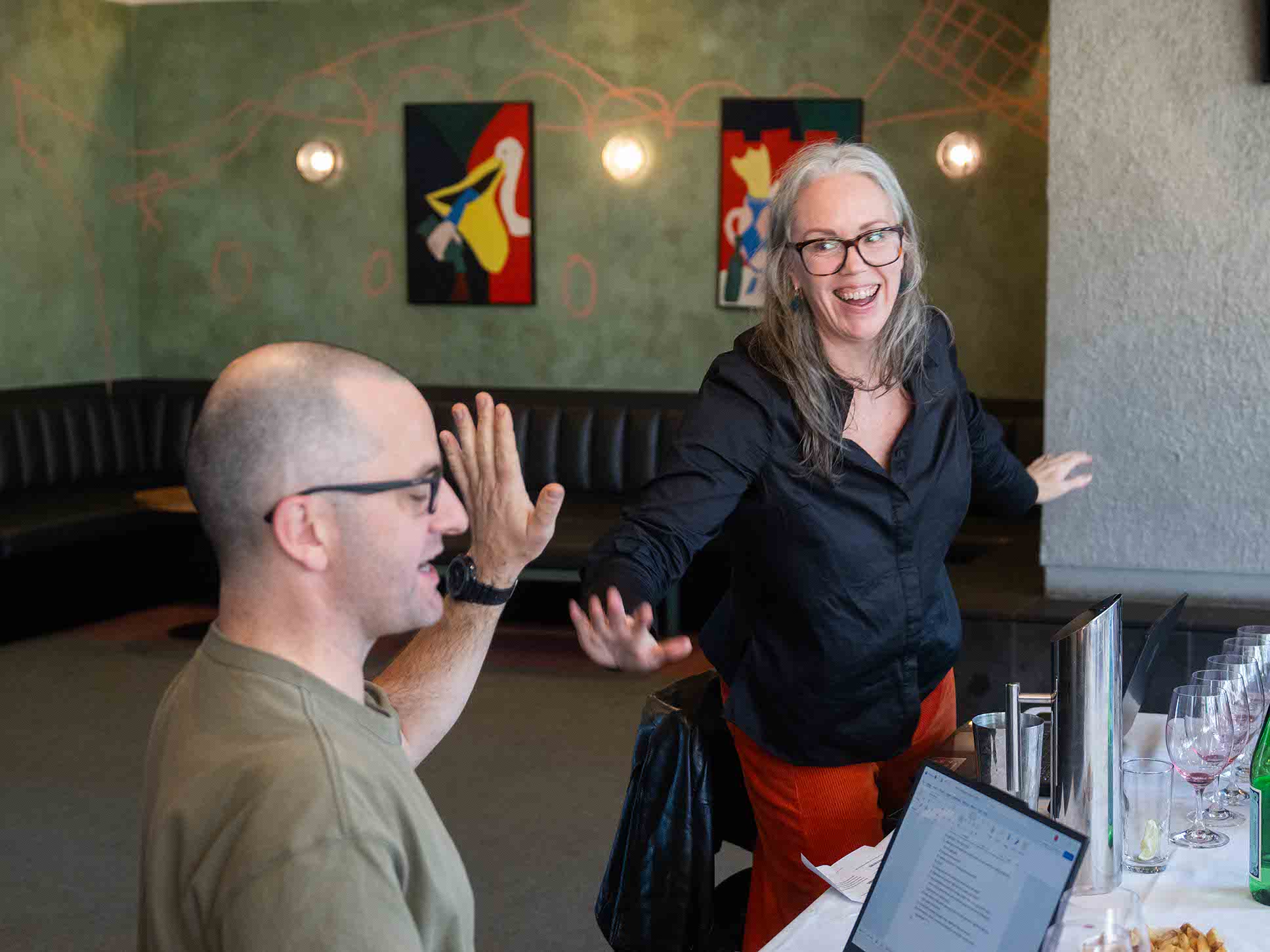
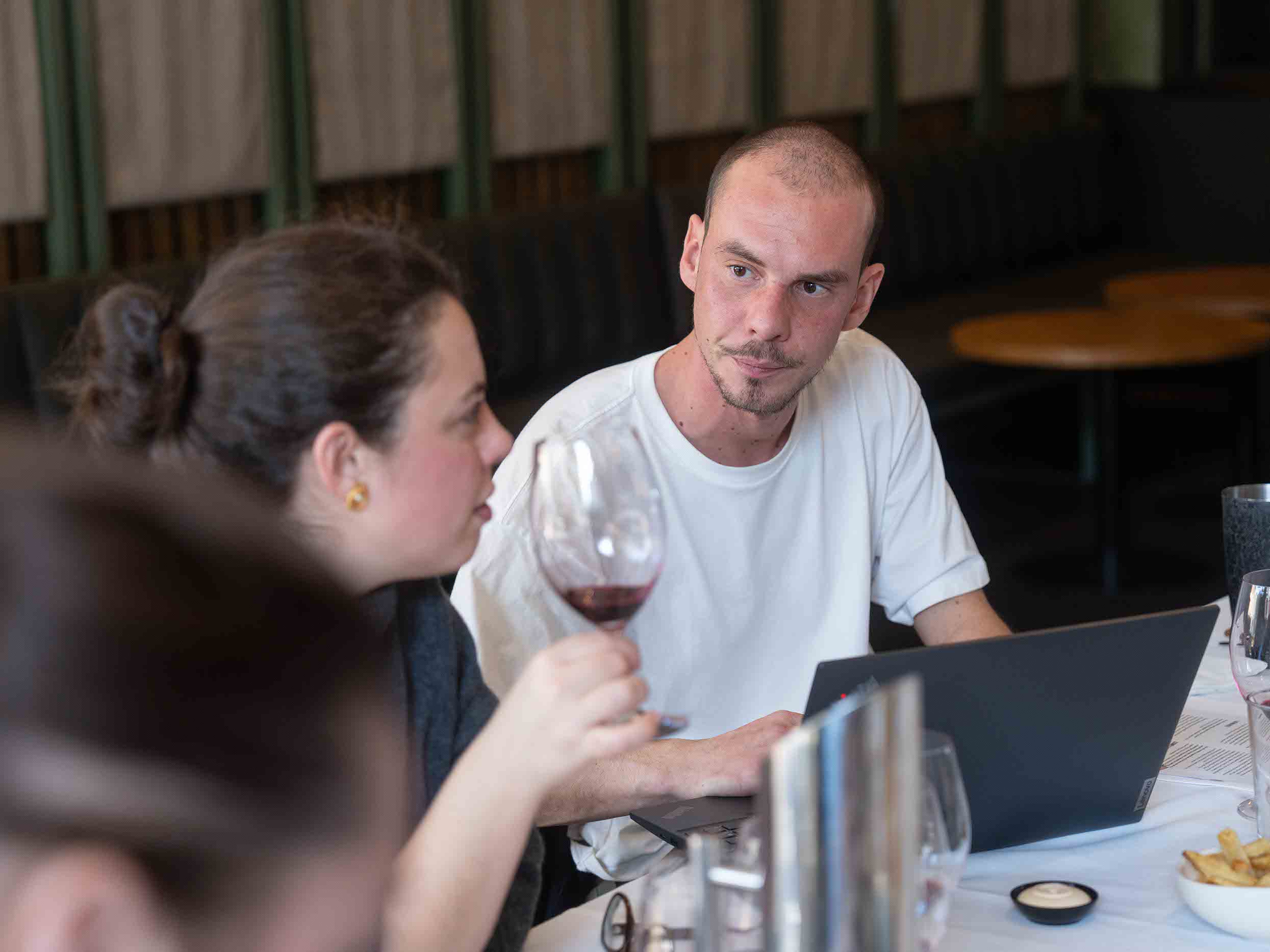
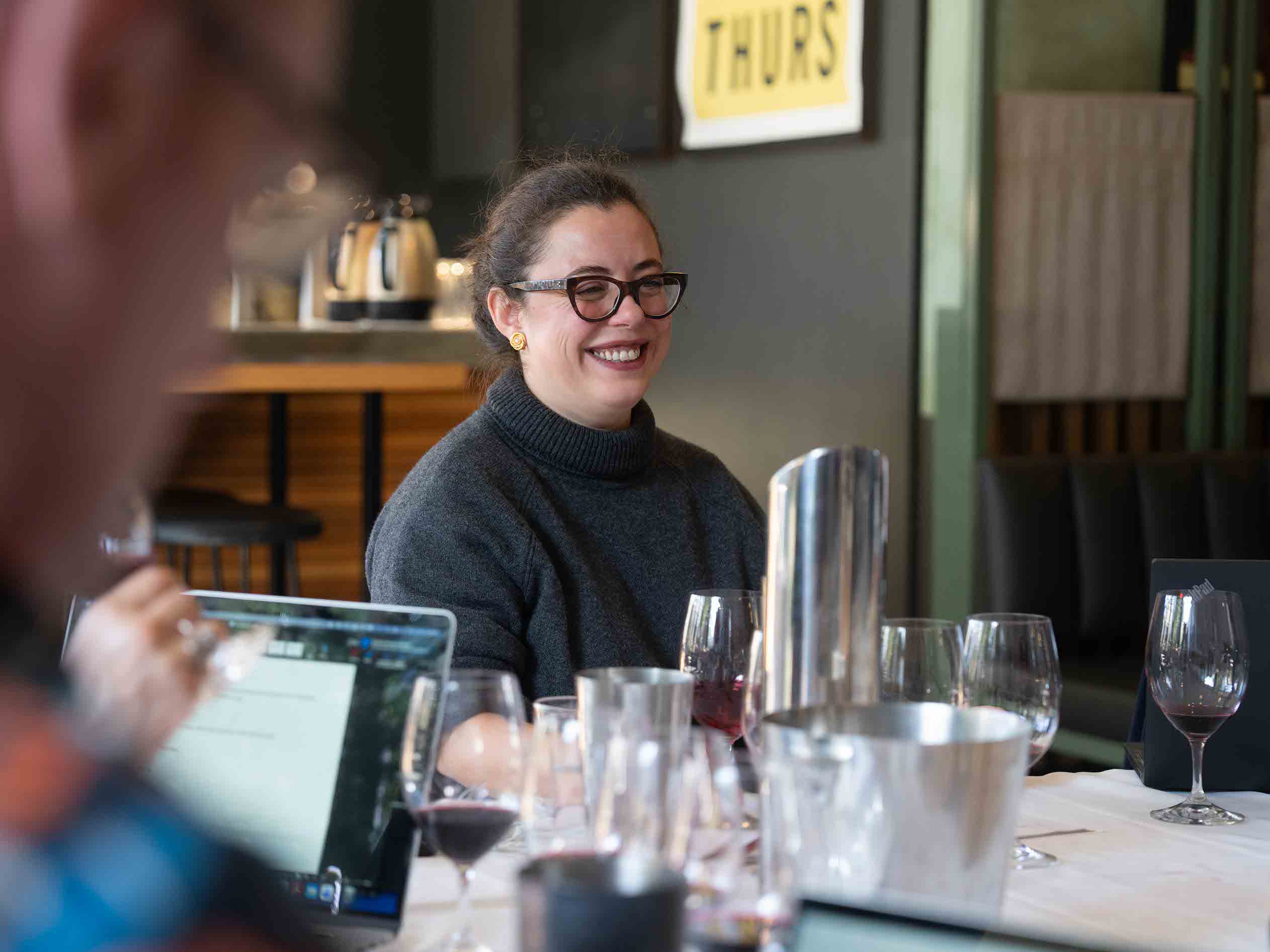
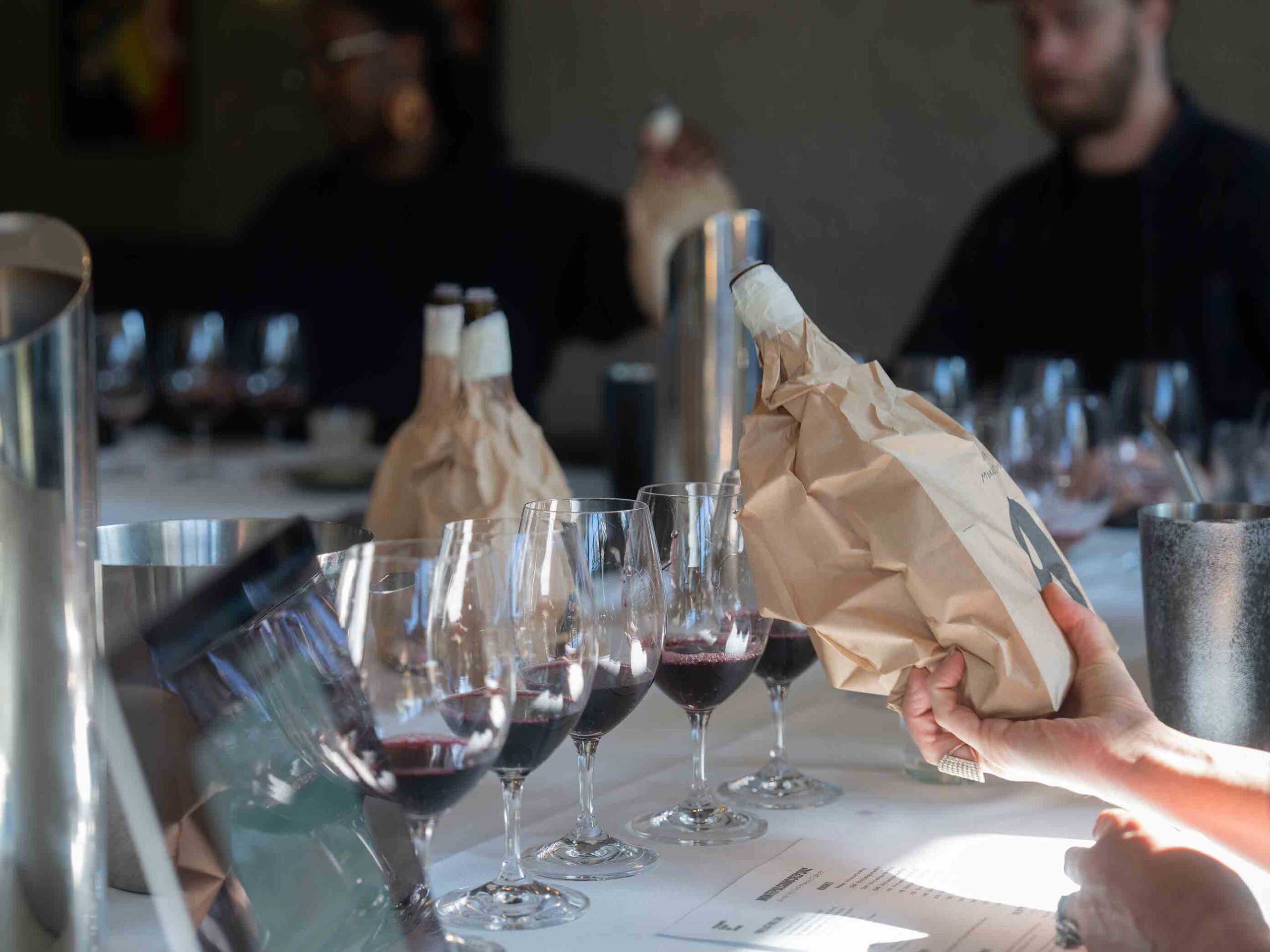
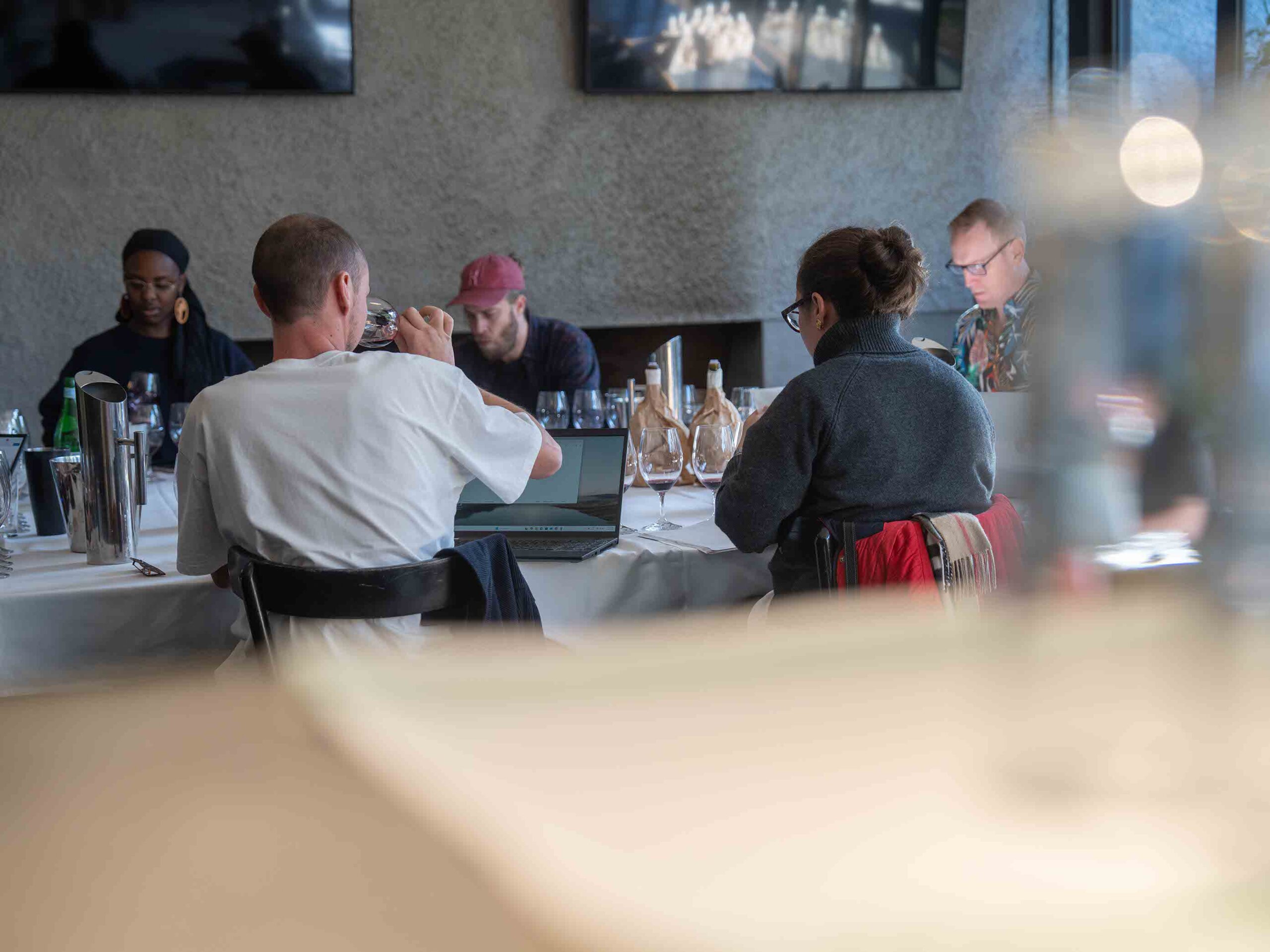
Above and opposite: Scenes from our Deep Dive at the Bleakhouse Hotel, Albert Park (Melbourne). All wines sampled ‘blind’.
The Panel
Nikki Palun grew up making garage wine with her parents in Melbourne after her father converted their backyard into a mini vineyard. She went on to work at De Bortoli Wines in export, building their Asia-Pacific, Middle East and African distribution networks, while studying winemaking and viticulture at Charles Sturt University and gaining her Wine & Spirit Education Trust (WSET) Level 3 Award in Wines. In 2014, Nikki founded Susuro Wines, making wine under two labels – Octtava, focused on classic varieties, and Susuro, specialising in Italian varieties, sourcing fruit from organic and premium vineyards. She oversees every aspect of the business herself, from winemaking and production to label design, sales, marketing and distribution. She also speaks Mandarin, and has served on wine industry boards and committees including Wine Victoria and Australian Grape & Wine.
Sam Atherton grew up in the south-eastern suburbs of Melbourne, and wasn’t interested really interested in wine until going on trip to the Barossa with friends in his early twenties – then he was immediately hooked. He started his journey in wine through a sommelier course at Holmesglen in 2006, and completed his bachelor of viticulture and winemaking at Melbourne Polytechnic in 2011. He has worked as a winemaker for fifteen years, including stints with Chandon Australia and Greenstone Vineyards in the Yarra Valley, Fowles in the Strathbogie Ranges, Paringa Estate in Mornington Peninsula and Chandon California and Newton Vineyards in the Napa Valley, California. He is currently a winemaker at Marnong Estate in Sunbury – and, twenty years on from that Barossa trip, he still loves finding new wines and sharing them with others.
Zoë Ladyman has been exploring the wine industry from all sides since 1998. She worked as a sommelier and wine buyer for fourteen years, including three years at Bibendum Restaurant in London and eight years running the restaurants Libertine and Le Traiteur with her chef-husband Nick Creswick. She moved her family to New Zealand in 2017 to manage domestic and export distribution partners for Akarua winery, a role which took her all over the world to share the story of Central Otago. She has worked in distribution for seven years – firstly with Vinous Solutions (now Goodstock Wine), introducing the wines of Georgia to the Victorian market, and most recently as Victorian state manager for Bibendum Wine Co. She’ll also tell anyone who’ll listen that she did vintage in Bordeaux in 2002 at La Fleur de Bouard in Lalande de Pomerol – an experience she will never forget. She is immensely proud of her teenagers Beatrix and Griffin, who show no interest in wine – yet. She currently works as the national business development manager for Primavera Selections.
James Scarcebrook graduated from The University of Adelaide with a Masters in Wine Business before a sixteen-month global wine adventure saw him visit ten wine-producing countries, including working two vintages in Germany. Since then, he has worked in fine-wine retail, as a representative for two leading importers, (both with a focus on Italian wines), and now makes wine full-time under his Vino Intrepido label. That label is centred on Italian varieties and a quest for finding Victorian sites where they excel, teased out in a way that reflects Italian tradition as seen through a new lens.
Isabella Greco hails from Florence, Italy. While studying law, she worked at several restaurants in Italy, eventually succumbing to the irresistible allure of wine. Arriving in Australia in December 2014 for a six-month working holiday, her stay extended to ten years – and counting – after securing a job at the idyllic Stefano’s Restaurant in Mildura. There, she served as the restaurant manager and wine director for almost nine years, counting the legendary Stefano de Pieri as a mentor. Isabella has recently moved to Melbourne to embark on her next journey in wine hospitality, and is currently working front of house at Marameo.
Lorenzo Cecchini grew up around wine, with his grandfather owning a small vineyard in Tuscany. He transformed his passion for wine into his profession by studying viticulture and winemaking at the University of Florence (Università degli Studi di Firenze), and had already secured winemaking work at Agricola Pietro Beconcini before graduating in 2020. His passion for gaining winemaking experience saw him split his time between the southern hemisphere and the northern hemisphere to do double vintages each year – working with Clonakilla in the Canberra District, House of Arras in Tasmania, Avignonesi in Tuscany, Poderi e Cantine Oddero in Piedmont, and Herdade do Rocim in Alentejo, Portugal. He currently works as assistant winemaker at Dal Zotto Wines in the King Valley.
Sarah Robinsongrew up in beautiful Aotearoa New Zealand before moving to Melbourne in 2023. With a passion for hospitality and a deep love for wine, she’s worked through pubs and restaurants around Melboume until finally settling at Cumulus Inc. on Flinders Lane. Here she works as a sommelier, guiding guests through food and wine of provenance.
The wine bug bit Ciarán Hudson in the Southern Rhône appellation of Ventoux in 2016 – his first harvest. It was a 1953 bottle of Châteauneuf-du-Pape that got him: a wine of unimaginable complexity, and his most profound drinking experience to date. Since then, he has returned to Ventoux for five vintages, with another planned for this year. Coming from a mechanical engineering background, muddled with a history of IT consulting, the fourteen vintages across both hemispheres Ciarán has worked since 2016 has set him on a steep and intense learning trajectory. Some of the wines he makes for his Beyond the Glass label are sort of classic, showing old school restraint with some potentially big, tannic varieties, while the other side of his winemaking is experimental and fun. He’s always hunting for new ideas and challenges in the cellar.
GET FIRST ACCESS TO THE NEXT WINE ICONS – DELIVERED
On the surface, it’s easy to compare the Geelong wine region with the Mornington Peninsula. While Mornington catches the light with a good dose of glamour, Geelong has a quieter resolve and greater subregional diversity, which makers are exploiting to exciting effect. This year’s Top 50 features Mulline’s Ben Mullen, Empire of Dirt’s Natasha Webster and Micro Wines’ Jonathan Ross.
Although there is a nagging, seemingly unshakeable, collective memory that riesling is often sweet, the benchmark Australian rieslings have always been dry – often aridly so. Indeed, for a certain type of Australian wine drinker, the presence of any perceptible sweetness in a riesling immediately rules it out of bounds. But the riesling landscape has become somewhat richer in the last decade or so, with a wealth of wines emerging that combine electric acidity with balancing dollops of natural grape sugar. It’s a very exciting category – one that produces wines that are seductive in their youth, yet can age astonishingly well, as well as being perfectly suited to pairing with an array of different cuisines. Five years on from our inaugural Deep Dive into this topic, we thought it was high time to revisit this delicious category …
Riesling may have originally come from Germany, but it has found its Australian home in the Clare Valley. The Clare Valley grows a larger share of Australia’s riesling than any other region by a long margin – it’s currently responsible for 35% of the country’s total annual harvest. And that fruit is nearly-always turned into an instantly recognisable style of wine – crisp, fresh, high in acidity, and bone-dry – that is beloved by wine drinkers across Australia and the world over. In fact, for many people the Clare Valley approach to riesling defines Australian riesling in general. But is there more to Clare riesling than its famous mineral tension and razor-sharp acidity? We took a Deep Dive into the subject to find out.
Subscribe to our newsletter
Young Gun of Wine is your shortcut to cutting edge wines, the places to go, and the people behind it all.
Subscribe to be amongst the first to know of our latest discoveries in wine.
We'll bring you the inside running from the growers, the makers, the wholesalers, the retailers and the sommeliers, too.