-
Producer
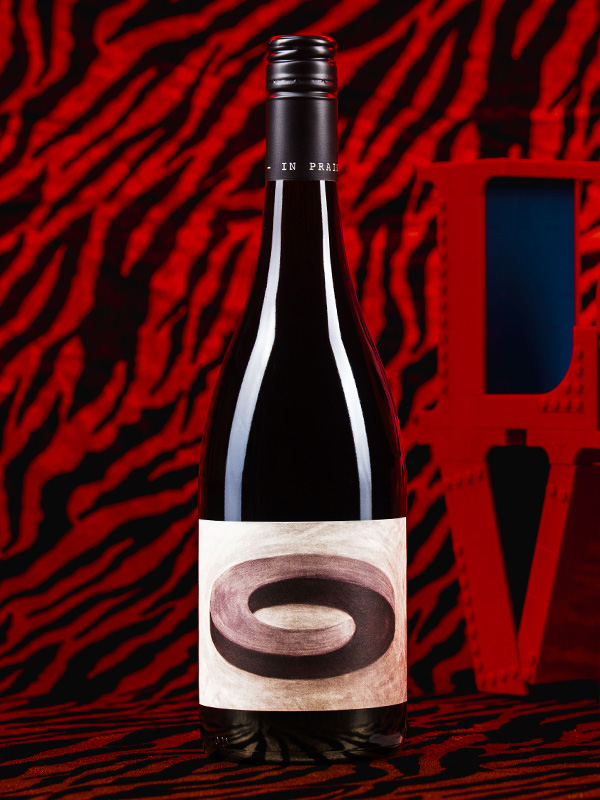
In Praise of Shadows -
Region
McLaren Vale
-
RRP
$30
-
Vintage
2025
-
Variety/Varieties
Grenache
-
Alc./Vol.
14.2%
Light on the palate but full of life — cherries, Allen’s Ripe Raspberries lollies, clove and cinnamon spice, all held together by real acid line and sheeny tannin. Thoroughly modern grenache.
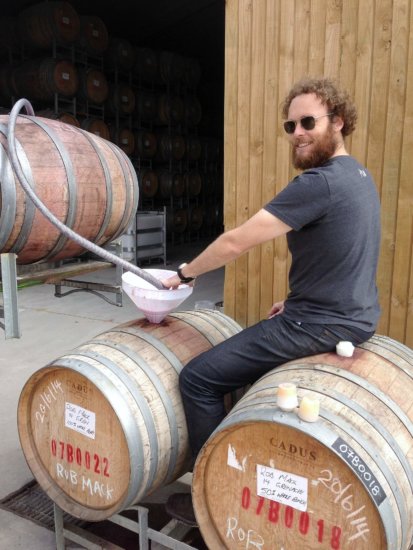
In Praise of Shadows is the relatively new label of Brett Trewartha, named in homage to Junichiro Tanizaki’s 1933 essay of the same name — a philosophy built around finding beauty in the understated, the imperfect and the honest. Past Young Gun of Wine winner Rob Mack consults on the winemaking, bringing his own deep grenache expertise to the project. The label is a certified member of Sustainable Winegrowing Australia, approaching the winemaking with minimal intervention.
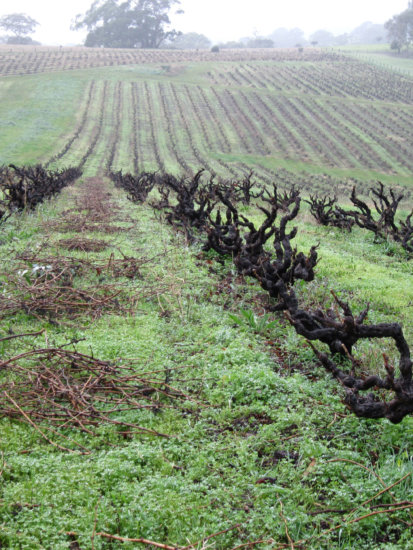
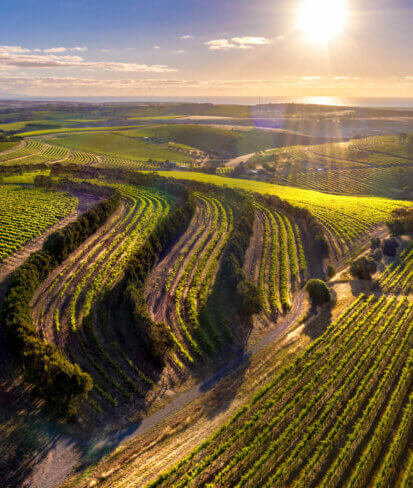
This wine draws on two of McLaren Vale’s most storied grenache sites. The Smart Vineyard in Clarendon is one of the region’s most esteemed — a multiple-time finalist in our own Vineyard of the Year Awards, first planted to bush-vine grenache in 1922 and expanded in subsequent decades, with this wine drawing on 70-year-old plantings from that vineyard, still tended by the same family three generations on. Sitting at 220 to 230 metres above the Onkaparinga River, it’s one of the highest and coolest sites in McLaren Vale, and its fruit is prized by some of the region’s best-known makers. It’s blended here with fruit from Springs Hill in the sandier Blewitt Springs subregion, whose soils help coax more lift and fragrance out of the grapes. The 2025 blend runs 57 per cent Springs Hill to 43 per cent Smart, both dry-grown and hand-picked in early March following a mild spring, a warm dry summer and a gentle finish into autumn — conditions that delivered clean, balanced and genuinely flavoursome fruit.
Grenache’s standing in McLaren Vale has been transformed over the past decade and a half. For most of the twentieth century it was treated as a reliable workhorse, prized for its yield and used mainly for fortified wine, before nearly disappearing altogether during the vine-pull scheme of the 1980s. Its revival began with a wave of winemakers who saw the old vine material still scattered across the region and chose to treat grenache as a hero variety rather than a blending afterthought — Taras Ochota’s Young Gun of Wine win in 2013, Luke Growden’s Best New Act trophy in 2015, and Rob Mack’s own Best New Act and Young Gun wins in 2017 and 2018 among the turning points. That generation favoured earlier picking, whole-bunch ferments and a lighter hand in the winery, pulling grenache away from the big, oaky, shiraz-adjacent style it was once made in and toward something more aromatic, site-transparent and genuinely its own.
In the winery, an intentional mix of small-batch ferments — some whole bunch, up to 100 per cent foot-stomped, others taken through extended maceration of up to 85 days — built layers of complexity across the blending bench. The wine was matured mostly in ceramic amphora and large 500 litre puncheon barrels (which are seasoned, meaning they don’t add oak flavour), with a single third-use Austrian Stockinger puncheon adding a touch of structure, and finished unfined and unfiltered. It’s exactly this kind of considered approach that saw the wine perform strongly at our own blind McLaren Vale Grenache Deep Dive.
Tasting note
This grenache announces itself with a riot of confected fruit in the most delicious way — red liquorice, cranberry and raspberry — the kind of nose that makes you sit up and pay attention. Beneath that initial burst, the flavours deepen into something more spiced and savoury, joined by dried rosemary and thyme, cardamom and nutmeg, and perfumed violet and rosehip alongside pomegranate and maraschino cherry. Oak is present but never intrusive, adding Madagascan vanilla around the edges. On the palate it holds real tension, with sheeny tannins and well-maintained acidity carrying that berry-juice freshness through a sandy, fine-grained finish. It’s fruit-driven, but never simple — the contrast between dark spice, sweet cherry and green herbs is what keeps you coming back for another glass.
When to drink
This is a playful, gently mischievous wine, not a serious one to sit and contemplate — the kind you crack without a second thought on a Tuesday, just because. There’s something here for everyone: give it a twenty-minute spin in an ice-filled esky before cracking it open at a beachside barbecue, or slide it into your fanciest decanter and serve from your best stems for a dinner party. It doesn’t need food to be enjoyed, and honestly, we don’t worry too much about food and wine pairing around here — that’s how a casual glass turns into a stressful production. But if that’s your thing, pair it with big gulps and your signature spag with meatballs — buon appetito. Or, if you’re feeling a little fancier, it does a lovely job alongside roast duck.
Themes of this wine
Grenache
Grenache is a genuine workhorse of a grape — thick-skinned, drought-resistant and capable of thriving in hot, dry conditions where more delicate varieties would struggle. Likely originating in Spain’s Aragón region before spreading through southern France, it forms the backbone of Châteauneuf-du-Pape and the Southern Rhône, typically in blends rather than on its own. For decades it was treated as a reliable but uncelebrated bulk grape in Australia, valued for its yield rather than its personality — a reputation that’s been thoroughly upended over the past fifteen years or so, as winemakers have begun treating it as a hero variety in its own right.
McLaren Vale
McLaren Vale, just south of Adelaide, has over forty distinct soil types and a Mediterranean climate moderated by sea breezes off the Gulf St Vincent — conditions that give its grenache remarkable freshness despite the region’s warmth. Some of the world’s oldest continuously producing grenache vines are found here, planted from the 1840s onward, and it’s this combination of old vine material and a new generation of winemakers chasing lighter, more transparent expressions that’s turned McLaren Vale into arguably the finest grenache region in the country.
Bush vines
Bush vines are grown free-standing, without the trellising and wire support most modern vineyards rely on, a traditional method well suited to dry-grown, low-yielding fruit in warm climates. Without irrigation or a trellis to lean on, these vines tend to be more self-regulating, producing smaller, more concentrated berries as they mature over decades. Many of McLaren Vale’s most prized old grenache vineyards, including material dating back to the 1920s and beyond, are still farmed this way, and that vine age and traditional training are a major part of what gives the region’s grenache its depth and character.
Explore Further
GET FIRST ACCESS TO THE NEXT WINE ICONS – DELIVERED
Find out moreEach month, get 3 bottles of our freshest discoveries. We taste thousands to bring you the best.
Join us and support emerging winemakers, sustainable vineyards, and the development of young professionals.
— Max Allen, Wine Writer
— Broadsheet
— The Australian