-
Producer
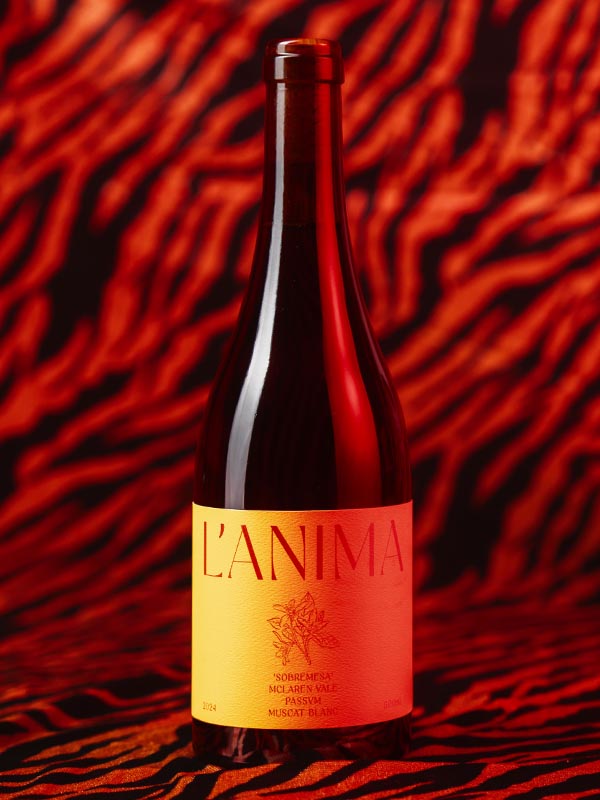
L’Anima -
Region
McLaren Vale
-
RRP
$40
-
Vintage
2024
-
Variety/Varieties
Muscat blanc à petits grains
-
Alc./Vol.
13.5%
Imagine apricot jam on hot toast, a splash of orange marmalade and a ginger snap crumbled in — sweet, sure, but with a savoury, salty edge that keeps it from ever feeling heavy. Delicious cold from the fridge with a wedge of cheese, any time of day you fancy.
Michael Williams launched L’Anima from the 2024 vintage, distilling a winemaking education built across Ngeringa, several years in Tuscany, SC Pannell, Moorilla and time as winemaker under Andre Bondar into a small, considered range from McLaren Vale. The label is built entirely around climate-appropriate Mediterranean varieties — fiano, vermentino, sangiovese, grenache, nero d’avola and muscat blanc — chosen because they demand less water in the vineyard and fewer inputs in the winery, with a genuine focus on reducing the label’s carbon footprint through packaging as well. Wines are fermented and matured in clay and sandstone amphora and large-format Slavonian oak, built around the idea of wine as something made for the table.
The ‘Sobremesa’ Passvm is Williams’s nod to the sweet muscats of southeastern Sicily, made using the passito method: hand-picked Muscat Blanc à Petit Grains, brought in across three separate picks — one for drying, one at normal ripeness, one left extra time on the vine — then hand-sorted onto racks and dried in the sun for six weeks before four weeks of skin maceration and maturation in old French oak. The wine took out the Danger Zone trophy at the 20th Annual Young Gun of Wine Awards, recognising exactly this kind of risk-taking, original winemaking.
Tasting note
There’s a Medusa-like pull to the perfume on this one — dense, alluring, almost impossible to look away from. Homemade apricot jam and almond kernels spread on warm toast lead the charge, layered with orange marmalade and blossom, fresh straw and baking gingersnaps, with dried raisin and ripe peach humming away underneath. It smells rich and luscious, but a real freshness cuts through as soon as it hits the palate — apricot compote sharpened with a splash of lemon juice, candied ginger, orange peel garnished with thyme, and a savoury, grilled-nut rancio note that keeps things honest. There’s a little textural grip too, a whisper of tannin from the skin contact, framing the sweetness rather than letting it run away. Sweet, yes, but never remotely cloying — Williams has built real tension into this wine, helped along by the portion of muscat picked at regular ripeness rather than dried.
When to drink it
Forget relegating this wine to dessert — we love it as an aperitif. Open it to start the evening, or to start any occasion. It’s so complex and beautifully balanced that it deserves some attention, and it’s dangerously delicious to boot. Open it to persuade a stubborn wine-snob acquaintance of the merits of sweet wine. Or not — this wine doesn’t need an occasion or an excuse. It’s just gosh-darn delicious, whenever you feel like drinking it.
Think dusky nights on the back deck, the hum of crickets, and all of the fried, crunchy things. You’re fond of the classics, so prawn toasts and lemon chicken it is, while you raise a glass to that lovely old-school Chinese place down the road.
Themes of this wine
Muscat Blanc
Muscat Blanc à Petit Grains is considered the oldest and finest of the muscat family, prized for its intensely perfumed, grapey aromatics and long history stretching from ancient Greece through southern Europe. It shows up in styles ranging from light, spritzy and off-dry to deeply sweet fortified and dried-grape wines, with Italy’s Moscato d’Asti and the sweet muscats of Sicily’s southeastern tip among its most famous expressions. In Australia it has traditionally played a supporting role in fortified wine, but producers working with alternative techniques are increasingly finding new ways to let its natural perfume shine.
McLaren Vale
Just south of Adelaide and hugging the coastline of Gulf St Vincent, McLaren Vale is best known for full-bodied shiraz and grenache, built on a warm Mediterranean climate tempered by sea breezes off the gulf. That same maritime influence and diversity of soils — from sandy loams to ancient ironstone — is increasingly drawing producers toward Mediterranean varieties beyond the region’s traditional strengths, chasing wines that need less water and suit the climate as it stands today, not as it once was.
Passito
Passito, or appassimento, is one of winemaking’s oldest tricks: grapes are picked and then dried, whether on straw mats, hanging racks or in the sun, before fermentation. As the grapes dry, water evaporates and sugars, acids and flavour compounds concentrate, producing wines of far greater intensity than the same fruit would give if pressed fresh. The technique underpins some of Italy’s most famous wines, from Amarone to Vin Santo, and rewards producers willing to accept the labour, time and risk of drying fruit by hand rather than simply picking and pressing.
Explore Further


GET FIRST ACCESS TO THE NEXT WINE ICONS – DELIVERED
Find out moreEach month, get 3 bottles of our freshest discoveries. We taste thousands to bring you the best.
Join us and support emerging winemakers, sustainable vineyards, and the development of young professionals.
— Max Allen, Wine Writer
— Broadsheet
— The Australian