&noscript=1"/>

Deep Dive:
Australia’s Best Sparkling Rosé

Wines Of Now
10 December 2025. Words by YGOW.

Both sparkling wine and rosé are seen as ‘good time’ wines – the kind of bottle you break out to celebrate, or use as a convivial poolside drink. So what happens when you combine bubbles and pink wine? The easy answer is that you have a party in a glass – but behind this veneer of frivolity lies some seriously technical and fearsomely difficult winemaking technique. With an extraordinary range of grape varieties, regions, and winemaking techniques involved, Australian sparkling rosé is a delightfully gonzo category – just the type of thing that we like to sink our teeth into via a Deep Dive …

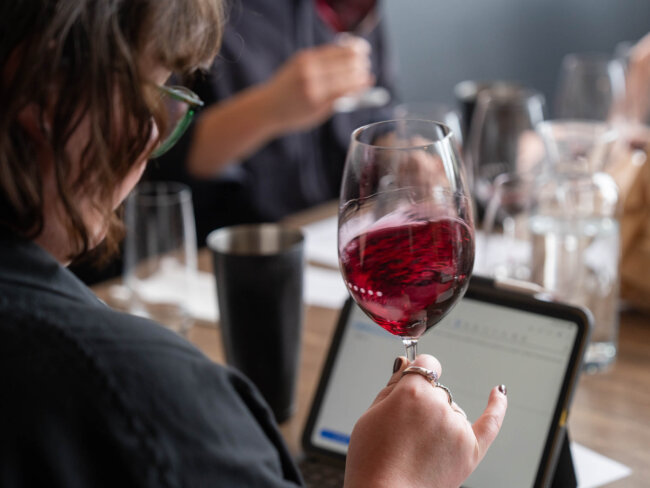
We gathered every Australian example of rosé sparkling that we could find – with no restrictions on grape variety or varieties used, and no restrictions on winemaking techniques used to create the colour or the carbonation – and set our expert panel the task of finding the wines that compelled the most. All wines were tasted blind, and each panellist named their top six wines. Below are the wines that made the panellists’ top-six selections from the tasting.

Our panel: Peta Baverstock, winemaker, Cuvée Co.; Sam Watkins, winemaker, Watkins Wines; Tully Mauritzen, wine buyer, Vinomofo; Sam Baxter, sommelier, Geralds Bar; Sarah Robinson, sommelier, Cumulus Inc..; Logan Howes, wine retailer, Seddon Wine Store; Jordi Yeates, wine retailer and store manager, Crooked Drinks.

From the Deep Dive

The Top Wines

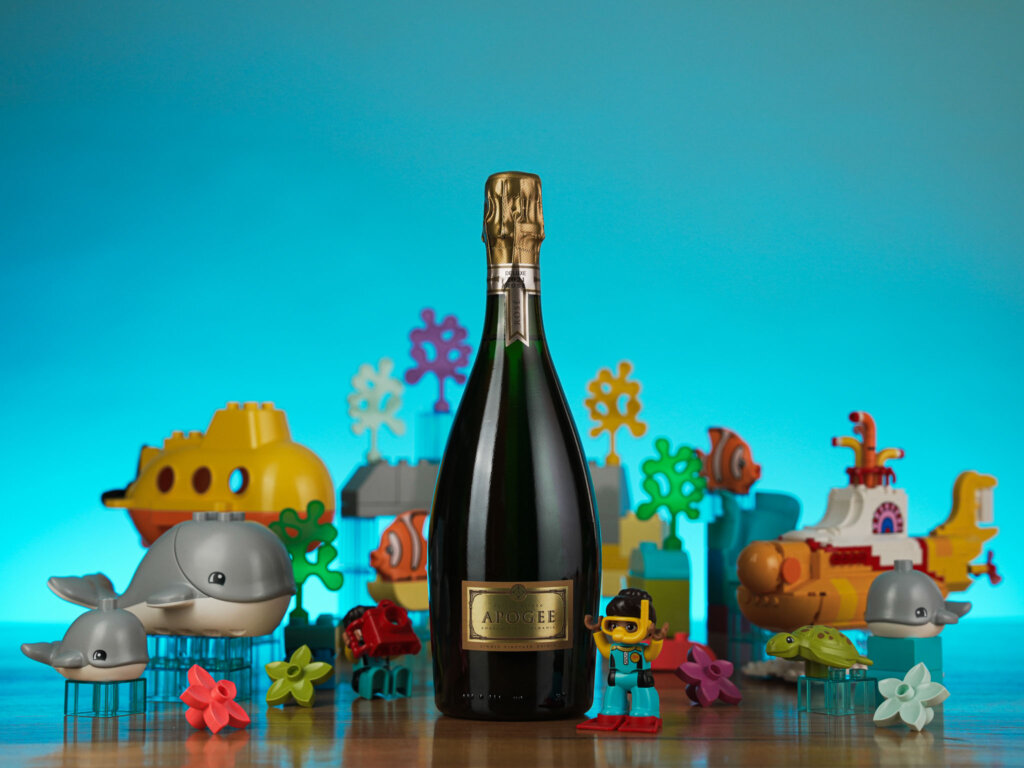
2021 Apogee Sparkling Rosé, Tasmania $81 RRP

This traditional-method sparkling wine – crafted by Tasmanian sparkling luminary Andrew Pirie – appeared in the top six wines of the day for Watkins, Baxter, Robinson, Mauritzen, Howes, and Yeates. Watkins called it “a great example of a traditional-method sparkling rosé. Aromatically huge, with autolytic notes of fresh bread dough and pastries – then cherries, peaches and honey come through. The palate is rich, but with a nicely ripping acid line that cleans up the finish beautifully, and a mouth-filling and lingering mousse.” Baxter noted that “the wine’s careful, persistent bead and orange hue entices the eyes. It explodes on the nose, with toasted brioche laden with savoury maple, charred yellow peach skin and ripe white pear notes. An amazingly complex little bubbly – perfectly for matched for sashimi, sushi, and other raw fish dishes.” Robinson described how “my favourite notes in the wine show themselves when you let it relax in the glass for a moment – suddenly you’re at a campfire, toasting marshmallows, as the smell of warmed biscuits, rich caramel, and nougat fills your nose. I would absolutely reach for this wine before I reach for a bottle of rosé Champagne.” Mauritzen found that “this wine is instantly remarkable for its aromatics – one of the most pronounced of the day’s line-up. There’s an undeniable element of salinity here. This wine is remarkable for its ability to muscle up against most dishes – a great rarity with sparkling wines.”


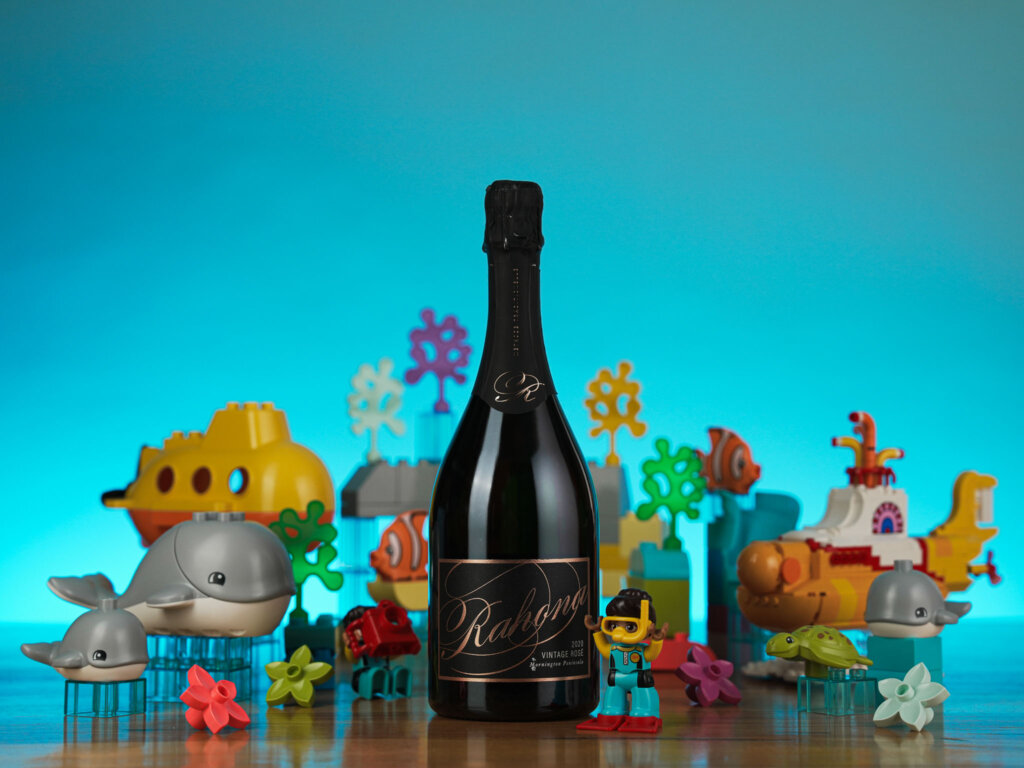
2020 Rahona Valley Vintage Sparkling Rosé, Mornington Peninsula $60 RRP

Howes, Watkins, and Robinson all selected this wine – made by Bellebonne’s Natalie Fryar – among their top six from the blind tasting. Howes noted that “this wine opens up with some brioche and freshly-baked croissant notes – but what really hooked me was the little herbal lift, almost like picked dill fronds, on the tail-end of its aromas. On the palate, it has an opulence that made me come back to sample it again and again – a real wine-nerd’s style of sparkling wine, complex and textural, made by an assured hand.” Watkins called it “a curveball – a fantastic sparkling, but one that shows more of what I would consider blanc de blancs characters than rosé ones. It opens with oyster shell and green apple, then moves into creamy natural yoghurt followed up with a nice bit of toastiness. This is a wine of great harmony – where other wines in the line-up have leaned on primary fruit over winemaking complexity or vice versa, here there’s both bold primary fruit and layers of complexity to look into. I can definitely imagine using this wine as a palate-cleanser across a multi-course dinner – it would be delightful to get to see it unfold as you come back to it throughout.” Robinson found that “‘precision’ is the first word that comes to mind here. With its aromas and flavours of fresh white blossoms, white peach, and green apple, this wine showcases a vibrancy and crispness that thrills the palate. It’s thrilling to see a maker push the boundaries of what Australian sparkling rosé should look or taste like with this refreshing and poised wine.”


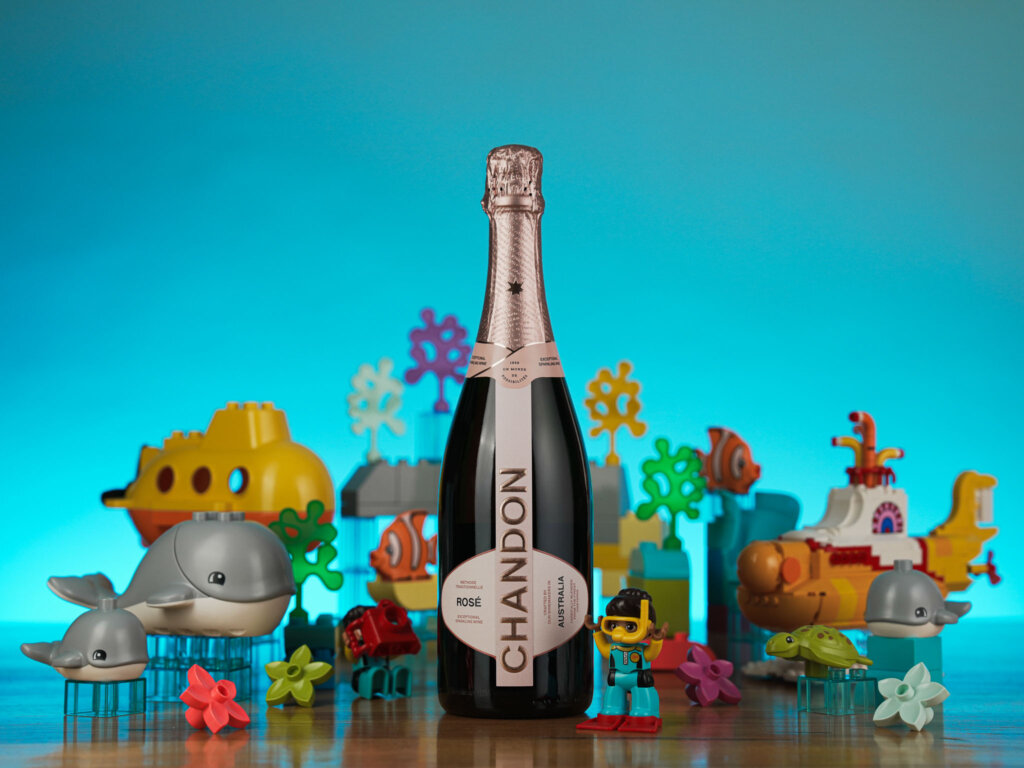
NV Chandon Brut Rosé, Yarra Valley $30 RRP

This wine made the top six wines of the tasting for Howes, Yeates, Watkins, and Mauritzen. Howes described “a savoury, biscuit-y nose reminiscent of parmesan shortbread that shows some lees autolysis. In stark contrast to that savoury nose, though, the palate has a blood orange sorbet feel to it – juicy, lightly bitter, slightly confected, and utterly refreshing. Chalky and bright, it finishes with an Italian Amaro-like character – molto bene.” Yeates noted that “the nose was reverberating with piquant goji berry, sour pink cherries, flecks of toasty almond skin in the background. On the palate a steel-cut pink lady apple cracked with Himalayan pink saltiness, teeny-tiny Provençal strawberries that taste faintly of pink rose. This fizz has the prowess of a Prince guitar solo – glamorous and electric.” Watkins found it “super-interesting, with a nose of fresh orange rind and blood orange – but when you look a little deeper there’s an almost-peppery character that verges into menthol there as well. It would be very interesting to see this in cocktail – it feels like it’s half-way to an Aperol spritz already!” Mauritzen described how “it’s exciting to see a wine with a little more colour in a sparkling rosé line-up, and this one intrigues with its deeper ruby-salmon colour. The nose is as intense as the colour, with a defined and shapely aromatic profile defined by an array of red fruits – strawberry, cranberry, red cherry – while also carrying a distinctly Australian fine herbaceous character reminiscent of saltbush. I applaud this wine for so many reasons – but mostly because it pays homage to Australia’s place and culture so well.”


NV Thalia Sparkling, Tasmania $45 RRP

Robinson, Watkins, and Mauritzen included this wine in their top six selections from the tasting. Robinson described it as “stepping on to the scene with Provençal grace, this sparkling unfolds an aroma spectrum from ripe strawberries and juicy cranberries through to vanilla yoghurt, almond meal, and white chocolate. The pale gold hue hides a deceptively deep-flavoured wine that’s unafraid to lean into its creamy, silky mousse. The pastry notes add lushness to the wine – almost like taking a bite of a warm berry pie – while it still retains a cleansing grapefruit-like acidity. The winemaking here shows elegance and restraint – allowing you to sip in delight as it unfurls in the glass. A bottle to wow dinner guests with over roast chicken, but one that would be even more splendid by itself.” Watkins noted “so much going on here – layers of complexity! A bit of red and golden apple character, honeysuckle, yoghurt drizzled with honey, a nicely autolytic brioche note – all the things you look for and love in a traditional-method sparkling rosé. There’s a nice zippy acid line that freshens and brightens up the palate without becoming excessively racy – one that can look really sherbet-y at times when revisiting the wine, but never out of place. The sweetness on the palate here – courtesy of some ripper fruit weight and a little bit of dosage – balances out that acidity nicely. A great mousse, too, with a lingering bead in the glass. Overall, it’s a wine whose richness and weight is complemented by the complexity on the nose, and balanced by an acid profile that tightens it all up beautifully.” Mauritzen found that “they say ‘never judge a book by its cover’ – but it’s hard not to appreciate the impeccable colour of this wine, a perfect pale salmon with flickers of rose gold. Dressed to the nines, this wine is ready to party! It powerfully expresses clearly defined aroma notes across a spectrum from fresh and tart to rich and toasty. It’s hard not to love a wine that so perfectly walks the line between freshness and power. The cherry on top has to be the structure: we’re talking rippingly high acidity that grabs your attention, while the rich creamy mousse melts in your mouth and brings you back down to earth. A wine that I could easily put it up against rosé Champagne for its elegance and complexity.”


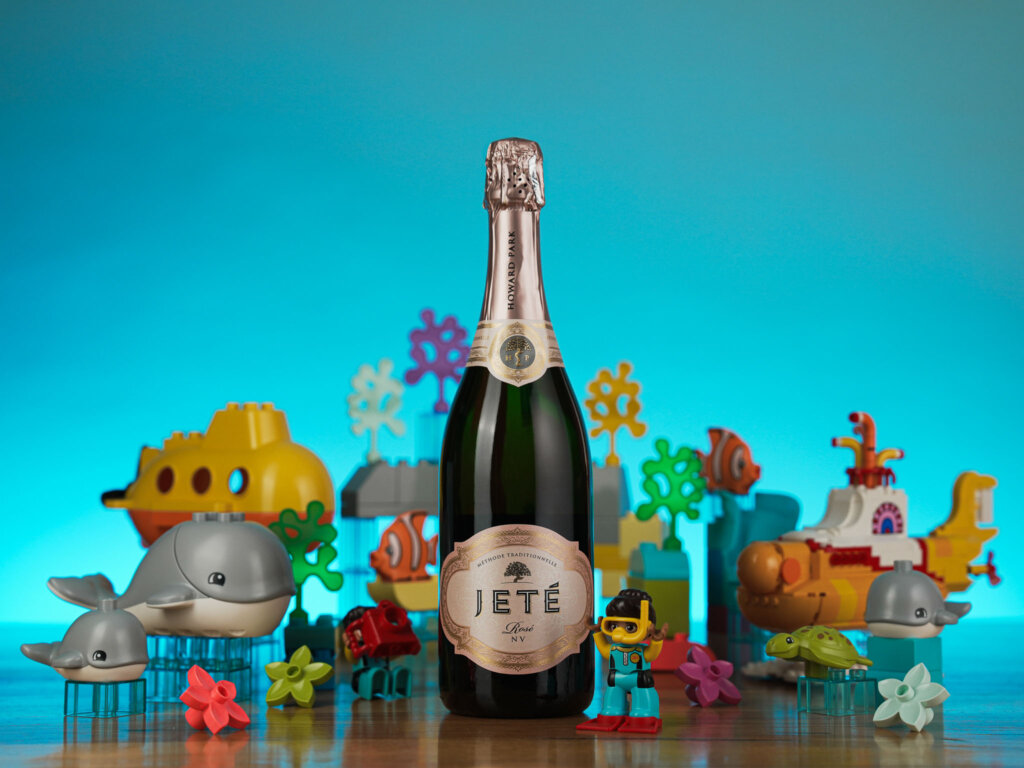
NV Howard Park ‘Jeté’ Methode Traditionelle Rosé, South West Australia $50 RRP

Baverstock and Watkins both selected this wine among their top six wines on the day. Baverstock described it as “a sundowner fizz that captures the luminous hues of dusk. It’s elegantly fragrant, showing red apple skins, fresh strawberry, and a light edge of raspberry jelly crystals. It keeps revealing new discoveries on the palate, with lovely toasty complexity, powdery musk-stick tannins, and bright-as-a-daisy acidity – all wrapped up in a level of sophistication that really grabs you.” Watkins found “a pinot-like nose of strawberries and light red fruits – maybe a bit of red cherry and raspberry – with a nice level of autolytic complexity in there as well. When autolysis comes through in pinot-dominant sparkling, it creates this beautiful character of slightly burnt toast – rich and doughy, but with a little something else that cuts through – and I can see that note in this wine. The mousse is somewhat coarse – but in this case it just adds an extra element to the shape of the palate. There’s a nice balance between sweetness and acidity here, and good length of fruit – which is appropriate, because this wine is all about those lovely lifted berry characters. There’s complexity to be found here, but only if you want to look for it – which makes it perfect for those who like their wines juicy and fruity, but who also might be starting to venture a bit deeper into what sparkling wine can offer.”


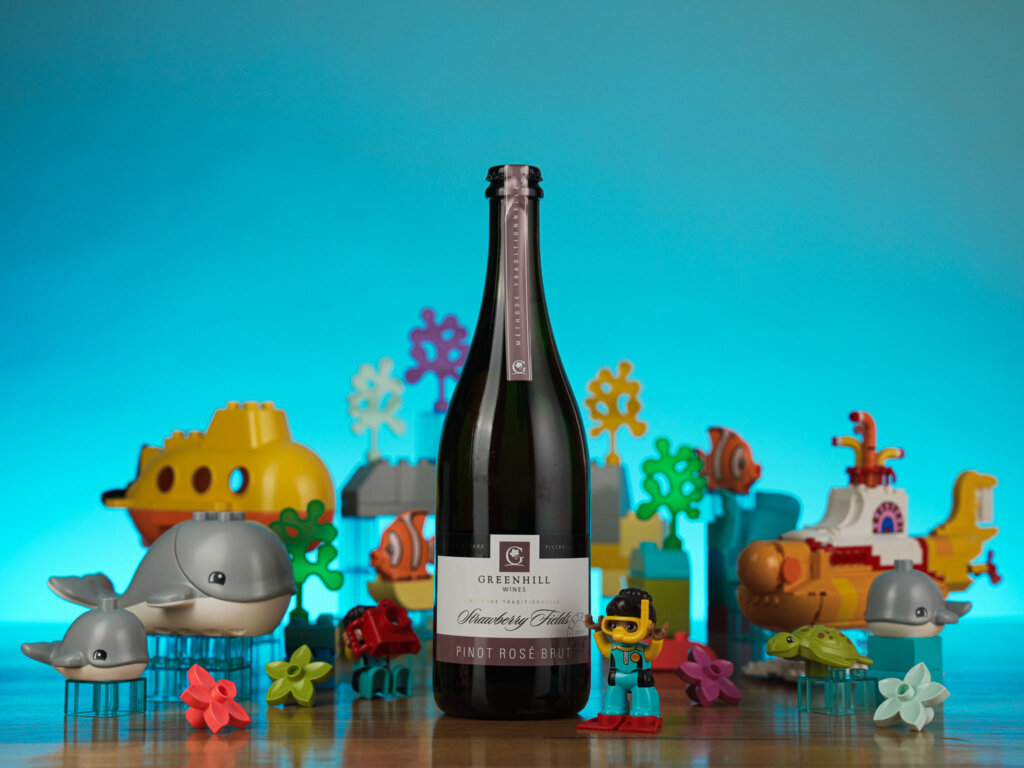
2022 Greenhill Wines ‘Strawberry Fields’ Sparkling Rosé, Adelaide Hills $44 RRP

Baverstock chose this traditional-method wine – made by academic and fermentation expert Dr. Paul Henschke for his Greenhill Wines label – amongst her top six picks, describing “a visually gorgeous ruby-coloured wine that is very pretty to the eye – it has ‘spring carnival’ written all over it! First aroma impressions are summery and fleshy ripe berry fruits – an orchard’s worth of redcurrants and blackberries – and a bold brightness. These fruit notes dance on the palate, with a beautiful acid balance driving the flavours along to a creamy but chewy finish. There’s a mouth-filling fruit party going on, but also plenty of interest and complexity to find in the wine. Just a little bit of fun – but an overly delicious sparkling rosé.”


2016 Chandon Vintage Brut Rosé, Yarra Valley $48 RRP

Mauritzen selected this wine in her top six wines from the blind tasting, noting that “this took the cake for me for its impeccable balance – not just in quality but in style. I went back to look at this wine three or four times, and each time there was something more to discover. It’s aromatically elegant, showing a bright citrus and white floral bouquet, but the palate is where this wine really kicks into gear and shows off its muscle. The fine, rich mousse gracefully dances on the palate, carrying a complex medley of fruits with it: grapefruit, mandarin, rhubarb, cranberry, white strawberry. Tell me that doesn’t immediately scream ‘summer in a glass’! While its brightness and elegance means this could read as an austere wine, it absolutely isn’t – instead, a gentle dose of sweetness brings ripping tension, ensuring that although it’s slender, it is in no way shy or linear. The finish is where this really won me over, with lingering notes of strawberry musk and citrus blossom – I was enamoured, and enjoyed every moment of the journey this wine took me on. Your wine-connoisseur friends will get their jollies from this, but it’ll also do wonders with your Nan at the Chrissy table.”


2020 Nadeson Collis Saignée de Rosé, Henty $85 RRP

This wine made the top six list for both Baxter and Yeates. Baxter described it as “a cocktail in a glass – the blood orange hue delivers on its promise of a bouquet of ripe blood orange and burnt blood orange rind, backed by notes of rosso vermouth, candied carrots, and hints of goat’s cheese rind and Maltese oranges. The palate is savoury and full of bubbles – just begging for a splash of an amaro such as Picon or Aperol as an accompaniment.” Yeates noted that “this fizz speaks volumes about the amount of detail that can be layered into traditional-method sparkling wines. The flavour spectrum on offer often comes first from healthy, quality fruit – white cherry up first, followed by powdered raspberry on baker’s yeast and cracked wheat, all the flavours dancing on the pillowy carbonation. The acid line and fluffy mouth feel is begging for a starchy plate of saffron risotto with prawns – don’t forget to throw in oodles of butter at the final moment.”


NV Sittella Cuvée Rosé, Pemberton $38 RRP

Yeates included this wine among his top six selections from the tasting, describing how he “felt like I was playing Tekken 5 with this one: choose your fighter! First into the ring, the densely packed aromas: a wall of dried and glaceau blood oranges and pithy strawberry tops reign supreme, speckles of myrtle leaf and bitter orange not far behind. The joyous aromas remind me of all the best parts of daytime hangs with mates – a splash here, a splash there, no fuss. Next into the ring, the palate: a welcome dab of briny salinity alongside slippery, wavy bubbles, all tied together neatly with mouth-punching acidity – think crème fraîche on a Samurai sword. With its lashings of Aranciata soda–adjacent flavours, this wine is begging to be paired with a roast Porchetta roll and a drippy celeriac remoulade. Who’s hungry?”


NV Levrier Wines by Jo Irvine Petit Meslier Brut Rosé, Adelaide Hills $50 RRP

Yeates chose this wine for his top six wines of the day, noting “if this wine were a celebrity, there isn’t a doubt in my mind that it would be Maggie Beer. The nose – a warm hug of softly spiced pink pears, Calvados, swollen quinces and freshly rubbed bay leaf from your Gran’s garden. In another corner of the glass, a nod to Normandy cider and those honeyed heritage apple varieties bursts out of the bubbles and into the nostrils. The mouthfeel is zingy, Pink Lady apple–fresh, with a faint touch of chalk-duster texture and fluffy white strawberry sweetness. There would be no better dance partner for this than a huge, almost room-temp wedge of Brillat-Savarin cheese and crusty baguette – nothing else needed. The bloomy, lactic flavours of the cheese would marry with the puckering combo of strawberry and chalk all too well. Do Maggie a favour and get your family together for roast chook with all the trimmings, then crack this open with the soft cheese – before dessert, naturally.”


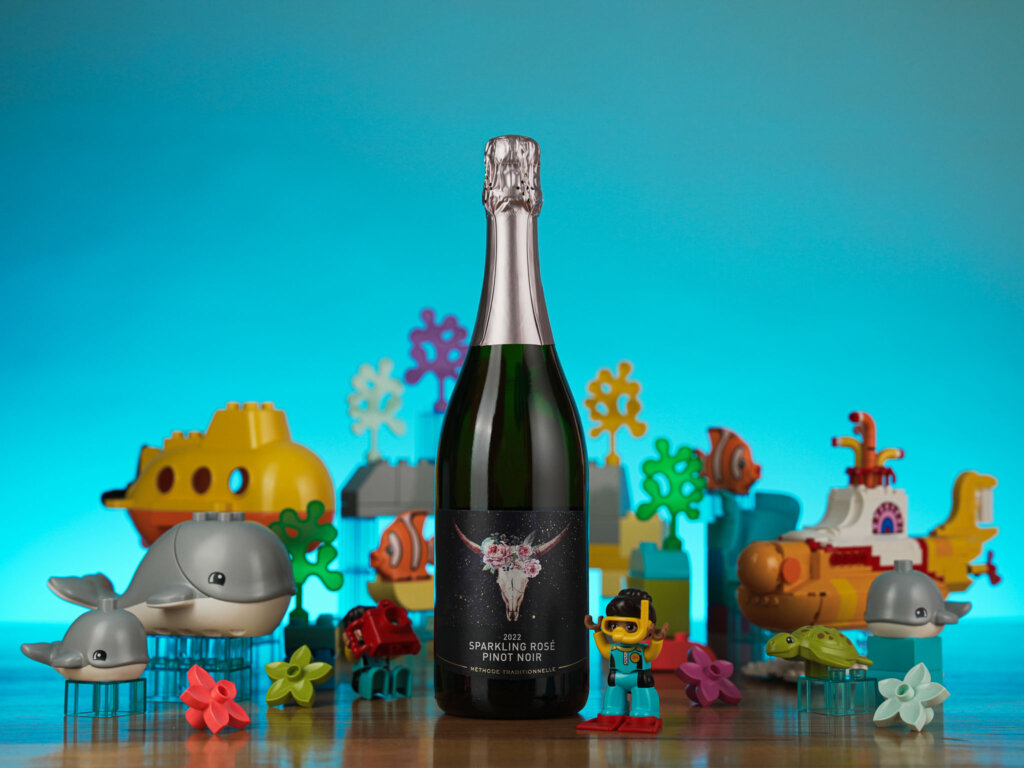
2022 Blue Pyrenees Estate Sparkling Pinot Noir Rosé, Pyrenees $35 RRP

Baverstock included this wine among her top six wines from the tasting, describing “an aesthetically pleasing rosé in the glass, with a nose that makes you want to dive straight on in. There are dried florals, but not the Nanna type. It’s also spicy – alas, not the Nanna type of spicy, either – showing red peppercorns. There’s also an assertively muscular, strong, and firm fruit presence – and that’s all just on the initial smell! This little number has a beautifully weighty and integrated mid-palate. With all its charm on display from the get-go, it’s clearly well-made – and, as a bonus, it has that very thought-provoking je ne sais quoi quality.”


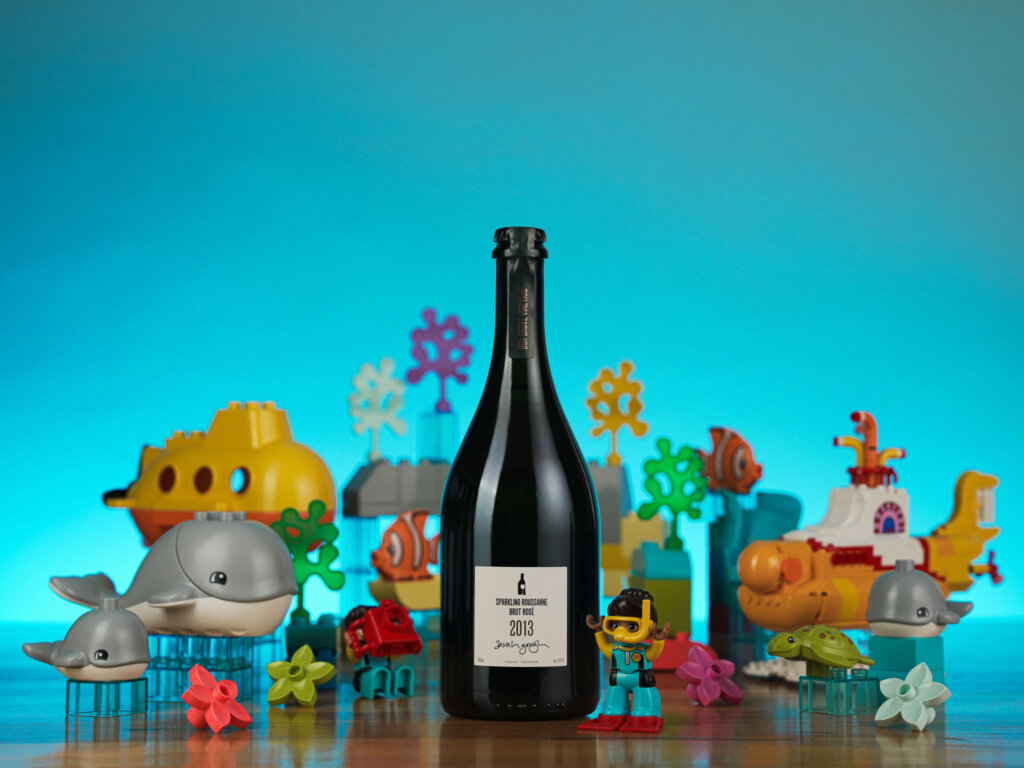
2013 Box Grove Vineyard Sparkling Roussanne Brut Rosé, Nagambie Lakes $58 RRP

Baxter selected this wine in his top six picks from the blind tasting, describing how “the fragrant bouquet unfurls with clementine, fresh-cut apricot, and orange blossom. This wine is so powerful and linear in its expression, backed by a pleasingly surprising complexity on the palate. The fine mousse unfurls on the tongue, fanning out to a custard-like creaminess on the edges, and the wine is driven down the palate by freshly-squeezed-orange-juice acidity, finishing biscuity and vibrant. A perfect celebration of summer fruit character – and perfect for any celebrations you may have planned this summer, too.”


NV Hesket Estate ‘The Edwina’ Sparkling Rosé, Macedon Ranges $55 RRP

This wine made the top six selections for both Baxter and Robinson. Baxter noted that “this wine seeks perfection in angularity. The pale colour – hot pink tinged with orange – leads to a nose that bursts with raspberry juice, Ruby grapefruit rind, and rhubarb cream pie. The palate rounds off with juicy pomegranate, driven by a lemon-like acidity, and surrounded by trail mix and mint notes. It finishes strong, rigid and long.” Robinson described it as “‘a spring breeze in a glass’ is the best way to describe this wine – its raspberry-tea and just-ripe watermelon aromas remind me of a mid-afternoon picnic. On the palate, there’s soft cantaloupe to start, pomegranate seeds as a main, and tart blood orange notes for dessert. The saline edge gives it an aperitif quality, and it’s mouth-wateringly puckering, but with enough fruit weight to keep it all centred. It’s incredible to taste an Australian sparkling made with care and delicacy – able to embrace its inherent ripeness of fruit, without losing acidity or poise. The gorgeous balance between crunchy red fruit and chalky acidity here would make this an amazing pairing for smoked salmon or charcuterie – preferably in the park, under a tree.”


2022 Hollydene ‘Holly’ Sparkling Rosé, Hunter Valley $35 RRP

Yeates and Robinson included this wine in their top six wines of the tasting. Yeates noted that “this wine floored me with its generosity. We’ve seen pink still and sparkling wines become quite homogenous in Australian consumer taste – usually a pale peachy-pink cream colour and unerringly dry, with variations only in body and vibe. It’s therefore so fun to see fruit and technique working together to make a sun-kissed, blush orange–hued style so reminiscent of the sparkling traditions of Europe. This one has intoxicating smells of wildflower honey, muddled strawberries, grapefruit oil, and pressed wild rose petals. There’s a generous attention to fleshiness built into the palate – which comes across as a welcome hug from an old friend in a world of austere acid-driven pink wines with low/zero dosage. Most people remember their first glug of Yellowglen ‘Pink’ – me oh my, how far we have all travelled in our tastes, but also how much fun it is to dip our toes back into well-made examples of lusher, fleshier styles when the opportunity arises.” Robinson described how “crisp, clean, granny smith apples take the lead on the nose, alongside a waxy lemon note and some punchy pink grapefruit – voilà, you have yourself a bright sparkling rosé. But hold it for a moment on the palate and it shows its breadth – some guava and candied apple notes balance the acidity with ripeness of fruit, rounding out the wine and adding complexity. There’s a plummy fleshiness on the palate that adds a pleasant amount of weight without taking away from the effervescent mouthfeel. A wine that plays on the freshness that Australian sparkling is so well known for – it lets the brightness take centre stage, and supports it with a red-fruited backbone. Whether you’re sitting on the deck and snacking on prawns, or enjoying a cheese board on the beach, this wine is proof that you don’t need to look past Australian shores for a fantastic glass of sparkling rosé.”


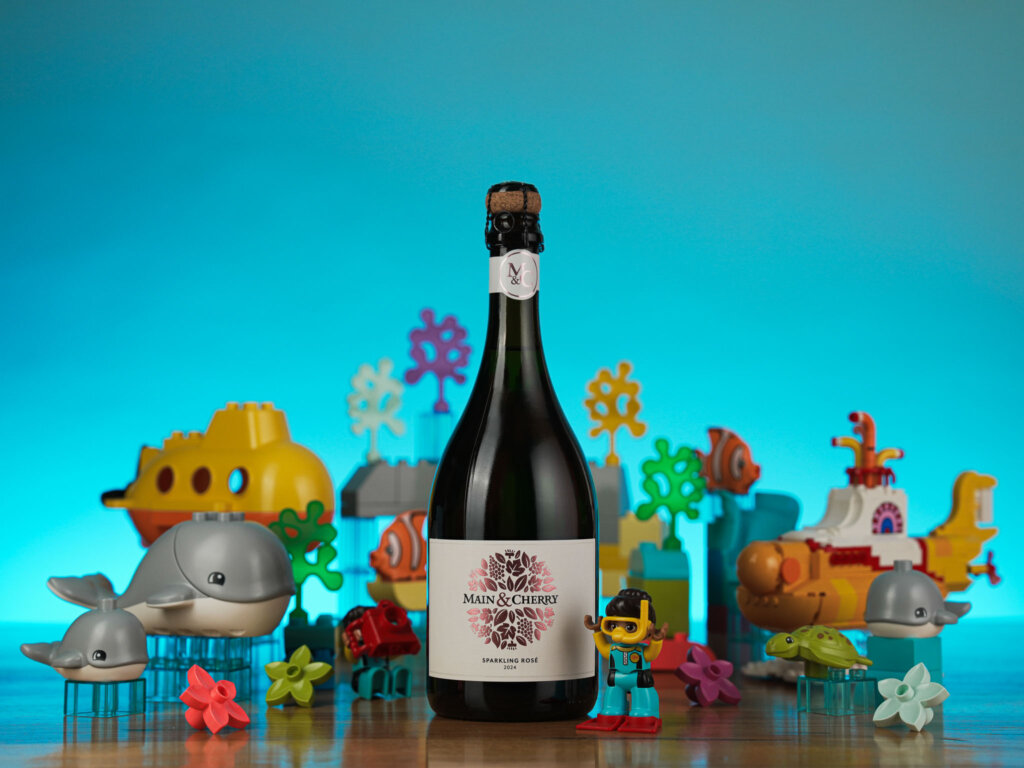
2024 Main & Cherry Sparkling Rosé, McLaren Vale $32 RRP

Baverstock chose this wine for her top six selections, describing “a delightful sparkling rosé that speaks my language. The nose screams of the pure joy of lightly whipped homemade raspberry ice cream. It has a moreish sherbet-y mouthfeel, with freshly picked strawberry notes driving its somewhat-lighter palate weight – but with plenty of grip to make it a joy to drink. The little hit of sugar at dosage adds to the joy of this chilled style – a wine that has ‘summer days drinkability’ written all over it.”


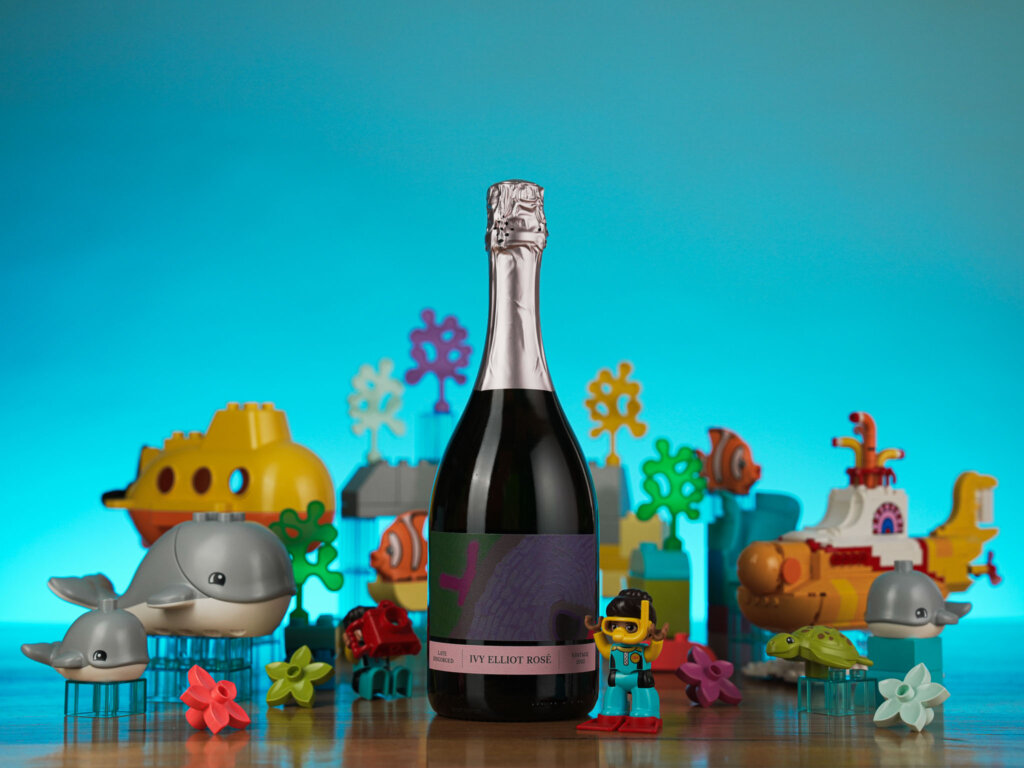
2022 Cuvée Co. ‘Ivy Elliott’ Sparkling Rosé, Robe $55 RRP

Mauritzen selected this wine among her top six wines on the day, noting that “this wine’s salmon-gold colour is a delight to look at in the glass – and it’s certainly the kind of wine you’d love to have in your glass at any kind of celebration. The excitement continues in the glass – this is a winner from the first sip, showing nuanced citrus flavours: think grapefruit, mandarin, and lemon curd, mixed with baked rhubarb and an underlying earthy tone. Some wines’ flavours follow a linear trajectory as you revisit them, but this one absolutely doesn’t. Returning for second sips, this continues to layer on the flavour, bringing out a complex array of strawberry notes – ranging from strawberry shortcake to strawberry jelly to strawberry musk sticks. The nuance here is exciting – by the end of my tasting pour, I was already picturing myself sitting down with a bottle of this in settings ranging from a lazy Saturday afternoon get-together to Christmas dinner with the family. The final sentence of my notes from the day was ‘Just fucking delish, man’ – and that sums this wine up perfectly.”


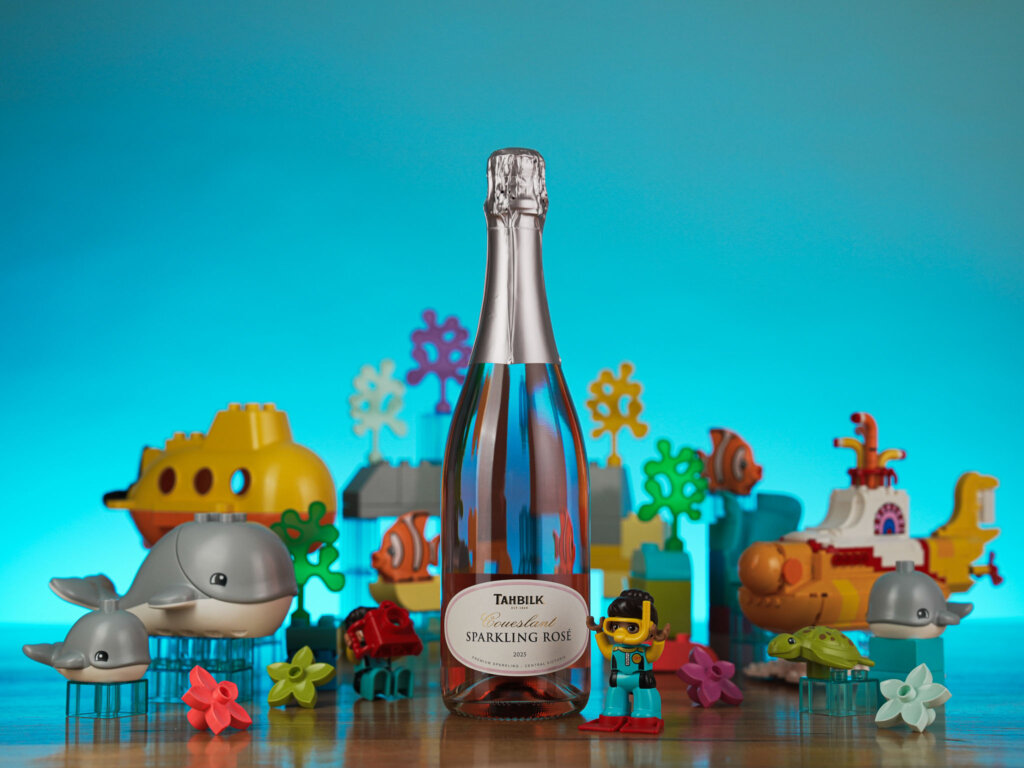
2025 Tahbilk ‘Couselant’ Sparkling Rosé, Nagambie Lakes $23 RRP

Baxter included this wine in his top six picks from the tasting, describing “welcome to the 1980s, everyone: hot pink, Turkish delight, Hubba Bubba, wild boysenberries and sloe berries, cinnamon scroll, leg warmers, neon headbands, VHS aerobics, hot yoga and Barbie make-up. The vibrant but fine bubbles lift both the palate and the spirit, backed by juicy blueberry notes and an almost chewing gum–like finish. A brilliantly retro rosé bubbles, eminently suited for reminiscing, celebrating, and partying.”


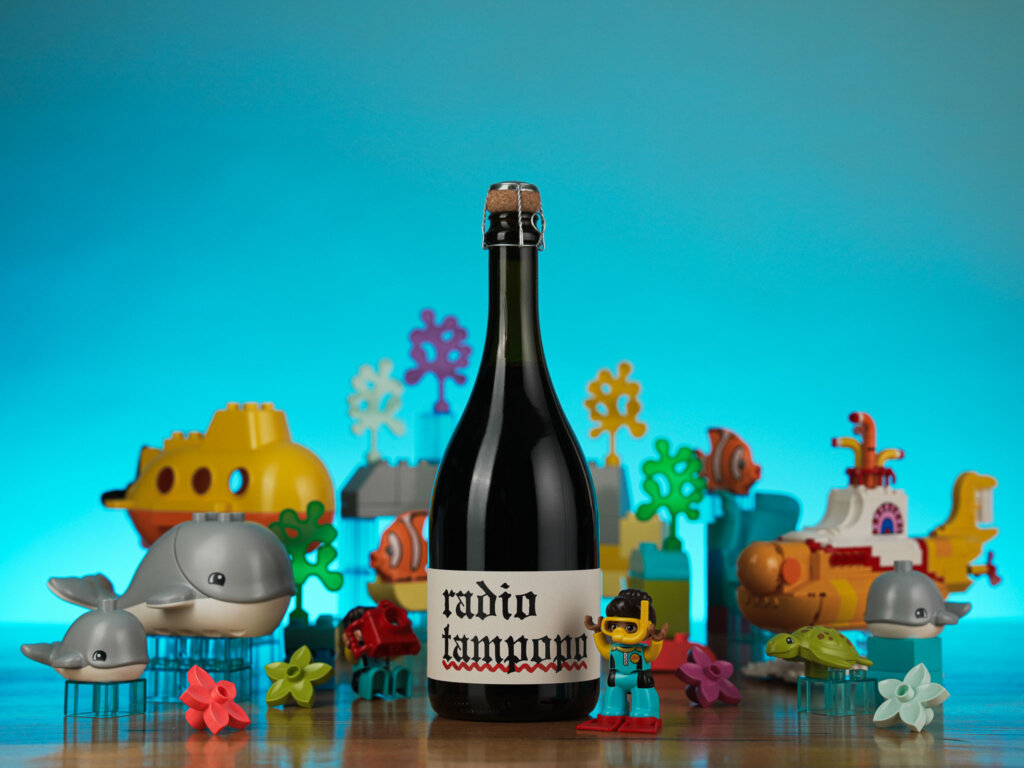
2024 Tampopo ‘Radio Tampopo’ Traditional Method Lambusco, Murray Darling $40 RRP

Robinson chose this wine for her top six wines from the blind tasting, noting “what better way to enjoy Christmas ham than with a glass of this gorgeous, deeply-hued sparkling rosé? Black cherries burst on the nose, supported by deep plums and blackcurrants. There’s also a spiciness evident here, with cinnamon and nutmeg adding depth to the fruit. The ruby hue would suggest that these aromas are all that this wine has to offer on the palate, but it’s pleasant to find so much more – a line of spearmint and raspberry leaf adds freshness and lift, while a savoury underbelly frames the wine, giving it a structure and finish that lasts all the way to dessert. I could think of nothing better to have in my glass this holiday season.”


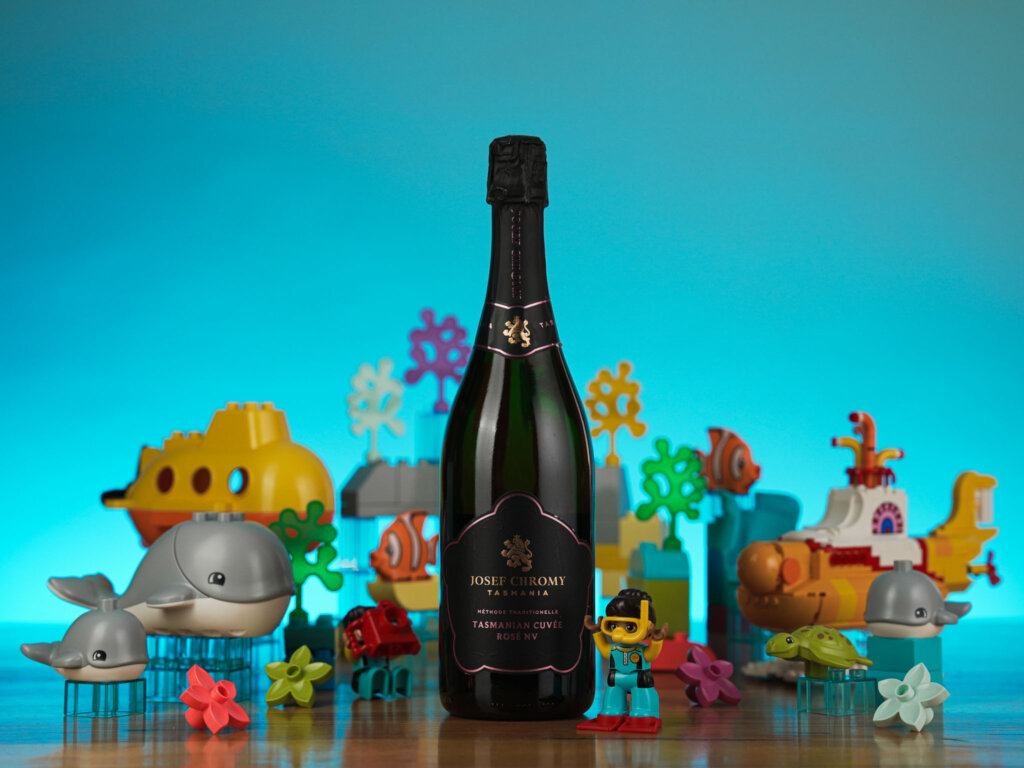
NV Josef Chromy ‘Tasmanian Cuvée’ Rosé Methode Traditionelle, Tasmania $37 RRP

Howes featured this wine among his top six selections from the tasting, noting that “this reminds me of the beach on a windy day – there’s a salty, sandy feel to the nose, alongside some greener orchard fruit notes. On the palate, that greenness translates to Granny Smith apple and Davidson plum, with enamel-rattling acidity driving the flavours down to a beautifully long finish. The Glenn McGrath of the line-up for me – seemingly straightforward, yet unerringly accurate in its line and length. Ooh! Ahh!””


2023 Ghost Rock ‘Zoe’ Sparkling Rosé, Tasmania $50 RRP

Baverstock selected this wine in her top six wines of the day, describing how “this wine promises it all – and delivers. A beautiful rose-gold bubble nails the brief for how a sparkling rosé should look. It’s bursting with ripe black fruits, alongside smotherings of brioche, biscuit, and cracked walnuts. On the palate, it’s savoury and toasty from the tip of your tongue through to the end, finishing with a candied rose flavour – just to remind you of this wine’s quiet confidence. Its Christmas-lunch vibes that mean it would match perfectly to the poultry or game dishes you might lavishly linger over. As they say – if it looks like a rose, smells like a rose, and tastes like a rose, then it’s a damn fine rosé!”


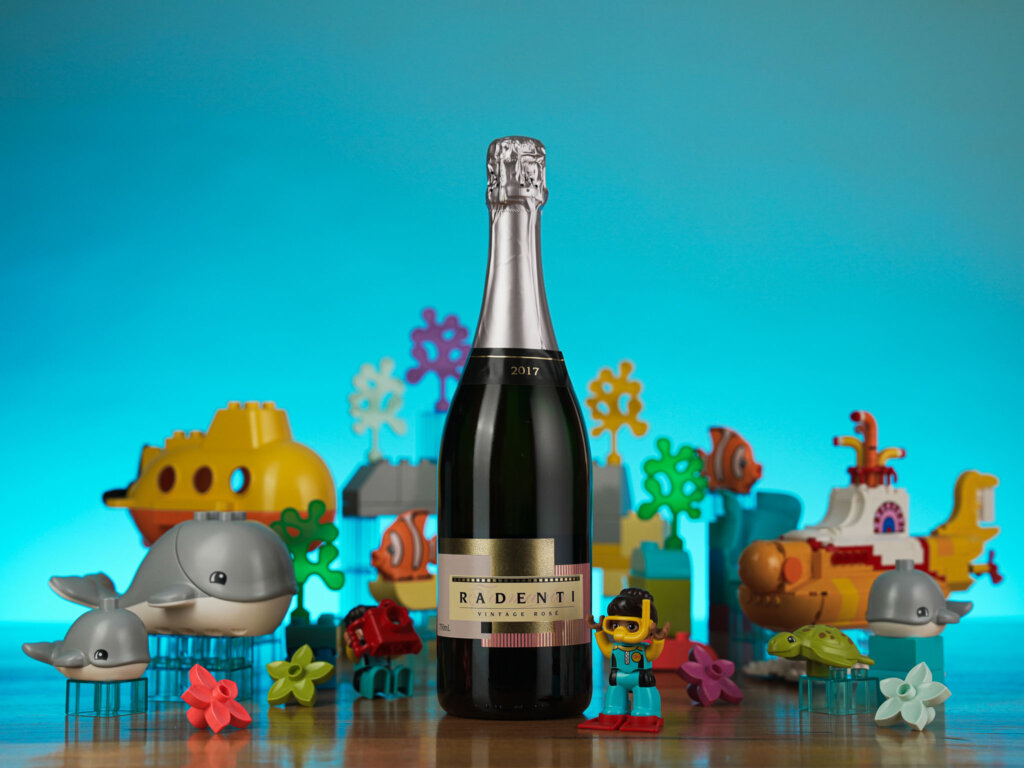
2017 Radenti Sparkling Rosé, Tasmania $70 RRP

This wine appeared in the top six picks for both Baverstock and Mauritzen. Baverstock noted that “the light salmon colour here tells me that a sophisticated drop is at hand – possibly a French-inspired style. The explosion of red apple, fresh green strawberry, and raspberry fruit notes from this fizz is incredible. With its bursting bubbles, this sparkling rose builds texture not just with tannin, but also with its exquisite effervescence. It’s not a simple little thing, but full of masterful yeast complexity, including brioche, toast and honey notes. In fact, I just love the yeastiness it brings – it’s creamy, it’s mouth filling, and it has a delightful savoury edge.” Mauritzen described it as “some wines are a sommelier’s delight, and this is absolutely one of them. The nose is almost savoury, singing with notes of fresh yeast, buttered brioche buns, and toasted sourdough – I was hooked before taking a sip. The palate delivers a whole other array of delights, bringing brightness in the form of fresh lemon and grapefruit, balanced by a saline edge and umami tones – maybe from age, or from some genius blending work, but they really sing in this wine. There’s also jammy strawberries, and a surprising and delightful note almost reminiscent of fresh figs. The vibrant, chalky acidity continues to deliver freshness throughout – much-needed in a wine with so much earthy depth. I want to use this wine to wash down roast duck and pancakes smothered in Hoisin sauce, because it will absolutely hold its own in a pairing like that. I tip my hat – this wine tells a story, and I was on the edge of my seat the whole time.”


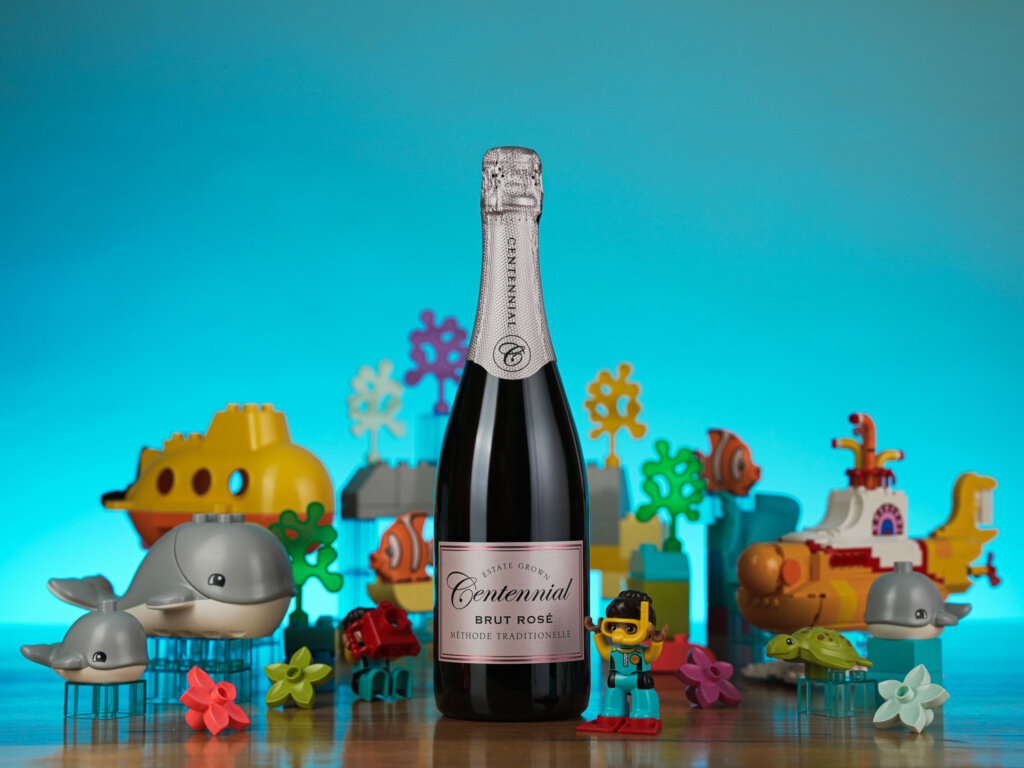
NV Centennial Brut Rosé, Southern Highlands $45 RRP

Watkins and Baxter included this wine in their top six wines from the tasting. Watkins described “quite a dark colour on this wine – where some of the others in the line-up have been verging on blanc de noirs territory, this one fits firmly in the Pantone swatchbook of traditional sparkling rosés. Some nice ripe fruits coming through – slightly riper cherries, almost going through into fresh plums – and a delightful creamy character. There’s a hard-to-define note on the nose that comes across as a smidge musty – but it’s subtle, and it adds to the wine rather than detracting, because it draws you back to the wine to keep exploring those layers of complexity. The wine is quite rich on the palate, but not dominated by sweetness – the creamy note on the nose extends to the palate, giving a nice rounded texture. The mousse is quite mouth-filling as well. A rich and textural wine whose acidity and creaminess begs to be paired with a simple charcuterie plate featuring some fresh fruit – I’m imagining prosciutto with fresh fig.” Baxter noted “welcome to the dark side! A sunset pink hue glows in the glass, leading to a complex nose layered with blush strawberries, red currants, fresh rhubarb, Satsuma plum, almond croissant, and red rose extract. The crunchy palate is fleshed out by a fine-beaded mousse, and is laden with blood orange rind and raspberry notes that linger on the tongue long after the bottle is done.”


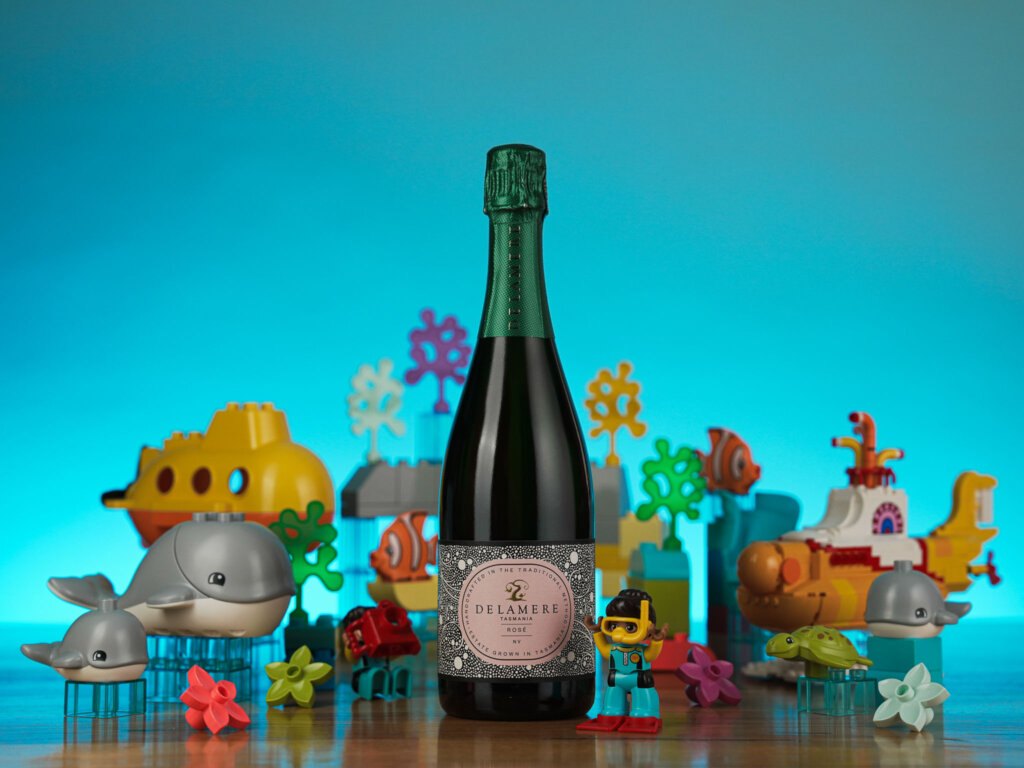
NV Delamere Sparkling Rosé, Tasmania $43 RRP

Howes chose this wine for his top six selections, noting that “this one is a surprise – the nose shows some unexpectedly green bramble fruit characteristics, like the white part of the strawberry. The palate is full of pickled watermelon and watermelon rind notes – refreshing and moreish, driven by pristine, fresh acidity and a fine bead. Perfect for a picnic in the park or an alfresco dining moment – best enjoyed with friends, good tunes, and another bottle on ice, ready to go.”


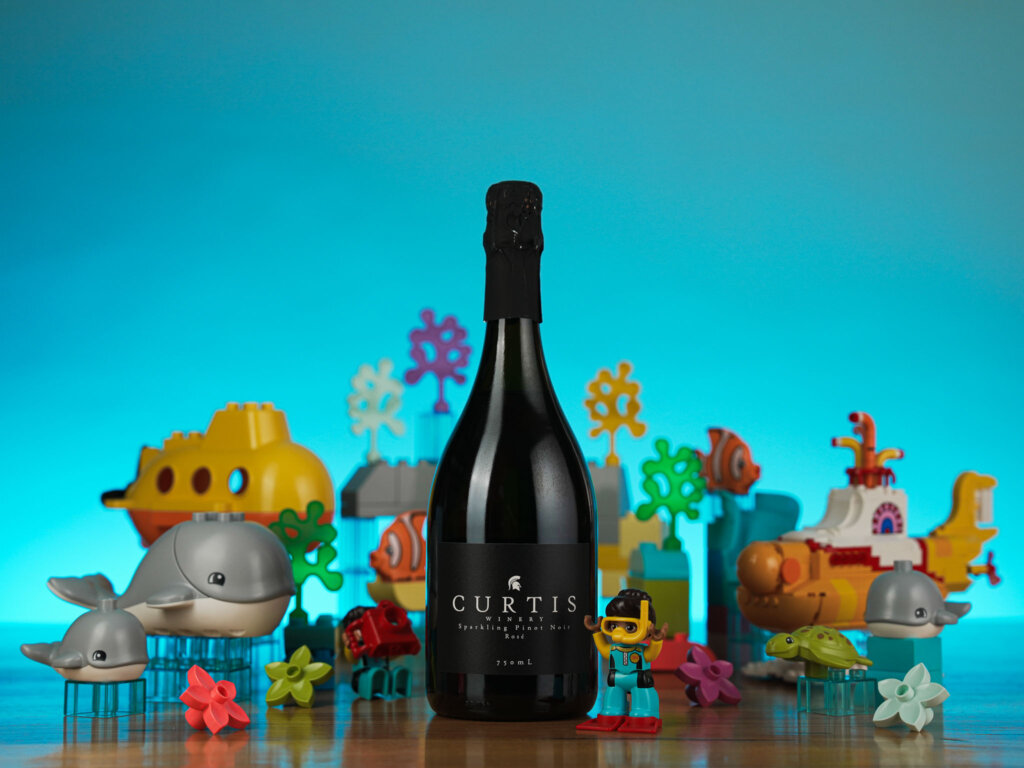
NV Curtis Sparkling Pinot Noir Rosé, South Australia $35 RRP

Howes selected this wine among his top six wines of the tasting, saying “everyone in the wine world has a ‘dirty little secret’ or two – wines they adore even though they don’t fit in with accepted notions of ‘good taste’. This would be one of mine. An ultra-ripe nose of raspberries, Bing cherries, and boysenberry compote, with a lick of confected spearmint at the back – almost reminiscent of spearmint lollies. Juicy, clean and fresh on the palate, with a gently foamy mousse and and some mid-palate richness that emphasises the ripeness of the fruit. This falls into the category of breakfast juice for me! Don’t even worry about the OJ for a mimosa – this is more than smashable as-is.”

 

The Backstory

Both sparkling wine and rosé are seen as ‘good time’ wines – the kind of bottle you break out to celebrate, or use as a convivial poolside drink. So what happens when you combine bubbles and pink wine? The easy answer is that you have a party in a glass – but behind this veneer of frivolity lies some seriously technical and fearsomely difficult winemaking technique. With an extraordinary range of grape varieties, regions, and winemaking techniques involved, Australian sparkling rosé is a delightfully gonzo category.

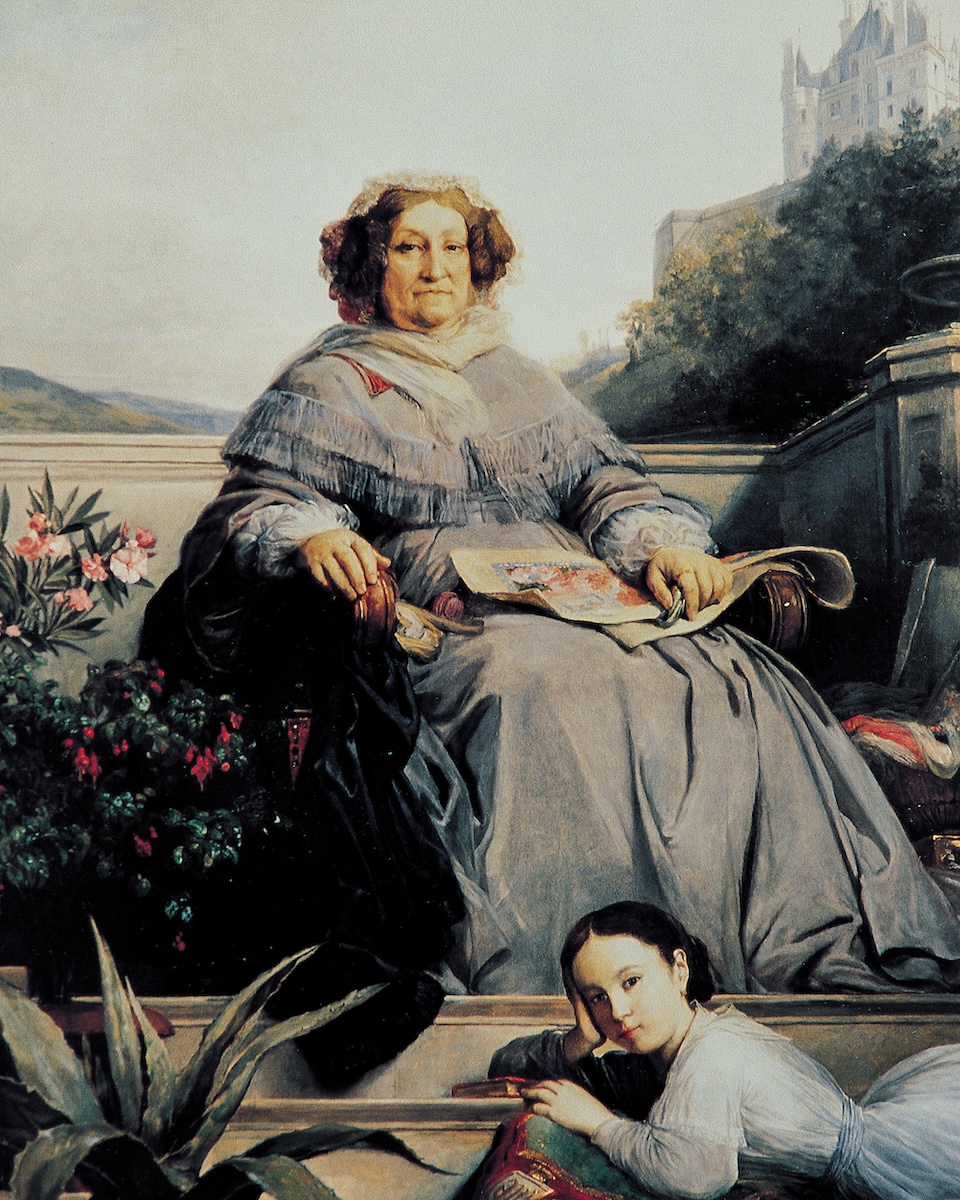
As with both blanc de blancs and blanc de noirs, we can trace the birth of sparkling rosé wines to the Champagne region of France. While recent research in the archives of the Champagne house Ruinart – the first in the region to sell exclusively sparkling wine – gives a tantalising hint that they may have offered something akin to sparkling rosé in 1764, the true pioneer of the style within the region is Barbe-Nicole Clicquot-Ponsardin of Veuve Clicquot, who produced the first known ‘rosé d’assemblage’ in 1818, thus setting the template that most rosé Champagnes continue to follow.

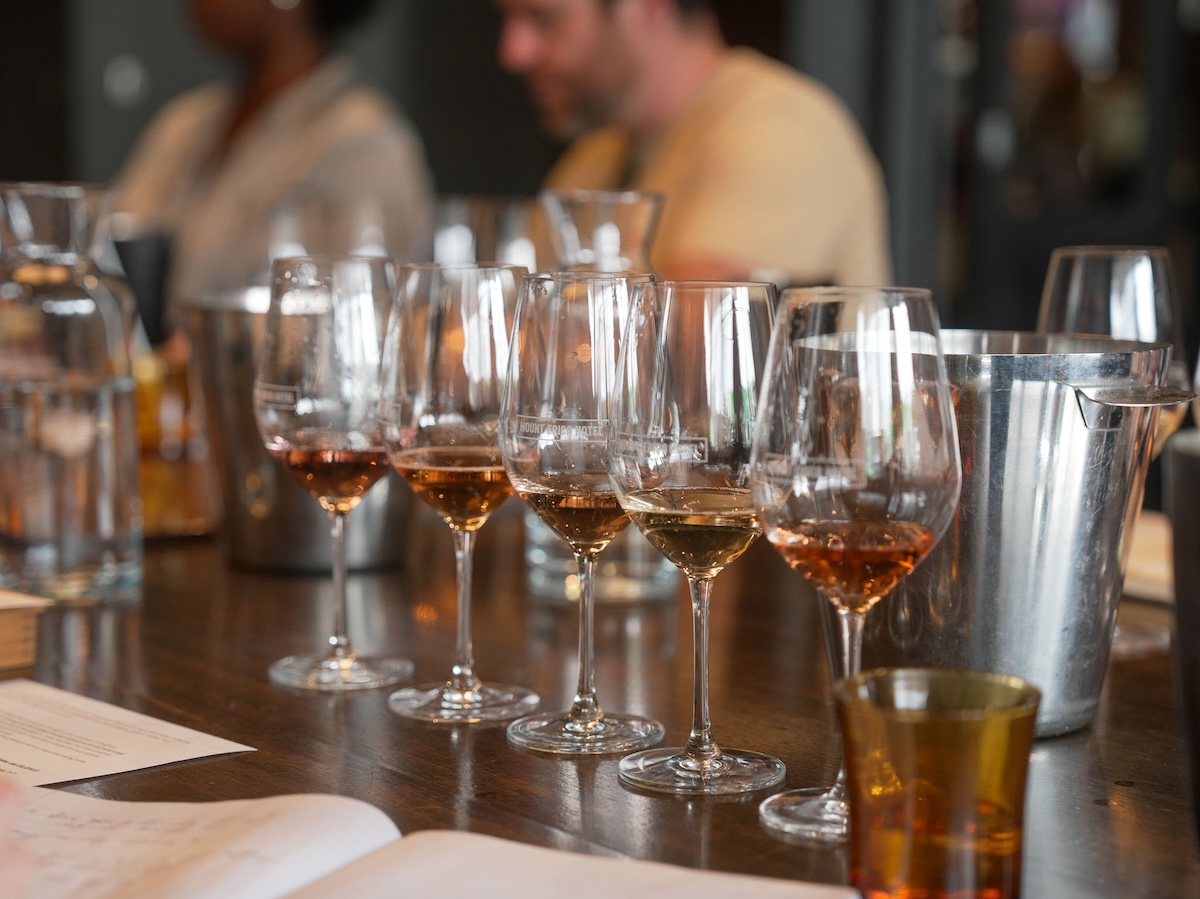
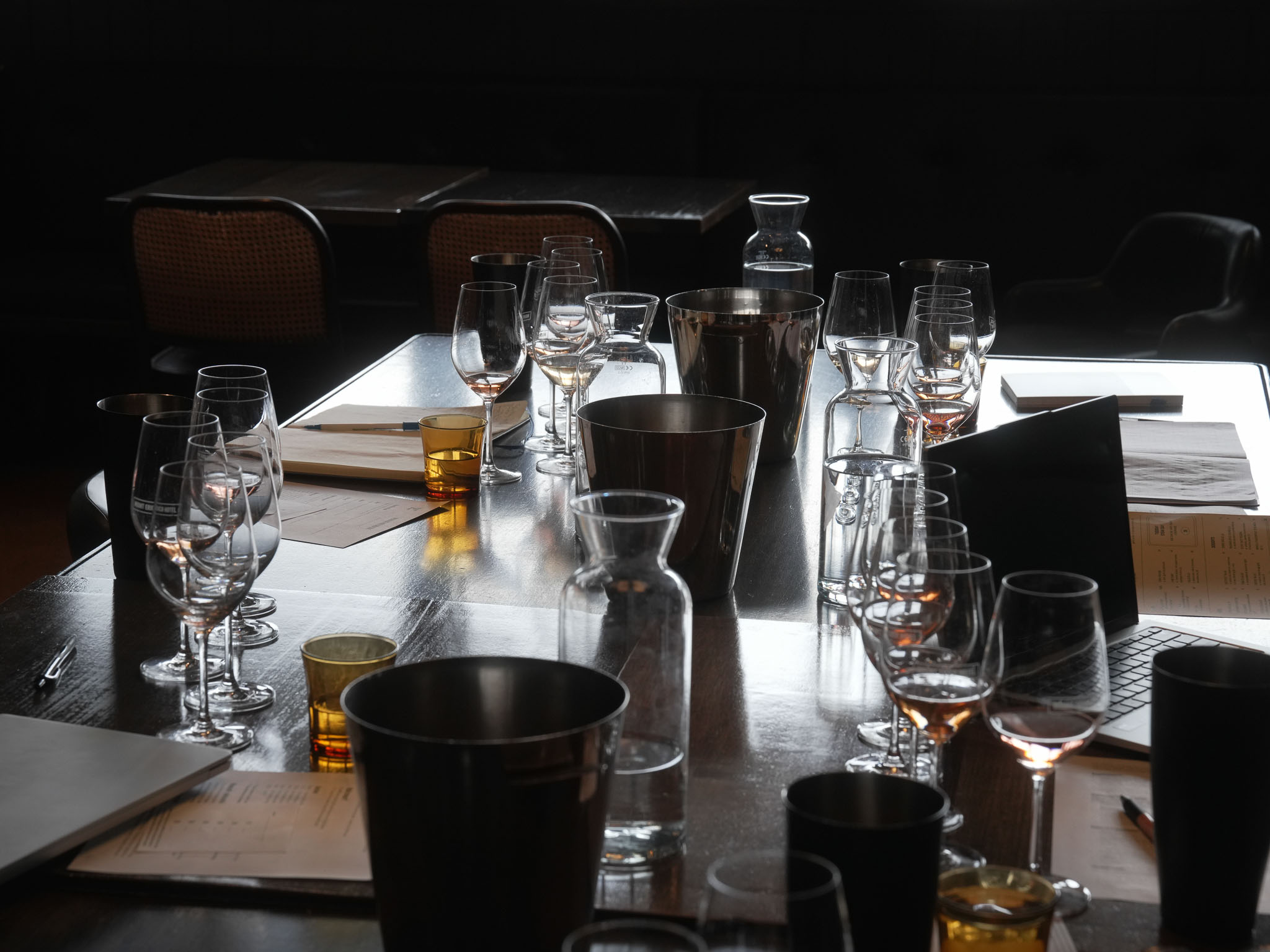
Above and opposite: The rainbow of colours on show at our Deep Dive tasting into Australian sparkling rosé – a visual demonstration of the diversity of the category.

In stark contrast to the Champagne region’s well-defined process of making rosé sparkling wine, Australian sparkling rosé is a cheerfully anarchic, even somewhat gonzo category. Thanks to our lack of appellation rules, the broad array of red-wine grape varieties that we grow across an enormous range of climates and soil types, and our winemakers’ willingness to use any and every method at their disposal to make their wines carbonated, there’s no easy way to pin down what Australian sparkling rosé is or should be – which makes it a brilliant category for adventurous drinkers to explore.


Blending the blush in

If all had gone according to plan, the name Barbe-Nicole Ponsardin would be unknown today. The daughter of a prominent Champenois textile merchant, she entered into an arranged marriage in 1798 to François Clicquot – the son of her father’s neighbour and largest competitor in the textile industry, who had been nominated as her husband in order to shore up the power and influence of both families. Unfortunately for the business plans of both the Ponsardin and Clicquot families, François seemed far more interested in developing the Clicquot family’s relatively small and thus far relatively unprofitable side-hustle in sparkling Champagne production. Then, in 1805, tragedy struck – François Clicquot died of a fever, leaving the twenty-seven year old Barbe-Nicole to take the reins at the Clicquot Champagne house. While François’s father, Philippe, wanted to shut down the operation, Barbe-Nicole convinced him to reinvest money into the business and let her operate it – which he agreed to, on the condition that she entered into an apprenticeship with the winemaker Alexandre Fourneaux.

Opposite: An 1860s portrait of Barbe-Nicole Clicquot-Ponsardin, the eponymous Veuve [Widow] Clicquot, who invented the practice of blending still red wine into the base wine of Champagne for rosé in 1818. Above: An 1820s portrait of Grand Duke Mikhail Pavlovich of Russia, who famously declared that he would drink no other brand of Champagne than Veuve Clicquot.

The Champagne house – swiftly rechristened Veuve Clicquot-Ponsardin to reflect Barbe-Nicole’s marital status, veuve being the French for ‘widow’ – barely survived the economic upheaval brought on by the ongoing Napoleonic Wars, but was saved in 1814 by a masterstroke of planning on Barbe-Nicole’s part. Understanding that the Russian imperial court would want to drink the then-novel sparkling wines of Champagne at the conclusion of their war with France – but unable to send her wine to Russia owing to a naval blockade on all French goods – Barbe-Nicole shipped vast quantities of the 1811 vintage of Veuve Clicquot-Ponsardin to Amsterdam. When that blockade was finally lifted, Veuve Clicquot-Ponsardin was thus able to beat every other Champagne house to St. Petersburg by weeks – and soon found itself as the preferred tipple of the triumphant Russian imperial court, with the Grand Duke Mikhail Pavlovich, brother of Tsar Alexander I, declaring that he would drink no other brand of Champagne. This move was a triumph of what we might now call ‘influencer marketing’ – and would set the stage for Veuve Clicquot (as it is now known) to become a juggernaut of Champagne production.

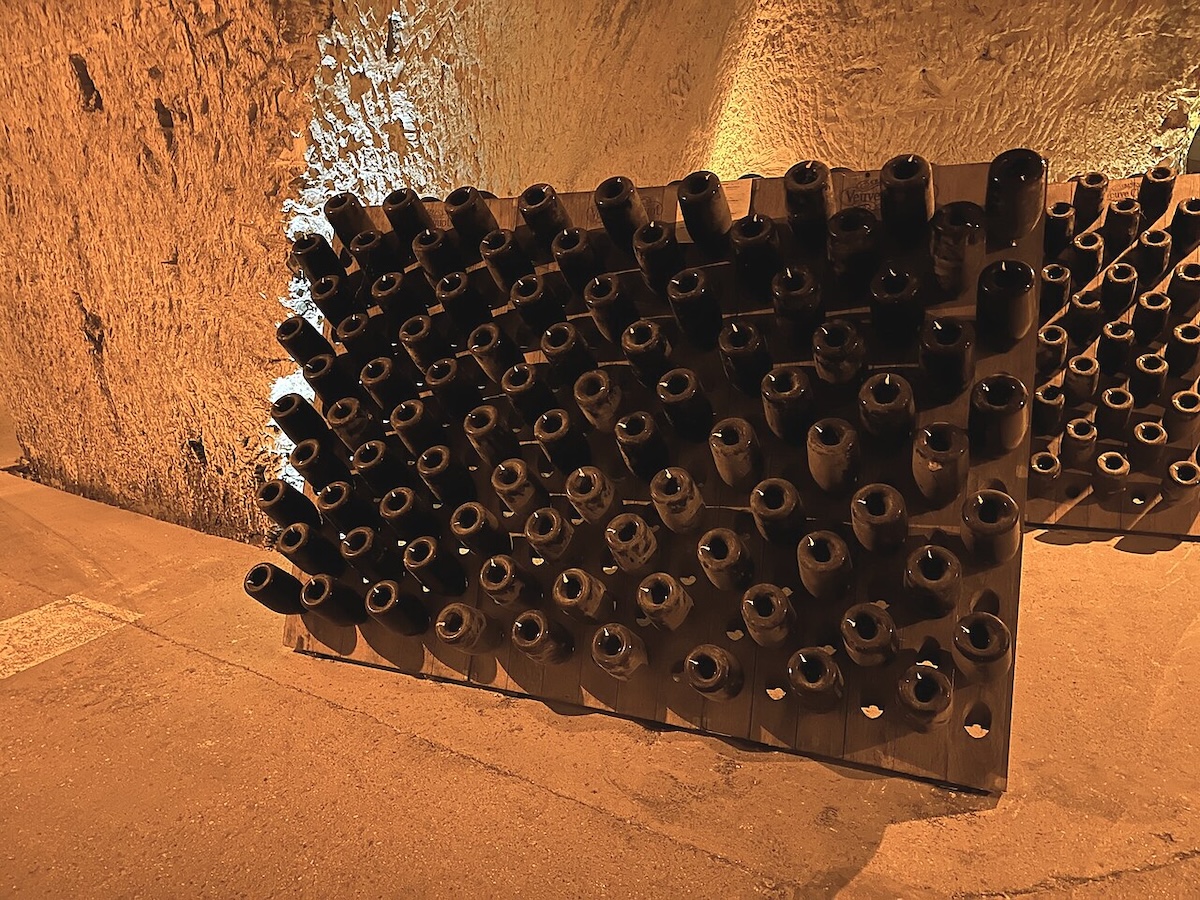
Opposite: Pinot noir grapes growing in the village of Bouzy, Champagne, France. (Photo by Megan Mallen, CC BY-2.0.) Above: Riddling racks in the cellars of Veuve Cliquot. (Photo by Cynwolfe, CC BY-SA 4.0.)

Barbe-Nicole’s impact in Champagne was hardly limited her marketing acumen. She also is credited with making the first vintage-dated champagne (in 1810); inventing the process of riddling, where sediment from the secondary fermentation that gives the wine its bubbles is moved towards the neck of the bottle before being removed (in 1816); and creating the ‘assemblage’ method of creating rosé champagne (in 1818). While Champagne makers had already commenced producing pink-ish wines by this stage – Ruinart’s records indicate they sold sixty bottles of an œil de perdrix (pale blush-coloured) sparkling wine in 1764, and there was also a local tradition of blending elderberry juice with Champagne to create a vivid-pink fizzy beverage – Barbe-Nicole pioneered the innovation of blending a small portion (typically less than 10%) of still red wine (typically pinot noir, in Barbe-Nicole’s case from the village of Bouzy) into the base wine before it undergoes secondary fermentation. This not only allows for a house to create a non-vintage wine that has both a consistent hue and concentration of pink colour year-on-year – an important consideration in a region founded on consistency – but also fits seamlessly into the existing processes for blending the base wines for non-pink Champagnes. It’s therefore little wonder that, while there are other authorised methods of creating pink base wines for Champagne, the assemblage method remains the most popular within the region to this day.


An Australian twist on French traditions

By contrast to Champagne – where strict appellation rules determine not only the grape varieties allowed in the finished wines, but also the methods permitted to make wines both pink-coloured and carbonated – Australian winemakers benefit from a remarkable level of freedom when it comes to exactly how they go about crafting their sparkling rosé wines. The base wines can be made from any variety or combination of varieties (including white varieties, as long as one red variety is present to lend the colour). The fruit for those base wines can be sourced from any of our multitude of winegrowing regions. The pink hue can be achieved by any of the methods normally used to in the production of rosé wine, or the colour can be blended in via a small quantity of still red wine, as in the Champenois method. And the carbonation can come from any number of methods – whether that’s the Champenois traditional method of a secondary fermentation in bottle, or via the methode ancestrale (AKA pét-nat), or the Charmat method, as made famous by Prosecco – or even simply by injecting the wine with carbon dioxide at bottling, like a giant Sodastream. This means that there’s a dizzying array of possibilities for making Australian sparkling rosé – and, consequently, that it’s very hard to generalise about how it should look or taste.

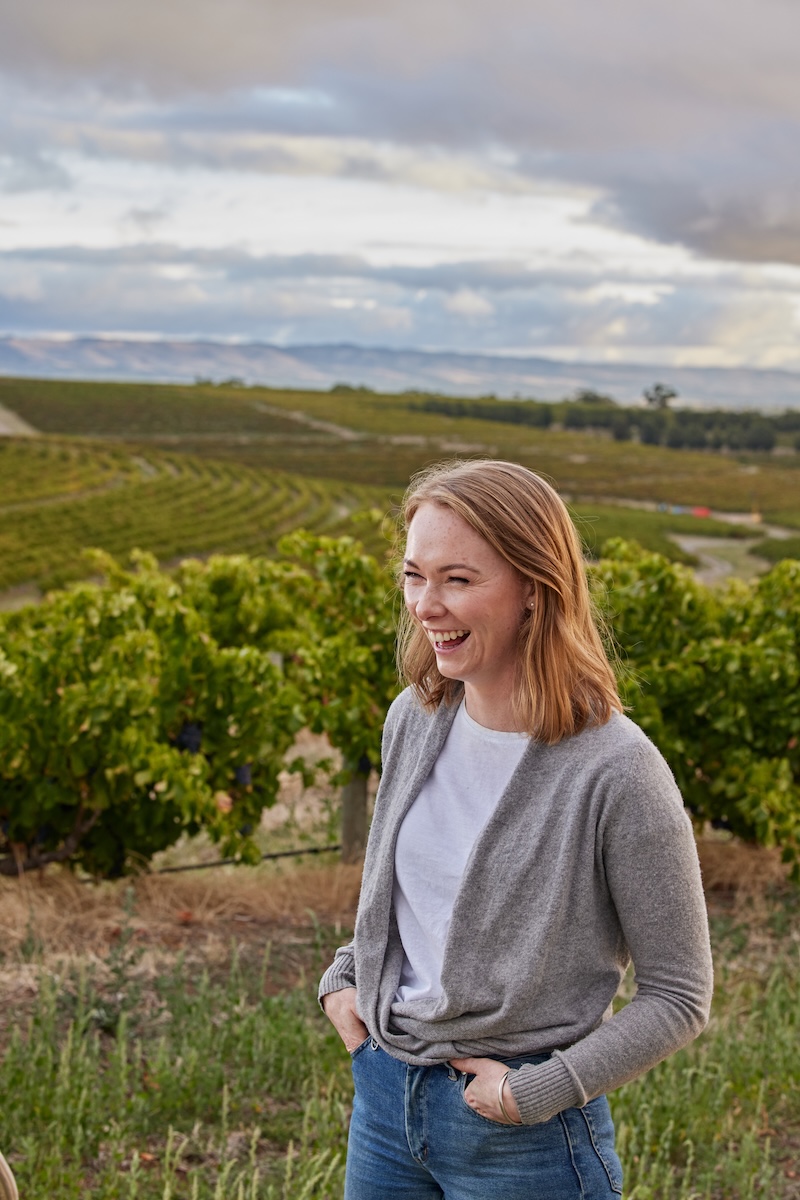
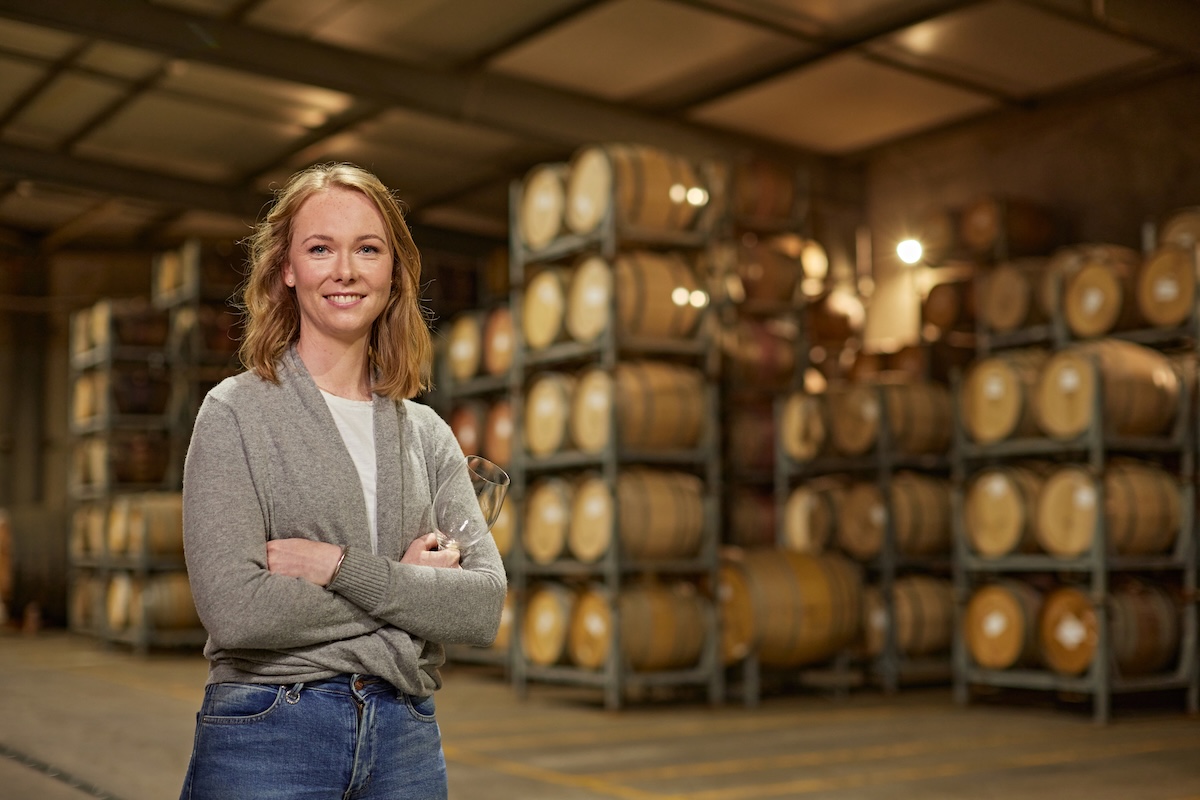
Above and opposite: Ella Hoban, group sparkling winemaker at Vinarchy.

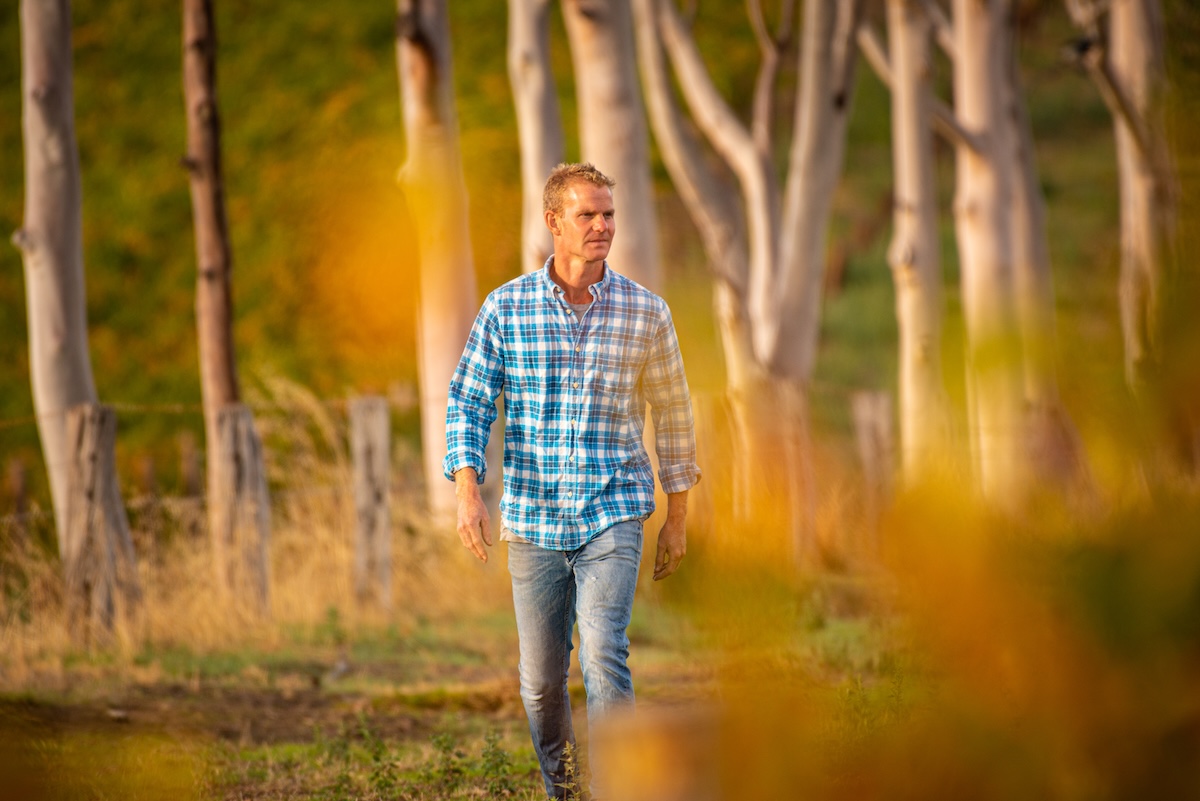
Few people in Australian wine would have as much of an overview of the multifaceted landscape of Australian sparkling rosé than Ella Hoban, the group sparkling winemaker for international wine group Vinarchy. In this role she makes sparkling wines for the Croser, Jacob’s Creek, Grant Burge, and Yarra Burn labels, in addition to producing a number of different sparkling wines for the group’s commercial portfolio. As such, she takes a number of different grape varieties from a multitude of regions – ranging from the cool-climate Adelaide Hills for the Croser label, through to the warm inland regions of the Riverland, Riverina and Murray-Darling for wines in the commercial portfolio – and uses a number of different techniques to make wines that are both pink and fizzy. Reflecting on the number of tools at her disposal, she says, “The most important thing is to go in with a clear vision of what you’re aiming to achieve – where I’ve seen it go wrong is where the vision’s not been clear enough.” She adds, “I think part of what’s great about the Australian wine industry is that we can try different things. They don’t necessarily all work – but I don’t think that there’s many things that, from the outset, I would say, ‘Absolutely not’.” As such, she matches varieties, regions, and techniques to the outcomes that she’d like to achieve for each of the brands she is responsible for overseeing.

Her approach to crafting the Croser sparkling rosé hews relatively closely to the established methods for making rosé Champagne – with an appropriately Australian twist of innovation to suit its customer base. “The tirage pool for Croser non-vintage and Croser Rosé is the same tirage pool – so we make our rosé for Croser through the liqueur [d’expedition],” she says. Thus, rather than adding colour before the secondary fermentation that gives the wine bubbles, it’s added at the conclusion of the process – just before bottling, alongside a dose of sugar to balance the wine. “In that instance, we’re using Adelaide Hills pinot noir and making a quite whole-bunchy, crunchy, bright [still pinot noir wine] with as much extraction we can get early as we can – to avoid getting some more astringent or green characters, or those heavy tannins later. We’re using that as the predominant base to build our liqueur.” This approach has two principal benefits. Firstly, it allows for flexibility in responding to market conditions – “as [sparkling] rosé comes in and out of fashion, it lets us move with that trend based on how much rosé demand there is out in the market,” Hoban says. Secondly, it allows for more precise control of the colour of the finished wine. “Across the board in our portfolio, our consumer really looks for those sort of bright, pretty pink tones,” she says. “And that’s much easier to achieve consistently with rosé created from liqueur than it is from integrating into base wine. If you integrate [the colour] into the base wine, the risk is that, as you age on lees, obviously your wine is ageing as well … and that’s going to happen with your anthocyanin profile in a rosé. So it’s much harder to retain those high-toned, pretty pink colours and not veer into those orange tones.” Likewise, for nearly all of her other sparkling rosés, she adds the anthocynanins to the wine at the last possible moment, according to the dictates of the production method, in order to retain as much control as possible over the vibrancy of the finished wine’s hue.
“Across the board in our portfolio, our consumer really looks for those sort of bright, pretty pink tones. And that’s much easier to achieve consistently with rosé created from liqueur than it is from integrating into base wine.”

Hoban’s focus on ensuring that any given sparkling rosé has the correct colour for its target audience may strike some as crassly commercial – but for her, it’s part of understanding what consumers want from the end product. “There’s horses for courses – I think it’s important to know who your consumer is,” she says. “Rosés, I feel, should smell like rosé, taste like rosé, and feel like rosé before they need to look like rosé – but there needs to be some degree of colour cue.” She adds, “The colour cue in premium rosé styles isn’t necessarily the most important thing, where that consumer has that higher level understanding of the wine and the process. But it is about acknowledging who the consumer is, and meeting their needs. Is it that the colour needs to signify ripe, juicy, red-fruited, and refreshing? Or is the rosé style more about having those savoury tones, having that increase of berry fruit, having that more sophisticated tannin profile? What do you need, and for what different reasons?” As the custodian of a number of brands with extensive consumer reach – and dedicated fanbases – Hoban places a premium on letting consumer preferences determine winemaking outcomes. “We have consumers that know our products so well because they’ve been drinking it for twenty years. So as soon as you change something, they know – and we’ll hear about it,” she says. “‘Wine people’ tend to underestimate how much that consumer knows. They might not know why they like it, and they don’t know any of the background detail on how we do it. But they know what they like – and they know when it’s different.”
 

Flipping the script to put pink first

While most winemakers who tackle sparkling rosé tend to follow in the footsteps of Barbe-Nicole Clicquot-Ponsardin by thinking about carbonation first and colour second, Michael Sexton of McLaren Vale producer Main & Cherry flips the Champenois script to focus first on the rosé, then on the bubbles. “Some of the world’s best rosés, in my opinion, are made from grenache grapes,” he says. “And I was always thinking, ‘Well, why hasn’t that been translated further into a sparkling rosé made from grenache?’ And honestly, grenache just suits the Mediterranean climate of McLaren Vale so well … especially the way that things are warming.” Sexton therefore went about researching Australian precedents for what he wanted to make, and found relatively few examples. “Graham Stevens was a starting point – a really fantastic small winemaker in McLaren Vale,” Sexton says. “His has a bit more sort of sweetness and colour than the style that I was intending to make, though. Then I sort of searched a little bit further and found Hentley Farm from the Barossa, who had also been using grenache for their blanc de noir for a while, although they also use a fair bit of of pinot noir in the blend as well.” In the absence of a clear model from other producers, Sexton built his sparkling grenache rosé – augmented by a small amount of cinsault – from the ground up, starting with the rosé base.

Above: Michael Sexton of Main & Cherry. Opposite: Ducks performing pest-control duties in the vineyard at Main & Cherry.

While grenache is not at all a traditional grape variety for sparkling wine production, Sexton finds that its inherent characteristics are eminently suited to the style. “Obviously pinot noir does a bloody good job of sparkling rosé, but I think grenache is also in a really good place for it,” he says. “It’s got soft thin skins, so we don’t end up with these aggressive phenolics. It’s pretty reliable from year to year. And I think, especially in a cooler year like 2024, it just has this brightness and this lovely natural acidity – so we didn’t have to add any acid to it with 2024.” The growing conditions of McLaren Vale help the variety achieve the right structure for sparkling production, too: “Being so close to the coast where we are, you just get this sort of plushness, this brightness,” Sexton says. “We’re not struggling to ripen it, like sometimes we’ll see with pinot in a cooler year out of the Adelaide Hills. So you can pick it on flavour and get this nice generosity to it without this high alcohol if you go in and get it in the right sort of Baumé in the vineyard, which I think we did in ’24 – just found that nice balance between acid and sugar.” Achieving the desired level of colour and tannin from the grapes’ skins once in the winery was a matter of dialling in how hard the grapes were pressed in the pneumatic press: “We did a whole-bunch press, which gave us the flexibility to see how heavily we could press,” he says. “It worked out really well. We didn’t need to go too hard – we were just getting a nice sort of blush colour out of that pressings fraction, which ended ended up all going back into the [lighter] free-run juice anyway. So I didn’t ferment the free-run and pressings fractions separately for that base wine.” In order to balance the finished wine’s acidity and carbonation, Sexton arrested the fermentation just prior to its completion, leaving three grams per litre residual sugar in the wine.

“Some of the world’s best rosés, in my opinion, are made from grenache grapes. And I was always thinking, ‘Well, why hasn’t that been translated further into a sparkling rosé made from grenache?’”

When it came time to carbonate, Sexton turned to an unconventional method – force-carbonation at the bottling line, where pressurised carbon dioxide is injected into the bottles alongside the wine, like a giant Sodastream. Although the approach might horrify sparkling wine snobs, it’s one that has many virtues, according Sexton: “Doing the in-line carbonation sort of kept things ripe and fresh and pretty honest – and quite consistent down the bottling line,” he says. In-line carbonation is also logistically easier than other methods – not just the labour-intensive traditional method, but also the Charmat method, made famous by its use in prosecco. “It served a logistics purpose as well – because when you go Charmat, you need at least 5,000 litres to get that tank allocation,” Sexton adds. “Whereas when you go to in-line, you can get away with running smaller batches … we could do a smaller run without having to go to that 5,000-litre tank size.” These virtues also translate to the bottom line, meaning that the wine is more affordable – therefore approachable – than it would be otherwise. “For the style and the price point that we were going for, that in-line carbonation worked,” he says. “We’re not talking about ageability. It’s more just a playful sort of contemporary sparkling style that suits our climate and what we’re pairing them up with. Often these wines are intended to drink on their own – at the beach or on a deck with some friends. You’re not overthinking them – you’re not looking to cellar them or build texture by thinking about lees and oak or anything like that. You’re just making them to drink now, and to have some fun with them.”


Looking at the future through rosé-coloured glasses

Rosé sparkling wines currently occupy an interesting position in the Australian wine market. While sparkling wine and still rosé are both growing categories – despite a background of a general contraction in the wine market more broadly – and are especially popular amongst younger wine consumers, sparkling rosé as a category seems to remain relatively static. It currently constitutes 29% Australia’s sparkling wine market by value, and 10% share of the volume of all sparkling wine sold in Australian retail channels – but exports fell by 8% over the course of 2024, and, as Wine Australia notes, “sales have been relatively flat in recent years.” Instead, most of the growth in the Australian sparkling wine market has been driven by prosecco, which now accounts for 26% of the volume of sparkling wine sold in retail across Australia. For most Australians, both sparkling wine and rosé are festive and convivial styles – but it seems that, for some consumers, the combination of the two can be feel like too much of a good thing. The figures are reflected in Michael Sexton’s experience at the Main & Cherry cellar door. “We also make a prosecco, which would do double the amount of sales compared to the sparkling rosé that we’re doing with this grenache,” he says. “Part of that comes down to tradition – people typically drink Champagne or blanc de blancs. I would like to try and flip that – to lean people more into the sparkling rosé style, especially this dry, blusher sort of style that we’ve crafted.”

“Through the work we’ve done with realising that those Italian varieties can be excellent for generating colour in rosé, I actually think that they could also be excellent at generating sparkling rosé saignée style – intentional from start.”

Ella Hoban likewise argues that consumer preconceptions can limit the possibilities for sparkling rosé. “I think people who drink sparkling – and I’m talking big chunks of the market, not the fringe view of ‘wine people’ – drink sparkling to drink sparkling, and they drink rosé to drink rosé,” she says. “Those two things don’t necessarily intersect in their minds very much. We tried that for a while, and I don’t think it really took off the way that we expected it to.” She argues that the pitch for Australian sparkling rosé therefore needs to be a little bit more sophisticated than saying, ‘You like rosé, and you like bubbles – why not drink bubbly rosé?’ “Something that I’m really passionate about is not only Australian sparkling wine, but also how we consume – and how we consider consuming – sparkling wine,” Hoban says. “I think we still think about it as either a celebration wine, or something that you only have at the start of a meal. There’s a lot of work to be done – to maintain the growth of Australian sparkling wine – in getting consumers to understand that you can consume sparkling with a meal.” For her, this is especially salient when it comes to sparkling rosé, where the red wine components bring food-friendly tannins into the mix. “Until we start to really crack into that perception of where sparkling fits with food and lifestyle, I don’t think we’ll see a massive uptick in rosé sparklings – I think they naturally have an affinity for food, because they’re holding that slightly higher tannin profile,” she says. “One of the things I really love about working on Croser is that it’s at a price point where we’re able to deliver high-quality, cool-climate, traditional-method sparkling wine to the consumer at a price point where it can be about celebrating the everyday. It can be Friday drinks with the girls; it can be that you’re celebrating a promotion; it can be Sunday afternoon with your mum. So something that I really love about what I do is that the wines that we make provide richness to the fabric of people’s lives in that way.”

While work needs to be done in terms of changing consumer perception of the category, Hoban is bullish about the possibilities for sparkling rosé when it comes to winemaking. She points to Italian ‘alternative’ varieties such as montepulciano or barbera – which she currently uses for the anthocyanin content of Vinarchy’s rosé proseccos, for their “beautiful colour, beautiful density, beautiful bright purple fruit profiles, and high natural acidity, which really lend themselves nicely to making really bright, crunchy rosé styles”– as particularly promising: “Through the work we’ve done with realising that those Italian varieties can be excellent for generating colour in rosé, I actually think that they could also be excellent at generating sparkling rosé saignée-style – intentional from the start,” she says. “Because of how they hold colour/anthocyanin, without a massive tannin profile, and that bright acidity – that same profile that works really well when using them as a dosing agent in the late stages – I think those varieties have an affinity to be able to do that in making full-colour rosé from the outset.” And while Vinarchy currently sources these varieties from the warm inland regions, she’s equally enthusiastic about what they might do in cooler climates, too: “I think it would be really interesting to make some sparkling barbera rosé from the [Adelaide] Hills!”

“If you think of any of those Italian varieties, why couldn’t you lean into that with a sparkling rosé style as well? I don’t see why we should be bound by any of those sort of older French traditions when it comes to Australian sparklings.”

Sexton concurs with Hoban on the possibilities for alternative varieties: “You could look at any of those Italian varieties that are being made into [still] rosé,” he says. “Nebbiolo sort of jumps out at me – there’s a beautiful version from S.C. Pannell doing that. La Prova’s using aglianico. If you think of any of those Italian varieties, why couldn’t you lean into that with a sparkling rosé style as well?” He sees this as part of a bigger push to move away from wines modelled after French originals and to develop our own Australian sparkling wine vernacular. “I don’t see why we should be bound by any of those sort of older French traditions when it comes to Australian sparklings,” he says. “I mean, look at what Oliver’s Taranga are doing with their sparkling fiano – wonderful wines.” He adds that climate change means that winemakers will have to lean into lesser-known varieties, such as the cinsault that he recently grafted over some of his shiraz vines. (“There’s enough shiraz out there in McLaren Vale!” he says, laughing.) “Sparking rosé sort of also opens itself up to that same excitement, and exploring the category [of alternative varieties] further,” he says. “If you just think outside of that typical framework a bit – like a lot of people are, because there’s a lot of exciting things going on – you can push those boundaries.”

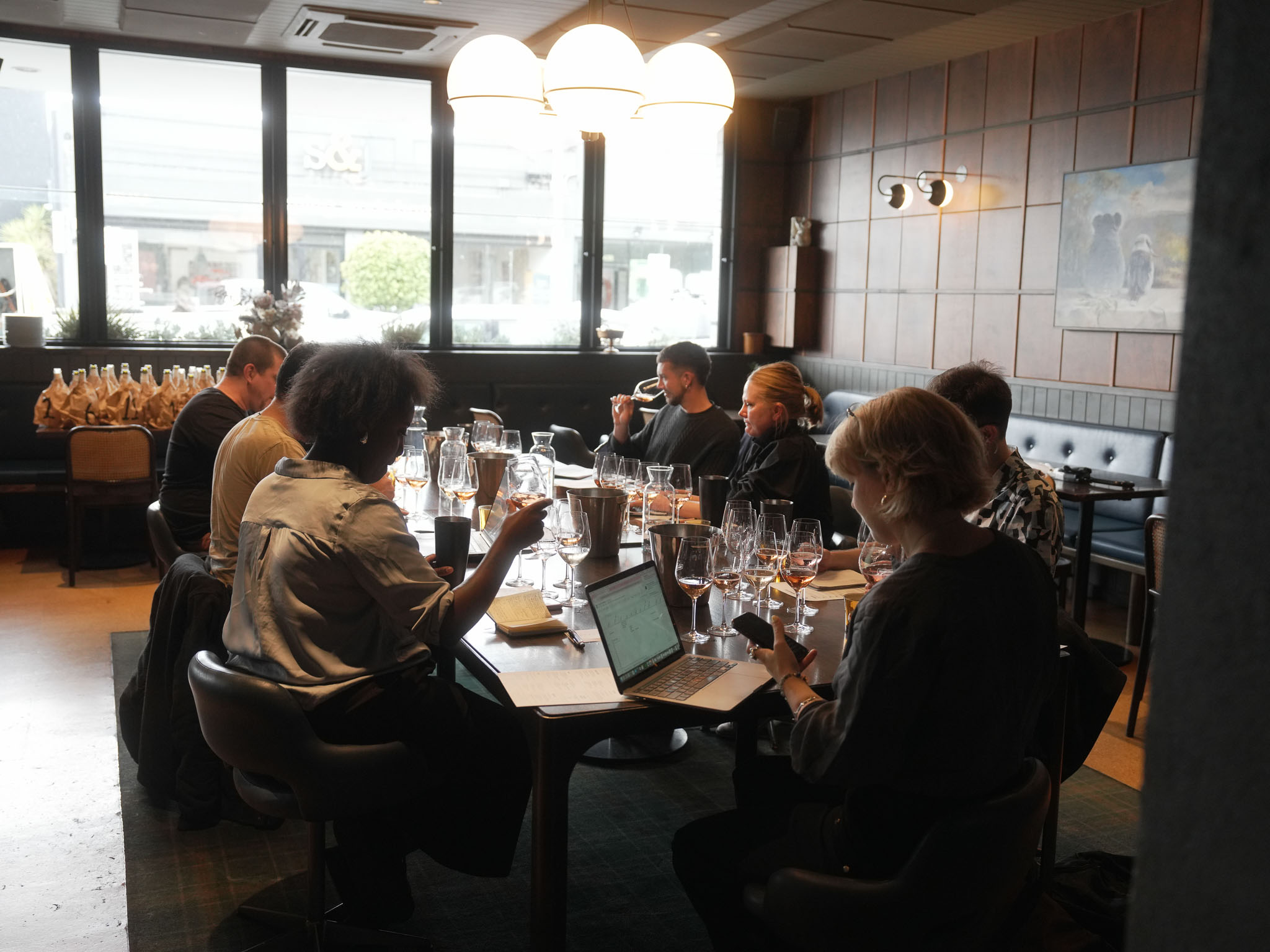
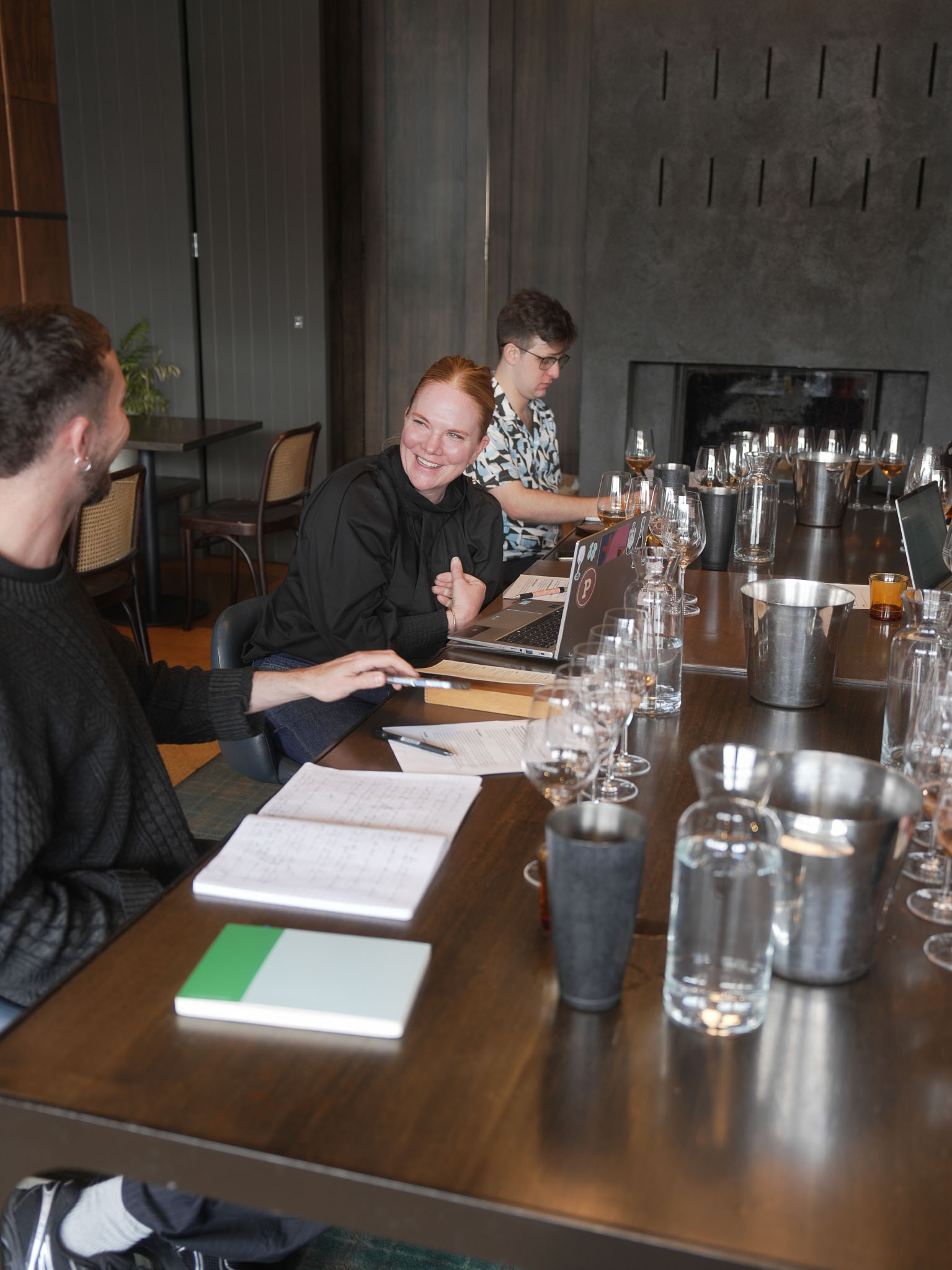
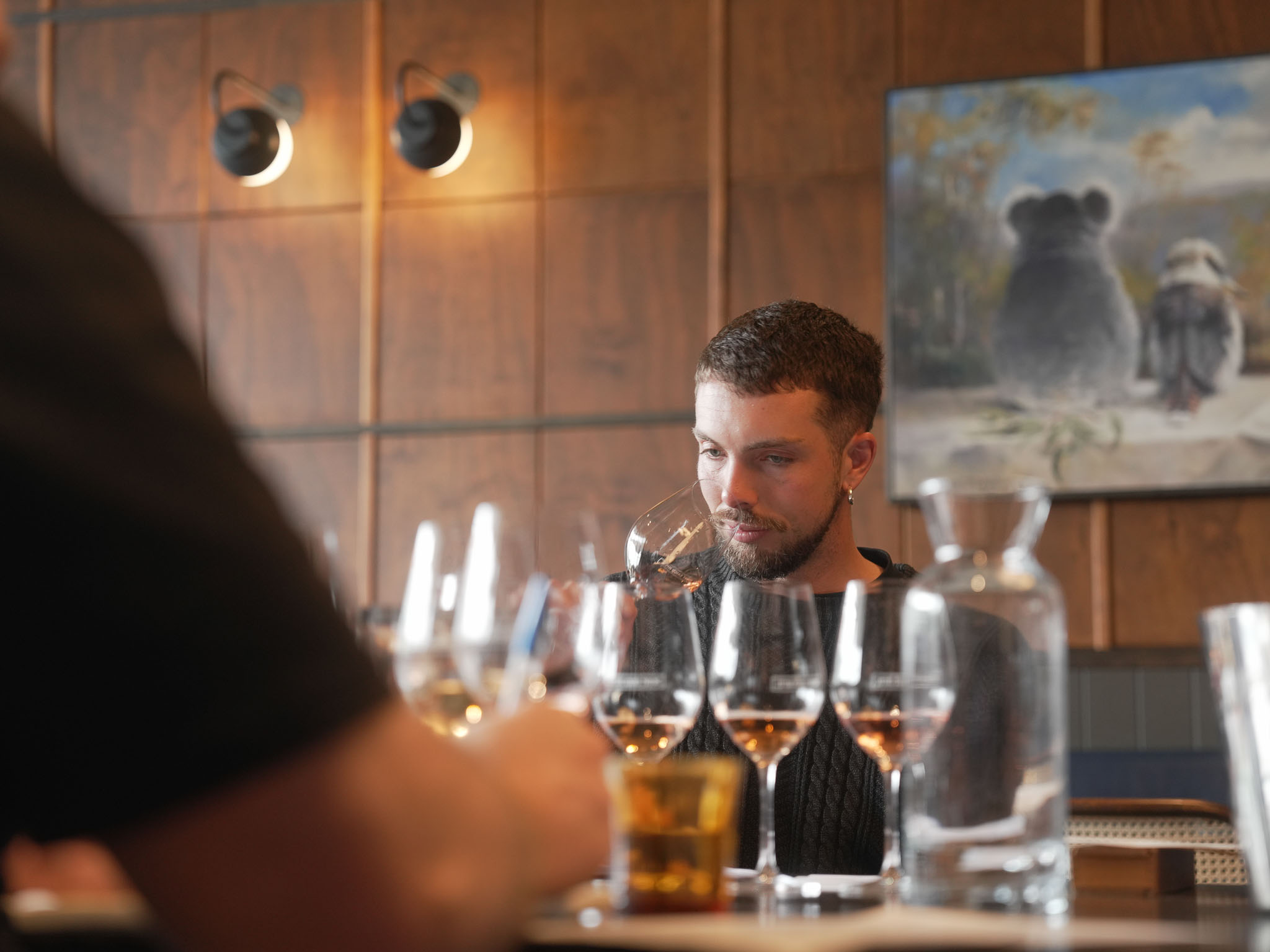
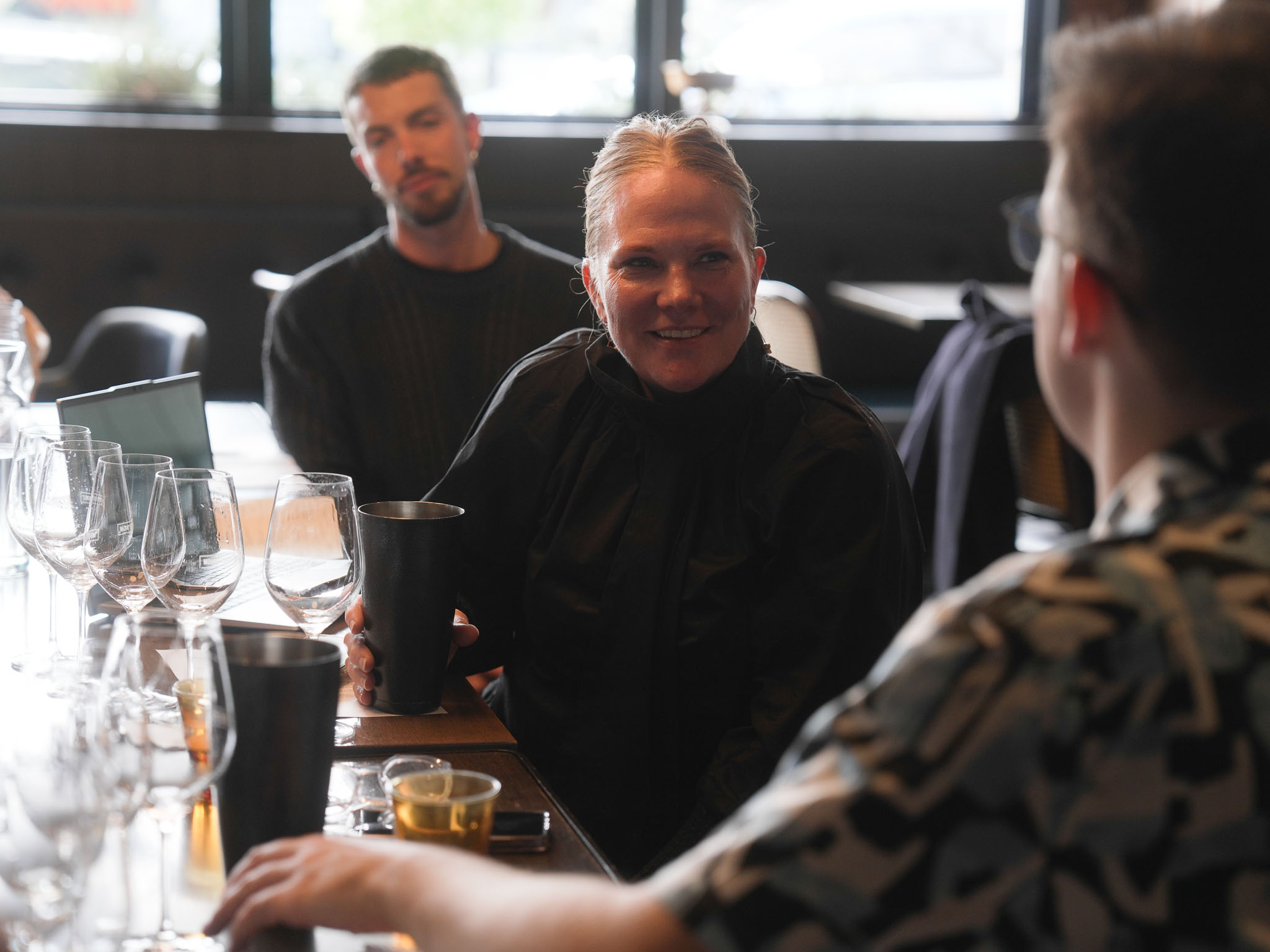
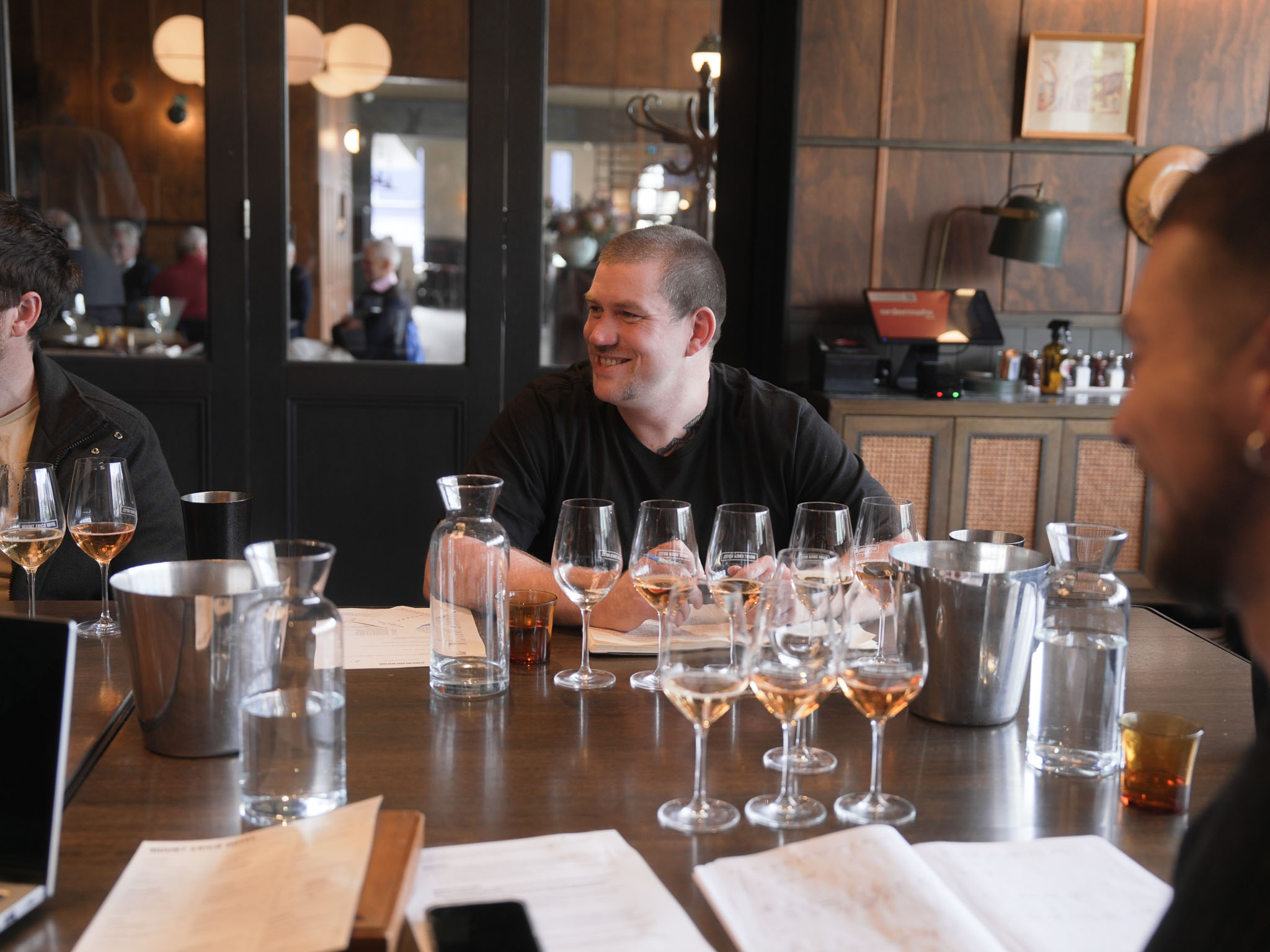
Above: Our expert panel gathered at the Mount Erica Hotel, Prahran (Melbourne).

Outtakes from the Tasting

We gathered every Australian example of rosé sparkling that we could find – with no restrictions on grape variety or varieties used, and no restrictions on winemaking techniques used to create the colour or the carbonation – and set our expert panel the task of finding the wines that compelled the most. All wines were tasted blind, and each panellist named their top six wines. Below are the wines that made the panellists’ top-six selections from the tasting.

Our panel: Peta Baverstock, winemaker, Cuvée Co.; Sam Watkins, winemaker, Watkins Wines; Tully Mauritzen, wine buyer, Vinomofo; Sam Baxter, sommelier, Geralds Bar; Sarah Robinson, sommelier, Cumulus Inc..; Logan Howes, wine retailer, Seddon Wine Store; Jordi Yeates, wine retailer and store manager, Crooked Drinks.

Baxter commenced the discussion by noting the array of shades of pink on display in the line-up – from the very pale to the neon-hued. “Probably about ten of them in the tasting were basically blanc de noirs – you just sat there and you were like, ‘I get all the autolytic notes, I get all this amazing winemaking – but is it a rosé?’,” he said. “Then you have others that are hot-yoga 1980’s pink – and you’re like, well, we’re here now. Awesome. Let’s go.” He put the paler, more restrained hues of many of the wines down to a fear amongst certain consumers that the colour of the wine determined its quality – or its sweetness. “I think that’s just more of the backlash against rosé and rosé sparkling as a market trend – when you’re looking at something and it’s pink, everyone goes, ‘Oh, no, it’s either going to be sweet, or it’s going to taste like Turkish delight,’ or whatever. But that’s what a traditional-method rosé is like, especially if you using something like the saignée method – you want those richer strawberries-and-cream, more savoury rhubarb characters coming through. Yet everyone’s quite afraid of those wines, especially in the Australian market, which is why I think we saw so many quite orange-y and very pale, almost Provençal-style wines. That’s not to say that those paler wines weren’t great – there were quite a few that were showing some amazing oxidative and quite savoury characteristics – but I wanted just a touch more from some of them. Like, ‘Come on, don’t be afraid – it’s just red grape juice that you’re adding. It’s fine!’”

Above: Sam Baxter. Opposite: Peta Baverstock.

Baverstock argued that the successful wines of the lineup, for her, threaded the needle between generosity of fruit character and winemaking artifice. “If I saw something that looked a bit too straightforward, I probably wasn’t grabbing onto it,” she said. “But then I also wasn’t grabbing on to the ones that were a bit too developed, and had some very aged base wines. I saw some smokiness in there, and I thought, ‘Is this what I want in a rosé?’ So those wines I tended not to lean into – but the ones that I felt had a bit bit more complexity than just being confected or primary, I loved. So I was kind of going in with a stylistic perception of what I see sparkling rosé to be – and I think there should be plushness.” Reflecting on the spectrum of colours on display, she added, “I think that we’ve come a long way – I feel like this is a sophisticated colourway that we’re looking at. Because I remember – you know, if we did this a couple of decades ago, they all would have been bright Barbie pink. And that’s when the consumer, I think, is struggling – ‘Do I want to be seen drinking a wine that is very obviously pink?’”

“I feel like this is a sophisticated colourway that we’re looking at. Because I remember – you know, if we did this a couple of decades ago, they all would have been bright Barbie pink.”

Watkins observed that while self-consciously ‘savvy’ wine consumers might struggle with the sparkling rosés within the lineup that were very fruit-forward and brightly-hued, other consumers would find those wines tremendously appealing. “There presumably are still some customers out there who want that style,” he said. “And the colour is so important. Like, any time you’re trying to sell the wine, that’s the thing that customers are going to latch onto first.” He added: “There was one wine in particular that was on my shortlist, which I was having a really good look at – and it just tasted to me like Rekorderlig cider. I was looking at it and going, ‘I would never drink this. Like, it’s just not something that I want to drink.’ But it fits the brief – and there are a lot of people out there that drink Rekorderlig cider, who maybe aren’t drinking as much wine at the moment. And if they were drinking Rekorderlig and then saw something like that and tried it, that could be a very easy stepping stone to bring them into the fold. So I very nearly did put one of those hot-pink wines forward in my top six – but in the end, I just found too many other amazing wines, so I had to push it out.” (When asked exactly which flavour of Rekorderlig cider the wine in question reminded him of, Watkins plead the Fifth: “Any time that I was in a state to be drinking Rekorderlig cider, I don’t think I could even remember the flavour of it!”)

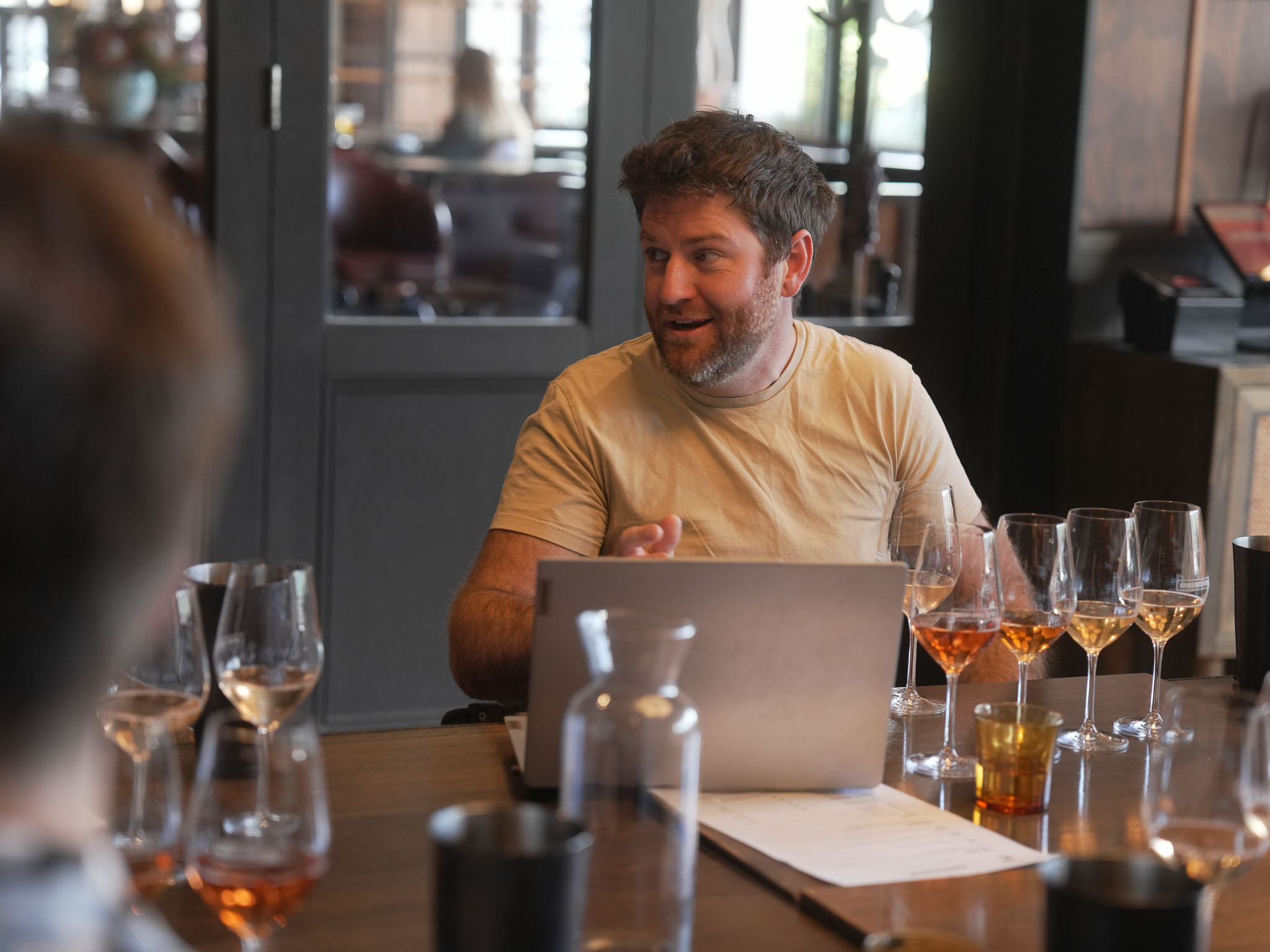
Above: Logan Howes. Opposite: Tully Mauritzen.

Reflecting on the varied nature of the category, and the difficulties that this poses for consumers who might not know exactly what to expect from any given bottling, Howes argued that it was incumbent on retail staff to understand both the product and their customers. “It kind of helps if the person selling it enjoys the style as it is – if they can get behind it, and they’ve got customers that trust them, it’s an easy sell,” he said. “You’ve just got to avoid a couple of keywords – as soon as you say anything like, ‘Oh, it’s got lovely fruit weight to it,’ people will go, ‘I don’t want sweet’. You might be tempted to say, ‘No, no, it’s fruit, not sweetness – there’s a difference,’ but then you kind of lose them a little bit. So if you can find the right buzzwords, the right keywords, to capture your target audience, then it becomes a lot easier.”


“Sparkling rosé is like so many categories of Australian wine – you can’t generalise across the country. I mean, what is Australian grenache like? What does pinot look like across the country?”

Mauritzen agreed that the diversity on display within the category made it a complicated one – but argued that this was equally true of most wine categories at a national level. “Sparkling rosé is like so many categories of Australian wine – you can’t generalise across the country. I mean, what is Australian grenache like? What does pinot look like across the country? It’s very hard to kind of narrow down what those are in Australia as a whole, and therefore what consumers want from them.” She added that price point was an important factor to consider as well – and tried to select a diversity of styles at different price points in her top six wines. “If you look at the market, people are drinking rosé again in more numbers – and I just think there’s parts of this tasting where you just have to look at the bigger story and go, ‘Objectively, that’s just a really fun wine – I have no problem with that’, you know? It’s maybe not something I would drink a bottle of – but if someone offered me a glass at party one night, I’d be very happy with it.” She tried to balance these easygoing, everyday wines against the more cerebral, upper-tier traditional-method rosé sparklings that might otherwise have dominated her top six: “There are a couple in my top six that are exactly those more obviously high-quality wines, and I would specify in my tasting notes that these would be incredible wines to have with a luxurious meal. They’re those celebration wines that you could have with your roast at Christmas – and that’s cool. But I’m trying to make it explicit to the person that’s going out to buy a prosecco rosé that these top-shelf wines are not the only point of sparkling rosé.”

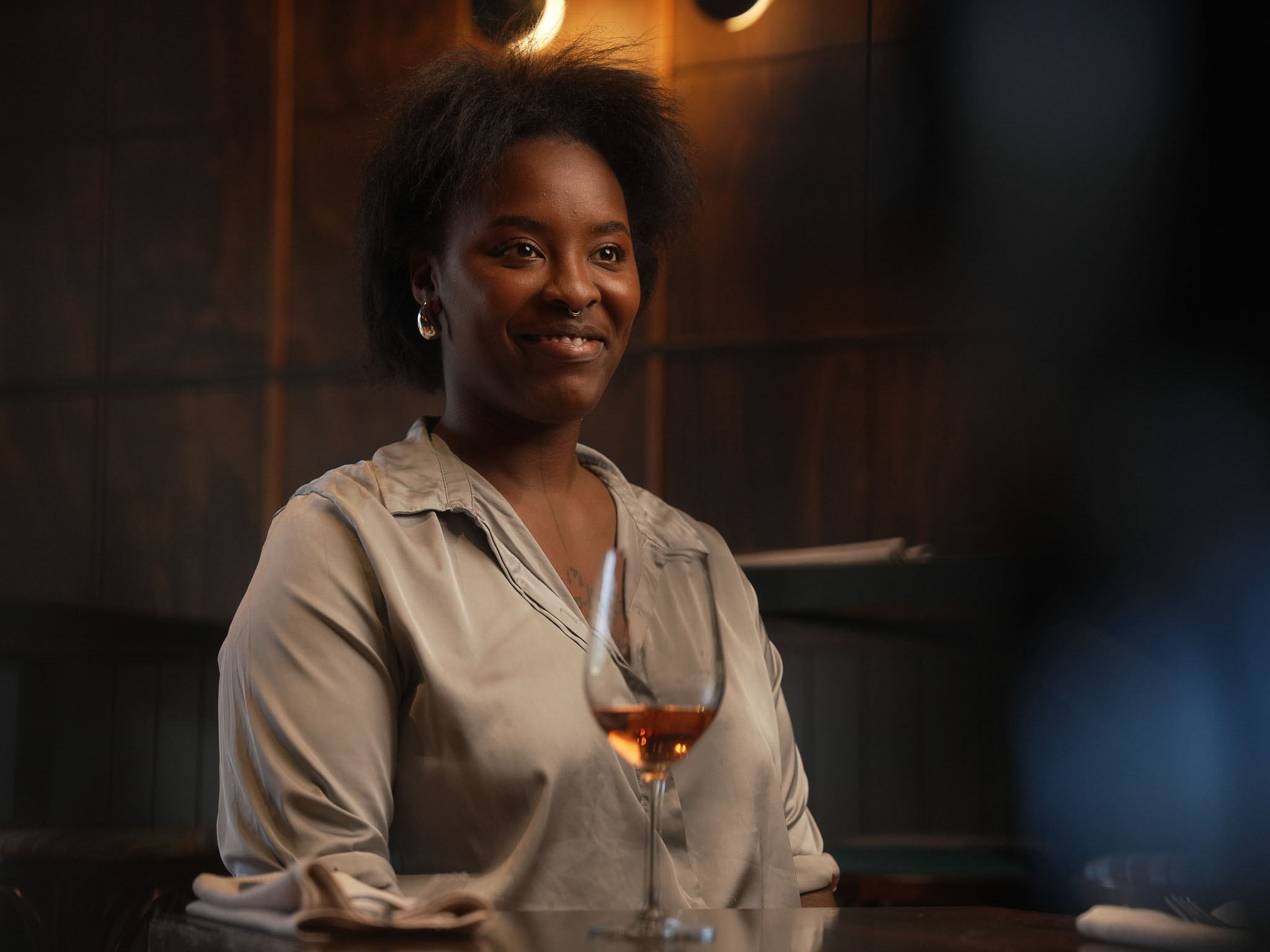
Above: Sam Watkins. Opposite: Sarah Robinson.

Robinson concurred with Mauritzen on the importance of the wines in the line-up that were accessible – both stylistically and in terms of price point. “When I think about selling sparkling rosé … I don’t sell much of it at Cumulus. But at my previous venue, Gilson, you’re outside, you’re overlooking the botanical gardens, the sun’s out – and people are drinking Babo Prosecco Rosé. Do I like it? Not really, but it fits the bill. I’d think, ‘I want to be doing that right now!’ She saw the unfussy appeal of the approachable and affordable end of the line-up as part of a welcome movement to democratise wine – to appreciate wines for what they are, not where they might fall in a hierarchy of values determined by experts: “People at the moment just want to drink yummy wine,” she said. “They’re like, ‘I don’t care what it says on the bottle. As long as it’s good – and it’s at the price point that I want – go hard.’ They just want it to be relatable.”


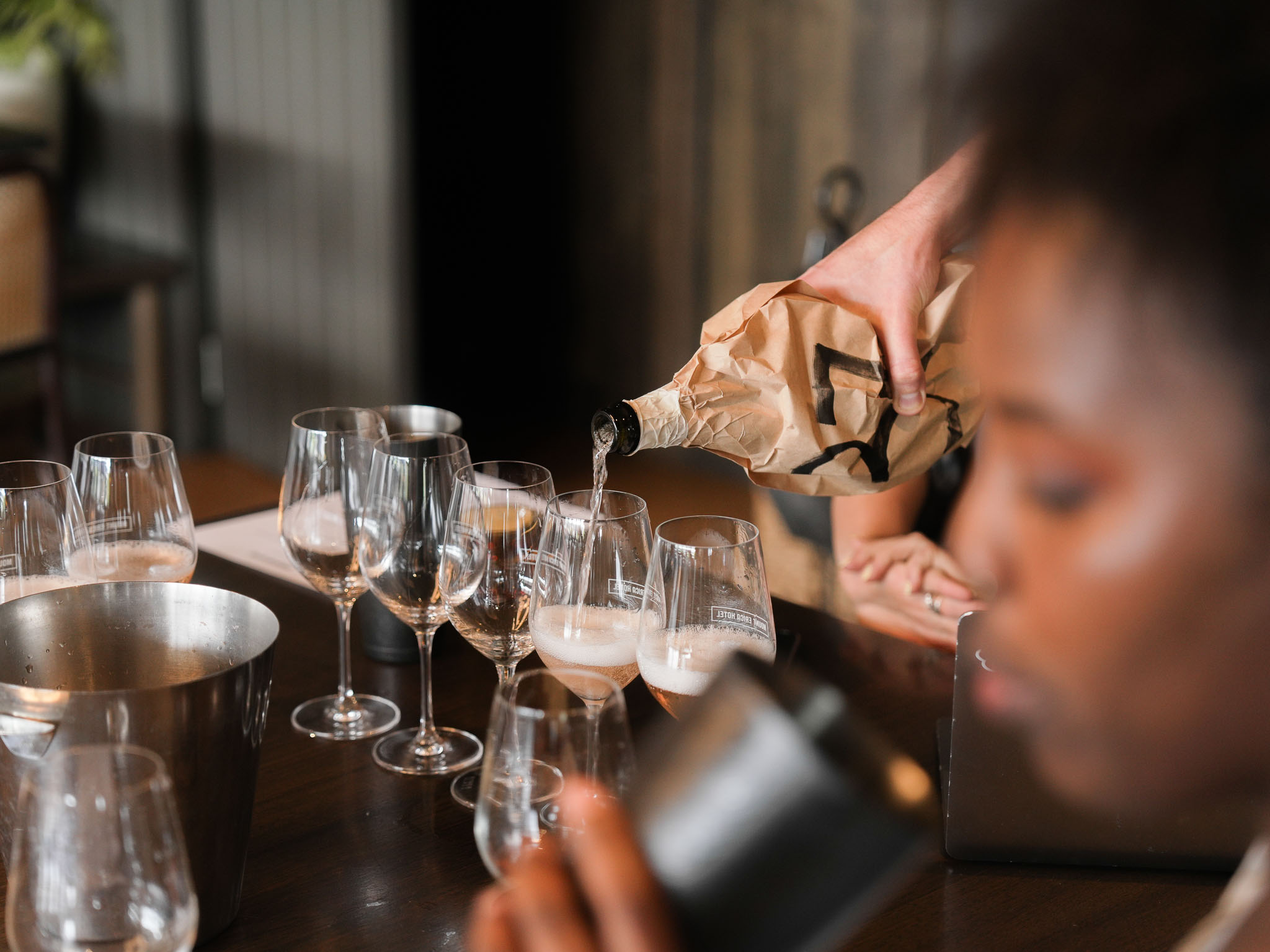
Above: Jordi Yeates. Opposite: Our expert panel in action at the Mount Erica Hotel, Prahran (Melbourne). All wines tasted ‘blind’.

Yeates argued that wine professionals sometimes get a little too caught up on nomenclature and how wines are presented to consumers, and instead argued for the virtues of surprise and discovery. “Right now, I’ve got a pét-nat in the fridge that’s rosé pét-nat – it’s quite dark in hue, and it’s got a clear bottle,” he said. “And then, unbeknownst to everyone else, I’ve actually got a rosé, Champagne method, from a smaller appellation in Burgundy, a vin mousseux. And I’m not going to tell people it’s a rosé, because it’s that blanc de noirs style. The bottle is tinted. I’m not going to ruin the day for anyone. I want someone to drink this Champagne-method, delicious sparkling wine with an edge, 100% pinot noir – and it’s got a tiny blush to it. I’m not going to tell people it’s rosé. I like to sometimes let people discover for themselves how much they don’t know about styles, and how it’s not homogeneous all the time – the surprise element.” It’s a sentiment that Mauritzen readily agreed with. “Sometimes we, as professionals, get way too into our heads about what people know or care about,” she said. “So you sell a bottle of wine, someone takes it home, and they’re having a dinner party. Like, how many people are going to be sitting there and interrogating the colour in the glass?”

Above and opposite: Our expert panel in action at the Mount Erica Hotel, Prahran (Melbourne). All wines tasted ‘blind’.

Bookmark this job

Please sign in or create account as candidate to bookmark this job

Save this search

Please sign in or create account to save this search

create resume

Create Resume

Please sign in or create account as candidate to create a resume