-
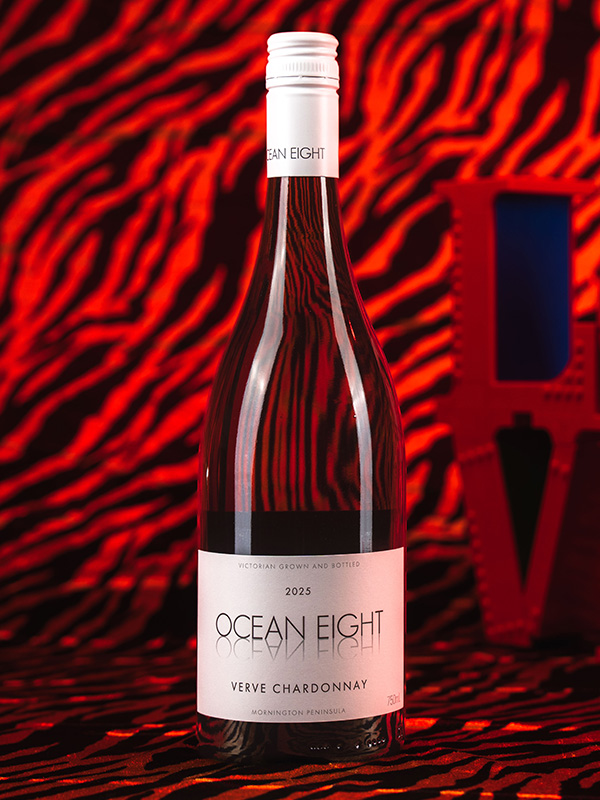
Producer
Ocean Eight -
Region
Mornington Peninsula
-
RRP
$60
-
Vintage
2025
-
Variety/Varieties
Chardonnay
-
Alc./Vol.
12.5%
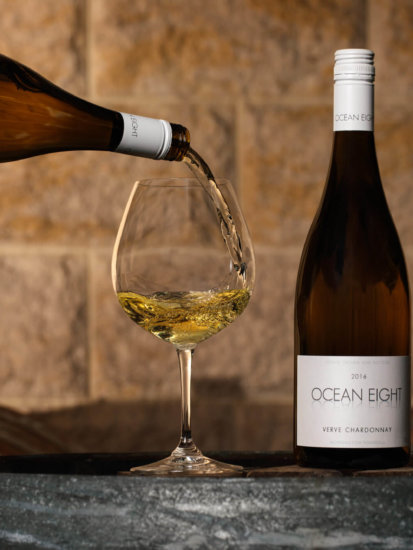
Bright and citrusy, with ripe grapefruit front and centre, and a subtle savoury note from time spent in old oak barrels. Crisp, clean and easy to love.
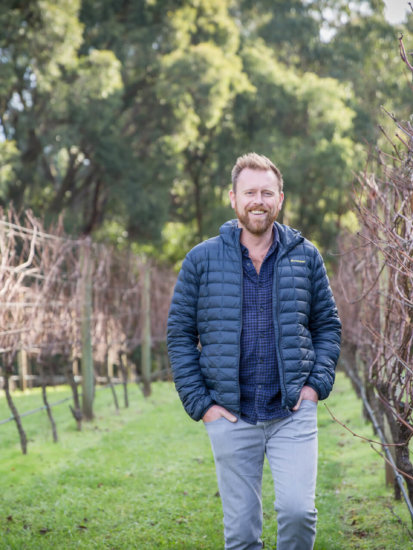
Mike Aylward has spent two decades quietly reshaping what Australian chardonnay could be. When he took the reins at Ocean Eight on Victoria’s Mornington Peninsula, he set his sights against the broad, buttery style that had defined the grape through the 80s and 90s – a style built on heavy new oak and generous winemaking flourish. Trips to Burgundy and Chablis convinced him that cool-climate fruit, picked early and handled with restraint, could deliver something far more thrilling: taut, citrus-driven wines with real tension and drive. That conviction crystallised in 2006 with the first ‘Verve’ Chardonnay, and by 2011 it had helped earn Aylward the Young Gun of Wine Award – recognition for a wine that helped drag Australian chardonnay out of its buttery era and into a leaner, more mineral-focused future.
Nearly two decades on, the 2025 ‘Verve’ proves that style was never a passing trend – it’s a genuine philosophy, still evolving. This latest release of the Verve delivers signature ripe grapefruit and citrus character, the product of a tight, deliberate picking window that captures fruit just as it turns from green apple to grapefruit – riper than a sparkling base, but nowhere near the fuller, rounder register of a warm-climate style. It’s precise, racy and true to the cool-climate, mineral-driven paradigm Aylward pioneered, with the site itself – one of Mornington’s benchmark chardonnay vineyards – still very much the star.
What sets ‘Verve’ apart, though, is what happens in the barrel room. Aylward ferments exclusively in old oak – never new – which is the key to the wine’s texture. Old barrels impart none of the vanilla, spice or toast you’d get from new wood; instead, they act as a neutral vessel for barrel fermentation to work its quiet magic, building a subtle, savoury, mealy complexity and a rounder mouthfeel without leaving any fingerprint of “oak” flavour behind. It’s a deliberate, disciplined choice – texture and savoury nuance, sourced from technique rather than timber – and it’s exactly the kind of considered winemaking that’s kept ‘Verve’ at the pointy end of Australian chardonnay for the better part of twenty years.
Tasting note
Notes of ripe grapefruit, Meyer lemon and stone fruit kernel with an umami-laced lees character adding a savoury mealiness. This has the race and drive you’d expect from a ‘Verve’ bottling — reserved and fine in feel, with a classic citric fruit profile and a coolly ripe suggestion of white stone fruit. There’s a slightly slippery, saline feel to the palate, with real poise and drive, the winemaking sitting in balance with the grapefruit-scented fruit and a poised spine of acidity.
When to drink it
Hangs with your ‘ABC’ (‘anything but chardonnay’) bestie who’s tasked you with bringing something yum, because it’s what you do. You’re feeling equal parts mischievous and inspired – confident she’ll be equal parts galled and grateful when you reveal what just vanished so quickly from her glass. Checkmate, you.
This wine is so versatile – sip it alongside fresh seafood, or pour it with a Sunday roast and watch it hold its own. Hand a glass to your dinner party guests the moment they walk in if you want to impress early, or save the bottle for after the cheese course, when it’s just what the lingering conversation calls for. You can’t go wrong.
Themes of this wine
Chardonnay
With an explosion of interest over the last few decades, chardonnay is now the world’s most planted white grape. With its ability to grow in varied conditions and make everything from sparkling wine, to lean and mineral whites, to full-bodied textural expressions, it is perhaps no surprise to see Burgundy’s key white grape become so dominant.
Barrel fermentation
Some wines are fermented in tanks or large fermenters before the wine is transferred to barrels, while others are fermented in the barrels that they’re then aged in. Barrel fermentation is a practice most commonly used when making chardonnay, but it is also employed to add texture and flavour complexity to other white wines, such as commonly with pinot gris and viognier, but it can be applied to any variety. The impact of barrel fermentation is one where fruity flavours are softened and rounded off, while adding in some yeasty, leesy notes, with a generally softer and creamier texture. The wines are typically then aged on the lees, where stirring (battonage) can add even more richness and softness to the texture, though winemakers are doing this less and less, pursuing more refined styles.
Mornington Peninsula
The Mornington Peninsula wine region is somewhat of a latecomer, with ongoing commercial production not taking hold until the 1980s. But it has blossomed somewhat since then. Now boasting over 200 vineyards, with 60-odd wineries and over 50 cellar doors, the Mornington Peninsula specialises in chardonnay and pinot noir, while also staking a claim to some of the country’s best pinot gris.
Explore Further
GET FIRST ACCESS TO THE NEXT WINE ICONS – DELIVERED
Find out moreEach month, get 3 bottles of our freshest discoveries. We taste thousands to bring you the best.
Join us and support emerging winemakers, sustainable vineyards, and the development of young professionals.
— Max Allen, Wine Writer
— Broadsheet
— The Australian