-
Producer
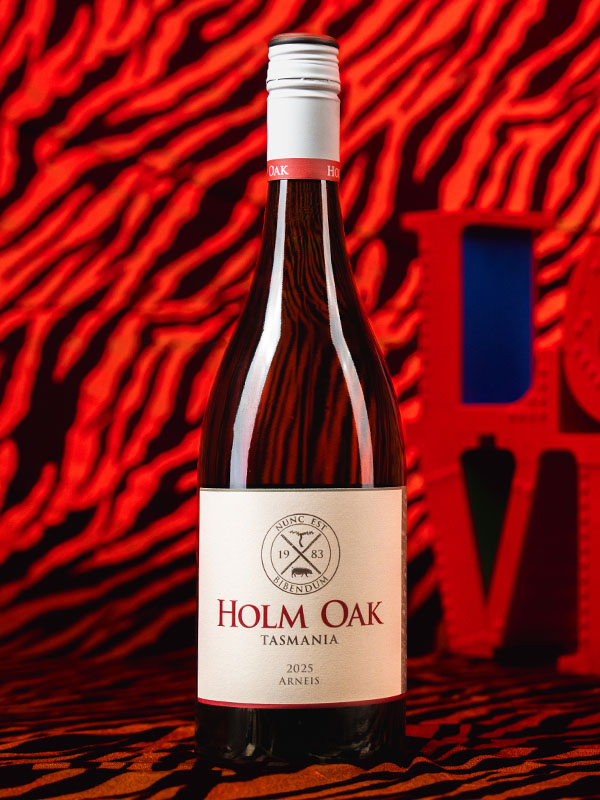
Holm Oak -
Region
Tasmania
-
RRP
$32
-
Vintage
2025
-
Variety/Varieties
Arneis
-
Alc./Vol.
13.5%
Ripe pear, lemon and grapefruit with a sherbet-like zing, a creamy, textural feel through the middle and a faint flinty thread in the finish. Dry, fresh and interesting, without trying too hard to impress you.
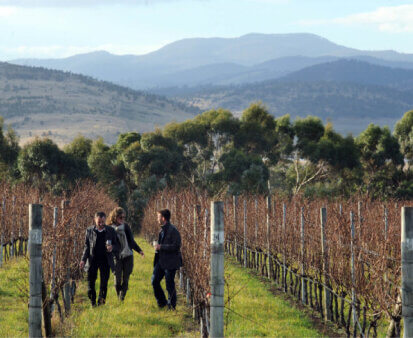
Holm Oak sits at Rowella in Tasmania’s Tamar Valley, on land that was first eyed up in the 1930s by a tennis racquet company hoping to grow holm oak trees for racquet frames. The timber didn’t make the grade, so vines went in instead in 1983, making it one of Tasmania’s older vineyards. Today it’s run by Tim and Bec Duffy: Tim, a third-generation grape grower, is on the tools in the vineyard, while Bec makes the wines in the winery. They’ve been making wine here since 2006, all of it single-vineyard Tamar Valley wine.
Arneis is a white grape from Piedmont in northern Italy, hailing from the Roero, where it was nearly lost by the mid-twentieth century, and its name is said to mean “little rascal” for the trouble it gives growers. The Duffys planted theirs in 2007, wanting to grow something nobody else on the island was making. It’s a tiny block, roughly 400 vines by the producer’s count, and the fit turned out to be a good one. Arneis has thick skin and loose bunches, which helps it stand up to the damp and disease that come with Tasmania’s rain, and Holm Oak finds it’s usually the last white variety to ripen. That’s a surprise for a grape with a reputation for dropping acid fast: in their cooler years, the cool nights hold onto so much acidity that it can end up too high rather than too low. The 2025 was picked on 31 March.
In the early years they made arneis the way you might make riesling, a squeaky-clean tank ferment, and found it a bit boring. So they changed tack. For the 2025, the fruit was pressed and then fermented naturally in a mix of seasoned oak barrels and a concrete egg (about a quarter of the wine went through the egg), and left to rest on the leftover yeast cells from fermentation for five months before bottling in August, which slowly adds creaminess and weight to the wine. The oak is there for texture, not flavour, and together they give the wine its breadth and generosity. It’s a quietly innovative approach: a rare grape, a handful of vines and a lot of curiosity.
Tasting note
Pear drops, lemon zest and pink grapefruit segments leap out of the glass, with a bright, light-straw colour and a faint beeswax and white-floral edge. Sherbet-like acidity fans out in a broad sweep across the palate, carrying Williams pear, crabapple, lemon barley water and a touch of tarragon. Lees work gives the mid-palate real texture and generosity, while the grapefruit shifts into something more like yellow grapefruit pith and rind, adding a pleasant bitterness to the finish and giving the wine extra length and persistence. There’s a faint flinty edge underneath all that, with enough breadth to keep you interested and enough zing to keep you coming back.
When to drink
This is a dry white that isn’t too rich or too demanding, but has plenty waiting to be discovered if you feel like paying attention. Crack it on a Sunday afternoon when the day has nowhere to be, or pour it for the friends who swear they only drink chardonnay. The texture might just win them over. It’s also perfectly happy being poured solo and ignored while the chat or the footy carries on in the background.
It doesn’t need food, and we don’t get precious about pairing. But if that’s your thing, a whole snapper fresh off the barbecue on a Sunday afternoon is hard to beat. Do it that way, or don’t.
Themes of this wine
Arneis
Arneis is a white grape from the Roero in Piedmont, where it was once planted alongside nebbiolo (hence the occasional “nebbiolo bianco” label) and was close to disappearing by the mid-twentieth century. Its name is said to mean “little rascal”, a nod to how difficult it can be in the vineyard, with brittle canes, sensitivity to cold during flowering and a habit of dropping acidity quickly once it’s ripe. Australia has the largest plantings outside Italy, first planted on the Mornington Peninsula in 1995, and the wines tend to be brighter and crisper than their Piedmont cousins.
Tamar Valley, Tasmania
Tasmania’s Tamar Valley is a cool, maritime wine region in the island’s north, cooled by westerlies off the Southern Ocean and sheltered from the worst of the wind and rain by the mountains. Cool nights hold natural acidity in the grapes, which is the backbone of many of Tasmania’s best wines, from sparkling to pinot noir to riesling. It’s a challenging place to grow grapes, with frost and rain to contend with, which is why varieties like arneis that can cope with cold and damp stand out.
Texture in white wine
Not all white wine is about zingy acidity. Winemakers who want a richer, rounder white often leave the wine in contact with its lees, the yeast cells left after fermentation, which slowly break down and add creaminess and weight to the palate. Vessels play a role too: concrete eggs, with their oval shape, are designed to keep the lees gently in motion, building texture without adding any oak flavour. It’s a way of making a white that feels generous on the palate while staying fresh.
Explore Further

GET FIRST ACCESS TO THE NEXT WINE ICONS – DELIVERED
Find out moreEach month, get 3 bottles of our freshest discoveries. We taste thousands to bring you the best.
Join us and support emerging winemakers, sustainable vineyards, and the development of young professionals.
— Max Allen, Wine Writer
— Broadsheet
— The Australian