-
Producer
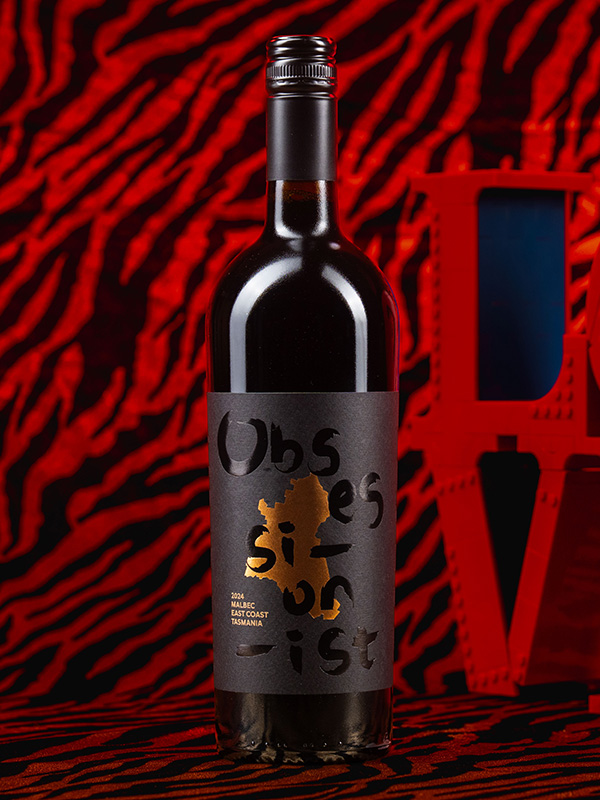
Obsessionist -
Region
Tasmania
-
RRP
$80
-
Vintage
2024
-
Variety/Varieties
Malbec
-
Alc./Vol.
14.2%
Deep, dark and seductive — blackberry, blue plum and blackcurrant, with cacao, violets and a streak of pure minerality running through. Plush and silky, but with real structure underneath. This one’s a knockout.
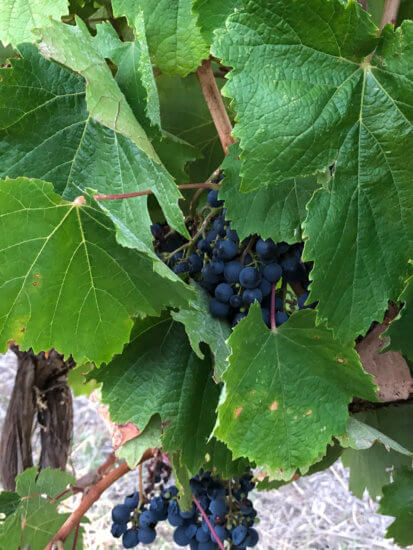
Marty Smith brought 20 years of viticulture experience to the East Coast of Tasmania, most of it built working other people’s vineyards — including time managing Bleasdale in Langhorne Creek, where malbec growing dates back to the 1850s, and where Marty first fell for the grape’s particular challenges and charms under the guidance of friend and mentor Paul Hotker. He and his wife Lisa settled in Cranbrook in 2015, planting nearly six hectares of pinot noir and chardonnay to sell on to other winemakers. It was Lisa who encouraged Marty to take a real risk: to plant the variety he was genuinely obsessed with, on the last half-hectare of their block, and make a wine of their own from it. He planted malbec in 2018. As Marty puts it, after two decades spent learning what makes sense elsewhere, sometimes logic doesn’t come into it — obsession does.
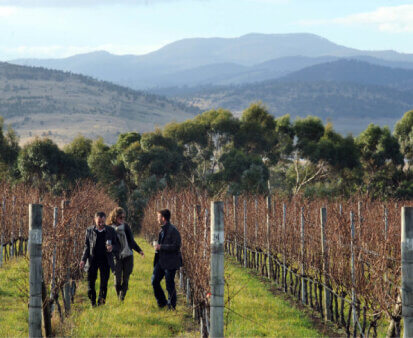
The Obsessionist vineyard sits in Cranbrook, in one of the warmest pockets of Australia’s coldest wine state, roughly 10 kilometres from the ocean and the Freycinet Peninsula. It’s planted within a natural amphitheatre of surrounding hills, on ironstone gravel over rocky clay — a site that lends the wine a distinct, graphite-like minerality you can taste right through the glass. The 2024 season ran warm and dry with good spring rainfall, while cool summer nights preserved natural acidity; a mild, dry coastal autumn then let the fruit ripen slowly, bringing flavour and tannin ripeness into balance right through to harvest.
In the winery, the approach is minimal but attentive — fruit is fermented in the picking bins themselves and pressed direct to barrel, matured for 10 months in French oak, 30 per cent of it new, before a further nine months resting in bottle ahead of release. It’s an unhurried process built entirely around letting the fruit speak for itself.
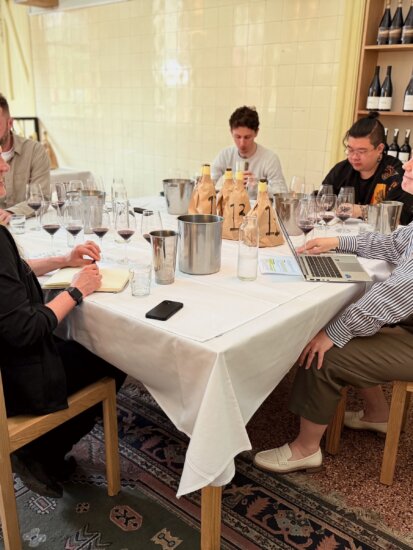
Malbec has a reputation in Australia as a warm-climate variety, largely thanks to its long history in places like Langhorne Creek — but its natural home in France’s Loire Valley, and its success at altitude in Argentina’s Mendoza, tell a different story about what it can do in cooler conditions. Marty recognised that potential early, and the results speak for themselves: this wine did exceptionally well at our own Malbec Deep Dive blind tasting, standing out for its plush, mouth-coating tannin and singular character. It’s also worth noting that Australian malbec actually predates Argentina’s by several decades, first planted here in 1837, though it’s spent most of that history as an overlooked blending grape. This wine is proof of what happens when someone finally takes it seriously on its own.
Tasting note
A hedonistic perfume of cassis and dark berries leaps from the glass — blueberry, blackberry, dark cherry — layered with nutmeg, cacao, violets, sage and slate. There’s real perfume too, with fresh cherry, magnolia and lavender lifting things further, and a cooling thread of menthol and star anise running alongside. On the palate, fresh, glossy dark fruit carries through with rose water and blood plum, met by a savoury edge of olive tapenade, dark chocolate and leather. Despite that layered complexity, the wine is youthful, with no real development yet showing — this is still very early days for a wine built to go the distance. Texture-wise, it’s plush and velvety, but never heavy; a firm spine of minerality and fine, grainy tannin keep it composed and give it real backbone, the classic iron-fist-in-a-velvet-glove trick pulled off with real finesse. It slides down the palate gracefully, but the finish takes its time to leave.
When to drink
This is the wine to crack after a genuinely good second date, if you’re feeling like sealing the deal — or to pack for an anniversary weekend away if you’re already spoken for. It’s a treat. So treat those near and dear with some venison backstrap and a silky Mexican mole. Or just curl up on the couch with this and the fanciest block of chocolate you can muster.
Themes of this wine
Malbec
Malbec’s roots trace back to France’s Cahors region, where it’s still known as cot and makes dense, tannic, age-worthy reds. A half-sibling of merlot, it found brief prominence in Bordeaux before phylloxera and harsh frosts all but wiped it out there, paving the way for its extraordinary second act in Argentina from the 1990s onward, where it became that country’s signature variety. Fewer people know that malbec actually arrived in Australia in 1837, predating its Argentine plantings by decades — though it’s spent most of that time as a quiet blending component rather than a headline act, mostly associated with Langhorne Creek.
Tasmania’s East Coast
Tasmania is Australia’s coolest wine state overall, but its East Coast — sheltered from the wetter, windier west by the island’s central highlands — runs noticeably drier and, in its best pockets, warmer than the statewide average. Cranbrook, close to the Freycinet Peninsula, benefits from maritime influence and enough shelter and sunshine hours to ripen later-ripening varieties that would struggle further south or west, making it an increasingly interesting site for producers willing to look beyond the region’s pinot noir and chardonnay stronghold.
Cool-climate malbec
Outside its warm-climate strongholds, malbec has a track record in genuinely cool sites — France’s Loire Valley among them — and even in warm Mendoza, much of its character comes from the cooling effect of high altitude rather than heat. That combination of a long, gentle ripening window and cool nights tends to preserve natural acidity and produce more perfumed, structured wines than the deeply extracted, jammy style malbec is sometimes known for — exactly the profile a considered cool-climate site like this one is built to deliver.
Explore Further
GET FIRST ACCESS TO THE NEXT WINE ICONS – DELIVERED
Find out moreEach month, get 3 bottles of our freshest discoveries. We taste thousands to bring you the best.
Join us and support emerging winemakers, sustainable vineyards, and the development of young professionals.
— Max Allen, Wine Writer
— Broadsheet
— The Australian