Quealy – Balnarring Vineyard, Mornington Peninsula Kathleen Quealy & Will Byles

Read more
  • Quealy – Balnarring Vineyard, Mornington Peninsula

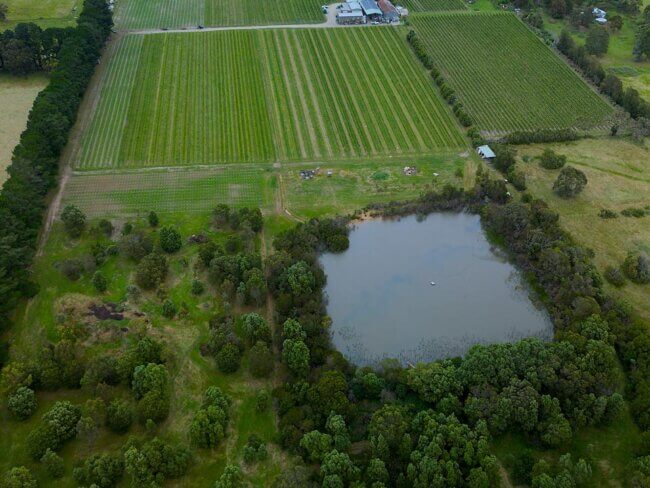
    Before selling to a major player, Kathleen Quealy and Kevin McCarthy made their mark as icons of the Mornington Peninsula in the 1990s, with their T’Gallant estate generating a flurry of interest around pinot grigio/gris that has not abated since. With a move to one of the Mornington Peninsula’s oldest vineyards in Balnarring, the pair have continued with their exploration of that grape, along with the Peninsula stalwarts of pinot noir and chardonnay, as well as delving into some key white grapes of north-eastern Italy. The site is responsible for some of the key Quealy bottlings, including their premium ‘Seventeen Rows’ pinot noir and skin-contact ‘Turbul’ friulano. Today, the vineyard is managed under organic certification by Will Byles, who took the reins from former manager Lucas Blanck after vintage 2023, to produce fruit for wines that range from classic to experimental and lo-fi.

  • Place of Changing Winds, Macedon Ranges

    Robert Walters is no stranger to great wine, being an importer and distributor of some of the most revered wines of the world. Walters’ passion for Burgundy runs particularly deep, with an exhaustive search for an ideal home site for pinot noir and chardonnay leading him to the Macedon ranges in 2012. There he planted a genuinely unique vineyard for this country, with some of the highest density plantings anywhere in the world. Requiring exhaustive manual work – coordinated by manager Remi Jacquemain – the site is testing the possibilities of perfection while paying respect to the land and its bushland surrounds.

  • Mewstone Vineyard, Tasmania

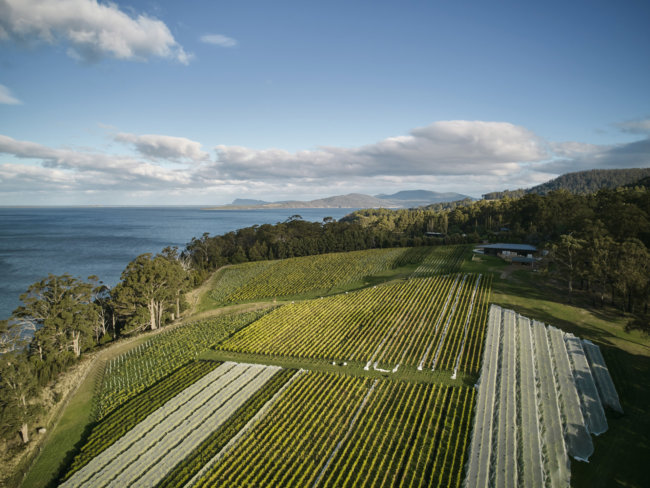
    Mewstone has appeared comet-like in its success. The wines – hailing from the banks of the D’Entrecasteaux Channel in Tasmania’s viticultural deep south – have been accorded a rapid series of accolades, but though that ascension may seem quick, it was laboriously built from the ground up. Although the vineyard is just over a decade old, an intensely thoughtful process has underpinned the approach of owners Jonathan and Matthew Hughes, with the site meticulously tended and progressively planted to optimise its potential. Today, Jonny Hughes manages the operation alongside viticulturist Daniel Way, who joined the team in 2025 as vineyard manager, farming pinot noir, chardonnay and riesling across the 5.3-hectare site.

  • Yangarra Estate, McLaren Vale

    Viticulturist Michael Lane and winemaker Peter Fraser have worked hand in glove at McLaren Vale’s Yangarra Estate for over 20 years, steering the wines to ever-greater heights through a program that puts vineyard front and centre. Fraser is one of this country’s most skilled makers – no argument – but the long-term quality goals the pair had for the estate were always built on reinvigorating their soil and returning a natural harmony to the site. Today, Lane meticulously manages 82 hectares of vines to A-grade biodynamic standards, working across a suite of Southern Rhîne varieties, with grenache taking the lead. Yangarra also supplies grapes to a who’s who of McLaren Vale’s finest makers.‹

  • Hayes Family – Stone Well Estate, Barossa Valley

    Brett Hayes bought his Stone Well Vineyard to form the basis of Hayes Family Wines, launching the label in 2014. The Stone Well Vineyard is a modest 4.5-hectare site populated mostly by vines planted in 1948 – now 77 years in the ground, with an average age of 75 years – with the farming ACO certified organic and the onsite winery equally certified. The Stone Well Vineyard is the sole source of the Hayes Family Wines Estate Range, with block-specific shiraz, grenache and mataro bottlings, a GSM blend, a red field blend and a white field blend across 12 individual blocks. Brett Hayes and vineyard manager Amanda Mader oversee the management of the site, with the shiraz previously sold to Grant Burge to make ‘Meshach’, their flagship wine, for over 30 years before Hayes redirected the fruit entirely to his own label.

  • Gemtree, McLaren Vale

    With the vineyard situated in McLaren Flat, the Gemtree mission is very much an ongoing quest to improve wine quality, but their ethos is inseparable from a desire to have a positive environmental impact both locally and globally. With an eye to the future, viticulturist Melissa Brown has planted varieties suited to an ever-warming Mediterranean climate – like nero d’avola and fiano – alongside the Vale classics of shiraz and grenache. The 125-hectare vineyard has been managed using biodynamic methods since 2007 – with it certified for almost a decade – to encourage a ‘living soil’ and build resilience in the vines, while an eco-reserve has been established to restore native flora and fauna, as well as to educate visitors.

  • Eden Hall, Eden Valley

    David and Mardi Hall bought their Eden Valley property in 1996, planting vines the following year. It was the site of an older vineyard, but the vines were uprooted in the 1970s. That old vineyard was made up of cabernet sauvignon, malbec and riesling, with the Halls planting both the former and latter again, along with shiraz, cabernet franc, merlot and viognier, with grĂŒner veltliner grafted somewhat more recently. All fruit goes to the Eden Hall wines. Dan Falkenberg tends to the viticulture on the 33-hectare site, where he focuses on increasing biodiversity and reducing water use through revegetation and practices like mulching and planting mid-row swards of native grasses. Eden Hall is also independent of external inputs of water and electricity, being off grid since 2019.

  • Adelina Vineyard, Clare Valley

    The Adelina vineyard, in the Clare Valley, is an old one. The first shiraz vines were planted in the early 1900s and were supplemented with grenache sometime in the ’40s. When Col McBryde and Jennie Gardner took over the management of the site in 2002, their work was cut out for them. With rampant wild olive trees and weeds aplenty, they set about regenerating the landscape, working with organic methods for many years before finally seeking and achieving certification in 2020. Today, those old vines are in fine health, while further plantings have increased the vineyard size a little to now occupy six hectares.

Adelina Vineyard, Clare Valley

The Next Wine Icons – Delivered

Each month, get 3 bottles of fresh discoveries.
We taste thousands to bring you the best.

Bookmark this job

Please sign in or create account as candidate to bookmark this job

Save this search

Please sign in or create account to save this search

create resume

Create Resume

Please sign in or create account as candidate to create a resume