The 6th Annual Vineyard of the Year Awards list of Australia’s top winegrowers has just landed.
“These awards are here to advance the regional identity of Australian wine and promote leading-edge sustainability and innovation in winegrowing, and there has never been a more important moment to celebrate a group like this,” says Rory Kent, founder of Young Gun of Wine and the Vineyard of the Year Awards.
“Australians are tired. Years of rising costs – groceries, rent, energy, fuel – have worn down household budgets and community confidence in ways that statistics struggle to capture. Just when interest rate relief seemed within reach, global fuel disruptions and renewed inflation pushed the Reserve Bank back the other way. The recovery that was supposed to arrive has been deferred, again. And yet, out in the vineyards, something inspiring is happening.”
In wine regions across the country – from the cool southern tip of Tasmania to the sun-baked Riverland, from the ancient volcanic soils of the Hunter Valley to the windswept ridgelines of the Alpine Valleys – a cohort of grape growers is demonstrating what resilience actually looks like in practice. Not as a buzzword. Not as a brand position. As a daily act: farming smarter, building healthier soils, finding new income streams, reducing costs by reducing dependence. Making better wine in the process.
The 6th Annual Young Gun of Wine Vineyard of the Year Awards celebrates 45 of the finest winegrowers in Australia – With over 6,000 grape growers across Australia, picking the best of the best is no easy task. With entries flowing in since August 2025, Young Gun of Wine and the panel of judges have spent months methodically narrowing down the field to the 45 vineyards that best showcase the Vineyard of the Year Awards’ values of sustainability, innovation, provenance, and quality.
“Australians are tired. Years of rising costs – groceries, rent, energy, fuel – have worn down household budgets and community confidence in ways that statistics struggle to capture. Just when interest rate relief seemed within reach, global fuel disruptions and renewed inflation pushed the Reserve Bank back the other way. The recovery that was supposed to arrive has been deferred, again. And yet, out in the vineyards, something inspiring is happening.”
To judge the Awards, Young Gun of Wine has enlisted a group of leading experts: wine writer and author, Max Allen, was joined by Dianne Davidson AM, Richard Leask, and Dr Colin McBryde. This process includes an industry-leading random site inspection program for rigour and accountability, which was conducted by James Hook and Matthew Wilson of DJ’s Growers Services.
This year, their story feels like more than just a viticulture story. It feels like an answer.
What strikes you, across the full breadth of this year’s 45 finalists, is that sustainability is not treated as a marketing position. It is a survival strategy – and increasingly, a competitive advantage. When you stop buying synthetic herbicides, your input costs fall. When you build soil biology, your vines resist drought without irrigation. When you regenerate vegetation and ditch pesticides for natural predators, the ecosystem starts to look after itself. When you generate more solar power than you consume, you feed it back to the grid. The finalists in these awards have understood something that is increasingly urgent: the three pillars of sustainability – environmental, economic and social – are not competing priorities. They reinforce each other.
Young Gun of Wine is proud to announce the 45 finalists of the 6th Annual Vineyard of the Year Awards.
Soil: The New Currency
Forget gold. The most valuable asset on a modern Australian vineyard is a bucket of healthy dirt. This year’s finalists are doing extraordinary things to build it. Carbon levels have nearly tripled at some sites. Compost teas are brewed on-site. Worm farms are tended like kitchen gardens. Grape marc, sheep manure and green mulch go back to the rows they came from. Ducks patrol for snails. Chickens contribute in their own way. Cover crops with as many as 15 species are sown between rows – not just to suppress weeds but to feed the soil biology, fix nitrogen and attract beneficial insects. At one vineyard, university students bury cotton undies annually to measure microbial activity; the cotton disappears within weeks. These growers are not just farming grapes. They are farming ecosystems. And the proof is in the glass.
Living with Fire
Several of this year’s finalists carry the scars of the 2019–20 bushfire season — and have turned that adversity into a fundamental reimagining of how they farm. One vineyard lost half its vines and in rebuilding invented its own cultivator. Another spent five years methodically restoring block by block. A third had fire return just this past season — the latest chapter in a longer story of resurrection. Fire forces reinvention. These growers reinvented well.
The Age of the Vine
Some of the most remarkable material in these awards is also the oldest. Among this year’s finalists is a vineyard with vines planted over 100 years ago — still producing, and in 2026 delivering their 70th consecutive vintage. That is not a typo. Seventy harvests, without interruption. Elsewhere, century-old semillon on its own roots, never irrigated. Bush vines planted in 1948, still going. And at the other end of the spectrum: a vineyard whose owner spent a decade building soil before planting a single vine — and whose debut vintage proved every year of waiting worthwhile. Ancient or adolescent, this year’s finalists share one conviction: the vine is a long-term investment, not a short-term crop.
Getting Creative to Stay Alive
Input costs are rising. Bulk wine demand – which is the major share of Australia’s exports – is soft. Finding buyers for grapes has rarely been harder. What sets this year’s finalists apart is the creativity they’ve brought to economic sustainability alongside the environmental kind. One vineyard turned a failed rootstock trial into a verjus now pouring at some of Australia’s best restaurants. Another converted old-vine fruit fetching $300 a tonne into a hand-harvested parcel commanding $2,500 — not through investment, but through better farming and the confidence to tell the story. Others have walked away from bulk contracts to supply the country’s most exciting independent makers at premiums the commodity market never offered. The lesson repeating across these profiles: quality costs less than volume, if you farm right.
Innovation in the Vineyard
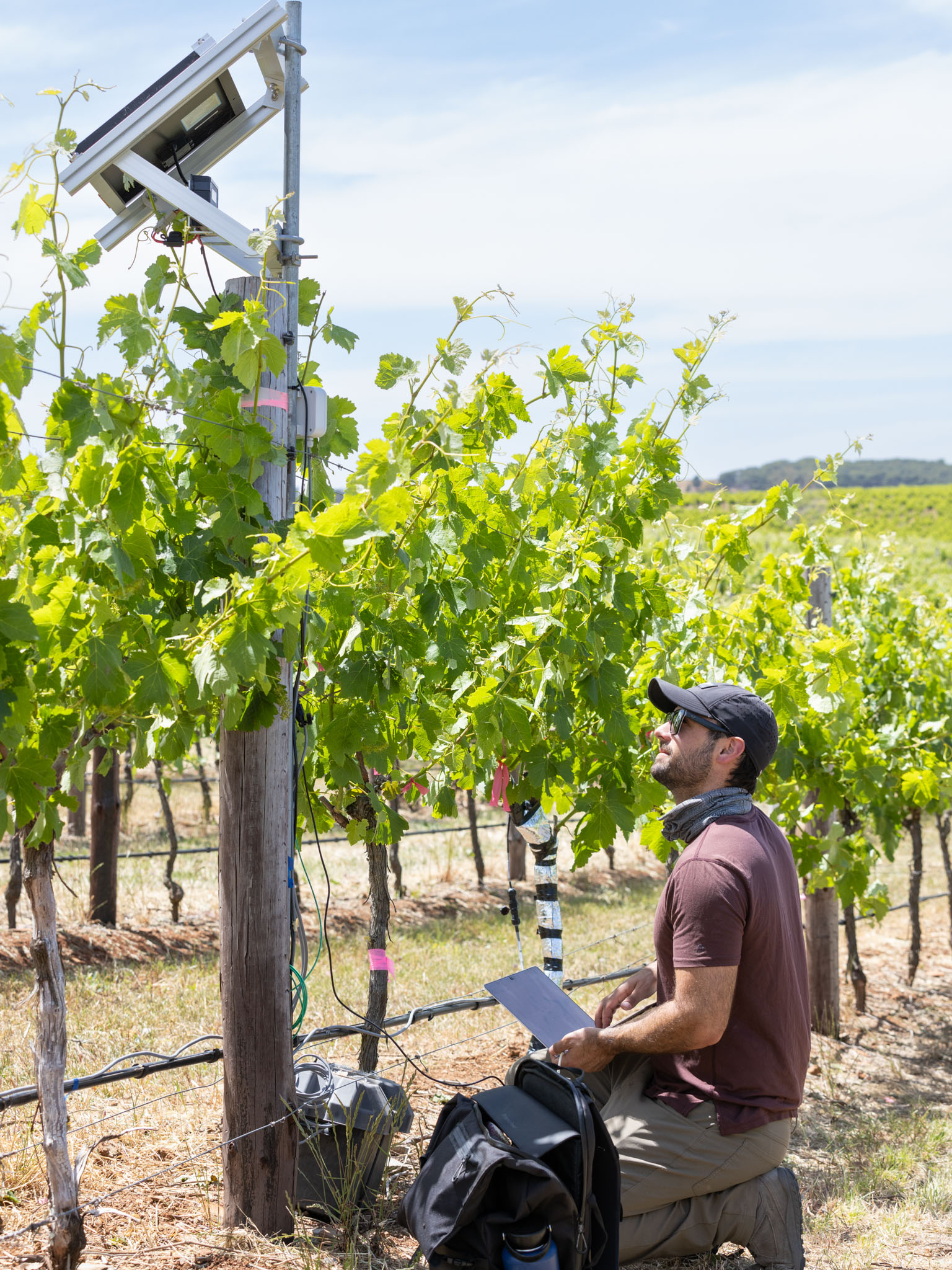
Airborne fungal spores monitored in real time. Fruit weight tracked hourly while bunches are still on the vine. Autonomous spray units. Solar generation exceeding consumption, with surplus fed back to the grid. Smart drones trialled to replace bird netting. This year’s cohort is farming with tools that didn’t exist a decade ago — and deploying them not for novelty, but because they reduce inputs, cut emissions and make better wine. Welcome to the era of muddy boots and cloud computing.
“These awards are here to advance the regional identity of Australian wine and promote leading-edge sustainability and innovation in winegrowing, and there has never been a more important moment to celebrate a group like this.”
The 45 finalists span every major wine region in Australia: South Australia, Victoria, New South Wales, Western Australia and Tasmania. They range from multi-generational family estates to first-vintage projects planted on weekends by people who left other careers behind. What they share is a conviction that wine begins in the vineyard, that the vineyard is part of an ecosystem, and that the ecosystem – environmental, economic, social – needs to be in balance for any of it to endure.
These awards recognise the work that makes Australian wine worth drinking. More than that, in the current climate, they recognise the work that makes Australian wine worth fighting for.
You can read in-depth profiles and on each of the top growers from this page.
The top growers are coming to trade events Sydney (May 26), Brisbane (June 2) and Melbourne (June 16), where industry professionals – particularly sommeliers and retailers, those on the front lines with consumers – will be able to learn more about these leading edge sustainability practices, and experience the connection between the place and manner in which the grapes are grown and the resultant characters in the glass.
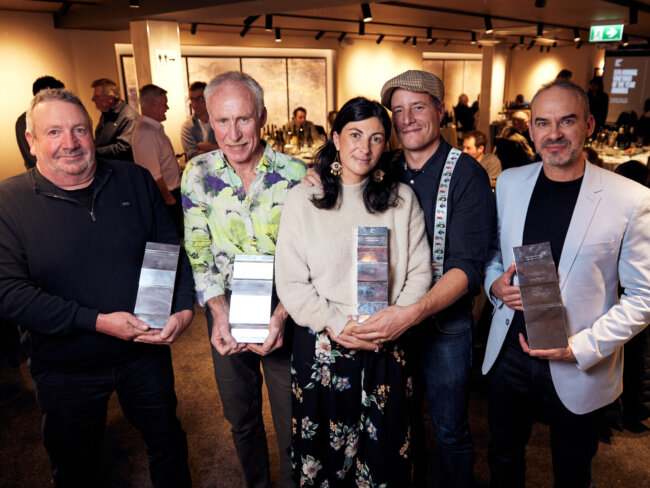
Beside celebrating the achievements these top vineyards, there are four trophies to be awarded, with the recipients announced June 2026.
More information about the 6th Annual Vineyard of the Year Awards can be seen via this link.
The history of Vineyard of the Year Awards finalists (established 2020) can be seen via this link.
GET FIRST ACCESS TO THE NEXT WINE ICONS – DELIVERED
South Australia has contributed more Young Gun winners than all the other states combined, and by a margin. There’s no question that South Australia has quality regions aplenty, from the cool of Basket Range in the Adelaide Hills to the more traditional stomping grounds of McLaren Vale and the Barossa, but what exactly is it that makes South Australia such a hotspot for young talent?
The Vineyard of the Year Awards in 2019 in order to place vineyards and griowers across the nation at the heart of the Australian wine story – and at the heart of the Australian wine community. We wanted to reconnect the whole idea of wine to the place it comes from and the manner in which the grapes are grown. Five years on, and the mission of the Vineyard of the Year Awards remains the same. Read on to discover the New Vineyard of the Year; Old Vineyard of the Year; Innovative Vineyard of the Year, dubbed ‘The Groundbreaker’; and Vineyard of the Year.
What is natural wine? Unpack what natural wine is meant to be, and how the firm philosophical foundations of the movement have been muddied by what has become an explosive and often confusing trend. Clear crown-sealed bottle, colourful hand-applied label, orange-hued hazy wine… natural? Not necessarily…
Subscribe to our newsletter
Young Gun of Wine is your shortcut to cutting edge wines, the places to go, and the people behind it all.
Subscribe to be amongst the first to know of our latest discoveries in wine.
We'll bring you the inside running from the growers, the makers, the wholesalers, the retailers and the sommeliers, too.