The Macedon Ranges region is both an outlier and a jewel amongst the ‘dress circle’ of wine regions that surrounds Melbourne and Port Phillip Bay. Its higher elevation keeps it exceptionally cool – it is in fact mainland Australia’s coldest wine region – and that marginal climate makes wine-growing here especially challenging. Yields remain low, with each hectare under vine in the Macedon Ranges generating less than 40% of the fruit that a hectare in the Yarra Valley does. As such, the region’s reputation rests on quality rather than accessibility, considered craftsmanship rather than wild experimentation, and independent estates rather than corporate behemoths. This combination of cool climate, low yields, and traditionalism lends itself to chardonnay in particular, which has rapidly become the region’s signature white wine variety – just the kind of situation that calls for a Deep Dive …
We gathered every example of chardonnay from the Macedon Ranges that we could find and set our expert panel the task of finding the wines that compelled the most. All wines were tasted blind, and each panellist named their top six wines. Below are the wines that made the panellists’ top-six selections from the tasting.
Our panel: Ben Ranken, vigneron, Wilimee; Gemma Neil, wine buyer and head sommelier, Geralds Bar; Troy Walsh, vigneron, Attwoods; Sarah Robinson, sommelier, Cumulus Inc.; Alister Timms, chief winemaker, Shadowfax; Richard Collom, vigneron, Pirio.
The Top Wines
This isn’t an ordered countdown. There’s no ranking – just the top six wines each panellist found most compelling from the blind tasting, in all their different ways. Everyone’s palate is different, and that’s the point.
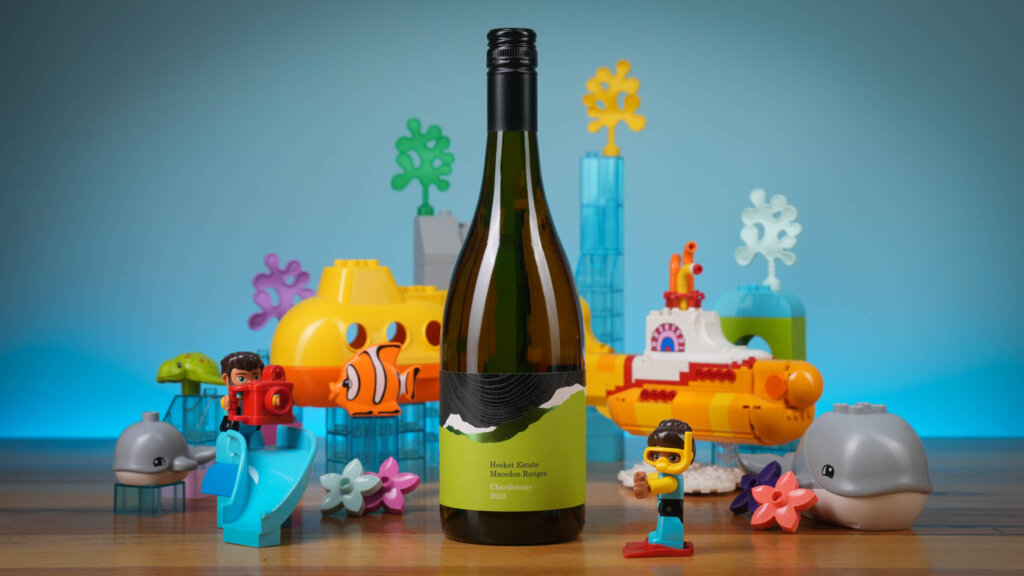
2025 Hesket Estate Chardonnay, $65 RRP
Robinson, Ranken, Neil, and Timms all selected this among their standout six picks from the tasting. Robinson was struck by the wine’s unconventional profile: “What a truly interesting wine,” she began. “The first thought that comes to mind is Rooibos tea – earthy, woody, with a slight wild mushroom note. Not what I usually think of when talking about chardonnay, but how refreshing to see a flavour profile that goes against the grain.” She continued, “As it develops in the glass, more dried chamomile and hay present themselves, as well as notes of dried apricot and figs. However, the palate is invigorating, with energetic acidity – the fruit seems to come back to life, and the finish lasts forever.” Ranken discovered lifted florality and stone fruit precision: “Nice lifted aromatics of spice and flower petals – think acacia blossom, Nashi pear, feijoa and lemongrass,” he said. “On the palate, this veers into the white stone fruit spectrum, driven by salivating acidity. Delicate phenolics add a hint of grip and give nice length.” Neil found distinctive mineral tension. “Smoky and quite earthy on the nose,” she noted, “almost sandy. A touch of honey-buttered popcorn with a lick of salt. The palate is super mineral and driven – lots of wet stone and talc – with flavours of just-ripe yellow grapefruit rather than the usual lemon and lime. Great persistence on the palate, with an energy of lime and salt on the finish – this feels like a delicious Margarita, but with this lovely extra depth that only great chardonnay can bring.” Timms celebrated the wine’s understated elegance. “The nose is floral,” he observed, “orange blossom and chamomile, with a hint of crushed rock. Notes of rock salt and candied lemons frame the mid-palate and drive the focus – a wine of lovely minerality and zestiness with a long finish. A great wine – and one that isn’t a show pony!”
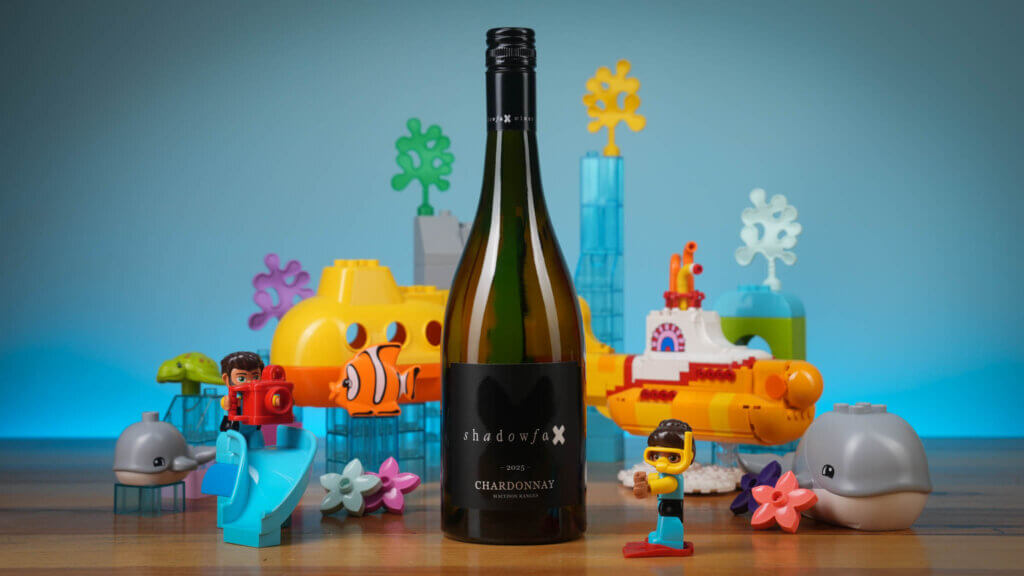
2025 Shadowfax Chardonnay, $42 RRP
This wine made the cut for Ranken’s, Walsh’s, and Collom’s top sixes from the tasting. Ranken found delicious fruit and balanced complexity: “Pithy yellow and white stone fruit characters on the nose and palate,” he said, “with spice and savoury nuance adding complexity, balanced by bright delicious fruit and lovely line of acidity. Love the length and power in the wine – delicious!” Walsh appreciated the wine’s poise and elegance: “A lovely, balanced wine, showing admirable restraint,” he observed, “more of an orange citrus tone to its flavours – think apple blossom, Nashi pear and lemon zest. Bright and fresh palate, with sorbet-like cleansing acidity and lovely length.” Collom discovered textural grace wrapped in bright acidity: “Lemon verbena, coriander seeds and flecks of lime on the nose,” he noted, “the palate is a velvet glove of texture that coats the inside of your mouth, wrapped around the iron fist of bright acidity. This is an elegant expression of chardonnay that feels as if you are drinking at high altitude – flying high!”
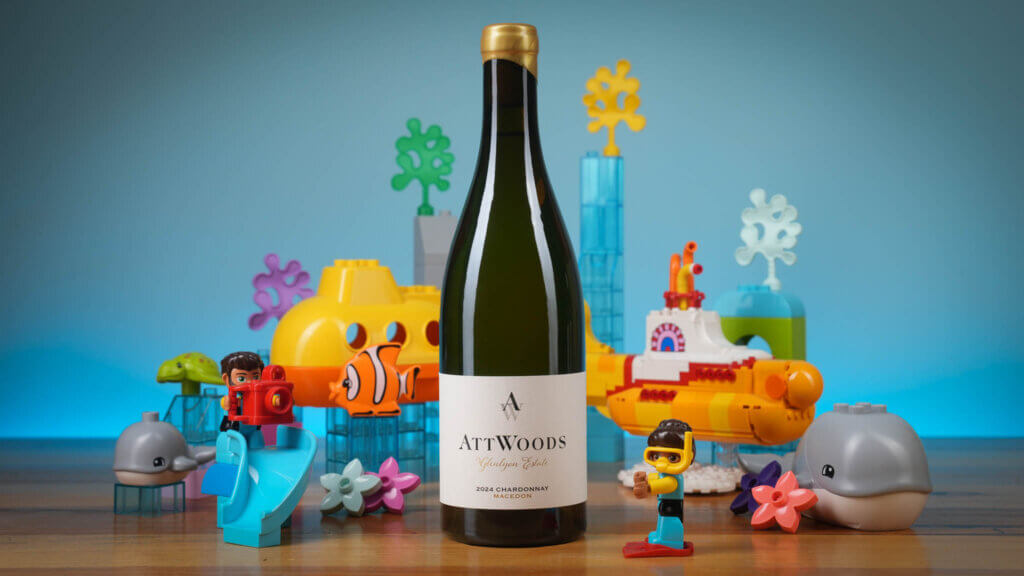
Collom, Timms, and Ranken all featured this among their top-six selections. “An enticing nose of lemon curd and a sparkle of sherbet draws you in,” Collom began, “alongside whispers of smart, chiselled oak spice. An elegant interplay of creaminess and white peach on the palate, with lemon myrtle-like grip. The finish is long and salivating, drawing you back in for another big slurp.” Timms discovered vibrant complexity and precision structure: “A vibrant nose of grapefruit pith,” he said, “complex and inviting, begging you to drink it. Acid-driven on the palate, with flavour that’s grown on the vine. Beautifully structured wine – everything in the right place.” Ranken noted layered fruit and delicate phenolics. “Bright on the nose,” he observed, “with ripe stone fruit moving into yellow fruits – think Yellow Box honey, Golden Delicious apple and Williams pear. Nicely generous and layered fruit spectrum on the palate, with good acidity and length, and delicate phenolics and grip.”
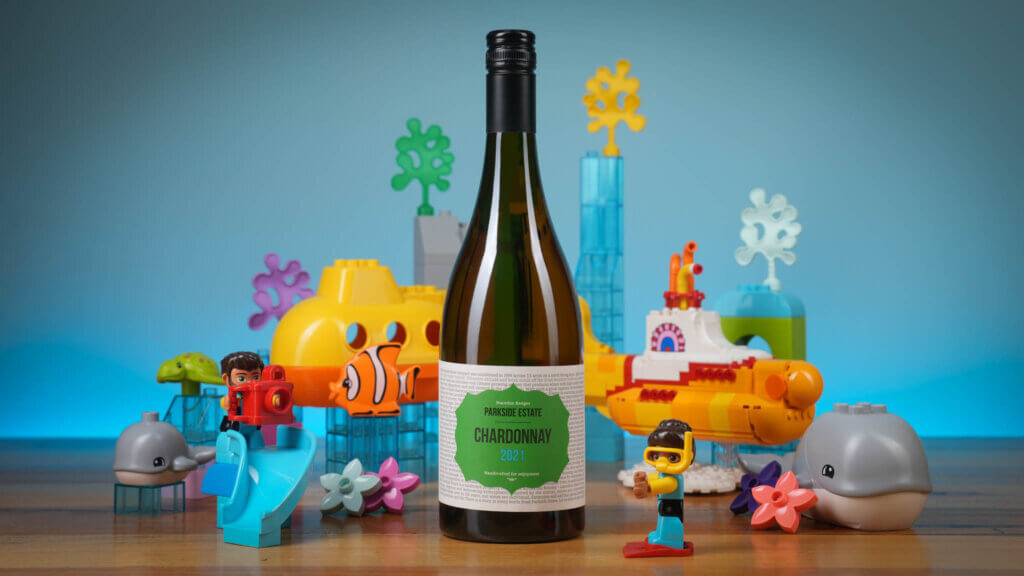
2021 Parkside Estate Chardonnay, $35 RRP
Walsh, Robinson, and Neil all claimed this among their top six picks from the blind tasting. “Lively and zesty,” Walsh began, “a nose of peach leaf, Gala apple and firm-fleshed white nectarine gives over to lovely citrus notes of homemade lemon cordial. Oak sits in the mid-palate beautifully. Long driving length, extended by a touch of saltiness and laden with hints of apple blossom florals.” Robinson discovered a wine that reignited her passion for the topic: “A wine that makes me fall in love with wine all over again,” she said. “Like falling into a vat of peach purée, this delicious drop envelops you in notes of ripe stone fruit, fresh mango and sweet baking spices. The sandalwood and roasted almonds weave seductively through the fruit, adding layers of complexity that make you want to go back for more. The palate is dry, but the ripeness of fruit here gives an illusion of sweetness, underlined with Cara Cara orange acidity.” Neil approached the wine with practical appreciation: “A reductive edge of struck flint on the nose, followed by pineapple – both flesh and leaf,” she noted. “That pineapple fruit element reappears on the palate, fleshy and ripe, driven by lots of zesty acidity, with really strong flavour intensity. Good length too, extended by a little touch of that salty character that keeps appearing in Macedon’s chardonnays. A great chardy – super smashable.”
2025 Paramoor Single-Vineyard Chardonnay, $55 RRP
Walsh and Timms both brought this into their standout six selections from the blind tasting. Walsh found beautifully balanced structure and acidity: “A nose of fresh lemon and lime, accented by vanilla, acacia blossom, Williams pear and a hint of Makrut lime leaf,” he said. “A powerful, broad sweep of acidity slowly pushes intense flavours down the palate to a mouth-watering finish.” Timms discovered muscular structure: “Complex in a quiet style,” he began, “with hints of nectarine and peach fuzz, some lemon notes too. Deft touch of oak. Some heat on the palate also.” He noted the wine’s layered power and food versatility. “Very long, yet without tense or searing acid drive – this gets most of its force from flavour,” he continued. “Would pair beautifully with richer foods such as scallops that can match its dense, muscular style.”
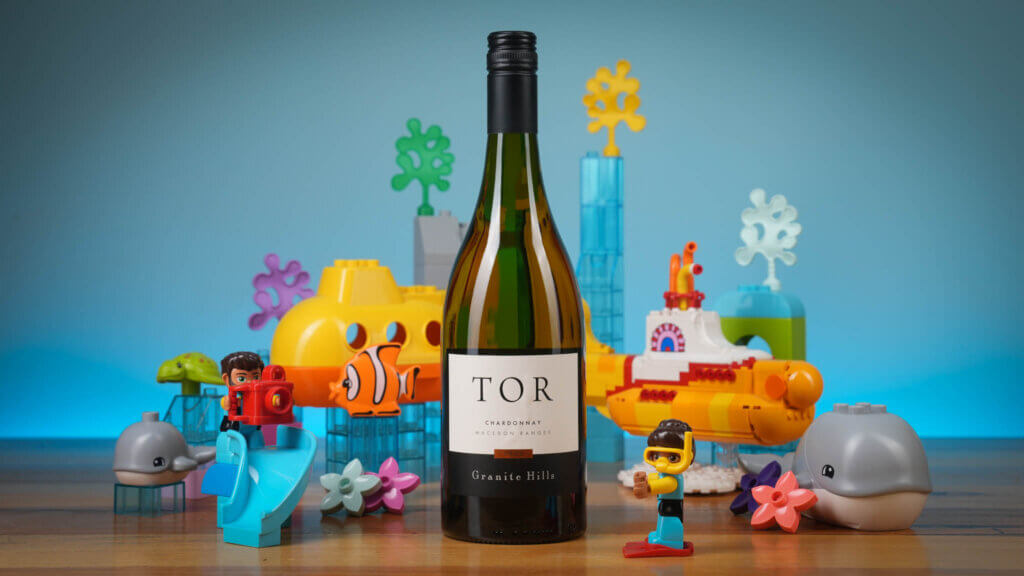
2022 Granite Hills ‘Tor’ Chardonnay, $60 RRP
Neil and Collom both earned this a place in their top six from the blind tasting. “This has a rich, round nose that speaks of age to me,” Neil began, “gorgeous sweet fruit – ripe lemon, pineapple and yellow nectarine. The palate is rich and broad, with a finish reminiscent of lemon pith, super zingy.” She discovered textural complexity beneath the brightness. “This has a real cheesecloth element to it,” she noted, “a leesy softness and creaminess to the texture that accentuates the zesty, zingy sweet fruit. This is tasty!” Collom celebrated the wine’s power and textural intrigue. “A wine of amazing strength and power,” he observed, “think yellow peaches at their best, with laser-like acidity reminiscent of fresh passionfruit. On the palate, that fruit power and brightness is joyfully cuddled and embraced by a desiccated coconut note – think Piña Colada in a chardonnay glass.”
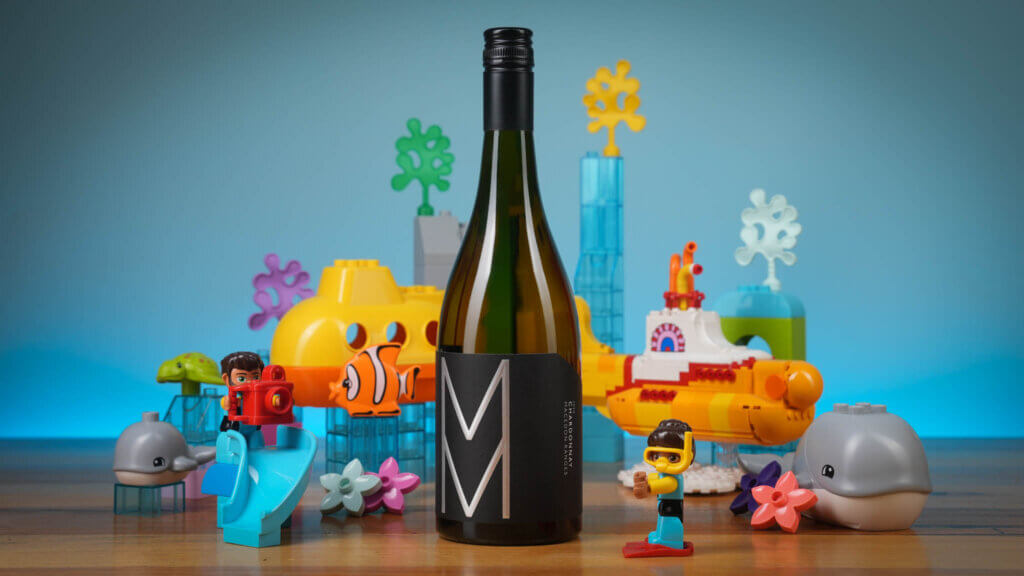
2024 Mount Monument Chardonnay, $60 RRP
Timms and Robinson both selected this among their finest six from the blind tasting. Timms discovered cool mineral precision and elegant restraint. “Cool notes of flint and gunsmoke,” he began, “tightly wound like a twisted Dunlop Volley shoe. Great persistence. Fine-boned and with medium weight – a great drink. It’s shy, yet beautiful – one to have plenty of bottles stashed away.” Robinson found layered mineral fruit and textural sophistication. “Mineral topicality: fresh mango, green pineapple, juicy ripe peaches,” she said. “The flavours follow through on the palate, but don’t come across as overripe. A saline edge, refreshing crunchy acidity. There’s a slight herbaceous whiff, a small bite of mint and rocket, that cuts through the richness.” She continued, “The wine begs for a ricotta, prosciutto and melon salad – quintessential Macedon chardonnay with a perfect balance of ripe fruit and ethereal acidity.”
2024 Shadowfax ‘Midhill’ Chardonnay, $70 RRP
Ranken and Neil both landed this in their top six selections from the blind tasting. Ranken was captivated by the wine’s aromatic precision: “Love the aromatics!” he said. “Leads with a matchstick flint note that walks the fine line between reduction and fruit – this wine does it with ease. Bright white stone fruits on the nose – think nectarines – balanced with citrus notes of lime zest and lemon-lime sorbet. There’s a phenolic grip to finish, with an extended tail of crisp, mouthwatering acidity that fans out and lingers – delicious!” Neil discovered dramatic transformation and layered complexity: “This opens with a big whack of reduction,” she observed, “all gunflint and struck match smokiness. With time and air, notes of tangy fresh pineapple, lime zest, Williams pear and a touch of vanilla emerge. In contrast to the heft of the nose, the palate feels very flinty and high-toned – a surprise switch-up.” She continued, “The long finish is accented by floral tones of mandarin blossom and wax flower. This feels like a real statement wine – serious gear!”
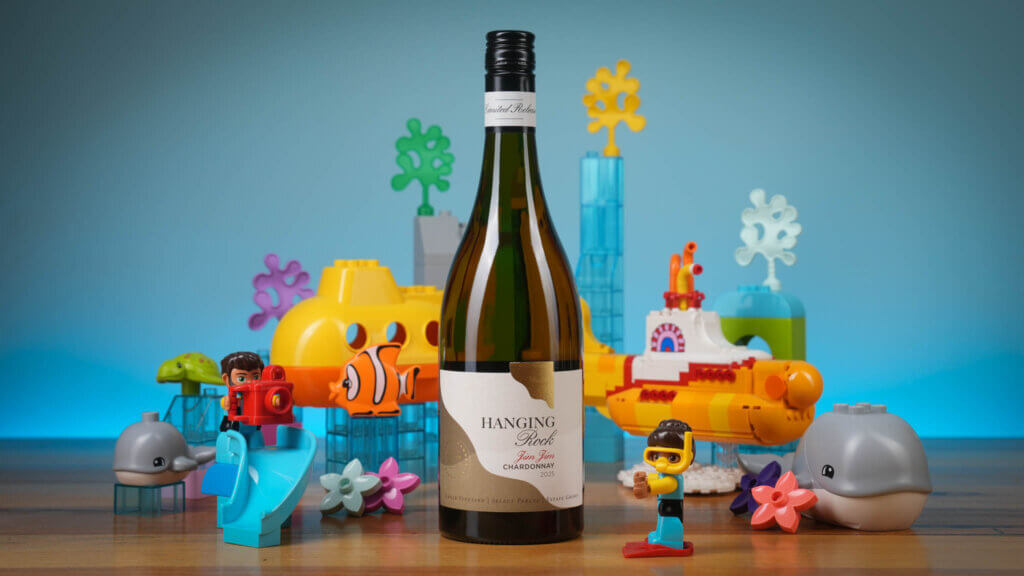
2025 Hanging Rock Estate ‘Jim Jim’ Chardonnay, $50 RRP
Walsh and Collom both championed this in their top six picks from the blind tasting. “Lovely nose of lemon zest,” Walsh began, “with a hint of reduction adding flinty complexity. With a little time in the glass, layers of white nectarine, nasturtium blossom, green apple candy and fine-cut lime marmalade emerge. The palate follows the nose – it’s bright, fresh and high-toned, with good length. The tiniest little hint of hazelnut skin emerges on the finish.” He appreciated the wine’s composure and cellaring potential. “This feels well-composed – it’s very approachable now, but wound tightly enough that it will also reward some time in the cellar.” Collom discovered an elegant, mineral-driven wine: “An ethereal expression,” he observed, “delicate acacia florals on the nose resonate with a mineral drive, followed by lemon sherbet and a beautiful integration of elegant spices. The palate is equally ethereal and bright, but there’s a little plushness here too as it builds towards the long finish – think of a tangy green apple crumble garnished with a dusting of cinnamon.”
2025 Wilimee ‘Cambrian’ Chardonnay, $65 RRP
Neil and Timms both made this part of their top six from the blind tasting. Neil discovered layered aromatic complexity and mineral balance. “Super-interesting nose,” she began, “buttered popcorn at first, followed by some salt, then a hint of lemon blossom. The aromas are really citrussy, with some savoury elements and lots of spice from oak. This has lots of lime and lime leaf on the palate, with the great acidity that seems to be the region’s hallmark.” She noted the wine’s structure and ageing potential. “That acidity and fruit is balanced by a mineral wet stone note,” she observed, “not too salty, though. Very persistent, with a nice broad body – this is clearly a high-quality chardonnay that will age beautifully.” Timms celebrated the wine’s powerful generosity and structural tension. “On the nose, lots of woodsy, clove-like spice, lots of crushed rock, hints of reduction and layers of fresh lemon and lime,” he said. “Powerful, long and rich on the palate, with generous fruit weight kept moving by bright acidity. Don’t fear the flavour!”
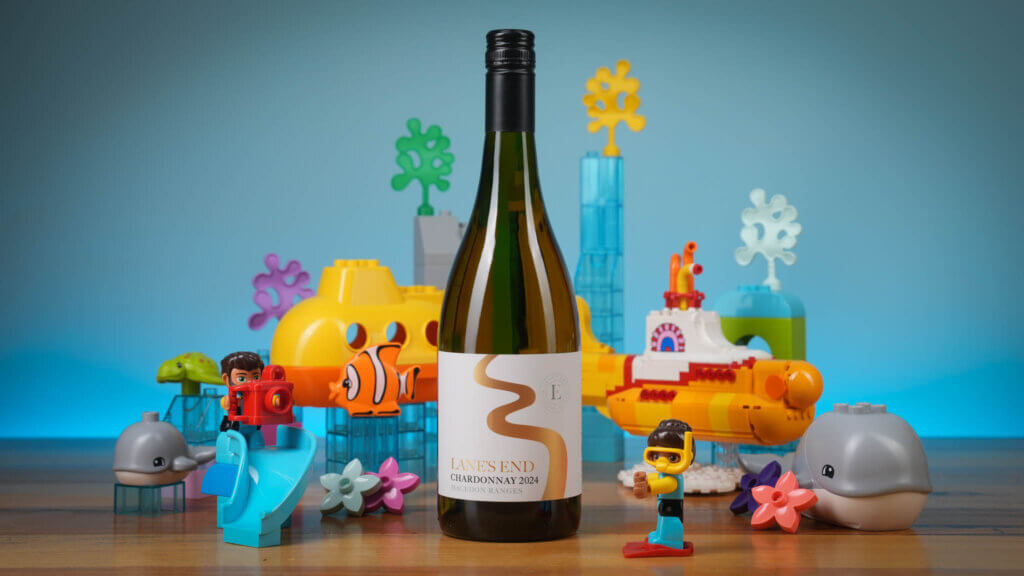
2024 Lane’s End Chardonnay, $55 RRP
Both Robinson and Ranken championed this among their standout six selections from the blind tasting. Robinson marvelled at the wine’s complex appeal and elegant evolution: “I keep picking the glass back up to try and figure out why I love this wine so much,” she said. “Is it the floral notes of honeysuckle and jasmine? The white stone fruit? Or the spicy edge provided from some clever oak usage? Definitely an amalgamation of all of the above. This drop evolves elegantly on the palate and in the glass, supporting the warm fruit with pithy acidity and a crack of white pepper.” She noted its pairing potential: “Perfect with some grilled king prawns with a lashing of herb butter.” Ranken appreciated the wine’s restrained initial presentation and expanding complexity: “Restrained to begin with,” he began, “but with air the wine begins to show lifted aromatics of white flowers and spice. Fruit comes to the fore on the palate, with citrus notes of lime leading into white nectarine. A nicely delicate wine – the kind that’s easily missed in a blind tasting, as the delicacy builds with lovely length and intensity. Phenolic grip on the finish is balanced by lovely zippy acidity and a touch of saline minerality that gives length. Delicious.”
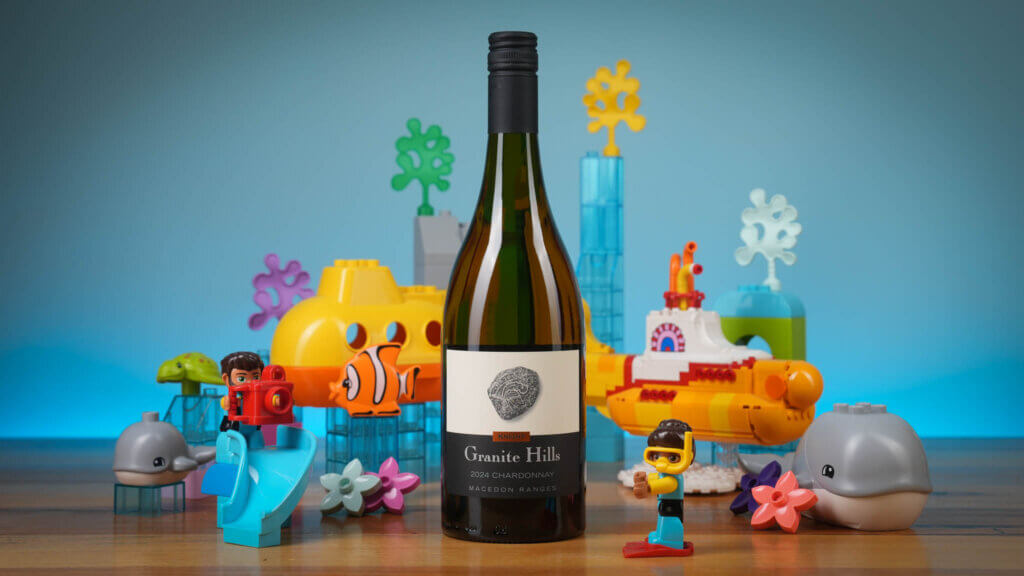
2024 Granite Hills Chardonnay, $40 RRP
Both Collom and Walsh counted this among their standout six from the blind tasting. Collom celebrated the wine’s fruit-forward character: “A riper style of chardonnay, showing beautiful peach notes with a lick of lemon and river stones,” he said. “The palate is harmonious thanks to its restrained oak use, with the fruit sitting well and truly in the forefront. This is a slurper – a wine that remains enjoyable until the last drop, and begs you to pour another glass.” Walsh noted the wine’s richness and aromatic complexity: “Another wine that shows more roundness, with hints of reduction and oak char leading the nose,” he began. “Fresh notes of jasmine, peach, lime zest and lemon leaf emerge with air. The palate is rich and supple, with huge flavour, and a sting in the tail from its zippy acidity. Finishes long, round, and creamy.”
2023 Pirio Chardonnay, $60 RRP
Both Neil and Robinson selected this among their standout six picks from the blind tasting. Neil discovered complexity beneath a closed initial impression: “A smoky nose that with time and air reveals delicate notes of wax flower and lemon leaf,” she noted. “The palate is full of ripe citrus notes, lovely and sweet. Very linear in its structure, with good weight on the palate – very moreish. Great persistence and intensity, with a delicious salty element framing the finish. Has a slightly confected element on the end, like the powder from boiled lollies.” Robinson found beauty in the wine’s contrasting dualities: “A flinty wine that makes me ponder,” she said. “The fruit seems a tad shy, but give it a moment in the glass and it blooms – orange peel, white almond, lime oil. It feels both decadent and fresh – the oak frames it gently, but the acidity takes the show. Mouth-puckering and saline, that acidity alone makes you want to go back for more. I love how the wine shows dualities: freshness and warm fruit, a lean nose switching to a giving palate. A beautiful example of Macedon chardonnay!”
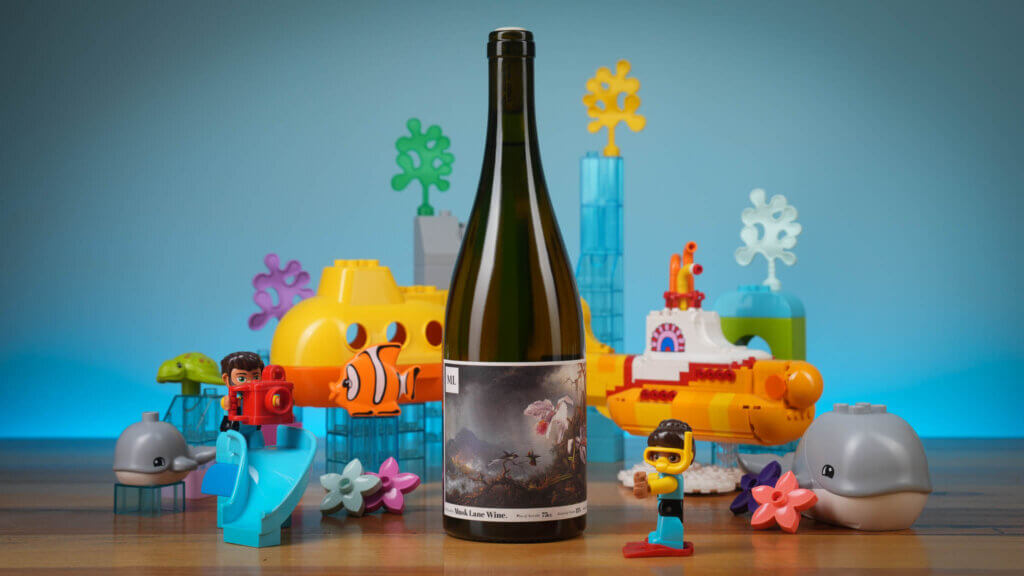
2022 Musk Lane Wines ‘Rush Bros. Vineyard’ Chardonnay, $60 RRP
Robinson claimed this among her standout six selections from the blind tasting, discovering warmth and elegance in a wine that challenged her expectations of the region. “Smells like baby Montrachet,” she said, noting “buttered toast, churned butter, ripe nectarines.” She connected the wine to her personal vision of great chardonnay: “As someone who describes their favourite chardonnay as ‘sunshine in a glass’ this chardonnay captures that idea perfectly – the fruit is warm without being overripe, while notes of toasted cedar add spice and personality to this tasty drop.” She pushed back against regional assumptions about Macedon wines: “Goes to show that just because Macedon is the coolest mainland wine region in Australia that doesn’t mean the wine has to be lean. Embrace the sunshine!”
2022 Mount Monument Chardonnay, $60 RRP
Collom selected this as one of his top-six picks from the blind tasting, captivated by its textural interplay and nostalgic appeal: “Biscuit and almond meal present themselves on the nose, saddled with lemon zest and mace,” he noted. “A vibrant medley of white peach and crunchy Granny Smith apple unfurls on the palate. The finish is long, and reminiscent of shortbread and lemonade – a nostalgic childhood memory that makes this wine irresistible.”
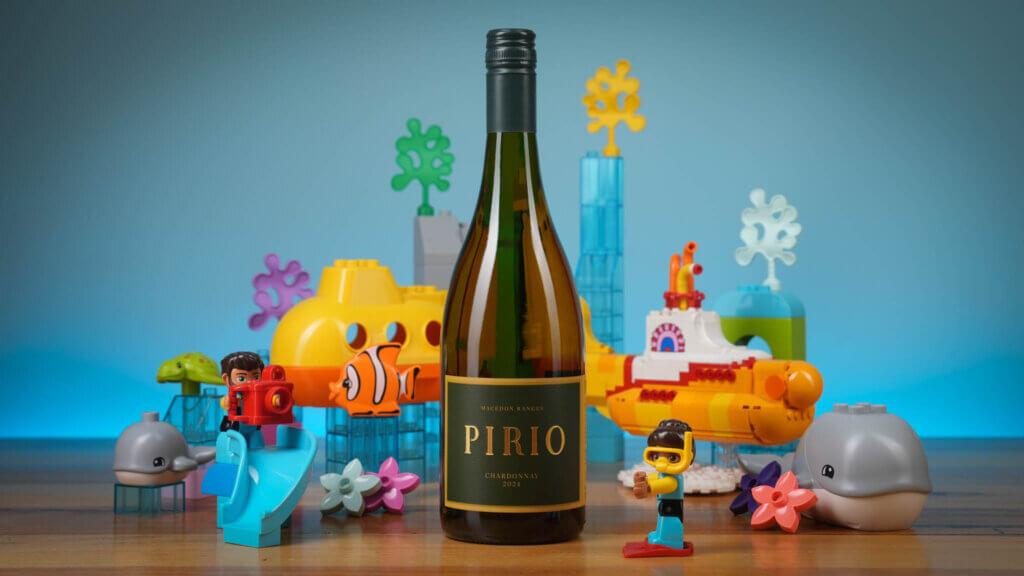
2024 Pirio Chardonnay, $60 RRP
Timms brought this into his top six selections from the blind tasting, entranced by its bright aromatic complexity and elegant power: “High-toned on the nose – crabapple, chamomile, vanilla sponge, and lemon syrup, with a slight bruised-apple character reminiscent of Manzanilla sherry,” he said. “Saline, with crisp acidity and some lovely crushed rock notes on the mid-palate. Lots of power, yet carried by a fine backbone of great acidity. A neat wine, in a tight package – a coiled spring ready to unwind.”
Ranken selected this among his standout six picks from the blind tasting, drawn to its aromatic freshness and compelling persistence: “White flowers, spice, and lime zest on the nose,” he noted. “Nice fruit concentration on the palate, with great drive and length thanks to its crunchy acidity. A moreish wine – I kept coming back to it. It lingers both on the palate and the mind – a thought-provoking drink!”
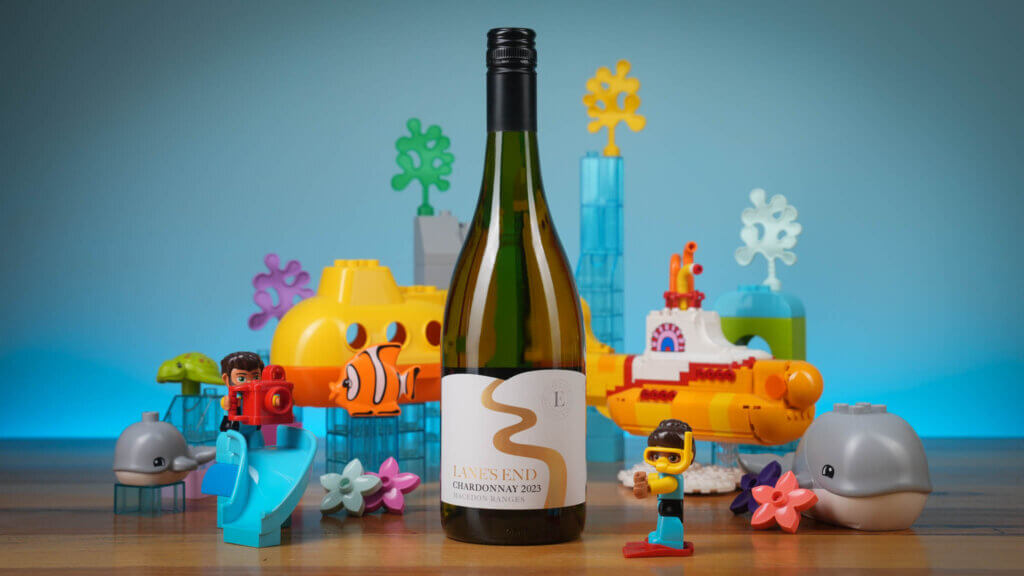
2023 Lane’s End Chardonnay, $45 RRP
This earned a place in Walsh’s top six from the blind tasting, as he was captivated by its developed complexity and evolving aromatic character: “A more developed style, with a slightly wild edge that would appeal to natural wine drinkers,” he observed. “The initial floral notes on the nose – lemon blossom, Pink Lady apple, Rosella pear – give way to savoury tones as the wine opens in the glass: parmesan rind, freshly baked sourdough, preserved lemon. Tangy on the palate, with a smack of forceful, rippling acidity – reminiscent of Jura savagnin – slowly and forcefully driving flavours of red apple and mandarin pith down the palate. An appealing tone of Rose’s lime cordial emerges on the long finish.” He concluded with a suggestion: “Serve this one with roast chicken and mushrooms.”
The backstory
The Macedon Ranges region is both an outlier and a jewel amongst the ‘dress circle’ of wine regions that surrounds Melbourne and Port Phillip Bay. Its higher elevation keeps it exceptionally cool – it is in fact mainland Australia’s coldest wine region – and that marginal climate makes wine-growing here especially challenging. Yields remain low, with each hectare under vine in the Macedon Ranges generating less than 40% of the fruit that a hectare in the Yarra Valley does. As such, the region’s reputation rests on quality rather than accessibility, considered craftsmanship rather than wild experimentation, and independent estates rather than corporate behemoths. This combination of cool climate, low yields, and traditionalism lends itself to chardonnay in particular, which has rapidly become the region’s signature white wine variety.
Chardonnay is famously adaptable in the winery – indeed, winemakers love the variety because it happily yields to their will, allowing for a vast range of stylistic expressions while still carrying a sense of the place in which it is grown – and that easygoing nature also extends to the vineyard. Although the variety’s birthplace is in the relatively chilly climes of France’s Burgundy region, it thrives in the even cooler Champagne region, while on the other end of the spectrum it can happily produce fruit in even exceptionally warm regions such as Australia’s Riverland and California’s Central Valley. That’s not to say, though, that all chardonnay is created equally – grapes grown in warmer regions tend to create wines with higher alcohol levels and less natural acidity, whereas chardonnays from cooler climate regions tend to have lower alcohol levels and higher acidity.
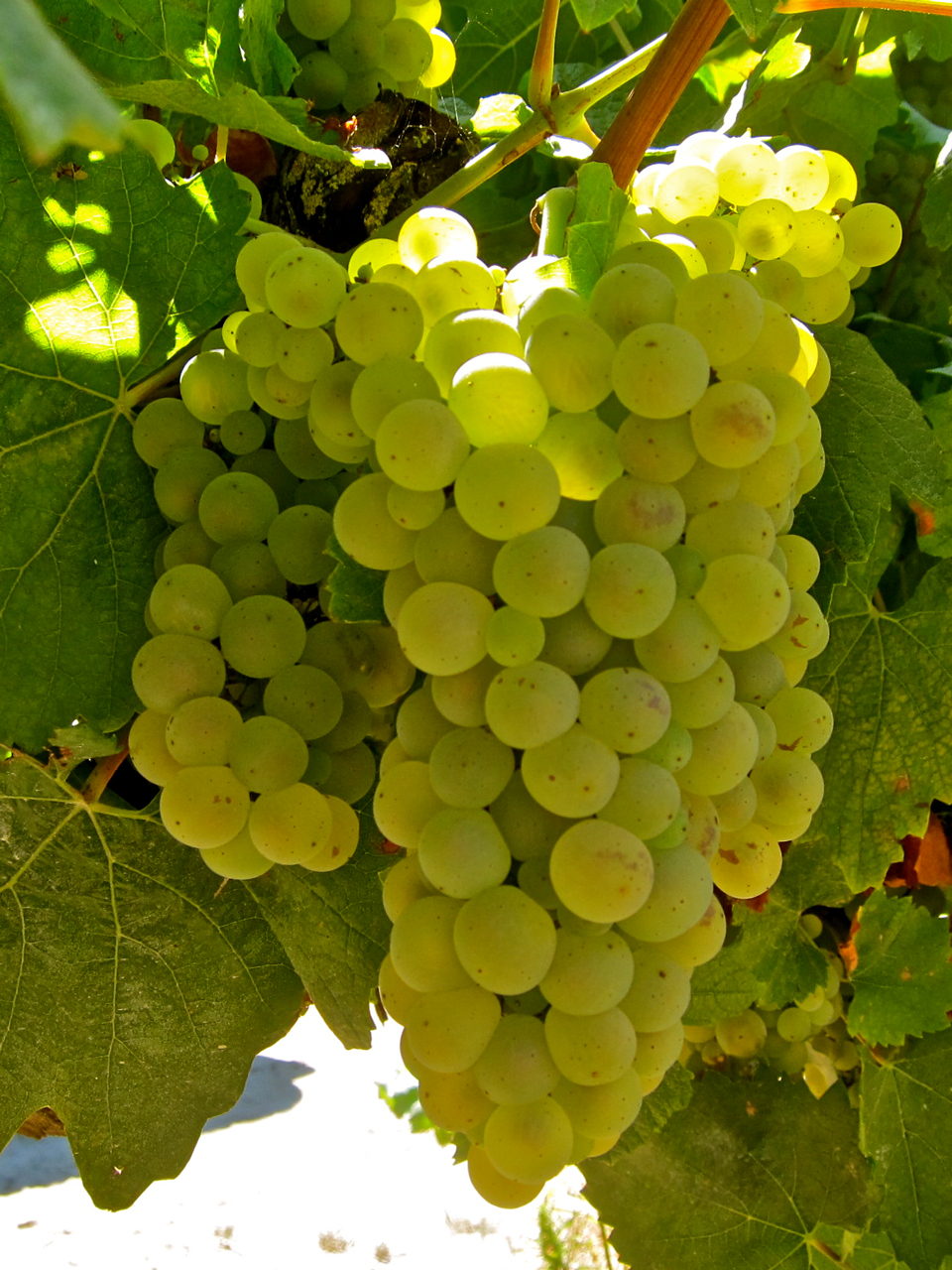
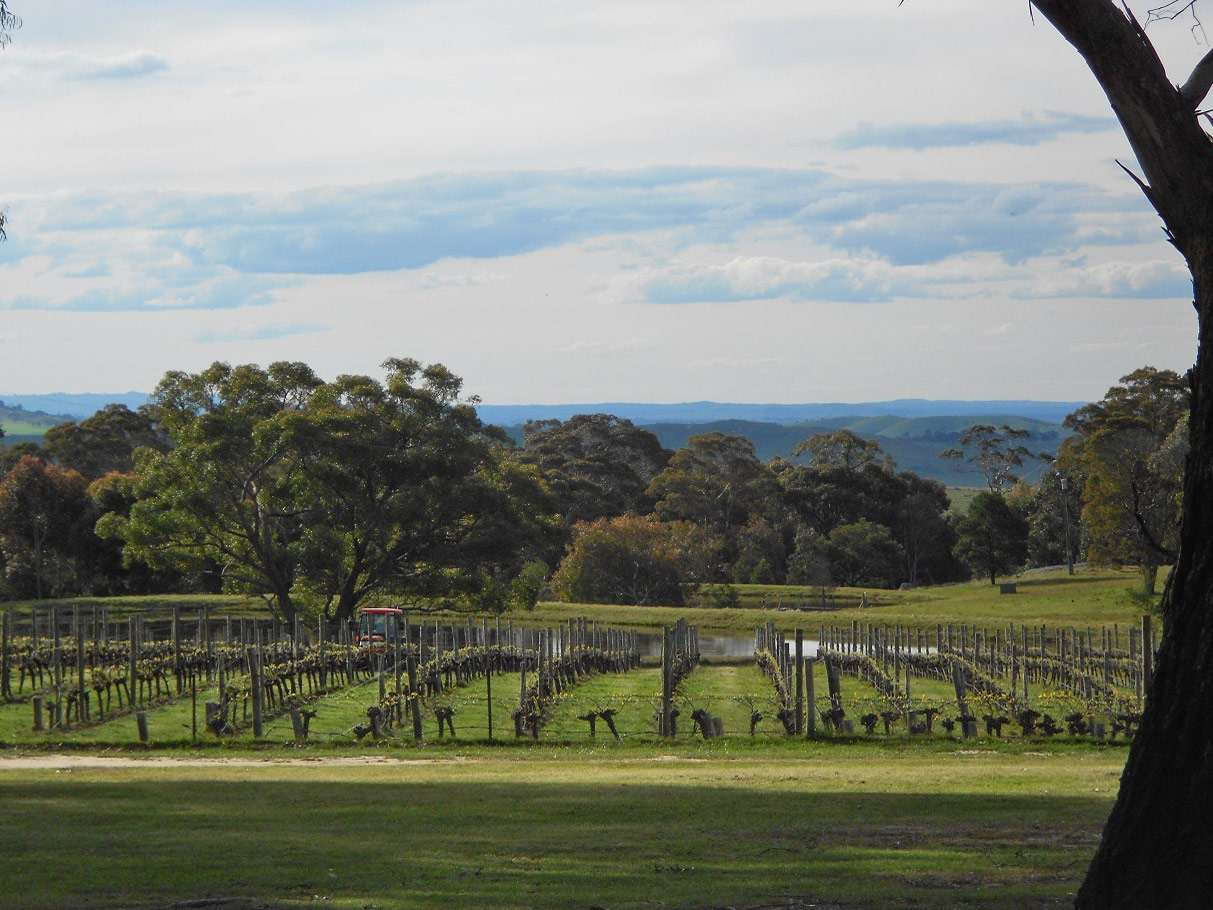
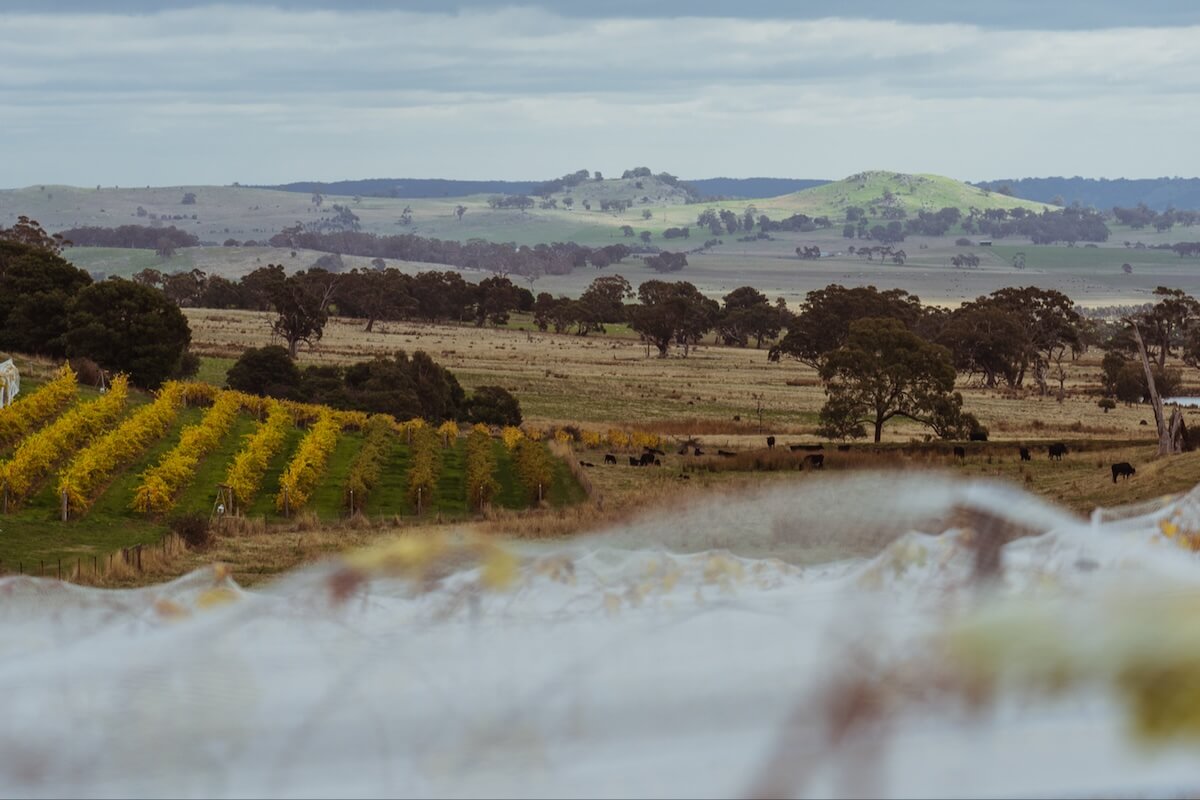
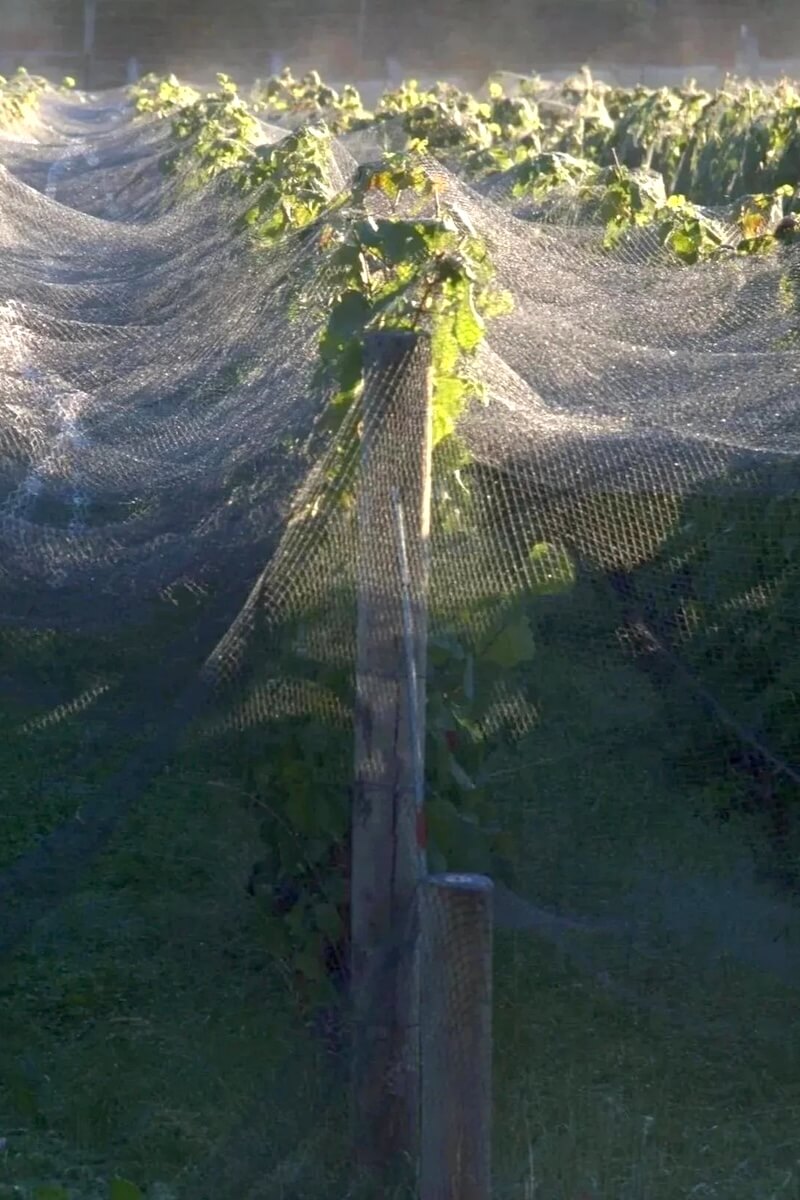
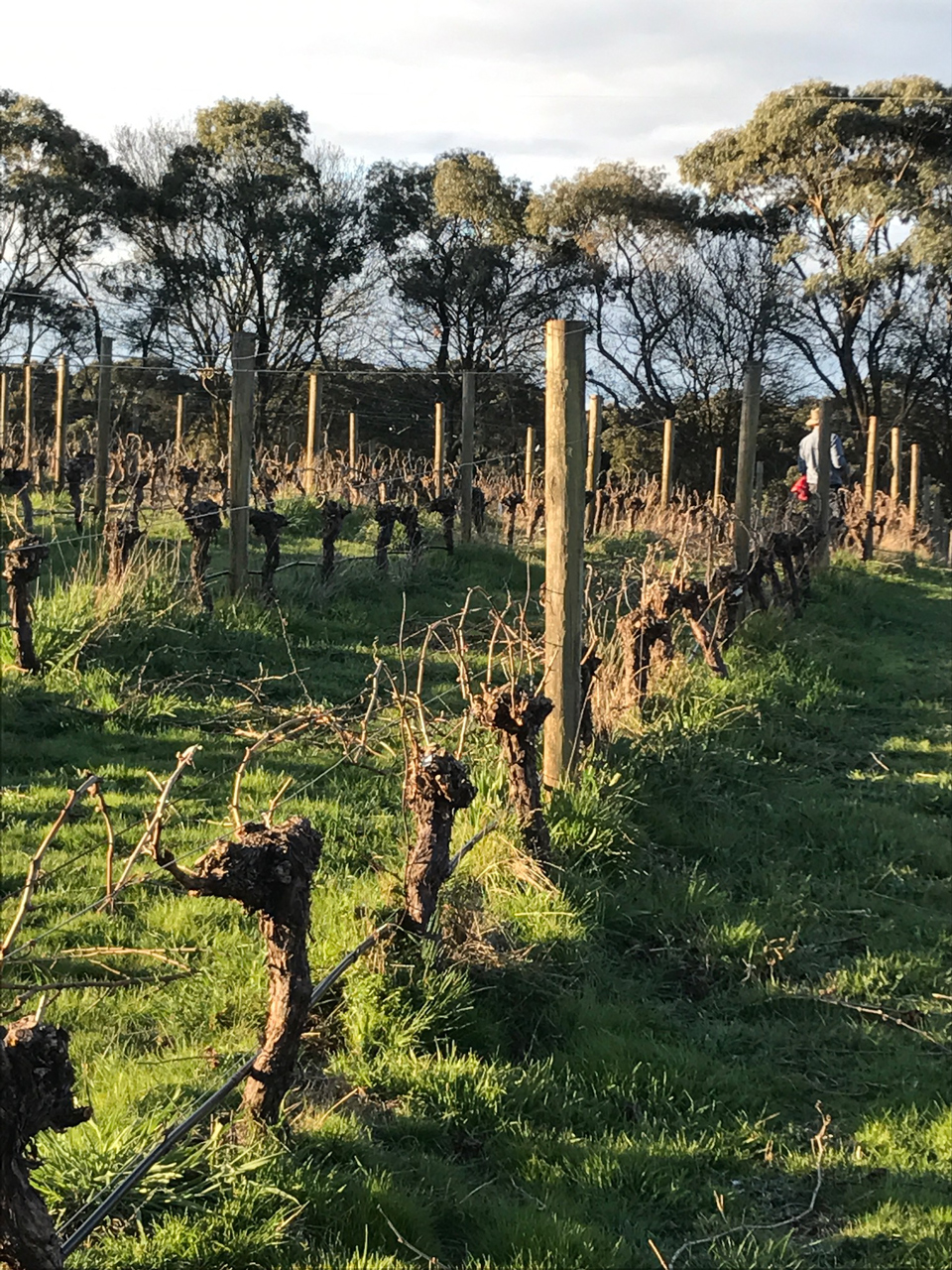
Opposite: Chardonnay grapes on the vine. Above: The chardonnay block at Cobaw Ridge – one of the pioneering wineries of the Macedon Ranges region.
The chilly climate of Macedon Ranges region of Victoria, north-west of Melbourne and within the ‘dress circle’ of wine regions that encircles Port Phillip Bay, really puts chardonnay’s easy-going nature to the test. As the name suggests, this is a mountainous area – part of the Great Dividing Range – dominated by the imposing peak of Mount Macedon and the steep slopes of the Cobaw Range. And that altitude keeps the region especially chilly – on average, it’s not much warmer than Burgundy, and that’s before you take into account the large discrepancies in altitude between different vineyards in the region. (Viticulturists use a measure known as ‘Growing Degree Days’, or GDD, measured in degrees Celsius and cumulative across a region’s growing season, to measure its warmth. The Macedon Ranges has a GDD value of 1217°C, while Burgundy has one of 1164°C – although this obviously varies considerably between sites in each region and year by year.) Those cool temperatures likewise contribute to various growing challenges and help reduce yield – in fact, the region recorded a mere 272 tonnes of grapes crushed in the 2026 vintage, which feels microscopic compared to the 5,894 tonnes crushed in the nearby Yarra Valley. (This isn’t just a function of less area under vine, either – over the last ten years each hectare of vines in the Macedon Ranges produced, on average, 1.45 tonnes of grapes to the Yarra Valley’s 3.67 tonnes/hectare.) In short, growing chardonnay here is hard work – but all of that hard work usually pays off in the glass, and the region has developed a reputation for producing consistently fine-boned, high-tension chardonnay with no shortage of flavour.
Getting on the right track
The various sub-sections of the Great Dividing Range that comprise the Macedon Ranges formed natural borders between the traditional lands of three Indigenous nations – the Dja Dja Wurrung, Taungurung and Wurundjeri Woi Wurrung people. Hanging Rock – a striking geological formation formed by cooling magma emerging from a vent in the bedrock – served as an intersection between several of these tribal boundaries, and thus was a significant site for cultural exchange between these groups. Vines arrived to the region not long after the arrival of European colonisers in nearby Melbourne in 1835, with the earliest records of viticulture in the region dating from the 1840s, well before the region was famously traversed by the ill-fated Burke and Wills expedition to Australia’s north. (One of the main roads through the region is still called the Burke & Wills Track.) The region’s early viticultural history diverges sharply, however, from that of Geelong or the Yarra Valley – while both of these regions went on to become famed for the quality of their wine in the second half of the nineteenth century, both at home and overseas, wine-growing and making never really took off in the Macedon Ranges region. Although the Macedon Ranges managed to dodge the dreaded vine louse Phylloxera – first discovered in Australia in nearby Geelong in 1875 – no pest was needed to topple the region’s nascent wine industry: the collapse of the British wine export market and a general economic depression that followed saw the region’s vineyards all ripped out before the dawn of the twentieth century.
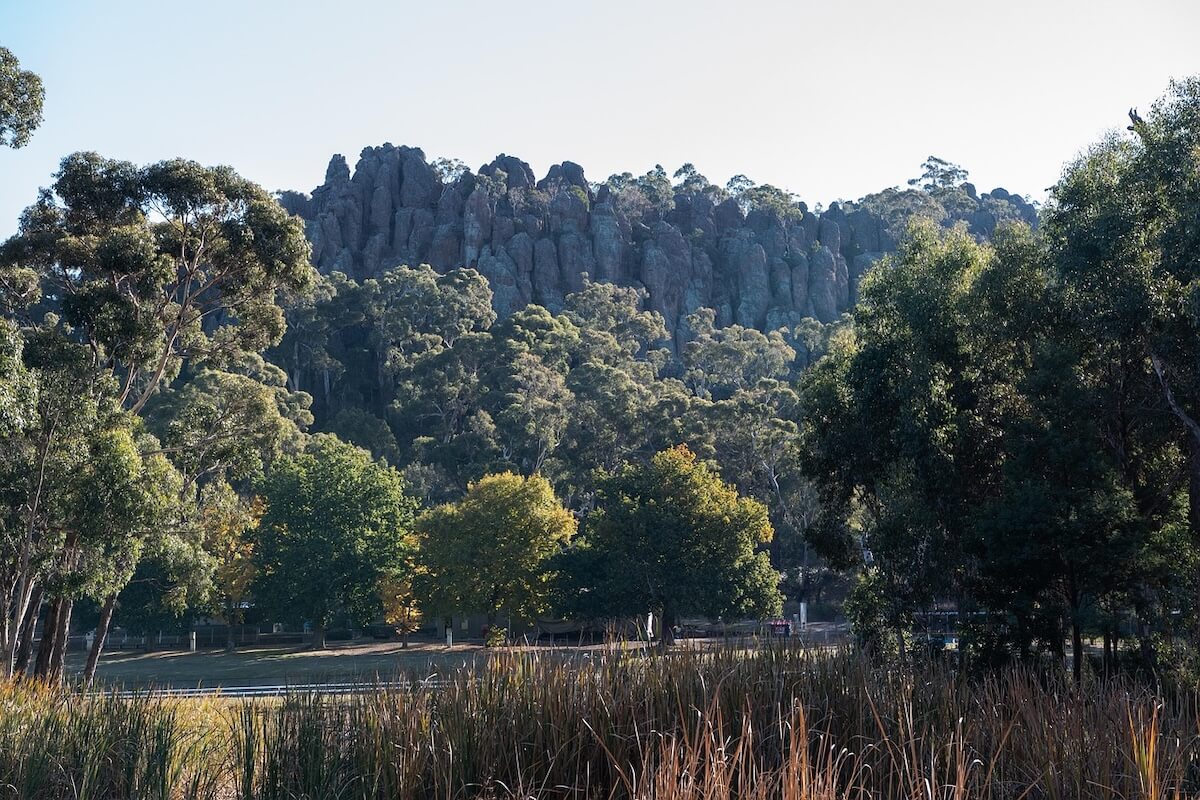
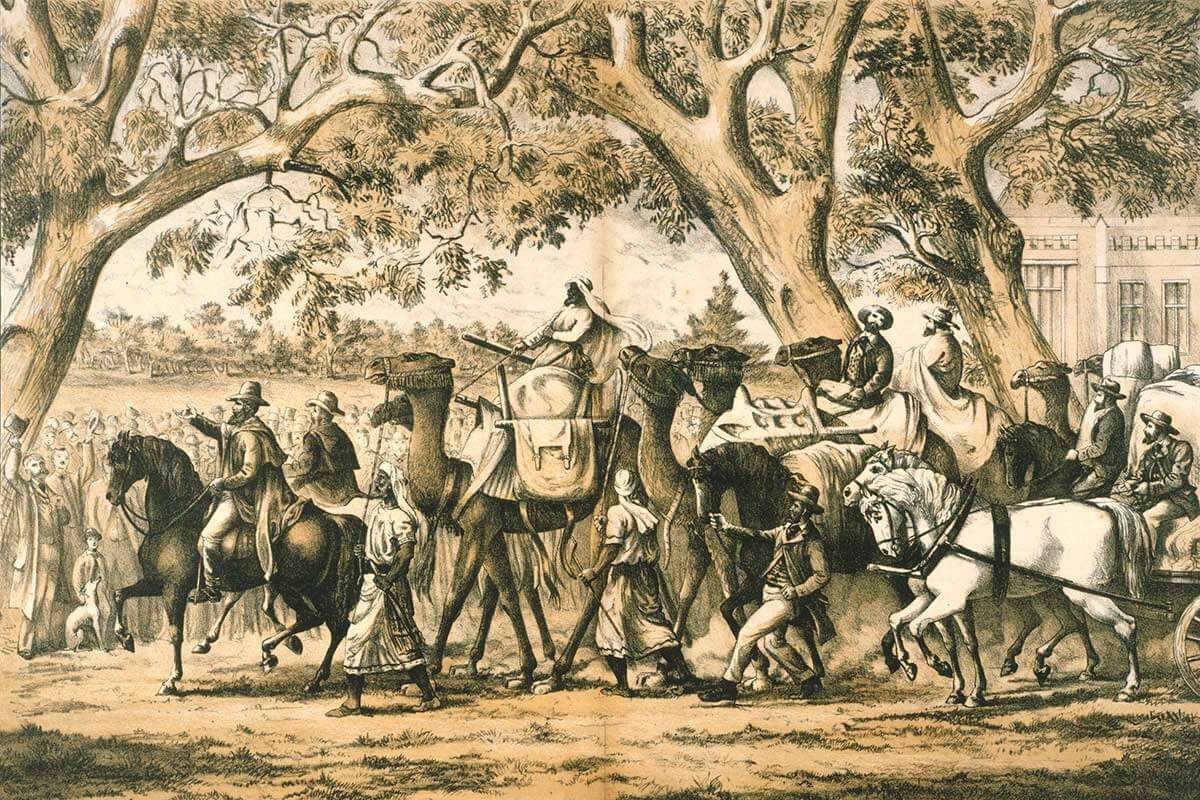
Opposite: The imposing bulk of Hanging Rock – a natural magma formation at the intersection of three traditional owners’ land boundaries. Above: An 1860 lithograph featuring the departure of the Burke and Wills expedition from Melbourne. Burke and Wills famously traversed the Macedon Ranges region at the start of their ill-fated expedition – but vineyards arrived in the region well before they passed through.
Melbourne restaurateur Tom Lazar may therefore have been stretching the truth a tiny bit in 1968 when he named the vineyard he planted in the region Virgin Hills, but the name captures the spirit of the endeavour – as the steward of the region’s first modern vineyard and wine label, he was in uncharted territory. And that sense of being on the frontier extended to the choice of planting material – equally inspired by the vinous fashion of the time and limited by the availability of cuttings, he commenced with a suite of mostly Bordelaise red varieties (cabernet sauvignon, merlot, and malbec) with some shiraz and a small amount of pinot thrown in for good measure. The first vintage was produced in 1971 – after the largely self-taught Lazar spent a vintage in Coonawarra learning from Owen Redman, son of legendary Australian winemaker Bill Redman – and the wine soon acquired a reputation for subtlety and finesse. Hot on Lazar’s heels was Gordon Knight, a fourth-generation grazier who saw the need to diversify his agricultural business, and who sold a portion of his farmland to raise the capital to plant the Granite Hills vineyard in 1970 to cabernet sauvignon, shiraz, and riesling. The Zig Zag Road vineyard followed in 1972, with a mix of varieties that looked much like that of Virgin Hills.
“We didn’t know how vines would grow up here. And in fact, they didn’t. It was just too cold.”
Chardonnay first arrived in the region in 1977, as part of the plantings for Judy and Gordon Cope-Williams’s planned sparkling wine vineyard. That vineyard quickly became known by another name: ‘Disaster at Rocky Hill’. Gordon Cope-Williams, who passed away in 2019, reflected on its failure in an interview with writer Steve Burnham: “We didn’t know how vines would grow up here. And in fact, they didn’t. It was just too cold.” Once the vines started fruiting after much delay, they swiftly realised that their chosen site (at approximately 760 metres above sea level) was not suitable even for sparkling base wine – which doesn’t require the same level of ripeness as still chardonnay or pinot noir. They swiftly purchased a neighbouring property lower down the hill (at approximately 610 metres above sea level) when it became available in 1982, and planted it with chardonnay and pinot noir to back up the struggling original vineyard (which, in turn, they later grubbed up and sold). The year 1982 marked a turning point for the region’s chardonnay – in addition to the establishment of the Cope-Williams’s new vineyard, chardonnay also arrived at Granite Hills, and was part of the varietal mix in the newly established Portree Vineyard (now known as Wilimee). The later arrival of the Cobaw Ridge, Bindi, and Curly Flat vineyards – in 1985, 1988 and 1990, retrospectively – and the enormous reputations that they swiftly built took the message to the wider world of Australian wine connoisseurs: this is prime chardonnay country.
Risk and reward
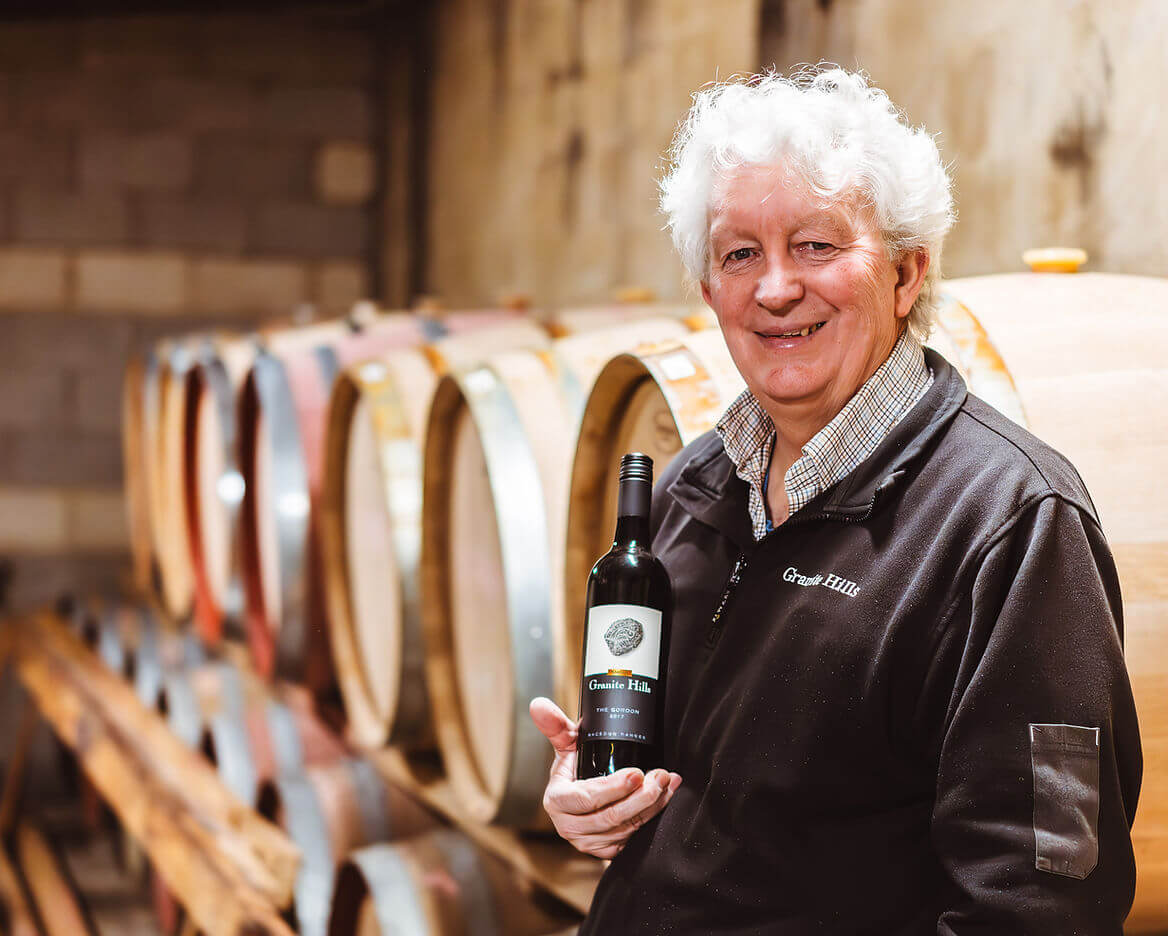
Gordon Knight’s son, Llew, became the steward of the Granite Hills vineyard in the late 1970s, and was behind the push to plant those early chardonnay vines on the property. For him, it was a risky move – but at the time, any move would have been equally risky. “Everything was a punt for us when we started, because there really hadn’t been any history of viticulture in the Macedon Ranges at all,” he says. “It was more about what would suit our climate and part of the world, really, and with some focus on what was in the market. So, rather than being emotional – rather than saying ‘We want to be Burgundian’ – it was more about what asking, ‘What could you best grow on this site?’” For Knight, chardonnay’s ascendancy in the region had as much to do with producers having an eye on the market as it did with climate suitability. “As far as Granite Hills are concerned, we only had riesling, so we thought we could do with another white – and chardonnay was an emerging variety,” he says. “At the time, chardonnay was emerging in the industry, and people were screaming out for it.” He adds that this demand was driven not only by fashion, but also by changing wine labelling norms, as Australian producers stopped using (now-protected) terms such as ‘Chablis’ to identify the style of wine in the bottle and switched to the current system of varietal labelling. “Around about that time there was a change in wine naming from generic names to varietal names, so I think that strengthened the opportunity to concentrate on variety rather than generic styles,” he says.
Above: Winemaker Llew Knight of Granite Hills. Opposite: the Granite Hills vineyard.
Knight’s intuition that chardonnay might suit the climate of the Macedon Ranges has certainly since been proven by experience. The cooler climate here assists with keeping the wines fresh and zippy: “Because we’re elevated, we have lovely cool night temperatures, which retains natural acidity,” Knight says. “I think if you look at all the chardonnays – indeed, any varieties in this region – they have lovely natural acidity, which is an amazing advantage. Many people don’t really realise the significance of not having to add acid to the palate structure and general balance of a wine. In some years we have had add a little bit – in drought years we’ve had to do that – but generally it’s something we don’t have to do. I think there’s probably less than 5% of Australia that can actually make wines without the addition of acid on a regular basis.” It also means grapes take longer to achieve physiological ripeness than they would in warmer areas, which gives them plenty of time to slowly build flavour on the vine. Knight argues that the diversity of vineyard temperatures within the region – thanks to vineyards being planted at different altitudes – ensures a diversity of flavour profiles in the finished wines, too, as each vineyard has its own unique ‘hang time’. “We have chardonnay planted from, say, 450 metres [above sea level] up to 800,” he says. “So if you use the rule of thumb that every 100 metres you climb, there’s a change of about 0.6 °C in your growing temperatures, then within the region you’ve got probably 2 °C difference from the warmer sites to the very cooler sites.”
“If you look at all of Macedon’s chardonnays, they have lovely natural acidity, which is an amazing advantage. Many people don’t really realise the significance of not having to add acid to the palate structure and general balance of a wine.”
Given Knight’s economic slant on why chardonnay took off in the region, it’s perhaps no surprise that he likewise advances a pragmatic argument for why the region’s chardonnay wines tend towards high quality. “It’s an impossible place to grow grapes,” he says, laughing. “I think that’s the reason why the big companies haven’t been drawn to here – because it’s all about small pockets of land that you can grow vineyards on. There’s not big broadacre areas you can plant, essentially.” So while various larger players have historically sniffed around the region with an interest in expanding its viticulture, the practicalities have meant that – much like the Mornington Peninsula – most of its early development was by hobby farmers. “We had a farming business and we diversified to grapes – whereas most other plantings haven’t started that way,” Knight says. “They were passionate about making wine and thought, ‘Well, let’s find a block of land and plant some grapes’.” Combined with the difficulty of viticulture here, that small scale means that many of the region’s vineyards and wineries are, necessarily, passion projects. As Knight summarises it: “There’s only very small parcels made in this region – and, of course, they get lots of TLC because they’re small parcels.”
Smart growers get dense
While the region’s reputation for viticultural difficulty has ensured that the big businesses of Australian wine have stayed away from it, that doesn’t mean that there aren’t new vineyard projects in the region – some of which have serious resources behind them. Viticulturist Tim Brown – who started his career in winegrowing at Virgin Hills in 1990 and remains a consultant for regional icon Bindi – has played a role in establishing many of the region’s newer vineyards, including several that have yet to bear their first crop. He’s also recently taken the leap into making wine from his own De la Bêche vineyard, which he releases under the label of the same name. “They’re only small, but there’s still some interest – despite all of the doom and gloom out there – in doing small vineyards that are on good sites,” he says of his development work in the region. “Most of my consultancy work is local, so I’ve got more time for De la Bêche.”
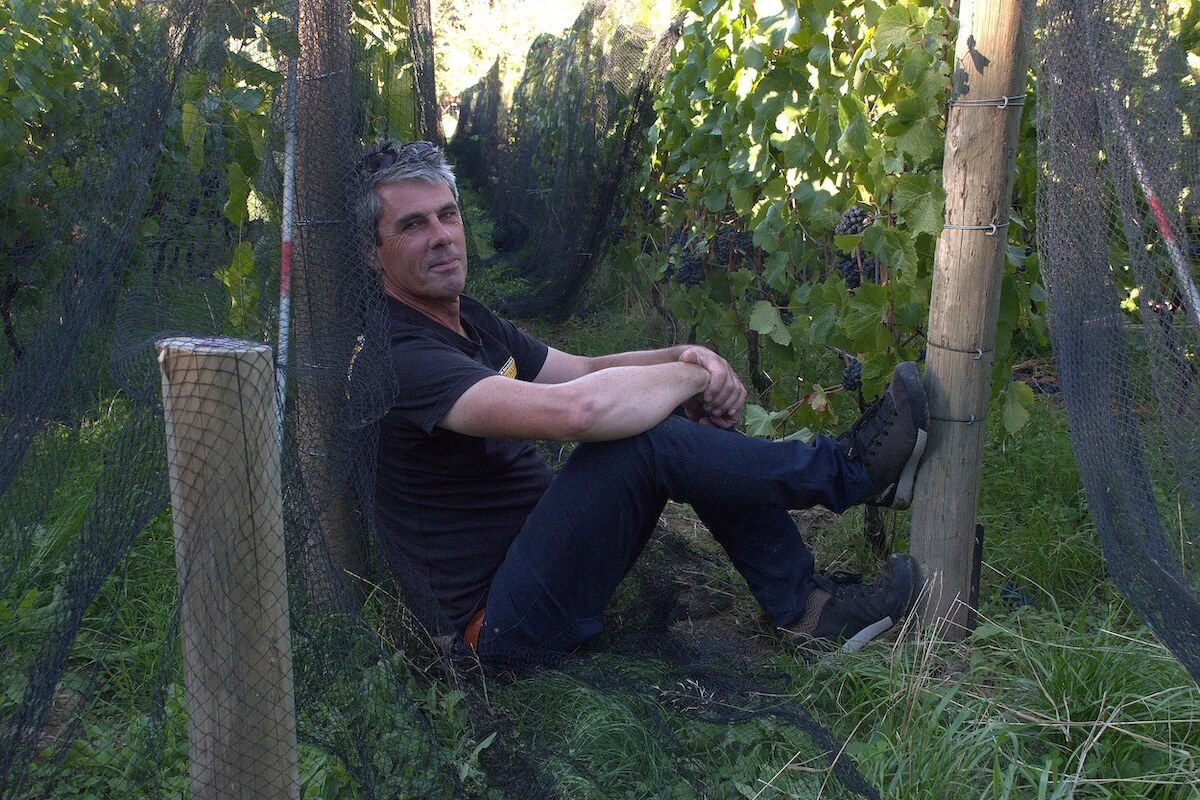
Above: Vigneron Tim Brown of De la Bêche, who also works as a viticultural consultant for many of the Macedon Ranges’ more recent vineyards. Opposite: The De la Bêche vineyard.
Like Knight, Brown points to the difference between daytime and nighttime temperatures in the Macedon Ranges as key to the quality of the region’s chardonnays. “One of the things about inland viticulture is the continental climate’s great for having a strong diurnal range,” he says. “So on a hot day it might be 30–33 °C, and it can get down to 6–7 °C degrees overnight in that ripening period.” For him, that natural handbrake on ripening means that grapes can develop full flavour – what viticulturists refer to as ‘phenological ripeness’ – while avoiding the pitfall of developing too much sugar or losing their acidity. “It’s possible to make a wine that has good acidity, but still has ripe fruit phenolics,” he says of the growing conditions in the Macedon Ranges. “In warmer regions, there’s a risk that if you’re trying to make a higher-acid style, you may not achieve phenological ripeness – you may get a table wine that’s more akin to a [sparkling] base wine in terms of flavour profile.”
While this sounds like a clear-cut advantage for cooler regions, it comes with its own challenges: “That diurnal range is a very nice trait of the region, but with that comes a frost risk – you can’t have one without the other, I think,” Brown says. “Flowering’s normally problematic in our region – frost and poor flowering are both very good ways to impact negatively on yield before spring’s over.” In addition, he points to a recently discovered and not terribly well understood bacterial threat called Pseudomonas syringae – which thrives in cool and humid conditions and rots grape flowers before they can turn into bunches – as another threat to yields. “The management solution for that’s not clear, and it’s being researched and field-tested,” he says. “There’s no known treatment at this stage for it. There’s some advice around certain fungicides early in the season, but there’s no registered fungicide for control at this stage … this is the challenge of growing at the limits, climatically – exposure to those sort of risks.”
“If high density on its own made a huge difference in quality, then every single wine out of Burgundy would be outstanding – and that’s not the case.”
Despite the difficulties inherent in growing grapes in the region, Brown is bullish about the potential for quality in the Macedon Ranges – especially for vineyards that have been established with high planting densities, such as his own De la Bêche vineyard, the Clarrie’s Track vineyard (on which he consulted during the planning stages), or the high-profile Place of Changing Winds vineyard. “The region’s done well historically with pinot and chardonnay – there’s a real focus on those two varieties – and the reference for pinot and chardonnay has always been Burgundy, in terms of winemaking,” he says. “In terms of viticulture, there’s been less attention. But the second half of my career has being quite deeply influenced by what I’ve seen in Burgundy – I’ve seen lots of vineyards planted a 10,000 vines per hectare – which is standard density there – but also growers who are pushing beyond that into 15–20,000 per hectare there, and changing the way they grow grapes to adapt to climate change as well.” While increasing the density of vines in a planting increases not only the initial cost of maintenance but also the labour cost of ongoing maintenance, he sees a clear increase in the quality of the resulting wines – one that potentially mimics the effects of vine age. “Conventional planting densities are absolutely capable of making exceptional wines in our region,” Brown says. “Bindi is really interesting case study, with Block 5 established at conventional spacing and producing their top pinot – but equal in price to that are ‘Block 8’ and ‘Darshan’, which are off high-density vineyard blocks that are thirty-five years younger. They’ve quickly established a price point that’s equal to his best.” While he’s very clearly a proponent of increased vine density as a driver of quality, Brown cautions that it’s not a silver-bullet solution: “It’s not to say that if 10,000 makes a certain quality wine, then if I plant 20,000, I double the quality potential – because it doesn’t work like that,” he says. “There’s so many other factors that come into play. If high density on its own made a huge difference in quality, then every single wine out of Burgundy would be outstanding – and that’s not the case.”
A cool oasis in a warm future
The extremely cool climate of the Macedon Ranges poses its own set of challenges, but Knight is grateful that, thus far, the region seems relatively immune to one of the largest challenges in Australian viticulture: climate change. “Climatically, we’re certainly the coolest region in the mainland – and we could be, in some years, cooler than northern Tasmania,” Knight says. “We’ve been doing thirteen years of temperature study in this region now, running across about twenty vineyard sites in Macedon Ranges, and the indicators are that last year we were actually cooler than Tasmania.” That coolness not only acts as a hedge against climate change – thus far, it seems unaffected by it. “Out of those figures, there’s been a realisation that the temperature hasn’t changed in those last thirteen years,” Knight says. “It’s comforting to know that perhaps the temperature change in this part of the world is a little more stable than other parts of the world – or other parts of Australia, even. I think that’s a really positive thing for the future – to have some confidence in these varieties going forward.”
“We’ve been doing thirteen years of temperature study in this region now, running across about twenty vineyard sites in Macedon Ranges, and the indicators are that last year we were actually cooler than Tasmania.”
While that data doesn’t show an increase in overall temperatures, weather patterns are nonetheless changing, according to Brown. “Frost risk is a bigger issue than it’s ever been in the region, or in any sort of inland region,” he says. “A frosty site can be managed, but it just adds a lot of extra complexity and cost to what’s ahead. Sites that were frost-free historically are now getting frosted on difficult nights.” And while a high-density vineyard can be more difficult to manage in cooler or more humid years, Brown argues that its architecture makes it inherently more resilient to climate change: “If we forecast forward and we see the shift in temperature, and sunlight, and heat, and picking days – I would see an advantage going into those conditions with high density vineyard architecture, which gives increased shading to mitigate the risks of heat and sunburn,” he says.
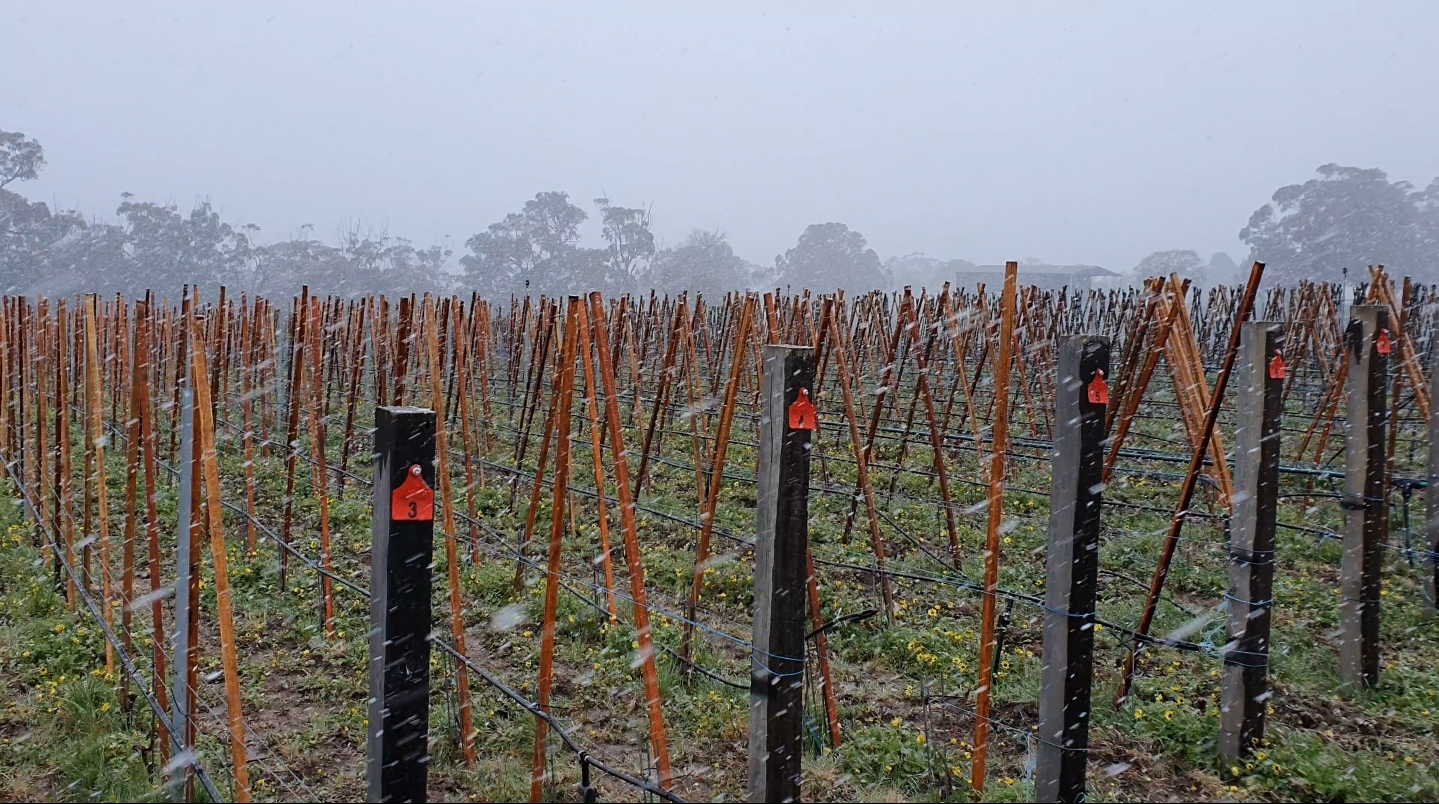
Above: A typically chilly day at the high-density Place of Changing Winds vineyard. Opposite: Chardonnay vines at Wilimee, formerly known as the Portree Vineyard – some of the region’s oldest.
Whether or not climate change comes to bite, Knight is bullish about the future of the region’s wine – not least owing to a professionalisation of the region’s winemakers. “At one stage, I think there was only John Ellis and myself who were the only actually qualified winemakers in the region for many years,” he says. Of the generation of hobby farmers who set up many of the region’s vineyards, he adds, “They entered the industry when they were in their middle to retiring ages. And of course, twenty years later they have to get out because the jobs have become too hard for them.” As these vineyards subsequently change hands, this pulls talented younger winemakers in, drawn by the challenge of realising these sites’ vaunted potential. “And in the last decade or so there’s been several more winemakers come into the region – which is great because you can feel the general quality from the broader depth of knowledge aiding the whole region.”
“Chardonnay is the white wine that the region’s gotten acceptance and traction with. I can’t see that changing at all – only getting stronger.”
For his part, Brown emphasises that the region is more than willing to give back to the new generation of makers who are elevating its profile: “There’s a great food and wine culture, and there’s some really amazing restaurants that are super-supportive of local wine and local produce,” he says. “From our experience with De la Bêche, that’s been very strong.” He’s confident, too, that whatever the future looks like for the region, chardonnay will continue to be the region’s signature white wine variety. “It’s very difficult to grow other varieties in the region from an economic point of view,” he says. “Commercially, the best riesling in the region won’t be able to achieve the price point of the best chardonnay – and the risk is still the same, and the cost of production is more or less the same, save for a little bit of oak. Chardonnay is the white wine that the region’s gotten acceptance and traction with. I can’t see that changing at all – only getting stronger.”
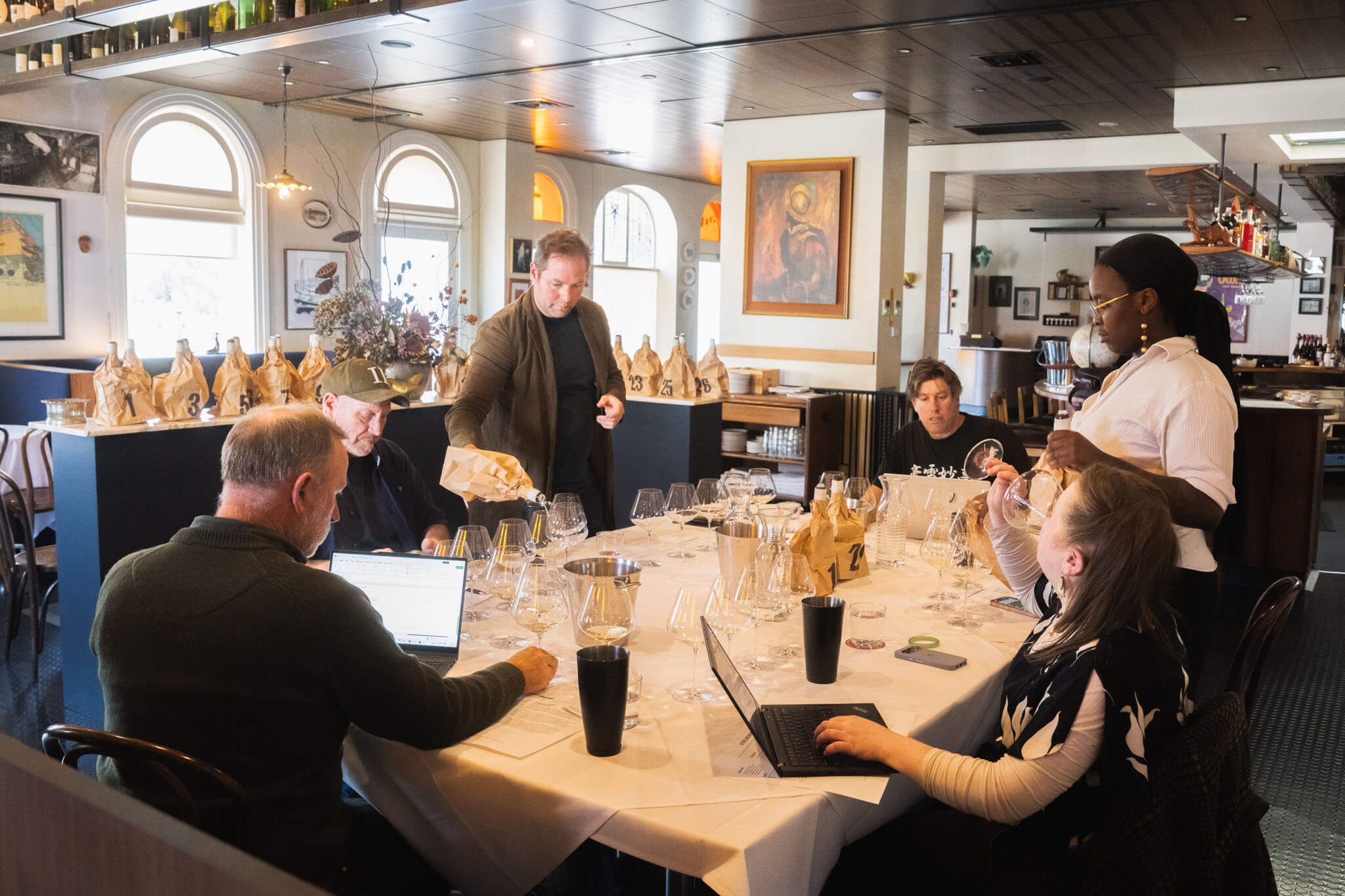
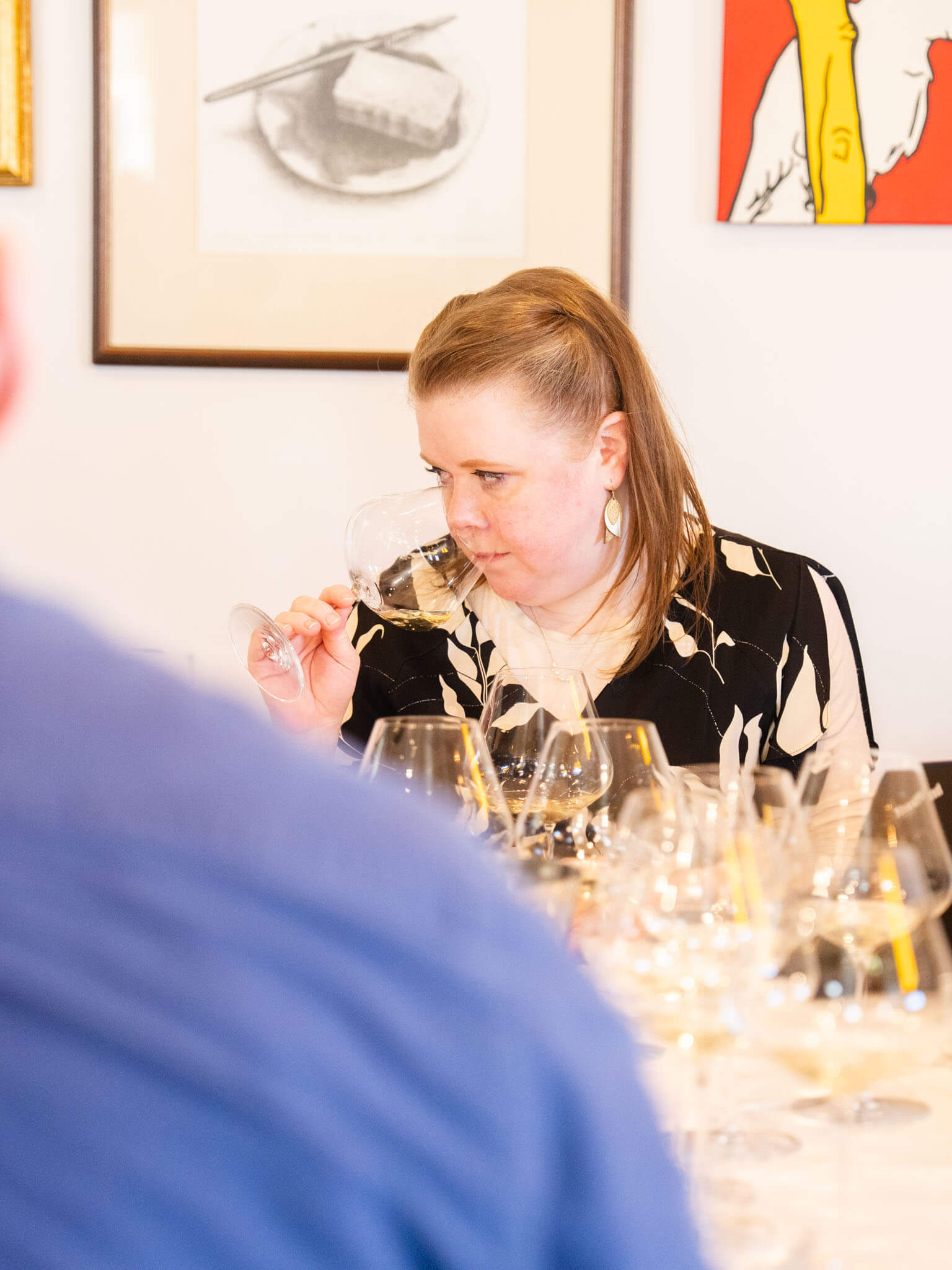
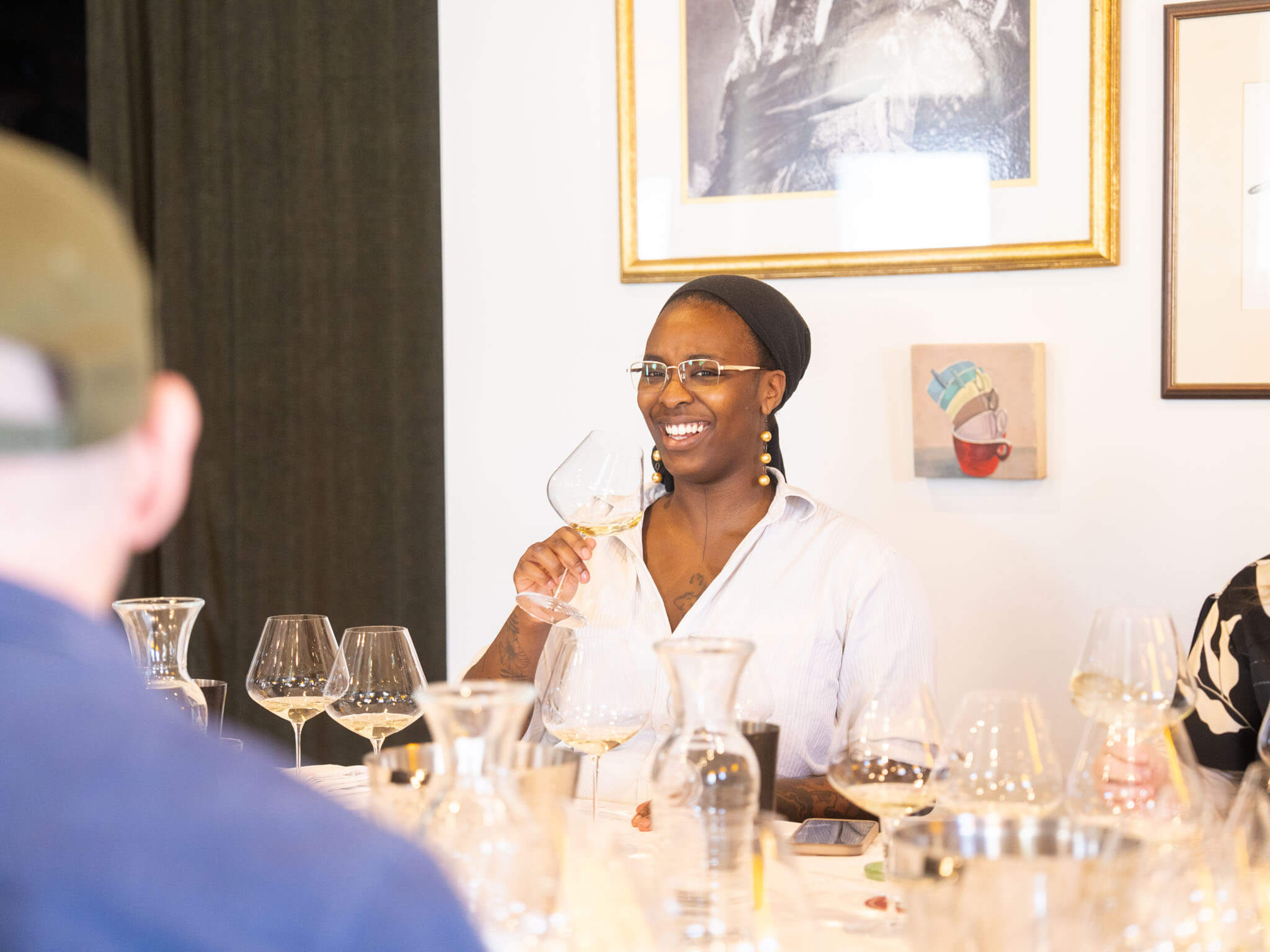
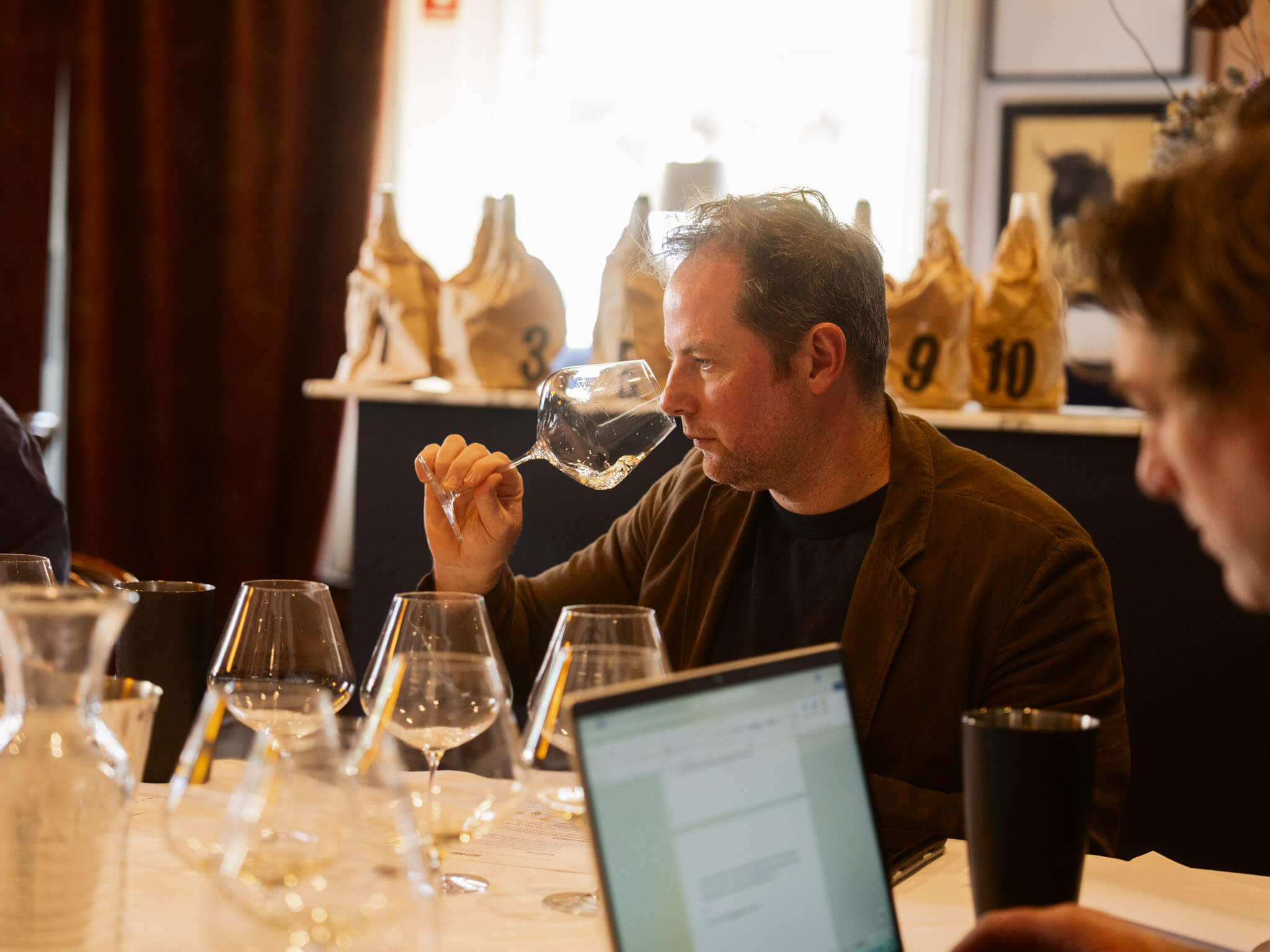
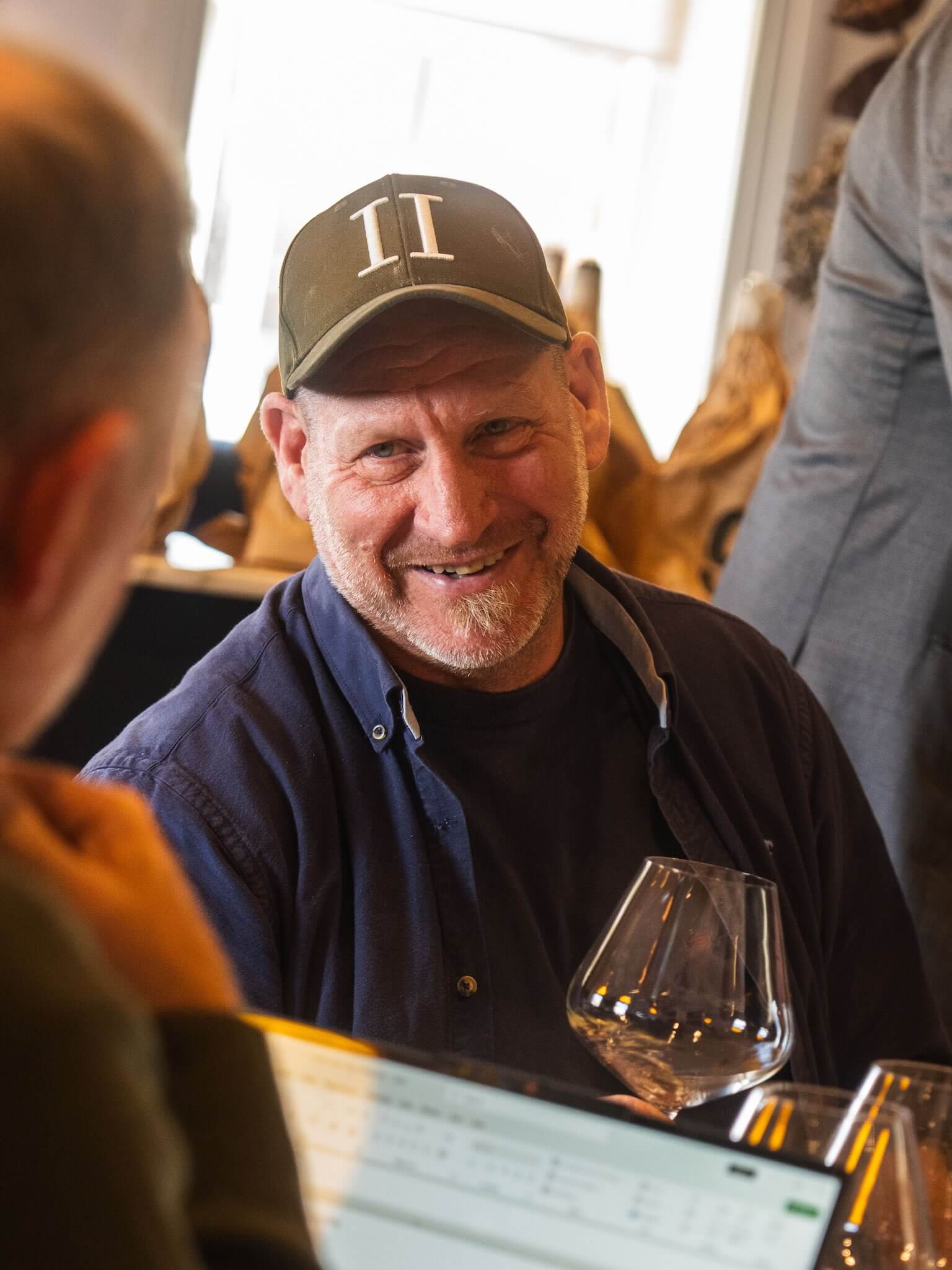
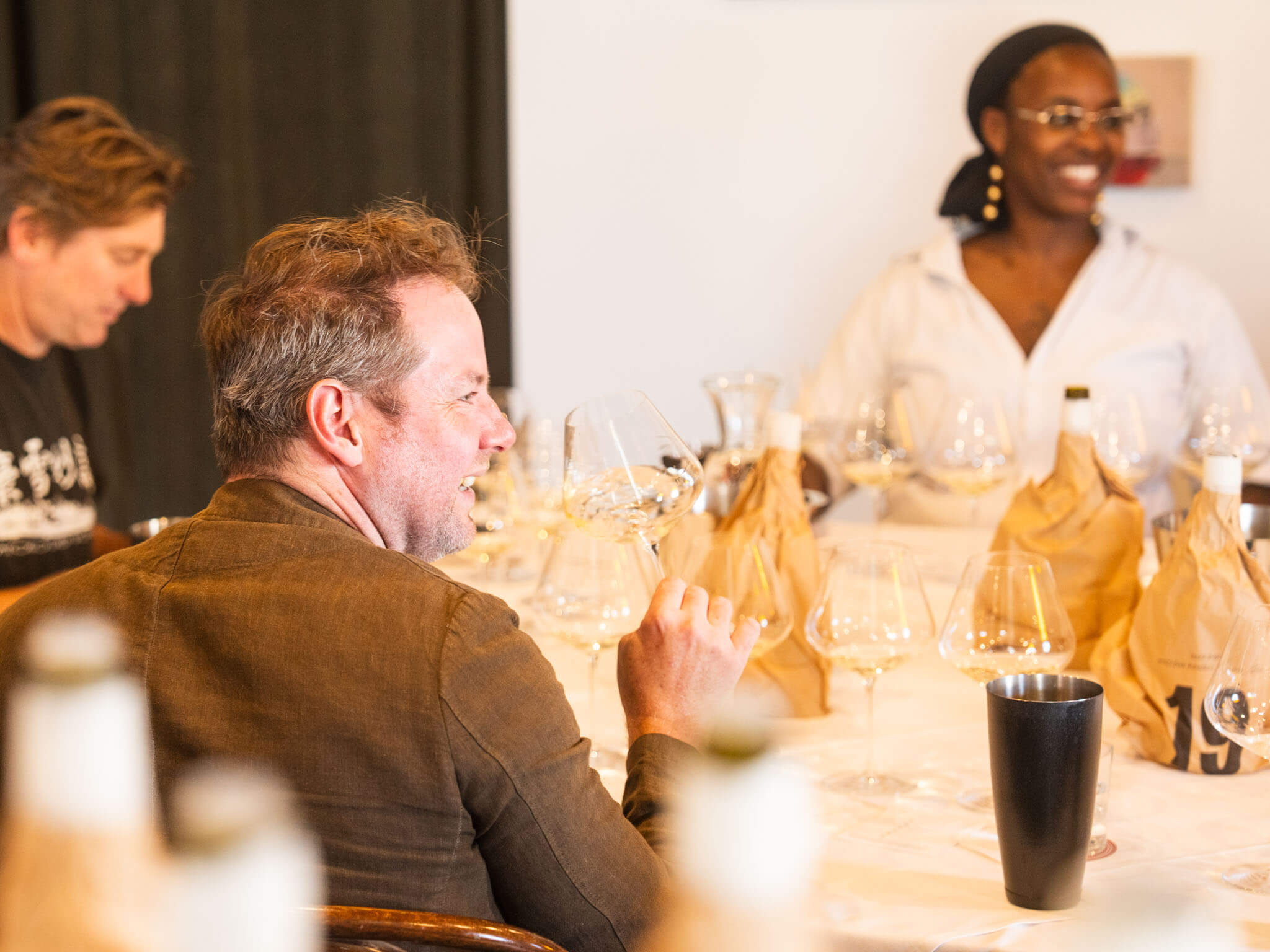
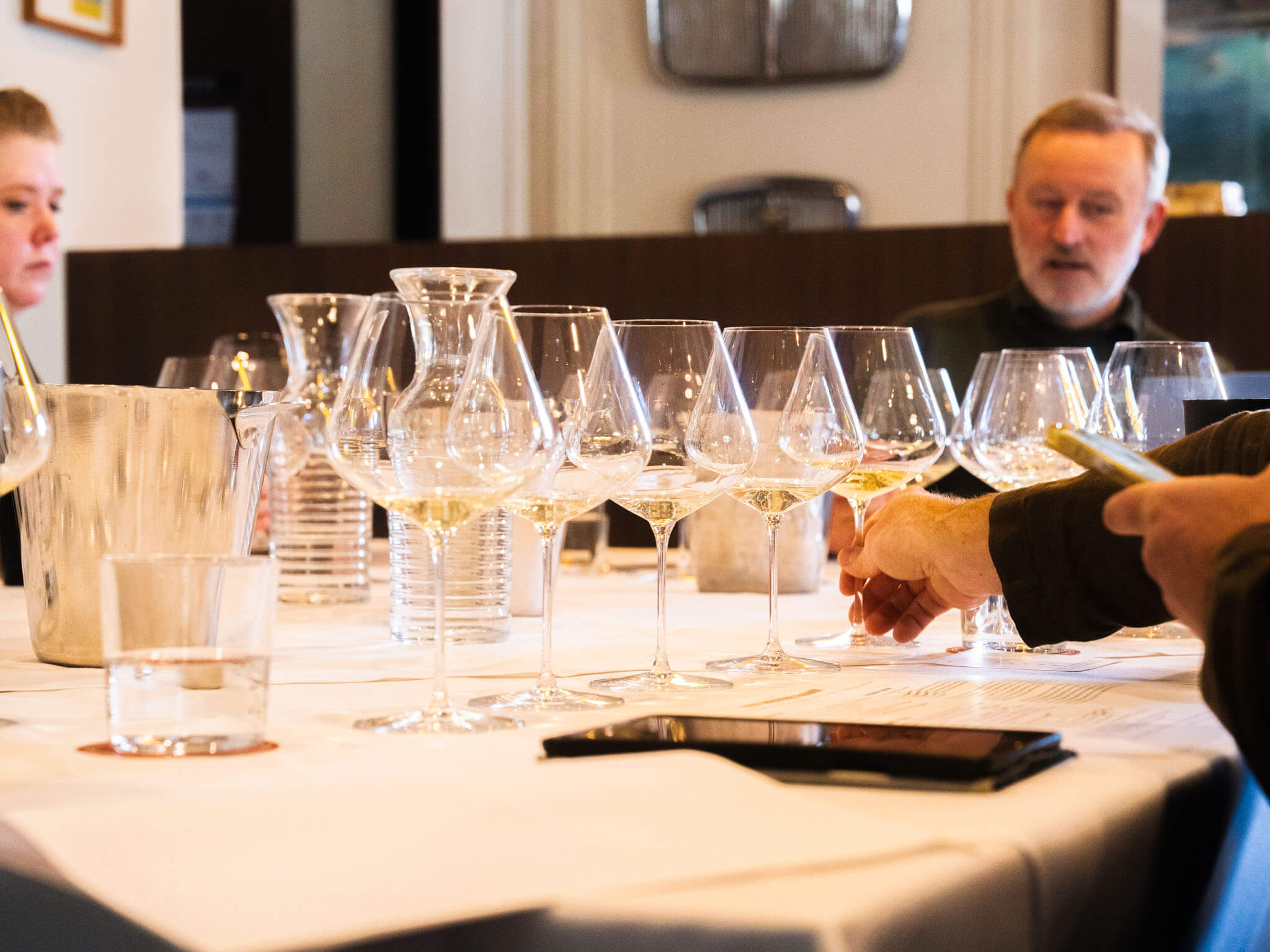
Above: Our tasting panel gathered at at Geralds Bar, Carlton North (Melbourne).
Outtakes from the tasting
We gathered every example of chardonnay from the Macedon Ranges that we could find and set our expert panel the task of finding the wines that compelled the most. All wines were tasted blind, and each panellist named their top six wines. Below are the wines that made the panellists’ top-six selections from the tasting.
Our panel: Ben Ranken, vigneron, Wilimee; Gemma Neil, wine buyer and head sommelier, Geralds Bar; Troy Walsh, vigneron, Attwoods; Sarah Robinson, sommelier, Cumulus Inc.; Alister Timms, chief winemaker, Shadowfax; Richard Collom, vigneron, Pirio.
Timms kicked off the discussion by noting the sheer enjoyment he got out of the tasting line-up: “I just thought it was a really cool tasting,” he said. “I think there were some great examples of different styles of wine as well – it wasn’t boring at all. There were some wines that were older, obviously – they showed a bit of age – but then you could also see some variance in the years as well – the cooler years, and some nice and warmer years.” He added that the diversity of the line-up meant that the panellists’ role demanded serious attention to detail. “I think you had to really be careful tasting these wines, because there was so much difference between each one,” he said. “Whether it’s the year, or whether it’s how it’s made – how much oak, or if it’s a bit of a richer, riper style, or if it’s a bit of a finer, more mineral, crushed-rock style.”
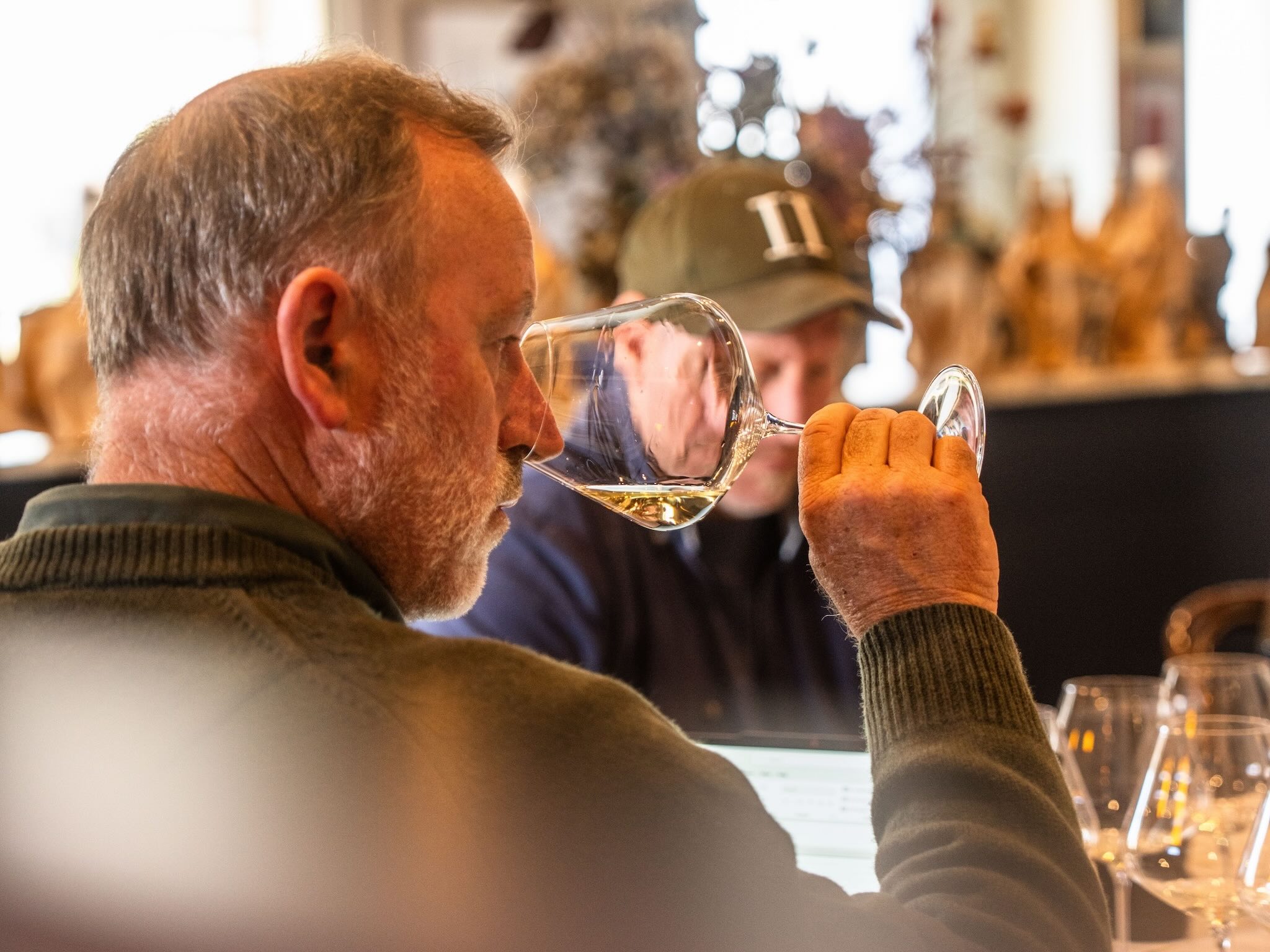
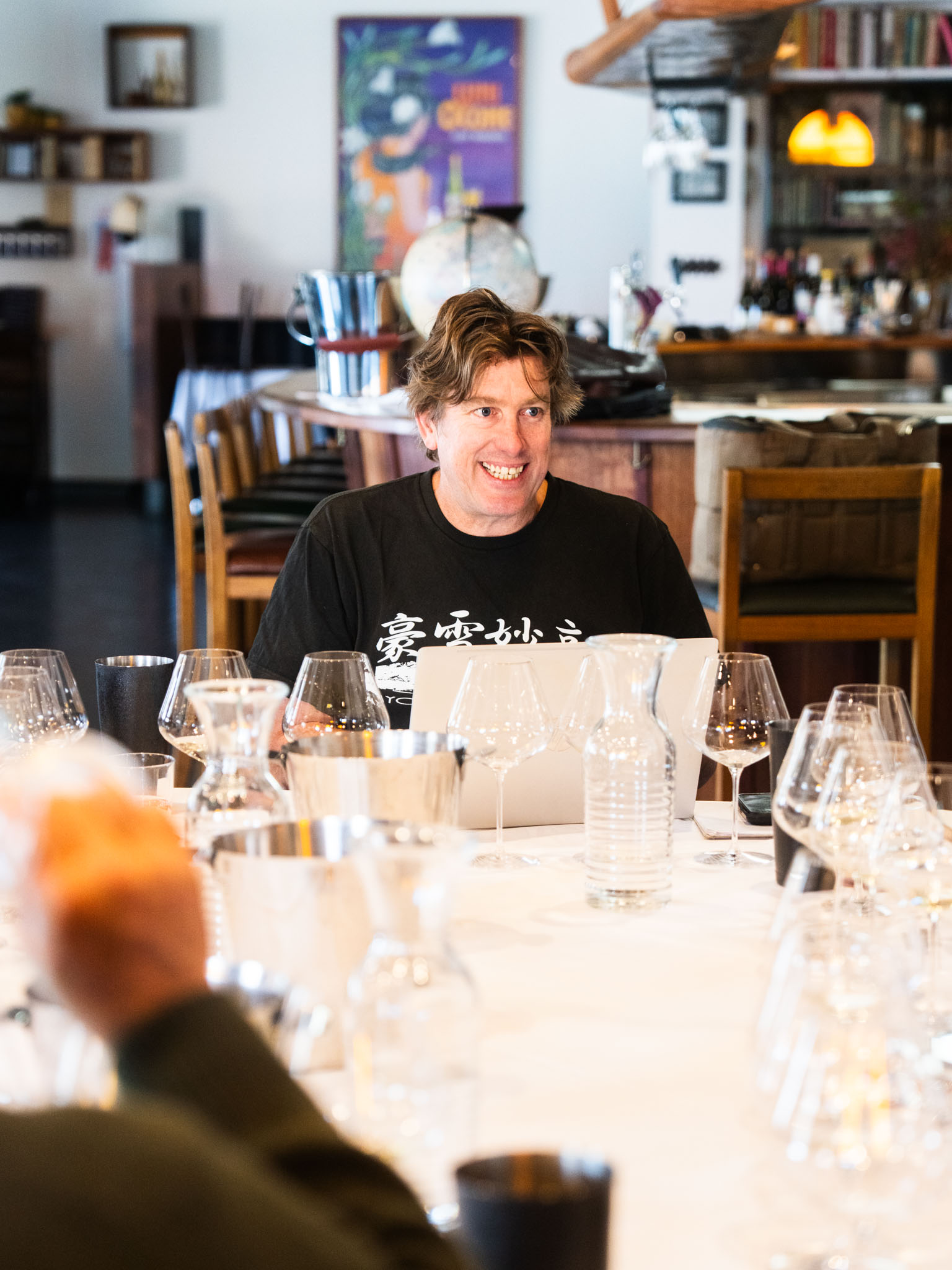
Above: Ben Ranken. Opposite: Alister Timms.
Ranken agreed on the difficulty of assessing the wines, and added that he had worked hard to ensure that each wine was given an opportunity to show at its best. “There were a few wines that were easy to miss,” he said. “Because you can get something big and powerful, and then next there’s something really delicate and fine – that shadow effect can happen sometimes. So I had to go back a little bit, and taste some brackets again in a randomised order – because some of those fine, delicate wines would have been smashed in a big wine tasting.”
“I think the quality was incredible. Having done a few of these Deep Dives already, this one, by far, has demonstrated the most quality as a region across the board.”
Neil added that she likewise found the tasting a tough gig – not because of the line-up’s diversity, but because of the consistent quality of the wines. “I think the quality was incredible,” she said. “Having done a few of these Deep Dives already, this one, by far, has demonstrated the most quality as a region across the board. It was pretty hard to judge – my notes were heavy, and I was really struggling to pick a top six, whereas in other topics it was much easier to choose. I think that speaks well about the quality of the region and what it can do.”
Above: Sarah Robinson. Opposite: Gemma Neil.
Robinson found that many of the wines she eventually selected for her top six were ones that impressed via their subtlety, rather than overt power. “I feel like there were at least two or three wines in my top six where I wrote something along the lines of ‘This is not a wine that I would necessarily pick up straight away’ – but as I’m smelling, as I’m tasting, I’m really interested, because there’s something happening here,” she said. “I used the word ‘shy’ a few times – some of these wines felt like they’re a little bit trepidatious, but really they just want you to take a moment. They’re not wines that you can smash back, call it, move on to the next one – you have to just give them a moment in the glass and then suddenly they’re telling you a different story. So I felt like a consistent theme throughout all the wines today was just, ‘Take a beat’.”
“I think that’s a sign of good wine – that it develops in the glass, and as you drink it, it’s changing. And I would say that 99% of these wines developed beautifully in the glass.”
Walsh agreed, and added that the mercurial and changing nature of the wines in the lineup spoke well of the region’s potential to grow high-quality chardonnay. “It was awesome to see the development in the glass,” he said. “Even when you went back to do your second tasting, it’s totally different. I think that’s a sign of good wine – that it develops in the glass, and as you drink it, it’s changing. That’s one of the things I really love about drinking wine – it’s not the same from go to whoa. And I would say that 99% of these wines developed beautifully in the glass.”
Above: Richard Collom. Opposite: Troy Walsh.
Collom took this observation and extended it beyond the glass, into the cellar. “I think that was great to see representation of a good number of years and vintages in the lineup,” he said. “I loved seeing those tighter, more reserved kind of nuances that are not fully expressing themselves – but then equally seeing some of those older expressions where they’re just harmoniously developing. And, for a region, it just shows great promise – you know that you can buy a case of Macedon chardonnay and expect to revisit it in four, five, six years, and be really pleased with what you’ve got.”
“The diurnal range is too high for you to not have acidity in your wine. If there’s no acidity, you’re doing something f***ing wrong.”
Robinson argued that this age-worthiness came from the notable streak of acidity in the region’s wines. “The acid’s always gonna be there,” she said. “The diurnal range is too high for you to not have acidity in your wine. If there’s no acidity, you’re doing something fucking wrong.”
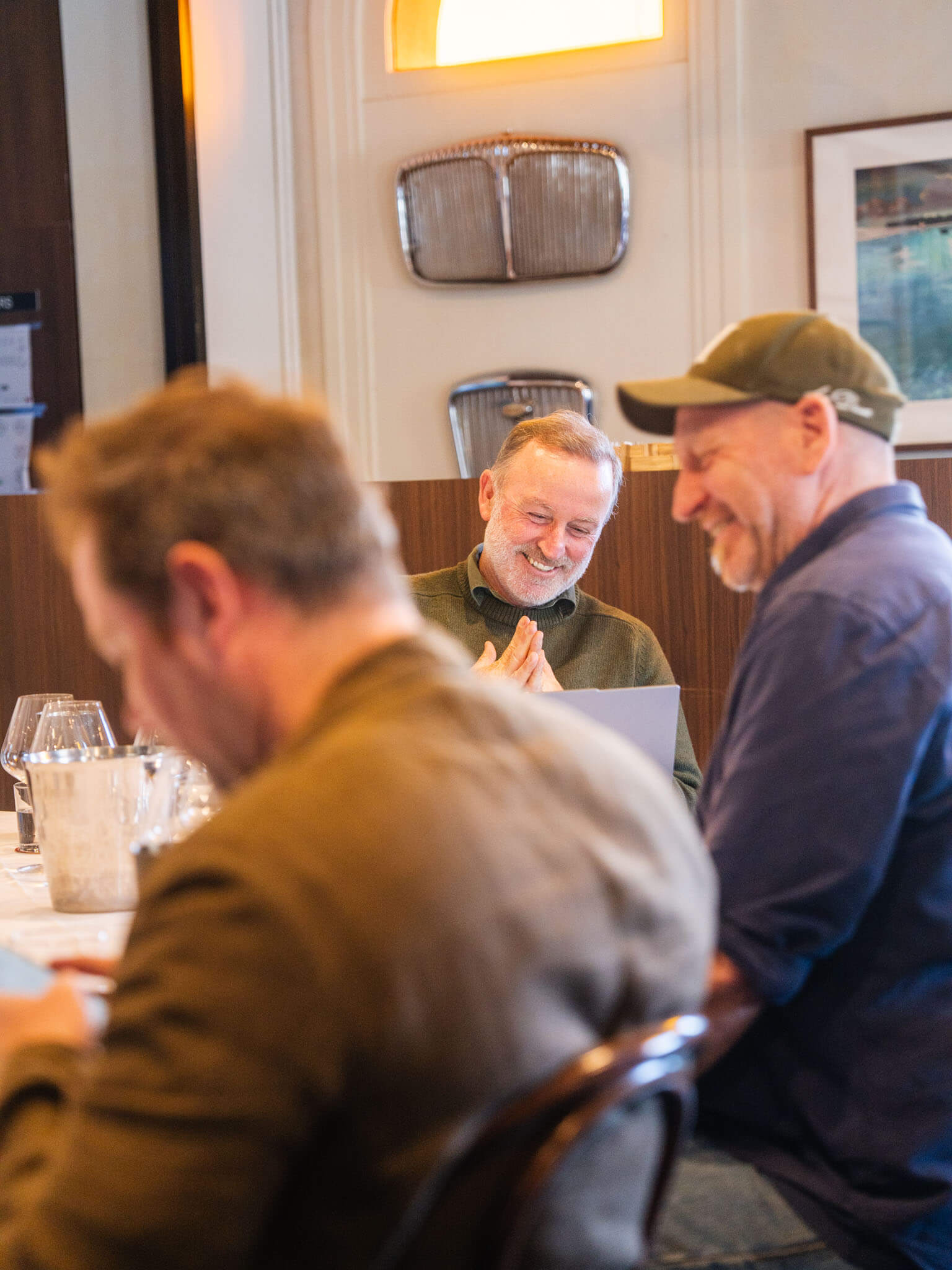
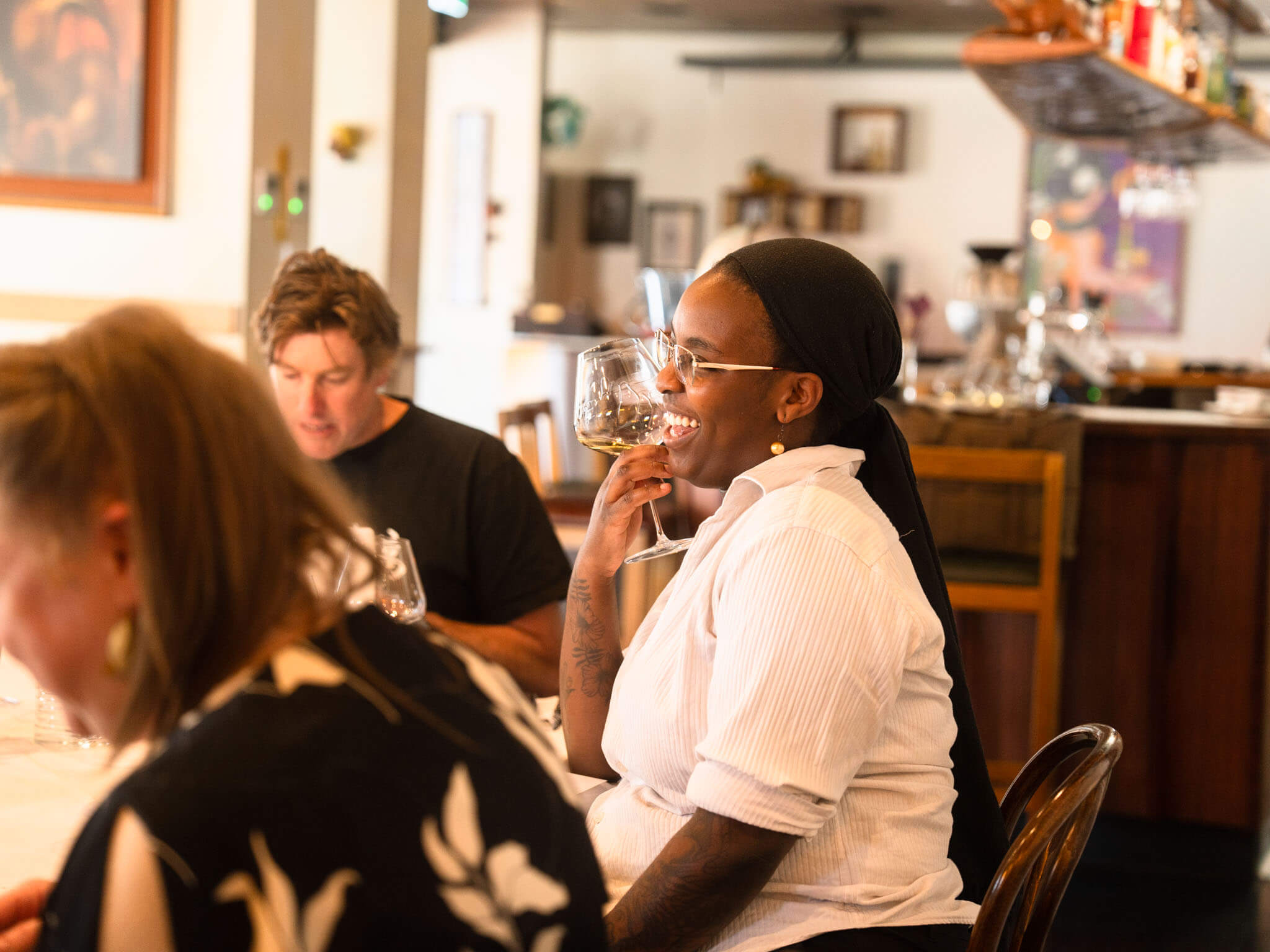
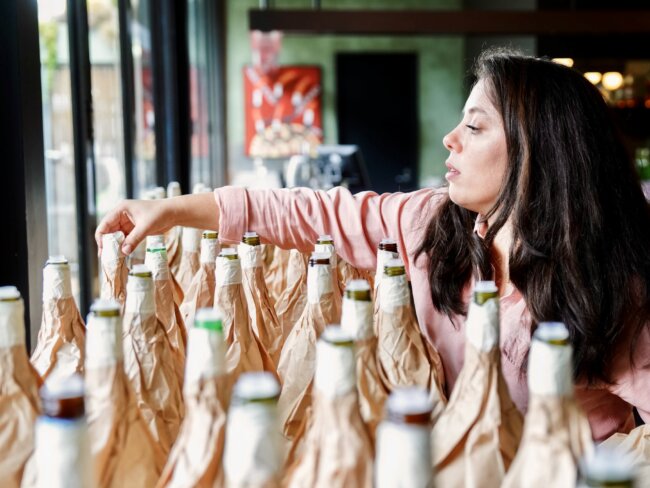
Above and opposite: Our Deep Dive panel tasting in action at Geralds Bar, Carlton North (Melbourne). All wines tasted ‘blind’.
Timms added that while freshness was the region’s hallmark, it was important to understand the range of sites within the region. “While they’ve all got this lovely acid drive today, I think the variation comes from the little pockets in Macedon they’re grown in – because when you drive through the Macedon Ranges, it’s not vineyard after vineyard after vineyard,” he said. “It’s a very small region in quantity, and it’s not that big a region in area, but it’s actually quite long and diverse – there’s different aspects in every vineyard, there’s different soil types, and then, of course, there’s different altitudes. You can go from 250–300 metres above sea level right up to 750–800 metres for some vineyards – there’s a massive difference in that. Some of them are on beautiful red soils, if you like that sort of thing, which give a bit more opulence, and some are on this more flinty soil that gives a bit more restraint. And those differences in the sites, I think, have come through in these wines.”
“It’s a very small region in quantity, and it’s not that big a region in area, but it’s actually quite long and diverse – there’s different aspects in every vineyard, there’s different soil types, and then, of course, there’s different altitudes.”
Ranken added that the region’s makers had, in general, learned to step back and let the nuances of site speak over winemaking technique. “Chardonnay’s a great lens into the winemaker – it’s very much a winemaker’s variety,” he said. “But a lot of the wines we saw today were more about the vineyards rather than the winemaking. There were one or two with a little overlay of winemaking that you could see in the wine – whether that was a dash of oak, or a little bit of reduction – but they weren’t dominating, it was only a touch here and there. It was more about fruit coming through to the fore – and that delicate, layered type of phenolics and texture coming in from the fruit itself. They weren’t forced.”
Above and opposite: Our Deep Dive panel tasting in action at Geralds Bar, Carlton North (Melbourne). All wines tasted ‘blind’.
“That’s the beauty of Macedon chardonnay,” Timms added. “We’ve always got this lovely acid backbone – and we’ve also always got this lovely power and weight, because we’ve got this long hang time. So then you can just let your site show.”
“What’s also cool is that a lot of these wines would have gone through full malo, for sure,” Ranken replied. “And they don’t look like it at all.”
“Never once did I mention that butter or cream character,” Timms said. “I didn’t even think about it!”
“A lot of the wines we saw today were more about the vineyards rather than the winemaking. There were one or two with a little overlay of winemaking, but it was more about fruit coming through to the fore.”
“And they still have a great linear perspective, rather than being broad and fat,” Ranken added. “That’s what I love about the region – that natural acid, that pithiness, that salivating character. But it’s not like Chablis where it’s full on – it’s more delicate than that, but drives the line with great length and power.” He placed that strong regional identity as part of a broader movement of world-class chardonnay wines emerging within the country: “In Australian chardonnay full stop – not just Macedon, but across the board – there’s great wines from the Yarra to all the way across to the West that are really punching above their weight,” he said. “It’s an exciting time to be drinking chardonnay, because we’re giving the Burgundians a bit of run for their money – and we’re a quarter of the cost, or one eighth of the cost.”
“There was nothing in that lineup where I was thinking, ‘Ooh, that’s un-Macedon-like,’ so to speak. Which is a great accolade for all the producers – that allowing the vineyard to speak for itself is clearly evident today.”
Collom wrapped the discussion by bringing it back to the region and its producers. “I think what’s great is that we’ve got four people that are growing chardonnay in the area and making wine, and the four of us canconfidently say that this lineup was Macedon,” he said. “Obviously there’s always going to be comparisons to the Old World from wine critics, wine producers, and winemakers – whether that’s to the Côte d’Or or to Chablis – but there was nothing in that lineup where I was thinking, ‘Ooh, that’s un-Macedon-like,’ so to speak. Which is a great accolade for all the producers that have submitted – that they’re on the right path, and that minimal intervention and allowing the vineyard to speak for itself is clearly evident today.”
Above and opposite: Our Deep Dive panel tasting in action at Geralds Bar, Carlton North (Melbourne). All wines tasted ‘blind’.
The panel
Ben Ranken has extensive experience in winemaking, having worked in many regions across Australia, France and the United States. His wine has won awards such as top ten in Australia at the James Halliday Challenge and Wine of Show at the Victorian Wine Show. In 2013, he and his partner Sally Richardson purchased the former Portree Vineyard in near Lancefield in the Macedon Ranges and renamed it Wilimee after the Wurundjeri place name Wil-im-ee Moor-ring, ‘Place of Stone Axe’. In 2021 he won the inaugural Young Gun of Wine Vigneron trophy, and in the same year Wilimee was a finalist in the Vineyard of the Year Awards.
Gemma Neil is the head sommelier and wine buyer for Geralds Bar in Carlton, Melbourne, as well as the manager of its fine-dining room, The Parlour. Originally from Canberra, she relocated to Melbourne in 2007 and began her hospitality journey at The Italian, where an early interest in wine saw her step into a junior sommelier role. Following further wine study, including Wine and Spirits Education Trust (WSET) Level 2 and 3 qualifications, she joined the team at Ezard in 2013. Over five years, she progressed into restaurant management while continuing to deepen her wine knowledge, commencing the WSET Diploma in 2017. In 2019, she helped open Lagoon Dining in Carlton, and in 2023 she became the head sommelier and wine buyer for Melbourne institutions Coda and Tonka. She commenced at Geralds Bar in late 2025, assisting the team in moving to its new, much larger venue and setting up its fine-dining room, The Parlour. In this role she balances both wine leadership and team management, bringing a thoughtful, inclusive approach to hospitality and list-building.
Australian-born Troy Walsh started his wine career as a sommelier in some of London’s top restaurants. His passion for wine led him to working in Burgundy, France for renowned pinot noir producers Domaine de L’Arlot and Domaine David Duband. He returned to Australia and established Attwoods with his wife Jane in 2010, with a goal to showcase the greatness of the country’s pinot noir and chardonnay. The philosophy of Attwoods centres on making wine that is food-focused, minimal intervention, reflective of vintage, and staying true to the idea that without great risk, you cannot achieve great rewards. Attwoods’ Mon Climat vineyard was a finalist in the 2024 Vineyard of the Year Awards.
Sarah Robinson grew up in beautiful Aotearoa New Zealand before moving to Melbourne in 2023. With a passion for hospitality and a deep love for wine, she’s worked through pubs and restaurants around Melboume until finally settling at Cumulus Inc. on Flinders Lane. Here she works as a sommelier, guiding guests through food and wine of provenance.
No stranger to the world of winemaking, Alister Timms grew up on his family’s vineyards on the Bellarine Peninsula, planting vines at the age of ten. With a science degree from Melbourne University, he went on to study oenology at the University of Adelaide, and graduated in 2001. Shortly after completing this second degree, Alister started working at Shadowfax as assistant winemaker – a position he held for three years before moving back home to run his family’s winery Kilgour Estate. In 2008, Alister returned to Shadowfax to manage the winery’s vineyards and establish the Little Hampton property in the Macedon Ranges, whilst working as assistant winemaker. Less than ten years later, in October 2017, he became Shadowfax’s chief winemaker.
Richard Collom is the proprietor and owner of Pirio, a boutique wine label based in the Macedon Ranges. His passion for wine was first sparked while working in hospitality and retail across Kent and London, where he immersed himself in the classic wines of the Old World. Moving to Australia in 2008, he established himself as a sommelier in Melbourne, expanding his palate and expertise to embrace New World styles. Driven by a desire to master the entire journey from vine to glass, Richard realised his long-held ambition to become a producer in 2022 by acquiring a boutique one-hectare vineyard, laying the foundation for his label, Pirio.
GET FIRST ACCESS TO THE NEXT WINE ICONS – DELIVERED
The Eden Valley is the birthplace of Australia’s own unique style of riesling – bone-dry and clean as a whistle. It’s also arguably the sole Australian cool-climate region to survive through the first half of the twentieth century, when brash fortified wines ruled the roost. Despite this historical significance, the Eden Valley’s riesling output – and often its reputation in the market – is eclipsed by its northern neighbour, the Clare Valley, home of a wildly popular regional style of riesling directly indebted to the Eden Valley’s pioneers. Where the Clare’s rieslings are often marked by the power and presence of their citrus flavours, Eden Valley rieslings offer subtlety and complexity, with high-toned floral aromas and a distinctive mineral edge. Is it time for Eden Valley’s rieslings to step out from the shadows? We took a Deep Dive to find out.
Tasmania has long been regarded as a place of great viticultural potential – the promised land for pinot noir, chardonnay and aromatic whites. But it is only in the last decade or so that the potential has been realised consistently and broadly across varieties and producers. The strength of Tasmanian wine today is underlined by this year’s Top 50, with six makers amongst the finalists, Mewstone, Quiet Mutiny, Sailor Seeks Horse, Small Island Wines, Two Tonne Tasmania and Wellington & Wolfe.
Fizz, white and, more recently, pink have held pride of place as the slakers of thirst on sunny summer afternoons. What about red? Why can’t we drink that cold? A couple of Melbourne’s top somms grabbed a handful of reds to find out.
Subscribe to our newsletter
Young Gun of Wine is your shortcut to cutting edge wines, the places to go, and the people behind it all.
Subscribe to be amongst the first to know of our latest discoveries in wine.
We'll bring you the inside running from the growers, the makers, the wholesalers, the retailers and the sommeliers, too.