For most of history, wine had no added preservatives in the modern sense. Not as a claim on the label – as the plain fact of it. Nobody was measuring out sulphur dioxide to stop a wine turning bad; they relied on what the grape already gave them. What’s changed isn’t the wine. It’s what the absence of an additive is now asked to mean: a philosophy for some winemakers, a shelf claim for others, and – thanks to two Australian terms that sound interchangeable but aren’t – a source of real confusion for the people buying the bottle. Wine Australia’s own labelling guidance draws a hard line between ‘preservative free’ and ‘no added preservatives’: the first should only be claimed when there is no quantifiable sulphur dioxide in the wine at all; the second may be acceptable when a small amount occurs naturally during fermentation, so long as nothing was deliberately added. There’s already something odd about that pairing: dictionaries define ‘preservative’ as something added in the first place, which makes ‘no added preservatives’ sound almost redundant on its face – yet it’s the easier, more common claim to make, while ‘preservative free’ quietly sets the harder bar.
Where did sulphur in wine actually come from? Why did a small group of French growers turn its absence into a philosophy? And why do ‘no added sulphur’, ‘natural wine’ and ‘preservative free’ – three related but genuinely different things – keep getting sold as one? With questions like these, it’s time for a Deep Dive.
We gathered every Australian wine labelled as having ‘no added preservatives’, of any colour and style, that we could find – explicitly excluding any that had sulphur or sulphites added – and set our expert panel the task of finding the wines that compelled the most. All wines were tasted blind, and each panellist named their top six wines.
Our panel: Liz Carey, wine importer and distributor, Vivant Selections; Campbell Burton, wine importer and distributor, Campbell Burton Wines; Niki Nikolovski, vigneron, Babche Wines; Shannon Burgess-Moore, winemaker, Tamburlaine Wines; Sarah Brogno, sommelier, Public Wine Shop; Harrison Maw, sommelier, Côte Basque; Hannah Beaudoin, marketing manager, Public Wine Shop; Alex Hill, wine merchant, Grana Formaggio Vino.
The Top Wines
This isn’t an ordered countdown. There’s no ranking – just the top six wines each panellist found most compelling from the blind tasting, in all their different ways. Everyone’s palate is different, and that’s the point.
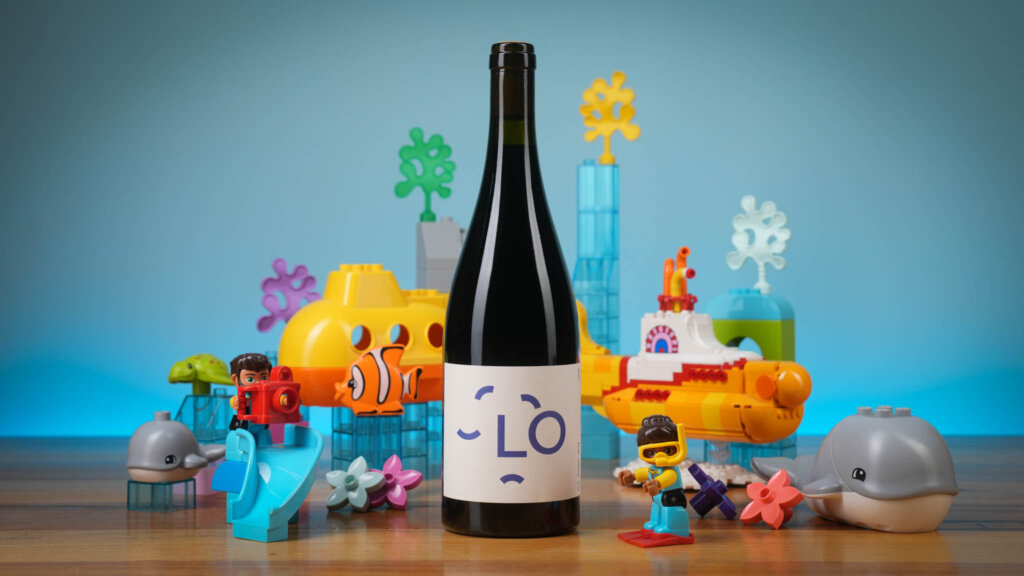
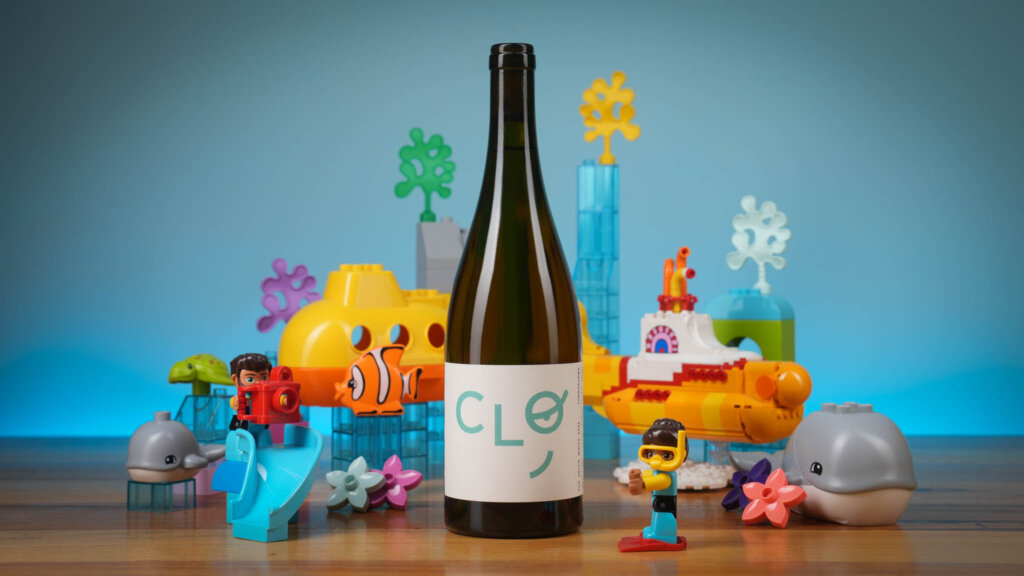
2023 Clo ‘Bordo’ Red, Orange/Tumbarumba RRP $38
Burton, Carey, Brogno, and Beaudoin championed this wine – an equal-parts blend of cabernet sauvignon and sauvignon blanc – among their standout selections from the tasting. Burton found impressive precision and palate assurance: “Regional aromatics with traditional maceration and really great palate length. Very pure, peppery aromatics lead to a precise, medium-bodied palate with crisp, dark red fruit and a pleasing sense of energy. There’s a real assuredness of picking time.” Carey discovered tea-like depths and inviting structure. “Black tea and tomato leaf on the nose, with fine tannins weaving through the palate – a cup of perfectly brewed black tea. It’s got length and entices you back for more.” Light to medium-bodied. Brogno appreciated the silky elegance. “This wine has stalky, tomato leafy character, it’s silky and well balanced, with rich vanilla expression both aromatically and on the palate.” Beaudoin was drawn to the aromatic freshness and textural grace. “Olives and grass on the nose, ripe berries on the palate with not too much acid. Lovely style of tannins – very soft and luxurious at first, with soft grip at the end. Finishes with dark chocolate and makes you crave the next sip.”
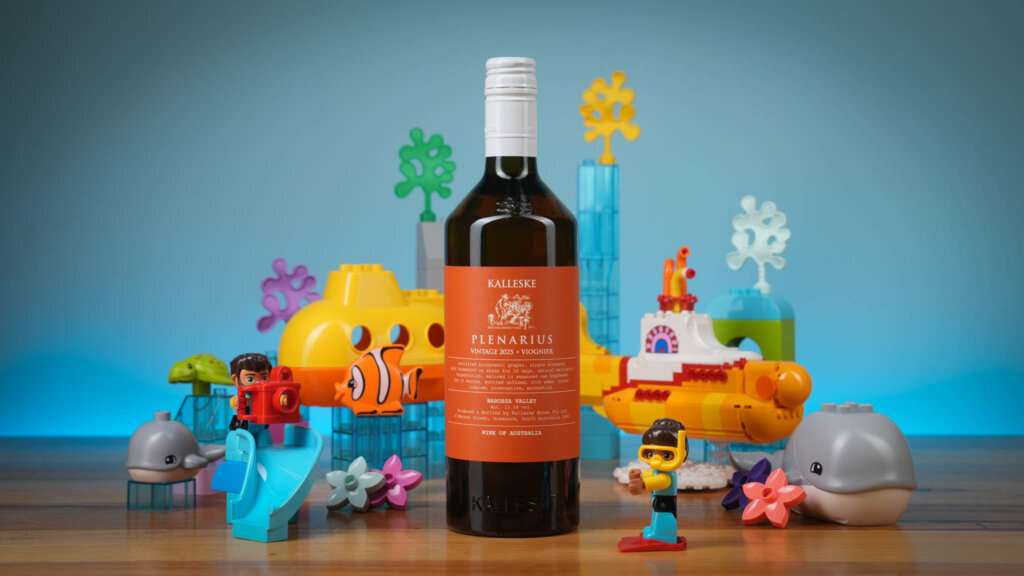
2025 Kalleske ‘Plenarius’ Viognier, Barossa Valley RRP $32
Hill, Nikolovski, Carey, and Brogno all made the cut for their top six from this tasting. Hill was captivated by the wine’s aromatic intensity and unfamiliar character: “This is not usually the sort of wine I go for – but wow, there’s something so captivating about this. So aromatic, so heady. Like wandering through a spice shop in Turkey. Saffron and jasmine florals, yellow peach, custard apple and burnt toffee. Some Turkish tea tannin too. So different. So intriguing.” Nikolovski discovered structure and savoury tension beneath the fruit. “Focused, stunning nose – dried apricots, pecans, orange tart tartin, candied peels. Palate is welcomely savoury and tight, with structured tannins that dry out any expectation of sweetness. It feels like a richer wine than it is.” Carey appreciated the integrated phenolics and SE Asian versatility: “Spice and swooning middle eastern vibes. The phenolics here are really integrated with the fruit. Lovely grip with sultry, sun-kissed melon. Would pair really nicely with south east Asian cuisine and hold its own to spice.” Brogno was drawn to the wine’s refreshing complexity. “The most divine golden colour in the glass. The oxidative quality is particularly alluring. It’s rich but still really refreshing – candied pineapples and apricots that are sweet but don’t overpower, with enough room for the subtle brine-y flavour that follows.”
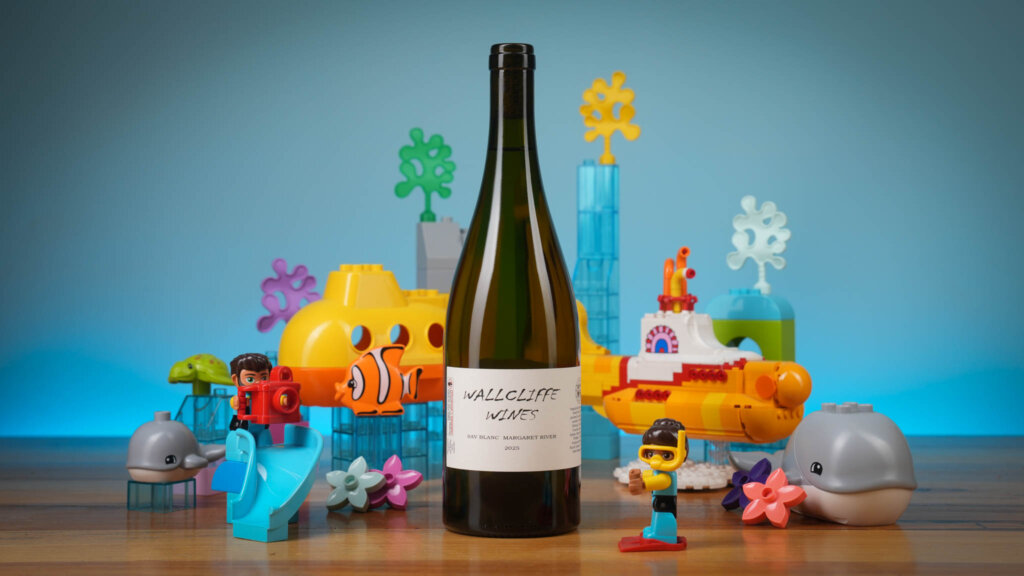
2025 Wallcliffe Wines Sav Blanc, Margaret River $45 RRP
Brogno, Beaudoin, and Maw featured this among their finest six selections. “Pale lemon with tingling acidity that is balanced with a very delicious salted character,” Brogno began, finding crystalline minerality and restrained oak influence. “There is a lovely crystalline element to this wine, and you can really taste the very rocky soil. The influence of oak is present but not overpowering, and the slight creamy vanilla flavour is a highlight.” Beaudoin was struck by the dynamic contrast between aromatics and palate. “Very rich aromas of toffee and bruised apple with a very prominent nuttiness,” she said, “yet there is a surprising brightness on the palate. Soft creamy notes with searing acid to finish. This style of white wine is one that I first fell in love with – there is real difference on the nose and palate that changes each time you go back for more.” Maw celebrated the wine’s intricate layering and energy. “Rose water and raw baking spices dance on the nose like a market lane in Morocco,” he observed, “followed by warm spring air drifting through wild meadows. The palate has a zippy contrast full of coriander seed, cardamom leaf, lemon meringue tart, raw almonds, white rose, new spring jasmine, white chocolate, under-ripe pineapple, green apple seed and chalky grippy minerality. There is just so much going on in the glass from so many different directions – it’s exciting and demanding.”
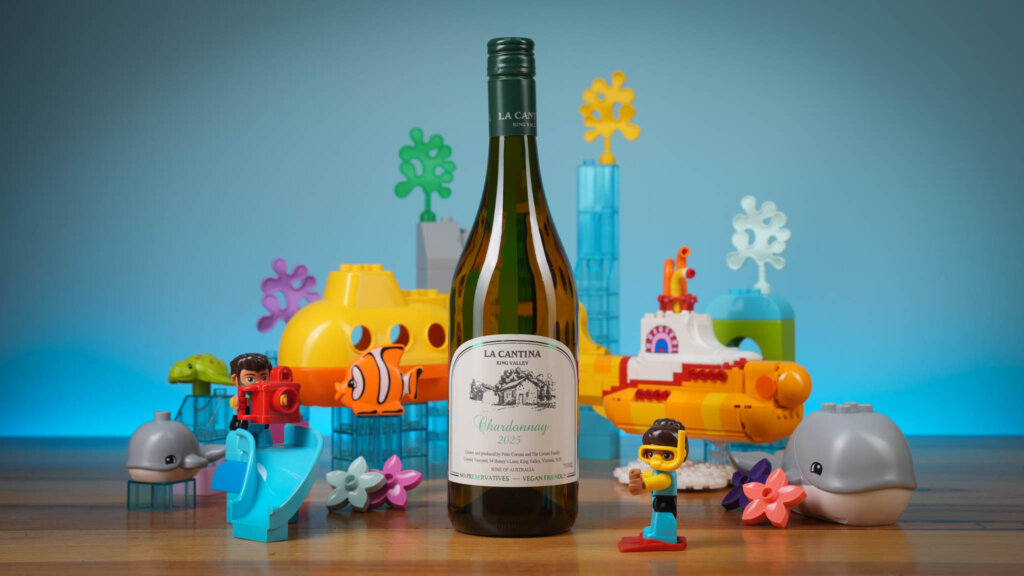
2025 La Cantina Chardonnay, King Valley $26 RRP
Hill and Nikolovski both brought this into their standout selections. Hill was captivated by the wine’s aromatic charm and textural energy. “Wow. So aromatic. This reminds me of trying to decide between the apple Danish and the almond croissant at the boulangerie,” he said. “All buttery, tangy and salty at the same time. It sums up the best of what zero-sulphur wines are all about – idiosyncracy and energy. Full throttle flavour, but so coiled and fresh.” Nikolovski discovered lush complexity wrapped in mineral stillness. “The nose is leesy, nutty and inviting,” she described, “it flows over you like a salty wave. Biscuits, quince and pistachios. Lush beach vibes.” The wine was “wrapped in mineral air and marshmallow clouds,” she continued, “complemented by gentle reductiveness. It leaves my palate feeling cooled, and I’d enjoy this on a stifling hot day under an umbrella near the ocean eating fish chicharrónes.”
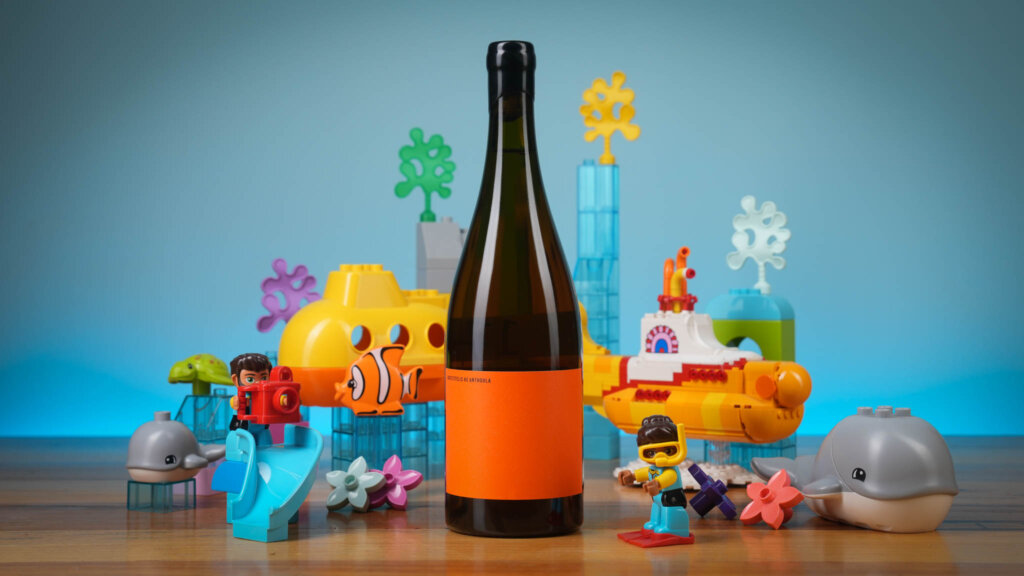
2025 Aristotelis ke Anthoula ‘Mandarin’ Riesling, Murrumbateman $42 RRP
Hill and Beaudoin both claimed this among their top six picks. Hill was captivated by the aromatic intensity and textural balance. “Wonderfully aromatic,” he began, “like a just-opened tin of candied pineapple. I love the weight of this, paired with some tangy acidity and lightly bitter phenolics. Some exotic florals too – jasmine, violet and tuberose. Give me this and something spicy, I’m sorted.” Beaudoin discovered remarkable fruit quality beneath the surface aromatics. “Orange sherbet is the first aroma I sense,” she said, “followed by a touch of smoke. The fruit quality on the palate is amazing – apricot and honeysuckle – with a soft tannic structure that leaves me salivating.” She continued, “This is a stunning example of how maceration matched with great quality grapes can create stellar food-pairing wines.”
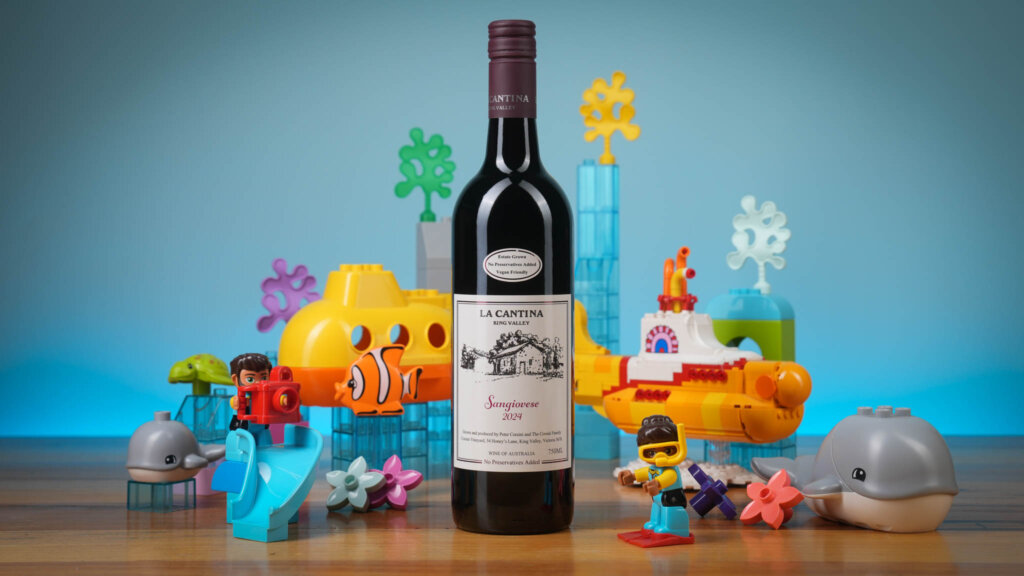
2024 La Cantina Sangiovese, King Valley $28 RRP
Beaudoin and Maw both selected this as part of their standout six picks. Beaudoin was drawn to the wine’s classical rustic character and hydrating freshness. “Intensely classical and rustic,” she began, “I immediately taste stewed cherries, followed by tobacco and vanilla. Despite big, bold flavours, the wine still feels hydrating with just the softest tannic grip at the finish.” She continued, “I wanna sit around a fire and get cozy.” Maw celebrated the wine’s complexity and focused energy. “This wine is so utterly unique,” he said. “It’s dark fruited but full of youthful components – Sovereign Hill raspberry drops, cherry cola, new leather, wet slate, pomegranate seeds, blackforest cake, fresh szechuan peppercorn and perfectly ripe blood plum.” The palate, he noted, was “incredibly focused with vivacious raspberry drop acidity, cocoa husk, fine-grained and playful tannins, bright energy, fresh violets and cherry cola. Shoyu ramen stock umami carrying the rest of the experience.”
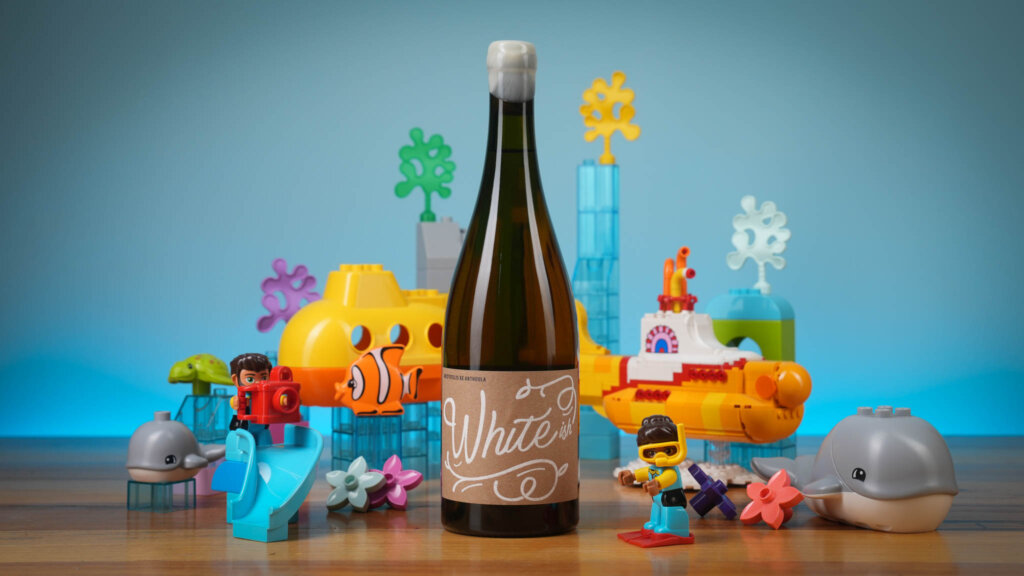
2025 Aristotelis ke Anthoula ‘White-ish’ Fiano, Gundagai $32 RRP
Beaudoin and Maw landed this in their top six selections. Beaudoin was captivated by the wine’s tropical character and textural balance. “The wine feels quite tropical,” she said, “with grapefruit and hibiscus jumping out at me. This initial impression is backed up with rich creaminess and a pleasant, refreshing bout of acid to finish.” Maw celebrated the wine’s demanding energy and aromatic intrigue. “Incredible energy on the palate demanding your attention with a razor-sharp mix of young citrus,” he began. “The nose is shy with frangipan, sea spray, paw paw and Parmesan rind, making you want to dive deeper. Then the palate attacks – prickly pear, cantaloupe, pineapple core, Vietnamese mint, white watermelon rind and super impressive length.” He continued, “A gentle frizante carries all its intrigue, and the wine doesn’t give up.”
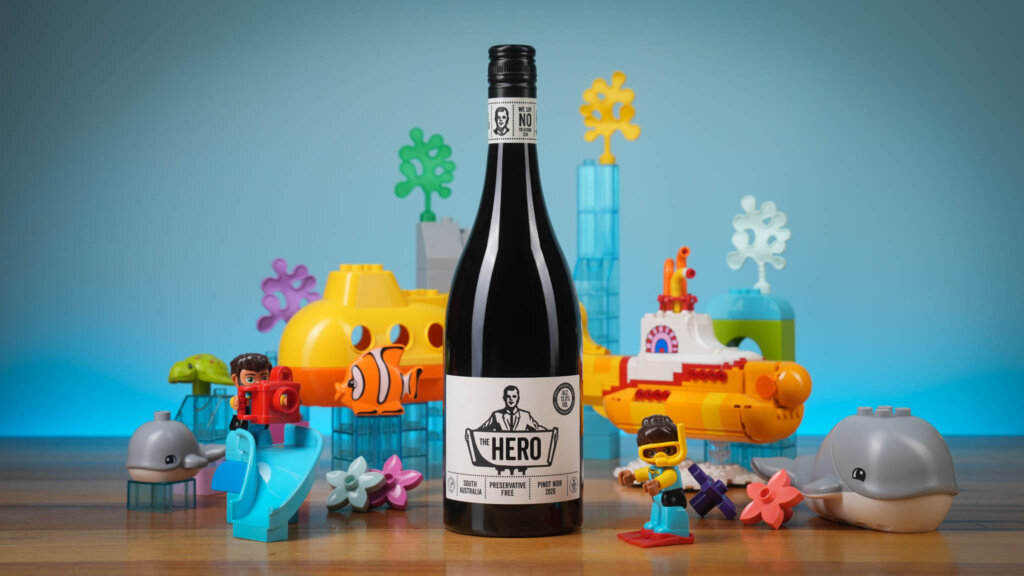
2026 The Hero Pinot Noir, South Australia $18.99 RRP
Both Hill and Nikolovski counted this among their standout selections from the tasting. Hill was struck by the wine’s lifted floral character and light-footed concentration. “Wonderfully lifted and floral,” he began, “this is early spring – roses and apple blossoms. Gives ripe watermelon, toffee apple, white cherry and tangy red plum. Some buttery pastry gives some shape. Quite concentrated, but light on its feet, like only the best zero-sulphur wines can achieve.” Nikolovski appreciated the wine’s sense of place and textural flow. “There is a distinct sense of place to this wine,” she said. “Rhubarb and watermelon, not too confected, not too savoury, simply balanced. Dusty tannins gently cradle the wine. There is a fresh aspect without feeling watered down or weak.” She continued, “The palate flows seamlessly. Toasted cashews on the finish with a refreshing acidity. It stands out in a line-up where the one glass blends into another.”
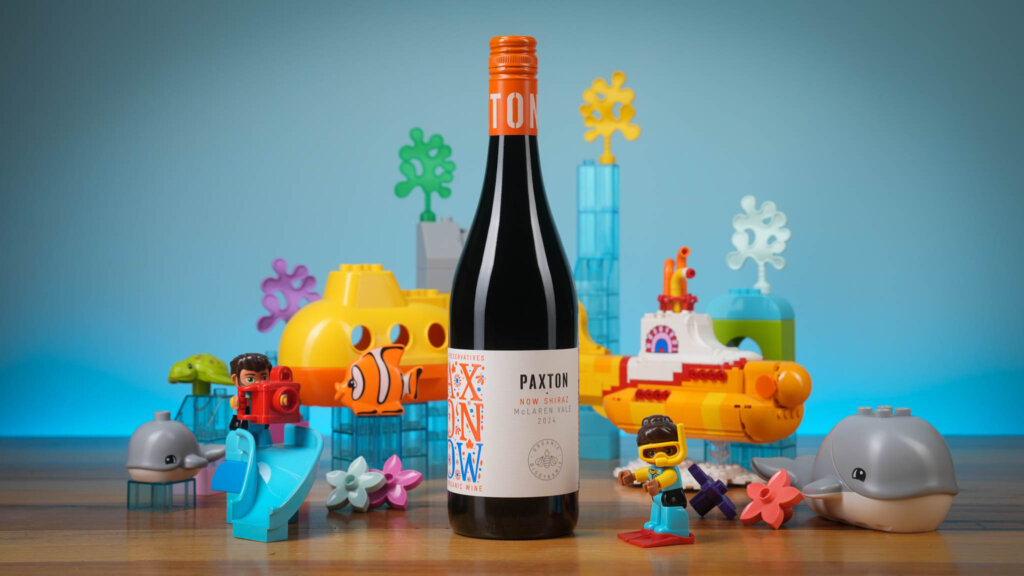
2024 Paxton ‘Now’ Shiraz, McLaren Vale $25 RRP
Hill and Maw earned this a place in their top six selections. Hill was captivated by the wine’s rare balance of concentration and elegance. “Has that rare combination of concentration and levity,” he said, “that the best natural wines showcase. Quite a vegetal nose, like a tray of slow-braised fennel and beetroot. But the palate is super elegant – ripe raspberries and wild strawberries, boysenberry and alpine herbs. A little cinnamon and cardamom spice. Really nice detail. Changing constantly.” Maw discovered a soothing harmony in the wine’s layered complexity. “There’s a living and breathing aspect to this wine I find incredibly soothing,” he began. “The ripest mulberries with raw star anise dancing across the nose, freshly baked blueberry muffins coming straight out of the oven and warm roof slate minerality. The palate is full and generous, yet elegantly quiet – it’s as soothing as running your hands under warm water in the dead of winter.” He continued, “Tannins are gentle, just enough to make you think. The balance in this wine is harmonious, fruit, body, acid and tannin all work seamlessly together providing a complex yet uncomplicated drinking experience.”
Carey singled this out as one of her top six selections. “Bosc pears, soft herbs and spring breeze,” she began, “the nose is immediately appealing. Orchard fruits, fresh from the tree on a warm summer’s day. Layers and lovely texture.” Carey discovered a refined balance in the wine’s textural profile. “There’s balance, softness – yet not soft,” she said. “Pillowy, so to speak. White peach bellini. A lovely spring Sunday lunch wine.”
Brogno claimed this among her standout six picks. “A delicious and ripe expression,” she began, “with a stunning inky black colour that grips to the sides of the glass. The wine is sweet, yet balanced, with candied aromas of blackberry jam.” She noted, “It’s rich on the palate, but still refreshing, with a lovely savoury spiciness and a silky finish. Looks dark and scary, but surprises you with its prettiness.”
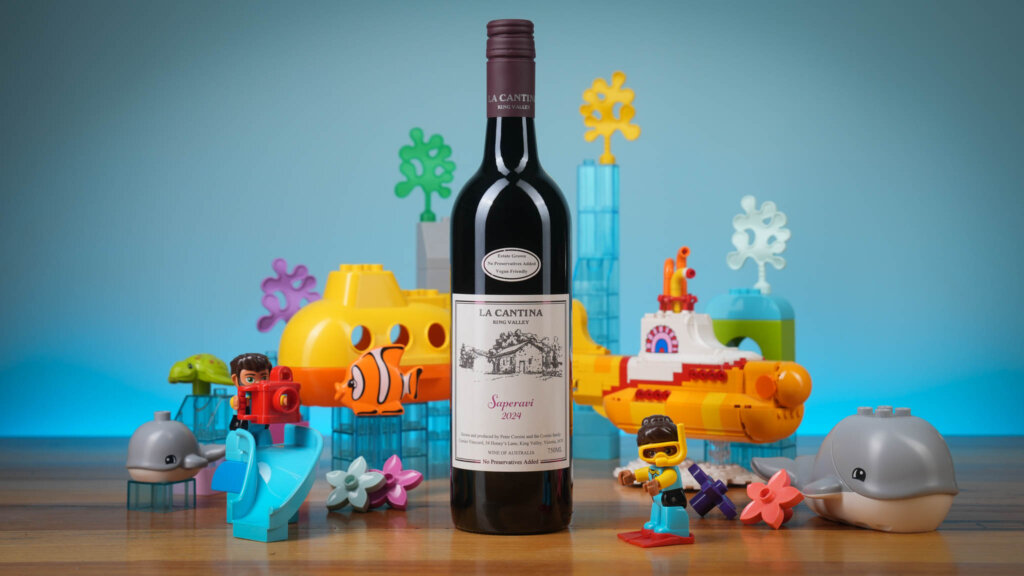
2024 La Cantina Saperavi, King Valley $30 RRP
Burgess-Moore selected this as one of his top six wines from the tasting. “Cherry and plum compote with a spicy, slightly stewy edge,” he began, “and honestly, I’m into it. Concentrated, energetic and ripe as hell, with a fine tannin line keeping the whole thing tight. Oak stays in its lane, beautifully integrated.” Burgess-Moore celebrated the wine’s confident restraint. “It’s a big wine with plenty to say, but no need to yell,” he noted. “Soft hands, sharp execution and real complexity without all the noise. Big personality. Zero chaos. Get amongst it.”
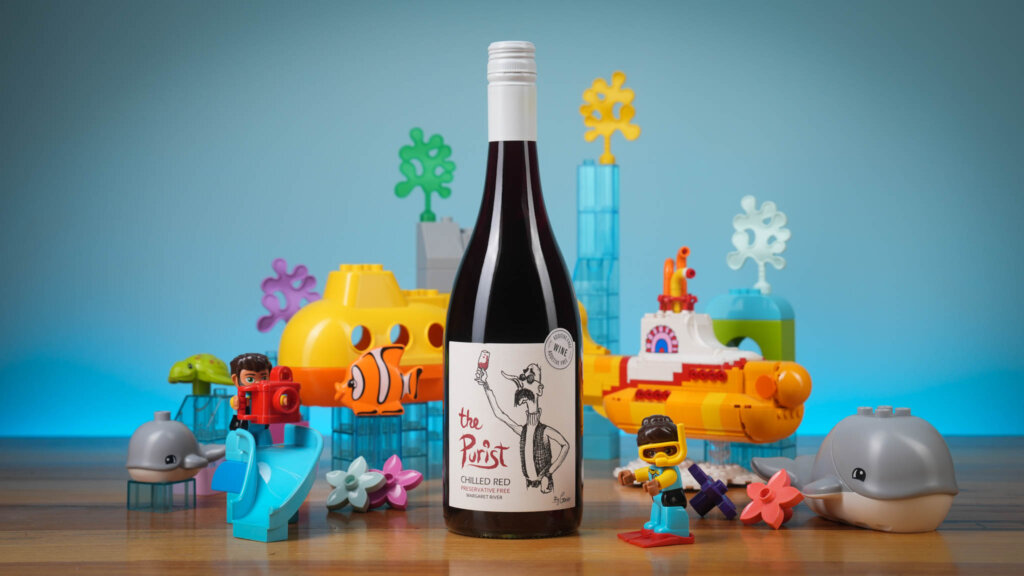
2026 By Gordo ‘The Purist’ Chilled Red, Margaret River $30 RRP
Brogno and Burgess-Moore both featured this among their top six selections. “Lovely rich aromatics with some very fun, grippy tannin,” Brogno began. “The wine is light and refreshing, and very persistent. It’s silky mouthfeel is a highlight, as is the prominent crunchy pomegranate and cherry notes that linger on.” Burgess-Moore celebrated the wine’s unexpected elegance and energy. “Bright cherry, crushed red fruit and all the plushness you could want,” he said. “Elegant, but not boring – with sweet, juicy fruit and vanillin oak landing in perfect sync. Fresh, alive and full of good energy.” He continued, “It gets me razzed. A bit like Australian Crawl getting back together – unexpected, exciting and suddenly everyone’s paying attention.”
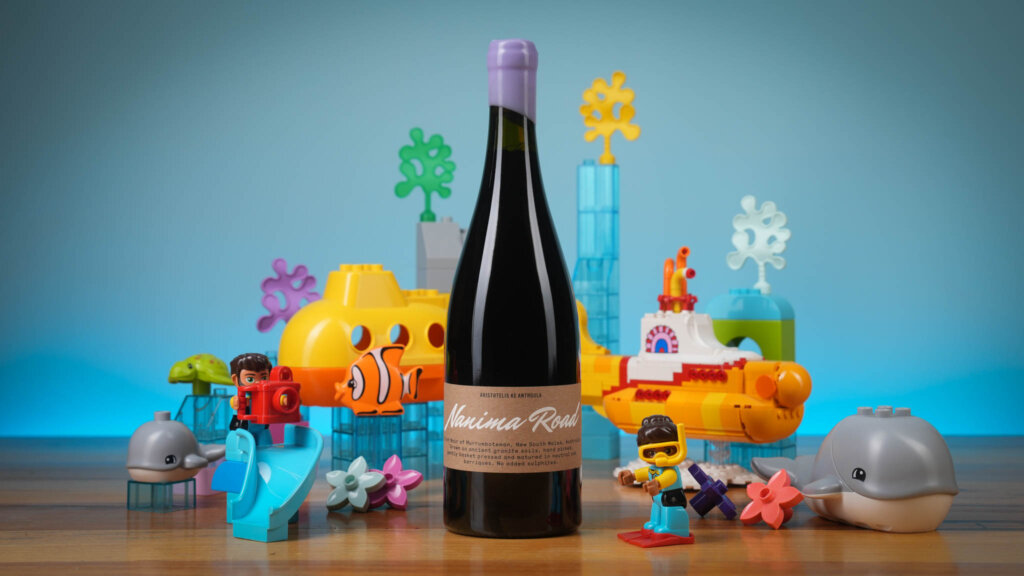
2025 Aristotelis ke Anthoula ‘Nanima Road’ Pinot Noir, Canberra District $45 RRP
Hill brought this into his standout top six selections from the day. “Super tart and fresh,” he observed, “pulsating energy, with some wild herbal nuance. The acidity feels like a breath of fresh alpine air.” Hill’s palate revealed delicate red fruit and mineral tension. “Red currants, rosehip, crab-apples in full bloom,” he continued, “underscored by a wet river-stone minerality. Feels like the Jura, delivered in a local packaging. Delicious.”
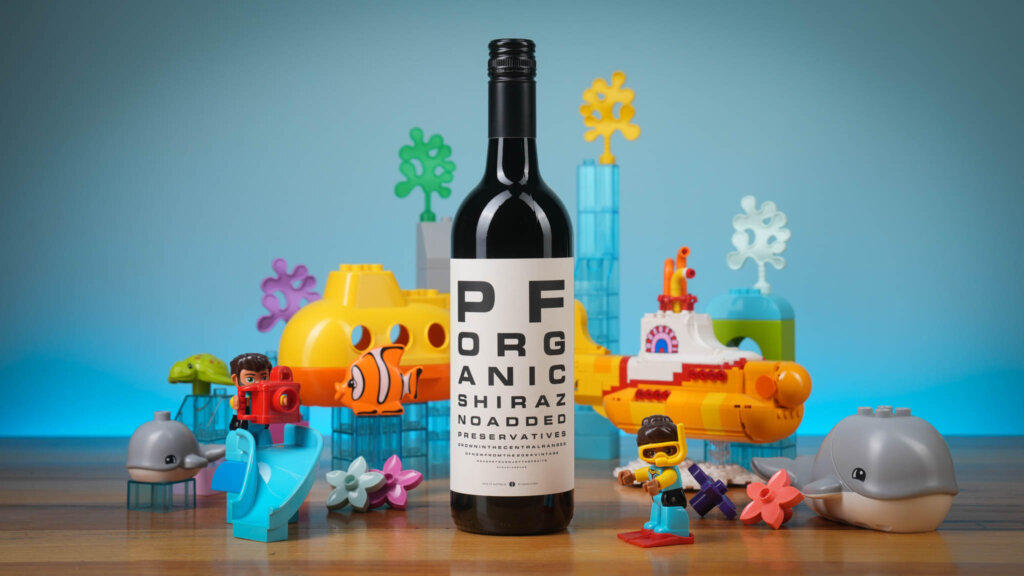
2024 Windowrie Organic Wines ‘Eyechart’ Shiraz, Central Ranges $28 RRP
Burton made this one of his top six picks. “Mix of shades of fruit,” he began, “long, with great palate persistence and high quality restrained fruit. I really like this.” Burton noted the interplay between vineyard expression and restraint. “Aromatically, there’s a mix of influence from variety and vineyard,” he said, “with the general tone being minerality and earth from the skins. The palate is resolved and beautifully composed, exposure to oxygen allowing site expression and acidity to be immediately present.” He continued, “This palate is deep and broad with supple acidity, suggesting quite ancient, more acid soil.”
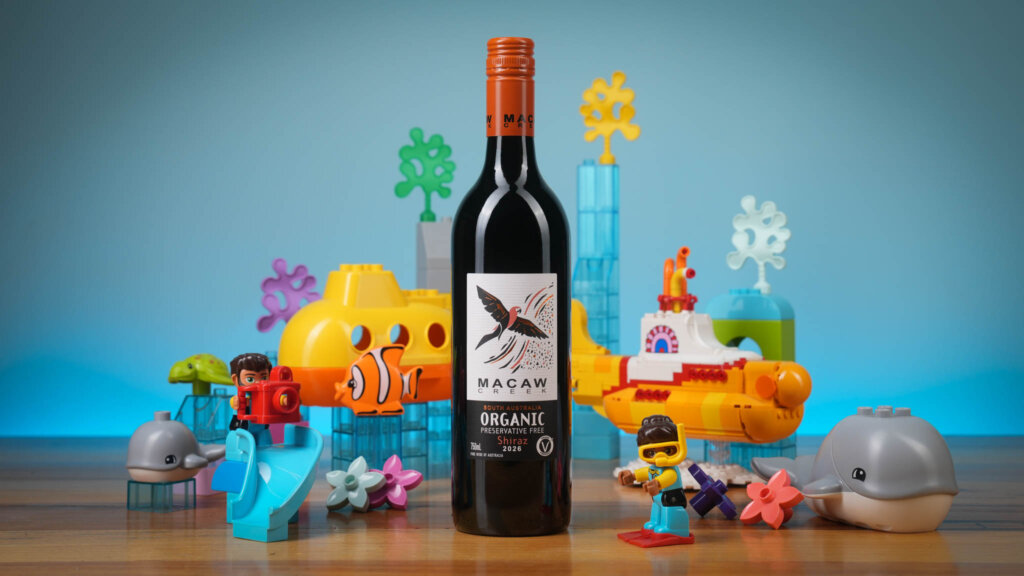
2026 Macaw Creek ‘Organic Preservative Free’ Shiraz, South Australia $21 RRP
Burgess-Moore ranked this among his standout six from the tasting. “Fresh, bright and unapologetically red,” he said, “Ripe dark fruit, a little jam, a little oak, and enough acid freshness to keep things moving. There’s elegance here, sure – but this isn’t some shy little number.” Burgess-Moore appreciated the wine’s concentrated fruit and seamless integration. “Concentrated, juicy and loaded with dark-fruited goodness,” he noted, “with oak and fruit working together like they’ve done this before. Proper red wine. Everyone needs to know.”
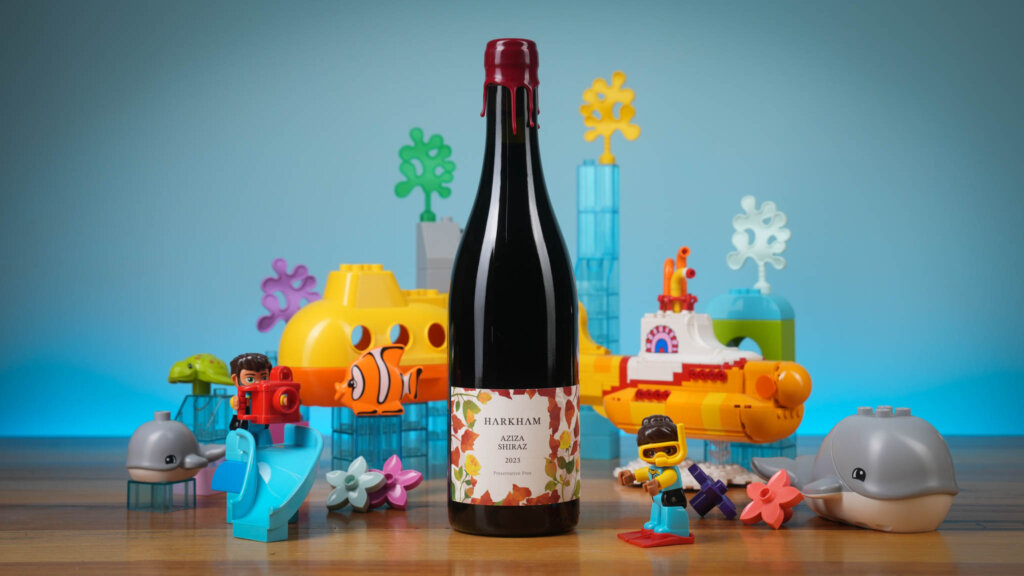
2023 Harkham ‘Aziza’ Shiraz, Hunter Valley $50 RRP
Carey featured this among her top six selections. Alpine herbs, cola and wet stone led the way, with tannins that coil on the palate. “Blackcurrants, mulberries, dried herbs,” she noted, “there’s depth too. Integrated well, composed.” Carey appreciated the wine’s measured confidence and intrigue. “It stands to attention but keeps something there to still be discovered.”
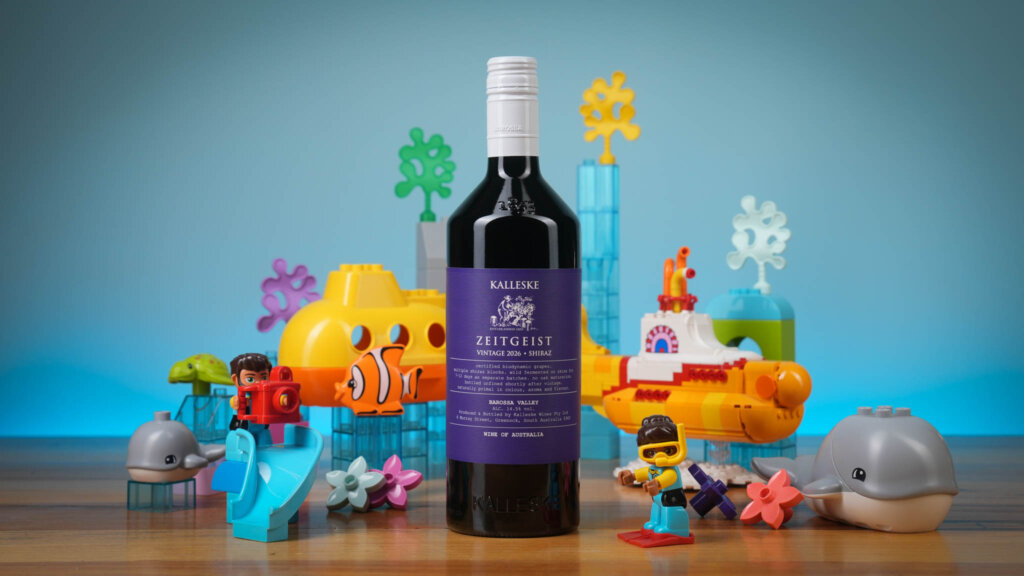
2026 Kalleske ‘Zeitgeist’ Shiraz, Barossa Valley $30 RRP
Burton counted this among his finest six selections from the day. “This has really appealing, youthful, ester-y, carbonic aromatics,” he began. “On the palate, the length of maceration has allowed for a genuine expression of minerality providing great balance to the opulence of the whole berries in the ferment.” Burton noted the wine’s distinctive textural appeal. “Olfactory notes of stalks offer a real sense of more-ishness to the back palate,” he observed. “This has been well made in an approachable and, at this stage, deliciously fruity style.”
Maw brought this into his standout selections from the tasting. “Composed but in the most contradictively tense way,” he observed, “like watching a high-wire tightrope act. I love seeing the quality of the fruit we see here take centre stage with very confident winemaking providing the backbone.” Maw discovered striking sensory complexity beneath the surface. “Wet gravel, like a playground as a kid on a summer day post-thunderstorm, is the first thing that comes to mind,” he said, “then lychee, under-ripe paw paw, young white alpine strawberries, cultured highlands cream and Mayer lemon flesh. Wonderful phenolic grip completes the palate.”
2023 Clo ‘Hello’ White, Tumbarumba $38 RRP
Carey selected this wine – an equal-parts blend of pinot gris and sauvignon blanc – among her top six picks. “Grassy notes waft from the glass,” she began, “delicate entry gives way to pomelo and lemonade fruit. Saline.” Carey appreciated the wine’s mineral precision and broad appeal. “Pithy citrus wraps around a mineral core,” she noted. “A great wine for a broad audience.”
Burgess-Moore made this one of his top six selections. “Straight-up approachable with the energy of a sound-system banger,” he said, “juicy red fruits and candied red apple bring all the nostalgic feels, while the tannins stay soft, plush and easy-going.” He discovered a charming maturity in the bottle. “There’s some bottle-aged charm here too,” he noted, “like something Dad cracked open for his 60th, except somehow cooler. Slurpy. Slippery. Ridiculously approachable. Delicious.”
Burton selected this wine in the blind lineup – from the certified organic Cobaw Ridge vineyard, submitted for the tasting to demonstrate the ageability of wines with no added sulphur or other preservatives – among his standout six picks. “There’s some attractive aromatic development here,” he observed. Beyond the wine’s notes of dark black fruits, Burton honed in on the interplay between development and herbal freshness: “The nicely leathery, tertiary characters sit beside eucalypt and the palate has a core of very direct, just-ripe acidity and phenolics.”
Nikolovski claimed this among her standout six selections, drawn to its purity and uniqueness. “Inky garnet, beautifully bright and high acid,” she began, “with blue gum honey and alpine herb elements. Smooth, fresh and seamless palate, taut tannins that make the wine persist.” She noted its versatility with rich proteins. “This would be beautiful with a med-rare flat iron steak. Or a rich roast.”
2023 Frankly ‘Kanimbla’ Rosé, South Coast $60 RRP
Burton selected this wine – a rosé made from pinot noir grown in the Blue Mountains – among his top six picks. “Very pure palate and unrestrained aromatics of inviting red fruit,” he began. “Palate is broad and supple, nicely vibrant despite the acidity. Medium-bodied with earthen red fruit, some herbaceous alpine character, and a subtle and nicely integrated impression of old wood.”
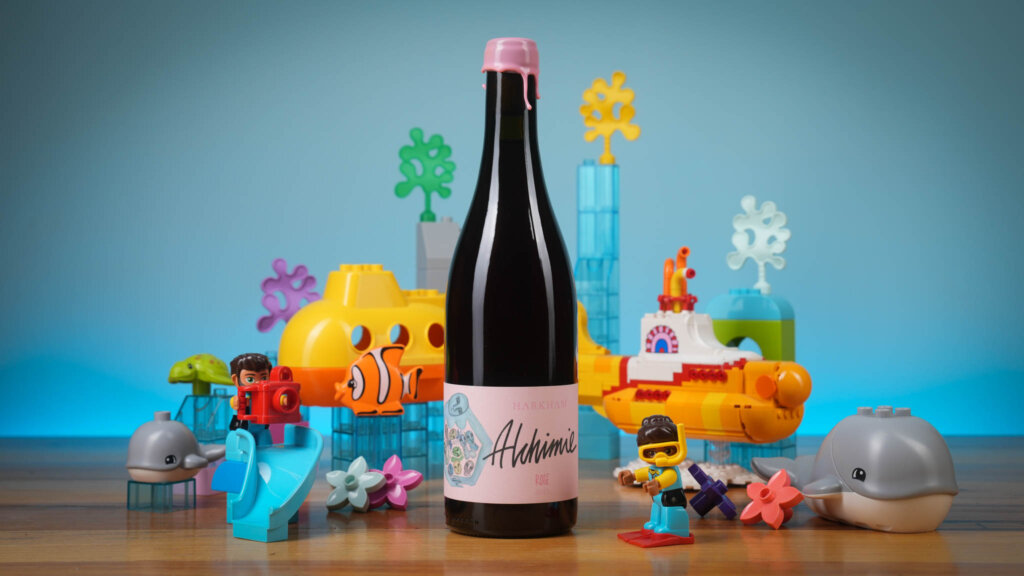
2023 Harkham ‘Alchimie’ Rosé, Hunter Valley $35 RRP
Carey brought this into her standout six selections. “A fun wine,” she began, “cranberries and red apples invite. The palate is slippery – like taking a bite into a gala apple. Mediterranean summer, herbal scrub. Red cherries and raspberry.” Carey appreciated the wine’s joyful character. “A wine to bring a smile,” she noted. “Afternoon garden party.”
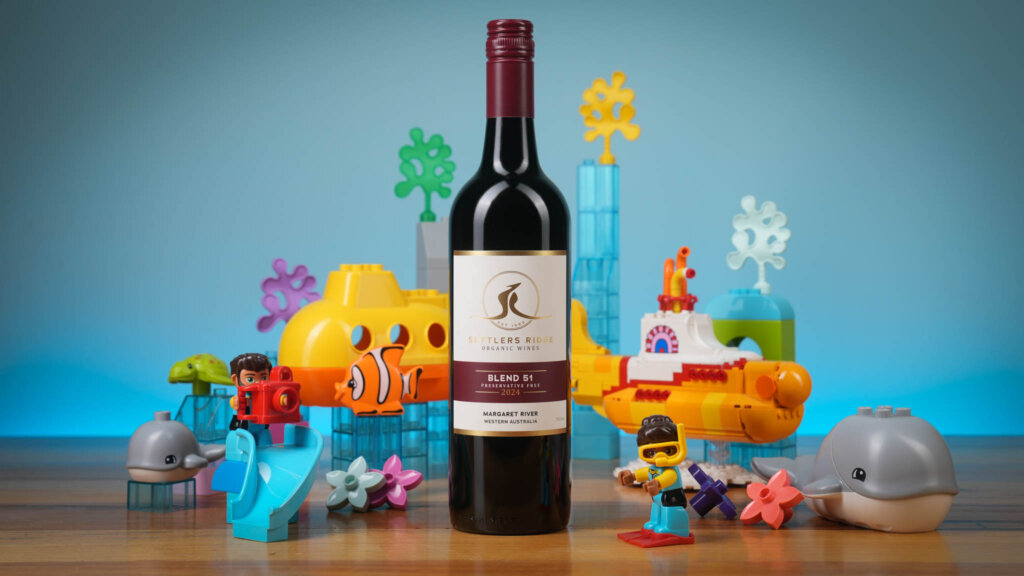
2024 Settlers Ridge Organic Wines ‘Blend 51’, Margaret River $30 RRP
Burgess-Moore selected this wine – a blend of cabernet sauvignon and shiraz – among his finest six picks. “Briar, cherry skin and bright red fruit kick things off,” he began, “before cedar, jammy fruit and boysenberry wine gums take you straight into bliss-bomb territory. There’s nostalgia, there’s richness and there’s enough freshness to stop it getting heavy.” Burgess-Moore celebrated the wine’s approachable intensity. “Concentrated and showy, but still easy to get around,” he noted. “Big flavour. Good times. Who needs preservatives?”
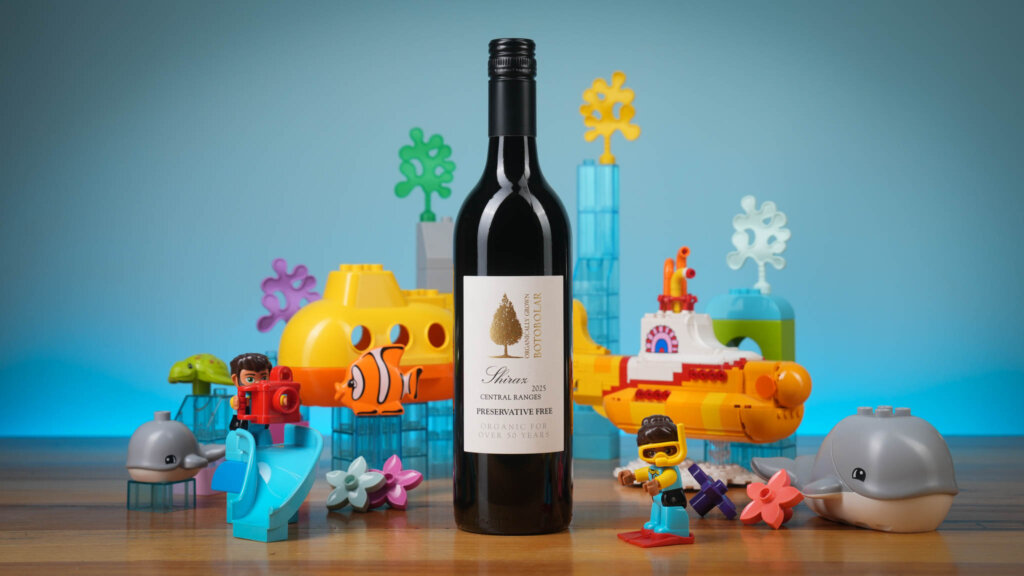
2025 Botobolar Shiraz, Central Ranges $25 RRP
Brogno claimed this among her top six selections. “A wonderful expression of a classical Australian red wine,” she began, “with beautiful minty eucalypt flavour. There was such a clear and delicious spice to this wine – cumin seed, curry leaves, aniseed.” Brogno appreciated the wine’s integrated oak and layered structure. “The influence of oak is a highlight,” she noted, “and although spiced, it is very balanced. The length goes on and on and on!”
Nikolovski selected this among her standout six picks. “Deeper earthy aspect, dark chocolate, hay,” she began, “again it feels more alive and unique than the others. Cranberries, cherries, integrated delicate tannin.” Nikolovski appreciated the wine’s transformative complexity. “I would drink this on its own,” she noted, “and let it unweave and transform in the glass.”
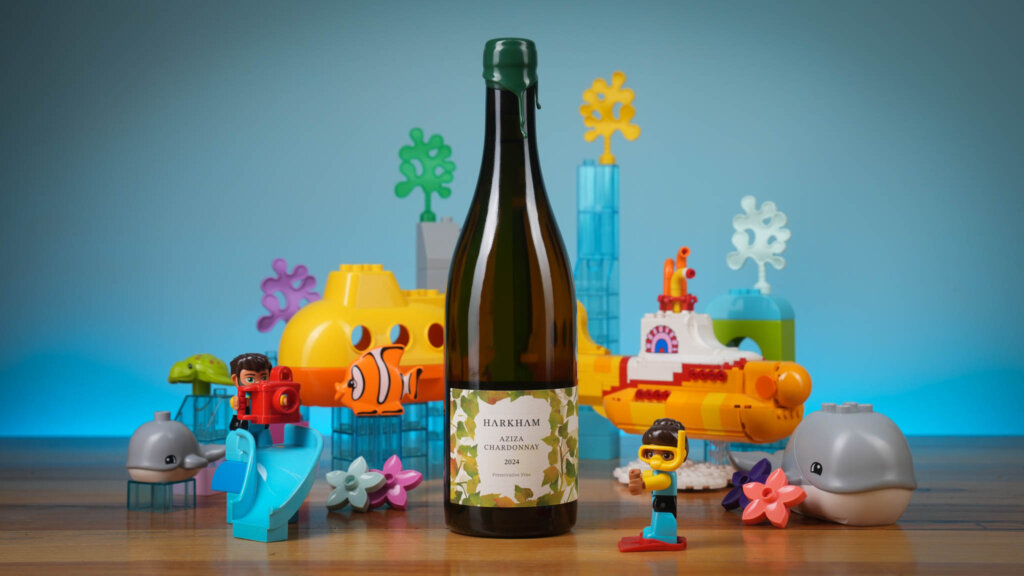
2024 Harkham ‘Aziza’ Chardonnay, Hunter Valley $45 RRP
Burgess-Moore made this one of his top six selections from the day. “Fairy floss. Candied carnival popcorn. Sweet yellow fruit,” he began. “Nothing holding it back. Vanillin oak and lashings of malolactic fermentation bring a creamy, waxy, full-throttle texture.” Burgess-Moore celebrated the wine’s unapologetic richness. “The fruit is seriously ripe, the oak is unapologetic,” he said, “and the whole thing leans hard into rich, classical drinking. Full-bodied, oaky and absolutely not here to play subtle.” He noted with wry appreciation, “A crowd pleasing favourite – and honestly, you can see why. Drink up.”
2025 Mt. Bera ‘À la Naturale’ Grüner Veltliner, Adelaide Hills $48 RRP
Maw claimed this wine – which spent 160 days on skins in amphora – among his standout six selections from the tasting. “So much personality here,” he began, “and not just in its alluring colours of sunset amber with flecks of green like the grass touching the sky. Bruised green mangos dominate the nose with preserved lemon carrying its energy.” Maw discovered a layered sensory journey. “It’s so, so complex,” he said, “like walking through a fruit market in the north of Vietnam in the late afternoon, durian more than likely being cut open 300 metres away. The palate is held together with copper minerality, fox-fur-like texture and grippy, enveloping tannins.” He continued, “The palate has the same esoteric fruit-salad complexity with a mix of almost char-grilled tropical fruits. There’s a wild, unhinged edge to this wine which I find so captivating – it’s like watching a live jazz band perform its greatest album for the last time.”
Nikolovski selected this among her top six picks from the day. “Rose petals, flowery meadow, biscuits, fresh cut grass,” she began. “It transports me to a higher altitude. Palate has weight with a refreshing balanced acidity.” Nikolovski appreciated the wine’s textural coherence and food versatility. “I love the uniformity, it stays together,” she noted. “I would enjoy this with a lentil salad, maybe with some pan-seared line-caught fish.”
2025 Aristotelis ke Anthoula ‘Blood Orange’, Gundagai $38 RRP
Beaudoin brought this wine – a skin-contact blend of 50% fiano, 30% vermentino, and 20% nero d’avola – into her standout six selections. “I love this style,” she began, “strawberries stewed and fresh, herbaceous notes of thyme and rosemary that leave the impression the wine was fermented with stalks.” Beaudoin appreciated the wine’s textural complexity and acid-driven energy. “There is plenty of acid,” she said, “dare I say volatility, but I feel this is nicely balanced with plenty of fruit present. It would be perfectly accompanied by a crisp autumn evening.”
2025 Mt Bera ‘À la Naturale’ Tempranillo, Adelaide Hills $48 RRP
Burton selected this wine – which spent 160 days on skins in amphora – as one of his top six picks from the tasting. “Traditionally macerated red with plenty of sweet fruit on the palate,” he observed, “a kiss of stalk tannin gives the palate lovely shape and direction.” Burton noted the wine’s youthful aromatic expression. “There’s a pleasing degree of unbound aromatic intensity that nicely communicates the wine’s youth.”
The backstory
For most of history, wine had no added preservatives in the modern sense. Not as a claim on the label – as the plain fact of it. Nobody was measuring out sulphur dioxide to stop a wine turning bad; they relied on what the grape already gave them. What’s changed isn’t the wine. It’s what the absence of an additive is now asked to mean: a philosophy for some winemakers, a shelf claim for others, and – thanks to two Australian terms that sound interchangeable but aren’t – a source of real confusion for the people buying the bottle. Wine Australia’s own labelling guidance draws a hard line between ‘preservative free’ and ‘no added preservatives’: the first should only be claimed when there is no quantifiable sulphur dioxide in the wine at all; the second may be acceptable when a small amount occurs naturally during fermentation, so long as nothing was deliberately added. There’s already something odd about that pairing: dictionaries define ‘preservative’ as something added in the first place, which makes ‘no added preservatives’ sound almost redundant on its face – yet it’s the easier, more common claim to make, while ‘preservative free’ quietly sets the harder bar.
Before the additive
Wine has been made for roughly 8,000 years. Sulphur has only been a regular tool in the cellar for a few hundred of them, and a measured, dosed additive for barely 100 to 150. For most of wine’s long history, stability came largely from what was already in the grape rather than from anything added to it: alcohol and acidity make a poor home for spoilage bacteria, and tannin adds its own resistance. Even by today’s strict Australian standard, wine from that long sulphur-free era would fall under ‘no added preservatives’ rather than the stricter ‘preservative free’ claim – because any fermented wine naturally produces a trace of sulphur as a byproduct of fermentation itself, whether or not a winemaker ever adds any.
That doesn’t mean sulphur is a modern intruder into an otherwise untouched craft. Its story with wine actually starts well before anyone thought to put it in the liquid itself.
Sulphur enters the cellar – then the wine
Sulphur’s association with purification predates its use in wine by thousands of years. Burning it produces a sharp, acrid smoke, and ancient cultures treated that smoke as a cleanser long before anyone thought to put it anywhere near a wine cask. The Greek poet Homer, in the Odyssey (written around the 8th to 7th century BCE), has his hero fumigate his hall with burning sulphur after a slaughter, treating the smoke as something that wards off disease and bad luck. The Roman writer Pliny the Elder – whose encyclopaedic Natural History, written around 2,000 years ago, is the single most important surviving record of Roman-era wine practice – lists sulphur among the tools used to bleach cloth, treat skin complaints, and purify a room after illness.
The first hard evidence of sulphur used specifically to keep wine arrives much later, and as a legal document rather than a technique. In 1487, Emperor Frederick III issued an ordinance regulating a practice already clearly underway in German cellars – the law wasn’t introducing sulphuring, it was catching up to something winemakers were already doing and trying to put guardrails around it. Wine could be run into a sulphured cask to improve its keeping, once only, at a specified dose, and the seller had to disclose it. Use more than that, and the penalty was severe: the cask staved in, the wine dumped, a fine to follow. The concern wasn’t that sulphur was dangerous to drink – it was about fraud and ruined wine. An oversulphured cask was a cheat on the buyer, not a health hazard.
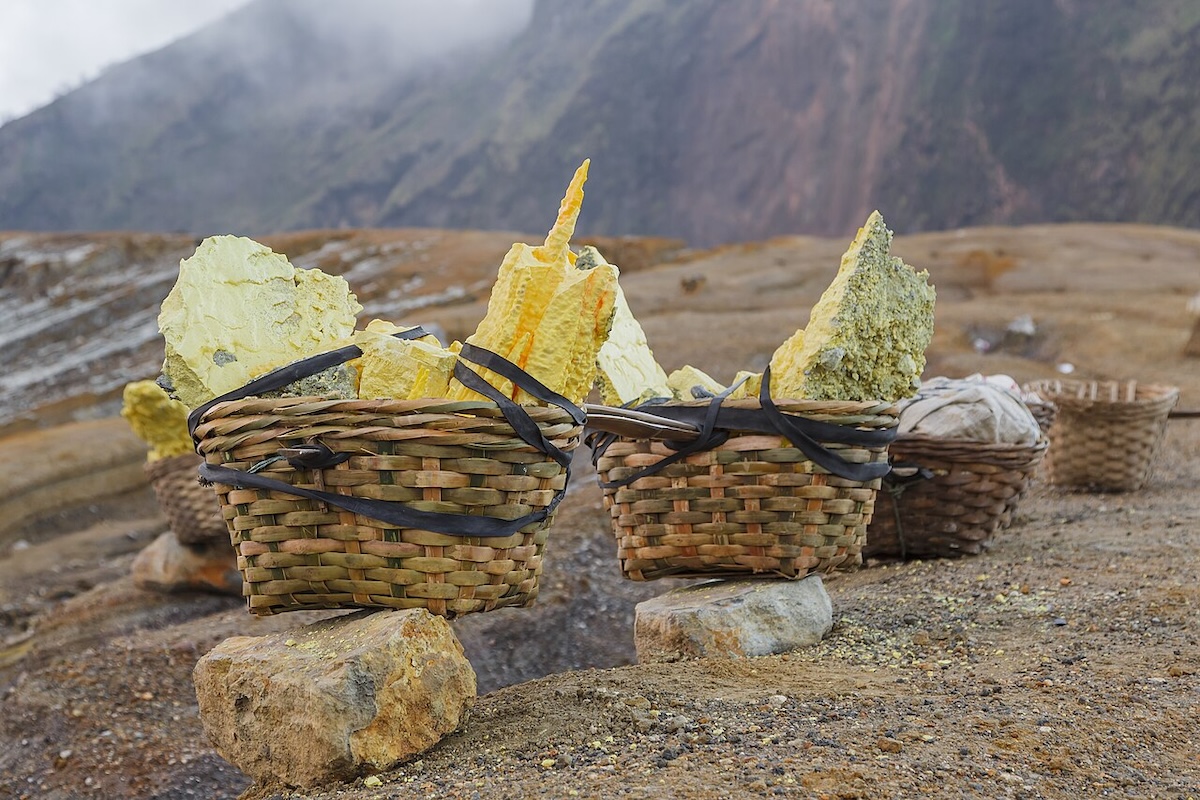
Above: Raw sulphur, freshly mined from the Ijen volcano in East Java, Indonesia. (Photo by CEphoto, Uwe Aranas.) Opposite: Emperor Frederick III, who introduced the first laws to regulate the use of sulphur in wine.
France picked up the practice as a foreign curiosity around 1600, when the agricultural writer Olivier de Serres described Germans burning sulphur on a brazier and funnelling the smoke into a barrel through the bunghole so the wine would “keep for a long time in good condition.” It was the Dutch, trading in sweet white wine bound for northern ports, who turned it into routine commerce during the seventeenth century – heavily sulphuring must to arrest fermentation and preserve sugar for the voyage, using a sulphur-soaked cloth burned inside the barrel. The doses got so aggressive that the Dutch States General banned that heavily sulphured must in 1613, though the sulphuring of barrels carried on. Once again, the objection was to the dose, not to sulphur itself.
The chemistry behind all of this arrived last, explaining what centuries of cellar practice had already worked out by trial and error. The Austrian chemist Maximilian Ripper published a reliable laboratory method in 1892 for measuring exactly how much free sulphur dioxide a wine contained – the first time sulphuring stopped being guesswork and became a number. A UK research station at Chipping Campden developed a measured sulphite solution for home fruit preservation in the 1920s, and in 1940, amid a wartime glut of fruit and no sugar to preserve it any other way, that solution was turned into the pre-dosed Campden tablet – a simple, repeatable way to add a precise amount of sulphur rather than judging it by eye. The step from preserving fruit to stabilising wine was a very short sidestep. Between them, laboratory measurement and the tablet turned an old, empirical smoke into a measured, legally defined additive – the tool that made stable, shippable, long-lived wine possible at industrial scale. That’s the world the Beaujolais chemist and winemaker Jules Chauvet was reacting against nearly five hundred years after Frederick III first tried to cap the dose: not sulphur’s existence, but its overuse in the name of volume and predictability.
Hygiene as philosophy
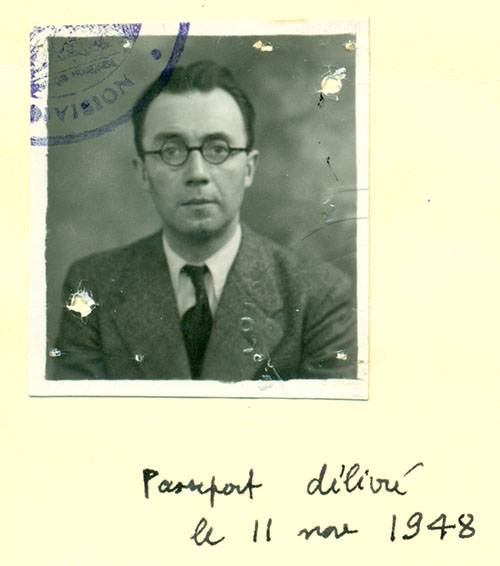
Chauvet was a Beaujolais négociant from a wine grower-merchant family, with an unusual second life as a trained research chemist. From the 1940s, in the years following the Second World War, until his death in 1989, he built a science-based case against the industrial version of his own region’s wine: heavy chaptalisation, cultured yeast, and – above all – heavy sulphuring at harvest, increasingly built around a business model that favoured Beaujolais Nouveau, wine made to be sold fast rather than kept.
Chauvet’s objection wasn’t to sulphur itself so much as to what it let winemakers get away with. Drown the must in sulphur dioxide at harvest and you kill off native yeast along with everything else, forcing reliance on cultured strains and flattening whatever a vineyard’s own native microflora might have contributed to the wine. His alternative substituted diligence for chemistry: ripe, carefully sorted fruit and obsessive cellar hygiene doing the protective work sulphur had been doing instead, so native yeast could get on with fermentation undisturbed. The idea Chauvet incubated became a movement in the hands of the winemakers who took his methods into their own cellars, among them the Beaujolais grower Marcel Lapierre, working from around 1980–81. It would later be called the natural wine movement.
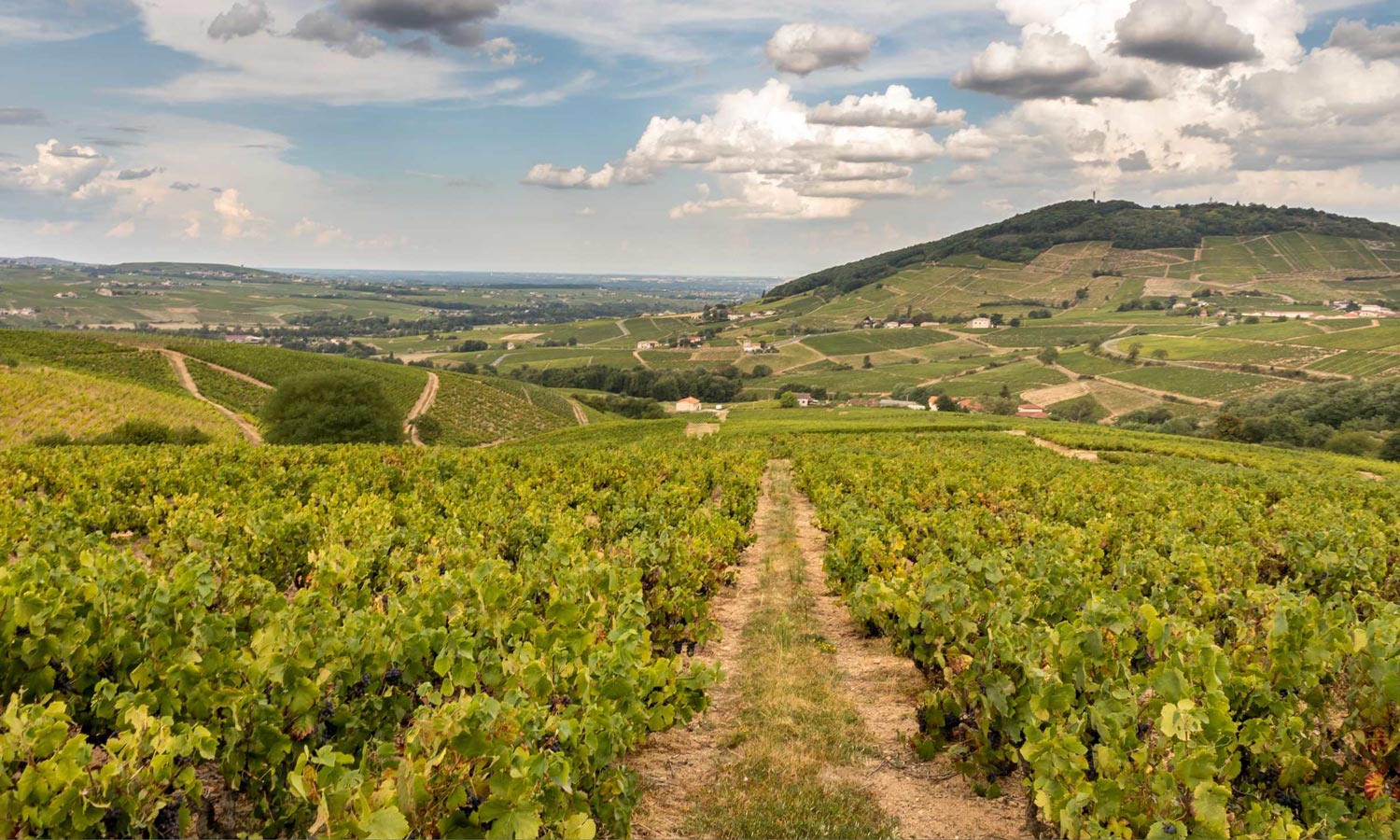
Above: Vineyards in the Beaujolais region of France – ground zero for the natural wine movement. Opposite: Jules Chauvet, the father of the French natural wine movement.
The movement’s vocabulary was older than the movement. ‘Vin naturel’ was already a fighting phrase in 1907, when winegrowers across southern France revolted against counterfeit wine flooding the market in the wake of the phylloxera crisis – drinks fermented from imported raisins, water, industrial alcohol and chemical dyes. They demanded legal protection for ‘natural wine’, defined as the fermented juice of fresh grapes without artificial additives, and the anti-fraud laws that followed helped lead to the appellation d’origine contrôlée (AOC) system that now governs French wine. ‘Natural’ first meant ‘not adulterated’ – a long way from the modern argument over sulphur.
Sulphur entered the vocabulary later. By the late 1980s, a small number of Paris shops – “caves aux vins sans soufre”, literally ‘cellars for sulphur-free wines’ – had begun stocking bottles like Lapierre’s unsulphured Morgon, sold by word of mouth as something genuinely different. The growers themselves were already talking about ‘vin naturel’, but the shops that sold their bottles were named for the lack of sulphur.
“It’s a false debate, it all depends on the vintage.”
Even the domaine at the heart of that 1980s movement never treated zero sulphur as doctrine: Lapierre continued bottling two versions of the same wine, one sans soufre and one with a small addition for bottles that needed to travel or be cellared longer. His son Mathieu has since made the point directly himself: the sulphur question shouldn’t define natural wine at all. “C’est un faux débat, tout dépend du millésime,” he has said – literally, ‘It’s a false debate, it all depends on the vintage’. The terminology has kept shifting since. The French Association des Vins Naturels, founded in 2001 with Lapierre among its members, called for organic or biodynamic fruit and native yeast, with no other inputs – though some versions of its charter still permitted a small dose of sulphur. A stricter splinter standard, S.A.I.N.S. (Sans Aucun Intrant Ni Sulfite, literally ‘without any additives or sulphites’), arrived in 2012 with zero sulphur written into its very name. France’s first semi-official standard, Vin Méthode Nature, followed in 2020, offering two logos: wine with no sulphur added at all, or wine with a small addition only at bottling – none before or during fermentation – and total sulphur under 30 milligrams per litre. Even the country’s own attempt at an official definition of ‘natural wine’ still uses sulphur as the fork in the road – a sign of how tightly the concepts of sans soufre and vin naturel have stayed bound together.
Australia’s own emergence
Australia’s own relationship with sulphur-free winemaking almost certainly runs deeper than any single origin story – as elsewhere in the wine world, there’s been minimal-intervention winemaking scattered through the country’s history, made by instinct or necessity rather than doctrine. What’s more clearly documented is that ‘natural wine’ entered the wider zeitgeist, in Australia as much as anywhere else, from around the mid-2000s onward, as the Beaujolais-born philosophy spread through importers, wine fairs and a new kind of wine bar built around exactly this style. (Again, it’s worth noting that the theme of this particular Deep Dive curation isn’t ‘natural wine’ per se, but wines made without any preservatives added.)
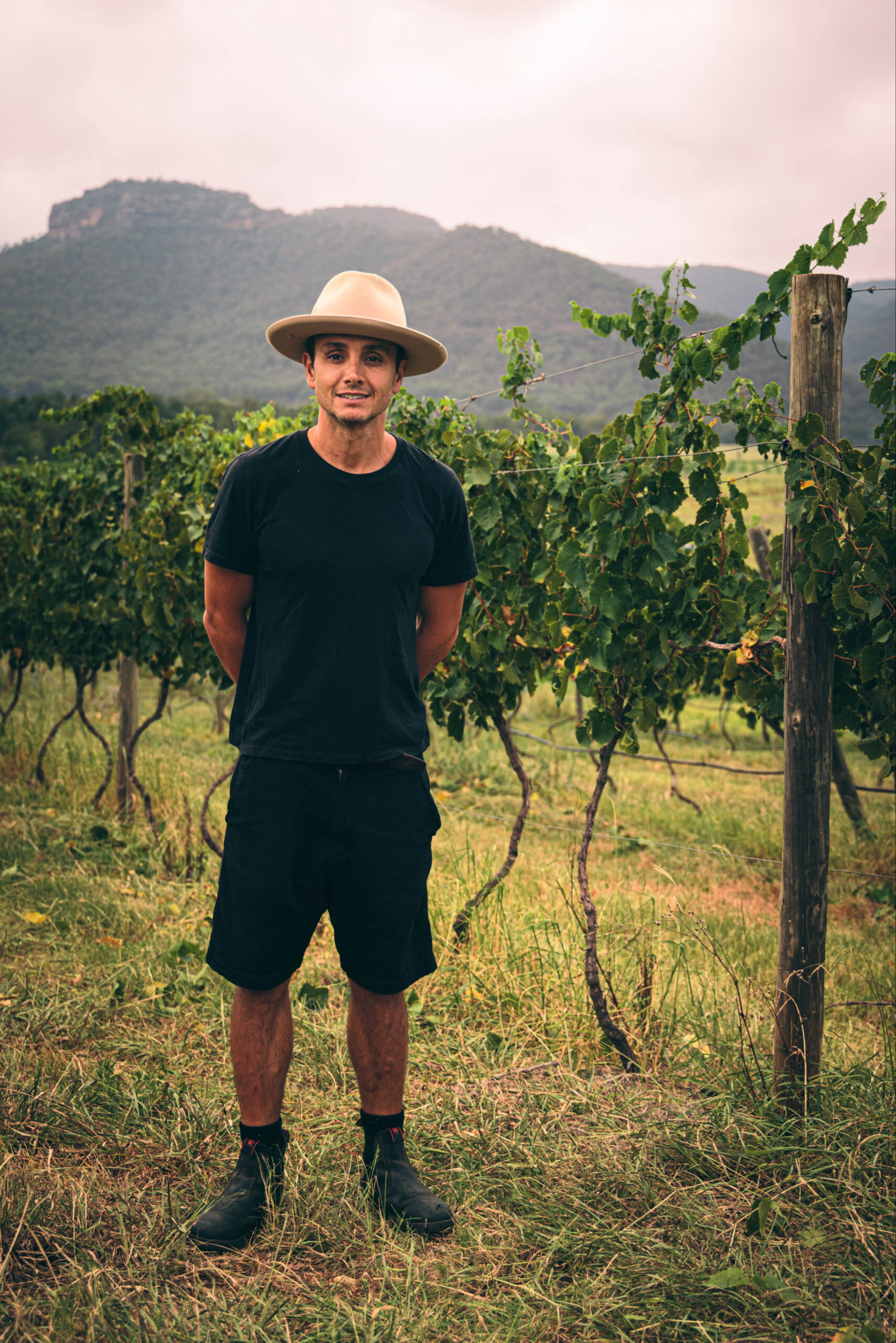
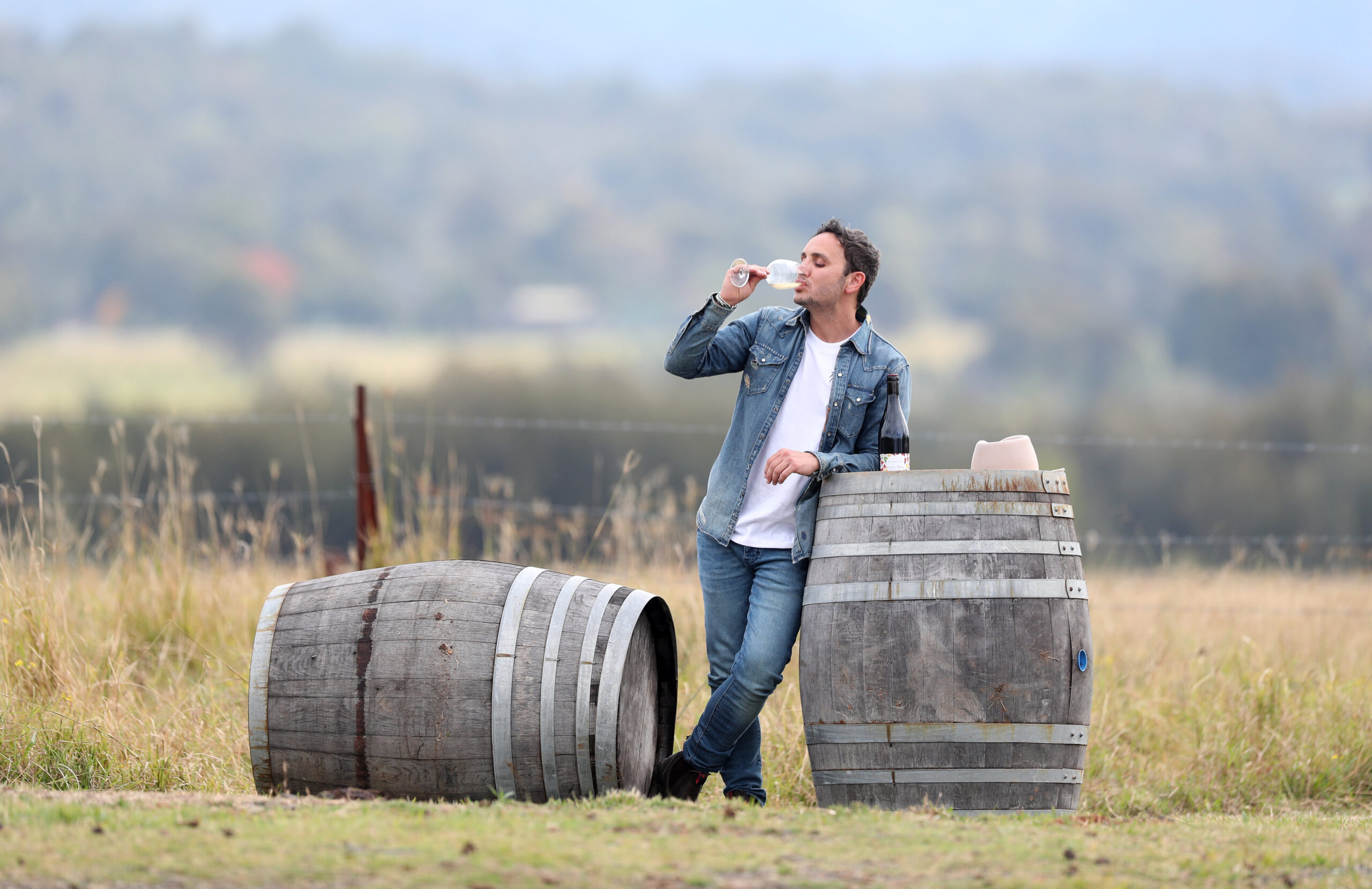
Above and opposite: Richie Harkham in the vineyard at his Hunter Valley winery, Harkham.
In the Hunter Valley, Richie Harkham was among the early Australian winemakers to represent the ‘natural wine’ zeitgeist, making wine without added sulphur since 2008 – although his Hunter Valley fruit isn’t certified organic, which would present a little wrinkle if he were bound by the standards of France’s Vin Méthode Nature. His own conversion came on a trip to Burgundy with a winemaker friend, where he was told flatly that sulphur-free winemaking “was impossible” – then he tasted a run of wines that convinced him otherwise. “It’s so fruit-forward,” he says. “The sulphur binds the flavours and tightens the palate. Sulphur-free, you have these crazy fruit flavours and this very, very long finish.” His philosophy has since folded in something more personal still. Harkham says his winery is the only one in Australasia producing exclusively kosher wine – a practice that requires a rabbi overseeing every movement in the cellar and permits almost nothing to be added. For Harkham, the sulphur-free and kosher commitments reinforce each other. Every wine, he says, should taste like “100% Hunter Valley” – rain, hail, wind and all – and “every time you add something,” he argues, “you are masking one of those natural characteristics,” which he considers “the soul of the wine.”
No added preservatives isn’t natural wine
Three different things – ‘No added preservatives’ wine, ‘natural wine’ and ‘sans soufre’ wine – often get sold as the one idea, and untangling them matters, even though they clearly overlap. It’s worth being precise here, too: the wines gathered for this tasting were curated specifically as ‘no added preservatives’ wines in the Australian technical sense, not as a survey of ‘natural wine’ as its own category. The thematic overlap between the two is real and worth understanding, but it isn’t the same thing as a natural wine curation – plenty of wines in the no-added-preservative category would never make it onto the shelves of a pure natural wine shop or bar, and some wines marketed as ‘natural’ wouldn’t meet the Australian guidelines for ‘no added preservatives’ on the label.
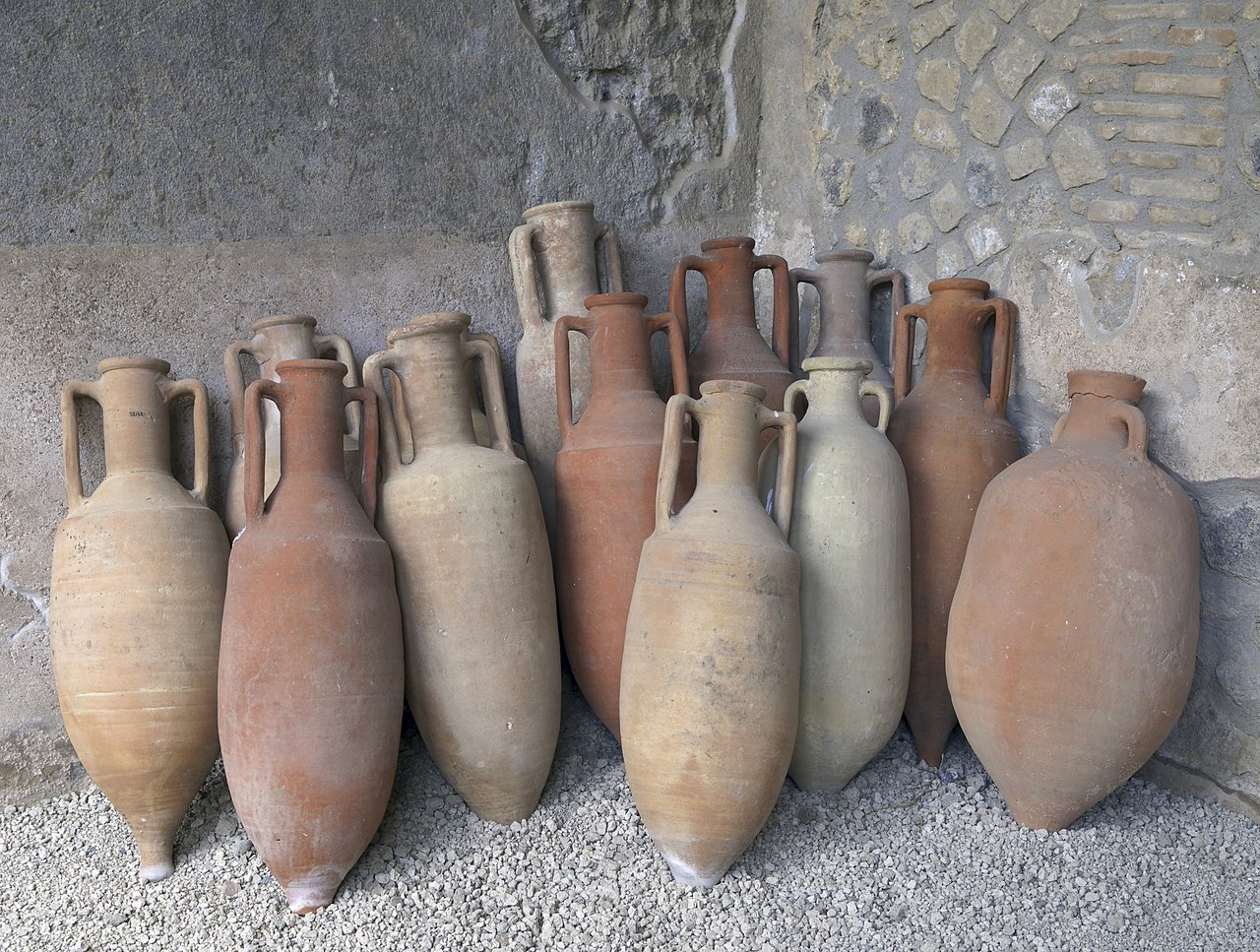
Focusing on whether a wine meets the standard to be labelled as ‘no added preservatives’ helps to keep the question of sulphur in proportion, because wine has never been a purely additive-free drink. Ancient winemakers sealed their amphorae with pine pitch and added resin, honey, herbs and even seawater to the wine itself. (Some of that practice never went away: Greek retsina is still made with pine resin.) Today, the Food Standards Code permits Australian winemakers about twenty legal additives and more than forty processing aids, from tartaric acid, tannins, and oak to bentonite, egg whites, and isinglass. It’s a permission list rather than a shopping list – most wineries use only a fraction of it – and sulphur dioxide is just one line on it. But the ‘no added preservatives’ label speaks only to the preservatives among those permitted additives and processing aids – it doesn’t necessarily imply that nothing has been added to the wine.
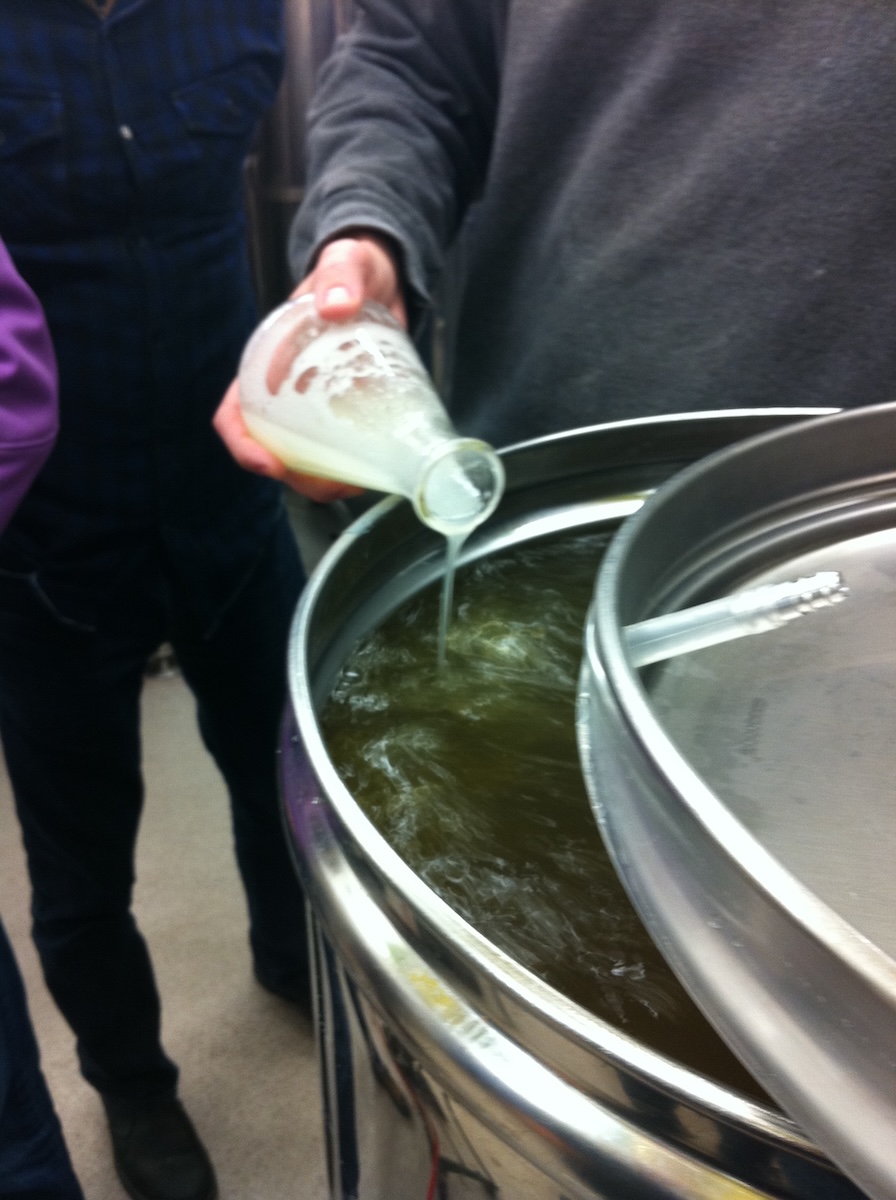
Above: Ancient roman amphorae – the wine inside of which was frequently adulterated. (Photo by Commonists, CC BY-SA 4.0.) Opposite: Isinglass – a form of collagen derived from fish – being added to wine in order to fine it. (Photo by Agnes27, CC BY-SA 3.0.)
By contrast, ‘natural wine’ is the most expansive concept of the three – a whole philosophy of farming and cellar work, not just a decision about sulphur. In France it now has a genuine legal shape via Vin Méthode Nature – requiring certified organic fruit, native-yeast fermentation, and no additives of any kind beyond the two permitted tiers of sulphur use described above. Outside of France, the definition gets looser and more contested: whether the fruit must be certified organic, and whether any sulphur addition at all is acceptable, is argued over by producers whose answers often reflect their own realities of winegrowing.
‘Sans soufre’, literally ‘no (added) sulphur’, is narrower and more specific: a single winemaking decision that can sit inside that ‘natural wine’ charter, or entirely outside it. That’s a genuine tension worth discussing: attaching the ‘sans soufre’ label to a wine that isn’t otherwise ‘natural’ can feel, to natural wine’s more devoted followers, like borrowing the movement’s founding term without its founding commitments – an understandable friction once you know the history behind it. A wine can be made with no added sulphur and still be fined, filtered, or fermented with cultured yeast – all things a genuine natural-wine charter would rule out.
‘Preservative free’ is narrower again, and it’s the only one of the three with a defined meaning in Australian labelling guidance. Wine Australia, the industry’s own regulatory and marketing body, is explicit about the distinction introduced at the top of this piece: A wine should only be called ‘preservative free’ when there are no quantifiable levels of sulphur dioxide in the wine at all, while ‘no added preservatives’ may be acceptable when a wine’s naturally occurring sulphur – the small amount every fermentation produces regardless of what a winemaker adds – sits under ten milligrams per kilogram.
There’s something almost backwards about how those two phrases are named here. Dictionaries define ‘preservative’ as something added – Merriam-Webster’s own definition is “an additive used to protect against decay, discoloration, or spoilage” – so in ordinary English, ‘no added preservatives’ is a tautology: it’s saying the same thing twice. Yet that’s the softer, easier-to-earn claim. ‘Preservative free’, which sounds like the plainer claim, is actually the more technical one: it rules out even the trace of sulphur that every wine produces on its own during fermentation, a bar the dictionary’s own definition of the word never asked for. The wine that best matches what ‘preservative free’ sounds like it should mean is usually the one that’s legally only allowed to call itself ‘no added preservatives’ instead.
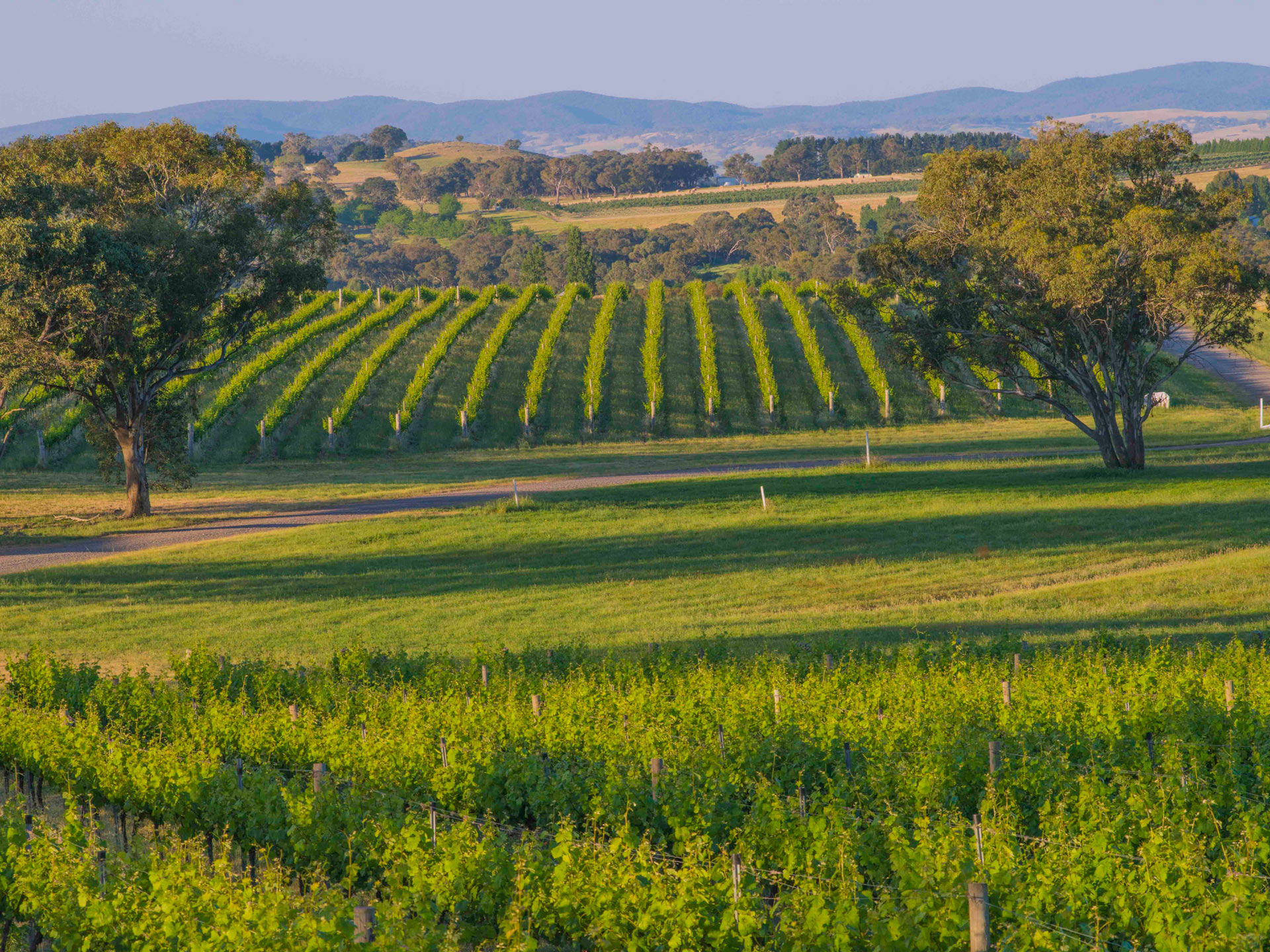
Above: Tamburlaine’s certified-organic Borenore vineyard in Orange, New South Wales. Opposite: Tamburlaine winemaker Shannon Burgess-Moore at our recent Deep Dive into Australian chenin blanc.
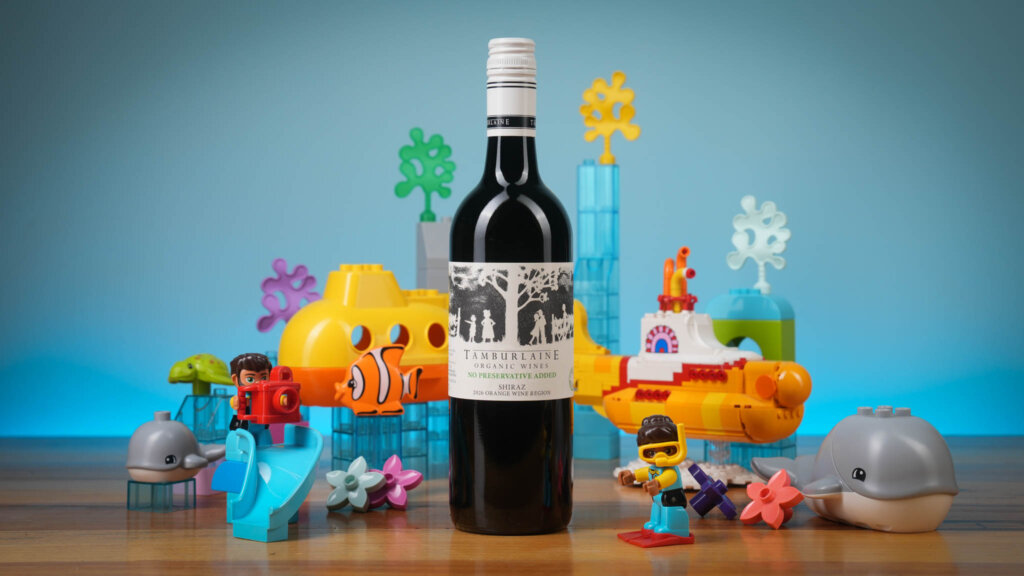
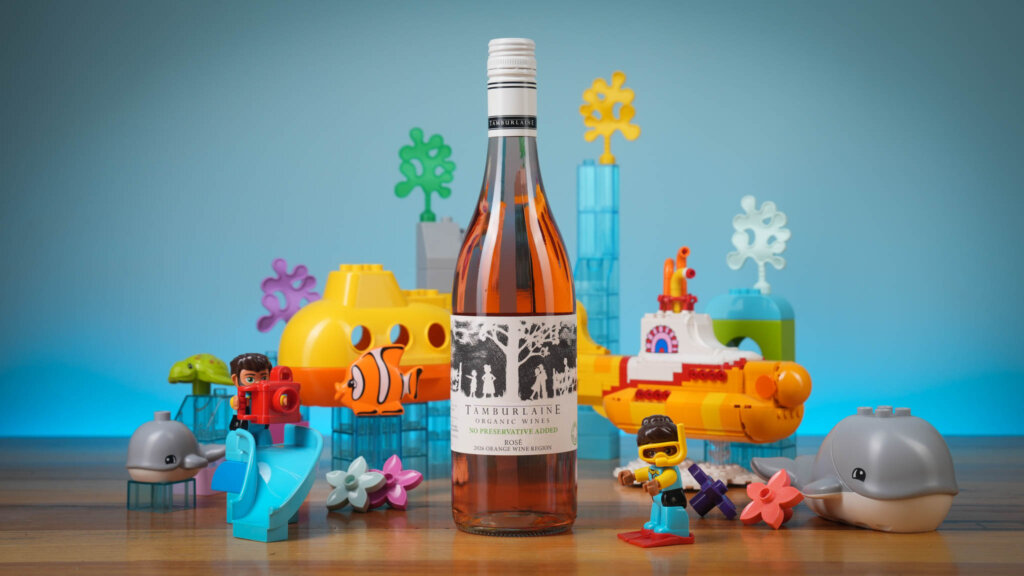
Shannon Burgess-Moore, a winemaker at Tamburlaine Organic Wines, draws the line between these ideas about as cleanly as anyone in the industry. He joined Tamburlaine at the end of 2020, inheriting a no-added-preservative program the winery had already been running since the mid-2010s; today it spans around eight to ten products and roughly 240,000 litres a year, a category he says is growing at around 10% annually. Natural wine, in his view, is “very minimalist … no additions, no fining.” Tamburlaine doesn’t make natural wine, but it may be Australia’s largest maker of ‘no added preservatives’ wines. For Tamburlaine, whether or not to add sulphur is a decision made at the point the grapes arrive at the winery. For a standard wine, that’s usually the moment a dose of sulphur goes in to guard against wild yeast and oxidation before fermentation even starts; for Tamburlaine’s no-added-preservative range, it’s the moment that dose is deliberately left out, with a bioprotective yeast doing that job instead.
With six certified vineyards across Orange and the Hunter Valley in NSW, Tamburlaine is one of Australia’s largest organic wine producers – but as Burgess-Moore points out, ‘organics’ is also a good example of how confusing wine communication can get for consumers, since Australia and the United States define the very same ‘organic’ word differently. In the US, the national body, the USDA, requires a wine to have no added preservatives before it can be certified organic; in Australia, sulphur dioxide is explicitly permitted in certified organic wine. Two industries, using the word ‘organic’, meaning different things about sulphur without saying so.
The sulphite myth
That confusion around terminology curdles further around health, where the most persistent myth in the category is that sulphites cause headaches – and the research doesn’t support it. Andrew Waterhouse, a professor of viticulture and enology at UC Davis, puts it about as bluntly as a scientist ever will: “There is no medical research data showing that sulphites cause headaches.” He offers a useful gut-check for anyone unconvinced: eat some dried apricots. A food most people eat without a second thought, they typically carry somewhere between 1,500 and 2,000 milligrams of sulphites per kilogram, so a modest sixty-gram serving delivers roughly 100 milligrams – several times what’s typically in a glass of wine. In a separate interview with WineMaker magazine, Waterhouse goes further: the human body already produces almost a gram of sulphites in its own cells every day, simply as a byproduct of normal metabolism, dwarfing anything a glass of wine could realistically add on top.
“There is no medical research data showing that sulphites cause headaches.”
The clinical evidence backs him up. Frederick Freitag, a headache specialist formerly of Chicago’s Diamond Headache Clinic, draws the same conclusion from the other side of the profession: “Sulphites can cause allergy and asthma symptoms, but they don’t cause headaches.” The genuine sulphite reaction is respiratory, not neurological – and it’s rare. It’s the kind of asthmatic sensitivity Harkham says he occasionally sees at his own cellar door, where “the smallest drop,” as he says it, of sulphur can trigger an attack in a customer who has one. Everything else commonly blamed on sulphites has other, more plausible causes, alcohol and dehydration chief among them – a point Burgess-Moore makes from behind the tasting bench rather than the lab bench, half-joking that Tamburlaine’s alcohol-free wine is the more honest fix for a sore head.
None of this means people’s underlying concern is unreasonable – it means the confusion has a traceable cause. A regulation meant to disclose a processing aid – the Food Standards Code’s requirement that added sulphites at ten milligrams per kilogram or more be declared on the label, a trigger set at a tiny fraction of the concentration in a dried apricot – turned a routine stability tool into something that reads, to an anxious shopper standing in a bottle shop, like a warning label.
Where the category actually is
Strip away the labelling politics, and what’s left is a genuine technical challenge – one Harkham and Burgess-Moore solve in different ways, at very different scales.
For Harkham, the winemaking answer starts in the vineyard. Fruit is hand-picked only, and sorted twice, because a machine harvester macerates the grapes on the way off the vine, starts fermentation before the fruit even reaches the winery, and indiscriminately gathers up whatever rot or mildew happens to be growing nearby in the Hunter’s famously wet summers – each of which then demands exactly the kind of correction he’s trying to avoid in the first place. His analogy for the whole approach is simple: good fruit, like a good piece of meat, needs nothing added to it; it’s only a sub-par piece of meat that needs “tomato sauce, barbecue sauce” to cover for it. Filtering gets the same treatment: “There’s no, you know, like naked wine, like a naked body. You can see any blemishes in the wine. And if you retain that balance of the wine all the way through the wine making. So filtering is a big no-no. If you filter the wines, you are losing the balance of the wine for me,” he says. His whites in particular are racked from tank to bottle on the same day, occasionally with a small heater warming the tanks in cold weather just to keep the wine moving smoothly through the line. He allows himself one exception: the reserve range gets a small dose of sulphur after malolactic fermentation, specifically to guard against Brettanomyces, the spoilage yeast that thrives during the extra year those wines spend in barrel. Everything else – chardonnay, rosé, semillon, most of his shiraz – gets nothing at all. Even so, he has a practical approach when ideals meet realities: in one recent vintage, when a wine turned reductive and started oxidising before bottling, he added sulphur rather than lose it. “It’s a livelihood,” he says. “You’ve got to do it.”
“Filtering is a big no-no. If you filter the wines, you are losing the balance of the wine for me.”
Tamburlaine’s answer is closer to substitution. Instead of sulphur, Burgess-Moore’s team applies a bioprotective yeast in the vineyard immediately after harvest, which occupies the juice and scavenges oxygen and spoilage microbes from the moment of picking straight through fermentation.
Tamburlaine has designed its no-added-preservative production and distribution around freshness: a wine meant to be enjoyed young rather than cellared. For Burgess-Moore and his team, it’s a deliberate design choice built around when they feel the wine actually tastes its best, which is why the range is bottled in small batches timed tightly to demand and sold within Australia only. But Harkham sees real potential in the lifespan of wines made without sulphur, pointing to ten and eleven-year-old vintages from his own range that, in his telling, are still drinking beautifully – proof, to him, that a wine made with genuine care can age just as well without sulphur as with it.
“No added preservative wine brings people back to wine.”
So, navigating the nuances of the etymologies of phrases from organics to natural, from preservative free to sans soufre, it is a tricky world. In the words of Dennis Denuto in The Castle, “It’s the vibe”. But perhaps it’s all good …
Above: The Castle’s hapless lawyer Dennis Denuto would be at home in the confusing territory between ‘No added preservatives’ wine, ‘natural wine’ and ‘sans soufre’ wine – it is the vibe …
Burgess-Moore describes customers returning to Tamburlaine’s cellar door years after giving up on wine altogether, because of respiratory reactions, discovering the no-added-preservative range, and coming back to a category they’d assumed was closed to them for good. “It brings them back to wine,” he says. For Harkham, the reward is more personal still – a wine that tastes, unmistakably, like the year and the place it came from, with nothing standing between the two. Whatever else changes about how “no added preservatives” gets sold, that’s the part of the argument that’s held steady since long before anyone thought to add sulphur to a barrel in the first place: a wine is, in the end, only ever a record of how carefully someone looked after it.
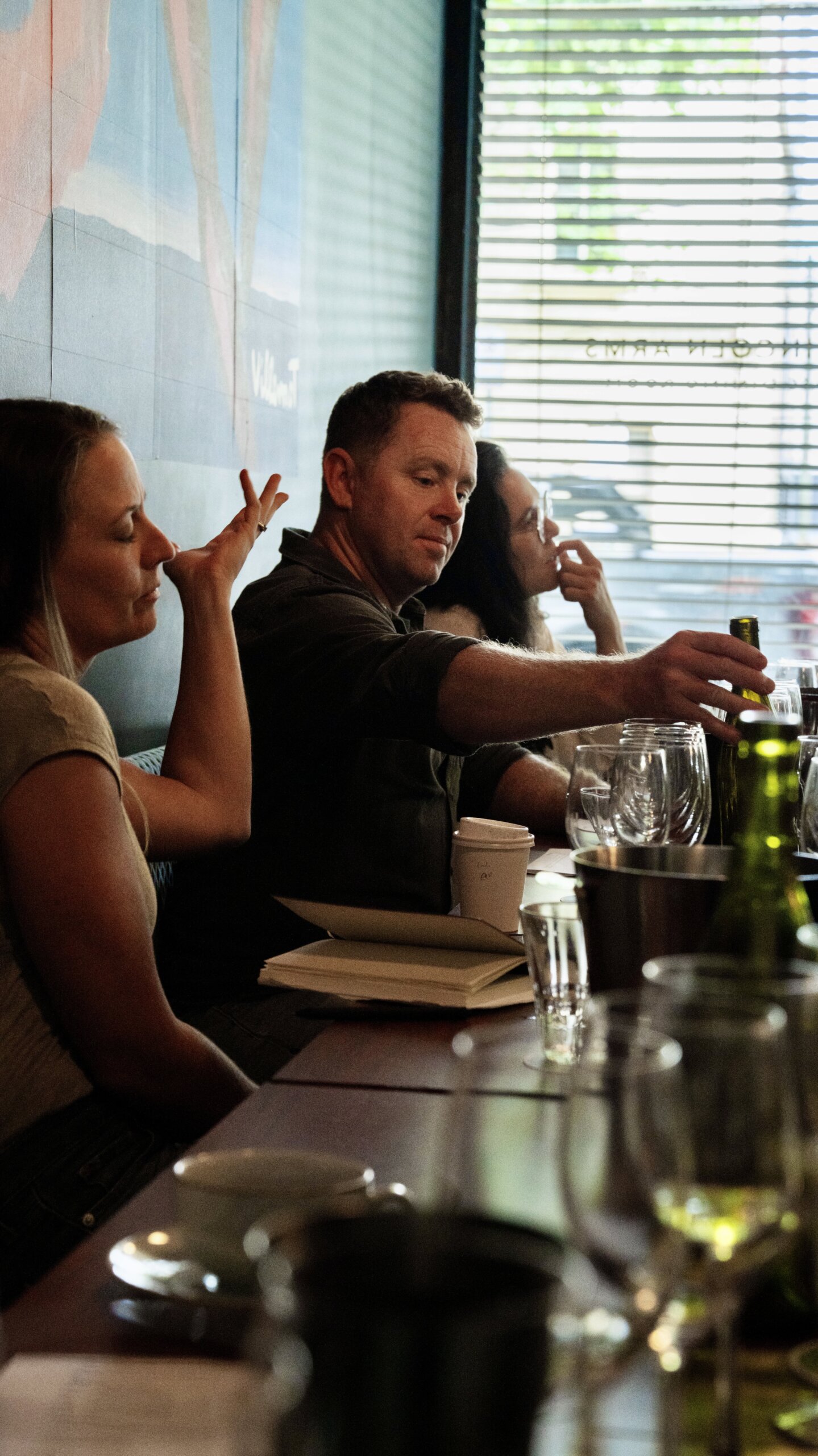
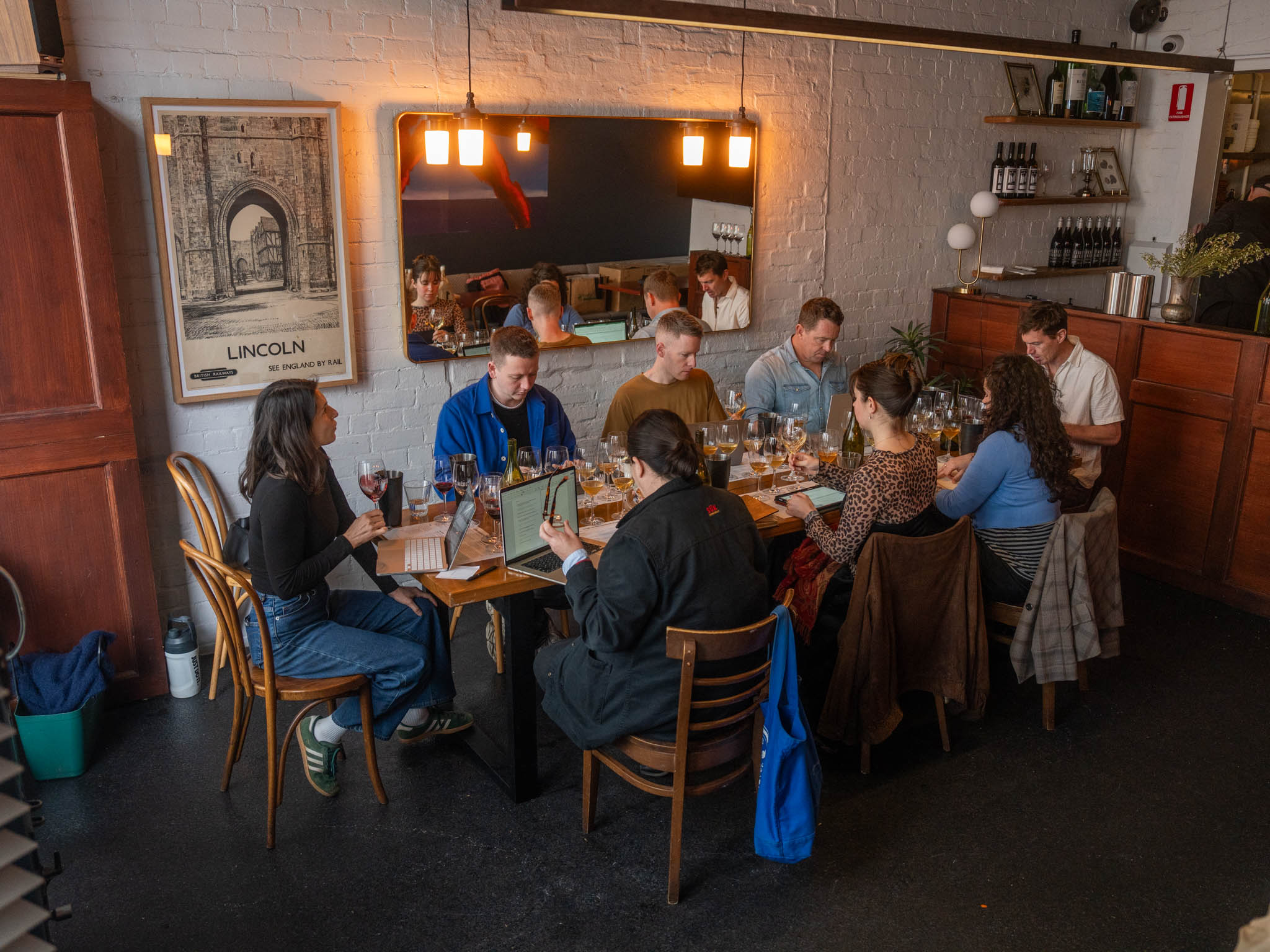
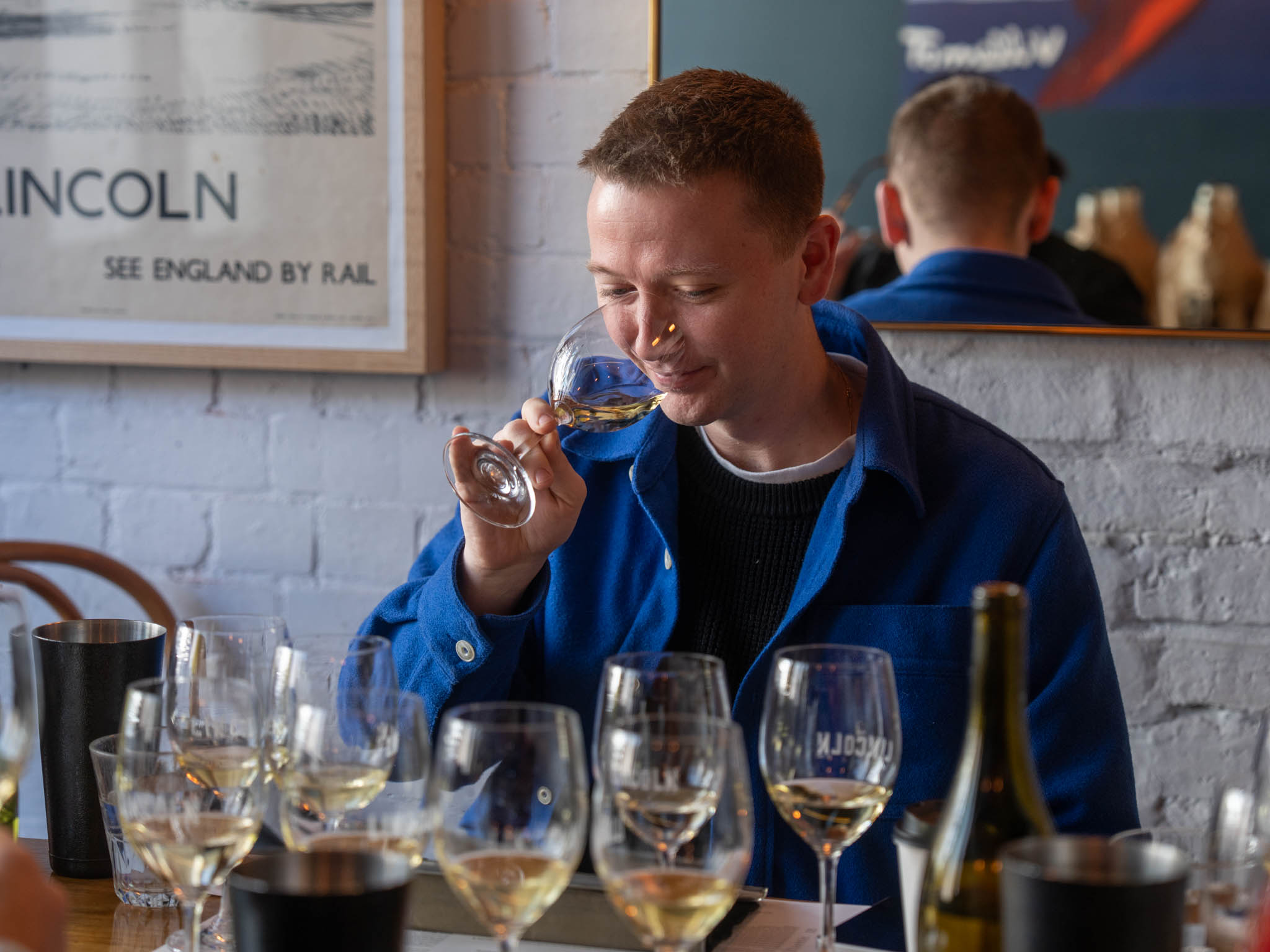
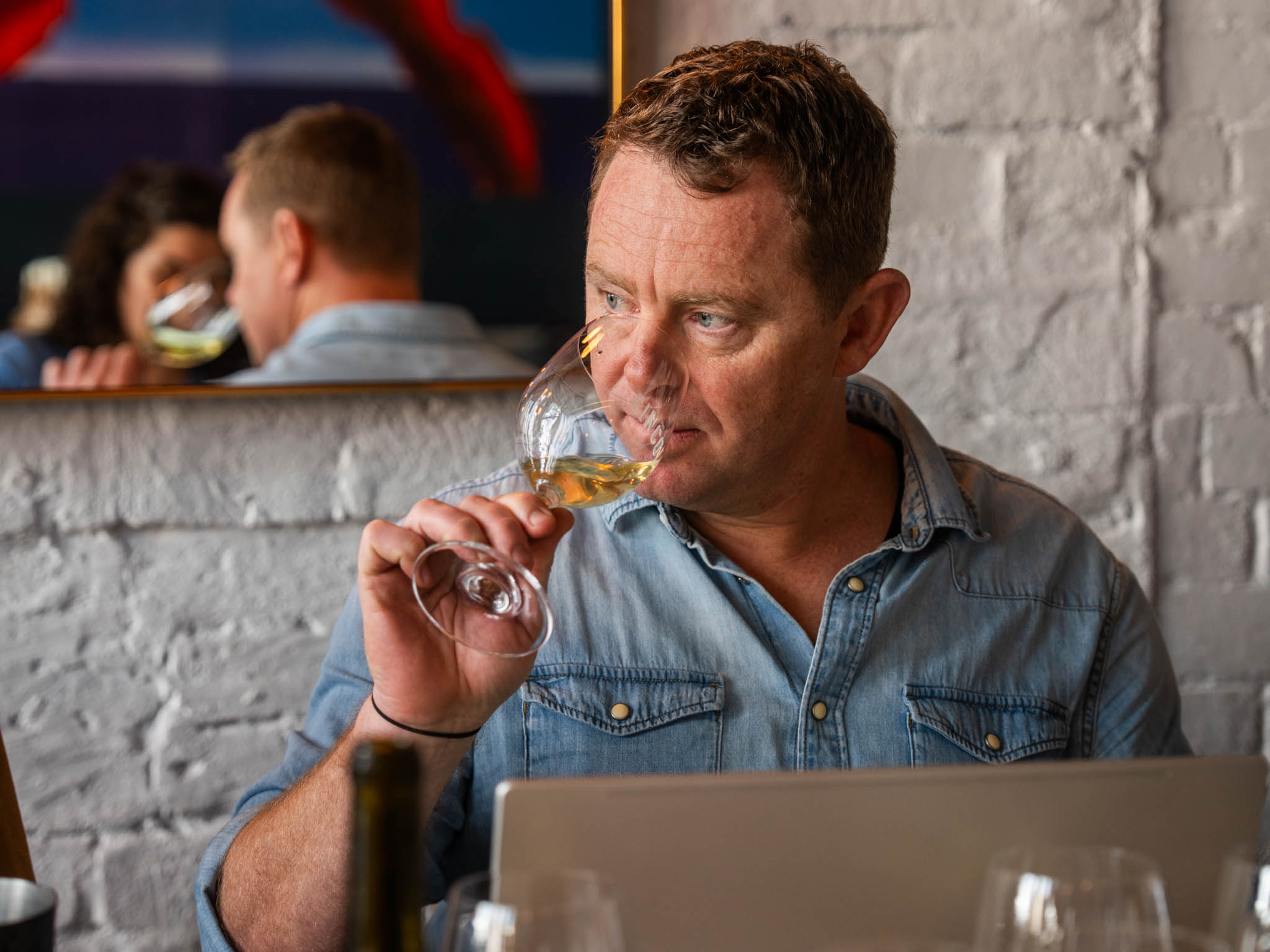
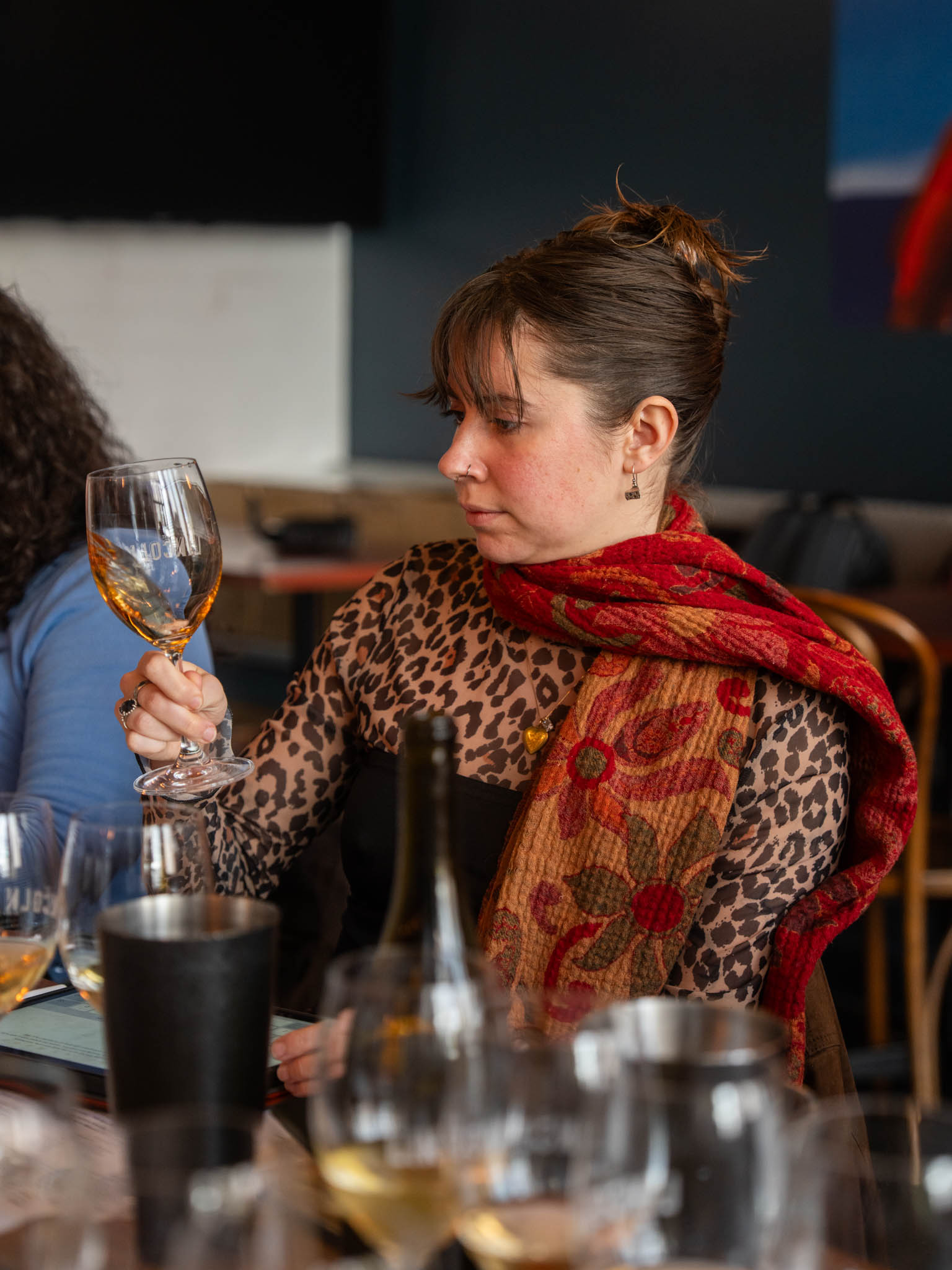
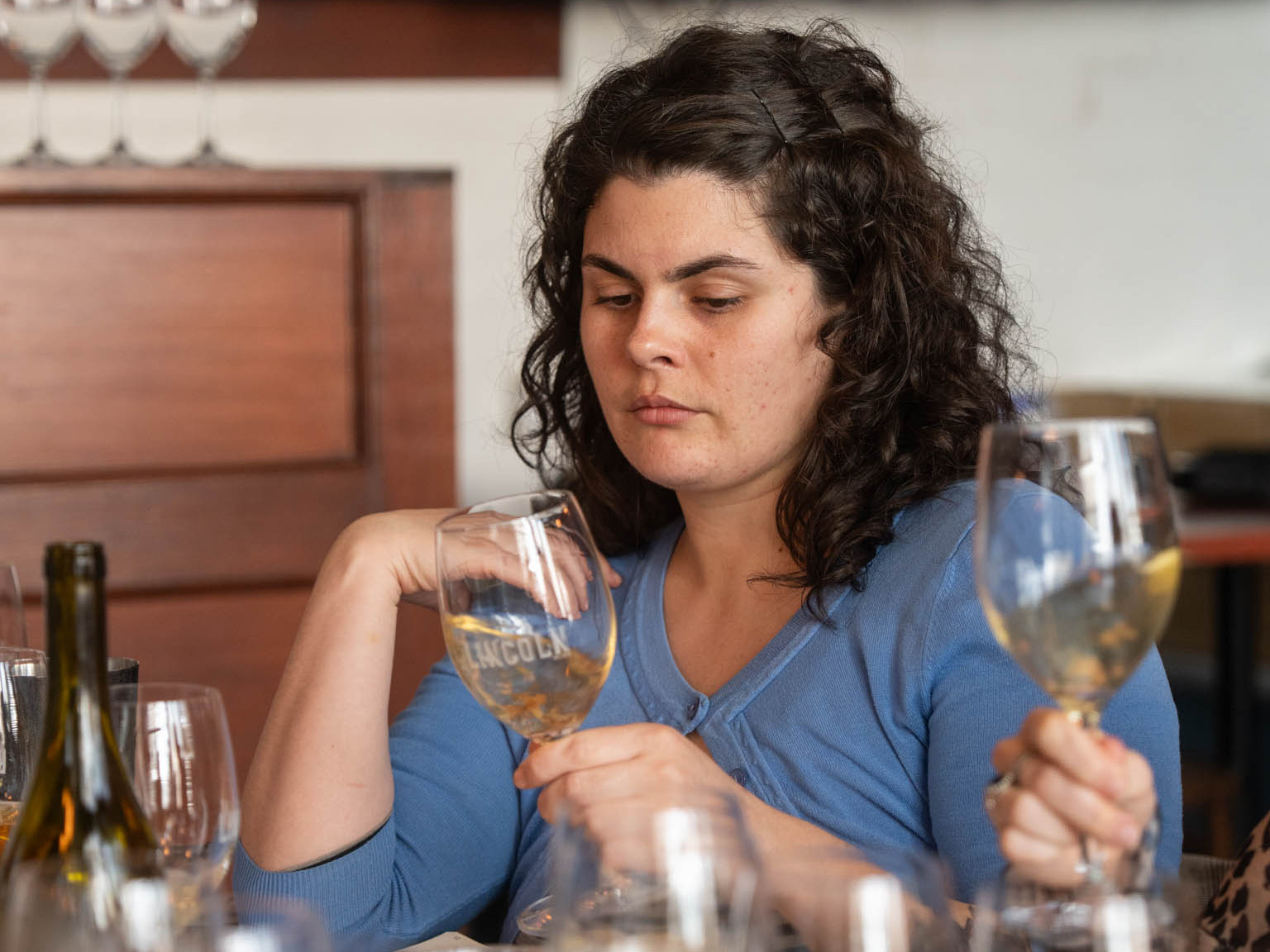
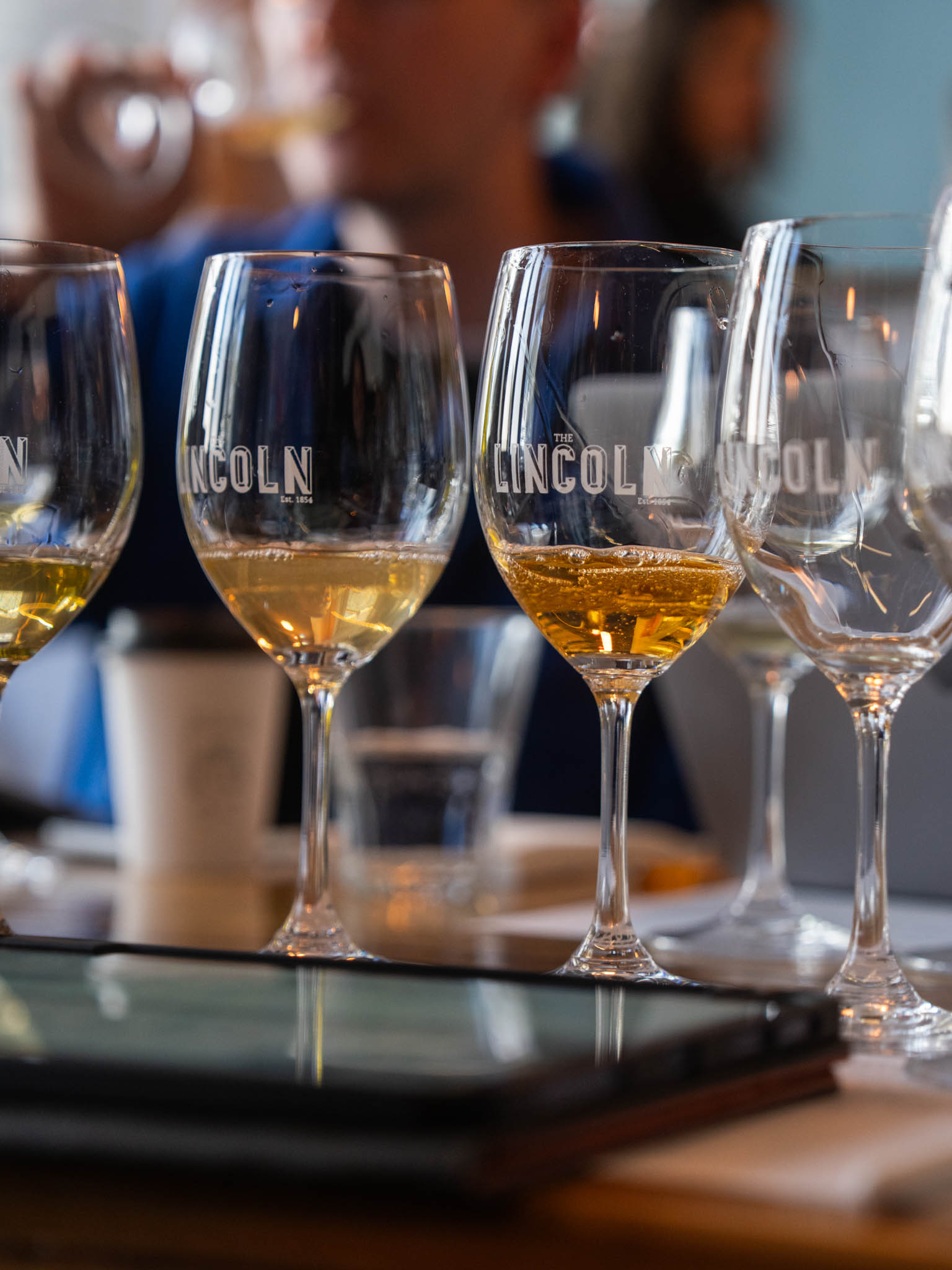
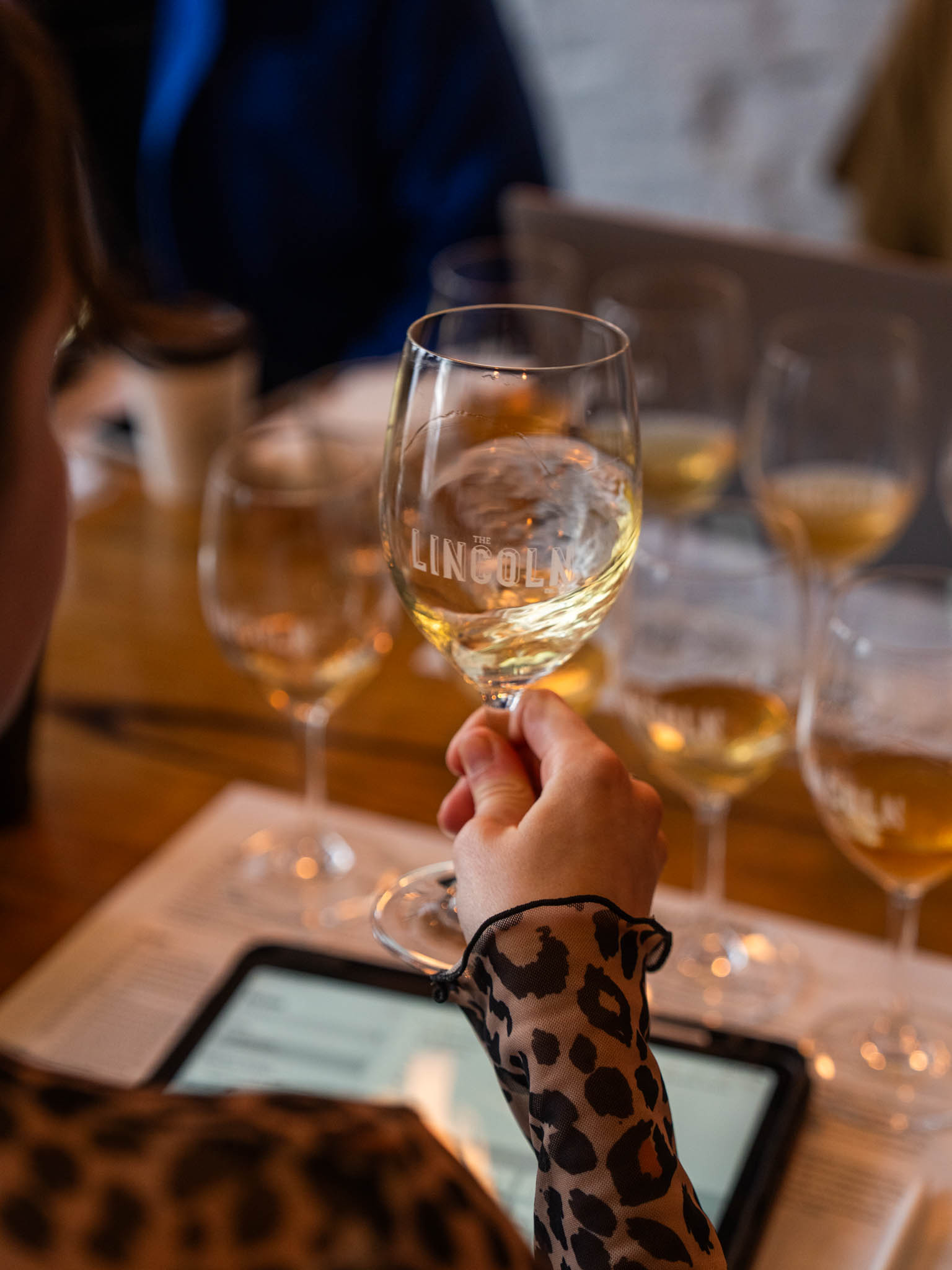
Above: Our expert panel gathered at The Lincoln, Carlton (Melbourne).
Outtakes from the tasting
We gathered every Australian wine labelled as having ‘no added preservatives’, of any colour and style, that we could find – explicitly excluding any that had sulphur or sulphites added – and set our expert panel the task of finding the wines that compelled the most. All wines were tasted blind, and each panellist named their top six wines.
Our panel: Liz Carey, wine importer and distributor, Vivant Selections; Campbell Burton, wine importer and distributor, Campbell Burton Wines; Niki Nikolovski, vigneron, Babche Wines; Shannon Burgess-Moore, winemaker, Tamburlaine Wines; Sarah Brogno, sommelier, Public Wine Shop; Harrison Maw, sommelier, Côte Basque; Hannah Beaudoin, marketing manager, Public Wine Shop; Alex Hill, wine merchant, Grana Formaggio Vino.
Carey found tasting the full lineup an interesting challenge from the start, because there was no category to hang the wines on. “We’re not just looking at pinot, we’re not just looking at cabernets,” she said. “We’re looking at a wine list’s worth of wines that all happen to have no sulphur.” (It’s worth remembering the scale of the day: the panel worked through a large blind lineup of these wines, and each panellist chose just six – a small fraction of the field. The discussion ranges across the whole blind lineup, so blanket comments more often tend to be about wines not chosen among each panel members top six selections.) Across the field, the reds in particular left her cold: “There’s a lot of ballsy wines in there. There’s no finesse. There’s a lot of tannin.”
Above: Campbell Burton. Opposite: Liz Carey.
Burton saw things differently. “I would almost say the opposite,” he said. “I thought there was more transparency in the reds than the whites, and more character today, in this particular lineup.”
“With the lack of sulphur you end up with more vivid personality in these wines.”
Maw sat somewhere between the two. “The majority of them felt bombastic, in your face,” he said, but the lack of sulphur brought its own reward. “With the lack of sulphur you end up with more vivid personality in these wines. That was the most enjoyable aspect across the board: just seeing such unique individual expressions from every single one. Not necessarily all ‘correct’.”
Above: Harrison Maw. Opposite: Niki Nikolovski.
Carey wondered whether other interventions in the winery were behind the wines that lacked depth. “I think it’s a bigger thing than just no sulphur,” she said.
Burton returned to the reds, and to why they worked. “Some of the greatest revelations in the last six months for wines made in Australia have been traditionally identified red wines that are definitely red – not rosé, not lights, not ones you would chill down,” he said. “I think they’re also the wines that are perfect for no sulphur, because they’ve got stability because of the maceration.”
“I think reds are also the wines that are perfect for no sulphur, because they’ve got stability because of the maceration.”
Burgess-Moore agreed, crediting “the natural contribution and oxygen scavenging properties of tannin and oak” for the reds’ framework and balance.
For Nikolovski, the question runs much deeper than any single decision in the cellar. “For me a sulphur-free wine is not just an isolated decision at the end of the process,” she said. “It starts from the beginning. It’s a full philosophy from beginning to end.” The corollary is a warning: “Simply not adding sulphur is not going to make it good. All those other aspects have to be there as well. You cannot have a sense of place without farming and having living soils,” she said.
Burton went further. “I don’t think sulphur has anything to do with the sense of place,” he said. “If you don’t have healthy soil, it doesn’t matter if you add sulphur or you don’t.”
“For me a sulphur-free wine is not just an isolated decision at the end of the process. It starts from the beginning. It’s a full philosophy from beginning to end.”
Asked whether the wines across the lineup were all sound, Carey resisted the word. “Using the term ‘sound’ is unfairly overreaching,” she said. “What you would call ‘sound’ … I guarantee we’re going to disagree on lots of wines.”
Above: Sarah Brogno. Opposite: Harrison Maw.
Time was a factor too. “Everything has a half-life,” Maw said. “At the very start of the day everything is looking extremely precise. Then later in the day, like ice cream, it has a tendency to melt. It was good at the start, and then it wasn’t as good.” Maw’s broader lesson was that faults sit in the eye of the drinker: “Regardless of our training, even if there is a fault, some people love it. Some people can’t taste it. It’s so personal.”
“Using the term ‘sound’ is unfairly overreaching. I guarantee we’re going to disagree on lots of wines.”
Burgess-Moore was blunter about technical standards across the full lineup. “Some wines presented with faults that made them difficult to drink as a full glass,” he said, while “wines that showed minor imperfections offered some complexity and were more thought-provoking and interesting.” To push the category further, “there needs to be greater consideration from the producers.”
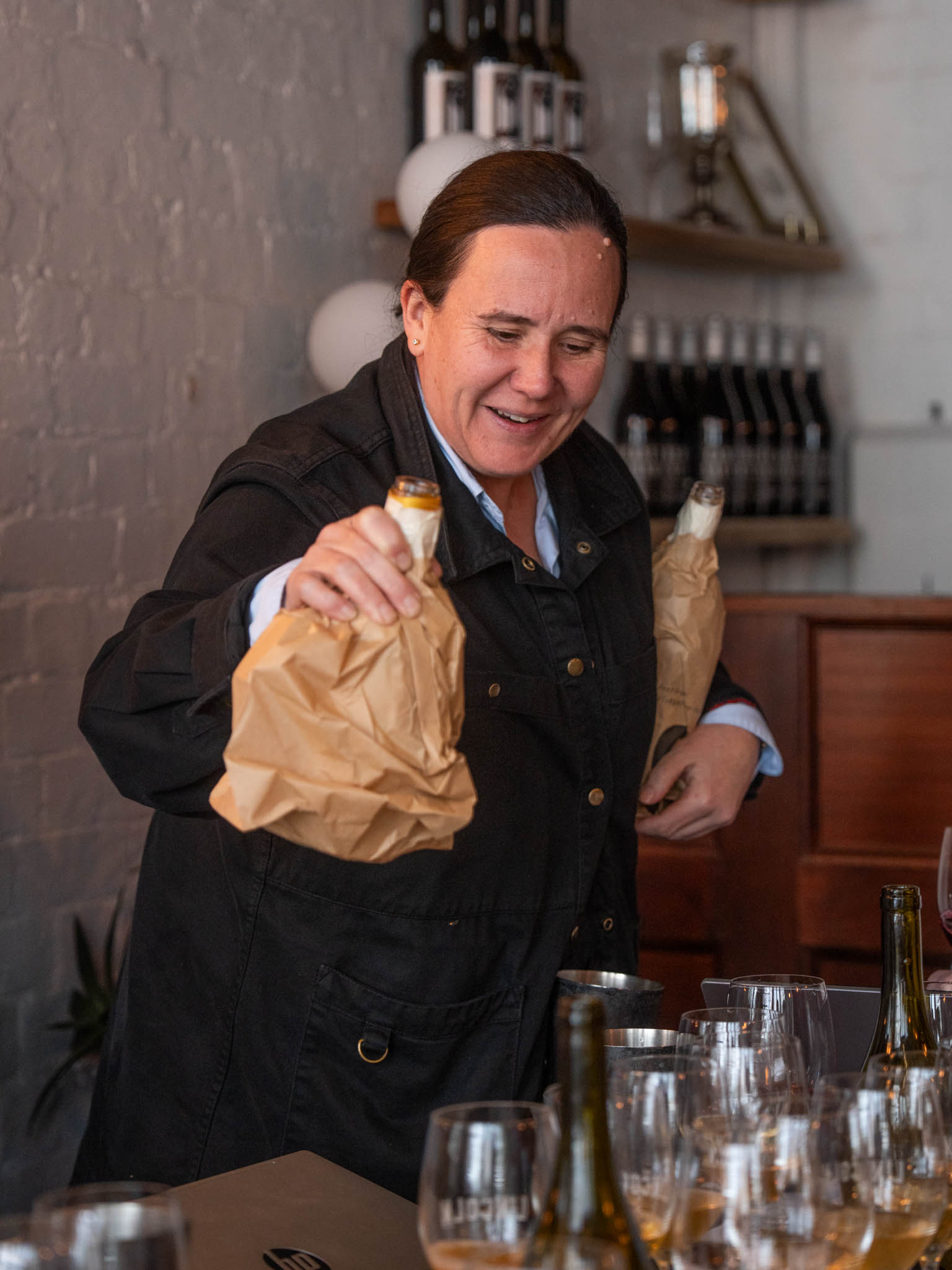
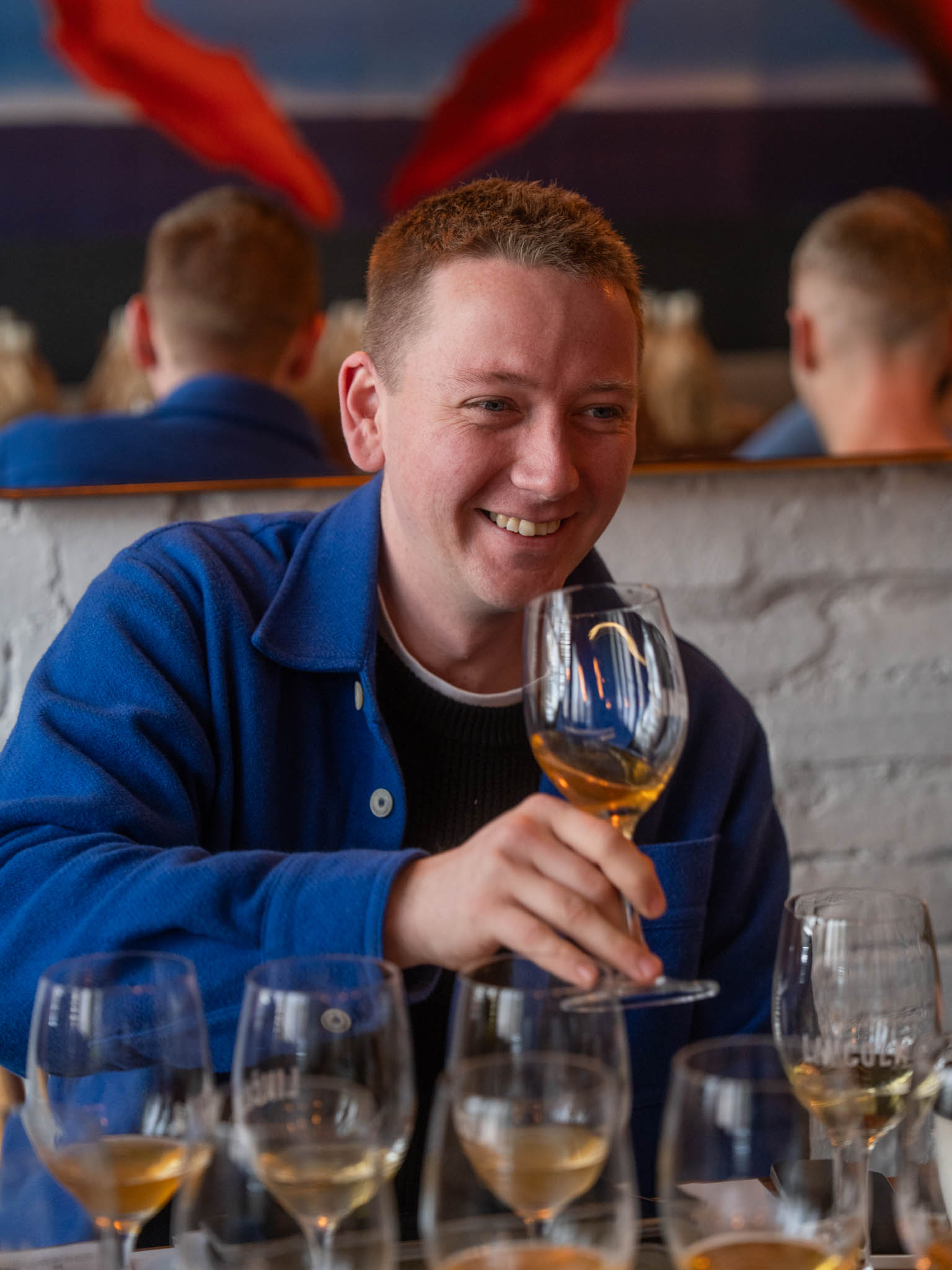
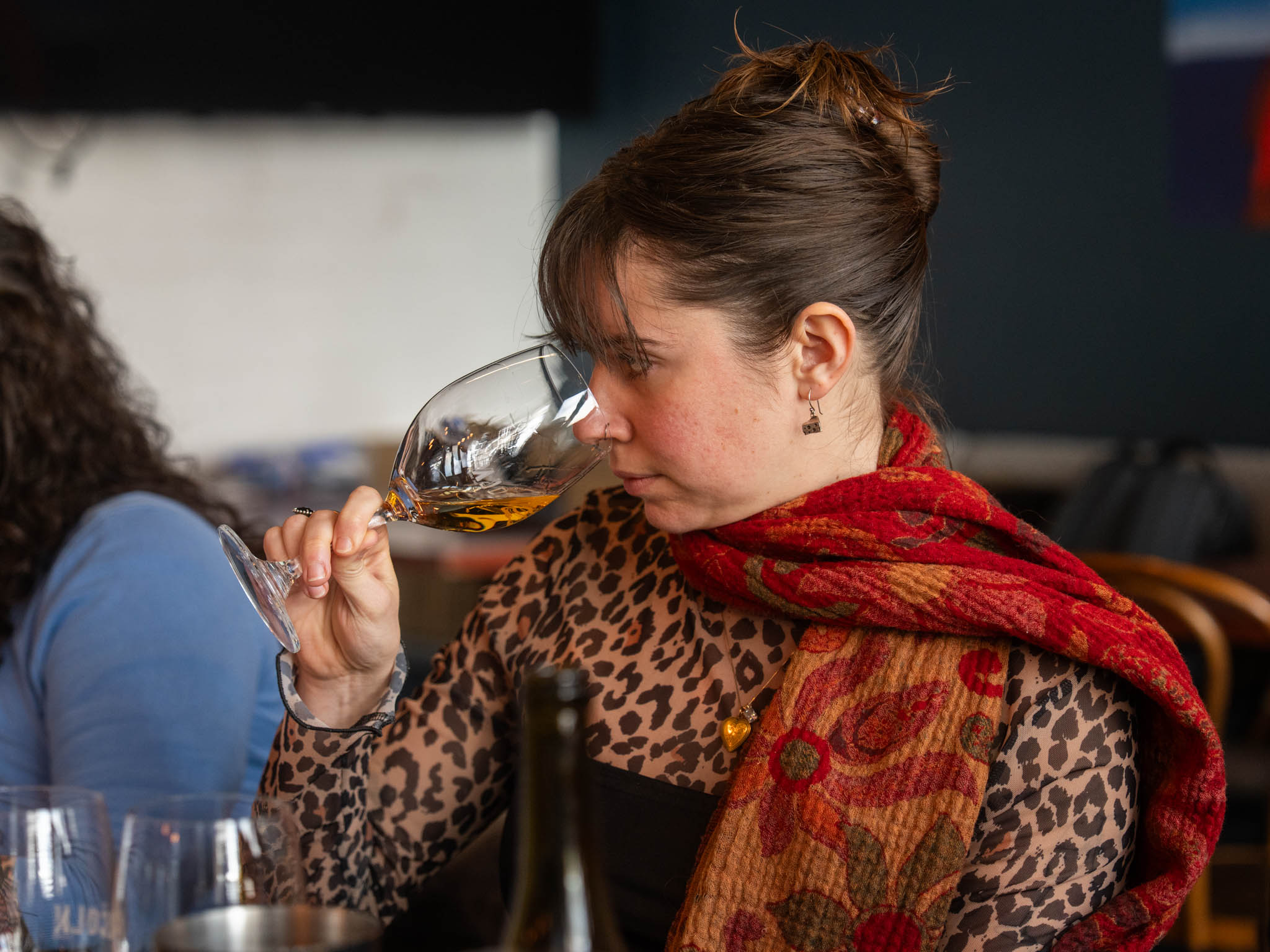
Above and opposite: Our Deep Dive panel tasting in action at The Lincoln, Carlton (Melbourne). All wines tasted ‘blind’.
Out on the floor, the picture looked different again. “Through the lens of our venue at Public, we see zero resistance of any sort from our customer base,” Burton said. “No one ever walks into our venue and says, ‘We don’t like unsulphured wine’. Ever.”
Beaudoin has seen pushback, but mostly at the level of the label. “As soon as people are like, ‘This tastes too this for me’, or ‘This isn’t classical enough’, and someone else at the table mentions, ‘They’re all natural wines’, there’s a rejection,” she said. But when servers can engage in dialogue with customers, “about 90% of those people, the interaction turns out positive. They’re open to conversation.”
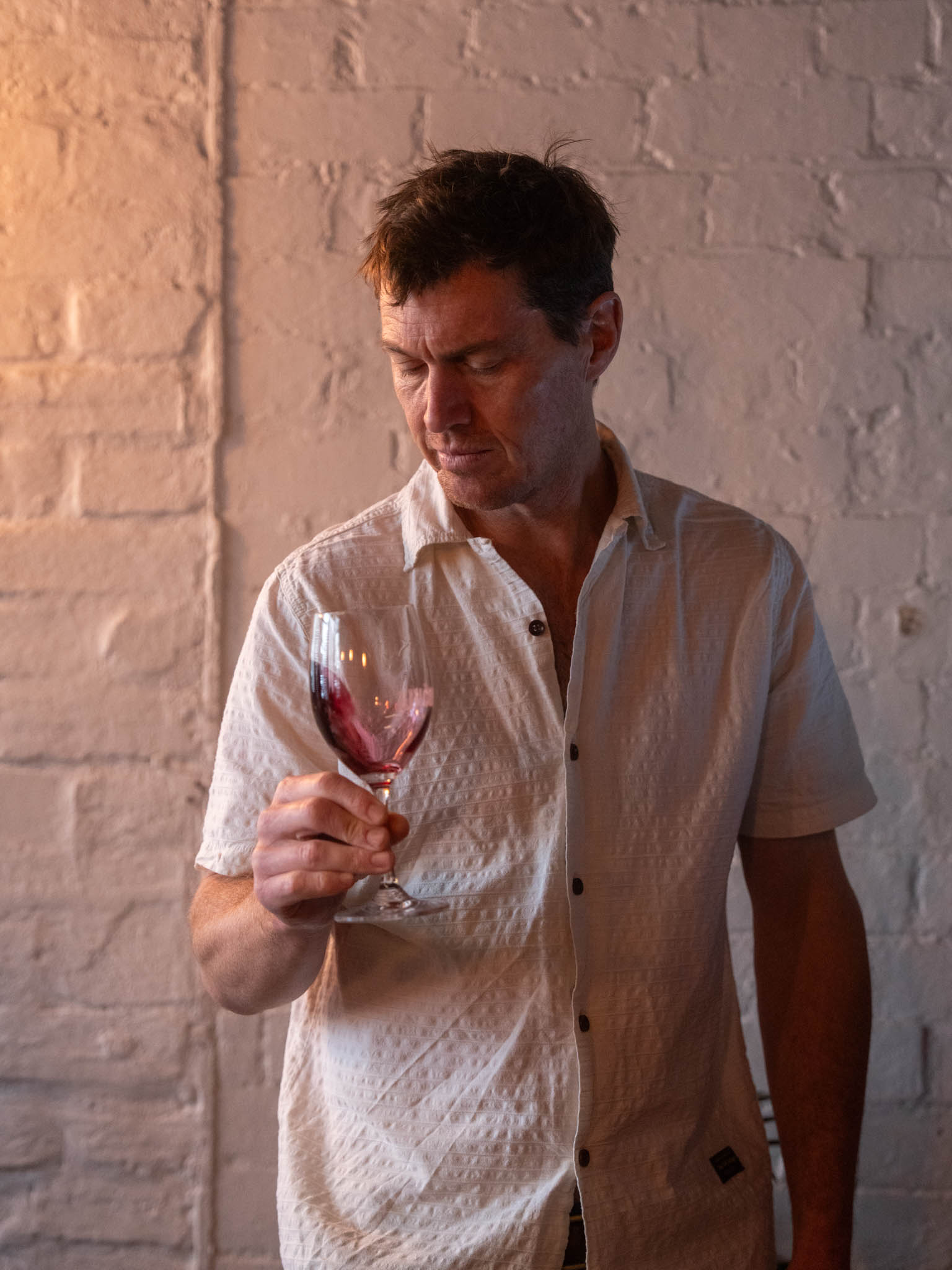
Above and opposite: Our Deep Dive panel tasting in action at The Lincoln, Carlton (Melbourne). All wines tasted ‘blind’.
Burgess-Moore saw an opening in all of it. “This is a massive opportunity for wineries of all sizes to explore further and jump on this growing category,” he said of technical advances such as bioprotective yeasts.
Burton had the last word. “Personal preferences when it comes to what you’re consuming and selling don’t have that much gravity in the great scheme. But organic farming does,” he said. “An existing division between different parts of the industry doesn’t achieve very much. We’re in it together.”
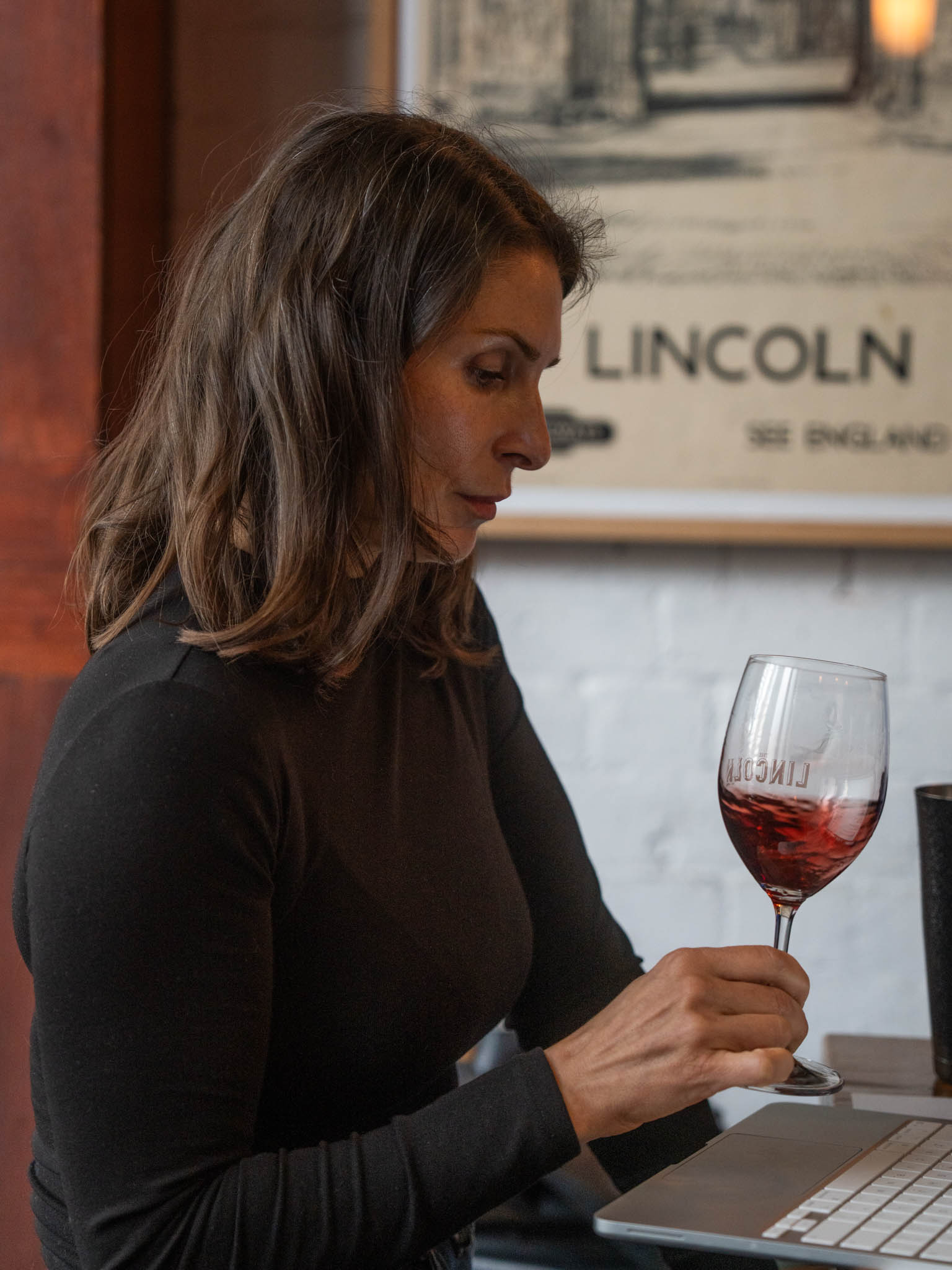
Above and opposite: Our Deep Dive panel tasting in action at The Lincoln, Carlton (Melbourne). All wines tasted ‘blind’.
The panel
Liz Carey’s hospitality career started more than twenty-five years ago, when she began working for her parents in their country pub. Work has taken her to all parts of the world, with time in Melbourne, London and Sydney – most notably for Christine Manfield as restaurant manager and sommelier, followed by a number of years as sommelier for MoVida and then as head buyer for its import division, Alimentaria. She established her wine importation business, originally known as Wine & Food Solutions, in 2016, to import and distribute wines that she and her team enjoy drinking. Since that time, its portfolio has grown to showcase some of the most dynamic wine producers in Europe. In 2020 the company became known as Vivant Selections, a name that more accurately describes the wines and makers it represents. She is proud to work with a variety of artisans, with a high proportion of her producers being female-owned and led.
Campbell Burton commenced his career in wine as a sommelier, taking in stints at Melbourne institutions City Wine Shop, Builder’s Arms and Moon Under Water – as well as vintages with Mac Forbes in the Yarra Valley and Loire Valley producers La Grange Tiphaine and Claude Courtois – and culminating in receiving the Gourmet Traveller Sommelier of the Year award in 2014. The following year, he and his partner Charlotte Ryan co-founded Campbell Burton Wines, a wine importation and distribution business based in Melbourne. All of the vignerons that they work with share a genuine love of very small scale farming, working with nature, promoting bio-diversity, and bottling nourishing and digestible wines. Every wine that they import and distribute is organically farmed and additive-free. In late 2020, he and Charlotte also opened sister business Public Wine Shop, a retail store and wine bar in Fitzroy North, where they offer directly to the public their wines and lots of wines from other importers and Australian producers.
Niki Nikolovski is a Toronto native who spent every summer of her youth with her grandparents in rural Macedonia – who, among other things, made their own wine. Though she went into a career in health sciences, she never shook the belonging that she felt when she was out in the country, on the land. She would spend her vacations working harvests abroad, before eventually taking the plunge to commit to viticulture full-time, settling in 2016 on the Bellarine Peninsula. In 2019, she and Tim Byrne co-founded Babche Wines, united by a shared commitment to organic farming and crafting wines that reflect the low-tech traditions of past generations. Their approach centres on hand-made methods – manual-cranked basket presses, gravity flow, no industrial equipment and zero additives. They are now establishing a densely planted estate vineyard in Timboon, west of Geelong, which is becoming the new home of Babche.
Shannon Burgess-Moore grew up on a vineyard in the Hunter Valley, with his vigneron parents laying the foundations in viticulture and sales from a young age, and began his winemaking journey in 1998, just across the road from home. He has since worked with producers including De Iuliis, First Creek, and Hentley Farm Wines, balancing over two decades of vintages between Australia, North America and Europe. His qualifications include the Australian Wine Research Institute’s Advanced Wine Assessment Course and the Wine and Spirits Education Trust (WSET) Level 2 Award in Wines. He is a regular wine show judge, a two-time Young Gun of Wine finalist, and a 2019 Len Evans Tutorial scholar. He is currently Group Winemaker at Tamburlaine Organic Wines, overseeing multi-regional production, supply chains and guiding diverse winemaking styles across the company’s brands, as well as the proprietor and winemaker of his own label, Grandis.
Sarah Brogno currently works as a sommelier at Public Wine Shop in Fitzroy North.
Harrison Maw currently works as a sommelier at Melbourne restaurant Côte Basque.
Hannah Beaudoin currently holds the position of marketing manager at Public Wine Shop. She grew up in a small town outside of Boston, working summers at the local deli. In 2021, she moved to New York City and immediately threw herself into the hospitality scene there, first finding a job as a maître d’ at a steak house in downtown Brooklyn and later waiting tables at a popular Italian bistro in Fort Greene. In 2024, she came to Melbourne on a working holiday visa and was lucky enough to be introduced to the wonderful team at Public Wine Shop. Since taking the job at Public, her interest in organic wine has grown immensely and she feels incredibly lucky to work alongside such knowledgeable and dedicated professionals.
Alex Hill landed in the wine industry entirely by accident: he was thrown the responsibility of establishing and running a new wine section within the Toscano’s group of boutique grocery stores, without any warning or formal training. This sink or swim period piqued his interest – but he became hooked when other studies took him to London in 2023 and he was exposed to some of the great natural wines of the world his time while working in the East London wine scene. When he returned home in 2025, he started working at Grana Formaggio Vino, the Brunswick East wine bar and shop within the Conferre Group (Tipo 00, Osteria Ilaria, Harriot). He remains entirely self-taught in wine, which he credits to a lot of reading, a lot of listening, and (probably) too much drinking.
GET FIRST ACCESS TO THE NEXT WINE ICONS – DELIVERED
Shiraz is Australia’s most widely-planted variety, and we produce millions of litres of wine from it every year. While much of this wine is designed to be consumed relatively young and fresh, Australian producers also make shiraz-based wines of impressive structure that have the ability to agree gracefully in the cellar for years – and in some cases decades – slowly gaining layers of complexity and earthiness while losing some of their tannic grip. As Australian shiraz approaches a crossroads, with too many vines in the ground and not enough buyers, can aged shiraz released via museum programs help reignite our love affair with this quintessentially Australian variety? We felt that a Deep Dive was in order to find out.
Over the last decade or so, the winemaking practice of keeping white grape skins in contact with fermenting juice – just like making red wine – has changed the wine landscape like few other developments. From wines with deeply amber hues to components adding complexity to blends, makers in the 2021 Young Gun of Wine Top 50 are using skin contact on white grapes to great effect, including Edenflo, Sigurd, Alpha Box & Dice, Moonlit Forest, Express Winemakers, Year Wines, Minimum and Alkimi. Tasting notes appear at the end of the article.