-
Producer
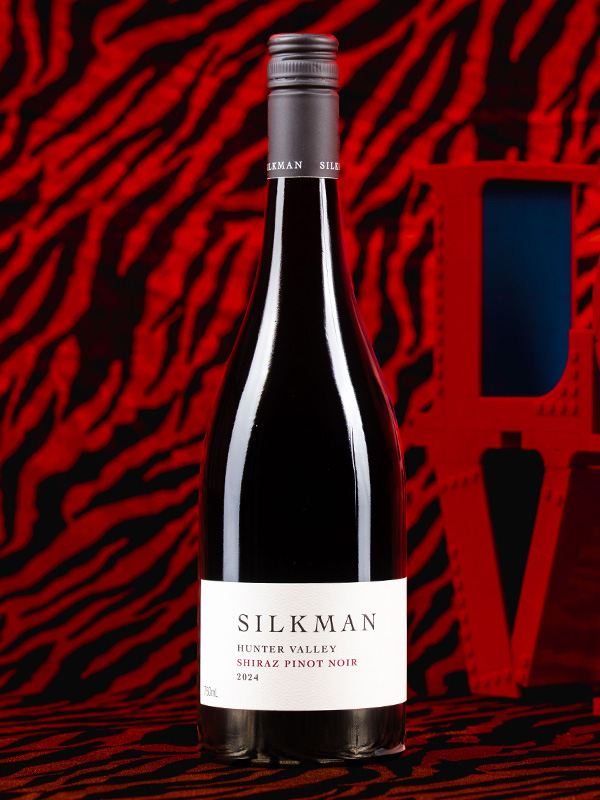
Silkman Wines -
Region
Hunter Valley
-
RRP
$35
-
Vintage
2024
-
Variety/Varieties
Pinot noir Shiraz (Syrah)
-
Alc./Vol.
13.8%
This is a Hunter classic cast anew, and proof the original odd couple ain’t so odd in practice when coupled this deftly. Dark fruit, but shockingly light in body — no teeth-staining here. Savoury, a little smoky, and genuinely unlike most other reds in your glass. A unique one, in the best way.
The blend of shiraz and pinot noir is a genuine Australian invention, pioneered in the Hunter Valley through the 1940s and ‘50s by the legendary Maurice O’Shea at Mount Pleasant. O’Shea’s “Light Dry Reds” — medium-weight, savoury, fragrant wines built for drinkability rather than power — culminated in ‘Mount Henry’, his blend of the two varieties, named for a friend rather than any real place. The style faded after O’Shea’s death in 1956, buried for decades under the region’s old “Hunter River Burgundy” labelling, before European trademark law forced Australian wine onto varietal labels and, eventually, cleared the way for winemakers to call the blend exactly what it is. Mount Pleasant revived it from 2011, Meerea Park followed in 2013, and a wave of Hunter producers — Silkman among them — have carried the style forward since.
Liz and Shaun Silkman founded Silkman Wines in 2013 as a passion project, a place to make small-batch wines exactly the way they wanted. Shaun grew up immersed in the Hunter wine industry, and his focus has always been on the connection between vineyard, winery and the people drinking the wine; Liz built her own path through years working some of the region’s most sought-after vineyard sites, developing a sharp instinct for picking decisions, balance and structure along the way. Together they focus on tiny parcels of the best Hunter fruit they can source, centred on the region’s classic varieties — semillon, chardonnay and shiraz.
Hunter shiraz is naturally mid-weight and elegant, shaped by the region’s warm, humid climate into something closer to a “shiraz for pinot drinkers” than the bigger, more tannic styles found elsewhere in Australia. That affinity is deepened by the particular character of Hunter pinot noir, most of it descended from the MV6 clone — one of the more robustly fruited, structurally generous pinot clones available, first propagated from vines O’Shea himself planted at Mount Pleasant in 1921. Rather than diluting the shiraz, that pinot lends real structure and depth. It’s exactly this interplay that’s seen this wine from Silkman perform consistently well across every Pinot-Shiraz Deep Dive blind tasting we’ve run over the years, including landing in the most recent line-up’s top six picks.
Tasting note
Beautiful blackberry fruit leads the nose, combined with a savoury edge of smoky bacon — that pairing is really the heart of this wine, along with a lightness and approachability that catches you off guard given the depth of flavour on offer. From there, more nuance unfolds: smoke and seaweed alongside jammy blackberry and black cherry coulis, lifted by vibrant violet. On the palate it’s super-vibrant and almost (but not quite) light-bodied, with a surprisingly lean, energetic texture given the richness of the fruit underneath — juicy and generous, with zesty acidity and super-fine tannins offering real structure to the decadent fruit. There’s a beautiful tang on the finish, alongside a gentle vanilla-marshmallow sweetness from the oak that keeps you coming back for more. A wine of genuinely interesting contrasts.
When to drink
If you’re in the mood to crack a red with nothing else on offer except good conversation and a friend across the table, this is a great pick — or pour it while you rewatch reruns of [insert your comfort show here] and let the wine do the entertaining. This isn’t a wine that needs food to be enjoyed. And honestly, we don’t worry too much about food and wine pairing around here — that’s exactly the kind of thing that turns a casual glass into a stressful exercise. But if that’s your thing, sling this at some pulled pork tacos with chipotle salsa and life looks prett-y damn good, thank you kindly, until that bottle’s evaporated. That duality of fruit and savoury profile makes this a natural bridging wine, one that can pull double duty across a whole meal. It’ll also happily pull double duty at the table, from a starter of steak tartare or smoked beetroot through to something heartier like beef Wellington. This is a wine built to take you from point A to point B, and back again.
Themes of this wine
Pinot Noir & Shiraz blends
This particular pairing has no real precedent in France, where pinot noir and shiraz’s ancestral homes — Burgundy and the Northern Rhône — sit close enough geographically to almost touch, yet the two varieties are never traditionally blended together. It took an Australian, Maurice O’Shea, working in the Hunter Valley through the 1940s and ’50s, to prove the combination could work, using pinot’s early ripening and natural tannin to add structure and depth to shiraz rather than diluting it. After decades in the shadows, the style has become a genuine calling card for a handful of Hunter producers embracing both the history and the versatility it offers.
Hunter Valley
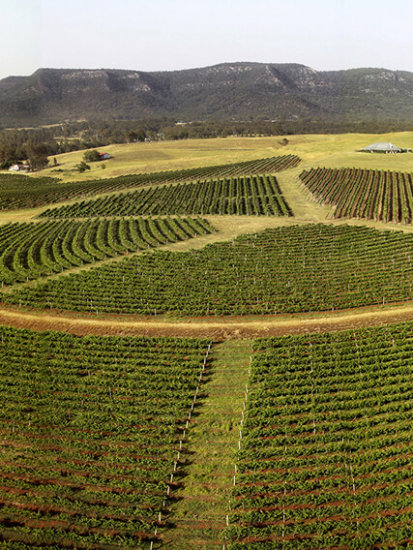
The Hunter Valley, just north of Sydney, is one of Australia’s oldest wine regions and a genuine outlier climatically — warm and humid, almost subtropical, conditions that would seem hostile to fine wine in most parts of the world. Yet it’s precisely this climate that shapes the region’s shiraz into something mid-weight and elegant rather than big and jammy, and, perhaps more surprisingly, that made the Hunter the unlikely cradle of Australian pinot noir as we know it today.
The MV6 clone
Most Australian pinot noir traces back to a single source: two rows of vines planted at Mount Pleasant in 1921 by Maurice O’Shea, themselves said to descend from a cutting James Busby brought from Burgundy’s grand cru Clos de Vougeot vineyard in the 1830s. From the late 1960s, the CSIRO began propagating cuttings from those vines to supply growers across the country, and the resulting MV6 clone remains the backbone of Australian pinot noir production today, particularly in Victoria. It’s a comparatively robust, well-tannined clone by pinot noir standards — one of the reasons Hunter pinot pairs so naturally with shiraz rather than being overwhelmed by it.
Explore Further

GET FIRST ACCESS TO THE NEXT WINE ICONS – DELIVERED
Find out moreEach month, get 3 bottles of our freshest discoveries. We taste thousands to bring you the best.
Join us and support emerging winemakers, sustainable vineyards, and the development of young professionals.
— Max Allen, Wine Writer
— Broadsheet
— The Australian