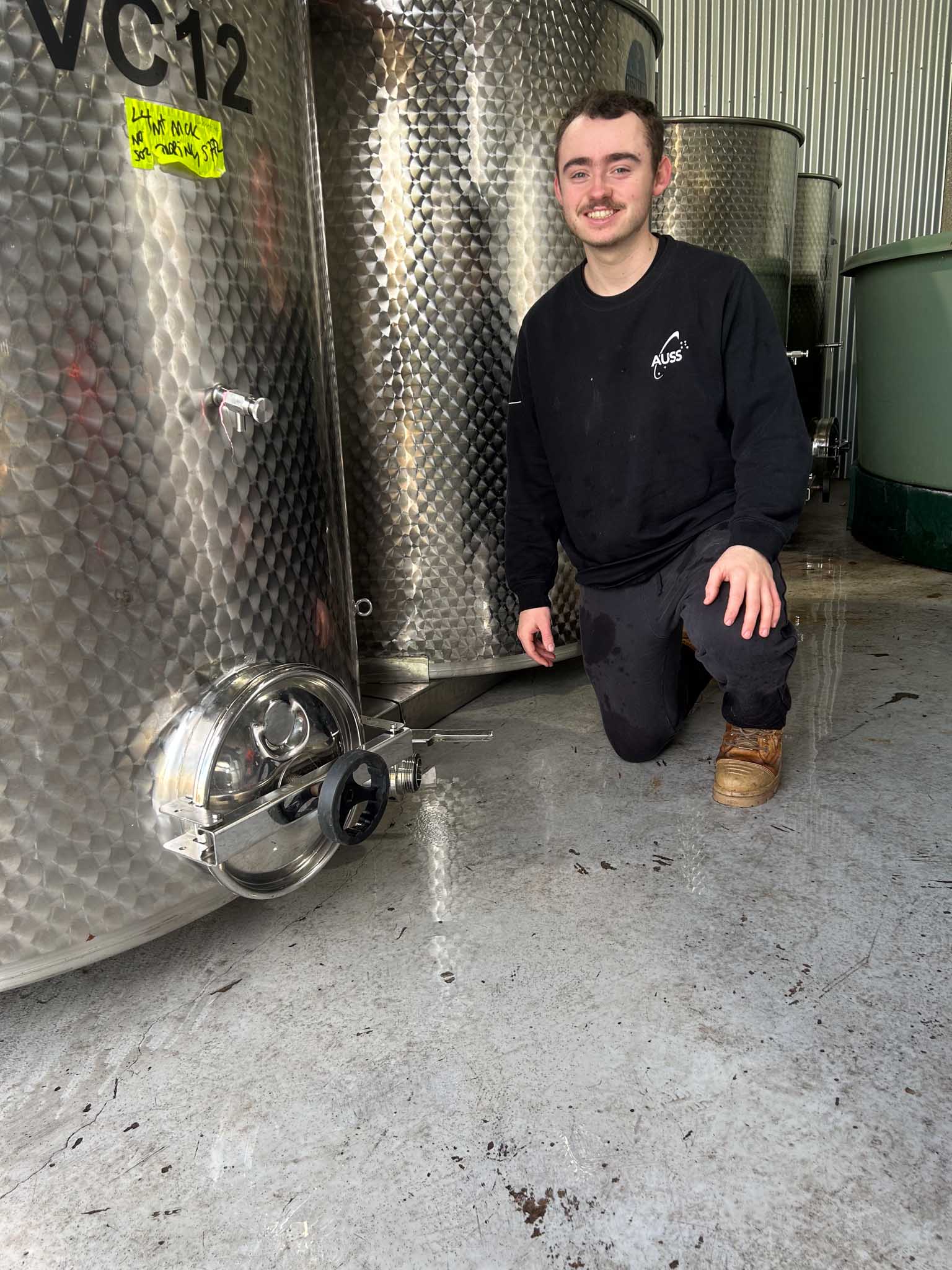
Marcus Torzi was 21 years old and still completing his Bachelor of Viticulture and Oenology at the University of Adelaide when he launched Whispers of Chaos – already making two of the most quietly arresting wines to come out of the Barossa Valley in recent memory. The label debuted in August 2025 from the family farm at Mt McKenzie with two wines: a roussanne, riesling and semillon white blend, and a sangiovese and cabernet sauvignon red. Both are unfined, unfiltered and made with Italian stoneware as the primary maturation vessel. Both have a delicacy and lift that feel like a deliberate, considered answer to the questions the Barossa is currently asking itself. In a region wrestling with its own identity, Torzi’s project is less a debut label than a signpost.
The Barossa Valley is at a crossroads. For generations its reputation was built on wines that were hard to argue with: dense, concentrated shiraz and grenache from some of the oldest vines in the world, built for cellaring and commanding premium prices on export markets. That model served the region well for decades. But the world has moved. Consumer tastes have shifted decisively toward freshness, levity and accessibility – particularly among younger drinkers who find the traditional Barossa idiom of extraction, weight and heavy oak a foreign language. A warming climate is simultaneously making that traditional model harder to sustain, with sugar ripeness arriving earlier each season, alcohol levels that can climb by themselves, and natural acidity increasingly difficult to preserve without winery intervention. The Barossa is not without its progressive voices – a generation of makers has been working quietly at the lighter end of the spectrum for some years – but the challenge of reshaping a regional identity built on power and prestige is a genuine one, and it runs deep. Into this landscape stepped a 21-year-old with two wines, Italian stoneware, and an instinct for restraint that producers twice his age are still reaching for.
The name is the philosophy. “Not every bottle needs to shout to be heard,” the label says. Whispers of Chaos is made for those who seek quiet expression – detail over dominance, restraint over rush, the kind of wine that invites you to lean in rather than sit back. “The wines I make are adventurous and expressive, yet always true to their place,” says Torzi. “In the winery, I work with a minimal intervention mindset, allowing the fruit to guide the final expression. But everything I do is still intentional – I don’t overwork the wines; I give them time and space so they can develop naturally.” The website tagline – unfined, unfiltered, unforced – is not marketing copy. It is a winemaking brief.
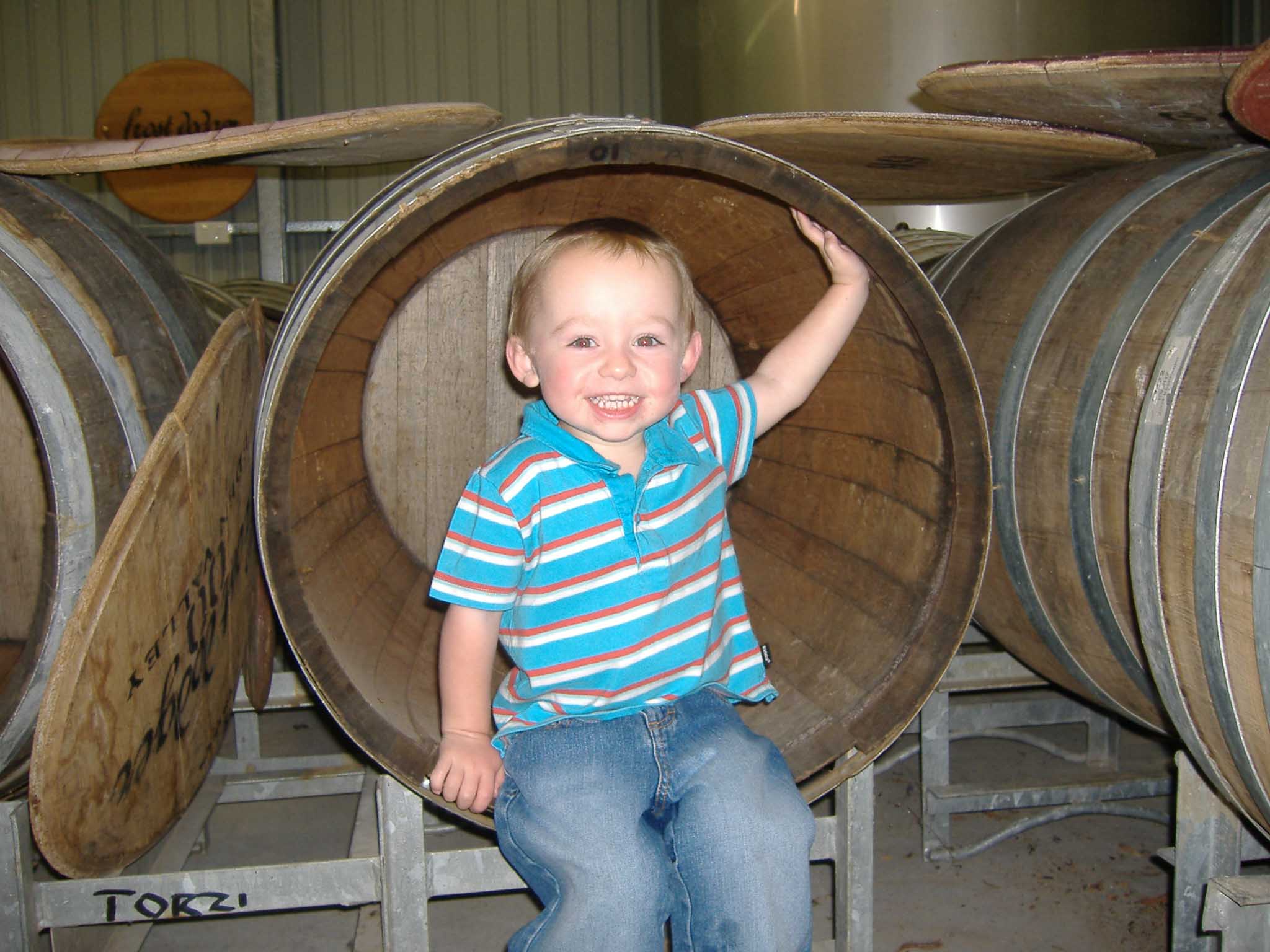
Torzi grew up surrounded by hospitality and wine. His grandfather was a chef in the Royal Air Force; his grandparents on his father’s side were market gardeners; his parents have spent their lives in hospitality and today make wine and olive oil through Torzi Matthews, the family winery. “Wine was part of my life at home,” he says. “Being around that environment and growing up working in the winery allowed me to see the passion that goes into producing something people genuinely enjoy.” From the age of 13 he worked in fine-dining establishments across the region – Vintners Bar & Grill, Casa Carboni – before moving to the Adelaide Central Market when he started university. In those venues the connection between wine and human experience became vivid. “Through these experiences I saw first-hand the role wine plays in bringing people together,” he says. “Watching patrons share a bottle, talk about it and connect over the story behind it made a lasting impression on me.”
It was during his first year at university – where he had initially enrolled to study physics – that the pivot came. “I wanted something different. I wanted something creative, expressive and alive. What better fit is wine?” The University of Adelaide community deepened the commitment. “As I finish the final months of my university studies, I find myself surrounded by an incredible community of like-minded people who share a deep passion for wine,” he says. “The conversations, exchange of ideas and shared curiosity constantly challenge me to think a little deeper, which translates directly to me in the winery.” His placement at Hoddles Creek Estate in the Yarra Valley runs alongside all of it – learning what freshness and restraint look like from the cooler end of the spectrum and bringing that perspective back to the Barossa.
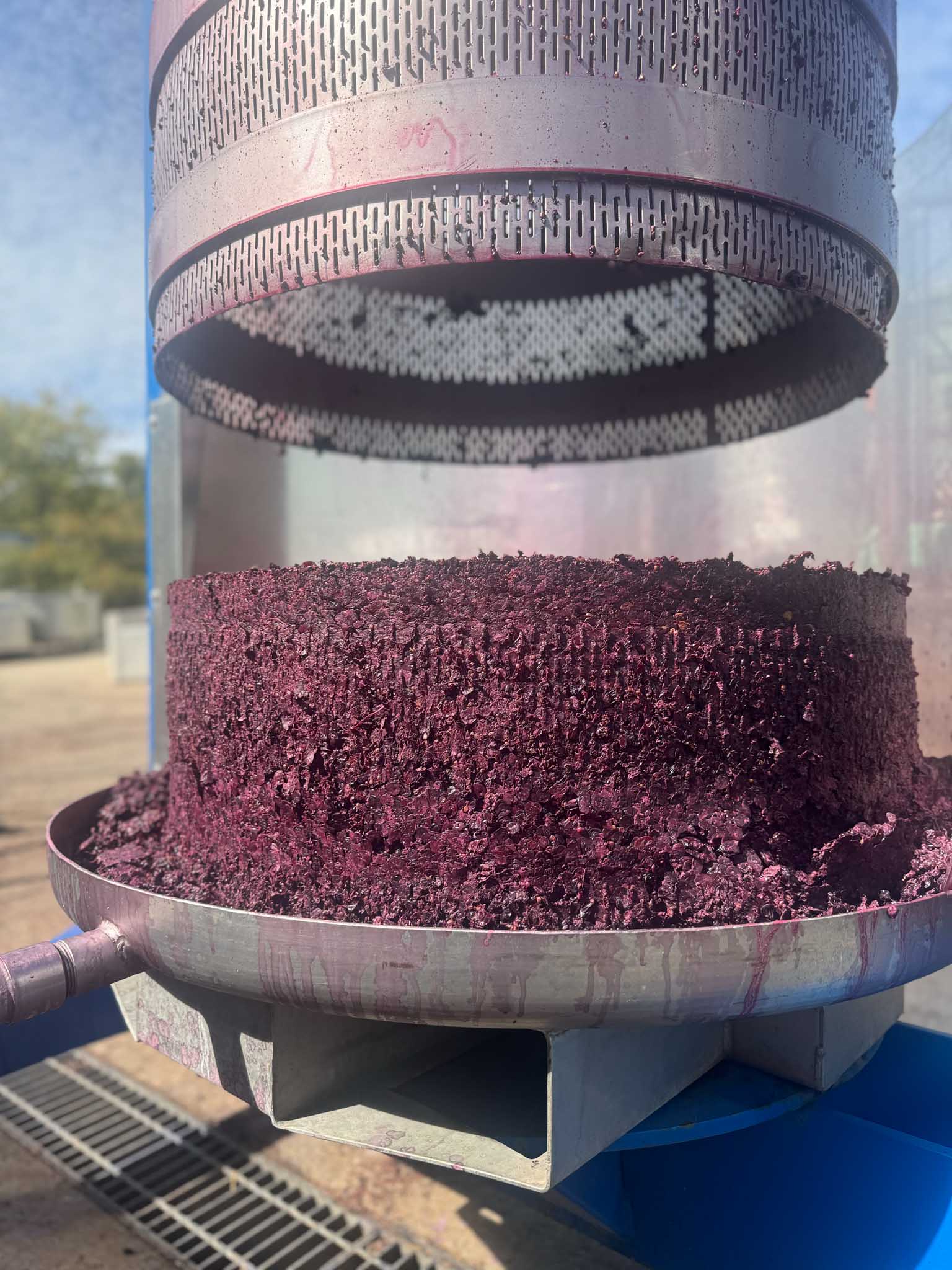
His winemaking philosophy was forming long before the first commercial vintage. “The wines which present the best are the ones that feel honest – not overworked or overthought, just true to their place,” he says. In the winery, the key tool is clayver – Italian stoneware that has gained traction among producers seeking an alternative to both oak and inert stainless steel. “I like to use clayver in my reds as it allows for the retention of the vibrant aromatics I love,” says Torzi. “It’s more inert than barrels, which I believe allows me to express the site more clearly.” The red blend also sees a portion matured in seasoned oak – balancing the freshness and intensity of the stoneware with the integration and roundness that 12 months in barrel provides. The white blend receives three to four days of skin contact with gentle plunging while alcohol is still low – the juice remaining in contact with grape skins early in fermentation to build texture and aromatic complexity without extracting harsh phenolics. “The aim is to create a wine which has both vibrancy and structure whilst remaining approachable.”
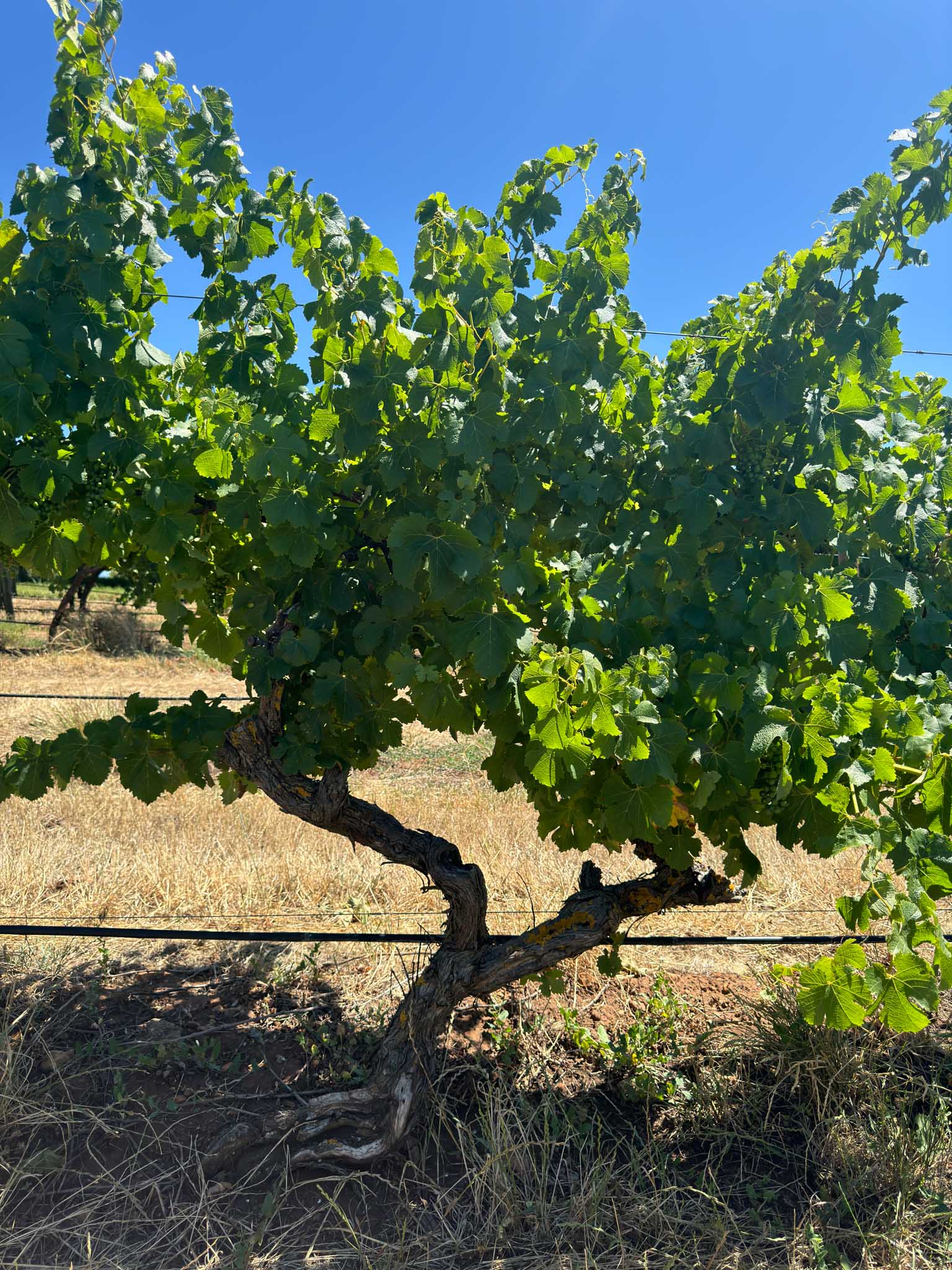
The blends themselves are a quiet act of reinvention. Roussanne, riesling and semillon together in a Barossa white is not a combination that exists in the region’s conventional playbook – roussanne from 35-year-old Angaston vines at 420 metres on ironstone and silt, riesling from Eden Valley at 430 metres on rocky soils, and semillon from a 105-year-old Madeira clone growing alongside. The elevation matters: these are not valley floor sites accumulating heat units all season, but hillside and ridge sites where cooler nights preserve precisely the acidity and aromatic definition that Torzi is chasing. The red pairs sangiovese with cabernet sauvignon from Moppa Hill – a distinctly Italian idiom, working in the tradition of blending the two varieties that Tuscany long ago established as complementary. “I believe that some of the most compelling wines are often blends,” he says. “I like to think of grape varieties working together in much the same way people do. Individually they have their own strengths, but when combined thoughtfully, they can support one another and create something greater than the sum of their individual parts.”
Climate change informs his thinking directly. “Maintaining natural acid levels and balance without relying on acid additions can be challenging as the effects of climate change become more apparent,” he says. His response is multiple picking passes through the same block – capturing natural acidity in earlier picks, depth and concentration in riper parcels – and a longer-term interest in Italian varieties better adapted to warmth. “I would love to work with Italian varieties which are well suited to the warming climate, which will offer extensive options regarding structure, freshness and versatility.” It is a vision that is both pragmatic and personal. “Growing up in the Barossa, I developed an early appreciation for the culture of the region and the way the community is shaped by its long history of winemaking,” he says. “Being surrounded by producers who have worked the same sites for generations showed me the great dedication and respect the people have for the land. Barossa has been my life, and I want to explore and create my own expression of the region through wine.”
What drives him, beneath the winemaking decisions, is something simpler. “What drives me is the opportunity to create something that brings people together,” he says. “Through my background in hospitality, I have seen how a bottle of wine can spark conversation, tell a story and create memorable moments. Being able to contribute to that experience is rewarding.” There is something deeply satisfying, he says, about taking something elemental and guiding it into something expressive and alive. “I find that the wines which present the best are the ones that feel honest.” The wines are available direct from the website. There is every reason to be paying attention.