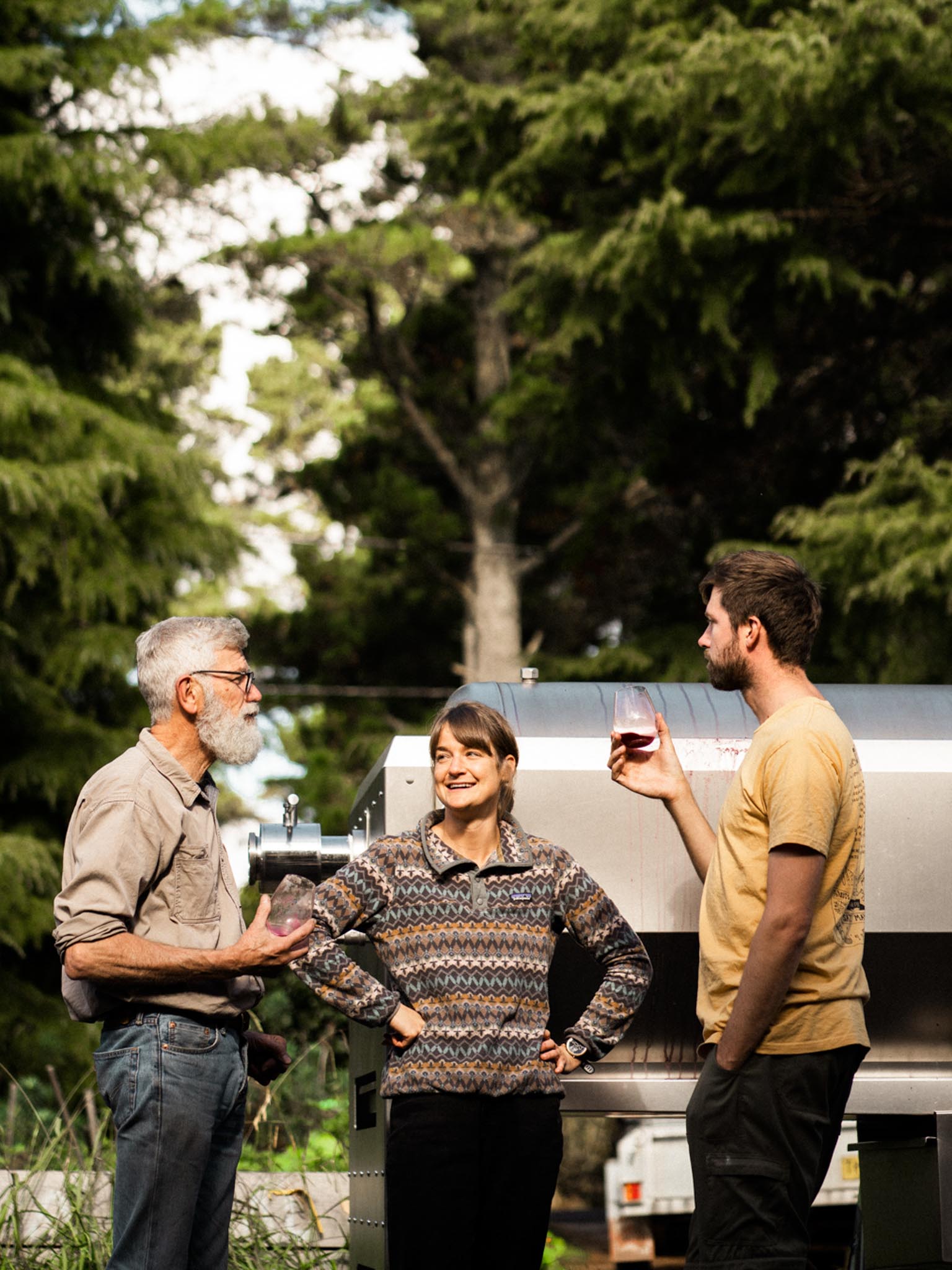
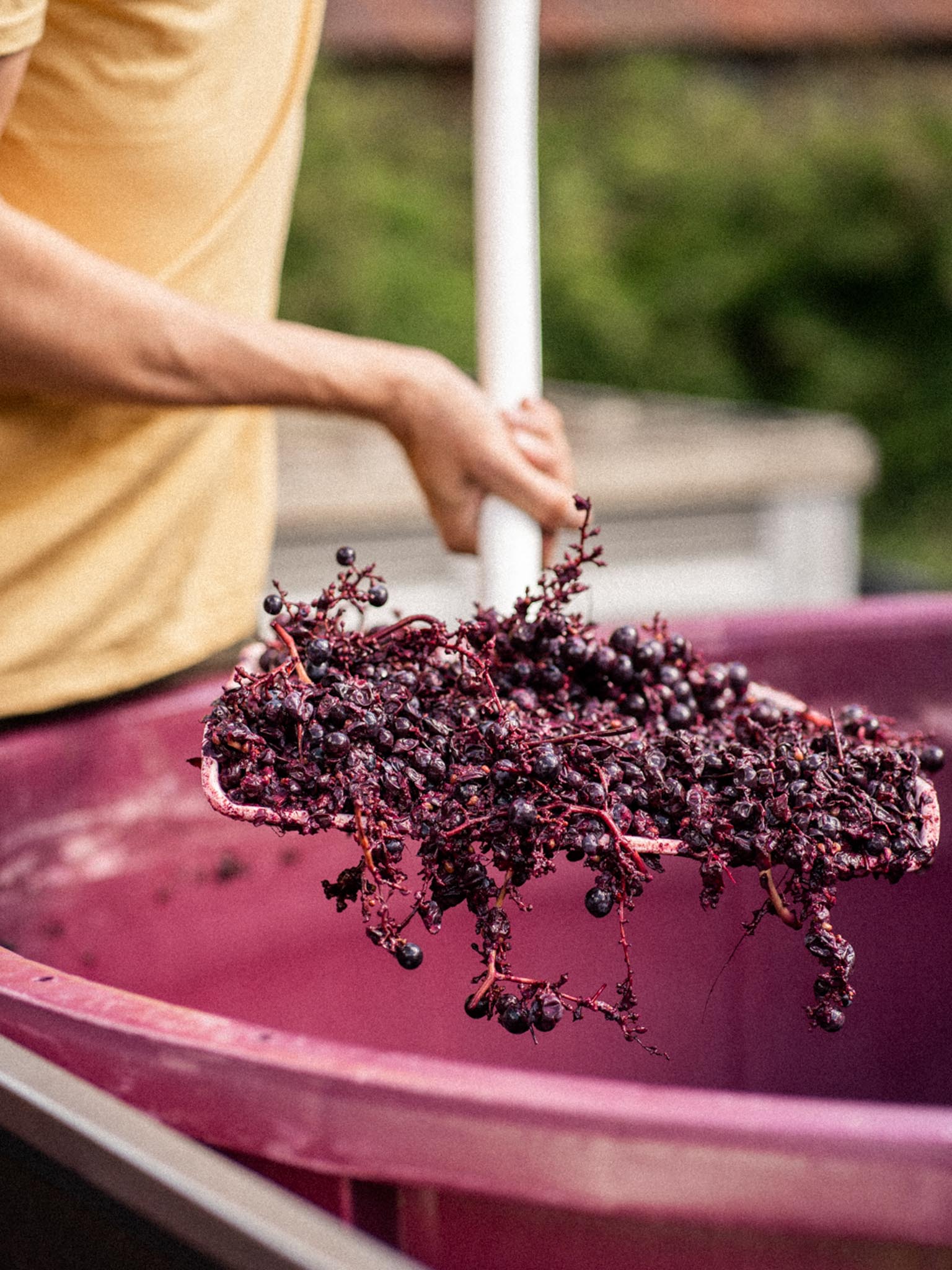
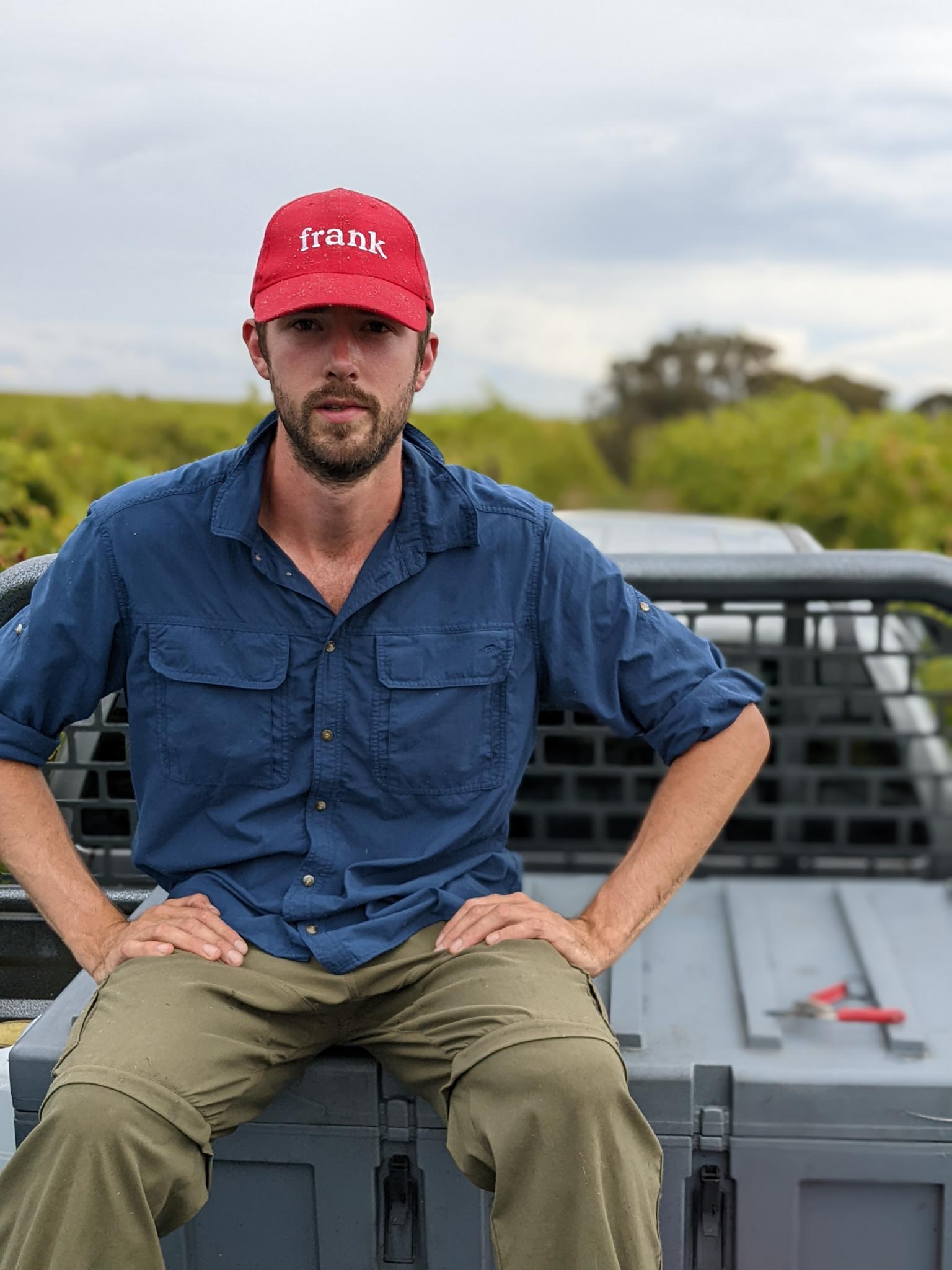
Thomas Colman makes wine in one of the most unlikely corners of the Australian wine map – the Blue Mountains, part of NSW’s broad South Coast Zone, where no established wine region exists, no blueprint has been laid down, and the conditions sit permanently on the edge of what viticulture can tolerate. That precariousness is precisely the point. His label, Frankly This Wine Was Made By Bob, is a father-and-son project with Bob Colman, run out of Blackheath and connected to a natural wine bar, bottle shop and restaurant of the same family on Govetts Leap Road. The wines are natural – zero-zero, a term used to describe wines made with absolutely no additions and nothing removed, meaning zero added sulphur and zero added yeast – made from organically farmed pinot noir, and shaped by the particular wildness and variability of a region still being figured out. This is vigneronship in the most literal sense: Colman prunes the vines, thins the shoots, lifts the wires, nets the fruit, picks it, and processes it himself.
Colman grew up in the Blue Mountains and studied viticulture and oenology at the University of Adelaide, graduating with honours on research into preservative-free winemaking. He then set about accumulating experience with unusual breadth and intent – vintages in California, Spain, Germany, Austria and France, alongside seasons in McLaren Vale, the Adelaide Hills, the Barossa, Beechworth, Gippsland, Vermont and the Canberra region. Most of the overseas stints were done as a volunteer. “Learning is priceless,” he says. “I want to immerse myself in culture and see all aspects of the process, from the vine to the bottle.” Mentors include James Erskine and Gareth Belton – makers whose philosophical rigour around natural winemaking clearly left a mark. By 2020, Colman was back in the Blue Mountains full-time.
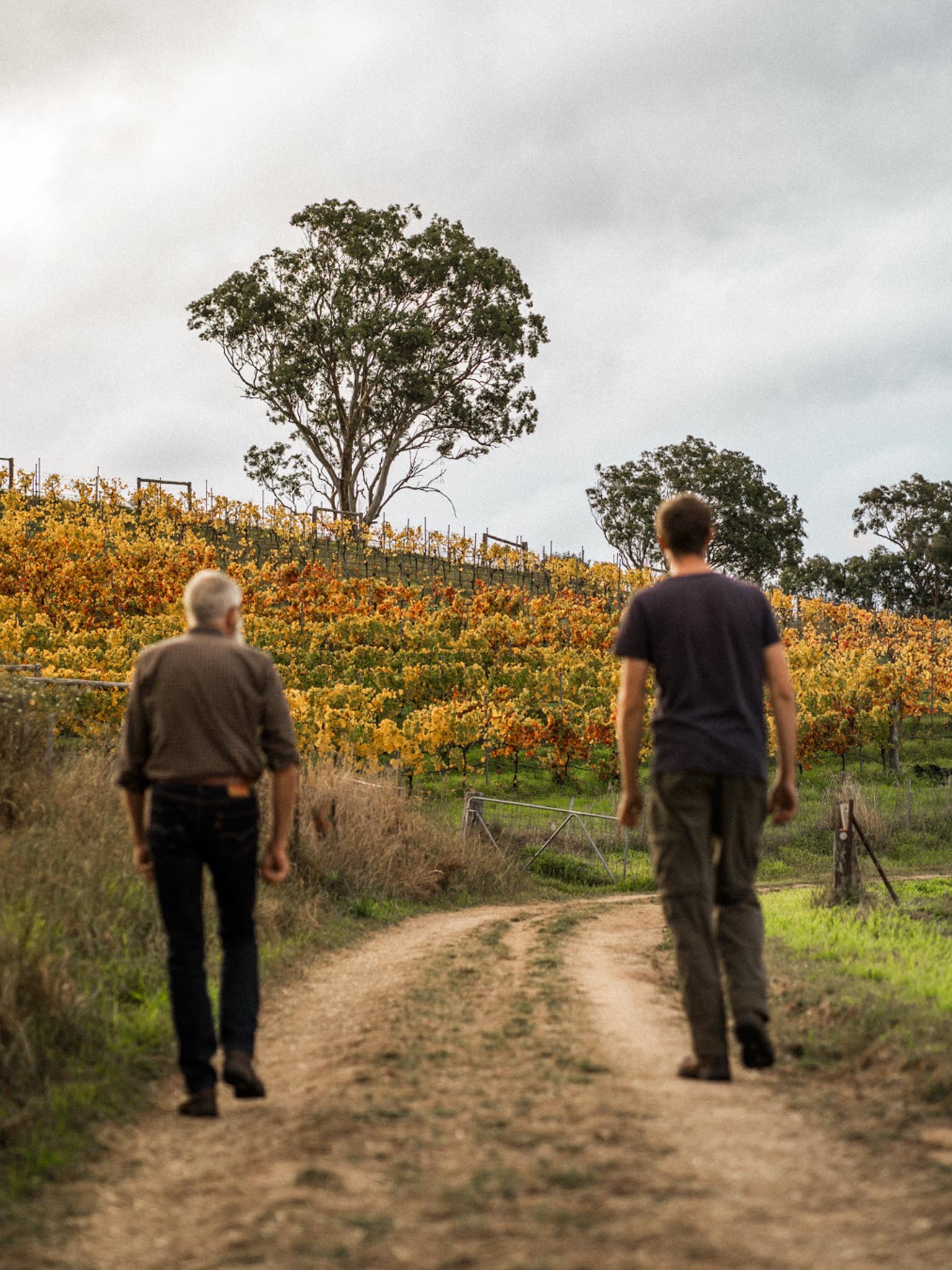
From 2019 to 2024, he and Bob farmed a four-hectare vineyard in the Kanimbla Valley – a site planted in the 1990s that had never produced wine before the Colmans took it over, and which they converted from conventional to organic management in their first season. That vineyard has since been pulled out by its landowner, and the focus has shifted to a new four-hectare site in the Megalong Valley, currently being converted to organic farming. The wines submitted under the Frankly label – a rosé and a pinot noir from the Kanimbla Valley – represent what that original site produced at its best: yields under one tonne per hectare, far below what most Australian vineyards target, producing fruit of profound concentration and intensity. Every vine was pruned by hand and visited multiple times each season. The blocks were picked in sections according to soil and vigour, staggering ripeness and allowing each parcel to be handled differently in the winery.
The Blue Mountains demands that level of attention, and then some. It is cooler and more continental than the Hunter Valley, with colder nights and the constant threat of late-summer rain that brings mildew and bunch rot with it. The winery itself sits at one of the highest elevations in New South Wales, which means once the rains arrive, temperatures fall sharply, slowing fermentation and creating the risk of stuck ferments – wines that stop fermenting before all the sugar has been converted, which can cause spoilage. The response is patience and vigilance rather than intervention. “Natural wine benefits from time,” says Colman. “Time has a way of resolving what might initially seem imperfect.” Élevage – the period a wine spends maturing in vessel before bottling – is often extended as a result, whether to see primary fermentation through to completion or simply to give the wine more time in bottle before release.
The winemaking is as stripped back as it gets: wild fermentation with indigenous yeasts, all élevage in oak from barrique to puncheon – the latter being a larger barrel format holding around 500 litres – with no fining and no filtration. Maximum sulphur addition at bottling is 15ppm, with more than 90% of wines receiving none at all. “We’re not interested in simply being organic or sustainable – we’re striving to be regenerative,” he says. The isolation of working without a local wine community to draw on has pushed Colman to seek that community elsewhere – through tasting widely, finding producers in similar climates, learning from what others are doing in difficult places. He hopes the label itself opens a door. “We ultimately hope to open a door for others to pursue vigneron projects in more marginal, unconventional regions.”
The longer-term vision is to own land and farm it entirely themselves. For now, the Megalong Valley site is the next chapter – another marginal place, another conversion, another set of seasons to learn from. Frankly, that’s the whole idea.