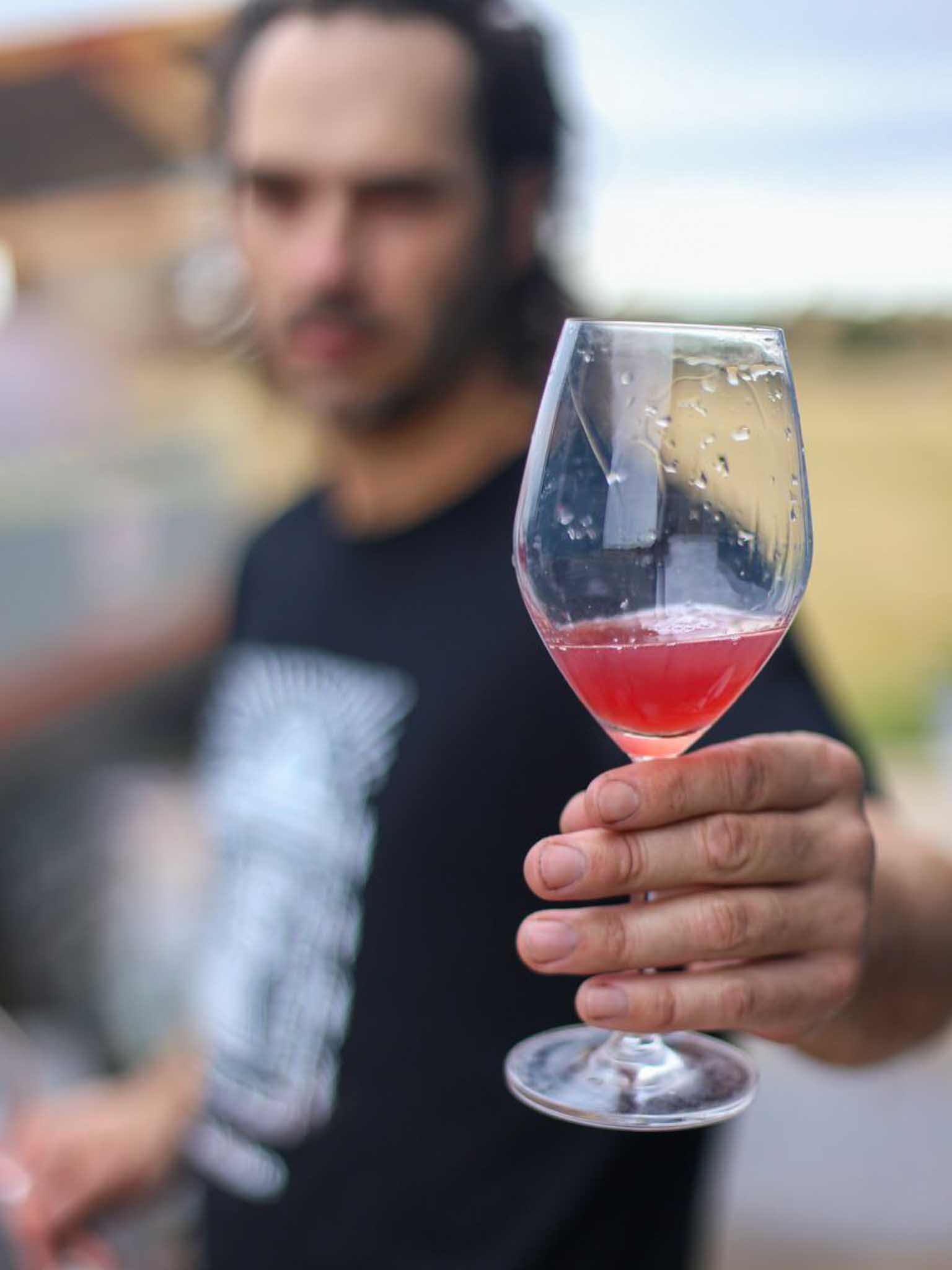
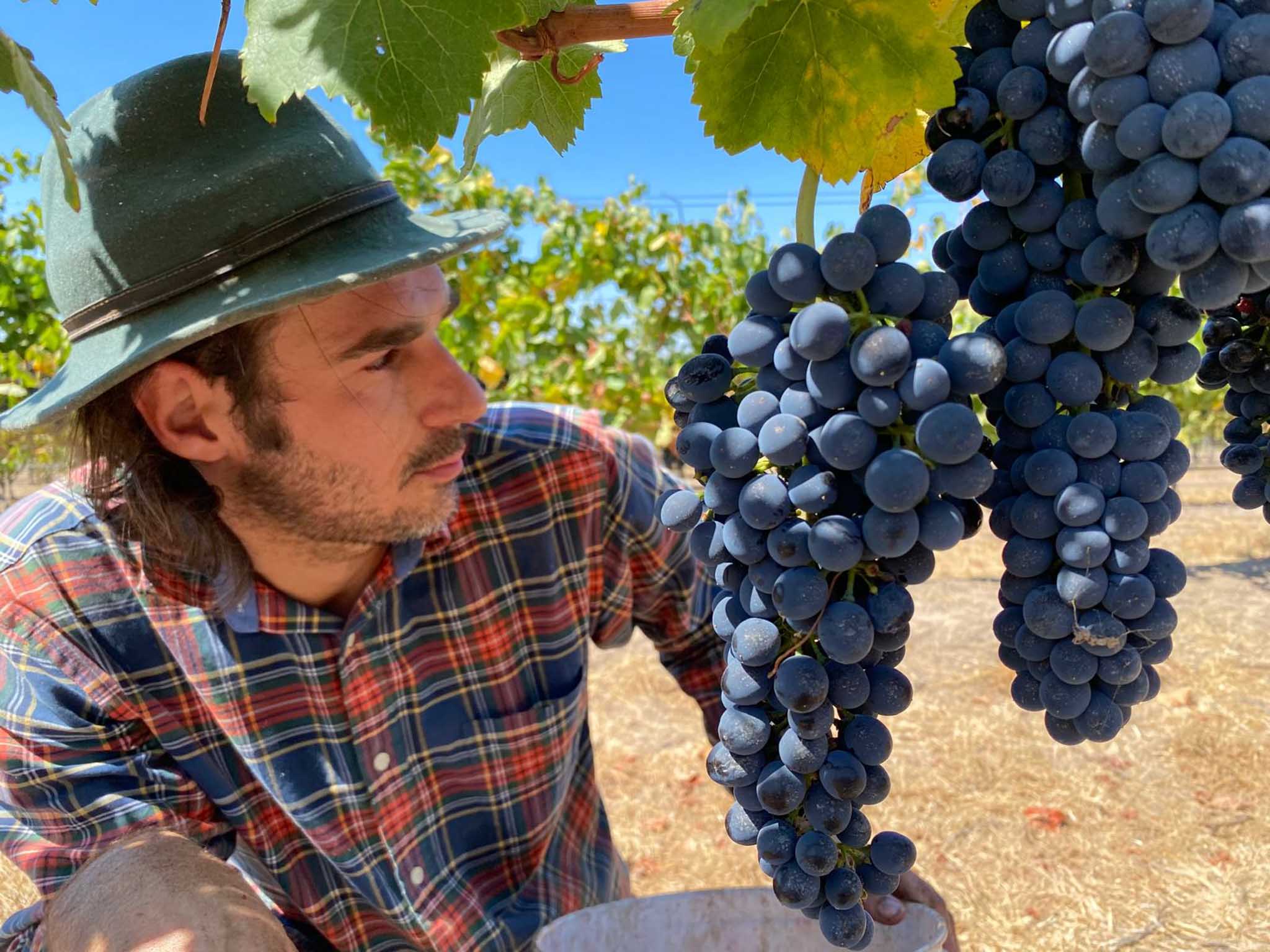
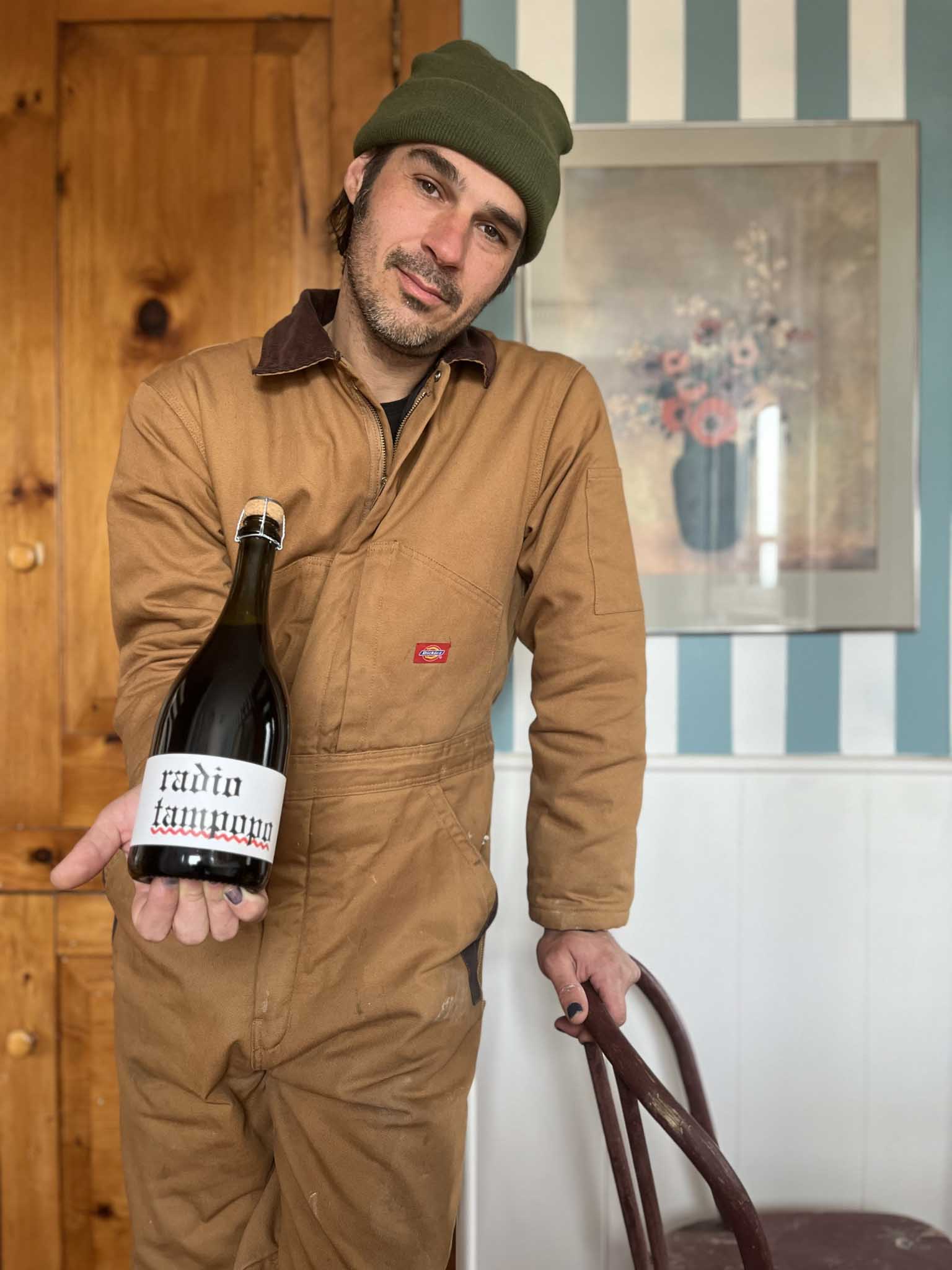
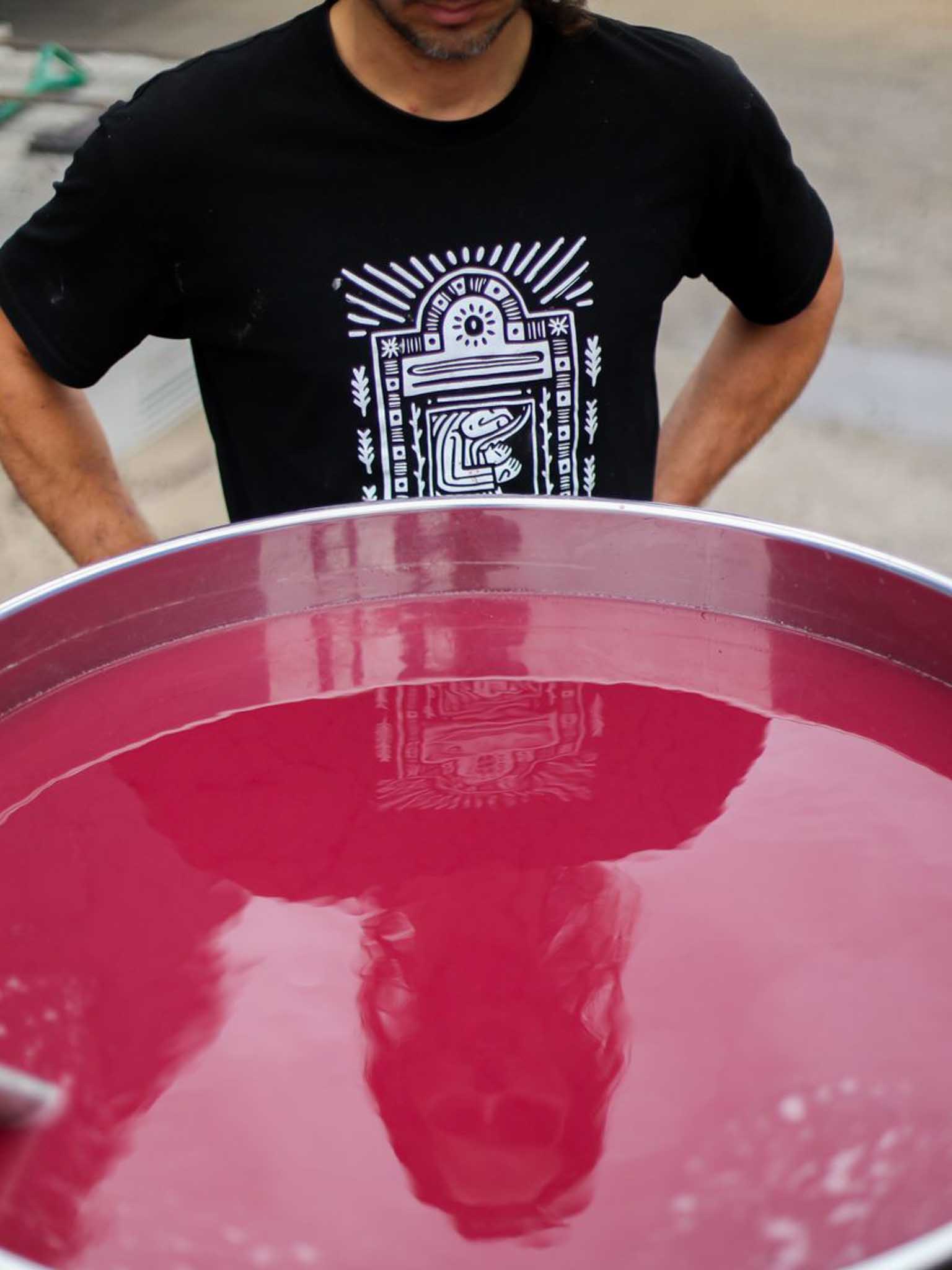
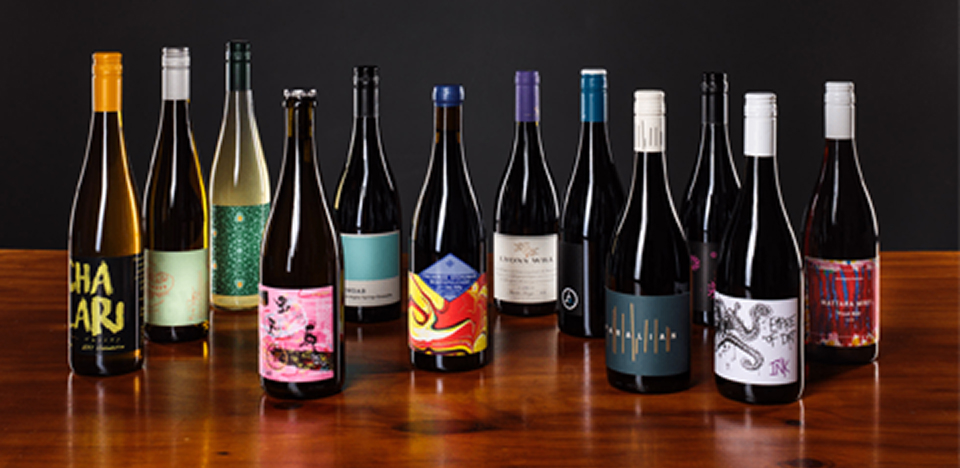
Scott Cosgriff is a former human rights lawyer turned winemaker whose Tampopo label – based halfway between Melbourne and Ballarat – makes small-batch, acid-driven wines from fruit sourced across Victoria and NSW. The range spans sangiovese, pinot noir, chardonnay, vermentino, a skin-contact riesling called Holus Bolus, a rosado, and a traditional-method lambrusco under the Radio Tampopo sub-label. Maceration times across the range run from three days to 150, which tells you something about the breadth of curiosity at work. The philosophy is food-first, unhurried, and rooted in the idea that wine can be both an everyday staple and something irreplaceable – accessible without being ordinary.
The name comes from the 1985 Japanese film by Juzo Itami, and the connection runs deeper than a clever label. “The presiding spirit of Tampopo is the film of the same name, which I think plays with two distinct ways we orient to eating and drinking: the everyday – intimate, rustic, low-stakes – and the transcendent – technical, rare, rarified,” says Cosgriff. “I want my wine to live in the same duality: I’m motivated by the idea of wine as a staple, and also the idea of wine as a unique expression of place, time, culture and intention. Something special, without being a luxury.” The circular labels on the main range are subtly unique bottle to bottle – a Rorschach test of sorts. “My intention is to try to reflect that every moment is different; that the connotations or perceptions we have about a place – or a person or an idea or a wine – are the result of layers of moments and experiences. You can taste the same wine on two occasions but your experience will not be identical.”
Cosgriff describes Tampopo as “tiny wine” – and means it as a compliment. “I like to work at a small enough scale that each vintage is defined as much by how it looks in the glass as by the memory of the people who helped me harvest, how I fit what on the ute, what else was happening as summer turned into autumn, what I was listening to when I labelled the bottles.” The label came to life in a Sydney garage, built through years of bottling days with friends, cups of tea and music. “The spirit of Tampopo came alive during that time,” he says. “Feeling responsible for and imprinted in every part of it, but rarely alone in it.” His path to wine traced through restaurants worked during university, a stint as a translator at a Japanese law firm, and a 15-year legal career focused on refugees and human rights – punctuated by vintage stints in Gippsland, Oregon and the Mornington Peninsula, and eventually a masters in enology and viticulture. The first commercial vintage was 2018. “When it came time to commit to the name, I just kept coming back to Tampopo. After a certain number of years I realised: I’m never not going to want to do this, and have since organised more of my life around doing it.”
In 2024, he moved back to Melbourne and relocated the winery setup down the Hume Highway – holding onto favourite NSW fruit sources while the Victorian pipeline began to fill. “I held on to some of my favourite fruit sources, like the Sangiovese from Hilltops, because I love the fruit,” he says. “The pipeline is now also beginning to fill up with wines from Macedon and Heathcote. The attractions include the diversity of plantings, the proximity to home base, and the cool climate credentials of some of the sites.”
The winemaking is defined by a deep curiosity about extraction – how the interactions between juice, skins and stems shape a wine’s form and flavour. “I think about it whenever I make a cup of tea, or coffee in an aeropress,” says Cosgriff. “Steep? Stir? What effect is the temperature of the water having?” In his twenties, working a vintage in Oregon, he was given responsibility far beyond his experience – tasked with press decisions across 15 different ferments of premium single-vineyard pinot noir. “That was an experience that left me enthralled with how wine is shaped by decisions about skins.” The Holus Bolus skin-contact riesling – where juice is left in contact with grape skins during fermentation to extract colour, texture and tannin, in the same way red wine is made – has been made over multiple vintages and Cosgriff’s confidence with it has grown. “The more I’ve made it over the years, the more confident I have become with lengthier periods of maceration. I find that the wines become finer, less phenolic. Less overtly ‘orange wine.’“
The technical approach is minimal: wild fermentation driven by a pied de cuvée – a small quantity of actively fermenting wine used to carry native yeasts through each ferment across the vintage rather than relying on commercial strains. No acid additions; early picking to preserve natural acidity instead, even if wines can seem lean at first. “Sometimes the wines can seem a little lean early on, but fill out with time, while holding their focus.” Lees management is a preoccupation – “I often think it is lees time that gives the texture and savouriness I am looking for.” No filtration. Sulphur used in most wines, mostly between 40 and 80ppm total, but with genuine respect for what a well-timed addition can achieve. “I think there is something remarkable about what a judicious, well-timed sulphur dioxide addition can do to sculpt a wine into something that will sing a tune for many years.”
Climate change has pushed him further toward later-ripening and Mediterranean varieties. “When grapes need to be harvested during hot weather, not only are you faced with a fast-moving target for picking decisions, you have the headache of higher ambient temperatures in the winery, which can accelerate ferments well beyond my comfort levels,” he says. “So climate change is a factor that has pushed me in the direction of later ripening varieties and Mediterranean varieties. Riesling fits into the former camp, and when you love acid and refreshment like I do, there’s just nothing better than seeing vermentino or sangiovese come into the harvest window still boasting serious natural acidity.”
At the heart of all of it is something simpler than winemaking. “Simply put, I really value sitting down to share a meal with people I love,” he says. “It is an ancient, human thing – both ceremonial and completely ordinary, and wine can be such a delightful part of it. Ultimately what inspires me most is remembering how much bigger than me this tradition is.” The temporal dimension of wine – what time does to a wine in barrel, in bottle, and in the glass – is the thread that runs through everything Tampopo makes. “I like working with the mystery of time,” he says. “I have such close, studied, intimate relationships with the wines I’ve made over the last decade, and I take as many lessons from times when I have been glad I didn’t do something, as the times I’m glad I did. In a world of instant gratification and hot takes, in wine I find that giving something time is often a prudent thing.” The vision from here is refinement, not growth. “I don’t feel energised by the idea of expansion. I feel energised by the practice of fine tuning.”