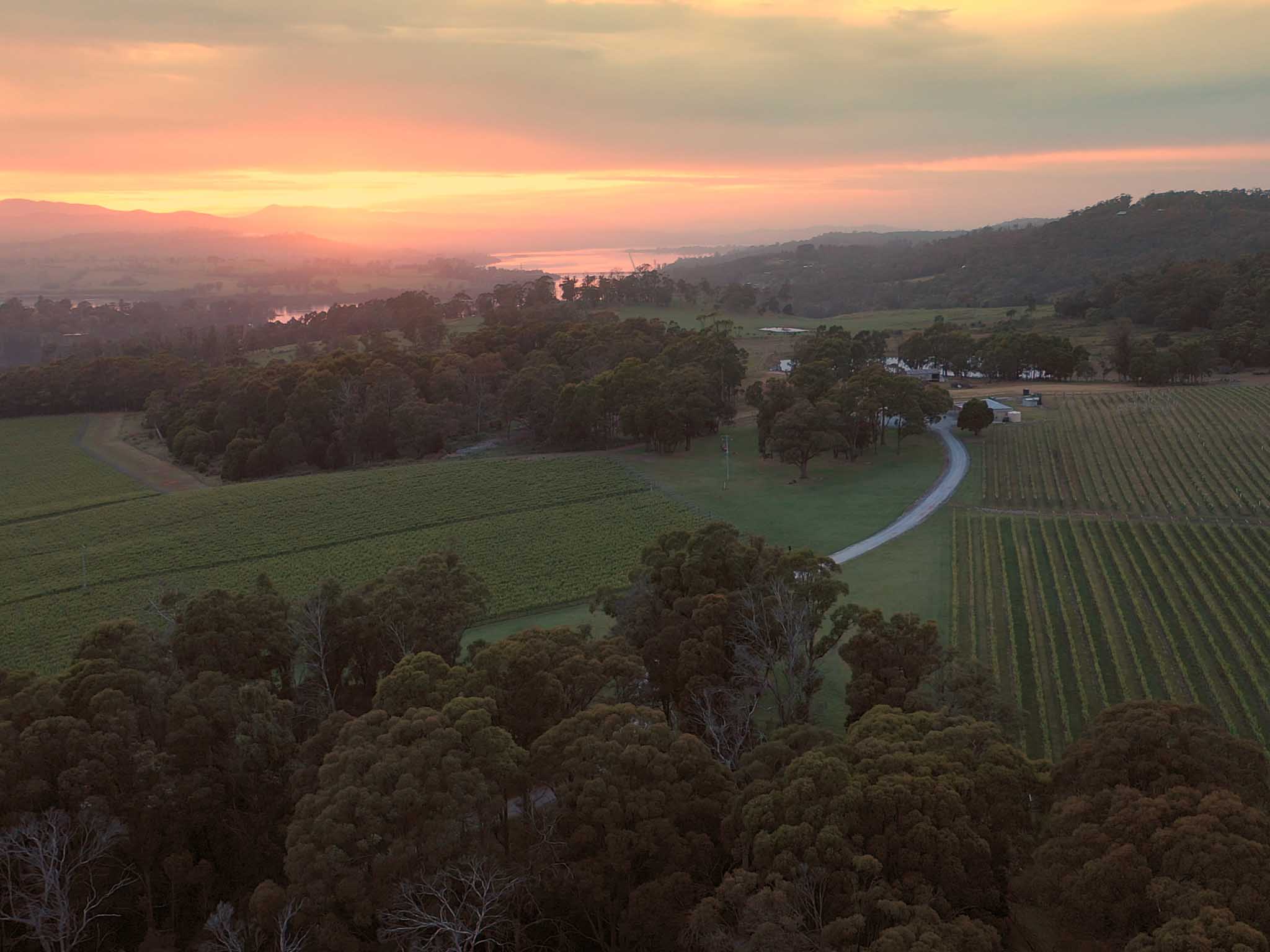
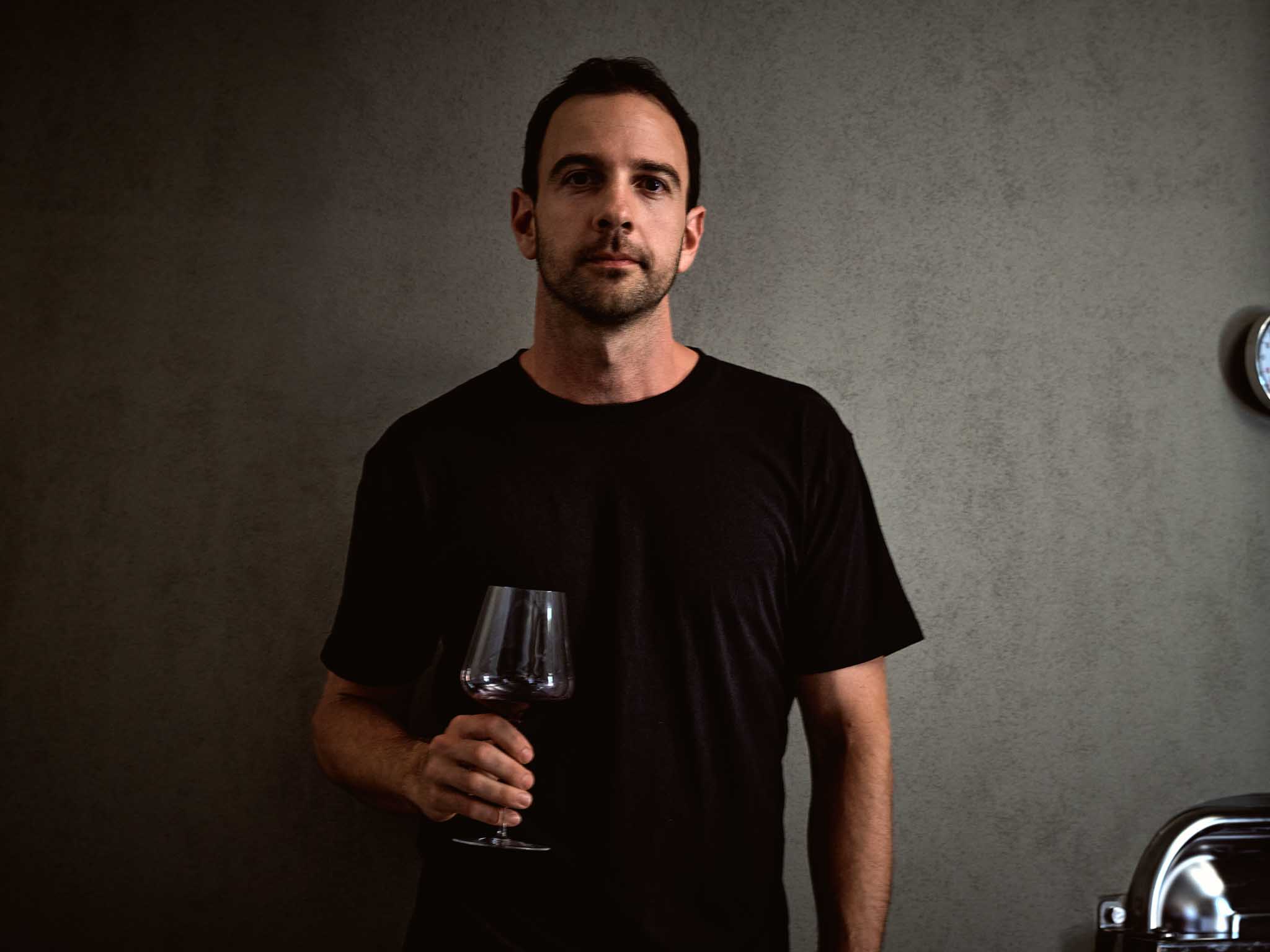
Andrew Trio is head winemaker at Small Wonder, a Tasmanian wine estate on the western ridge of the Tamar Valley, with a second vineyard in the Coal River Valley acquired in 2024. The 20-hectare Tamar estate – originally planted in 1998 as Goaty Hill and purchased by the Overstory group in 2020 – is now certified organic, equipped with a purpose-built winery completed in 2024, and producing pinot noir, chardonnay, riesling, sauvignon blanc and pinot gris across two ranges: the accessible Landscape Series and the premium Auburn collection. The sparkling program, anchored by a blanc de blancs and a blanc de noir, has quickly become a point of distinction. The overarching philosophy is precise, restrained and site-driven – cool-climate tension over richness, freshness over weight, and the vineyard allowed to do most of the talking.
Trio grew up in Western Australia and studied winemaking at the University of Adelaide before building experience across Margaret River, the Barossa Valley, New Zealand, Germany and the United States – including two years in the Sonoma Valley and a decade in Washington State, eventually as head winemaker at Corliss Estate, working closely with highly regarded Napa wine consultant Philippe Melka. The move to Tasmania, and to Small Wonder specifically, was a return to a different kind of winemaking ambition. “Having worked across many different regions and countries, you pick up an enormous amount along the way,” he says, “and there’s something really satisfying about bringing all of that back home and putting it to work in a place you genuinely care about.” He also oversees winemaking at Small Wonder’s sister winery, Wayfinder, in Margaret River – a connection he values. “Both projects share the same philosophy, but each winery has been designed specifically to suit its environment and the styles of wine we’re making there.”
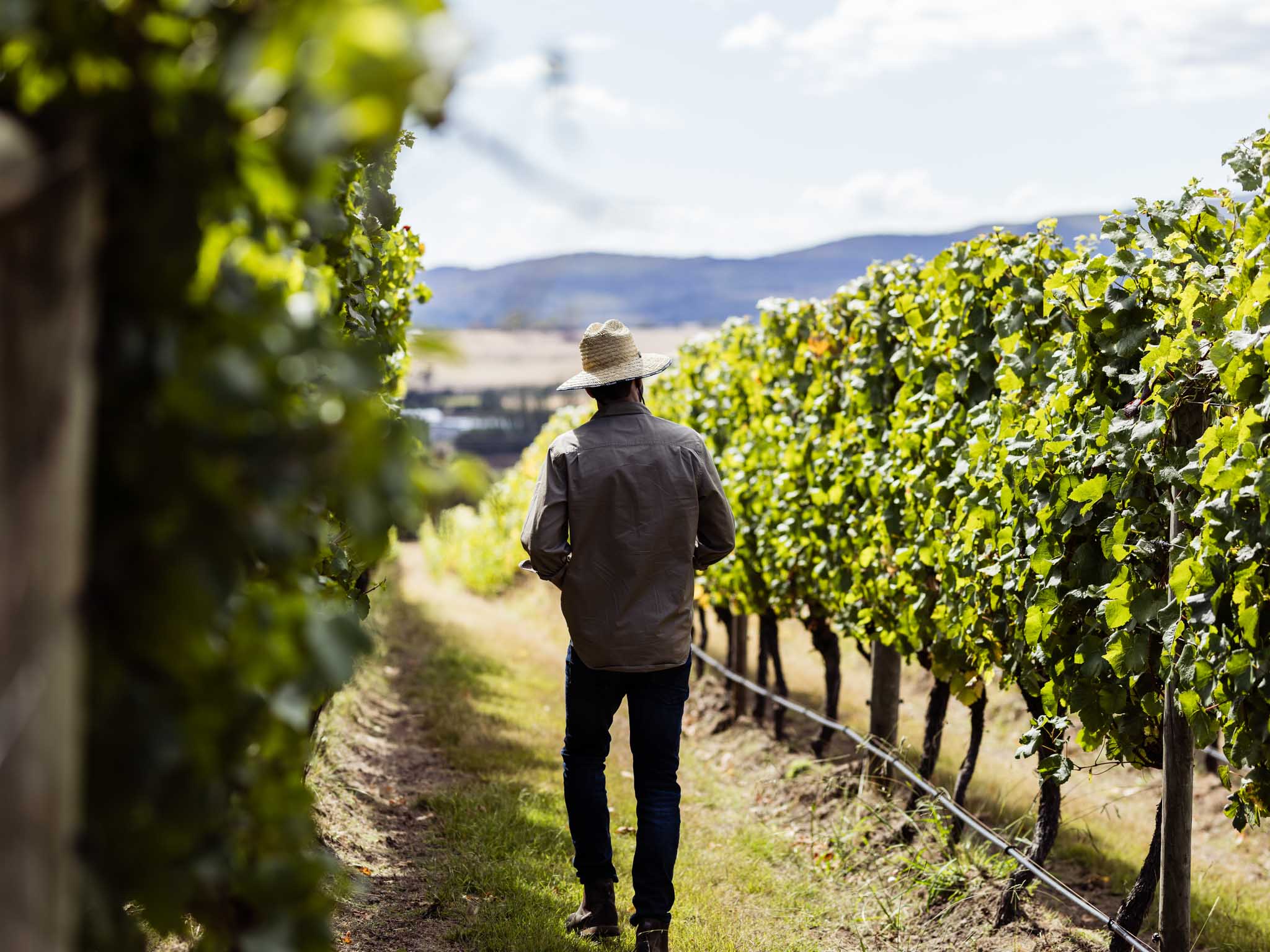
The vineyard is where the work begins and, in Trio’s view, where most of the quality is determined. One of the most significant investments has been solar radiation mapping – using detailed sun exposure data across the site to understand the micro-terroirs within individual blocks and fine-tune management accordingly. “The vineyard is divided into smaller parcels based on clonal material, rootstock, pruning method, soil type, vigour and vine maturity,” he says. “That granularity flows directly into the winery – we keep batches separate according to their origin and use smaller format tanks to preserve those distinctions. The difference in the wines is real and it keeps getting better.” The conversion to certified organic farming, completed in 2022, has been equally important. “The vineyard has responded with better soil health, more balanced vine vigour, and fruit that has more definition and tension.” Aromatic whites – riesling, sauvignon blanc, pinot gris – grow in grey sandy soils at the upper slopes; chardonnay and pinot noir transition down through grey silt loam to red silt clay loam and ferris mudstone, each zone managed differently according to its character. The pinot noir blocks are often split into multiple picks based on soil type, vine vigour and sun exposure. “Our Landscape Series Pinot Noir is intended to be softer and more fruit-forward in style, which often comes from the lower portions of the vineyard on sandier soils,” says Trio. “The soils at the top of the hill have greater clay content, which produces earth-driven wines with greater detail and structure. These go into our Auburn Pinot Noir and single-block wines.”
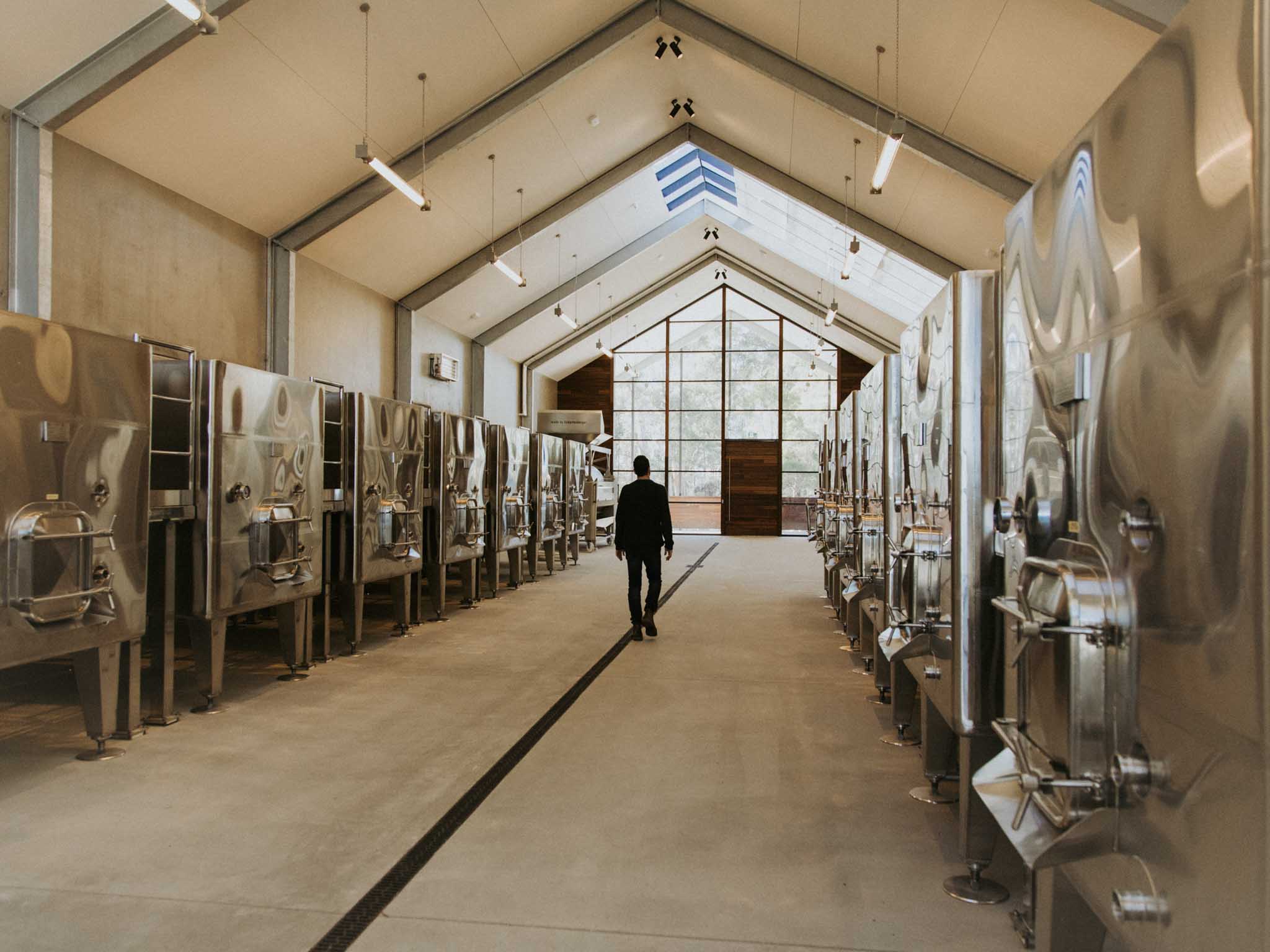
The new winery, completed just in time for vintage 2024, brought the entire process on-site for the first time. “We built this winery to match our philosophy: calm, efficient, and considered,” says Trio. “It gives us the space to slow down, pay attention, and let the fruit speak more clearly than ever.” It was also designed with environmental resilience at the centre – solar-powered, with rainwater harvesting, best-practice wastewater treatment, and electric vehicle charging. In 2024, that first vintage in the new facility coincided with a warm, early season that pushed ripeness higher than desired. “Retaining the freshness and acidity that defines our style took a lot more work than usual,” he says, “and it reinforced something we already believed but now feel very strongly about – picking early is absolutely critical for the wines we’re trying to make. If you miss that window, you spend the rest of vintage trying to claw back something you didn’t need to lose in the first place.” For cool-climate varieties like pinot noir and sparkling base, that rule is absolute. “Acidity isn’t just a component – it’s the backbone that holds everything together. In Tasmania we’re lucky to have it naturally, but you can still lose it if you’re not careful. Pick early, every time.”
The sparkling program is where some of the most deliberate winemaking work is concentrated. Fruit is hand-picked and whole-bunch pressed using only the free-run juice – the juice that flows freely before any mechanical pressing, prized for its purity and finesse. Extended lees ageing – a minimum of 36 months in bottle before release – builds the toasty, biscuity complexity that only time produces. The 2021 Blanc de Blancs, the first release of the wine, won the House of Arras trophy for Best Vintage Sparkling at the 2024 Tasmanian Wine Show. Elsewhere in the range, experimentation is ongoing: the 2025 Clay Riesling was matured in an 850-litre ceramic vessel; the 2025 P58 Chardonnay is fermented and matured in large-format Austrian oak. “We make wines that are precise, expressive and alive,” says Trio. “We’re not chasing richness or weight – we’re trying to make wines with real detail and personality.” The Coal River Valley, acquired in 2024 and in transition to organic, adds another dimension to that pursuit – a second site with different soils, different microclimates, and different things to say. Tasmania, as Trio sees it, is only just finding its stride. “The better the whole region is doing, the better it is for everyone – and I think Tasmania is only just hitting its stride in terms of what it’s capable of.”