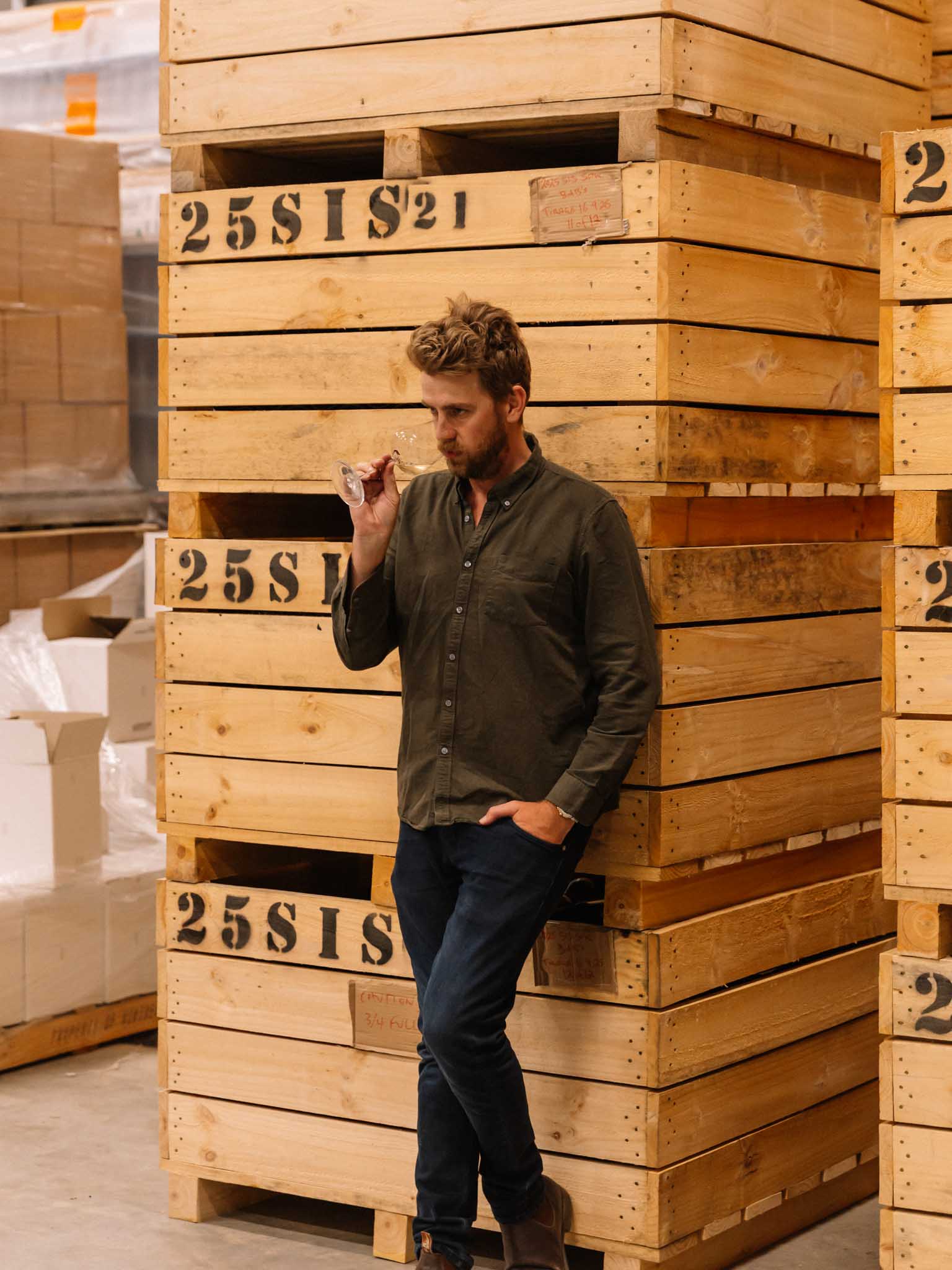
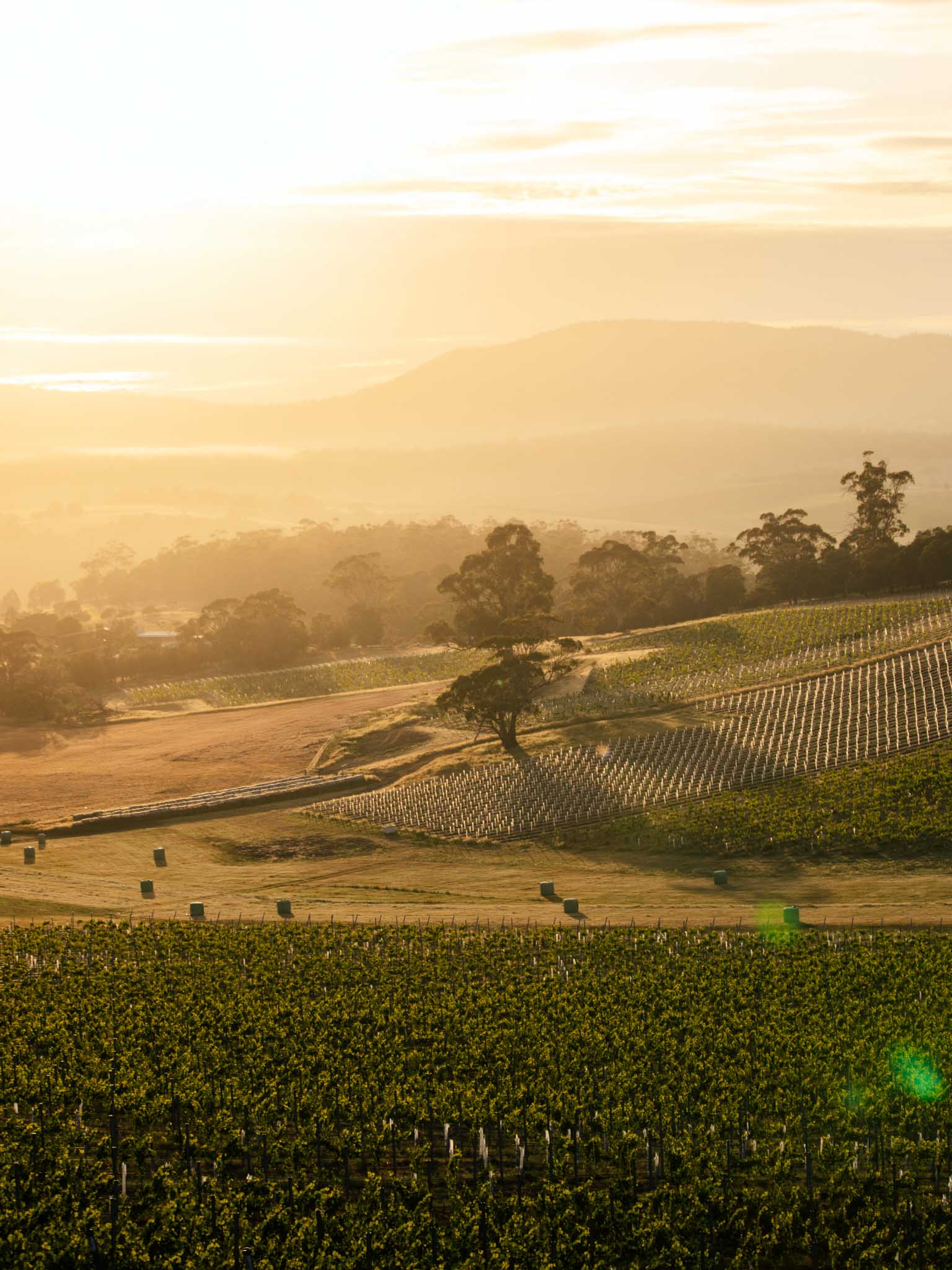
Jake Sheedy co-founded Sisu in 2021 on a 95-hectare farm in Tasmania’s Coal River Valley, developing a 25-hectare vineyard from bare paddock, building a 400-tonne winery, and opening a cellar door – all within four years and on land that previously ran sheep. The name is Finnish, meaning something like quiet determination and inner grit shaped by nature’s most testing moments. It suits the project. The current range spans pinot noir, chardonnay, riesling, pinot gris, viognier, gewürztraminer, gamay, syrah and nebbiolo – each variety matched to one of three distinct soil types on the estate – with the wines characterised by fruit clarity, restraint and a winemaker whose instinct is to get out of the way when the site is doing its job.
Sheedy studied wine science at Charles Sturt University from 2009 and has since completed 16 vintages – seven as a cellar hand, nine as a winemaker – across the Hunter Valley, Mudgee and Orange, Rutherglen, Pipers River, the Coal River Valley, British Columbia and a formative stint at Domaine Boris Champy in Burgundy. His mentors include Andrew Sutherland Smith at Warrabilla, Peter Logan at Logan Wines, and Matt Holmes at Bannockburn – a lineage that spans warm-climate precision and cool-climate finesse. He has also judged at wine shows including the NSW Wine Awards and the Canberra and Region Wine Show. Tasmania drew him for reasons that are both professional and personal. “I’m drawn to cool-climate wines across every facet – growing, making, and drinking them,” he says. “Tasmania may be small, but it’s mighty. That sense of quietly pursuing the extraordinary really resonates with me.”
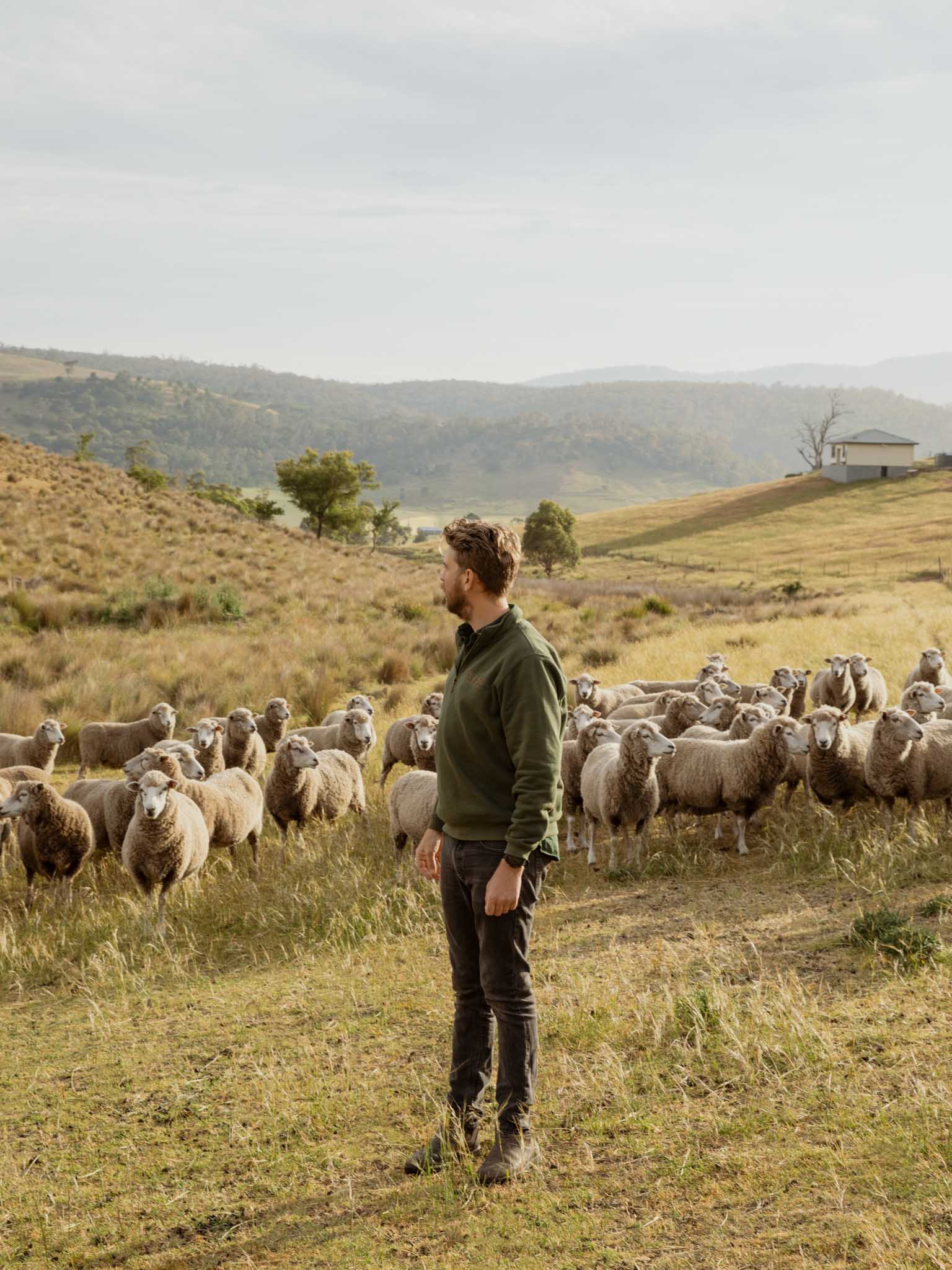
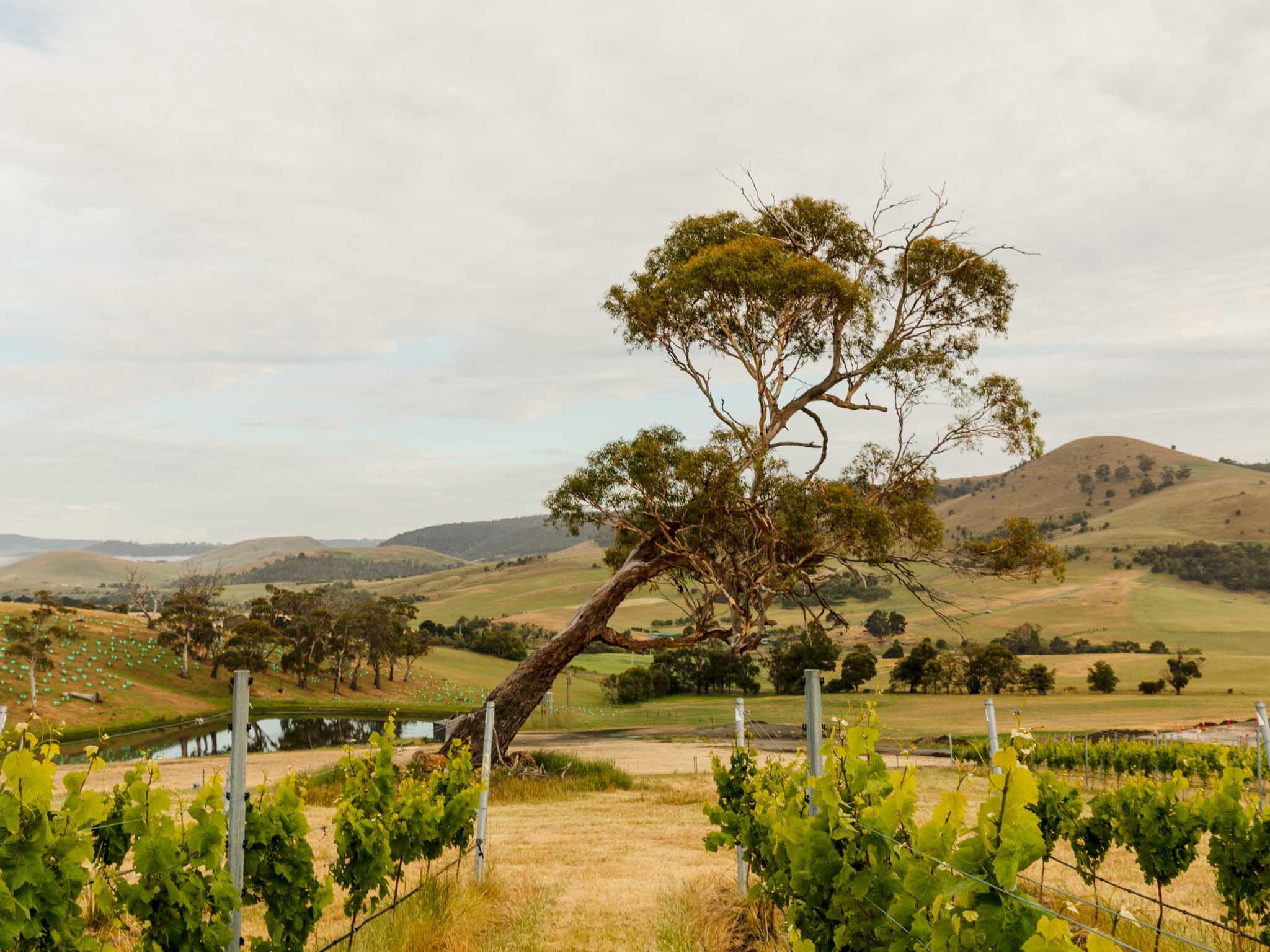
The farm at Campania in the Coal River Valley was sheep country when Sheedy and his business partner took it on. Over three years they added 25 hectares of vines, designed around three distinct soil profiles – black dolerite, red vertosols and sandy loam – that each contribute different character to the finished wines. The black dolerite, Sheedy notes with dry affection, is what he calls Christmas dirt. “It’s only good to work one day a year.” The soil shrinks dramatically when dry, opening large cracks and losing moisture rapidly, so irrigation management has required careful calibration – more frequent, lower-volume watering to maintain a stable undervine environment. Under-vine cultivation has replaced herbicide use where conditions allow, and cover crops in the mid-rows now do double duty as fodder for the estate’s flock of 220 ewes. “We introduced mid-row cover crops to outcompete weeds, and also act as fodder for the sheep, who act as a natural fertiliser and grass control, reducing tractor passes,” he says. In the chardonnay blocks, tailored canopy management – adjusting the vine’s leaf canopy to control how much sunlight reaches the fruit – has increased dappled light and reduced direct UV exposure. “This has led to a more refined, fresher style of chardonnay,” he says.
The winemaking philosophy is built around the conviction that good farming makes intervention in the winery less necessary, not more. “By having solid grape growing practices, I can refrain from overengineering in the winery,” he says. “We are focused on art over artefact.” The gravity-fed winery processes everything from the estate; as of 2025, Sisu grows, makes and bottles all of its own wine. Steve Flamsteed of Wine Network Consulting provides mentored advice. On texture in whites, the rule is simple: “If you have good fruit and don’t get greedy at the press, full solids can give positive texture without making the wine broad or phenolic.” On pinot noir, the lesson has been flexibility: “To achieve balance you cannot be dogmatic on composition percentages – new oak, whole bunch. You have to let the season and the site guide you.”
Patience has been the hardest and most important lesson. “There was an instance where I was dissatisfied with a wine and even considered selling it to a trusted peer,” he says. “They were happy to purchase it, but encouraged me to reconsider – and in hindsight, that restraint was important. It reinforced the value of trusting the process and not making reactive decisions too early.” The first-crop pinot noir, from young vines that would not normally yield fruit of much depth or complexity, proved what careful fruit management in the vineyard could achieve. “Through careful fruit management combined with excellent site expression, we were able to achieve a level of depth and density that’s uncommon in maiden-vine fruit.” The 2025 syrah is the wine he is most proud of so far. “I’m particularly proud of having the discipline not to overwork it in the winery. The fruit spoke clearly of site, and by taking a restrained approach, the result is a wine that feels both pure and expressive of where it comes from.”
The environmental commitment runs deeper than sustainable winemaking. In partnership with Landcare Tasmania, Sisu has planted over 1,300 native trees and shrubs, working toward rewilding ten per cent of the farm – land that was once white gum forest – under the Land for Wildlife program. The estate holds VinØ certification. “I genuinely adore the world of wine – but for me, it comes with a responsibility,” says Sheedy. “We can’t just take from the land; we have to give something back. I want to leave this place in better shape than I found it – for the ecosystem we’re part of, and for the generations that come after us.” The Coal River Valley community has made that ambition feel less solitary. “Very honest, tight-knit, with a great idea-sharing mindset,” he says. “A rising tide lifts all boats.” The cellar door opened in December 2025. Sisu, built from bare paddock in four years, is now fully open for business.