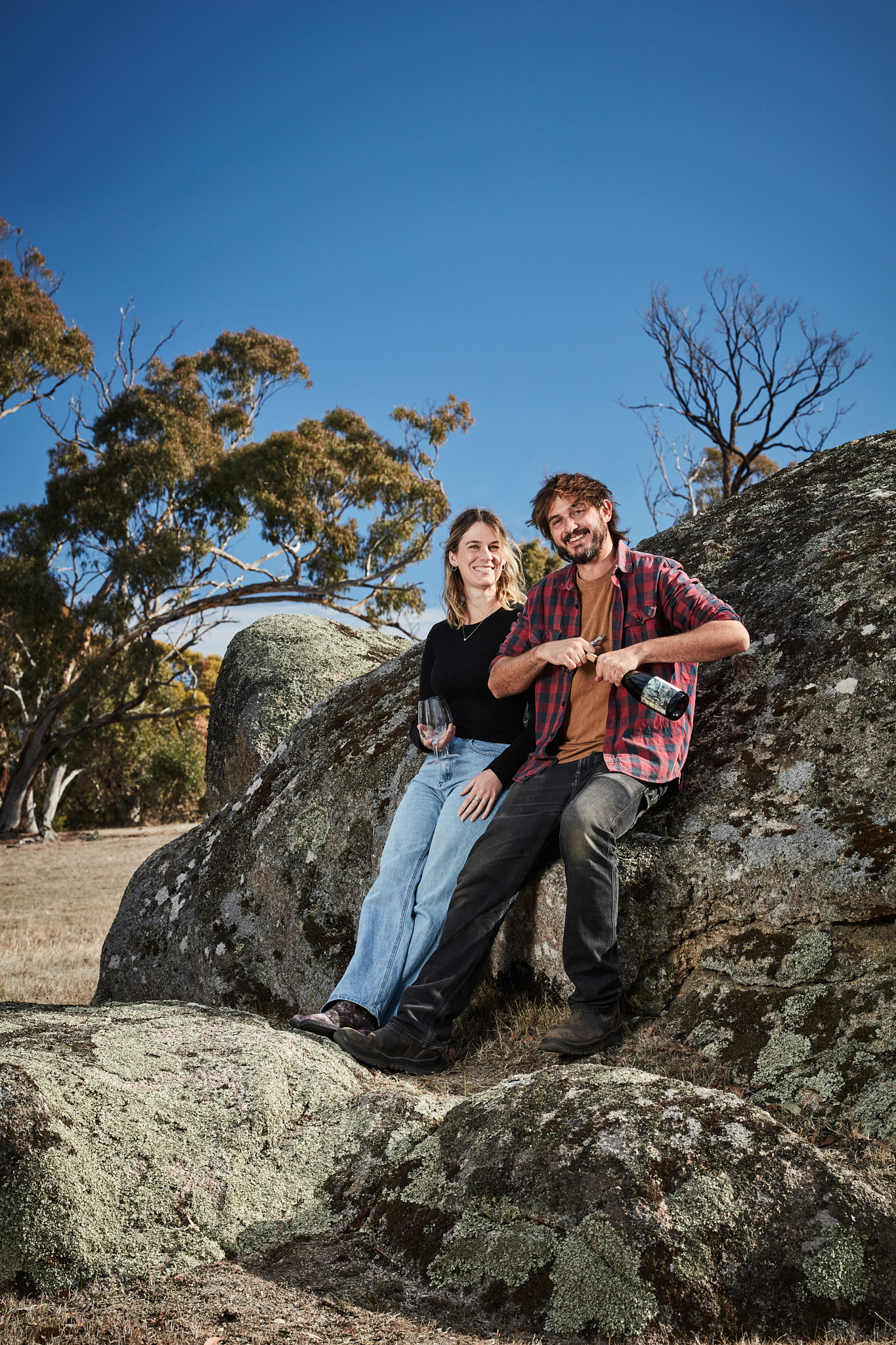
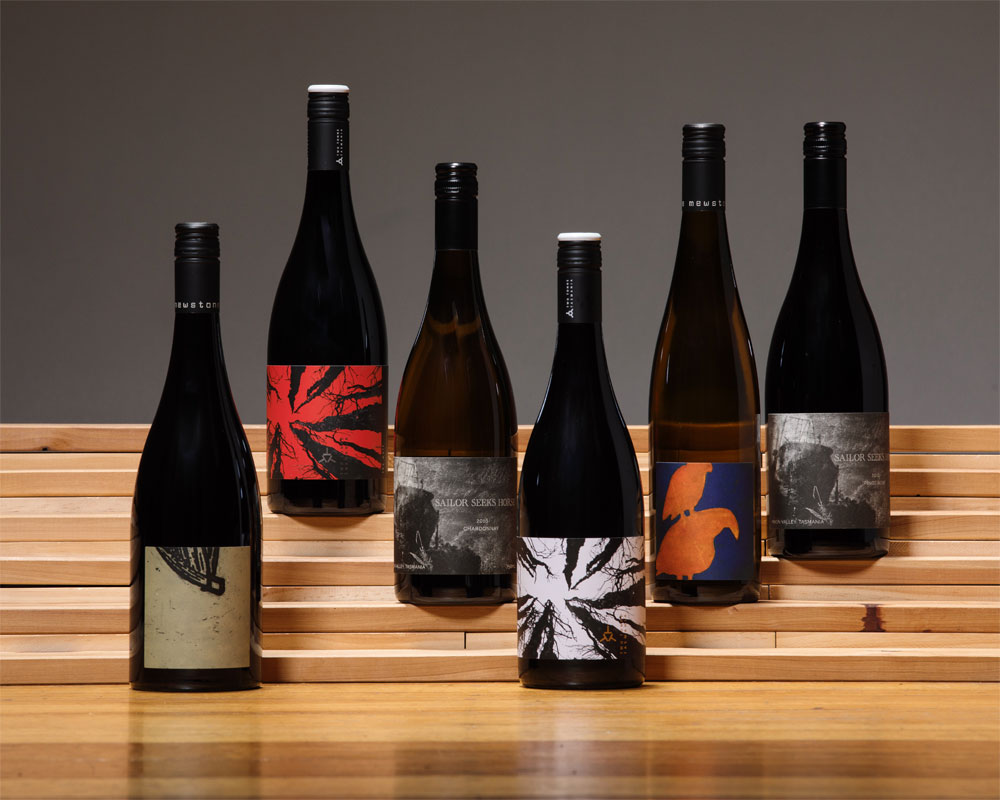
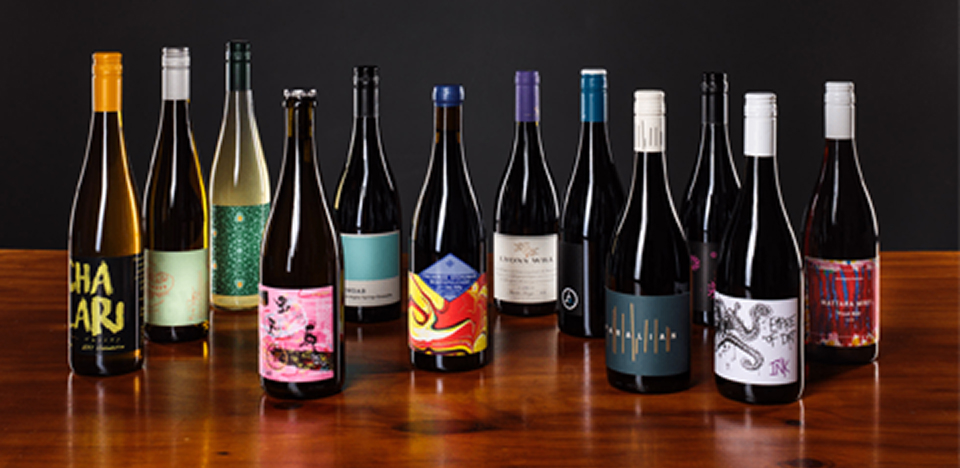
Patrick Wood and Greta Darling-Filby run three things at once from Kyneton Ridge Estate in the Macedon Ranges: the estate wines for Pat’s family business, a contract winemaking operation serving labels across the region, and their own label Harbinger – a roving single-vineyard project that follows them across Victoria’s most compelling growing regions. The Harbinger range spans a Heathcote fiano, chardonnay, grenache nouveau, GSM, syrah, cabernet franc rosé and pinot gris, made with flexible, low-intervention winemaking and a curiosity about what Victoria’s less-championed varieties can do in the right places. The Kyneton Ridge estate wines, anchored by the Skipping Rabbit pinot noir from a 25-year-old organically farmed vineyard, sit alongside. Together the two labels cover a lot of Victorian ground – and that’s entirely the point.
Pat came up through the cellar, starting with a vintage in Castillon, Bordeaux in 2014, then working across the Yarra Valley including Coldstream Hills, before a full-time stint as cellarhand at Punt Road from 2017 to 2019. He went on to assistant winemaker at McCarthy Wines, contributing to wines for Soumah, Helen’s Hill and Gioiello Estate, before returning to the family business at Kyneton Ridge in 2022 to establish the winemaking facilities and contract operation. He’s currently completing his viticulture studies at Charles Sturt University. Greta came through cellar doors in the Yarra Valley before becoming cellar door manager at Helen’s Hill Estate – where she and Pat met – and made her first foray into winemaking there in 2020. By 2022 she had taken on a full-time vigneron role at Kyneton Ridge. Harbinger, as they describe it, came about through “a lot to do with Pat’s family taking a leap of faith into the wine scene, and the opportunity to help them achieve something great with it. It was also about love, covid and misguided ambitions.”
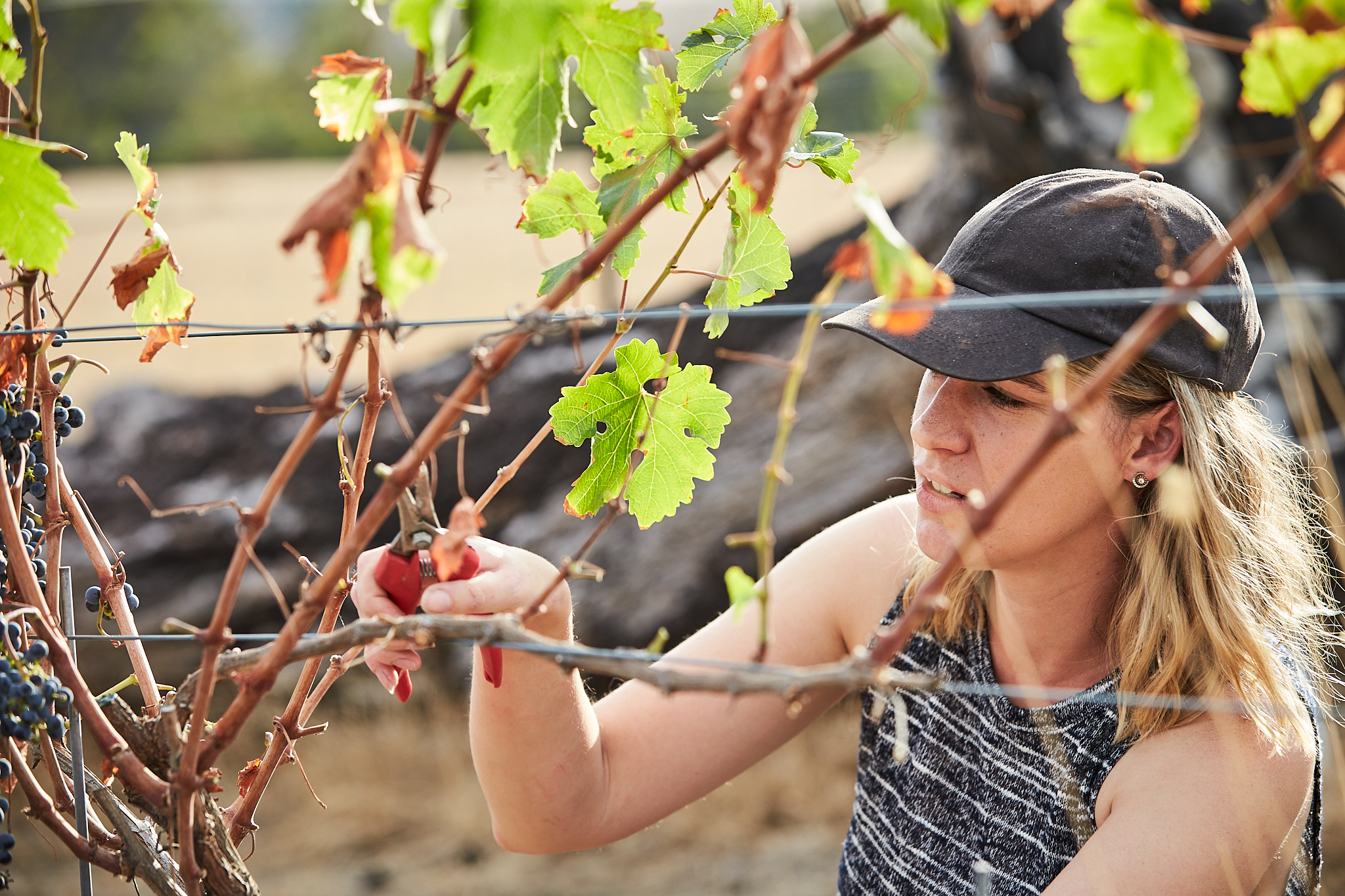
Pat’s family adopted the estate in 2020, taking on a 25-year-old pinot noir vineyard that had seen better days. Since 2022, Wood and Darling-Filby have been steadily converting it: herbicides gone, organic-based principles in, soil compaction reduced, microbial activity encouraged through zero-till methods, and the Simonit & Sirch pruning methodology – developed in Italy and focused on maintaining vine health and sap flow over the long term – introduced to manage trunk disease. New plantings of riesling, nebbiolo and cabernet are going in alongside clonal additions to the existing pinot noir and chardonnay blocks, and a composting program is steadily building carbon into the estate’s poor sandy soils. “We’ve jumped deep into regenerative farming,” they say, “and become the first Macedon Ranges vineyard to be certified sustainable.” The results are showing in the wines: “We’ve since been getting progressively higher yields, consistency in crop and seeing wines with greater purity and intensity.”
The Macedon community has shaped how they think about their work. “Macedon Ranges winemaking culture is built on the spirit of tiny producers striving to express their own patch of dirt,” they say. “It’s the heritage of generational makers that built massive reputations as growers that gave it a go, managing to make waves on the international stage. The community has infectious motivation and enthusiasm, nurturing collaborations and an openness to morphing identity.” Beyond Macedon, each region Harbinger draws from carries its own pull: “Macedon for its brutality, marginality and varietal royalty – its ability to quietly make world-class wines. Heathcote for its unexpected finesse, confidence in character and flexibility. Geelong for its elegance, personality and ability to capture its character in the bottle. The Pyrenees for its unmistakable character, restrained power and subtlety.”
Harbinger was born from curiosity about what Victoria’s less-championed varieties could achieve. “We had fantasised about grenache being a chilled red with attitude, and giving cabernet franc centre stage,” they say. “We wanted to see what the unsung heroes of the vitis family could achieve if only they found their home in Victorian soils.” The carbonic maceration grenache – a technique where whole uncrushed grapes ferment in a carbon dioxide-rich environment, producing wines that are light, fruity and low in tannin – was, by their own account, a complete swing in the dark. “We’d never made it, nor been taught anything about the process. I had some ideas and fundamentally wanted it to be the purest version possible – no shortcuts, no ‘partial’. We’re working with tiny batches so there’s no margin for error, and blending it away isn’t an option. Pretty stunned by the results, personally.” The whole-bunch pinot noir experiment at Kyneton Ridge had a similar energy. “It was just a niggling feeling, a missing piece of the puzzle. Gave it a go in 2024, and it turned out the first time we did it, the wine scored three trophies. Not bad.”
The winemaking philosophy across both labels is driven by quality rather than rules. “The more you learn about vineyards and winemaking, the more your knowledge is humbled,” they say. “We are entirely driven by quality, knowing that there are a thousand different decisions along the way to making a great wine, and the constant desire to figure out which are the right ones.” Oak, when used, is a tool rather than a feature. “It’s a long journey to understand cooperages, and no two are the same. And it doesn’t matter how well you look after old barrels – when they’re too old, they make wine look tired.” Beyond that, the house rule is flexibility. “It’s all about being flexible, rolling with the season, and letting each wine speak entirely for itself. That, and not letting the ego surpass the forces of nature and good chemistry.”
The ambition from here is specialisation rather than expansion – “the pursuit of purity of expression,” as they put it. “Creating lifestyle wines, and living the wine lifestyle.” With the vineyard improving each season, the contract business growing, and Harbinger ranging freely across Victorian terroir, the infrastructure for that pursuit is already well built.