Waldo Smit is a self-taught winemaker who started in a suburban garage with 100-kilogram batches and fruit from Chalmers in Heathcote, and built from there. Muto Wine – the name taken from the Latin mutō, meaning to change – is a family operation run from a converted shed on a farm in Tallarook, Central Victoria, making Mediterranean varieties from warm-climate regions alongside classic varieties from cooler ones. The range spans vermentino, picpoul, macabero, malvasia, moscato giallo, fiano, tinta barroca, syrah, malbec, chardonnay, pinot noir and rosé – sourced from the Riverland, Beechworth, Adelaide Hills and Mount Gambier – at prices that don’t ask anyone to overthink the spend. Lo-fi, sustainably sourced, solar-powered, and built for everyday drinking without sacrificing genuine interest.
Smit began working in wine retail while studying graphic design at TAFE, intending to find label inspiration. Instead the wines themselves grabbed him, particularly Mediterranean varieties. A cellar door trip to the King Valley confirmed it and he never returned to design. He worked in retail for over a decade, most significantly at Nicks Wine Merchants from 2016 – tasting up to ten wines daily, building a palate-driven education and finding mentors in the business owners. In 2019, fruit from Chalmers in Heathcote found its way into his garage in 100-kilogram batches. He has never worked in another winery. “I was making wine in my garage from Chalmers fruit and kept pulling up to the vineyard at the same time as winemakers I really admired, picking up the same fruit,” he says. “That told me everything. You just have to show up and give it a go. We’re all working with the same incredible growers – the job is just to guide their hard work into the bottle.”
The philosophy behind Muto is practical and pointed. “I wanted to prove you can make genuinely compelling wine from organic, sustainably grown fruit and still put it on the shelf at a price that fits into people’s everyday lives,” he says. “A lot of winemakers reach for expensive new oak and fancy vessels to satisfy their own ego, and sometimes it results in great wine – but it prices out the people you actually want to be drinking it. By keeping production lo-fi, simple, and doing as much as possible in-house, we don’t have to make that trade-off.” The tagline he keeps returning to is simple: “Approachable but not simple. Built for casual sipping but rewards a bit of attention – complexity at a price point that doesn’t ask you to think too hard about spending the money.”
The variety and region selection is the argument Muto is making, and Smit makes it with precision. “Muto is made from grapes grown where it makes sense: Mediterranean varieties from warm regions, classic varieties from cooler ones,” he says. “The Riverland has incredible potential thanks to a handful of forward-thinking growers farming sustainably on sandy soils with low disease pressure. Mount Gambier gives us the cool climate and limestone we need for pinot noir. The Adelaide Hills gives us the altitude and cool nights we need for a chardonnay with genuine tension and drive. Beechworth brings altitude and hang time for syrah and sangiovese. The regions aren’t chosen for prestige – they’re chosen because they’re the right fit for the varieties.” Acidity is the core technical challenge in warm regions, and it’s where the variety choices pay dividends. “Mediterranean varieties are much closer to where we need them than, say, shiraz or cabernet, and they don’t flinch during a heatwave. They’re genuinely suited to the climate, which is exactly why we’re using them.”
Climate adaptation has also pushed a recent winemaking shift. “This vintage we introduced a biological yeast – Zymaflore Klima – that naturally metabolises part of the sugar in the fruit and converts it into extra malic acid,” he says. “It slightly drops the alcohol, preserves freshness, and means we’re using significantly less added acid. Combined with earlier picking, it’s been a real shift in how we approach balance in the wines.”
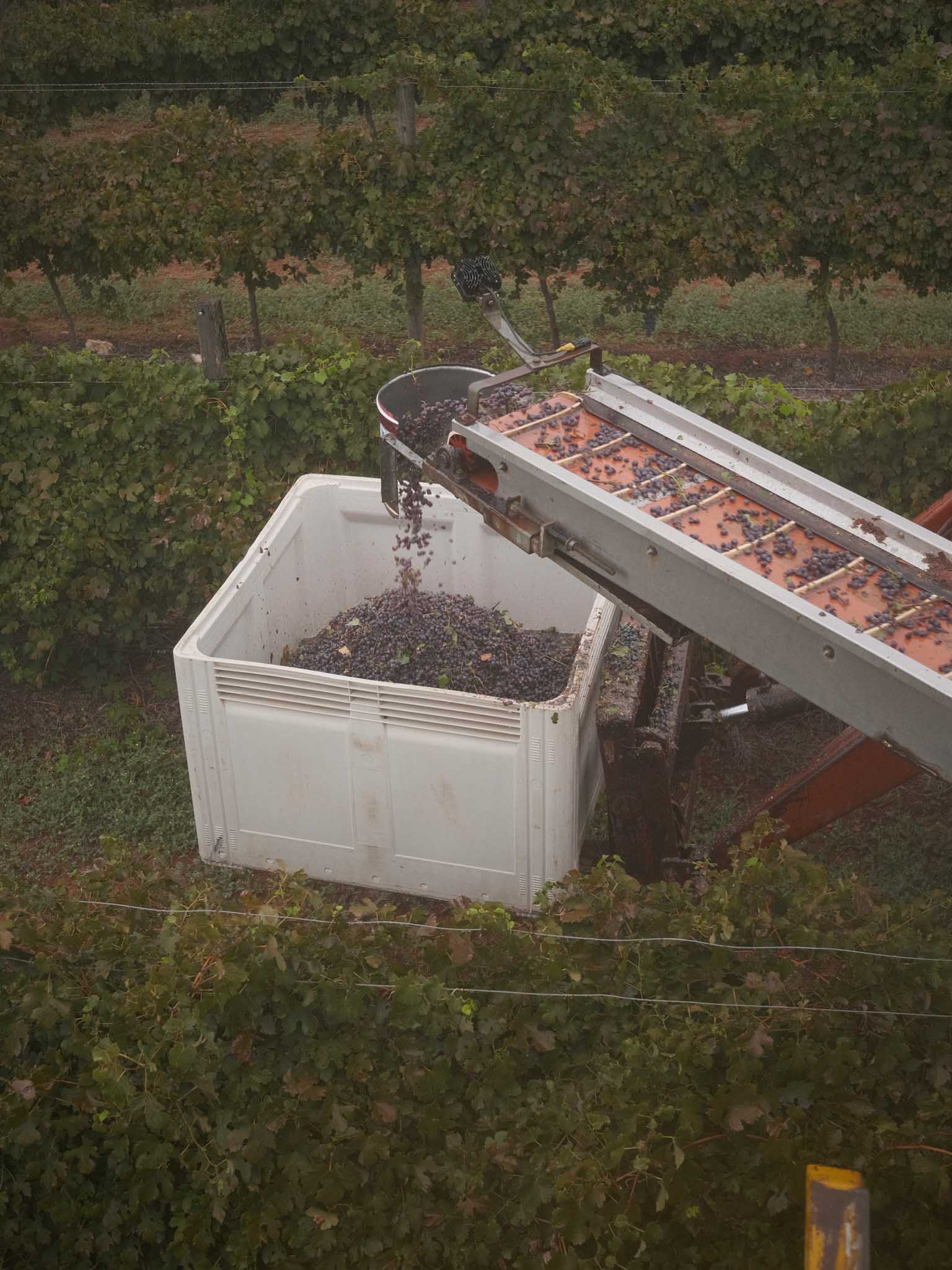
The technical approach across the range is as stripped back as it gets. “Our main grower, the Bassham family, farms biodynamic and organic fruit, which means we can keep things really simple in the winery,” says Smit. No new oak – old neutral barrels and oxygen-permeable polymer cubes instead, chosen for their breathability and reusability. “It massively cuts the footprint compared to constantly importing European barrels.” Sulphur is kept low: 15 to 25ppm on whites, 25 to 40ppm on reds. Everything goes to bottle in lightweight glass with labels made from waste sugarcane. The winery runs on solar power with electric vehicles and captures and reuses wastewater. “The philosophy is: less intervention, less waste, better wine.”
The wins and near-misses have both been instructive. The Close Contact skin-contact field blend – macabeo, malvasia, moscato giallo and picpoul from the Bassham biodynamic vineyard, an orange wine made by leaving juice in contact with grape skins during fermentation to extract colour, texture and tannin – was, as Smit puts it, “a bit of a punt – we weren’t sure how it’d land. It’s now one of our most popular wines.” On the other side of the ledger: “We bottled our first Moscato ourselves and didn’t filter it well enough, and a small batch started re-fermenting in the bottle. We caught it early and handed the rest straight to the team at Hirsch Hill in Yarra Glen to stable filter and bottle properly. Lesson learned: sometimes the smartest thing you can do is ask a professional.”
The long game is bigger than Muto alone. “My dream is a regional white, red and rosé blend from multiple growers within each region, built around whichever Mediterranean varieties express that place best,” he says. “Eventually I’d love to see a Regional Independent Producers collective – growers and makers aligned around natural production, sustainable farming, and championing the right varieties for each region. That’s the long game.” On the farm at Tallarook, a small hand-tended bush-vine vineyard is going in on steep loamy ground – too demanding for mechanised farming, designed to force the vines to work for their fruit. It’ll be years before it produces. Smit is fine with that.