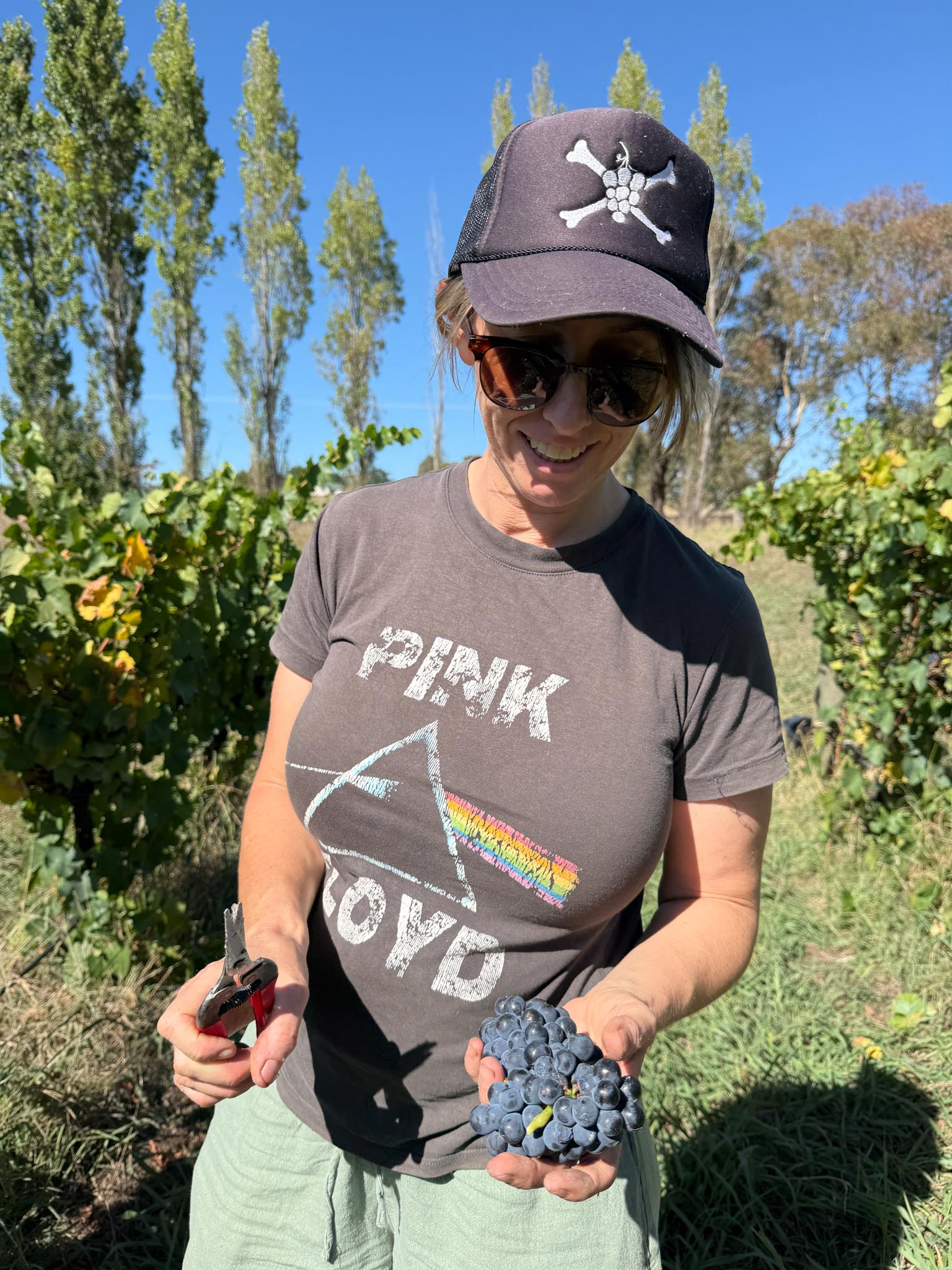
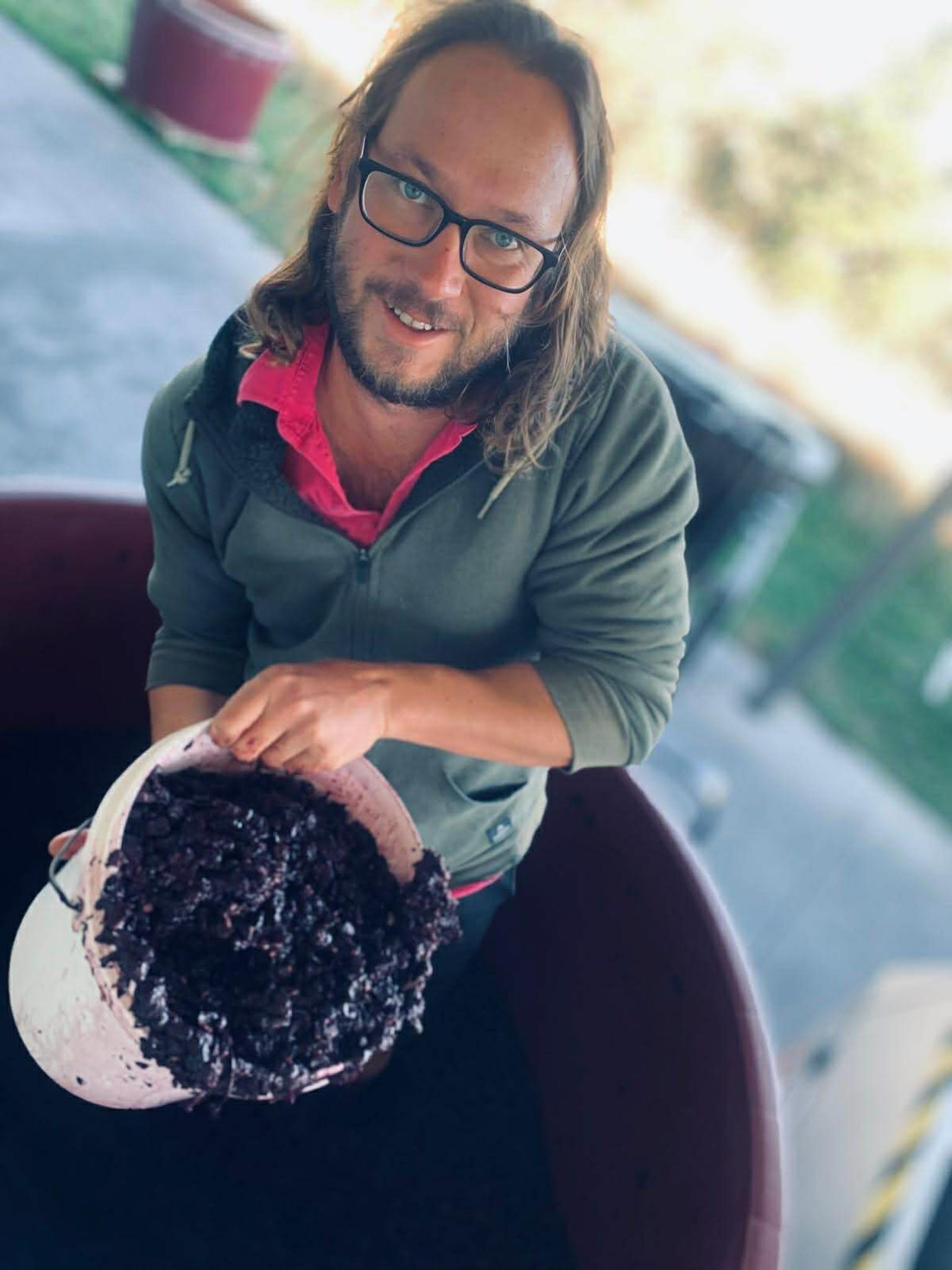
Aaron Onegin-Ward and Rebecca Milne are a winemaking duo based in Orange, NSW, who launched Grape Pirates in 2024 after years working together in the region’s vineyards and cellars. The label makes small-batch, minimal-intervention wines from Orange fruit – currently a riesling, a four-variety rosé, a pinot noir and a merlot blend – sourced from vineyards the pair lease and farm themselves, including a 27-year-old riesling and merlot site they have been progressively restoring since 2023. Fun, unpretentious and hands-on from vine to bottle, Grape Pirates is a label built on the simple conviction that the best way to make good wine is to show up and do the work.
Aaron Onegin-Ward and Rebecca Milne named their label after a running joke. Working together at Heifer Station Wines in Orange, they’d pass a neglected vineyard on the way to work each day and talk about pirating it – just taking it over and making it theirs. The name stuck, and when the opportunity to buy a tonne of fruit arrived in 2022, they grabbed it. Grape Pirates makes small-batch, minimal-intervention wines from Orange, NSW, with the range currently spanning a riesling and a four-variety rosé, alongside a pinot noir, chardonnay, merlot blend and others. The philosophy is deliberately uncomplicated: make wine they want to drink, play with technique, don’t stuff up the ferment, and keep a sense of humour. “Delicious, unpretentious and interesting,” as they put it. They manage two vineyards, lease winemaking facilities at a local winery, sell at farmers markets in Orange and Marrickville, and are working steadily toward the longer dream of their own land.
Rebecca has spent 18 years in wine, working harvests across New Zealand, Germany, Chile, Oregon and Australia – drawn throughout by cool-climate varieties, particularly pinot noir, chardonnay and riesling. She landed in Orange in 2018 and never left. Aaron came from a different direction entirely, changing careers from hairdressing seven years ago with a desire to combine two hobbies – growing food and making alcohol – into something more serious. He enrolled in a Bachelor of Viticulture at Charles Sturt University, moved to Orange, and has been building experience across local vineyards ever since, currently in his fifth vintage at Rikard Wines, where Grape Pirates’ wines are also made. “We just wanted to make wine,” they say. “We never sat down and came up with a business model. It all just fell into place quite organically.”
The vineyard work is where the project gets genuinely interesting. In 2023 they took on management of the Hanson Vineyard – 27-year-old riesling and merlot vines in Orange at 997 metres altitude – and quickly discovered how much work had been left undone. The merlot block had been trained with cordons – the permanent arms of the vine from which fruit-bearing shoots grow each year – wrapped so tightly around the trellis wire that the vines had effectively strangled themselves, becoming unproductive. Over two seasons, Aaron cut back and removed all the old cordons and retrained new arms using cane pruning, a method that keeps the vine’s permanent structure minimal and allows better canopy management and fruit quality. The results are showing: 2024 delivered the largest harvest from those vines in years. He also taught himself to graft in 2025, converting a portion of the merlot to malbec to make Grape Pirates self-sufficient in red blend fruit. “Having the grafts take was a big gamble,” they say. “If it hadn’t paid off, it would have resulted in lower yields for several years to come.” It paid off.
A second vineyard was planted from scratch in 2025 at a friend’s property at 950 metres – posts, wires, irrigation and vines all installed by hand, with the pinot noir cuttings propagated the previous winter in their backyard. Four clones of pinot noir plus cabernet franc are in the ground, with malbec and a further pinot clone to follow. The vine spacing is 1.5 metres currently, with plans to interplant to 75 centimetres – tighter spacing that forces the vines to compete for resources, limiting crop per vine and concentrating flavour. “The soil is so deep and rich that we really want the vines to compete with one another,” they say. Because the site is small, all the varieties will be harvested together, with the clone and variety mix itself building complexity before the grapes reach the winery – a deliberate design decision.
In the winery, the approach is hands-on and exploratory. All whites and the rosé are barrel-fermented and aged in oak for a minimum of six months, with regular lees stirring – keeping the wine in contact with the spent yeast cells from fermentation to add texture and complexity. The riesling gets a partial skin soak before fermentation. The rosé is made by saignée, bleeding off juice from the red wine ferment early to use separately, while the reds go through full malolactic fermentation for softness. Carbonic maceration – a technique where whole uncrushed grapes ferment in a carbon dioxide-rich environment, lifting aromatics and producing softer tannins – is used across most of the reds. Nothing is fined or filtered. Sulphur is kept low, mostly 20 to 30ppm free. Cold stabilisation – a natural process that removes tartrate crystals from the wine before bottling – happens naturally in the Orange winter rather than mechanically. The golden rule, stated plainly: “Don’t stuff up the ferment. This is where most of your faults are born. If ferment goes through clean you will have a delicious product on the other side.”
Their first season managing the Hanson Vineyard taught them that lesson directly. Botrytis – a fungal disease that spreads rapidly in wet conditions near harvest and can destroy the crop quickly – claimed roughly half the riesling in the two weeks before picking. “Watching all the work from the previous year rot before your eyes” was, as they put it, a stark realisation of how little margin a small-batch operation has for crop loss. They’ve managed the disease more carefully since. The longer-term vision is self-sufficiency: their own land, their own fruit, a handful of varieties done well, possibly a cellar door. In Orange, ideally, where the community of emerging makers around them continues to grow. For now, the markets, the managed vineyards, and the converted shed are more than enough to be going on with.