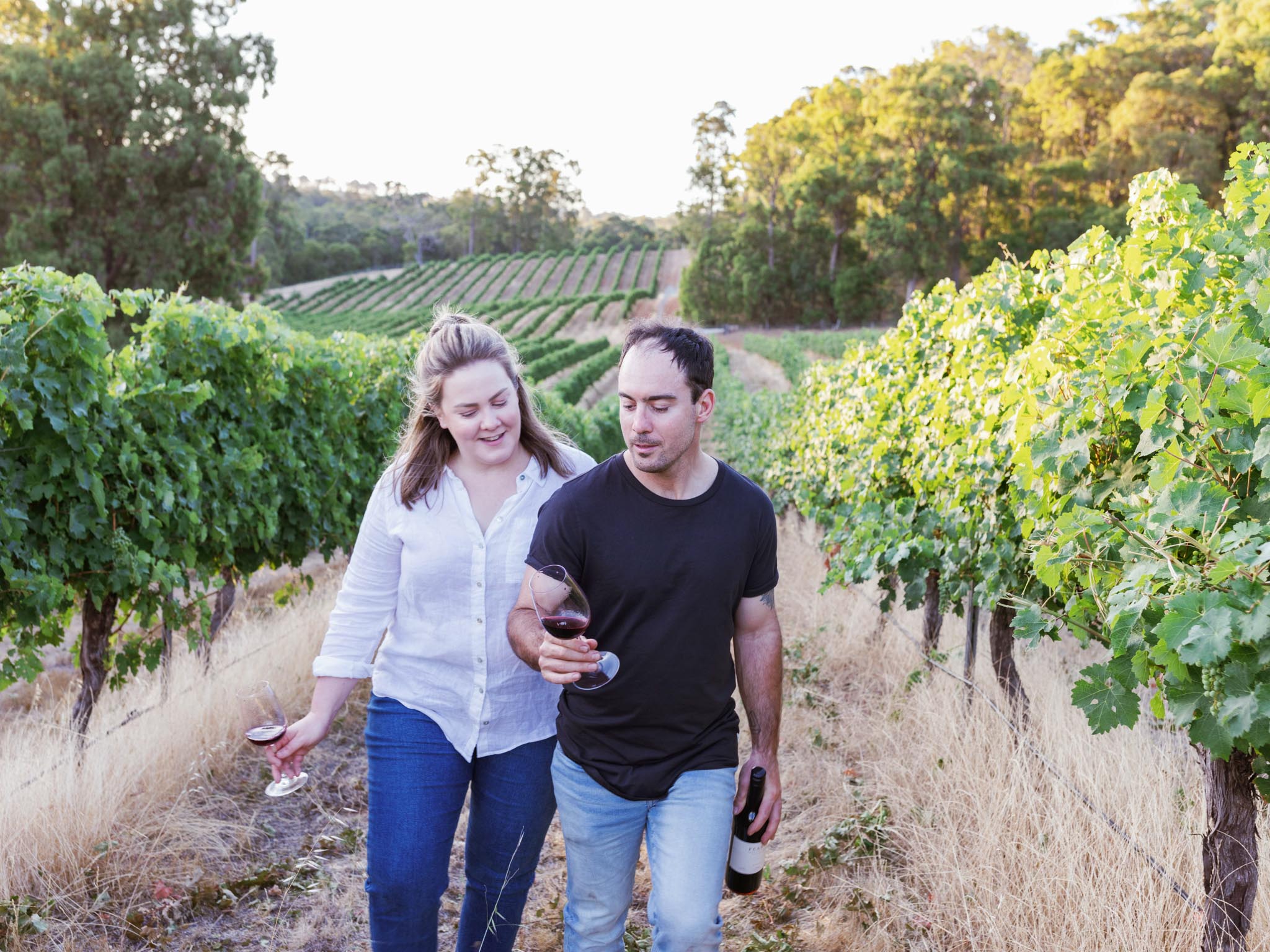
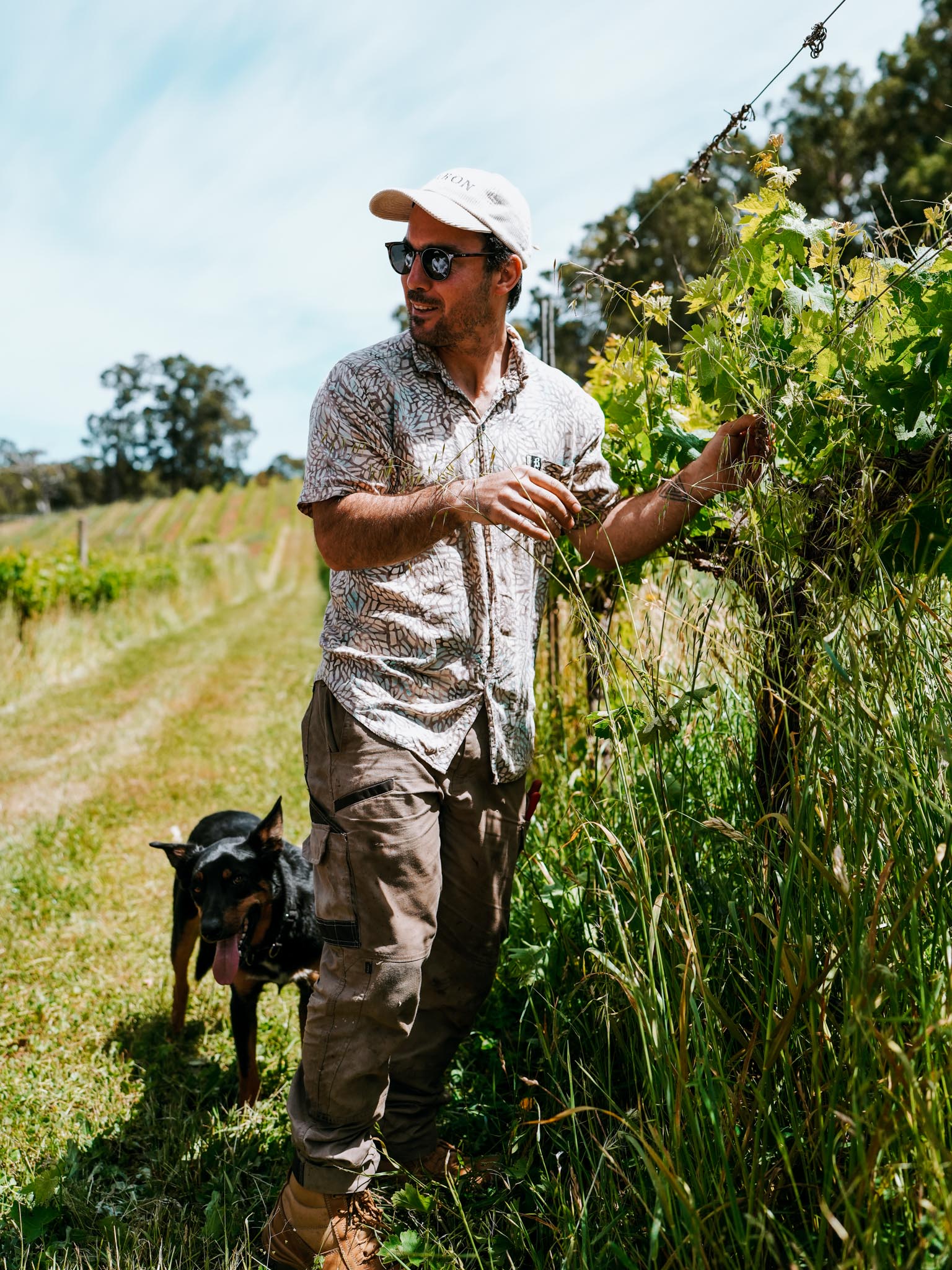
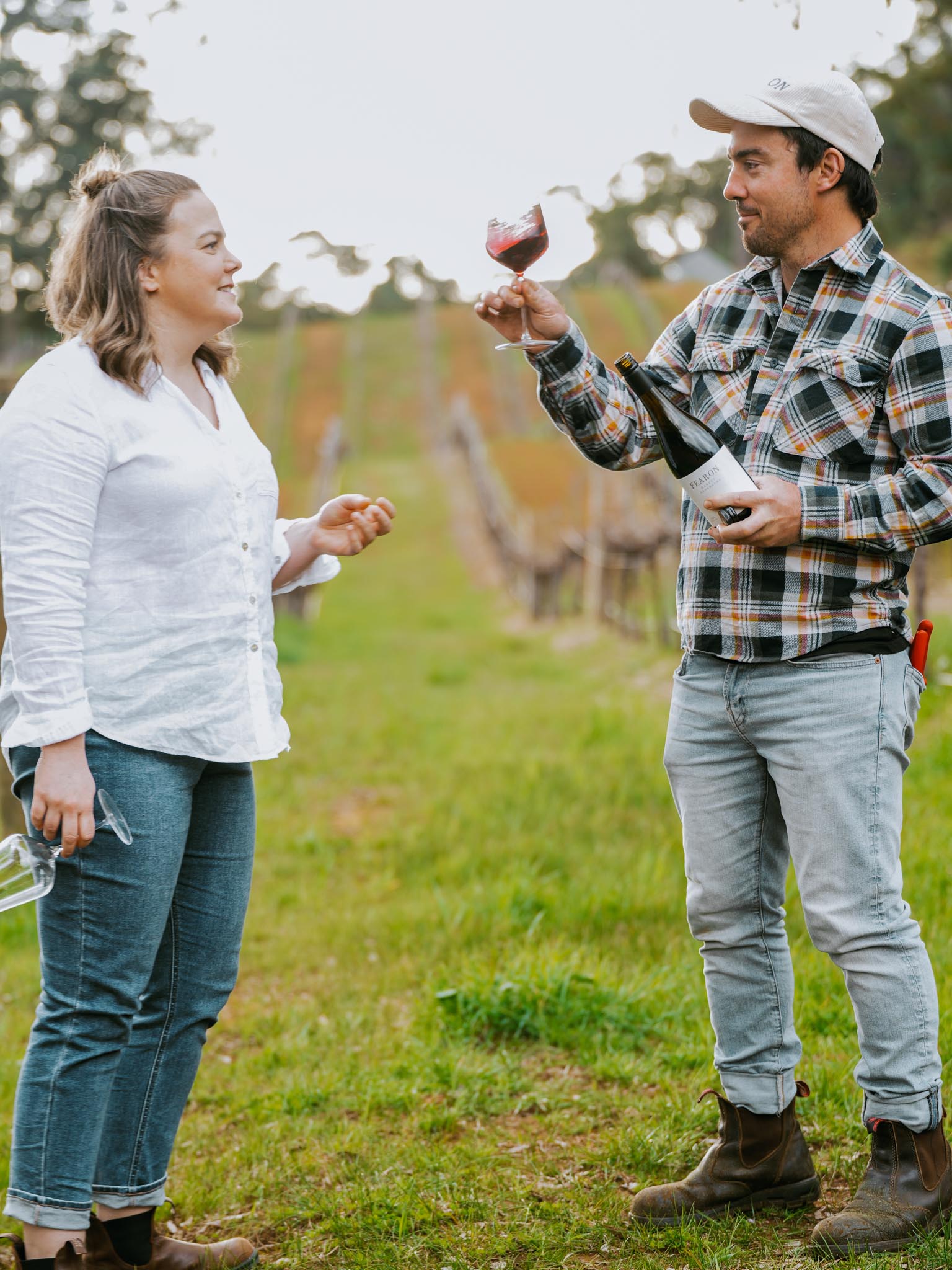
Tim Fearon came to wine the long way around – through ecology, earth sciences and years working in the conservation of native habitats. His prior life was spent reading landscapes, understanding soils, and tracking the relationships between land and living things. When wine eventually grabbed him, it grabbed him through exactly those lenses. The revelation, as he describes it, was realising that the physical world – soil type, slope, aspect, rainfall, solar radiation – could be captured and expressed in a glass. That idea has never left him, and it sits at the centre of everything Fearon makes. Launched from the 2023 vintage and based in Western Australia’s Ferguson Valley, the label focuses on alternative varieties that Fearon believes are perfectly suited to the Geographe region: fiano, grenache, tempranillo and mourvèdre among them, made with minimal intervention and a scientist’s attention to detail. Geographe is still finding its voice as a wine region, and Fearon is among those writing the sentences.
Fearon and his wife Rachel moved to the Ferguson Valley after years in Margaret River, bought their own property, and took on the lease of a neighbouring vineyard. It was, by their own description, a leap of faith – drawn by the region’s rolling hills, rich red soils, reliable water sources, and what Fearon saw as an underdeveloped potential for premium wine. “From the moment we moved to the Geographe wine region it instantly felt like home,” he says. Before arriving, Fearon had completed a wine science degree and built experience across WA, but it was the move to Geographe that helped him define his house style. A first vintage that forced him to work with fruit at slightly lower sugar ripeness than he’d hoped taught him something useful: that complexity doesn’t require heft. “A lighter, medium-weight palate structure and tannin framework gives so much more space for that complexity to unfurl and display itself.”
His winemaking approach is a deliberate fusion of scientific rigour and minimal interference. “Almost all of the fruit sourced is from vineyards that do not use any systemic fungicides, pesticides or herbicides,” he says. “All wines are fermented wild using only the ambient yeast. With our reds we generally do long cold soaks pre-ferment, aeration during ferment and extended maceration post-ferment to finesse, harmonise and stabilise the tannin profiles prior to maturation.” Vessels are chosen thoughtfully: a mix of seasoned French oak in small and large formats, clay amphora, and stainless steel, selected to suit each variety without overlaying fruit character with oak flavour. Nothing is added but sulphur; wines are never fined and only lightly filtered if necessary. “I try to fuse technical rigour with creative expression, pragmatism and my desire to utilise wherever possible natural or ambient processes.”
Around half the fruit is now farmed by Fearon himself, a proportion that has grown steadily over three years. The lesson from that hands-on time has been about precision and patience – small, targeted canopy adjustments made at exactly the right moment, the kind of fine detail that seems trivial in isolation but accumulates into the difference between green, astringent tannins and ripe, supple ones at harvest. Climate is an ongoing navigation: Geographe is a warm-growing region, and in hot seasons sugar ripeness can race ahead of phenolic ripeness – meaning the grapes reach sweetness before their tannins are fully developed – which cuts against Fearon’s preference for moderate alcohol and structured complexity. Refining canopy management to moderate the bunch-zone microclimate during ripening is the primary tool, and each vintage adds to the body of lived experience.
The range currently spans a fiano from Rustys Block near Harvey, a grenache from the elevated Green Door vineyard perched above the Ferguson Valley, an Ancestrale – a delicately sparkling wine made by bottling before fermentation is complete, so the natural bubbles are trapped in the bottle – and the entry-level Rouge. Chardonnay and grenache are closest to Fearon’s heart long-term, with fiano and tempranillo close behind. The plan is to specialise rather than expand. “It is better to be a master of few rather than a jack of all trades.” For a former environmental scientist who came to wine through a fascination with how the natural world encodes itself in physical things, the focus makes complete sense.
GET FIRST ACCESS TO THE NEXT WINE ICONS – DELIVERED