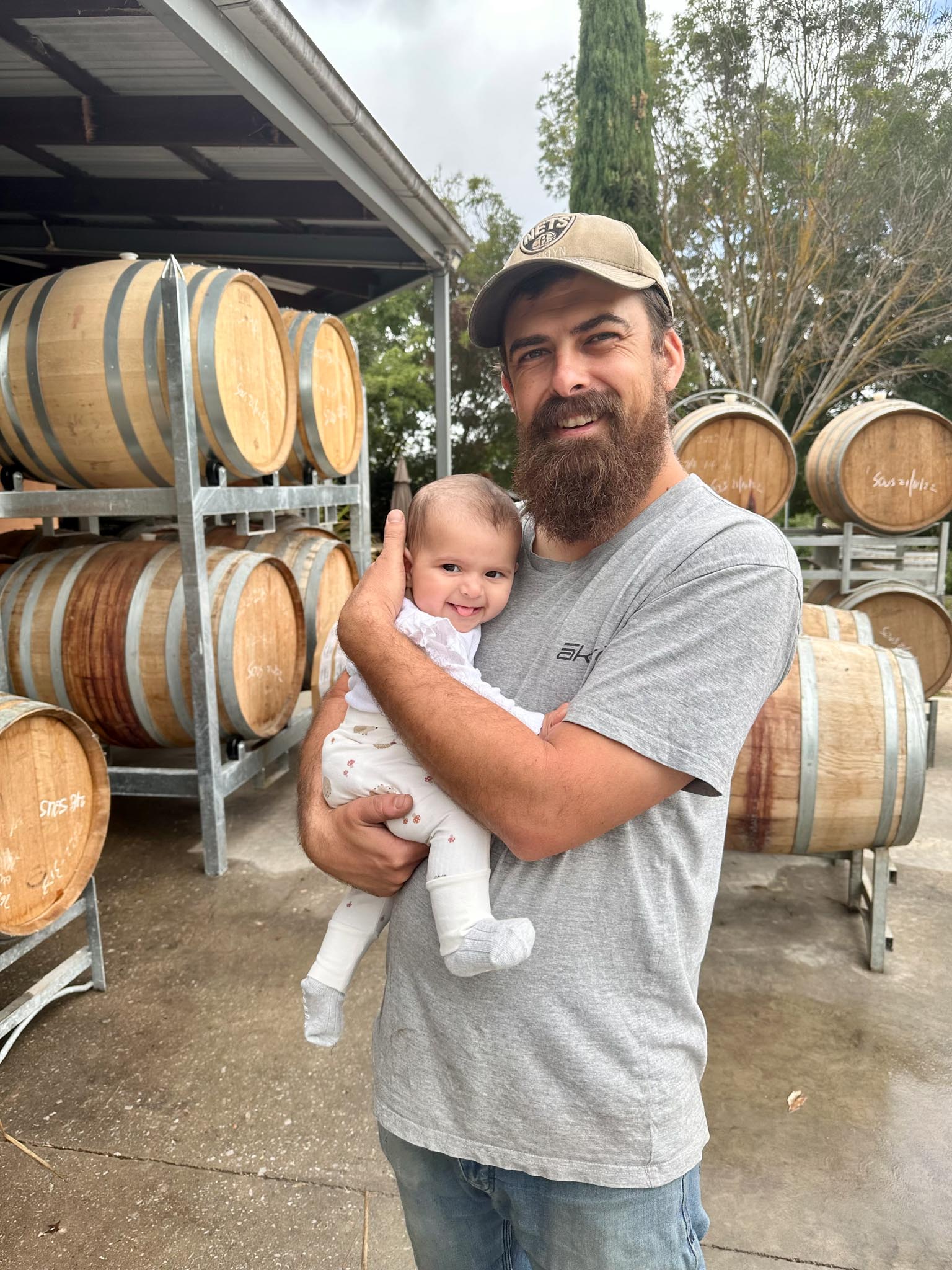
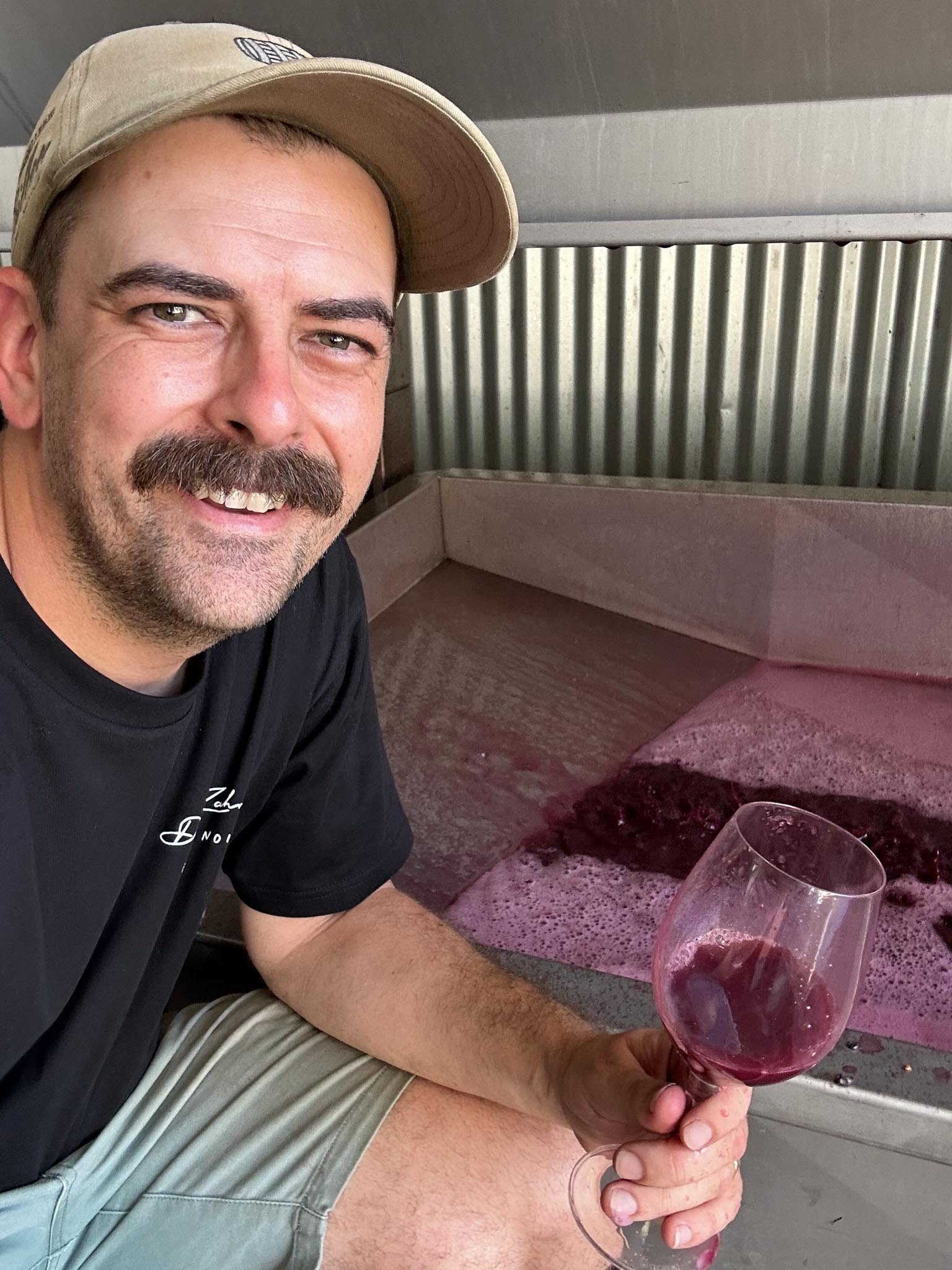
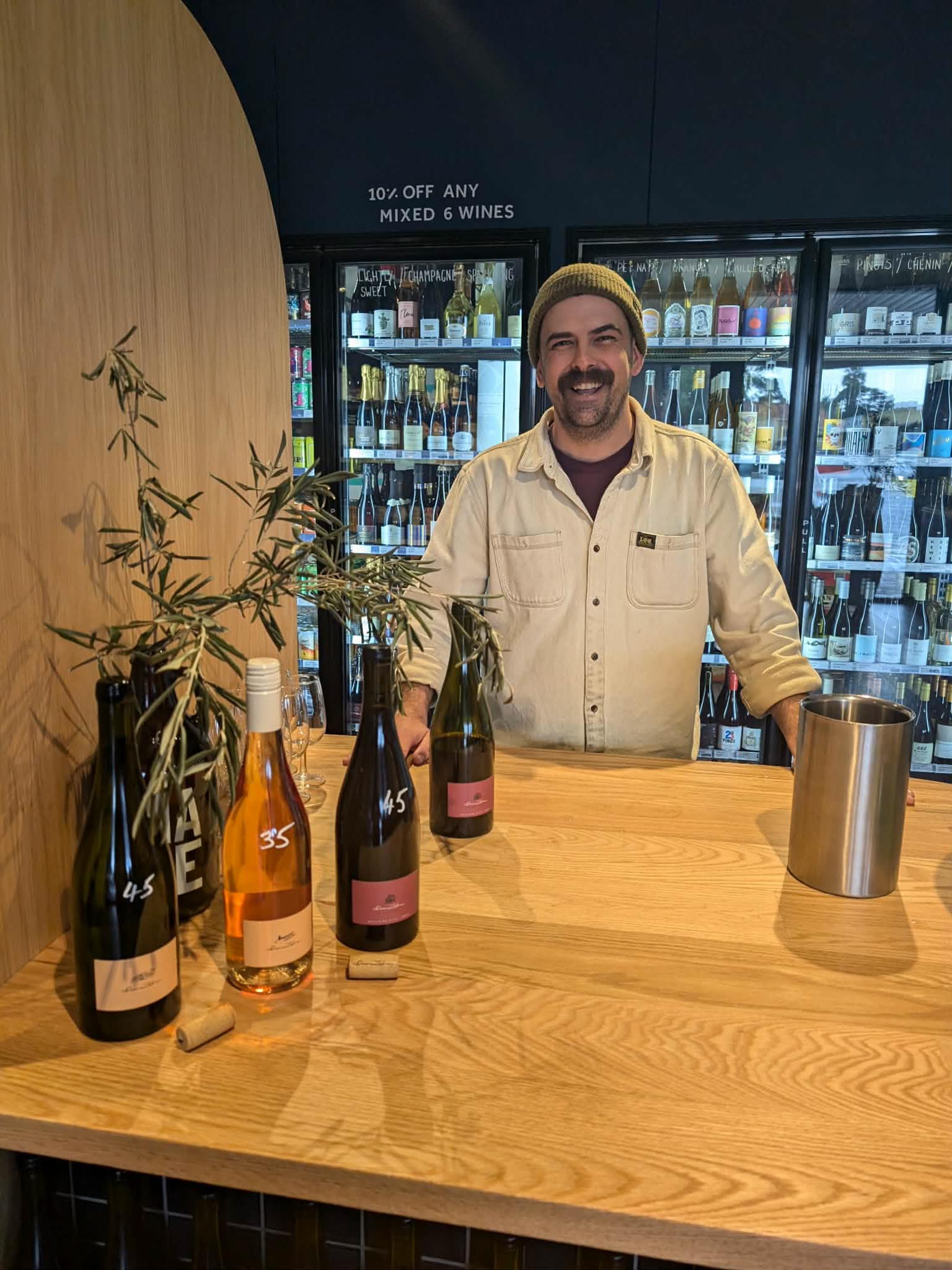
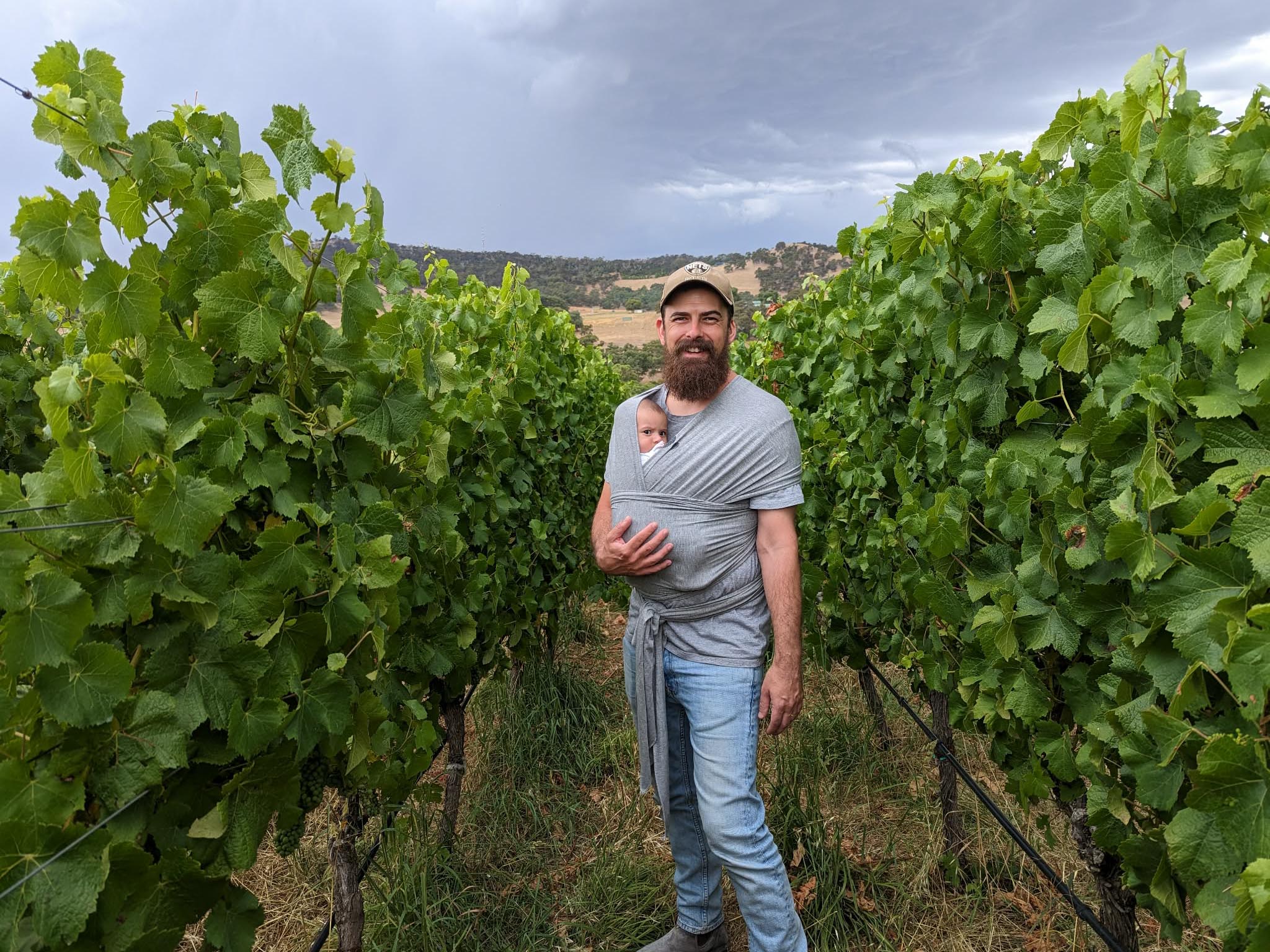
Glynn Thoman spent more than a decade as a marine engineer before pinot noir pulled him off course – and when it did, it pulled him hard. Dear Zahra, the label he launched in 2022 with his wife Kamillah, is the result of that obsession distilled into a single-minded project: 100% pinot noir, 100% organic fruit, made with minimal intervention and a desire to see how the one variety speaks across different Australian terroirs. Two wines currently anchor the range – a saignée rosé and a pinot noir – both sourced from the Adelaide Hills, with the Macedon Ranges now entering the picture as Thoman shifts his focus toward Victoria. It’s early days, but the direction is unusually clear for a label this young.
Thoman grew up around South Australian vineyards, but wine didn’t take hold until later. After years at sea, curiosity about pinot became something closer to compulsion. He began volunteering at cool-climate wineries, eventually landing alongside Erinn Klein at Ngeringa in the Adelaide Hills – one of the country’s most respected biodynamic operations. That experience shaped everything: how he thinks about farming, what he expects from fruit, the level of care he brings to the cellar. In 2023, a vintage at Domaine Bruno Clair in Burgundy sharpened the focus further. “Pinot Noir became my lens,” he says. “I’m not chasing variety. I want to do one thing, and do it really well.”
Dear Zahra was named for his daughter Zahra, born the same year the label started – a detail that says something about the stakes. The first wines were small parcels made at the Ngeringa winery, where Thoman still works. He wasn’t entirely ready, by his own admission. “Winemaking is one thing… selling the wine is a whole different challenge. It’s been a bit of a rollercoaster.”
Still, the foundations are deliberate: all fruit hand-picked and certified organic; wild fermentation in open vessels; gentle handling through ferment – a few plunges or pump-overs, no more than needed; mostly older French oak for around a year; natural settling in tank before bottling with a small sulphur addition. The saignée – a winemaking technique where a portion of juice is bled off from the red wine ferment early, then made separately into a rosé – serves double duty here. It produces a standalone rosé wine while simultaneously concentrating the ratio of skins to juice remaining in the pinot noir, building greater depth and structure in the red. Clean, patient, unfussy.
The label’s emerging multi-regional model is partly a response to climate risk – spreading across the Adelaide Hills and Macedon Ranges hedges against difficult seasons in either – but it’s also the point. “The goal is to show how Pinot Noir expresses itself across different Australian regions,” he says. Macedon, which Thoman regards as producing some of the best pinot in the country, gives him a new lens on the same grape. He grew up around the Hills; Macedon is the next chapter. “It feels like the start of a really exciting next chapter.”
The winemaking rules, such as they are, are simple: “Be gentle, be patient, and keep things clean. If the fruit is good, most of the work is already done – it’s just about guiding it and not messing it up.” For a former engineer who came to wine through sheer want rather than any obvious pathway, it’s a philosophy that sounds less like a method and more like hard-won belief.