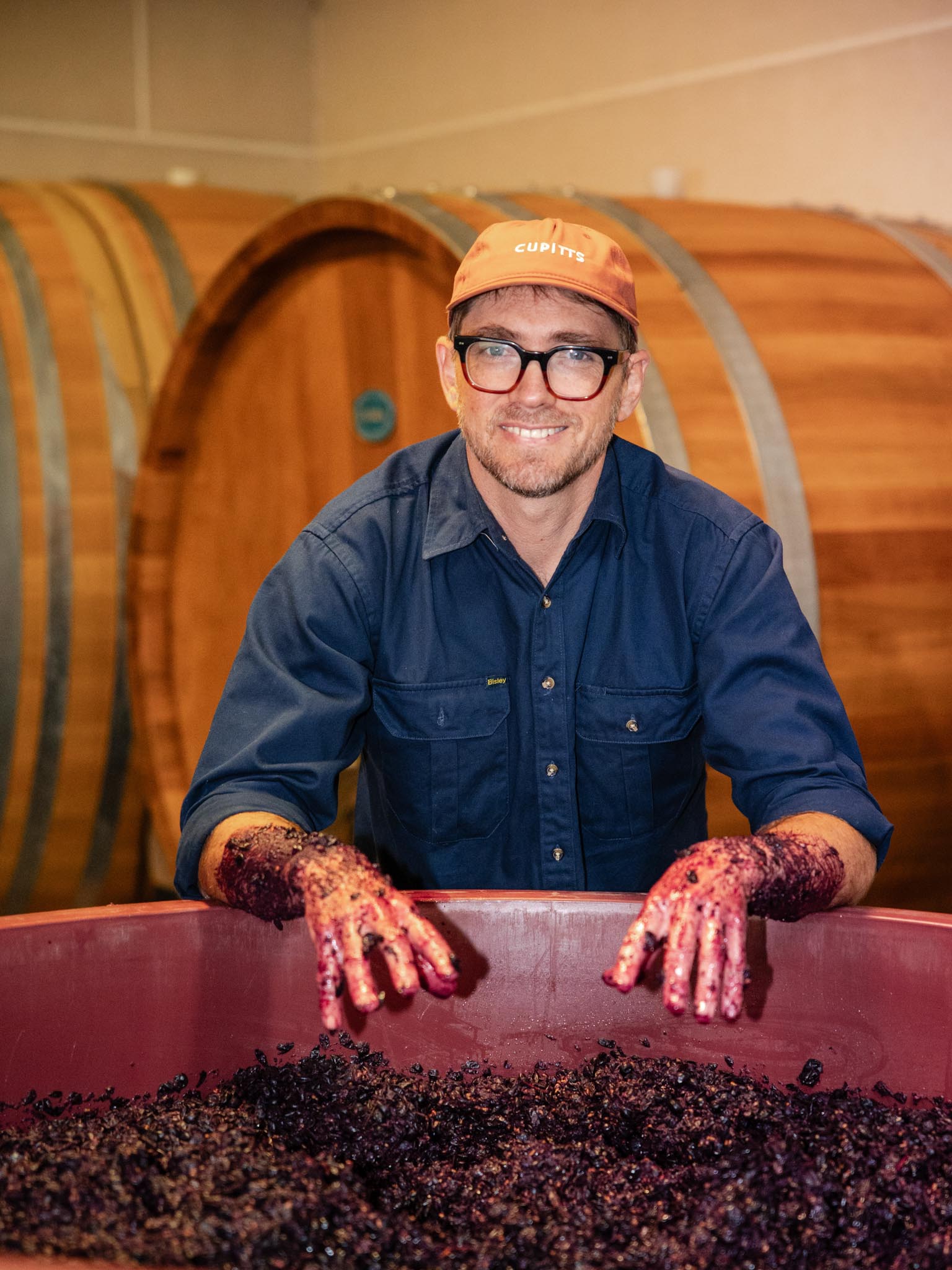
Wally Cupitt came back to the family winery between jobs in 2010, intending to help out. He never really left. Now head winemaker at Cupitt’s Estate – the South Coast operation his mother Rosie built from the ground up in Ulladulla – Cupitt makes wines that are shaped as much by where they’re drunk as where the grapes are grown: relaxed, food-pitched, and built to be shared. The range draws almost entirely from cool-climate Southern NSW, with Hilltops, Tumbarumba and the Canberra District providing the fruit across a Signature range led by Italian varieties – arneis, vermentino, fiano, sangiovese, montepulciano, nebbiolo – and a Project range that gives the winery room to explore. In a region still finding its identity, Cupitt is among those doing the defining.
The business was Rosie’s creation. She planted the vineyard in 2003, made the debut vintage in 2007, and shaped a philosophy rooted in Southern European hospitality and restraint – travelling to Europe each year, forming relationships with growers, including a chance meeting in Piedmont that would eventually bring Pankhurst’s Canberra District arneis into the fold. Wally helped plant that first vineyard as a teenager before heading off to travel. When he returned in 2010, he slid into the winery alongside his mother, and by 2013 had taken over as winemaker under her guidance. In the same year he completed a vintage in Sancerre with Alphonse Mellot at Domaine la Moussière – an experience that he says set the direction for his winemaking to this day. “It was all about letting the wine do its thing, respecting variety and letting the terroir come through.”
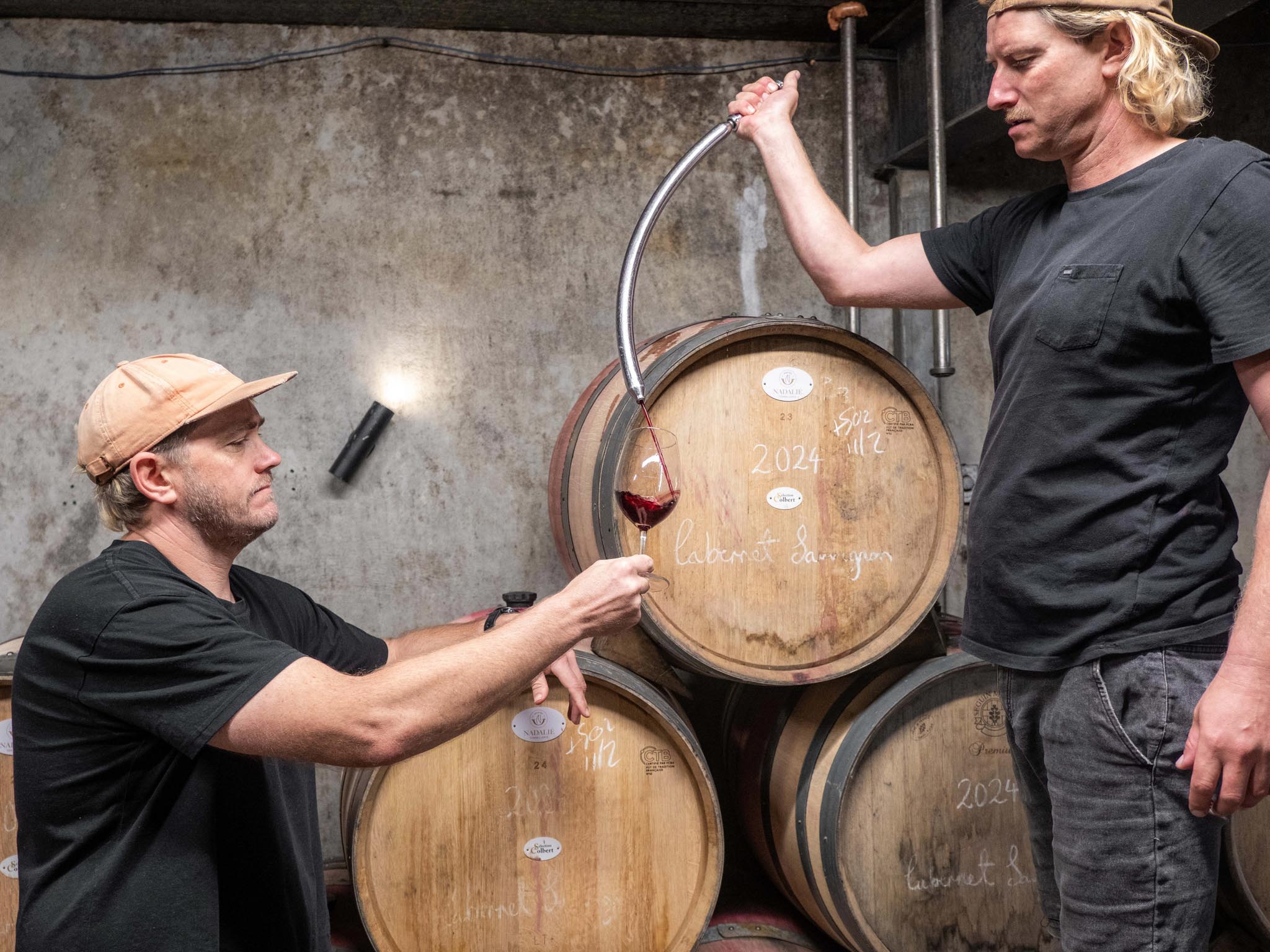
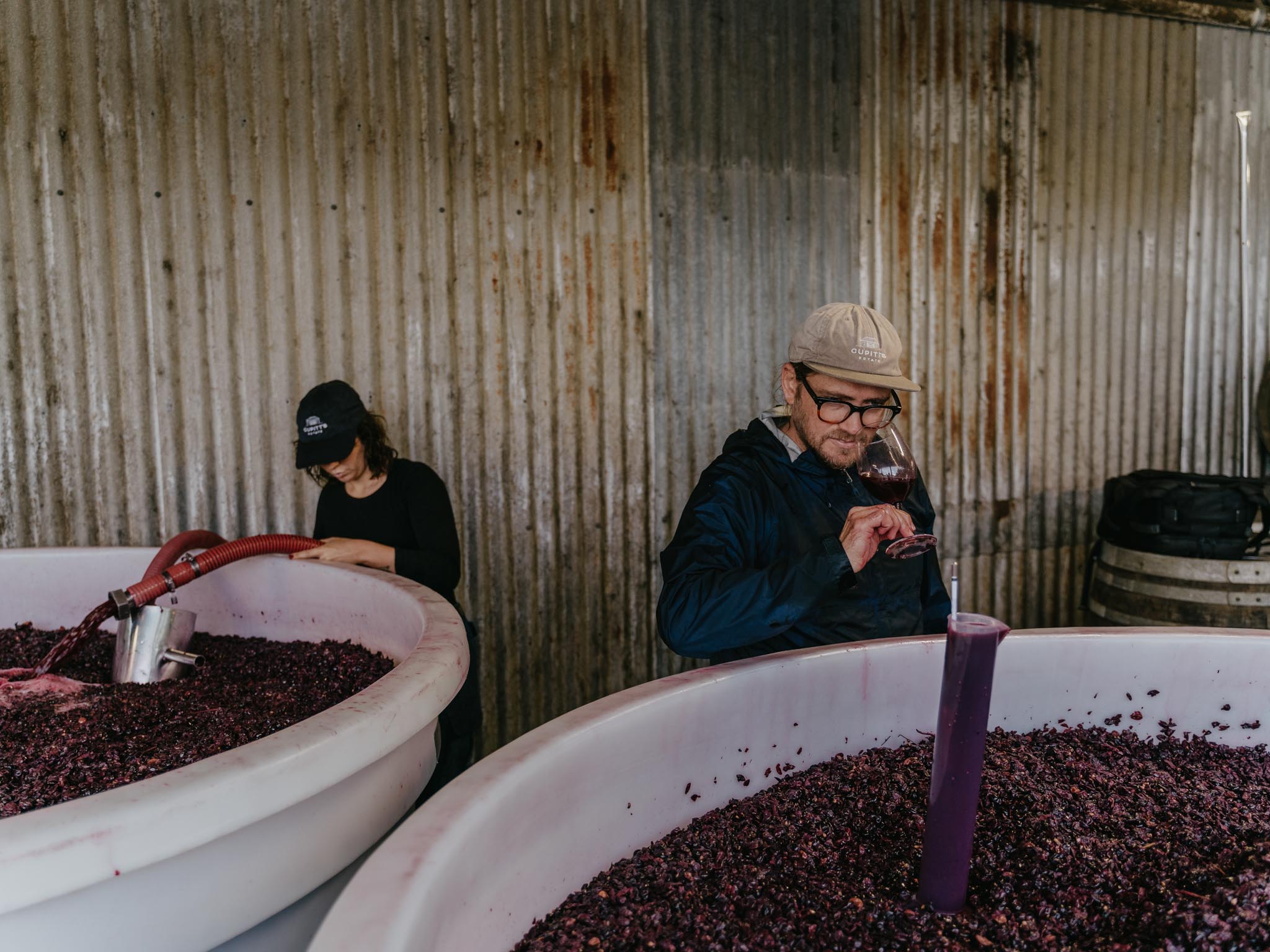
That Sancerre influence is most audible in his overall philosophy rather than any single variety: let the fruit lead, keep the winemaking hand light, don’t force the wine into a shape it doesn’t want to take. In practice that means minimal additions, large-format oak – specifically 2,000-litre foudres, vessels significantly larger than a standard barrel, which impart less oak character and allow the wine to develop more gently – and under-extraction as a guiding principle. “Our approach is to under-extract rather than overwork the wine,” he says. “Finding that balance is a feel thing, and it’s where your experience and intuition really come into it.” He’s had to develop that intuition across an unusually broad spread: up to 18 varieties and 120-plus tonnes in a vintage, with a three-person winery team supporting on the production side.
The estate’s own small coastal vineyard is just one piece of the sourcing puzzle. Cupitt has worked hard to build long-term relationships with growers across Southern NSW – most starting with a handshake and growing over 15 to 20 years. Those relationships are what allow the Signature range to maintain consistency across a diverse slate of varieties, and what feeds the more exploratory Project range, which exists precisely to catch the things that don’t fit neatly elsewhere. “It allows us as winemakers to have a bit of fun with the winemaking and get a little more creative,” he says, “and to say yes to the grower when he’s trying to sell us half a tonne of aleatico.” Current Project wines include a Hilltops graciano and a fiano blended from Moppity and Ballinaclash fruit, alongside a Hilltops cabernet and a chardonnay matured in Stockinger foudre.
In the South Coast’s more humid conditions, Cupitt has focused on careful canopy management – controlling how the vine’s leaves and shoots are trained and trimmed to improve airflow through the fruit zone, reducing disease pressure and helping grapes ripen more evenly. His response to warming trends across his Southern NSW sourcing regions has been to lean further into Italian varieties, which he finds more resilient across different conditions. He’s also become more flexible with picking decisions, tasting more regularly and moving quickly when the window is right.
Cupitt is clear-eyed about what he has and what he’s working toward. “There’s a real sense that we’re still early in defining what this region can be,” he says. The winery is being built out piece by piece – each addition earned rather than assumed. It’s the same approach he takes to the wines.
GET FIRST ACCESS TO THE NEXT WINE ICONS – DELIVERED