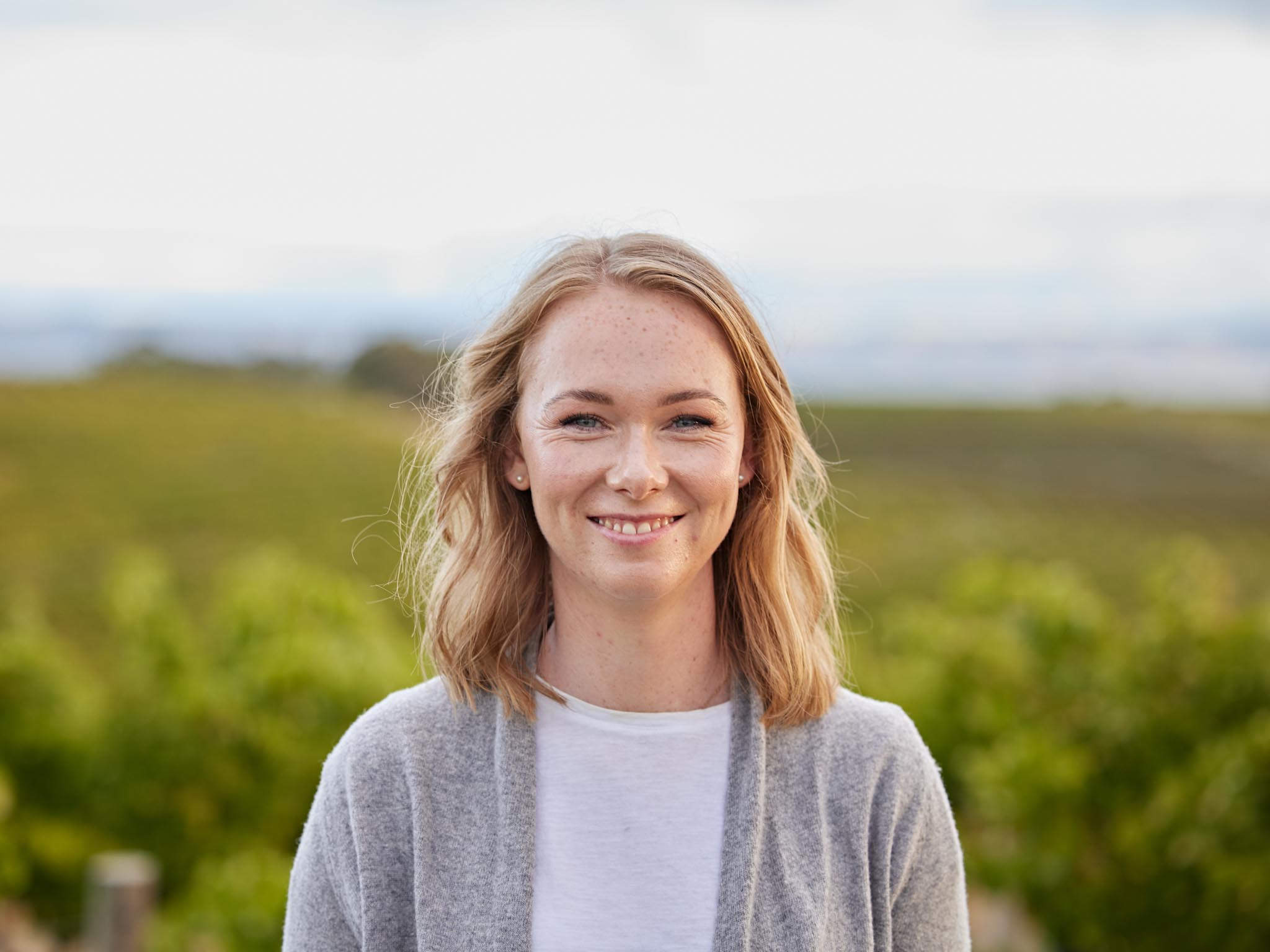
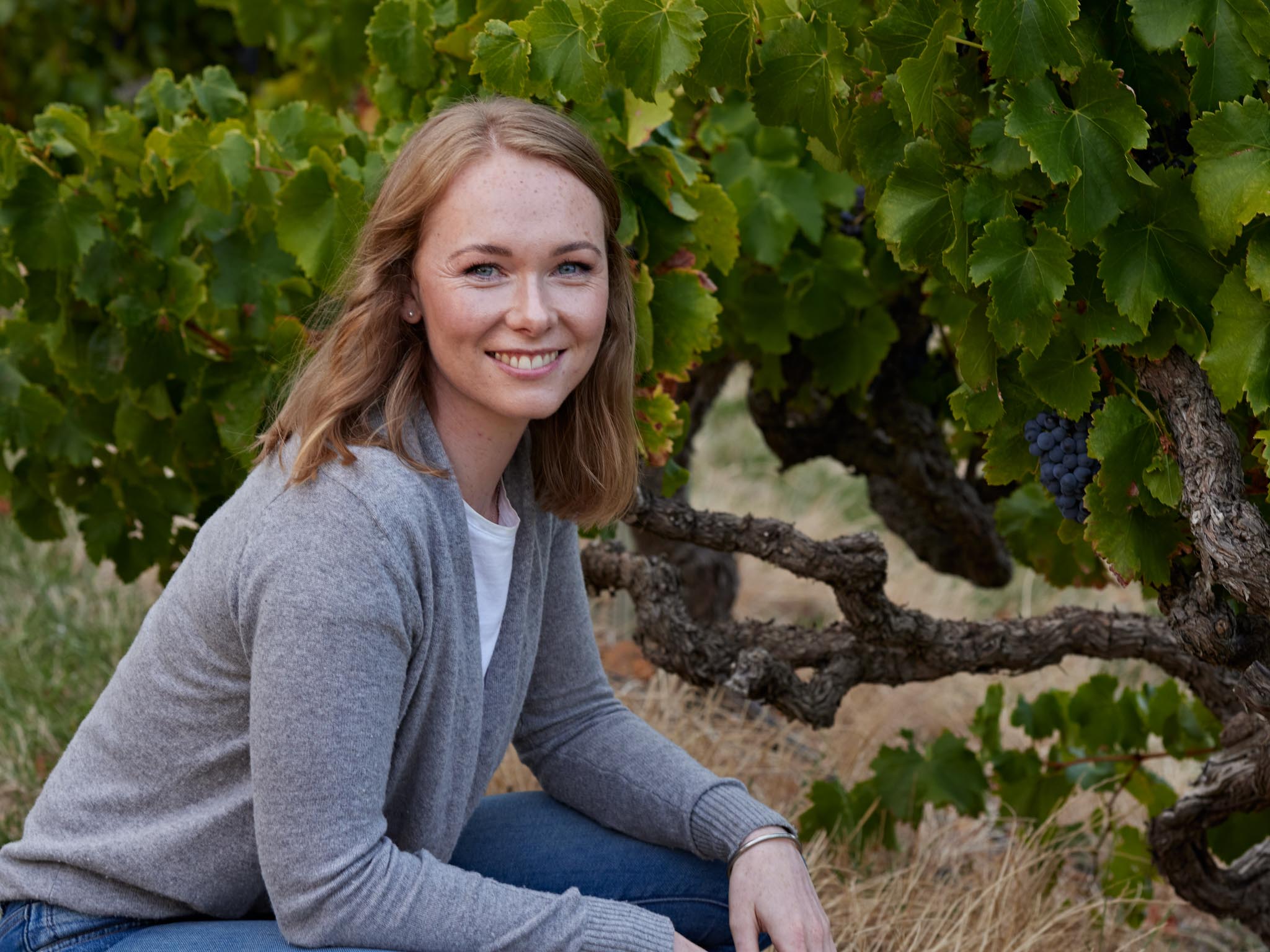
Ella Hoban’s résumé is an impressive one, but all you really need to know about why she deserves your attention can be distilled into one line: at the age of 33, she became the Group Sparkling Winemaker for Vinarchy, one of the largest wine business in the Southern Hemisphere. In this role, she directs and oversees all of the sparkling winemaking for several brands that are household names in Australia – including Croser, Jacob’s Creek, Grant Burge, and Yarra Burn – as well as a suite of sparkling wines for Vinarchy’s commercial portfolio. It’s a role that sees her working across a wide range of winegrowing regions and fruit sources, utilising a vast array of winemaking methods, to produce consistently delicious wines across a wide range of price points. She’s hands-on, too – challenging the idea that lead winemakers at larger companies spend more time looking at spreadsheets than monitoring ferments or at the tasting bench. To top it all off, she’s also found the time to take on the role of being Croser’s global brand ambassador, to lecture in sparkling winemaking at Adelaide University, and to help build Wine Biddies, a networking program for young women in winemaking. With such illustrious achievements already under her belt, her future in wine certainly looks bright.
At high school, Ella Hoban seriously considered embarking on the gruelling training required to become a heart surgeon, but after finishing year twelve and taking a gap year, found the lure of wine too strong to resist. “I actually thought that I wanted to be Prime Minister for a hot minute, too!” she says, laughing. “I come from a family of publicans and wine lovers – special wines were always an important part of the way we came together as a family. I think I made good choices. I have always gravitated to sciences but could never see myself in a lab.” While the medical profession’s loss has become the wine industry’s gain, Hoban has brought the same level of commitment, study, and rigour required to become a surgeon to the task of becoming a winemaker. This same dedication saw her quickly rack up winemaking experience with Paul Hotker and Matt Laube at Bleasdale in Langhorne Creek, with Peter Leske and Chris Parsons at the contract winemaking facility Revenir in the Adelaide Hills, and with Darryl Catlin at Sidewood Estate in the Adelaide Hills – as well as squeezing in international vintage experiences at Celler Capçanes in Spain’s Montsant and Sterling Vineyards in California’s Napa Valley.
Being so scientifically minded, it’s perhaps not surprising that she was drawn to sparkling winemaking – arguably the most challenging form of winemaking. “I love the technical nature of sparkling winemaking,” she says. “It maintains a level of interest and challenge throughout the year – there is constant novelty in the problem-solving. There are some days where I question the wisdom of choosing the absolute most-difficult, high-workload-intensity style – but there is something so wonderful that happens when you put wines on lees for an extended period, that I can’t imagine doing anything else. There is nothing like it, and it makes it so worth the effort. Opening up tirage stock and working on liqueurs when that stock is absolutely singing is such a joy and privilege. I’m lucky that I’ve had the opportunity to see some insanely cool things over my career.”
That passion for sparkling wine soon garnered her a reputation in the tight-knit Australian winemaking community, and in 2019 saw her receive a cold call from an unknown number – one that happened to belong to legendary Australian sparkling winemaker Ed Carr, of House of Arras fame. “It was a pretty insane moment,” she says. “I was working away as an assistant winemaker at Sidewood in the Hills, and had been getting pretty involved in the sparkling program they were developing at that time. I had no concept that there was any awareness of my existence outside my little bubble. I was cooking dinner and missed a call from an unknown number, and – completely out of character – checked my voicemail. Ed had left a very casual message asking me to call him back. I was super-quizzical about it – I remember telling my partner, Mick, what had just happened, and his response was ‘You should probably call him back.’ So I rang him back, and he asked if I was interested in working in the sparkling portfolio at Accolade Wines. The rest is history!” She adds, “I owe a big thank you to the sweet people who put my name forward when they were asked!”
Since taking the reins as Accolade’s Group Sparkling Winemaker at age 31 – and retaining the title after Accolade merged with the Australian, New Zealand and Spanish wine businesses formerly owned by French liquor multinational Pernod Ricard to form Vinarchy in 2025 – she’s focused on creating exceptional sparkling wines to suit a wide range of consumers. “I am lucky in that the portfolio is so diverse that we have room to play and explore different styles for different brands,” she says. Within that portfolio, though, it’s clear that the Croser brand – named after its founder, Australian winemaking icon Dr. Brian Croser AO – is the one that’s closest to her heart. “Croser is all about celebrating the Adelaide Hills’ diversity of climates, and how we can blend those together across a patchwork of sites to create a wine that consistently highlights the deliciousness of Adelaide Hills fruit,” she says. “Brian showed extraordinary foresight regarding the potential of the Adelaide Hills to grow exceptional sparkling wine. It has been an absolute joy and delight to take on that legacy and modernise the wines while staying true to their heritage and style. I love the Hills and I love sparkling wines – what’s not to like?” She adds, “Another of the incredibly special things about sparkling wines is that – because of tirage age – you end up linked to the winemakers that came before you. You work on the same wines in different time periods, so you get to look back in time to what was being done when they were in your shoes.”
As befits someone whose wine is very widely available – you’re likely to find at least one wine that Hoban is responsible for in practically every suburban bottle shop across Australia, not to mention several in larger ‘big-box’ retailers such as Dan Murphys – Hoban is dedicated to making the best possible wine at a wide range of price points, including some that are very budget-friendly. “I really love putting wines in a glass that the team and I are proud of, and that consumers really love,” she says. “It’s still such a buzz to go around to someone’s house and to see that the sparkling that someone keeps in on hand in the fridge is something we make, or when you see someone drinking our wines at dinner. Especially these days, when household cash-flows are tight, we cannot underestimate how fortunate we are to have someone choose our wine to enjoy.” She adds, “It’s so pretentious when people imply that for a wine to be ‘real’ it has to be a certain thing, or a certain price point – often both. What about the wine-loving consumer who can’t afford that brilliant wine made by the small producer in the tiniest batch – which means that the small producer has to charge a certain price to survive in this economy? I don’t think wine should be gatekept. I love that the wines that I make are excellent quality but also accessible. I love that it means that people can celebrate any occasion – even just Friday night – with one of my wines. I love that it means that they fit on a wine list at glass prices so that friends can cheers to their promotions. I don’t want wine to be only accessible to the wealthy.”
Working at such a high level in a business as large as Vinarchy means that she has to battle misconceptions about her role – chief amongst which is the idea that her work is hands-off. “There isn’t a single Croser vineyard that I haven’t walked myself this vintage,” she says. “I know our growers, I know their partners, and I know their children. There is this imaginary idea that we are so far removed from the wine that we don’t know what’s happening. I would reframe it as – we are big enough that we have supporting teams to take on the rest of the load. So we do 100% winemaking – the wines get 100% of our focus. Every decision is made on a tasting bench. We are mucking about with our own fermenters.” She adds, “I don’t really know where the idea came from that corporate winemakers are more removed. It isn’t what I see on the daily. I work with some of the most passionate and engaged winemakers at Vinarchy, just as I have in the rest of my career – and they have the benefit of a massive knowledge base because of the diversity of regions and styles that we are exposed to. I think we so easily forget that many of the wines and winemakers that we celebrate most have come from a corporate background – including people like Stephen Pannell, Corrina Wright, and Sue Bell. They’re brilliant in their own right – but they also learned a lot of it in corporate. People aren’t one thing or the other. Both can be great. I think it’s a sad indictment on the wine industry if we feel that we need to be reducing one part of the industry to increase the perception of importance or validity of another. We are all part of the same ecosystem, and are interdependent on each other.”
Despite the wide array of technology and advanced that she has at her disposal in her role, her winemaking philosophy remains relatively simple: “I don’t believe in absolutes in winemaking – it’s all about adapting and applying creative problem solving based on gained experience,” she says. “I think it’s such an obvious lesson – yet one so easily forgotten, especially during busy periods – but the best way to make great wines is to get the basics right. That can mean anything and everything from setting up vineyards with the right varieties or clones, to getting picking decisions right, or to setting juices up at the start of vintage with the structure and profile that you are after so that carries all the way through to packaging. If you have great fruit to work with, getting the basics right in the winery is the best way to preserve and honour what you have and turn it into a delicious drink.”
Those dual focuses – on accessibility and deliciousness – are in turn part of a bigger mission to recontextualise Australian sparkling wine as an everyday beverage, rather than a rarely-tasted luxury item. “I am really passionate about reframing how we value and consume sparkling wine, and especially Australian sparkling wine,” she says. “Sparkling wine is so much more than a pre-dinner drink. We have such amazing diversity of styles that I would love to see us move toward celebrating sparkling throughout a meal, or as a bottle to sip on and enjoy watching how it evolves, like we do with still wine styles.” She adds: “I had the joy of a judging spell at the National Sparkling Wine show recently, and my biggest take-away every year was how amazingly good Australian sparkling is right now. We have done a really good job as a broader industry at making a name for our own still wine styles and terroirs, and moving past comparisons to the Old World – I think it’s time that we do that for the Australian sparkling wine industry, too.” While this is a high-level challenge she’s willing to tackle, it’s the fundamentals that keep her engaged in the industry: “The way that wine interacts with our cultural and social fabric is still what makes me love what I do,” she says. “My favourite thing to this day is seeing a sparkling wine that I’ve made being consumed by people having a great time together.”