The name of this vineyard tells its story: Two Hands’ ambition is for their Holy Grail Vineyard, located on Seppeltsfield’s iconic ‘Avenue of Hopes and Dreams’, to become nothing less than one of the Barossa’s all-time greatest. Planted to a combination of shiraz, cabernet sauvignon, grenache and mataro, with an impressive diversity of heirloom shiraz clones, this twenty-eight hectare vineyard is subdivided into twenty-two separate blocks – each with its own unique and considered combination of micro-climate, variety/clone, planting density, trellising system, and row orientation. Lead by viticulture manager Peter Raymond, the Two Hands team tends to Holy Grail with a combination of cutting-edge technology and meticulous planning in order to produce fruit for a diverse range of wine styles and price points – including one of the label’s crown jewels, the ‘Invenienda’ Shiraz Sur Échalas from Holy Grail’s Clos Block.
First acquired by Two Hands founders Michael Twelftree and Richard Mintz in 2007, the Holy Grail vineyard was, at the time of its acquisition, largely comprised of bare, unplanted land. Only four blocks of vines totalling just under seven hectares – now dubbed Colin Morey, Clape, Giacosa and Marcoux – had been planted at the time of purchase, giving the Two Hands team free rein to design the rest of their dream vineyard from scratch. The rest of the vineyard was planted out in 2016 and 2017, with each block’s variety or clone, planting density, row orientation, and trellising system designed to work best with its aspect, elevation, and soil type. The resulting vineyard is a complex mosaic of blocks, each managed according to its own needs and the style of wine its fruit is destined to produce.
In line with Two Hands’s shiraz-first ethos, the Barossa’s signature variety is king at the Holy Grail Vineyard, comprising just under twenty-six of the total of twenty-eight hectares under vine. “Sorry, not sorry! It’s what we do, and it’s the reason we exist,” Two Hands’ viticulture manager, Peter Raymond says of this focus on shiraz. “Grenache and mataro are at home here – but shiraz is still where it’s at. There’s a richness and generosity of flavour that’s unique to the region, and the focus on sub-regional expressions shows just how complex the Barossa really is.” Raymond is now helping the Two Hands label tell the story of single-vineyard expressions of Barossa shiraz, as well as dialling in on the nuances between the individual blocks that make up the Holy Grail vineyard: “Seppeltsfield Shiraz is renowned for its structure and power,” he says. “The Holy Grail shiraz can be very aromatic and elegant from the lower lying southern facing blocks, and very muscular and powerful from the northern facing blocks. Heavy clay soils enable controlled stress and high quality.” While he acknowledges that other varieties may be better suited to the Barossa’s climate, he argues that a focus on shiraz allows the vineyard to operate sustainably: “Grenache and mataro will never make up more than 15–20% of the Barossa, because Shiraz is what the punter wants,” Raymond says. “Alternative varieties might be easier to grow in some ways, but try selling them at scale for good margin.”
Despite the near-total focus on shiraz, there’s plenty of diversity on display in terms of genetic material at Holy Grail. Two Hands has invested significant time and energy into finding the right mix of shiraz clones for the vineyard, each of which is matched to an appropriate block: BVOV10 and EVOV12 were selected via blind tastings of Yalumba Nursery’s clonal trial block; cuttings were sourced from the regional stalwarts of the Prouse Vineyard in Eden Valley and Kaesler’s Alte Reben Vineyard in Marananga; Tony Brady of Wendouree provided cuttings from his 1891 shiraz vines; the recently-arrived clone 470, from Hermitage, was sourced from French genetic experts ENTAV-INRA; and the heirloom Modbury clone, once widely planted amongst Penfolds’ vineyard holdings but now nearly extinct, was planted on the vineyard’s steepest slopes with the assistance of Paul Georgiadis. These clones have joined the Kalimna 3C material that already existed in the original 2000 plantings to add another level of nuance to the fruit that Two Hands produces from this vineyard – which, in turn, gives them more flexibility to grow fruit with specific outcomes in mind.
“We trial whole blocks and compare wine styles,” Raymond says. “The goal is to deliver the best possible fruit for the intended product. We do this by maximising exposure of bunches early in the season using pruning, canopy management, and irrigation – or lack of. We can achieve the goal using different methods – and, depending on the season, we see small or significant differences in wines.” He adds, “As a rule, the blocks targeted to top end wines get the royal treatment in terms of pruning, canopy management and crop load management. But there’s a reduction of other inputs such as water, fertilisers, fungicides, herbicides, et cetera. It’s about achieving the desired canopy and berry size to make the grade.” This parcellaire approach and conscientious attention to the requirements of the finished wines is paying off, Raymond argues: “The wines seem more precise and refined than in previous years.”
Although the vineyard is not certified organic or biodynamic, Raymond takes a pragmatic approach to the question of environmental sustainability. “Feed the soil – the soil feeds the vines,” he says of his approach. “Remove any practice or product antagonistic to soil health. Use the softest yet most effective input. Promote mid-row multi-species plants all year-round. Look after the beneficial insects and mites.” For Raymond, attention to vine canopies is key to this process: “We’ve controlled the canopy to a point where it requires less management and creates better results in the wine – less wood to prune, smaller canopy to manage, lower fungicide use, less irrigation required, less trimming,” he says. “Row orientation plays a role in canopy management, which does reduce the risk of heat stress on exposed bunches – east-west rows fare best.” When it comes to native revegetation and land rehabilitation, he says, “We’re limited to what we can do due to the vineyard taking up most of the property – but in saying that, the site is managed to promote as many plant species as we can within the context of the vineyard.”
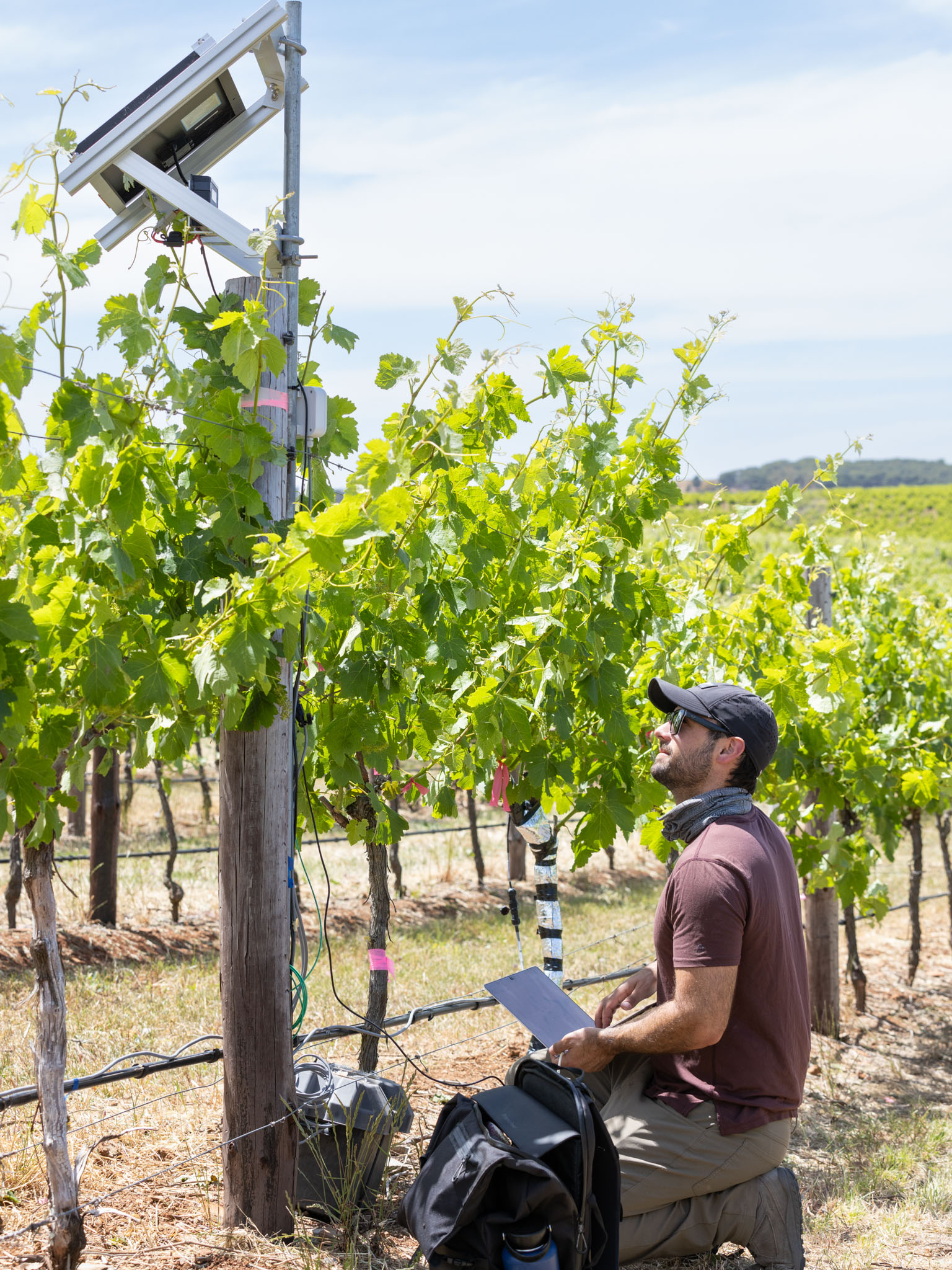
Water use in the dry and warm Barossa remains a pressing concern. For this, Raymond and the Two Hands team have embraced a cutting-edge solution – a proprietary system developed by agri-tech company Fruition Sciences that uses plant sensors and soil capacitance probes to schedule targeted irrigation when vines experience water stress. “We only irrigate when the vine requires it,” Raymond says. “This is a key criterion for producing exceptional wines.” The Fruition system uses sap-flow monitors installed at selected individual vines across the vineyard to give a detailed picture of moment-by-moment water usage within the plants, taking measurements once every fifteen minutes. This delivers an incredibly granular source of water use data that then informs decisions about when to irrigate and how much water to deliver. “Once full canopy is achieved, we can start monitoring the vine’s Water Satisfaction Index – when the WSI reaches a predetermined point, we know the vine may need watering,” Raymond says. “This method has immense value in scheduling irrigation and has allowed for much improved water use since its adoption in 2022 – and we believe we are the only winery in Australia using this technology in the vineyard.”
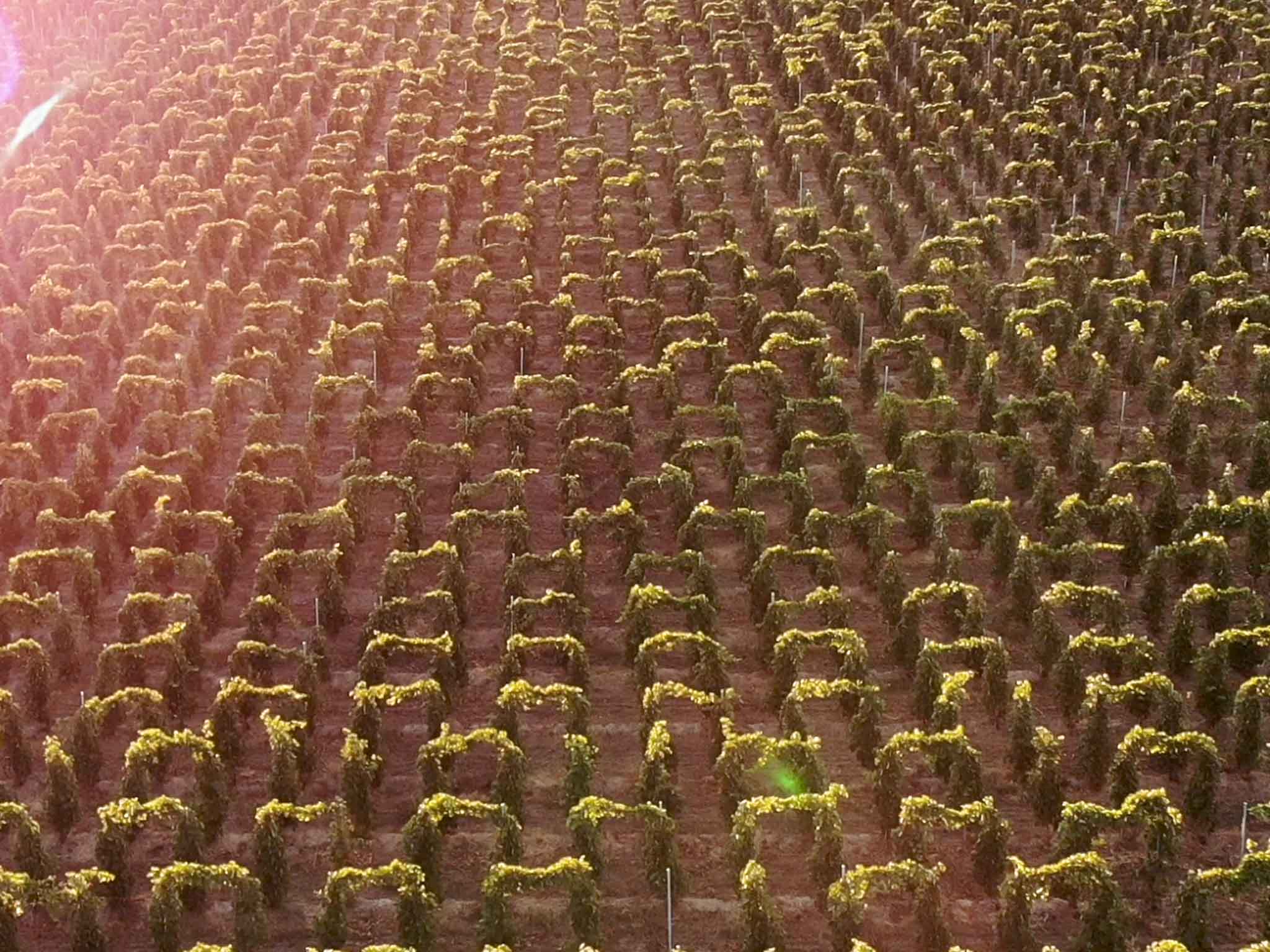
The apotheosis of all of these efforts is the Clos Block – one and a half hectares of Kalimna 3C and Prouse clone shiraz planted at high density (3894 vines per hectare), and trained using a system known in French as sur échalas (literally ‘on stakes’). This is an ancient and labour-intensive form of viticulture, where vines are patiently wound up the stakes before being joined in pairs at the top to form a love heart–shaped crown of foliage – an expensive and time-consuming endeavour that creates the fruit for Two Hands’ impressive new ultra-premium cuvée, ‘Invenienda’. But for all of the gongs that Two Hands receive for their wines, Raymond finds the most satisfaction in being part of a community of like-minded wine folk: “There’s a small group of like-minded growers and winemakers that get together during the season to talk over approaches to growing, and successes and failures – whether it’s pruning, or timing of processes, post-vintage results, et cetera,” he says. “We’re all focussed on improving quality – the biggest challenge can be staying positive in an industry that’s in dire straits. What I love most about Holy Grail is working with good people who are passionate and focussed on doing a great job.”
GET FIRST ACCESS TO THE NEXT WINE ICONS – DELIVERED