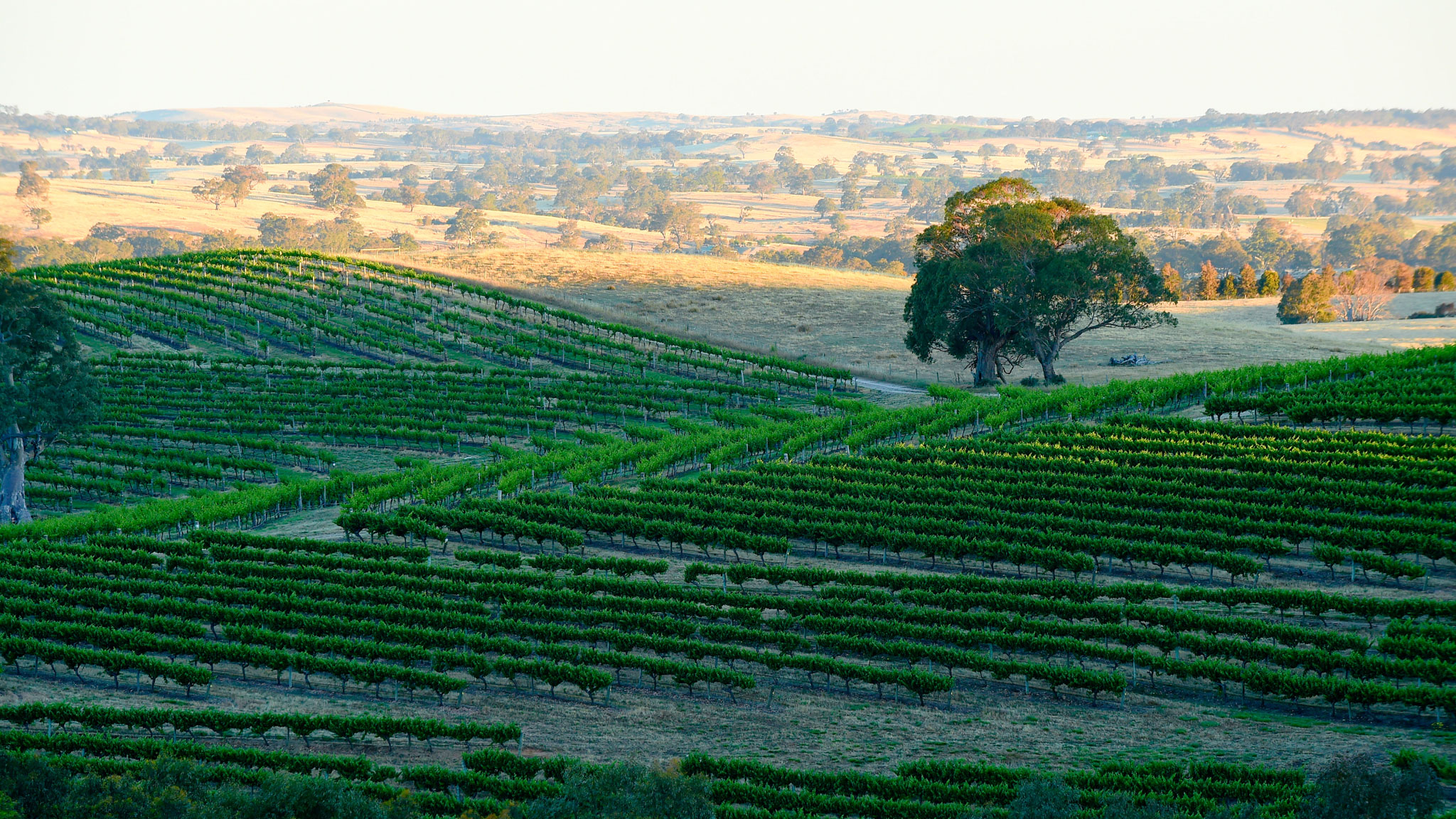
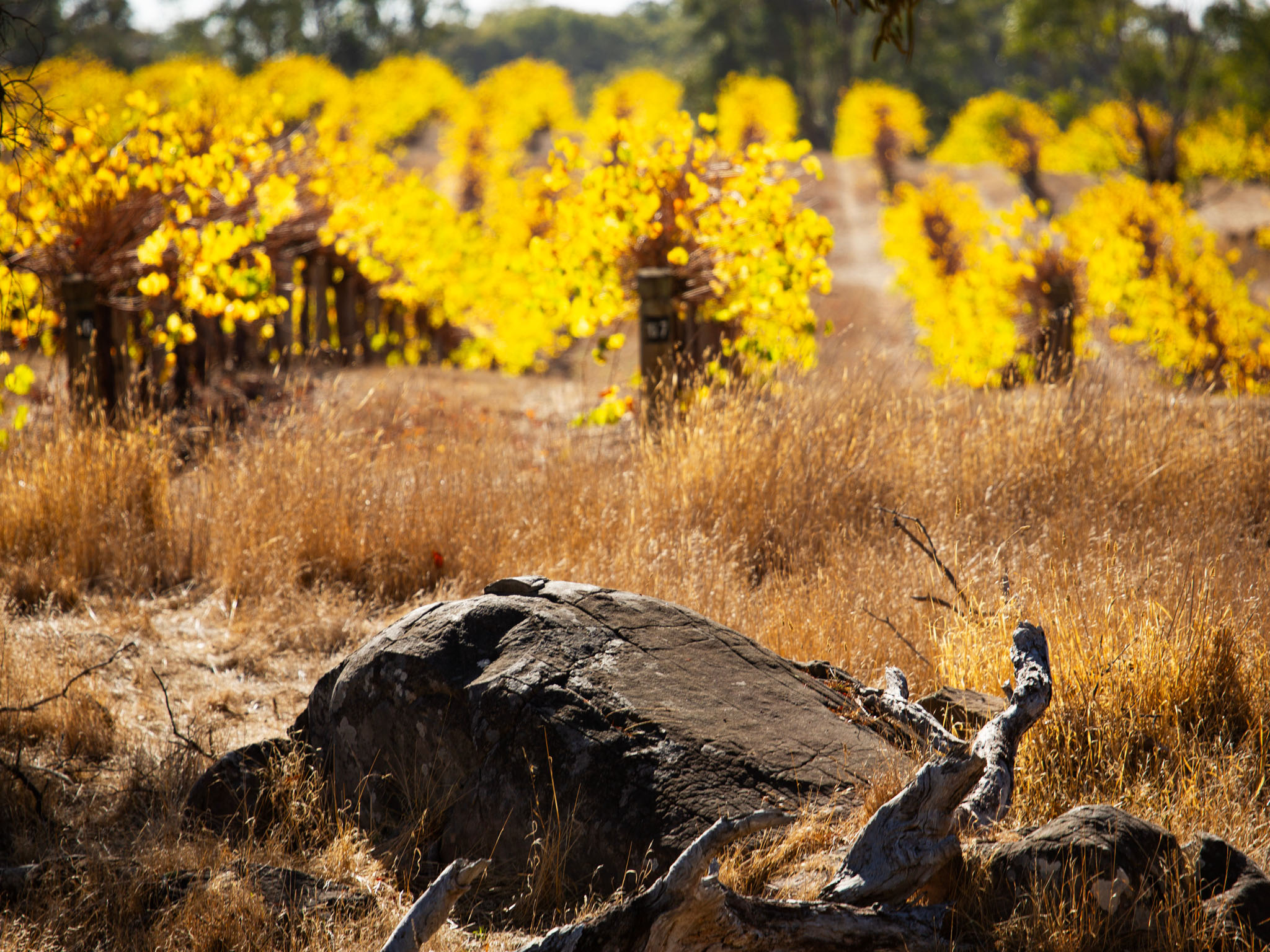
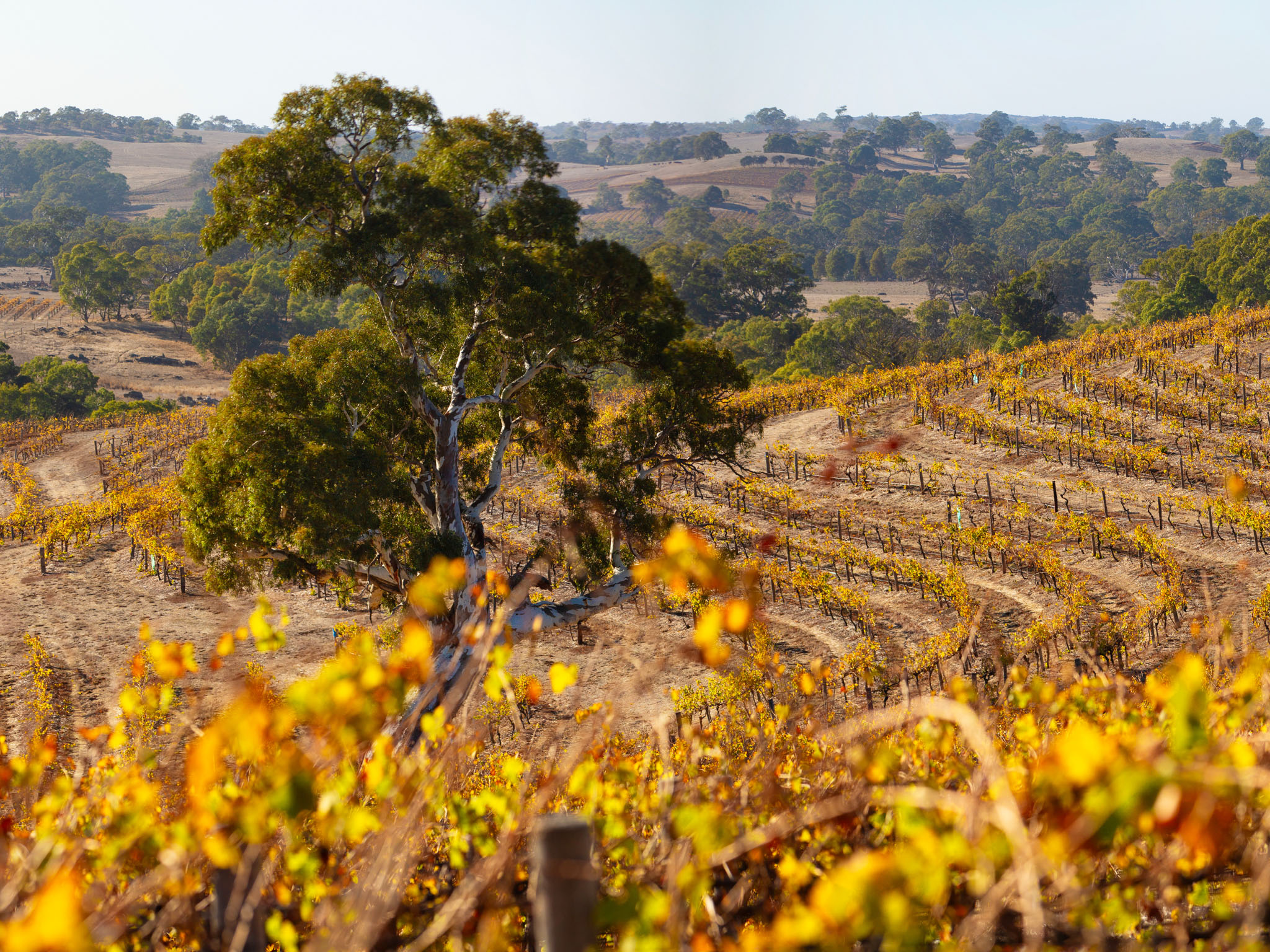
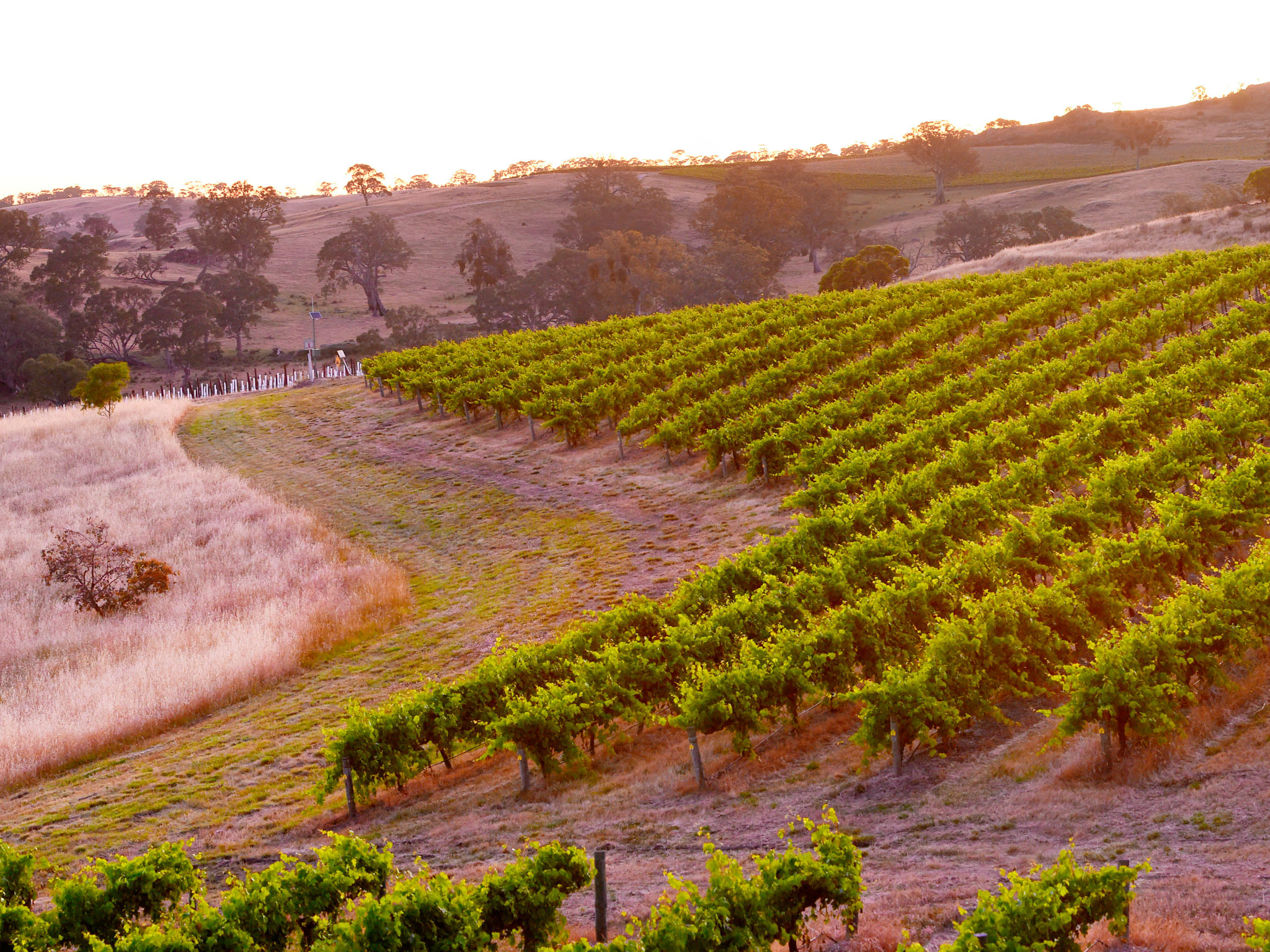
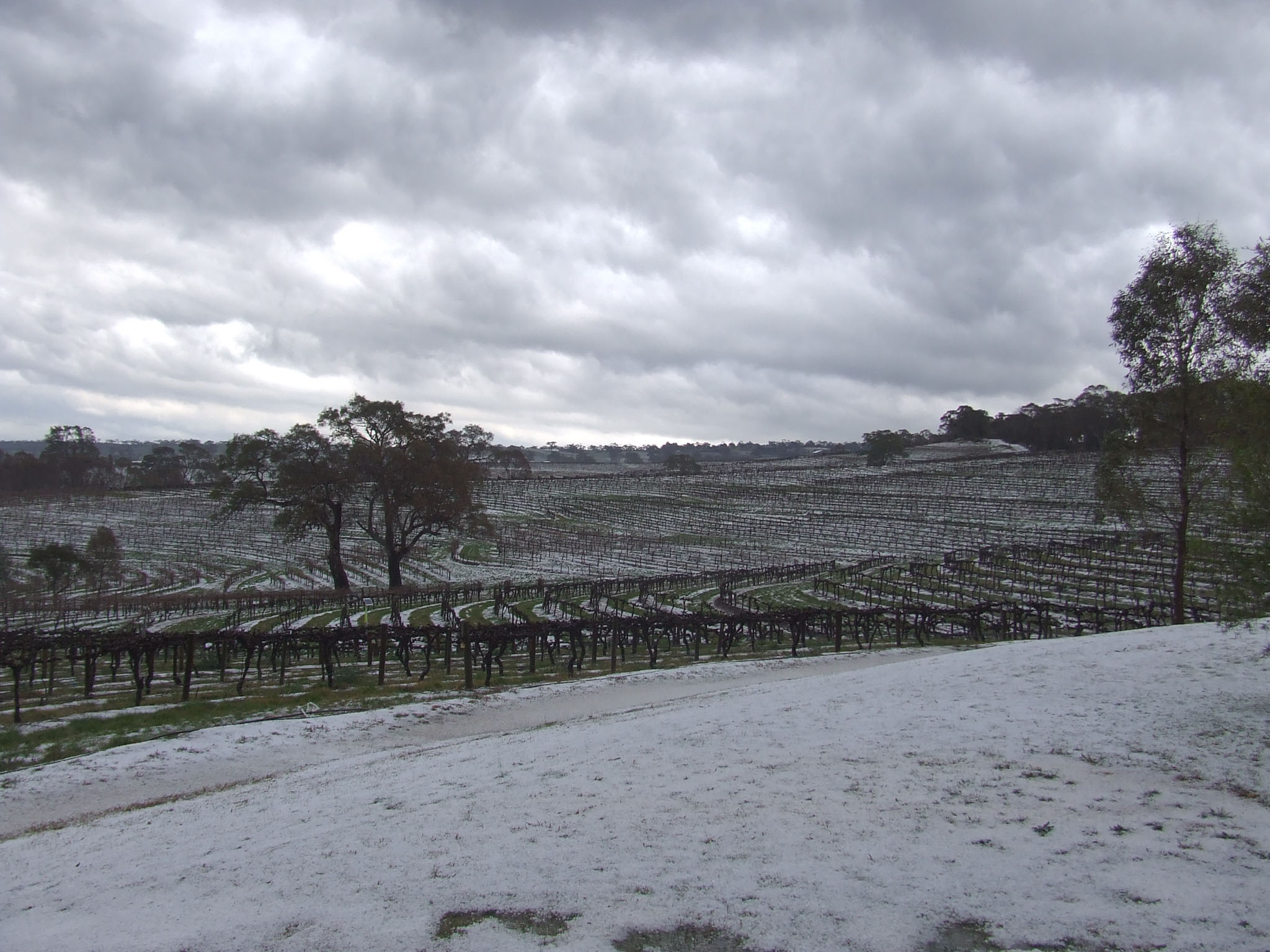
First planted in 1969, the Woodbury Vineyard has been forward-thinking since its inception – at the time, it was Australia’s largest contoured vineyard, designed specifically to mitigate soil erosion and moisture loss. That forward-thinking impulse continues to this day, with Woodbury now home to trials for autonomous spraying units, innovative machine-harvesting applications, initiatives to restore connection to country amongst Peramangk people, and a vine retraining system seeking to undo the damage wrought by traditional trellising practices. This seventy-eight hectare vineyard, managed by Angus Davidson, is planted to shiraz, riesling, cabernet sauvignon and gewürztraminer, with fruit from the vineyard forming the basis of key Treasury wines including Penfolds’ ‘Bin 51’ Riesling, Leo Buring’s iconic ‘Leonay’ Riesling, and Pepperjack’s Sparkling Shiraz.
“Eden Valley is a viticulturally complex region from a geographical, geological and economic standpoint,” says Angus Davidson, viticulturist of Treasury Wine Estate’s Woodbury Vineyard. “The tectonic folds of the northern Mount Lofty Ranges provide an elevated geography, with steep and shallow slopes in all directions. With additional height come cooler temperatures and additional rainfall. This geography provides the geology – higher rainfall and cooler temperatures have weathered ancient environs and bedrock of schist, quartzite, Ironstone, or a combination of each, to form a wide diversity of soil depths and types across the varied locales. When soils of schist parent material are planted with riesling, the terroir shines through in the wines to provide them with unique varietal expression the region has become famous for … in the best years, wines can exhibit an astonishing purity and structural elegance seldom seen in other regions.”
Within this regional context, Woodbury stands out. “As part of High Eden sub-region, Woodbury Vineyard sits above most vineyards in the Eden Valley region, so night temperatures are often generally slightly cooler,” Davidson says. “Developed by Tollana in the late 1960s and early 1970s, Woodbury Vineyard was, at that time, the largest contoured vineyard in Australia. It’s now one of the older vineyards in the region, with riesling a key focus, comprising nearly half the remaining planted area.” He adds: “Woodbury Vineyard has predominantly East, North and South facing aspects. The East and South facing slopes provide afternoon relief from hot summer sun, moderating temperature slightly earlier and enhancing flavour development during the ripening process. Across these slopes, our winemakers can be provided with a myriad of picking options to ensure ideal flavours are captured in the optimal window and retained in the subsequent wines.”
Given the age of the vineyard, a key part of Davidson’s role consists of rejuvenating and restoring old vines – which, in the case of Woodbury, means retraining and re-trellising them for optimised sap flow and vascular health. “The old philosophy of tightly wrapping arms during vineyard establishment has a lot to answer for – it’s the likely cause of many dieback issues currently being experienced across Australian vineyards,” Davidson says. “At Woodbury, trellis renewal is often done in conjunction with canopy re-working to rejuvenate the vine’s vascular tissue, which in turn helps overcome cordon dieback and yield decline.” He adds: “This has been matched with a swing in pruning philosophy towards respectful cuts of old wood, and a better understanding of the impact of scarring upon sap flow and repercussions upon vine vascular tissue. Spur pruned vines no longer have their cordons wrapped on, but instead sit above the wire and are tied on.” The re-trellising process is painstaking – sometimes involving cutting the vines down to knee height and re-establishing cordons over multiple years – but a process that Davidson argues is necessary to keep the old vines both healthy and productive. Retraining also allows for the installation of foliage catch wires which, in Davidson’s words, “provide an anchor point for tendrils, and enable canopies to stay more upright during the late stages of ripening, when heatwave sunburn can devastate yields and lower quality – vital in Woodbury’s situation, where water is a limiting resource and, in most years, needs to be closely managed.”
Water retention is also the key concern behind the vineyard’s wide-scale straw mulching program – one that Davidson pushed for despite cost concerns. “Straw mulch had been trialled, but had not been successfully implemented at Woodbury,” he says. “It had been applied at too low a rate, was the incorrect variety, was not replenished, and there was some concern about the potential fire risk.” Despite this, Davidson persisted with the concept: “From some investigation work I had done just after I graduated and started my first real wine industry job, I was positive of the benefits of straw mulch on riesling,” he says. “One of my first decisions as a brand-new vineyard manager in 2020 was to invest in straw mulch to cover ten hectares of elevated riesling blocks with shallow soil profiles. And at about $3000 per hectare, it was not cheap … at the time, I recall thinking, ‘Maybe it’s better to beg forgiveness and plead ignorance than ask for approval’. But subsequent wine show results tell the story.” Marie Clay, Treasury Wine Estate’s senior white winemaker, agrees: “Any decisions in the vineyard to grow a healthy canopy and protect the pristine fruit from the harsh sun – including straw mulch, soil health, compost, and nutrients – make a big impact,” she says. “The riesling vines grown with straw mulch have a bigger, more vigorous canopy, which has provided shading to the pristine fruit. The result in the glass is riesling that shows lots of vibrancy, punchy aromatics and fresh fruit flavours – not broad and heavy due to sun exposure.” The program now extends beyond riesling, with experiments ongoing in the vineyard’s shiraz blocks to see if the same benefits can apply.
In order to keep that pristine fruit profile, Clay and Davidson also use machine harvesting, with a thoughtful twist: “Machine harvesting done at night has been one of the most significant improvements for riesling quality,” Davidson says. “For our very best blocks, we streamline delivery schedules by picking the fruit at the very coldest part of the night, minimising harvested grapes’ wait time on the loading pad, and prioritising deliveries into the crusher at the winery.” While machine harvesting has a reputation for introducing large quantities of MOG (matter other than grapes) into the harvested grapes, Davidson argues that skilled workers can avoid this pitfall: “In the hands of experienced operators, the machine harvester removes virtually all MOG and reduces extraction of additional phenolics from wood, canes, stalks and leaves into the wine,” he says. “The colder temperatures slow chemical and microbial processes such as oxidation and flavour metabolism, maximising the retention of fresh, vibrant fruit flavours.” For her part, Clay focuses on the logistics of receiving machine-harvested fruit to maximise its virtues: “Lining up the timing on our best blocks to pick just before sunrise and transport direct to the winery where a press is waiting really helps to capture the purity of fruit and character of the vineyard,” she says.
In line with this thoughtful use of ag-tech, Woodbury has hosted trials of drone sprayers (in 2022, after growing-season rains made the vineyard too boggy for traditional tractors to enter) and Robotics Plus’s autonomous ‘Prospr’ spraying units (in 2023). “Woodbury’s variations in terrain, row orientations, and trellis structures, and its proximity to Adelaide, provided an ideal testing ground for the unit,” Davidson says. And while advanced ag-tech may imply a hands-off approach to vineyard management, Davidson argues that labour-saving technology will free up more time for him to walk the rows: “Robotic and autonomous tech is coming,” he says, “and I’m keen to get it happening so I can spend more time in the vineyard!” Similarly, he argues that a more laissez-faire approach to weed management allows him to focus his energies on the tasks that really matter: “I think getting stressed about weeds is energy wasted,” he says, “with some notable exceptions, of course – caltrop and couch grass, I’m looking at you here! Weeds can be seen as an indicator the soil is alive, and they provide additional hosts for symbiotic mycorrhizae, additional organic matter, and can aid soil structure development. I’d be more worried if weeds didn’t grow – it would indicate a poisoned soil, unable to sustain life.”
Davidson argues that the chief challenge at Woodbury, especially in a warming climate, is water use. “Consistency of water supply is our number one challenge,” he says. “Changed rainfall patterns in the last thirty years mean less rain in mid- to late Autumn, which delays soil profile filling, which in turn delays commencement of surface runoff, which in turn means less water available for irrigation during hotter growing and ripening season temperatures. Increased variability and ferocity of Summer storm events increases disease risk and potential for damage. Increased temperatures have also brought forward expected harvest dates by approximately three weeks over the past twenty to thirty years, meaning we are now picking fruit during a hotter time of the season.” Managing this means not only mulching, but also wholesale replanting of water-intensive varieties such as chardonnay and pinot noir (previously grown at Woodbury for sparkling base) and the mothballing of non-strategic vineyard blocks, whose water use has been reduced to a survival-level regime. Davidson’s approach here is pragmatic, in the knowledge that he will have to conserve as much water as possible in the near future: “Long-term regional solutions to manage water supply are problematic and, while they have started to a degree, will be a long time coming,” he says.
Davidson’s view of the future also entails looking back to the site’s pre-colonial history and its cultural significance to the region’s traditional owners, the Peramangk people: “Woodbury, and another adjacent vineyard I manage, have large swathes of revegetation areas, and are home to huge ancient river red gums,” he says. “Many are hundreds of years old, if not a thousand-plus – trees of great cultural significance to the Peramangk people, traditional custodians of the land. Through involvement with various Department for Environment and Water and Landscapes SA environmental monitoring programs, I am fostering Peramangk connection back to this country. Through this process, I am keen for their young people, and subsequent generations, to develop their sense of unique cultural value and identity.” Rekindling this connection with country is part of what he and Clay both love most about working here. “I love creating a product that we can all drink and enjoy that really encapsulates the essence of place and time,” Clay says. And for Davidson? “I have a better view out of my office window than the CEO in Melbourne!” he says. “I love the amazing ancient trees that have been here for literally a thousand years, the chance to open the way for local First Nations people to reconnect to their country, the team of great folks I have the privilege of leading and working with, and the opportunity each year to be a part of making some of Australia’s best rieslings – not to mention the challenge of ensuring the vineyard is ready for its next fifty-plus years!”
GET FIRST ACCESS TO THE NEXT WINE ICONS – DELIVERED