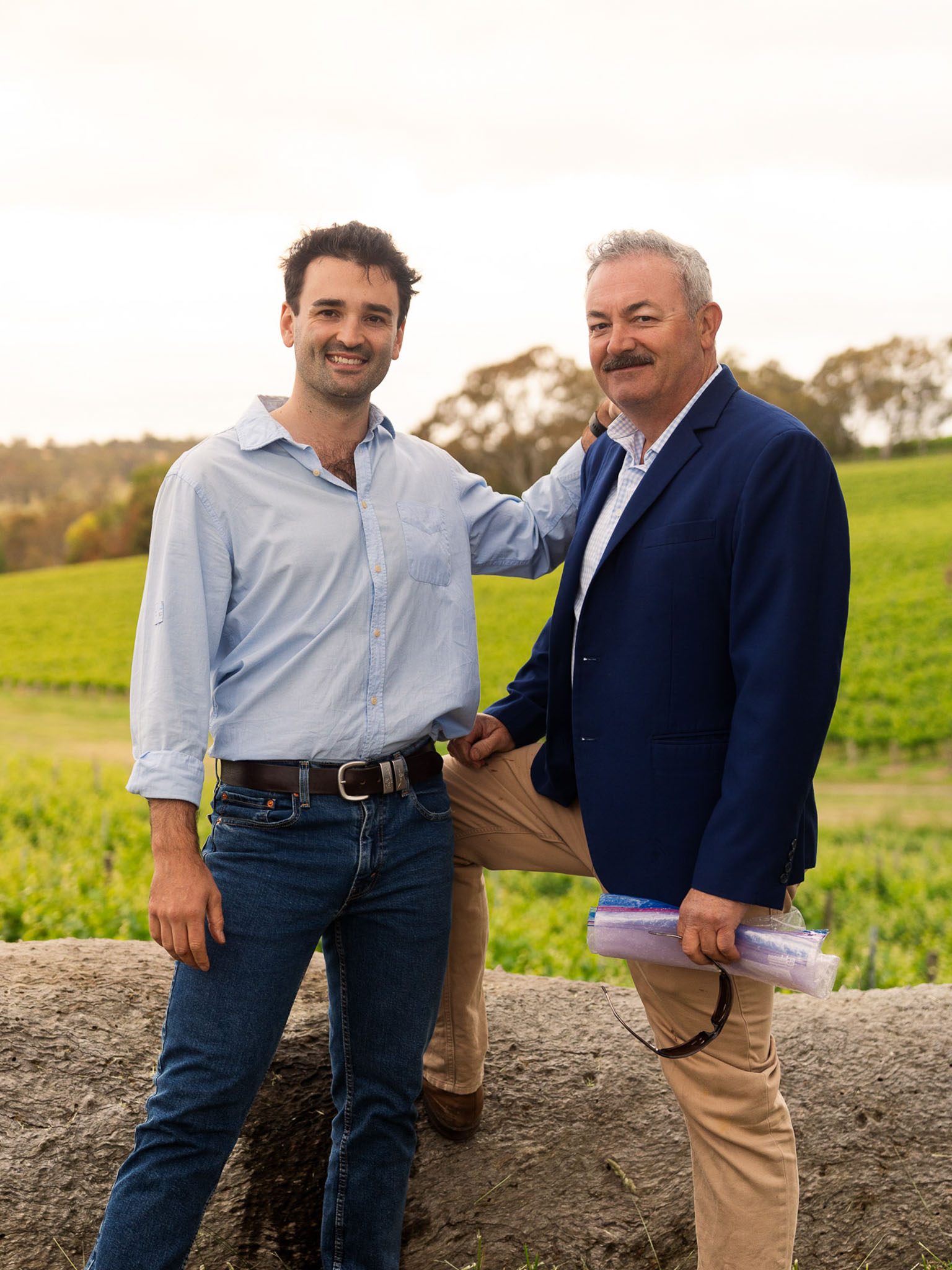
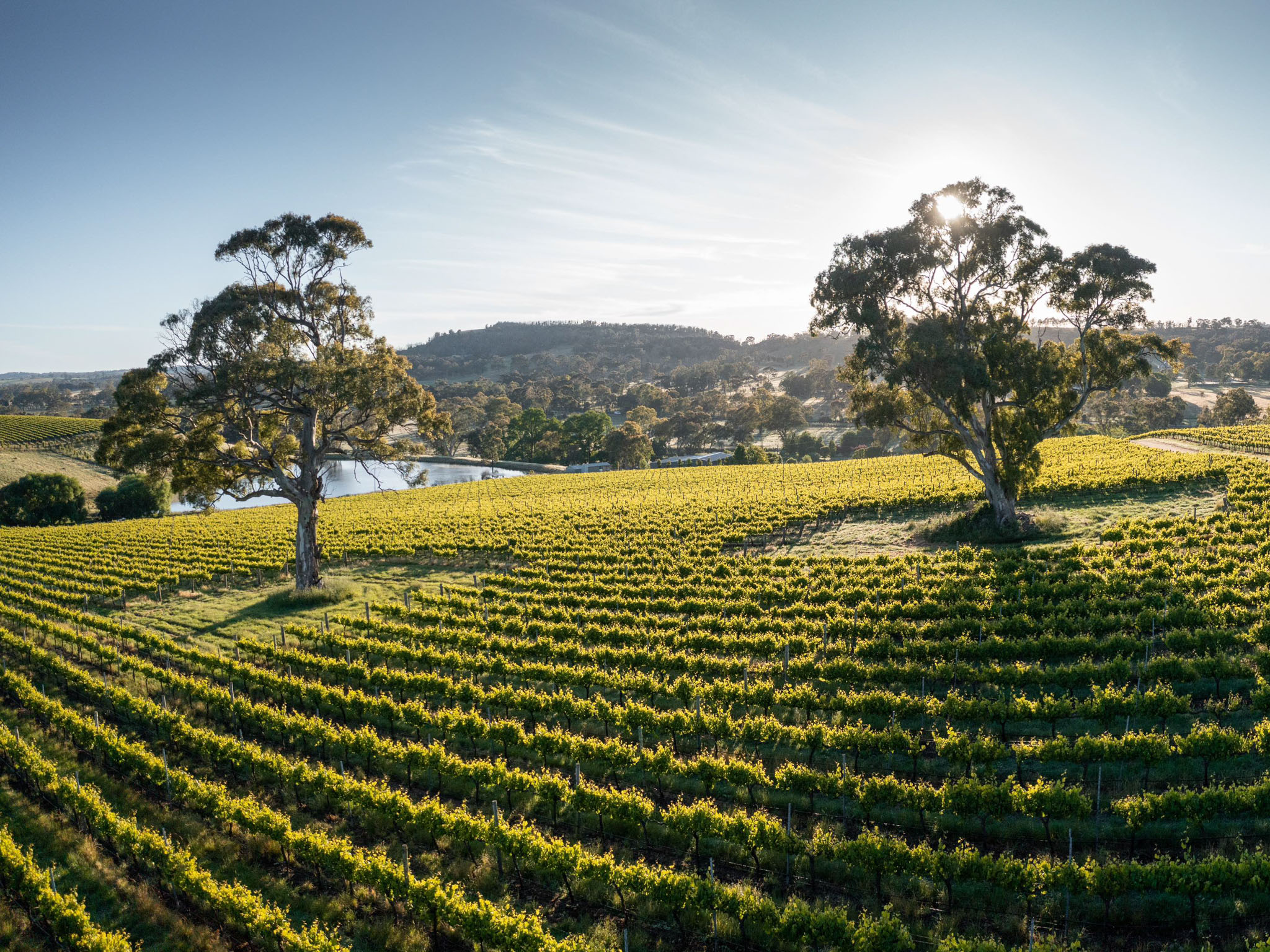
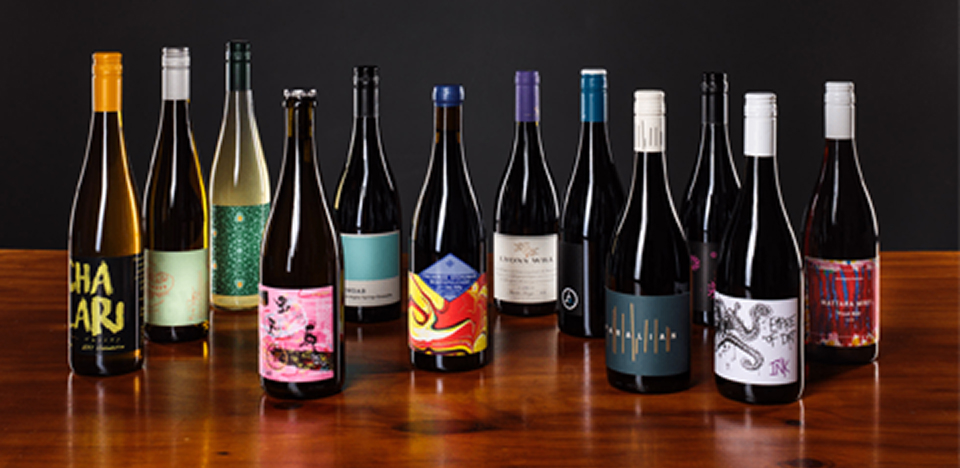
The Tomich Family’s Woodside Vineyard’s story is one of remarkable resilience, innovation, and incremental improvement. Having lost around half of the vineyard in the 2019 Cudlee Creek bushfire, the Tomichs have since rebuilt – using the opportunity to update viticultural practices with the aim of growing ever-more precise expressions of the site’s unique micro-terroirs. The vineyard has also been the testing ground for the Tomichs’ own invention, the Vibrosoiler – a deep-ripping cultivator designed to minimise impact on established root systems. The sixty-four hectare vineyard grows pinot noir, pinot gris, chardonnay, sauvignon blanc, grüner veltliner and gewürztraminer for the Tomichs’ own wine label, as well as Jack Tomich’s Cloudbreak label.
“The Adelaide Hills is all about altitude, long cool ripening, and natural acidity, so our wines are more about elegance and line than sheer power,” says Randal Tomich, lead viticulturist at Tomich Family Wines. “Grapes like pinot noir, chardonnay and sauvignon blanc love it here because they hold their acid and build flavour slowly – giving wines with bright fruit, perfume and a bit of savoury edge that you don’t always see in warmer South Australian regions.” Within that larger picture, the Tomich Family is chasing not only the voice of the Woodside Vineyard, but also of the individual blocks inside it: “Our Woodside vineyard sits along the Onkaparinga River at around 365–420 metres, on ancient clay and loam soils over shale, which give us both water‑holding capacity and structure in the wines,” Randal says. “Within the property there are twenty-seven individual blocks with different aspects and soil nuances, so pinot noir from one slope can be all bright cherry and spice while another block gives darker fruit and more grip – same site, different voices.”
Viticulture here is about methodical evolution rather than restless experimentation – a process that sees the Tomich Family dialling in their approach to coax the best fruit they can from their vines. “We’ve seen the impact of our viticulture choices most clearly in the years after the Adelaide Hills bushfires – when we rebuilt blocks, updated pruning and tightened up our canopy work,” Randal says. “Converting old cane‑pruned blocks to spur pruning, combined with mid‑row cover crops and better soil structure work, has given us brighter aromatics and finer tannin in pinot noir, and more tension and length in sauvignon blanc – you can taste the extra vine balance in the glass.” Fine-tuning wine balance in the vineyard is especially important in a cooler region where flavour detail and depth, rather than raw power, are king. “Our style is driven by picking on flavour and natural acidity rather than sugar, so canopy and crop load are everything,” Randal says. “For pinot noir, slightly looser canopies and modest crops give us those pretty red fruits and fine tannins – while tighter canopies and a bit more shade in sauvignon blanc protect the thiols and keep that crunchy Adelaide Hills line of acidity.”
This methodical process doesn’t preclude innovation, however. The Woodside Vineyard has been the testing ground for an invention of Randal’s known as the Vibrosoiler – a deep-ripping cultivator whose vibrating design breaks up compacted soil layers, mixes topsoil with subsoil, and minimises damage to vine roots. Soils cultivated by the Vibrosoiler show dramatic increases in water infiltration and vine root penetrability, allowing roots to grow deeper into the earth and access more nutrients. “One story that always gets a laugh is about watching sceptical neighbours taste fruit from the first block we ripped with the Vibrosoiler,” Randal says. “They thought we were mad, ripping established vines – until they saw the yield lift and the flavour in the fruit. That trial ended up inspiring other growers here and overseas to use the same technology, so a crazy‑looking machine in an Adelaide Hills paddock quietly helped reshape how people think about soil and vine roots.” He adds: “We saw a huge difference in vine resilience and fruit quality after we started mid‑row ripping with the Vibrosoiler and then committed to serious cover‑cropping. In the next hot, dry season those blocks held their canopies longer, and the fruit tasted fresher and more complete, which really drove home that investing in soil structure and carbon pays off directly in terms of flavour and balance.” The Vibrosoiler is now used by a host of high-profile Australian and Californian winegrowers, including Henschke, Penfolds, and Chalmers in Australia, and Sine Qua Non, Robert Mondavi, and Grgich Hills in California.
Like other forward-thinking winegrowers, the Tomich Family have embraced sustainable agriculture, and are focusing on enmeshing their vineyard within the local ecosystem to promote natural balance and reduce the need for viticultural inputs. “We see the vineyard as part of a larger landscape – so we’ve focused on native revegetation, shelter belts and protecting waterways along the Onkaparinga corridor to encourage bird life and beneficial insects,” Randal says. “That mix of vines, remnant vegetation, and new plantings makes the property feel more like a living farm than a monoculture – and it’s something visitors really respond to when they see the site in context.” That investment is paying off in the wines, too: “Post‑bushfire replanting, improved pruning, soil renovation, and cover cropping have brought noticeable lifts in soil life, canopy health and consistency of ripening across the blocks,” Randal says. “Fruit now comes in with better balance – good colour, cleaner flavours and more even tannin ripeness – and that’s reflected in stronger wine quality and an ongoing recognition for our cool‑climate styles.”
Even in the cool-climate Adelaide Hills, climate change is an ever-present threat – a fact that the Tomich Family are all too familiar with, having lost roughly half of the Woodside Vineyard in the Cudlee Creek bushfire of 2019. “Climate change is already nudging our seasons earlier and making vintage more compressed, with higher disease pressure in some years and heat stress in others,” Randal says. “Our biggest challenge is dealing with more frequent extremes – heat spikes, dry springs, then sudden downpours – while still hitting precise picking windows for cool‑climate styles. We’re managing it through smarter irrigation, soil carbon building, canopy tweaking, and variety-to-block matching so the vineyard is more resilient and the fruit lands in the winery with the numbers we want.” Unsurprisingly, future plans for the vineyard will take it further down this path: “Next on the list is pushing further into climate‑savvy plantings and rootstocks, while fine‑tuning block‑by‑block viticulture with more soil mapping and monitoring,” he says. “We’re also keen to keep trialling different cover‑crop mixes and under‑vine management to grow soil carbon and biodiversity without sacrificing efficiency.”
Appropriately enough for a family business, the Tomichs’ understanding of sustainability goes beyond just the environment to also encompass financial and social elements of the vineyard. “For us, sustainability is about leaving the property in better shape for the next generation – environmentally, financially and socially,” Randal says. “We ‘softly farm’ the vineyard with minimal tillage, cover crops, careful water use and reduced chemicals, while also running a viable family business that supports local jobs and contributes to the Hills community.” It’s a community that they’re thrilled to be part of and give back to. “The Adelaide Hills is a pretty collaborative region – viticulturists and winemakers share ideas, data, and the occasional mistake over beers or barrel samples,” Randal says. “Regular tastings with other producers, local grower groups and our own winemaking team constantly feed back into how we prune, irrigate and manage canopies – so the community really does shape our vineyard decisions.” It’s all part of the magic of working with this precious patch of land. “The best part of working at this site is watching how each block expresses itself differently every season – the same family vineyard, twenty-seven little terroirs telling their own story,” he says. “Walking the rows at sunrise, with mist sitting in the valley and cool air on the fruit, is a pretty special reminder of why cool‑climate Adelaide Hills vineyards make such distinctive wines.”