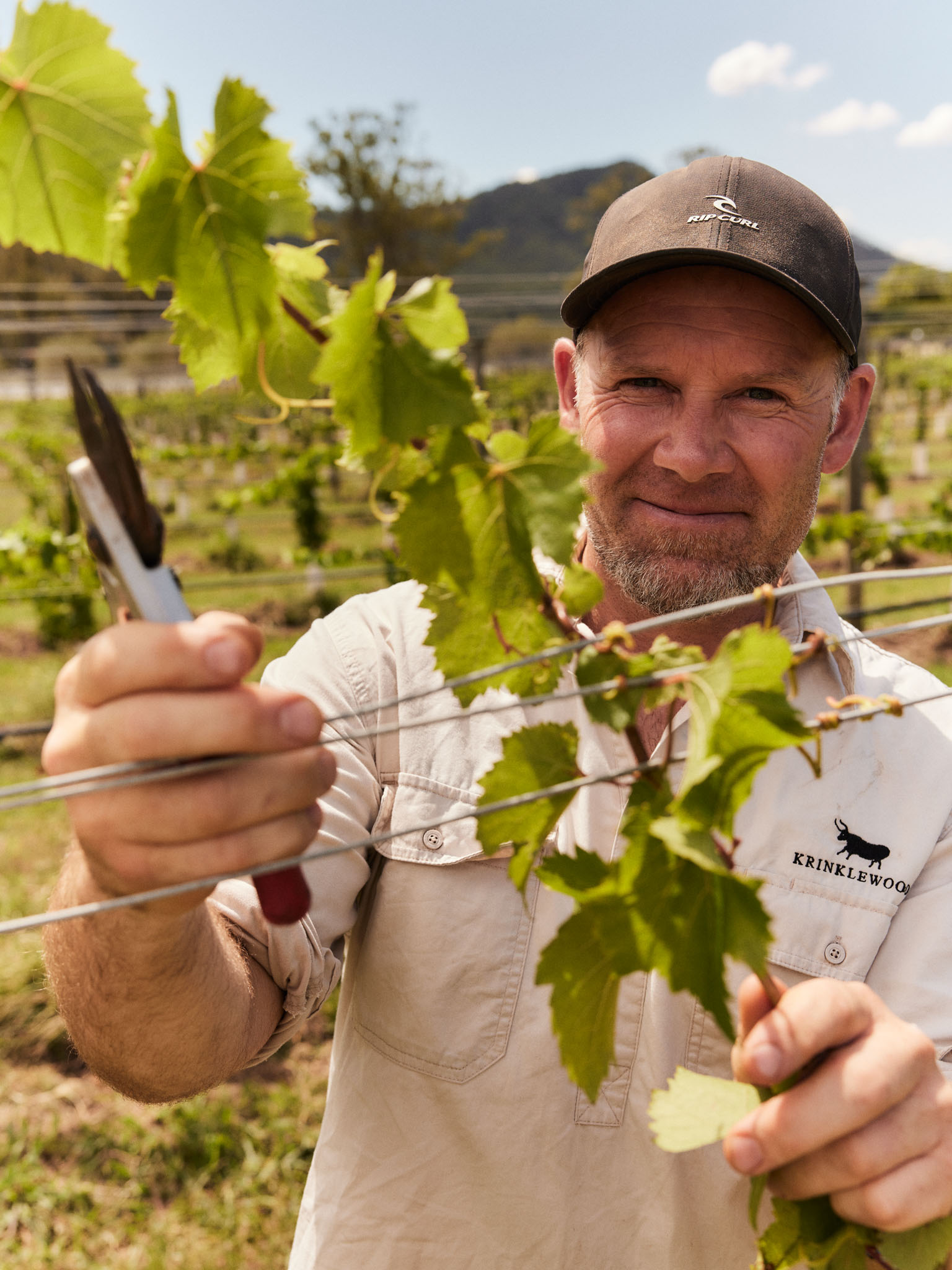
Krinklewood’s commitment to organic and biodynamic viticulture would be laudable in any of Australia’s wine regions – but in the humid and warm Hunter Valley, where downy mildew and grey rot can run amok, it’s nothing short of revolutionary. The label is also a pioneer of this form of winegrowing within the Hunter region, commencing conversion in 2002 – at a time when such ideas were at the fringe – and achieving ACO organic biodynamic in 2007. The vineyard currently comprises six and a half hectares of semillon, chardonnay, gewürztraminer and shiraz, stewarded by viticulturist Chris Martin.
Although the word ‘biodynamics’ might conjure up mental images of the lunar cycle, ‘flower days’, and cow horns full of manure being buried at night, for viticulturist Chris Martin it boils down to a form of pragmatism: “‘Leave it better than how you found it’ is a simple philosophy we live by at Krinklewood,” he says. “Day-to-day, that means improving soil health, increasing biodiversity above- and below-ground, and creating habitat for the many creatures that pass through – all so that we leave Krinklewood a viable thriving ecosystem for future generations.” He adds, “After nearly twenty years of organic and biodynamic management, the vineyard reflects that long-term commitment. We don’t have a conventional benchmark to compare against – this is our baseline – and it’s created a living system we trust completely.”
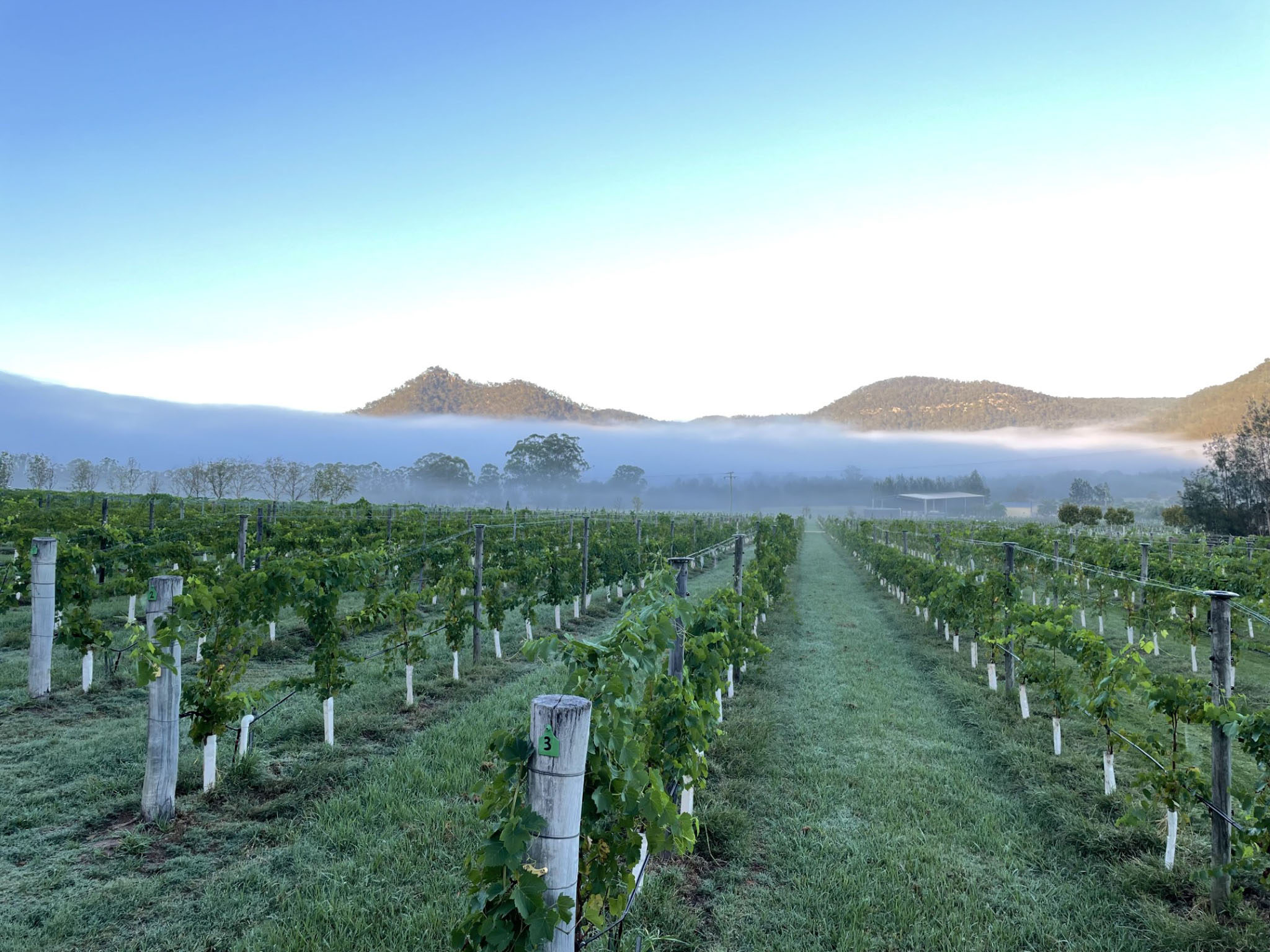
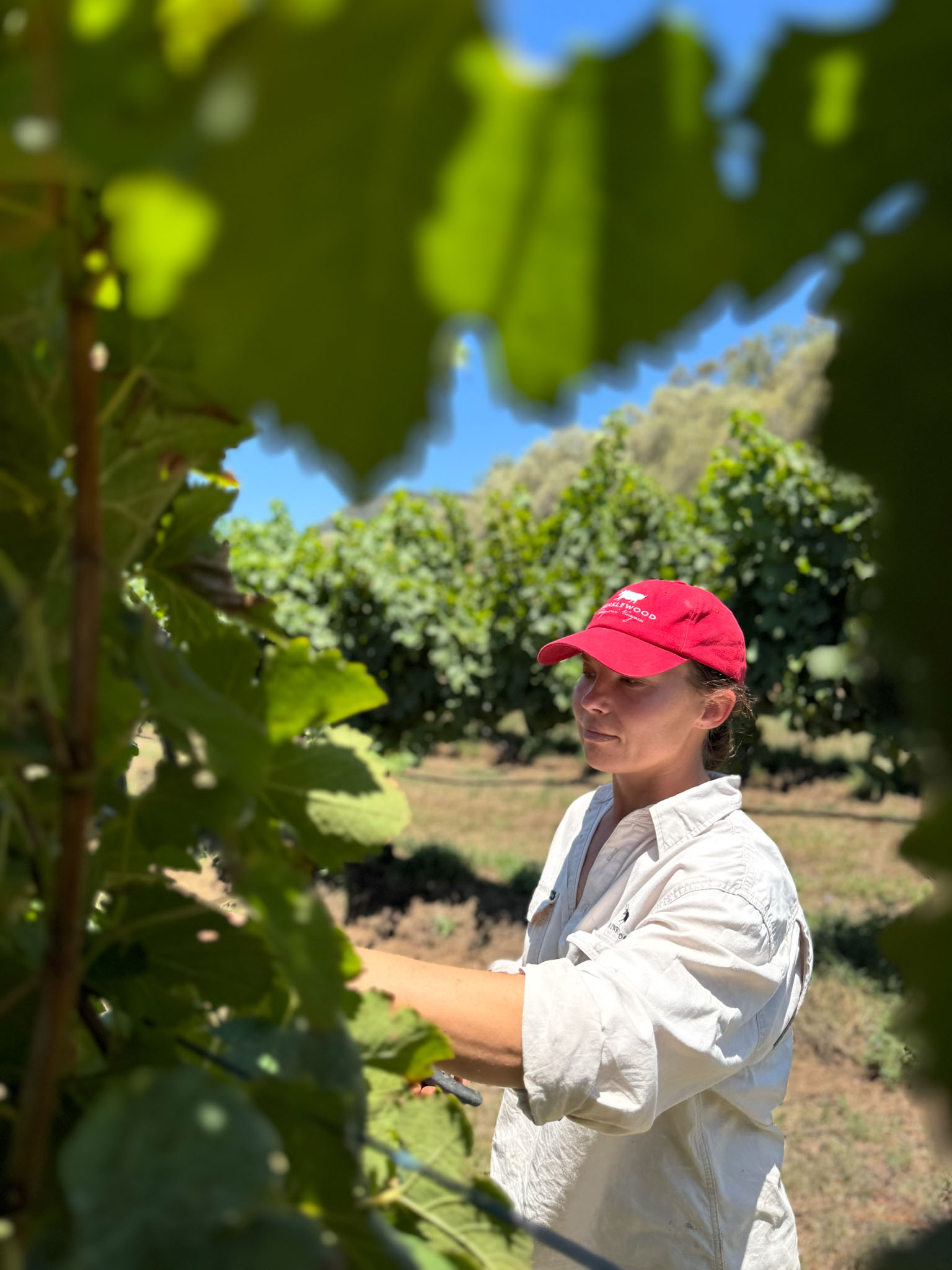
Martin and Krinklewood are fortunate that the vineyard’s location in the upper reaches of Broke Fordwich help to mitigate some of the pressures that make organic and biodynamic viticulture in the Hunter so challenging. “Krinklewood sits in a unique pocket of the Hunter Valley, surrounded by the Wollombi Valley, the Brokenback Range, and Yengo National Park,” says Clara Evans, Krinklewood’s assistant vineyard manager. “This location gives our vineyard a cooler microclimate than many neighbouring vineyards, with later budburst – about three weeks after the vineyards of nearby Pokolbin – and a later harvest. The combination of cooler nights and moderate daytime temperatures allows the fruit extra time to develop, enhancing flavour, balance, and phenolic ripeness.” That unique microclimate adds to the sense that Krinklewood is different from the Hunter norm: “Krinklewood feels like a self-contained ecosystem,” Evans says. “The surrounding biodiversity moderates the vineyard, and the vines respond with more consistency and resilience.”
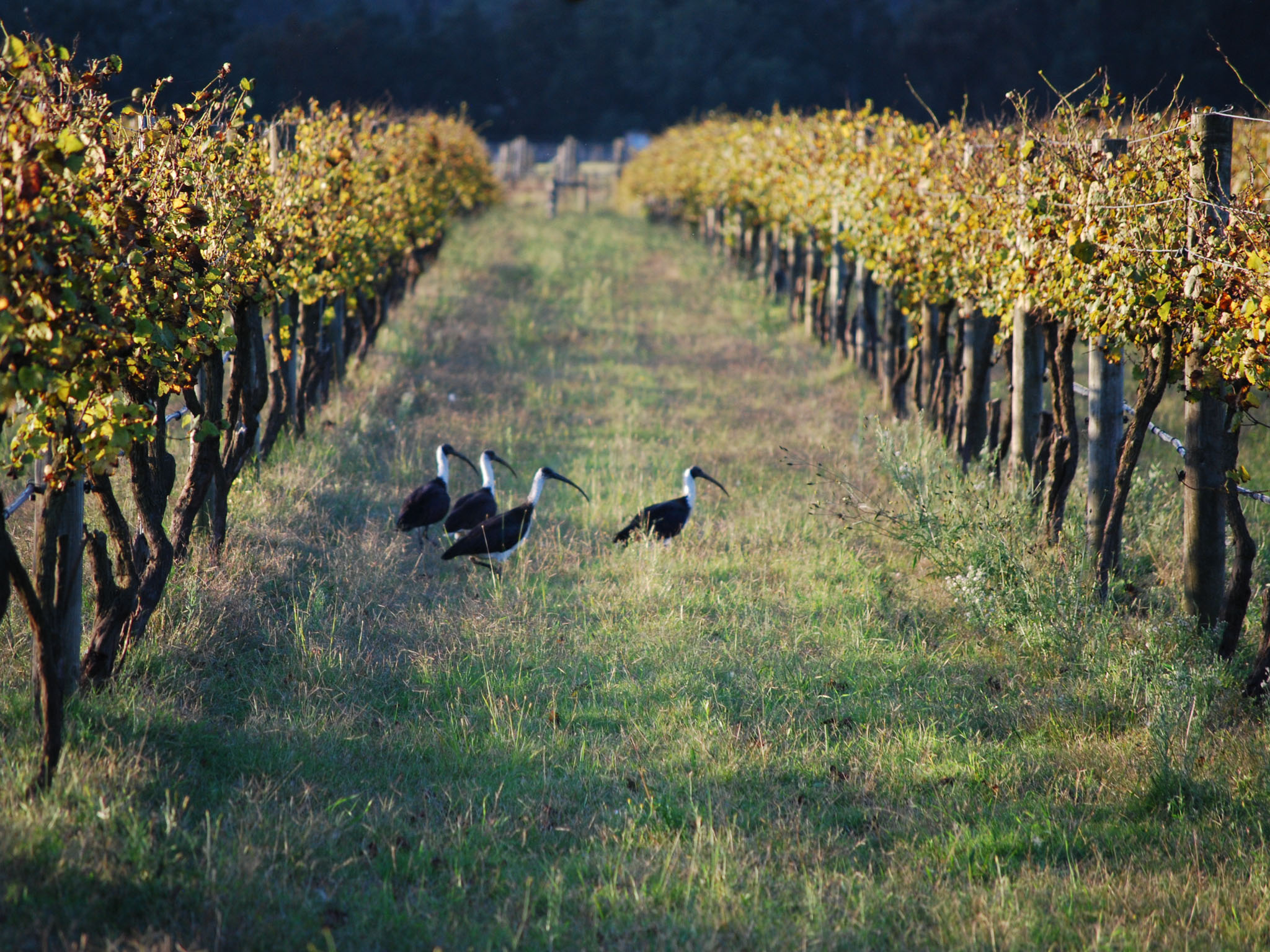
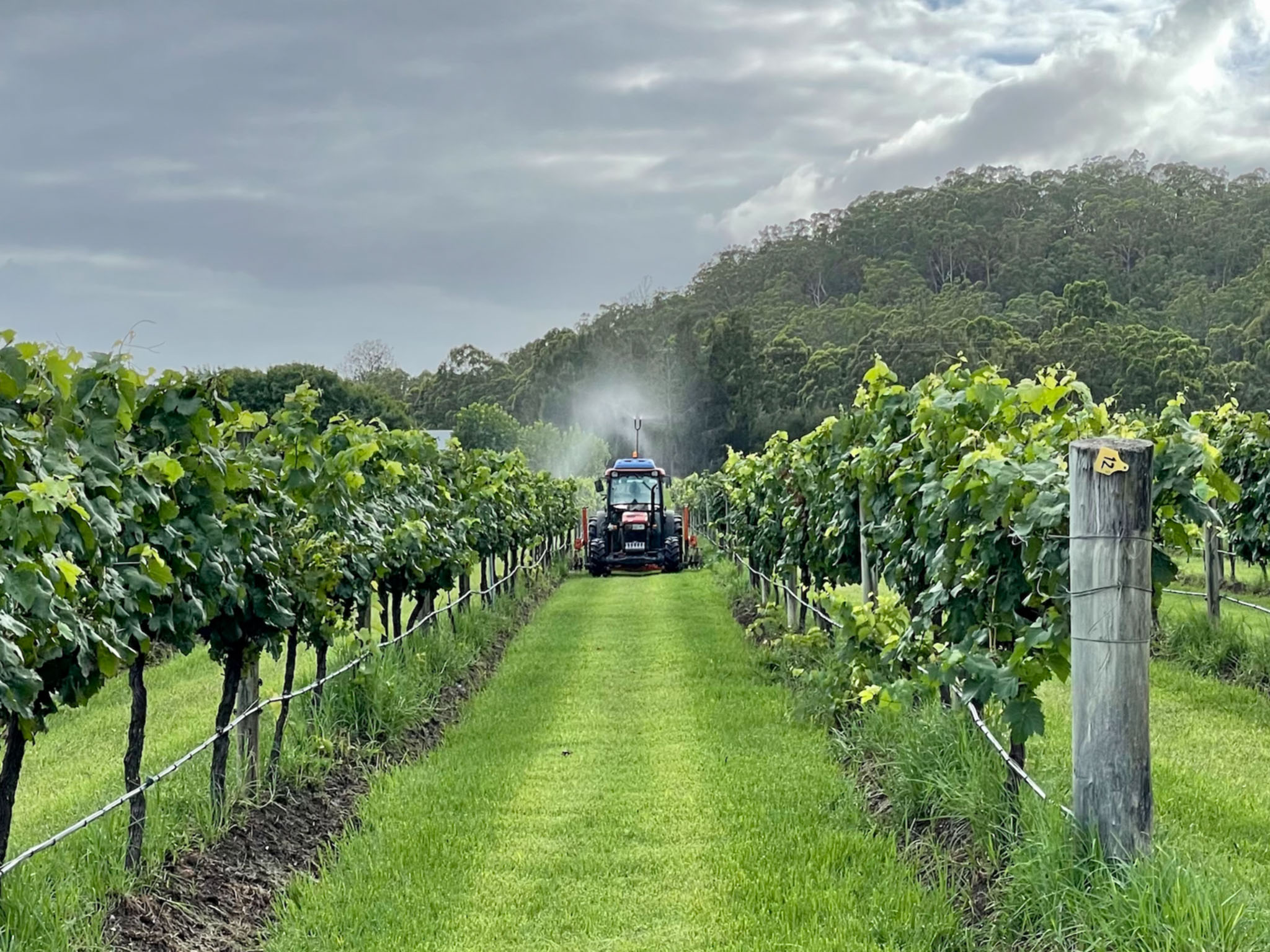
Environmental sustainability starts from the ground up here – literally. “Healthy soils are central to our philosophy,” says Martin. “Organic and biodynamic practices – including composting, cover cropping, under-vine cultivation, and minimal tillage – maintain biologically active soils rich in organic matter. These practices improve soil structure, nutrient cycling, microbial balance, and long-term vineyard vitality, directly enhancing fruit quality and resilience.” Importantly, that approach to management is proactive rather than reactive. “Our approach is preventative and ecology-led,” he adds. “We avoid synthetic chemicals, relying on canopy management, airflow optimisation, biodiversity, and organic-approved sprays to reduce disease pressure.” Martin sees the rewards in the glass: “When the vineyard is in balance, the wines feel calmer,” he says. “You see it in the way the fruit ripens evenly and you taste it in the glass – more texture, more length, and a sense that the wine doesn’t need to shout to be expressive.”
While the benefits of organic/biodynamic viticulture are clear for Krinklewood’s vineyard and winemaking team to see, it also entails a lot of hard work – and more than a few surreal moments. “One of the most bizarre moments for me, as a New Zealander, was finding myself out in the vineyard late one night clapping my hands vigorously and shining my head torch into the night sky, trying my best to dissuade a swarm of flying foxes not to land on our precious block three shiraz fruit,” Martin says. “After realising this was not the best control option going forward, the next day we fired up the bird-scaring laser – but for bat scaring at night. We had a green laser light bouncing around the vineyard at night for the next few weeks, which was a bit ’90s sci-fi but entirely mesmerising when it was on. Not 100% effective at deterring wildlife – but better than me, and it meant I could get some sleep at night without stressing. And the locals got a light show.”
Maintaining a holistic and biodynamic approach to viticulture in the Hunter isn’t something that can be done on a shoestring budget, either – which raises the issue of the intersection between economic sustainability and environmental sustainability. “Growing organic fruit in the Hunter Valley is economically challenging – but we are committed to giving our all to create a resilient and productive vineyard,” Martin says. Part of that is diversification of revenue streams, ensuring that the vineyard doesn’t have to pay its bills with wine alone. Krinklewood owner Oscar Martin (not related to Chris Martin) has launched into the accomodation side of the winery business by collaborating with architect Peter Stutchbury on a start-up called Dimensions X – creating a range of beautifully designed prefabricated cabins that are designed to reduce the carbon emissions and environmental impact of traditional housing construction. The prototypes for these cabins reside at Krinklewood, and form part of the vineyard’s enotourism offering.
Similarly, Krinklewood has expanded its activities as a wedding venue, hosting the first of what is planned to be an annual series of wedding open days to connect couples looking to host their nuptials at Krinklewood with selected wedding vendors. Looking at these activities as a form of revenue diversification flips the script of enotourism – often viewed as something to be tacked on to an existing winery business – reframing it instead as an integrated asset within the business. Revenues raised this way go on to support the quality directive that sees Krinklewood use its estate fruit only in the best vintages. “We don’t see the vineyard as a standalone system,” Chris Martin says. “Native vegetation, waterways, wildlife corridors and even how people experience the property all play a role in how the land functions as a whole.”
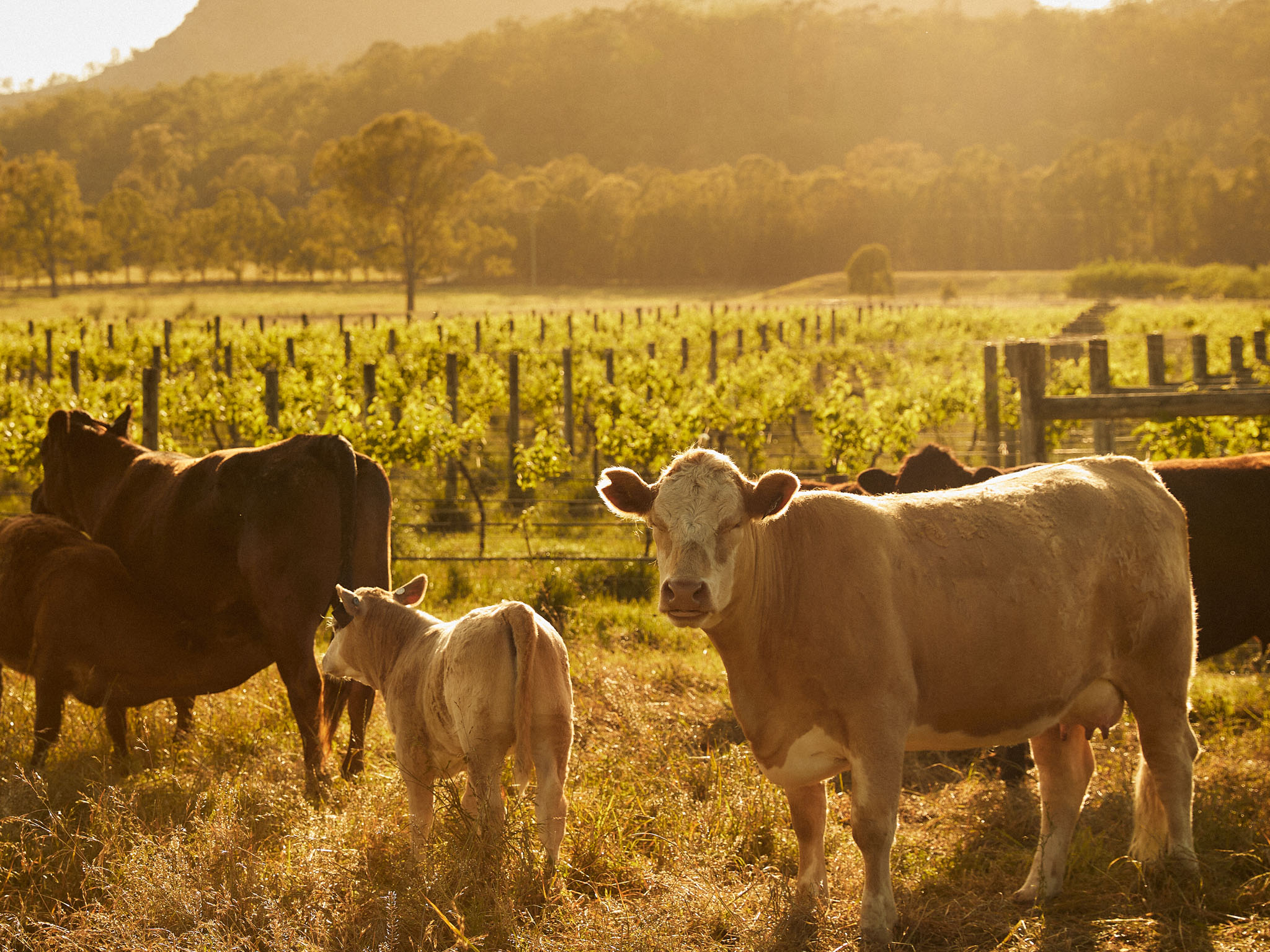
That focus on revenue diversification has also allowed the Krinklewood team the latitude to make some tough calls about downsizing the vineyard in the name of long-term sustainability of all kinds. “Since the devastating 2020 bushfire season, our vineyard has faced a series of extreme challenges – including smoke taint, floods, disease pressure, and frost,” Martin says. “Over the following three years, La Niña conditions and heavy rainfall in 2022 caused severe flooding, which significantly impacted our vines. In late 2024, a major frost just after budburst led to a substantial reduction in crop. Unfortunately, these events over the past five years have forced us to make the difficult decision to remove roughly half of the vineyard and convert those areas into animal paddocks.” It hasn’t been an easy process, but it also provides opportunities for growth and change: “We’re taking a proactive approach to reworking the vineyard,” he says. “We have replanted the top blocks with carefully selected varieties and rootstocks suited to the specific soils and microclimates, with the goal of optimising fruit quality and expressing the unique terroir of each site. These decisions reflect both lessons learned from past challenges and our long-term vision for the vineyard … I’d love to keep exploring varieties and clones that naturally suit the site, rather than forcing established expectations!” And while the work is ongoing, Martin is more than happy to acknowledge its rewards: “The view alone is incredible – with the Brokenback Range every morning, and the wildlife on the property, there’s always something new to see,” he says. “But what I really value is being able to work in the vineyard without using nasty chemicals.”
GET FIRST ACCESS TO THE NEXT WINE ICONS – DELIVERED