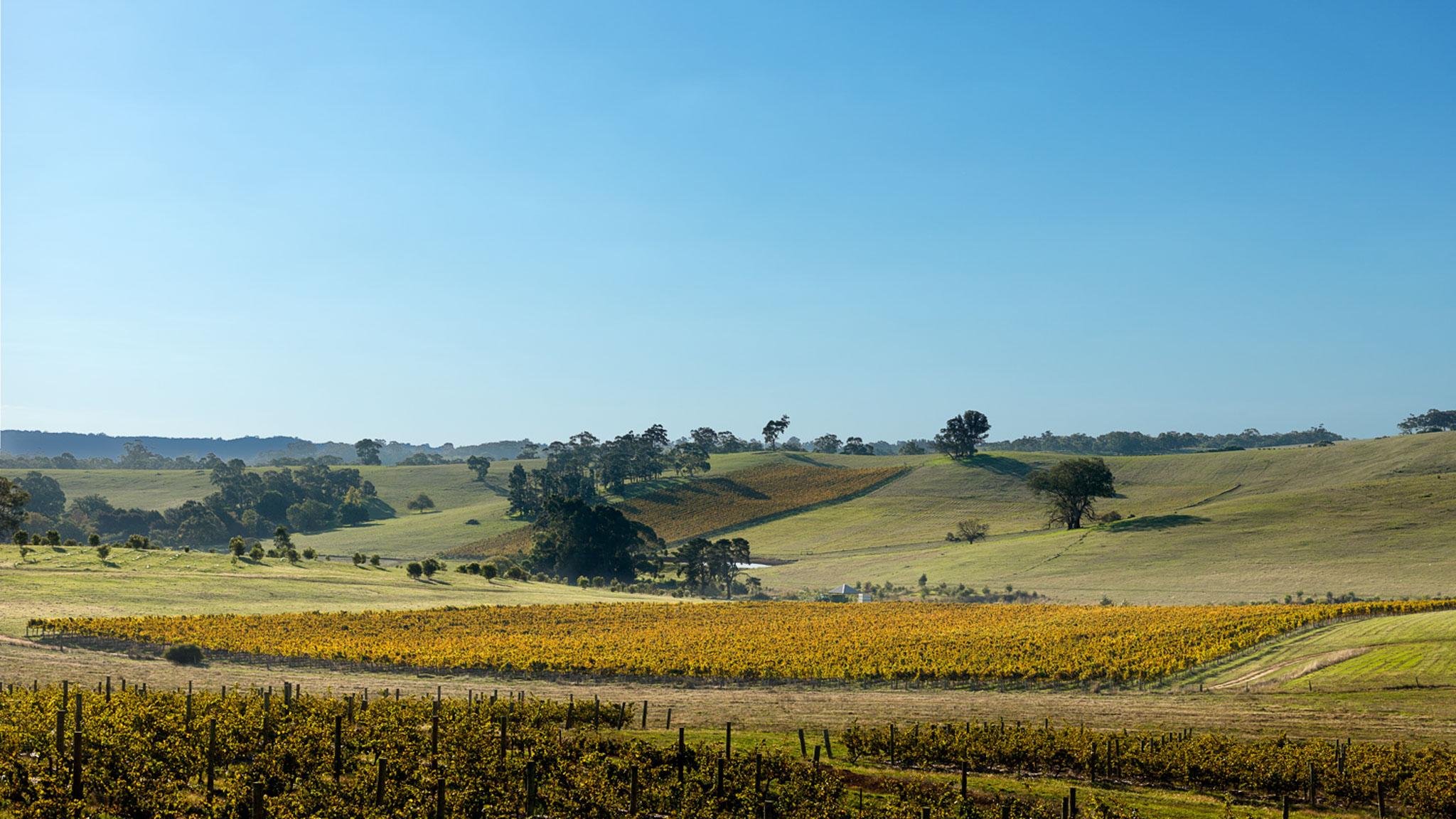
The Grosset Springvale Vineyard is a 6.12-hectare riesling site within the larger 17-hectare Watervale vineyard in the Clare Valley’s Watervale subregion – chosen purely on the basis of geology, altitude, elevation and aspect, and dedicated entirely to riesling across three clones and five blocks. What makes Springvale distinct, even within the Watervale subregion, is an unusual geological layering: red-brown clay over limestone over friable gradational clay loam, with blue slate lying approximately 3 metres below the surface – a formation unique to this site, and one that was not fully understood until after the vines were in the ground. Planted between 2000 and 2003 at 450 to 470 metres elevation – among the highest sites in Watervale – and certified organic (2014) and biodynamic (2019) by Australian Certified Organics, the vineyard is managed by Matthew O’Rourke, who has worked the site since 2011. The Grosset Springvale Riesling sells out annually and is among the most collected wines in Australia.
The Watervale vineyard as a whole is divided into two geologically distinct sections separated by a north-south fault line. The Rockwood section to the east – loam over hard brown rock – is home to shiraz, nero d’avola, fiano and a small block of riesling for the very limited ‘G110’ release. Springvale, to the west, is the riesling heartland. Before a vine was planted, geological profiling was commissioned from Terroir Australia, with soil mapped at 10-metre squares to ground-truth the site’s variation. Finding the right site required physically layering old geological, soil and topographic maps, and then waiting for the land to come up for sale. “Great wine comes from the vineyard on the great site,” as the Grosset team has long maintained.
What the survey didn’t anticipate was the blue slate. While the Watervale subregion is known for reliable riesling production from red loam over limestone – the classic “soft rock” – Springvale has blue slate well below that soft rock, sitting along a shifted fault line at around 3 metres depth. It acts as a barrier to vine roots, limiting penetration and concentrating what the roots can access into a more defined, mineral-dense profile. The effect shows in the wine: a more persistent, mineral character that distinguishes Springvale even among the finest Watervale rieslings. “The limestone substrate provides natural pH buffering and the mineral backbone that defines our wines,” says O’Rourke, “while the blue slate, which lies well below the soft rock, acts as a barrier to vine roots and imparts a more mineral, persistent palate – an unexpected gift we discovered only after planting.”
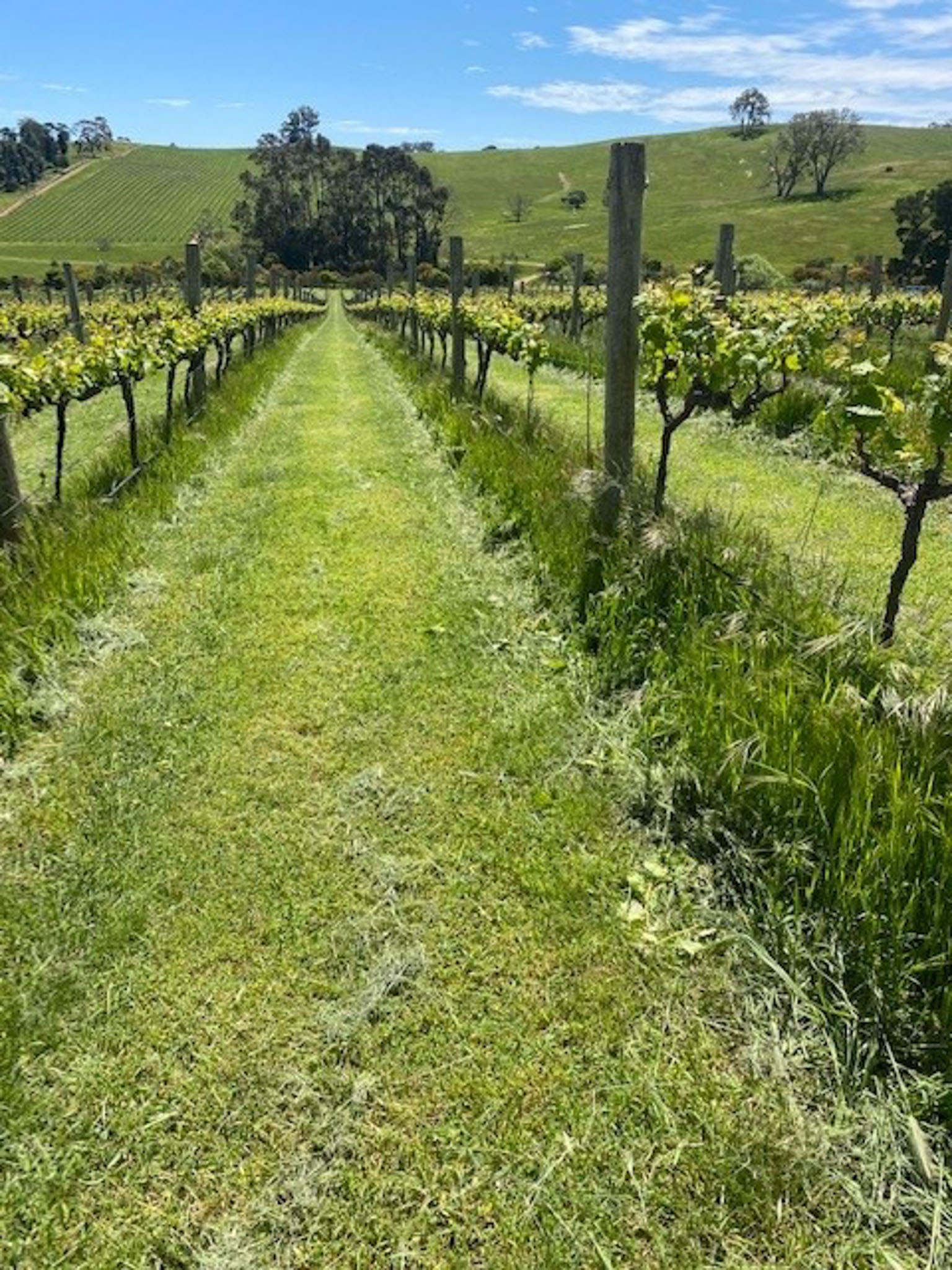
The broader Watervale vineyard was first farmed under organic principles in 1986, though certification came later: organic in 2014, biodynamic in 2019. At Springvale, that evolution from conventional management to certified biodynamic farming is measurable in the soil and visible in the vineyard. Soil organic carbon has risen from approximately 1.2 per cent at establishment in 2000 to 3.8 per cent by 2024 – tripling the soil’s water-holding capacity. Water use has been reduced by more than 30 per cent since 2010 through a combination of night irrigation (automated to run between 2am and 6am, reducing evaporation by 40 per cent), organic mulch applications every three years under-vine, and a permanent midrow sward of nitrogen-fixing medics, clovers and perennial ryegrass that has not been cultivated since 2005. Grosset notes that the vines show measurably less heat stress than neighbouring conventionally managed vineyards – a resilience that was tested during a recent season of 46 to 48 degree days.
At the centre of the farming is Matthew O’Rourke’s hands-on, unhurried stewardship. He joined Grosset as a vineyard worker in 2011, progressing through every role the site requires – hand pruning in winter frost, shoot positioning in spring heat, tractor operations, harvest decisions – and now personally oversees the production of all biodynamic preparations on site, from cow horn burial of preparation 500 to stirring protocols for applications. Preparations 500 and 501 are sourced from Biodynamics Australia, but preparations 502 to 507 are made on site in the composting pit, with herbal teas brewed from nettle, casuarina, dandelion and mulberry leaf. The composting base comes from an on-site Cow Pat Pit using organic lactating cow manure. Every precision operation – pruning, shoot positioning, thinning, harvest – is done by hand. Only biodynamic spray applications use mechanised equipment, and even then O’Rourke favours a low-impact Gator over a tractor, reducing diesel consumption by 60 per cent compared to conventional machinery.
The site that was a barren hillside paddock with fewer than a dozen trees in 2000 is now home to more than 8,000 trees and shrubs – a planted ecosystem of native species chosen for their roles as beneficial insect habitat, pest management and climate buffering. Bat boxes are placed in eucalypts for nocturnal insect control; owl boxes manage rodent pressure; flowering species are selected to bloom precisely when parasitic wasps and predatory beetles are needed. The result is near-zero pest pressure without chemical intervention. Organic sheep graze the cover crops out of season, adding natural fertility while reducing the need for machinery passes. The revegetation program sequesters approximately 15 tonnes of CO₂ annually as part of a certified carbon-positive winemaking and bottling operation. “There is no better office than this place,” says O’Rourke. “This place sparkles in Spring.”
The practical effect of all this on the fruit is the thing Jeffrey Grosset himself articulates most clearly. “Previously, in the days before harvest, I have always walked the rows virtually daily,” he says. “The fruit would show freshness, sweetness and acidity. But the flavour could take a few more days to offer more intensity. To pick before full flavour or to wait – both represent compromise. Now I walk and typically taste fruit that is intense and flavoursome, balanced, ready for harvest with no adjustments or intervention necessary: the result is expressive, naturally balanced wine.” The wine’s character has followed suit. “The Springvale fruit has developed a silky, almost phenolic texture that wasn’t noticed in the first decade,” Grosset has observed. “The vines are expressing their environment in ways they weren’t 20 years ago.”
The wines that result have earned a reputation for a quality that is hard to pin down technically but easy to recognise in the glass – a translucency, a sense that the soil beneath the vines is communicating something directly, without interference. That quality is not accidental, and it is not recent. The site was chosen because of what the geology said it could be. The farming has progressively removed every obstacle between what the geology says and what ends up in the bottle. That work is not finished. Soil carbon monitoring continues in partnership with the University of Adelaide. Indigenous yeast trials from the biodiverse ecosystem are underway in fermentations. A further 1,000 native shrubs are planned by 2027. The Springvale Vineyard is, in the most literal sense, still becoming what it was always going to be.