View Hill is one of the Yarra Valley’s most distinctive vineyards – thirty hectares of vines planted on sixty hectares of steep, hilly land. Blocks here stretch across ridgelines and slopes, part of a complex matrix of aspects, elevations, and exposures. Underneath, the soil is just as complex, with a patchwork of granitic soils run through with substrates of granodiorite, siltstone, and ancient marine sandstone streaked with limestone. On this unique site the Denton Wine team, lead by viticulturist Julian Parrott, focus on chardonnay, pinot noir, and nebbiolo, with small parcels of cabernet sauvignon, shiraz, and ribolla gialla rounding out the mix. The fruit from these vines not only goes into the Denton Wines range, but also a roster of some of the Yarra’s best makers, including Luke Lambert, Mac Forbes, Thick as Thieves, Rob Hall, Oakridge, and Tilly J Wines.
Initially planted by the Denton family in 1997, and topped with a striking modernist home designed by John Denton’s firm Denton Corker Marshall, the vineyard and its associated wine label is now owned and operated by Scott Bishop, who took over the reins and moved himself and his family onto the vineyard in 2024. Bishop’s approach to the handover has been one of continuity rather than rupture, retaining the services of viticulturist Julian Parrott, who has been working with the site since 2020, and winemaker Kirilly Gordon, who has been with the label since 2022.
As its name suggests, Denton View Hill is a steep site. “Someone once parked a ute in the carpark out the front of the winery and forgot to put the handbrake on,” Parrott says. “Gravity took care of the rest, and the ute ended up parked at the bottom of the dam. It’s a pretty good reminder of the place. You have to have your wits about you at all times – and here, handbrakes are not optional.” Those steep slopes create a site that, Parrott argues, is “defined by variation. It’s not a uniform site – it has multiple aspects, exposures and soil expressions, all underpinned by granite, so that immediately sets it apart from many vineyards in the region.” The through-line here is the site’s decomposed granite soils – coarse, free draining, and not naturally fertile, which translates to modest yields and flavour concentration at lower sugar levels. “The north-western slopes are better suited to later-ripening red varieties, while the eastern aspects naturally favour earlier-ripening varieties like pinot noir and chardonnay. Because of that, the vineyard can’t be managed as a single block. You have to respond to what each part of the vineyard is telling you, rather than applying a one-size-fits-all approach.”
“It’s not a uniform site – it has multiple aspects, exposures and soil expressions, all underpinned by granite, so that immediately sets it apart from many vineyards in the region.”
For Parrott, the viticultural philosophy here is based around understanding the site’s nuances. “Learning this site has been about constant refinement over time,” he says. “Improvement here doesn’t come from big gestures. It comes from stacking small decisions – season after season. Every choice is made not just for the current vintage, but how the vines will respond next year, and the year after, and so on. The site reinforces that approach. With the slopes and different aspects, it shows you very clearly what works and what doesn’t – sometimes the hard way. It shapes a way of working that’s patient, observant and adaptive.” All of that work is performed with an eye to the future. “The bigger picture is about resilience,” Parrott says. “We’re always trying to make the site easier to manage over time without compromising its future. That means refining systems, improving efficiency and making sure decisions made now don’t create problems down the track. It’s very much a long-term view.”
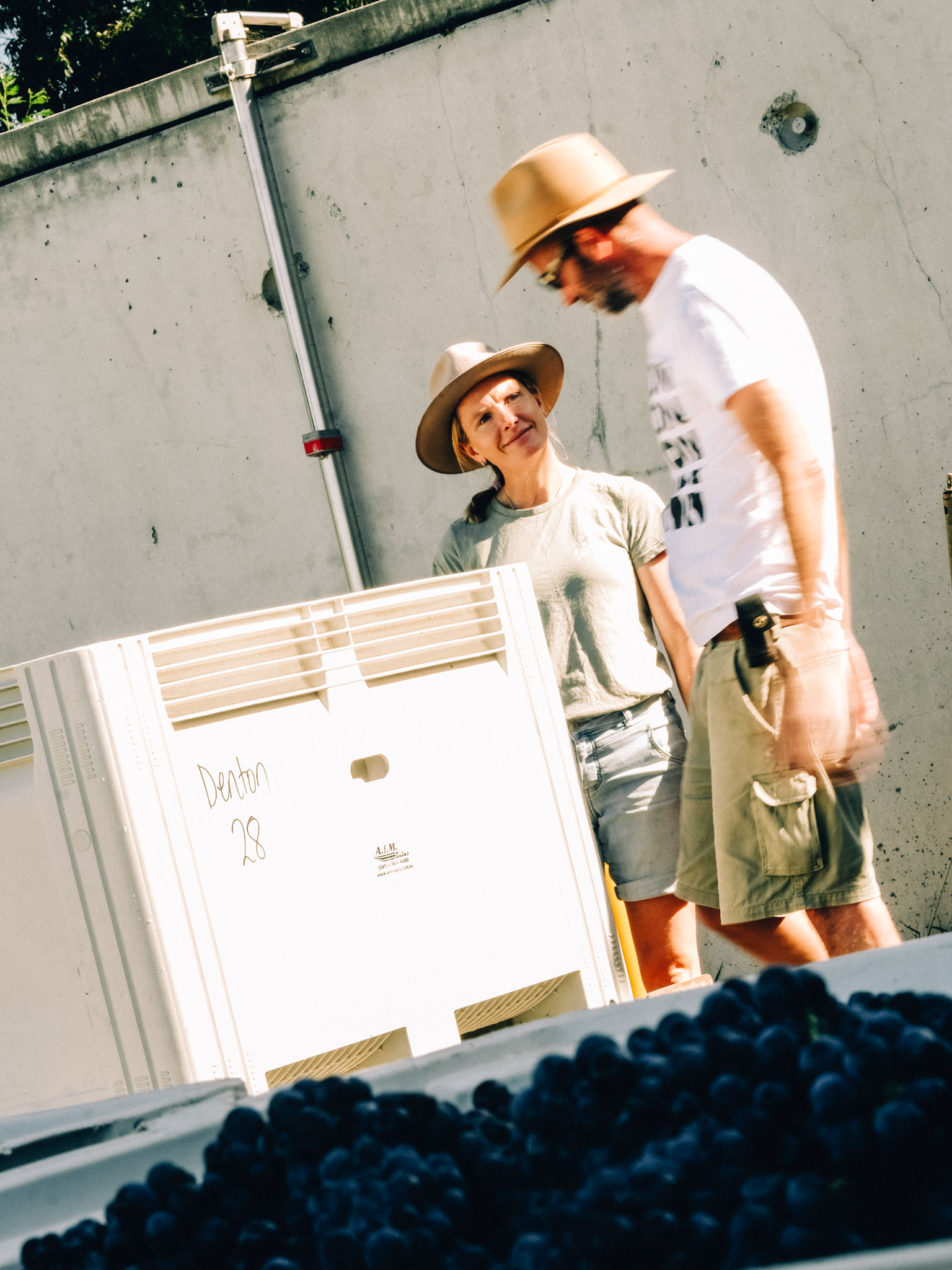
Having an on-site winery helps Parrott dial in viticultural decisions, as does constant work alongside winemaker Kirilly Gordon. “Because we’re such a small team, viticulture and winemaking aren’t really separated,” Gordon says. “I’m frequently out in the vineyard and Julian is constantly in the winery – especially during vintage, where he’s involved in ferments and pump-overs – and we’re tasting wines together all the time. As a result, the assessment of vineyard decisions and how they translate into wine quality is ongoing and happens in real time. Every decision in the vineyard – whether it’s irrigation timing, crop reduction, shoot thinning, canopy management, et cetera – is discussed in terms of how it will affect the wine. We don’t need to set up formal trials or schedule tastings to measure outcomes; it’s essentially built into how we work.” She adds: “We’re small enough that we’re always talking – it’s not like we’re disengaged outside our own domains or working in silos. The vineyard and the winery aren’t separate worlds. If I’m tasting something, Julian’s tasting it too.”
“Future-proofing the vineyard is probably the biggest challenge. That includes finding the right balance around vineyard renewal, variety selection and how the site responds to climate variability. The goal is to keep the vineyard both productive and viable as a business, while making sure it’s set up to remain resilient in the face of social, economic and environmental change.”
That close collaboration and tight feedback loop also means that thinking amongst the team is naturally holistic: “There isn’t a single moment where we stop and assess something in isolation,” Gordon says. “It’s happening constantly, season after season. Over time, those choices show up clearly in the glass. It’s not about one big decision following a trial; it’s about closeness – between vineyard, winery and people – and that means site expression isn’t something we engineer later.” The holistic approach extends through to the question of sustainability, too: “Our approach to sustainability is very grounded in reality,” Parrott says. “We work with very limited hands and finite resources, so sustainability for us starts with operating within our means.” Thus while Parrott has driven environmental progress at the site – multi-species cover-cropping, reduced herbicide use and use of cultivation to control under-vine growth, targeted irrigation based on soil-moisture sensors and fed from a closed-loop water system – he argues that “It’s not just about environmental outcomes. It’s also economic and social. We run lean, make deliberate choices and focus on producing the best wine we can with what we have. Long-term vineyard health, financial viability and how we care for the site over time all have to sit together – you can’t really separate them.”
Long-term thinking for the Yarra Valley means not only mitigating against the effects of climate change, but also proactively tackling the issue of phylloxera, which is currently working its way through parts of the region: “As 50% of the vineyard is still planted on own roots, we have commenced a replanting program, with two fallow blocks and a new greenfield block to be planted out next spring,” Parrott says. “Future-proofing the vineyard is probably the biggest challenge. That includes finding the right balance around vineyard renewal, variety selection and how the site responds to climate variability. The goal is to keep the vineyard both productive and viable as a business, while making sure it’s set up to remain resilient in the face of social, economic and environmental change.” (That understanding of the market’s changing varietal demands has been a feature of vineyard management well before Parrott’s arrival – in 2004 the Denton family grafted over their sauvignon blanc to pinot noir, and in 2008 they decided to focus on the potential for nebbiolo, grafting it over cabernet sauvignon and cabernet franc from the original 1997 planting.) He adds: “Our response is always practical. We manage cropping levels carefully, apply water thoughtfully, monitor soil moisture, refine canopy management, and work to match varieties, rootstocks and planting positions to the site. Those decisions are how we build resilience and adapt over time.”
The foundation for resilience is community. “While the site itself is spectacular and incredibly unique, ultimately it’s the people,” Parrott says when asked what he loves about working here. “The close-knit viticulture community plays a big role in shaping how I work. There’s constant dialogue with peers and mentors – sharing ideas, talking through challenges and learning from what’s worked, where, and why, especially during the growing season. That collective experience, built up over decades, is invaluable. Being able to pick up the phone and have those conversations openly really helps inform decision-making.” For him, this is the magic of Denton Hill View: “The strength of the team and everyone’s commitment to each other and to the place are what make it special – and what keeps me coming back every day.”
GET FIRST ACCESS TO THE NEXT WINE ICONS – DELIVERED