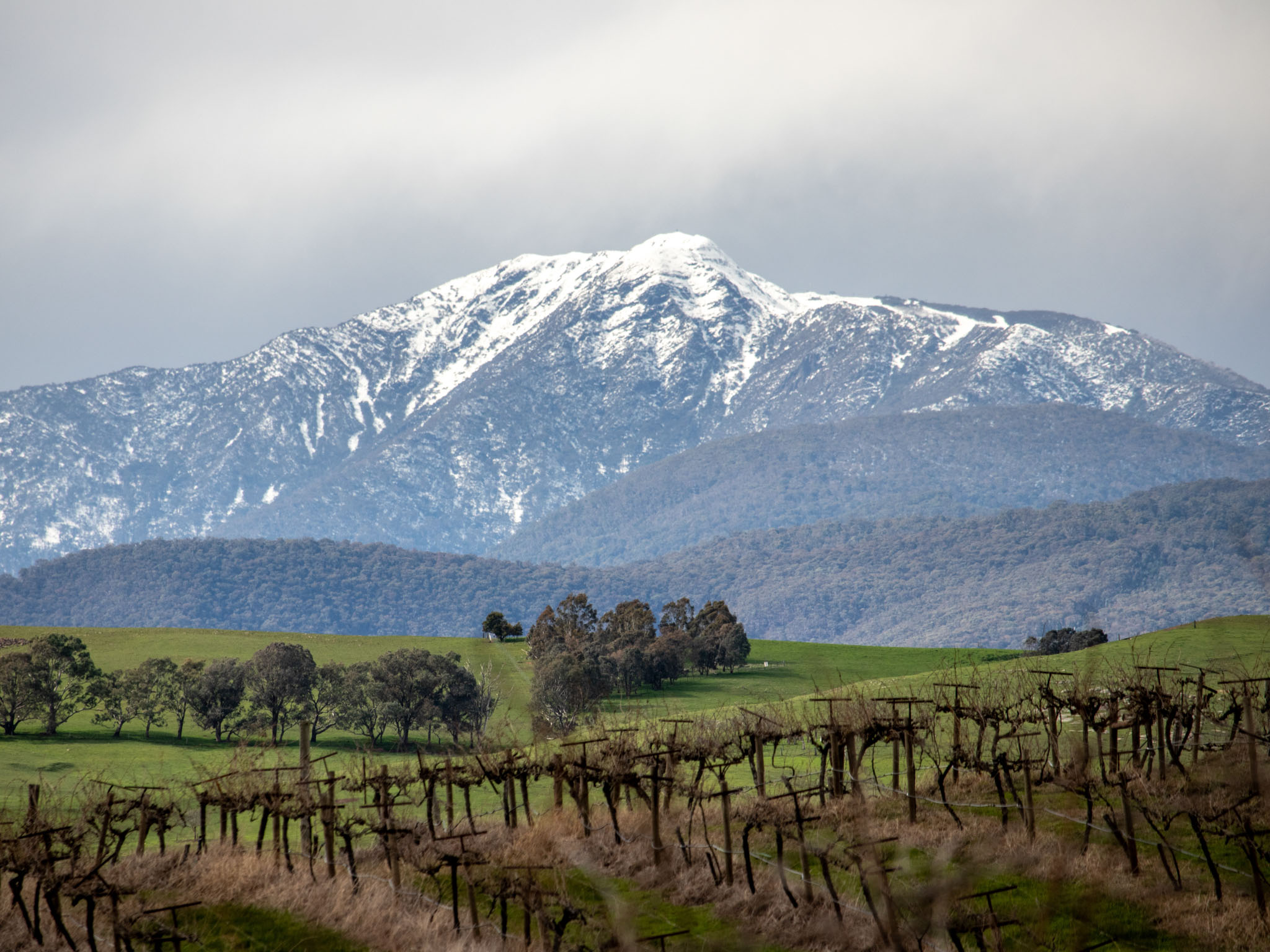
The journey of Delatite’s estate vineyard, nestled amongst the foothills of the Victorian Alps in the cool-climate region of Upper Goulburn, is one that mirrors the changes in Australian viticulture over the last half-century. Planted in 1968 – at what was likely to have been Australia’s coldest vineyard site at the time – the vineyard has since seen the varietal mix change, plantings expand, ecologically-sound practices adopted, and viticultural changes made to adapt to an ever-changing climate and the threat of phylloxera. Australian winegrowing has come a long way since the ’60s, baby – and the current state of play at Delatite shows just how far.
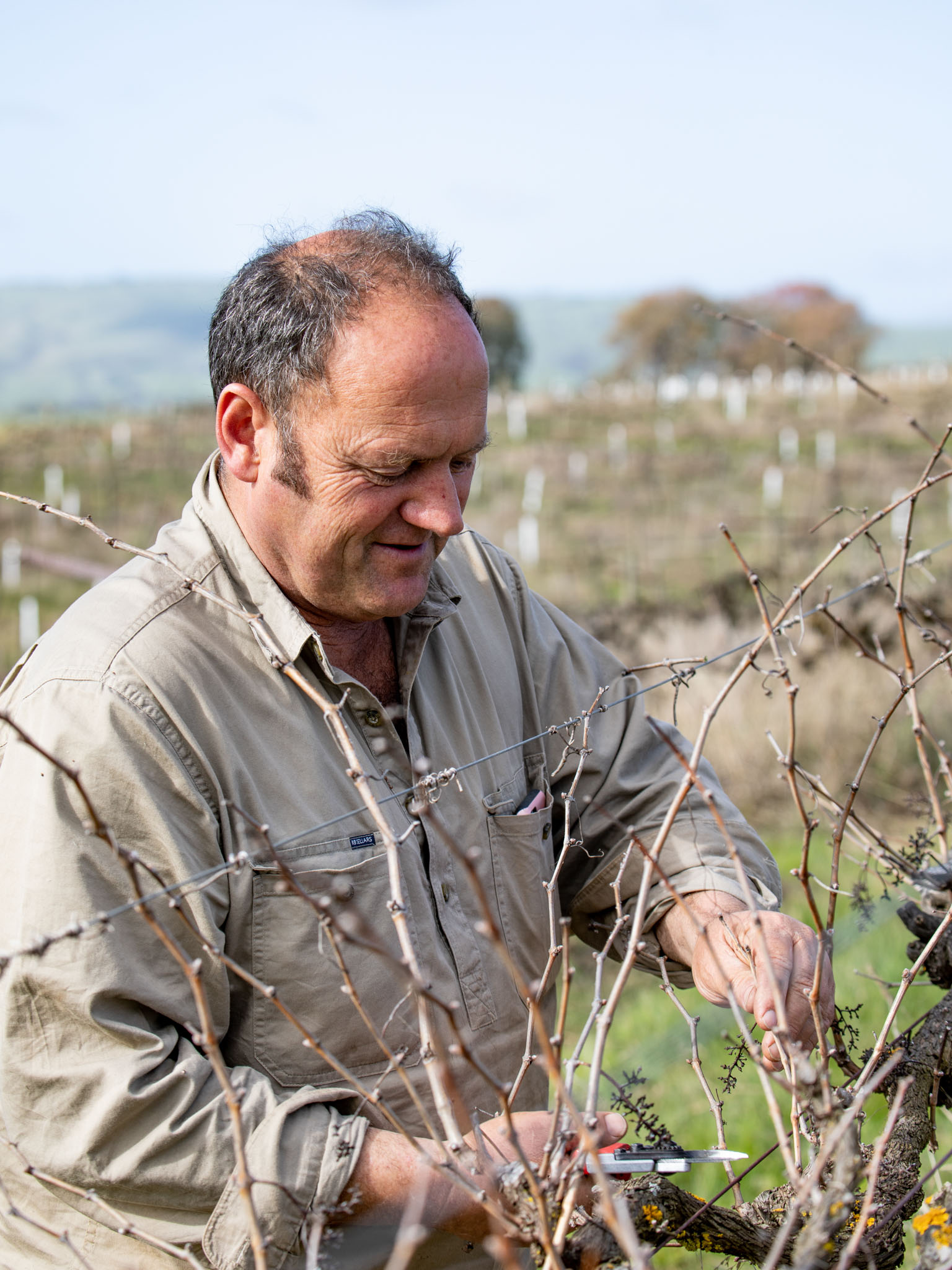
Established in 1968, Delatite is one of the pioneers of Australian cool-climate winegrowing and -making. “Back in the late ’60s, Jim Irvine – of Barossa and merlot fame – persuaded my father Robert to plant cuttings, sourced from a Hardy’s vineyard in McLaren Vale, in what was then probably the coolest site in Australia,” says viticulturist and general manager at Delatite, David Ritchie. “Since that time, we’ve been on a long journey with a way to go, especially as we warm up. For the first forty years we followed conventional winemaking and vineyard practices, and then over the last twenty years we’ve been going down the wild-yeast, sustainable, minimal-intervention route. Over the generations of farming at Delatite there has been a growing awareness that whatever the farming pursuit, our practices should be guided by what is the best for future generations – not by what is simply the easiest today.”
The vineyard itself comprises twenty-eight hectares set on ancient mudstone- and ironstone-based soils, originally formed at the bottom of a lake approximately 359 million years ago as the Devonian geological era transitioned into the Carboniferous. The first variety to be planted was riesling, cuttings of which were sent to Robert and Vivienne Ritchie by Irvine in 1967 – Vivienne placed these in the property’s vegetable garden until Irvine could properly advise on how to plant them out, which occurred in 1968. Since then, both the size of plantings and the varietal mix have expanded, and the vineyard now includes gewürztraminer, pinot gris, sauvignon blanc, chardonnay, grüner veltliner, pinot noir, tempranillo, cabernet sauvignon, merlot, malbec, garnacha, touriga nacional, shiraz, and gamay, with the older vines on their own roots and the newer plantings on rootstock.
This fruit salad of varieties not only reflects changing consumer preferences over the lifetime of the vineyard – something that David is happy to admit he’s not always right about, such as when he expresses his regret about having grafted riesling and graciano vines over to sauvignon blanc – but also a more variety-agnostic approach to winemaking, which is lead by both David and winemaker Andy Browning. “Andy and I are not looking for intense varietal character, but to make wines that reflect the vineyard’s environment – the soil, fungi, microbes, and weather conditions – and the wide variety of indigenous yeasts operating in each and every vintage,” David says. “When these factors are added to our hilly site of ancient mudstone and ironstone soils and rocks, plus our vineyard and winery practices, we get to what Europeans would call the unique terroir of Delatite. It’s all about texture, length, and – most important of all – drinkability.”
Vineyard management has been based on biodynamic principles since 2005, although the property remains uncertified – David has had to reluctantly resort to using a systemic agent twice (Ridomil) twice since then to control downy mildew, and glyphosate for weed control “a couple of times”. The spray program is now based around copper, sulphur, compost teas, and Bacillus thuringiensis – a species of bacteria that helps naturally control the pest light brown apple moth. “There’s no compound fertilisers,” David says. “Only rock phosphate, lime, fish emulsions, and – over the last two years – brewed concentrated compost and fish mixtures, compost teas, plus our own grape skin and cow and chook manure composts.” This is backed up by frequent soil analyses, including a recent assessment of the soil’s fungal and bacterial characteristics as part of a broader project revolving around vineyard microbiology and composting. “To begin with, we did some brewed fungal compost sprays across some trial areas, and then compared sugar levels in these to the areas without applications,” David says. “This showed a two-brix difference in sugar levels in the leaves. Since then, we’ve just used these fungal compost sprays across all vines.”
David speaks with a refreshing, farmer-like frankness about the benefits of biodynamic principles – rather than waxing lyrical about fruit days and the cycles of lunar calendar, he focuses on the tangible outcomes of the change in philosophy at Delatite. “I often say to people in relation to systemic fungicides, ‘The more you spray, the more you have to spray’,” he says. “We haven’t had a bad case of bunch rot or botrytis since we practically stopped using systemics in 2005. Why not allow the vines’ natural defences to do the work – with some copper and sulphur as a bit of added armour against mildew – and promote fungi that will outcompete botrytis?”
The benefits of this style of vineyard management flow through to the winery. David says, “We’ve also had just two or three stuck ferments in the last sixteen years – since we switched to using natural indigenous yeasts only – whereas when we were using a ‘conventional’ spray program and commercial yeasts, we’d get one or two every year. Go figure.” Similarly, the finished wines are unfined and unfiltered – not out of principle, but because the wines no longer require these ‘corrections’. “We make vegan wines not because I’m vegan, but because – due to our vineyard and winemaking practices – we don’t believe we need to add such things as fish, egg whites, milk, polyvinyl polypyrrolidone, or to even filter our reds. Flavour and balance is the key performance indicator here – and so much we can do to correct faults strips flavour out as well.”
These changes in the winery and vineyard have already shown results, with wine critics noticing more flavour depth and texture in the wines, particularly the reds. They’ve also given David a level of comfort with ripping up his internalised rulebook that is already helping Delatite to navigate the twin looming threats of phylloxera and climate change. “I see gamay as a good replacement for pinot noir, given our site is a lot warmer than it was in the ’70s and ’80’s,” David says. “Within ten to fifteen years we’ll probably stop producing it. I would like to graft more of our older vines over, but given they’re not on rootstock this doesn’t make sense, as phylloxera will probably arrive here sometime soon.”
These twin challenges mean making some unpalatable decisions about the future of the vineyard to ensure that it’s not only ecologically sustainable, but also economically sustainable. “The old blocks do not produce fruit at economic price points – except when we use it for our Reserve Block wines,” David says. “However, the fruit quality is pretty good – exceptional, in fact. Some of them we have reworked – but even then, the planting distances are such that economic fruit production is hard to achieve. This year we’ve ‘mothballed’ about 50% of the vineyard – fourteen hectares of old vines – which have been declining in yield, suffering from Eutypa, and cost 30–50% more to produce grapes than the more recent plantings. This was also partly driven by our shortage of water, with no runoff from the Alps for the last eighteen months.” While this was undoubtedly a tough decision for him to have to make, David’s admirable willingness to grasp the nettle shows that this chapter won’t be the end of Delatite – just another chapter in its long and storied history of change and evolution.
GET FIRST ACCESS TO THE NEXT WINE ICONS – DELIVERED