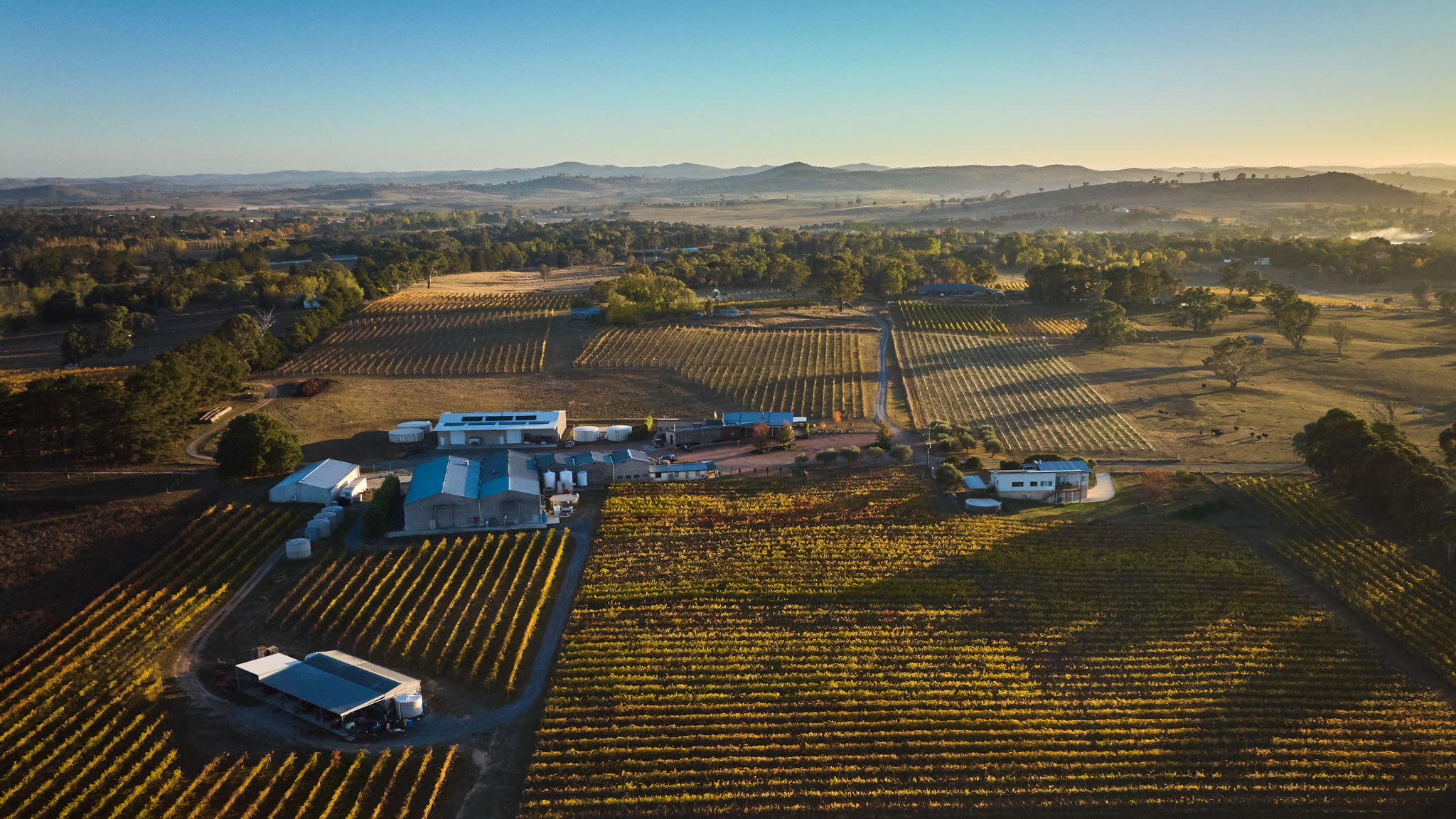
Clonakilla is one of Australia’s most significant wine estates and the founding vineyard of the Canberra District, planted in 1971 by Dr John Kirk AM and today managed by his son Tim Kirk. The 19-hectare property at Murrumbateman – 600 metres above sea level, 40 kilometres north of Canberra – grows shiraz, viognier, riesling, pinot noir, grenache, mourvedre, cinsault, roussanne and several Bordeaux varieties on sandy clay loams over decomposed granitic subsoil, in a cool continental climate defined by warm days, cold nights and a long ripening season. The estate’s flagship shiraz viognier, first made in 1992, is widely regarded as one of the great Australian reds and the wine that established the shiraz-viognier co-fermentation as a serious mode of expression in this country.
Clonakilla is one of the founding vineyards of the Canberra District – planted in 1971 by Dr John Kirk AM, a CSIRO research scientist who arrived in Australia from Ireland in 1968 and found, to his surprise, no vines growing in a region whose climate he recognised as having real viticultural potential. He named the property after his grandfather’s farm in County Clare: Clonakilla, meaning “meadow of the church.” The first commercial vintage followed in 1976 – the first in the region. Over the half-century since, Clonakilla has become one of Australia’s most significant wine estates, its flagship shiraz viognier a wine with an almost unique status in the national conversation: regularly cited among the country’s greatest reds, the pioneer of the Australian shiraz-viognier co-fermentation, and the wine that put the Canberra District on the international map. Today the 19-hectare estate is managed by Tim Kirk, John’s son, who took over as winemaker in 1997 after a career in religious education, and who has spent the decades since deepening his understanding of a site that continues to reveal new dimensions. A wide range of varieties are grown and vinified – riesling, viognier, pinot noir, grenache, mourvèdre, cinsault, counoise, roussanne, cabernet sauvignon, cabernet franc, merlot and brown muscat, alongside shiraz – with plantings ranging from the original 1971 vines to material put in the ground as recently as 2025.
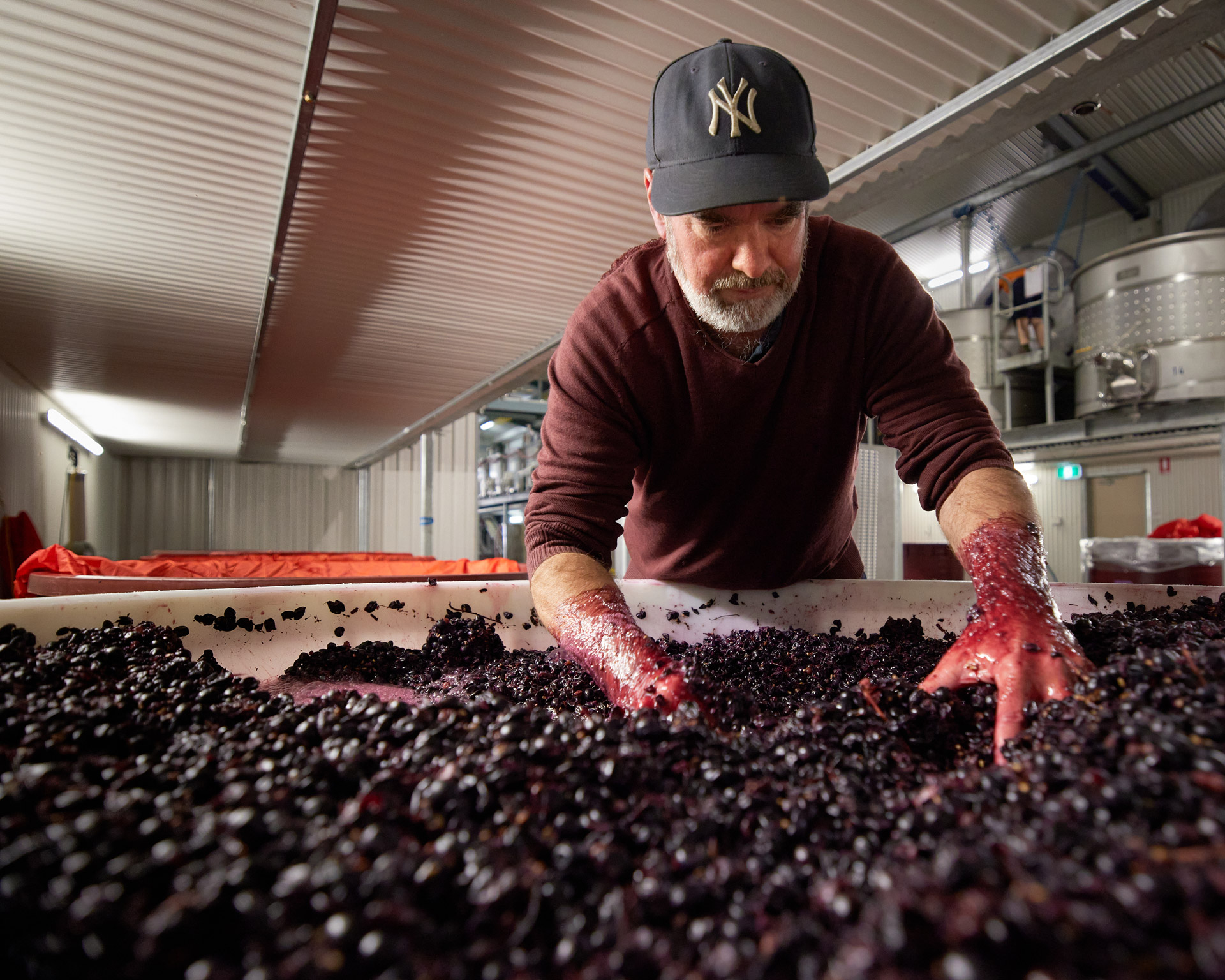
The story of Clonakilla’s flagship wine begins with a trip, a conversation and an act of openness that is easy to underestimate in retrospect. In 1991, Tim Kirk visited the Rhône Valley and tasted the single-vineyard Côte-Rôtie wines of Domaine Guigal – shiraz and viognier co-fermented, white grapes carried through the red ferment to lift aromatics and fix colour. He came home with an idea. His father, to his credit, said: let’s give it a go. The first Clonakilla Shiraz Viognier was made in 1992 from the same estate vines that John had been farming for two decades. It was a revelation – not just for the Kirks, but for Australian wine, which had almost no experience of viognier and very little of cool-climate shiraz as a single varietal. The 1990 estate shiraz had already shown what Murrumbateman could produce; the co-fermented blend clarified and amplified the argument. What followed was a wine whose influence on Australian viticulture and winemaking is still being felt.
The vineyard sits at 600 metres above sea level outside the village of Murrumbateman, 40 kilometres north of Canberra, on sandy clay loams with a layer of friable red clay over decomposed granitic subsoil – soils of volcanic origin that have proven well suited to shiraz across the full range of site expressions. The climate is the defining element. The Canberra District is continental, with warm to hot days and reliably cool nights, the diurnal temperature swing preserving natural acidity and extending the ripening season well into autumn. The result in shiraz is not the dense, dark-fruited concentration associated with warmer Australian regions but something quite different: a wine of intense perfume, bright red fruit, spice, florals, and a silky medium-bodied elegance. “Fine wine in its purest form,” Kirk says, “is about encountering the uniqueness of a particular site. And the site is what can’t be replicated. Here at Clonakilla, we celebrate our warm summers, cool nights, gentle slopes, refreshing evening breezes, complex red brown clays and decomposed granitic subsoil. These various and complex elements appear perfect for shiraz in that classic cool-climate mode.”
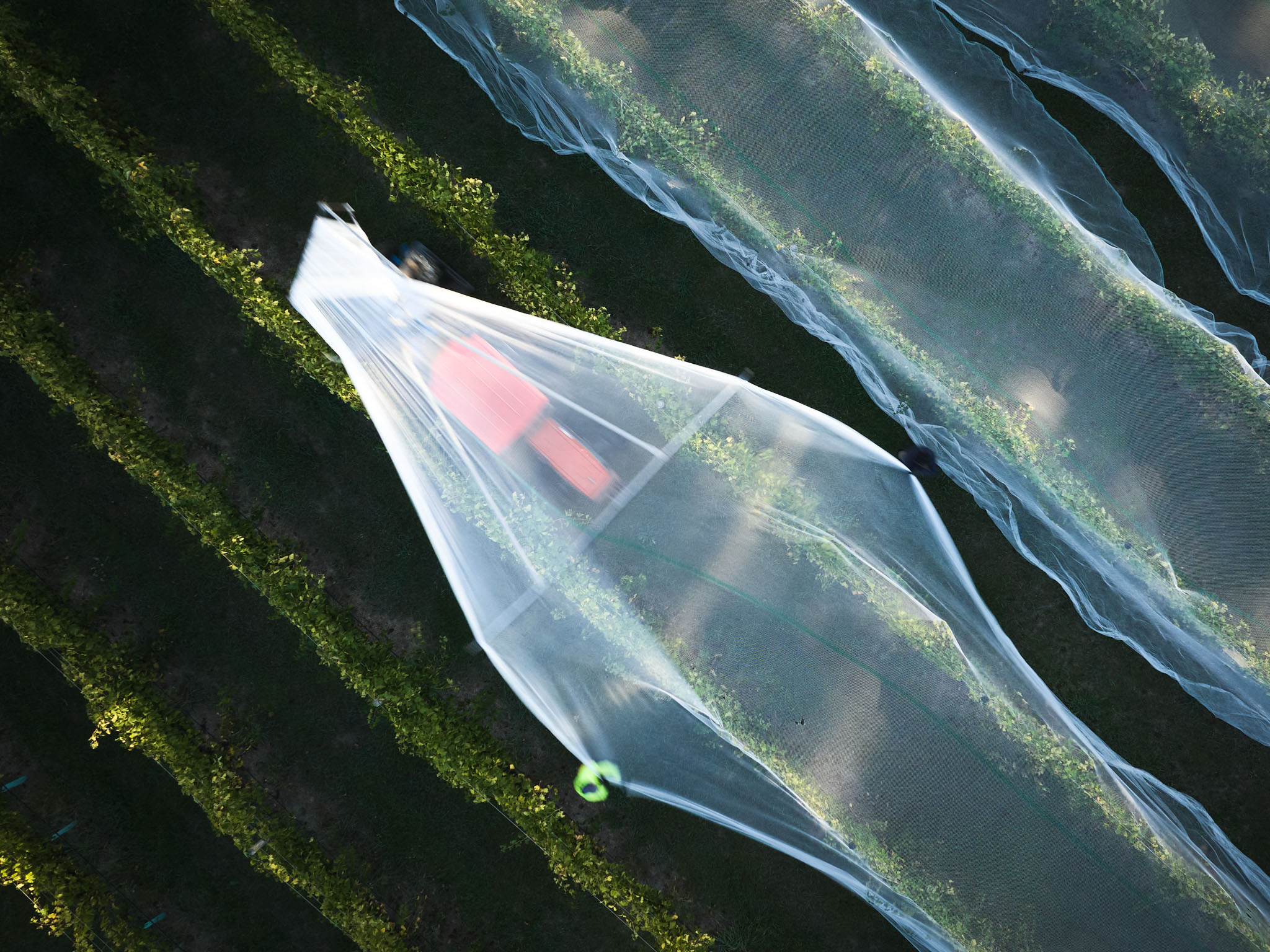
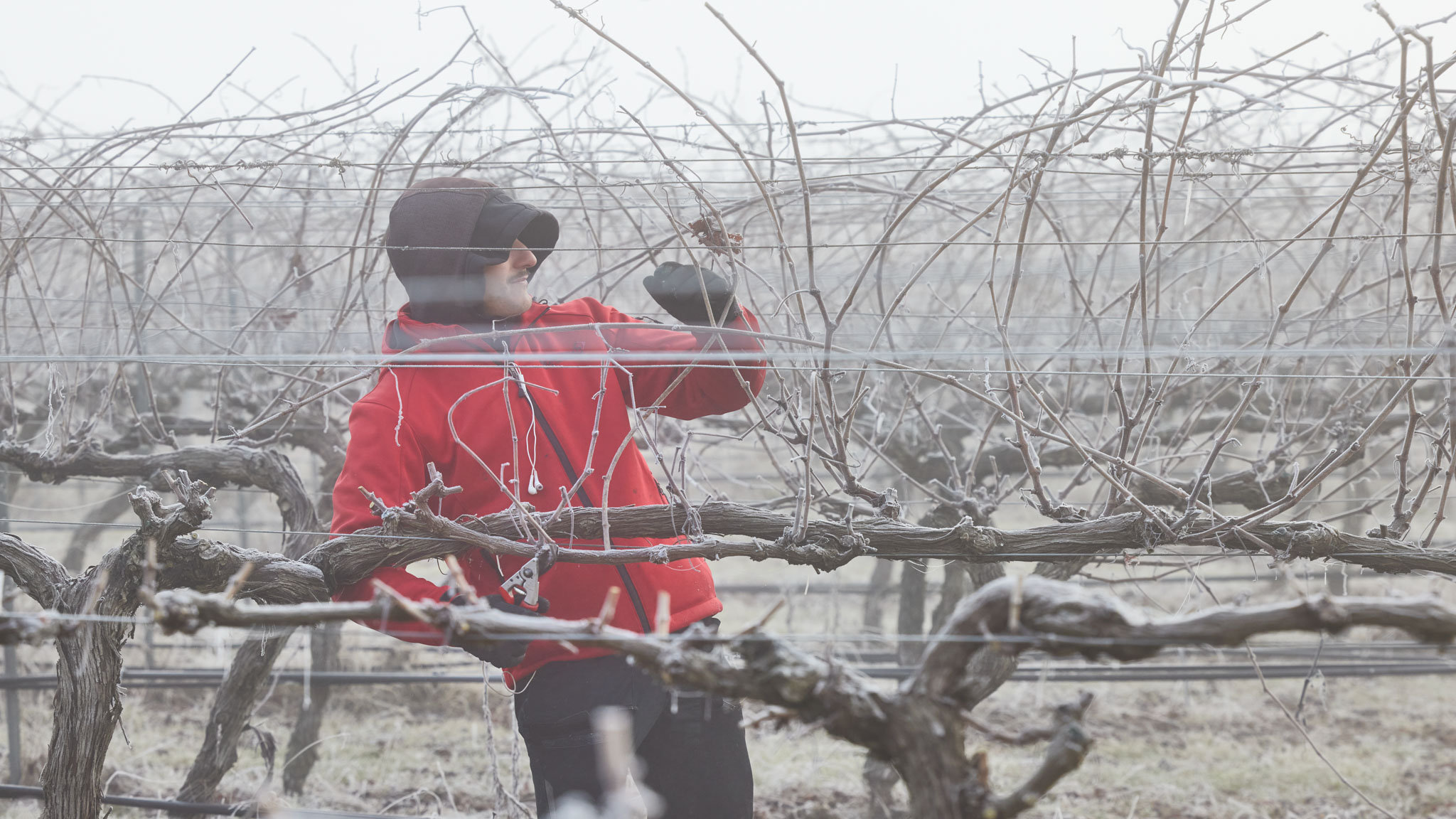
The viticulture at Clonakilla is deliberate and classical in its orientation – a focus on soil health, vineyard balance and fruit clarity over technical intervention. Grape marc is composted with estate hay and cattle manure and returned to the vineyard. Vineyard rows are slashed with side-throw mowers, adding mulch under the vines; herbicides are not generally used, with only occasional spot-spraying of aggressive weeds. The permanent sward is beneficial grasses and clovers. VSP trellising supports a nicely vertical canopy that catches sunlight and allows balanced light penetration into the fruiting zone. Spur pruning in winter is followed by spring shoot thinning to balance the canopy and direct energy to the bearing canes; fruit thinning is practised as required. All estate fruit is harvested by hand. Drip irrigation from onsite bores supplements in warmer and drier periods, but the focus is always on building soil carbon and microbial life to reduce the vineyard’s dependency. “Vineyard health is paramount and fruit quality is the standard that can only be taken away from, not added to,” says Kirk.
The breadth of the current planting program reflects both Clonakilla’s restless curiosity and its long-term commitment to the site. Semillon and sauvignon blanc have just been grafted over – mostly to riesling, with some rows of shiraz, cabernet franc and cabernet sauvignon – a generational decision that accepts a short-term loss of production in exchange for a vineyard better aligned with where Kirk sees quality and relevance heading. The range itself mirrors this scope: the Ceoltoiri, a Châteauneuf-du-Pape-inspired blend of grenache, mourvèdre, shiraz, cinsault, counoise and roussanne, speaks to Rhône varieties finding their footing in the Canberra District; the Ballinderry is a right-bank Bordeaux-inspired blend of cabernet franc, cabernet sauvignon and merlot; pinot noir, riesling and viognier each appear as standalone releases, the viognier in both barrel-fermented and tank-fermented nouveau forms.
But the shiraz viognier remains the wine through which Clonakilla is understood. Tim Kirk has now made more than 30 consecutive vintages of it from the same estate vines, and what he describes as the “vineyard signature” – its distinctive red-fruited, floral, spice-driven character – has proven its durability across the full spectrum of Canberra seasons, from luminous cool years to warmer, more glowing ones. At the 50th anniversary tasting in 2022, that consistency across decades of vintages was the most telling observation: the same essential character expressed in entirely different weathers, filtered through the same soil and the same cool nights. “As important as viticultural and winemaking techniques are,” Kirk says, “I believe it is the particular landscape in which the vines are grown that gives a wine its distinct, unrepeatable character; all the complex geological and geographical elements about a particular site that exert an influence on the growing grapes. Fine wine is about encountering the uniqueness of a particular site.” Over more than 50 years at Murrumbateman, Clonakilla has made that case more persuasively than almost any other vineyard in the country.
GET FIRST ACCESS TO THE NEXT WINE ICONS – DELIVERED