Cassini Vineyard, Kangaroo Island Nick Dugmore & Max Dugmore

Read more
  • Cassini Vineyard, Kangaroo Island

    Nick and Bec Dugmore’s The Stoke label is their love letter to Kangaroo Island. It’s naturally a canvas for their considerable winemaking talents, but it also embodies a very serious quest to show just what exciting vinous territory KI is. With the steep decline in grape-growing on the island, taking on their own site was a natural progression, enabling them to make wine from the ground up with a regenerative approach amongst the vines. Now responsible for most of the fruit going to The Stoke and Guroo labels, as well as for some up-and-coming makers, the isolated 4.2-hectare Cassini Vineyard is being nurtured into the health of its life through the hard work of Nick and his father, Max.

  • Bon View Vineyard, Barossa Valley

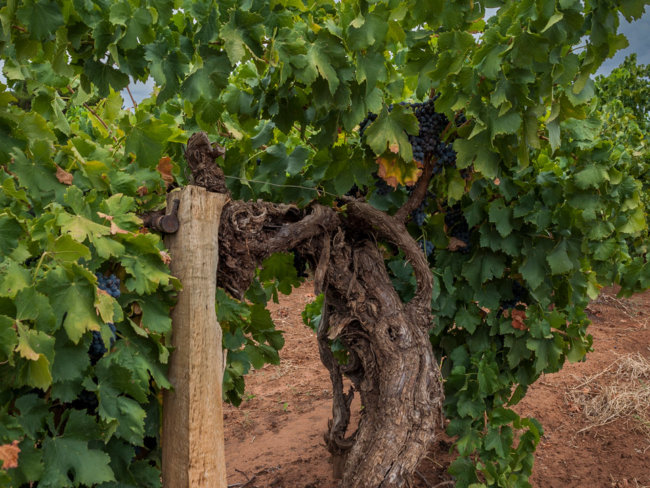
    The Bon View Vineyard has been in family hands since it was first planted in the 19th century. Those original shiraz vines still make wine today, though the bulk of the vineyard was planted in the 1960s by current viticultural custodian Ralph Schrapel’s father and grandfather. With the farming practices evolving over the generations to a less interventionist and more balanced approach that centres on soil health and water management, the fruit is pitched towards the premium and ultra-premium end. A four-decade-long collaboration with Peter Lehmann Wines means good homes for that juice, filling bottles such as the legendary ‘Stonewell’ Shiraz and ‘Mentor’ Cabernet Sauvignon.

  • Ricca Terra – Soldiers’ Land Vineyard, Riverland

    The Soldiers’ Land Vineyard – purchased by Ashley and Holly Ratcliff’s Ricca Terra Farms operation in January 2021 – is not built around the Mediterranean alternative varieties that have made Ricca Terra famous. Rather, it is a celebration of heritage: an 8.8-hectare property at 171 Jury Road in Monash that has been farmed continuously for more than 103 years, first settled in 1922 by Horace Walpole and Clara Denford under the government’s soldier settlement scheme, and owned by the Petch family from 1939 until the Ratcliffs purchased it from Robert and Ruth Petch, who wanted to retire. The old shiraz vines were planted in the decade after the end of the Second World War and are now 80 years old. The zibibbo – the Sicilian synonym for what is locally known as gordo, and more formally as muscat of alexandria – is 75 years old. These are the vines that the Riverland wanted to bulldoze. Ratcliff saw something else entirely.

  • Vasse Felix – Tom’s Vineyard, Margaret River

    Planted in 1967, Tom’s Vineyard was the first commercial vineyard in Margaret River. Vasse Felix now farm over 330 hectares at four sites across the region, including a vineyard in Karridale mostly earmarked for sister sparkling wine label IdĂ©e Fixe, but it is the original Tom’s Vineyard parcel within their broader Home Vineyard in Wilyabrup on Caves Road that is reserved for their most prestigious bottlings, producing the Premier and Icon ranges, including the flagship red from the oldest vines – own-rooted cabernet sauvignon and malbec – named after the estate’s founder, Tom Cullity. Bart Molony manages the viticultural operations for Vasse Felix across all four of their sites with an eye towards pragmatic sustainability.

  • McHenry Hohnen – Hazel’s Vineyard, Margaret River

    Hazel’s Vineyard is the home site for Margaret River’s McHenry Hohnen, with the fruit making wines all along their range, including classic regional expressions of chardonnay and cabernet, emerging grapes like tempranillo, a mineral Southern Rhîne blend and their flagship cabernets, Rolling Stone. Planted over 20 years ago, the site has been managed according to organic then biodynamic principles, with certification coming in 2020. Simon Keall manages the McHenry Hohnen vineyards with a sustainable ethos, which includes solar generation, no external water for irrigation and onsite composting.

  • Deep Woods Estate, Margaret River

    Since its establishment in 2005, Deep Woods Estate has become a phenomenal success story, with the wines achieving numerous accolades, including three Max Schubert Trophies and the 2016 Jimmy Watson. The success of the wines has also seen Chief Winemaker Julian Langworthy collect several Winemaker of the Year gongs, largely due to the cabernet-based wines and chardonnay. But that success has been underpinned by the viticultural work of John Fogarty that has transformed a vineyard that had previously focused on yield over quality to one that produces some of the highest quality and most distinctive fruit in the Margaret River region.

  • Stefano Lubiana Vineyard, Granton

    It is over 30 years since Steve Lubiana set up shop in the Derwent Valley, only a short drive from Hobart, with the Stefano Lubiana Vineyard now occupying just over 28 hectares. Certified biodynamic for nearly a decade, it was Tasmania’s first to achieve accreditation, and was the island state’s only one until very recently. Pinot noir and chardonnay take centre stage, but there are also aromatic whites, syrah and small plots of malvasia and blaufrĂ€nkisch planted. The wines veer from those classically styled, including several single block bottlings, to ones of a natural bent raised in amphora, while the original motivation for the move south – sparkling wine – sees six individual expressions, including a vintage that slumbers for a decade on lees.

  • Small Wonder Vineyard, Tamar Valley

    Small Wonder is a relatively new brand on a mature property in Tasmania’s Tamar Valley, specialising in pinot noir, chardonnay and aromatic whites. In 2020, the site – formerly Goaty Hill – was sold to the Overstory group by the founders after two decades on the property. Vineyard manager Wayne Nunn has since converted the site from 20 years of conventional management to ACO-certified organic viticulture, working with winemaker Andrew Trio to map and understand the micro-terroirs of a site with significant natural variation across its 19.74 hectares of varied aspects and soils. The first Small Wonder wines were released in 2022. Today the range spans from the Landscape series (riesling, sauvignon blanc, pinot gris, chardonnay, rosĂ© and pinot noir, $32–$40) to the Auburn tier (chardonnay and pinot noir, $52 each) through to Block 3 Pinot Noir ($56) and traditional-method sparkling wines – a Vintage Blanc de Blancs and Vintage Blanc de Noirs (both $52).

Small Wonder Vineyard, Tamar Valley

The Next Wine Icons – Delivered

Each month, get 3 bottles of fresh discoveries.
We taste thousands to bring you the best.

Bookmark this job

Please sign in or create account as candidate to bookmark this job

Save this search

Please sign in or create account to save this search

create resume

Create Resume

Please sign in or create account as candidate to create a resume