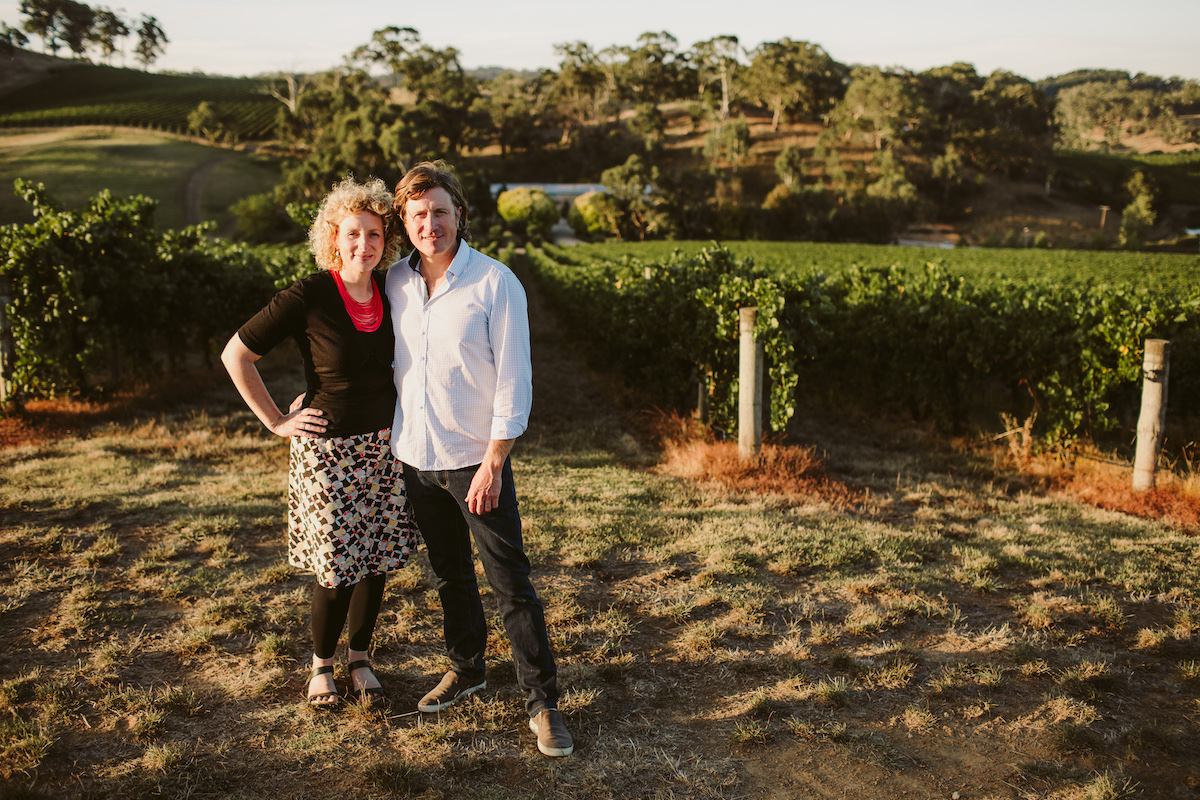
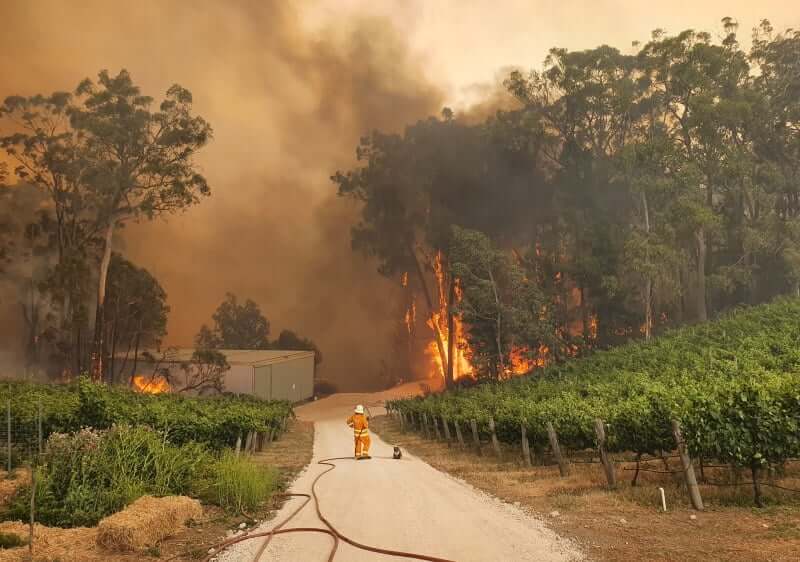
For Lapalus, the first place to start helping is by purchasing wines produced by people impacted by these events. “The first thing is the obvious one,” Lapalus says. “You go to your favourite bottle shop or a favourite bar and you buy Harcourt produce. That’s the easy one.” Golding concurs: “When you’re at the bottle shop and you’re looking at what you might purchase, purchase locally, and support those businesses that you know were affected,” he says. Both Lapalus and Golding point to other forms of structured support, such as GoFundMe campaigns for individual winemakers, and donations to organisations such as the CFA (in Victoria) or CFS (in South Australia), as being equally important. Lapalus stresses that these organisations are “people who were very important at the time, and still very important now, but that you can always help more.” Lapalus also adds that keeping an eye on social media can keep you informed about fundraising efforts like the remarkable event that Castlemaine winemakers Boomtown put on to raise funds for those affected by the Ravenswood South fire. “They pulled out that event in one day, basically. And they raised $130K for the CFA, so it’s just amazing.”
While these bushfire events can have catastrophic, life-altering impacts for the winemakers affected, there’s a small silver lining. “I’m so grateful for all of the support – from locals, from industry, from friends, and from family, of course,” Lapalus says. “That’s the only positive of that catastrophe, really.” Golding feels similarly: “Some people like to do something which is tangible, hands-on, whatever. Other people are quite happy to support in the background by purchasing wine – but every little bit helps.” As for those who happen to be in possession of a now-rare bottle of Maison Lapalus or Bertrand Bespoke wine, Lapalus has a simple request: “There’s very little left, a very limited amount – so cherish every bottle that you have.”
We’ve detailed below the major fires that have impacted Australia’s winemakers thus far in 2026, including information about the producers affected and the best ways to support them. This is a dynamic and changing list, so please comment on our Instagram post or email us if you have further information to share.
Longwood Bushfire, Central Victoria (January 8)
A bushfire that commenced near Longwood in the Strathbogie Ranges wine region on the morning of January 8 burned through an estimated 136,000 hectares and caused one known casualty, cattle farmer Maxwell Hobson, before being contained behind firebreaks on January 19.
Fowles Wines have confirmed that the fires have consumed all 300 hectares of the vines on their farm, as well as the family home of winemaker Matt Fowles. The complete loss of all vines means that there will be no 2026 vintage produced from estate fruit. The label’s winemaking facilities, cellar door, restaurant, and warehouse have not been affected by the fire and are still operational.
How you can support: Fowles have stated that the best way to support them is to either purchase wine directly from their website, visit their cellar door and restaurant in Avenel, or to join their wine club.
Elgo Estate have confirmed that their vineyard (which had also supplied fruit to other winemakers) has been “completely wiped out” by the Longwood fire. Their winery building and bottled stock have not been impacted.
How you can support: Elgo Estate have stated that the best way to support them is to purchase their wines. They do not have an online wine store, but their wines are available via a number of online retailers and at retail premises.
Antcliffs Chase owner Chris Bennett has confirmed that the fire has destroyed their winery buildings and equipment, as well as all of the stock that was stored at the vineyard, with only “a small amount of wine in barriques offsite that is due to be bottled in six weeks” remaining. The vineyard itself is “90% okay”, although Bennett is unsure if this year’s vintage can proceed in the circumstances. Bennett is asking for patience as he evaluates the situation and decides the best way to proceed.
How you can support: The best way to support Antcliffs Chase is currently uncertain. The winery’s website states that “there may be some stocks of our wines in local vendors”.
Wine × Sam owner Sam Plunkett has reported property damage to his farm in Upton, including significant livestock losses. The label’s winery building and events space in Seymour is undamaged. No damage to the vineyards that Wine × Sam sources their fruit from has been reported.
How you can support: Plunkett has said in a statement, “If people would like to help and you are in a position to do so, we ask you to donate to Blaze Aid supporting those who have lost everything.”
Ravenswood South bushfire, Central Victoria (January 9)
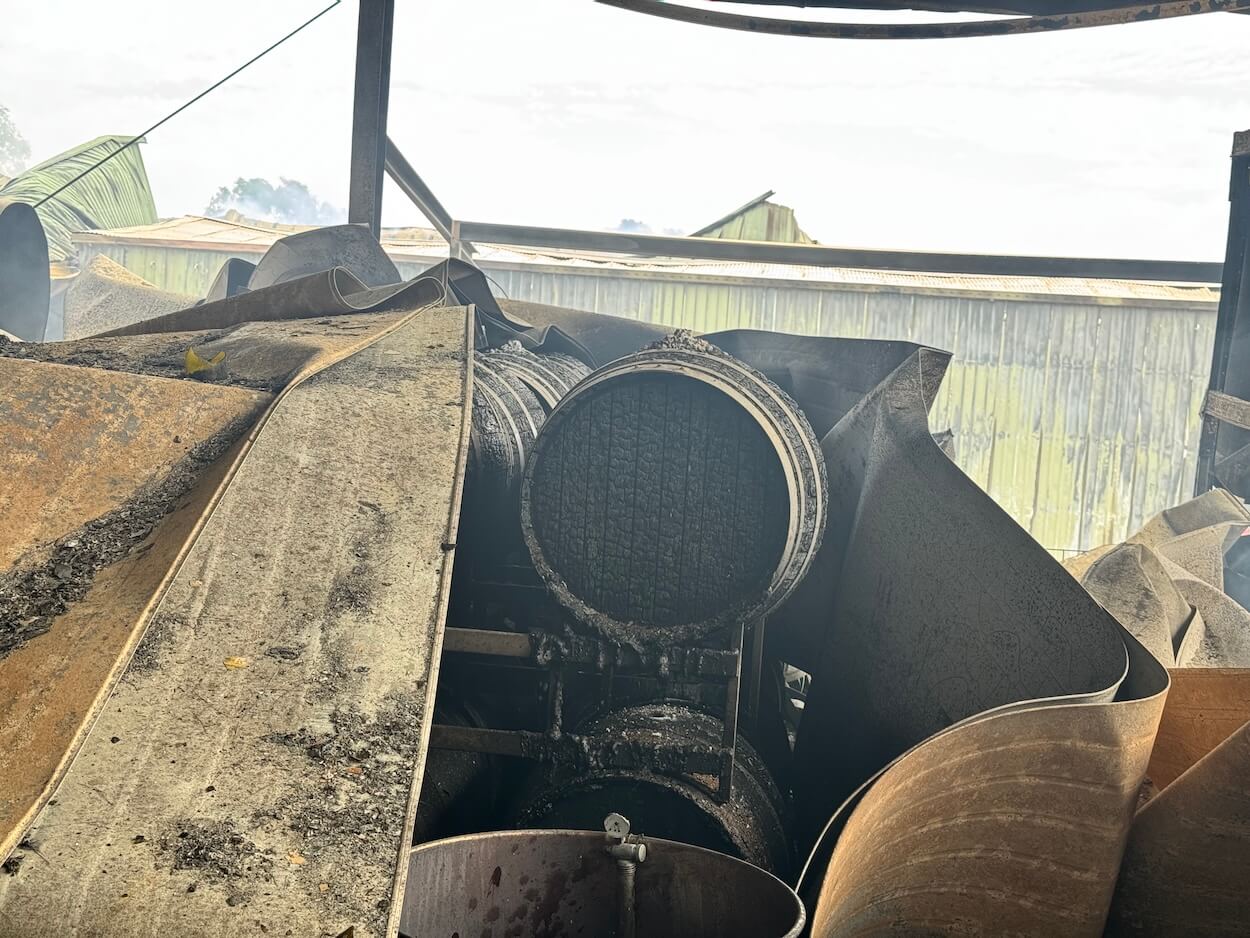
A grassfire that started at Ravenswood South on the afternoon of January 9 burned through 4,100 hectares that destroyed at least 47 homes and three business premises in Harcourt and Ravenswood South before being contained and extinguished by fire fighters and emergency crews. One of the business premises destroyed in the fires was the iconic Harcourt Coolstores, where multiple wine businesses had stored their finished wines, and two wine businesses – Maison Lapalus and A Glass Of – had based their operations.
Maison Lapalus and Bertrand Bespoke winemaker Gilles Lapalus, whose base of operations was at the Coolstores, has stated that the project “has lost everything, stock and equipment”, including museum stock that dates back twenty years. A very small quantity of Maison Lapalus and Bertrand Bespoke wines remain in the warehouses of Lapalus’s Melbourne, Sydney, and Adelaide-based distributors.
How you can support: A GoFundMe campaign has been created to support Lapalus and assist with the considerable costs of restarting the Maison Lapalus and Bertrand Bespoke projects. Wine professionals within the trade can support Lapalus by purchasing the remaining stock of Lapalus’s wines from his distributors: Dearth of a Salesman (Victoria), Fox Wine Company (New South Wales), or Connect Vines (South Australia).
Maidenii, a collaborative vermouth project between Lapalus and Melbourne bartender Shaun Byrne, was partially based at the Coolstores, and likewise lost all of their equipment and part of their stock, including a solera system containing ten years’ worth of their acclaimed ‘Nocturne’ vin amer (bitter wine).
How you can support: Funds raised in the GoFundMe campaign for Lapalus will also be directed towards restarting Maidenii’s production. Maidenii have also stated that purchasing their vermouths via retail channels including Blackhearts & Sparrows, Carwyn Cellars, and Dan Murphy’s.
A Glass Of, a wine negociant project by Paul Taylor, was also based at the Coolstores. Taylor writes that “The fire has destroyed everything. The only thing left is the laptop I’m writing this message on and my phone … We now have no ability to make or sell anything.”
How you can support: Taylor has created a GoFundMe campaign to assist the business’s recovery.
GilGraves, a vineyard and label based in nearby Axedale, stored wine at the Coolstores and have lost approximately 97% of their stock in the fire. The vineyard and winemaking facilities, and the label’s cellar door, have not been damaged.
How you can support: GilGraves has asked supporters to purchase the small quantities of their remaining wines online or by visiting their cellar door at the Bendigo Pottery building.
Bress, a wine label based in Harcourt, also stored some of their wine at the Coolstores complex, all of which has been destroyed. A portion of their stock, stored at another Harcourt location, has survived. The label’s cellar door is undamaged, but owing to the damage throughout the area it is currently closed, with re-opening scheduled for February.
How you can support: Bress has stated that “the most meaningful way to support Bress Wines during this recovery period is by purchasing directly through our website. Every order truly makes a difference.”
Lome, a wine label and single-site Harcourt vineyard owned by Bress, also had stock stored at the Coolstores, which has been destroyed. It is currently unclear as to whether or not the entirety of the label’s stock has been stored in the Coolstores. The vineyard itself has survived the fire.
How you can support: Lome do not currently have an online store. Purchases of Bress wines via their website will assist with the long-term viability of the Lome project.
Merth Vineyard, a wine project by Neil Walsworth and Erin O’Brien that has been seven years in the making, had just released its first vintage of wine two months ago. Two-thirds of their bottled stock was stored in the Coolstores, and has thus been completely destroyed.
How you can support: Merth have asked supporters to purchase the small amount of stock that remains from their website or via retail. They are planning to bottle more wine in the immediate future to ensure that supporters will have product to purchase.
Joshua Cooper, a négociant winemaker based in Macedon Ranges, stored “a large volume of wine” at the Harcourt Coolstores, including his “entire museum catalogue stretching back to 2012”, all of which has been destroyed in the fire.
How you can support: Cooper’s wines remain available for purchase via his website.
Byronsvale, a vineyard and winery based just outside of Bendigo, have reported that the “majority of [their] wine stock” was in storage at the Coolstores, and therefore destroyed.
How you can support: Byronsvale’s wines remain available for purchase via their website, and they are encouraging supporters to book a stay at their on-site accommodation “when things settle down”.
Blackjack Wines, a Harcourt-based vineyard and wine label, also stored wine at the Coolstores, and has lost this stock, alongside “33 years of carefully cellared museum wines held offsite, representing the history and story of Blackjack Wines.” The vineyard and winery building are undamaged, and the on-site cellar door is currently closed, with reopening scheduled for 24 January.
How you can support: Blackjack’s wines can be purchased via their website.
Sutton Grange winery stored “a significant amount” of stock at the Coolstores, all of which has been lost. The winery’s vineyard and buildings remain undamaged.
How you can support: Sutton Grange’s wines can be purchased via their website.
Still Moon wines, a négociant winemaking business that sources fruit from multiple states, stored nearly all of their Victorian wines at the Coolstores, all of which (around 6000 cases) has been destroyed. Very small quantities of the Victorian wines – “less than 100 bottles of each varietal” – remain.
How you can support: Still Moon has stated that “purchasing a bottle or two of what remains online would be an incredible help.” Wines can be purchased via their website, which has been updated to reflect stock levels available.
Farmer & the Scientist, a Heathcote-based producer, have announced that they have lost most of their wine in the Coolstore fire. “The loss of stock for us is immense and we are unsure we can come back from this,” they have said in a statement. “We also ask ourselves, if there was a way, do we have the heart to start again? … please know [that] whatever we decide we will be ok.”
How you can support: A small amount of Farmer & the Scientist wines can be purchased via their website, which has been updated to reflect stock levels available. Please note that the Shiraz currently available for sale on the website is in ‘cleanskin’ (unlabelled) form.
Mount Alexander Winery have announced that the Ravenswood fire destroyed their vineyard and home, alongside two tractors. The label’s cellar door/café and winery facilities were unaffected. They are also reported to have lost stock in the Coolstores fire. As of January 19, it is unclear how best to support this business.
Macedon Ranges producer Lauriston Hills Estate has announced that all of their wine was being stored at the Coolstores, and “nothing was salvageable”. Daniel Rosette of Fixed Points, a small-batch producer of varietal grenache wines from Central Victorian vineyards, also announced that he has lost all but eleven bottles of his 2025 vintage. As of January 19, it is unclear how best to support these businesses.
Other wineries that are reported to have been holding stock in the Coolstores include Dilworth & Allain, Killiecrankie Wines, Hesket Estate, Zig Zag Rd, producer and importer Ian Leamon, Passing Clouds, Guildford Vineyard, Glenwillow Wines, Belvoir Park Estate, Turners Crossing Wine, Shiraz Republic, and Burke and Wills Winery. The impact of their stock losses to their ongoing viability, and the best way to support these businesses in the wake of those losses, remains unclear. Please email us if you have further information to share about specific ways to support these producers in this challenging time.