Few genuinely noble wine regions have been sullied as much as Beaujolais has. From plain old everyday rusticity, where farmhouse wine tasted more of the former than the latter, to one of the most baroquely ornate exercises in marketing crassness, Beaujolais has been very diligently dulling its lustre for decades. And in the process, its name will remain ever tarnished to some, along with its emblematic grape, gamay.
Gamay has been victimised for some time, with it anecdotally vanquished from Burgundy proper in the 14th century by the irate Duke of Burgundy, who described it in eerily Trumpian fashion as “a very bad and disloyal plant.”
In fact, gamay has been victimised for some time, with it anecdotally vanquished from Burgundy proper in the 14th century by the irate Duke of Burgundy, who described it in eerily Trumpian fashion as “a very bad and disloyal plant.” An objection to gamay’s earlier ripening and abundant yield was apparently a slight on the serene and noble complications that pinot noir presented. And, no doubt, the more refined results. As the story goes, gamay was exiled further south to take up refugee status between Mâcon and Lyon, sandwiched between the Northern Rhône and the Côte d’Or, and between the aristocratic syrah and ethereal pinot noir.
Beaujolais, and by extension, gamay, enjoyed some little success in the following centuries, establishing itself not so much as subservient to Burgundy, but rather just differentiated. Somewhat more carefree, chattier, less snobby, but decidedly valid. Crus were mapped and the differences between villages was well understood. Gamay never trod on pinot noir’s gleaming big-buckled court shoes, but it certainly made its more bucolic mark, and was celebrated for it.
Come wine’s mid-20th century industrial revolution, and like many regions of popular appeal, Beaujolais began to homogenise its output. Carbonic maceration in tank was widely used (whole bunches and berries fermented in a closed tank), often producing poppy and confected wines. It became a popular, reliable and economical supermarket product, largely stripped of individuality. This image, and one of the wine world’s biggest marketing ‘successes’, in Beaujolais Nouveau, saw both grape and region sullied seemingly beyond repair. Well, in the eyes of serious wine drinkers at least.
For those not familiar, Beaujolais Nouveau was a marketing device to celebrate a race to market of just-fermented wine. This was initially a literal race to Paris, but later evolved into an international celebration on the third Thursday in November, where unfinished wine was airfreighted around the world to be devoured in oft-dissolute Dionysian celebrations. Nouveau’s heyday was in the 70s and 80s, long before food miles became an issue of conscience. Its success was staggering, but it was built on the flimsiest of foundations, and it flickered for a while before fading back to the novelty it always was.
The groundwork laid down by the maverick Beaujolais artisans of the 80s and 90s (the heartthrobs are still going strong, and they have been joined by a shimmering galaxy of new stars, too) has been somewhat infectious, with a global interest in both method and material. Gamay is not widely or heavily planted in Australia, but it is quite the buzz variety, with progressive winemakers, both established and newly minted, pursuing the variety with great vigour.
In the full swing of Beaujolais’ decline, while the world merrily danced on its self-dug grave, a revolution was quietly gathering momentum. Celebrated as the Gang of Four (the legendary importer Kermit Lynch coined the phrase for the producers he was importing to the US – there were more manning the barricades, in other words), Marcel Lapierre, Jean-Paul Thévenet, Jean Foillard and Guy Breton were disciples of Jules Chauvet and sought to express the real terroir of the region. They employed organic farming, old vines, careful sorting of berries and minimal or no sulphur additions. Yep, natural wine – Chauvet is the man-god of natural wine.
One of the great advantages of a wine region so utterly soiling itself and then wrapping itself in tinsel and persisting to dance once the music has stopped, is that it provides a wonderful shield for those with a little more insight. For quite some time, a raft of genuinely superb, terroir-specific wines has been vastly undervalued in the market. Yes, that’s right: undervalued French wine, and in Australia, too. That obscuring reputational cloud is clearing somewhat, with even those most poisoned by Beaujolais’ nadir easily swayed by what is now more commonly found in the glass.
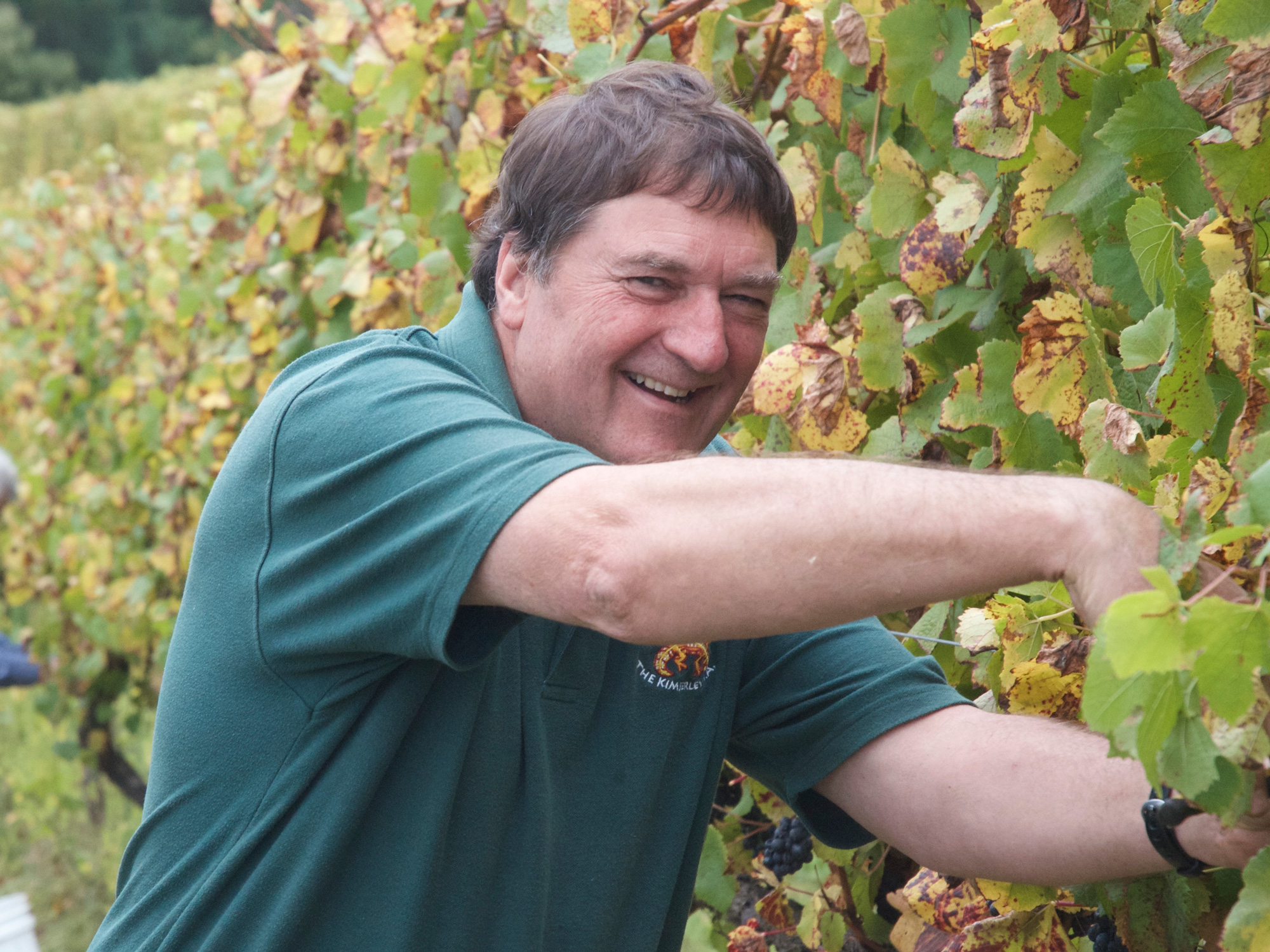
David Lloyd of Eldridge planted gamay here some 20 years ago on the Mornington Peninsula, which was somewhat revolutionary at the time. Barry and Jan Morey from Beechworth’s biodynamic quiet achiever Sorrenberg and Philip Jones of Bass Philip were even earlier adopters, with the latter planting vines at high density in 1988. But none of these were the first. In fact, Len Evans planted it in the Hunter Valley (understood to be) in 1976.
That increased clarity, and for those hip to the revolution back in the 80s and 90s, has seen a renewed interest in both region and grape. David Lloyd of Eldridge planted gamay here some 20 years ago on the Mornington Peninsula, which was somewhat revolutionary at the time. Barry and Jan Morey from Beechworth’s biodynamic quiet achiever Sorrenberg and Philip Jones of Bass Philip were even earlier adopters, with the latter planting vines at high density in 1988. But none of these were the first. In fact, Len Evans planted it in the Hunter Valley (understood to be) in 1976. Not exactly the classical place for an early ripening, cool climate grape, but it’s still there, and Tyrrell’s now make a special release wine from the vines.
![]()
David Lloyd of Eldridge Estate in Mornington Peninsula was one of the first to make gamay in Australia.
The groundwork laid down by the maverick Beaujolais artisans of the 80s and 90s (the heartthrobs are still going strong, and they have been joined by a shimmering galaxy of new stars, too) has been somewhat infectious, with a global interest in both method and material. Gamay is not widely or heavily planted in Australia, but it is quite the buzz variety, with progressive winemakers, both established and newly minted, pursuing the variety with great vigour. There are more plantings coming online over the next few years, with the Adelaide Hills, Tasmania, Gippsland, the Yarra Valley, Mornington Peninsula and pockets of North-Eastern Victoria, amongst others, all fielding more representatives soon. As it stands, there are enough compelling examples to have a deep dive into the variety in the Australian context.
As always, our panel was made up of six of the country’s finest tasters, makers and thinkers, with a brief to find the wines that compelled the most. This was not an exercise in technical perfection or to champion one style over another, nor was it a search for profundity. Rather, the aim was to find wines of interest and character. The below notes are comprised of the wines that made a final list of six from each of the tasters.
Our panel was made up of: Loic Avril, Wine Director at Dinner by Heston; Gilles Lapalus, winemaker and vermouth artisan, Maison Lapalus and Maidenii; Tessa Murray DipWSET, Sommelier at Cutler & Co.; Stephanie Jacob, Wine Buyer at Supernormal; Natasha Johns DipWSET, Brand Manager Shaw + Smith and Tolpuddle; and Sebastian Crowther MS, Director of Real Wines. All wines were tasted blind.
![]()
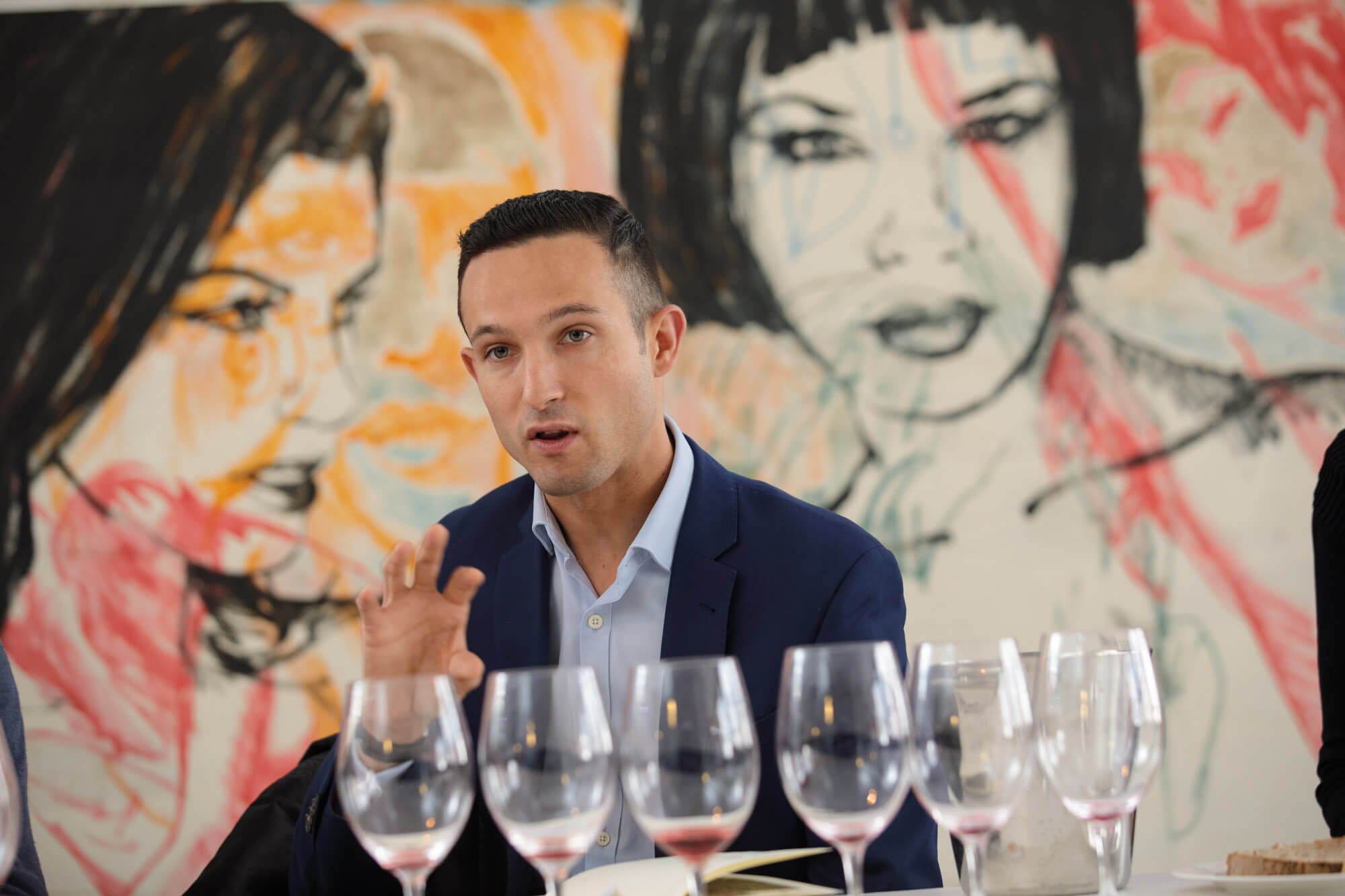
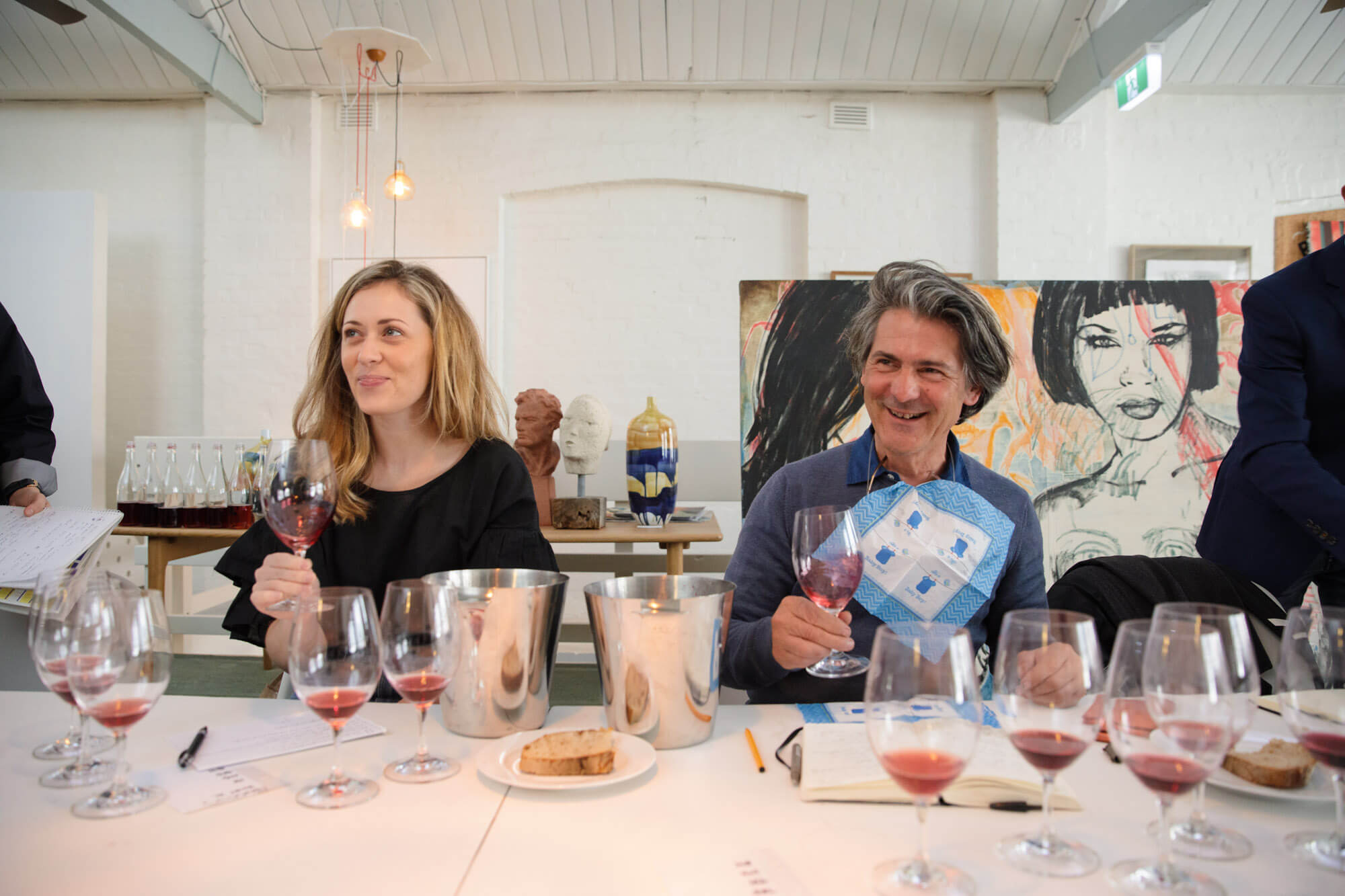
Sebastian Crowther, Tess Murray, Stephanie Jacob, Gilles Lapalus, Loic Avril and Natasha Johns. Photograph: James Morgan. Location: Bromley & Co.
Gamay, the grape
Gamay is often likened to pinot noir, and the two grapes are blended in an even split for Burgundy’s lowliest denomination of red wine, Passetoutgrain. Gamay, though related to pinot noir and having some similarities, is notably different. Gamay ripens a bit earlier than pinot noir, and it can produce a bit of a higher crop, so it’s suited to cool conditions where vigour and ripeness are moderated. Its flavours also tend to be a bit fuller, with riper more luscious forest berries and flashes of violets quite common. It also trips into a cherry spectrum, both red and black, depending on ripeness. It’s a variety that holds acidity quite well, so can be fresh, and it actually has quite a bit of tannin, which is very apparent in the loftier Beaujolais bottlings, which can be very structured and age-worthy.
![]()
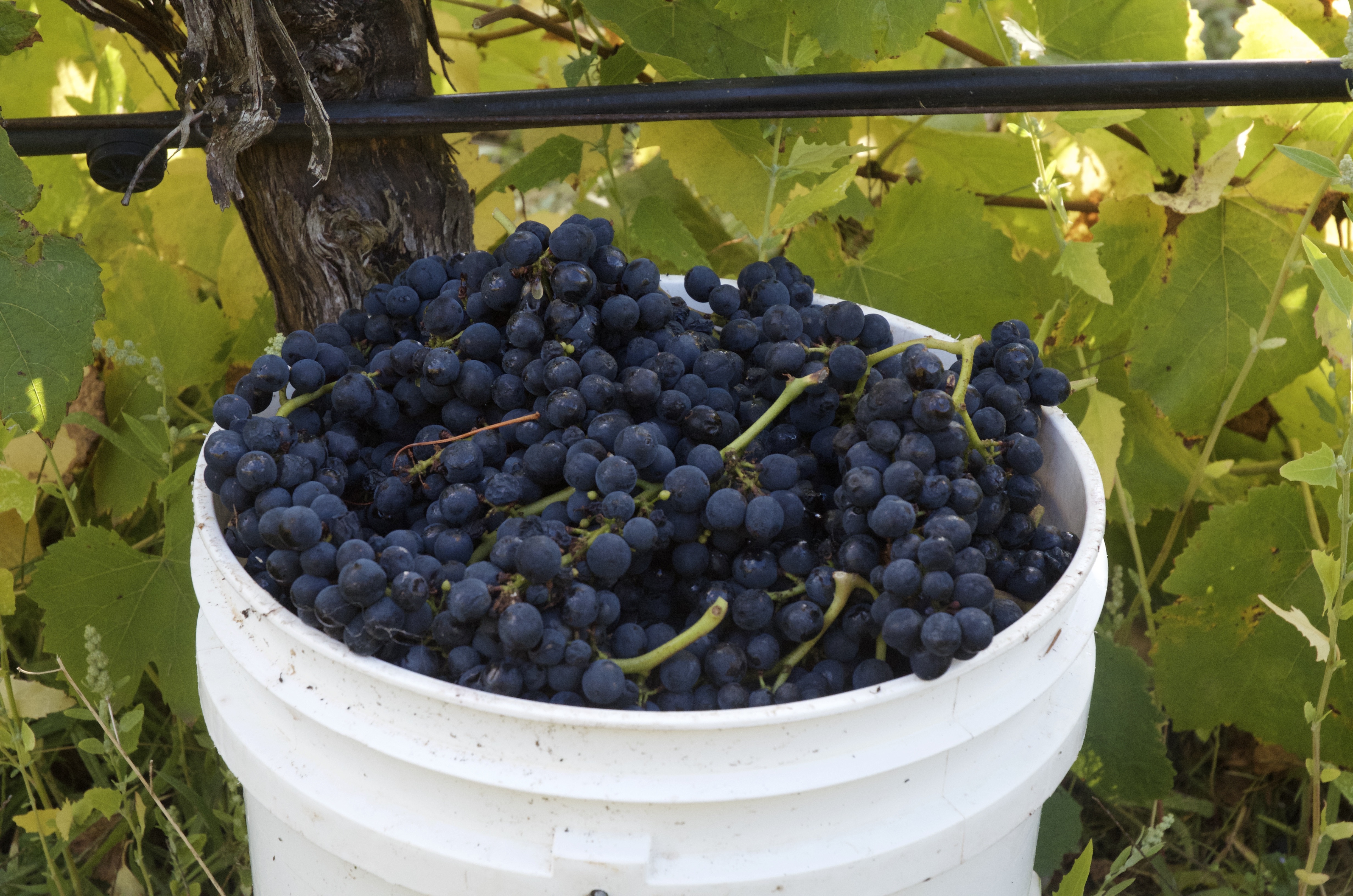
Gamay picked at Eldridge Estate
The overview
Although there are a few stalwarts, gamay has no defining identity in this country, and arguably the benchmark of Beaujolais has not been imprinted heavily on those longer-term players. So, with many winemakers well and truly held in the thrall of ‘real’ Beaujolais, it was always going to be interesting to see if we turned up examples that overtly favoured homage or individuality.
Murray commented that gamay is a variety that offers a lot of value for consumers. “It is versatile with those dishes that you don’t normally associate red wine with,” she also noted. “I thought there were some good examples… I think sometimes for me it was underripe and overripe … sometimes the sour/sweet just threw me,” she said.
“I was imagining that we were going to see more carbonic styles, with really primary fruit, and in fact I thought a lot of these wines are for the longer haul. So, that was a surprise,” remarked Lapalus. “One of the trends in Gamay is that people feel obliged to use the stem, and I don’t know why… it shows a lot in many of these wines.”
“I quite enjoyed the bracket,” remarked Avril, saying that, “The six I picked were pretty tasty. The ones that had more oak ageing were more up there for me, while the ones that were more fruit driven were not showing as well, in my opinion. Use of older oak added a bit more of a layer to the wines, which were slightly rounder and smoother.”
Jacob remarked that she “had a tendency to favour wines with the crunch of tart black fruit, without obvious stalk or oak and with enough flesh and texture to balance acidity.” Lapalus noted that the acidity in some of the examples was too pronounced. “There are some wines that are quite aggressive with the acidity, especially the acetic acid,” he said.
As surfaces in many of these tastings, there were several wines that had noticeable regional menthol/mint characters, though this didn’t preclude tasters from nominating these wines in their top selections, and even as their top wines. “Some of the wines in there had menthol, which, to me, takes away typicity, my idea of what the varietal character is,” said Johns, though she also found this did not detract from the quality of some of her favourite wines. Jacob noted that this character was present in Australian gamay more pervasively in years past, and particularly in benchmark examples, but that “it was managed very well in these wines.”
While there was quite an arc of styles, with a couple of wines showing faults that detracted too much, in general there was an encouraging mix of expressions, with varietal character evident, as well as a fair amount of positive experimentation. “There was a huge diversity of styles across them, and ripeness levels… it’s probably a bracket that shows exactly where we’re at with gamay in Australia; people just making a whole matrix of styles: more oak, less oak, more [whole] bunch, less bunch…” Crowther said in summary.
The Number One Picks
These are the number one picks from each of the panellists, with supplementary notes from other panellists if they featured in their top-six lists.
![]()
2019 Ochota Barrels ‘The Price of Silence’ Gamay, Adelaide Hills $40
This received significant support across the panel, with Murray, Jacob and Lapalus nominating it as their wine of the tasting, and Johns and Avril including it in their top-six lists. Murray described the nose as, “pure fruited, bramble, black cherry, yet all lifted and bright in form.” She continued, “Super-attractive lavender violet spice (fragrant). Refreshing yet dense chalky tannins. Lots of layers on the palate and interest on the nose. Feels tightly wound but comes together seamlessly and would easily drink two bottles!” Jacob found it to have “purple/black fruits and cocoa tannin,” describing it as “reminiscent of Beaujolais,” and declaring that, “everything you love about Gamay is here.” Lapalus commented on the “intensity” of “cherry” and “floral” notes, with a “vinous” quality. He went deeper into cherries on the palate, also noting “morello” in the “clean and well made” wine. “Violet aromatics, more robust and blue fruited with a rustic structure and some crushed rock and saline mineral notes. This wine is more brooding and a little more muscular but oh so charming – heaps of fruit to back up its bold structure and lots of nuance coming through with time in the glass,” commented Johns. “Bright and well managed aromatic wine with some whole cluster. …Crunchy red cherries and sour plum. Crystalline rose petals. Some carbonic or whole bunch style adding a lift of herbaceous notes. A very good example of gamay with some Asian spices on the finish,” commented Avril.
![]() 2018 Lyons Will Gamay, Macedon Ranges $39
2018 Lyons Will Gamay, Macedon Ranges $39
This also received significant cross support, being Johns’ top wine, and gaining positive comments from four other tasters. “Tart red fruits – currants, plum and spicy red cherries with some black tea and turned earth savoury notes that add interest. Fine tannins and great acid drive. Well balanced with lots of points of interest,” wrote Johns. Crowther saw, “Some lovey lifted red fruit characters, pure attractive and seductive. The palate is long and lacy. Fresh vibrant acid is well integrated, but integral to the shape and flow.” He called it a “great example,” and a “highly attractive style.” Avril saw “bushy, vegetal aromas, peppermint, pepper leaf. A cool climate wine. Tasmanian perhaps,” he theorised. “Great balance.” Jacob found it had “cocoa and raspberry” notes, and was “very tart, in a good way.” While Murray saw, “Raspberry. Whole bunch, fragrant lifted pink pepper, spiciness,” with “slightly greener more angular” tannins.” She found it “bright” with “crunchy red fruit.”
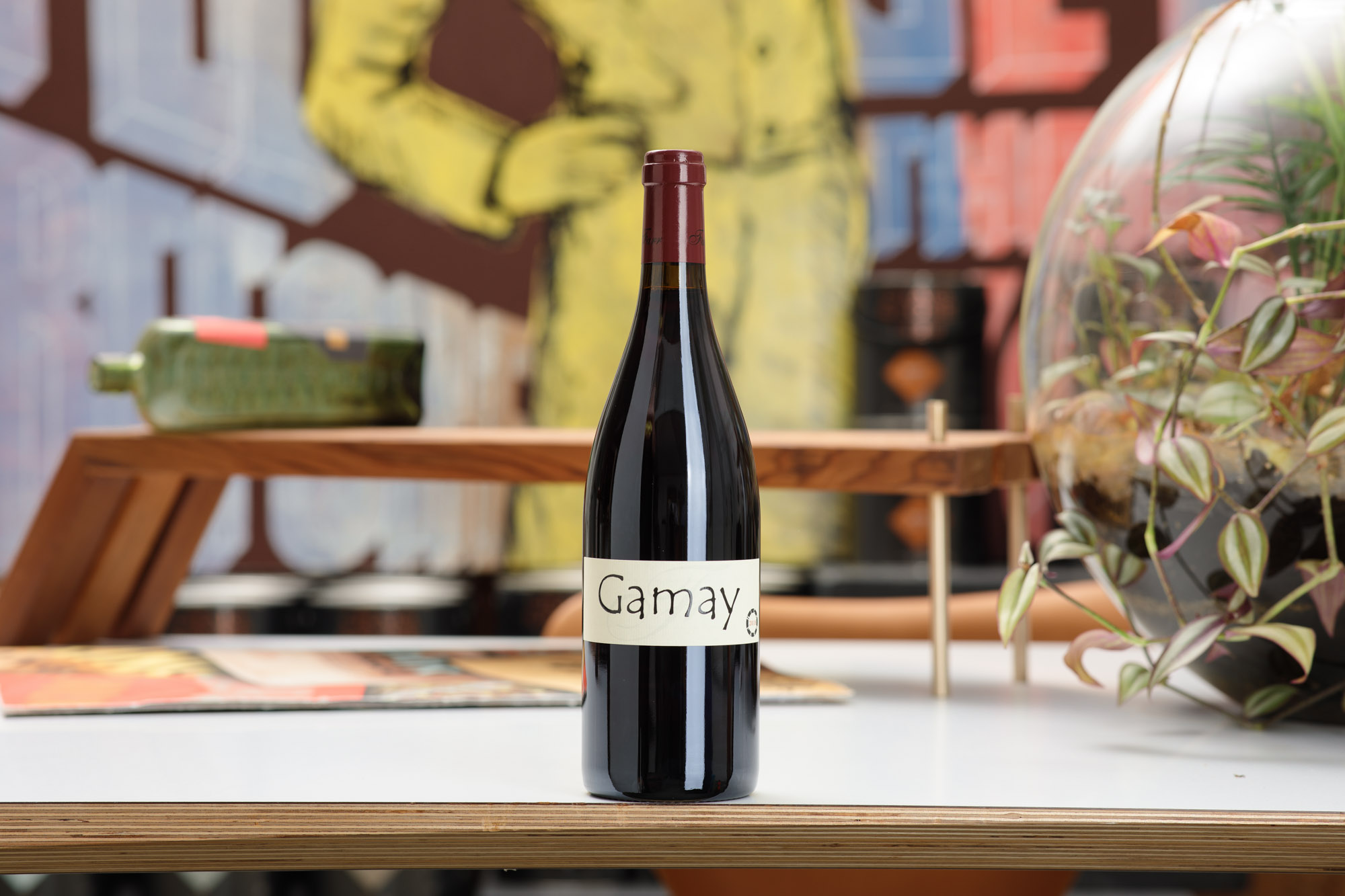
![]() 2018 Farr Rising Gamay, Geelong $43
2018 Farr Rising Gamay, Geelong $43
Crowther allocated this to his top spot, while Johns and Murray included it in their top six. “Purple and blue fruits on the nose. Lots of whole bunch character, pine resin and sap. Attractive palate, silky fruit profile. Layered and attractive,” wrote Crowther. Johns found it had “Darker fruits but with tartness – like a blueberry sour lolly – tart but with an explosion of sweet fruit on the palate. There is a carbonic character here but some meatier and savoury notes and a slightly bitter finish from bunch that isn’t unpleasant given the volume of fruit.” Murray noted that she “Initially felt it lacked elegance,” but “I kept going back to it.” She continued, “Macerated raspberry. Super jubey red fruit, orange zest with lovely lift and interest. Crunchy, vibrant on the palate, fine grippy (refreshing) tannin.” Jacob saw it as, “fresh, full of red fruit, amaretto, cherry,” with “plenty of lift.”
![]() 2018 Thick as Thieves ‘Purple Prose’ Gamay, King Valley $37
2018 Thick as Thieves ‘Purple Prose’ Gamay, King Valley $37
This was Avril’s top wine, with Johns also commending it. “A similar style to wines from Beechworth. Smooth, good texture of tannins. Brighter spices and red flowers. Lovely balance. The whole cluster adds a good layer of compost and forest floor. Delicious wine,” Avril wrote. “Ripe red and darker fruits, a touch of menthol, but not offensive, chocolate, coffee ground and earthy characters and an aromatic whack of [whole] bunch, again not offensive. There are some subtle oak notes here too – char, vanilla, sarsaparilla that work with the earthier characters and denser fruits. Lots to make you keep coming back despite that menthol note, lots of interest,” commented Johns.
The Consensus Picks
These were all in the top six lists, receiving cross support from the tasters, though none were nominated as their wine of the day.
![]() 2018 Sorrenberg Gamay, Beechworth $55
2018 Sorrenberg Gamay, Beechworth $55
From one of Australia’s pioneers of the variety, this made the top six lists of Crowther, Johns and Avril. “Red plums, red cherries, fruits of the forest, green tea, charcuterie and fresh earth. Some dried herb, mushroom and forest floor peeking through and savoury but almost pinot like soft tannins that are all braced with bright acid that is harmoniously in check. Lots to love about this wine,” wrote Johns. “Dark and raisin fruits, some sweet spice sitting in the background. Certainly some oak. Palate has great shape and flow. Touch warm on that palate, but still holds nice drinkability,” commented Crowther. Avril thought it had “outstanding balance,” and was “delicious” and “aromatic.” He found the palate “smooth with good integrity of spice and oak toast,” with a “round texture.”
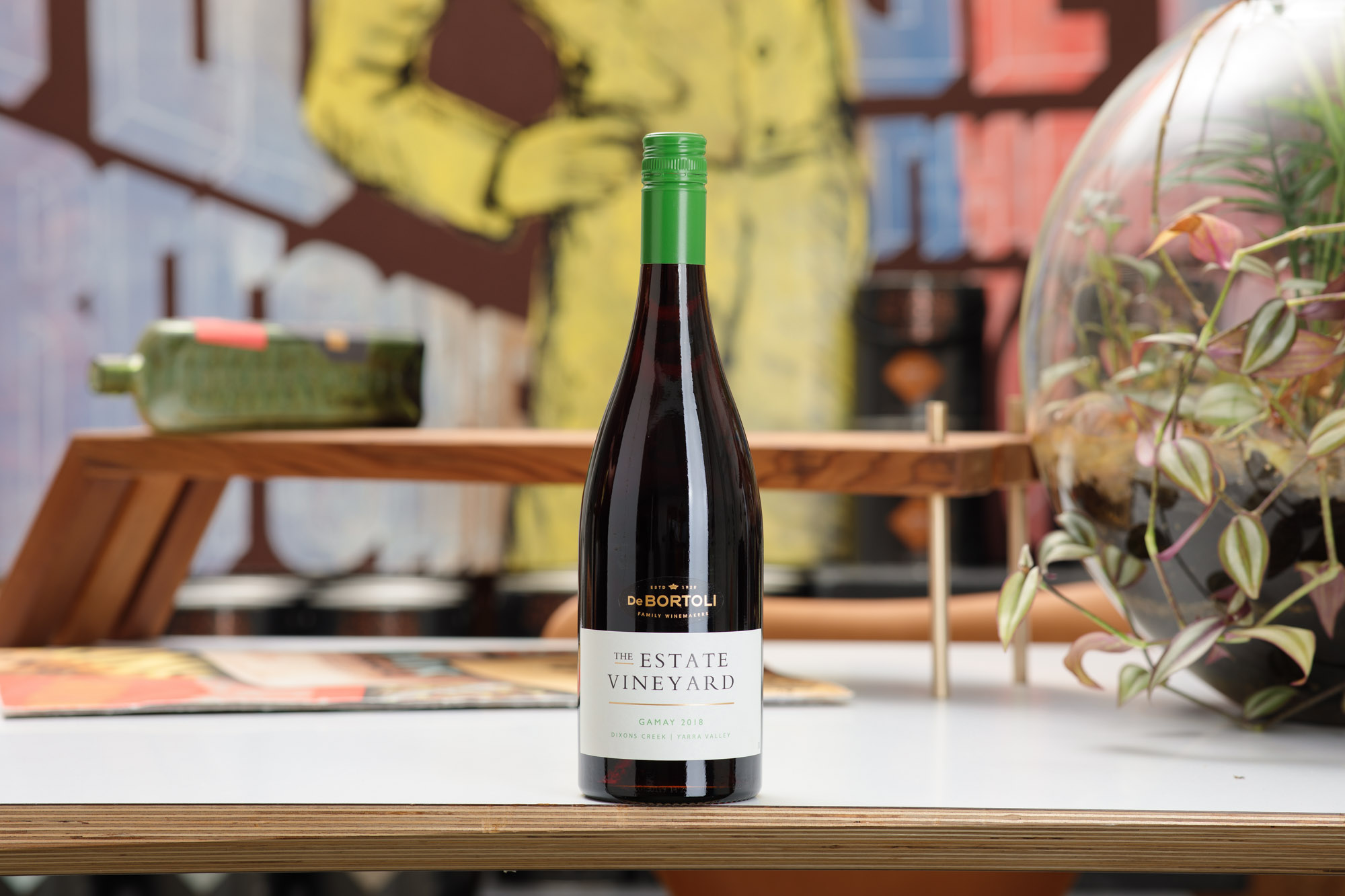
![]() 2018 De Bortoli ‘Estate Vineyard’ Gamay, Yarra Valley $28
2018 De Bortoli ‘Estate Vineyard’ Gamay, Yarra Valley $28
This also received support from three tasters, with Lapalus, Avril and Jacob all including it in their top-six selections. Jacob saw, “dense blackberry” and “plenty of stalk,” calling it a “more robust style.” Lapalus also saw “blackberry,” finding it “powerful” and vinous, with “dark fruit and high tannin.” Avril saw it as a “fuller style,” but also a “mineral wine.” He noted a “lovely extraction of phenolics,” calling it “ripe and harmonious.”
![]() 2019 Mutual Promise Gamay, King Valley $33
2019 Mutual Promise Gamay, King Valley $33
A new player on the scene, this was commended by both Lapalus and Murray. The latter saw, “wild strawberry, white pepper… something alluring. Light in style but layered. Suppleness yet acidity braces the palate. Not complex but super smashable. Just medium in length. Layered with an attractive fleshiness.” Lapalus noted “strawberry and cherry” aromatics, with a “creamy texture” and “leesy” notes.
Both Crowther and Lapalus included this in their top picks. “Good concentration of fruits both red and black, sappy lacy character. Good palate weight and structure. Very silky as it drifts, lovely lingering appeal. Well made,” wrote Crowther. Lapalus saw this as a having a lot of “whole bunch character,” with “artichoke” notes and some “VA.” He thought it had “good texture,” with “long, fine tannin,” and called it a “natural style.”
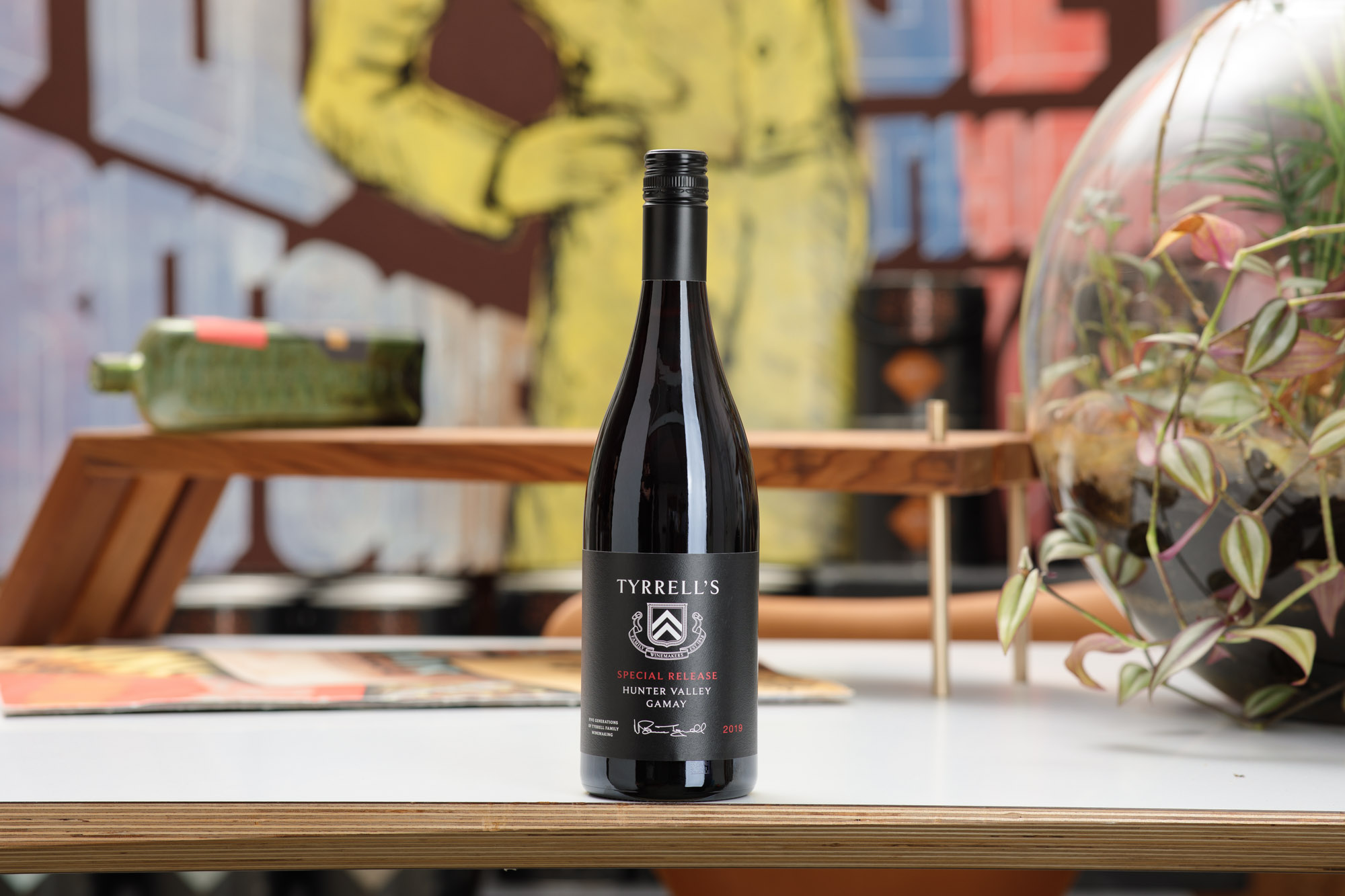
![]() 2019 Tyrrell’s Special Release Gamay, Hunter Valley
2019 Tyrrell’s Special Release Gamay, Hunter Valley
From by far the oldest vines, this was praised by both Jacob and Murray. “Dried red plum, cherry, earthy sous bois note,” Murray wrote. “Opening to a lovely lifted violet, dried rose note. More serious in style and tight on the palate. …Tannins are present yet supple, elegantly woven in with the fruit,” she continued, remarking that she “was impressed by the length and intensity on the finish.” Jacob saw, “a touch of stalk,” with “bright acidity,” noting that it “opens in the glass.”
![]() 2018 Punt Road Gamay, Yarra Valley $29
2018 Punt Road Gamay, Yarra Valley $29
This received support from both Johns and Crowther. “Glace cherries, bramble and a touch of smoke. Tea leaf, slate mineral notes and super racy acidity. This wine lacks a little concentration but is pretty, vibrant, racy, delicious and is nicely balanced,” wrote Johns. “Dark fruits with silky feel across the palate. Attractive core of elegant fruits with spice. Simple style, but plenty of drinkability,” noted Crowther.
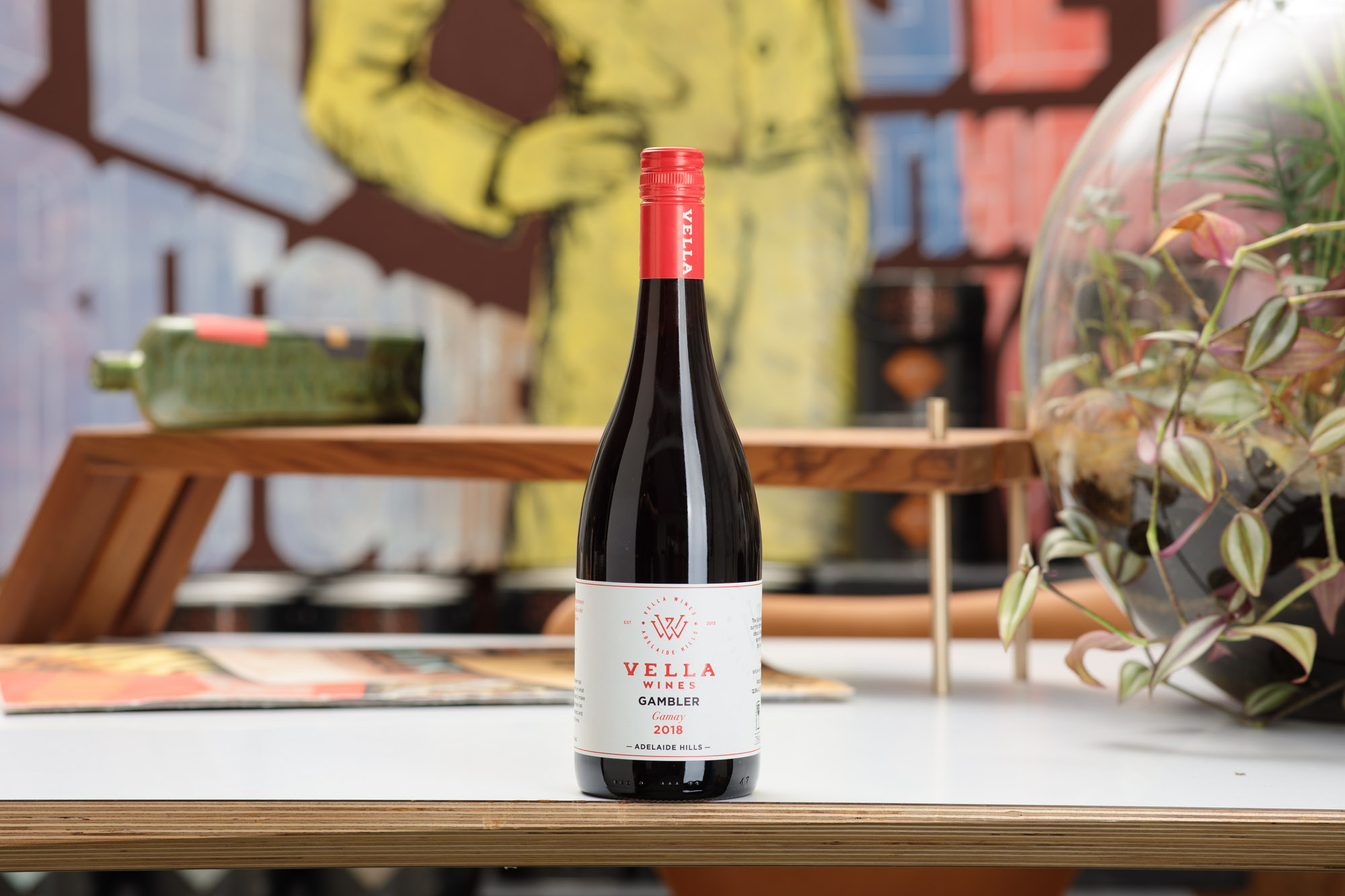
![]() 2018 Vella Wines ‘Gambler’ Gamay, Adelaide Hills $42
2018 Vella Wines ‘Gambler’ Gamay, Adelaide Hills $42
Both Crowther and Jacob included this in their top-six lists. “Bright red fruits, smoke and pine resin. Clean, zippy and soft on the edges,” wrote Crwother, noting the finish was “quite tart.” Jacob found it, “lovely, fine and layered,” with “just ripe fruit” and some choc/coffee oak.”
This found favour with both Lapalus and Avril. With the former finding it “eucalyptus dominant with stem (whole bunch).” He noted a “wattleseed” character, with the palate having a “very round attack, followed by acidity, fluidity,” calling the finish “fruity.” Avril also noted the whole bunch, calling it “full and vegetal” with “whole bunch aromas, charcoal and smoke.” He found the “palate in balance,” with a “round texture.”
The Other Top Picks
These wines featured in one of the panellists’ top six, but they were not necessarily the lowest ranked on their individual lists. We’ll let their words do the talking.
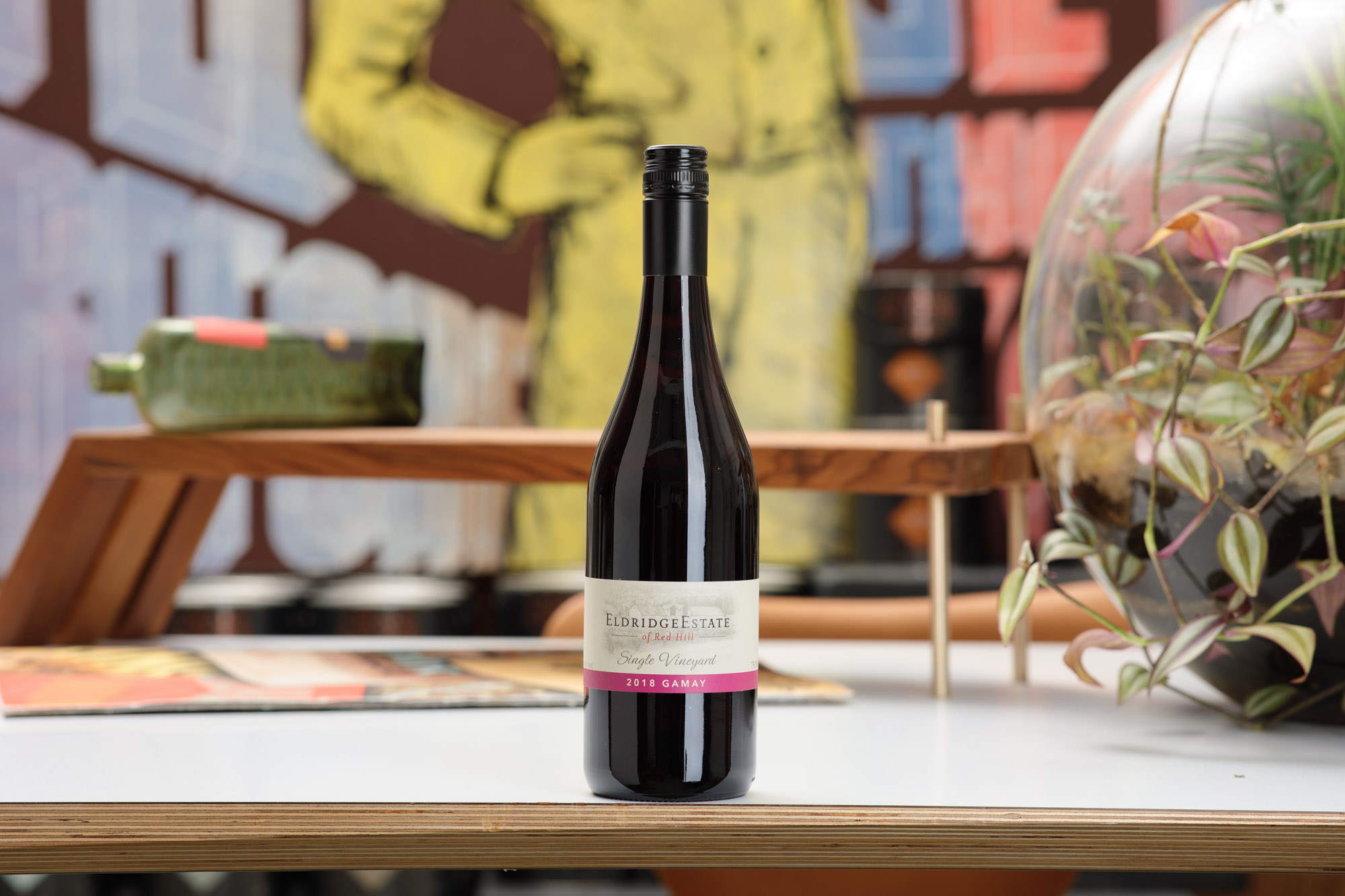
![]() 2018 Eldridge Estate Gamay, Mornington Peninsula $50
2018 Eldridge Estate Gamay, Mornington Peninsula $50
Lapalus described this as “dark red, garnet,” with notes of both stems and wood. He saw “roasted coffee and roasted wattleseed” notes, against “cooked fruit.” On the palate, the “fleshy attack” was “followed by fluidity, fresh acid, fine tannin.” He closed by describing it as both “fruity” and “powerful.”
![]() 2018 Sanskrit Gamay Noir, Tasmania $55
2018 Sanskrit Gamay Noir, Tasmania $55
Murray found this quite “cab mac-y with brighter notes, macerated strawberry, raspberry,” and showed “medium plus intensity on the nose with lots of brightness and freshness.” She called it “seriously attractive,” with “fresh white strawberry, medium plus acidity” and “medium plus intensity. “Fine chalky/grippy tannins,” provided structure.
The Panel
![]()
Loic Avril
Loic Avril hails from Tours, in the Loire Valley, but has spent much of his career working abroad. After apprenticing at the Michelin starred Le Grand Monarque and Anne de Bretagne, Avril worked with the legendary Gerard Basset, before moving to The Fat Duck in Bray, where he worked as the Assistant Head Sommelier until moving to Australia for the temporary relocation of The Fat Duck. He stayed on to become the Director of Wine for Dinner by Heston Blumenthal. He has won countless accolades, including Best Young Sommelier in the World, the UK and France.
Tessa Murray is currently a sommelier at Andrew McConnell’s Cutler & Co. She has worked vintages around the world, including at the legendary estate of Vincent Dauvissat, in Chablis, as well as with Tom Carson at Yabby Lake, on the Mornington Peninsula. She is also a WSET Diploma holder.
![]()
Seb Crowther and Tess Murray
Sebastian Crowther is one of only five Master Sommeliers in Australia, having passed the notoriously difficult test in 2013. He currently runs his wine import and wholesale business, Real Wines. He has previously won Sydney Morning Herald Sommelier of the Year and also the Judy Hirst award for the best wine list in the country. Prior to devoting himself to his own business, Crowther was the Beverage Director for the Rockpool Dining Group.
Stephanie Jacob is the Wine Buyer at Andrew McConnel’s Supernormal. She has worked a number of vintages across different regions, judged at Royal Melbourne, was awarded the 2016 Daniel Pontifex Scholarship, and was a Ruinart Sommeliers Challenge Finalists in 2018.
![]()
Stephanie Jacob and Gilles Lapalus
Gilles Lapalus is originally from Burgundy, and the third generation of his family to be involved with wine. He studied oenology in Dijon. Lapalus moved to Australia in 2001 to help establish the Sutton Grange Winery, near Castlemaine. In 2011, Lapalus started to experiment with native botanicals, which led to the founding of Maidenii with Shaun Byrne and Vernon Chalker. Theirs was the first vermouth to employ Australian botanicals. After leaving Sutton Grange in 2015, he started his own label, Maison Lapalus. He also co-authored ‘The Book of Vermouth’ in 2018 (Hardie Grant).
Natasha Johns has worked in the wine industry for over 15 years, primarily in sales and marketing roles. She is a WSET Diploma holder, and is currently the Brand Manager for iconic labels Shaw + Smith and Tolpuddle, as well as The Other Wine Co.
![]()
Loic Avril and Natasha Johns
How the tasting was conducted
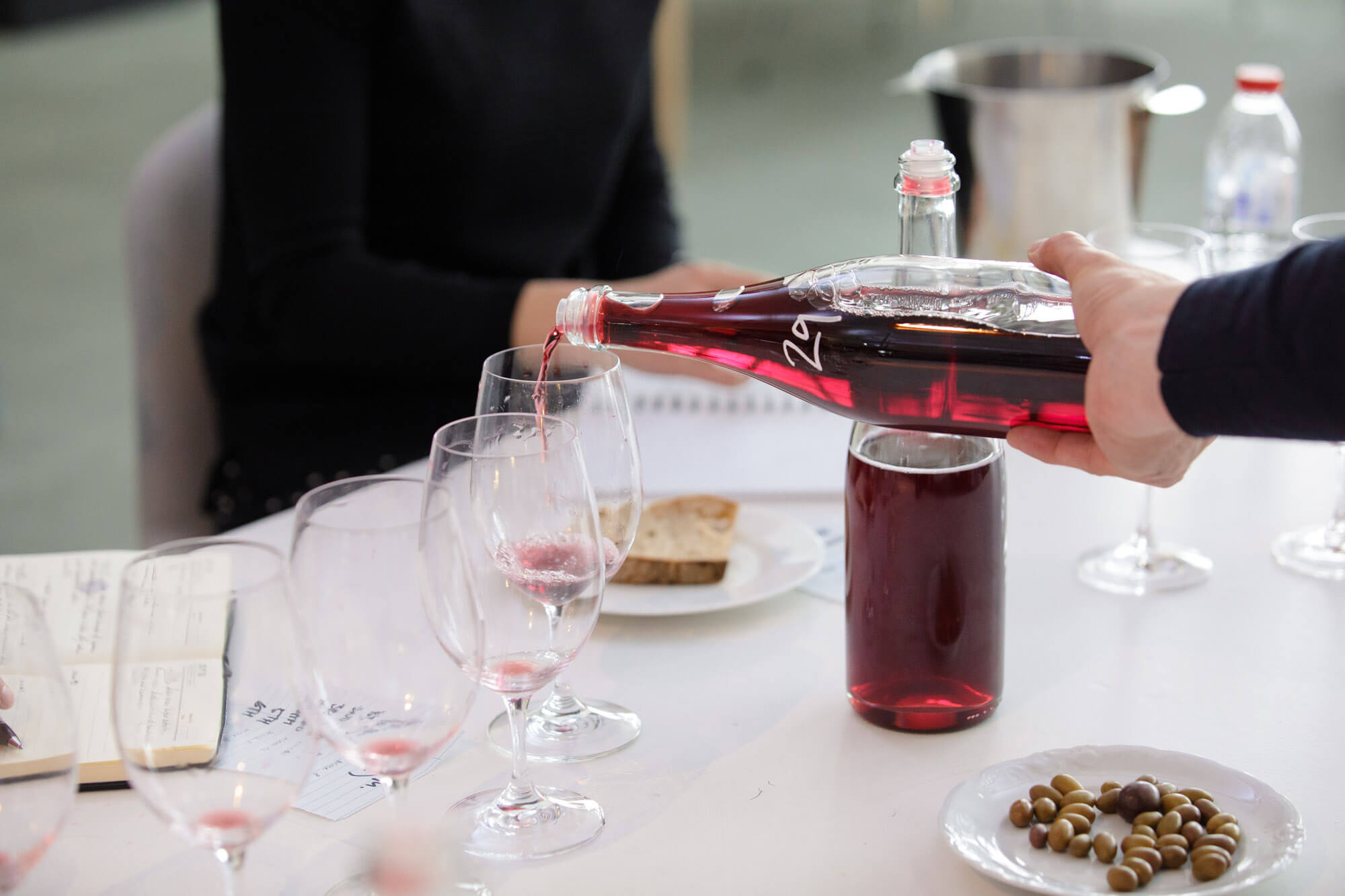
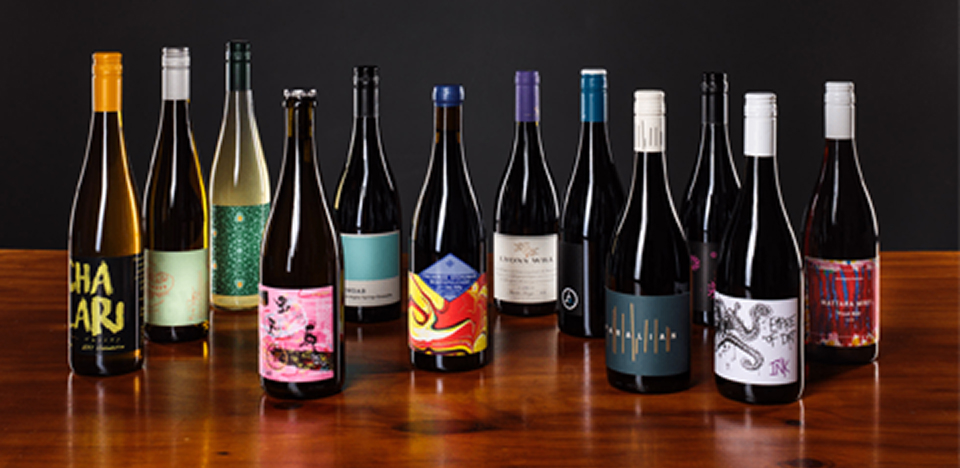
All wines were decanted into clear wine bottles, so as to not let bottle shape or closure type intrude on the appraisal. The wines were presented with no particular order to the wines. Once the initial tasting was completed, the panel re-tasted as they saw fit to confirm or recalibrate their first impressions, and to give those wines tasted first a chance to be properly compared to those tasted later. The identity of the wines was revealed after the panellists had disclosed their opinions.
![]()
![]()




 2018 Lyons Will Gamay, Macedon Ranges $39
 2018 Farr Rising Gamay, Geelong $43
 2018 Thick as Thieves ‘Purple Prose’ Gamay, King Valley $37
 2018 Sorrenberg Gamay, Beechworth $55
 2018 De Bortoli ‘Estate Vineyard’ Gamay,
  2019 Mutual Promise Gamay, King Valley $33
 2018 Mayer Gamay,
  2019 Tyrrell’s Special Release Gamay,
  2018 Punt Road Gamay,
  2018 Vella Wines ‘Gambler’ Gamay, Adelaide Hills $42
 2018 Rising Gamay,
  2018 Eldridge Estate Gamay, Mornington Peninsula $50
 2018 Sanskrit Gamay Noir,