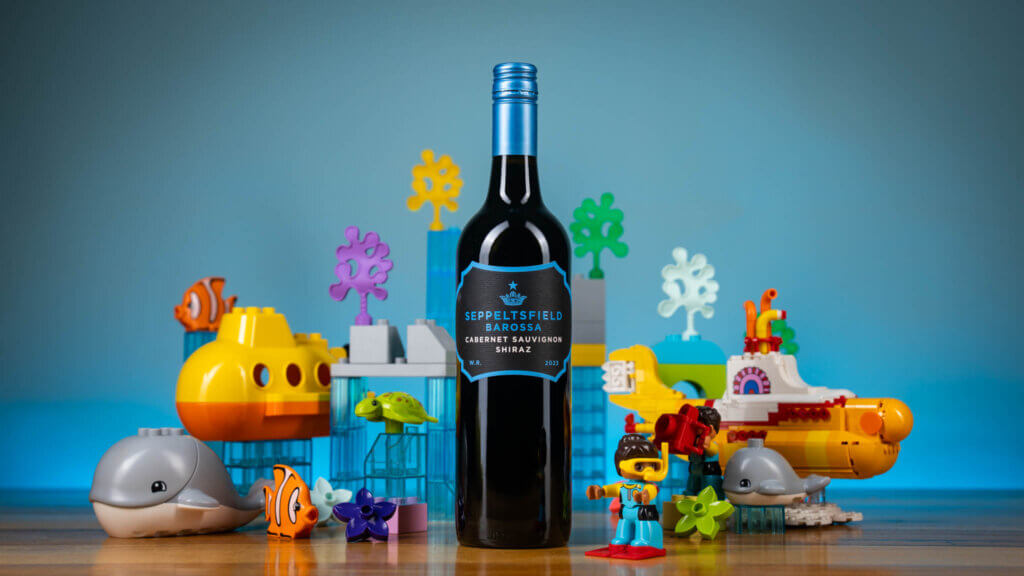
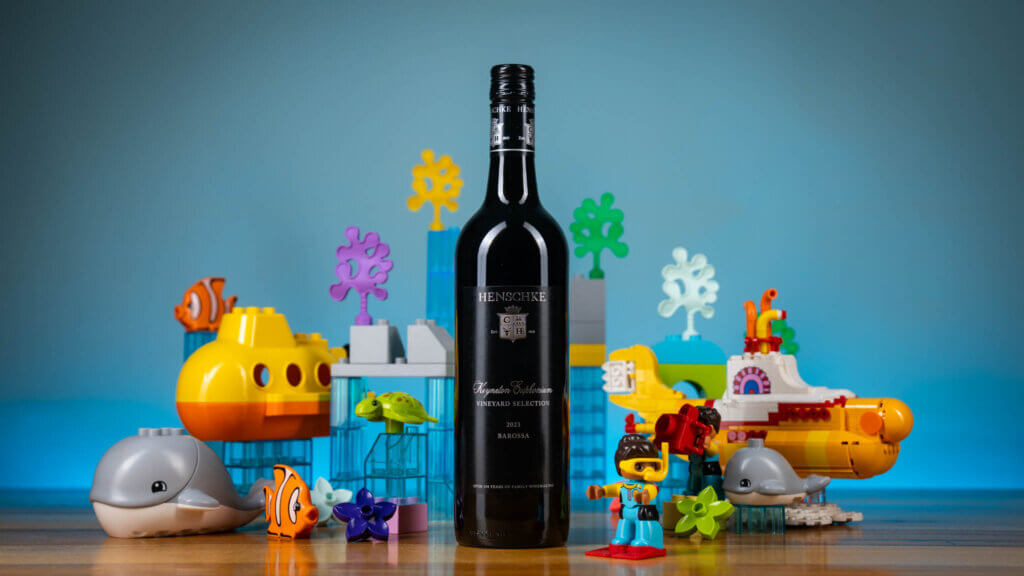
In nineteenth-century Bordeaux, merchants quietly beefed up their thin cabernet-based wines by slipping in splashes of syrah from the Rhône. They rarely advertised this fact, and the practice soon became illegal – but on the other side of the world, blending cabernet and shiraz together was developing into an artform. For generations, Australian makers sold their blends of shiraz and cabernet as ‘claret’ – a style rather than a recipe – until Penfolds, Yalumba, and a trophy cabinet’s worth of medals turned the combination into the nation’s signature red wine. Cabernet-shiraz blends have since become a calling card we’ve carried around the world – an icon, but one that isn’t always in fashion. Why do these two varieties click the way they do? Why did Australia, of all places, make this blend its own? And what will happen now that a cohort of iconoclastic young makers has set their targets on this most traditional of blends? We took a Deep Dive to find out …
We gathered every example of Australian blends of cabernet sauvignon and shiraz that we could find – including wines that small quantities of other accessory varieties – and set our expert panel the task of finding the wines that compelled the most. All wines were tasted blind, and each panellist named their top six wines. Below are the wines that made the panellists’ top-six selections from the tasting.
Our panel: Frank Butera, manager and winemaker, Bass River Winery; Audrey Donovan, sommelier, Marion; Thomas Ward, assistant winemaker and vineyard hand, e’Stellar Estate; Isabella Greco, freelance sommelier; Rémi Monnoyer, sommelier, Coda; Chia-Wei Shen, wine merchant, Balgownie Estate.
The Top Wines
This isn’t an ordered countdown. There’s no ranking – just the top six wines each panellist found most compelling from the blind tasting, in all their different ways. Everyone’s palate is different, and that’s the point.
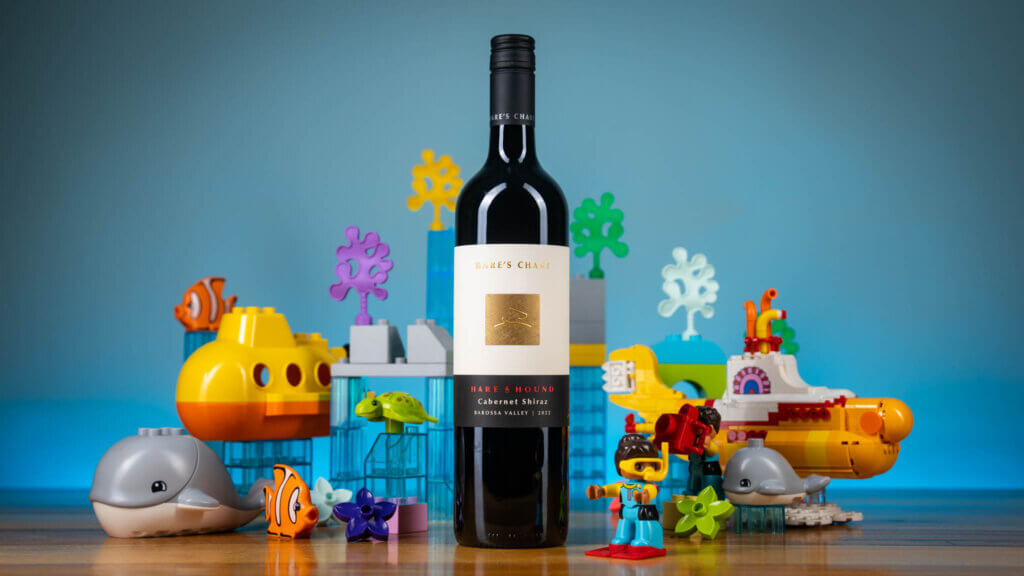
Ward, Greco and Shen each placed this wine within their top six from the blind tasting. Ward discovered “aromas of blackberry, with spicy accents of white pepper and mace spice. Flavours of cherry and plum with hints of blackberry dominate the palate. A clean and well-developed wine, rounded off with a touch of cracked pepper on the finish.” Shen described it as “dark ruby in the glass. Aromas of black cherry, dark plum jam and violets, given complexity by a little green character and spicy notes of black and white pepper. Balanced acidity and tannins, with nice length on the finish.” Greco found it “savoury at first – black pepper, clove and a touch of dried chilli, alongside something that reminds me of a really good paprika-based meat rub. Underneath is a lovely core of red fruit: sour cherry, redcurrant, raspberry and red plum. The tannins have a slightly dusty, dry grip that begs for food to go alongside it. Go crazy with pairings – this would work with just about everything, even seafood dishes like chargrilled octopus.”
Greco, Ward and Donovan all listed this among their favourite six wines from the blind tasting. Greco described “a flicker of orange colour in the glass. Roasted capsicum leads the nose, warm and sweet, followed by a lovely tomato note reminiscent of passata, alongside green, savoury tones of tomato leaf and parsley. Balanced in structure, with good acidity and grainy, elegant tannins. Vegetarian dishes would pair beautifully.” Donovan called it “a truly excellent expression of what cabernet sauvignon and shiraz can achieve with a touch of cellar age. Notes of cooked figs and blackberry jam waft from the glass, reminiscent of a freshly baked fruit pie. The tannins have softened with a little bit of age, as has the acidity – but that softening creates a really pleasant full-bodied wine with incredible length.” Ward noted “smoky oak tones up front, with hints of chocolate rolling through. Confectionery sweetness sits over dark fruit flavours of blackberry, Cherry Heering and Mirabelle plum eau-de-vie, with a funky, interesting edge that keeps you guessing.”
2021 Sobels Shiraz/Cabernet, New South Wales $32 RRP
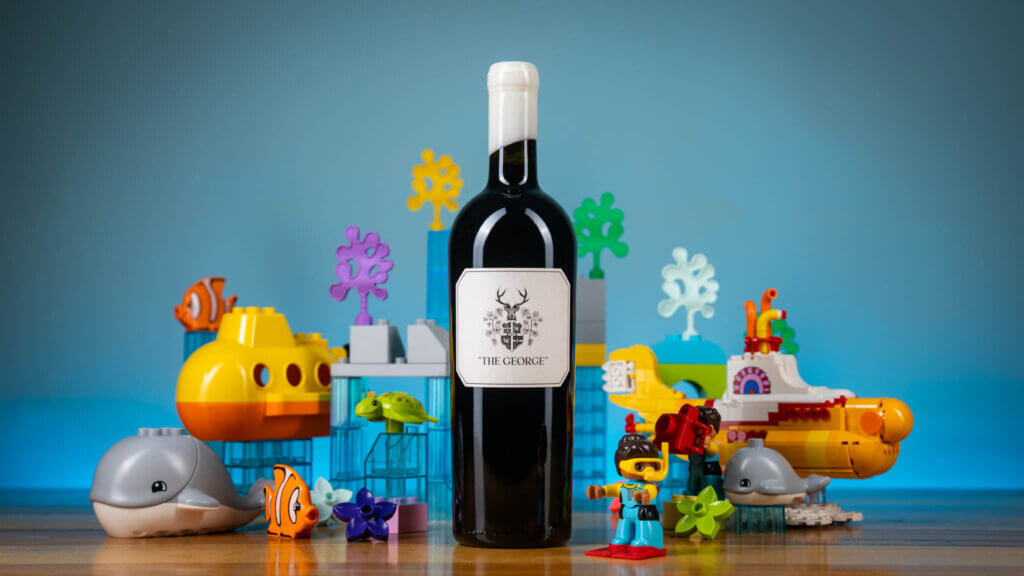
Ward and Shen both brought this into their favourite six from the blind tasting. Shen described it as “a dark ruby colour in the glass, with intense aromas of black and white pepper, blood orange, black-skinned plums, green stemmy character, and a meaty tone reminiscent of Cantonese black pepper diced beef (hei jiao niu liu). Soft acidity gently guides the wine down the palate, balanced by firm tannins that frame the flavours through to a long finish.” Ward said “tomato leaf, freshly picked dill and green capsicum lead the nose – a bit stemmy in character – followed by crème de cassis, blackberry and blue plums. On the palate, it’s full-flavoured with a medium body, warm and long through the finish. The fruit gives you just enough to keep you coming back.”
2024 Bruno & George ‘The George’ Shiraz/Cabernet, Barossa Valley $300 RRP
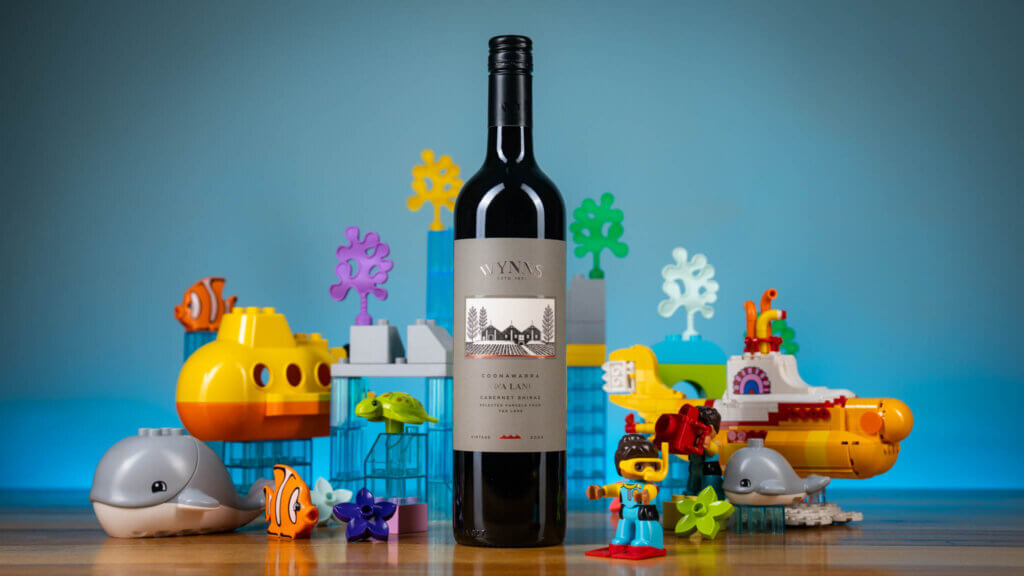
Donovan and Ward both chose this for their top six from the blind tasting. Donovan said “a whole basket of freshly picked fruit comes tumbling out of the glass, with mulberries, black plums and blackberries leading the way, followed by a cool little flicker of mint. A bold concentration of cassis and a hint of menthol give the wine a refreshing edge. The acidity keeps everything lifted, while plush tannins wrap around the palate. A touch of fig lingers on the finish, making this one deliciously moreish.” Ward described “confectionery sweetness with red fruits and hints of cherry up front. Small touches of mint and eucalyptus weave through, finishing with a bit of pepper and a sour cherry bite. Lively and a little savoury – the kind of wine that has you reaching for another sip.”
2024 Wynns ‘V & A Lane’ Cabernet/Shiraz, Coonawarra $60 RRP
Donovan and Monnoyer both picked this among their top six from the blind tasting. Donovan said “there’s a pleasant spiciness here on the nose, like a medley of roasted capsicums of all colours and grilled tomatoes. After some time in the glass, clove spice starts to make an appearance too, alongside some sun-dried black plum. There is so much texture and structure in this wine, driven by a lick of fresh acidity and lengthened by soft tannins.” Monnoyer found “a deep purple colour in the glass, with slight coppery reflections. Intense aromas of black cherry and ripe plum, with developed notes of pouch tobacco and cedar lifted by a light touch of menthol. Complex on the palate, with slightly confected fruit character and well-integrated tannins.”
Donovan and Ward both selected this as one of their top six from the blind tasting. Donovan wrote, “the moment I tasted this wine, I knew it would be my pick of the day. There’s a fun stony minerality that piques your interest – but the bouquet of blackcurrant, cooked mulberry and crushed violets that soon follows will make you stay. The palate is beautifully structured, with a lift of acidity and sandy tannins that create a grippy texture. There are more savoury notes here too – fresh cracked pepper and dried menthol, ending on a slight bresaola note.” Ward described “a nose that leads with confectionery cherries, followed by blackberry compote, Ribena and juicy black plum. Long drive on the palate, and well-balanced, lifted by gentle green pepper and mint notes.”
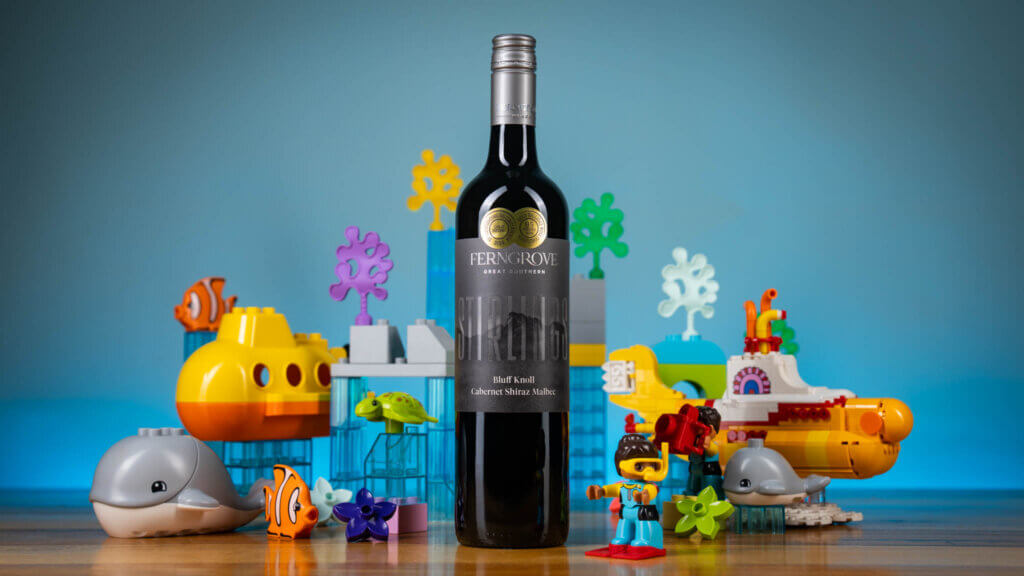
Butera and Donovan both nominated this wine – a blend of 65% shiraz, 33% cabernet sauvignon, and 2% cabernet franc – among their top six from the blind tasting. Butera described it as “expressive and inviting – this wine reveals aromas of tomato leaf, red capsicum and a touch of Red Ripperz confectionery character, layered with hints of seaweed and stemmy spice. The palate is fruit-driven, showcasing vibrant red and white cherry characters with impressive purity and balance. Silky in texture, with fine tannins that provide gentle structure and flow.” Donovan argued that it “feels like a jazz musician in red-wine form – energetic, expressive and vibrant. Aromas of sour cherry and freshly picked blackcurrants jump out of the glass, with a prickly note of green capsicum that’s not too in-your-face. The acid line really helps bring this wine to life, while the plush tannins help give the wine a welcome touch of extra body. I can picture myself chilling a bottle of this and enjoying it at a picnic with friends.”
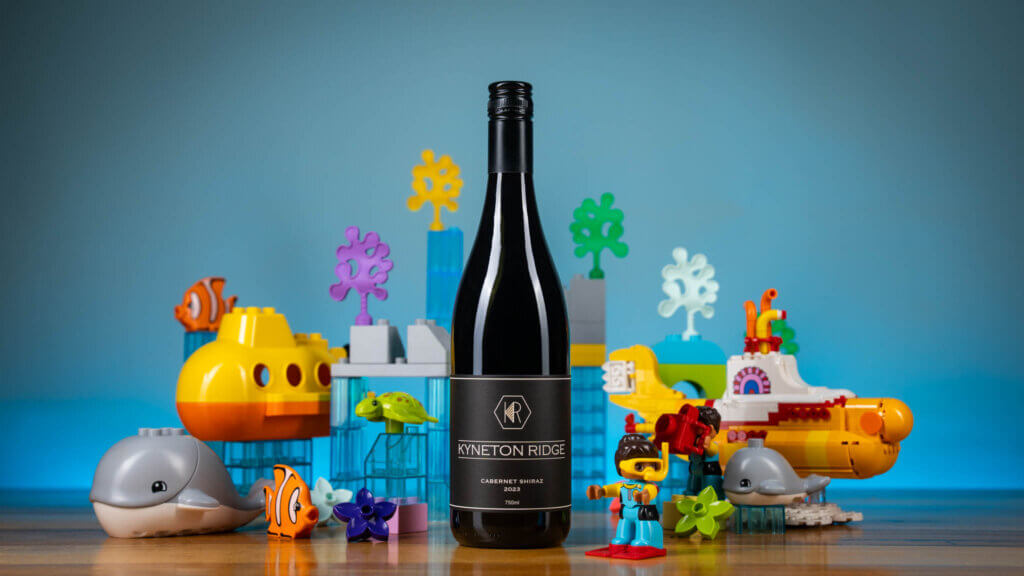
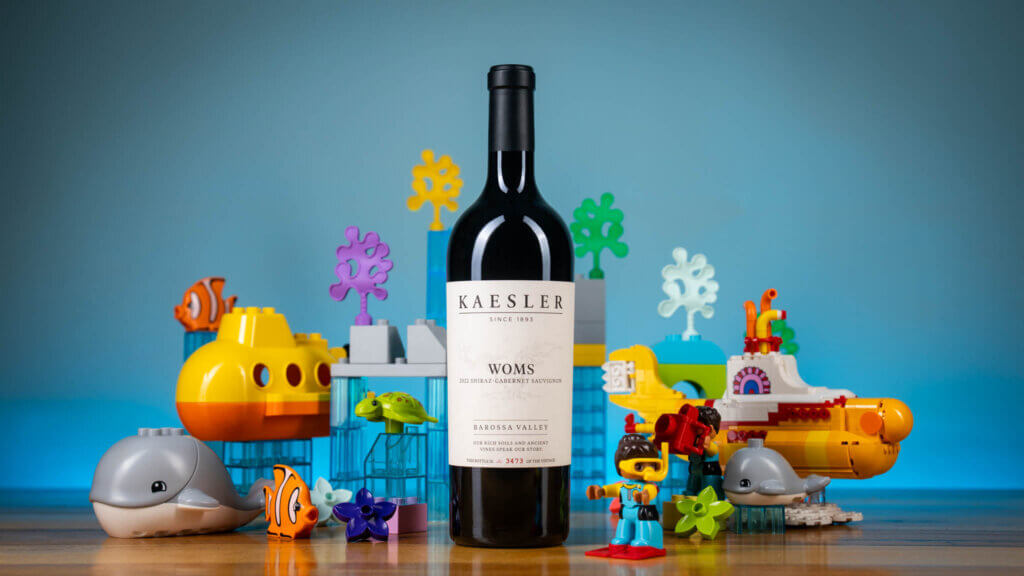
2022 Kaesler ‘WOMS’ Shiraz/Cabernet Sauvignon, Barossa Valley $110 RRP
Monnoyer and Butera both ranked this wine – whose name is an acronym for ‘Weapon of Mass Seduction’ – within their favourite six from the blind tasting. Monnoyer described it as “ruby in colour, with light but beautiful reflections. A very elegant nose showing cherry and liquorice, alongside some dried herbs. The palate is very velvety, with tannins that make their presence felt but aren’t exuberant, framing flavours of juicy black fruits, liquorice and herbs. The fine tannins and driving acidity complement each other to create excellent structure.” Butera called it “inky and intensely aromatic in the glass, revealing notes of tar and roses, granite, seaweed and exotic spices. The palate is well structured with bright acidity, carrying notes of black cherry, crème de cassis and juicy ripe blackberries alongside a distinctive sea spray lift. Focused and refined, this wine balances power with elegance.”
2021 Max & Me ‘The House Blend – Boongarrie Vineyard’ Shiraz/Cabernet Sauvignon, Eden Valley $45 RRP
Monnoyer placed this amongst his top six from the blind tasting, describing it as “a garnet colour in the glass, with violet reflections. Red to black fruits dominate the nose, accented with a mentholated character that almost becomes full-blown peppermint at times, alongside fresh eucalyptus followed by hints of pepper. Some oak influence with mocha and chocolate on the finish, well-integrated. Fairly lively attack on the palate, then balance as it moves down the tongue – fresh, mentholated and red-fruited. Lively acidity, with tannins that are present but not persistent. It feels young and elegant, with good ageing potential.”
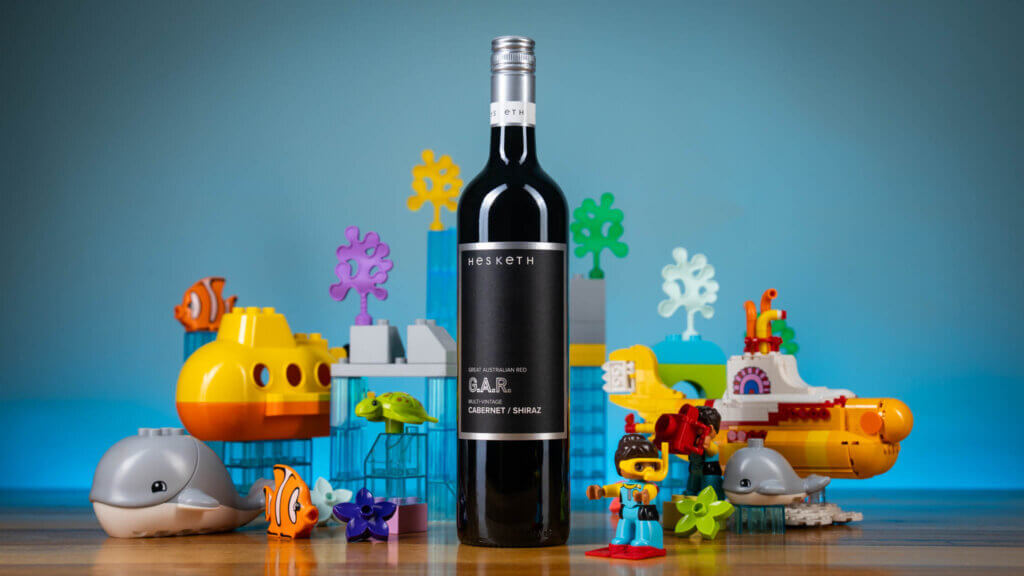
MV Hesketh ‘G.A.R. – Great Australian Red №1’ Cabernet/Shiraz, Coonawarra/McLaren Vale $60 RRP
Greco and Ward both placed this – a multi-vintage wine made from Coonawarra cabernet sauvignon from 2023 and 2024 blended with McLaren Vale shiraz from 2024 and 2025 – a spot in their chosen six from the blind tasting. Greco argued it “tastes more perfumed than the rest of the line-up – it’s an elegant, purple-fruited blend. It’s less about power and oak, and more about fragrance, freshness and gentle fruit. The lifted, fragrant nose is full of violets, lavender, iris and crushed purple petals, followed by blackberry, blueberry, blackcurrant and ripe plum. What I really like here is the restraint – this wine isn’t trying too hard. It’s polished, but not showy – exactly the kind of wine I would pour for people who say they don’t usually drink ‘big reds’.” Ward found it “young and interesting – this is full of fruit, and it jumps out at you straight away. Plum and blackberry lead the way with a hit of white pepper over the top. This is a wine that’s got plenty of energy – and plenty of life ahead of it, too.”
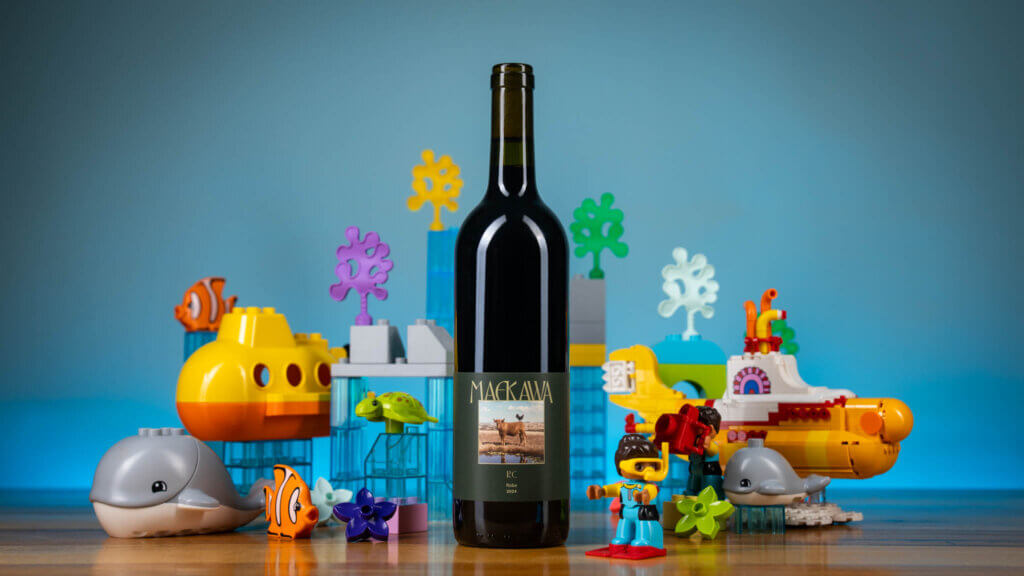
Shen placed this wine – a blend of 50% cabernet sauvignon, 40% shiraz, and 10% malbec – amongst her top six from the blind tasting, describing it as “purple in the glass, with a bouquet of smoky, meaty and gamey characteristics over blue plums, blackberry, blueberry bubble gum and crème de cassis. There’s a unique umami tone to the palate, similar to cooked mushrooms, alongside some grilled capsicum, white pepper and a bit of black pepper that adds savoury complexity to the fruit as the wine moves down the palate. Firm yet fine tannins frame the flavours and balance the fresh acidity, leading to a lovely long finish. This feels like it would be the perfect accompaniment to the mid-Autumn festival in Taiwan, when the weather starts to chill and barbecues are fired up.”
2024 Maekawa ‘RC’ Shiraz/Cabernet, Robe $32 RRP
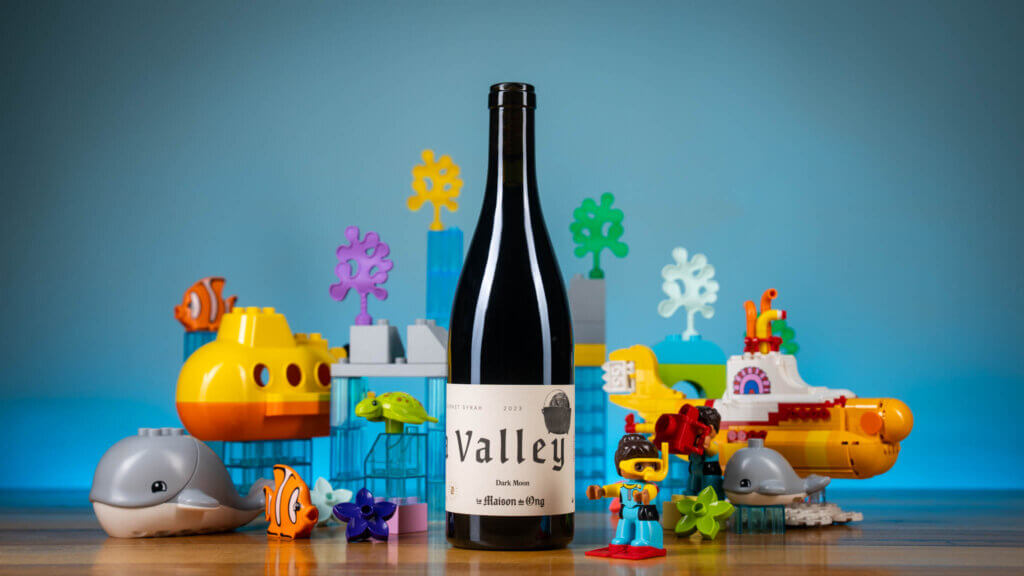
Greco claimed this wine among her top six picks from the blind tasting, drawn to the way it immediately brought barbecue to mind. “There’s something immediately savoury about this wine,” she said. “The first thing that comes to mind is barbecue – not smoky in an overwhelming way, but reminiscent of that warm, charred, slightly sticky smell you get when something good has just come off the grill. A balsamic edge leads the nose, followed by rosemary and thyme. The fruit is darker and sweeter underneath – ripe blackberry, black cherry, plum and maybe a touch of blueberry – but the wine never becomes heavy or jammy. The tannins remind me of sage – they’re drying and gently savoury rather than aggressive. This wine feels ripe enough to be generous, but restrained enough to stay interesting. I’d happily drink this with something off the barbecue – lamb cutlets or rosemary chicken – and roast potatoes.”
2023 La Maison de Ong ‘Dark Moon’ Cabernet/Syrah, Yarra Valley $63 RRP
Monnoyer, Donovan and Greco all brought this into their top six from the blind tasting. Monnoyer said “the nose is very fruity – cassis and cherry freshened by a touch of peppermint. Fresh and velvety on the palate, fruit-driven and fairly light. Soft, light tannins create just enough structure to keep the wine together.” Donovan argued that it “comes bouncing out of the glass with a little bit of attitude – notes of fresh jalapeño, blackcurrant leaf and cracked black pepper dance alongside crunchy redcurrants and blackcurrants. It’s got the sort of energy on the palate that feels like a catchy song stuck in your head, with a little dried mint adding another layer of zesty freshness.” Greco described it as “a more textural take on the cabernet/shiraz blend. The nose is full of peppery spice, both black and white, alongside something dusty and earthy. The finish is silky, fresh and quietly persistent. This would be fantastic with a charcuterie board, especially something peppery or lightly smoky.”
Shen and Monnoyer both listed this among their top six from the blind tasting. Shen wrote that “rosewater, violets and stemmy green capsicum notes lead the nose, followed by kirsch, red plum jam and blackberry compote. The wine is fresh and vibrant on the palate, with supple tannins that frame the fruit as it moves down the tongue. White pepper spice and spearmint freshness emerge on the beautifully long finish.” Monnoyer described it as “very fruit-forward on the nose, showing red and black cherries, a touch of pepper and baking spices. The palate is fresh, despite the relatively moderate acidity – cherry-forward, with a hint of liquorice that layers in pleasantly spicy complexity. Velvety tannins frame the palate and give length.”
2024 Penfolds ‘Bin 389’ Cabernet Sauvignon/Shiraz, South Australia $120 RRP
Shen brought this into her top six selections from the blind tasting, finding a wine that delivers pure pleasure: “A rich, purple-tinged ruby hue in the glass leads to a dark-fruited nose of black cherry jam and violet blossoms,” she said. “A slightly green characteristic emerges, but it brings fantastic freshness to the aroma. A rich, hedonistic palate of black plums, blackberry compote and crème de cassis, accented with cinnamon, vanilla and nutmeg spice. All this flavour is tied together by a pleasant touch of bitterness that grounds the palate, before a green, minty aftertaste emerges on the impressively long finish. Pair with rich French dishes, such as the classic navarin d’agneau (lamb casserole).”
2024 Château Tanunda Old-Vine Cabernet/Shiraz, Barossa $50 RRP
Shen selected this wine as one of her favourite six from the blind tasting, describing it as “a purple colour in the glass, inviting you into an aromatic nose of rosewater, mint water, dark cherry and blackcurrant. These pretty fruit characters are given spicy complexity by tones of green capsicum, black pepper and a little bit of white pepper. Those flavours carry through to the palate, where they’re joined by a pleasantly meaty and slightly gamey overtone reminiscent of a nicely cooked steak. Bright, fresh acidity carries the flavours down the palate to a long finish. This would pair beautifully with Cantonese fried noodle dishes.”
2022 Paulmara Estates ‘The Marriage’ Cabernet/Shiraz, Barossa Valley $70 RRP
This earned a place in Monnoyer’s top six from the blind tasting, thanks to its balance of generous flavour and firm structure. “Garnet and deep purple in the glass,” he said. “Quite spicy on the nose, showing ripe black plum fruit character, some tobacco and dried herbs. Those plum flavours continue to the palate, where they’re lifted by a hint of mentholated freshness. The tannins here are fairly firm but well-integrated – this feels like a wine that’s had a bit of time in the bottle, but is just entering its drinking window. A well-structured wine, with generous fruit and spice character.”
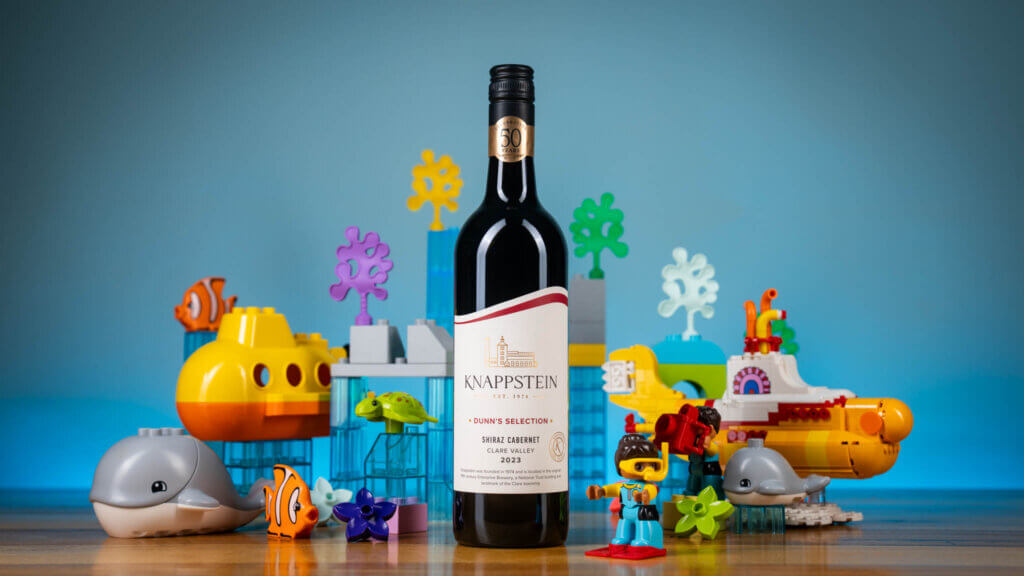
2023 Knappstein ‘Dunn’s Selection’ Shiraz/Cabernet, Clare Valley $35 RRP
This wine made Butera’s top six selections from the blind tasting. “Bright blueberry and red fruit aromas of blood plum, loganberry and redcurrant leap from the glass, layered with cardamom spice and a subtle touch of oak,” he wrote. “The palate is balanced and vibrant, with lively acidity giving freshness and energy throughout. A youthful raspberry-driven character keeps drawing you back, while savoury nuances and a lingering tomato leaf note add complexity. Focused and harmonious, this is a beautifully crafted blend with great drive, finesse and a polished oak finish.”
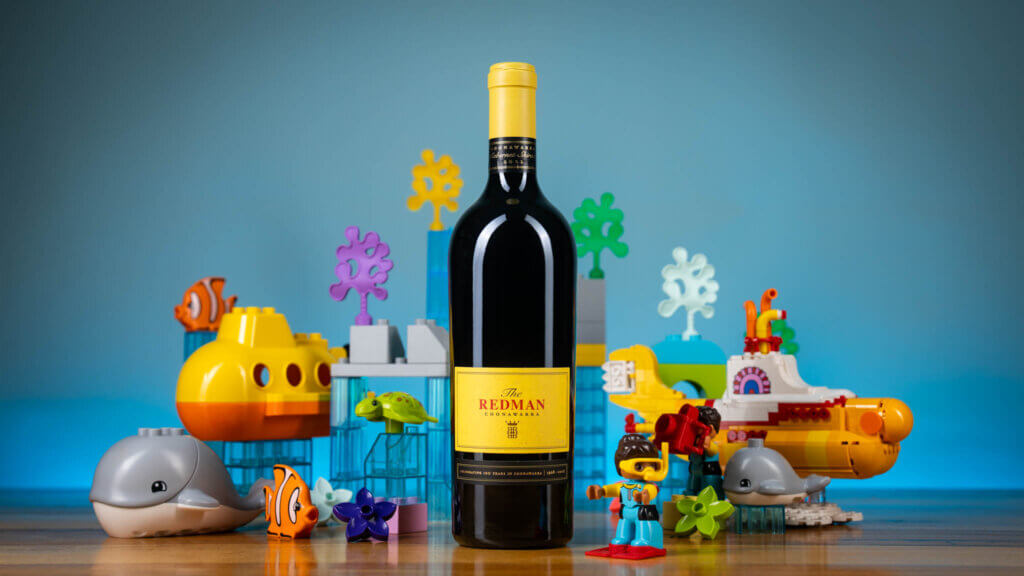
Butera counted this wine – a blend of shiraz from Redman Wines and cabernet sauvignon from Balnaves of Coonawarra – among his favourite six from the blind tasting. “Broad, inviting aromatics evoke a walk along the edge of a forest, with sun-dried juicy tomato, cardamom, black pepper and green pepper notes layered over dark fruit of blackcurrant pastilles and blackberry compote,” he said. “The palate is structured and fuller in style, yet beautifully silky, balancing richness with finesse. Fine ‘catch and release’ tannins provide shape and momentum, carrying the wine through a long, savoury finish. A confident, expressive blend with depth, texture and appeal.”
Butera placed this wine within his top six from the blind tasting, describing it as “a complex and savoury wine, showing lifted aromas of Campari, dried pomegranate and a hint of stemmy character. The palate is vibrant and finely tuned, with raspberry-like acidity, wet ploughed earth tones and subtle green capsicum character adding depth and intrigue. Fine and gentle tannins provide structure and drive, leading to a long, poised finish. No single element dominates in this wine, creating harmony and balance throughout.”
2021 Pepperjack Shiraz/Cabernet, Barossa $25 RRP
Among the standout six from the blind tasting for Butera, this wine was praised for its immediacy and presence: “Rich and compelling, this wine delivers remarkable drive, consistency and balance from start to finish,” he said. “An enticing bouquet of muscatel, cedarwood and charry oak draws you in, followed by a full and commanding palate, with layers of ripe fruit – blackberry jam, Ribena and ripe blue plums – and black pepper and nutmeg spice carried by bright acidity and impressive length. Warm, generous and deeply satisfying, this is a wine to savour slowly in front of a fireplace. Yum!”
2025 e’Stellar Estate ‘e’’ Cabernet/Syrah, Yarra Valley $32 RRP
Greco selected this wine for her top six from the blind tasting, finding it a galvanising experience to taste. “This wine made me immediately adjust my posture and sit up,” she reflected. “There’s something really savoury and wild about it – the kind of wine that makes you think about food before you’ve even taken a sip. The nose leads with sausage and ’nduja – smoky, meaty and gently hot, with the rich and salty character of cured meat running through the wine. There’s a lovely leafy quality underneath, almost like crushed bay leaf or fresh herbs rubbed between your fingers. On the palate, the tannins are noticeably dry, giving the wine a firm, slightly dusty grip that builds towards the finish. Generous fruit flavours of sour cherry, blackcurrant and blackberry keep the wine away from feeling austere. Pair with ’nduja on sourdough, pork sausages with fennel, or salami pizza.”
The backstory
In nineteenth-century Bordeaux, merchants quietly beefed up their thin cabernet-based wines by slipping in splashes of syrah from the Rhône. They rarely advertised this fact, and the practice soon became illegal – but on the other side of the world, blending cabernet and shiraz together was developing into an artform. For generations, Australian makers sold their blends of shiraz and cabernet as ‘claret’ – a style rather than a recipe – until Penfolds, Yalumba, and a trophy cabinet’s worth of medals turned the combination into the nation’s signature red wine. Cabernet-shiraz blends have since become a calling card we’ve carried around the world – an icon, but one that isn’t always in fashion. Why do these two varieties click the way they do? Why did Australia, of all places, make this blend its own? And what will happen now that a cohort of iconoclastic young makers has set their targets on this most traditional of blends?
Ask Peter Gago, Penfolds’ chief winemaker for more than two decades, what his predecessor Max Schubert was chasing when he began putting cabernet and shiraz together in the 1950s and early ’60s, and the answer is disarmingly honest: “Who would ever know?” he says. Perhaps, he suggests, there simply wasn’t enough cabernet to go around back then. There was no grand plan. “There are no intricate files and philosophies locked away here,” Gago says, “but for whatever reason, default or otherwise, this thing worked, and worked really effectively, so it was continued.”
Opposite: Cabernet sauvignon being picked at Cullen Wines in Margaret River. Above: Shiraz on the vine at the Garden & Field vineyard in the Eden Valley.
Whatever his reasons for combining these two varieties, Schubert’s wines were arguably the tipping point for what became a genre: Australian cabernet-shiraz blends. And it is a genre, in the view of wine critic Tyson Stelzer, that the rest of the wine world hasn’t matched: “I don’t think it’s possible to overstate the significance of this blend in the history of Australian winemaking,” he argues. “There really is no precedent for cabernet and shiraz working together as well anywhere else as they do in Australia.”
A French secret
In France, the ancestral homeland of both grape varieties, the combination has an illicit history. In eighteenth- and nineteenth-century Bordeaux, merchants shipping claret to English drinkers – who preferred their reds darker and fuller – would quietly stiffen thin wines from poor vintages with a dash of syrah-based wine from Hermitage in the northern Rhône. It added colour, body and longevity – and it was rarely advertised. One rare exception, according to the late Paul Gauthier of the Tain-l’Hermitage négociant Léon Revol, as recorded by the writer John Livingstone-Learmonth, came in the 1860s, when some Château Margaux labels proclaimed with a certain pride that they were hermitagé – literally ‘Hermitaged’. (At this time, most Bordeaux producers sold wines by the barrel to be bottled by merchants, who would apply their own labels.) The practice was therefore common enough to earn its own verb, argues Peter Gago: “There’s an actual verb in the French language, ‘Hermitaging’,” he says, “adding wines of the Rhône, à la syrah, to boost, in the old days, wines of Bordeaux.” This practice faded after the arrival of phylloxera, and was effectively ended by the French appellation system that took shape in the 1930s, which demanded that a wine come entirely from the place named on its label.
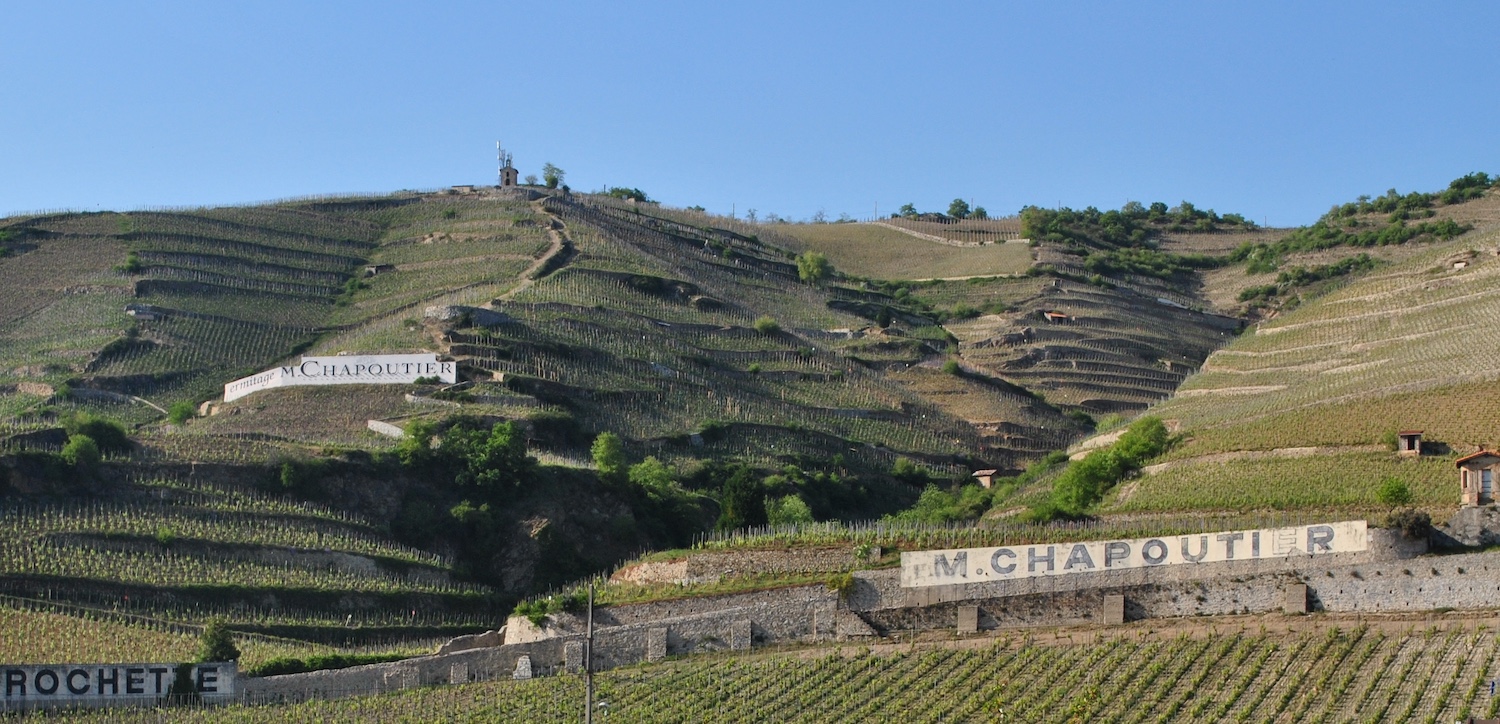
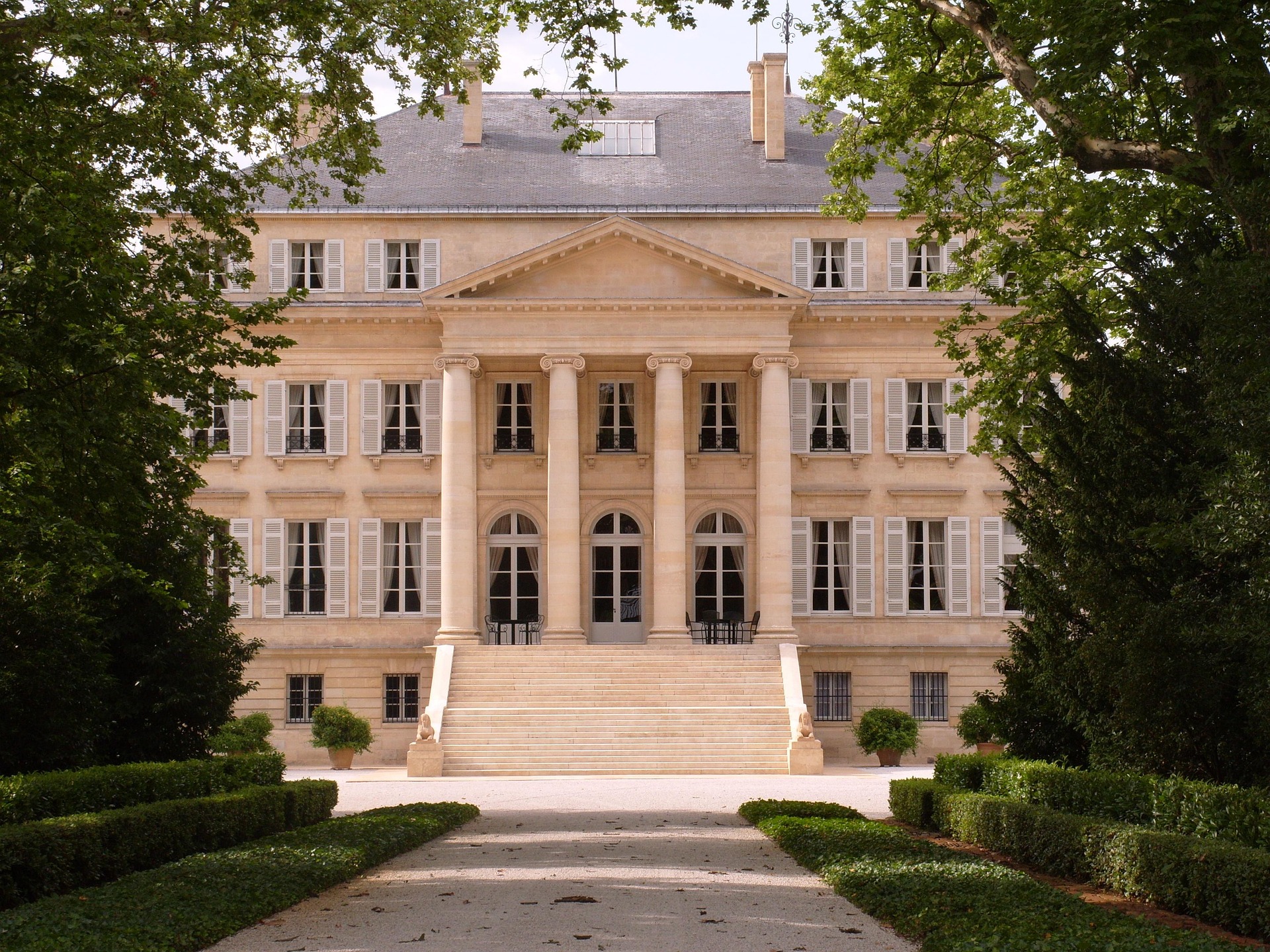
Above: The hill of Hermitage in the Northern Rhône region of France – the source of syrah that Bordeaux merchants would use to goose up thin clarets in the 1800s. (Photo by Ed Clayton, CC BY 2.0.) Opposite: Château Margaux – one of the few Bordelaise châteaux whose labels occasionally stated that the wine inside had been ‘Hermitaged’.
Château Margaux’s close neighbour and rival, Château Palmer, revived the idea in the early 2000s. Its director, Thomas Duroux, had tasted an 1869 Palmer at the home of a Californian collector and sensed something from another era in it. He couldn’t be certain that the bottle was hermitagé, but the thought stayed with him. Duroux began an experimental blend with the 2004 vintage – and the result, called ‘Historical XIXth Century Wine’, blends Palmer’s own merlot and cabernet sauvignon with around ten per cent northern Rhône syrah. Because it breaks appellation rules, the label cannot carry Palmer’s name, nor any vintage, nor an appellation. Gago, who heard Duroux present ‘Historical XIXth Century Wine’ at the New York Wine Experience, takes it as proof of how old the idea of blending these two varieties is. “They’re already doing it. They’ve been doing it forever.”
“There’s an actual verb in the French language, ‘Hermitaging’ – adding wines of the Rhône, à la syrah, to boost, in the old days, wines of Bordeaux.”
Elsewhere in France, though, cabernet-syrah blends have tended to be rarities. Chris Ryan, who makes a Yarra Valley cabernet-shiraz blend under his Honky Chateau label and works as a wine buyer and sommelier for Andrew McConnell’s Trader House group, puts it this way: “There are great examples and very expensive examples in France where they mix Bordeaux and Rhône, and they’re hyper-collectible, or Trévallon and things like that, which sommeliers here will get really excited about.” The ‘Trévallon’ Ryan refers to here is Domaine de Trévallon’s vin rouge, a fifty–fifty blend of cabernet sauvignon and syrah first made in 1976, which was removed from the Les Baux-de-Provence appellation in 1993 when its maker, Eloi Dürrbach, refused to drop the cabernet quotient to the 20% or less that the appellation’s newly changed rules would allow.
Tyson Stelzer, who has run a competition devoted to Australian cabernet-shiraz blends for the better part of two decades, argues that these rare French examples, however distinguished, play a different game to the Australians: “There are some historically, particularly Bordeaux and Rhône blends out of France, and a few famously even to this day, but they don’t, as a general rule, hit the same palate shape and generosity and seamless integration that we’re able to achieve here in Australia,” he says. Thus what was an occasional fix or a collector’s curio in France would become, in Australia, something else entirely: a celebrated style of its own. And, perhaps appropriately given its illicit history, it began here under another name.
Claret, Australian-style
The blend’s Australian story starts with the word ‘claret’ – the same name that Bordeaux’s merchants used to label its red wines for the British public, and one that Australian winemakers are now forbidden to use on a label. When John Riddoch carved up his Penola Fruit Colony in Coonawarra in the early 1890s, the ‘blockers’ who took up his land were required to plant shiraz and cabernet sauvignon vines at a ratio of roughly two to one, specifically to make for claret wines for the British export market. The first vintage followed in 1895. At the same time, in the Barossa, Yalumba was among the first to make ‘clarets’ from cabernet and shiraz and ship them abroad. When Fred Caley Smith, a grandson of the founder, Samuel Smith, set out on a research trip through the United States, Britain, Europe, the Middle East, Sri Lanka and India in 1893 and 1894, he brought a bottle of Yalumba Claret, one of the winery’s early cabernet-shiraz blends, for relatives in India to open. Yalumba kept this house style going with the ‘Four Crown’ Claret in the 1930s, then ‘Special Reserve Galway’ Claret in 1942.
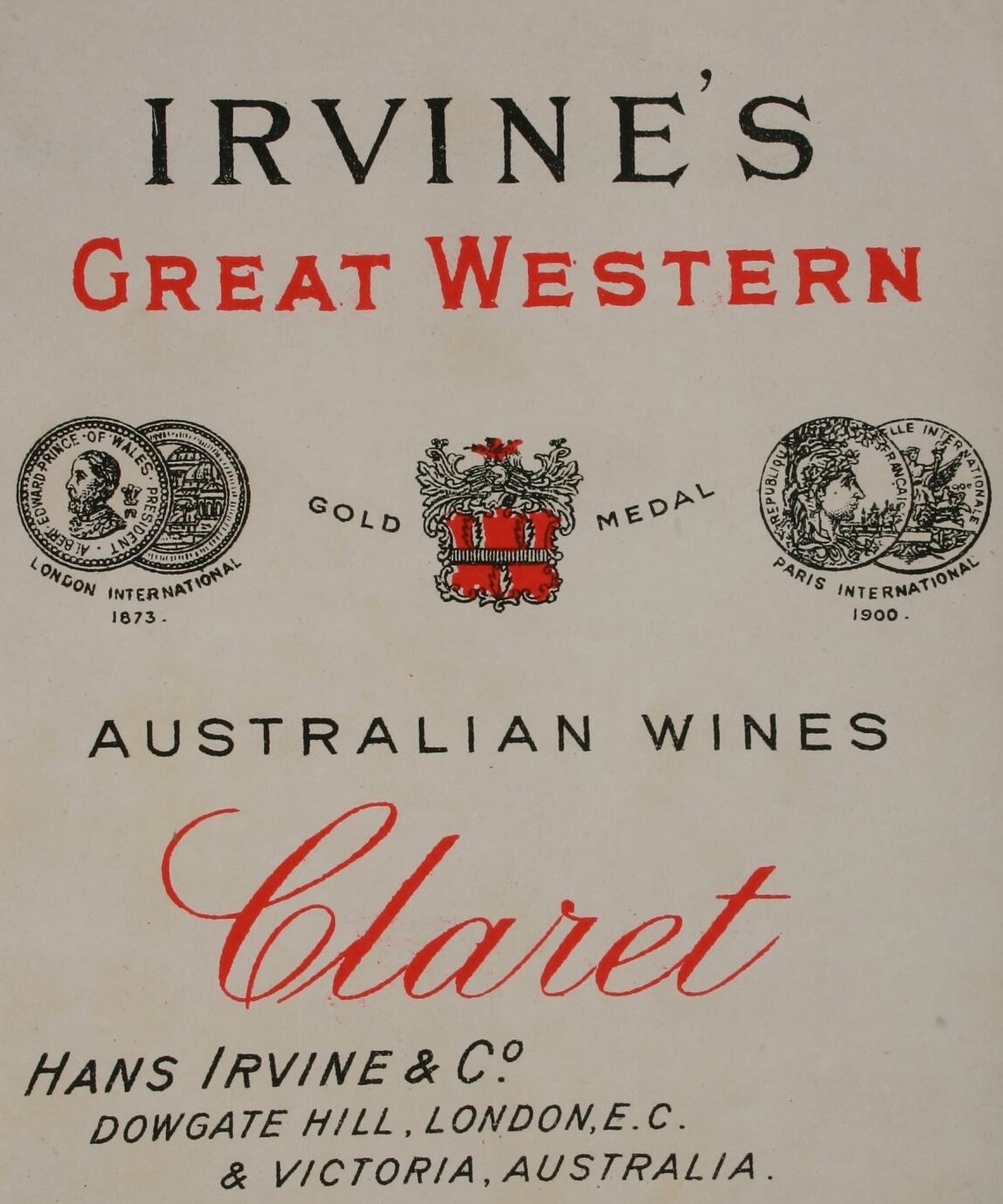
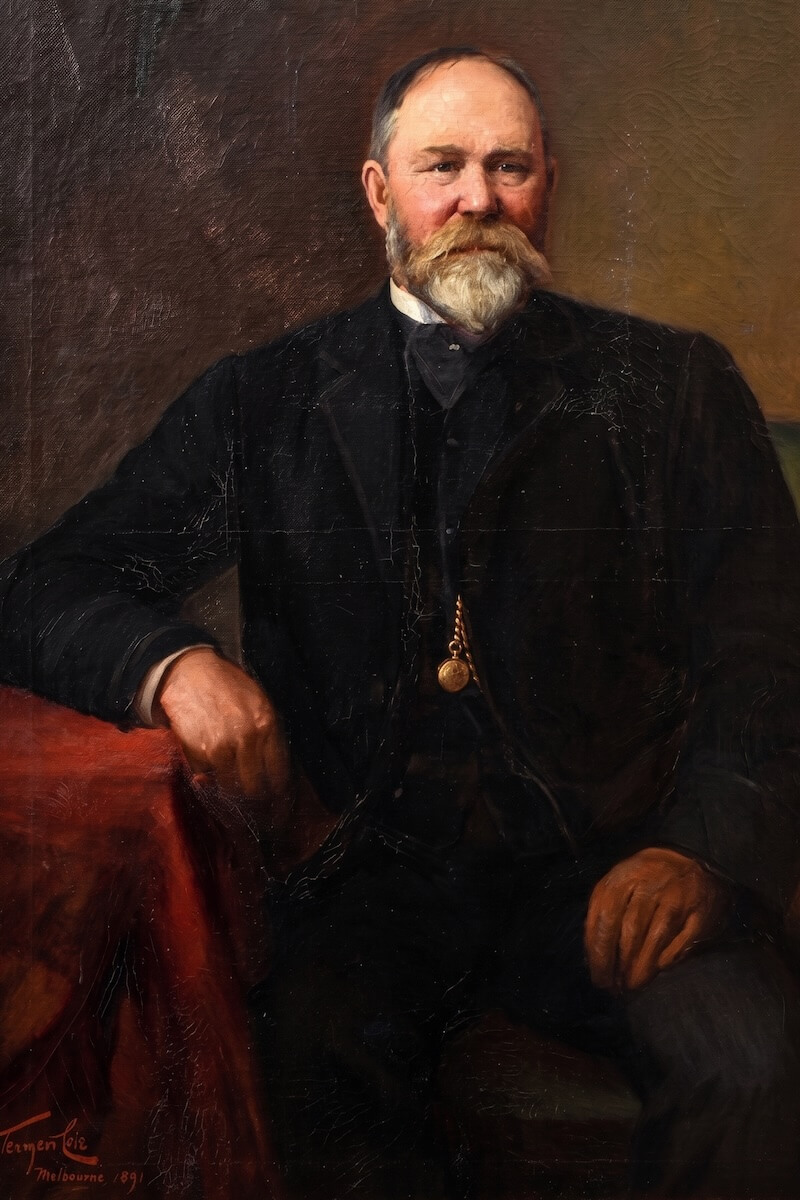
Above: An example of a label for an Australian ‘Claret’ – made from varieties unknown – from the 1910s. Opposite: A digitally enhanced reconstruction of an 1891 oil portrait of John Riddoch by artist Tennyson Cole, based on a photograph of the original.
Yalumba weren’t alone in releasing cabernet and shiraz blends labelled as ‘claret’. The Stonyfell winery in the Adelaide foothills had a long relationship with Metala, a Langhorne Creek vineyard planted in 1891 with twenty-one rows of shiraz and fourteen of cabernet. By 1961 Stonyfell winemaker Bryan Dolan was turning fruit from those rows into a shiraz-cabernet blend that Stonyfell entered in the 1962 Royal Melbourne Show as ‘Metala Cabernet-Shiraz Claret’ – a wine that would win the first Jimmy Watson Trophy. At a time when much of the industry ran on fortified wine, these were dry reds – sold not by grape name, but by the name of a style – which is partly why the blend’s early history is so hard to pin down. That difficulty is exacerbated by the looser labelling laws and norms of the time, which allowed Australian winemakers to indulge in acts of chicanery that would make even those secretive Bordelaise wine merchants blush. The 1951 Mildara ‘Yellow Label Bin 21’ Cabernet/Shiraz was the first wine to be released with the blend’s components clearly named on the label – but in reality those bottles didn’t contain a single drop of cabernet. Meanwhile, winemaker Colin Gramp used to slyly boast that his 1954 Orlando Cabernet was “probably not all cabernet,” and perhaps had been “diluted with more than a little Barossa shiraz”.
A style is born
Then came Penfolds winemaker Max Schubert and the 1960s. Schubert’s legendary ‘Grange’ began as an experiment in 1951, inspired by the wines of Bordeaux, and while it was always a shiraz-led wine, cabernet was in the mix from early on: one account of the 1955 vintage puts it at 90% shiraz to 10% cabernet. Peter Gago still counts that vintage as a Penfolds hallmark. “There have only been seven ‘Granges’ to date that have been 100% shiraz,” he says.
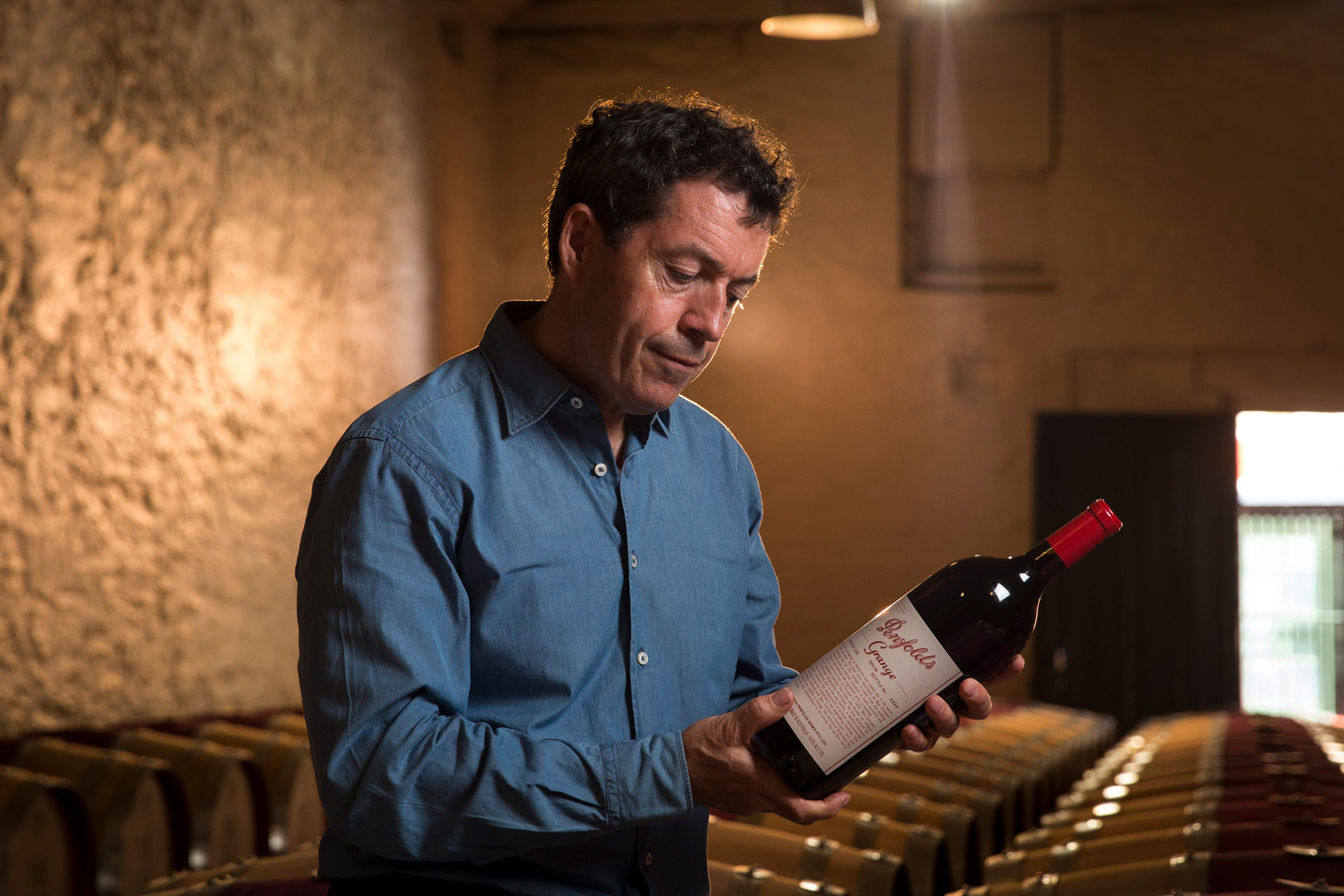
Opposite: Penfolds chief winemaker Peter Gago. Above: Former Penfolds chief winemaker, Max Schubert, inventor of one of Australia’s most iconic cabernet-shiraz blends, ‘Grange’.
In 1960 – the same year the Penfolds board reversed its decision prohibiting Schubert from making Grange – the company released the first ‘Bin 389’: the wine that would come to be nicknamed “baby Grange” and become the beating heart of Penfolds’s cabernet-shiraz story. Two years later, the most celebrated cabernet-shiraz blend of all followed: the 1962 ‘Bin 60A’, which paired Coonawarra cabernet with shiraz from the Kalimna vineyard in the Barossa. Only around 5,100 bottles were made, and it was never commercially released – but winning nineteen trophies and thirty-three gold medals on Australia’s show circuit helped forge its reputation early. The story goes that André Tchelistcheff – the Beaulieu Vineyard winemaker widely regarded as the founding father of modern Californian wine – was served this wine by Len Evans and told a roomful of Napa winemakers, “Gentlemen, you will all stand in the presence of this wine!” In 2004 it was the only New World wine in Decanter’s list of the top ten greatest wines of all time – and it has been credited with paving the way for a distinctly Australian style of red.
“There have only been seven ‘Granges’ to date that have been 100% shiraz.”
Penfolds wasn’t alone. In the mid 1960s, Australia’s longest serving prime minister, Sir Robert Menzies, declared Yalumba’s 1961 ‘Galway Vintage Special Reserve’ Claret the finest Australian wine he had ever tasted. This wine became affectionately known as “the Menzies blend” – not to be confused with ‘The Menzies’, a 100% cabernet wine from Coonawarra that Yalumba later named in Menzies’s honour – and by the time the 1962 vintage was released in 1966, it had been renamed ‘The Signature’, after Yalumba’s founder Samuel Smith. ‘The Signature’ is still made today as a cabernet-shiraz blend, with each vintage honouring a different signatory who has contributed to the Yalumba story.
Elsewhere, the blend was racking up what would become Australia’s most prestigious wine trophy, the Jimmy Watson Memorial Trophy for the best young dry red wine at the Melbourne Royal Show. Stonyfell used Metala’s 1962 Jimmy Watson win as a springboard to develop the Metala vineyard into its own lucrative brand, complete with innovations such as being the first Australian wine label to individually number bottles. Different vintages of ‘Grange’ followed, picking up two trophies in the second half of the ’60s, then cabernet-shiraz blends from Basedow, Orlando, and the Berri Co-op Winery took the title throughout the early ’70s. Then came a trifecta – between 1974 and 1976, German-Australian winemaker Wolf Blass won the Jimmy Watson three years running with his Black Label, another cabernet-shiraz blend. In its first fifteen years of existence, as it was developing its reputation as a kingmaker in the Australian wine scene, the Jimmy Watson went to nine cabernet-shiraz blends, compared to five straight cabernets and one shiraz. While the blend eventually lost its iron grip on the trophy, cabernet and shiraz would separately continue to dominate results until 1986, when merlot, cabernet franc and malbec made their debut as accessories to cabernet sauvignon in a Jimmy Watson–winning blend – and it wouldn’t be until 2013 that a wine that didn’t contain either shiraz or cabernet, a pinot noir from Yabby Lake, finally received the trophy.
Why it works
Ask three wine professionals why the Australian marriage of cabernet and shiraz works so well and you’ll get three different perspectives. Tyson Stelzer reaches for Europe: “If you look at the way in which merlot works with cabernet in Bordeaux, and pinot works with chardonnay in Champagne, I think the way in which shiraz has a different shape in Australia to what it typically has in Europe means that the rounded mid-palate generosity of ripe, warm-climate shiraz is the perfect foil for the more structured, more bony, more tannic, more front and back end of cabernet, such that they slot together,” he says. “In the same way that merlot fills the mid-palate of cabernet in Bordeaux, shiraz fills the mid-palate of cabernet in Australia.”
Peter Gago, perhaps surprisingly, is wary of this version. “There’s the doughnut effect of cabernet, the lacking mid-palate,” he says. “In very basic terms, shiraz is meant to fill that gap. I think that’s a bit oversimplified, though. We do similar things with 100% cabernets – we fill the mid-palate with cabernet off other vineyards, other soil types.” If that mid-palate gap can be filled with other cabernet sources, why blend with shiraz? “It’s more about the flavour and the resultant altered structure, both in a tannin sense and a longevity sense – lots of senses,” Gago argues.
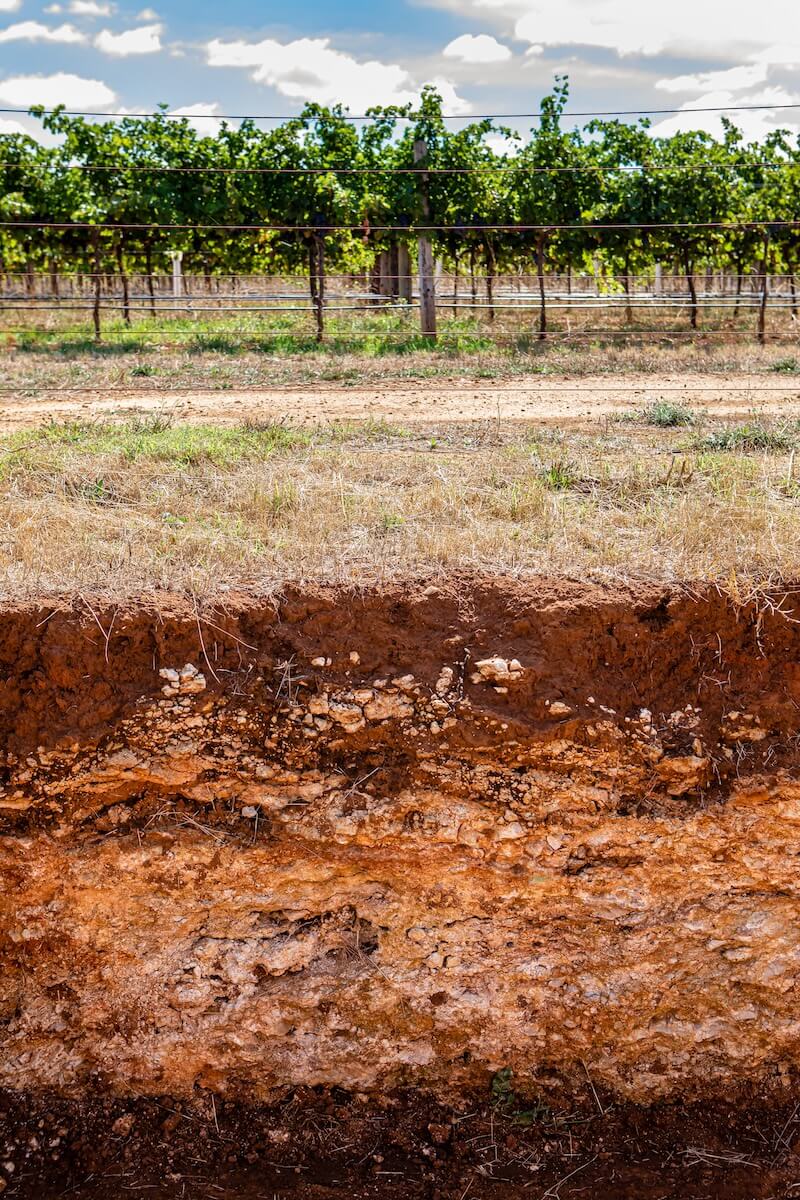
Above: Sommelier and winemaker Chris Ryan, pictured here at our 2024 Deep Dive into Australian nebbiolo. Opposite: The distinctive ‘terra rossa’ soils of Coonawarra – a key cool-climate region for cabernet-shiraz blends, according to wine writer Tyson Stelzer.
Chris Ryan – a generation younger and making his lo-fi wines in the cool-climate Yarra Valley, packaged under his irreverent Honky Chateau label – comes at the question from the cabernet side. “I try and lean into cabernet first,” he says. “I taste the cabernet and then play around with different blending decisions such that it’s still cabernet-forward, but maybe looks a little bit more complete than the cabernet by itself.” His ‘Klaret’ sits at around 60–70% cabernet, depending on the vintage. “Yarra cabernet has, or can have, a sort of leafy cabernet quality, which maybe you don’t see so much in South Australian examples, and I don’t try and shy away from that. He adds, with a sommelier’s candour: “I’m not sure I’ve fully cracked the code.”
At Penfolds, that code is a process. Every parcel of shiraz and every parcel of cabernet is classified in a blind tasting, and only then do the two meet on the blending bench. “It’s made to a stylistic template, not a formula,” says Gago of ‘Bin 389’. “Sometimes it gets in by its fingernails at 51%. It’s always cabernet-predominant. Other times there’s a little more cabernet love to share and it’s at a higher percentage.” Cabernet can be the constraint, because the best parcels of that variety are shared with the 100% cabernet ‘Bin 407’ as well: “Sometimes you don’t get as much in there as you’d like,” he acknowledges.
“A touch of green, I think, is good for cabernet. The shiraz just complements with a darker fruit and spice profile.”
The real flexibility for Penfolds is geographic. “You’ve got so much flex in the blend,” Gago says of ‘Bin 389’. “Yes, there are some mandates: it must be predominantly cabernet, to abide by the original template, and it must be American oak. But everything else we can play around with. In a really cool year, we might use more McLaren Vale, Clare Valley, Barossa, warmer-climate material. Conversely, in a hot year, you go further south: more Padthaway, more Coonawarra, more Wrattonbully.” That freedom is the whole point of blending, he argues: “You don’t put a blend together if the blend isn’t as good as the components separately,” he says. “It’s meant to be about synergy. If you’re not getting that synergistic improvement, well, why bother blending?”
Stelzer sees the same logic in the vineyard. Warm regions suit the blend, he argues – and he singles out Coonawarra and the Yarra Valley as the two cooler climes that do it best, although he notes the Yarra is a newer proposition, with less history of blending and more of the two varieties standing alone.
Giving the blend its due
Despite its dominance of the show circuit, by the 2000s the cabernet-shiraz blend had slipped out of fashion. That’s the story behind The Great Australian Red, a competition founded in 2006 by Tyson Stelzer and Matthew Jukes, the late British wine writer whose weekly Daily Mail column reached up to nine million readers and whose annual report, 100 Best Australian Wines, carried the flag for Australian wine in the UK for more than two decades. “It originally came out of an inspiration from Len Evans, of all people, who was chatting with Matthew about the significance of this blend in the history of Australian winemaking, and the way in which it’s very much fallen out of fashion and favour in recent years, and yet deserves to be properly recognised,” Stelzer recalls. “So we created a competition to focus exclusively on the blends.”
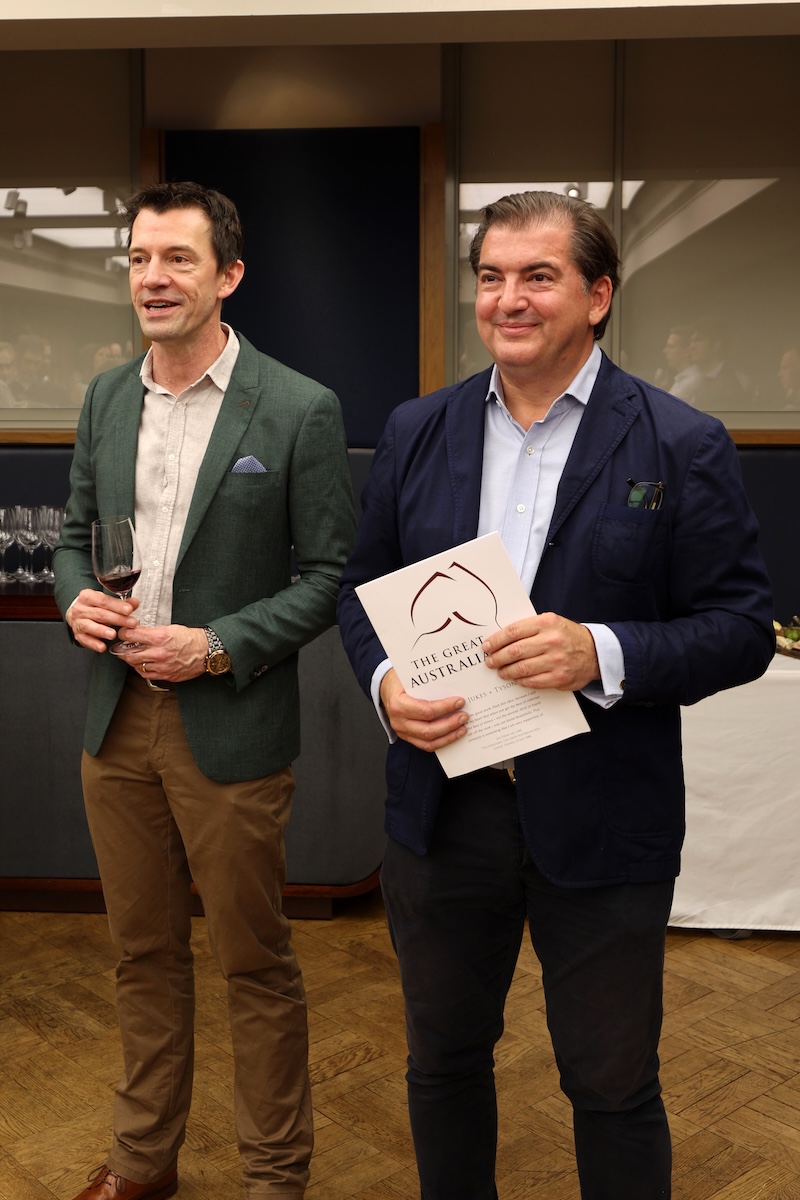
Opposite: Tyson Stelzer (left) with the late Matthew Jukes (right) presenting the results of the Great Australian Red competition in 2022. Above: Len Evans, who helped inspire the Great Australian Red competition through a conversation with Jukes.
The results were as democratic as the blend’s history. In 2018, a Pepperjack wine with a street price under $30 beat wines costing up to $295 to take the top trophy for the second year running. Yalumba’s ‘The Caley’, a more rarefied expression that currently will set you back a cool $450 per bottle, has been a repeat winner too. Then Stelzer and Jukes took the winners abroad. “Matthew and I had the privilege of taking the results of the competition to showcase tastings in San Francisco, New York, London, all over Australia, and see the reaction of these international benchmark palates of trade, but also adoring public, to these wines is something unique and special,” Stelzer says.
“I don’t want to see Matthew’s wonderful legacy that we’ve created together pass away with his passing, either. It’s something I’ll continue to explore with other mutual friends and advocates for this style around the country.”
What happens next for the competition is, at the moment, an open question. Jukes died suddenly on holiday in Portugal on August 6 of this year, aged 58, and the Australian wine world is still absorbing his loss. “Australian wine has lost its biggest fan and cheerleader in Europe,” said Vanya Cullen of Cullen Wines. Stelzer, who is still finding his footing without his friend, says of Jukes that “he championed Australian wine globally like no other person off our shores has done in our modern era.” Of the competition’s future, he adds: “I don’t want to see his wonderful legacy that we’ve created together pass away with his passing, either. It’s something I’ll continue to explore with other mutual friends and advocates for this style around the country, to find a way to continue to champion what Matthew did so well without Matthew, as hard as that’s going to be.”
Keeping the faith
For a family business that has made the blend for the best part of 150 years, the question of ‘why’ is a personal one. Robert Hill-Smith, the fifth-generation chair of Hill-Smith Family Estates, launched Yalumba’s most prestigious wine, ‘The Caley’, in honour of his great-uncle Fred Caley Smith, the same adventurer who drank Yalumba Claret in India in 1894. ‘The Caley’, first made in 2012 and released in 2017, pairs Coonawarra cabernet with Barossa shiraz, and Hill-Smith called it a “super-claret” when it was launched. Asked whether the family feels a responsibility to keep the blend alive, he is characteristically frank: “If it wasn’t worthy as a wine style, we would not continue it, even if I felt pangs of guilt and was pilloried!” he says. “I do love that it has become a valued tradition aligned with Yalumba, and we do crusade it as a point of difference, but not claiming it being unique to us. The Barossa and Eden valleys have many viticultural jewels, and we know where they are sited, so our quality base is sustainable, and the oversight of our DNA and style is jealously guarded by Sam Wigan and his cohort.” (Wigan, who joined Yalumba in 2001 – and was a ‘Top 11’ finalist for the fifth Annual Young Gun of Wine Award in 2011 – became its head winemaker in 2023.)
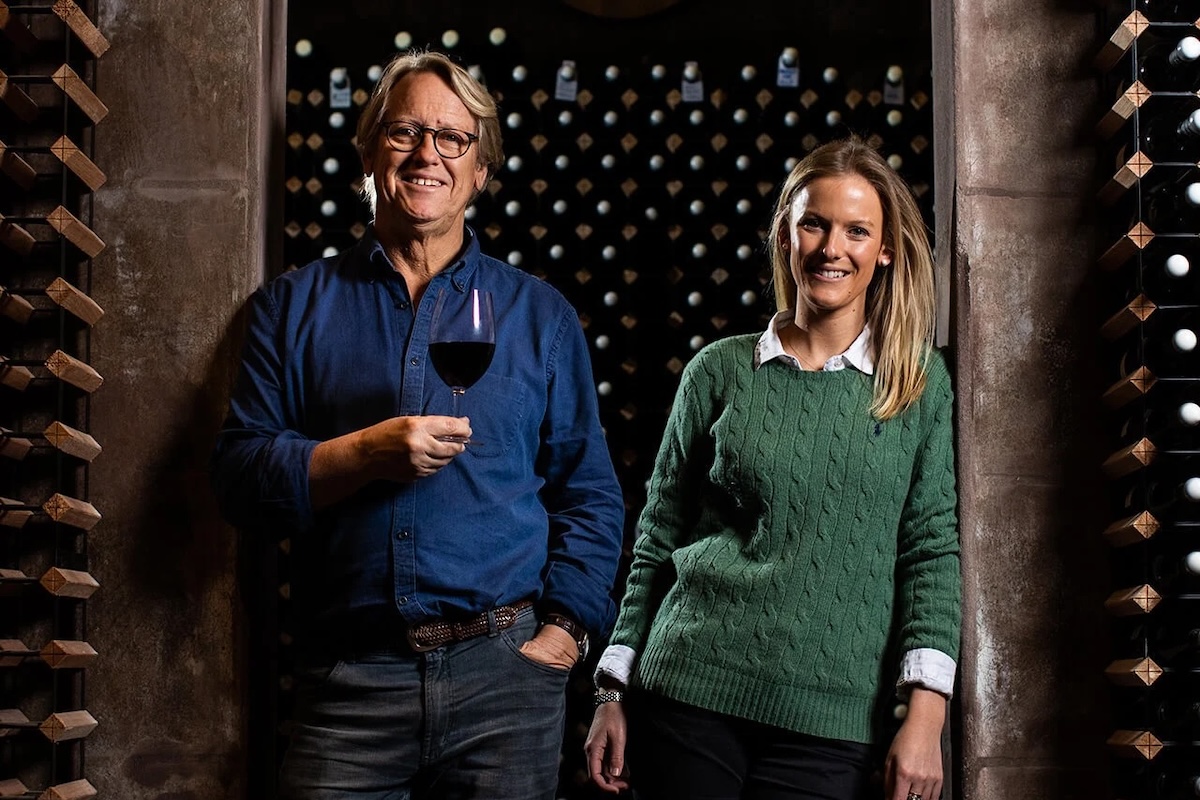
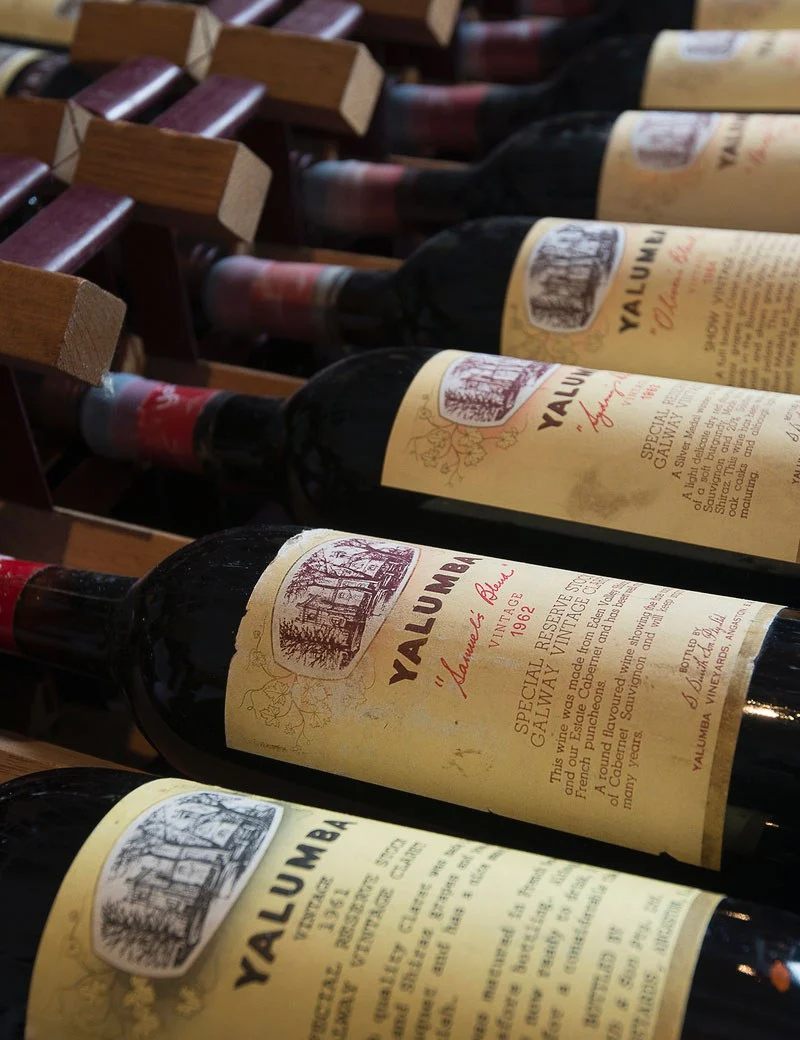
Above: Robert Hill-Smith (left) with daughter Jessica Hill-Smith (right). Opposite: Bottles of ‘The Signature’ from the 1960s at Yalumba’s wine library – including, at bottom left, the 1961 vintage that Sir Robert Menzies made famous.
What keeps Yalumba putting cabernet and shiraz together at the top of their range of red wines, Hill-Smith argues, is partly a story of confidence. “For many years we probably undervalued our name and our best wines, so there was no steep hierarchy,” he says. “When we challenged ourselves to believe in what we do brilliantly, and what we can count on amongst best of class year on year, we could and should present it as the pinnacle of our work. It was a bit of a revelation and relief! But first we had to value it more ourselves.”
“I think in many ways the cabernet-shiraz story reflects a lot about the fine wine journey and the need for self-belief, alongside plenty of adventure and anxiety!”
The wines, he adds, have earned their position. “It has become a tradition because the two varieties consistently showcase their synergies from the vineyard blocks we own and source, and the wines now seem more revered than ever,” he says. “Plus the story is almost uniquely Australian, with a great national backstory, and we have a cooperage to boot that we work with on these wines as each vintage season and its personality evolves. I think in many ways the cabernet-shiraz story reflects a lot about the fine wine journey and the need for self-belief, alongside plenty of adventure and anxiety!”
Still writing the next chapter
For all its history, the blend isn’t standing still. Peter Gago says that while Penfolds’ template stays fixed, “nothing else has remained constant.” Back in the 1960s and early 1970s, “we were using continuous presses, so a lot of those weren’t more tannic but the wrong sorts of tannins, the wrong sorts of extraction.” Today it’s basket presses and a continual round of refinements to barrels, maturation and the vineyard. “That never stops. The trialling never stops. Whether it’s whole-bunch inclusion for one and not the other, whether it’s co-fermenting, all of those trials are just a continuum, really.” The goal is not change for its own sake. “A lot of people say ‘389’ looks very different to what it used to, and I hope it does. But you should still be able to pick it blind.”
Penfolds’ cabernet shiraz range has grown to match, and it is increasingly built for the world stage. In August 2021 came the Superblends, limited-edition collector wines, released sequentially – first ‘Bin 802.A’ in new American oak, then ‘Bin 802.B’ in French oak. The former launched at A$900 a bottle, with a recommended retail price of £520 in London, that October, and reached buyers in Hong Kong, Macau and Singapore as well as the UK and the US. Gago says they were “named completely offshore to publicise this blend of cabernet and shiraz,” and “they’re getting a lot of interest offshore.” In 2024, for Penfolds’ 180th anniversary, the company released ‘Bin 180’, a Coonawarra cabernet shiraz from the 2021 vintage inspired by the legendary ‘Bin 60A’. Meanwhile, under their United States label, in California, Penfolds planted shiraz cuttings from its Australian Kalimna and Magill Estate vineyards in Paso Robles, and blends the resulting wine with Napa cabernet to make ‘Bin 600’. “It’s very big in America,” says Gago. The buyers are not always who you might expect, either. “Someone should come to Magill Estate Cellar Door and look at the people buying ‘389’ across a given calendar day,” says Gago. “They’re not old, they’re not middle-aged – a lot of these are young collectors.”
“A lot of people say ‘389’ looks very different to what it used to, and I hope it does. But you should still be able to pick it blind.”
On the restaurant floor, Chris Ryan finds the picture more nuanced. “I think cab-shiraz is tricky as a category,” he says. “The more successful ones are driven by the reputation of the wine rather than the virtue of the blend.” He’s open about the hand-selling involved: “Their eyes probably glaze over,” he says of guests’ responses when he suggests they purchase a cabernet-shiraz blend. “But once it’s articulated, I think it makes a lot of sense. It’s not a novelty blend for novelty’s sake. There’s real virtue in how they work together.” And he’s not claiming too much for its role in restaurants: “It’s a small place, but I think it has its place.”
What Ryan is chasing is something older than the stack of trophies that the blend has accrued throughout the twentieth century. “The lens through which I think about cab-shiraz blends is that classic ‘claret’, the historical style that we did so well: medium-bodied, luncheon sort of drinking,” he says. “I think there’s a bit of baggage with both cabernet and shiraz from South Australia, correctly or wrongly, that they’re ripe and powerful and big and need a lot of time [in bottle]. I think cab-shiraz can be medium-bodied, perfumed, aromatic, spicy – all the things that people look for, but maybe don’t think of as the first things that come to mind when they talk about those varieties.” The goal for Honky Chateau’s ‘Klaret’ is, in his own words, to be a “luncheon ‘claret’ that you can drink for lunch and feel refreshed and want another glass. If you do want to celebrate, you can. But you don’t have to.”
“I think cab-shiraz can be medium-bodied, perfumed, aromatic, spicy – all the things that people look for, but maybe don’t think of as the first things that come to mind when they talk about those varieties.”
Stelzer frames the stakes more broadly. “In a day and age where wine is struggling globally by virtue of declining demand and increasing supply, we really increasingly need to put our best foot forward and show not why we are the same as other countries, but why we’re different and unique and special,” he says. “Looking back over now more than a century and a half of history and precedent, to really embrace something like cabernet-shiraz is so important for this country.”
“We really increasingly need to put our best foot forward and show not why we are the same as other countries, but why we’re different and unique and special. To really embrace something like cabernet-shiraz is so important for this country.”
For Ryan, the case holds just as well for an international audience. “If I was entertaining sommeliers or wine lovers or collectors from the other side of the world – perhaps they drink a lot of Burgundy or Bordeaux – I think Australian cabernet and shiraz, and naturally the blend, is actually really compelling from a global perspective,” he argues. “I’d be very comfortable to put them in front of someone internationally and say, ‘This is what we do’.” And, to boot, he adds that the value is hard to beat: “Australian cabernet and shiraz are world-class. And from a price perspective, they really are very, very compelling.”
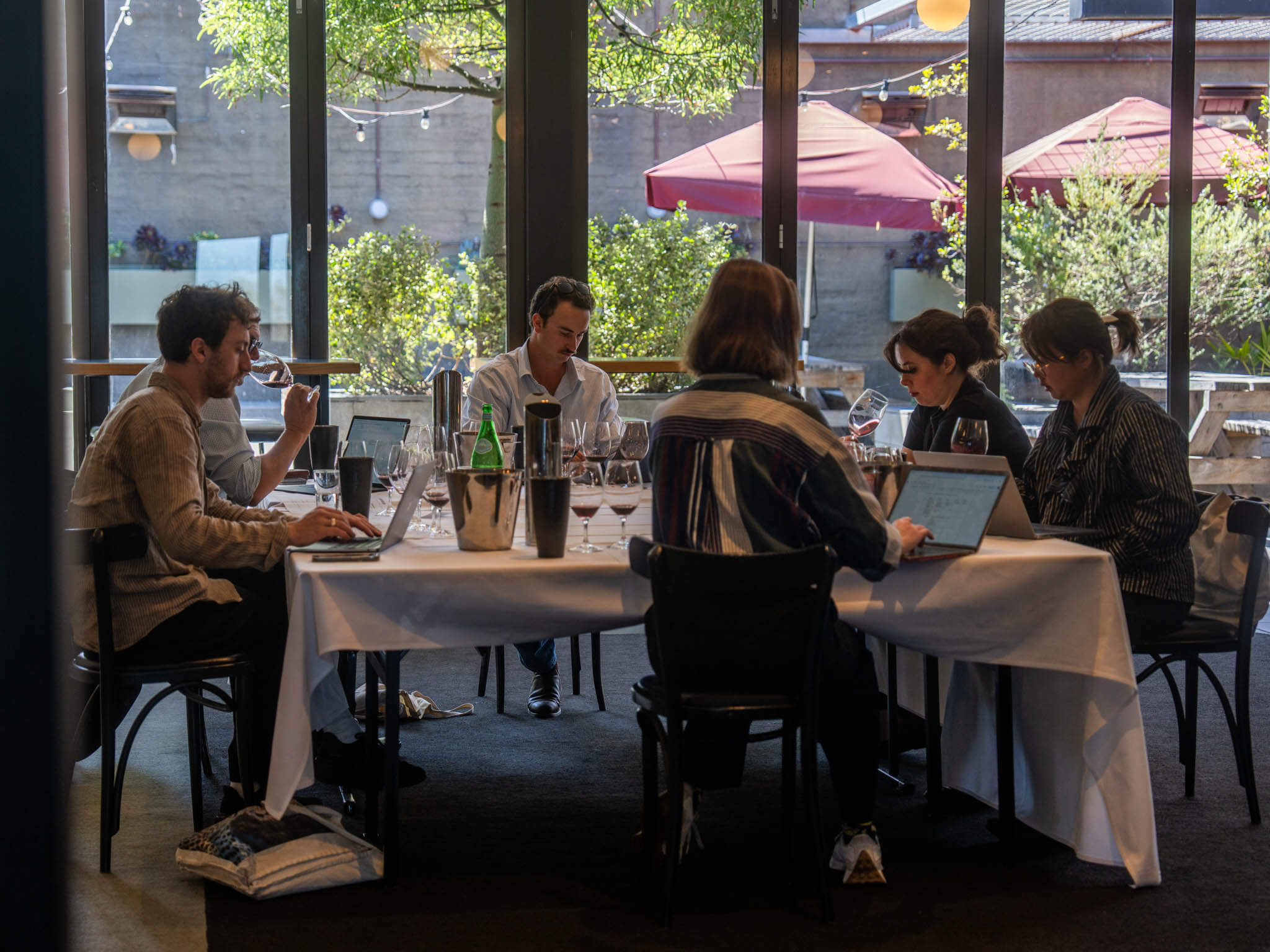
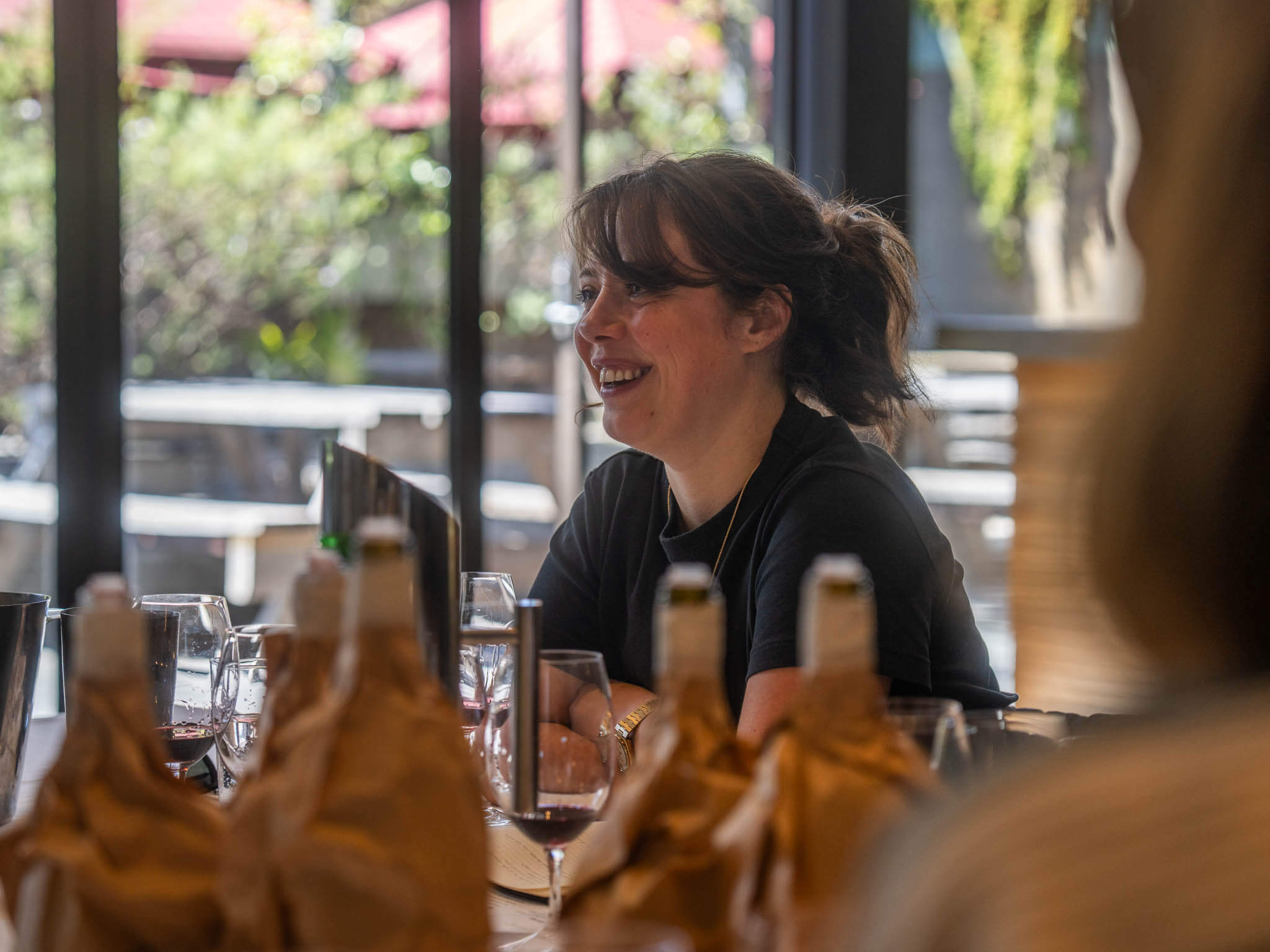
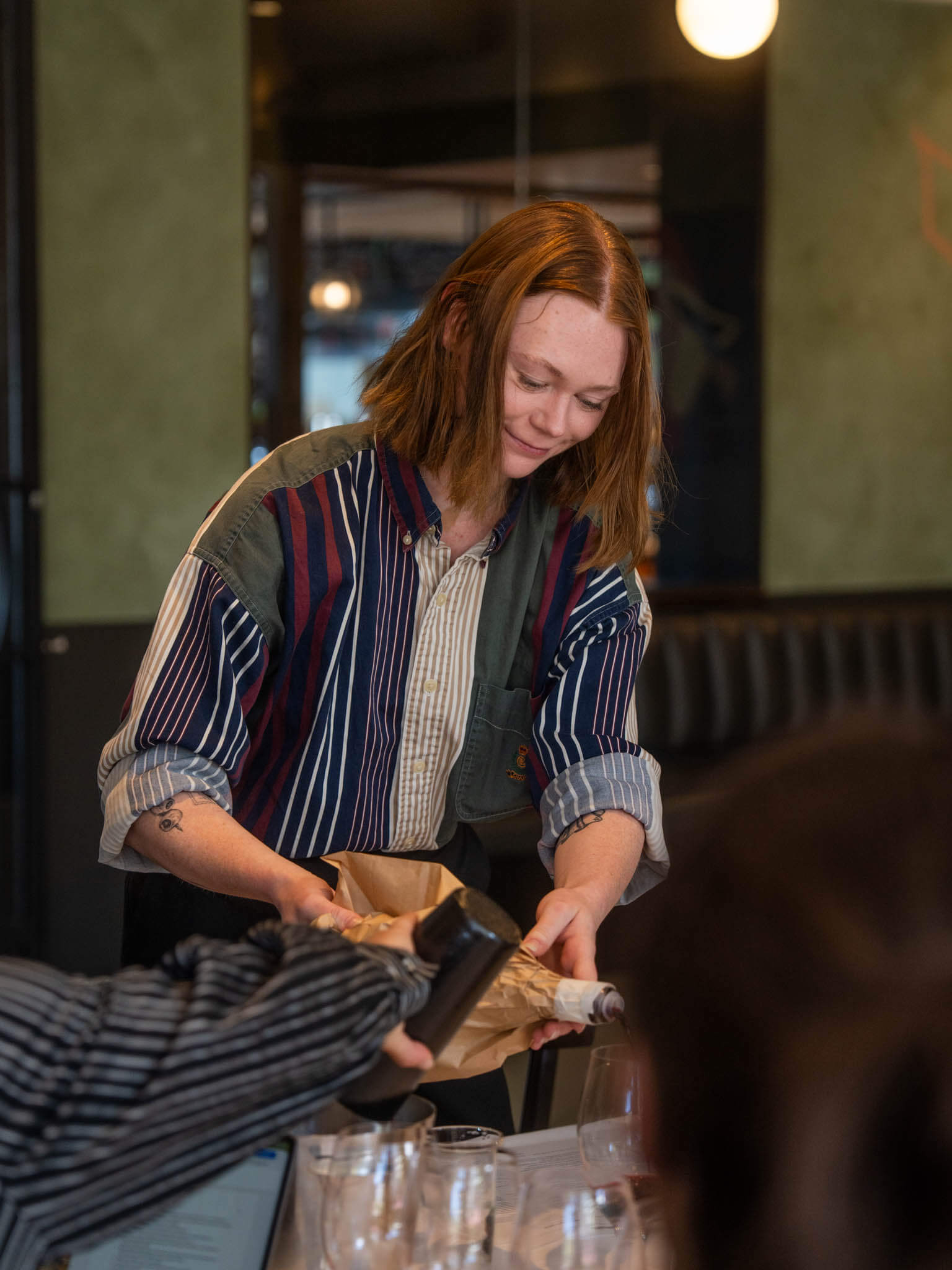
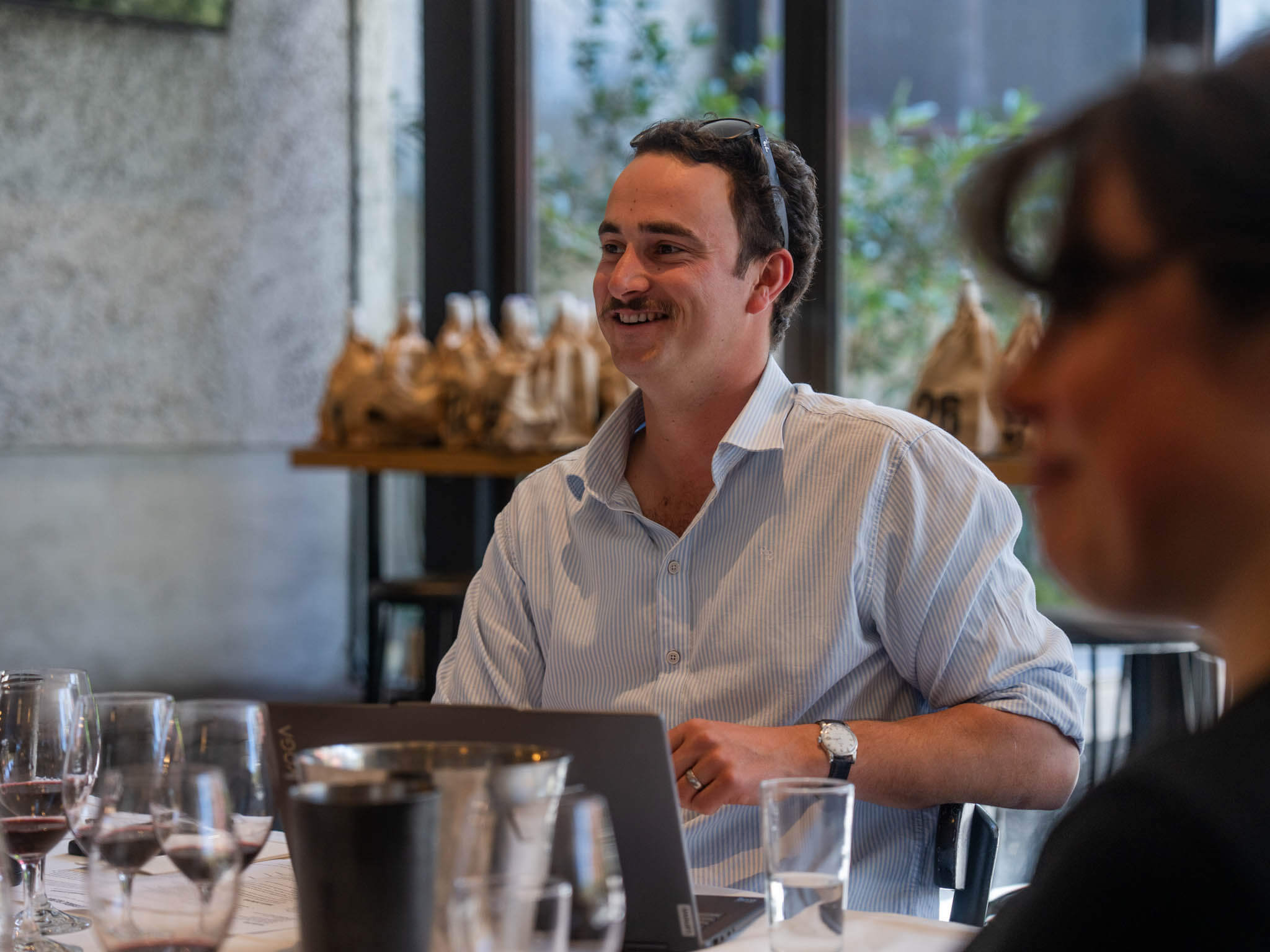
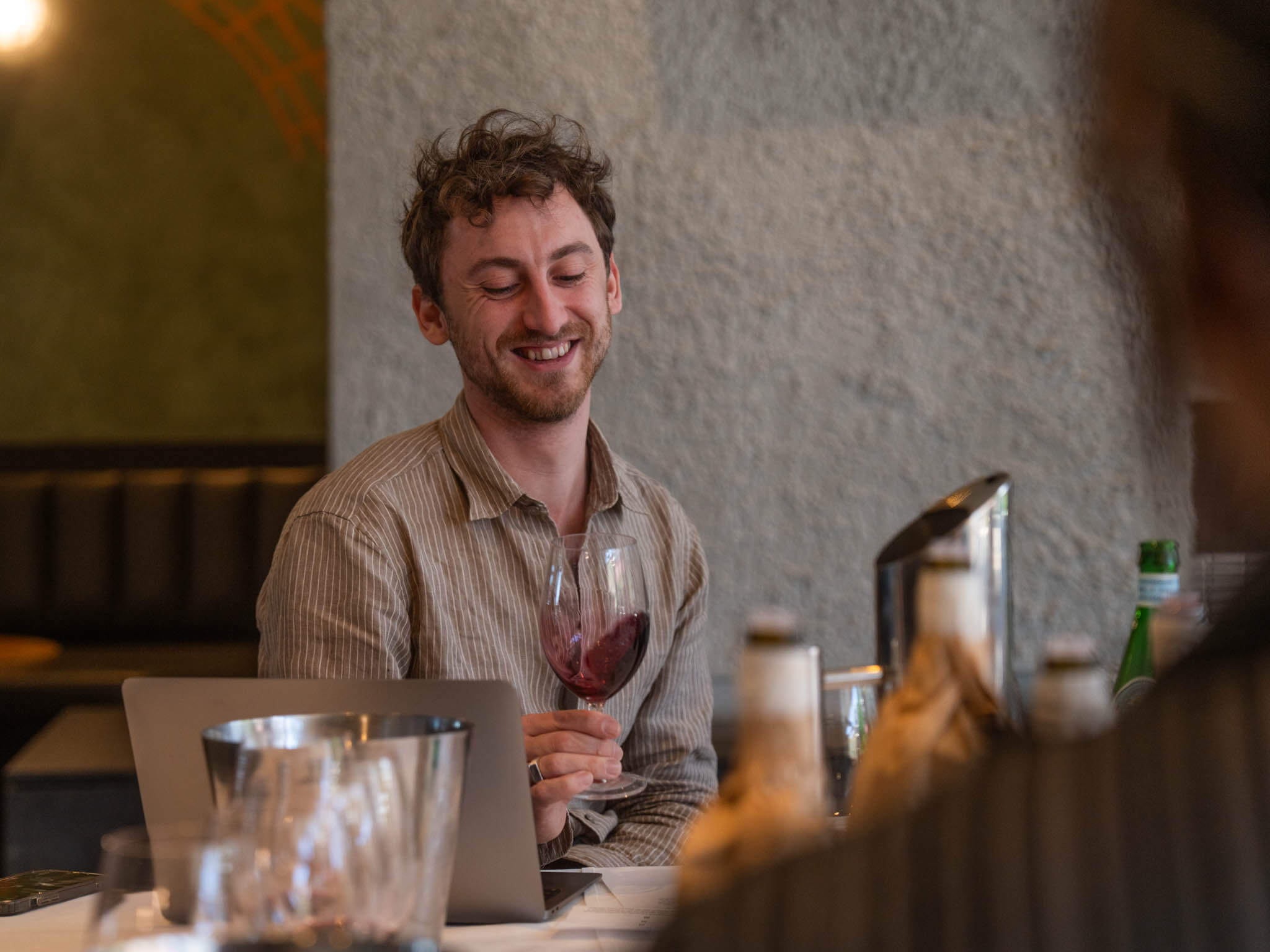
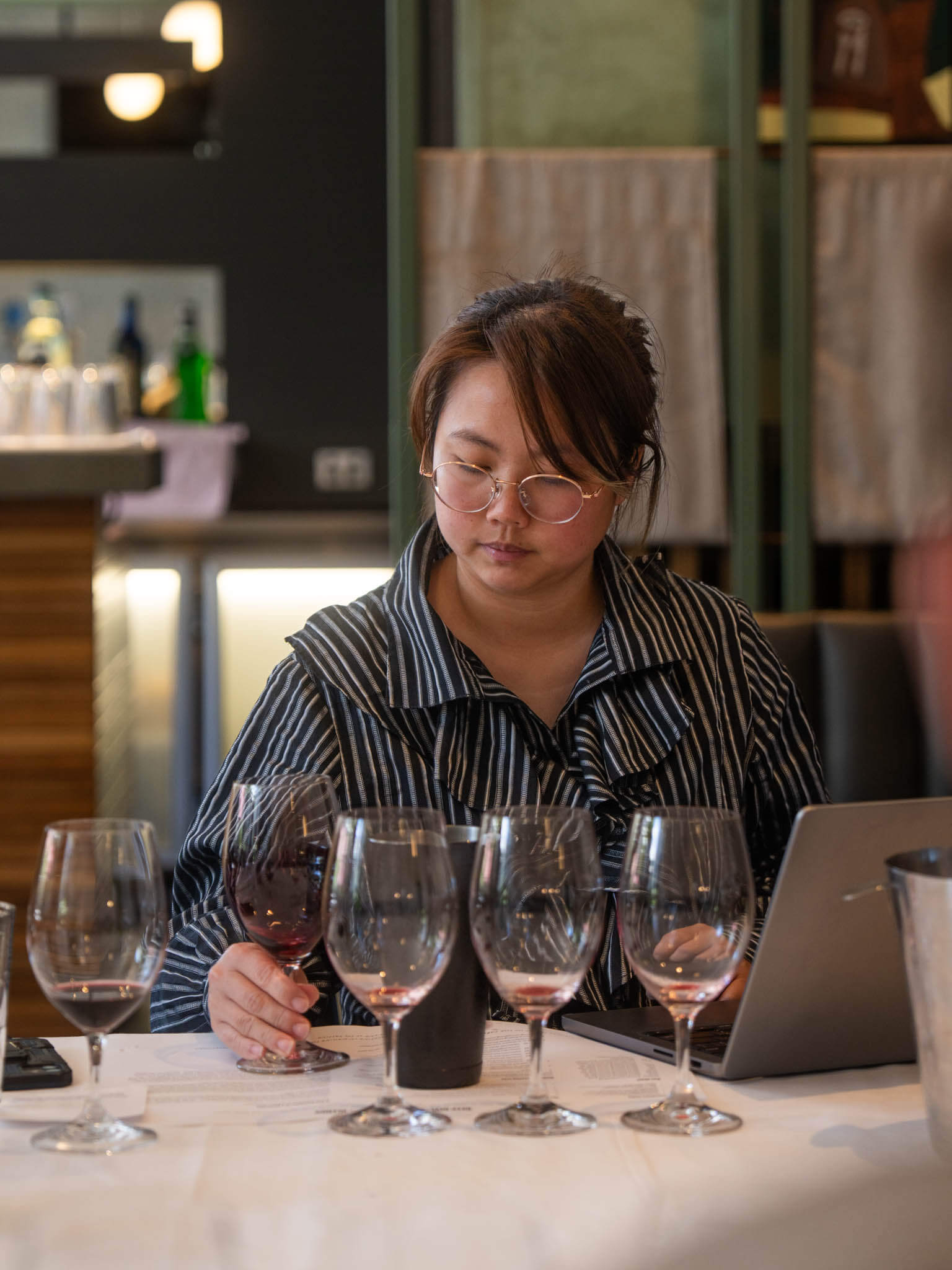
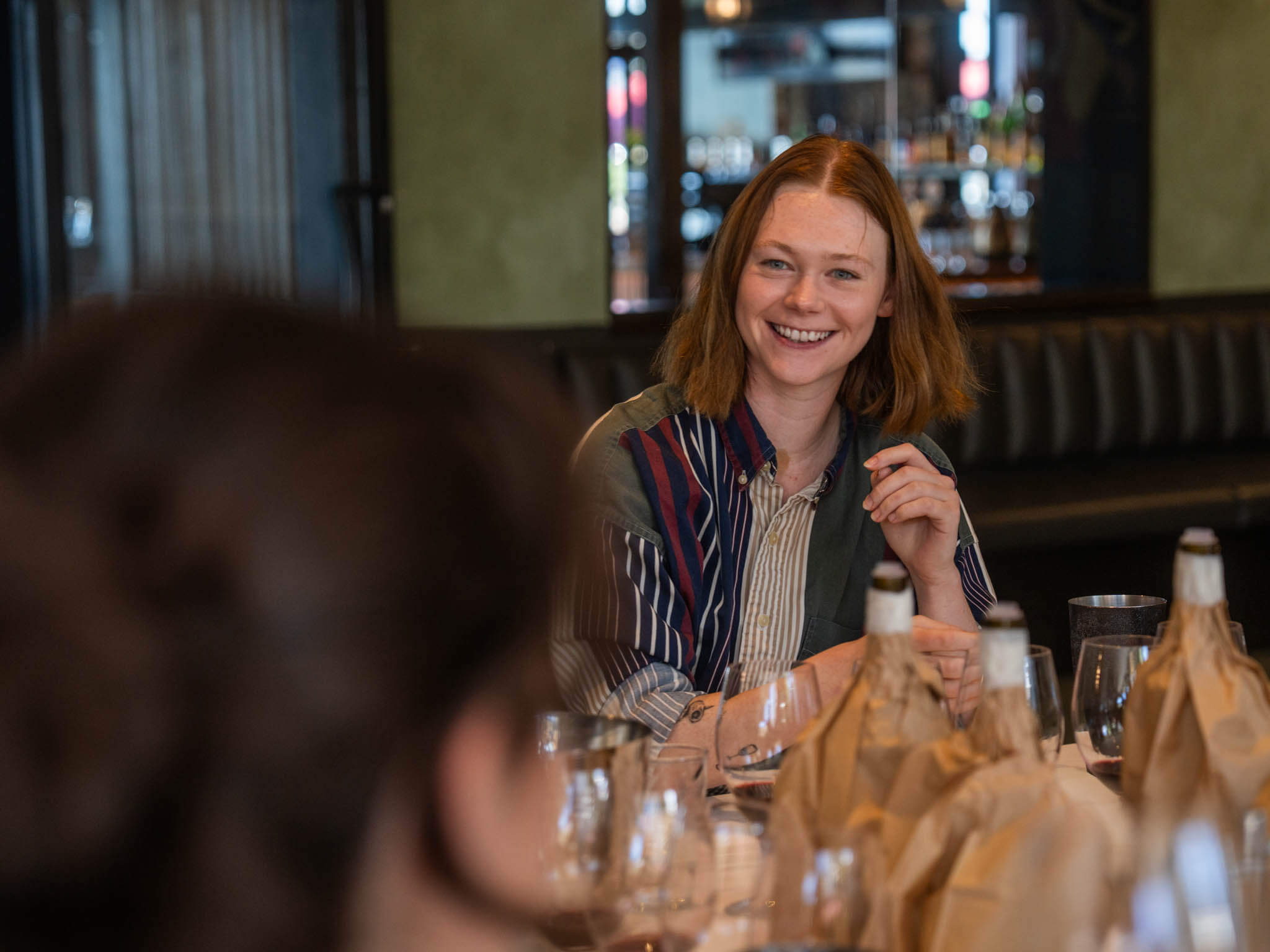
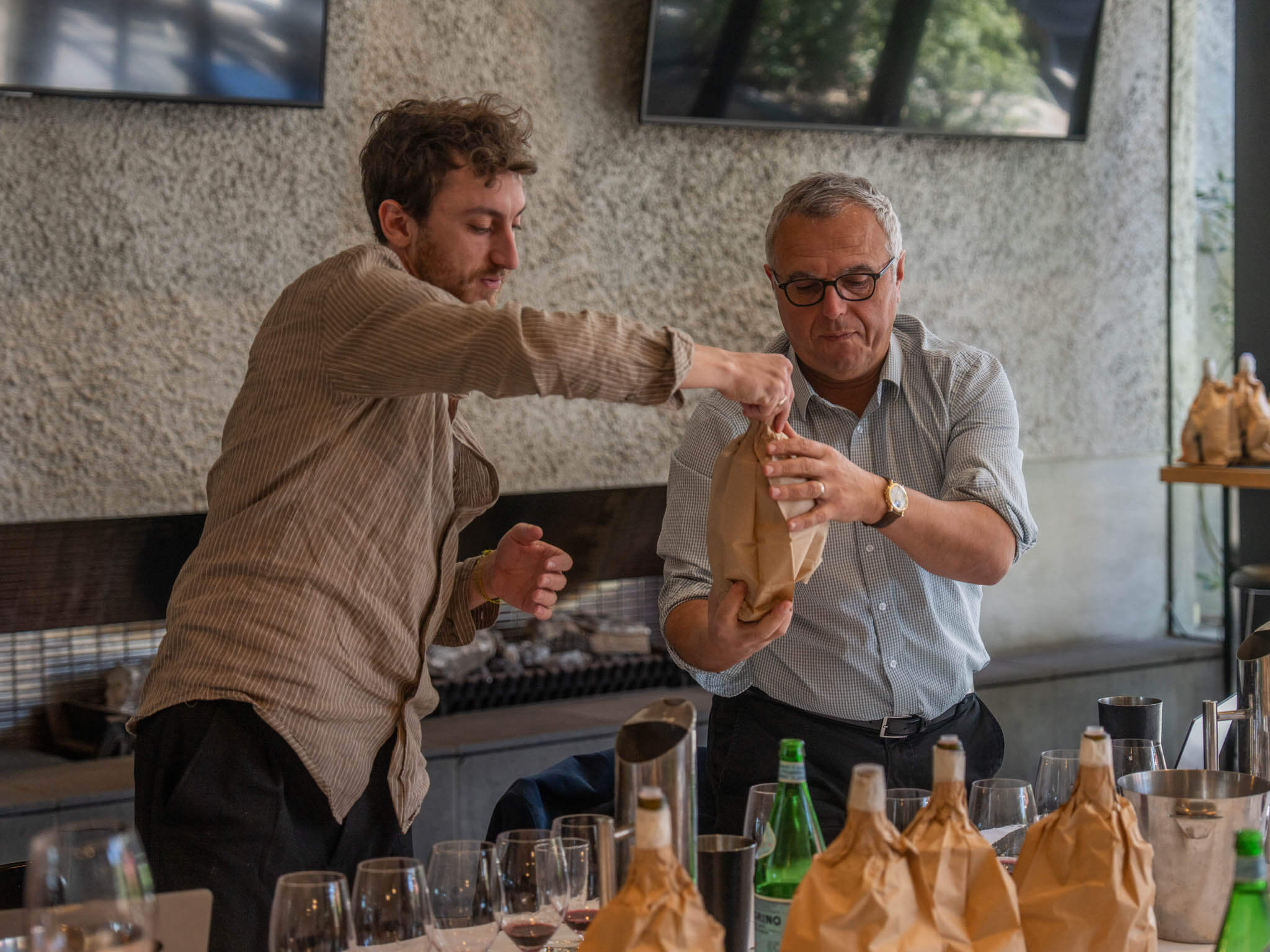
Above: Our tasting panel in session at the Bleakhouse Hotel, Albert Park (Melbourne).
Outtakes from the tasting
We gathered every example of Australian blends of cabernet sauvignon and shiraz that we could find – including wines that small quantities of other accessory varieties – and set our expert panel the task of finding the wines that compelled the most. All wines were tasted blind, and each panellist named their top six wines.
Our panel: Frank Butera, manager and winemaker, Bass River Winery; Audrey Donovan, sommelier, Marion; Thomas Ward, assistant winemaker and vineyard hand, e’Stellar Estate; Isabella Greco, freelance sommelier; Rémi Monnoyer, sommelier, Coda; Chia-Wei Shen, wine merchant, Balgownie Estate.
Donovan kicked off the discussion by noting the breadth of the line-up: “There’s so many different ways the winemakers have produced these wines, in terms of choices that are made in the winery and where it’s grown,” she said. “Even though they’re all a blend of the same two grape varieties, it’s really cool to see just how much the wines can differ.”
Above: Isabella Greco. Opposite: Audrey Donovan.
That diversity in the lineup likewise excited Greco, who said that her preconceptions about the category had been “destroyed” over the course of the tasting. “I thought I was coming in for a line-up of really super-jammy, sweet, heavy, very alcoholic wines – and many of them surprised me with their balance,” she said. “You have that beautiful generosity and spice of the shiraz, and then the structure of cabernet, without going either too jammy or too spicy – or feeling like you’re being hit over the head with a bat. So it was pleasantly surprising – I think the tasting’s been very useful to reacquaint me with this category. I might suggest it more and drink it more myself now.”
“You have that beautiful generosity and spice of the shiraz, and then the structure of cabernet, without going either too jammy or too spicy – or feeling like you’re being hit over the head with a bat.”
Ward emphasised the blend’s historical importance – and its uncertain position in the current wine market. “It’s a huge category – or it has been a huge category – in Australia,” he said. Referring to the list of wines in the line-up – which had been shared with the panellists only after their top-six choices had been locked in and tasting notes had been written – he added, “It’s nice to see that there’s quite a few small, independent labels in the line-up, and to be able to see how their wines are different to the big labels. It’s also nice to see the classics – they still have their place. Both types looked good today.”
Opposite: Thomas Ward. Above: Frank Butera.
That history was what excited Butera about the blend of cabernet and shiraz. “I think they’re two of Australia’s most important red wine grapes,” he said. “So blending them together was always going to happen sooner or later, somewhere down the track. It’s all about getting the balance right in the palate. It’s a classic blend – it’s been around since at least the ’50s, and probably earlier than that.” He added that while there was a lot of respect for this history evident in the line-up, that didn’t mean that the category hadn’t changed over time. “Having tasted some old cabernet/shiraz blends – from the ’60s even – I’ve got an appreciation for the fact that these are long-lasting wines, when they’re well-made,” he said. “I think what we’re doing as winemakers these days is controlling the alcohol a little bit better – we don’t have 14–15% alcohol wines. Well, maybe some of them are, but that alcohol is nicely masked in those wines. And I’ve seen that there’s a bit of spice – maybe some stem work – going on there, particularly with the cabernet component. There’s quite a push now to actually do a bit of stem work with cabernet, and you can see that a little bit in these wines – it gives them another dimension.”
“There’s quite a push now to actually do a bit of stem work with cabernet, and you can see that a little bit in these wines – it gives them another dimension.”
Part of the history of this blend – including historically important examples such such as Penfolds’ ‘Grange’ and ‘Bin 60A’ – has been about multi-regional sourcing. Shen found that these examples made it hard to talk about a sense of place in the category. “There’s even interstate examples – you’ve got grapes from the Barossa moved to the Yarra, maybe, or finished wine from the Yarra moved to the Barossa for blending,” she said. “It makes it very hard to identify where some of the wines come from.”
By contrast, Donovan focused on the wines in the line-up that were sourced from single regions, or even from single vineyards within those regions. “You could taste the regionality in those wines,” she said. “You might not be able to say ‘This is absolutely Yarra Valley’, but you could definitely say ‘This is a cooler-climate region’, or ‘I’m 90% sure this is Barossa’. You could see the cooler regions in the cabernet component in particular – it brings out a green, herbaceous note.”
Above: Rémi Monnoyer. Opposite: Chia-Wei Shen.
“There’s that joy when you’re making wine – you can look at the vines and how they’re growing, and you think ‘We could probably make something decent out of this parcel’,” Butera added. “You look at Redmond and Knappstein and and various others in this lineup – they’re making these wines in the vineyard. They’re growing amazing grapes, putting all their efforts into to the vineyard, and they know exactly what parcel of fruit will go into what wine, rather than figuring that out after the fact. These aren’t ‘sausage wines’ made from leftover bits and pieces.”
Ward linked that shift towards single-region or single-site wines to a greater sense of intentionality. “I was expecting a lot more of these wines to be in the lower price range – something slapped together in the winery,” he said. “Like, ‘We’ve got shiraz, we’ve got cabernet – and everyone loves a cab-shiraz’. It’s good to see that this wasn’t the case in this line-up. This category shows us that regardless of whether it’s the high end, or the lower end, the blend needs to be thought through, and put together well.”
“Regardless of whether it’s the high end, or the lower end, the blend needs to be thought through, and put together well.”
Monnoyer focused on the role that the cabernet-shiraz blend played in a restaurant setting. “It’s the wine you want to have on hand when someone asks for a big red,” he said. “We have a lot of shiraz at Coda as well – but for us it’s mostly cool-climate shiraz. So if the table is tasting a shiraz and they say, ‘We want something bigger,’ I’m like ‘Okay – I know exactly what you want’. They want something that’s going to break the glass – something that’s pretty deep. But those wines can still be elegant, and still be beautiful wines. These two grapes are very widely grown in Australia – they’re part of the culture now, and culture is part of the terroir as well.” He added that Australia’s variety-first approach to wine labelling might have contributed to the perception that blended red wines are somehow inferior to single-variety wines. “I think their reputation has suffered because here we put the grape names on every label,” he said. “In France, no-one is wondering what the blend is, unless they’re a wine person – if you’re drinking Bordeaux, or Northern Rhône, you won’t know exactly what the blend is, and you won’t care. Whereas in Australia, even on the wine list, it’s grapes first.”
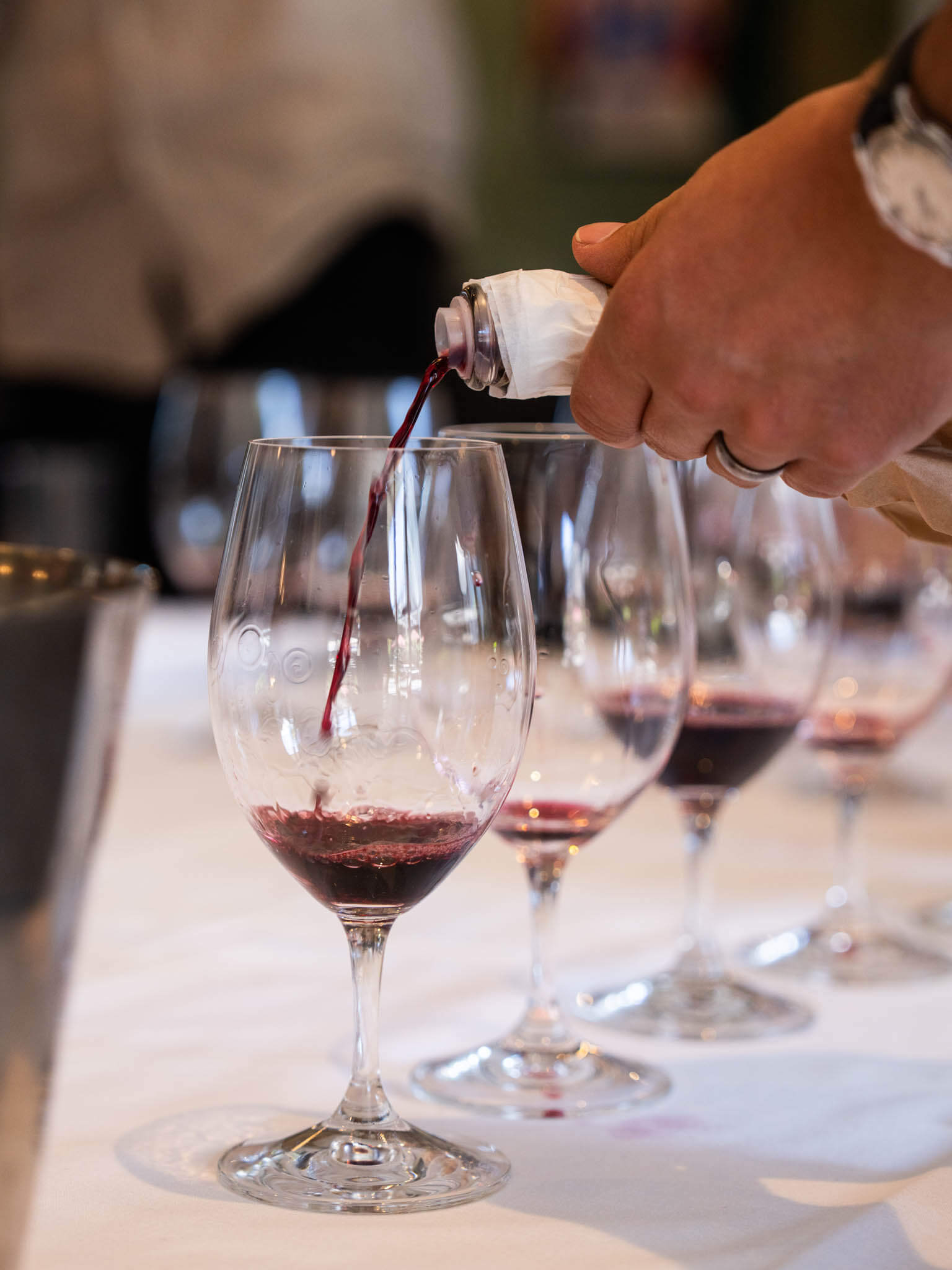
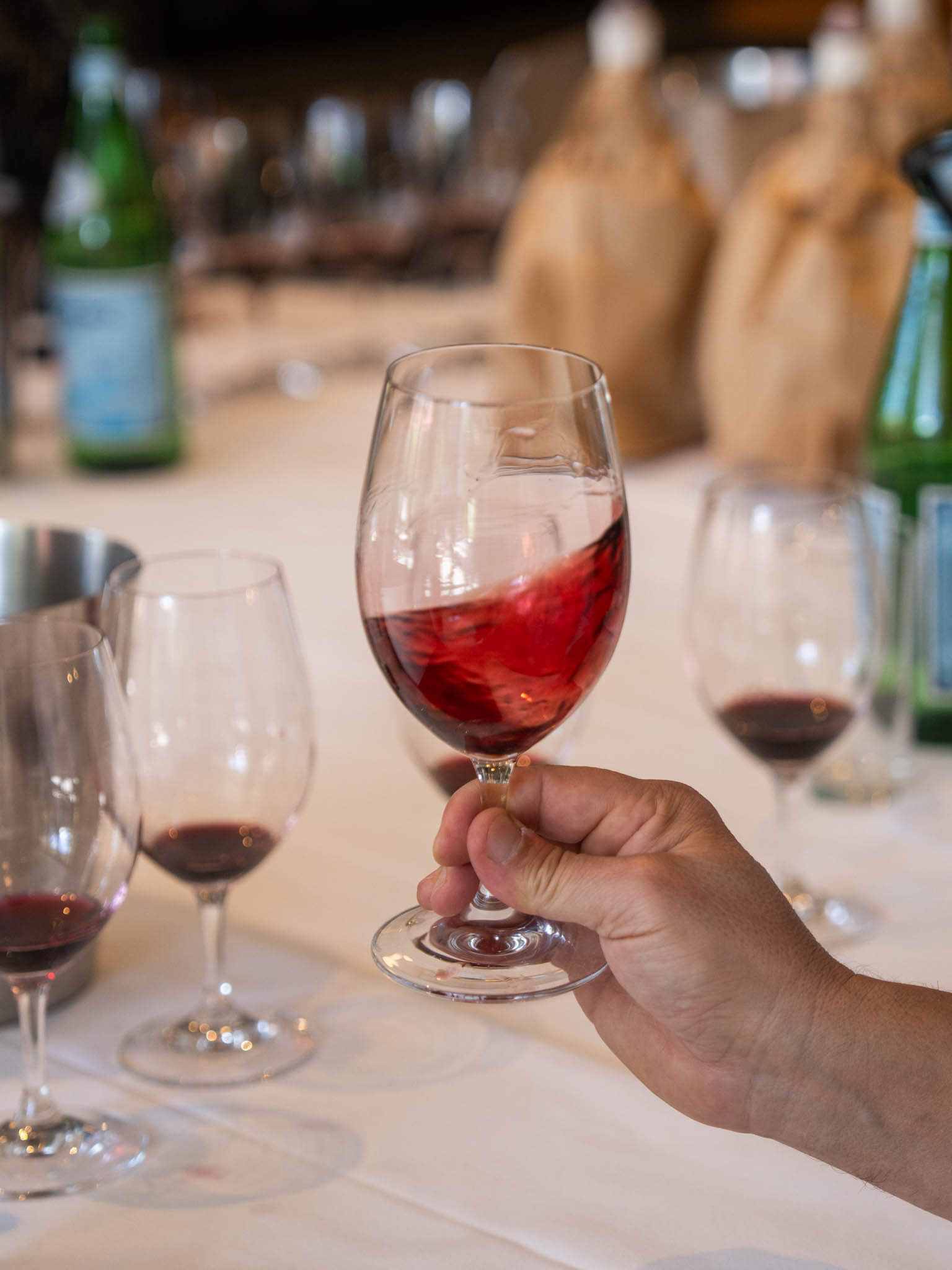
Above and opposite: Our Deep Dive panel tasting in action at the Bleakhouse Hotel, Albert Park (Melbourne). All wines tasted ‘blind’.
“I don’t think there’s a market for the blend specifically in restaurants – or at least at Marion and Cutler,” Donovan replied. “People aren’t coming in and saying, ‘I want a cabernet and shiraz blend.’ Most of the time it’s like, ‘Oh, I like shiraz, I like cabernet sauvignon – hey, that looks good! I like both of those wines’.”
“If I’m being completely honest, I associate shiraz-cabernet blends with really old men, who want a really big, bold, sharp-edged wine to go along with a steak that’s burnt on the outside and raw on the inside, and they think it’s the best thing ever,” Greco admitted. “Maybe we need someone like Zendaya to say on Instagram, ‘I’ve had this cabernet-shiraz from Australia and it’s my favourite wine’ – then all of a sudden the market will skew back towards these wines because they’re cool now.”
“I thinka lot of people expect that full-bodied, jammy style that we were talking about earlier,” Donovan added. “We need to shift that perception, and let people know they’re not all going to be like that.” Asked if she thought that sommeliers and other wine professionals were as guilty of misunderstanding these wines as the general public, her reply was blunt: “Uh, yes.”
Above and opposite: Our Deep Dive panel tasting in action at the Bleakhouse Hotel, Albert Park (Melbourne). All wines tasted ‘blind’.
The panel
Frank Butera is the current manager and winemaker at Bass River Winery, a wine label and vineyard in South Gippsland founded by his father, Pasquale. His inheritance – a rich history of food, culture and wine – lead him to pursue his interest in winemaking. He completed studies in physics in 1996 and soon afterwards commenced a wine science degree at Charles Sturt University in Wagga Wagga. The combination of these studies gives him a thorough and unique understanding of the mechanisms involved with both grapes and wine. He is a science and engineering professional whose keen pursuit of knowledge and questioning intellect continues to find fresh challenges (and solutions) in winemaking. His pursuit of winemaking knowledge regularly takes him to national and international pinot noir and chardonnay conferences, and he is a regular wine show judge. He completed the Australian Wine Research Institute (AWRI) Advanced Wine Assessment Course in 2019, and was a scholar in the 2022 Len Evans Tutorial.
Audrey Donovan currently works as a sommelier at hatted Fitzroy wine bar Marion, which received a rating of three glasses at the 2026 Australia’s Wine List of the Year Awards.
Thomas Ward began his wine journey in the vineyards of Central Victoria, developing a hands-on understanding of site before moving into the winery. His early roles at Coldstream Hills and St. Hubert’s Winery, along with the Tahbilk Group Graduate Program and now a degree in Wine Science, he has built a broad foundation across vineyard, cellar, and operations. He is assistant winemaker at e’Stellar Estate, where he brings a true vine-to-wine perspective – helping to grow the fruit and then seeing it through in the winery on its way to the bottle – and acts as the estate’s Swiss Army knife.
Isabella Grecohails from Florence, Italy. While studying law, she worked at several restaurants in Italy, eventually succumbing to the irresistible allure of wine. Arriving in Australia in December 2014 for a six-month working holiday, her stay extended to ten years – and counting – after securing a job at the idyllic Stefano’s Restaurant in Mildura. There, she served as the restaurant manager and wine director for almost nine years, counting the legendary Stefano de Pieri as a mentor. She has recently moved to Melbourne to embark on her next journey in wine hospitality, and is currently working front of house at Marameo.
Rémi Monnoyer currently works as a sommelier at hatted Melbourne fine-dining restaurant Coda.
Chia-Wei Shen (佳葳沈) doesn’t sell wine – she sells stories written by time, land, and people. With training in viticulture and winemaking via a Masters in viticulture and oenology from the University of Adelaide, she now works in cellar door sales for Balgownie Estate in the Yarra Valley, specialising in wines with historical and regional context. She enjoys helping visitors understand why a wine tastes the way it does, not just how it tastes. Her long-term interest lies in cool-climate viticulture, sustainable agriculture, and cross-cultural wine narratives between Australia, France, and Taiwan. She possesses the French Wine Essentials certification from the Wine Scholar Guild (WSG), and is currently assisting the Institute for the Study of French-Australian Relations to research a biography about early Yarra Valley vigneron Charles Hubert de Castella.
GET FIRST ACCESS TO THE NEXT WINE ICONS – DELIVERED
Grüner veltliner is Austria’s signature grape variety – as important to its national wine psyche as shiraz is to Australia’s – and the wines it produces have proven popular worldwide thanks to their innately food-friendly nature. You might therefore assume that it’s widely planted throughout the rest of the world – but Australia is the only ‘new world’ wine country that has a grüner veltliner industry of note. This is all the more remarkable when you consider that we’ve only been making wine from the variety for around sixteen years. With so much quality on show in local examples of this variety, and as the landscape rapidly matures, we thought it was time to once again take the pulse of Australia’s grüner veltliner scene via a Deep Dive.
Today, many wine producers are prioritising working with organic and biodynamic vineyards, and many growers are converting to the methods. There is no doubt that wine quality is a large motivation, but their interests run deeper than that. So, what is biodynamics? And how’s it different from organics? The 2023 Top 50 features Charles Oliver Wines, Pacha Mama, Paxton, Mise en Place Wines, Foxeys Hangout and Somos who are all advocates of organic and/or biodynamic farming practices.
Sparkling wine in this country has never been so good, and just so diverse. The 2023 Top 50 features Lauren Langfield (Orbis), Sudeep Parial (Kreglinger Wine Estates), Gabe O’Brien (Cavedon Wines) and Belinda Hughes (Rieslingfreak), who are all making a mark with the fizzy stuff.
Subscribe to our newsletter
Young Gun of Wine is your shortcut to cutting edge wines, the places to go, and the people behind it all.
Subscribe to be amongst the first to know of our latest discoveries in wine.
We'll bring you the inside running from the growers, the makers, the wholesalers, the retailers and the sommeliers, too.