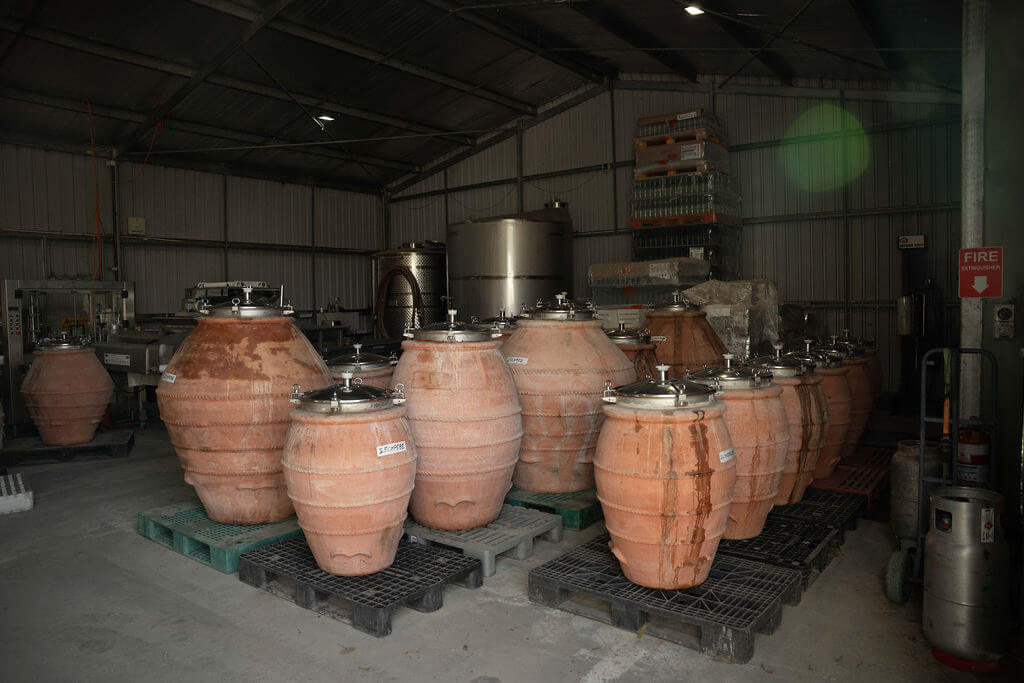
For most Australian wine drinkers, red wine automatically means oak barrels – whether that’s the comforting robe of toasty new oak, or the more discreet touch of neutral oak. But before the world put its reds into oak barrels, there was an ancient tradition of using large earthenware vessels to make wine – and like their international peers, Australian makers are rediscovering the wisdom of this age-old practice. With a small but growing cohort of makers working with these vessels to craft deft and supple red wines, we thought a Deep Dive into the matter was in order.
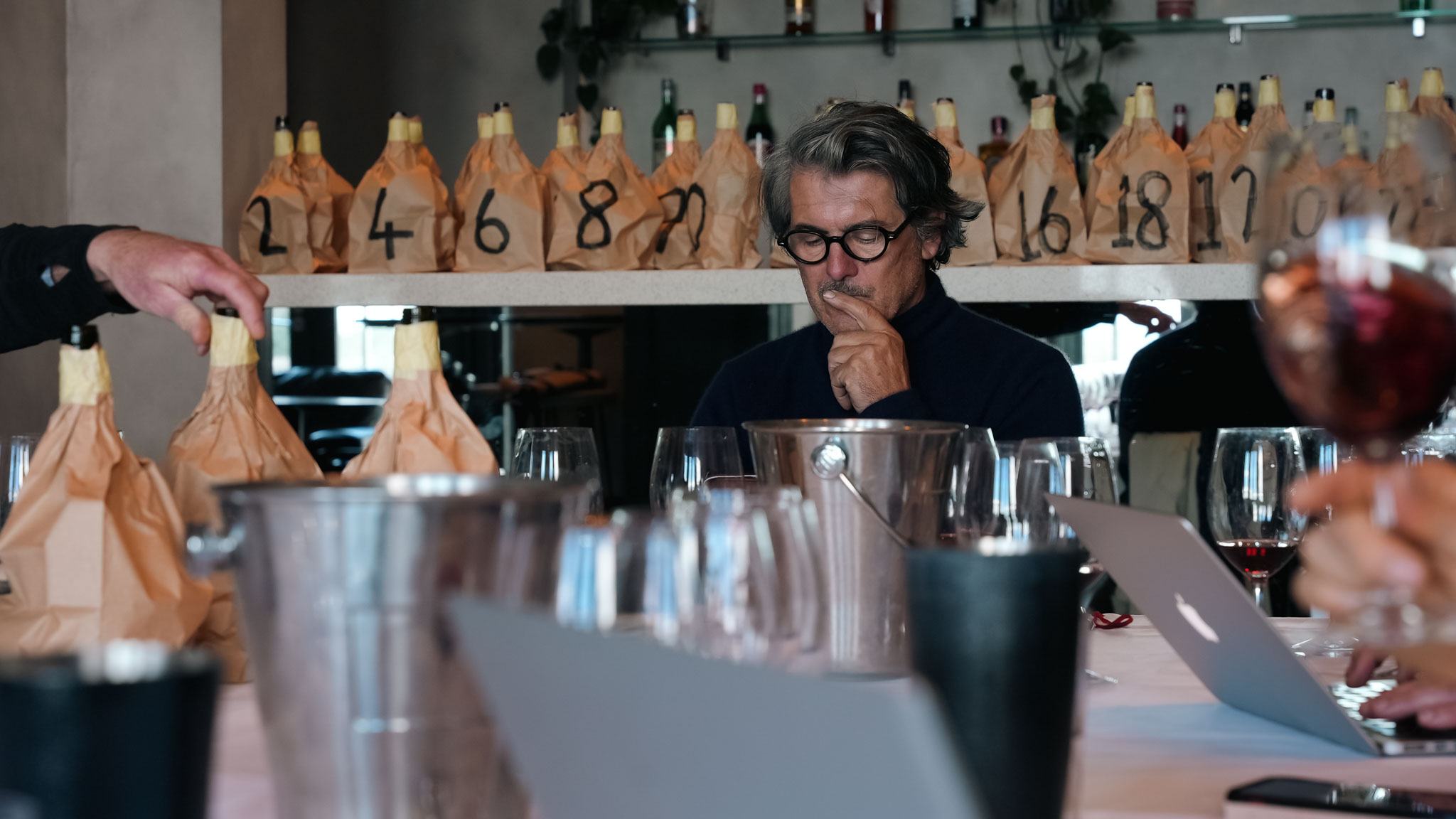
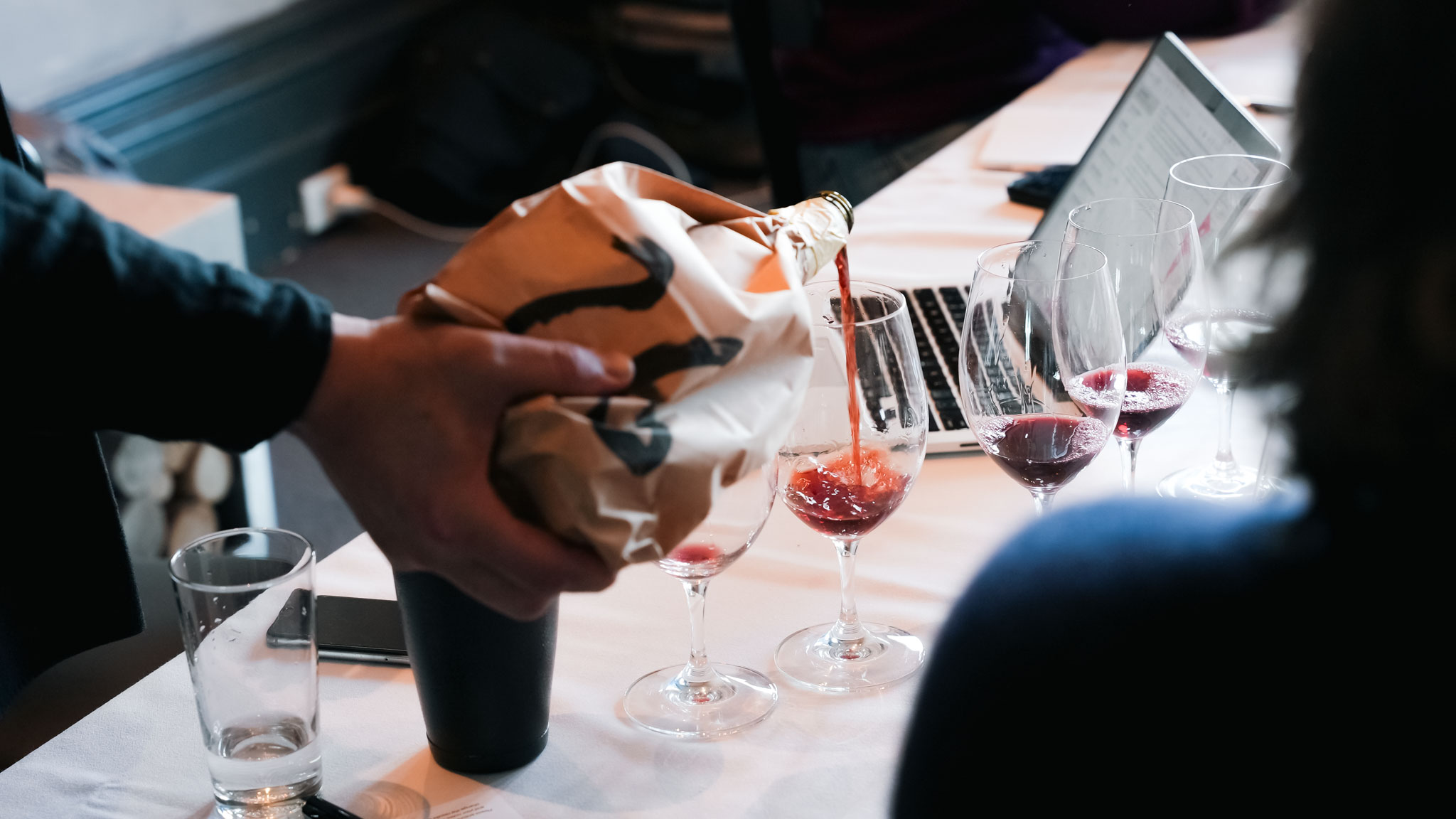
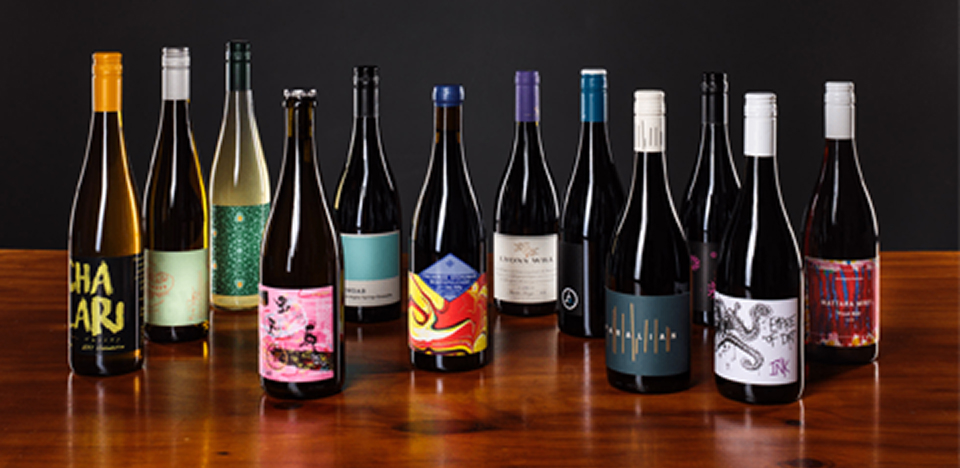
We gathered every example of Australian red wine that had been fermented and/or raised in amphora or similar earthenware vessels that we could find, regardless of grape variety or varieties used, and set our expert panel the the task of finding the wines that compelled the most. All wines were tasted blind, and each panellist named their top six wines.
Our panel: Glenn James, winemaker, Billy Button and Clay Pot; Gilles Lapalus, winemaker, Maison Lapalus and Bertrand Bespoke; Andrea Roberts-Davison, lecturer in viticulture and winemaking, Melbourne Polytechnic; Masahiko Iga, head sommelier, Victoria Racing Club; Brad Lucas, proprietor, Cult of the Vine.
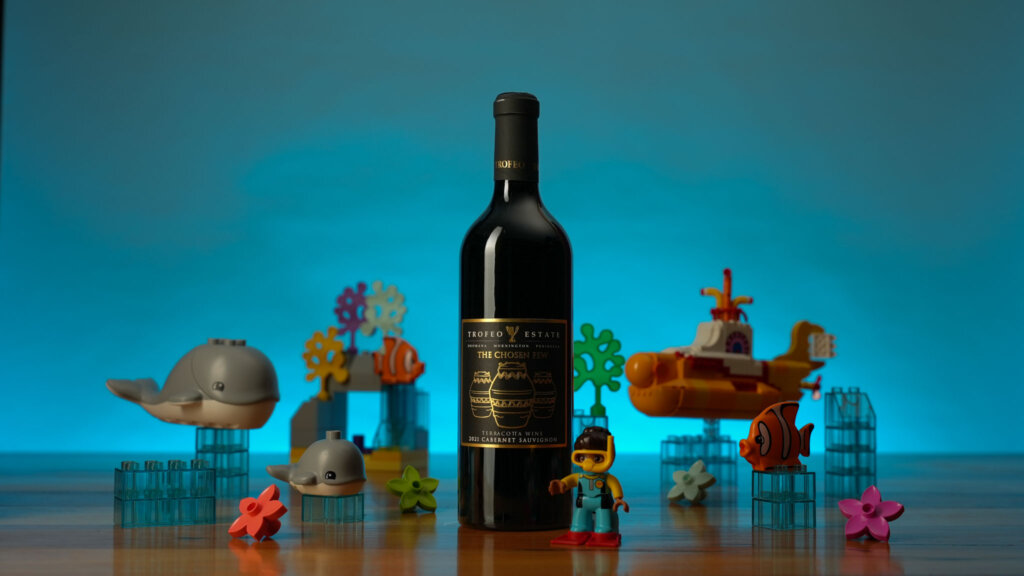
Roberts-Davison, Lucas, and Lapalus all selected this wine in their top six from the blind tasting. Roberts-Davison found “deep ruby in colour, this wine greets you with layers of aromas that keep changing the more you sniff: stewed plums, rhubarb, blackberries, thyme, and even a touch of blueberry. Hiding in the background is a hint of earthy beetroot, thanks to a brush with amphora ageing. On the palate, blackberries and thyme are joined by chocolate and bay leaf. The lively acidity balances beautifully with silky yet firm tannins.” Lucas described it as “poised and polished, wedding density with delicacy in a satiny, middleweight frame. It shows crushed violets and pickled green peppercorns alongside soft, ashy tones that frame a palate of blood plums and charred jalapeño. Silty, beautifully resolved tannins prowl wide and long. This is cohesive, compelling and borderline ‘serious’, with brilliant byplay of darker fruit depths with finely tuned concentration.” Lapalus noted “deep red with a garnet hue and intense brilliance. The nose starts with great intensity of fruit – blackcurrant and tomato leaf. Well-balanced, with very soft and well-integrated tannins, and a finish that’s refreshed by a light bitterness that brings complexity. A very well-made wine, ready to drink now.”
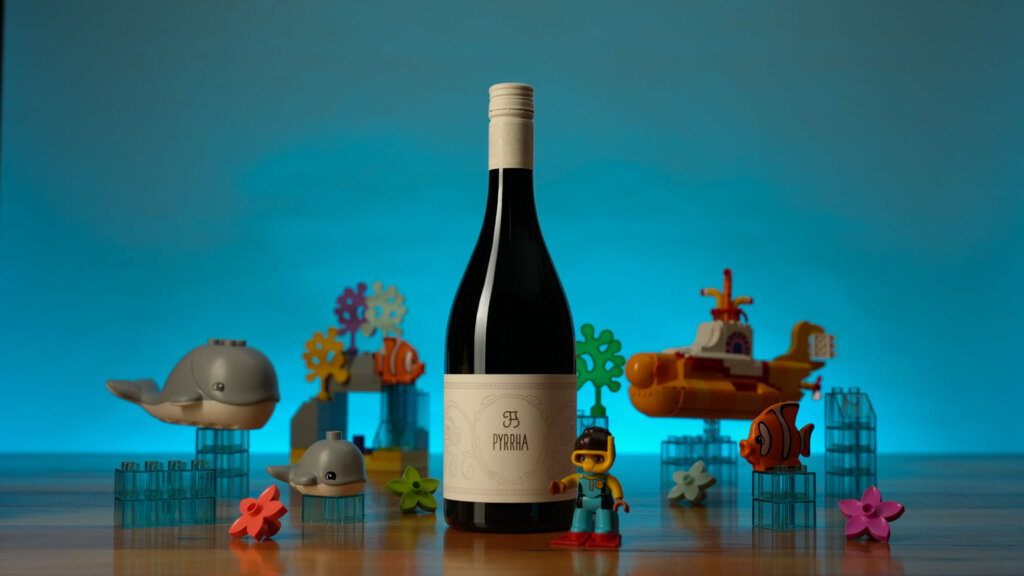
2020 Clay Pot ‘Pyrrha’ Sagrantino, Heathcote $50 RRP
Lucas, Roberts-Davison, and Iga all included this wine in their top six from the blind tasting. Lucas was effusive: “Had me salivating at first glance. Scents of star anise and pressed rose segue to kombu and dried cranberry with a gentle medicinal lilt lending a certain glassy grace. This feels vaguely Italianate, flecked with fallen leaves and brick dust, tinged with olive brine and black tea. So slender and willowy of frame but positively soused with depth, savoury detail and almost jarring purity. Ambitious yet beautifully assured, and so utterly comely. What a wine. Stunning.” Roberts-Davison found “from the very first sniff, this wine promises adventure. Aromas of red liquorice, raspberries and canned cherries quickly shift towards pretty violets and then into something savoury. On the palate it starts dry and mineral, with hints of terracotta, before building into bright raspberry and boysenberry fruit.” Iga noted “a bright ruby core with a rim shading gently to brick. The aromas are composed and mature: fruit layered with dried flowers and herbs, touched by toasty notes and a hint of nuts. Perhaps a touch of age, or simply the oxidative interplay of amphora, lends the wine its autumnal character, which I find compelling.”
Roberts-Davison and Lapalus both chose this wine in their top six from the blind tasting. Roberts-Davison described it as “pale ruby in colour, this wine isn’t quite crystal clear, but makes up for it with lifted aromas of blueberry, cranberry, cherry pie filling and a flicker of mandarin, with just a whisper of bay leaf. Juicy cranberry and sour cherry flavours flood the palate, supported by a granitic, stony edge that keeps it fresh. Light in body but complex, it’s elegant with fine, delicate tannins.” Lapalus found “a bright ruby colour, slightly cloudy, indicates a fresh style. The nose is quite intense and varietal, dominated by wild strawberry fruit, florals, and a touch of forest floor. The mouthfeel starts with a dynamic freshness from the acidity. This is a lighter style, but with good aromatic intensity – a great drink in warmer months.”
Iga, James, Lucas, and Lapalus all had this wine in their top six from the blind tasting. Iga described “a luminous hue of peony, shading from crimson to violet. The aromas are abundant – white pepper, green pepper, spice, violets, and herbs – alongside pomegranate and strawberry of striking quality. The palate bursts with freshly crushed fruit, transparent and vibrant. Amphora character and whole-bunch lift fuse harmoniously, shaping a wine of both vibrancy and composure.” James found it “a glowing ruby with purple highlights, intensely perfumed, bursting with lifted florals of roses and red carnations. The palate mirrors the nose, revealing gamey red fruit characters with vibrant energy. Racy and precise, acidity and tannins dance in harmony.” Lucas called it “such a good time in that flirty, fruit-forward mode that makes for effortless drinking. Rosehip and raspberries gel with pulpy, peppered strawberry and freshly torn oregano. There’s a ticklish, jubey weave to this and such frisky levity there’s barely time to overthink before your glass needs refilling. Deeply thirsty stuff and a total frolic.” Lapalus noted, “the colour is on the dark side, with deep garnet nuances. In the mouth, it reveals itself as a powerful wine, balanced with a velvety texture. A wine which will benefit from a bit of time in the bottle.”
2024 Yarra Yering ‘Amphora’, Yarra Valley $60 RRP
James and Roberts-Davison both selected this wine in their top six from the blind tasting. James found “a wine of dramatic presence, almost black with shimmering purple hues. The nose bursts with a heady swirl of dark plum, ripe blackberry and warm baked earth, layered with exotic spice, bay leaf and black cardamom. Opulent yet composed, the palate unfurls in waves of rich, dark fruit and umami depth, its grandeur sculpted and defined by sleek, graphite-like tannins that carry the finish with power and precision.” Roberts-Davison described it as “ruby-purple in the glass, opening with an enticing mix of blackberry, raspberry, tobacco leaf and earthy iron, all lifted by a savoury peppery note. The palate is rich and generous, echoing the dark berries with the addition of black cherries and slatey minerality. A bright acid line gives it a sense of movement, like chewing a juicy blackberry wine gum mid-palate.”
Lapalus chose this wine in his top six from the blind tasting. “The colour is at first very appealing – dark garnet with medium limpidity, but quite vibrant,” he noted. “Confirming the visual, the nose is full of dark fruit, dark florals of iris and violet, and an almost-smoky bacon note – a very complex nose with good intensity. The mouthfeel is immediately very soft, with a creamy texture, very present, followed by fresh flavours of dark flowers, and a mineral note of warm slate. The wine is very well-balanced and shows a lot of complexity. Already approachable, this wine will be interesting to follow in the next few years – especially if paired with some wild game.”
2024 Symphony Hill Amphora Pinot Noir, Granite Belt $250 RRP
Iga and Lapalus both included this wine in their top six from the blind tasting. Iga found “a bright yet deep red. Aromas are intense and well-knit: tea leaf, rose petals, fresh herbs, shiso, and sweet berries, with white pepper and a trace of smoke. The palate unfolds gently with pomegranate, plum, and red cherry. Tannins are firm, perhaps with a stalky freshness from whole-bunch fermentation. Texturally, the wine feels fresh and structured.” Lapalus described “a nice presentation, with a garnet colour and some ruby hues. The nose expresses mostly floral notes of peony and poppy, alongside a little bit of fruit character. The first impression in the mouth is textural – the wine is supported by a medium structure and fine tannins. Definitely a wine to revisit in a couple of years, when the tannins will have softened more.”
2021 Star Lane Winery Amphora Nebbiolo, Beechworth $60 RRP
Lucas and Iga both had this wine in their top six from the blind tasting. Lucas found “instant autumnal allure, this throws baking spice and brambly herbals ahead of pepperberries in sour cherry syrup with a bloody, bit-lip tang and something ferrous and gently burnished that hints at some subtle tertiary age. So svelte and fluid with wonderfully incisive acidity that makes me hanker for good olive oil over some crudo di carne.” Iga described “ruby-bright with a touch of brick at the rim. Aromas of bay leaf and thyme rise with a slightly rustic herbal lift that feels charming. Peppery spice, a hint of smoke, and chalky minerality complement plum, cherry, and cassis on the palate, where fresh, crushed fruit flows gracefully. Caponata, the Sicilian stew of eggplant and tomato, would be a perfect partner.”
Iga featured this wine in his top six from the blind tasting. “Bright and elegant in appearance, ruby with golden glints and beautifully defined gradation,” he described. “The nose is graceful, with cherries, cassis, gentle plum, and red berries dancing together. The concentration of such aromas is both pure and inviting. On the palate, cassis, raspberry, and cranberry take the lead, expressing fruit in the purest way – an unmistakable signature of amphora. For me, the heart of a wine lies in the quality of its fruit, and here it shines. Moderately pungent yet slim in frame, with a long, lingering finish where raspberry jam–like sweetness and acidity are beautifully aligned. This is a bright, energetic wine.”
2022 Symphony Hill Amphora Grenache, McLaren Vale $250 RRP
Roberts-Davison and Lapalus both selected this wine in their top six from the blind tasting. Roberts-Davison found that “in a line-up of reds, this pale ruby wine shines like a jewel, clear and almost sparkling. On the nose it’s pure nostalgia: boysenberry ripple ice cream, Parma violets, red liquorice, and sweetshop treats. The palate delivers exactly what you hope for – more candy-like fruit alongside rhubarb-and-custard lollies and a subtle iron edge. Creamy in texture yet structured with a zippy, almost over-enthusiastic acidity.” Lapalus described “the colour is a slightly cloudy medium ruby. The nose is a little bit closed – some fruity notes and a touch of earthiness. In the mouth, the flavours are still discreet, whilst the texture is quite creamy, giving a certain sweetness to the mouthfeel. After a little bit of aeration, the flavours become more complex, with some Vegemite-like fermentation notes. A savoury wine showing a great texture.”
Lucas and James both chose this wine in their top six from the blind tasting. Lucas found it “so lucid and transparently ruby in the glass while swooning with lavender, strawberry and tomato leaf with a sigh of reductive funk, then a wash of rhubarb and rosewater on the palate, some perky pickled plum and sweet, sappy tones flecked with nori tinged umami, all spliced with such high-def clarity it echoes the freshness and focus of a white or rosé. So piercingly delicate and utterly delicious.” James noted “a wine I kept returning to, glowing in a delicate light brick red hue. Fragrant and refined, it offers whispers of dried kitchen herbs and soft sandalwood, entwined with vibrant cranberry and rhubarb. Silky, caressing tannins carry the palate, letting red cherry flavours linger gracefully.”
2022 Purple Hands ‘Oenotri’ Montepulciano, Barossa Valley $100 RRP
James included this wine in his top six from the blind tasting. “Dense red with a crimson-garnet glow, this wine unfolds with plum-scented richness and subtle ferrous hints,” he described. “Whispers of sandalwood and fresh suede weave through a fine, structured tannin framework, while vibrant minerality and fresh acidity give lift. Deep, brooding, and resonant, it lingers with quiet intensity and balanced elegance.”
2020 Symphony Hill Nero d’Avola, Riverland $250 RRP
James had this wine in his top six from the blind tasting. “Mid-red in colour, this wine unfolds with bright red berry fruit seamlessly wrapped in a defining ferrous character,” he observed. “Hints of dry red earth and superfine, lingering tannins give structure and poise, while mid-bodied delicacy allows elegance and finesse to shine. The palate lingers, with ferruginous flavours echoing long, creating a wine of refined complexity, quiet power, and graceful persistence.”
2024 Dormilona ‘Clayface’ Cabernet, Margaret River $75 RRP
Lucas selected this wine in his top six from the blind tasting. “A little more clout and concentration yet so deftly pitched,” he described. “Bruised beets in shoyu with soft liquorice and a bright balsamic tang, then pangs of amaro, cola and crushed gravel, some leafy sous-bois and campfire smoke amping up the intrigue. There’s a rich dapper vein here laced with so much detail – it feels generous, but gently dosed, and makes me want to go hunting for game while this decants back at the lodge. Superb.”
James chose this wine in his top six from the blind tasting. “Bright garnet red in colour, this wine shows dried red cherry fruit intertwined with a spicy kick of Korean red pepper powder,” he noted. “The dynamic palate balances taut tannins and lively acidity, with spice echoing through the finish. Long, vibrant, and mouthwatering, it delivers a lighter, energetic style with elegance, precision, and exceptional balance.”
Iga included this wine in his top six from the blind tasting. “Deep red with a violet edge,” he described. “The aromas are bold and lifted: violets at the core, pepper, sage, and a dusty mineral note. The palate is fresh, juicy, and vibrant, with concentrated flavours of black plum, blackberry, and blueberry, all carried with warmth. A wine that expresses quality fruit in its purest form. Grilled unagi, glazed with sweet-savoury tare sauce, would be an inspired pairing.”
Roberts-Davison featured this wine in her top six from the blind tasting. “With a garnet colour fading to brown at the rim, this wine immediately feels a little different,” she noted. “The nose is savoury and earthy, with smoky hints, but underneath lie stewed rhubarb and plums showing a touch of maturity. On the palate, the mood shifts to something fresher: sour cherries, rhubarb and cranberries, lively with medium-plus acidity. Not as bitter as others in the line-up, it carries good length and leaves a curious, kombucha-like tang on the finish.”
The backstory
For most Australian wine drinkers, red wine automatically means oak barrels – whether that’s the comforting robe of toasty new oak, or the more discreet touch of neutral oak. But before the world put its reds into oak barrels, there was an ancient tradition of using large earthenware vessels to make wine – and like their international peers, Australian makers are rediscovering the wisdom of this age-old practice.
In 2017, a team of archaeologists working on a pair of sites in Georgia, a country located at the crossroads of far Eastern Europe and Central Asia in the Caucasus region, discovered evidence that humans have been making wine since roughly 6000 BCE. The discovery attracted global headlines owing to the fact that it pushed the known starting point of human viticulture back into the past by approximately a millennium – but buried beneath those headlines is a curious detail. What the archaeologists actually excavated from the Neolithic-era sites in Georgia’s Shulaveris Gora and Gadachrili Gora was fragments of pottery – and a chemical analysis of that pottery showed that the vessels they had come from had very likely held wine.
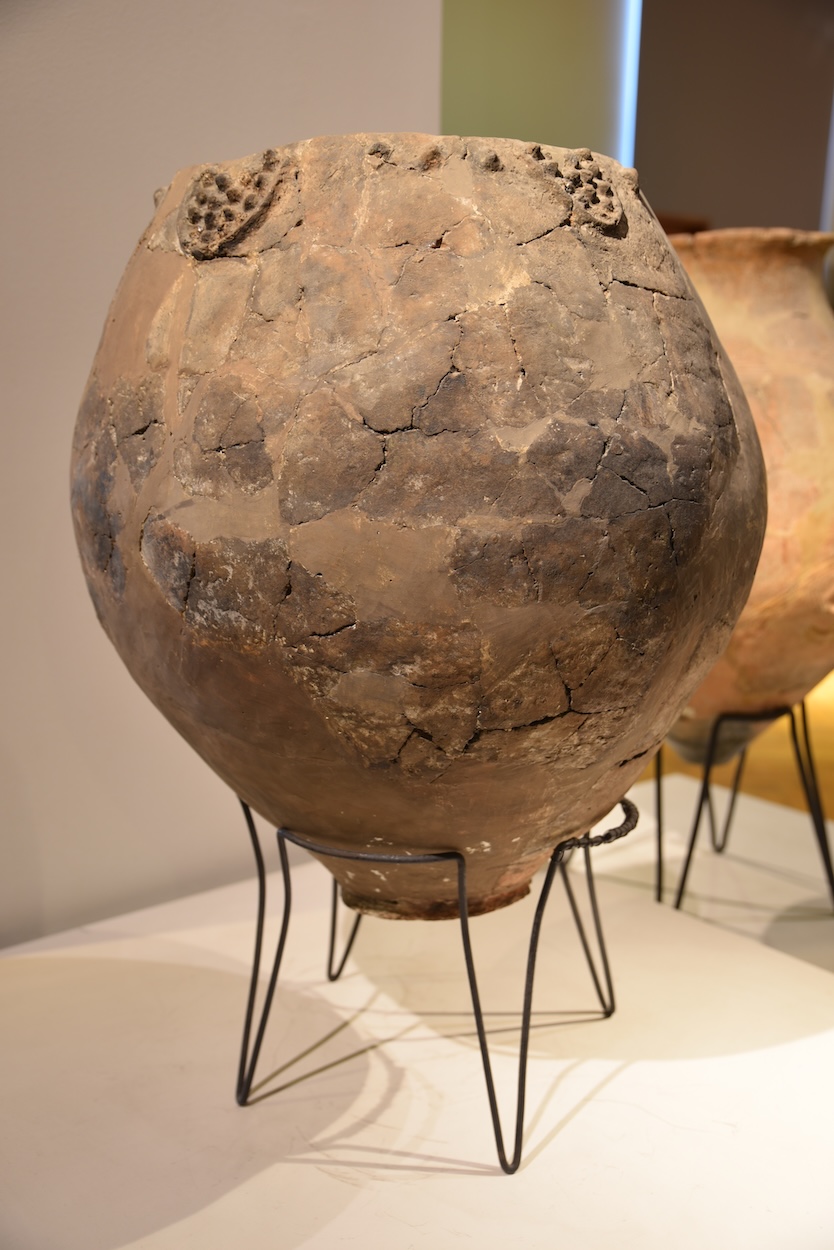
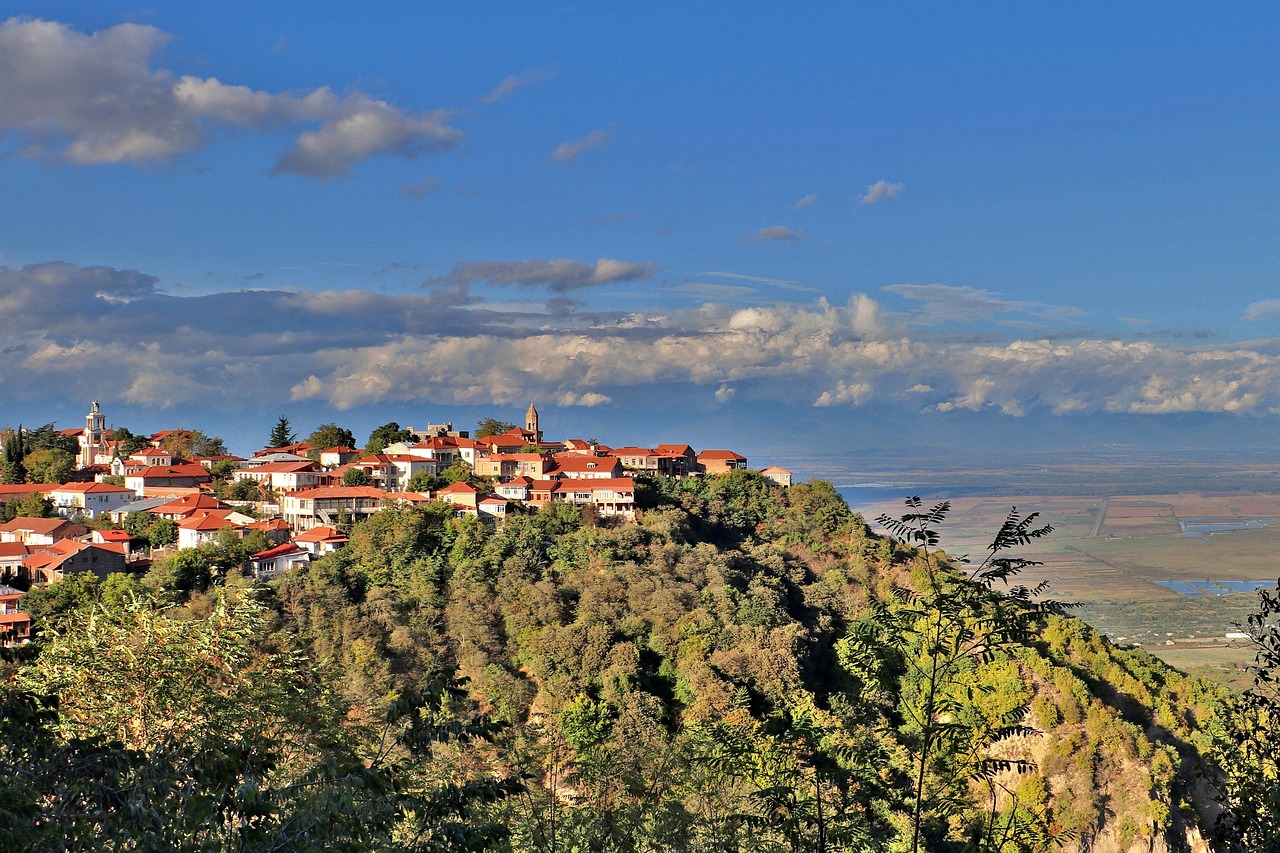
Opposite: A neolithic-era kvevri used for fermenting and storing wine, excavated from the Khramis Didi Gora archaeological site in modern-day Georgia. (Photo by Carole Raddato, CC BY-SA 2.0.) Above: The village of Sighnaghi, Georgia – the epicentre of the country’s post-Soviet wine industry.
Many wine producers and writers like to talk about winemaking traditions – glorifying the transformation of Bordeaux from swampland to vineyards in the 1600s, or the vineyard-mapping work of Burgundian monks in the middle ages – but you can’t get more traditional than using earthenware vessels to make wine. To put it into context: when those Neolithic Georgians were making wine 8,000 years ago, grape varieties per se would not have existed, and there would have been no distinction between red wines and white wines. Vitis vinifera, the grapevine species from which nearly all of the world’s wine is made, would have been around 5,500 years away from its eventual arrival in France, and 7,800 years away from its arrival in Australia. The use of earthenware vessels to make wine is more than traditional – it’s foundational. Unfortunately, the wider world of wine almost lost touch with that foundational tradition over the course of the past two millennia, before a small but dedicated international coterie of winemakers rediscovered it.
What’s oak got to do with it?
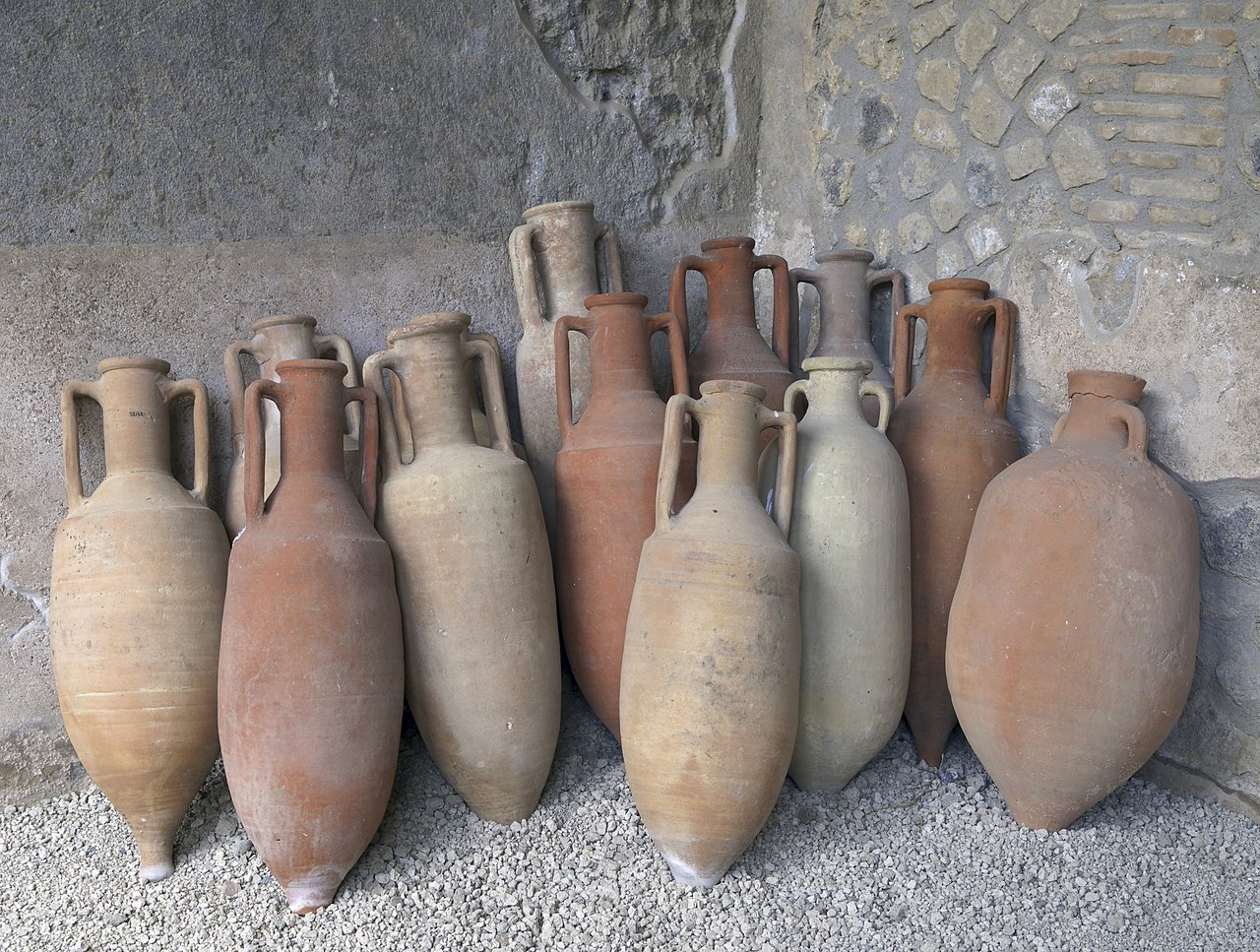
While the longstanding marriage of wine and oak barrels seems to have been preordained, the initial encounter between the two was in many ways a historical accident. As winemaking and viticulture spread westward to the Mediterranean basin from their ancestral home in the Caucasus, earthenware vessels for fermentation and storage remained practically unchallenged. The ancient Greek historian Herodotus, writing around 500 BCE, claimed that ancient Mesopotamians had used palm-wood vessels to transport wine along the Euphrates river two thousand or so years earlier – but their innovation didn’t take off, as palm wood is relatively difficult to shape into barrels and unlikely to be watertight. Thus as the Roman Empire expanded out from its Mediterranean home base, those Romans transported wine to and later from their colonies in small earthenware vessels that held roughly thirty-nine litres called ‘amphorae’ (or, in the singular, ‘amphora’).
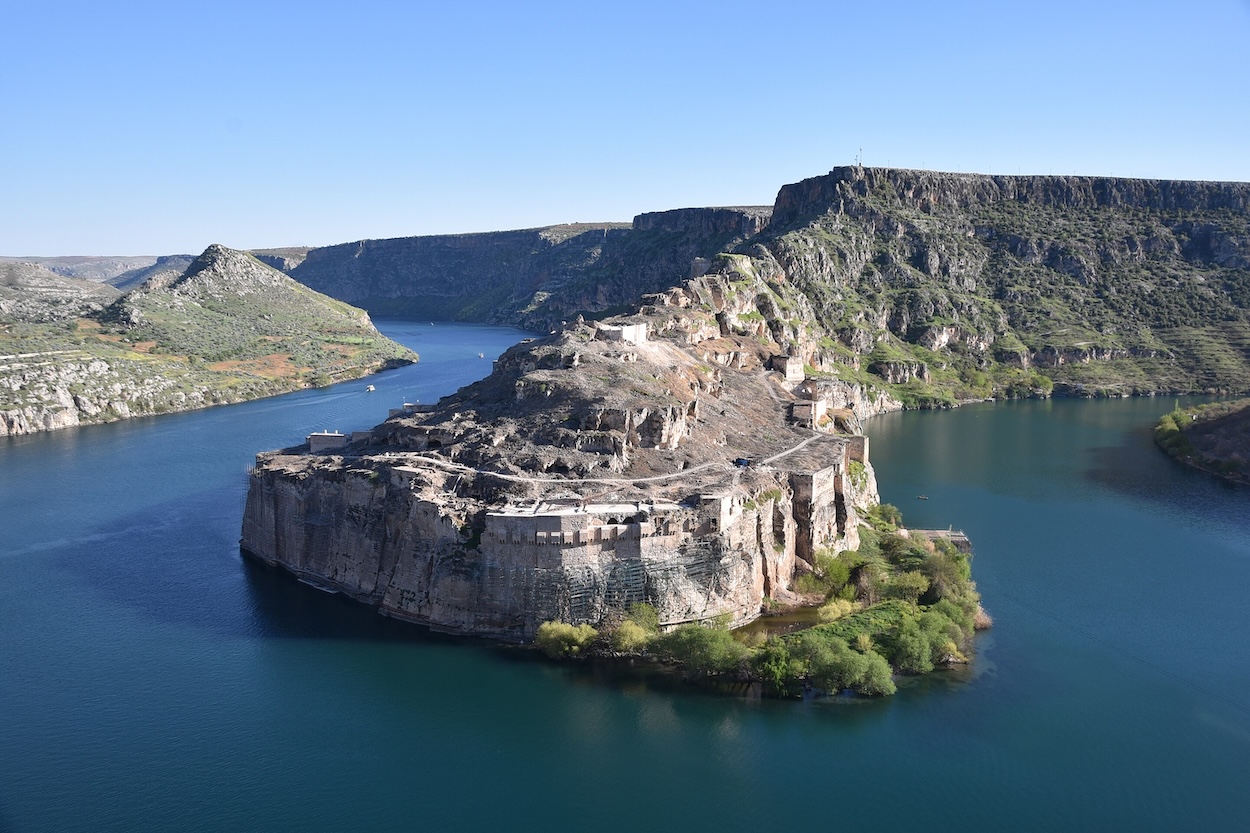
Opposite: Ancient roman amphorae, excavated from Pompeii. (Photo by Commonists, CC BY-SA 4.0.) Above: The Euphrates river – possibly the first river used for the transport of wine in barrels – as it passes through modern-day Turkey. (Photo by Carole Raddato, CC BY-SA 2.0.)
Meanwhile, further north, Celtic tribes had developed the oak barrel – a technologically more advanced means of transporting liquids. Barrels required not only ready access to wood from the oak forests that covered northern Europe at the time, but also relatively sophisticated metal-working abilities to make hoops and the know-how to combine both wood and metal. While amphorae were both cheaper and easier to produce, barrels possessed several advantages over them when it came to moving liquids from one place to another. Barrels were both lighter and stronger than amphorae (relative to the volumes they held), and they could be stacked and rolled with relative ease – a serious advantage over amphorae, which had to be carried individually and lashed in place to specialised racks to prevent them from tipping over. Barrels were also significantly less likely to break in transit, and, when made from tight-grained oak (Quercus robur) rather than other woods, were practically watertight. When the Roman Empire encountered Celtic tribes around 400 BCE, they would have swiftly realised that oak barrels offered a much better means to move wine about, with the first historical record of wine being moved this way date to 51 BCE. While oak barrels and amphorae co-existed throughout the duration of the Roman Empire, the barrel’s technical superiority meant it slowly edged out the amphora as the transportation vessel of choice.
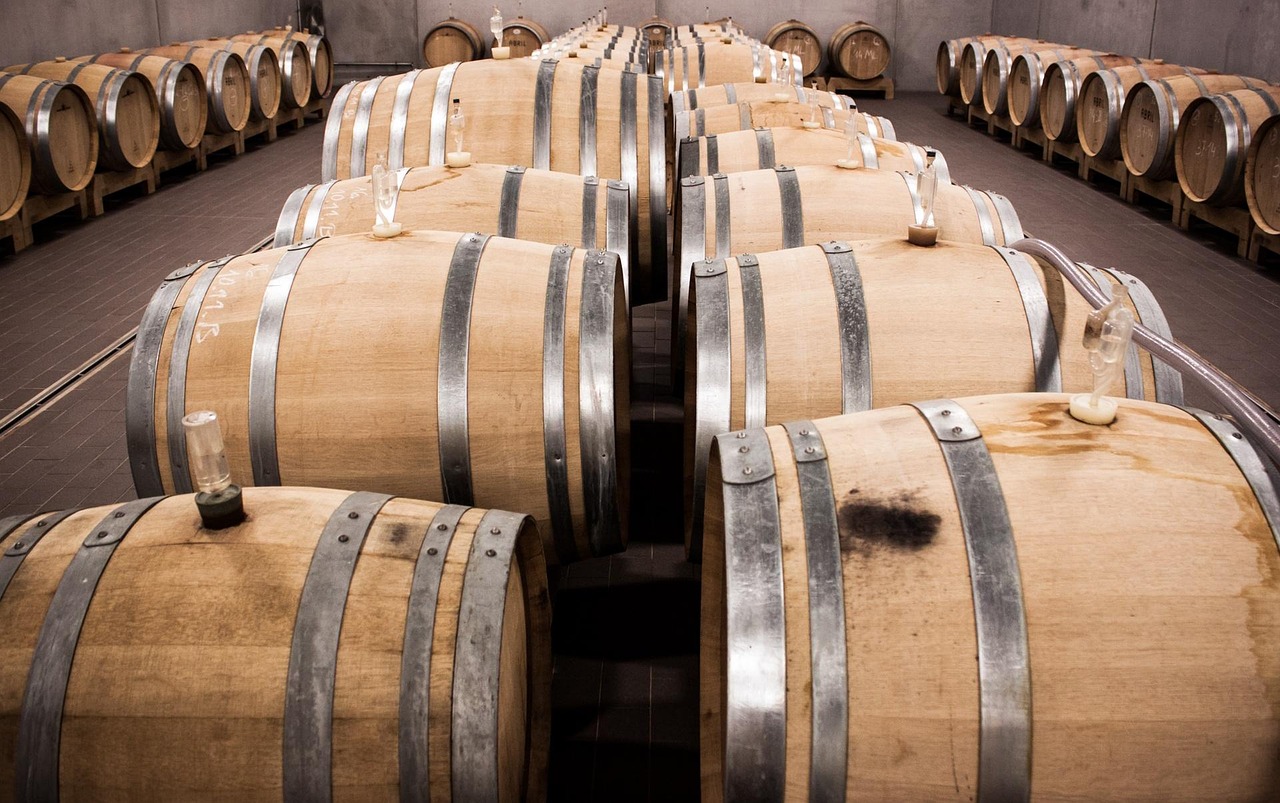
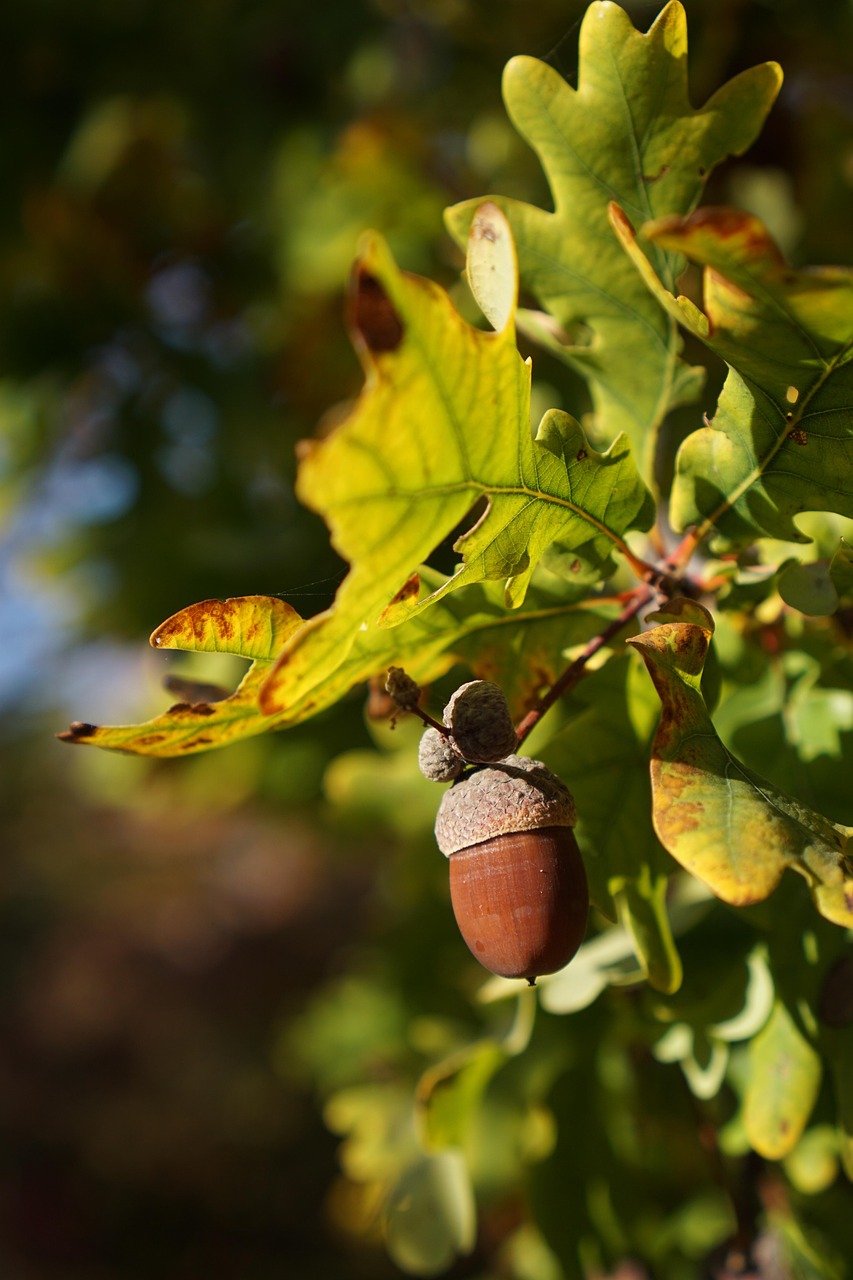
Above: The familiar sight of oak barrels in a winery (in this case, being used as fermentation vessels). Opposite: Quercus robur, the species from which French oak casks are made.
Importantly, the oak barrel’s first encounter with wine wasn’t as a winemaking tool, but simply as a means of storing and transporting the finished liquid. At this time, primitive glass bottles had been invented – but they were not routinely used for wine storage, and would not be for roughly another 2000 years. Oak barrels are not, however, neutral vessels – chemical compounds in the wood will inevitably enter any liquids stored in them, and some oxygen is also likely to enter the equation. (Just how much oxygen permeates the wood depends on quite a few factors – the species of oak used and the diligence of the cooper who made the barrels among them.) As more wine was stored and transported in barrels, those who drank the wine began to appreciate the flavours that barrels added to the wine – toasty and spicy notes reminiscent of cinnamon, nutmeg, and vanilla. (Not that these early wine drinkers could have described them as such, because at that time none of those spices were known to Europeans.) The gentle oxygen exposure would also have softened the hard tannins of some red wines. By the 1400s, as wine was taken on longer sea voyages in the age of discovery, these chemical changes had become apparent – and, for wine drinkers, desirable. By the 1800s, winemakers in France, Spain, and Italy had started to not only deliberately store their wine in oak barrels before releasing it, they had also started to ferment wines in wooden vats. The age of deliberately-oaked wine had commenced.
A blast from the past
The return of earthenware vessels to contemporary winemaking practice can largely be traced back to the influence of one man: Friulian vigneron Joško Gravner. Gravner had made his name with rich white wines crafted using barriques – 225-litre oak barrels that, owing to their relatively small size, have a significant impact on the flavour and texture of the wine – yet he felt he was missing something. A trip to California in 1987 in search of inspiration from its slick, ultra-modern wine industry turned out to be a disaster: “I came home and told my wife that I was sick of conventional wines, which were going in the opposite direction of safeguarding the soil and authenticity,” he told Wine Enthusiast. Taking a full 180-degree turn from the scientific, technical approach, he instead researched the origins of winemaking, and soon determined that he would find his inspiration in Georgia. While political instability in the country meant his research trip had to be delayed until the year 2000, his first experience with Georgian wine – ladled directly from a buried earthenware vessel called a kvevri, traditionally used for both fermentation and ageing – proved to be worth the wait.
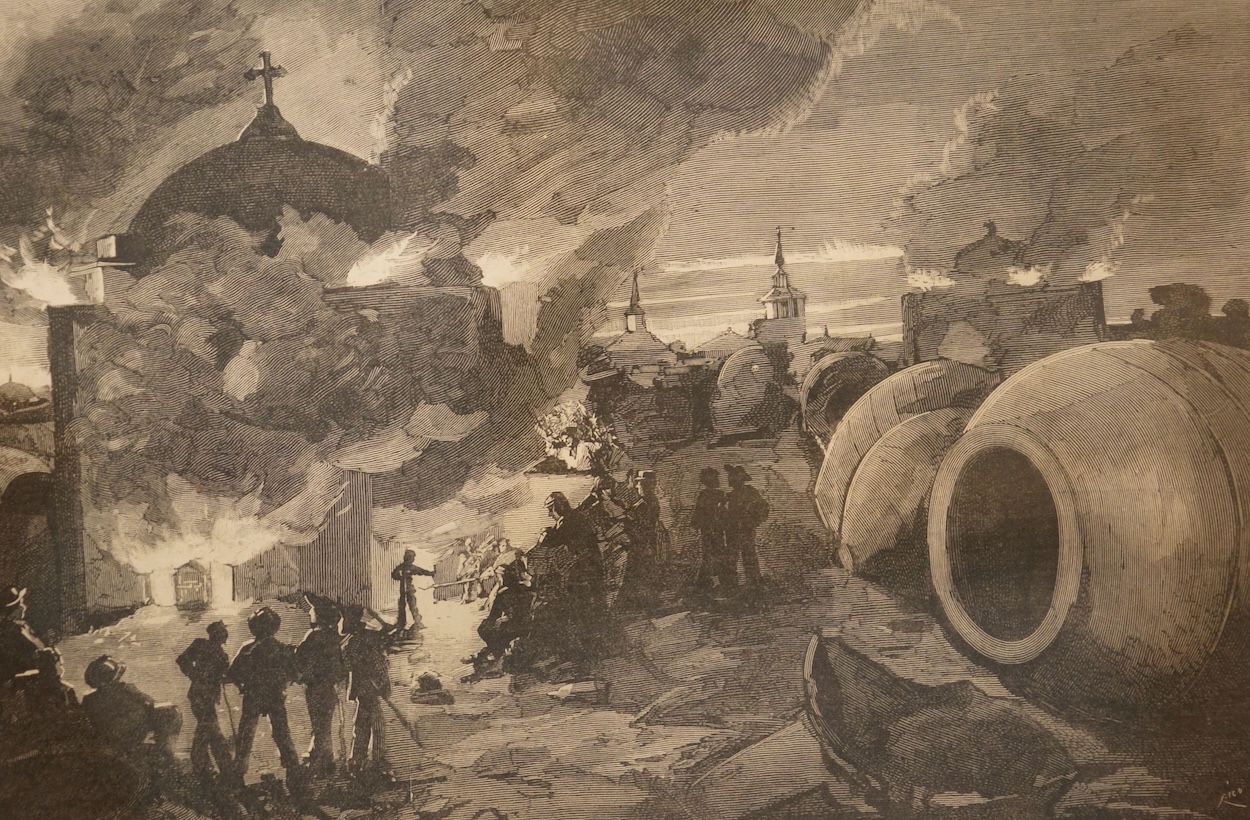
Opposite: 1882 Woodcut of tinajas being manufactured in Colmenar de Oreja, Spain, by Ulpiano Fernández-Checa y Saiz. Above: 1842 drawing of wine grape harvest in Kakheti, Georgia, by Grigori Grigorievitch Gagarine.
Gravner went on to not only introduce the wider world to skin-contact white wines, but also became an ardent user and advocate of kvevri – although he preferred to use the more Italianate term ‘amphora’. The release of his first amphora wines, from the 2001 vintage, proved to be a watershed moment: the lauded fine wine producer had delivered a suite of seemingly rustic and somewhat divisive wines, and in so doing eventually helped to create a global fascination for ‘amber wines’, the use of earthenware vessels in wine, and the traditional wines of Georgia – not to mention giving a massive boost to the nascent natural wine movement. But Gravner, as it turns out, was not the only winemaker looking at earthenware vessels – and Georgia was not the only place in the world that the tradition of making wine in such vessels had clung on in the face of oak-barrel orthodoxy.
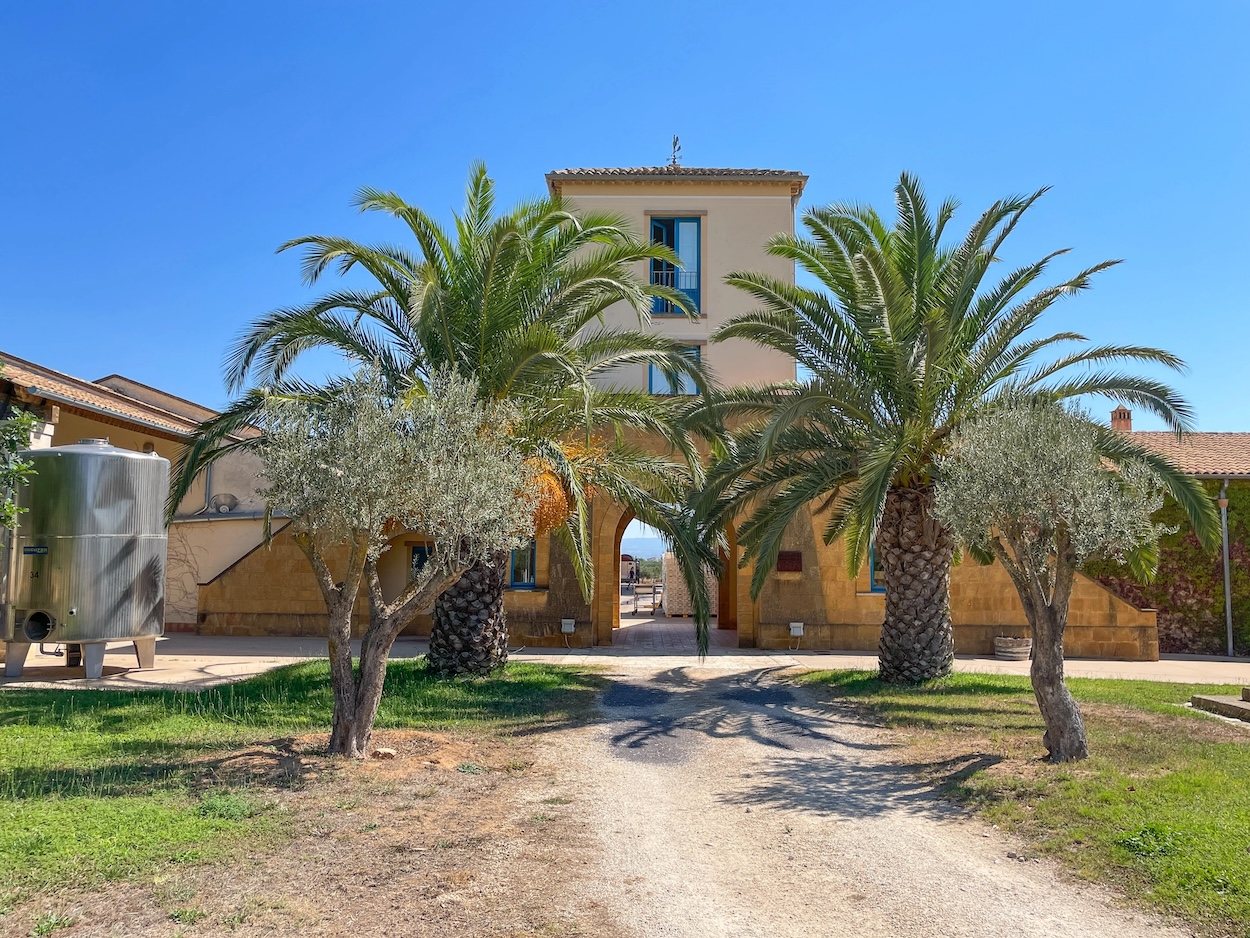
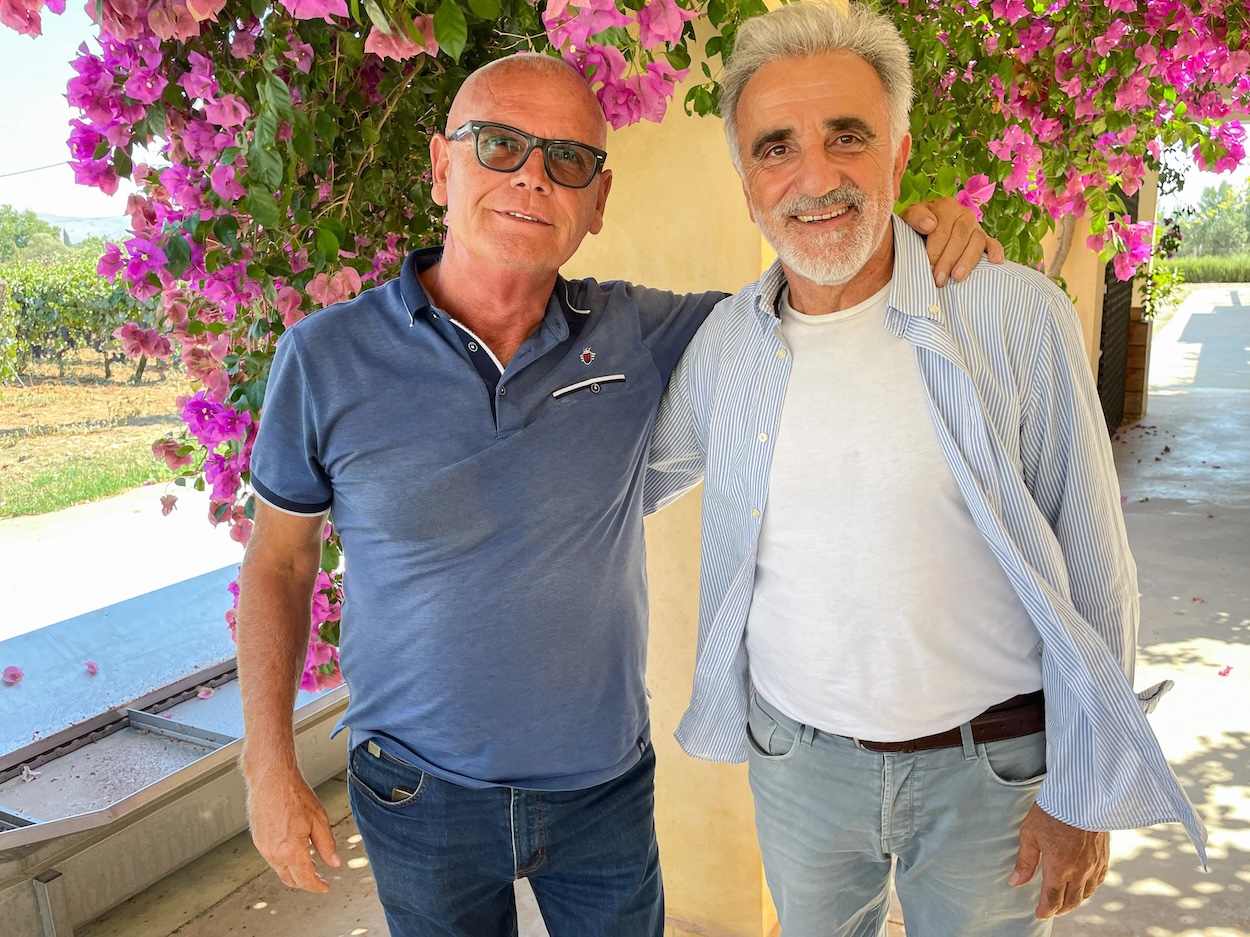
Opposite: Giambattista Cilia (on left) and Giusto Occhipinti of COS. Opposite: The COS winery building in Vittoria, Sicily. (Photos by Alder Yarrow, Vinography.com, reproduced with permission.)
Winemakers Giambattista Cilia and Giusto Occhipinti of Sicilian producer COS had started their winery with secondhand barrels that didn’t impart much oak flavour into the finished wine, but as they achieved commercial success in the late 1980s they followed the wider world’s infatuation with the toasty, spicy flavours of new oak and started to age their wines in barrique. In the mid-’90s, while tasting some of their early wines to see how they’d aged, they realised that they’d taken a wrong turn. “We were shocked at the difference,” they later told Wine Spectator. “With their mineral notes and earthy sensations, the wines were so much more interesting than later vintages matured in new oak that had sensations of vanilla and toast.” Their search for alternatives to barriques had led them to Georgia, but after some deliberation, in the year 2000 they imported earthenware vessels from Tunisia and Spain to experiment with, as well as trialling local Sicilian examples. The Spanish vessels – known there as tinaja, and still in use for winemaking – proved to be best suited to their needs. COS’s tinaja-fermented red wine, ‘Pithos’, made from frappato and nero d’avola, saw its public debut with the 2002 vintage. As with Gravner’s skin-contact whites, this was another watershed moment – demonstrating to the wider world that earthenware vessels could be used to make compelling red wines, too.
Bringing old vessels to the new world
Brash Higgins winemaker Brad Hickey was intimately familiar with COS’s ‘Pithos’ from his former career as a high-powered sommelier in New York’s fine-dining scene. So when he got his hands on some nero d’avola cuttings to graft into Nicole Thorpe’s Omensetter vineyard in McLaren Vale, his first thought was to ferment the resulting fruit in earthenware amphorae: “We had the first nero cuttings in McLaren Vale – which was also a bit of a rush – so we wanted to explore it using those vessels,” Hickey says. “COS were the early motivators, so we visited them to double-check everything – we did a little trip to Sicily to see how they worked, and we were basically really excited to get home.” There was one small problem with Hickey and Thorpe’s plan: earthenware fermentation vessels were not commercially available in Australia at the time. Enter Adelaide potter John Bennett.
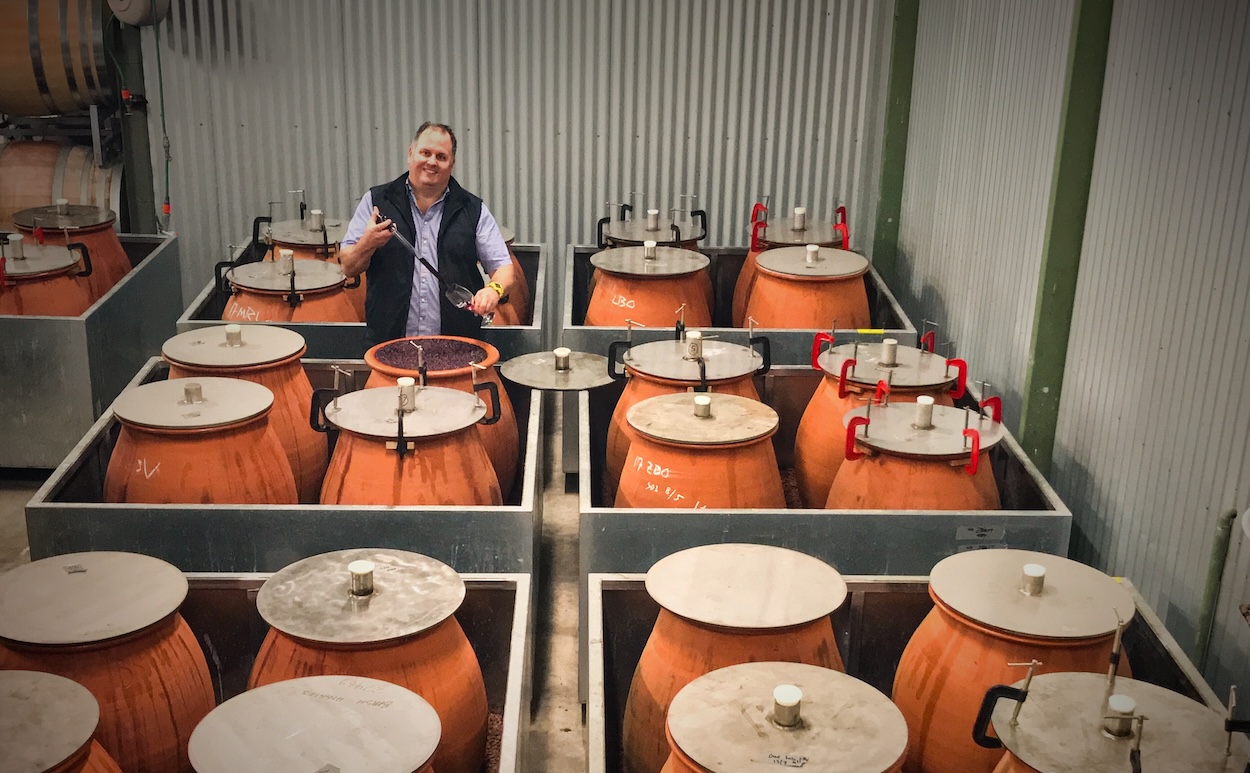
Above: Brad Hickey in the winery with Brash Higgins’s amphora-fermented ‘NDV’. Opposite: Hickey in the Omensetter vineyard.
“He’d never done anything like it himself,” Hickey says of Bennett’s first amphorae. “No-one was doing this back in 2008–2009 when we were exploring it. I just kinda drew a design on a cocktail napkin of what I thought we wanted – although he spins them on a wheel, so it had to have a flat bottom – and off we went.” The pair commissioned five amphorae from Bennett, but one ended up cracking in the kiln – “so we wrapped the other four up in carpet padding and gingerly drove them back to the winery. We basically said, ‘Thanks, John, we may or may not see you ever again’ – but certainly we did. Every year after that we bought a few from them.” The arrangement has turned out to be mutually beneficial: Bennett has since gone on to a lucrative sideline in crafting amphorae for other winemakers. For its part, the 2011 vintage of Hickey’s amphora-fermented nero d’avola, ‘NDV’, was not only the first release under the Brash Higgins label – establishing Hickey as an innovative new voice in McLaren Vale – but also Australia’s first commercially-released red wine fermented in earthenware amphorae. (In this regard Hickey is a co-equal first with winemaker Glenn James, who was simultaneously working on Australia’s first white wine fermented in amphorae, the 2011 ‘Pandora’s Amphora’, made using a decorative Spanish tinaja from the 1950s that he had salvaged from its former life as a large-scale ornament at Penfolds.)
Working with amphorae is not always smooth sailing, though, as Hickey is ready to attest – especially given that he keeps some of the nero d’avola fruit as whole bunches, and allows the skins and seeds to macerate in the wine for six months. “The VA [volatile acidity] starts to push up on them a little bit sometimes – it’s amazing that we get those wines to bottle without that being a real distraction,” he says. He credits a rigorous regime of applying a hot beeswax lining directly after the amphorae emerge from the kiln, so it can absorb deep into the terracotta, with avoiding the “brettanomyces and some more kind of wild, funky notes” that sometimes emerge in amphora fermentations. Despite this, not every amphora’s contents will always be used in the final wine. “You have no idea why, but it could just happen – and all of a sudden this is more like raspberry vinaigrette than wine,” he says. “I’ll just have to silently dispose of those under the moonlight in the vineyard, gangland style.”
“I just kinda drew a design on a cocktail napkin of what I thought we wanted, and off we went.”
This risk of wastage is one that Hickey feels is worth taking. “There’s a vibrancy and warmth that you don’t get from barrels,” he says of amphora-fermented and -raised wines. “Barrels tend to mute flavour and some of that energy – and older barrels tend to be more guilty of muting wines’ flavours, even though they can be an interesting neutral vessel. The amphorae are neutral, but they also give the wine a vibrancy, which I love. So there’s a purity without the oak. You have to pull the wines out at the right time, so they don’t go too far – but there’s a warmth and prettiness and a really beautiful floral aspect to them.” He also believes that the relatively oxidative environment of the amphorae means that these wines are hardier once opened than others that are fermented or raised in oak or stainless steel: “Those wines typically go better with air,” he says. “Day two, they’re usually singing – more interesting than day one. They’re never shy, or afraid of oxygen – I guess because they’re raised in an oxygen-heavy environment.”
The Spanish connection
While Brad Hickey had to have his amphorae made locally – and Glenn James had to borrow the decorative tinaja for his ‘Pandora’s Amphora’ from Penfolds’ corporate owner, Treasury Wine Estates – makers in Australia today can purchase imported earthenware vessels designed specifically for winemaking purposes. Many of these vessels are Spanish tinajas imported by Rick Kinzbrunner, founder of Beechworth’s Giaconda vineyards, who credits his experiences travelling in Spain and tasting local wines with his interest in the vessels. “I came across a family in Extremadura who were one of two remaining producers of these amphorae,” he says. “They’re a small-scale operation making beautiful vessels from high-quality local terracotta.” Utilising his contacts at Tonnellerie Sirugue – a French cooperage who make high-quality oak barrels, for whom Kinzbrunner was the Australian agent – he organised for a small shipment of the amphorae from Tinajas Moreno León to be imported to Australia in 2017. These were initially earmarked for experimentation at the Giaconda winery, but sales to other wineries swiftly followed. (Kinzbrunner has since passed on the work of representing both Sirugue and Tinajas Moreno León to Doug Neal and Paul Paleologos.)
Opposite: Rick Kinzbrunner at Giaconda with the tinajas he imports from Extremadura, Spain. Above: The Giaconda estate vineyard in Beechworth, Victoria.
“We now ferment all of our red wines in amphora,” Kinzbrunner says. “These vessels can be easily topped up at the end of fermentation, then closed up for extended maceration – this, for me, is one of their big advantages. It allows us to push out the amount of time that we can allow each variety to macerate on the skins, which builds complexity in the finished wine. It also softens the tannins and makes them finer, and the ferments remain cool.” The length of time that any given wine spends in tinaja depends on the variety: “Our pinot noir doesn’t benefit from ultra-extended maceration, but our nebbiolo can spend up to ten months in amphora,” Kinzbrunner says. “By the time we get to pressing, the skins are practically as thin as tissue paper. Despite this, the extraction is very gentle – we get power and body, with a very elegant weight.”
Once the wines have finished their extended macerations in tinaja, with a small portion of the grapes left on stems, they’re transferred to a press to separate them from their solids, then placed in oak barrels for and large-format Italian botti (large-format, neutral oak casks) for further maturation before being bottled. While Kinzbrunner has also experimented with fermenting white wines in tinaja, such as his 2019 vintage estate Roussanne – which he argues was “a lovely example of a natural wine, but not in line with our cellar style” – he has made the decision to restrict his use of amphorae only on red wines, and only for fermentation. “You can certainly find some lovely red wines that have been not only fermented in amphorae, but also raised in them,” Kinzbrunner says. “But we have found that, for our cellar style, they’re best used only for fermentation.”
“By the time we get to pressing, the skins are practically as thin as tissue paper. Despite this, the extraction is very gentle – we get power and body, with a very elegant weight.”
Unlike Hickey, Kinzbrunner doesn’t find that the extended macerations at Giaconda cause issues with volatile acidity – although he stresses that only a portion of the fruit used is whole bunch, and the whole-bunch fruit is lightly crushed before fermentation to avoid both carbonic maceration characters and the pockets of oxygen that can encourage the growth of the Acetobacter bacteria that cause volatile acidity. He’s also content to leave the wines relatively untouched during the fermentation process: “Every time you open up an amphora, you expose the wine to oxygen,” he says. “You have to trust the process and stop yourself from sampling the wine until it’s nearly ready.” (He adds that newer versions of the Moreno León tinajas come with sampling valves that mitigate this problem.) The fact that the wines spend extended periods of time in this hermetically sealed vessel, lined with beeswax, means that there is a slightly mysterious aura about what actually occurs inside: “We can make some scientifically-educated guesses, but we don’t actually know with certainty,” Kinzbrunner says. “There are certainly some interesting discussions about the convex shape of the amphora and convection of lees as the ferment progresses.” He adds that while the primary fermentation – the yeast-driven conversion of the grapes’ sugars into alcohol – takes place relatively quickly, there are signs of other, less well-understood activities taking place in the wine in the extended maceration period afterwards.
Building an amphorae-only estate
Jim Manolios, proprietor of Mornington Peninsula winery Trofeo, discovered amphorae in a somewhat accidental fashion: “I was planning to set up a vineyard and winery – a midlife crisis sort of thing – so I signed up to do a viticulture course at Melbourne university,” he says. “One of our projects was to comment on an alternative way of fermenting and maturing wine, so I started to surf the Internet and came up with various ways – but the one that really captured my attention was the use of an amphora in making wine, and the fact that it was really the original way that wine was made. So I took a bit of a dive into that, and the more I got into it, the more fascinated I became.” This fascination shortly turned into a burning passion, so when he and his wife Kathy acquired a Mornington Peninsula winery, he was determined to jettison all oak barrels and use only amphorae for maturing wines, red or white. Trofeo is now the proud owner of over one hundred terracotta amphorae – and is therefore arguably the largest producer of amphora wine in the southern hemisphere.
Opposite: Jim Manolios of Trofeo. Above: A small selection of amphorae from Trofeo's extensive collection.
Trofeo’s use of amphorae differs significantly from many others – after some initial experimentation with beeswax linings, the amphorae are now kept unlined, and are stored in what Manolios calls a “very low humidity environment with stable temperature”. “Where we store the amphora on our racking determines the humidity around it and how quickly it will ullage,” he says. “We can concentrate our wines by about 5% per month if we so desire.” In order to achieve this concentration, the right kind of clay is crucial, so Manolios sources amphorae from Italy made with a specific terracotta clay found in the village of Impruneta, just outside of Florence in Tuscany. “It has a very high calcium content and also a higher aluminium content,” he says. “The calcium allows the wall of the amphora to act as a membrane – so it tries to get water out and oxygen in.”
Beyond eschewing the use of any form of oak, Trofeo takes a cheerfully pragmatic approach to making their red wines – some fermentations take place in amphora, and others take place in temperature-controlled stainless steel tanks, depending on the needs of the fruit and as the practicalities of winery space dictate. Likewise, the use of whole bunches and extended macerations depends entirely on the needs of any individual wine. “We use every trick in the book,” Manolios says. “Over the last fourteen vintages we’ve developed methods for each of the varieties, and in fact for each of the clones, that we’re using.” Fermentations tend to depend on wild yeasts rather than cultured strains: “Eighty per cent of our wine is wild-ferment, from the property – so that keeps Richard [Darby, Trofeo’s winemaker] awake at night.”
“Stop drinking oaked wines for two or three weeks, then try amphora wine – you’re in for a real treat.”
Manolios argues that one of the unexpected virtues of the amphora-only approach taken at Trofeo is that it can reconnect wine drinkers with varieties that they had previously scorned as their palates turned away from excessive oak: “A lot of people can’t drink American-oaked chardonnay any more,” he says. “But if they try chardonnay that doesn’t have any contact with oak, you’ll find they fall in love with it all over again.” Likewise, the micro-oxygenation he and Darby can coax from amphorae means that Trofeo’s cabernet sauvignons are soft and approachable without the influence of overt oak flavour. “The problem with cab is that it takes quite a while in barrel before it’s considered to be at its optimum,” he says. “And the longer it stays there, the more flavour leaches in.” He adds that the human body replaces its taste buds every two to three weeks – which means that the more oaked wines you drink, the more your tastebuds become attuned to the flavour. “Stop drinking oaked wines for two or three weeks,” he advises, “then try amphora wine – you’re in for a real treat.”
A stone-cold classic
Despite his successes with amphora-fermented wines – not to mention his own interest in the sale of the amphorae made by Tinajas Moreno León in this country – Rick Kinzbrunner does not foresee a future where every Australian winery has a collection of amphorae. “They’re a wonderful vessel for small producers, whether they’re making fine wine or operating in the more ‘natural’ space,” he says, “but they don’t suit larger-scale producers, and some winemakers don’t like the loss of control that comes along with their use.” He also notes that the specific skillset required to manufacture amphorae and the commercial realities of this labour-intensive process limits their availability: “Moreno León don’t make all that many for us to import,” he says. “Most of their work is now for gardens – ornamental.”
”They’re a wonderful vessel for small producers, whether they’re making fine wine or operating in the more ‘natural’ space, but they don’t suit larger-scale producers, and some winemakers don’t like the loss of control that comes along with their use.”
Brad Hickey argues that the interest in amphorae can only add to the diversity of Australian wine, even if use of the actual vessels remains relatively niche. “In the corner of almost every winery, there’s a sort of ‘naughty corner’ where they’re exploring different vessels, and they want to see and try it for themselves,” he says. “That’s now obviously accelerated with concrete eggs and all sorts of different glass vessels – I think you see that in a lot of wineries, from Yangarra down to smaller guys, who obviously want to try things on a human scale.” He adds that his willingness to share his experiences with the vessels means that amateur winemakers are joining in, too: “We’ve been very transparent about how we do it,” he says, “so a lot of other people can try it. A lot of hobbyists have started making wines using John Bennett’s pots.”
“Amphorae come with a thousand-year warranty – as long as I don’t break them.”
Jim Manolios likewise sees the use of amphorae in the winery is one way to return to a more localised and human-scale form of winemaking and wine-drinking: “The traditional Georgian mentality was not actually to sell bottles of wine,” he says. “It was to either consume all of their production within the family, or sell some to a local tavern or restaurant in town. It was very similar in Greece … You’d make your wine, and put it in a giant barrel in the cellar or amphorae that were in the ground, and it would stay there until consumed.” While not all elements of this small-scale approach are tenable in the modern world, Manolios argues that the use of amphorae is inherently more sustainable than oak barrels. “Amphorae come with a thousand-year warranty – as long as I don’t break them,” he says. “They’re producing as good wines now as they were fourteen years ago, and I have no intention of replacing them.” He adds: “You don’t have to worry about cutting down trees, recycling barrels, making sure you have a certain amount of new oak or of old oak in the cellar … I think we lost the notebook for a while there, but the ancients had it right.”
“I feel like people were touched emotionally by a lot of these wines – they had a really deep impact, which I’m really proud of.”
That human scale and the tactile, lo-fi nature of amphora winemaking serves as a valuable means of connecting people to a wine world that sometimes feels forbidding in its scale – whether that’s the literal scale of the enormous ‘tanker farms’ that produce much of Australia’s mass-market wines and look like petroleum refineries, or the outsized prices and inherent exclusivity of the world of fine wine, where new oak barrels still rule the roost (even if amphorae are gradually moving out of the ‘naughty corner’). “You should see people’s faces when you lift the lid off a pot,” Hickey says. “They’re like, ‘Holy cow!’ – as though you’ve just shown them the inner workings of some mystery. They’re like, ‘This is how you make wine, like a caveman?’ – then they taste out of it and they can taste these beautiful, pure flavours.” He adds: “I’ve gotten so much positive feedback about these wines over the years – people who said the wines were a revelation in their early drinking, seeing what was possible. I feel like people were touched emotionally by a lot of these wines – they had a really deep impact, which I’m really proud of.”
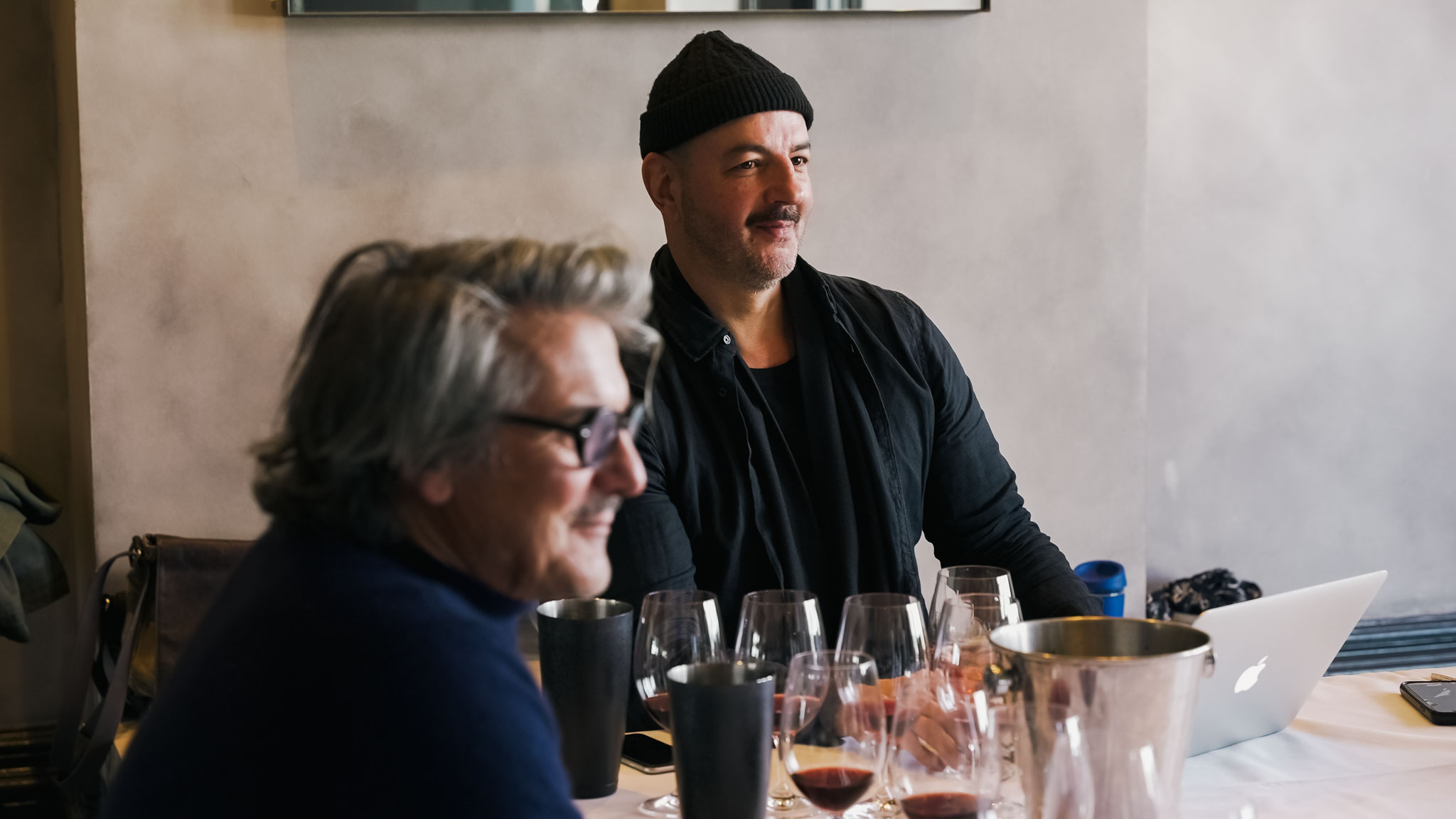
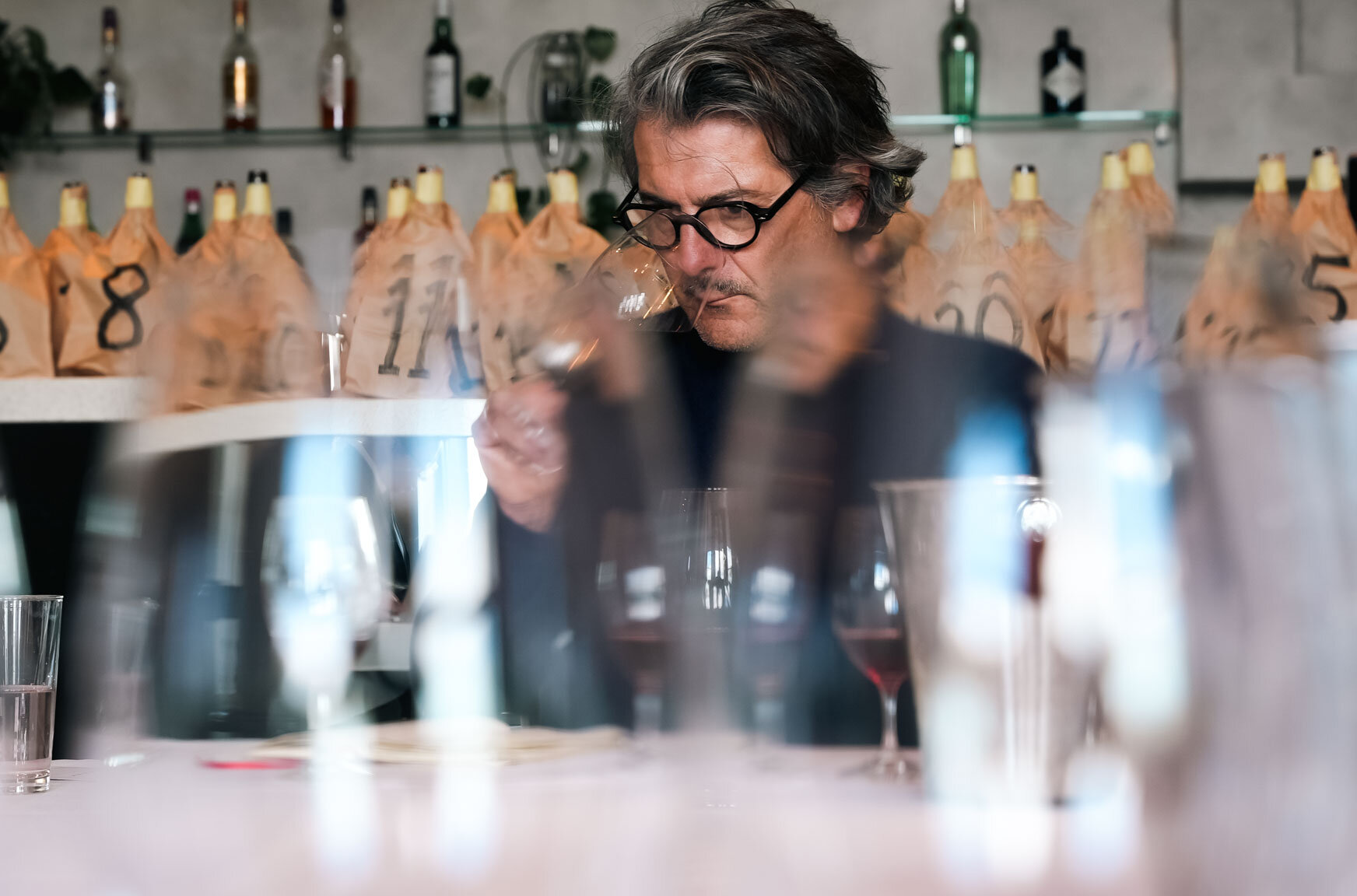
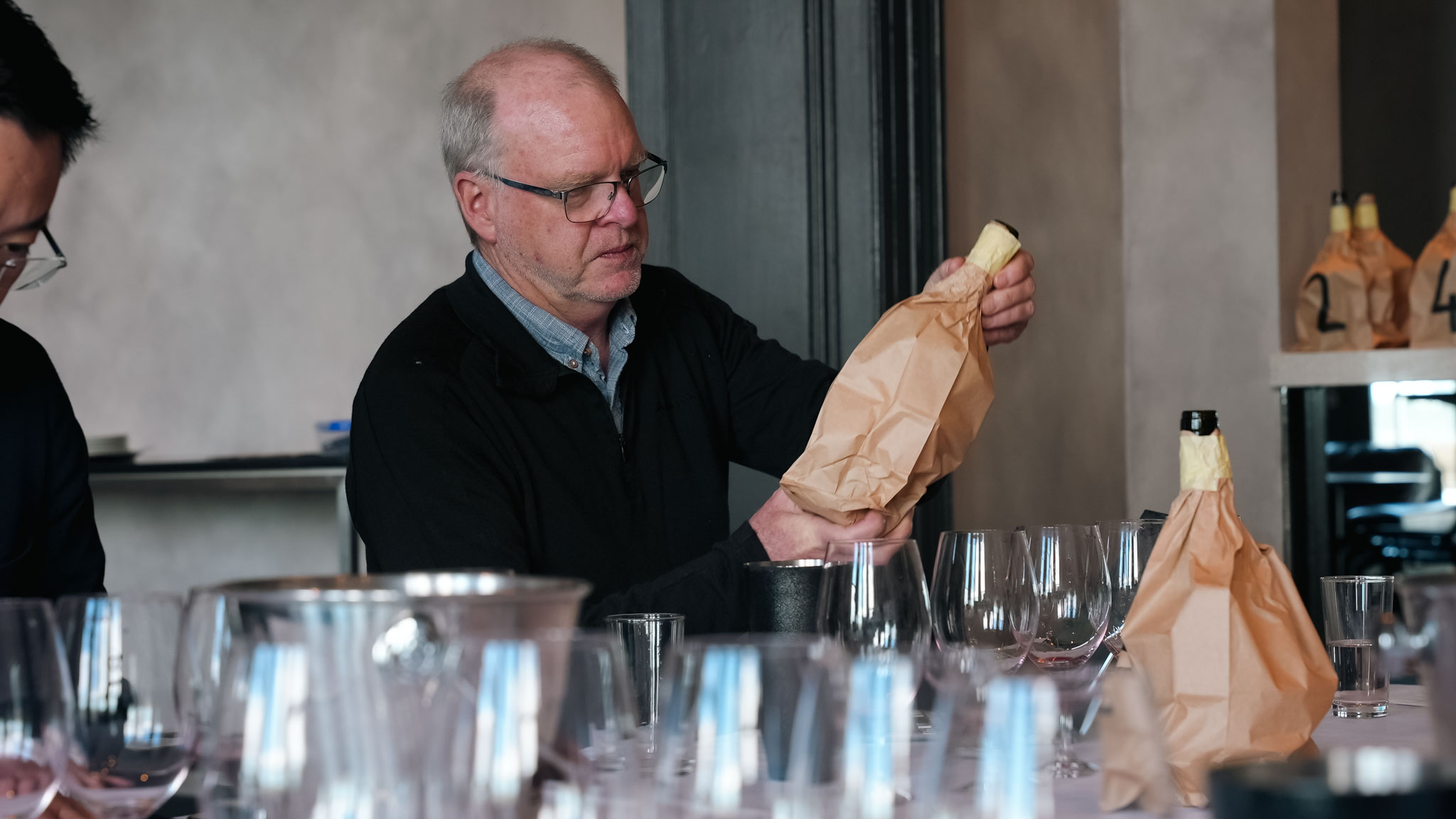
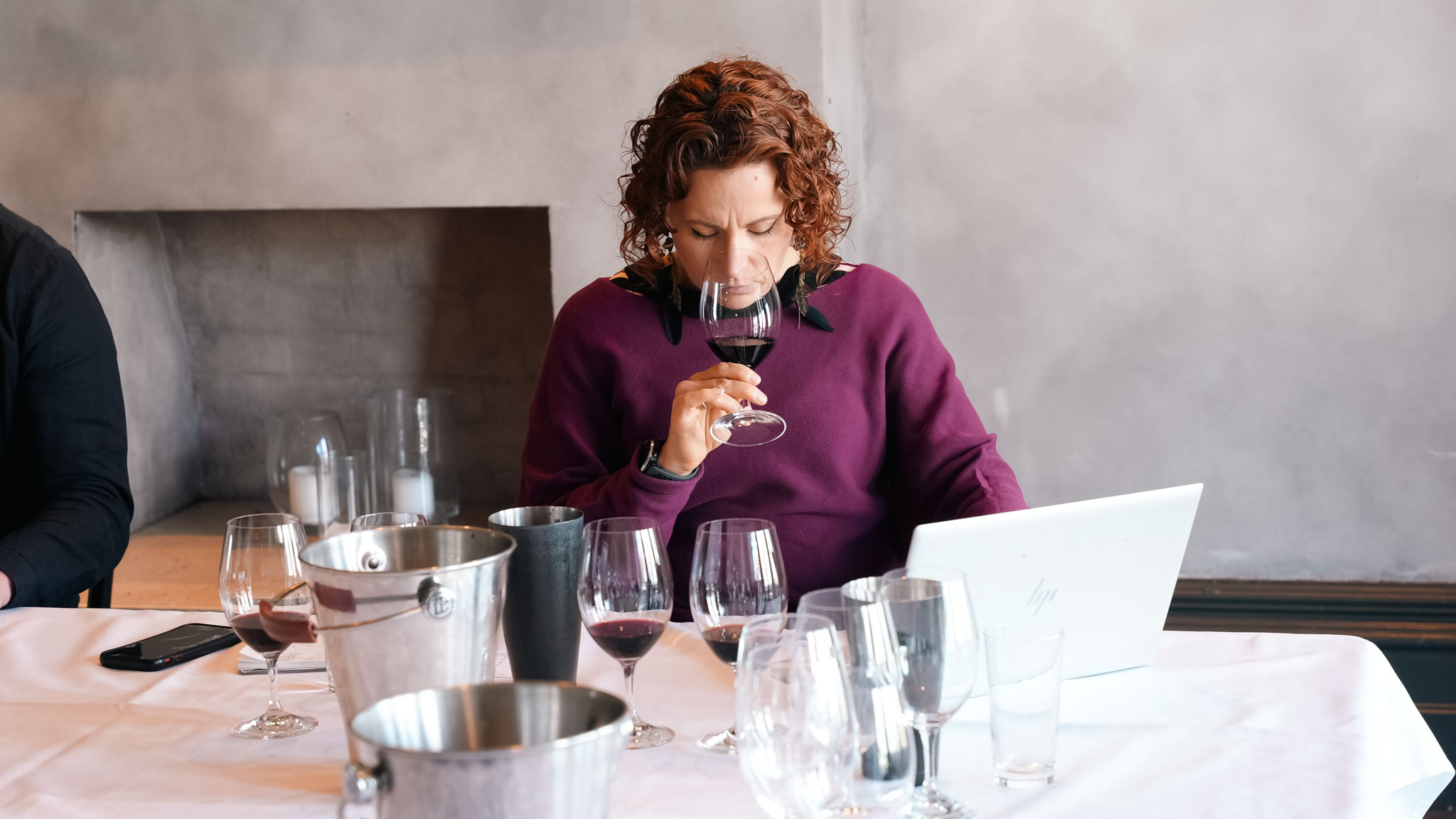
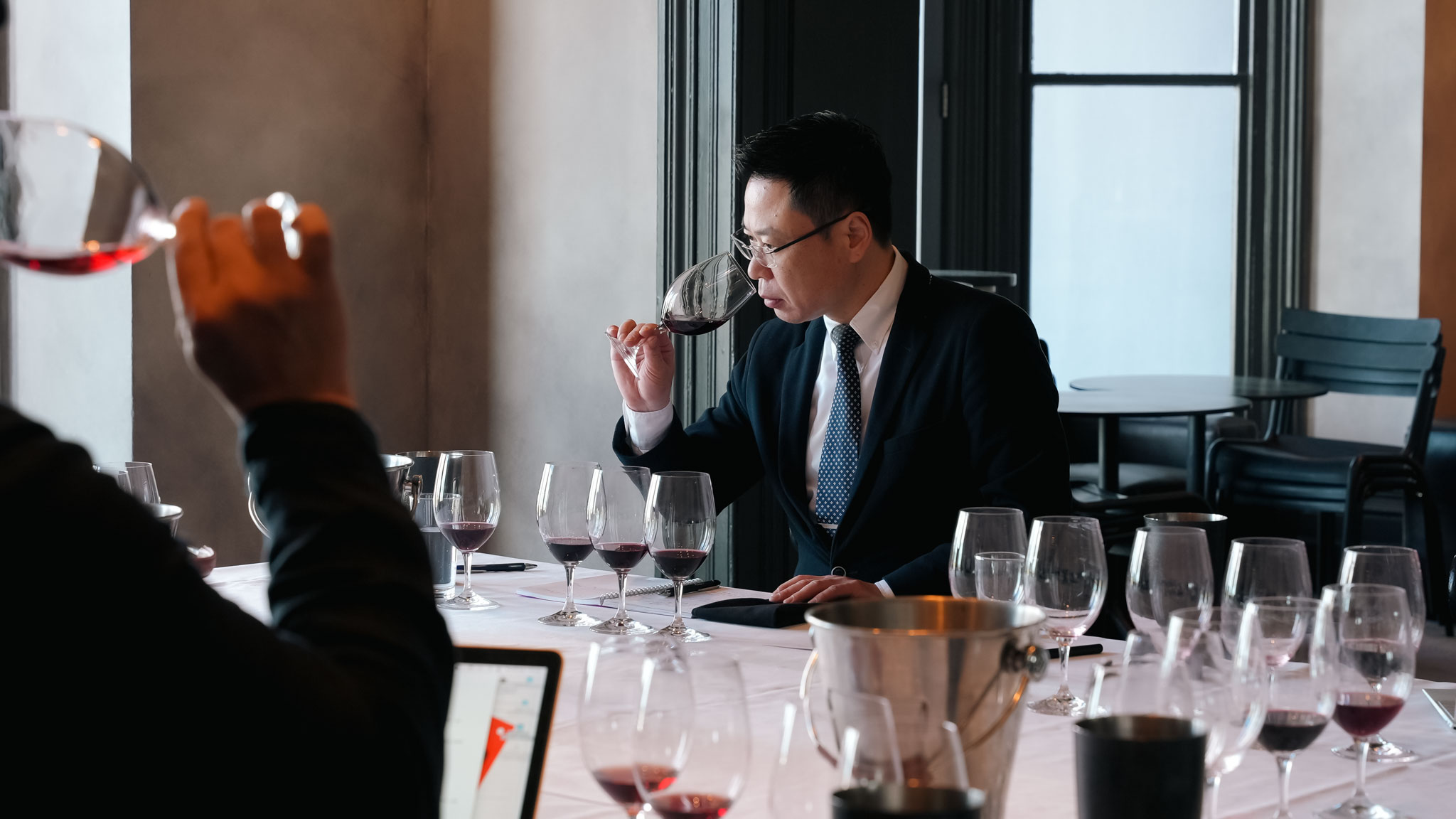
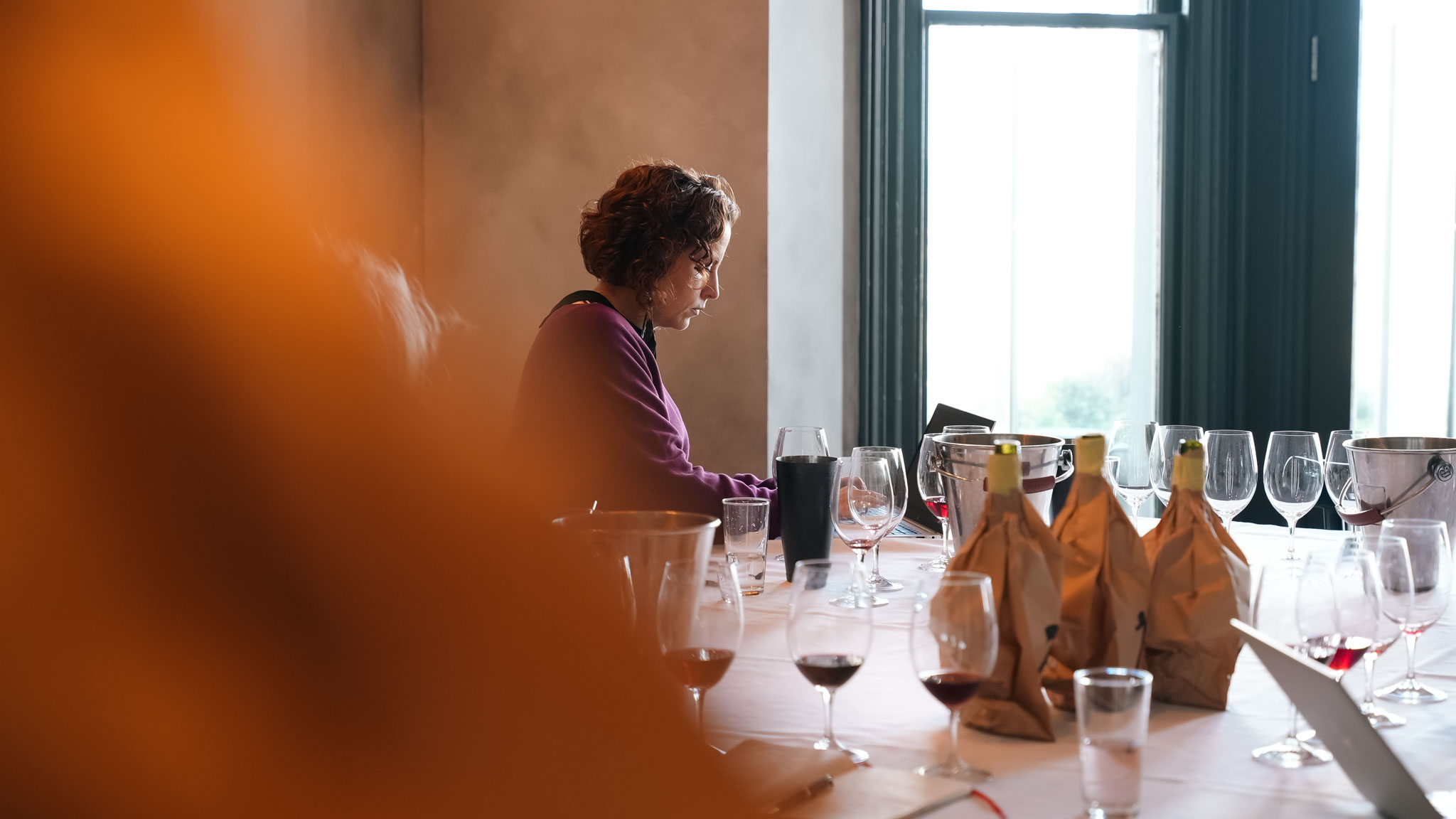
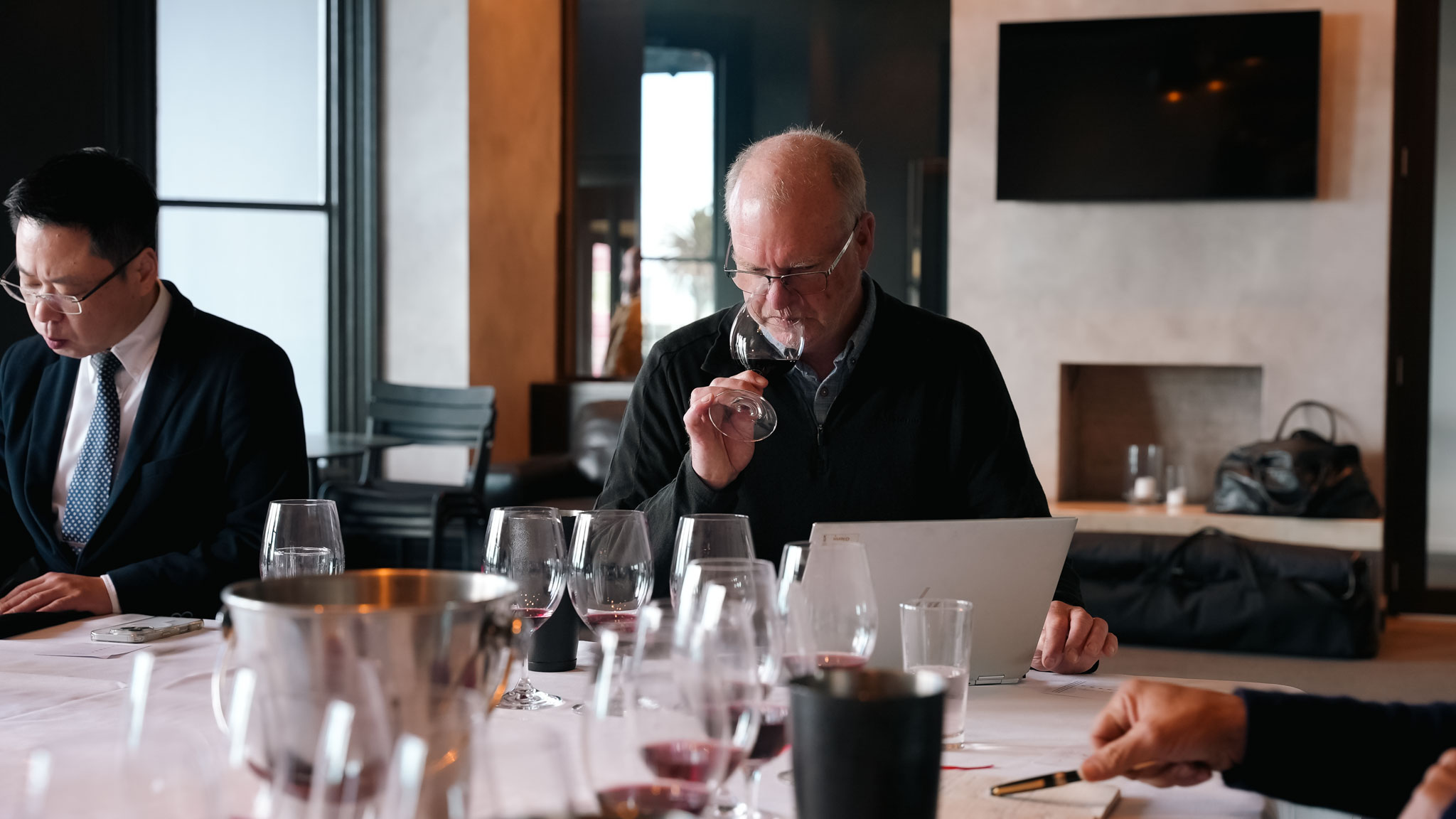
Above: The panellists gathered at the Bleakhouse Hotel, Albert Park (Melbourne).
Outtakes from the tasting
We gathered every example of Australian red wines that had been fermented and/or raised in amphora or similar earthenware vessels that we could find and set our expert panel the the task of finding the wines that compelled the most. All wines were tasted blind, and each panellist named their top six wines.
Our panel: Glenn James, winemaker, Billy Button and Clay Pot; Gilles Lapalus, winemaker, Maison Lapalus and Bertrand Bespoke; Andrea Roberts-Davison, lecturer in viticulture and winemaking, Melbourne Polytechnic; Masahiko Iga, head sommelier, Victoria Racing Club; Brad Lucas, Cult of the Vine.
Lapalus commenced the discussion by noting that the tasting – which was open to all red wines, regardless of varietal makeup or region of origin, as long as they had been fermented and/or raised in an earthenware vessel – was a radical departure from the usual regional or varietal focuses of most tastings. “The only similarity between these wines is the tool used to make them,” he said. “That makes it a very different category in itself.” He added that the tasting was “interesting technically, because gives you a sort of background image of what amphorae can give a wine. If anyone has smelled an empty amphora … you’ll remember that earthy smell forever, I think. Some of the wines clearly had that here – so it’s quite interesting to see how it can manifest itself aromatically. And then there’s the texture …” He added that best examples of the wines with that obvious amphora influence didn’t taste of terracotta itself, which he saw as a fault – as he likewise did with the obviously earthy flavour of beetroot.
Opposite: Brad Lucas. Above: Gilles Lapalus.
Lucas agreed, arguing that texture – more so than flavour or aroma – was the real through-line of the tasting. “I think that the commonality – and there was lots of divergence – but I think it’s texture and purity of fruit,” he said. “That purity, and that line and length and acidity – that beautiful, delicate textural weave – was pretty common throughout them. I was quite struck by the effect this vessel is having on tannin profiles, and the way the tannin behaves … the texture is about cohesion – that lovely flow from the front to the back of the palate, and the way those tannins taper off at the end.” While this was a boon for the more successful wines in the tasting, he added that the ‘transparency’ of the vessel could show up poor viticulture where what he called “the forgiving kiss of oak” might otherwise obscure it: “Because of that delicacy, that transparency, there’s really nowhere to hide.”
“I think that the commonality is texture and purity of fruit. That purity, and that line and length and acidity – that beautiful, delicate textural weave – was pretty common throughout the wines.”
Roberts-Davison observed that the wines all had an ‘airy’ quality to them, despite their obvious differences in palate weight and varietal makeup. “They definitely had the roundness I was expecting, and some of them were surprisingly full-bodied,” she said. “They were full-bodied, but they had this kind of light airiness to them as well, which was quite a nice peg to hang them on.” She added: “I knew that extended maceration in amphora could make the tannins really supple and soft – but I was surprised at how many wines were bitter, including some of my favourite wines.” She argued that managing this bitter element from extended maceration was, in her opinion, one of the main factors that separated the successful wines of the tasting from the unsuccessful: “Like, I don’t mind a little bit of bitterness in a wine, especially if it finishes off with this really lovely bitterness – but some of these were so bitter!” she said.
Opposite: Andrea Roberts-Davison. Above: Glenn James.
Talk of the ‘airy’ quality of amphora wines opened up a discussion about the technical risks of using the vessel – especially the more lo-fi iterations of them. “It’s all about how good you are at sealing off the amphora,” James said. “Oxygen ingress is going to create either extreme VA [volatile acidity] – that is, either acetate, or acetic acid – or oxidised, less-than-fresh flavours. We need to have that seal. A lot of commercial amphorae are now coming out with stainless-steel rims and lids, which is all tickety-boo.” He added that in his own winemaking practice (without the benefit of those stainless steel lids), he takes great care to sparge the wines with nitrogen while they’re in the amphorae, which has the benefit of not only removing oxygen from the headspace of the amphora but also to bring up oxygen-consuming yeast lees: “It brings the yeast up to absorb any oxygen that may be there and rummage it … it keeps the lovely yeast lees absorbing any oxygen that may be getting in around the top.” James found that the wines that successfully managed their oxygen levels showcased a lovely delicacy: “Probably my most written word today was ‘delicacy’,” he said. “I was attracted to the wines that had that lovely long tannin backbone, with the acid interplaying and just carrying the wine through – that salivating tension, that length.”
“Probably my most written word today was ‘delicacy’. I was attracted to the wines that had that lovely long tannin backbone, with the acid interplaying and just carrying the wine through.”
Iga observed that the use of amphorae in red winemaking spoke to drinkers seeking more elegant styles of wine. “People are expecting fresher, lighter wines – they want purity,” he said. “This is a good way to give that different style of wine to the market.” He added that, inspired by the amphora red wines of Sicily, he has started to include amphora-raised wines from around the world on wine lists that he consults on: “Some of the senior members of the clubs that I have consulted for are still looking for that more traditional oaked wine style – but I’ve also helped open semi-casual Italian restaurants, and the customers there love this style of wine. So I think that, especially for younger people, this style can be an amazing success.”
Opposite: Masahiko Iga. Above: The panel tasting in action at the Bleakhouse Hotel, Albert Park (Melbourne).
The panel concluded with an animated discussion about the terminology used to talk about these vessels, and the imprecision of the catch-all phrase ‘amphora’. “It was just a small vessel, and its was just used for transport,” Lapalus said of the traditional Roman amphora. “That’s why they’re found in boat wrecks.” He added that the traditional Roman earthenware fermentation vessel used to make wine was called a dolium, which in turn likely derived from the Georgian kvevri. James concurred, adding that the issue is further confused by ancient Roman sources using the term ‘amphora’ as a unit of measurement (roughly ten litres): “It’s like using the word ‘pint’,” he argued. “It’s a measurement.” Lapalus concluded by observing that there was a huge diversity of differently-sized and -shaped vessels that were unhelpfully lumped into the catch-all term ‘amphora’: “The material can be terracotta, sandstone, ceramic, concrete – it’s endless,” he said. “That’s why it’s confusing to call it just ‘amphora’ – because that term recoups so many things.”
Above and opposite: The panel tasting in action at the Bleakhouse Hotel, Albert Park (Melbourne). All wines tasted ‘blind’.
GET FIRST ACCESS TO THE NEXT WINE ICONS – DELIVERED
The 2021 Young Gun of Wine features Lauren Hansen (Penley Estate), Glen Hayley (Kooyong and Port Phillip Estate) and Andrew Scott (La Petite Mort), helping to reshape the portfolio of existing wineries while Riley Harrison (Harrison Wines) – whose day job is at Samuel’s Gorge – is one of a number of winemakers moonlighting with their own label, with each project positively influencing the other. Tasting notes appear at the end of the article.
Macedon takes the prize for being the coolest wine region on the mainland, with some touting it as the best territory for chardonnay and pinot noir in the country. Evidence of that potential, aside from some glittering exceptions, haven’t exactly been crowding wine store shelves over the years, but much has changed, and there’s a dynamic community ensuring that potential is being tapped in exciting ways.