Henschke – Hill of Grace, Eden Valley Prue Henschke

Read more
  • Henschke – Hill of Grace, Eden Valley

    Home to Australia’s most respected and expensive single vineyard wine, there is perhaps no more famous or revered vineyard in Australia than Henschke’s Hill of Grace. It is also home to some of this country’s oldest vines, planted by Nicolaus Stanitzki around 1860. That’s the year when the Gnadenberg Lutheran Church was built, which overlooks the vineyard and gives it its name –a region in Silesia, Gnadenberg roughly translates as ‘Hill of Grace’. With biodynamics, ancestral organic practices and an eye to regenerative agriculture, Prue Henschke is both nurturing the past and building resilience in the vineyard and enhanced native environment for the long-term future.

  • Grosset – Watervale, Clare Valley

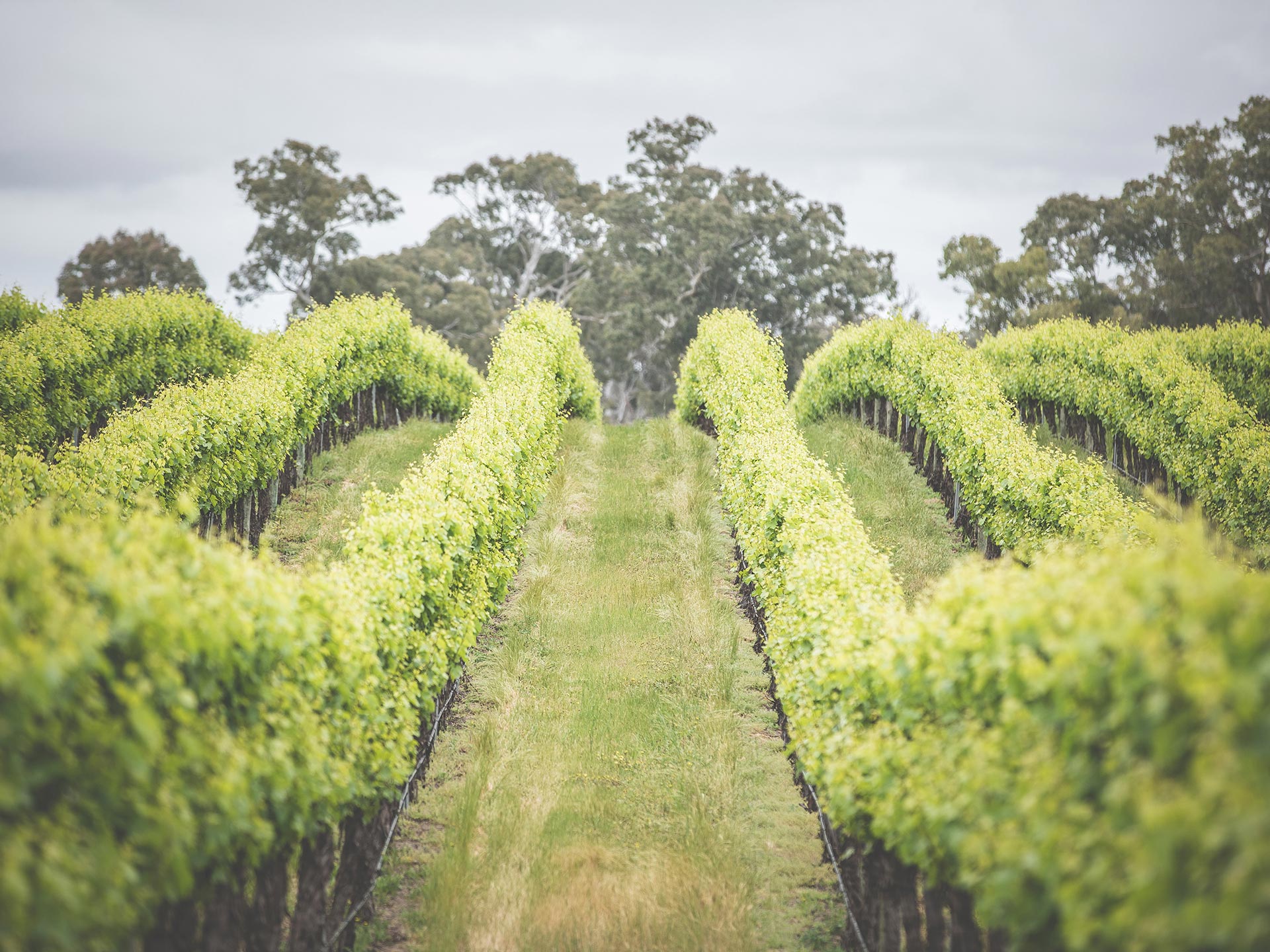
    Jeffrey Grosset started in the wine game young, with a bottle of riesling tasted at the family dinner table propelling him to study agriculture and oenology at the age of 16, graduating by the time he was 21. Establishing Grosset Wines in 1981, he has become one of Australia’s most lauded winemakers – with riesling a notable specialty – but the heart of the Grosset operation has always been in evolving the work in the vineyard to make vital, pure wine that is intensely expressive of site. His Watervale Vineyard is comprised of two sections planted to quite different soils, with both underpinned by certified biodynamic farming overseen by vineyard manager Matthew O’Rourke.

  • Land of Tomorrow – Grindstone Vineyard, Wrattonbully

    Susie Harris started the Land of Tomorrow wine brand with grapes from her family’s Wrattonbully property, which they have farmed for four generations. Beginning in the 1970s, the property has been steadily revegetated from bare grazing land to re-establish woodland and wetlands, with vines first planted for the Grindstone Vineyard in 1995. Harris has sped up the process of restoring the land, with as much attention to the vineyard as the surrounding land, building biodiversity from microbes in the soil to native grasses between the rows and fauna in the re-established scrub. She is also focused on communicating that message to consumers, with an ecotourism hut hosting visitors to understand the broader environmental goals while appreciating the wines and their connection with the land that Harris is seeking to protect. The Grindstone Vineyard is responsible for a chardonnay, shiraz and cabernet shiraz under the Land of Tomorrow label.

  • Coriole, McLaren Vale

    Hugh and Molly Lloyd bought the Chaffeys Road vineyard that would become Coriole in 1967, producing the first estate wine in 1969, which was labelled ‘Claret’, though it was all shiraz from the 1919-planted vines on the property. Today, Coriole is run by Hugh and Molly’s son Mark Lloyd along with his sons, Duncan and Peter. Shiraz is still a mainstay, along with cabernet sauvignon, but those regional heroes are joined by climate-apt varieties like fiano and nero d’avola, while Coriole has been continuously growing and making sangiovese longer than anyone else in this country. The vineyard is managed by Mark Bates, who farms organically (not certified) with a strong focus on biodiversity and employs technology to target areas through precision agriculture.

  • Alkina Vineyard, Barossa Valley

    Alkina is a relatively new project on an old farm. First planted to vines by Les Kalleske in 1955 in the Barossa subregion of Greenock, the site boasts stone buildings dating back to the 1850s. When Argentinian vigneron Alejandro Bulgheroni bought the property in 2015, he planted new vines and embarked on a process of examining the site’s geology in microscopic detail over a five-year project. With general manager Amelia Nolan and vineyard manager Johnny Schuster both overseeing the certified biodynamic vineyard, the ongoing quest is to grow terroir-reflective fruit from Barossa heritage varieties and elaborate them with simple and transparent winemaking, both as blends of blocks and micro-parcels called ‘Polygons’.

  • Agnes

    At the moment, it seems that some of the best restaurants in the country have built their kitchens around the coals of a wood fire. Agnes is housed in an old brick warehouse turned dimly lit dining room – a moody sanctuary in Brisbane’s Fortitude Valley. The restaurant acts as the fourth milestone for the…

  • Cafe Paci

    Come for Pasi Petänen’s mould-breaking cooking and a treasure trove of hard-to-find natural wine, or opt for no-nonsense steak frites with sauce diane and a glass of something local.

  • Rebel Rebel

    Relaxed but sophisticated share-plate dining from Sean McConnell – drop in for a quick bite and a glass of something eclectic, or settle in for the long haul with a group and order everything to share.

Rebel Rebel

The Next Wine Icons – Delivered

Each month, get 3 bottles of fresh discoveries.
We taste thousands to bring you the best.

Bookmark this job

Please sign in or create account as candidate to bookmark this job

Save this search

Please sign in or create account to save this search

create resume

Create Resume

Please sign in or create account as candidate to create a resume