The Macedon Ranges wine region – part of the ‘dress circle’ of regions that encloses Melbourne and Port Phillip Bay – has never suffered from a lack of cool weather, clocking in as the coldest on the Australian mainland, and in certain vintages giving even Tasmania a run for its money. That coolness comes from its mountainous topography and the resulting elevation of its vineyards, with plantings ranging from a relatively moderate 300 metres above sea level to a positively frigid 800 metres. And that colder weather suits famously finicky pinot noir down to the ground – the Macedon Ranges region is in fact a near-perfect climate analogue to the variety’s French homeland, Burgundy. So while the Macedon Ranges region is something of a late bloomer compared to the others within striking distance of Melbourne, it’s little wonder that pinot noir has emerged as its key red grape variety, producing wines with distinctive fresh acidity and firm tannin structure. We took a Deep Dive to find out what makes the region’s pinots quite so distinctive …
We gathered every example of pinot noir from the Macedon Ranges that we could find and set our expert panel the task of finding the wines that compelled the most. All wines were tasted blind, and each panellist named their top six wines. Below are the wines that made the panellists’ top-six selections from the tasting.
This isn’t an ordered countdown. There’s no ranking – just the top six wines each panellist found most compelling from the blind tasting, in all their different ways. Everyone’s palate is different, and that’s the point.
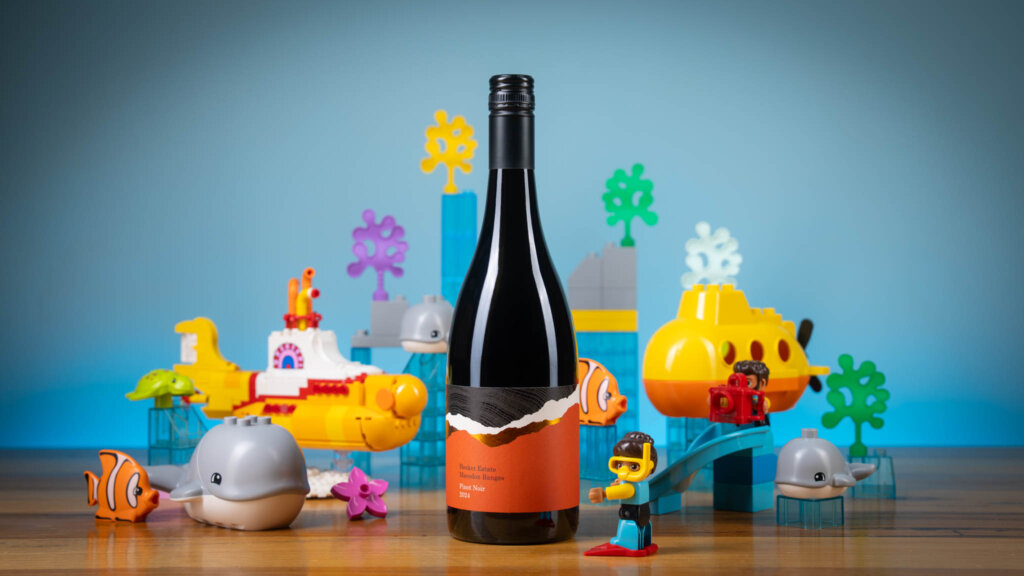
2024 Hesket Estate Pinot Noir, $80 RRP
Neil, Mauritzen, and Robertson all selected this as one of their standout six picks from the blind tasting. Neil was captivated by an unexpected meaty savouriness – a profile she’d rarely encountered: “This pinot noir took my number one spot because it opened up a profile of pinot I haven’t experienced before – Chinese sausage,” she said. “That sweet soy tucked into the meaty cured pork with a lick of Sichuan pepper and chillies of several colours – red, grey and green. And of course white pepper. The combination of the heady floral Sichuan and the meaty pork is delightful. It really lights me up – after years in south east asian restaurants, it is very familiar and comforting. I also really like the combination of floral, meat, sweetness and the umami soy. This complexity speaks to the calibre of the pinot noir.” Mauritzen was equally moved by the wine’s addictive quality and layered depth: “Now this is where it is at,” she said. “There’s that distinct umami drive that just continues to coat your mouth, but where it really triumphs is backing it up with elegant primary fruits of fresh cherry, green peppercorn and gentle eucalypt. The tannins are absolutely there and generous, with a sandy rolling kind of experience.” Robertson admired the wine’s complexity and balance: “Another dark and brooding example, with notes of black cherry and ripe plum, accented by leather, spice and a nice frame of oak,” he noted. “On the palate, dark velvety layers of fruit push into fresh plum and alpine herbs. The region’s signature line of salinity comes through here as well. This is complex and forward, with dense flavours and textures – but it holds it all well.”
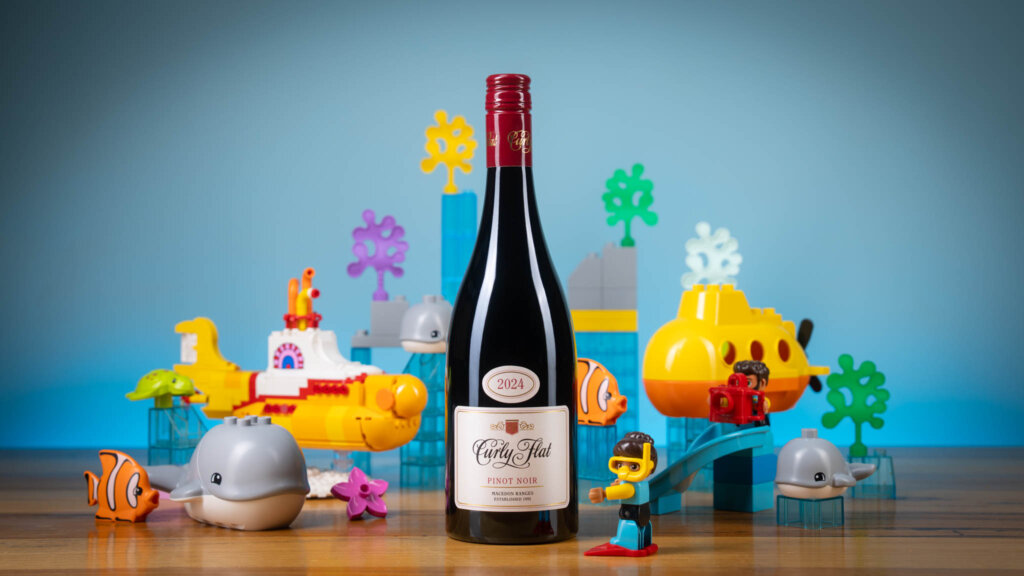
2024 Curly Flat Pinot Noir, $72 RRP
Walsh, Timms, and Robertson counted this among their standout six wines from the blind tasting. Walsh discovered richness and balance in the wine’s aromatic layers: “A ripe and powerful nose of chocolate-covered cherries and tart red plums, with evident use of new oak – accents of freshly grated nutmeg and the tang of dried mace,” he noted. “Silky on palate, with a slick viscosity, but plenty of brightness nonetheless, and an appealing savoury cast to the cherry fruit. Firm tannins, which I like, lead to impressive length on the finish.” Timms appreciated the wine’s elegant purity and toasty complexity: “Violet floral notes on the nose, with graphite adding complexity, yet not diminishing the purity of the lovely blueberry notes,” he said. “Toasty oak brings a spicy, bacon-like accent. Long and flourishing palate, with vibrant acidity.” Robertson saw a wine built for the cellar, its components holding together with promise: “A great balance of whole-bunch character, sous bois, truffle and light spice frames a crystalline core of cherry and red plum,” he said. “Lovely sour elements and a red, dusty tannin profile come through. It’s delicate and driven by tactile tannins – the finish is fresh with a salinity and chalky in texture. This will need some time in the cellar to truly unravel and show itself.”
2025 ECK Wines ‘Straws Lane’ Pinot Noir, $65 RRP
Mauritzen, Shen, and Timms all championed this wine among their top-six selections from the blind tasting. Mauritzen was enchanted by the wine’s playful elegance and tannin-driven character: “Gentle raspberry on the nose,” she began, “possibly with some lifted aromatic profile. Bright and crunchy but with a tense grip on your palate from the tannins. This is elegant, refined, really gastronomic. Those tannins are absolutely leading the charge, but at no point do they feel unwelcome or unbalanced. It feels like you want to sit and pay attention to what the wine wants to tell you – which is that it’s actually really gentle and playful. Red cherry meets red apples, some kind of gentle anise like fennel or liquorice root mingles in the background. There’s crushed rose petals and all that pretty jazz. I would happily have twelve bottles of this that I could return to, a wine that would instantly put me in a good mood.” Shen found striking balance and culinary appeal: “Red cherry candy, rose petal and mint on the nose, with a slightly herbaceous green leaf tone,” she noted. “It’s nicely balanced on the palate – I’m imagining pairing it with Malaysian style Hokkien fried noodles.” Timms appreciated the wine’s finesse and structural precision: “Violet and sherbet notes on the nose,” he said. “Lemonade-like acidity and long, fine tannins on the palate bring finesse. Great length here, but in a tight package.”
2025 Williams Crossing by Curly Flat Pinot Noir, $38 RRP
Sykes, Robertson, and Shen all chose this to be part of their top six from the blind tasting. Sykes was drawn to the wine’s understated complexity and refined balance: “Beautifully perfumed pinot – the nose instantly draws you in with bramble fruit and dark cherry character,” she said. “A harmonious balance between silky tannins and a focused acid line on the palate. A typical Macedon red wine – light and bright, but with nuanced complexity. There is nothing overtly flashy here, but it isn’t simple – some subtle notes of spice and charcuterie intertwined with the fruit make this wine delicious and beguiling.” Robertson celebrated the wine’s immediate appeal and structural backbone: “Clean, precise, direct and driven – showing ripe plum, blackcurrants and a fresh herbal edge,” he noted. “A twist of orange rind emerges on the palate, alongside red cherries, cranberries and strawberries. This wine walks a tightrope between ripe and sour fruit – a joy to taste, and in such a good place right now. A lighter, younger and immediate expression of pinot, with the classic Macedon backbone of refreshing acidity.” Shen found affinity with Asian cuisine: “Fresh rose petals, red flowers and green leaves on the nose,” she said. “There’s a splash of mint water coolness on the palate, alongside jammy fruit and a meaty finish. The softness of its acidity means this would go well with Korean barbecue.”
2024 Mount Monument Pinot Noir, $60 RRP
Both Robertson and Mauritzen placed this among their top six picks from the blind tasting. Robertson found power and finesse in elegant balance: “A high-toned whole-bunch character leaps out of the glass, moving into notes of sous bois, dried herbs, ripe black plum, red cherry and black cherry,” he said. “The palate is dense, rich and luxurious – yet also harmonious, even for this fuller style. The wine’s power and finesse drive a core of deeper, darker fruit that drops away to a mineral, spicy finish that shows a lovely freshness.” Mauritzen was transfixed by the wine’s bold flavour intensity and surprising restraint: “The nose reminds me of Shanghai – really intense Sichuan peppercorn and chargrilled pork belly,” she said. “The body is gentle but present, defying to be unbalanced. There’s a gentleness from the tannins to the acid that are absolutely present without being overpowering, which is welcome with such a full on variety to the rich, decadent palate. It’s honestly like eating crispy, fatty pork belly that is heaped with an array of pepper from white to green to black to Sichuan. How is that not a good time? This is a wine that offers so much to think about and so much to talk about – and boy would this be fun to serve alongside food. The pairings would be outrageous!”
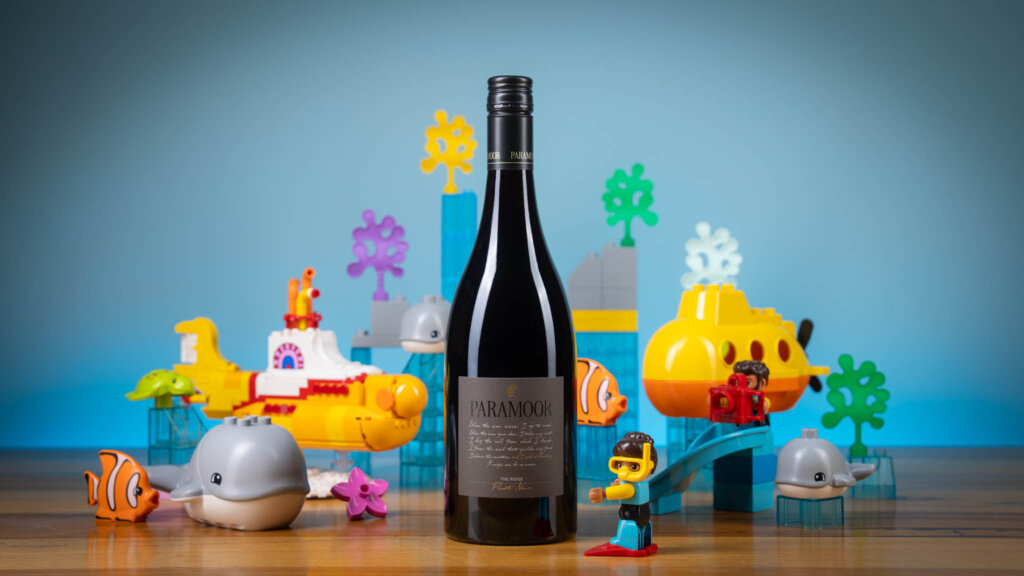
2025 Paramoor ‘The Ridge’ Pinot Noir, $65 RRP
Both Sykes and Walsh gave this a place in their top-six selections from the blind tasting. Sykes was captivated by the wine’s aromatic lift and satisfying length: “Opening aromas of sweet spices – think liquorice, clove, aniseed and fennel – with the promise of juicy red fruit,” she said. “The palate delivers with a concentration of cherries and raspberries, along with pie spice flavours, all wrapped in an airy, lighter-weighted frame. There’s a lively acidity on the palate, spreading the flavours out to coat the mouth and giving the sensation of juiciness. Lingering cherry and berry flavours can be felt across the palate many minutes after the last sip – making it a wholly satisfying wine.” Walsh found unexpected weight and complexity beneath the wine’s aromatic promise: “A bit of aromatic lift on the nose here – an appealing balsamic and imitation cherry-like edge to the bouquet of watermelon rind, Bing cherry and Ocean Spray cranberry juice,” he noted. “It’s more weighty and juicy on the palate than the nose would lead you to expect – a delightfully fruit-forward wine with candied raspberry drop notes. An appealing touch of herbaceous bitterness – reminiscent of an amaro from the Italian alps – emerges on the finish.”
2018 Mount Monument Pinot Noir (Museum Release), $60 RRP
Robertson, Sykes, and Mauritzen all picked this for their standout six selections from the blind tasting. Robertson was struck by the wine’s serious, age-worthy character: “A dark and brooding frame – this rendition of Macedon pinot shows the region’s more serious, age-worthy style,” he said. “Savoury turned earth and a touch of development open into layers of spice that move to red and black cherry, with dried violets and a herbal twist. The acidity is scintillating and beautifully framed with fine tannins. This feels ambitious and serious – a fine showcase of powerful pinot that can age.” Sykes was delighted by the wine’s refined appeal: “This wine comes across as a little bit fancy-pants – it certainly stood out in the line-up,” she said. “Heady aromas of Turkish delight and rose and cherry blossom immediately conjure up expectations of a treat in store on the palate. And the first sip doesn’t disappoint – this is instantly enjoyable, with a good whack of fresh and dried fruit, the Macedon regional signature of brisk acidity, and a pleasing touch of tannin balancing the concentrated flavours of redcurrant juice, clove and cinnamon. It finishes long, with a stony minerality – delicious.” Mauritzen celebrated the wine’s layered richness and focused winemaking: “Rich and sumptuous,” she began. “Really well layered between Black Forest notes and rich peppery spice – think milk chocolate, blackberry and blackberry leaf. A more decadent and rich version of pinot, which is nice to see done with such grace – this is a wine that speaks of decisive winemaking and a focus on keeping the concentrated fruit element at the core.”
2023 Pirio Pinot Noir, $55 RRP
Both Walsh and Mauritzen selected this among their finest six picks from the blind tasting. Walsh appreciated the wine’s aromatic complexity and bright palate. “There’s a smoky overlay on the nose – smoke and gunflint over Morello cherry, cranberry and crunchy pomegranate arils, with a charcuterie-like meatiness and cherry oak notes in tow,” he said. “The palate is light, fresh and high-toned – rose hip and tart raspberries carried down a tangy finish by tart, vibrant acidity.” Mauritzen was enchanted by the wine’s texture and comforting presence. “Rhubarb, cherry, almost a mulberry kind of richness on the nose, accented with cracked black pepper,” she began. “Really crunchy, fresh and zingy, with a raspberry sherbet kind of layering. There’s that eucalypt seasoning which is beautiful. God, this just drinks like silk! Genuinely envelops your palate in a gentle embrace and holds it like an old friend. I could drink a lot of this!”
2023 Granite Hills Pinot Noir, $48 RRP
Both Shen and Walsh featured this among their favourite six wines from the blind tasting. Shen found its delicate profile suited to Asian cuisine: “Red cherry, marshmallow and rose-flavoured candy on the nose, with a slightly greenish leafy edge,” she said. “The meaty and mint-like tones on the finish make me think this would be a great pairing with Vietnamese pho.” Walsh was captivated by the wine’s ethereal finesse: “A nose of rose hip, cherry blossom, sour cherry and green tomato,” he noted. “Ultra-bright and high-toned on the palate – feather-light in weight, but with no lack of flavour depth, and fresh, almost searing acidity. The tannins are so fine and polished that they almost disappear completely.”
Shen placed this among her top six selections from the blind tasting, enchanted by the wine’s savoury development and graceful balance: “A savoury, developed nose – rose bunches, fresh raspberry, strawberry and red cherry with an edge of salmon, soy sauce and dried shiitake,” she said. “Age has polished the tannins until they feel refined and gripping, while an acid-driven brightness keeps things fresh. It finishes silky, with an interesting and delicate interplay between candied notes and savoury dried leaf tones.” She imagined the wine’s perfect moment: “This would be amazing to drink on a sunny day by the lake, soaking myself in the sun, alongside a nice cheeseboard.”
2024 Lindenderry Estate Pinot Noir, $65 RRP
Robertson chose this wine – made by Barnaby Flanders of Garagiste – in his top six from the blind tasting, drawn to its structural complexity and textural richness: “Tightly wound, dense and dark, this opens with sous bois and herbal whole-bunch edge,” he said. “Undergrowth, forest floor, turned earth and truffle sit alongside dark red cherry and black plum. There’s a lovely melding of spice and leather here, too. Luscious and textural on the palate – the tannins are firm and beautifully balanced, with hints of cranberry, dried cherry and dried violets.”
2024 Parkside Estate Pinot Noir, $39 RRP
Timms selected this among his standout six picks from the blind tasting, captivated by the wine’s dark intensity and layered complexity: “Dark ripe fruit of Satsuma plum, Morello cherry and rose hip, with nuances of ginger and smoke – beautiful and complex,” he said. “A nice palate that shows big volume yet remains complex – robust and with great tannins, yet still fresh and vibrant. A more dark and brooding expression of Macedon pinot noir.”
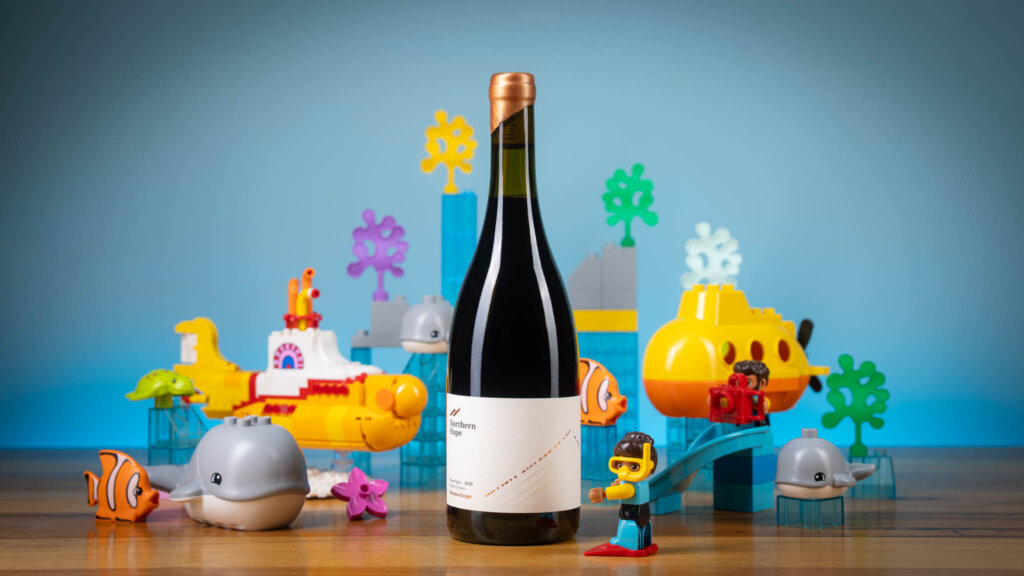
2025 Northern Hope Pinot Noir, $60 RRP
Both Neil and Shen placed this amongst their six favourite wines from the blind tasting. Neil was drawn to the wine’s layered sweetness and remarkable balance: “This pinot has a very pleasing milk chocolate nose and palate – something that drew me to it and kept me coming back for more,” she said. “As it opens up in the glass, that lovely ripe cherry aroma with a cordial-like sweetness emerges. The combination make me think of a Cadbury Fruits of the Forest bar – but somehow not sweet. Throughout the tasting I often came across an orange oil or amaro-like character in many of the pinots – not an element I find appealing in most of the wines, but in this case a nice grounding balance for all the chocolate and fruit sweetness. Chalky, grippy tannins mop up all the complexity of the palate, leaving a clean finish – exceptionally balanced pinot noir.” Shen found elegant structure and culinary resonance in the wine’s delicate frame: “With a pale ruby colour, this wine’s aroma reveals strawberry jam, rose confection and blood plum,” she noted. “A meaty note of sliced salmon emerges on the palate. This wine has an enjoyable structure: a long finish, along with a cherry syrup-like mouthfeel and balanced acidity that goes well with the light body. This wine makes me think about taking a family trip to see the cherry blossoms in Japan at springtime – or at least drinking it with wagyu sukiyaki!”
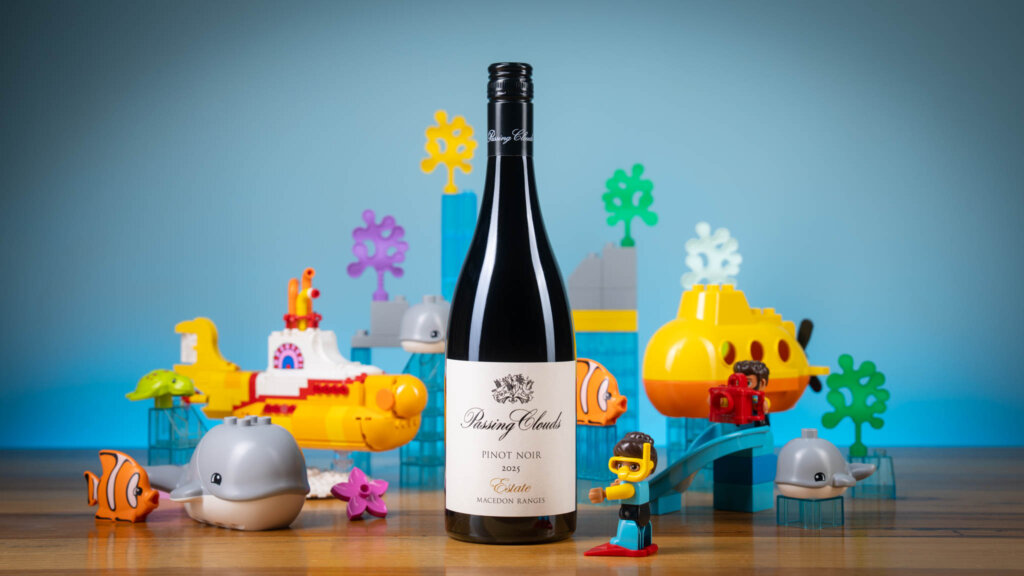
2025 Passing Clouds Estate Pinot Noir, $62 RRP
Timms championed this among his top six picks from the blind tasting, entranced by the wine’s aromatic complexity and flowing nature: “Lovely sappy spice – cardamom and cracked blackberry stem – indicating some whole-bunch use, which adds intrigue and complexity to the nose of ripe raspberry, Christmas cherries and Damask rose petals,” he said. “Lovely palate, complex and long, with raspy tannins that keep you interested and a pop of fresh acidity. There’s a beautiful flow in the way this wine moves from nose to palate to finish.” He envisioned the wine’s perfect pairing: “Would be great to drink with a mushroom risotto.”
Neil selected this among her standout six picks from the blind tasting, captivated by its savoury intensity and textural complexity. “This pinot noir stood out to me amongst the line-up for its flavours – it has this addictive tomato paste intensity that is sweet, sour and salty, alongside really intense flavours of ripe red cherries,” she said. “The tannins have a drying effect on the wine, moving the palate into cured pork territory. I love that savoury depth – there’s so much to enjoy and go back for in this wine. Given the tomato paste and cured pork tones here, pizza makes perfect sense as a pairing – you just need the warm bready dough and some mozzarella and you’re in heaven.”
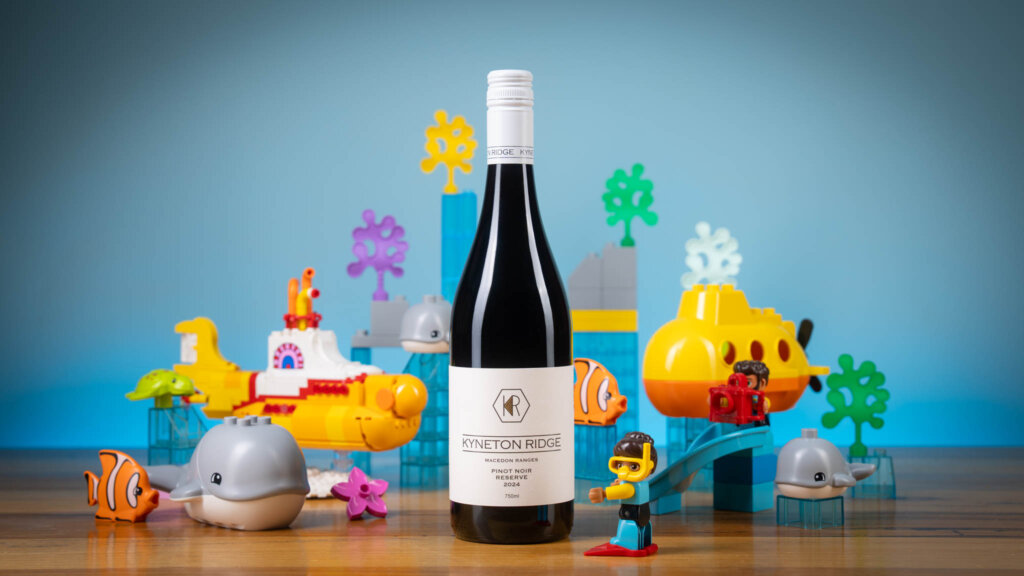
2024 Kyneton Ridge Reserve Pinot Noir, $50 RRP
Both Sykes and Timms made this one of their top six wines from the blind tasting. Sykes saw a wine built for the cellar, its character promising to deepen with time: “A fresh, lively nose of cherry blossom florals and sweet, spiced cherries accompanied by red apple skin,” she said. “A lovely, silky textured palate, showing flavours of bitter cherry pit through to sweet cherry pie, driven by crisp acidity and a touch of charry oak. It’s a delicate mouthful, but it has a long, juicy finish. The wine is bright and seamless, with noticeable but balanced tannins. This feels like a classy wine that will unfurl and properly strut its stuff with a little more bottle age.” Timms appreciated the wine’s structural harmony and craftsmanship: “Sappy nettle spice on the nose, with ginger and Chinese five-spice notes,” he noted. “Lovely flow on the palate – blueberry fruits flow into spice, and the mid-palate opens up beautifully. Lovely tannins, with silky palate weight. Simply put, this is a well-made drink!”
Sykes featured this among her standout six picks from the blind tasting, entranced by the wine’s elegance and the way it showed the region’s character: “The Macedon theme runs right through this wine, with bright cherry and redcurrant aromas giving way to a whiff of rose hip and tar, hinting at the complexity to come,” she said. “The wine’s silky texture immediately hits the palate, accompanied by a flood of cherry, berry and spicy flavour – but the wine still feels light and breezy. A streak of minerality and talc-like tannins give the wine balance and poise. A lighter, more supple style of pinot noir – structurally balanced, layered and interesting. What’s not to love?”
2025 Hesket Estate ‘Jingella’ Pinot Noir, $60 RRP
Neil placed this amongst her top six selections from the blind tasting, captivated by the wine’s layered aromatics and structural elegance: “A Ribena-like nose, sweet and cordial-concentrated, jumps out of the glass,” she said. “Underneath that ripe fruit there’s a pleasing masculine cologne smell I can’t quite place – perhaps sandalwood or amber. An exotic touch of mandarin peel emerges on the dense, structured palate – something I found too dominant in some of the day’s line-up, but which is beautifully balanced in this particular wine. Fine tannins frame a long, vibrant finish.”
2023 Attwoods ‘Hommage’ Pinot Noir, $120 RRP
Shen selected this among her top six picks from the blind tasting, impressed by the wine’s aromatic exoticism and textural finesse: “A pale ruby colour in the glass, with aromas of red cherry candies and strawberry gummies accented by exotic notes of mint water, rose perfume, nutmeg spice, sandalwood and bitter almond essence,” she said. “Impressive flavour intensity on the palate, with silky palate weight and very fine, powdery tannins that frame the mid-palate. Fresh, well-balanced acidity keeps the wine moving down the palate. This would be delicious alongside a Japanese tartare with a fresh raw egg yolk.”
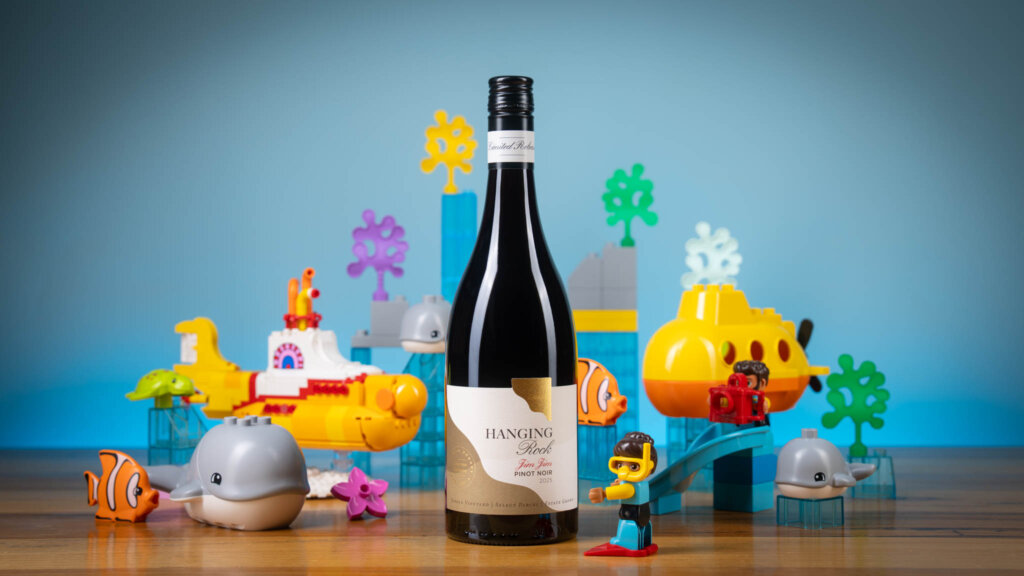
2025 Hanging Rock ‘Jim Jim’ Pinot Noir, $65 RRP
Walsh gave this wine a spot in his top six from the blind tasting, drawn to its traditional appeal and textural sophistication. “This wine’s nose opens with savoury tones of tar and bresaola over a core of red plums, raspberry fruit leather and oaky nutmeg spice,” he said. “The silky palate is dense with flavour – powered by a kind of slow acid drive that has deep power behind it. Supple tannins lead to a medium-length finish. A wine that feels a little old-school Australian pinot, in the best possible way!”
Neil placed this among her standout selections from the blind tasting, captivated by the wine’s mysterious depths and savoury richness: “A very intense expression of dried flowers on the nose – not potpourri or lavender, but definite red florals,” she said. “The palate starts strong, with spicy notes of coriander seed and orange rind, and develops into balsamic sweetness. The body of the wine is richer than most pinots, and emulates a processed tomato flavour – it’s quite persistent. As a lover of the combination of tomato and balsamic, this obviously piqued my interest – I kept having to go back to it, enjoying it more and more each time. A wine of slowly unfurling mystery – perfect for contemplating over the course of a lazy afternoon at home.”
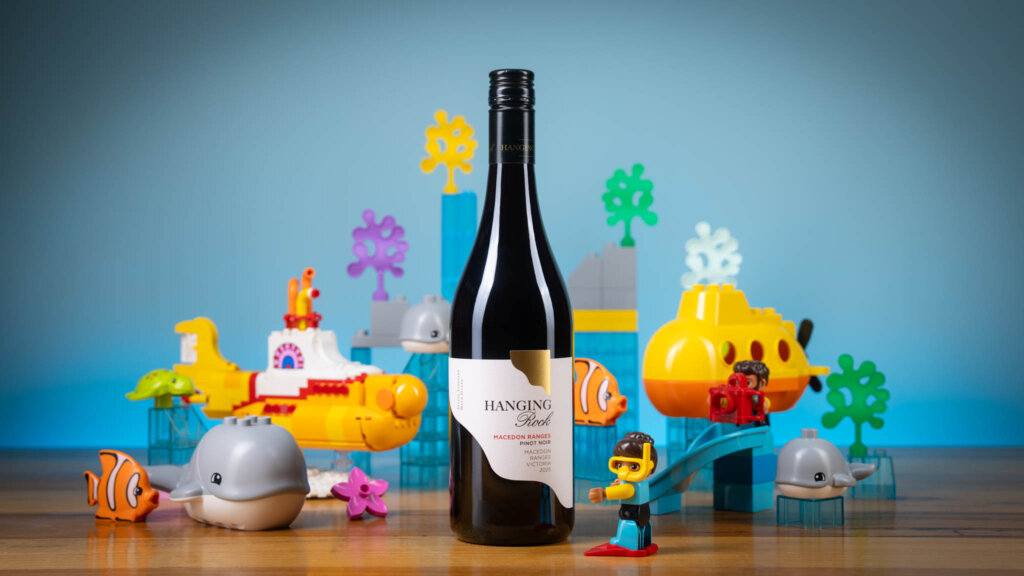
2025 Hanging Rock ‘Macedon Ranges’ Pinot Noir, $45 RRP
Timms made this one of his standout six picks from the blind tasting, entranced by the wine’s evolving aromatics and patient complexity. “A nose of cranberry, ripe cherry and dark plum notes,” he said. “Medium weight on the palate, with lots of fruit power, yet tightly contained. This wine opens in the glass, showing a lovely fragrance that persists even as it evolves with time and oxygen. A wine that will take you on a journey – give it time to unwind!”
2024 Lyons Will ‘The Greys’ Pinot Noir, $70 RRP
Mauritzen found this a worthy addition to her top six from the blind tasting, impressed by its earthiness and ageing potential: “Really deep earthy notes paired with that crushed ant lift – gum leaf and salted raspberry,” she said. “Really outstanding acidity that could do with a little bit of mellowing over time, but speaks of a wine that will be interesting to watch age. Has a long finish layered with herbaceous green peppercorn notes. It’s quite simply gorgeous, and a really enjoyable glass of wine.”
2025 Pirio Pinot Noir, $55 RRP
Sykes counted this among her favourite selections from the blind tasting, drawn to its straightforward approachability and refined balance: “A great overall summation for this wine might be the word ‘mellow’ – if you just want a drink that delivers a nice, no-nonsense, focused drop then this fits the bill,” she said. “Aromatically brimming with roses and red cherry and star anise spice that follow on to the light, bright palate which has juicy acid, silky smooth fruit with a tiny touch of graphite, a tiny touch of coffee and then finishing with a lingering, refreshing kick of fruit.”
2024 Shimora Pinot Noir, $70 RRP
Neil placed this amongst her top six picks from the blind tasting, intrigued by the wine’s bright fruit character and floral complexity: “The nose offers a pleasant dark cherry aroma hinting at cough syrup – slightly medicinal, but in a good way,” she said. “I always look for cherry notes in pinot noir – and the combination here of that medicinal cherry with perfumed red flower notes immediately signals quality pinot. The palate matches the nose – purple cherry flesh mixed with rose petals and a persistent intensity. It’s well-structured but plush, a more fruit-driven and bright pinot – exactly my speed! You could compare it to the wines of Chambolle-Musigny in Burgundy, perhaps – albeit without that village’s firm structure – or you could just call it ‘girlie pinot’. Either way, I’m besotted!”
The backstory
The Macedon Ranges wine region – part of the ‘dress circle’ of regions that encloses Melbourne and Port Phillip Bay – has never suffered from a lack of cool weather, clocking in as the coldest on the Australian mainland, and in certain vintages giving even Tasmania a run for its money. That coolness comes from its mountainous topography and the resulting elevation of its vineyards, with plantings ranging from a relatively moderate 300 metres above sea level to a positively frigid 800 metres. And that colder weather suits famously finicky pinot noir down to the ground – the Macedon Ranges region is in fact a near-perfect climate analogue to the variety’s French homeland, Burgundy. So while the Macedon Ranges region is something of a late bloomer compared to the others within striking distance of Melbourne, it’s little wonder that pinot noir has emerged as its key red grape variety, producing wines with distinctive fresh acidity and firm tannin structure.
Burgundy’s hero red grape variety, pinot noir, is famously fussy. While its white counterpart, chardonnay, will happily set down roots and bear fruit across a broad swathe of climatic conditions – albeit with very different results in terms of the finished wine – pinot noir only flourishes within a much narrower band of climatic conditions. That band is on the chillier end of the spectrum, but not the very cold – so while pinot could ripen consistently enough to viably make still red wine in Burgundy (before the impact of climate change), further north in Champagne it has mostly been used for the production of sparkling wine, which requires less ripeness. (A still red wine known as Coteaux Champenois can be produced from especially warm sites or vintages, but is quite rare.) The growing conditions in Australia’s pinot noir regions, on the other hand, mostly tend towards the warmer end of the variety’s viability spectrum.
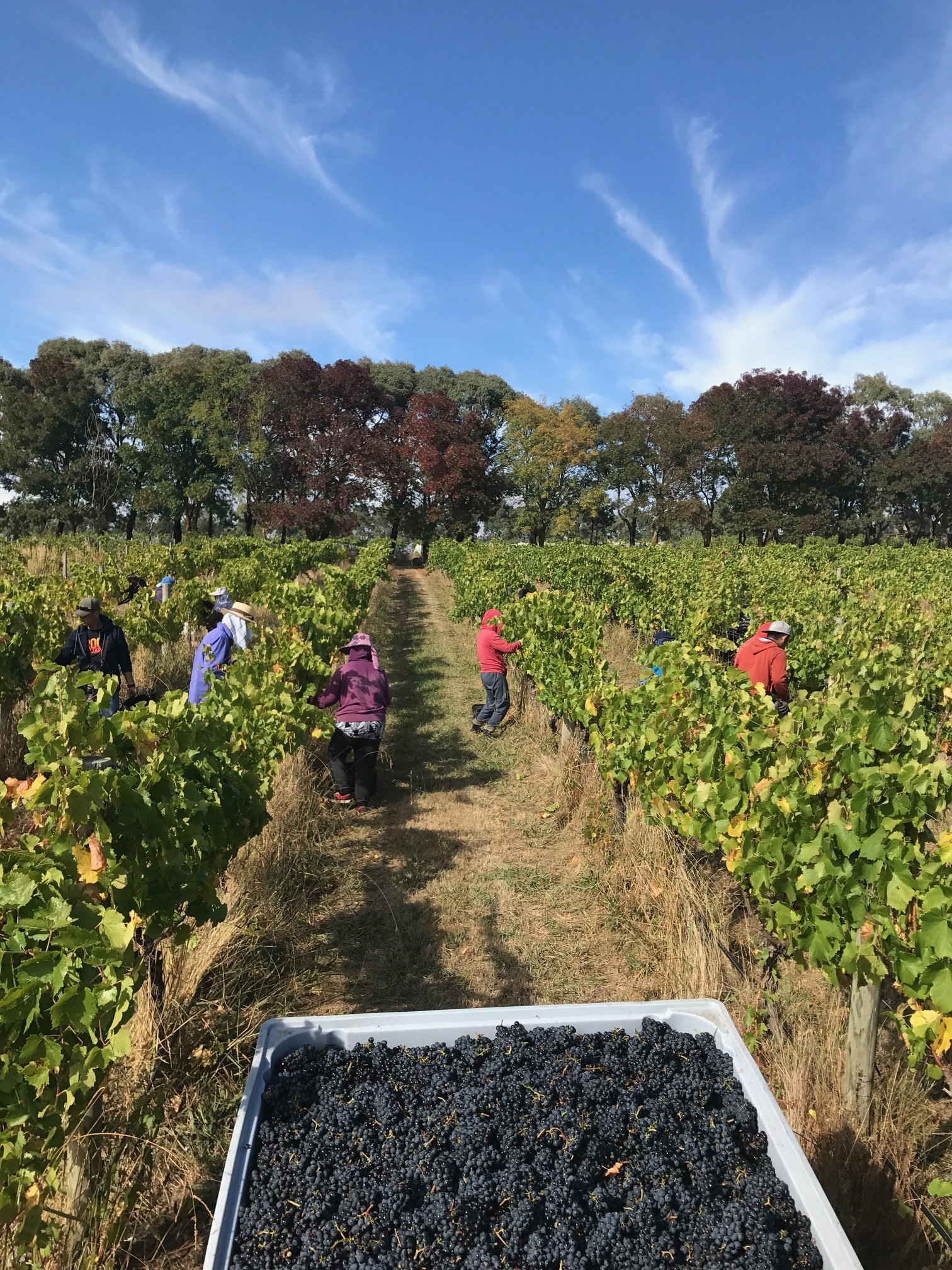
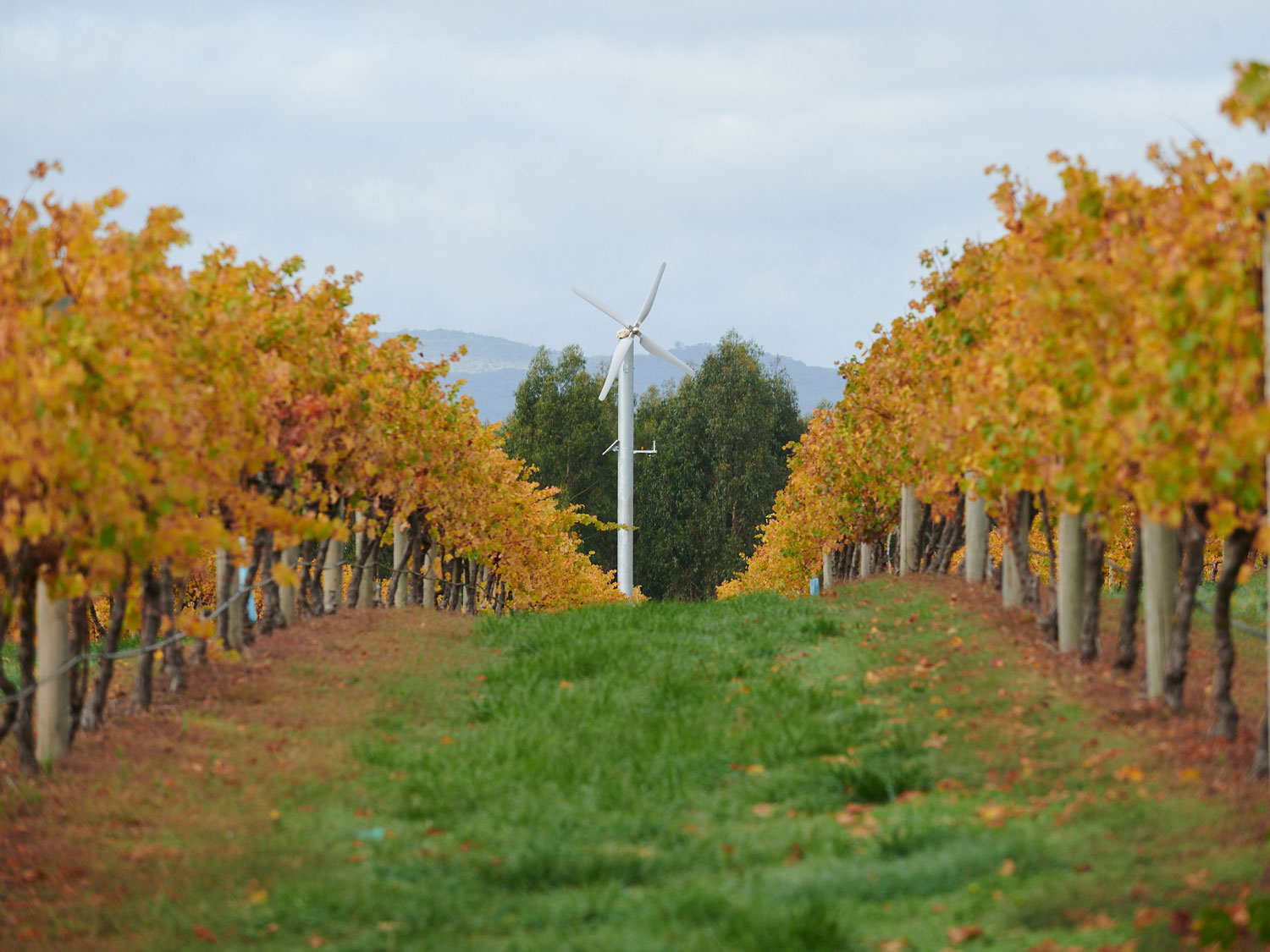
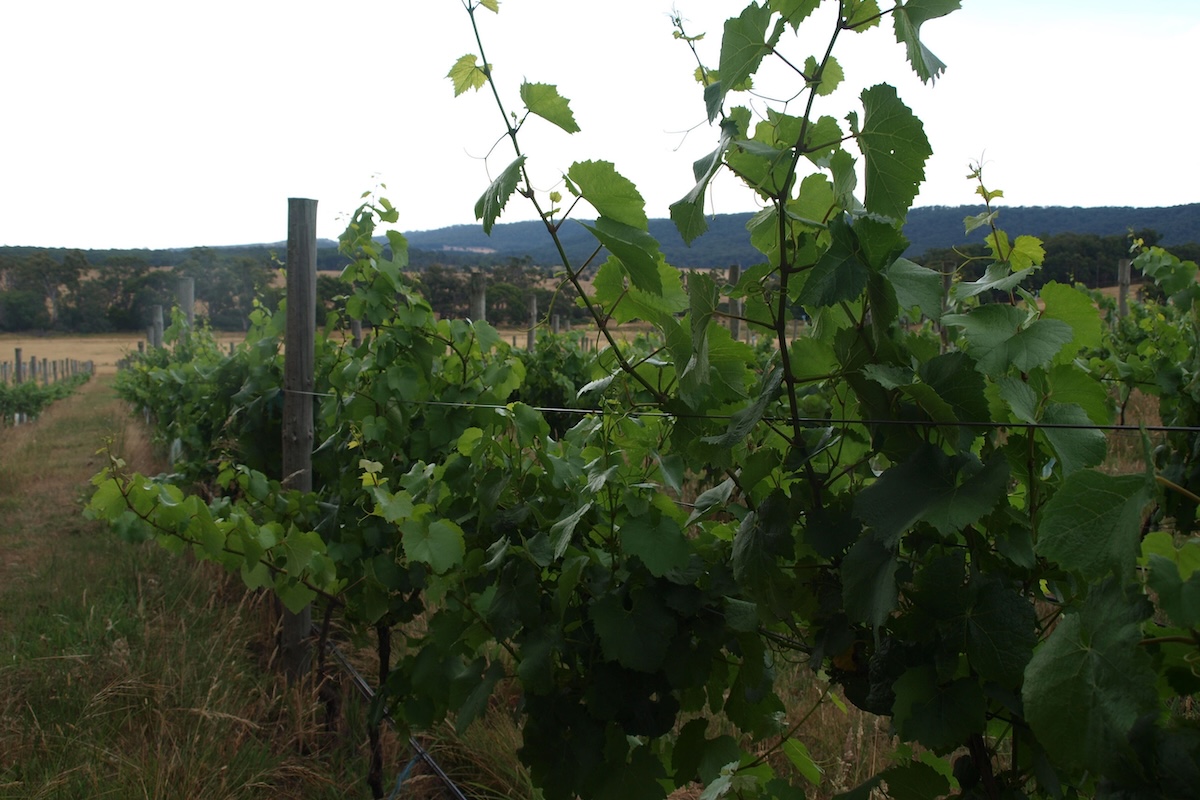
Opposite: Pinot noir grapes being harvested at Macedon Ranges vineyard Wilimee. Above: A frost fan towers above the Glenhope Vineyard in the Macedon Ranges – a reminder of just how cold this region can get.
Cooler weather isn’t an issue for the Macedon Ranges region of Victoria, however. Located north-west of Melbourne and within the ‘dress circle’ of wine regions that encircles Port Phillip Bay, the temperature here is, on average, a near-analogue of Burgundy. And as the name suggests, this is a mountainous area – part of the Great Dividing Range – with a complex topography and serious differences in altitude between different vineyards. (A simple rule of thumb is that for every 100 metres above sea level you climb, your vineyard loses about 0.6 °C of average daytime temperature – although this varies by site, owing to other climatic factors such as wind.) As with the region’s chardonnay, pinot noir yields here are relatively low – but thanks to its near-perfect climatic fit, pinot has swiftly become the region’s hero red grape variety, comprising 45.4% of the region’s total wine grape harvest on average over the past five years according to Wine Australia’s figures. (By contrast, chardonnay comprised 23.4% of the region’s output over the same period.) So while the quantities of wine emerging from the Macedon Ranges are essentially microscopic compared to other members of the ‘dress circle’ – the region’s total wine grape crush in 2026 was only 4.61% of the total of the Yarra Valley, for instance – statistically speaking, it’s likely that if you’ve ever sampled a wine from the Macedon Ranges, it has been pinot noir.
Pinot from the get-go
Zoom out, and the history of viticulture in the Macedon Ranges follows a similar pattern to many other cool climate regions of Australia such as the Yarra Valley, Geelong, Mornington Peninsula, Adelaide Hills and Tasmania: a brief flourishing in the nineteenth century, then a crash that wiped out winegrowing entirely through the first half of the twentieth century, followed by a phoenix act in the second half of the twentieth century. Zoom in, though, and the impact of the region’s chilly climate on that history becomes apparent – as detailed in our recent Deep Dive on Macedon Ranges’ chardonnay, its early viticulture never really took off in the same way as its neighbours, and its renaissance has likewise taken place at a more stately pace. And while information about the mix of varieties in those nineteenth century plantings is not readily available, pinot noir played a small role in the establishment of the first vineyard of the region’s modern era, Virgin Hills. Restaurateur Tom Lazar’s initial planting in 1968 was very much informed by both the fashions of the time and what varieties were available as cuttings – he leant hard on the Bordelaise varieties of cabernet sauvignon, merlot and malbec, bolstering them with shiraz and a small quantity of pinot noir – but as the region developed, pinot noir began to play a more prominent role, even as its role in Virgin Hills’ single Bordeaux-inspired wine progressively diminished to nil. The region’s second vineyard, Granite Hills, planted pinot noir during its first expansion in 1973, and the variety came to be more widely planted in the region throughout the late 1970s and early 1980s thanks to sparkling wine–focused projects such as Cope-Williams, Hanging Rock, and Macedon Ridge. Throughout the 1980s small vineyards focused on table pinot noir and chardonnay began to emerge – most notably Portree in 1982 (now known as Wilimee), Cobaw Ridge in 1985, and Bindi in 1988.
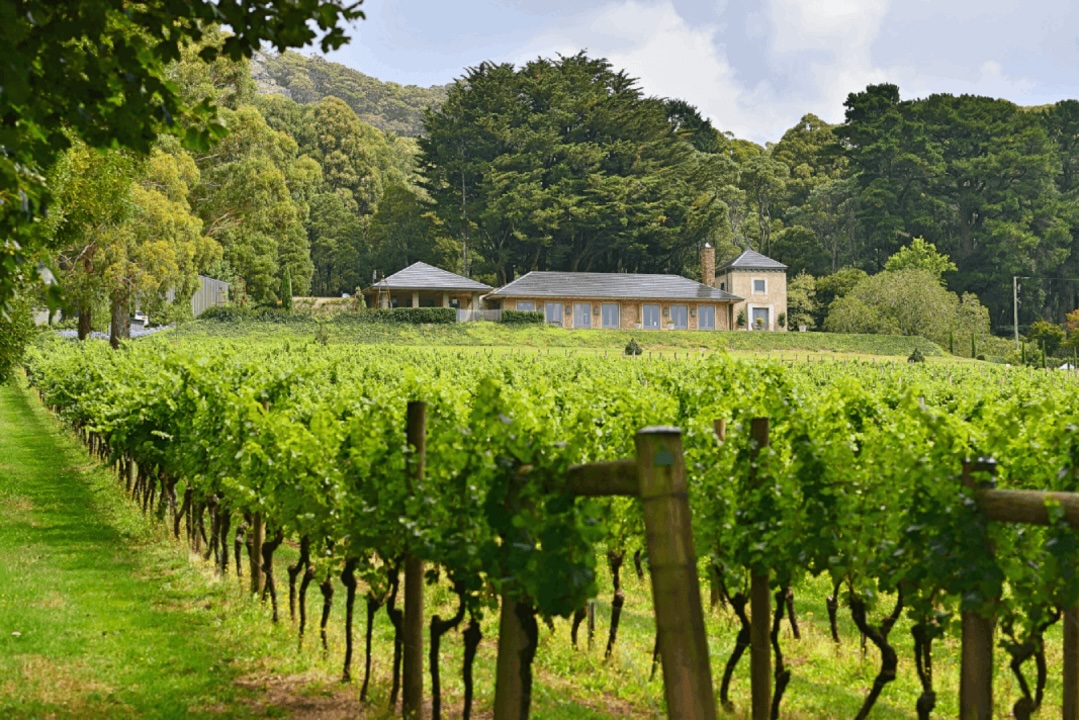
Opposite: Bindi winemaker Michael Dhillon. Above: The Bindi vineyard.
While Bindi is now possibly the region’s most renowned vineyard and wine label, with a global market for its chardonnay and pinot noir, the conventional wisdom not long before its establishment was that it wasn’t suited to viticulture at all.“In the mid-’70s, my parents investigated planting on our site, and were advised that it was not a very good vineyard site and not appropriate to plant,” says Bindi’s current custodian and vigneron, Michael Dhillon. “So we didn’t – which on face value today looks like a silly call, but that was more an era of cabernet and shiraz and so forth rather than chardonnay and pinot. So maybe in retrospect, it wasn’t a terrible decision, based on the available and promoted varieties.” It would take over a decade before a trend towards cool-climate viticulture and the emerging popularity of both chardonnay and pinot noir made the idea of planting on Darshan and Kaye Dhillon’s family property seem feasible. “So [Darshan] revisited the idea, got some advice that it was potentially an excellent site – north-facing slope, very interesting soil profile, some volcanic, some Ordovician – and he bit the bullet and prepared the site in ’87,” Dhillon says. “Together with other family and friends, we planted the vineyard in 1988.”
“In the mid-’70s, my parents investigated planting on our site, and were advised that it was not a very good vineyard site and not appropriate to plant. So we didn’t – which on face value today looks like a silly call, but that was more an era of cabernet and shiraz and so forth rather than chardonnay and pinot.”
Reflecting on the establishment of Bindi, Dhillon emphasises the communal nature of the endeavour: “I remember Alan and Nelly [Cooper, of Cobaw Ridge] coming around for dinner,” he says. “In fact, they were really well regarded in the early days – ’87, ’88, ’89 – as exemplars of how to fastidiously establish a small vineyard.” Having learned from the Coopers, the Dhillons paid the favour forward by assisting other vineyard owners as they established their own plots and wine brands – including that of former Essendon footballer Alec Epis. “He established the vineyard in 1991, which was the year of our first crop,” Dhillon says. “So he looked at us, maybe a little bit like the way we looked at Cobaw Ridge – they were three years in front of us, and we were three years in front of Alec. So he was sort of kept an eye on what we were doing and gave us a hand at various times – and then when we saw him establishing, we did the same.” Likewise, information about making the making of wine and management of vineyards flowed between the region’s vignerons. “People were talking about winemaking experiments and Burgundian winemaking techniques and so forth,” Dhillon recalls. “I remember working closely with Stuart Anderson [of Balgownie, in nearby Bendigo] and Ann and John Ellis [of Hanging Rock Winery] about how vineyards were planted and managed from their experience in Burgundy and also Champagne. And Champagne was a lot of relevance to our area, particularly back then, because it was definitely colder – and a lot of the focus was on cool sites to make sparkling.”
Horsing around
Shadowfax is now the largest wine brand in the Macedon Ranges – but its story began elsewhere, in Werribee. “I moved to Melbourne in 1998,” says Shadowfax’s inaugural winemaker, Matt Harrop. “I was making wine in Marlborough, and got asked to move across to Melbourne to plant vineyards and build a winery, Shadowfax, for some investors.” Those investors – who included Andrew Caillard, Stewart Langton and Mark Robertson of leading Australian wine auction house Langton’s – secured former Prime Minister Bob Hawke as the chairman of the ambitious venture, named after a fictional horse from J.R.R. Tolkien’s Lord of the Rings. “Until our [Werribee] vineyards came on-stream, we were buying fruit from various parts of southern Victoria – Geelong, Yarra Valley.” That search for fruit shortly lead Harrop to the Macedon Ranges. “I’d seen some wines while judging wine shows which blew me away,” he says. “I remember seeing wines from Portree Vineyards in wine shows in the early 2000s and going, ‘Shit, these are fucking banging. What’s this Macedon place?’ But there were only tiny amounts of vineyard. So we started working with a guy in Romsey – and Shadowfax still manages that vineyard, Midhill.”
Opposite: Matt Harrop of Silent Way. Above: The Silent Way estate vineyard in the Macedon Ranges.
Harrop argues that Shadowfax’s shift to focusing on the Macedon Ranges was “organic” rather than planned – and it included some detours along the way. “We actually purchased vineyards in Heathcote,” he says. “Shiraz was the focus back then, in the nearly 2000s – Parker was blasting Australian wines with massive scores and the guys that owned Shadowfax figured it’d be a good thing to do. We made some really yummy wines out of Heathcote, but essentially they never really held the appeal that the pinot did.” The results of the work that Harrop did with Macedon Ranges chardonnay and pinot fruit eventually convinced the company to invest further in the region. “When we started purchasing fruit out of out of Macedon, and then leased vineyards in Macedon, that was when the focus really came on – like, ‘Holy shit, this is a thing here. There’s a massive opportunity.’ BecauseMacedon isn’t widely planted. It’s a big geological area. It’s very cold. So it’s perfectly suited to chardonnay and pinot. So we sort of had a bit of a jump on everybody – because land was still fairly cheap back then, too.” Inspired by the potential in the region, Harrop purchased his own property in the region in 2006, planting it to chardonnay, and setting it up as the home base for his own label, Silent Way, before moving on to take on the head winemaker role at Macedon regional icon Curly Flat. “That was when I really started digging deeper,” he says. “We had a small vineyard at Curly Flat, and so we really started pulling the vineyard apart – geologically, and geographically, and climatically, and in clones – and so I spent six years there really nerding out about pinot, which was good fun.”
“When we started purchasing fruit out of out of Macedon, and then leased vineyards in Macedon, that was when the focus really came on – like, ‘Holy shit, this is a thing here. There’s a massive opportunity.’ Because Macedon isn’t widely planted. It’s a big geological area. It’s very cold. So it’s perfectly suited to chardonnay and pinot.”
For Harrop, the drawcard of the region was simply that the pinot noir fruit grown there looked like nothing else he could find while sourcing fruit for Shadowfax. “We were seeing flavours, and textures, and acidities, and finesse of tannins that we weren’t seeing in other parts of southern Victoria,” he says. “I’m not saying they were better – they were just quite distinctively different to the Yarra, and certainly different to the maritime climate of the Mornington and the Bellarine. And we put that down simply to the altitude.” That altitude, he argues, creates vibrancy: “There’s a real freshness of fruit,” he says. “We can pick it at reasonably good potential alcohol with high natural acidity, but also have super-fresh fruit characters because of the coolness of the place. And in a lot of warmer places for pinot – if you think about Geelong or even the warmer parts of the Yarra – people are having to harvest a little earlier so the acidity remains high. So you’re sacrificing a little bit of richness and weight there – because if you do try to harvest later, pinot’s very prone to shrivel. And I think one of the things that you really notice in pinot – really, totally, absolutely straight off the bat when you stick your nose into a pinot – is, is it fresh-fruited? Or is it showing a little bit of that surmaturité, as the French say – a little bit of that raisin, a little bit of shrivel?” While this freshness is highly desirable, Harrop also emphasises that it comes at the cost of viticultural difficulty. “It comes with risk and problems as well,” he cautions. “In a cold season, things don’t ripen. Farming has to be simple. Yields have to be low. You know, mechanisation isn’t really possible. Everything has to be done by hand.”
Shadows and sunlight
Shadowfax’s organic transition from a multi-regional project to one focused almost entirely on Macedon Ranges – with the exception of fruit sourced from the original estate vineyard – has now been completed under the stewardship of Harrop’s successor, Alister Timms, who started at Shadowfax in 2001 as a cellar hand. “From 2026 – from this year – it’s all from Macedon Ranges, or from our vineyard at the winery, which is on the Werribee mansion grounds,” Timms says. While Harrop might have been drawn to the region for the uniqueness and freshness of its fruit, Timms argues that there are also other, more practical reasons for the shift. “We saw the benefit of growing fruit and sourcing fruit from Macedon Ranges, especially over those ten very dry and hot years between 2000 and 2009 – culminating in the 2009, bushfires, of course,” Timms says. “Heathcote was getting hotter and hotter, and drier and drier, and it was getting harder for us to make good wines consistently, year in year out – especially for those ten years. We always were getting a little bit of chardonnay and pinot noir out of Macedon Ranges, and we expanded our footprint from there – we could see where the weather patterns were going. longer-term.” While the Macedon Ranges’ temperature has stayed largely stable over the past decade – as detailed in our Deep Dive on the region’s chardonnay – Timms hastens to add that this doesn’t mean the region hasn’t been affected by climate change over a longer time period. “We’ve definitely seen some climate change,” he says. “You’ve got to remember that a lot of the Macedon Ranges started out, back in the day, as a sparkling wine–only producing area. And then as it’s warmed up in the last thirty years, we’ve been able to make some fantastic table wine – fantastic chardonnay and pinot noir.”
Opposite: Shadowfax chief winemaker Alister Timms at our recent Deep Dive into Macedon Ranges Chardonnay. Above: Shadowfax’s Straws Lane vineyard – at 800 meters above sea level, one of the region’s highest.
Timms agrees with Harrop’s assessment of what makes the region’s pinot noir so interesting – “the thread is always this purity of fruit, and fresh, crunchy acidity” – but adds that, for pinot noir, thickness of the skins is another contributing factor, which he pegs to the region’s exposure to ultraviolet light. “The altitude means that during the ripening months, you actually get more UV,” Timms says. “I’ve done some study into this, and it can be 7–10% extra UV at 700 to 800 metres above sea level than you would get at sea level … it’s like when you go up hiking in the mountains or if you go skiing up in the mountains, you get burnt more because of the sun – there’s more UV up there.” He argues that these thicker skins are an adaptation by the vine to protect its fruit. “It helps protect the fruit – that’s why you just have this purity of fruit that doesn’t get degraded later in the season,” he says. “So the fruit retains its purity for longer, and its poise. They always have this blue fruit character, the pinot noirs, and this lovely violet character that you get up there, and this rose hip and rose petal character.” That thicker skin also lends the wine a little bit more tannic structure: “I always talk about ‘grown’ tannins,” Timms says. “The wines have these beautiful rolling tannins – I call them silky tannins – but it’s vineyard-grown tannins that I think you can see in these cooler and higher altitude regions … it’s a seamless kind of tannin that moulds into the wine really well.”
“If you work it too hard – as in pumping it over, or plunging it, or really crunching up those stems – the wine can really lose that purity, and the pure vibrancy of those Macedon florals and tannins.”
For this reason, he prefers to use a gentler touch in the winery when that fruit arrives. “I’m always very careful about working pinot noir, particularly from Macedon, because it has this natural tannin and natural beauty,” he says. “And if you work it too hard – as in pumping it over, or plunging it, or really crunching up those stems – the wine can really lose that purity, and the pure vibrancy of those Macedon florals and tannins.” He’s happy to acknowledge that the decision to avoid stem inclusion and the use of whole-bunch fermentation is informed by the altitude and coolness of the vineyards he works with – the Straws Lane vineyard is considered to be one of the region’s highest, coming in at 800 metres above sea level – but also argues that stem use “sometimes can become noise in the wine, rather than the vineyard showing up in the wine”. Likewise he feels that new oak elevage can mask the beautiful purity of the fruit he gets from the region – and recalls that a winemaker acquaintance from Italy once referred to new oak barrels as ‘coffins’ because “that’s where good wine goes to die”. “Sometimes you can kill a good wine with too much oak,” he says. “I’m definitely very aware of that in Macedon, because the fragrance and the violets and the finesse of the pinot noir coming out of the region can be swamped and killed by those ‘coffins’ sometimes.”
The fresh face of cool-climate wine’s future
Michael Dhillon remains optimistic about the future of the Macedon Ranges region and its signature style of cool-climate pinot noir, thanks to a recent influx of winegrowing and winemaking talent. “There’s a continuing old brigade in the region who are doing ever-better things, but I think it’s particularly exciting to see a new wave of people coming in,” he says. “Some of them are young-ish, and some of them are a little bit more experienced in life – but there’s a new energy and a continuing energy that’s really exciting for the region.” He adds, “I always think it takes a lot of bravery to develop a vineyard, particularly a pinot noir vineyard, in an elevated, cool, and windy area. So, I really feel that it’s super-exciting to have these bold, brave people taking on new vineyards … people who are adventurous and taking a longer-term view, and embracing the requirements to develop a good vineyard in these inhospitable conditions.” With that influx of new faces comes a growing winemaking community who help each other understand how to get the best from their individual vineyard sites: “We’re all learning more and more as people do their vineyards better, and people approach their winemaking in a more fastidious way,” he says. “We get to see more of what the region does in that beautifully diverse way.”
“It’s super-exciting to have these bold, brave people taking on new vineyards … people who are adventurous and taking a longer-term view, and embracing the requirements to develop a good vineyard in these inhospitable conditions.”
Matt Harrop likewise sees the developing professionalism of the Macedon Ranges as a benefit. “Back 15–20 years ago, there were a lot of people making shit wine up here, too,” he says. “They didn’t know what they were doing – mum and dad had a vineyard, and they were fucking it up. So someone else would make a bit of wine for them and take a few tonnes.” Now, he argues, those arrangements no longer work for either party – which he sees as a positive, even if it means that he now has to look outside the region for the fruit for his own Silent Way pinot noir. “There’s just no point in any grower selling any fruit anymore – which is terrific,” he says. “We used to talk about it a lot amongst a group of growers when I was at Shadowfax and then again at Curly Flat. We used to say, ‘Don’t sell fruit – that sets us apart from the Yarra, from Mornington, or anywhere else where people can come in and buy their three tonnes of pinot and take it away and make it’ … that was quite a strategic thought process with all the growers. We’d get together and talk about it and say, ‘Why would anyone sell fruit? But if you’re going to sell fruit, sell it to another Macedon winery’.” That growing professionalism can also act as something of a bulwark against the threat of property developers purchasing prime vineyard land from those ‘mum and dad’ operators and turning it into housing: “We’re going to see more of that urban infringement,” he says. “People go, ‘Hey, look, I’ve got my vineyard here, and I can farm it and sell some fruit and make some wine and make a little bit of money – or I can sell it to a developer and retire with several million bucks in my pocket’.”
“We’re going to see more of that urban infringement. People go, ‘Hey, look, I’ve got my vineyard here, and I can farm it and sell some fruit and make some wine and make a little bit of money – or I can sell it to a developer and retire with several million bucks in my pocket’.”
For his part, Alister Timms argues that the threat of housing developments taking over valuable vineyard land isn’t restricted to the Macedon Ranges. “A lot of the ‘dress circle’ Melbourne regions are going through exactly the same thing,” he says. “Mornington, for instance, some parts of the Yarra, parts of Geelong – they’re all getting this impact as well with the very high price of land. But it’s not just that – it’s the high price of putting a vineyard in now. That will cost you twice as much as what it did five years ago.” Like Dhillon, he’s pleased to see that people are still investing in the region by planting ambitious new vineyards – many of them high-density – and are willing to run the risks inherent in growing grapes in such a marginal climate. “Whether it’s close-planted or not so close, the people who are making good wine and good fruit are in the vineyard a lot,” he says. “Especially in the Macedon Ranges – because if you miss something, you’re done. It’s unforgiving up there … you have to do things at the right time, especially canopy management. If you’re not on top of light getting into the grapes and lifting wires and things, you can get behind very quickly.”
“I think it's going to become more famous as time goes on, especially with the way climate change is going in the next ten to twenty years. Macedon is going to shine. I don’t think we've made our best wines yet by far.”
Despite the difficulty inherent in the region, Timms argues that its innate quality bodes well for its future – and the future of its pinot noirs. “It’s not as famous as some as the other regions,” he says. “That’s because there’s not as many grapes grown, I suppose – but I think it’s going to become more famous as time goes on, especially with the way climate change is going in the next ten to twenty years. Macedon is going to shine. I don’t think we’ve made our best wines yet by far.”
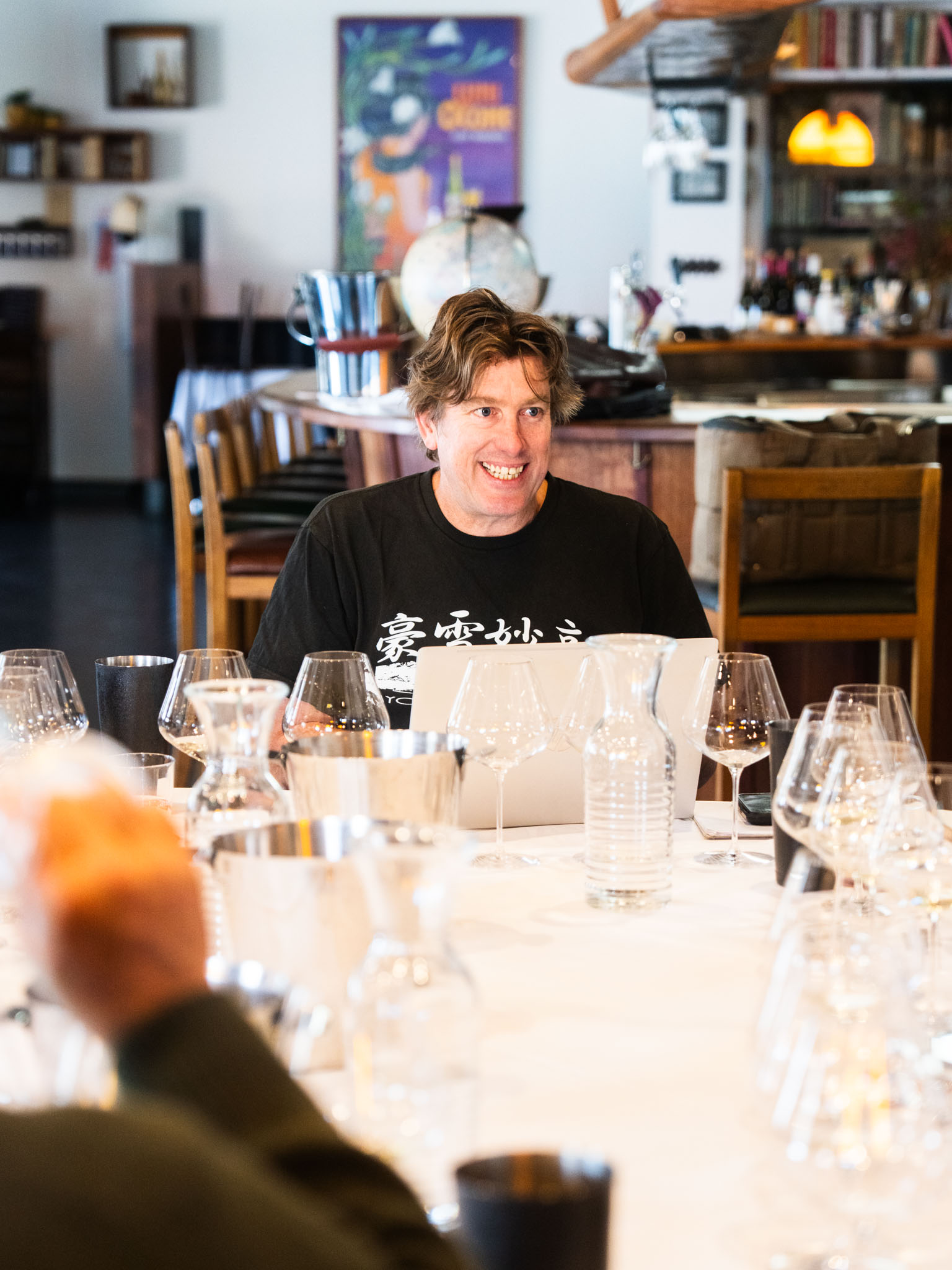
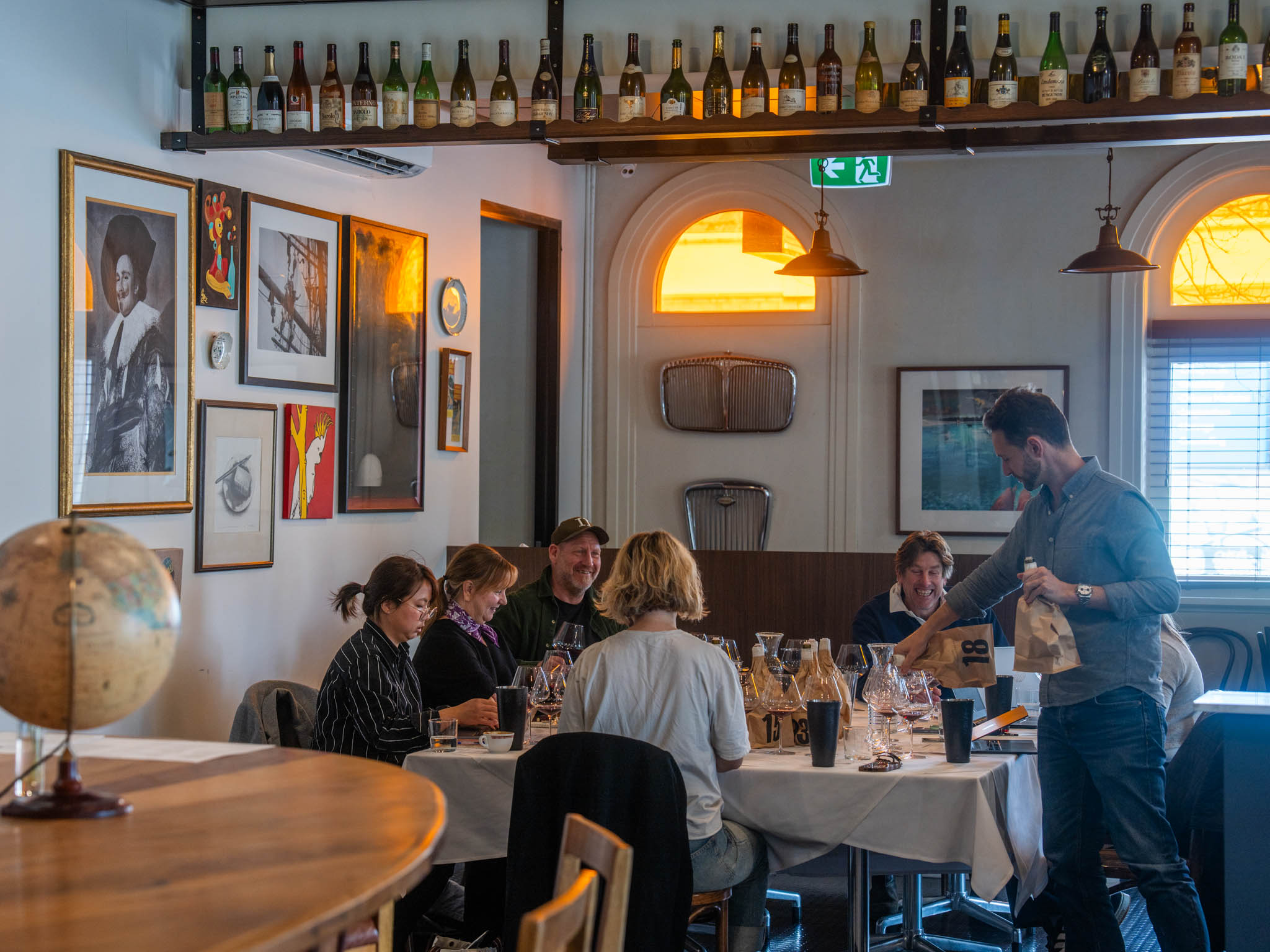
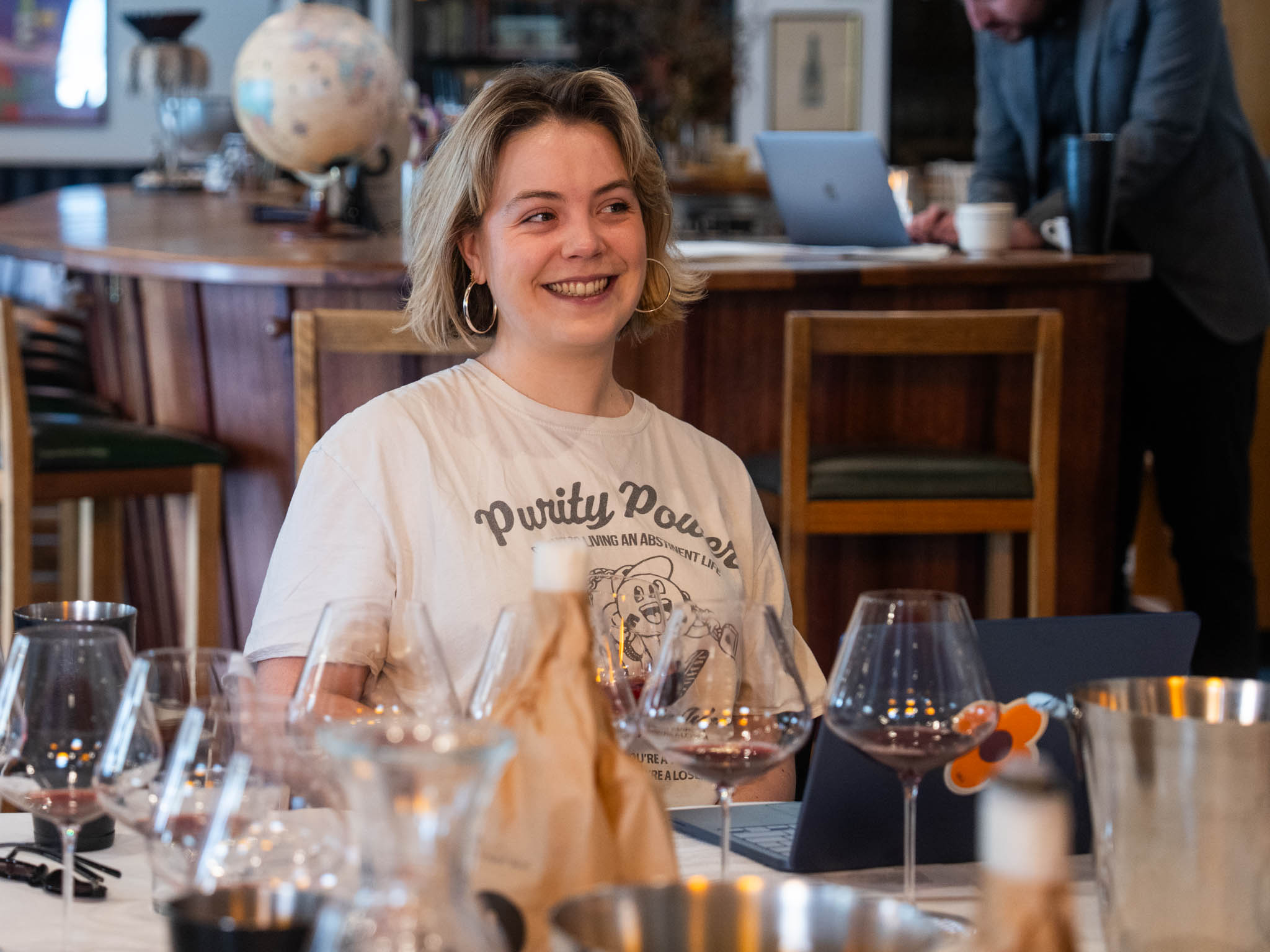
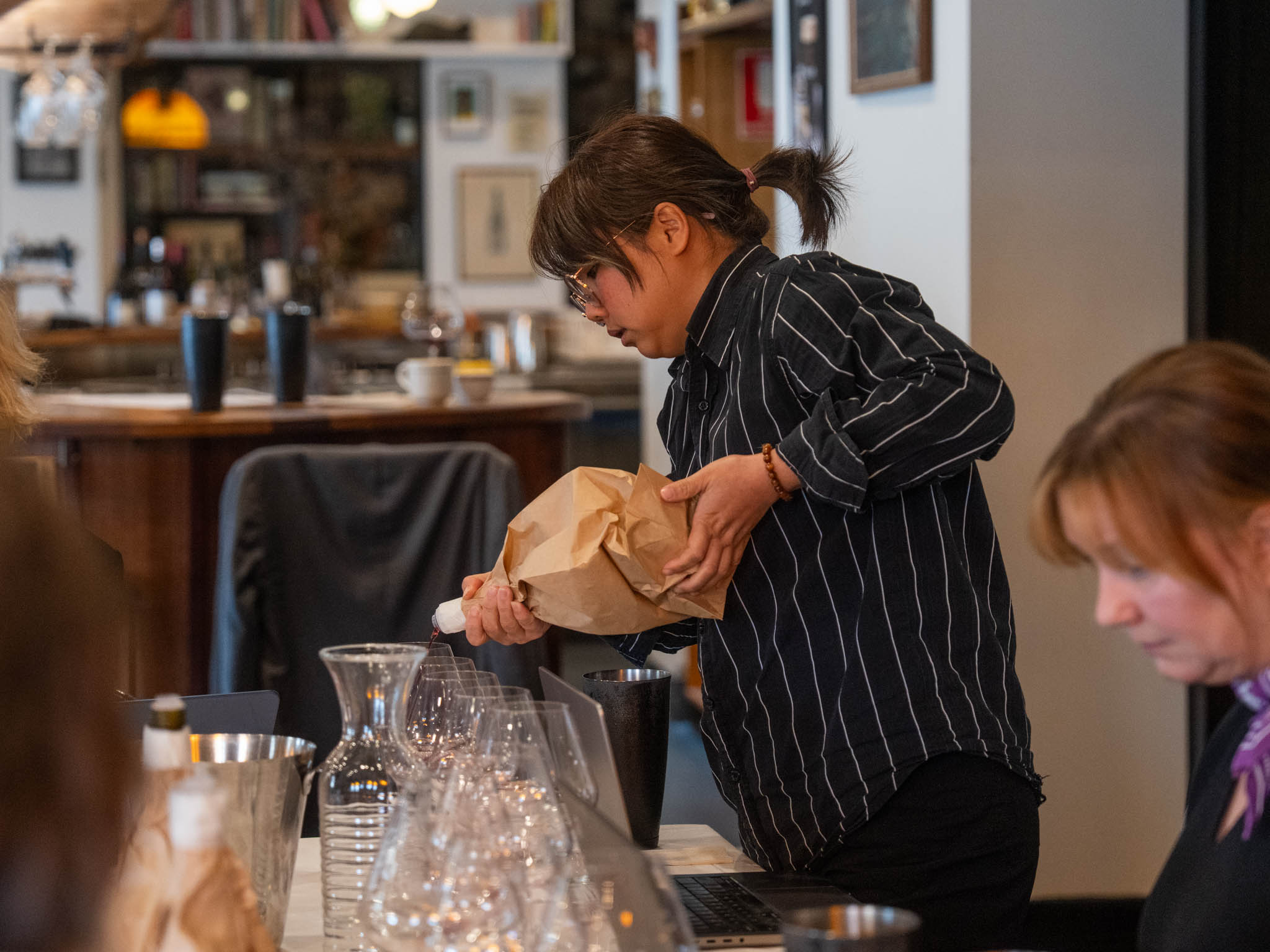
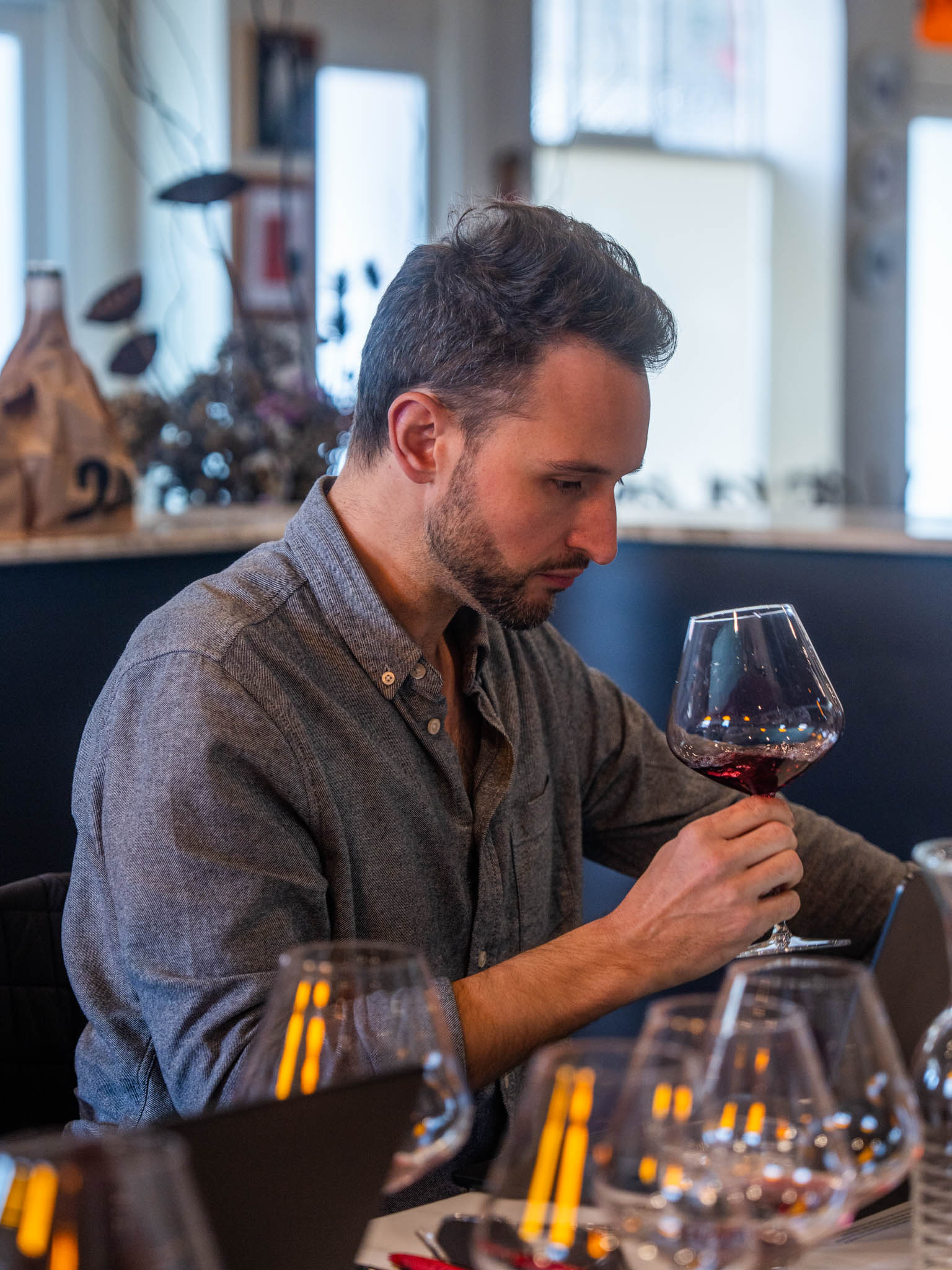
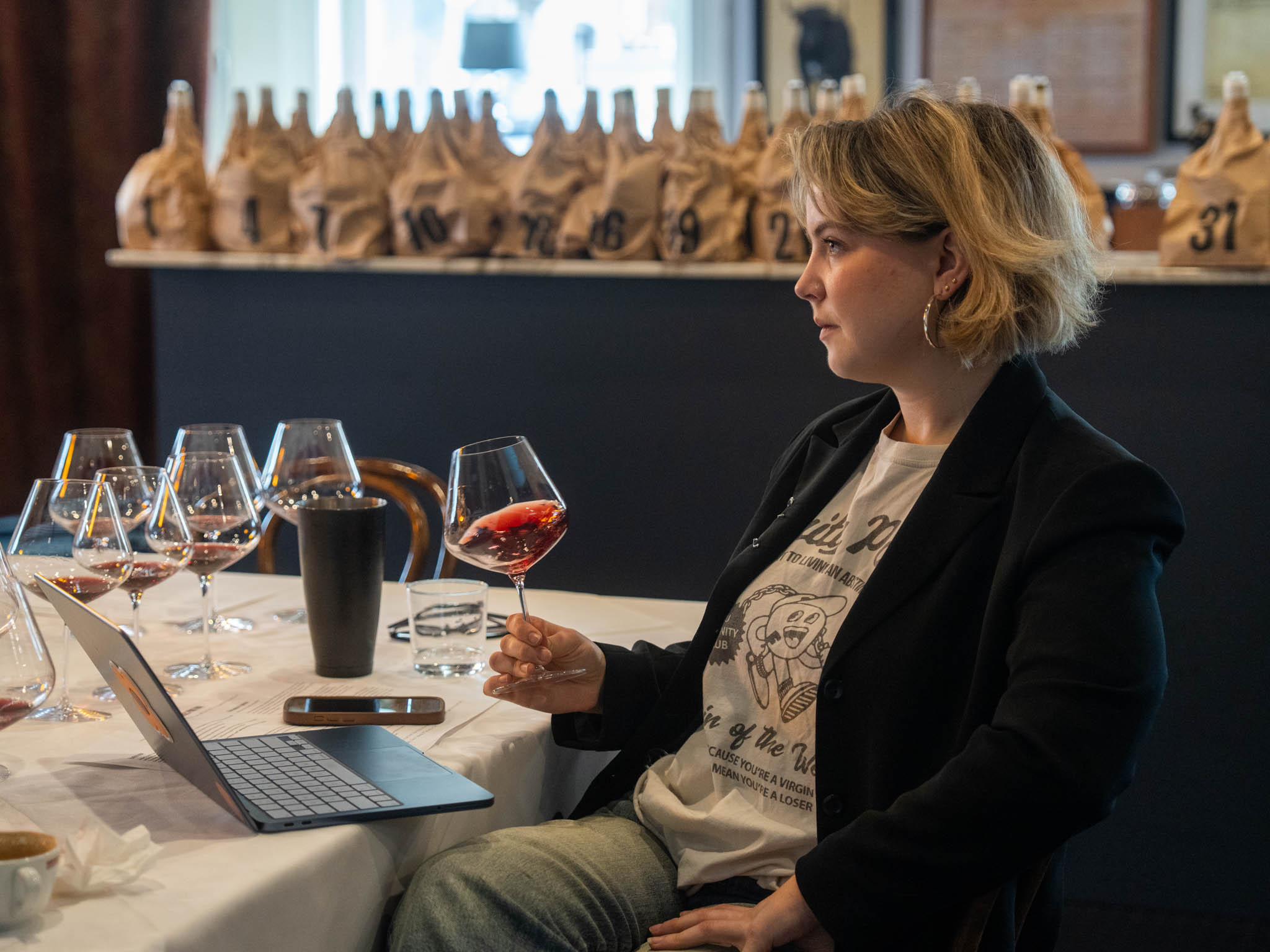
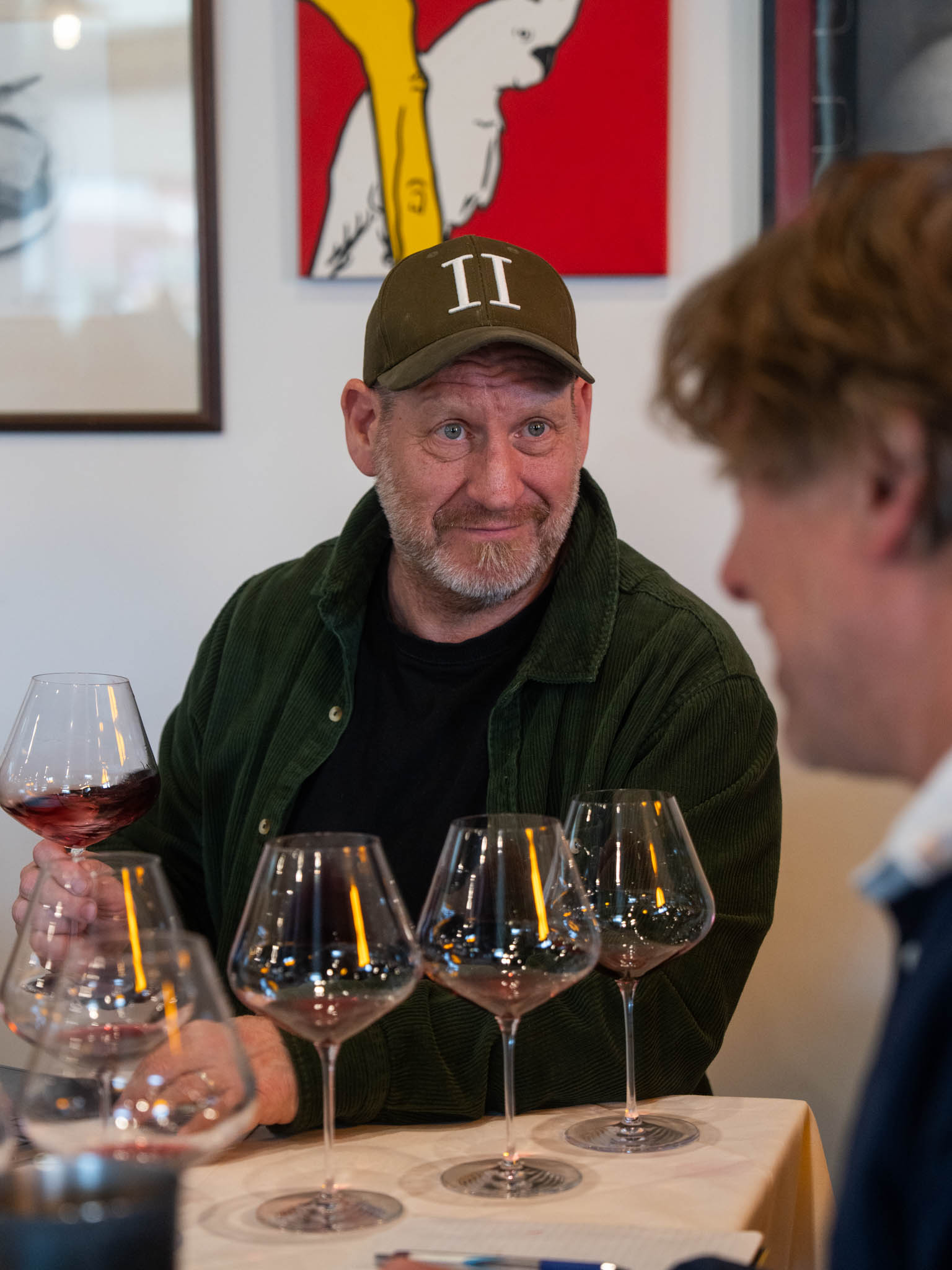
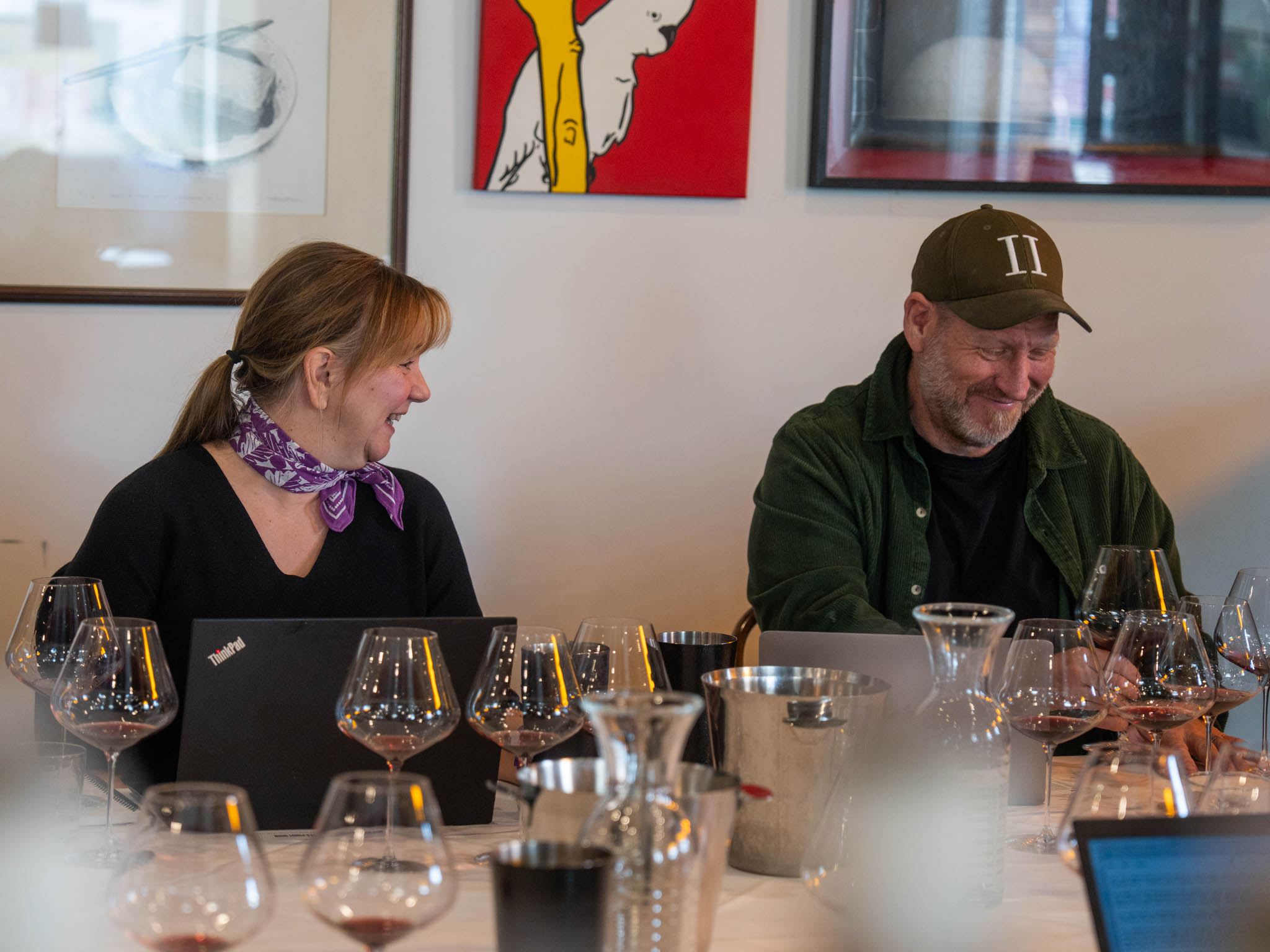
Above: Our tasting panel gathered at at Geralds Bar, Carlton North (Melbourne).
Outtakes from the tasting
We gathered every example of pinot noir from the Macedon Ranges that we could find and set our expert panel the task of finding the wines that compelled the most. All wines were tasted blind, and each panellist named their top six wines. Below are the wines that made the panellists’ top-six selections from the tasting.
Sykes kicked off the discussion by observing that the line-up was incredibly diverse – and that this diversity made it hard to see through-lines in the tasting. “A very interesting tasting – very varied,” she said. “Varied in terms of style, but also quality, I thought. That was good – it’s interesting. But I’m not sure what the common theme is if you were to describe Macedon Ranges pinots, because of the variation in style.”
Above: Gill Sykes. Opposite: Gemma Neil.
Neil contrasted this diversity in approaches with her experience at our recent Macedon Ranges chardonnay panel. “It’s interesting, because I didn’t really think that with the chardonnays,” she said. “I was expecting it to be the opposite way around – that we’d see less variation in the pinots.” She added that, for her, the theme throughout both of the tastings of flavour intensity. “I think that definitely the through-line with the two, having done them both, was that flavour intensity – which was here again today. Even for wines I didn’t personally like, my notes were more along the lines of ‘I just don’t like this flavour’ as opposed to ‘There isn’t much going on here’.”
“I think you can see the differences in vintages as well, which is nice. You can get drawn in by the power and the beauty of the ’24s across the board – I think that’s what I tended towards. But there is finesse in some of those ’23s and ’25s as well.”
Timms argued that this diversity was a function not only of the region’s complicated topography and mix of elevations and aspects, but also of the variation between different vintages in the line-up. “There were some lovely different styles of pinot here – some punchy things there, and then there were some finer things,” he said. “And I think it goes to show the differences within the region – but also in this line-up there’s obviously, some very cold years and there’s some warm years. So the 2023 wines really look very mineral and a bit more herbal compared to ’24, which was pretty much a perfect growing year for most of Macedon, and then ’25 was a bit cooler again. So I think you can see the differences in vintages as well, which is nice.” He added that this vintage variation came with its own challenges for the panellists: “You can get drawn in by the power and the beauty of the ’24s across the board – I think that’s what I tended towards,” he said. “But there is finesse in some of those ’23s and ’25s as well.”
Above: Tully Mauritzen. Opposite: Alister Timms.
Mauritzen articulated the through-line that she saw in the wines, despite their diversity. “There’s lots of different winemaking here – some are more carbonic, or some of them chose to have a heavier hand on the oak,” she said. “But I think all the wines spoke of their fruit, and – even though you could see vintage variation – there was still this really beautiful herbaceous umami quality through all of them that felt really consistent. Even if a wine looks quite lean and quite tight – or maybe they’ve picked it a little bit earlier, or maybe it’s really powerful – it’s still got this addictive quality. You want to keep going back and ask yourself, ‘What is that?’ And that umami showed up in different ways – sometimes it was more meaty and ferrous, or sometimes it was more actually just salty or briny. But I did feel that all of the wines had this hook that was really intriguing.”
“Through all that winemaking – and through all the site differences, and the vintage variation – the wines still speak of place. And I think Macedon’s one of the few regions for one single variety like this that actually can do that.”
Robertson saw a similar through-line in the wines – he called it ‘saline’ – and argued that its presence spoke well for the region’s ability to build a consistent identity in the glass, despite differences in site, vintage, and winemaking. “It’s such a vast GI, with such differences in terroir, and in site, and what’s planted where – because there’s still a really interesting mix of clones for pinot there, too,” he said. “But the wines actually do speak to their place. Through all that winemaking – and through all the site differences, and the vintage variation, and all these sorts of things – they still speak of place. And I think Macedon’s one of the few regions for one single variety like this that actually can do that. Maybe cabernet from Margaret River would be another one that can do that, or maybe Eden Valley syrah can do that – but outside of that, I find them often so varied, even if it’s a small or a big GI. So to actually be able to say ‘Macedon pinot’ and have a general expectation of what you’re going to get in the glass is fantastic.”
Above: Chia-Wei Shen. Opposite: Tom Robertson.
“There’s a strong regional underpinning to the wines,” Walsh added. “As someone who makes wine in the Macedon Ranges, it’s a nice thing. It’s one of the things we should try to promote, as well.”
Timms argued that, for him, freshness of fruit character was a recurring theme. “I think that freshness is the thing with Macedon,” he said. “Because when you do pinot noir judging with brackets from across the state, you useterms like ‘underripe’ or ‘overripe’, or you use terms like ‘raisins’ or ‘stewed fruit’. And those have not once been used in my tasting notes today.”
Walsh agreed, and added that this freshness was also a function of acidity “Even this year, when we were picking riper than we have for a while – we normally pick a little earlier, but we were around 13–13.1° Baumé this year – our pHs were still perfect,” he said. “It’s those cool nights, even throughout the growing season.” He added that the region’s viticulture has been dialled in as growers better understand the landscape. “You can’t just move from the Yarra or from Mornington and then go up there with the same playbook,” he said. “What you can do in warmer climates doesn’t necessarily translate to what you can do in Macedon Ranges. I think the viticulture has gotten a lot better and more focussed on what you need to do for your vines to be able to work, and get ripe. You can’t over-yield, or the vines will struggle.”
“You can’t just move from the Yarra or from Mornington and then go up there with the same playbook. What you can do in warmer climates doesn’t necessarily translate to what you can do in Macedon Ranges.”
Talk of high acidity shifted to the general ageability of the wines. “There’s a couple of wines where I was like,‘I’d love to see this with age, because it would be so good’,” Mauritzen said.
Shen – who sells both Macedon Ranges and Yarra Valley pinot through her cellar door role at Balgownie Estate – argued that this ageability positioned the wines as more of a premium product. “Our Macedon range can age,” she said. “So I usually present it as a more premium wine compared to our Yarra Valley – because as it ages, it grows a beautiful aroma. It’s like, if you want to drink a wine now, buy some of our Yarra Valley pinot – but if you want something you can lay down, get some of our Macedon Ranges. And I think most of the Macedon Ranges wines we tasted today were quite consistent in terms of quality.”
“The average RRP is very cheap for the quality, too,” Robertson added. “To think you can spend sixty bucks on a bottle of pinot that you can probably put in the cellar for a minimum of five years, if not ten – that’s pretty crazy.”
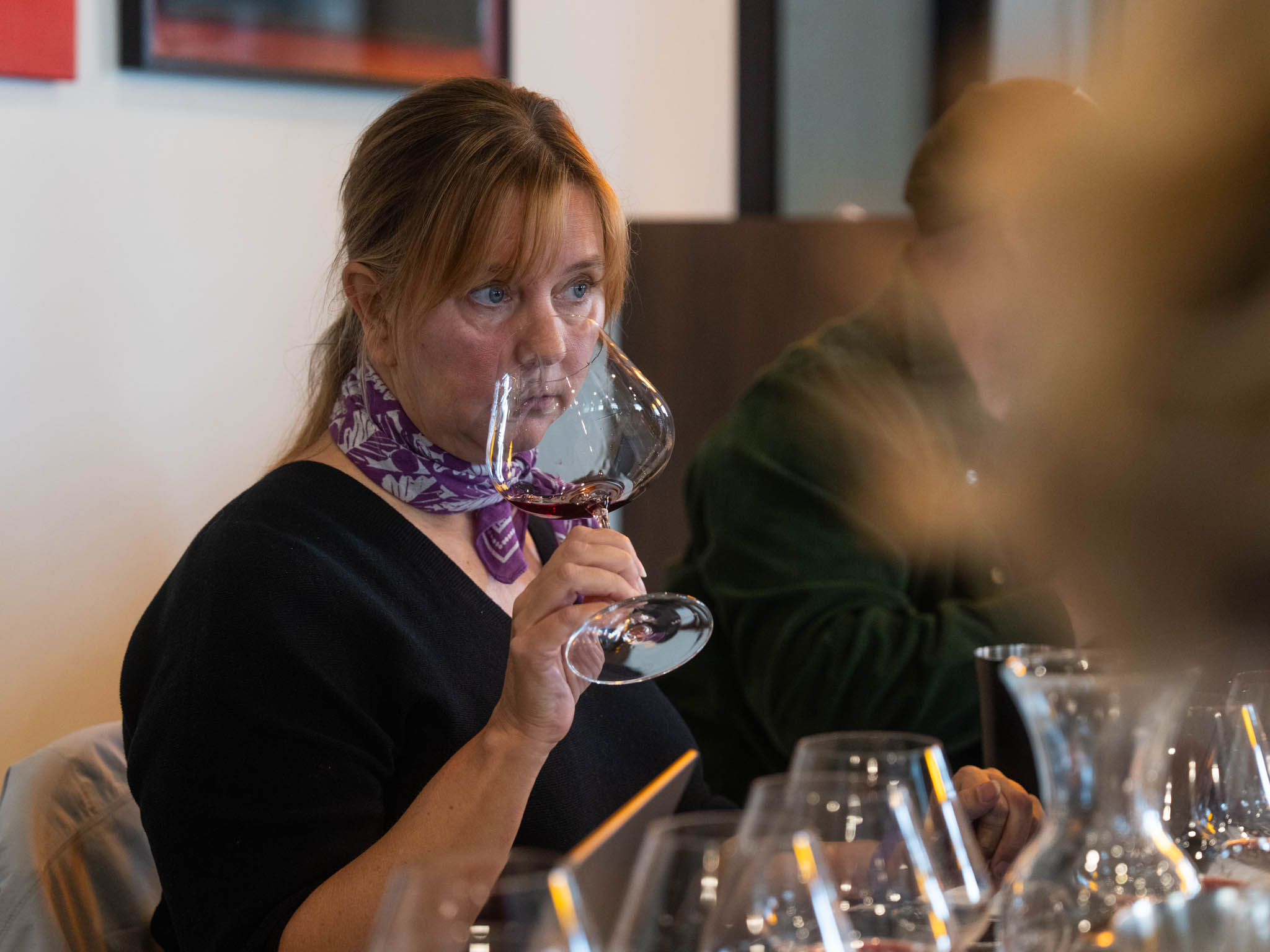
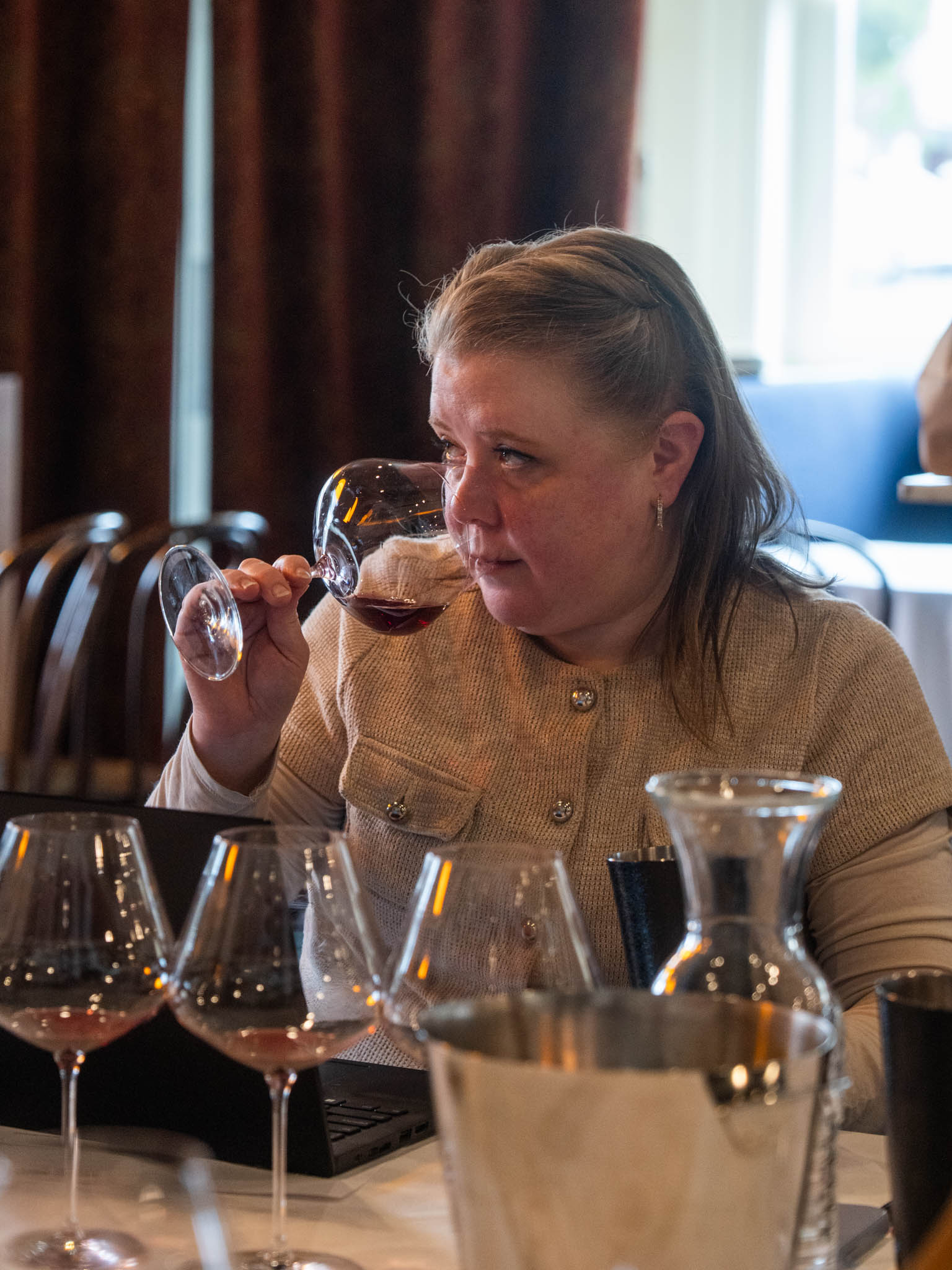
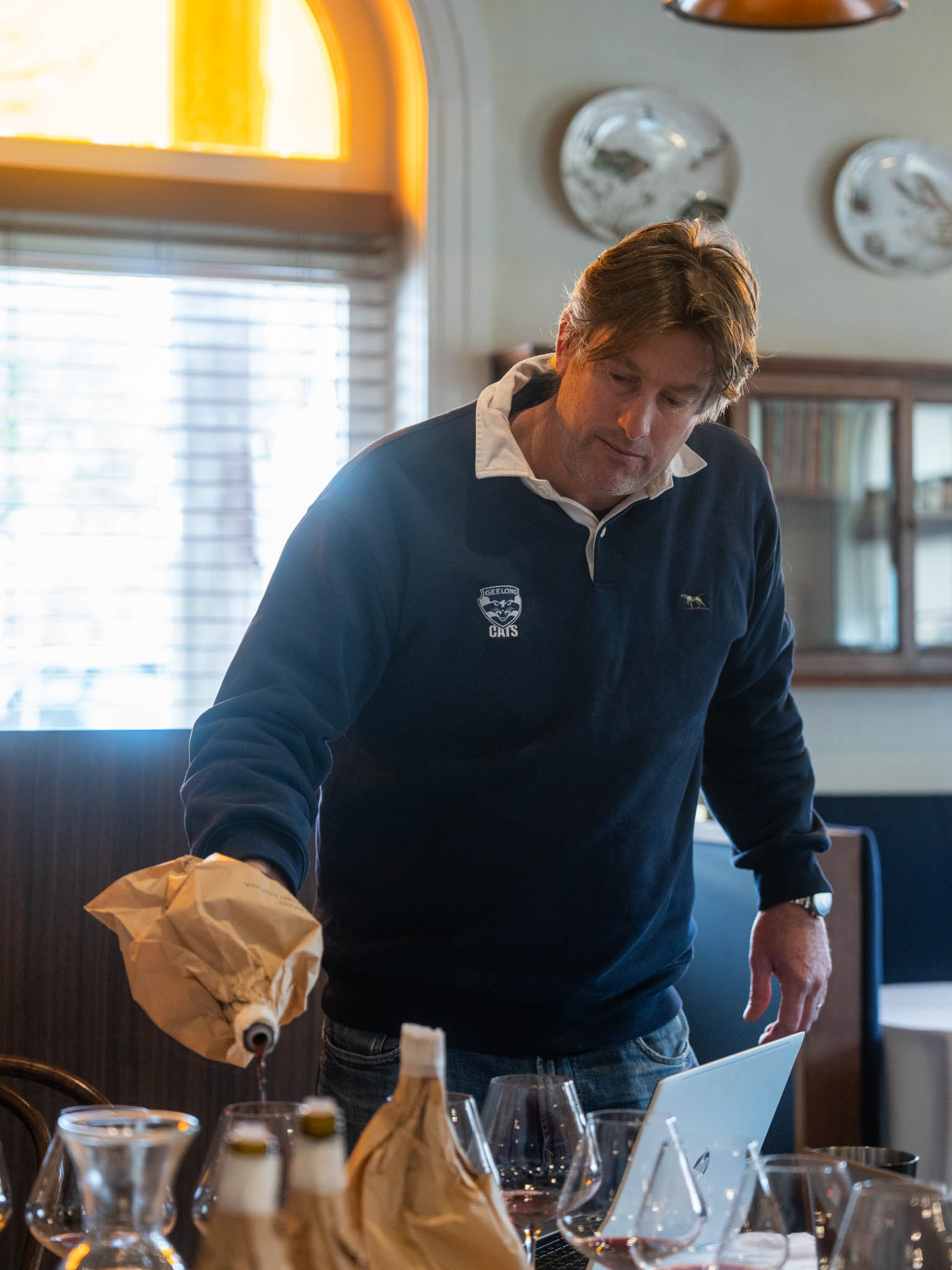
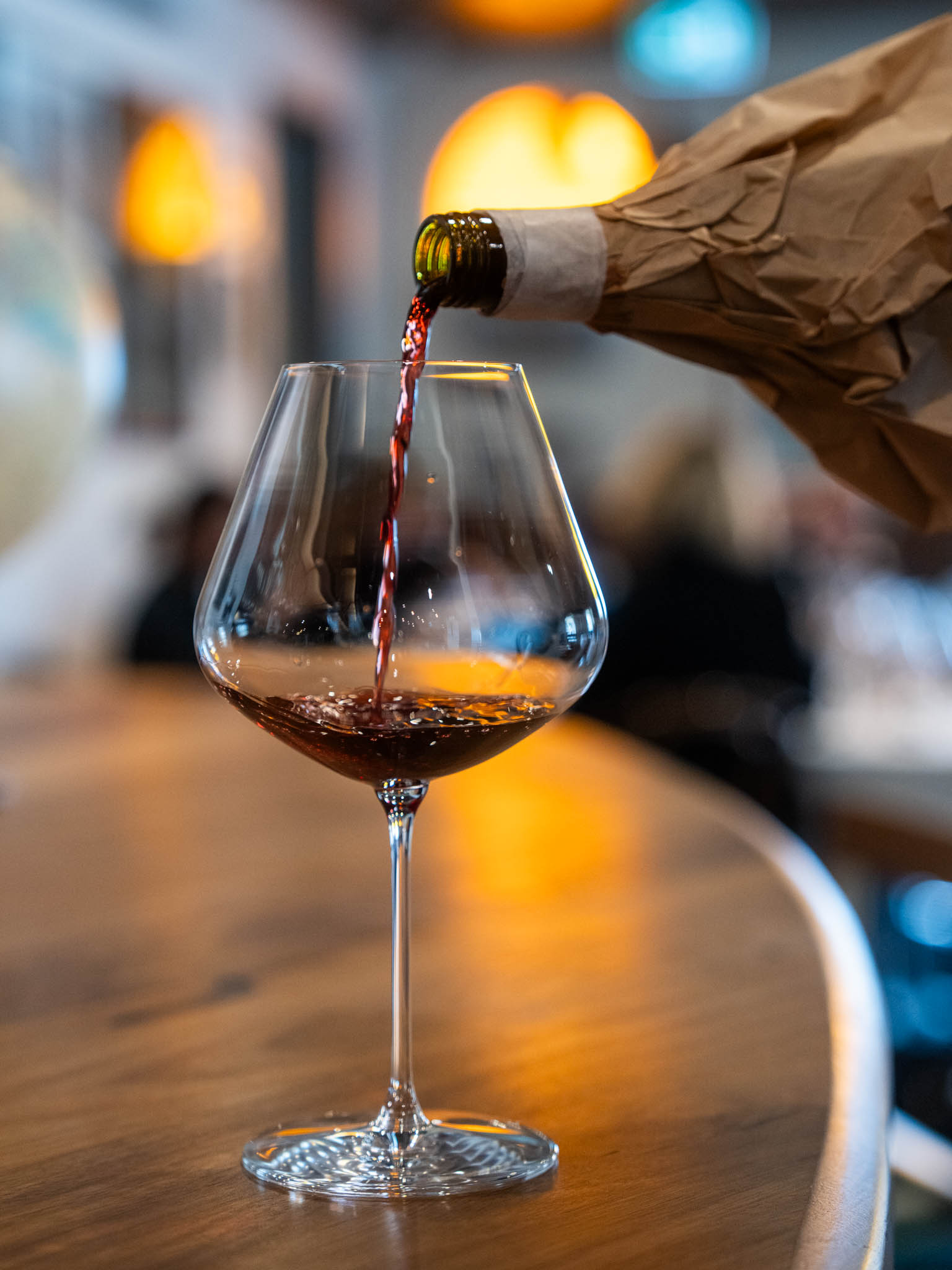
Opposite: Troy Walsh. Above: Our Deep Dive panel tasting in action at Geralds Bar, Carlton North (Melbourne). All wines tasted ‘blind’.
Mauritzen added that the ageability of the wines and their general quality meant that the region stood out as one of Australia’s most promising for pinot noir. “Obviously there’s so many regions that can make pinot in Australia – but Macedon feels like the most sustainable region; it actually feels like we can consistently make really good pinot here,” she said. “These are a great representation of Australian pinot. As Australian wine people, this what we actually want to put forward to the world and say, ‘This is what we can do’.”
Above and opposite: Our Deep Dive panel tasting in action at Geralds Bar, Carlton North (Melbourne). All wines tasted ‘blind’.
The panel
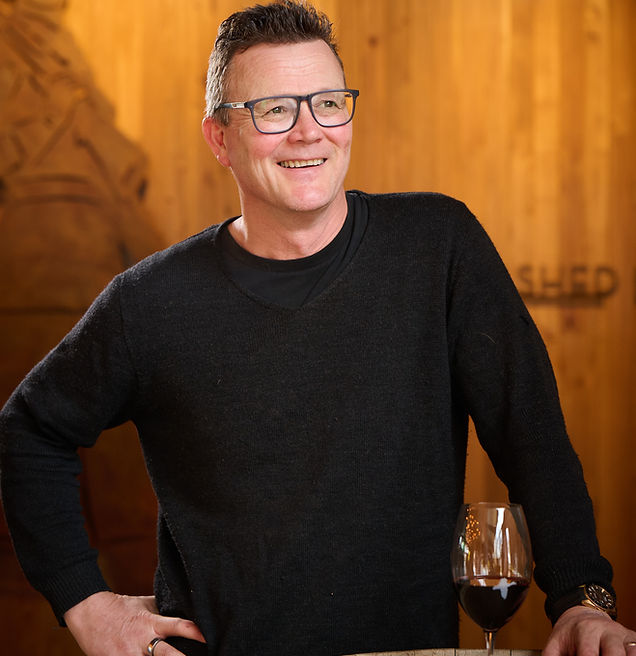
No stranger to the world of winemaking, Alister Timms grew up on his family’s vineyards on the Bellarine Peninsula, planting vines at the age of ten. With a science degree from Melbourne University, he went on to study oenology at the University of Adelaide, and graduated in 2001. Shortly after completing this second degree, Alister started working at Shadowfax as assistant winemaker – a position he held for three years before moving back home to run his family’s winery Kilgour Estate. In 2008, Alister returned to Shadowfax to manage the winery’s vineyards and establish the Little Hampton property in the Macedon Ranges, whilst working as assistant winemaker. Less than ten years later, in October 2017, he became Shadowfax’s chief winemaker.
Gill Sykes has twenty-plus years of experience in the wine industry including many years managing a wine retail outlet and wine education centre – a role that saw her take on wine buying, importing, marketing and orchestrating wine courses and events. She is a certified wine educator, holds the WSET Diploma, and is an accredited French Wine Scholar. She currently works as a freelance consultant and runs the wine program at The Chandlery, Port Melbourne, whilst teaching at both Cardwell Cellars and Armadale Cellars. She is an experienced wine show judge who has sat on judging panels at the Decanter World Wine Awards and The London International Wine Competition. She also currently sits as a committee member for both Sommeliers Australia and Femier Cru.
Australian-born Troy Walsh started his wine career as a sommelier in some of London’s top restaurants. His passion for wine led him to working in Burgundy, France for renowned pinot noir producers Domaine de L’Arlot and Domaine David Duband. He returned to Australia and established Attwoods with his wife Jane in 2010, with a goal to showcase the greatness of the country’s pinot noir and chardonnay. The philosophy of Attwoods centres on making wine that is food-focused, minimal intervention, reflective of vintage, and staying true to the idea that without great risk, you cannot achieve great rewards. Attwoods’ Mon Climat vineyard was a finalist in the 2024 Vineyard of the Year Awards.
Gemma Neil is the head sommelier and wine buyer for Geralds Bar in Carlton, Melbourne, as well as the manager of its fine-dining room, The Parlour. Originally from Canberra, she relocated to Melbourne in 2007 and began her hospitality journey at The Italian, where an early interest in wine saw her step into a junior sommelier role. Following further wine study, including Wine and Spirits Education Trust (WSET) Level 2 and 3 qualifications, she joined the team at Ezard in 2013. Over five years, she progressed into restaurant management while continuing to deepen her wine knowledge, commencing the WSET Diploma in 2017. In 2019, she helped open Lagoon Dining in Carlton, and in 2023 she became the head sommelier and wine buyer for Melbourne institutions Coda and Tonka. She commenced at Geralds Bar in late 2025, assisting the team in moving to its new, much larger venue and setting up its fine-dining room, The Parlour. In this role she balances both wine leadership and team management, bringing a thoughtful, inclusive approach to hospitality and list-building.
Tom Robertson is the general manager of Alimentaria, the wine importation and wholesale branch of Spanish restaurant group MoVida. Prior to this role, he worked for over seven years as a wine importer, key accounts manager, and Wine & Spirits Education Trust (WSET) educator for Samuel Smith & Sons/Negociants Australia. He cut his teeth in wine as a sommelier at Sydney venues Bennelong Restaurant (at the Sydney Opera House) and Intermezzo Ristorante (at the GPO Grand precinct).
Tully Mauritzen DipWSET is a freelance wine professional who developed a love for wine through her time in hospitality. Since then, she has worked her way through sales and buying roles while undertaking the Wine & Spirit Education Trust (WSET) Level 4 Diploma in Wines and Spirits, and is now chasing her passion for Australian wine through harvest and winemaking experience. She is an enthusiastic advocate for Australian wines, and has a passion for communicating the quality and value of these wines on an international scale.
Chia-Wei Shen (佳葳沈) doesn’t sell wine – she sells stories written by time, land, and people. With training in viticulture and winemaking via a Masters in viticulture and oenology from the University of Adelaide, she now works in cellar door sales for Balgownie Estate in the Yarra Valley, specialising in wines with historical and regional context. She enjoys helping visitors understand why a wine tastes the way it does, not just how it tastes. Her long-term interest lies in cool-climate viticulture, sustainable agriculture, and cross-cultural wine narratives between Australia, France, and Taiwan. She possesses the French Wine Essentials certification from the Wine Scholar Guild (WSG), and is currently assisting the Institute for the Study of French-Australian Relations to research a biography about early Yarra Valley vigneron Charles Hubert de Castella.
GET FIRST ACCESS TO THE NEXT WINE ICONS – DELIVERED
Today’s broad stylistic diversity of shiraz (or, syrah) in Australia is increasing at a rapid rate. The 2021 YGOW Awards Top 50 features Charlotte Dalton Wines, Minimum, White Gate Wine Co., The Stoke, Silent Noise, Weathercraft, Made by Monks, Dirt Candy and Wangolina, who are all championing new expressions of shiraz. Tasting notes appear at the end of the article.
Aside from the few who are pushing the boundaries of avant-garde experimentation, Riesling in this country is often a very straight up and down proposition. Typically, the grapes are gently pressed to stainless steel tanks, where the juice is fermented with cultured yeast at a cool temperature to preserve fruit flavour, then kept there for…
Orange wines are not reds. They’re not whites. They’re a whole new world. They’ve been popping up on wine bar lists in Australia over the last few years like sonar pings signaling something is out there. Something we hadn’t yet landed on. But have orange wines reached the tipping point? ‘That magic moment when an…
Subscribe to our newsletter
Young Gun of Wine is your shortcut to cutting edge wines, the places to go, and the people behind it all.
Subscribe to be amongst the first to know of our latest discoveries in wine.
We'll bring you the inside running from the growers, the makers, the wholesalers, the retailers and the sommeliers, too.