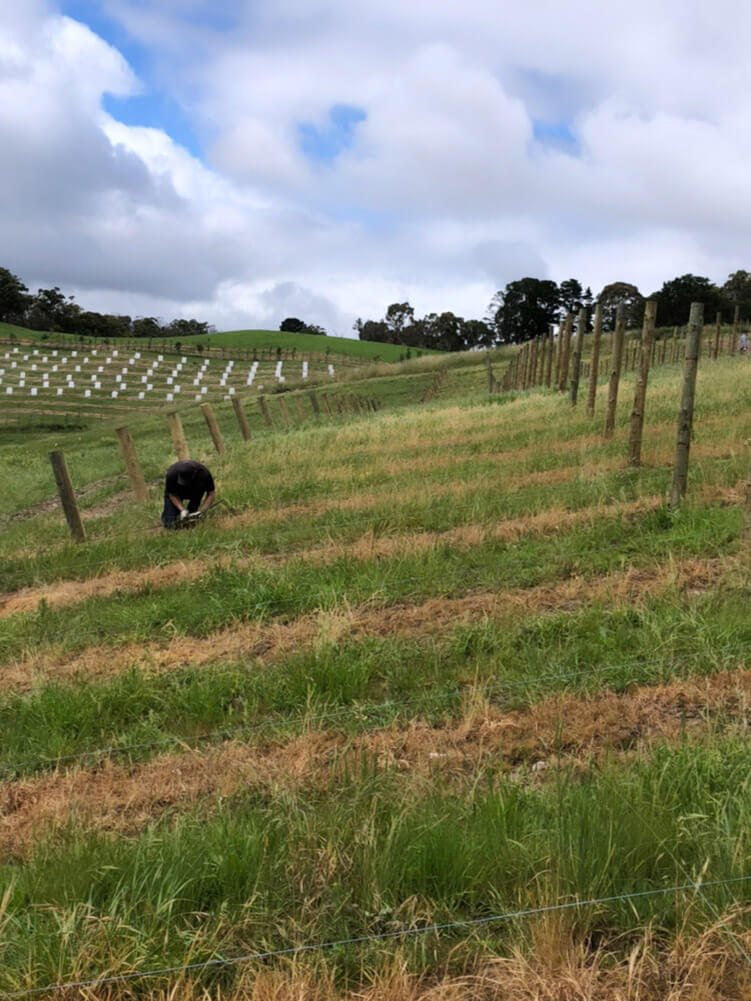
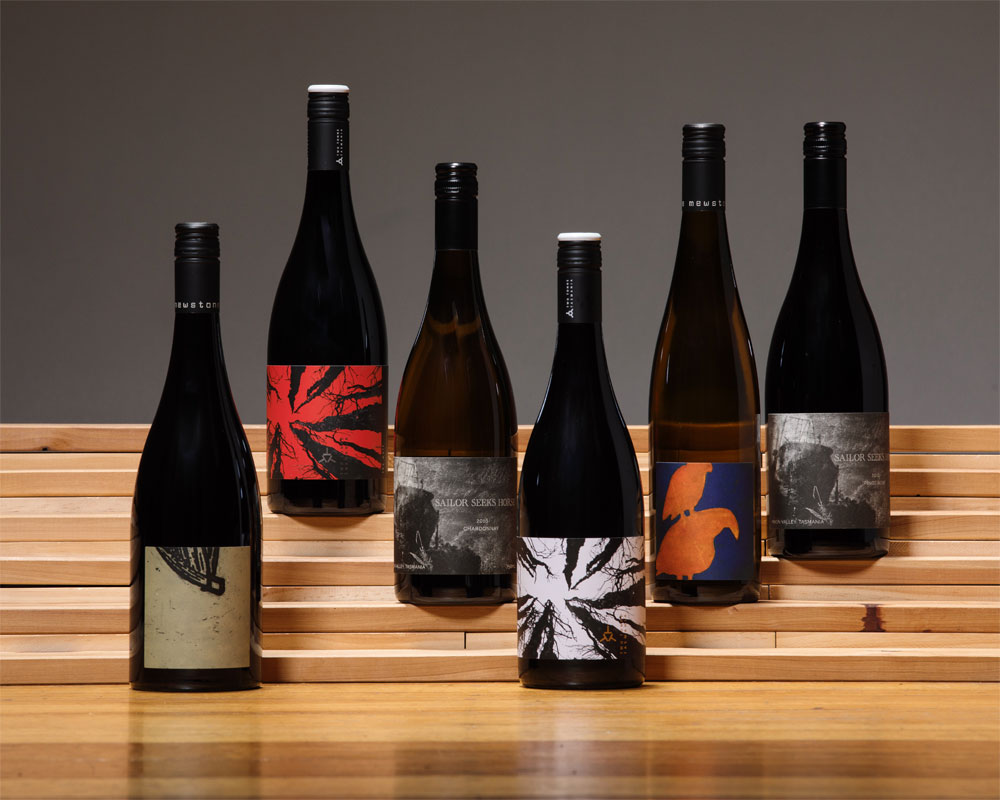
Turon White planted his first vines at Lenswood in 2020, and it shows – the oldest fruit on the property is five years old and the 1.57-hectare site is very much a work in progress. But the thinking behind it, accumulated over a decade of preparation before a post was knocked in, is anything but young. White farmed the land organically for more than ten years before planting, building soil rather than vines, and the vineyard that emerged from that preparation – steeply east-facing, ultra-high density, planted on own roots in ancient clay and shale on the eastern escarpment of the Adelaide Hills – reflects a clear and deliberate set of choices about what Lenswood can do and what it cannot. The estate produces a Turon Estate Pinot Noir and a Hills Series Pinot Noir (blended with Piccadilly Valley fruit), with the estate chardonnay to follow as the 2025 plantings mature.
The site sits at around 510 metres elevation, with a 30 per cent slope and an east-facing aspect. That orientation was chosen deliberately over the more common north-south alignment. Morning sun – what White describes as blue-spectrum light – suits the slow ripening of pinot noir and chardonnay without the afternoon heat spikes that can stress a crop. By midday, light on the bunches is dappled; the hottest part of the day leaves the fruit in shade. The slope and aspect together effectively cool the growing season by approximately two degrees compared to a flat, north-facing site in the same subregion – meaningful in a region already known for its cool-climate character. Lenswood itself sits a full degree or more below the average growing-season temperature of neighbouring Adelaide Hills subregions, with 1,200mm of annual rainfall and Antarctic southerlies moderating the extremes. “Average growing season temperature of 15 degrees – significantly cooler,” says White
The soils are a brown loam over red pottery clay, underlain by slate-like blue and purple mudstone shot through with reefs of pink quartz and sandstone. That clay gives exceptional water-holding capacity while the shattered rock beneath provides drainage – roots are drawn downwards toward the springs that lie deep under the bedrock. Three dams on site catch rainfall and feed a drip irrigation system used sparingly as a seasonal supplement. White built this soil over a decade before planting: rye grass, clovers and medics were composted back annually without tillage, building organic matter that retains moisture far more effectively than bare earth and feeds a microbial system that was alive and functioning before a single vine went in. After planting, grape marc compost with lime and straw additions under vine closed the loop.
Vine spacing at 0.75 metres within rows and 2.4 metres between them gives a planting density of 5,556 vines per hectare – roughly double the Adelaide Hills norm. The intention is competition: smaller, more balanced canopies, naturally reduced berry size, and concentrated flavour with less manipulation required. Yields run between 500 grams and 1.5 kilograms per vine, well below the regional average of 3.5 kilograms. VSP trellis and single cane pruning allow air movement among the bunches, which is essential in a cool, humid site where botrytis pressure is the primary disease risk. Canopy management – precision shoot positioning, early leaf plucking on the morning side – is used to reduce bunch compression and disease pressure while protecting the delicate pinot aromatics from too much direct sun.
The four pinot noir clones – Abel, Pommard, MV6 and 777 – were matched to the site’s micro-variation rather than planted uniformly. The shallower, rockier sections of the upper slope received clones chosen for aromatic lift and finer tannin grain; slightly deeper loams at lower elevations were planted to clones that benefit from marginally more vigour. Abel is spur pruned; MV6, Pommard and 777 are cane pruned. The upper sections of the site consistently produce lighter, red-fruited parcels with floral lift; the lower sections give more texture, darker fruit and slightly broader tannin structure. Each micro-zone is picked, fermented and assessed separately – a feedback loop that is sharpening White’s understanding of the site with each vintage.
The 2025 chardonnay planting – 0.82 hectares of clones 76, 95, 548 and 124 – extends the same logic. Slopes, densities and clone placements were selected on the basis of what the pinot noir block has revealed about how cold-air drainage, gully winds and soil depth interact across the hillside. Gamay is planned for 2027, with orientations chosen for its naturally upright structure and earlier ripening tendencies. The vineyard is deliberately staged: learn the site deeply at each step before adding a new layer of complexity.
The farming is organic in practice and regenerative in philosophy – no herbicides, no synthetic fertilisers, compost teas, diverse cover crops and under-vine species, permanent swards. Native vegetation provides habitat for beneficial insects. Copper and sulphur are applied only when disease conditions demand it. Sheep are planned for winter grazing once fencing infrastructure allows, creating a more closed-loop approach to soil fertility and reducing tractor passes. The Ondeen Farm partnership has produced a Wine Room in the Lenswood area bringing together local growers, makers and producers – adding a community and education dimension that White sees as part of the vineyard’s wider purpose.
“When you grow the grapes yourself, you get to make the pick date call with full context,” says White. At Turon Lenswood, that context has been built brick by brick – ten years of soil preparation, five years of vines, and a clear map of what comes next. The estate pinot noir released from the 2023 vintage was the first confirmation that the site is producing what White envisaged. Whether the chardonnay – now in the ground – and the gamay to follow will deepen that story remains to be seen. The site is five years old. The work is just beginning.