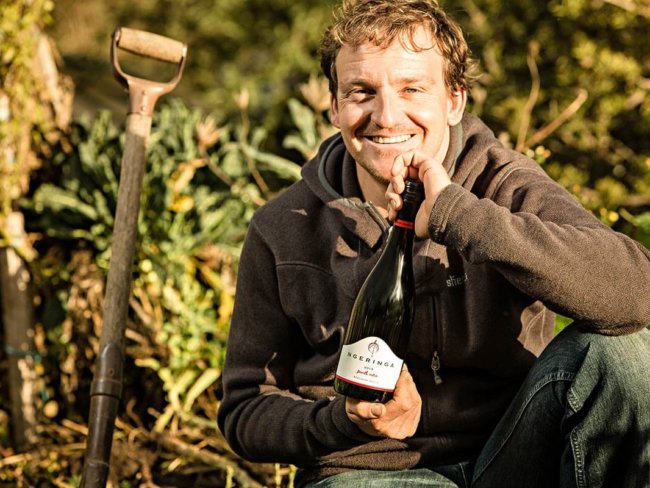
Angus Vinden is a viticulturist who makes wine, not the other way around – a distinction he draws deliberately and maintains religiously. Based in Pokolbin at the family estate his parents Guy and Sandra established in 1990, Vinden now farms two vineyard sites across 13 grape varieties, operates three labels, and makes every wine from fruit he grows himself. Vinden Wines is the heritage label, rooted in classic Hunter styles. The Vinden Headcase is his more progressive expression – lighter, more textural, more experimental, drawing on the Hunter’s own pioneering tradition of elegant, medium-bodied reds rather than the heavier international styles that briefly dominated. A third label, Lignée, is a limited annual collaboration with Will Gilbert of Gilbert Family Wines in Mudgee. Across all three, the philosophy is the same: minimal intervention, wild fermentation, and the vineyard doing the heavy lifting.
Vinden made his first vintage at age seven in his parents’ shed in Pokolbin. He has not really stopped since. Alongside an architecture degree – “as you do,” as the old profile put it – he studied viticulture at TAFE, and spent formative years being mentored by fifth-generation grower Glen Howard at the Somerset Vineyard, one of the oldest in the Hunter, originally planted in 1891. “I love making wine and looking after my vineyard,” he says. “For me it is a lifestyle that is like no other; there is nothing else I would rather be doing.” When his father offered him the management of the family property in 2014, the desk job didn’t stand a chance.
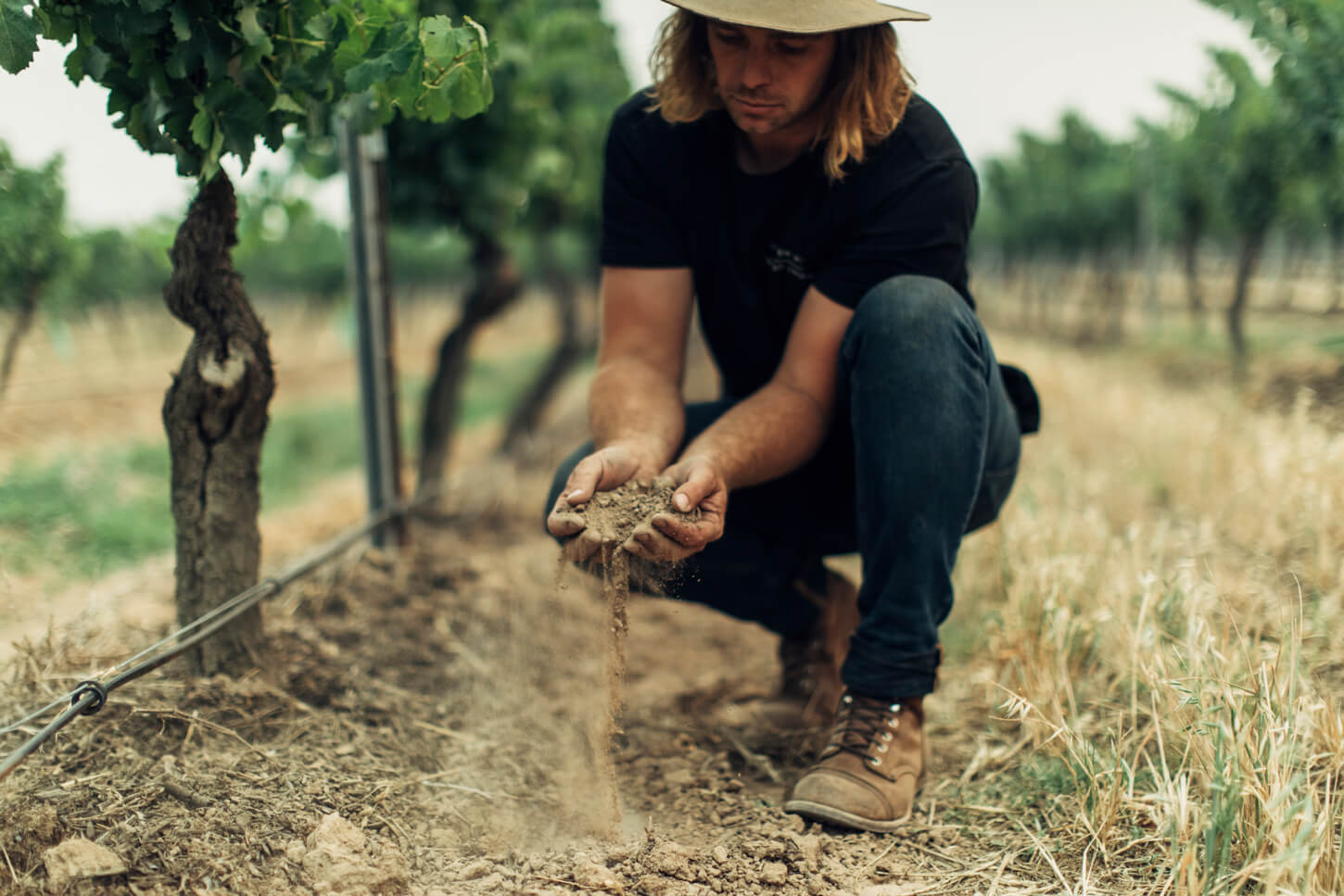
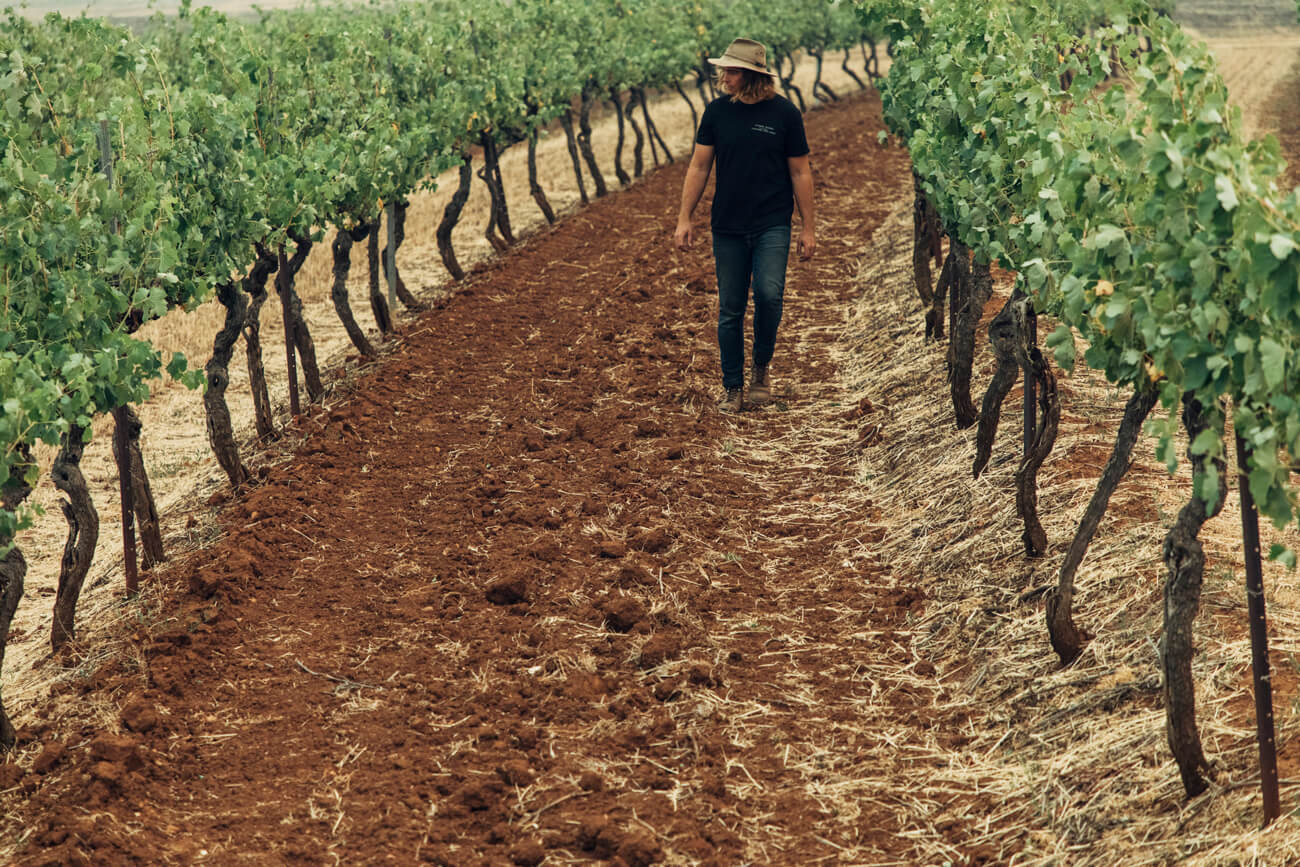
Vinden took over winemaking duties at 24 in 2015 and has run the business since, growing it from a small hobby farm into a serious agricultural operation. Glen Howard’s passing in 2020 – after a long battle with cancer – prompted the Howard family to help Vinden purchase the Somerset Vineyard, which he had been leasing since late 2019. The weight of that stewardship is not lost on him. “I have continued to farm in his honour,” he says. Somerset, originally settled in 1863 and replanted from 1965, sits on two distinct soil types – fine sandy loam and limestone hillside with granular red volcanic clay – and carries semillon, chardonnay, fiano, gewürztraminer, chenin blanc, verdelho, tempranillo and shiraz. The Vinden Estate vineyard, planted in 1995 on heavy red clay, is his experimental garden: mourvèdre, grenache, gamay, pinot meunier and shiraz, much of it reworked and replanted over the past seven years.
Thirteen grape varieties across two sites is unusual anywhere in Australia, and essentially unique in the Hunter Valley – a region that has historically bet heavily on semillon and shiraz. Vinden’s breadth reflects both his viticulturist’s curiosity and a conviction that the Hunter’s story is still being written. “Tradition is not stagnant, it is forever changing,” he says. “In essence, challenging some of those preconceptions has always been the goal. However, doing so with respect – to add to the tapestry of our 200-year-old region.” The Headcase range is the most direct expression of that challenge: gamay blended with shiraz and pinot meunier; fiano from the Somerset site; rosés that may span five varieties across eight ferments; tempranillo that stands alone as among the finest expressions of the variety in the country.
The farming approach across both properties is what he describes as thoughtful and responsive – not certified organic, but mirroring organics in practice. Regenerative principles run throughout: composting, cover cropping including native grasses, soft pruning, reduced synthetic chemicals and insecticides, increased biological sprays, undervine cultivation, and the reforestation of sections of land as biological corridors for biodiversity. “We farm with regenerative practices,” he says, “reducing the use of synthetic products and replacing with biologicals and compost fertiliser.” In the winery, wild yeast initiates fermentation across the range, malolactic conversion occurs naturally, and wines are bottled without fining and often without filtration. Vessels span stainless steel, oak, concrete and clay amphora, chosen to suit each variety’s expression rather than a house default.
The Lignée collaboration with Will Gilbert, now in its sixth year, captures something of the generosity that runs through Vinden’s approach to the industry. What began over beers at a pub in 2017 has become an annual limited release – a semillon sauvignon blanc, a rosé and a shiraz pinot – fewer than 700 bottles of each, made from fruit each winemaker shares from their most prized blocks. It is a small thing, but it speaks to how Vinden sees his role: not just as the guardian of a family estate, but as an active contributor to the culture around it.
“The Hunter is a region steeped in history,” he says. “I see it as my job to build on the narrative of tradition, both in the vineyard and the winery.” With a 36th birthday and his 12th vintage as winemaker under his belt, Angus Vinden is exactly where he always planned to be. He just got there by a route only he could have mapped.